Category: consciousness

Goodbye Buddy

The words of Jim and Janet Goodbrod.
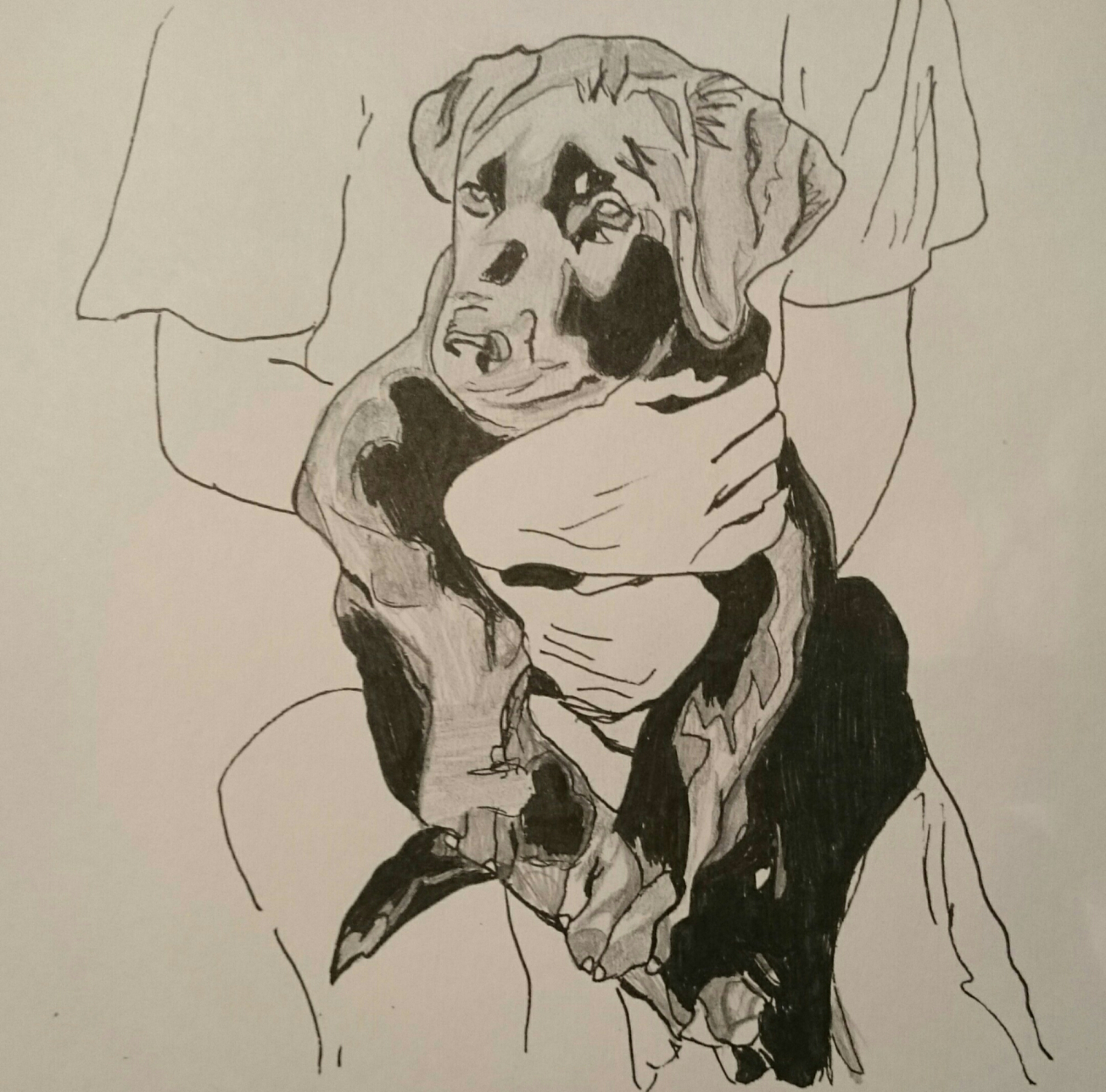
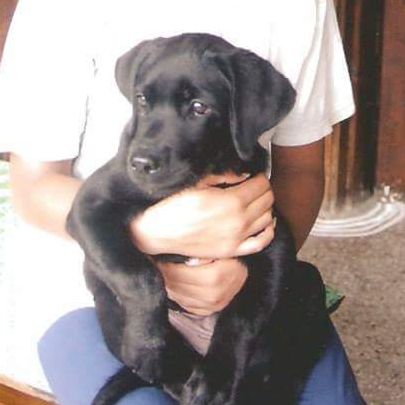
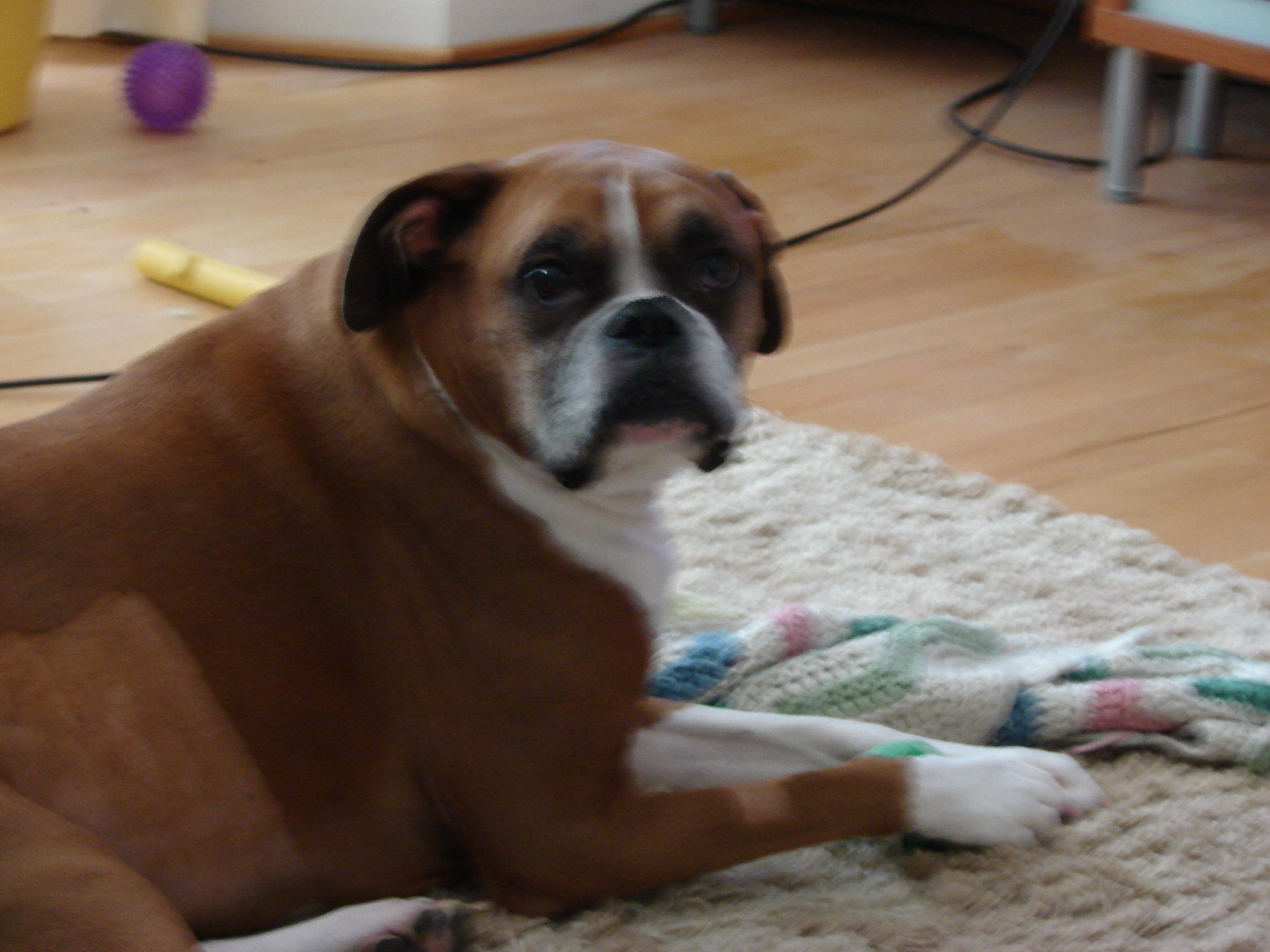
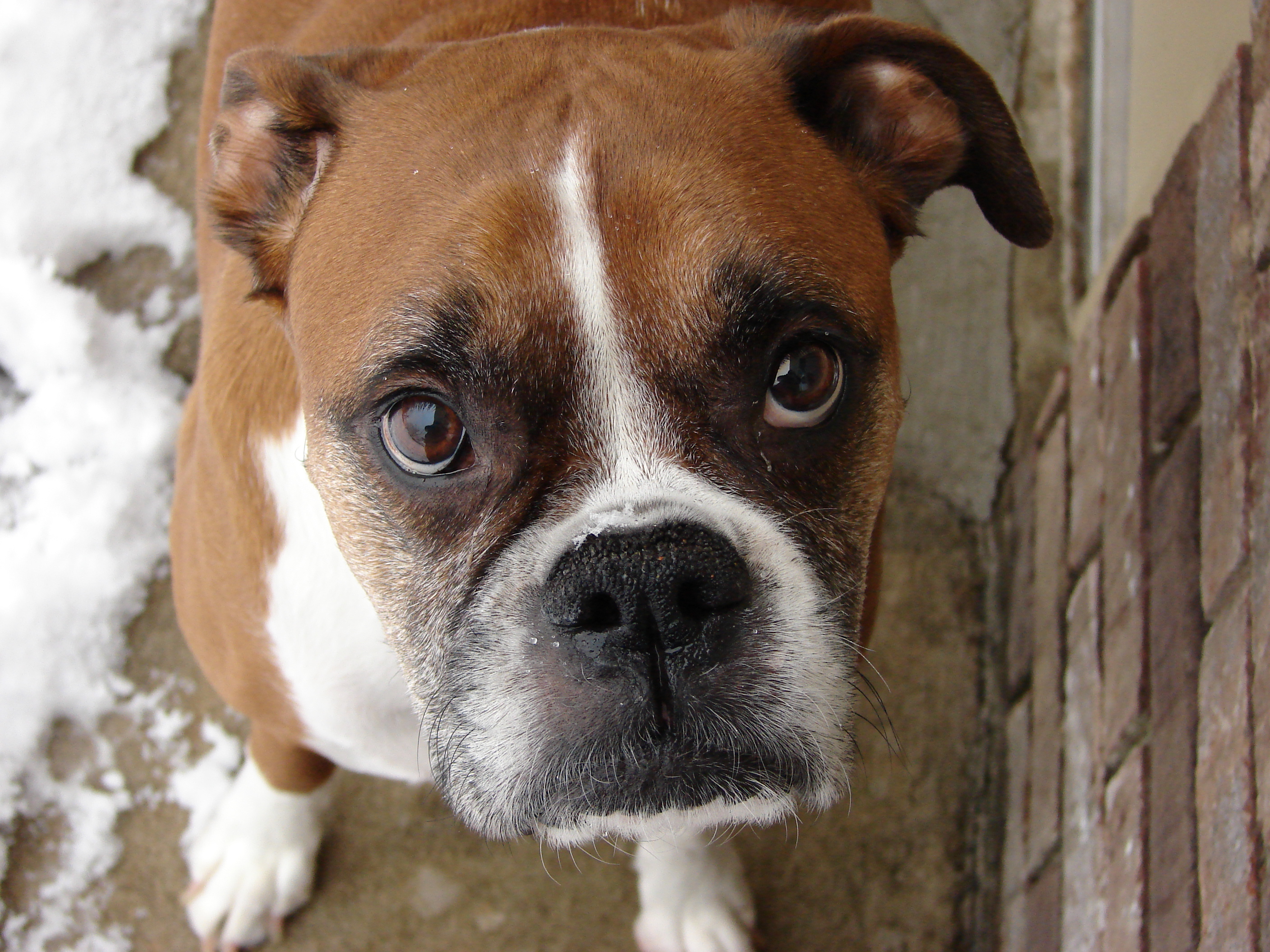
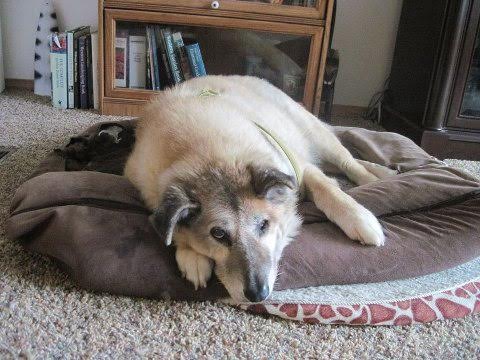
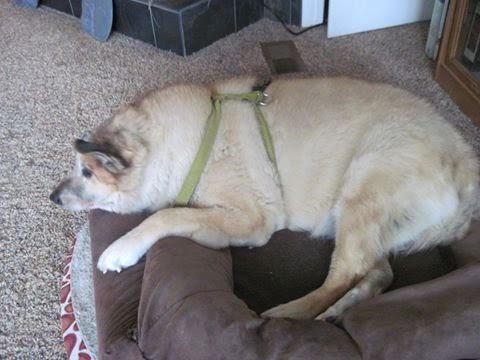
buddy1It was finally time to say the last goodbye to our old Buddy.  Life had become an intolerable burden.  His spirit wanted to keep going, but his failing body could not keep up.  We ended his suffering and gently nudged him into that deep and eternal sleep last Wednesday.

Rest in peace old man! You made it 16-17 years. You aren’t in pain any longer and can run and play like you used to. We had you for only about 10 months, but loved you and we’re glad we could make your last year a good one.  Forget the horrible abuse you suffered as a puppy, and remember only the love and joy you gave us in your last days on this planet.

buddy2
A Dog’s Plea

Treat me kindly, my beloved friend, for no heart in all the world is more grateful for kindness than the loving heart of me.

Do not break my spirit with a stick, for although I should lick your hand between blows, your patience and understanding will quickly teach me the things you would have me learn.

Speak to me often, for your voice is the world’s sweetest music, as you must know by the fierce wagging of my tail when your footsteps falls upon my waiting ear.

Please take me inside when it is cold and wet, for I am a domesticated animal, no longer accustomed to bitter elements. I ask no greater glory than the privilege of sitting at your feet beside the hearth. Keep my pan filled with fresh water, for I cannot tell you when I suffer thirst.

Feed me clean food that I may stay well, to romp and play and do your bidding, to walk by your side and stand ready, willing and able to protect you with my life, should your life be in danger.

And, my friend, when I am very old, and I no longer enjoy good health, hearing and sight, do not make heroic efforts to keep me going. I am not having any fun. Please see that my trusting life is taken gently. I shall leave this earth knowing with the last breath I draw that my fate was always safest in your hands.

Beth Norman Harris

Remembering is so important!

I am speaking of our departed dogs.

Last year I instigated a new ‘page’ on Learning from Dogs. It was entitled We Shall Not Forget Them. It was introduced by me as follows:

For millions, the relationship between a person and their dog is precious beyond words. Do you still grieve the loss of your wonderful dog? Let us all know what your dog meant to you. Write whatever you want. Leave it as a thought to this page.

Then it became clear that this was not going to work properly. Because each note of remembrance was, in effect, a comment. And I discovered that under WordPress it is not possible to insert a photograph. I struggled to think of a better way of doing it. Then earlier yesterday it came to me.

I will make each message of condolence, each reflection on how special the dog was, a new and separate blog post. In other words, each dog gets their own post for a full day.

Then each time a condolence is sent in, I will update the We Shall Not Forget Them post with the name of the departed dog, the date and a link to the blog post that has the details and memories of the animal.

I hope that makes sense!

To underline how it is going to work, I am starting off with the words of loss, and photographs, of Jim and Janet’s Buddy.

That post will be published in an hour’s time and will be linked to as I described above.

ooOOoo

So I am reaching out to Susan, Asha, Katrina and Whisperofthedarkness – each of you has left a memory as a comment to here.

Please do email me some photographs and any further recollections you would like me to post, and I will do for you as I have done for Buddy.

(Laura, I shall go to that link and republish what you wrote.)

Summer and Millie

Now to the second of this week’s guest posts.

Bob Derham and his wife, Julie, are long-term friends back in the UK.

They recently lost their two dogs.

Bob sent me this:

Millie and Summer both had a fun life.

They were cross breed dogs, partly Springer Spaniel and part Collie. They were born in Wales, but as there are quite a lot of similar dogs there, the owner advertised in a local paper, and brought them up to Dorset one weekend 13 years ago.

Initially we had been looking for only one dog, but it seemed such a shame to separate the two puppies so we decided to take both. Most people were of the opinion that two girls from the same litter was not a good idea, but nevertheless we trained them, and the two animals were always together.
Family holidays, walking the children to the school bus, visiting friends, etc., always included Millie and Summer.

Just over two years ago, Summer became diabetic.  Had this been only ten years ago, nothing could have been done for her, but we were able to inject her twice a day, and keep her healthy, apart from failing sight as a result of the insulin. It was not long after that Millie developed the same problem, so both dogs had the same routine.
Summer went to the vets on the right day for her, and was put to sleep peacefully, and two weeks later Millie needed the same choice to be made.

They enjoyed an almost identical lifespan, and we enjoyed them to the full.

Bob and Julie’s daughter Stephanie then made the following video in memory of their two beloved dogs.

Back to me.

Going to close today’s post with this poem by Rudyard Kipling.

ooOOoo

The Power of the Dog

There is sorrow enough in the natural way
From men and women to fill our day;
And when we are certain of sorrow in store,
Why do we always arrange for more?
Brothers and Sisters, I bid you beware
Of giving your heart to a dog to tear.

Buy a pup and your money will buy
Love unflinching that cannot lie–
Perfect passion and worship fed
By a kick in the ribs or a pat on the head.
Nevertheless it is hardly fair
To risk your heart for a dog to tear.

When the fourteen years which Nature permits
Are closing in asthma, or tumour, or fits,
And the vet’s unspoken prescription runs
To lethal chambers or loaded guns,
Then you will find–it’s your own affair–
But…you’ve given your heart for a dog to tear.

When the body that lived at your single will,
With its whimper of welcome, is stilled (how still!);
When the spirit that answered your every mood
Is gone–wherever it goes–for good,
You will discover how much you care,
And will give your heart for the dog to tear.

We’ve sorrow enough in the natural way,
When it comes to burying Christian clay.
Our loves are not given, but only lent,
At compound interest of cent per cent.
Though it is not always the case, I believe,
That the longer we’ve kept ’em, the more do we grieve:
For, when debts are payable, right or wrong,
A short-time loan is as bad as a long–
So why in Heaven (before we are there)
Should we give our hearts to a dog to tear?

Rudyard Kipling
ooOOoo
Dogs bring out so much beauty and love in us.

Connections

Funny how things flow at times.

In yesterday’s post about the cleverness of chickens, John Zande, a long-time friend of this place, left this remark:

I have a marvellous blogging friend in New Mexico who has Rufina, a chicken who was shot in the head, sealed in a plastic bag, placed in a freezer for 24hrs, and lived! (albeit now blind).

I have a framed poster of Rufina up in my living room, and even one her feathers perched in one of my many, many, many St. Francis’s

Here’s the Huffington Post article on her

http://www.huffingtonpost.com/2014/08/14/zombie-chicken-freezer-alive_n_5675615.html

And here’s Laura’s first post on this gorgeous creature.

https://liveclayart.com/2013/06/24/the-undead-chicken

Then in response to me wanting to republish that story replied: “Contact her, she’s wonderful, and her pottery is to die for.

So I did and, with Laura’s permission here is that story of this most remarkable chicken.

ooOOoo

The Undead Chicken

by Laura Bruzzese, June 24th, 2013

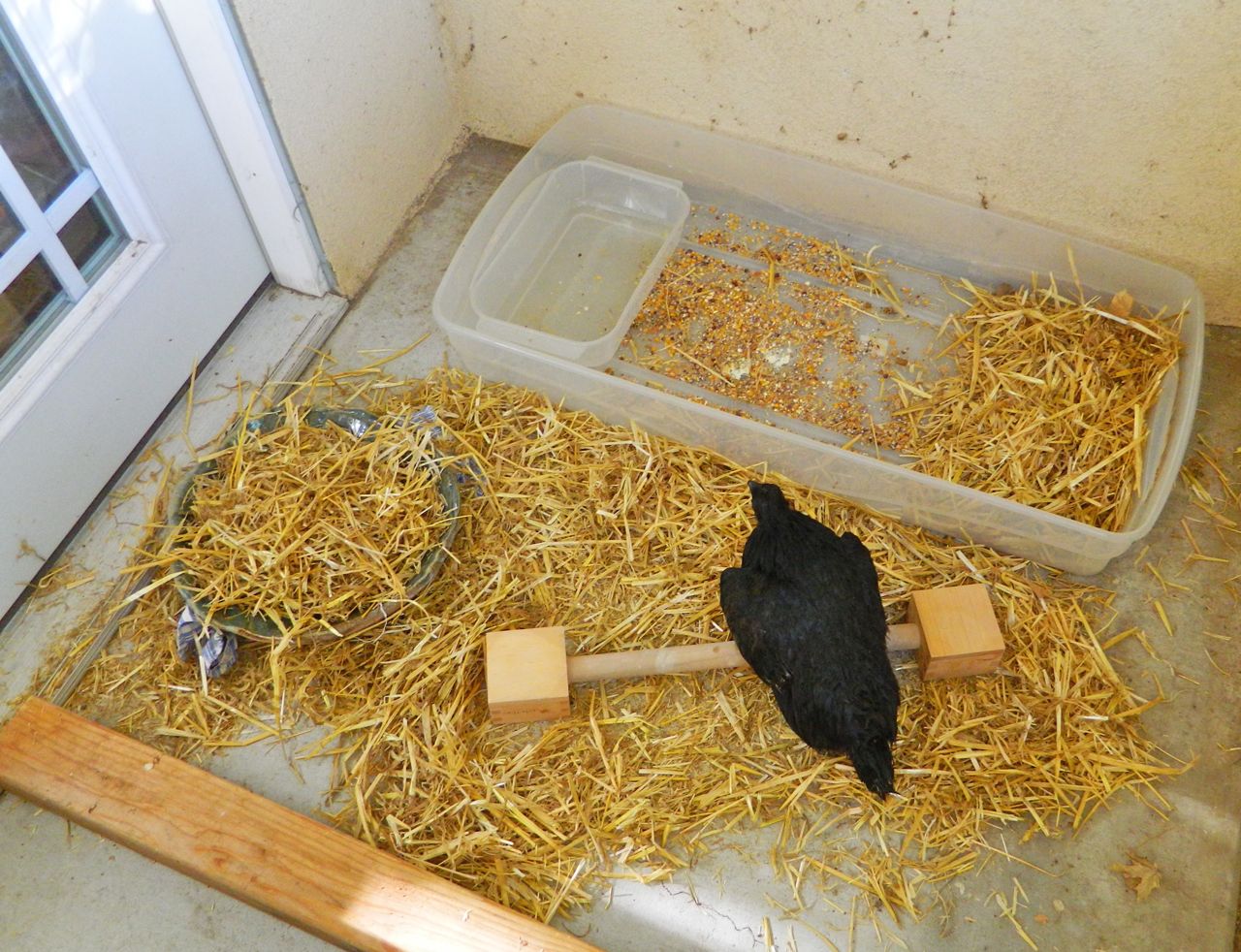
rufinaThis is Rufina. She’s new to our household.

She’s quiet and doesn’t take up much space, mostly sits on her perch or in her ceramic nest all day. She moves around slowly. If you are really gentle, she lets you pick her up.

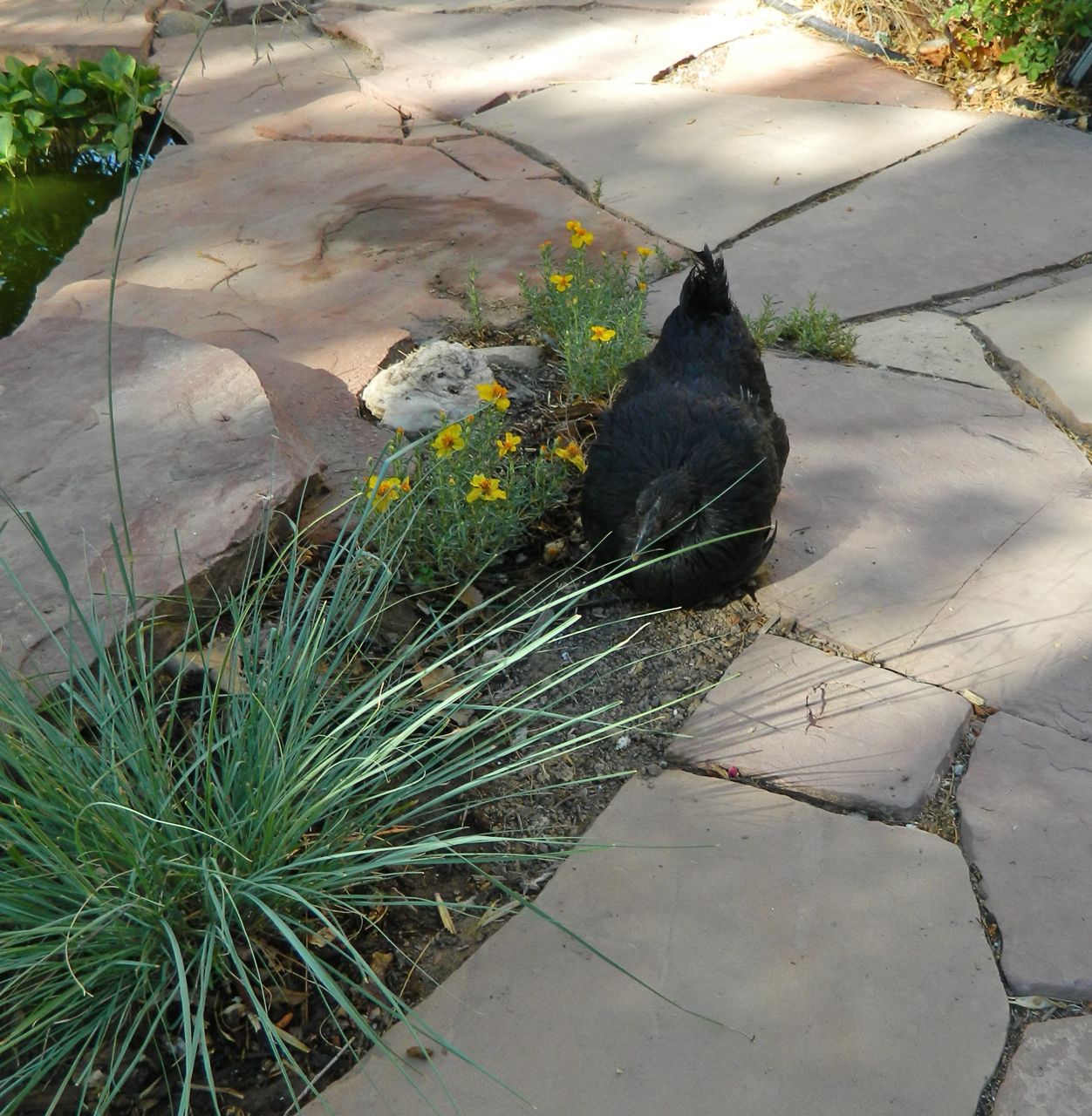
We sit by the pond together in the morning, before everyone else gets up.

rufina1Last Thursday, I answered a friend’s call on Facebook for someone to take this chicken. Isabella and I drove to my friend’s house in the South Valley, put her in a bin, and brought her home. I didn’t think she’d actually still be alive today.

My friend had posted this story Thursday morning:

The neighbor gave us fresh chickens last night for cooking up. He shot them in the head with gun and handed them over the fence. We bagged them and put in freezer for today. Evan gets home, opens freezer and one bird is perched fully alive, very cold, and pissed off.
Chase ensues… !! We now have a blind undead chicken in our yard.

Anybody want it?

I’m not sure why anyone would shoot chickens in the head.

But when I read the story, I couldn’t help but admire this chicken’s tenacity. She is courageous. She made her way out of a plastic bag inside a freezer and survived for thirty-six hours. After being shot in the head.  I figured any animal that fought that hard to live deserved a little help, if only for a day or two.

The chicken hasn’t made any effort to eat like a normal chicken. Because, of course, she can’t see where to peck. (There isn’t much point in force-feeding a blind chicken.) But she does drink, so I’ve started blending up borrowed chicken food and water and giving her that. She seems content, grooming herself sometimes, showing no signs of pain or anxiety. And still, she will die.

But until then, we will enjoy each of her borrowed mornings by the pond, the sound of birds and running water, the sun on her feathers, expecting nothing.

I’m not sure why I have a blind, undead chicken in my studio. But here is one of my favorite poems, by Laura Gilpin.

The Two-Headed Calf

Tomorrow when the farm boys find this
freak of nature, they will wrap his body
in newspaper and carry him to the museum.

But tonight he is alive and in the north
field with his mother. It is a perfect
summer evening: the moon rising over
the orchard, the wind in the grass. And
as he stares into the sky, there are
twice as many stars as usual.

[Epilogue]

ooOOoo

Now if you think that was remarkable then let me share what Laura posted a few weeks later, linked to via her Epilogue above.

ooOOoo

The Miracle of Re-Birth

by Laura Bruzzese, July 11th, 2013

Good news: it’s been three weeks since the attempted murder of Rufina, and she continues to dwell among the living!

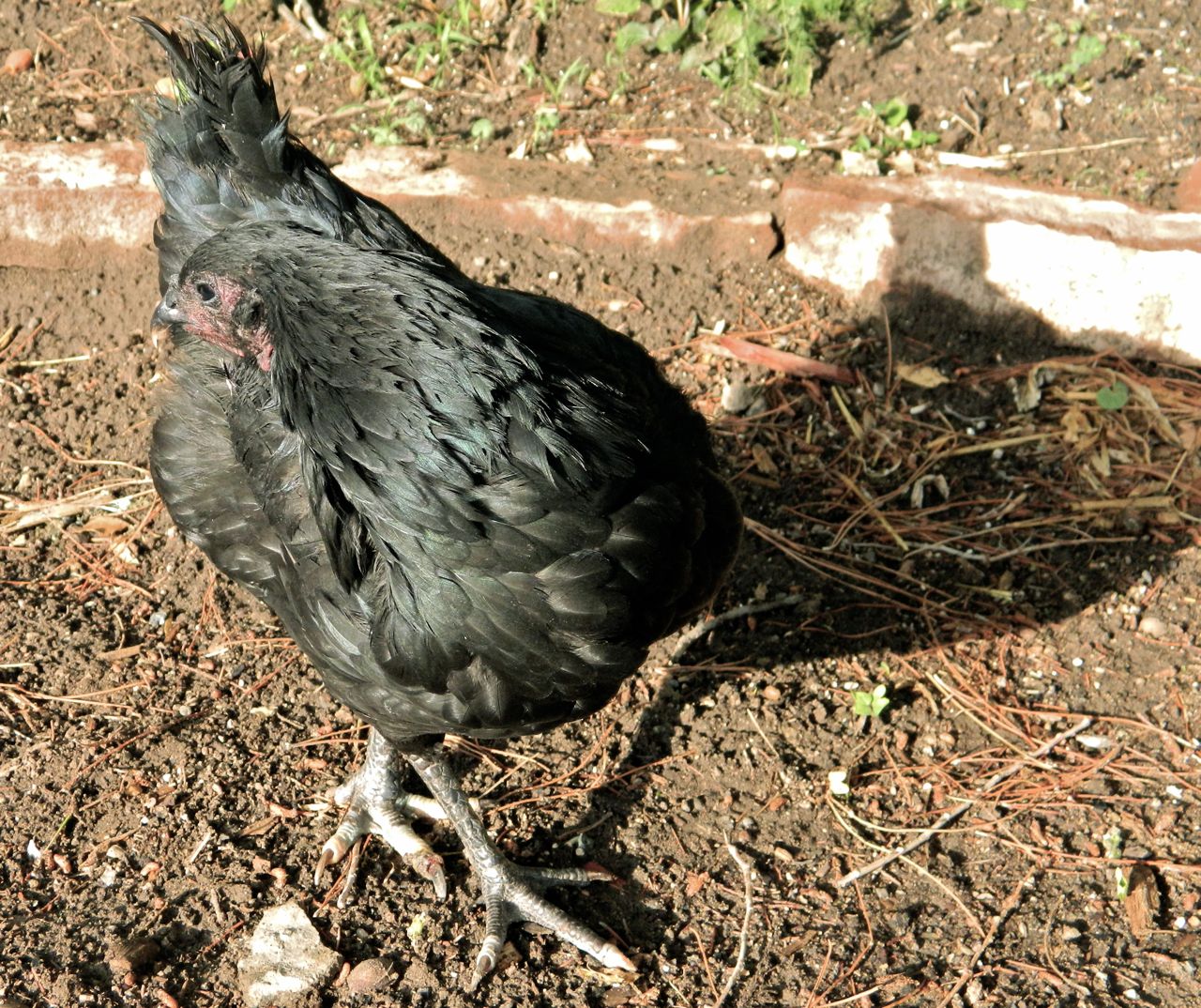
rufina2After loads of eye care, foot washing, antibiotics, food and vitamins, she has gained weight and is learning to find food and water by herself. Her remaining eye looks normal again but is still blind (I was hoping for a miracle), and the place of its former pair seems to have reached its majority in terms of healing–no eye, but no skin, either. Just a weird,  green spot surrounded by red skin that looks not unlike a tiny sun-dried tomato.

But that does not prevent her daily forays into the garden where she walks around with her head craned forward to “feel” where she’s going, and from exhibiting other persisting chicken qualities that seem to evidence a contented life.

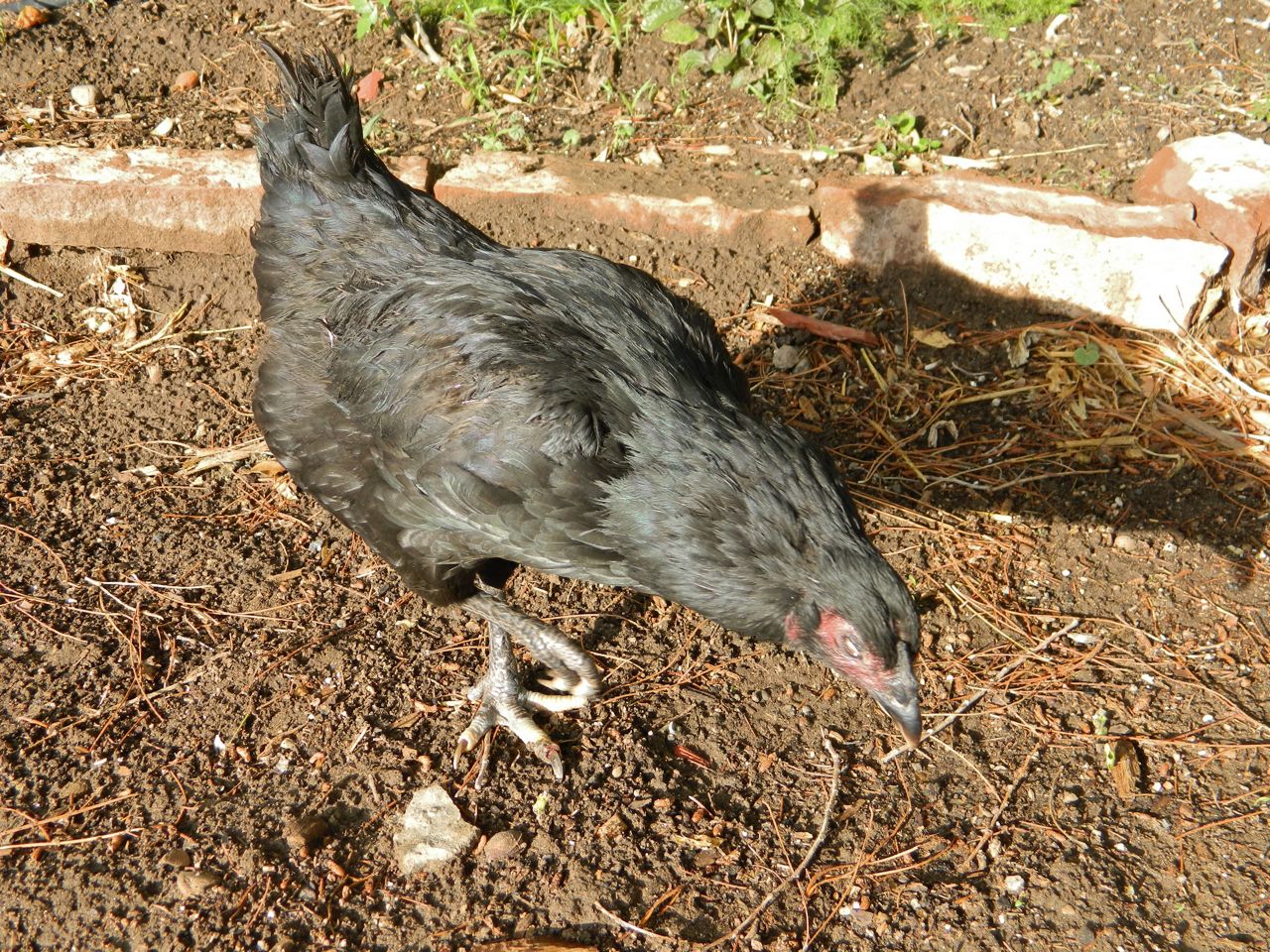
rufinaagainI’m still surprised, and slightly in awe of this traumatized chicken who is satisfied to reside indefinitely on my studio porch. Shiny, happy chicken.

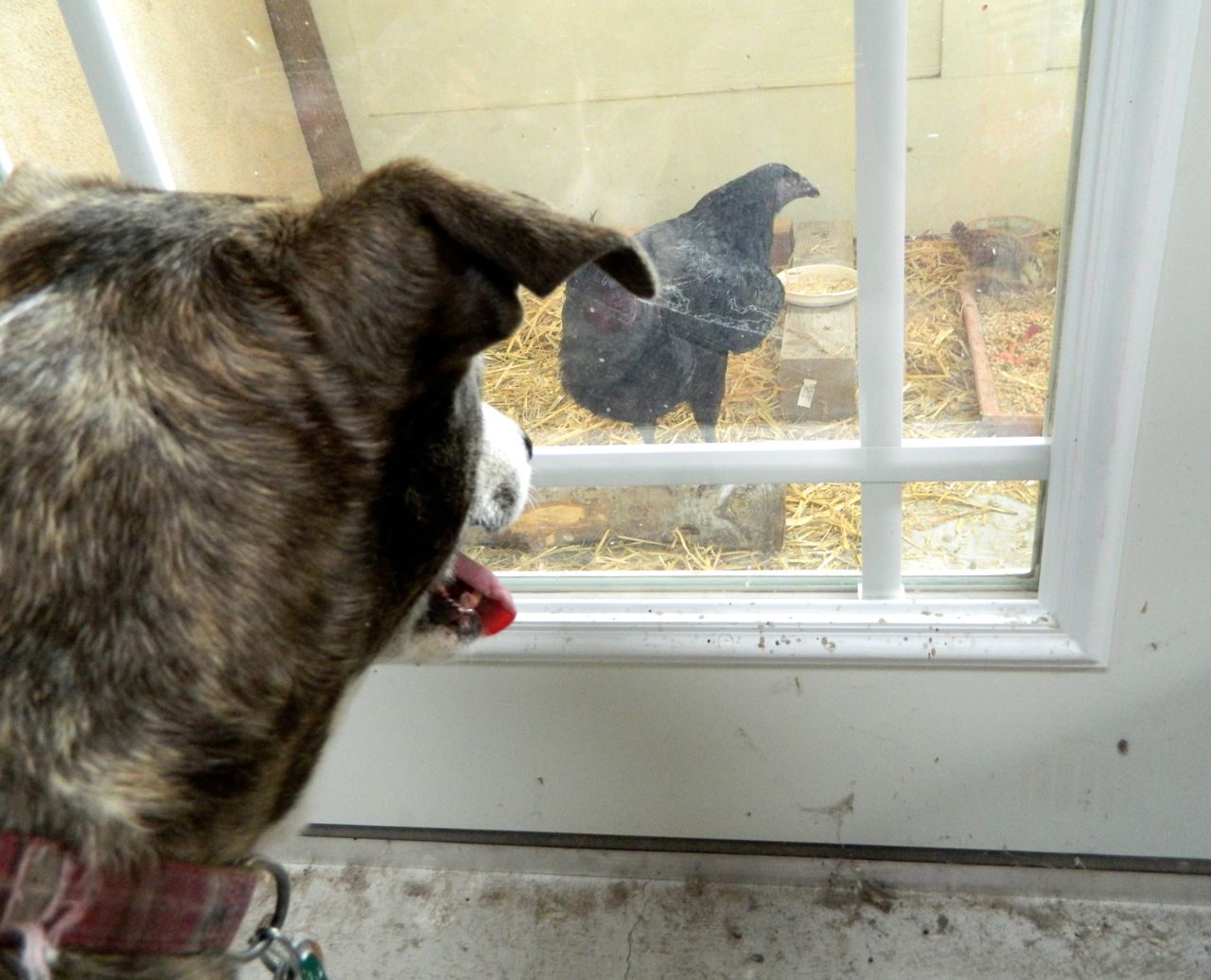
And so far, Velma the Rascally Whippet has not been the nuisance I was afraid she might be, but instead, a proud example of a bird-dog in defiance of her own natural instincts (save for one minor incident involving a tail feather. That was still attached to Rufina.). Perhaps Velma knows they are kindred spirits, she herself having survived a scary encounter with the Great Beyond earlier this year.

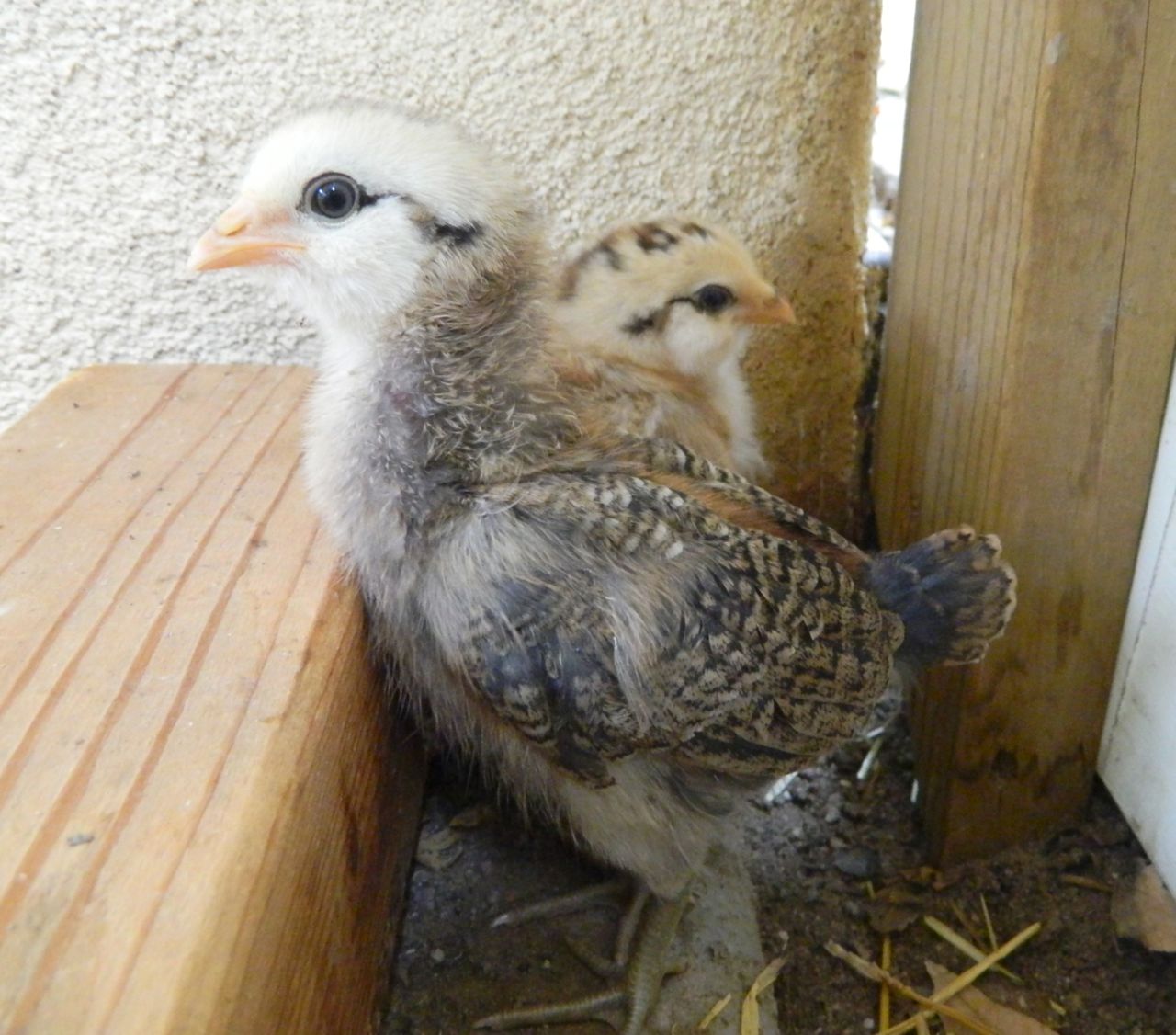
velmaThanks to everyone who has contributed free chicken advice, food, ER and vet consults, and even a couple of adorable, surprise chicks* (!) to keep Rufina company.

chicks*Chicks will unfortunately be dispatched to some other venue because they are exploiting their sighted advantage: stealing food out of Rufina’s mouth, crowding the water dish, and mocking her by constantly blinking and sticking their tongues out.  Also, they are filthy little creatures that walk in their own poop and then jump on me.

And finally, what’s in a name? When it became clear that chicken might live, I thought I should name her, and Rufina was the first thing that popped into my head. A few days later, I googled it to see what came up. This is what I found on Wiki:

Saints Justa and Rufina (Ruffina) (Spanish: Santa Justa y Santa Rufina) are venerated as martyrs. They are said to have been martyred at Hispalis (Seville) during the 3rd century.

Their legend states that they were sisters and natives of Seville who made fine earthenware pottery for a living, with which they supported themselves and many of the city’s poor. Justa was born in 268 AD, Rufina in 270 AD, of a poor but pious Christian family. During a pagan festival, they refused to sell their wares for use in these celebrations. In anger, locals broke all of their dishes and pots. Justina and Rufina retaliated by smashing an image of Venus.

The city’s prefect, Diogenianus, ordered them to be imprisoned. Failing to convince them to renounce their faith, he had them tortured on the rack and with iron hooks. This method also having failed, they were imprisoned, where they suffered from hunger and thirst.

They were then asked to walk barefoot to the Sierra Morena; when this did not break their resolve, they were imprisoned without water or food. Justa died first. Her body, thrown into a well, was later recovered by the bishop Sabinus. Diogenianus believed that the death of Justa would break the resolve of Rufina. However, Rufina refused to renounce her faith and was thus thrown to the lions. The lion in the amphitheatre, however, refused to attack Rufina, remaining as docile as a house cat. Infuriated, Diogenianus had Rufina strangled or beheaded and her body burned. Her body was also recovered by Sabinus and buried alongside her sister in 287 AD.

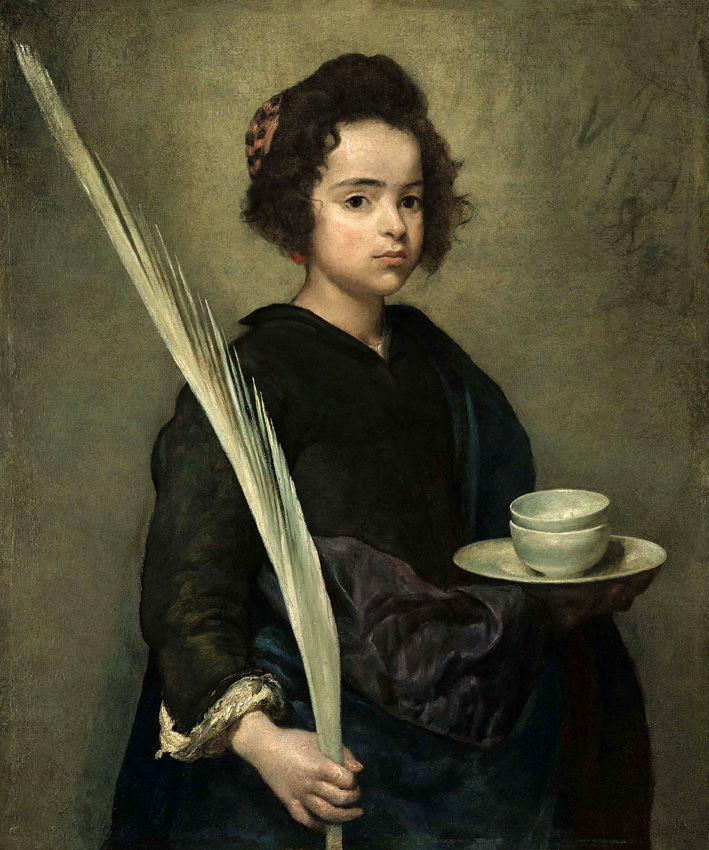
Old Master Paintings Sale Sotheby's, London - July, 4 , 2007 Velazquez (1599 - 1660) Saint Rufina Estimate: 6,000,000 - 8,000,000 Copyright in this image shall remain vested in Sotheby’s. Please note that this image may depict subject matter which is itself protected by separate copyright. Sotheby’s makes no representations as to whether the underlying subject matter is subject to its own copyright, or as to who might hold such copyright. It is the borrower's responsibility to obtain any relevant permissions from the holder(s) of any applicable copyright and Sotheby’s supplies this image expressly subject to this responsibility.
Saint Rufina, by Velázquez. See the likeness?? She’s even carrying a giant feather!

Just another name? Perhaps. Or: a dark-haired Spaniard and a Italian-New Mexican, two Christian potters separated by centuries, a saint, a chicken, and an ordinary human united in an extraordinary coincidence of the undead.

ooOOoo

Follow that!

Well I can’t but John Zande can.

For he was the first to leave a comment to Laura’s Rebirth post:

Here, i feel this song is in order. Listen carefully to the words, and who is singing them.

Including the following in his comment.

So what about chickens!

There’s more to chickens that we realise!

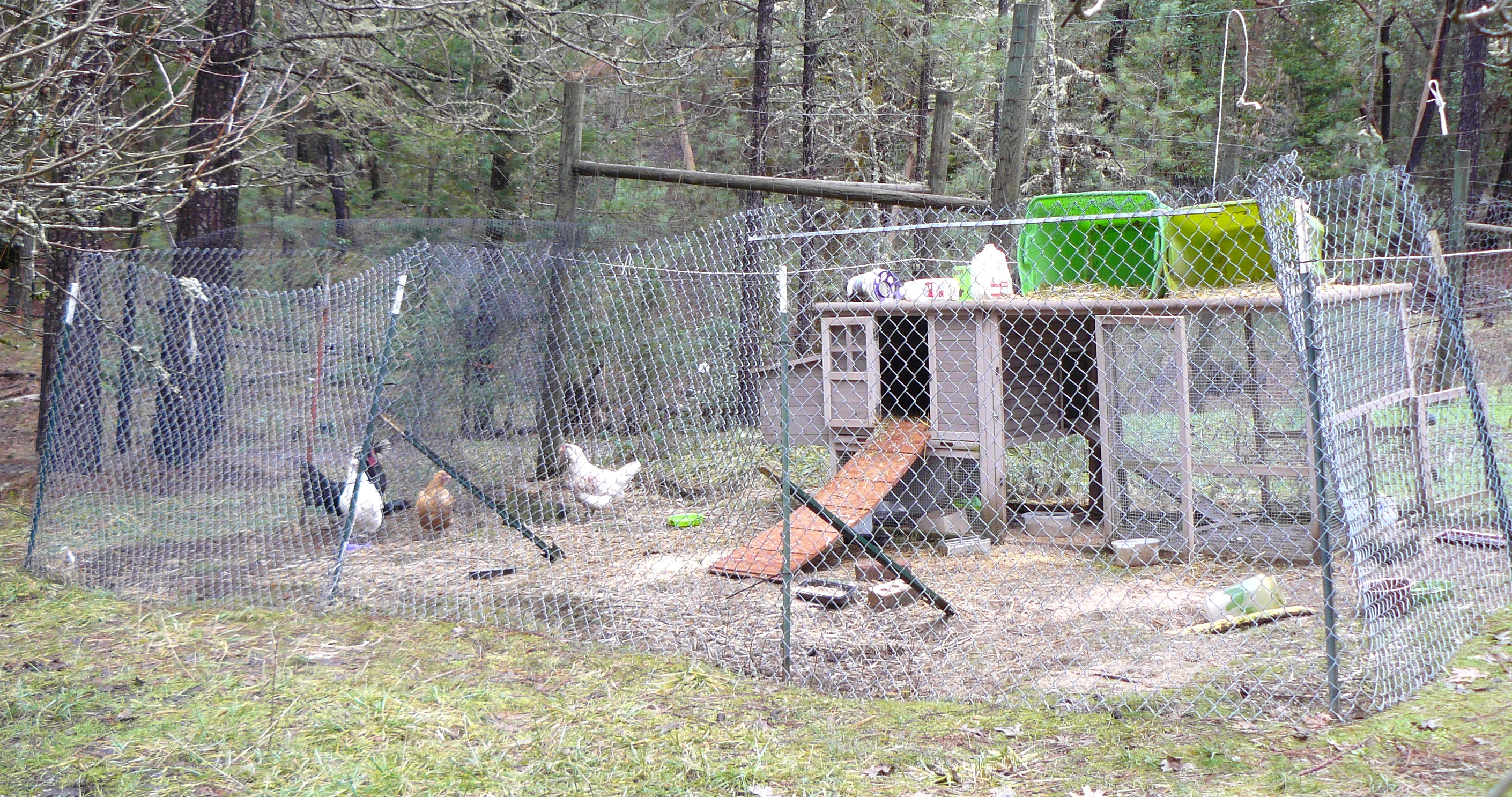
p1160876We have a rather run-down ‘home’ for our chickens close to the house. It was run-down before the snow fell and almost brought down the surrounding wire fence.

p1160875But, hopefully, this coming Thursday sees a new walk-in run being constructed for our birds so they are better protected.

So what has brought this topic to mind?

The answer is a recent item that appeared on the Care2 site about how badly we misunderstand chickens.

I thought you would enjoy reading it.

ooOOoo

6 Surprising Chicken Facts

3198775-large

Written by Katherine Martinko

It’s time we started paying attention to chickens, one of the most misunderstood and ignored species on Earth.

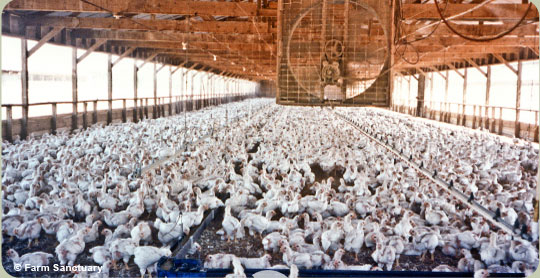
There was a time when chickens were viewed as exotic, fascinating birds. Descendants of exotic Asian jungle fowl, they were revered for their ferocity and intelligence, and domesticated around 8,000 years ago, more for cockfighting than eating. But then, we humans began eating them in ever-larger quantities, until we reached the point where we are now, with 20 billion (mostly white) chickens living in dirty, crowded barns, awaiting slaughter.

Chickens have been a part of human lives for millennia, and yet they are one of the most misunderstood, if not ignored, species on Earth. Lori Marino, an American neuroscientist and animal intelligence researcher, wants to change this. She is intrigued by the fact that chickens are so rarely recognized for their cognitive abilities and frustrated that studies about birds almost always focus on other, less-domesticated species, like crows and parrots.

“Arguably even the scientific community has been influenced by public perceptions of chickens as cognitively simple… This asymmetry in the literature is likely a reflection of, as well as a contributor to, the disconnect scientists and the public have between chickens as commodities and who they actually are as individuals.”

Chickens deserve more attention, and here are some quirky, interesting facts to get you thinking about chickens less as food and more as fascinating co-inhabitants of our world. These come via Marino’s recent paper, “Thinking Chickens,” published online in Animal Cognition in January 2017.

1. Chickens are a sub-species of the red jungle fowl that hails from southeast Asia.

The red jungle fowl (galls gallus) inhabit the edges of fields, scrubland, and groves. Domestication was well established 8,000 years ago, but some records suggest it could have started as much as 58,000 years ago.

2. Domestic chickens are similar to their wild counterparts.

Despite the intense breeding and genetic manipulation of recent years, chickens have not been cognitively or behaviorally affected by domestication. This stands in contrast to dogs and wolves, for example, which have diverged significantly due to domestication. Nor have chickens become less aggressive toward predators through domestication, which is a common outcome; in fact, some chickens are more aggressive even than red jungle fowl.

3. A chicken’s beak is highly sensitive to touch.

The beak, with numerous nerve endings, is used to explore, detect, drink, preen, and defend. This also means that when a bird is de-beaked, as often happens in industrial farming, it experiences great pain, sometimes for months, which changes its behavior. Marino writes, “At the end of the beak is a specialized cluster of highly sensitive mechanoreceptors, called the bill tip organ, which allows chickens to make fine tactile discriminations.”

4. Chickens have finely tuned senses.

They can see long distance and close-up at the same time in different parts of their vision. They can see a broader range of colors than humans. They can hear at low and high frequencies at a variety of pressure levels. They possess well-developed senses of taste and smell. They can orient to magnetic fields, like many other birds.

5. Chickens are surprisingly good at math.

Three-day-old chicks are able to perform basic arithmetic and discriminate quantities, always opting to explore a set of balls with the greater number, even when an object was visibly transferred from one set to another. Five-day-old chicks have been found to track up to five objects.

“When they were presented with two sets of objects of different quantities disappearing behind two screens, they were able to successfully track which screen hid the larger number by apparently performing simple addition and subtraction.”

6. Chickens can exercise self-control.

In an experimental setting, chickens have been given the choice between 2-second delay with 6 seconds of access to food, versus a 6-second delay with 22-seconds of access to food. The hens waited for the longer reward, “demonstrating rational discrimination between different future outcomes while employing self-control to optimize those outcomes.” Self-control usually doesn’t appear in humans until four years of age.

These are just a few of the remarkable discoveries described in Marino’s study, a highly readable, entertaining paper. It’s an important reminder that chickens, arguably the most ubiquitous animals in our world, deserve far more respect than they currently receive. Hopefully this will lead to more people questioning the horrific conditions in which most of them are kept.

Photo Credit: robertsharp/Flickr

ooOOoo

It’s easy to fall into the trap of looking for a humourous way to close today’s post. But a more responsible approach would be to repeat the words from the start of the article to serve as a reminder of trying, wherever possible, to think about the food we eat, especially when animals and birds have to be slaughtered to provide us with that food.

…. we reached the point where we are now, with 20 billion (mostly white) chickens living in dirty, crowded barns, awaiting slaughter.

broilerBut please don’t leave this page until you have watched the following video.

Published on Dec 3, 2014

After 22 years of raising chickens for Perdue, one brave factory farmer Craig Watts was at his breaking point and did something no one has done before. He invited us, as farm animal welfare advocates, to his farm to film and tell his story. Ask your supermarket for Better Chicken at http://better-chicken.org.

Yet another incredible hero!

The wonderful, inspiring story of what Janey Lowes is doing for dogs in need.

Janey Lowes loving a strteet dog in Sri Lanka
Janey Lowes caring for a street dog in Sri Lanka.

More accurately what Janey Lowes and a whole team are doing for the street dogs of Sri Lanka.

Jean and I saw this story featured on the BBC News website.

The English vet saving Sri Lanka’s street dogs

22 January 2017 Last updated at 00:17 GMT

A vet has left behind her home in England to care for Sri Lanka’s street dogs.

Janey Lowes from Barnard Castle, County Durham, has spent the past two years caring for the neglected animals.

There are about three million street dogs on the island – about 60% of puppies born on the street do not survive to adulthood.

The 28-year-old set up charity WECare Worldwide to raise money to buy the equipment needed to treat the animals and to set up her own clinic in Talalla.

I am pleased that the video clip that was included in the BBC News story has found its way to YouTube.

Inevitably the charity WECare Worldwide has its own website: the home page is here. Then you can read on the charity’s ‘About’ page: (Note: CNVR is the acronym standing for catch-neuter-vaccinate-release.)

CNVR

CNVR is carried out as it is the most humane way to reduce roaming dog populations and reduce the number of unwanted puppies that are dumped on the streets at a very young age. It also allows the females that would inevitably spend their whole lives pregnant to only have to worry about number one when thinking about limited food resources and shelter options, which transforms their lives.

Vaccinating the dog population against Rabies is the most effective way to eliminate the disease in the human population. As an island nation, eradication of Rabies in the near future is a very real possibility and will change the future of both animals and humans here, allowing improved relationships between the two.

CNVR is the backbone of everything we are trying to achieve in Sri Lanka.

But that’s only one part of what they do. Again, as the website sets out:


We focus on 3 main areas here in Sri Lanka.

  • CNVR (catch-neuter-vaccinate-release)
  • Treatment of sick and injured animals
  • Education and training


I shall be making contact with the charity very soon .

Not only to pass on our respect and admiration for what she has accomplished but to see if there are other ways we can help them in what they are doing. I use the word ‘we’ to cover not only Jean and me but also all of you who are close to this blog and who, so frequently, show how much love you have for dogs!

WECare Worldwide will help by providing free veterinary treatment, alongside love, compassion and respectful care of the Ceylon dogs, who make up such a huge part of Sri Lankan heritage and culture, both in the past and the current day.

Revisiting the language of love.

That is the language of love spoken by our beautiful dogs.

The present unreliability of our internet connection prompted me to think about re-posting whatever I had posted exactly a year ago. It only took me a minute to look it up and, bingo, what a perfect topic for these wintry days.

ooOOoo

As our dear dogs speak it.

You will recall that last Friday I featured an item under the title of Private First Class Lingo. The item had been brought to my attention by Constance Frankland.

Well here’s another really special story that Constance came across on a website called Arditor and I wanted to share it with you.

ooOOoo

The Language of Love

love8 Ways Your Dog is Saying I Love You

Although dogs don’t speak our language, they are constantly trying to tell us that they love us and always showing love through their actions. Unfortunately, many shrug their shoulders or get annoyed over their dogs’ love gestures.
Here are 8 ways your dog is saying “I love you”…

waggingTail Wagging

Similar to a cat, a dog’s tail is a communication tool. In fact it is sometimes more accurate in translating its emotions than barking. Held at different positions, a dog’s wag could communicate excitement, fear, threat or submission. If your dog’s tail is held in a relaxed position and wagging all together with its entire butt, it means it is very happy to see you.

lickingFace Licking

Warm, sticky, wet and stinky! We know this can get annoying but licking a person’s face is a love gesture from a dog. Dogs lick faces for a few reasons. Mainly, if your pet dog is licking your face, he is trying to groom you! Grooming is an intimate gesture only done after a strong connection is made between dogs (so now you know he sees you as one of his kind). On the other hand, if a stranger dog licks your face, it is simply trying to say that he is harmless and friendly.

following3Following You Wherever You Go

This is another behaviour that can get on your nerves, especially when your dog attempts to follow you to work! However, it is only a dog’s way to show his love, devotion and loyalty to you. Wherever you are, that is where your dog wants to be. Dogs are extreme social creatures and unlike humans, there is no need for solitude.

Sheltie sleeping with her ownerSleeping with You

Similar to wild wolve packs, wild dogs curl up together to sleep in the night. Rather than sleeping alone in his designated corner, your dog prefers to snuggle right next to you in your bed. If you catch your dog sneaking onto your bed or falling asleep next to you in your couch, it implies that you are his family.

smilingSmiling

It is no surprise when you see something like a smile on your dog. Dogs do smile too! Research has found that dogs can also show and use facial expressions similar to how humans do. A dog’s smile is another way of showing his love and joy to his owner. Having said that, most of us are guilty of not recognizing our dog’s smile.

crotchCrotch Sniffing

Argh, this is an embarrassing one and how we wished our dogs can quit going around sniffing crotches. But before you start screaming at your dog, try to understand it. This behaviour is in fact a dog’s perculiar way of greeting. More importantly, apart from a hello, it allows the dog to understand and remember you through your scent.

sickTaking Care of You When You are Sick

Does your dog stay by your bed and watch you the whole time while you are nursing a flu? This is its natural instinct to care for a sick or wounded family member, just as they would in the wild. A dog extends its love and care to its sick or injured owner by quietly and patiently watching over him/her. But make sure you hide any superficial wounds away from your dog! It might actually lick your wound as its form of first aid.

leaning2Leaning on You

Whether you are sitting or standing, your dog is leaning on you and wouldn’t budge. You can’t move and you can’t get on with your daily routine. While you are wondering what they are up to, your dog has already got what they needed: your attention. Getting your attention and giving you their attention by leaning on you is their way of showing affection. Next time this happens, stop what you are doing and reciprocate with some love.

oooooooo

This turned out to be more of a Sunday Picture Parade but it seemed too special to hold it from you until the weekend.

No, our dogs don’t speak a language that we humans would recognise as such but, nonetheless, our dogs communicate in ways that still are as magical and special as our human poetry.

Speaking of poetry, let me close today’s post with this.

areallygreatdogooOOoo

Wherever you are in the world, with or without a dog in your life, please embrace the power of love.

The rights and wrongs of hunting!

The philosophy of hunting in terms of it being ‘right’ or ‘wrong’.

Anyone who comes here for more than a couple of visits will know that both Jean and I are opposed to hunting completely. Period!

That’s not surprising as there have been a number of posts over the years describing how we feed the wild deer. Here’s three more photographs that haven’t previously been shared with you.

p1140238oooo

p1160189oooo

p1150179But, of course, the opinions of Jean and me are not, and should not be, the rule for the wider population of this part of Oregon.

All I would ask is that there is a proper, mature discussion as to the pros and cons of hunting wild animals in this, the twenty-first century.

All of which leads me to a recent essay posted on The Conversation site and republished here within the terms of that site.

ooOOoo

Is hunting moral? A philosopher unpacks the question

January 4, 2017 8.37pm EST

by
Three generations of a Wisconsin family with a nine-point buck. Wisconsin Department of Natural Resources/Flickr, CC BY-ND

Every year as daylight dwindles and trees go bare, debates arise over the morality of hunting. Hunters see the act of stalking and killing deer, ducks, moose and other quarry as humane, necessary and natural, and thus as ethical. Critics respond that hunting is a cruel and useless act that one should be ashamed to carry out.

As a nonhunter, I cannot say anything about what it feels like to shoot or trap an animal. But as a student of philosophy and ethics, I think philosophy can help us clarify, systematize and evaluate the arguments on both sides. And a better sense of the arguments can help us talk to people with whom we disagree.

Three rationales for hunting

One central question is why people choose to hunt. Environmental philosopher Gary Varner identifies three types of hunting: therapeutic, subsistence and sport. Each type is distinguished by the purpose it is meant to serve.

Therapeutic hunting involves intentionally killing wild animals in order to conserve another species or an entire ecosystem. In one example, Project Isabella, conservation groups hired marksmen to eradicate thousands of feral goats from several Galapagos islands between 1997 and 2006. The goats were overgrazing the islands, threatening the survival of endangered Galapagos tortoises and other species.

Subsistence hunting is intentionally killing wild animals to supply nourishment and material resources for humans. Agreements that allow Native American tribes to hunt whales are justified, in part, by the subsistence value the animals have for the people who hunt them.

 Crawford Patkotak, center, leads a prayer after his crew landed a bowhead whale near Barrow, Alaska. Both revered and hunted by the Inupiat, the bowhead whale serves a symbol of tradition, as well as a staple of food. AP Photo/Gregory Bull
Crawford Patkotak, center, leads a prayer after his crew landed a bowhead whale near Barrow, Alaska. Both revered and hunted by the Inupiat, the bowhead whale serves a symbol of tradition, as well as a staple of food. AP Photo/Gregory Bull

In contrast, sport hunting refers to intentionally killing wild animals for enjoyment or fulfillment. Hunters who go after deer because they find the experience exhilarating, or because they want antlers to mount on the wall, are sport hunters.

These categories are not mutually exclusive. A hunter who stalks deer because he or she enjoys the experience and wants decorative antlers may also intend to consume the meat, make pants from the hide and help control local deer populations. The distinctions matter because objections to hunting can change depending on the type of hunting.

What bothers people about hunting: Harm, necessity and character

Critics often argue that hunting is immoral because it requires intentionally inflicting harm on innocent creatures. Even people who are not comfortable extending legal rights to beasts should acknowledge that many animals are sentient – that is, they have the capacity to suffer. If it is wrong to inflict unwanted pain and death on a sentient being, then it is wrong to hunt. I call this position “the objection from harm.”

If sound, the objection from harm would require advocates to oppose all three types of hunting, unless it can be shown that greater harm will befall the animal in question if it is not hunted – for example, if it will be doomed to slow winter starvation. Whether a hunter’s goal is a healthy ecosystem, a nutritious dinner or a personally fulfilling experience, the hunted animal experiences the same harm.

But if inflicting unwanted harm is necessarily wrong, then the source of the harm is irrelevant. Logically, anyone who commits to this position should also oppose predation among animals. When a lion kills a gazelle, it causes as much unwanted harm to the gazelle as any hunter would – far more, in fact.

 Lions attack a water buffalo in Tanzania. Oliver Dodd/Wikipedia, CC BY
Lions attack a water buffalo in Tanzania. Oliver Dodd/Wikipedia, CC BY

Few people are willing to go this far. Instead, many critics propose what I call the “objection from unnecessary harm”: it is bad when a hunter shoots a lion, but not when a lion mauls a gazelle, because the lion needs to kill to survive.

Today it is hard to argue that human hunting is strictly necessary in the same way that hunting is necessary for animals. The objection from necessary harm holds that hunting is morally permissible only if it is necessary for the hunter’s survival. “Necessary” could refer to nutritional or ecological need, which would provide moral cover for subsistence and therapeutic hunting. But sport hunting, almost by definition, cannot be defended this way.

Sport hunting also is vulnerable to another critique that I call “the objection from character.” This argument holds that an act is contemptible not only because of the harm it produces, but because of what it reveals about the actor. Many observers find the derivation of pleasure from hunting to be morally repugnant.

In 2015, American dentist Walter Palmer found this out after his African trophy hunt resulted in the death of Cecil the lion. Killing Cecil did no significant ecological damage, and even without human intervention, only one in eight male lions survives to adulthood. It would seem that disgust with Palmer was at least as much a reaction to the person he was perceived to be – someone who pays money to kill majestic creatures – as to the harm he had done.

The hunters I know don’t put much stock in “the objection from character.” First, they point out that one can kill without having hunted and hunt without having killed. Indeed, some unlucky hunters go season after season without taking an animal. Second, they tell me that when a kill does occur, they feel a somber union with and respect for the natural world, not pleasure. Nonetheless, on some level the sport hunter enjoys the experience, and this is the heart of the objection.

Is hunting natural?

In discussions about the morality of hunting, someone inevitably asserts that hunting is a natural activity since all preindustrial human societies engage in it to some degree, and therefore hunting can’t be immoral. But the concept of naturalness is unhelpful and ultimately irrelevant.

A very old moral idea, dating back to the Stoics of ancient Greece, urges us to strive to live in accordance with nature and do that which is natural. Belief in a connection between goodness and naturalness persists today in our use of the word “natural” to market products and lifestyles – often in highly misleading ways. Things that are natural are supposed to be good for us, but also morally good.

Setting aside the challenge of defining “nature” and “natural,” it is dangerous to assume that a thing is virtuous or morally permissible just because it is natural. HIV, earthquakes, Alzheimer’s disease and post-partum depression are all natural. And as The Onion has satirically noted, behaviors including rape, infanticide and the policy of might-makes-right are all present in the natural world.

Head-Smashed-In Buffalo Jump, a UNESCO World Heritage Site in Alberta, Canada, commemorates a place where indigenous peoples of the North American Plains killed buffalo for more than 6,000 years by driving them over a cliff.

Hard conversations

There are many other moral questions associated with hunting. Does it matter whether hunters use bullets, arrows or snares? Is preserving a cultural tradition enough to justify hunting? And is it possible to oppose hunting while still eating farm-raised meat?

As a starting point, though, if you find yourself having one of these debates, first identify what kind of hunting you’re discussing. If your interlocutor objects to hunting, try to discover the basis for their objection. And I believe you should keep nature out of it.

Finally, try to argue with someone who takes a fundamentally different view. Confirmation bias – the unintentional act of confirming the beliefs we already have – is hard to overcome. The only antidote I know of is rational discourse with people whose confirmation bias runs contrary to my own.

ooOOoo

This is a very important essay from Joshua. Well done, that man!

I will just leave you all with this further image.

Two young stags keeping it together. (xxx)
Two young stags keeping it together. (Taken here at home in July, 2016.)

Best wishes to each of you; irrespective of your view on hunting!

Loyalty, as only a dog can do it!

This is too wonderful.

Slowly getting back to normal although yesterday morning saw the water supply fail from the well. (Now restored!) Perhaps not surprising as overnight Thursday-through-Friday the outside temperature went down to 8.6 deg. F. or in ‘new money’ -13 deg. C.  (In fact I’m writing this at 10am yesterday waiting for the well engineer to arrive!)

On January 4th, the Care2 site published what has to be one of the most remarkable examples of the loyalty of a dog. This is about as perfect an example of what we humans can learn from our dogs as it gets!

ooOOoo

Loyal Dog Protects Buddy Stuck on Tracks From Speeding Train

3197731-largeBy: Laura Goldman   January 4, 2017

About Laura

If you’ve ever had the slightest doubt about just how loyal dogs can be – not only to people but to other dogs – a pup who’s been named Panda really proved it on Christmas Day.

Panda and his pal, now named Lucy, apparently escaped from their home in western Ukraine and somehow ended up on railroad tracks in the town of Uzhhorod. Lucy had an injury and was unable to stand or move. Panda remained right by her side, warming her with his body in the freezing cold.

A train engineer contacted a group of animal rescue volunteers including Denis Malafeyev, telling them he’d seen the dogs on the tracks for two days. Malafeyev and the others took off to try to save them.

“I saw a train approaching and felt sick,” he wrote on Facebook. “The male dog heard the sound of the approaching train, came close to the female dog and laid down next to her. Both of them pushed their heads toward the ground and let the train pass.”

A viral video Malafeyev posted shows the dogs being run over by the speeding train. It’s chilling to think that this wasn’t the first time this happened to the dogs.

The video is disturbing and difficult to watch, but amazingly, both dogs survived with just minor injuries. It may also seem disturbing that, knowing a train would be approaching, Malafeyev didn’t put down his camera and save the dogs. He wrote in his Facebook post that he and the group had tried, unsuccessfully, to move them, but Panda would bark at them and refuse to let them get close to Lucy.

“Think about it. He was keeping her warm,” Malafeyev wrote. ” I don’t know what to call this: instinct, love, friendship, loyalty? One thing I know for sure is that not all people would do the same as this dog!”

The video has been viewed more than 1.5 million times, with many commenters agreeing with Malafeyev that humans have a lot to learn from this dog.

15697205_1203415936406516_7707205456893868670_nFour days later, Malafeyev posted new videos of Panda and Lucy on Facebook. The dogs were taken to an animal shelter and have been reunited their owners, UPI reports. (There are conflicting reports that the dogs were adopted and given the names Panda and Lucy by their new owners. Either way, the two dogs are in a forever home together.)

(Note: there was another video on that Care2 page that I can’t find on YouTube.)

Lucy had no fractures, but only severe bruising, The Sun reports.

“Lucy lives in a house in a warm room! It’s really warm in here!” Malafeyev wrote. “The animals are on the mend!”

Hopefully Panda will be rewarded with treats for his heroic actions, and the owners will make their home more escape proof.

Photo credit: YouTube

ooOOoo

 I am going to close this post by including another YouTube video of this incredible act together with the text supporting this video.

Incredible Story of Devotion Dog! 2017

Published on Jan 4, 2017
Incredible Story of Devotion Dog! The dog two days guarded wounded friend on the rails!
On Sunday, December 25 near the village of Uzhgorod in the district of Tyyglash a touching story took place in Ukraine. Two dogs spent about two days on the tracks, one of them was injured, and the other kept the injured dog warmed and protected from the passing trains.
The story was posted on his page on facebook user Denis Malafeev. His friends noticed two dogs lying on the tracks, one of them was injured. Later, the man himself arrived on the scene.
Several attempts to remove the animal from the rails were in vain, because the dog strongly defended her friend from the people!
When the animals heard an approaching train, the healthy dog lay next to a wounded dog and together they were pressed to the ground between the rails. This moment Malafeev managed to capture on video.
The dog did it for two days in a row! Just think! He warmed it for two days, so that it did not freeze and put himself in danger every time! I do not know how to call it: the instinct, love, friendship, loyalty? It is instructive for us!
Together with his friends, they took dogs and took them to the shelter. The Post reports that they are now waiting for their owners.

P.S. Shortly after the publication in social networks there were dog owners. It was learned that the Pandas and Lucy – so call the animals – there are no serious injuries, only bruises and hematomas. I found out that shaggy live in the home side’s S. Tseglovka in Transcarpathia for several years and are committed to each other from puppyhood. Dogs run away from home when someone from the house forgot to close the door on the site. They searched all over the village. But when the owners heard the story of “Romeo and Juliet” on track – immediately rushed to pick up pets from the shelter. Now dogs are at home, and their life is not threatened.

For two days that one dog protected the other. It is beyond imagination to think how frightening a speeding train would have been for those two precious dogs. Not just once but numerous times before rescue came to them.

Such a privilege to be able to share this with you.

Dogs, Goodness and People.

This makes my heart sing!

We woke yesterday on the first day of the New Year to a classic Winter’s scene: Snow!

Ben and Ranger enjoying a winter's breakfast.
Ben and Ranger enjoying a winter’s breakfast.

Not long after we were washed and dressed I let the dogs out. Typically, while all of them were quick to return to the warmth of the house, Brandy went off on one of his ‘walkabouts’. It was probably the first time he had seen snow.

Twenty minutes later, I started walking down our driveway (just visible in the photograph above running alongside the far tree line) because I knew that Brandy had walked down to the (closed) front gate to check everything out.

I saw Brandy coming back up the driveway and called to him. He looked up, wagged his tail, and I then crouched down holding my arms apart. Brandy started a wonderful, bouncy run that continued until he came right up to me and he then buried his wonderful, furry head between my thighs.

We walked together back to the house and went inside. As we walked together I was aware of a feeling of joyous happiness, a magic that was flowing from the way that Brandy chose to relate to me.

It really did make my heart sing and as I write these words some three hours later I hope you can pick up the gift of goodness that dogs, and so many other animals, offer us humans.

Plus, it couldn’t make a better introduction to a story that was published on the Care2 site on December 31st.

ooOOoo

Meet the Arizona Deputy Who Saved a Dog’s Life – Twice!

3197435-largeBy: Laura Goldman  December 31, 2016

 About Laura

On his way to a call Dec. 17, Deputy Brian Bowling came across a dog stumbling down the middle of an Arizona road.

The pit bull mix named Ginger had been shot in the head by a neighbor who said he felt threatened after the dog dug a hole under her backyard’s fence and wandered into his yard.

Ginger was alive, but not for long.

“She was bleeding profusely from her head and neck,” Bowling told ABC15. In addition to being a deputy with the Maricopa County Sheriff’s Office, Bowling also happens to be a trained paramedic and a veteran who served in Afghanistan. He knew he had to act quickly.

“I had a little flashback, because we had seen military working dogs over there who were blown up by IEDs and shot, and that’s what went through my head,” he told ABC15. “I thought I had to do anything to save its life.”

When he approached Ginger to move her out of traffic, Bowling wasn’t sure how the injured dog would react. “But instead of running away from me or trying to bite me, she ran right up to me and started wagging her tail,” he told FOX 10. She then tried to climb up into the driver’s seat of his patrol car.

Bowling applied combat gauze to her wound, helping to stop the bleeding, and rushed her to a local emergency animal hospital.

His quick actions saved Ginger’s life. She was also fortunate that the bullet bounced off her skull instead of penetrating it.

deputy_brian_bowling_saved_pit_bull_twice
Ginger and her hero, Deputy Brian Bowling. Photo credit: YouTube

Foster Mom Couldn’t Afford the Surgery

But Ginger’s luck seemed to be running out. When her foster mom, Hailey Miller, was told Ginger still needed surgery that would cost thousands of dollars, she made the difficult decision to have the dog euthanized. “If I had [the money], I wouldn’t even hesitate,” she told ABC 15.

Just as Bowling had saved Ginger from dying in the middle of the road, he decided he would save her from being put down.

“It just didn’t seem right for a dog that survived so much to die because the owner didn’t have the money to pay for it,” he told ABC15. He paid for her surgery himself, putting it on his credit card.

Miller, who runs the Miller Mutt Motel & Sanctuary pet rescue, was overwhelmed by the deputy’s generosity.

“If this man has this kind of empathy and love for a dog, imagine what he has for people and the rest of the world,” she told ABC 15. “There is such a lesson that can be learned from him.”

Ginger is recovering, Miller wrote on Facebook. She’s now able to walk and eat, and is “so sweet as usual.”

To reimburse Bowling, Miller has launched a GoFundMe campaign that has raised over $6,000.

“It is my Christmas wish that with the help of all animal lovers around the world, I can pay this deputy back,” Miller wrote. “Any remaining funds will go toward law enforcement charities, animal rescues and future rescue dogs that are always coming through my rotating door. Of course the officer will be involved in choosing these charities!”

With so many heartbreaking reports about police officers shooting pet dogs, it’s heartening to know there are compassionate law enforcement officers like Bowling out there who truly do care about animals.

Photo credit: YouTube

ooOOoo

Deputy Brian Bowling, I, and many, many others, salute you for the goodness you have in your heart.

Let 2017 be the year that promotes the goodness in people.