I won’t explain more until tomorrow!

oooo

oooo

oooo

oooo

oooo

oooo

There’s quite a story behind this!

And behind this one!
Dogs are animals of integrity. We have much to learn from them.
Category: Communication
I won’t explain more until tomorrow!

oooo

oooo

oooo

oooo

oooo

oooo

There’s quite a story behind this!

And behind this one!
A fascinating journey about our Sun (and welcome Bruce).
The sun gives us everything. It is life!

I don’t know about you but there is something beautiful, something therapeutic, about thinking about stuff outside the day-to-day run of things. I came across this video recently, luckily on YouTube so I can share it with you. It is about the sun.
Here’s the introduction to the video:
The Copernican Principle has been with us for centuries. It broadly states that “we are typical” but increasingly we are beginning to question this doctrine. One famous push back is the Rare Earth hypothesis, but testing this idea will take generations. What about our Sun? Surely here we should have a better understanding as to whether our star is typical or not.
Join us as we discuss why the Sun might be more special than Copernicus ever imagined. Written and presented by Prof Kipping, this video is based on research conducted at the Cool Worlds Lab at Columbia University, New York.
The video starts immediately with some outstanding statements and one is drawn straightaway into Professor Kipping’s voice. The voyage is fantastic and truly out of this world.
Here it is:
It makes for a most intriguing thought about our planet and how we are, or are not, caring for it.
A guest post from Gabby!
Not that long ago I was contacted by Gabriella Coppolecchia, or Gabby for short, about writing a guest post. Of course that was alright especially as Gabby comes from the U.K.. In fact, as her bio explains:
Gabriella Coppolecchia is a young dog trainer and dog walker in Chelmsford, Essex. During her studies she realised that there is a lot of misinformation around the world of dogs and she vowed to help people overcome the confusion. Her fiancé suggested she would write a blog since she can’t stop talking about dogs anyway. So along with her day business, she created Cinofilo.
Indeed, the blog site is now available and the address is https://cinofilo.wordpress.com/
This is a photograph of Gabby:

So let’s welcome her to this world of blogging and her first guest post on Learning from Dogs. (And, hopefully, not her last!)
ooOOoo

Dog theft is a phenomenon always on the rise. Here in the UK, I’m seeing missing dog posts on Facebook everyday. Most people believe it’s confined to a bad neighbourhood but it’s not. It can happen anywhere and almost to anyone. There are a few dogs that are the perfect target for dog theft and these despicable people will steal your dog to make an easy buck.
Why Dogs get stolen
1. Purebred dogs
With the cost of purebred dogs on the rise and the creation of always new breeds (such as labradoodle and cockapoo), more and more people are attracted to this huge market. If not neutered or spayed, stolen dogs could end up in the hands of other dog breeders that will use them as the studs or the bitches that will produce the new generations. These people might also steal puppies and disguise themselves (or have someone else doing so) as hobby breeders with one last puppy left and sell these dogs again for half of their original value. Or they might claim to be someone that wants to sell their own pet because they can no longer take care of him. They will justify the dog’s price by saying that they don’t want to lose the money they have spent when they bought “their” dog. To unsuspecting and uninformed first time buyers these could all look like legitimate trades. These people might look like regular neighbours, with regular jobs and regular families.
2. Weak, young and small dogs
The illegal world of dog-fighting always requires some new dogs to sacrifice for training. This training needs to be pretty safe and easy for the dogs that will be enlisted in the matches. Weak, young and small dogs are considered the best choice because they have slim to none chances of survival against their opponent and because they will not be able to injure him. Bigger and strong dogs will sometimes be used but only with their mouth taped shut. This training is effective because winning all the fights during training will boost the winner’s confidence. In turn, when the real match happens, the dog will think that winning will be easy and he will not recognise the danger. Not even when it’s charging right at him, jaws open. The dogs for the training are often acquired by online ads of dogs that need re-homing and that are given away for free. But when this source starts to become scarce, these people will start stealing.
3. Fila Brasileiro, Dogo Argentino, Tosa Inu, Presa Canario and Pitt Bulls
These dogs might also be stolen for the dog-fighting world. If not neutered or spayed these dogs could become breeders that will supply new champions. Or they end up being the ones that will be trained to fight for the entertainment of horrible people.
In general
There are also dogs that are not targeted for a specific feature. These dogs might be stolen because these thieves will wait for a large ransom to be put out and then will return the dog claiming to have found him. Another reason is to sell dogs to research, veterinary and medical facilities that need them for testing and experiments. These facilities will not do a thorough research on the animal’s past, especially because they often use a third party to get the dogs.This makes it easy for the thieves to sell stolen pets to them.
Once your dog is stolen, he will likely be quickly moved many miles away and it will become very difficult to trace the bad guy’s steps. So the best course of action is to try and prevent this from happening.
How targets get chosen
To steal your pet, there are a number of tactics that they can use. Simply put, anytime your dog is out of your sight, he can become a target. But there are a few everyday situations that often occur that might make things easier for these thieves.
1. shops
We have all done it. We need to pop in a shop for a second and we think it’s easier to leave our dog tied outside. We think it’s going to be fine. We’ll only take a minute and that moment it’s enough for a thief. Especially if we end up taking longer than expected or if we can’t really keep an eye on our dog from inside the shop.
2. back gardens
We might think that the fence of our back garden is high enough and we think that if we are home we will be able to keep an eye on our dog. But we are often wrong. These thieves will usually study their targets for a while. They will monitor the times your dogs spends outside and find the right time to strike.
3. car
A dog should never be left in a car unattended but this is not just for the risk of heatstroke. A car is not a secure place. The only thing in the way of those thieves is your car window and that’s pretty easy to break. Another problem is that when we leave our dog in a car, we feel like he is more safe than tied outside. Overestimating his safety means that we feel comfortable going farther and leaving him alone for longer.
4. off-leash walks
When on walks, your dog might be used to spend some time off leash. This often happens when you are in a park and you want to give your dog more freedom to explore in a car free space. While exploring it could be easy for a dog to go too far and out of sight for a while. This is often enough for a thief to snatch your dog right under your supervision.
How to keep them safe
There are a few things that you can do to help your pet be safer and keep your mind more at ease.
1. less information
It’s always nice, when people that we meet on a walk, stop us to compliment our dog. This can happen at every walk and often several times during the same walk. Although most people will only ask a couple of questions out of curiosity, you never know when you have a thief right in front of you. These people will often ask more information and you might start suddenly seeing them often, even when you never used to see them before. They will ask questions like your dog’s name, if he is friendly, if you can let him off, if you walk around the area around the same times, if you live close by. These are all informations that can help the bad guy see a pattern in your routine and that can uncover an opportunity for him to act. So if faced with all these questions try to remain very vague or lie about some details. You could say that you don’t always walk at the same times. Or maybe you can say that you like the area for walks but you live quite far and you actually have to drive there.
2. vary your routes
I’m sure you and your dog have a favourite route. Maybe you like the pond he can swim in or maybe you like the dogs you meet. But going to the same routes everyday might give the bad guys the opportunity to study you and gain information that they can use to put their plan into motion. Instead choose 3-4 different routes and try to alternate them in an unpredictable way.
3. keep a close eye
As I said, basically, every time you keep your eyes off your dog he could get stolen. So if you are out and you need to pop in a shop, try asking someone that works there if they can wait outside with your dog as you are shopping. This might not always be possible but it’s worth a shot. Moreover most people will happily take a break from work to pet your dog as they wait. If your dog, when off leash, tends to go so far he is often out of sight, you could try a different spot, such as a big clearing, where your dog will hardly ever be out of sight. If, instead, you are worried your dog might get stolen from your garden, try a higher fence and don’t take the habit of leaving your back door open at all times. Only let your dog out when he asks.
4. security system
Installing cameras and an alarm system around your house and your garden might be a real weapon against burglars and bad guys in general. As well as protecting your dog, they are optimal for keeping your family safe. These can be a powerful deterrent for anyone looking for an easy target, and can be an even more powerful source of information in case someone should still decide to break in.There are all sorts of pet friendly security systems that will not be accidentally activated from your dog.
5. identification
By law a dog should be microchipped and should be wearing a collar with name tag at all times. Thieves can easily remove the collar and it’s even possible for them to go to a vet and change the ownership to them, no questions asked. This is becoming more rare but it still can happen. If the vet checks the owner the dog is registered to and contacts the registered number, you could be contacted by the vets that will have your dog at that time. Something what could also happen is that your dog might be abandoned once the bad guys no longer need him. Someone could then find him and take him to a vet where he would be identified.
6. GPS tracking collars
This kind of technology is more useful for a lost pet than a stolen one, mostly because a thief can easily remove the collar and dump it somewhere. There are however collars that have an hidden GPS tracker. This can make it look like a regular collar and a thief might not feel the need to remove the collar until later. This can give an idea of where your pet is or has been and give an indication of who might be responsible. It might not be much but it can mean a higher chance of finding your beloved pet.
What to do if your dog gets stolen
If you believe your dog has been stolen there are a few things that you can do:
1. report
Report your dog missing to the microchip databases (petlog, PETtrack and Identibase). They can contact you if your dog’s microchip gets scanned and the guardianship details checked. Report to the police, making sure to give all the informations that come to mind. Even the ones that you don’t redeem relevant can help. Be sure to tell them when you last saw your pet and when and how you think he has been stolen. Tell them if you met someone suspicious during your walk or if you saw someone suspicious walking around your house. Tell them the routes you use during your walks and be sure to describe any special feature that your dog might have.
2. tell everyone
Put up posters in your local area. If your dog is still in town someone might see him. Post about your missing dog on social media and ask for help from the community. Register your pet on social media groups or on dedicated websites that help people reunite with missing dogs. Start locally but then widen your range.
Now that you have more information I hope you’ll start feeling safer. But if you are here because your pet has been stolen, here some links to websites that can help. There are a lot more but these are a start:
-https://www.petfinder.com/dogs/lost-and-found-dogs/find-lost-dog/
-https://www.doglost.co.uk/
-https://www.facebook.com/FindMissingDogsUK/
-https://www.pawmaw.com/
-https://www.rspca.org.uk/adviceandwelfare/pets/dogs/straydogs
-https://www.petsreunited.com/
ooOOoo
I think this is a terrific post and I’m delighted that Gabby contacted me and went on to post this. All over the world readers will be aware of the issue and Gabby has done a fine job in describing what one can do.
More please!
Dogs and humans go back a very long way.
I wrote in my post of the 23rd: “In fact tomorrow I shall republish a post I wrote in 2015 about the origins of the dog!”
Well tomorrow wasn’t possible with the sad news of the loss of our cat.
But it is today! It was originally published on the 13th July, 2015 – my how 5 years have sped by!
So here it is again. I suspect many of you have not read it!
ooOOoo
Dogs and humans go back even further than previously thought.
Humans and dogs were constant companions well before our ancestors settled in villages and started growing crops 10,000 years ago …
I have no doubt that thousands of dog owners all around the world must be enthralled by the way that dogs relate to us and, in turn, how we humans relate to dogs. More than once a day, one of our dogs will do something that has me and Jean marvelling at their way of living so close to us.
Then when one starts to reflect on how long dogs and humans have been together, perhaps it could be seen as the direct result of that length of relationship.
Now there’s nothing new in me writing this, after all the home page of Learning from Dogs states:
Yet they have been part of man’s world for an unimaginable time, at least 30,000 years. That makes the domesticated dog the longest animal companion to man, by far!
Back in May the website Livescience published an article that revealed more about the length of our relationship with dogs. This is how it opened:
Ancient Wolf DNA Could Solve Dog Origin Mystery
by Becky Oskin, Senior Writer
Humans and dogs were constant companions well before our ancestors settled in villages and started growing crops 10,000 years ago, a new study suggests.
Genetic evidence from an ancient wolf bone discovered lying on the tundra in Siberia’s Taimyr Peninsula reveals that wolves and dogs split from their common ancestor at least 27,000 years ago. “Although separation isn’t the same as domestication, this opens up the possibility that domestication occurred much earlier than we thought before,” said lead study author Pontus Skoglund, who studies ancient DNA at Harvard Medical School and the Broad Institute in Massachusetts. Previously, scientists had pegged the wolf-dog split at no earlier than 16,000 years ago.
The Livescience article referred to results that were published in the journal Current Biology on May 21st this year. One needs a subscription to read the full report but here is their summary:
The origin of domestic dogs is poorly understood [ 1–15 ], with suggested evidence of dog-like features in fossils that predate the Last Glacial Maximum [ 6, 9, 10, 14, 16 ] conflicting with genetic estimates of a more recent divergence between dogs and worldwide wolf populations [ 13, 15, 17–19 ]. Here, we present a draft genome sequence from a 35,000-year-old wolf from the Taimyr Peninsula in northern Siberia. We find that this individual belonged to a population that diverged from the common ancestor of present-day wolves and dogs very close in time to the appearance of the domestic dog lineage. We use the directly dated ancient wolf genome to recalibrate the molecular timescale of wolves and dogs and find that the mutation rate is substantially slower than assumed by most previous studies, suggesting that the ancestors of dogs were separated from present-day wolves before the Last Glacial Maximum. We also find evidence of introgression from the archaic Taimyr wolf lineage into present-day dog breeds from northeast Siberia and Greenland, contributing between 1.4% and 27.3% of their ancestry. This demonstrates that the ancestry of present-day dogs is derived from multiple regional wolf populations.
That summary page also includes the following Graphical Abstract:
I don’t have permission to republish the Livescience article in full but would like to offer the closing paragraphs of this fascinating report.
“It is a very well-done paper,” Perry [George Perry, an expert in ancient DNA at Pennsylvania State University] told Live Science. “This topic is a critical one for our understanding of human evolution and human-environment interactions in the Paleolithic. Partnership with early dogs may have facilitated more efficient hunting strategies.”
If dogs first befriended hunter-gatherers, rather than farmers, then perhaps the animals helped with hunting or keeping other carnivores away. For instance, an author of a new book claims humans and dogs teamed up to drive Neanderthals to extinction. Skoglund also suggested the Siberian husky followed nomads across the Bering Land Bridge, picking up wolf DNA along the way.
“It might have been beneficial for them to absorb genes that were adapted to this high Arctic environment,” Skoglund said.
This is the first wolf genome from the Pleistocene, and more ancient DNA from prehistoric fossils could provide further insights into the relationship between wolves, dogs and humans, the researchers said.
Yes, our dogs have been part of man’s world for an unimaginable time – and Jean and I, as with tens of thousands of others, can’t imagine a world without dogs.
ooOOoo
They are our supreme companions. They don’t judge. They don’t lie. They are …. well let me repeat what I wrote right at the beginning of the blog.
Dogs are part of the Canidae, a family including wolves, coyotes and foxes, thought to have evolved 60 million years ago. There is no hard evidence about when dogs and man came together but dogs were certainly around when man developed speech and set out from Africa, about 50,000 years ago. See an interesting article by Dr. George Johnson.
Because of this closeness between dogs and man, we (as in man!) have the ability to observe the way they live. Now I’m sure that scientists would cringe with the idea that the way that a dog lives his life sets an example for us humans, well cringe in the scientific sense. But man seems to be at one of those defining stages in mankind’s evolution where the forces bearing down on the species homo sapiens have the potential to cause very great harm. If the example of dogs can provide a beacon of hope, an incentive to change at a deep cultural level, then the quicker we ‘get the message’, the better it will be.
Dogs:
- are integrous ( a score of 210) according to Dr David Hawkins
- don’t cheat or lie
- don’t have hidden agendas
- are loyal and faithful
- forgive
- love unconditionally
- value and cherish the ‘present’ in a way that humans can only dream of achieving
- are, by eons of time, a more successful species than man.
There! Nothing more to say!
She hadn’t been eating for a couple of days.

Yesterday morning we took our last cat to the vet. Her name was Aranlla, which is clearly a Mexican name. She was born in the Summer of 2006 and Jean found the baby kitten all on her own in the Mexican dirt. Jean took the kitten home immediately.
So all these years later we were down to a single cat: Aranlla.
Then a couple of days ago she went off her food and nothing would coax her to eat.

We left her at the vet and later on, about 2pm, the vet called and said that there was a long list of issues and what was our decision. Jean reluctantly said to let her go.
We went back to collect the body and she will be buried in our fields tomorrow (today!).
Within a few hours yesterday it already felt very strange. Thank goodness for our lovely, beautiful dogs.
P.S. The cat has now been buried! It looked so quiet. Of course, it was, by definition. But lying there in the bottom of the hole – so sad!
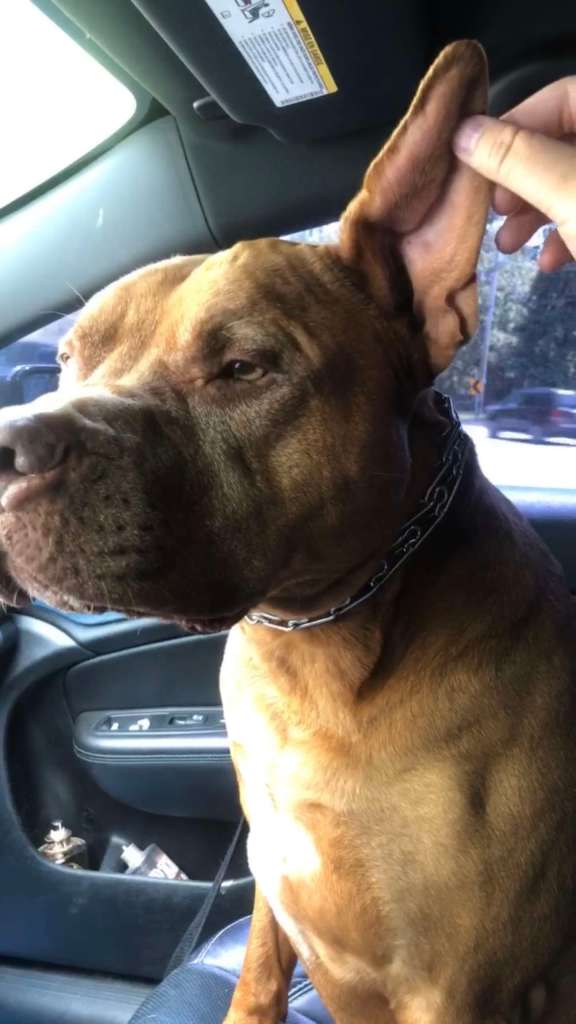
This photograph is from a twelve-year-old!
For some time I have followed Ugly Hedgehog, (UHH) a photographic forum; I joined in July 2017. It is a terrific forum and I encourage all who have an interest in photography who don’t know of the forum to drop in and take a look.
For example, I chose my camera based on advice from UHH. I chose my photo-editing software, DxO Photolab, likewise. I am growing in confidence at using the camera based on UHH advice, and more.
The other day, Dennis posted a photograph that his granddaughter took. I asked for permission to republish it and Dennis kindly said “Yes”.
First some background:
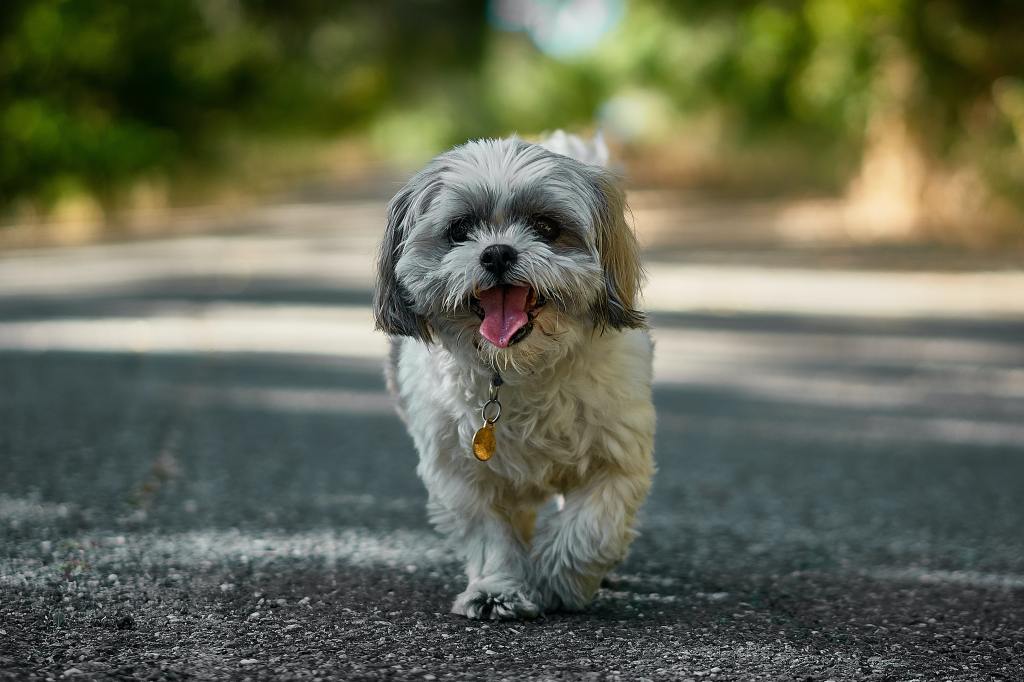
My 12 year old granddaughter took this photo of her dog recently. She used her dad’s iPhone in portrait mode. I complimented her in getting down low to take the image. And I thought it was interesting how she only captured the dog’s head. I am trying to encourage her to learn photography
And now the photograph!

Of course it’s a dog, that’s what caught my eye.
But it is also wonderful, don’t you think?
The great thing about going away is the home-coming!
I’m speaking of coming back to one’s dogs. This theme of coming home to your dogs was prompted by something I read the other day on The Dodo newsletter. It was an article … well you read it rather than me explain it.
ooOOoo

Bauer first met his mom when he was just a puppy, and ever since then they’ve been basically attached at the hip. Bauer follows his mom everywhere she goes and loves hanging out with her no matter what they’re doing.
“Bauer isn’t your typical husky, he doesn’t bark and he rarely howls,” Taryn Dennison, Bauer’s mom, told The Dodo. “He loves sleeping and when he’s awake he’s right next to you trying to get all the cuddles and pets he can or to get you to throw his toys.”
When Dennison found out she was going to be deployed, she knew it was going to be hard to leave Bauer behind. He stayed with her roommate and her roommate’s dog, Macie, and was cared for and loved so well, but everyone could tell that he missed his mom so much.

“Bauer didn’t understand why I was gone,” Dennison said. “I FaceTimed him a few times and he would run around my house trying to find me and then later he would end up laying down and falling asleep in front of my door.”
Finally, after eight long months apart, Dennison arrived home…and as soon as she walked in the door, Bauer completely lost it.
He was overwhelmed with joy and so thrilled that his mom was finally home, and couldn’t stop licking her and jumping all over her.
“I honestly thought he was going to pee on me because he was so excited,” Dennison said.

Even Macie was excited, especially when she saw how happy Bauer was, and both dogs jumped around Dennison as she sat on the floor with them. After so much time apart, she was so happy to finally be home with Bauer and the rest of her loved ones.
“Since I got home he’s been attached to my hip,” Dennison said. “I can’t even get up to go to the kitchen or the bathroom without him being right next to me. I wouldn’t change it for the world!”
Bauer missed his mom so much, but now that she’s home, he’s making sure he doesn’t take a single minute of being with her for granted.
ooOOoo
To keep up the theme for a little longer, here is a YouTube video of dogs and their returning owners.
I hope you enjoyed it.
Finally, Jean and I just need to go the shops in Grants Pass, about 20 minutes away, and when we return home, perhaps 1 or 2 hours later, we are greeted by all our dogs in a similar fashion. The vast majority of dogs offer unconditional, unbridled love! 😍
The Golden Circle.
This, again, is not about our beloved animals; in other words, this is not about our dogs.
But it is about something of supreme importance: The role of innovation. That’s innovation in all aspects of our human lives. Think of it as a process of innovation.
There was the Diffusion of Innovation (DOI) Theory developed by E.M. Rogers in 1962. There is a comprehensive explanation of DOI here, from where I take the following diagram, but before explaining, from that same site, the meanings behind the definitions, I would like to emphasize one important point: “It works better with adoption of behaviors rather than cessation or prevention of behaviors.“.
So here is that diagram:

Here are the meanings of those terms (my emboldening):
Adoption of a new idea, behavior, or product (i.e., “innovation”) does not happen simultaneously in a social system; rather it is a process whereby some people are more apt to adopt the innovation than others.
Researchers have found that people who adopt an innovation early have different characteristics than people who adopt an innovation later. When promoting an innovation to a target population, it is important to understand the characteristics of the target population that will help or hinder adoption of the innovation.
There are five established adopter categories, and while the majority of the general population tends to fall in the middle categories, it is still necessary to understand the characteristics of the target population. When promoting an innovation, there are different strategies used to appeal to the different adopter categories.
- Innovators – These are people who want to be the first to try the innovation. They are venturesome and interested in new ideas. These people are very willing to take risks, and are often the first to develop new ideas. Very little, if anything, needs to be done to appeal to this population.
- Early Adopters – These are people who represent opinion leaders. They enjoy leadership roles, and embrace change opportunities. They are already aware of the need to change and so are very comfortable adopting new ideas. Strategies to appeal to this population include how-to manuals and information sheets on implementation. They do not need information to convince them to change.
- Early Majority – These people are rarely leaders, but they do adopt new ideas before the average person. That said, they typically need to see evidence that the innovation works before they are willing to adopt it. Strategies to appeal to this population include success stories and evidence of the innovation’s effectiveness.
- Late Majority – These people are skeptical of change, and will only adopt an innovation after it has been tried by the majority. Strategies to appeal to this population include information on how many other people have tried the innovation and have adopted it successfully.
- Laggards – These people are bound by tradition and very conservative. They are very skeptical of change and are the hardest group to bring on board. Strategies to appeal to this population include statistics, fear appeals, and pressure from people in the other adopter groups.
Now there’s a TED Talk that I hadn’t seen, and yet nearly 51 million people had! It came to me as an email from TED and yesterday, while we were sitting up in bed early in the morning, I watched it. It ‘spoke’ to me and I felt that I just had to share it with you.
Because so many of the problems that face our society today are global issues and if humans are to have a future on this planet then we need great leaders who will inspire us.
Now watch the following video, it’s just over 18 minutes long, but it says it all.
This is a gorgeous story about a Corgi.
There was a story in the Daily Dodo that is just lovely.
I wondered why the Corgi was named Potato but that’s another question!
Enjoy the story!
ooOOoo
By Lily Feinn
Published on 6/8/2020.
Potato the corgi never misses an opportunity to say hi to her neighbors. So when social distancing started in Portland, Oregon, Potato’s parents, Cee and Pan, knew their dog wouldn’t be getting the kind of attention she was used to.

“She loves everyone — any dog, any kid, any adult human, doesn’t matter,” Cee told The Dodo. “Even dogs who snarl at her she’s like, ‘It’s OK, I’ll check back in five minutes.’”
“She’s in a polyamorous relationship with all of the mail, UPS and FedEx delivery people but the UPS man is her primary partner,” Cee added. “If you’re having a picnic at the park she will invite herself to your blanket and join in on the gossip.”

Potato knows a number of tricks, including how to ring a bell when she wants to go outside to the yard and socialize with the passersby. Cee, who works from home running a web agency, is always there to keep an eye on Potato when she goes out. And they noticed right away how difficult it was for Potato when her friends started ignoring her.
“Potato takes her job of getting pats through the fence very seriously and honestly seemed depressed that people stopped saying hi to her when social distancing started,” Cee said. “People kept looking really guilty when we’d catch them patting Potato through the fence, or others would ask if they could still pat her.”

To put an end to the confusion, they decided to make a little sign letting everyone know that it was still OK to give Potato the pets she craved, along with a few facts about her. “She’d bark at people she knew who normally would pat her when they’d walk by without saying hi,” Cee said. “So we wanted to make it known that it was consensual for us to take that slight risk of exposure.”
They laminated the sign and tacked it above Potato’s favorite spot on the fence. Potato was instantly happier.

The sign reads: “This is Potato! She’s friendly and yes you can pet her, even now with the virus. She also loves every dog so feel free to intro your dog!”
The sign has done more than cheer up Potato — it’s helped to connect Cee and Pan with neighbors they hadn’t met before. “People approach us more if we’re in the yard, or they send us little notes on [Potato’s] Instagram account,” Cee said. “There’s also an older neighbor lady who specifically comes by every single day to give her treats. It’s pretty wholesome.”
ooOOoo
That’s a really great good-news story!
More of my fiddling!
I am trying out a new photo editing software program called DxO PhotoLab.
It’s powerful and full of features that I am still nowhere used to. But I am taking a shine to it.
But here are a few of my photographs for you to look at.
First, a shot taken yesterday, at the moment of Solstice here in Merlin – 14:43 PDT


oooo

oooo

oooo

oooo

oooo

oooo

All photographs taken with my Nikon D750.