This was a story that appeared in my ‘in box’ yesterday afternoon but I didn’t want all the clutter that came with it. No problem because there were a number of videos on YouTube and I selected one that seemed to capture the essence of the story.
Video captures moment hero dog stopped traffic during owner’s seizure
By Tim Fitzsimons
March 25, 2021
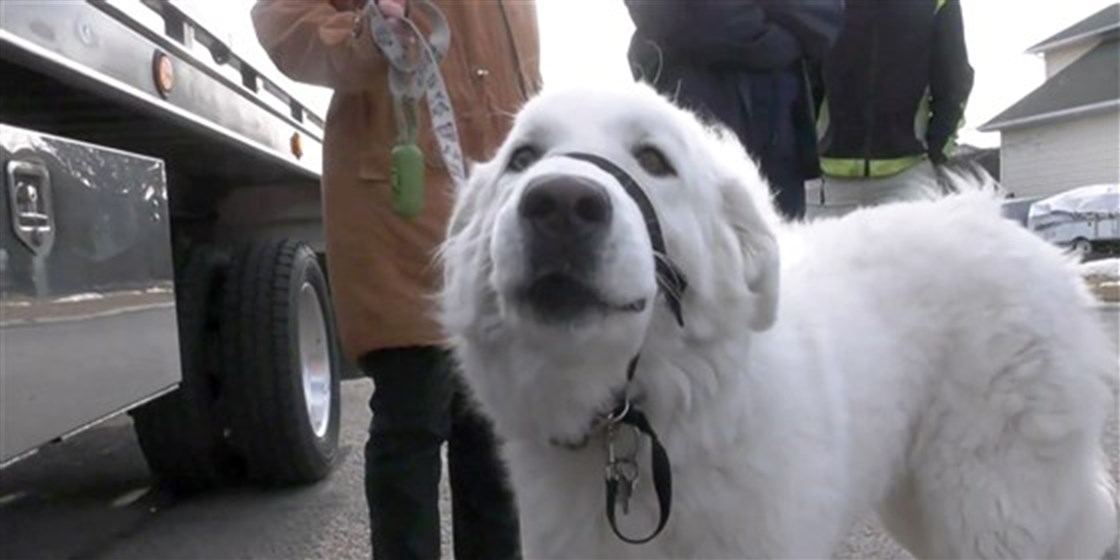
A dog named Clover is being hailed by Canadian media as a hero for helping her human, Haley Moore, survive a seizure that struck her suddenly during a walk.
Moore was strolling through the Stittsville neighborhood of Ottawa on Tuesday when she seized and fell to the curb, CTV News reported.
The incident was captured by a neighbor’s home security camera.
Clover, a year-and-a-half-old Maremma mix, sprung into action, attending first to Moore before bounding into the street and stopping traffic.
Dryden Oatway, a driver who stopped thanks to Clover’s heroics, said, “It was really impressive, the dog actually blocked my way. She kind of backed into the road to block my truck.”
Clover stopped another driver and then returned home.
“All I remember is waking up in the ambulance and being really confused, just like, ‘What is going on?'” Moore recalled in an interview with CTV. The cause of the seizure remains unknown.
Moore’s father, Randall Moore, told CTV that Clover was fed delicious steaks as a reward for her faithful service.
Psychology Today reported in March that new research suggests that seizure-predicting dogs are aided by the scent of volatile organic compounds that are excreted around seizures.
ooOOoo
Here is the YouTube video.
I’m still having some difficulty with the new WordPress but it is easier than yesterday.
The Dog and Cat Food update was announced two days ago.
In the covering email they said:
Dear Fellow Dog Lover,
You’re getting this email because you signed up on our website and asked to be notified. If you no longer wish to receive these emails, please click the “unsubscribe” link at the bottom of this message.
Bravo Packing of Carney’s Point, NJ, is expanding its recall to now include multiple dog and cat food products due to possible contamination with Salmonella and Listeria bacteria.
Please be sure to share this news with other dog and cat owners.
Mike Sagman, Editor
The Dog Food Advisor
Saving Good Dogs From Bad Dog Food
Now onto the Bravo Packing recall.
ooOOoo
Bravo Packing Expands Dog and Cat Food Recall
March 16, 2021 — Bravo Packing, Inc., of Carneys Point, New Jersey, is expandingits previously announced voluntary recall of two pet food products to now include all pet food and bones in all package sizes… because they may be contaminated with disease-causing bacteria.
During an FDA inspection, samples collected tested positive for Salmonella and Listeria monocytogenes and resulted in a recall due to the potential health risks to humans and pets.
Bravo Packing, Inc. is expanding the recall due to potential cross contamination of the following dog and cat food products.
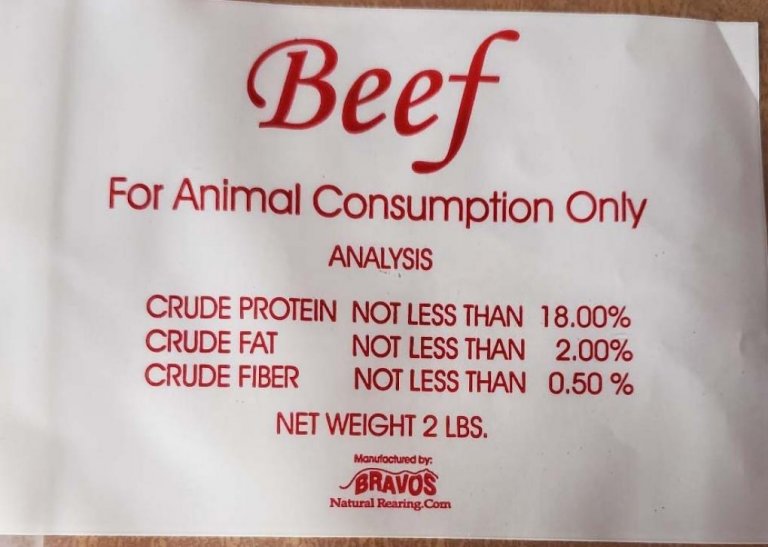
Label Images of Recalled Products
The following label images are included in the FDA bulletin. No other photographs were provided by the company.
About Salmonella
Salmonella can cause illness in pets eating the products, as well as people who handle contaminated pet food products, especially if they have not thoroughly washed their hands after having contact with the products, infected pets, or any surfaces exposed to these products.
People infected with Salmonella should monitor themselves for some or all of the following symptoms: nausea, vomiting, diarrhea or bloody diarrhea, abdominal cramping, and fever.
Rarely, Salmonella can result in more serious ailments, including arterial infections, endocarditis (an infection of the heart muscle), arthritis, muscle pain, eye irritation, and urinary tract symptoms.
People who have these symptoms after having contact with the products identified in this recall or with a pet that has eaten these products should contact their healthcare providers.
A pet with a Salmonella infection may be lethargic and have diarrhea or bloody diarrhea, fever, and vomiting.
Some pets will have decreased appetite, fever, and abdominal pain.
If your pet has consumed the recalled products and has these symptoms, please contact your veterinarian.
Pets exposed to contaminated food can be infected without showing symptoms.
Infected pets, including those without symptoms, can also shed Salmonella through their feces and saliva, spreading pathogens into the home environment and to humans and other animals nearby.
Listeria monocytogenes is an organism which can cause serious and sometimes fatal infections in young children, frail or elderly people, and others with weakened immune systems.
Although healthy individuals may suffer only short-term symptoms such as high fever, severe headache, stiffness, nausea, abdominal pain, and diarrhea, Listeria monocytogenes infection can cause miscarriages and stillbirths among pregnant women.
No human or animal illnesses related to the identified products have been reported to date.
Where Were the Products Sold?
Bravo Packing Inc. generally works with distributors that fill orders to retail storesand to consumers directly nationwide.
What to Do?
Consumers with any of the affected products should handle them with caution, discard products in a secure container, and wash hands and surfaces properly.
Consumers with questions should contact Bravo Packing, Inc. at 856-299-1044 (Monday through Friday, 9:00 am to 2:00 pm, ET).
U.S. citizens can report complaints about FDA-regulated pet food products by calling the consumer complaint coordinator in your area.
Nothing to do with dogs but everything to do with the future!
An item in The Conversation recently was not only interesting from a scientific point-of-view but also it had real lessons for the way that we humans are interfering with the planet.
As The Conversation introduced the article:
A mile below the surface of the Greenland ice sheet, an ancient Arctic ecosystem is preserved in the frozen soil. How scientists discovered its leaves, twigs and mosses is a story in itself. It starts with a secret military base built into the northern Greenland ice.
In 1963, inside a covert U.S. military base in northern Greenland, a team of scientists began drilling down through the Greenland ice sheet. Piece by piece, they extracted an ice core 4 inches across and nearly a mile long. At the very end, they pulled up something else – 12 feet of frozen soil.
The ice told a story of Earth’s climate history. The frozen soil was examined, set aside and then forgotten.
Half a century later, scientists rediscovered that soil in a Danish freezer. It is now revealing its secrets.
Using lab techniques unimaginable in the 1960s when the core was drilled, we and an international team of fellow scientists were able to show that Greenland’s massive ice sheet had melted to the ground there within the past million years. Radiocarbon dating shows that it would have happened more than 50,000 years ago. It most likely happened during times when the climate was warm and sea level was high, possibly 400,000 years ago.
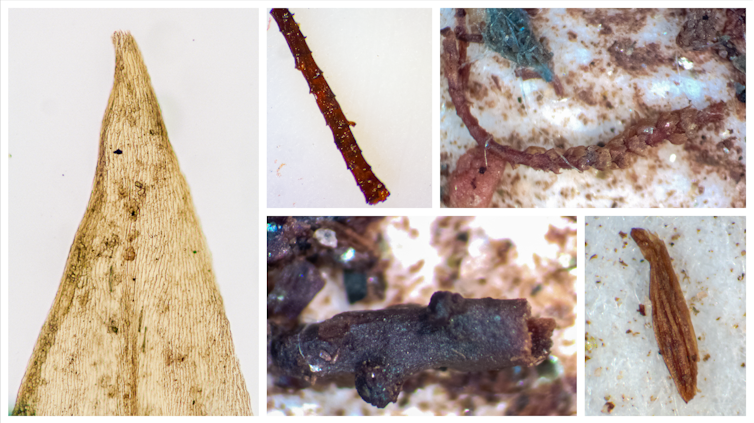
And there was more. As we explored the soil under a microscope, we were stunned to discover the remnants of a tundra ecosystem – twigs, leaves and moss. We were looking at northern Greenland as it existed the last time the region was ice-free. Our peer-reviewed study was published on March 15 in Proceedings of the National Academy of Sciences.
Engineers pull up a section of the 4,560-foot-long ice core at Camp Century in the 1960s. U.S. Army Corps of Engineers
Paul Bierman, a geomorphologist and geochemist, describes what he and his colleagues found in the soil.
With no ice sheet, sunlight would have warmed the soil enough for tundra vegetation to cover the landscape. The oceans around the globe would have been more than 10 feet higher, and maybe even 20 feet. The land on which Boston, London and Shanghai sit today would have been under the ocean waves.
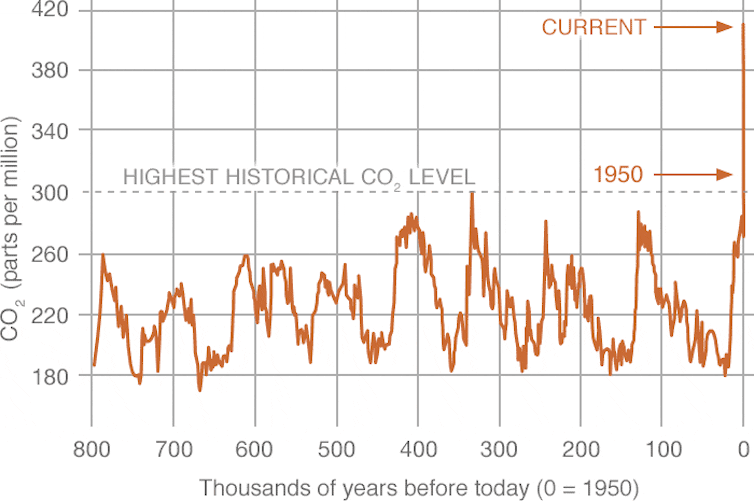
All of this happened before humans began warming the Earth’s climate. The atmosphere at that time contained far less carbon dioxide than it does today, and it wasn’t rising as quickly. The ice core and the soil below are something of a Rosetta Stone for understanding how durable the Greenland ice sheet has been during past warm periods – and how quickly it might melt again as the climate heats up.
Secret military bases and Danish freezers
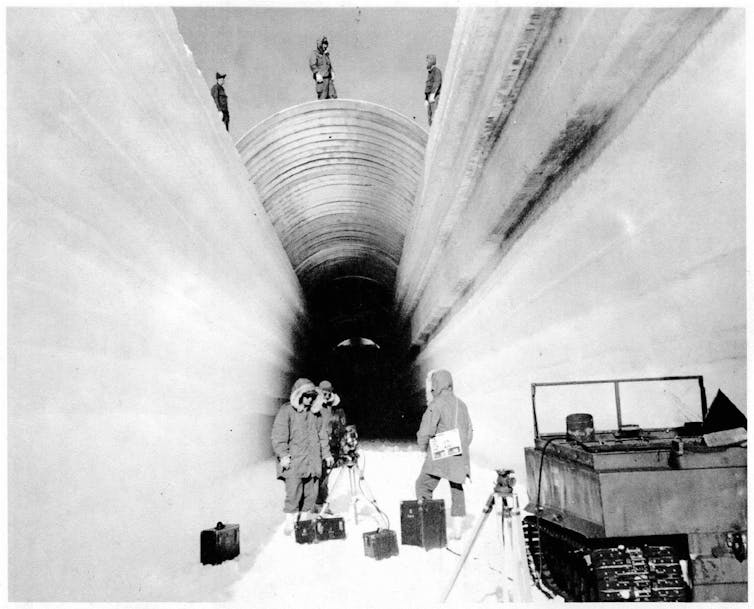
The story of the ice core begins during the Cold War with a military mission dubbed Project Iceworm. Starting around 1959, the U.S. Army hauled hundreds of soldiers, heavy equipment and even a nuclear reactor across the ice sheet in northwest Greenland and dug a base of tunnels inside the ice. They called it Camp Century.
It was part of a secret plan to hide nuclear weapons from the Soviets. The public knew it as an Arctic research laboratory. Walter Cronkite even paid a visit and filed a report.
Workers build the snow tunnels at the Camp Century research base in 1960. U.S. Army Corps of Engineers
Camp Century didn’t last long. The snow and ice began slowly crushing the buildings inside the tunnels below, forcing the military to abandon it in 1966. During its short life, however, scientists were able to extract the ice core and begin analyzing Greenland’s climate history. As ice builds up year by year, it captures layers of volcanic ash and changes in precipitation over time, and it traps air bubbles that reveal the past composition of the atmosphere.
One of the original scientists, glaciologist Chester Langway, kept the core and soil samples frozen at the University at Buffalo for years, then he shipped them to a Danish archive in the 1990s, where the soil was soon forgotten.
A few years ago, our Danish colleagues found the soil samples in a box of glass cookie jars with faded labels: “Camp Century Sub-Ice.”
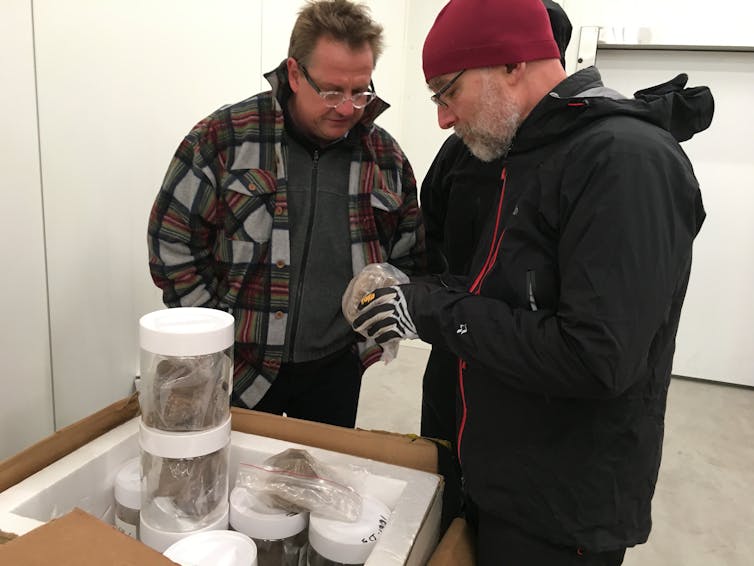
Geomorphologist Paul Bierman (right) and geochemist Joerg Schaefer of Columbia University examine the jars holding Camp Century sediment for the first time. They were in a Danish freezer set at -17 F. Paul Bierman, CC BY-ND
A surprise under the microscope
On a hot July day in 2019, two samples of soil arrived at our lab at the University of Vermont frozen solid. We began the painstaking process of splitting the precious few ounces of frozen mud and sand for different analyses.
First, we photographed the layering in the soil before it was lost forever. Then we chiseled off small bits to examine under the microscope. We melted the rest and saved the ancient water.
Then came the biggest surprise. While we were washing the soil, we spotted something floating in the rinse water. Paul grabbed a pipette and some filter paper, Drew grabbed tweezers and turned on the microscope. We were absolutely stunned as we looked down the eyepiece.
Staring back at us were leaves, twigs and mosses. This wasn’t just soil. This was an ancient ecosystem perfectly preserved in Greenland’s natural deep freeze.
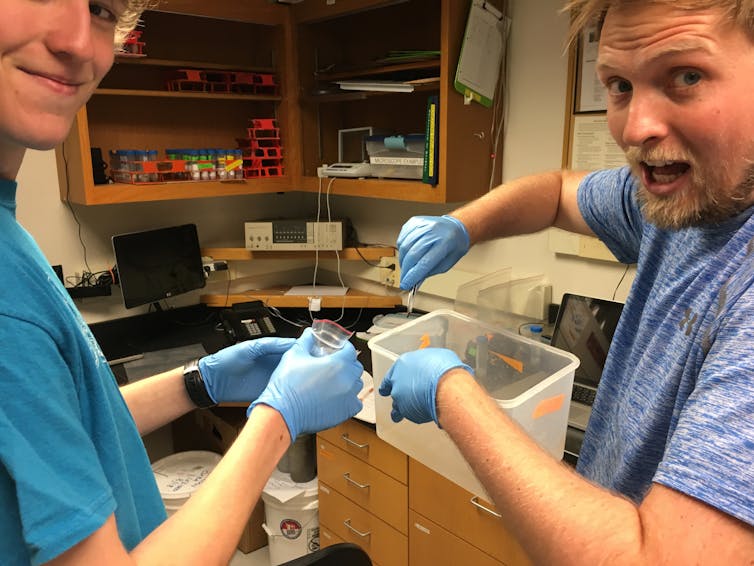
Glacial geomorphologist Andrew Christ (right), with geology student Landon Williamson, holds up the first twig spotted as they washed a sediment sample from Camp Century. Paul Bierman, CC BY-ND
Dating million-year-old moss
How old were these plants?
Over the last million years, Earth’s climate was punctuated by relatively short warm periods, typically lasting about 10,000 years, called interglacials, when there was less ice at the poles and sea level was higher. The Greenland ice sheet survived through all of human history during the Holocene, the present interglacial period of the last 12,000 years, and most of the interglacials in the last million years.
But our research shows that at least one of these interglacial periods was warm enough for a long enough period of time to melt large portions of the Greenland ice sheet, allowing a tundra ecosystem to emerge in northwestern Greenland.
We used two techniques to determine the age of the soil and the plants. First, we used clean room chemistry and a particle accelerator to count atoms that form in rocks and sediment when exposed to natural radiation that bombards Earth. Then, a colleague used an ultra-sensitive method for measuring light emitted from grains of sand to determine the last time they were exposed to sunlight.
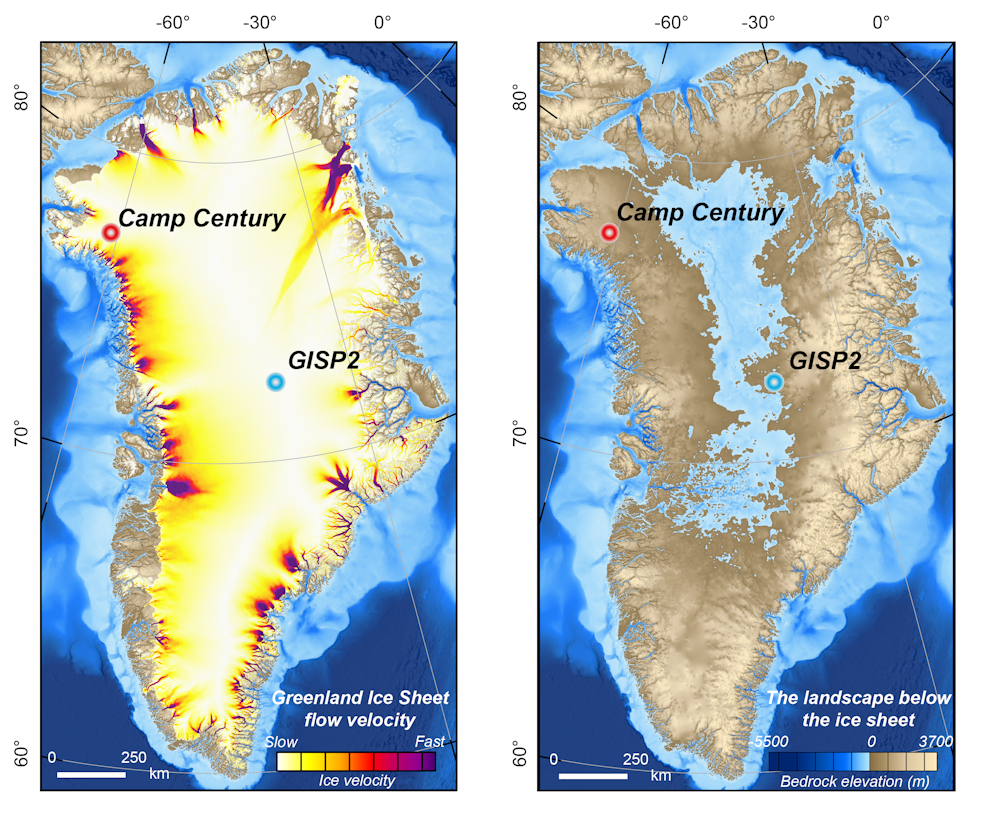
Maps of Greenland show the speed of the ice sheet as it flows (left) and the landscape hidden beneath it (right). BedMachine v3; Copernicus Climate Change Service (C3S), CC BY-ND
The concentration of carbon dioxide in the atmosphere today is well beyond past levels determined from ice cores. On March 14, 2021, the CO2 level was about 417 ppm. NASA Jet Propulsion Laboratory, CC BY-ND
Losing the Greenland ice sheet would be catastrophic to humanity today. The melted ice would raise sea level by more than 20 feet. That would redraw coastlines worldwide.
About 40% of the global population lives within 60 miles of a coast, and 600 million people live within 30 feet of sea level. If warming continues, ice melt from Greenland and Antarctica will pour more water into the oceans. Communities will be forced to relocate, climate refugees will become more common, and costly infrastructure will be abandoned. Already, sea level rise has amplified flooding from coastal storms, causing hundreds of billions of dollars of damage every year.
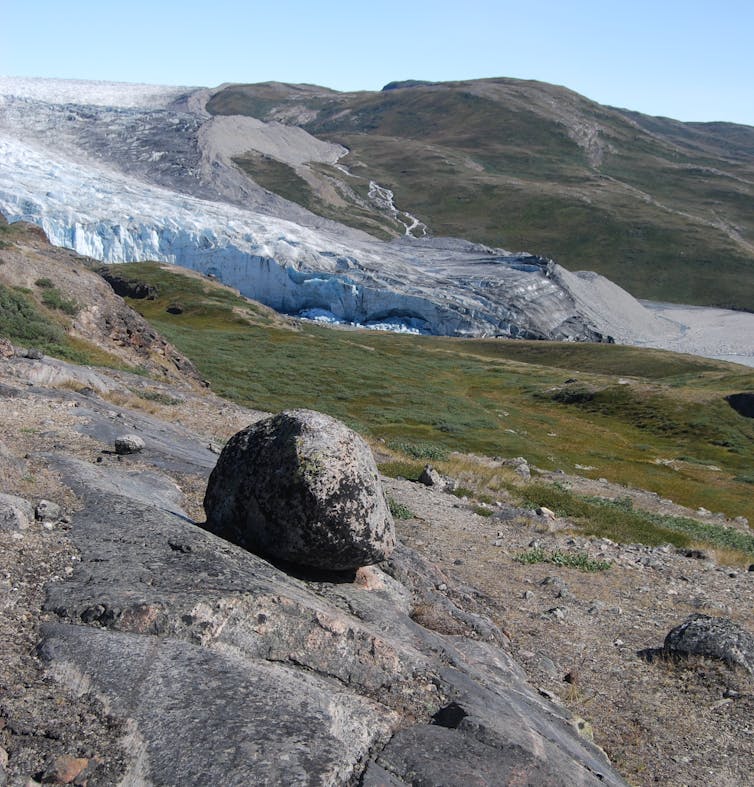
Tundra near the Greenland ice sheet today. Is this what Camp Century looked like before the ice came back sometime in the last million years? Paul Bierman, CC BY-ND
The story of Camp Century spans two critical moments in modern history. An Arctic military base built in response to the existential threat of nuclear war inadvertently led us to discover another threat from ice cores – the threat of sea level rise from human-caused climate change. Now, its legacy is helping scientists understand how the Earth responds to a changing climate.
The article is republished with the full permission of The Conversation.
I hope you read it because the way the climate is changing is affecting all of us now and sooner rather than later we have all got to amend our ways. Indeed, when I look at anyone who has potentially thirty or more years of life in them I ponder what their future is going to be like. And, of course, it won’t be a drastic change in thirty years it is already happening now albeit at times difficult to see.
But there is not one scintilla of doubt that we humans are the cause and we humans have to be the solution!
Another international story of love and caring for our dogs.
This time about homeless or stray dogs and in Peru. Again it was written by Stephen Messenger and was shared on The Dodo website. Again it is about the fundamental goodness that is in a great many humans spanning continents.
ooOOoo
Nice Restaurant Owner Prepares A Free Meal For Every Stray Dog Who Visits
“They pay us with their happiness and wagging tails” ❤️
By Stephen Messenger
Published on the 26th February, 2021
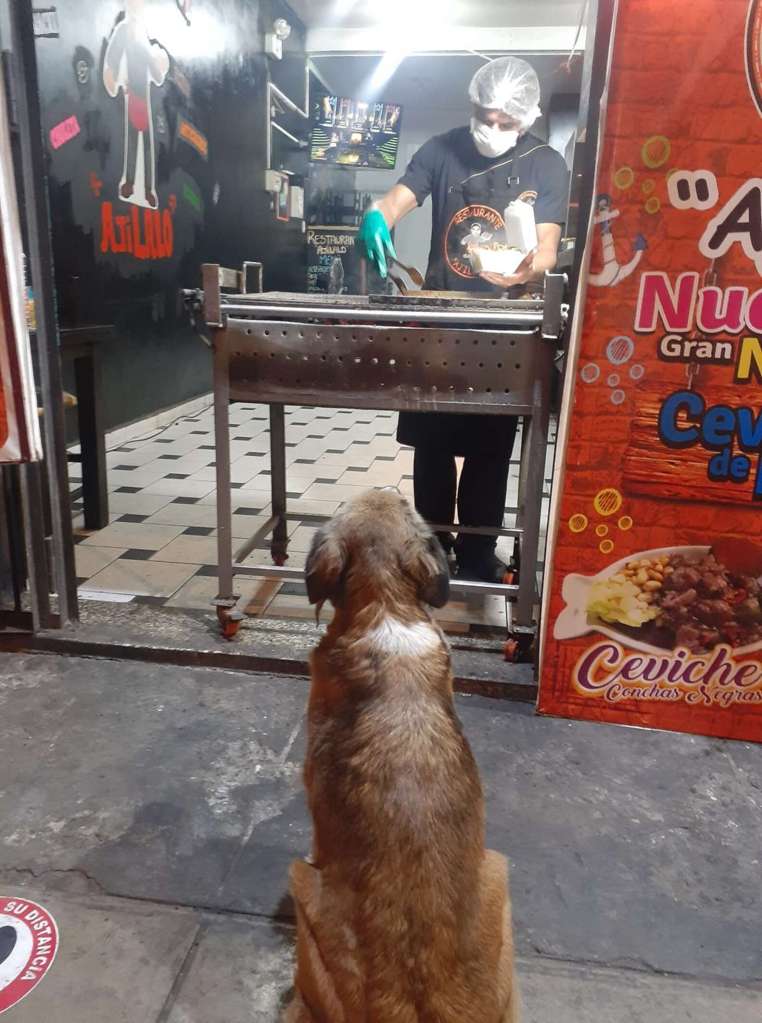
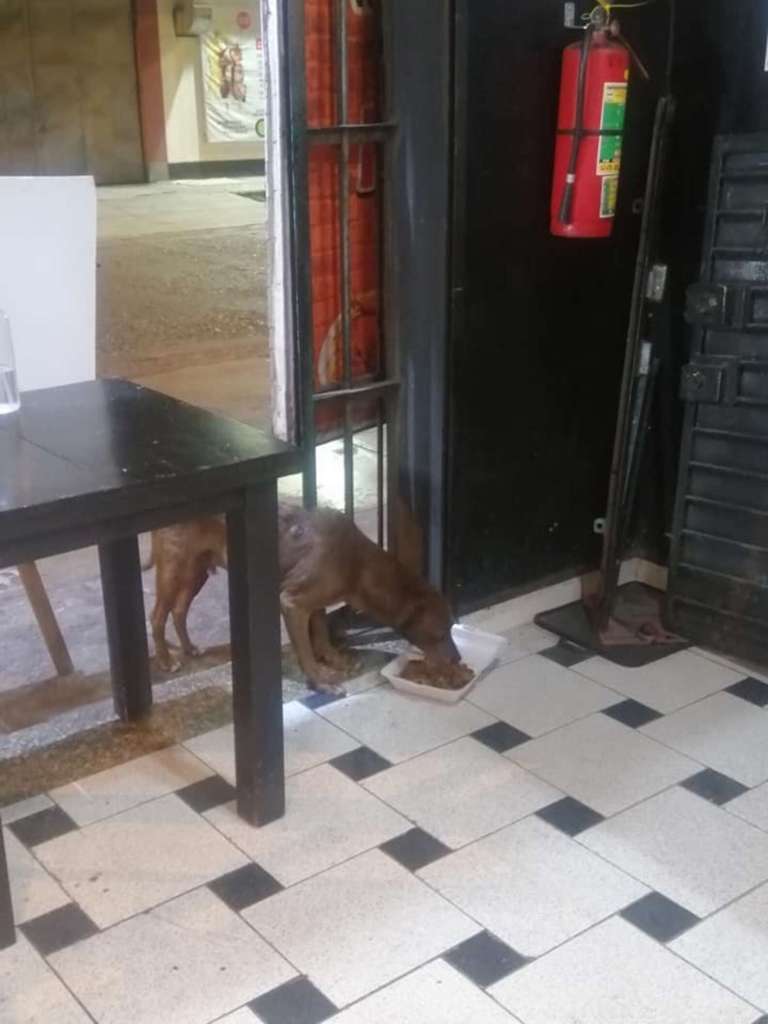
One evening five years ago, an unexpected customer dropped by Gerardo Ortiz’s restaurant, Ajilalo, in Peru. It was a stray dog, a look of hunger in her eyes.
Ortiz could have easily turned the dog away. But he didn’t.
Restaurante – Ajilalo
That evening, Ortiz offered the dog a free meal, made just for her.
And thus began an adorable tradition that continues to this day.
Restaurante – Ajilalo
Each evening, from then on, the hungry dog came and received a free meal from Ortiz’s restaurant.
But it didn’t take long for word of Ortiz’s kindness and generosity to spread among the community of local stray pups.
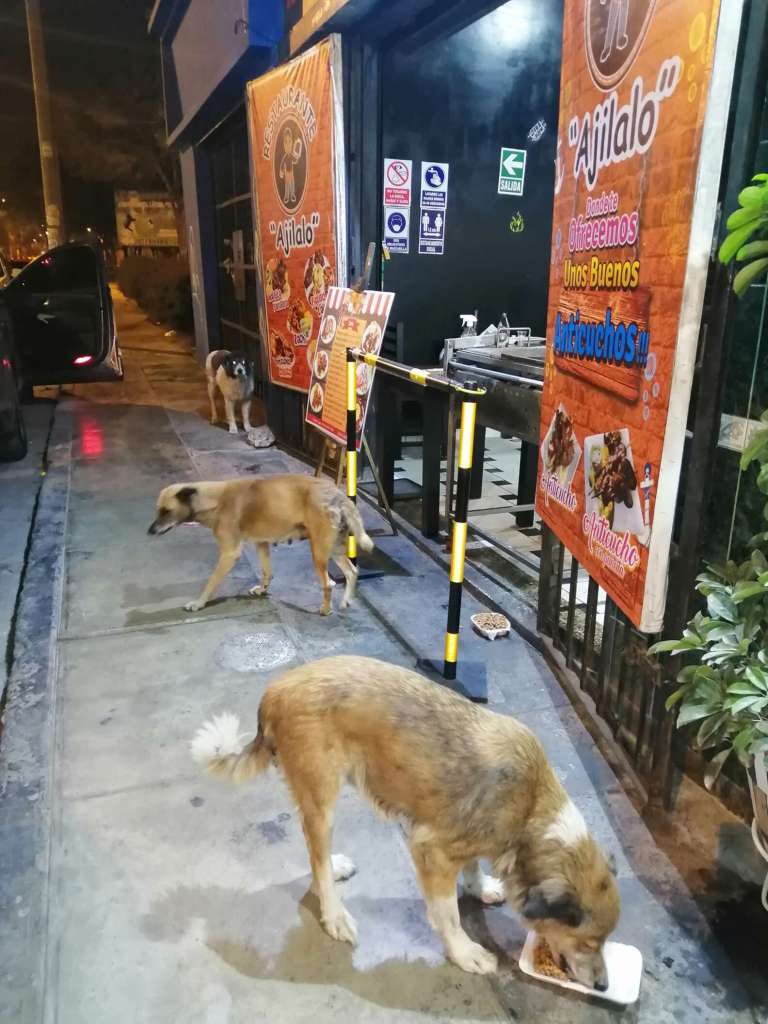
More dogs began to arrive with that first visitor— and Ortiz welcomed them all with a meal.
Restaurante – Ajilalo
Nowadays, numerous stray dogs arrive to the doors of Ortiz’s restaurant each night. Many are regular “customers,” while others are first-timers — all hoping to fill their bellies thanks to Ortiz’s kindness.
Restaurante – Ajilalo
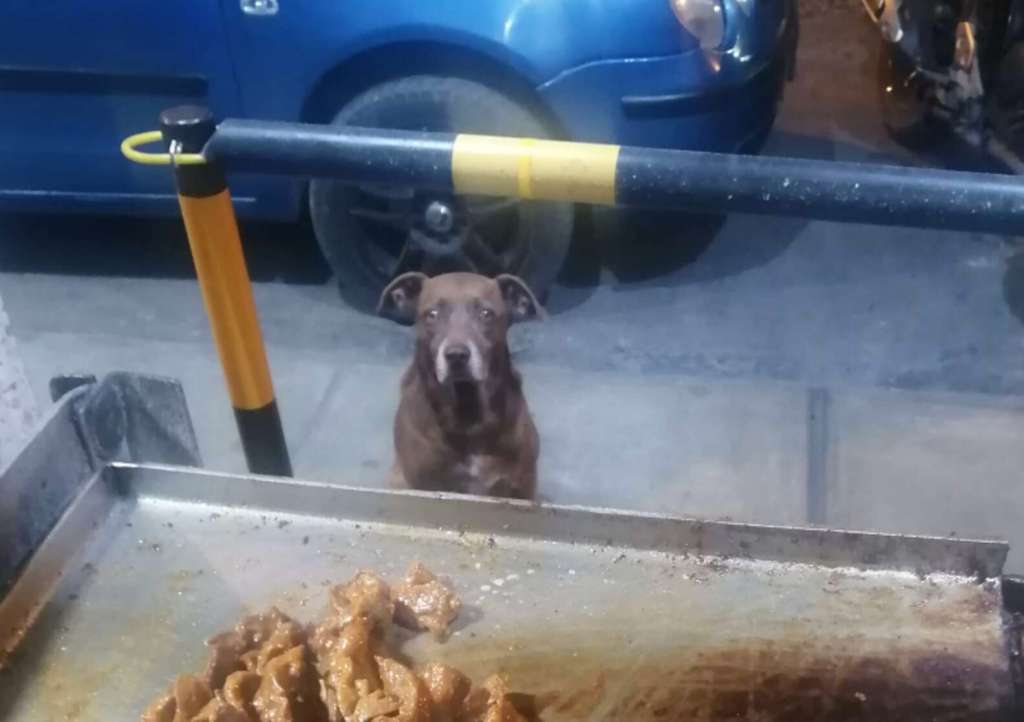
Often, as Ortiz is working, he’ll look up and see a new dog’s face at the front — waiting politely to see if the rumor that free food can found there is true.
It always is.
Restaurante – Ajilalo
“For me, they are the best customers,” Ortiz told The Dodo.
And his human customers hardly take that as a slight. Inspired by Ortiz, they often bring food for the visiting dogs as well.
Restaurante – Ajilalo
“Thankfully, our clients have reacted well to the dogs,” Ortiz said. “They are affectionate toward them.”
Restaurante – Ajilalo
Ultimately, Ortiz’s sweet routine of feeding all the stray dogs who visit does more than keep them from being hungry. It lets them know that their lives matter — a truth that Ortiz is happy to prove to them each and every day.
Restaurante – Ajilalo
“They do not pay us with money, but they pay us with their happiness and wagging tails,” Ortiz said. “They are very grateful, and we enjoy giving more than receiving. Since I was a child, I have loved animals. My mother always taught us to help others, both people and animals. She’s my inspiration.”
ooOOoo
This is such a wonderful share. Snr Ortiz confirms what we know absolutely. That people who care for animals care for so much more. As Gerardo says: “It lets them know that their lives matter.”
I am minded to remember when I first met Jean in December, 2007. Jean was living in San Carlos, Northern Mexico, and had been for many years. Her husband, Ben, had died in 2005.
Jean was rescuing street dogs off the streets of San Carlos and surrounding areas, caring for them, neutering or spaying them, and then finding homes for them mainly in Arizona, USA. Many, many dogs owed their lives to Jean’s love for those dogs. In 2010, after I had gone out to San Carlos with my Pharaoh to live with Jean and her dogs in 2008, we came North to Arizona to find a U.S. home and be married. We came through the Mexican-US border with 16 dogs, all of them with their paperwork in order. I will always recall the American border agent, after I had approached him with all the paperwork, leaning out of his booth and calling to the agent in the next booth: “Hey Jake, there’s a guy here with sixteen dogs!”
Jean and I were married in Payson, AZ on the 20th November, 2010.
Mr and Mrs Handover
Very sweet memories and the start of a loving era in our lives.
Those of you that read yesterday’s post will know that I was having malware problems.
I have McAfee Total Protection and yesterday first thing I started a full scan using McAfee. After many hours it still had not removed the malware.
I again called Apple and they recommended me using the Malwarebytes software. I installed that software and it worked! So I very happily struck up a paying relationship with Malwarebytes!
Now to today’s dog food recall!
ooOOoo
Bravo Packing Recalls Performance Dog Pet Food
March 3, 2021 — Bravo Packing, Inc. of Carneys Point, NJ, is recalling all Ground Beef and Performance Dog, a frozen raw pet food because it has the potential to be contaminated with Salmonella and Listeria monocytogenes bacteria.
What’s Recalled?
Performance Dog and Ground Beef both come frozen in 2-pound and 5-pound plastic sleeves with the following labels (provided by the company).
About Salmonella and Listeria
Salmonella can cause illness in animals eating the products, as well as people who handle contaminated pet products… especially if they have not thoroughly washed their hands after having contact with the products, infected animals or any surfaces exposed to these products.
Listeria monocytogenes is an organism which can cause serious and sometimes fatal infections in young children, frail or elderly people, and others with weakened immune systems.
Although healthy individuals may suffer only short-term symptoms such as high fever, server headache, stiffness, nausea, abdominal pain and diarrhea, Listeria monocytogenes infection can cause miscarriages and stillbirths among pregnant women.
Healthy people infected with Salmonella should monitor themselves for some or all of the following symptoms: nausea, vomiting, diarrhea or bloody diarrhea, abdominal cramping and fever.
Rarely, Salmonella can result in more serious ailments, including arterial infections, endocarditis (an infection of the heart muscle), arthritis, muscle pain, eye irritation and urinary tract symptoms.
People who have these symptoms after having contact with this product or an animal that has eaten this product should contact their healthcare providers.
Pets with Salmonella infections may be lethargic and have diarrhea or bloody diarrhea, fever, and vomiting.
Some pets will have decreased appetite, fever and abdominal pain.
Pets exposed to contaminated food can be infected without showing symptoms.
If your pet has consumed the recalled product and has these symptoms, please contact your veterinarian.
Infected animals including those without symptoms, can also shed Salmonella through their feces and saliva, spreading pathogens into the home environment and to humans and other animals in the household.
No human or animal illnesses have been reported to date.
About This Recall
Bravo Packing, Inc. is voluntarily recalling the products after samples of Performance Dog and a sample of Ground Beef were collected during an FDA inspection, tested positive for Salmonella and Listeria monocytogenes.
Where Were the Products Sold?
Performance Dog generally works with the distributor located in Brooklyn, New York, that fills orders to brick-and-mortar retail stores or to consumers directly nationwide.
What to Do?
If you have an Ground Beef or Performance Dog, please throw it away. (My emphasis. PH)
Consumers with questions should contact Bravo Packing, Inc. at 856-299-1044 (Monday – Friday, 9:00AM-2:00PM, EST).
U.S. citizens can report complaints about FDA-regulated pet food products by calling the consumer complaint coordinator in your area.
I don’t think I had considered it before now, or rather at the end of January this year, that women across many cultures have an extra special relationship with dogs. It came from an article published in Treehugger on the 27th January and I hope it is alright to share it with you today.
ooOOoo
Why Women Have Had a Great Impact on Dog-Human Relationships
Dogs were more likely to be seen as a type of “person” when bonded with women.
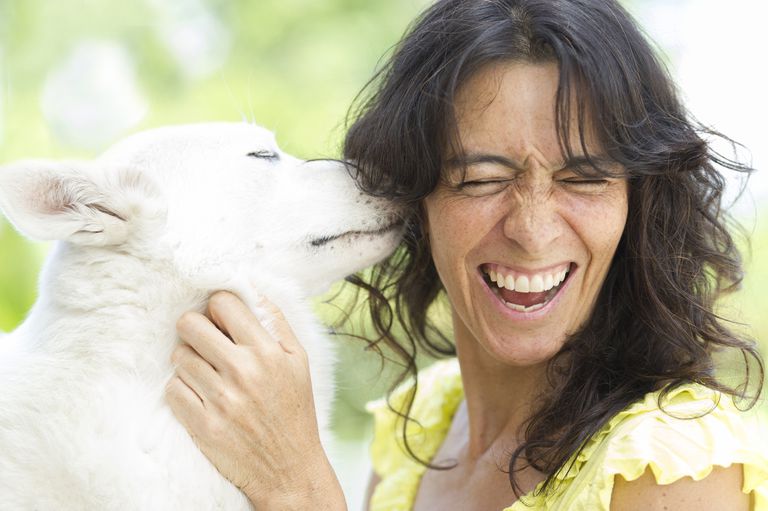
Throughout cultures, women often have closer relationships with dogs. GM Visuals / Getty Images
Sure, they’re called man’s best friend, but it’s women who likely had a bigger impact on the evolutionary relationship between dogs and their humans.
In a new analysis published in the Journal of Ethnobiology, researchers found that several factors probably played a part in creating the beneficial bonds between canines and people. One of those key factors, they found, is gender.
“Both men and women were important for the care and status of dogs across societies, but women had a stronger influence,” Robert Quinlan, Washington State University anthropology professor and corresponding author on the paper, tells Treehugger.
The researchers analyzed documents in the Human Relations Area Files, an anthropological database of collections covering cultural and social life. They sorted through thousands of mentions of dogs, ultimately finding data from 844 ethnographers (researchers who study human culture) writing in 144 societies.>They studied these cultures hoping to get insight into how the beneficial relationship between dogs and humans developed, the researchers said. They tracked traits associated with what they called dogs’ “personhood” across cultures.
“In some cultures, that idea is quite explicit: Dogs are defined as a type of ‘person,’ with human-like qualities. But it also can look like treating dogs in ‘person’-like ways — including giving dogs names, allowing to sleep in humans’ beds, viewing them as beings with souls, or burying and mourning them upon death,” Jaime Chambers, a WSU anthropology PhD student and first author on the paper, tells Treehugger.
They found accounts of the Toraja Indigenous People in Indonesia describing dogs as “equals,” the Sri Lankan Vedda referring to dogs as “four-footed persons,” and the Kapauku in Papua New Guinea calling dogs the only non-human animals with souls, Chambers says.
“We also tracked instances where ethnographers mentioned dogs having a special relationship to women, versus a relationship to men. When it came to dogs’ usefulness to humans, we didn’t detect either gender having more of an influence than the other,” Chambers says. “But in cultures where women and dogs shared a special bond, humans were more likely to be useful to dogs (providing things like affection, food, shelter, and healing) and to regard dogs as ‘person-like.’”
They found that in societies where men were observed interacting with dogs, the likelihood of dogs receiving care and other benefits from humans increased by 37%, and the likelihood that they were treated like people increased by 63%.
In contrast, in societies where dogs were observed interacting with women, the likelihood that they received care and other benefits from humans increased by 127%, and the likelihood that they were treated like people increased by 220%.
“The influence of men and women were additive so that in societies where dogs interacted with both men and women, their benefits and status were increased even more than in societies where dogs tended to interact with only men or only women,” Quinlan points out.
How Women Interact with Dogs
When sifting through the documents, researchers found examples of how women interacted differently with dogs than did men.
“We found women playing a notable role in welcoming dogs into the family sphere. Among the Munduruku from the Amazon and Tiwi from Australia, ethnographers describe women caring for dogs like their own children — literally allowing them to feed and sleep alongside their own human kids,” Chambers says.
“In some cultures, dogs serve as women’s companions in their daily work, such as Amazonian Tukano women who tend their gardens and hunt small game with their dog by their side. In Scandinavia, Saami women play a key role in controlling dogs’ breeding, keeping both male and female dogs and distributing the puppies to their human friends and relatives.”
But dogs aren’t revered everywhere.
“Among the Rwala Bedouin, there’s ambivalence around dogs — they’re seen as an unclean, polluting source, forbidden from eating from cooking vessels — yet they’re still valued as watchdogs and kept close to particular households via women (who sleep near them at night, and feed them via tossed scraps),” Chambers says.
Heat and Hunting
Gender isn’t the only thing that appears to have played a role in the coevolution of dogs and humans. Researchers also found that the warmer the climate, the less useful dogs were to people as hunting partners.
Humans evolved in tropical environments and are pretty good at keeping cool, Quinlan says. However, canine ancestors evolved in cold environments in northern latitudes.
“Dogs burn a lot of energy quickly when they are very active, like chasing prey and so forth, and that can make keeping cool a big problem. Anyone who has taken their dog for a run on a chilly day versus a hot day can easily see the difference,” Quinlan says.
“So, in hot environments dogs can overheat really quickly, making them less useful as hunting partners, herders, etc. ”There are some breeds in some hot environments that have better heat tolerance, yet those are the exceptions.”
Hunting also seemed to strengthen the ties between humans and dogs. In societies where people hunted with their dogs, the animals were more valued. That benefit appeared to decline when food production increased through agriculture or keeping livestock and dogs weren’t as necessary anymore.
Mutual Cooperation Theory
There have been many theories about how dog domestication happened. Some think that humans directly tamed the animals, while others think that people and dogs were mutually attracted to each other and discovered benefits from working together.
“We will never be able to precisely identify the chain of events and conditions leading to dog domestication, but shifting our emphasis like this allows us to rethink the relationship between humans and nature by moving away from a sense of complete human dominance to a kind of cooperation between humans and other beings where the other beings are on a more equal footing,” Quinlan says.
“A mutual cooperation scenario is probably more realistic, and it suggests that we all might benefit from thinking of humans as just one important player among many when we think about humans and the natural world. For us, this rethinking allowed us to approach dog-human relationships from multiple interrelated angles, and the insights we hoped to get from viewing the relationships from multiple angles was a big motivator for this research.”
ooOOoo
I don’t know about you but we found this a very interesting and fascinating theory.
I would love to say more but despite me being the publisher of this blog I am still an individual with lots to learn about dog domestication.
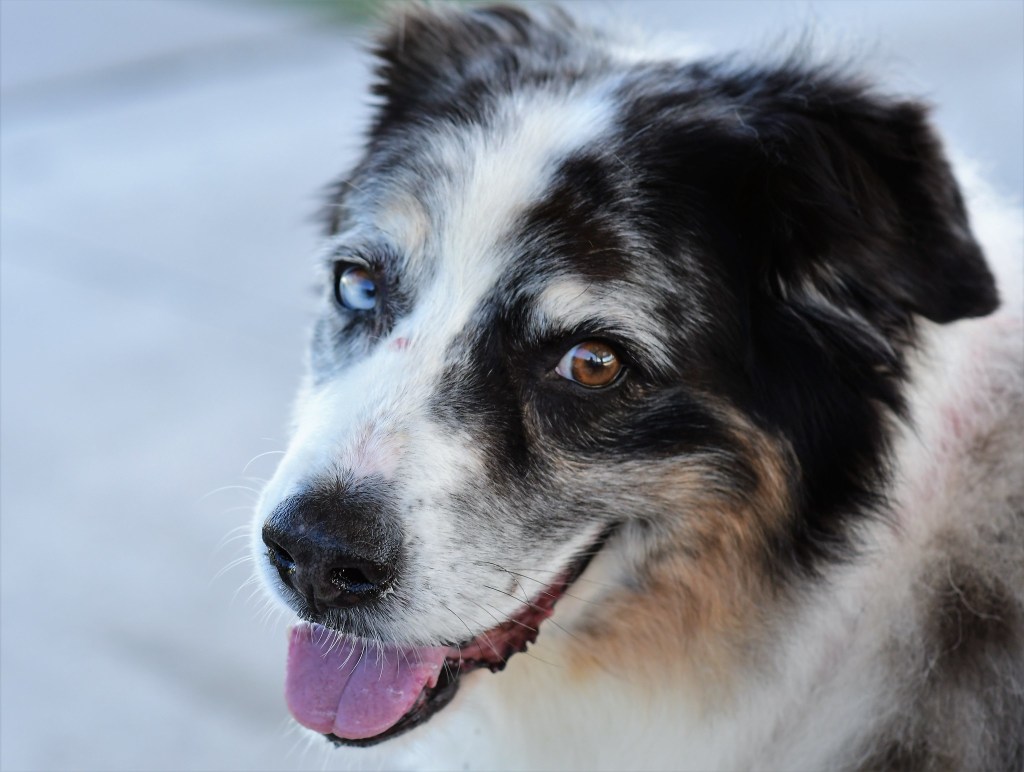
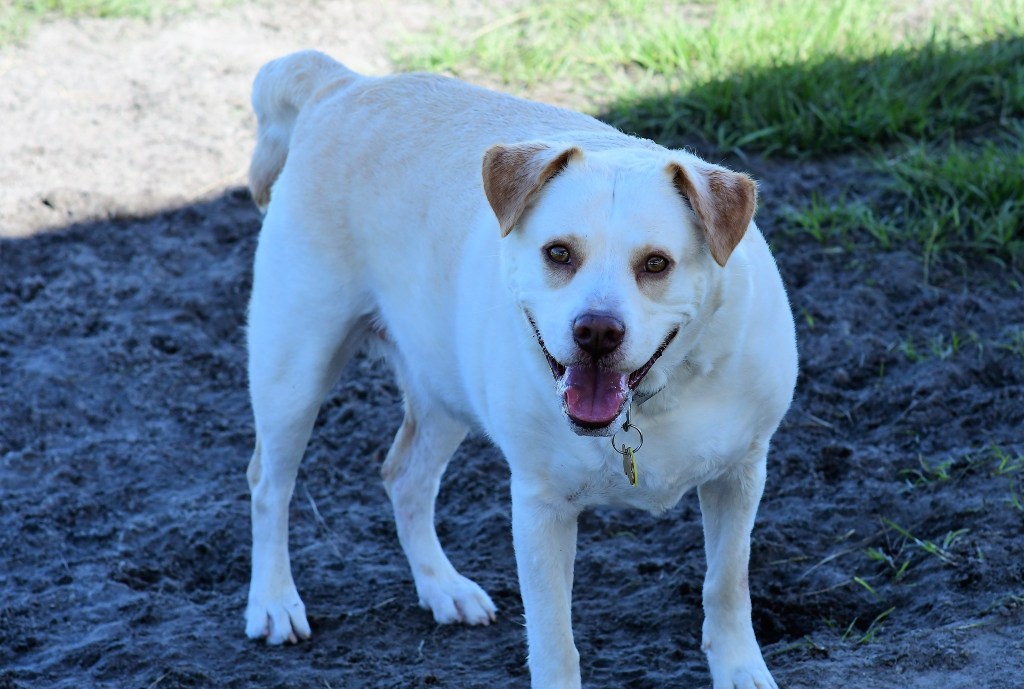
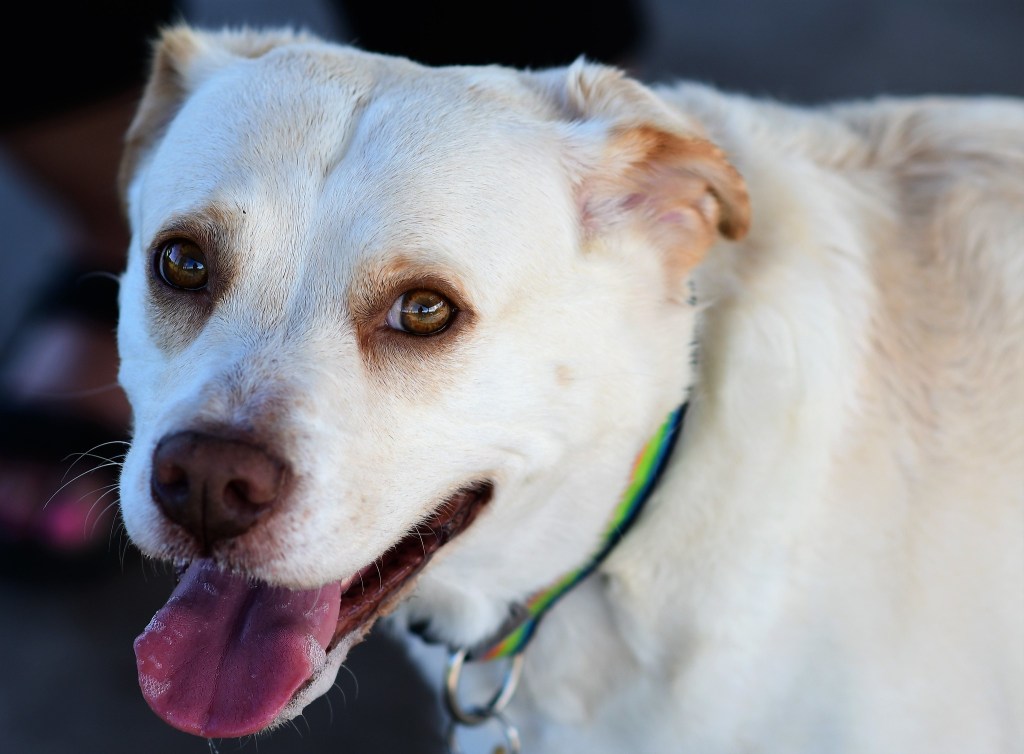
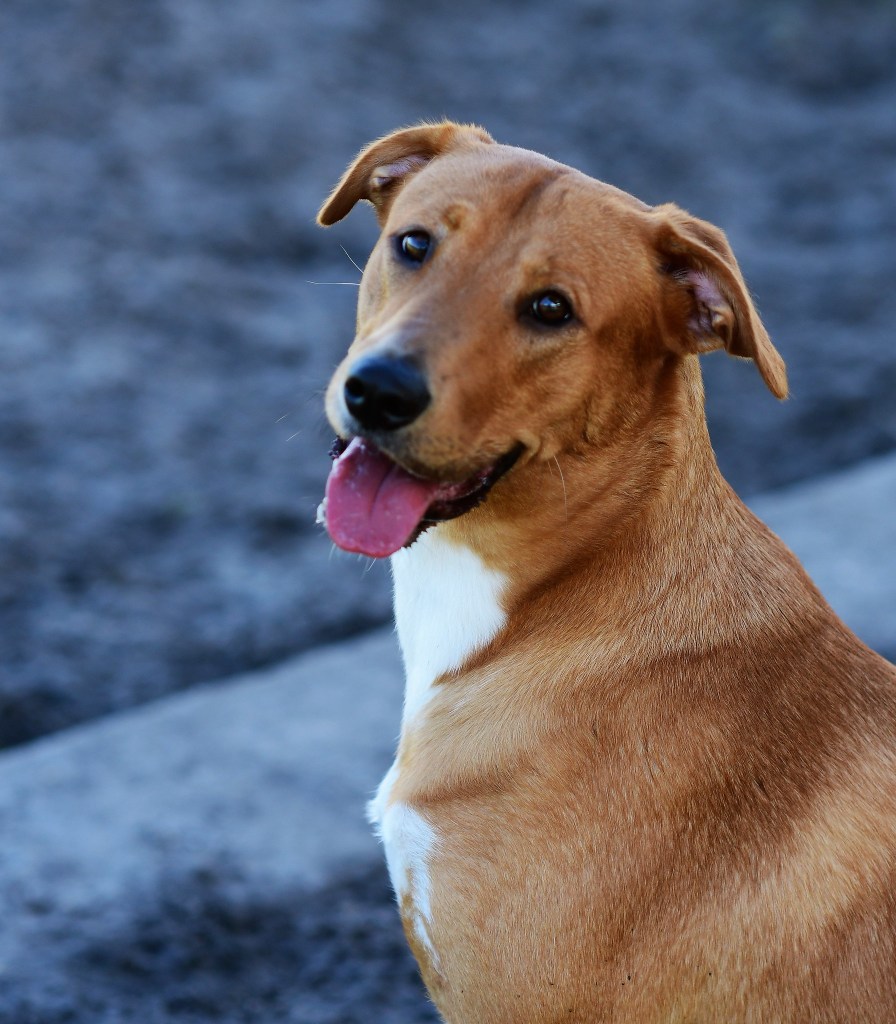
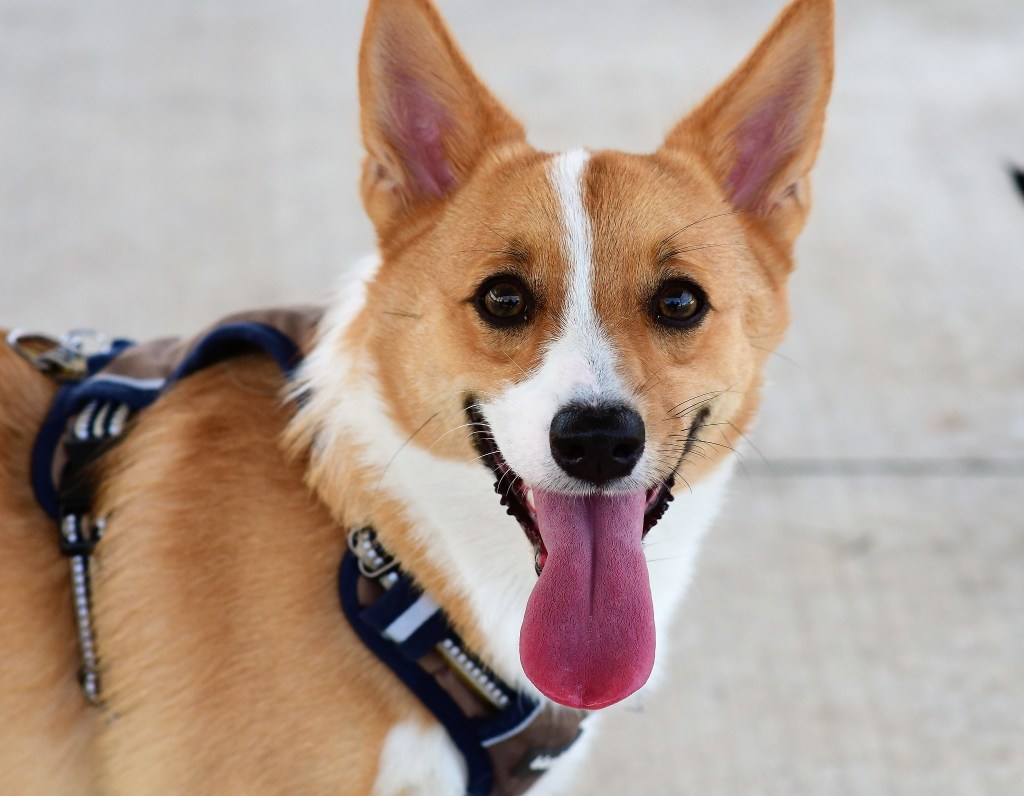
These are such beautiful photographs and that’s not all! I have just chosen the photos of the dogs looking at the camera. For the eyes of most dogs are just captivating.
Let me share with you a couple of the photos I have taken of our dogs.
Back on Monday I spoke of Rik and his company Ahead4Heights.
Rik then sent me another piece of news about a film that he produced at short notice for Brixham Council.
Recent projects being a the Front page of the local rag, a roof inspection in Teignmouth for one of the largest local roofing contractors who is now on board and promising more work.
More interesting was a commission from Brixham Council for a short film showing the natural beauty of an area near Brixham in order to oppose a planning application for 400 houses. I received a call on that Friday telling me they needed the film for the public inquiry the following Tuesday! With only that Sunday looking good for flying I managed to fly, edit and upload the film later that evening so they had it for Monday morning, it was played at the hearing and has become a pivotal part of the evidence and was watched over 600 times over the following few days.
The land in question is dog walkers heaven and used by all the local residents.
Here is that front page of the Herald Express.
I regret that it is probably far too small a file to show the details. Never mind!
My son, Alex, recently shared on Facebook a video posted by Rik Christiansen who is the son of my elder sister, Rhona, now dead unfortunately.
This is what Alex said:
Anybody who needs Drone survey’s, my cousin has a business in Devon
Please go across to Rik’s website, Ahead4Heights, and also watch his promotional video; luckily on YouTube so it may be shared.
This is a short promotional film that showcases Ahead4Heights abilities within the drone industry as well as our production and editing skills. All footage, music, sound design, editing and production was created in-house. We are a complete solution.
Who knows!
It is not the first time I have written about Rik! Here is a previous post.










:max_bytes(150000):strip_icc()/MaryJoDiLonardo-bw-fa7523e5e5f44cf784749ad554fe3d5d.jpg)




 Learning from Dogs