Category: Communication

The story of transition, part three

Final four short films about Transition.

PLEASE read the closing comment by Rob Hopkins!

A series of 10 delightful short films, courtesy of Transition Culture – For the introduction and the first three films, click here, for the next three click here.

Film Seven – Transition Town Totnes’s Transition Streets Origin: Transition Town Totnes

In December 2009, Transition Town Totnes, the UK’s first Transition initiative, was chosen as one of 20 community  groups in England and Wales to win the ‘Low Carbon Communities Challenge’. Its project, ‘Transition Streets’, was awarded £625,000. In the last 18 months, nearly 500 households have participated in Transition Streets, each, on average, cutting their carbon emissions by 1.5 tonnes.

About a third of those have gone on to install solar photovoltaic systems. However, the main benefits that people who have participated talk about are the social connections they have made and how they now feel so much more a part of their community. It has also acted as a platform for all kinds of other initiatives as neighbours start to get a taste for working together.

Film Eight – A Small Pennant Flag Origin: Transition Town Monteveglio (Bologna, Italy)

Transition Town Monteveglio (TTM) was the first Italian Transition initiative. In 2009 its local Comune (local Council) passed an amazing resolution that offers a stateof-the-art taste of what it looks like when a council really ‘gets’ peak oil and climate change, stating: “… a view of the future (the depletion of energy resources and the significance of a limit to economic development), methods (bottom-up community participation), objectives (to make our community more resilient, i.e. better prepared to face a low energy future) and the optimistic approach (although the times are hard, changes to come will include great opportunities to improve the whole community’s quality of life)”.

It has led to all kinds of initiatives and projects, including a local currency and renewable energy installations. Our object here is the Comune’s official pennant.

Film Nine – A Small Bag of Topsoil Origin: Transition Norwich’s food initiatives

It is one thing to start local food projects, but quite another to think strategically about how those projects sit in the larger context of the intentional relocalisation of the area. Transition Norwich, together with East Anglia Food Link, produced a study called ‘Can Norwich Feed Itself?’ which worked out that it could, albeit with a simpler diet, but that it would need certain new infrastructures put in place. This included a new mill to enable locally produced grains to be milled, two CSA farms (hence our object, a soil sample from their first CSA site), community gardens and research into varieties of beans and oats that will grow well in the area.

A successful application to the Local Food Fund enabled these to become a reality. It is a fascinating example of why we need to think strategically about the localisation of food. As Tully Wakeman, one of the co-ordinators, told me: “A trap a lot of NGOs fall into is over-thinking about vegetables (yet) only one tenth of what we consume, in calorific terms, comes from fruit and vegetables… where is the other 90% going to come from? Growing vegetables in gardens, allotments, community gardens and so on offers a degree of food security and can happen relatively rapidly.

However the other 90% requires the rebuilding of the infrastructure required for growing, processing, cleaning, storing, milling and distributing grains and cereals, and that takes longer and requires more planning”.

Film Ten – Beer, A Bottle of Sunshine Ale Origin: The Lewes Community Power Station

The Ouse Valley Energy Service Company (OVESCO) is one of the offshoots of Transition Lewes focused on the installation of renewables in and around the town as well as promoting energy conservation and local economic resilience. In 2011 it took on its most exciting and ambitious project to date installing a 98kW solar photovoltaic array on the roof of local brewery, Harveys. This will turn the building into one of the first community-owned solar power stations in the country.

The 544 photovoltaic (PV) panels will generate 93,000kWh of green electricity each year – enough to save more than 40 tonnes of CO2 annually.

A community share launch event took place in April 2011 attended by 300 people. Within five weeks the target of £307,000 had been reached. Money invested will be repaid in full at the end of the 25 year scheme, or earlier at the request of the investor and subject to conditions. While the investment is held a dividend will be paid after the first year which is expected to be around 4%.

Our object is a bottle of ‘Sunshine Ale’, a special commemorative beer brewed to celebrate the launch of the scheme. Very nice it is too.

A final few words from Rob Hopkins.

Whittling down to these 10 objects has been very difficult but I hope what you have gained is a sense of something infectious, reaching beyond the idea of small individual initiatives, and arguing that localisation is the best way for the places in which we live to return to health. Various learned writers and academics have tried to encapsulate what Transition is, but I still think the best description of its spirit comes from Tove Jansson in Comet in Moominland in 1946, who wrote: “It was a funny little path, winding here and there, dashing off  in different directions, and sometimes even tying a knot in itself from sheer joy. (You don’t get tired of a path like that, and I’m not sure that it doesn’t get you home quicker in the end).”

Rob Hopkins is the co-founder of Transition Town Totnes and Transition Network and blogs at www.transitionculture.org

Dog treats – possible harm for your dog!

This important information came to hand an hour ago.

Stephanie from our local Payson Humane Society Thrift Shop sent me and Jean an email a short while ago.  While the potential issue goes back to 2007 that is no reason not to keep this in mind when it comes to what commercial treats you give your dog.  Indeed, the US FDA updated their recall information only last November.

Please circulate this to all dog owners that you know.

Here’s a full copy of the release made by the American Veterinary Medical Association,

Jerky treats from China could be causing illness in pets

The AVMA staff has been in communication with veterinarians who believe certain brands of jerky treats from China could be causing illness in pets. Signs of illness have included vomiting, lethargy, and anorexia.

The Food and Drug Administration is aware of consumer complaints relevant to chicken jerky for dogs. Laura Alvey, director of the communications staff at the FDA Center for Veterinary Medicine, said the agency is actively investigating the situation.

Alvey said the FDA has analyzed products for multiple microbiologic and chemical contaminants, but the agency had not detected any contaminants as of Sept. 14.

Wal-Mart pulled a type of chicken jerky for pets off store shelves July 26 after receiving complaints about the product, manufactured by both Import-Pingyang Pet Product Co. and Shanghai Bestro Trading. A laboratory that tested the jerky product reported finding low concentrations of melamine, one of the contaminants that led to massive recalls of pet food earlier this year.

Alvey said the FDA has reviewed the laboratory report, which found 20 ppm of melamine in one sample. The agency has not been able to verify the finding. Alvey added that the FDA would not expect the low concentration of melamine to result in any illness.

Dr. Richard Goldstein, an associate professor of small animal medicine at Cornell University College of Veterinary Medicine, has been collecting data on cases of pets that became ill after ingesting jerky treats from China. He is the primary author of an informational document available on the Web site of the American College of Veterinary Internal Medicine, www.acvim.org.

According to the document, ACVIM diplomates who work in nephrology and urology became aware of an unusual number of dogs with similar presenting complaints and clinicopathologic testing results in association with the ingestion of various brands of jerky treats, mostly chicken jerky. The dogs are typically small and have a history of vomiting, lethargy, and anorexia.

Blood chemistry in many cases has revealed hypokalemia and a mild increase in liver enzymes. Blood gas analysis indicates acidosis. Urinalysis has consistently shown glucosuria and granular casts. The findings suggest an acquired Fanconi syndrome, according to ACVIM diplomates, and Fanconi screens on urine have been positive.

The ACVIM document recommends treatment consisting of supportive care, electrolyte supplementation, and blood gas monitoring. These cases appear to warrant liberal potassium supplementation. In some cases, veterinarians should consider long-term bicarbonate supplementation.

Most of the dogs have recovered from their acute disease and have not required long-term treatment. Dr. Goldstein at Cornell asks veterinarians who can contribute data on these cases to e-mail him at rg225@cornell.edu. The AVMA will provide updates about the situation at www.avma.org as new information becomes available.

Veterinarians who see any illnesses that they suspect might relate to a pet food should contact an FDA consumer complaint coordinator and the manufacturer or retailer. A list of phone numbers for FDA complaint coordinators in each state is available at www.fda.gov/opacom/backgrounders/complain.html.

As I mentioned, the US. Food and Drug Administration website updated their recall information on November 15th, 2011.  The link is here, from which is reproduced,

List of recalls for Pet Food Products from Jerky Treats

Information current as of noon November 15, 2011
1065 entries in list

Recalls & Withdrawals for Animal & Veterinary Products
Melamine Pet Food Recall of 2007: Main Page

The recalls on this list are primarily Class I. Definitions of Class I, II, and III recalls. Additional information about how recalls are conducted can be found at FDA 101: Product Recalls – From First Alert to Effectiveness Checks.

Note: This compiled list represents all pet food recalled since March 2007. If and when new information is received, this list will be updated. The “Information Current as of” date provided above indicates when this Web page was updated; it does not indicate the date when the pet food recalls listed below were initiated. Once listed, each of the recalled pet food products remains listed, even if there are no new recalls associated with that product. Although we have taken care to make sure the information is accurate, if we learn that any information is not accurate we will revise the list as soon as possible. For initiation dates of specific recalls, click on the brand name and then product description links that appear on these pages. For recalls that occurred before September 1, 2008, a date range might appear in the initiation date field. The date range indicates the timeframe within which multiple recalls of this product were initiated. For recalls that occur September 1, 2008 and after, the actual initiation date of each recall event is provided for each product. If a new recall is initiated for a product that had previously been recalled before September 1, 2008, the food product will be listed again, with the new recall initiation date. If a new recall is initiated for a product that had previously been recalled after September, 1, 2008, the initiation date of the new recall event will be added to the previous date listed.

The recall number is V-095-2007  The Trade Name is Jerky Treats

The Product Description is: Jerky Treats Beef Flavor Dog Snacks. The product is sold in 3.75 oz bags and shipped in cases containing 12 bags; sold in 7.5 oz bags shipped in cases containing 6 bags & 12 bags; sold in 11.25 oz bags shipped in cases containing 8 bags; sold in 15 oz bags (which is buy one get one free of the 7.5 oz size) shipped in cases containing 12 bags; sold in 170 g bags shipped in cases containing 12 bags (Canadian only); and sold in 567 g canisters shipped in cases containing 8 canisters (Canadian only).

Finally, I reproduce an item on the Animal Health Foundation website about Treats for Dogs.

Treats for Dogs are Potentially Dangerous

Check the label for country of origin, and be observant if you give your dog chicken jerky treats. The American Veterinary Medical Association was notified last week by the Canadian VMA that several Canadian veterinarians have seen dogs with a condition that resembles Fanconi syndrome, and it may be associated with the consumption of chicken jerky treats manufactured in China. Similar incidents were reported in the United States in 2007 and investigated by the U.S. Food and Drug Administration, which issued a further warning in 2008.

It’s unknown if the problem is limited to Canada. The AVMA reports that it has not received any recent reports from U.S. veterinarians about pets with illness that may be related to chicken jerky treats, and there have been no recalls of any chicken jerky treat products associated with the Canadian complaints. Brand names of the products involved are not available.

Fanconi syndrome affects the kidney tubes and can be heritable or acquired. The heritable form is rare and usually is seen only in certain breeds, including basenjis and Norwegian elkhounds. The acquired form can be caused by heavy metal poisoning or certain chemicals. Dogs affected with the acquired syndrome usually have signs that include vomiting, listlessness and lack of appetite. According to the FDA’s 2008 report, extensive chemical and microbial testing did not turn up any contaminant or a definitive cause for the reported illness. Most dogs recover, but some reports to the FDA involved dogs that died.

After checking the information on the Veterinary Information Network, Lake Forest veterinarian Scott Weldy of Serrano Animal and Bird Hospital said that so far, the reports have been anecdotal, with no evidence tying the problems to the chicken jerky treats.

“Right now they’re basically not blaming anything,” he says. “They’re saying it might be from chicken treats, but they don’t know yet.”

According to the comments on VIN, Weldy says, veterinarians are reporting cases infrequently, “maybe one case every week or two or three.” Some cases have a reasonably suspicious history.

“Right now it is speculation,” he says. “Everybody wants to jump on a cause for everything that happens, and they’ll look for some common link. Cheap treats and cheap foods are by far more popular than more expensive things because people are trying to save money. A lot more people are using cheaper products or are being sold products that are marketed better, so they’re more common in the market. Sometimes those get blamed first when they have nothing to do with anything.”

Nonetheless, it doesn’t hurt to be cautious.

“I would be skeptical to put a cause-and-effect relationship on the chicken treats right now, but I also wouldn’t feed my dog a chicken jerky treat right now,” he says. “It’s an easy thing to avoid.”

Limit the amount of jerky treats you give to a small dog. If you give your dog chicken jerky treats, pay attention if the dog’s appetite or activity level decreases, if it vomits or has diarrhea, or starts to drink more water and urinate more frequently. Signs can occur within hours to days of giving the treats.

Stop giving the jerky if your dog shows any of these signs, and take him to the veterinarian if the signs are severe or continue for more than a day. Blood tests should be run to check for kidney failure or an increase in liver enzymes and urine tests to check for increased glucose levels. Treatment involves supportive care, such as fluids and electrolyte supplements.


So I said to the dog ….

A conversation with your dog!

(For my regular readers, indeed, for all of you, just a reminder that I’m giving the Blog a small rest until later this week – just filling in with silly things!)

According to YouTube, over 78 million have viewed this.  But if you are like me and hadn’t seen it before, watch and be very amused.

(Thanks to Bob D. for the link.)

The only way to fly!

London Airport this isn’t!

(For my regular readers, indeed, for all of you, just a reminder that I’m giving the Blog a small rest until later this week – just filling in with silly things!)

Dear friend, senior airline Captain, Bob D., sent me this video to demonstrate that not all flying is from one enormous hub to another.

Background information on the aircraft is here.

Buddy Greene, a harmonica and Carnegie Hall

Just be amazed!

Another gem sent to me by friend, Dan Gomez.  Make sure you watch/listen to the end!

Have a great Boxing Day! (the Brits will know what I mean!)

Happy Christmas to you!

Enjoy!

The following video was sent to me a week ago by Cynthia S.

The Carlson School of Management received a surprise visit from a saxophonist…and nearly 300 of his friends from the University of Minnesota’s School of Music this November.

“Deck the Halls” arr. Francisco J. Núñez and Jim Papoulis from “Coolside of Yuletide”

Special Thanks To: Greg Wrenn (saxophone), Campus Singers Maroon, Gold, and Mosaic; Men’s Chorus, Women’s Chorus, University Singers, Kathy S. Romey (coordinator), Judy Sagen and Kelley Sundin (choreography), Phillip O’Toole (audio), Boosey & Hawkes, Northern Lights Video, Michael Teachout, Bryan Koop (director of photography), Steve Rudolph (producer)

And my second contribution for this Christmas day was sent to me by local roofing contractor here in Payson, Bill Shreeve (greatly recommended, by the way!).  Here’s what Bill sent,

The Amazing Grace Christmas House. Designed and programmed by Richard Holdman in Pleasant Grove, Utah.

FAQ
The display uses about $130 of electricity per season.
It has raised over $40,000 for the Make-a-wish foundation.
There are about 60,000 lights and located in Pleasant Grove, Utah.
Traffic at one time was backed up over a mile for people waiting to see it.
It takes about 4 people to manage the traffic.
Music is transmitted over the radio while people view it.

Wherever you are in the world, have a wonderful, loving and peaceful day.

The story of transition, part two.

More of the fun collection of short films about Transition.

A series of 10 delightful short films, courtesy of Transition Culture – For the introduction and the first three films, click here.

Film Four – An Egg Origin: Transition Town Forres’s Community Garden

Like many Transition initiatives, Transition Town Forres (TTF) saw the rebuilding of food resilience as a key part of its work. It sought to bring land into community management for new food production. TTF was invited to negotiate a lease with Moray Council for 0.59ha (1.45 acre) of horticultural land starting on the 1st April 2009.

With an 11 year lease, work began on the site. Rather than divide it into the traditional rectangles of allotments, it was divided into circular allotments, called ‘pods’, each one 250m2, and shared by 4-6 people. The garden now has 75 gardeners, 60 local scouts and 26 chickens (hence the egg). Participation is from a broad cross section of the community, and the dropout rate has been less than half that of other local allotments. The next step that is planned is a Farmers’ Market in the town.

Film Five – Mini Draughtbusters Origin: Transition Belsize’s Draughtbusters

Transition Belsize, one of over 40 Transition initiatives active within London, was inspired by ‘Draught Busting Saturdays’ created in South London by Sue Sheehan and a group from Hyde Farm Climate Action Network. They started working with Camden Council to deliver Draughtbusters in Belsize. The idea is a simple one. The area has many Victorian homes with leaky sash and casement windows.

Up to 15 people meet in someone’s house and learn to draught-proof by working on the host’s house. The host gets given £50 of materials, and the participants £20 worth each. It has proven very popular, and 15 local schools have also been draught-proofed by keen Draughtbusters. It has now spread to many other London Transition groups, just one example of how Transition groups can incubate ideas that can then be rapidly replicated by others. Our object here is a miniature version of the Draughtbusters team: Patrick (doing the door) and Sarah and Lauren (working on the window).

Film Six – A Clove of Garlic Origin: The Green Valley Grocer, Slaithwaite

When the local greengrocer went out of business, members of Marsden and Slaithwaite Transition Towns (MASTT) in Yorkshire wondered if perhaps the community might take over the running of the shop. They realised this would only work with the support of the community so they held a public meeting where people expressed enthusiasm for the idea.

Time was tight, so they set up an Industrial and Provident Society and designed a share launch which was unveiled three weeks later. The goal was to raise £15,000, and this was achieved within 10 days.

From initial idea to the shop opening? Two months.  The shop is now a busy thriving community enterprise, and MASTT is setting up a growing co-operative called ‘Edibles’ to supply the shop with local produce.

Early on in running the shop, they found that all the wholesale garlic available to them was imported from China, and so they set up the Green Valley Grocer Garlic Challenge, making garlic cloves available to customers at cost and offering to buy back whatever people produce, with the aim of making Slaithwaite self-sufficient in garlic within two years (well you have to start somewhere…).

The final four films will be shown shortly after Christmas.

The story of transition, part one

A fun collection of short films about Transition.

I shall avoid the temptation of writing about our need for transition, well for now that is, and just go straight to this recent article that appeared on the Transition Culture website.

As part of the promotion of ‘The Transition Companion‘, Emilio Mula made these 10 short films of different stories from the book.  The recent BBC series ‘A History of the World in 100 Objects’ beautifully told the story of the evolution of human history illustrated by 100 objects chosen from the British Museum’s collection. We used a similar approach to tell the story of the emerging and unfolding Transition movement, which in its short life has spread to 35 countries around the world from its humble beginnings in Kinsale, Ireland.  You can read more about these stories here, and here are the films…

So the first three of the films today and some more tomorrow.

Film One – A Really Quite Horrible Jumper  Origin: Transition Taunton Deane

Between July and September 2009, Transition Taunton Deane ran a series of workshops with their local council looking at peak oil, climate change and resilience. What was extraordinary was that every one of the Council’s 375 employees attended, from CEO to car park attendants.

This was written up as ‘Towards a resilient Taunton Deane’ and the whole process deeply impacted the Council. They set up a Green Champions team, every department now has an energy charter, it has cut its electricity use by 14%, set up a car club and is now installing PV and insulating its buildings. After the initial workshop, a planning officer and a car park attendant got together and planted a new community orchard on public land.

Chrissie Godfrey from TTD told me “our main role is to keep telling them how brilliant they are… it just goes to show how powerful a catalyst Transitioners, in the right place at the right time, can be”.

The jumper? In 2010, the Council held a ‘Turn the Heat Down’ day where the heating in their offices was turned down and staff were invited to wear the most revolting jumper they could find to work, and prizes were awarded for the most hideous.

Film Two – Bertie & Gertie Origin: Transition Town Tooting’s Trashcatchers’ Carnival

In July 2010, Tooting was the setting for the Trashcatchers’ Carnival, the first Transition project to get Arts Council funding. Together with Project Phakama and Emergency Exit Arts, Transition Town Tooting (TTT) created a street carnival celebrating the Earth using entirely recycled materials. Over 800 people took part, including local schools, mosques and temples, and over one million plastic bottles and shopping bags, half a million crisp packets, half a ton of renewable willow and half a ton of materials were collected over a six month period to create this extravaganza, which included several structures over 6m (20ft) high.

On the day, thousands turned out, the sun shone, local restaurants fed over 1,000 people for free at the end of the event, and the community was left with the feeling of ‘if we can do that we can do anything’.

Bertie and Gertie were made entirely from recycled plastic bags by members of Tooting Bec Lido as part of their float, and represent the real Bertie and Gertie, who are often to be found swimming in the Lido.

Film Three – A Gas Lamp Bulb Origin: Transition Malvern Hills’ ‘Gasketeers’

Malvern is home to 109 Victorian gas lamps, which provided C.S. Lewis with the inspiration for the lamp that first greets Lucy in The Lion, the Witch and the Wardrobe. They are listed, part of the identity of the place, but are also hugely inefficient. At the moment each lamp costs £130 to maintain per year and £450 to maintain.  They don’t even create that much light, and as local council budgets tighten, there is a risk that they will be turned off altogether.

Enter Transition Malvern Hills’ energy group, known locally as the ‘Gasketeers’. The group brought together experts in gas lighting from the local area and also from further afield. They have now started making the lamps over; their changes will mean that each lamp will now cost just £14 a year in gas and £40 a year in maintenance, reducing carbon emissions by 84%. They will also be 10 times brighter, and produce no light pollution at all. They are maintained by Lynn, the UK’s first qualified female gas lamp technician, who performs all her maintenance with a bicycle and trailer.

The Versatile Blogger Award

My rather slow response to my Versatile Blogger award!

Last Friday morning, the 16th, I turned on my PC to discover that lovely Kathryn Johnston of 4amWriter had nominated Learning from Dogs for the Versatile Blogger Award.  I was blown away especially as since then the connections I have made with other writers have been wonderful.

However, a more prompt acknowledgement on LfD seems to have escaped me until today.  I quickly learnt that there is a proper protocol associated with the response to the award.

  1. Thank the award-giver and link back to them in your post.
  2. Share 7 things about yourself.
  3. Pass this award along to 15 blogs you enjoy reading.
  4. Contact your chosen bloggers to let them know about the award.

So here goes!

Award logo

So first, a very big thank you to Kathryn of 4amWriter for including me in her list.  As she said on her post, “This title says it all! If you love dogs, this is a must-visit!”  That’s generous of Kathryn.  Dogs are a very powerful reminder of an uncomplicated way to live, as described on the Home Page.  The Vision behind the Blog is:

  • Our children require a world that understands the importance of faith, integrity and honesty
  • Learning from Dogs will  serve as a reminder of the values of life and the power of unconditional love – as so many, many dogs prove each and every day
  • Constantly trying to get to the truth …
  • The power of greater self-awareness and faith …

Seven things about me!

H’mm, what to say.

  1. Born in London 6 months before the end of WWII,
  2. Been a business-to-business salesman most of my life,
  3. Started my own business in 1978 and remained in ‘self-employment’ until quite recently,
  4. Lived on my own boat, based in Larnaca, Cyprus, for 5 years,
  5. A keen glider pilot for many years at Rattlesden Gliding Club in Suffolk, later a private pilot,
  6. Always wanted to write,
  7. And, finally, happier than I have ever been being married to Jean, having met in Mexico in 2007, moving out there with Pharaoh, my GSD, in 2008 and subsequently arriving in Payson, Arizona in 2010 with 11 dogs and 6 cats!

So here are the 16 Blogs (I use that description loosely) that I wish to pass this award to:

  • Yves Smith of Naked Capitalism.  How Yves finds the time to produce the huge volume of articles and website links every day is beyond me.
  • James Kwak and Simon Johnson of Baseline Scenario.  James and Simon were, for me, an early source of openness about the key issues affecting the global economy that slammed into our collective faces in 2008.
  • Patrice Ayme of the Blog of his own name.  Patrice’s sub-heading on his Blog reads, “Intelligence at the core of humanism.”  Again, a prolific writer with a huge intellect that he puts to wonderful use.  Just pick anything that he has written to see that proved in spades.
  • Patrick Smith of Patrick Smith Photography. Just breath-taking photographs.  Do visit his website.
  • Bill McKibben of 350.org.  The headline on the website says, “We’re building a global movement to solve the climate crisis.”  Say no more!
  • Michelle of Dog Kisses’s blog.  Wonderful blog – just go there and enjoy it.
  • Sue of Sue Dreamwalker. Again, just a wonderful Blog – do please visit.
  • Vlatko, the owner of Top Documentary Films.  We do not subscribe to any television channels at home so Vlatko’s resource is so valuable for us.  Huge selection of free documentary films to watch.
  • Deanna Raeke and Andrea Rosebrock of the Blog For The Love of a Dog.  Very active in fighting all corners on behalf of man’s oldest companion.
  • Rob Hopkins and his team at Transition Network.  Rob is one of the leading voices for changing to a sustainable relationship with this planet.  He is based in Totnes, Devon, my local town for many years when I lived in the village of Harberton.  His books on Transition are masterpieces.
  • Victoria Brown, Daniel Honan and team at Big Think.  As their headline says, “A forum where top experts explore the big ideas and core skills defining the 21st century.”  Fabulous resource.
  • All the Directors and team at Sustainable Arizona.  As is described on their site, Sustainable Arizona is about, “Our nonprofit organization is made up of volunteers and professionals committed to making sustainable development possible. We accomplish this by encouraging businesses that add true value to our communities while preserving the environment.
  • Anthony Watts of Watt’s Up With That. With over 9,000 followers and over 98 million viewers this very reasonably can be regarded as the world’s most viewed climate website.  Anthony’s 3 million monthly visitors puts my 40,000 into perspective!
  • The whole team at the US-based National Wildlife Federation.  Their MissionAs America’s largest conservation organization, National Wildlife Federation works with more than 4 million members, partners and supporters in communities across the country to inspire Americans to protect wildlife for our children’s future!
  • Peter Russell of Spirit of Now.  Peter writes on his Blogsite, “There are many observations I make in daily life—some profound, some mundane—mostly concerning the natural world around, or the nature of the inner world of mind. Some incline us to wonder and awe. Others make us think, and question our assumptions.”  Never before have we needed so much to think about the way we think!
  • Nakibul Hoq, blogging from Bangladesh in the city of Dhaka under the Blog name of Freedom to Survive.

I shall be passing on the ‘award’ to all bloggers today.

Let me close again by saying such a big thank you to Kathryn of 4amWriter and, from that, how quickly I came across Limebird Writers who, I know, will be a great source of support as I face 2012 and ‘the novel’!

The Long Emergency, part two.

The concluding extract from James Kunstler’s powerful book.

Last Friday, I published the first part of the extract that so powerfully articulated the madness of present global policies (especially US policies) with regard to oil.  Let me continue.

The first part finished thus, “Yet, I was not soothed by these thoughts, nor by the free eats, and even the liquor failed to lift me up because I couldn’t shake the recognition that in the short term we are in pretty serious trouble, too.”

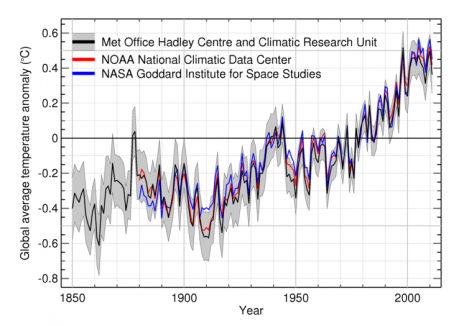
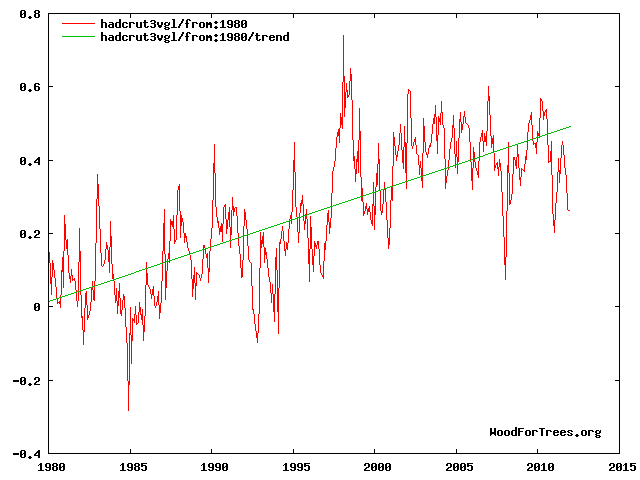
There is near unanimity among the scientific community that global warming is happening.  There is also a definite consensus emerging that the term “climate change” may be more accurate than “global warming” to describe what we are in for.  The mean temperature of the planet is going up.  The trend is unmistakable.  Average global land temperature was 46.90 degrees Fahrenheit [Ed. 8.278 °C.] when modern measurements began and had reached 49.20 degrees F [Ed. 9.556 °C.] in 2003.  The rate of change has also increased steadily.  The total increase of 2.30 degrees might seem trivial, but has tremendous implications.  And the rise in temperature happens to correlate exactly with the upward scale of fossil fuel use since the mid-nineteenth century.

It may not matter anymore whether global warming is or is not a by-product of human activity, or if it just represents the dynamic disequilibrium of what we call “nature.”  But it happens to coincide with our imminent descent down the slippery slope of oil and gas depletion, so that all the potential discontinuities of that epochal circumstance will be amplified, ramified, reinforced, and torqued by climate change.  If global warming is a result of human activity, fossil fuel-based industrialism in particular, then it seems to me the prospects are poor that the human race will be able to do anything about it, because the journey down the oil depletion arc will be much more disorderly than the journey up was.  The disruptions and hardships of decelerating industrialism will destabilize governments and societies to the degree that concerted international action – such as the Kyoto protocols or anything like it – will never be carried out.  In the chaotic world of diminishing and contested energy resources, there will simply be a mad scramble to use up whatever fossil fuels people can manage to lay their hands on.  The very idea idea that we possess any control over the process seems to me further evidence of the delusion gripping our late-industrial culture – the fatuous certainty that technology will save us from the diminishing returns of technology.

So for the purposes of this book, the relevant question concerning global warming and climate change is not whether human beings caused  it or whether we will come up with some snazzy means to arrest it, but simply what the effects are likely to be and what they signify about the way we will live later on this century.

This extract from the book was published in 2005, although there is an Afterword included that was published in 2009.  So to bring things more up to date, here’s a video of James Kunstler speaking about peak oil just about a year ago.

In this fourth video in the series “Peak Oil and a Changing Climate” from The Nation magazine and On The Earth Productions, James Howard Kunstler discusses how finance and energy are running neck and neck to fuel the end of advanced industrial civilization.

For more videos in the series, visit The Nation.

Plus for those that are interested in the data of global land-surface temperatures, here’s a two-minute video showing the temperature change over the last 200 years.

For more information about this study visit http://berkeleyearth.org. Berkeley Earth video representation of the land surface temperature anomaly, 1800 to the present. The map of the world shows the temperature anomaly by location over time. The chart at the bottom, shows the global land-surface temperature anomaly. The Berkeley Earth analysis shows 0.911 degrees Centigrade of land warming (+/- 0.042 C) since the 1950s.