A fascinating study on human empathy strikes a chord with man and dog, perhaps.
Let me start with a true account from the evening of Monday, 19th August.
That evening, at 7pm, I had an appointment with my doctor in Grants Pass. Jean stayed at home looking after our guests and preparing the evening meal.
The journey from the doctor’s clinic back to home, a distance of 20 miles, takes a little over half-an-hour. The last 3 miles are along Hugo Road; about 6 minutes including opening and closing the gate across our driveway.
Anyway, according to Jean shortly after 8pm Pharaoh sprang up barking and went across to put his nose against one of the windows that looks out over our front drive and garden. Jeannie looked at the clock on the kitchen wall and made a note of the time: it was 8:10pm. She also came over to the window that Pharaoh was looking out of and searched for any reason for his outburst of barking: squirrels, deer, any kind of wildlife or other distraction. There was none.
A little before 8:20pm Jeannie saw the headlights of my car pull up and moments later I came in through the front door.
It appeared that Pharaoh had sensed the point where I had turned into Hugo Road.
One could easily dismiss this, perhaps by thinking that Jean had unconsciously signalled to Pharaoh that I was on my way home. But Jean had only the vaguest idea of when I might be back.
Or one could be drawn to the research undertaken by Dr. Rupert Sheldrake, as this extract from a post back in May, 2011 explains.
What an amazing book this is.
Amazing!
I have written about Dr Rupert Sheldrake a few times on Learning from Dogs for pretty obvious reasons! You can do a search on the Blog under ‘sheldrake’ but here are a couple of links. Serious Learning from Dogs on January 10th, 2011 and Time for a rethink on the 14th April, 2011.
Anyway, I am now well towards the end of Sheldrake’s revised book, Dogs That Know When Their Owners Are Coming Home and it is more than fascinating. Bit short of time just now so please forgive me if I do no more than show this video which sets out some of the background to the book. Sheldrake’s website is here, by the way.
Anyway, what’s this all leading up to?
I can’t recall where it was that I read about a report posted on the Forbes website about the new findings of the power of human empathy.
Study: To The Human Brain, Me Is We
A new study from University of Virginia researchers supports a finding that’s been gaining science-fueled momentum in recent years: the human brain is wired to connect with others so strongly that it experiences what they experience as if it’s happening to us.
This would seem the neural basis for empathy—the ability to feel what others feel—but it goes even deeper than that. Results from the latest study suggest that our brains don’t differentiate between what happens to someone emotionally close to us and ourselves, and also that we seem neurally incapable of generating anything close to that level of empathy for strangers.
The research revealed:
“The correlation between self and friend was remarkably similar,” said James Coan, a psychology professor in U.Va.’s College of Arts & Sciences who co-authored the study. “The finding shows the brain’s remarkable capacity to model self to others; that people close to us become a part of ourselves, and that is not just metaphor or poetry, it’s very real. Literally we are under threat when a friend is under threat. But not so when a stranger is under threat.”
The findings back up an assertion made by the progenitor and popularizer of “Interpersonal Neurobiology,” Dr. Daniel Siegel, who has convincingly argued that our minds are partly defined by their intersections with other minds. Said another way, we are wired to “sync” with others, and the more we sync (the more psycho-emotionally we connect), the less our brains acknowledge self-other distinctions.
Later in that Forbes article Professor Coan is reported:
“A threat to ourselves is a threat to our resources,” said Coan. “Threats can take things away from us. But when we develop friendships, people we can trust and rely on who in essence become we, then our resources are expanded, we gain. Your goal becomes my goal. It’s a part of our survivability.”
So if science is discovering that our subconscious minds are connecting “psycho-emotionally” with the minds of others whom we trust, then it doesn’t seem like too great a leap to embrace human minds psycho-emotionally connecting with the animals that we trust, and vice versa. Because for thousands upon thousands of years, the domesticated dog and man have depended on each other for food, protection, warmth, comfort and love.
Footnote.
References for those who wish to follow up on this article are:
Professor Robin Ian MacDonald Dunbar, British anthropologist, evolutionary psychologist and a specialist in primate behaviour. His theory known as Dunbar’s Numberexplained here.
Jon Lavin reflects on the Four Noble Truths of Buddhism.
Last week, I republished a number of Jon’s posts from way back and was delighted at how many of you enjoyed his writings. Jon and his family are taking a well-earned vacation which clearly includes reading posts on Learning from Dogs: Poor soul! This was made clear from an email Jon sent me yesterday afternoon.
Jon had read the essay from George Monbiot that was published three days ago under my post title of Dichlorodiphenyltrichloroethane (DDT) all over again? So hopefully, this introduction puts Jon’s email into proper context. The subject title of Jon’s email was DDT 2.0.
oooOOOooo
Hi Paul!
Hope you guys are well on your lovely farm! We’re in sunny Falmouth for the week staying in our Ben’s student flat slowly working our way through his food supplies.
In my current chilled state, I read your reproduced article and I got to thinking; so you might pick out the odd bit of coherence in these ramblings!
I am reminded of David Hawkins’ ‘Scale of Human Consciousness’. If 80 percent of us are below the level of Integrity, and therefore truth, and the average level of integrity in business is below this level, it is no wonder that money comes before the greater good. Think of the banking crisis as a good example.
I guess we move forward at the speed of the slowest. We certainly seem to learn through the pain and suffering of our own making. I can understand now why this world is perfect for our development and advancement. We are exposed to every opportunity to better ourselves and not everyone has enough of what it takes to hit the mark. We just have to keep going until we get it, even if this means pain and suffering.
The Four Noble Truths of Buddhism talk about suffering and how we create it.The First Noble Truth states that life is suffering. The 2nd Noble Truth talks about our craving for things: money, possessions, etc.; cravings that create suffering. The Third Noble Truth talks of a cure and a way out of hopelessness and suffering and finally, the Fourth Noble Truth gives guidance on walking the path out of suffering.
So, although your article is awful, it is to be expected that we keep being attracted to these sorts of schemes and are attracted to money. We have to learn through pain and suffering until we get it right.
People frequently ask, “What can I do to help?”. Unfortunately or fortunately, there is a way out! The best way to help is to work on ourselves! Sounds a bit silly but by working and developing ourselves we raise the overall level of human consciousness. This means that when companies and individuals attempt to do things that are not integrous, there is less likelihood of them being successful.
Heady stuff really and I wouldn’t describe myself as Buddhist but I have to admit there seems to be some truth in this.
I hope some of this makes sense.
Warm wishes,
Jon.
oooOOOooo
Well, of course it makes sense; perfect sense! Reminds me of the old adage that one cannot truly help another without first helping oneself.
Thus what I read in Jon’s words is that by living a life of integrity we help bring up the overall level of human consciousness, right across our planet. Let me stay with that for a moment longer. Jon mentioned David Hawkins’ ‘Scale of Human Consciousness’. It was included in a post in January 2012 The evolution of the domestic dog but to save you going there, here it is again:
Map of Consciousness, copyright Dr. David Hawkins
One might argue that the column headed ‘LEVEL’ is a pseudonym for ‘Behaviour’. In other words, those behaviours from Courage and up represent integrity.
So when Jon writes, “The best way to help is to work on ourselves!“, what he is saying that by consciously abandoning levels below 200 we open ourselves to being a force for good beyond ourselves. Just run your eye down the emotions from Ineffable to Affirmation and reflect on how others that offer those emotions affect us in such a positive and inspiring way. Indeed, no better than reflecting on how a dog makes us feel when offering unconditional love!
Of course it’s not easy! Nothing great ever is. There is so much around us that we can hate (score 150), so much to create anxiety (score 100), and so many examples of despair (score 50).
But remember the beginning of integrity is 200.
Which is why trust (score 250) and optimism (score 310) and forgiveness (score 350) and especially love (score 500) are truly the tools of healing our planet.
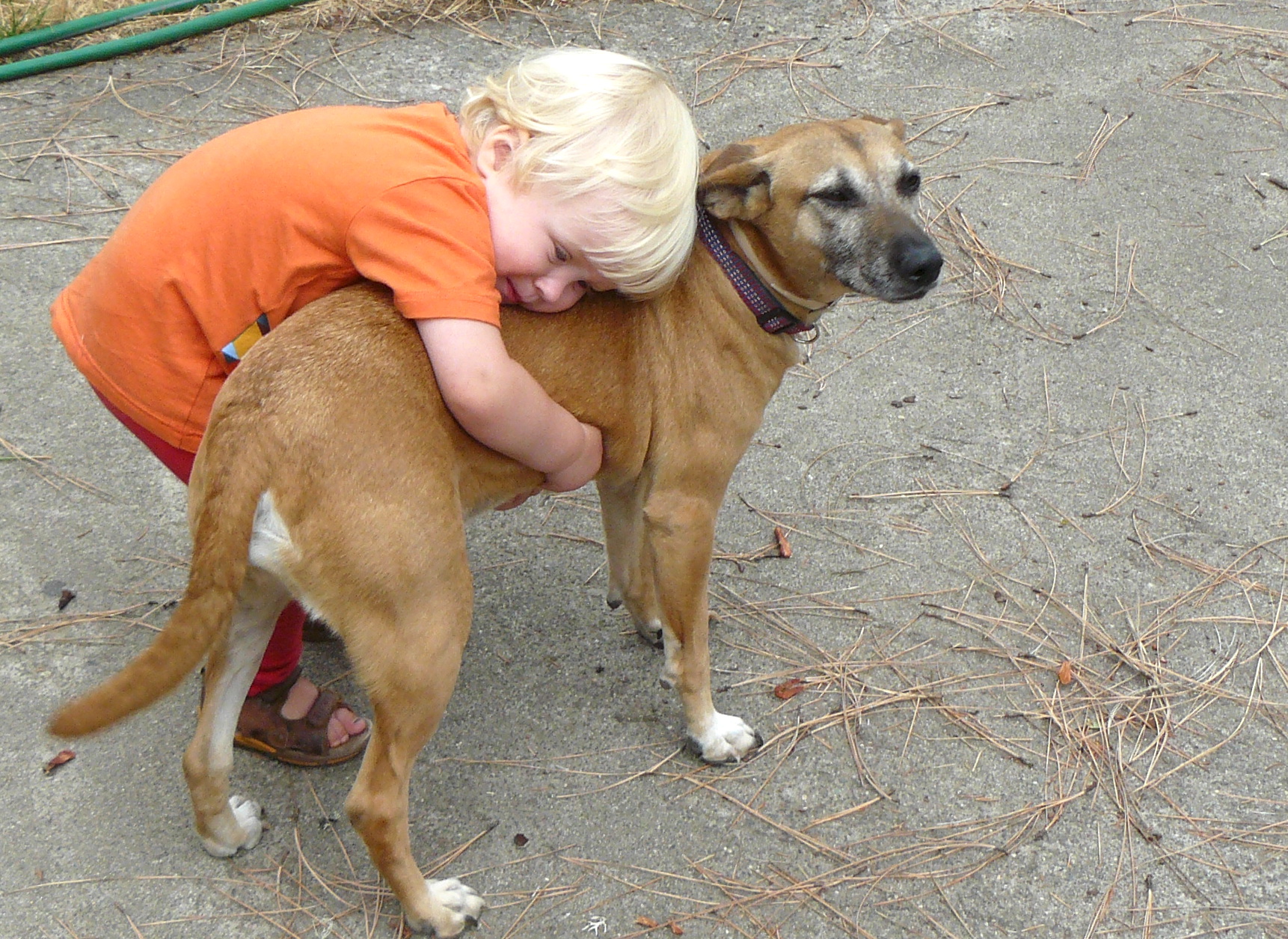
You can start right now by hugging a dog (dogs score 210!).
Love and Trust – Grandson Morten hugging Dhalia.
Thank you, Jon.
Some content on this page was disabled on August 23, 2017 as a result of a DMCA takedown notice from Susan Hawkins. You can learn more about the DMCA here:
Frustrated by not being able to sing two notes at the same time, musical inventor Beardyman built a machine to allow him to create loops and layers from just the sounds he makes with his voice. Given that he can effortlessly conjure the sound of everything from crying babies to buzzing flies, not to mention mimic pretty much any musical instrument imaginable, that’s a lot of different sounds. Sit back and let the wall of sound of this dazzling performance wash over you.
The TED Talk link was sent to me by friend, Lee Crampton.
Published on Jun 11, 2013
In a robot lab at TEDGlobal, Raffaello D’Andrea demos his flying quadcopters: robots that think like athletes, solving physical problems with algorithms that help them learn. In a series of nifty demos, D’Andrea show drones that play catch, balance and make decisions together — and watch out for an I-want-this-now demo of Kinect-controlled quads.
There’s more on Raffaello here where you can read this:
My work is focused on the creation of systems that leverage technological innovations, scientific principles, advanced mathematics, algorithms, and the art of design in unprecedented ways, with an emphasis on advanced motion control.
By their very nature, these creations require a team to realize. Many are enabled by the research I conduct with my graduate students. Many are also the fruit of collaborations with architects, entrepreneurs, and artists.
My hope is that these creations inspire us to rethink what role technology should have in shaping our future.
Raffaello D’Andrea
and where you can also find this further video – Zurich Minds – doubly fascinating.
A reposting of an article by Jon Lavin, first published on the 3rd July, 2010.)
Conscientiousness isn’t all it’s cracked out to be!
(Foreword from Paul.)
Jon is one of those rare individuals who not only has been committed to a path of self-awareness for more than 30 years but who has also studied incredibly hard so as to be able to help others and do so from a base of real competence, as his own Blog describes.
But then I realised the great strength in what Jon has written. It is this.
There are many notable teachers to whom thousands upon thousands have turned to for a deeper understanding of what life is all about. As far back as time itself, teachers have surfaced and given spiritual guidance to those that come in need. But it’s very difficult to read or listen to these great teachers and connect with the fact that they were born, as we are all born, with nothing. And all of them, like many of us, went through Hell on wheels to come out the other side with a greater self-awareness and a deeper understanding of the real truths in nature. Like all of us who wish to rise above our present place they first acknowledged their own frailties. It is the starting point.
So, let me get to the point. Jon has the awareness and understanding to offer real help to those that seek answers that are currently beyond reach. Jon’s article is an wonderful illustration that he experiences the same fears and feelings of helplessness that you and I feel. You and I and Jon and all of humanity are much more closely connected than we realise.
Paul H.
oooOOOooo
To see in is to see out!
I’ve been running my own business for about 12 years now. In the beginning it started because I had a thirst for wanting to make a difference in small business in our local area and a passion for wanting to do it through working with people directly, on their behaviours. Still have, really.
I think this came as a form of acknowledgement to the few exceptional people managers I experienced while I was employed, and the all too common, terrible ones.
I was also mentored by a group of people to whom no developmental tool was barred. My eyes were well and truly opened to how a change of view could change outcomes.
The final boot up the backside was redundancy in the late 90s. I was all ready to go and just needed a kick.
My work ethic, trained at home and then through an engineering apprenticeship, was to conscientiously work hard and try hard and to treat people the way you want to be treated. Nothing wrong with that. I assumed automatic reward would follow as long as I did those things.
Over time I wised up and became a bit less idealistic and a little more politically aware but carried on in much the same way.
Much later I found myself embarking on a whole new adventure, with a lovely wife and family, all dependent on me, with a few contacts to start getting work from!
It took a year before the first jobs came in that didn’t necessitate robbing the almost non-existent savings and redundancy payment just to keep food on the table. Then, work slowly picked up and it started to get quite good for a one-man band. We were able to go on holiday once a year, camping, but still great, and then abroad.
All the time, I beavered away, trying hard, being very conscientious, as I’d been brought up to be, but slowly getting very stressed.
Time was when it took Friday night to de-stress, then 3 days, then 10 days and recently, not at all.
So faced with this present downturn, which is likely to go on for much longer than any of the others I’ve seen and survived, I’m wondering just what new strategy to adopt. Money is already getting very tight and everything is feeling very ‘hand to mouth’. Can’t really see one month in front of the other.
I notice our local farmer who I went to school with but didn’t really know.
I’ve got degrees, lived abroad, can speak Finnish fluently, (what use is that, I hear you say!), and can turn my hand to most things, but I still feel quite dis-empowered and at a bit of a loss.
My farmer friend is always smiling, he’s got a flock of geese he’s fattening up, the same with his beef cattle, does livery for half a dozen horses or so, has fields planted with various cereal crops, and has his finger in lots of different pies – and definitely does not look stressed. He is also renting his land plus another farm.
I honestly don’t know what to make of this all except for a few really important things – the importance of diversification, relationships and appreciating what you’ve got, especially people things, here, in the now.
I have also come to the realisation that I still haven’t cracked the main thing with being self-employed, and that is replacing fear with trust.
It’s been said by various enlightened people that we see a reflection of the world we hold in mind. Going forward into this brave new world I would like to see opportunities rather than fear, I will diversify into things which make more use of my wide range of talents, and I will swap fear for trust.
(A reposting of an article by Jon Lavin, first published on the 11th September, 2009.)
The journey into inner space is just as fascinating as the one into outer space.
Tony Buzan
Many, many years ago, 1973 to be precise, an English author, Tony Buzan, was involved in presenting a series on BBC television called Use Your Head. Tony released a book to accompany the television series. There is not a lot that I remember about that book but one thing I never forgot. That was the number of neurons in the brain, 10 to the power 200, give or take. I will return to this aspect in a later Post but now to the main point of this, my introductory Post.
I was working with a telephone coaching client this week who I’ve been with for over a year now.
He differs from my normal clients in that he’s paralysed from the shoulders down. About 8 years ago he was involved in a horrendous car accident which 99% of us would probably not have survived. He was in hospital for 18 months and now with the aid of his PAs (Personal Assistants), as he calls them, who get him up in the morning and put him to bed in the evening, he manages on his own.
He’s been working on a novel for sometime now and his optimism and faith in his own inherent sense of well-being is truly inspirational. He works at the novel every moment he can.
He has had to overcome many other setbacks in life but still manages to live a life which is far fuller than most able bodied people.
He frequently gives motivational talks and says things to me that wake me up from the trance state that I seem to occupy too much of the time, generally worrying about things that statistically are highly unlikely to happen. He is one of the most awake people I have ever come across.
I’m reading a book at the moment called, “Journey of Souls”, by Michael Newton, Phd. His research carried out on numerous clients under hypnosis has shown that we choose the conditions of our lives.
In order to learn the maximum amount in life, we might opt to experience life in a body that only barely functions in order to learn to overcome extreme difficulties and gain a fresh insight into what is really important.
The book is analytical to a certain extent so suits my engineer’s mind but certainly encourages reflection on decisions we make, their impact on others and the level of integrity of those decisions. The book reminds me frequently of my coaching client.
By Jon Lavin
(John may be contacted at jon.lavin (at) peopleworkshop(dot)co(dot)uk – PH)
Footnote: Recently we were driving back after being a week away. We were on the motorway (Freeway to North Americans), quite relaxed and looking forward to being home soon.
Out of nowhere, a car 70 to 100yds in front suddenly swerved violently to the left then back to the right, hit the central metal reservation, bounced off again and, as we drove past, missed the side of our car by a few yards. This whole drama unfolded in a matter of an instant in time.
As if in slow motion, I steered the car to the inside lane and drove past – at 75mph. We were so shaken up that we were 1/4 of a mile on before I looked in the rear-view mirror and saw cars stopping and people getting out. The few seconds that this all happened in are now etched in my mind.
I wonder if it has to be like this to truly wake us from our trance?
A bright Perseid meteor streaked down Saturday night (Aug. 7, 2010) over buildings at the Stellafane amateur astronomy convention in Springfield, Vermont.
A response to the many who enjoy the regular Sunday photo parade.
Jean and I have recently joined the National Wildlife Federation partly because there are times when it really does seem ‘wild’! Anyway, I was trawling the NWF website the other day and came across this very helpful advice: 7 Wildlife Photo Tips to Never Forget. In view of the popularity of Sunday’s regular Picture Parade on Learning from Dogs, it seemed appropriate to dip into that section for today’s post. [Note: you will have to go to the website to read the full article as it would be wrong to republish the entire item without permission.]
7 Wildlife Photo Tips to Never Forget
This guest post by Jim Goldstein is sponsored by BorrowLenses.com.
I’ve always felt great wildlife photography mapped well to the Chinese proverb “the journey is the reward.” While I obviously enjoy seeing the end result of my wildlife photography outings I get a great deal of satisfaction in the crafting of those images. My best images often rise to the top because of one of the following maxims:
1. Backgrounds are Equally Important as Your Subject
2. Embrace Serendipity When Photo Editing
3. Challenge Viewers with Anthropomorphism
4. Employ Non-Standard Compositions
5. Capture Your Subjects at Their Eye Level
6. Factor in Form and Pose
7. Utilize Negative Space
I am going to republish just one of these tips to give you an idea, because the advice is stunning, in my humble opinion.
2. Embrace Serendipity When Photo Editing
Arctic Hare. Canon 1D Mark II, Canon 500mm f/2.8 + 1.4x teleconverter, 1/640 sec, f/7.1, ISO 400
When behind the camera, focus carefully on your subject. But when photo editing look for unique and subtle differences that might enhance or transform the story within your image. Case in point: this example image of a mosquito biting the nose of an Arctic Hare. My attention was on obtaining a razor sharp image and composing carefully, but when photo editing I found a couple frames that captured the biting mosquito that had been invisible to me at the time I took the photo.
Arctic Hare Being Bitten By Mosquito on the Nose
Jim Goldstein is a San Francisco-based professional photographer and author who has been in numerous publications, including Outdoor Photographer, Digital Photo Pro, Popular Photography and has self-published a PDF eBook Photographing the 4th Dimension – Time covering numerous slow shutter techniques. Follow Jim Goldstein on Google+ | Twitter | Facebook | 500px
Do take a few moments and go across to the website and read the full set of tips. If you have any interest in photographing nature and wildlife this is unmissable good advice. Want to know more about the National Wildlife Federation? More information here.
















 Learning from Dogs