Category: Communication

Seeing the bigger picture.

Look beyond appearance and prejudice.

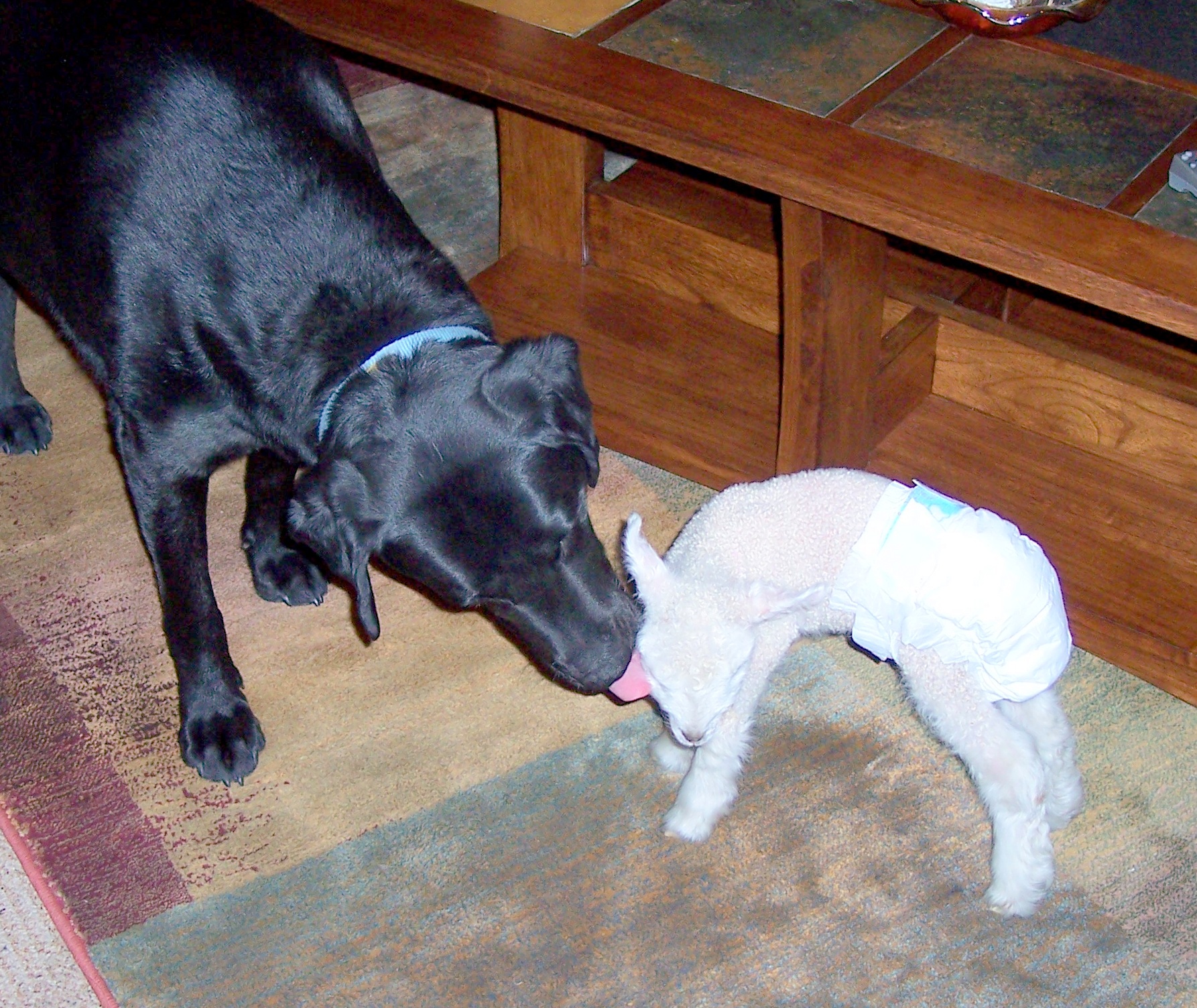
I had in mind to republish a recent George Monbiot essay but then saw this post from Alex Jones’ blog The Liberated Way.  It seemed a perfect follow-on to yesterday’s Picture parade ninety.  It is republished with Alex’s kind permission.

ooOOoo

Look beyond appearance and prejudice

Everything in nature is good says the philosopher Heraclitus. Humans love to divide everything into good and bad, thus missing the beauty of what nature offers in the blindness of their prejudices.

A few years ago, I intervened to save a baby crow from traffic and school children, taking it to a veterinarian surgery, who had the contacts of people who could look after it. The receptionist annoyed me on seeing the bird describing it as “evil.”

In fact, if people can look beyond the superstitious nonsense surrounding these black feathered birds, there is an intelligent empathy lurking inside these beautiful corvids. If humans, dolphins and octopuses are in the top division of “intelligent” animals, the corvids, including magpies, jackdaws, ravens, crows, choughs and rooks, are in the same division. The corvids use tools, play, can problem-solve, express empathy and have a rudimentary sense of self based on experiments showing they recognise themselves in a mirror. The BBC recently reported how a child had developed a close relationship with crows she was feeding in the garden, birds that were leaving her gifts. A flood of feedback by readers revealed that gift-giving by corvids to those showing kindness to them was common around the world.

The symbol of my town port is the raven. My business carries the logo of the raven, a symbol for me of its intelligence. The stories of various archetypes such as Apollo, the Celtic Mercury and Odin had ravens as their messenger birds, who symbolised memory, thought, wisdom, intelligence, and the gathering or delivery of knowledge.

The sad situation is that most people blind themselves to the beauty of a living thing like a crow or raven, based on appearance and prejudice, so that they will do it harm, even though it might manifest the very qualities of intelligence and empathy that humans admire but often appear to lack.

ooOOoo

There was a recent TED Talk that fits very nicely with today’s theme. It’s just fifteen minutes long. Enjoy.

What do you call a veterinarian that can only take care of one species? A physician. In this short and fascinating talk, Barbara Natterson-Horowitz shares how a species-spanning approach to health can improve medical care of the human animal — particularly when it comes to mental health.

Tomorrow things on Learning from Dogs are going to change for a spell. More details in twenty-four hours!

Protecting the brain.

The joys of growing ever more old!

Last Saturday, in a humorous post called Cognitive Ageing, I wrote:

Or put another way: I can remember everything except the things I forget.

Like many others of my age, the short-term memory is not as sharp as it used to be (not that I can remember when that was! 😉 )

Today’s post is to pass on a recommendation for a programme called Lumosity. It was recommended to me by my local doctor and I signed up in February of this year. Clearly, it is impossible to know, in a scientific way, how much good it has done me but instinctively I feel it has made a strong, positive difference.  Let me quote from their website:

The Science Behind Lumosity

neuroplasticity-banner-77f6a688022811b36d894b9288bd49f3

Neuroplasticity: how the brain is capable of change

Scientists have historically believed that once a person reaches adulthood, their cognitive abilities are immutable. But beginning in the early twentieth century, that theory has been contested by evidence suggesting that the brain’s abilities are in fact malleable and plastic. According to this principle of neuroplasticity, the brain is constantly changing in response to various experiences. New behaviors, new learnings, and even environmental changes or physical injuries may all stimulate the brain to create new neural pathways or reorganize existing ones, fundamentally altering how information is processed.

One of the most dramatic examples of neuroplasticity at work comes from a 2000 brain scan study on London taxi drivers (Maguire et al., 2000). In order to earn a license, London taxi drivers typically spend about two years learning to navigate the city’s serpentine streets. What mark, the study’s researchers wondered, did this long, rigorous period of training leave on taxi drivers’ brains? Under the scrutiny of fMRI scans, 16 male taxi drivers in this study were revealed to have larger hippocampuses than a control group of 50 healthy males of similar ages. And the longer the time spent as a taxi driver, the larger the hippocampus tended to be. As a brain area involved in memory and navigation, the hippocampus likely changed in response to the taxi drivers’ experiences.

Most instances of neuroplasticity-based changes in the brain are much more subtle. But in recent decades, it’s cases like that of the London taxi drivers that have inspired certain members of the scientific community to pursue the next logical step in research: rather than passively waiting to see how the brain might respond to circumstances, is it possible to direct that capacity for change, targeting improvements in specific key abilities?

The science of cognitive training seeks to answer this question. In 2013 alone, 30 cognitive training studies were registered on the government database ClinicalTrials.gov. Lumosity scientists, with the help of outside collaborators, contribute to this research effort: so far, 7 peer reviewed studies have been published using Lumosity as a cognitive training tool for diverse populations, including healthy adults, cancer survivors, elderly people, and children with a genetic disorder.

Maguire, E. A., Gadian, D. G., Johnsrude, I. S., Good, C. D., Ashburner, J., Frackowiak, R. S. J., & Frith, C. D. (2000). Navigation-related structural change in the hippocampi of taxi drivers. Proceedings of the National Academy of Sciences of the United States of America, 97(8), 4398-4403.

Clearly, without trying it out yourself, it’s difficult for me to convey the nature of the ‘games’ that are provided.

What I can do is to republish a review that appeared on the website MD-Health.

Does Lumosity Work?

Lumosity was designed by several leading neuroscientists, which adds an air of credibility to this popular site, and combines the perks of social networking with brain training technology that supposedly makes your brain function at a higher level. But do these brain training games really work? There is plenty of evidence to support and contract the claims made by this popular gaming website, so it is important to look at the facts before making this determination.

What is Lumosity?

Lumosity is a webpage that features several different brain training games. Players are encouraged to create a profile that allows them to track their progress and play certain games that target mental flexibility, memory, problem solving, speed and attention. The idea is that performing these tasks regularly will help “train” your brain to function more effectively.

How Does Lumosity Work?

The web page explains that Lumosity is based on neuroplasticity, which treats the brain like a muscle that needs to adapt when it is presented with new challenges. The idea here is that if you present your brain with harder challenges, the portion of your brain meant to help solve them will grow larger and more functional. Previously it was believed that neuroplasticity was only available in children with brains that were still developing, but recent science leads researchers to believe that this skill is also available for adults.

Lumosity depends on two basic elements when users create their training program. First, users need to use the program regularly. This is similar to creating a daily routine at your local gym to work and tone your muscles. Your routine will not be as effective if you do not stick with it. The second part of this training program depends on users using many different types of games. There are 35 different games available on Lumosity in addition to many different skill levels within these games. Players should use a variety of different games and increase the difficulty level over time to help ensure that they are continuing to challenge the mind. Creating your initial profile gives the player an opportunity to see what weaknesses they have so they can create a routine that is ideal for their situation.

Is Lumosity Effective?

There are several scientific studies that lead scientists to believe that the brain training activities at Lumosity do have an effect on the brain. A study at the University of Michigan found that adults that used brain training games for a regular amount of time saw an improvement in test scores for dual attention asks and memory games in multiple tests. A similar study at Brown University also saw adults exceeding expectations in brain performance after using brain training games to aid in their work. These programs were found to boost the working memory which helps users keep track of tasks they are currently performing.

The thing to remember when analyzing these results is that they came from laboratory conditions. These adults used Lumosity games for hours every day for several months. Users that do not work on a similar schedule will not see these types of results. There is a great deal of evidence that supports the idea that brain training games can help grow and develop the mind, but not necessarily any evidence that Lumosity and the brain training games available here are more effective than other training games that are on the market elsewhere. In general, keeping the mind active and challenging your mind to learn more advanced tasks and ways of thinking are healthy and can help you perform tasks more effectively, and if Lumosity helps you accomplish this, then it can be seen as a positive asset.

There was a review published in The Guardian newspaper back in April, 2013 from which this extract is offered:

According to the website for Lumosity, which devised these games and is one of the best-known internet providers of brain training, setting aside a few minutes each day to complete the above tasks can make you feel “smarter, sharper, and brighter”. By factoring in a mental workout in the same way that we might go to the gym to exercise, we get cleverer and our IQ rockets.

That, at least, is the idea. And there are lots of people who buy it. In recent years, brain training has become a multimillion-pound business with companies such as Jungle Memory, Nintendo and CogniFit developing a wide range of user-friendly neuroscientific puzzles for the average punter. Lumosity itself has grown by 150% year-on-year since its launch in 2005 and now reaches more than 35 million people worldwide. In January alone, the company’s mobile app was downloaded nearly 50,000 times a day and its revenue hit $24m (£16m).

Co-founded by Michael Scanlon after he abandoned his neuroscience PhD at Stanford University, California, the business also has an extensive research programme that studies the effects of computerised cognitive training as well as conducting experiments over the web.

I can also republish another article from the Lumosity website:

The Science Behind Lumosity

study-results-banner-b03eee32c4b930e36629ef65d0eba902


The scientific roots of the Lumosity program

Research has found that certain types of activities may impact the brain more than others (Mechelli et al., 2004; Gaser and Schlaug, 2003; Draganski et al., 2006). It’s believed that as an activity is repeated, the brain tends to fall back on the same set of existing neural pathways. To continue changing, the brain must be exposed to novel, adaptive experiences that challenge it to work in new ways.

Drawing on this idea, Lumosity is designed to give each person a set of exercises that challenge their cognitive abilities.

Lumosity “games” are based on a combination of common neuropsychological and cognitive tasks, many of which have been used in research for decades, and new tasks designed by an in-house science team. Working with experienced game designers, Lumosity neuroscientists have transformed these tasks into over 40 challenging, adaptive games.

Lumosity’s game-based training program is designed to expose your brain to gradually increasing levels of challenges, adapting game difficulty to your individual ability level. As your scores increase, you may encounter new or more difficult games. Modelled from the concept of a physical personal trainer, Lumosity pushes you to operate at the limits of your abilities and stay challenged.

Gaser, C. & Schlaug, G. (2003). Brain structures differ between musicians and non-musicians. Journal of Neuroscience, 23(27), 9240-9245.

Draganski, B., Gaser, C., Kempermann, G., Kuhn, H. G., Winkler, J., Büchel, C., & May, A (2006). Temporal and spatial dynamics of brain structure changes during extensive learning. Journal of Neuroscience, 26(23), 6314-6317.

Mechelli, A., Crinion, J. T., Noppeney, U., O’Doherty, J., Ashburner, J., Frackowiak, R. S., & Price, C.J. (2004). Neurolinguistics: Structural plasticity in the bilingual brain. Nature, 431, 757.

Lumosity is not expensive and while it is impossible to be objective about the positive difference it is giving me I wouldn’t give up on it.

Now where did I leave my car keys???

Cognitive ageing!

Or put another way: I can remember everything except the things I forget.

Like many others of my age, the short-term memory is not as sharp as it used to be (not that I can remember when that was! 😉 )

So with that in mind, and only for my dear readers who understand where I am coming from, here’s a lovely item that was sent to neighbour Dordie who then passed it on to me.

ooOOoo

Your Yearly Dementia Test

(only 4 questions)

Yep, it’s that time of year again for us to take our annual senior citizen test.

Exercise of the brain is as important as exercise of the muscles. As we grow older, it’s important to keep mentally alert. If you don’t use it, you lose it!

Here is a very private way to gauge how your memory compares to your last test.

Some may think it is too easy, but the ones with memory problems may have difficulty. So take this test to determine if you’re losing it or not.

The spaces below are so you don’t see the answers until you’ve made your answer.

OK, relax, clear your mind and begin.

Question One: What do you put in a toaster?

.

.

.

.

.

.

.

.

.

Answer: Bread.

If you said ‘toast’, just give up now and go do something else. And, try not to hurt yourself.

If you said Bread, go to Question #2.

Question Two: Say ‘silk’ five times. Now spell ‘silk.’ What do cows drink?

.

.

.

.

.

.

.

.

.

Answer: Cows drink water.

If you said ‘milk,’ don’t attempt the next question. Your brain is already over-stressed and may even overheat. Content yourself with reading more appropriate literature such as Women’s Weekly or Auto World. However, if you did say ‘water’, proceed to Question Three.

Question Three: If a red house is made from red bricks and a blue house is made from blue bricks and a pink house is made from pink bricks and a black house is made from black bricks, what is a green house made from?

.

.

.

.

.

.

.

.

.

Answer: Greenhouses are made from glass.

If you said ‘green bricks’, why are you still reading this??? PLEASE, go lie down! But, if you said ‘glass,’ go on to Question #4.

Question Four: (Do not use a calculator for this):

You are driving a bus from New York City to Philadelphia.

In Staten Island, 17 people got on the bus.
In New Brunswick, 6 people get off the bus and 9 people get on.
In Windsor, 2 people get off and 4 get on.
In Trenton, 11 people get off and 16 people get on.
In Bristol, 3 people get off and 5 people get on.
And, in Camden, 6 people get off and 3 get on.

You then arrive at Philadelphia Station.

Without going back to review, how old is the bus driver?

.

.

.

.

.

.

.

.

Answer: Oh, for crying out loud! Don’t you remember your own age?!?! It was YOU driving the bus!

If you pass this along to your friends, pray they do better than you.

But don’t be too hard on yourself: 95% of people fail most of the questions!

We all have a story to tell.

Featuring David Isay and StoryCorps.

Jean and I were late back home on Wednesday evening and after our evening meal only had half-an-hour or so before it was time for bed.

We browsed some of the talks on TED (we don’t have TV) and noticed one that sparked our interest: Everyone around you has a story the world needs to hear.  This is how the talk was introduced on TED.

Dave Isay opened the first StoryCorps booth in New York’s Grand Central Terminal in 2003 with the intention of creating a quiet place where a person could honor someone who mattered to them by listening to their story. Since then, StoryCorps has evolved into the single largest collection of human voices ever recorded. His TED Prize wish: to grow this digital archive of the collective wisdom of humanity. Hear his vision to take StoryCorps global — and how you can be a part of it by interviewing someone with the StoryCorps app.

It was a remarkable and fascinating talk and, thanks to YouTube, I’m able to share it with you.

I have no doubt that after watching Dave Isay’s talk you will want to go to the StoryCorps website.

Will return to this another day.

And human wisdom?

No other planet to move to!

The title of today’s post picks up the theme of yesterday’s post Dog Wisdom, that incorporated a wonderful essay from Mark Rostenko about the wisdom of dogs.

The words in the sub-heading came to me because, unlike wild dog packs, we do not have the luxury of our ‘alpha female’ deciding her pack’s territory is no longer viable and they needed to move on.

All of which serves as an introduction to a recent essay from Martin Lack over on the blog Lack of Environment. Martin is well qualified to write on such matters as climate as he has been a Fellow of the Geological Society (FGS) since 1992 and a Chartered Geologist (CGeol) since 1998.  His essay was published on the 15th March and is called Merchants of Doubt need to do the math.

ooOOoo

A feature-length documentary, based on the content of the Merchants of Doubt book by Naomi Oreskes and Erik Conway, went on general release at movie theatres in the USA this weekend.

As Desmogbog.com points out, it has already attracted the attention of an odd mixture of ideologically-motivated deniers of the reality of anthropogenic climate disruption.

I say “odd” because, as per the above link, those who prefer to see climate science as a conspiracy to raise taxes (and install worldwide Communist government via the United Nations, etc.) include both longstanding disputers of inconvenient science like Fred Singer (who questions whether the movie is defamatory) and self-confessed non-experts like James Delingpole.

Both of the above would have done well to watch a recent BBC Four (television) programme – Climate Change by Numbers. In contrast to just about every other programme about climate change that you might have seen, this one is presented by three mathematicians. A 30-second trailer is inserted below but, if you have not seen the full 74-minute programme (opens in a new window), I really would recommend it.

The programme focuses on three numbers:
— 0.85 Celsius – the rise in average global surface temperatures since the 1880s.
— 95% – the certainty of the scientific community that this is primarily human-caused.
— 1 trillion tonnes – humanity’s carbon budget to avoid 0.85 increasing to 2 Celsius.

Along the way, the programme highlights the early work of Svante Arrhenius – who determined that a halving of atmospheric CO2 could cause a 4 Celsius drop in temperature (and therefore that a doubling of CO2 will cause a 4 Celsius rise).

With regard to the accuracy of computer models, the programme highlights the way in which this has been proven by their ability to predict the cooling effects of large volcanic eruptions.

With regard to our carbon budget, the programme highlights the fact that humanity has already burnt 0.5 trillion tonnes and, unless radical changes are made to global trends, will burn the remaining 0.5 trillion tonnes within 30 years. It also points out that, as ongoing events might well suggest, even 2 Celsius could have severe and pervasive impacts (as the IPCC described them last year).

All very inconvenient for libertarians everywhere, I guess.

See also:

https://lackofenvironment.wordpress.com/2013/11/19/greedy-lying-bar-stewards-guilty-of-crimes-against-humanity/

https://lackofenvironment.wordpress.com/2013/10/11/a-summary-of-the-climate-departure-research-of-mora-et-al/

ooOOoo

NB: The link that Martin offers to the full programme is a version on YouTube that is chock-full of adverts; seemingly inserted every ten minutes or so.  Unfortunately, other YouTube videos of the same BBC programme also seem to have too many adverts.

Please don’t let that put you off watching a critically important message. Plus, as you watch the video, do stick under your hat the following note from Martin.

Thanks, Paul. There is one thing you might care to add (which I forgot to mention), which is this:

The final third of the programme includes a discussion of ‘extreme value analysis’ (EVA), which Wikipedia helpfully describes as “a branch of statistics… [that] seeks to assess… the probability of events that are more extreme than any previously observed“. Flood defences like the Woolwich Barrier on the Thames estuary were designed using EVA. However, crucially, EVA assumes that average parameter values do not change over time. Therefore, given that climate change invalidates this assumption, it is now accepted that London will need greater protection from flooding in the future. Athough not explicit in my original post, this was why I included a link to the ‘Climate Departure’ reseach of Mora et al., which estimates the regional variation in the date by which future climates will have departed from what has hitherto been considered normal.

So here is that full BBC Documentary.

Now where’s that spare planet!

Dog wisdom

The magic of untold numbers of connections.

It is becoming an oft-repeated theme by me; the power of the connections that exist between the thousands of bloggers. Again, regular readers (thank you!) will not be surprised to hear me say that this power of connectivity may be the ultimate force that stops humanity from going past a point of no return in terms of the viability of our planet to sustain us and all of life. (And to reinforce that in spades, tomorrow I am republishing a recent item from Martin Lack; he of Lack of Environment.)

Let me just play a little more with this idea of the connectivity between us bloggers. Theoretically, if one had five bloggers all following each other then the number of permutations between those five bloggers would be factorial 5, or 120 connections. If there were ten bloggers all following each other, then the number of connections would be 3,628,800! (Background maths here.) I’m certain that there are more than ten bloggers whom I follow and who in turn follow me.

All of which is a preamble to a recent post from fellow blogger Mark M. Rostenko over on his wonderful blog Call Of The Wilderness. He recently published an item with the title of Dog Wisdom and I have the very great pleasure in reposting it here, with Mark’s kind permission.

ooOOoo

Dog Wisdom

We don’t have to live deep in the wilds at the end of a long dirt road to learn from Nature. She’s everywhere; in our hearts, our minds, our bodies… our pets. Frankly, I’ve learned more about living authentically from my dogs than from any authority, parent, classroom, job, book or so-called expert.

Sami’s old. Around ninety in people-years. She mounts the stairs one careful step at a time these days, however she must to curl up by her dad as she has almost every night since I rescued her from the shelter just yesterday… or was it thirteen years ago? It’s said that dogs sleep facing outward from the pack, positioned to notice and respond immediately to threats. Sami doesn’t anymore. Recently she’s taken to lying towards me, as if to say “I can’t protect you anymore… I’m old and weak and vulnerable… and I need you to watch out for me from now on.” But a glimmer of pride sparkles in her eyes as she leaps onto the bed unassisted; it’s been there a few months, ever since the night after her legs gave out and she crashed to the floor in her attempt. I think she felt my heart break, and bless her velvety, floppy Lab ears, she vowed to stay strong for her worried dad.

We don’t hike anymore; this terrain’s hard on her withering hinds. We just saunter casually down the dirt road a couple times a day, as far as makes her happy… not so far. But I still see remnants of her bouncy puppy-gait, that “stretch-and-stand-tall-so-I-can-see-as-much-of-this-deliciously-exciting-world-as-I-possibly-can” spring in her step unleashed only after time had carried away the neglect of her former life. And once in a while after a hardy dose of love she’ll still crouch down in the “let’s play!” chin-to-the-ground puppy posture before tearing off into a spastic circle of rambunctious frenzy like the young’uns do.

I like to watch her when we walk, the soft ripples of footfalls reverberating through her age-slackened flesh, how the slight bottom-curl of her ears unfurls with every bob of her moist snout. I take in as much of her as I can because any day now omens of finality will alight to the shadows and perch among the pines waiting to guide her back to the oneness from whence she came. And I see in her gait that no matter how old, no matter how tired, no matter how many tumors and aches, Sami’s as thrilled to walk as ever, her enthusiasm fading not one smidge.

Will I thrill so at ninety? Probably not. Likely I’ll dwell on aches and pains and look back at all I’ve lost, at what I no longer can, as we humans tend. But not Sami. Sami doesn’t think about what she’s lost; Sami just enjoys what’s still hers… fully and without reservation. Sami worries not of what she can’t, delighting only in what she still can.

Her joie de vivre is the effervescence of perpetual gratitude. Not submissive lip-service borne upon fears of eternal damnation but a physical affirmation of genuine grace and gratitude: living life fully, sans complaint, thoroughly consumed with blessings of the moment. Sami, I suspect, is the pride and joy of her creator who smiles fondly upon her antics, reveling in the satisfaction that at least this one critter got the point of it all: that life is to be lived.

Sami has little choice in the matter; she’s built to live here and now, to take what comes and make the best of it. We, however, have been gifted choice… a very clear choice, if you ask me…

ooOOoo

Thanks Mark. That’s a beautiful account of the wisdom and compassion of our dogs.  They offer so many examples of grace and unconditional love to us humans!

Learning sleep from our dogs!

Lack of sleep can have a role in obesity and diabetes.

Hazel asleep on the living-room couch at 2pm yesterday.

The sub-heading is taken from an item on the BBC News website that I read yesterday morning. (I’m republishing it in full so that readers are fully informed.)

Lack of sleep can have role in obesity and diabetes, study says

By James Gallagher, Health editor, BBC News website, San Diego

If you need a lie-in at weekends to make up for lack of sleep in the week, you may be at risk of obesity and type 2 diabetes, a study suggests.

The sleeping habits of 522 people found those losing sleep on weekdays were more likely to develop the conditions.

The findings, shown at the Endocrine Society‘s annual meeting, suggested increasing sleep could help patients.

Experts said the findings were interesting and called for the idea to be tested in large trials.

Studies have already shown that shift work can rapidly put healthy people into a pre-diabetic state.

The action of throwing the body clock out of sync is thought to disrupt the natural rhythm of hormones in the body, leading to a host of health problems.

But the pressures of work and social lives mean many people cut their sleep during the week and catch up at the weekend. Researchers are investigating whether there is a health impact.

Widespread

The study, by a team at the University of Bristol in the UK and Weill Cornell Medical College in Qatar, assessed “sleep debt” – a measure of the difference in the nightly hours asleep on weekdays and at the weekend.

“We found that as little as 30 minutes a day sleep debt can have significant effects on obesity and insulin resistance,” said Prof Shahrad Taheri from Weill Cornell.

He added: “Sleep loss is widespread in modern society, but only in the last decade have we realised its metabolic consequences.

“Our findings suggest that avoiding sleep debt could have positive benefits for waistlines and metabolism and that incorporating sleep into lifestyle interventions for weight loss and diabetes might improve their success.”

The study was funded by the UK’s Department of Health, where 10% of healthcare budgets are already spent on treating diabetes.

The disease can lead to blindness, increase the risk of heart attacks and strokes, as well as damaging nerves and blood vessels – dramatically increasing the risk of a foot needing to be amputated.

What the researchers do not know is the impact of improving people’s sleep so they get more on a weeknight and do not need a weekend lie-in.

Dr Denise Robertson, a senior lecturer from the University of Surrey, commented: “This work is interesting and consistent with prospective data found in healthy individuals without type 2 diabetes.

“However, before this association between sleep length, obesity and metabolic status can be used in terms of public health we need the next tier of evidence.

“To date there have been no randomised controlled trials where sleep debt is addressed and a metabolic benefit is observed. However, the potential for such interventions to impact on health is great.”

So while it might be regarded as a little ‘tongue-in-cheek’ to say that we need to learn to sleep more effectively from dogs, the BBC item suggests that it’s not as silly as one might think.

Lilly, to the rear of Paloma, sleeping soundly yesterday afternoon.

In the photograph above of Lilly and Paloma, both Mexican feral dogs rescued by Jean many years ago, sleep and a gentle life have allowed Lilly to achieve the grand old age of 17! In human terms that would be the equivalent of 136-years-old!

Picture parade eighty-seven

More of those fabulous photographs of nature sent on to me by Dordie. (But see the very last one!)

The first set of these wonderful photographs was last week.

seen9

oooo

seen10

oooo

seen11

oooo

seen12

oooo

seen13

oooo

seen14

oooo

seen15

oooo

seen16

oooo

A golden dawn as seen from our bedroom window at home - taken Friday 13th, March, 2015.
A golden dawn as seen from our bedroom window at home – taken Friday 13th March, 2015.

The third set of Dordie’s photographs in a week’s time.

The Secret Life of Dogs.

Dogs watch us all the time and read our body language like a sixth sense.

A fascinating, and inspiring, insight into our favourite animal companion.

Published on Jan 26, 2014

Check out BBC Earth on BBC online
Dogs watch us all the time and read our body language like a sixth sense. They also smell our bodies for changes.

Max smelt cancer in Maureen before any medical scans could pick it up. Dogs do this naturally and can be trained to pick up on tiny volatile chemicals given off by cancerous tumors. They can even be taught to alert diabetics to low blood sugar levels.

Then read this, courtesy of the EarthSky Blog.

This dog can smell cancer

This is Frankie, a German shepherd mix. He can sniff out thyroid cancer in patients’ urine samples with 88% accuracy, according to a new study.

Image via The Endocrine Society.

A trained scent dog accurately identified whether patients’ urine samples had thyroid cancer or were benign (noncancerous) 88 percent of the time, according to a new study by researchers at University of Arkansas for Medical Sciences (UAMS). The results were presented March 6 at the Endocrine Society’s annual meeting in San Diego.

Approximately 62,450 new cases of thyroid cancer will be diagnosed in the US this year, and around 1,950 Americans will die from the disease.

Techniques used to diagnose thyroid cancer include fine-needle aspiration biopsy, which involves the patient having a thin needle inserted into the thyroid gland in the neck to obtain a tissue sample. Donald Bodenner, MD, PhD chief of endocrine oncology at UAMS is the study’s senior investigator. Bodenner said:

Scent-trained canines could be used by physicians to detect the presence of thyroid cancer at an early stage and to avoid surgery when unwarranted.

Study-coauthor Arny Ferrando previously “imprinted,” or scent-trained, a rescued male German Shepherd-mix named Frankie to recognize the smell of cancer in thyroid tissue. Ferrando, who noted that dogs have at least 10 times more smell receptors than humans, said:

Frankie is the first dog trained to differentiate benign thyroid disease from thyroid cancer by smelling a person’s urine.

German shepherd mix Frankie, a formerly stray dog rescued in Little Rock, Arkansas, was trained to diagnosis thyroid cancer through scent imprinting. Image credit: AM Hinson/BBC

In this study, 34 patients gave a urine sample before they went on to have a biopsy of suspicious thyroid nodules and surgery. The surgical pathology result was diagnosed as cancer in 15 patients and benign thyroid disease in 19. These urine samples were presented one at a time to Frankie to sniff. Frankie had been trained to alert to a cancer sample by lying down, and turning away from a benign sample to alert the absence of cancer.

The dog’s alert matched the surgical pathology diagnosis in 30 of the 34 study samples, the investigators reported.

Bottom line: A new study by University of Arkansas for Medical Sciences (UAMS) researchers presented March 6, 2015 at the Endocrine Society’s annual meeting in San Diego described Frankie, a trained scent dog that accurately identified whether patients’ urine samples had thyroid cancer or were benign 88 percent of the time.

Read more from the Endocrine Society

What incredible animals they are.

Welcome to the asylum!

Michael Klare offers convincing proof that the world is mad!

Once again, serendipity has stepped in and provided me with today’s post.

What do I mean?

Well yesterday, I republished in full a recent essay from George Monbiot.  He demonstrated that when it comes to “fiddling while Rome burns” the United Nations takes some beating. This is in the context of 23 years of UN gatherings to control the levels of CO2 in our planet’s atmosphere without attempting, in the slightest, to control the production of coal, oil and gas.  Take this excerpt as an example of our madness.

You cannot solve a problem without naming it. The absence of official recognition of the role of fossil fuel production in causing climate change – blitheringly obvious as it is – permits governments to pursue directly contradictory policies. While almost all governments claim to support the aim of preventing more than 2°C of global warming, they also seek to “maximise economic recovery” of their fossil fuel reserves. (Then they cross their fingers, walk three times widdershins around the office and pray that no one burns it). But few governments go as far as the UK has gone.

In the Infrastructure Act that received royal assent last month, maximising the economic recovery of petroleum from the UK’s continental shelf became a statutory duty. Future governments are now legally bound to squeeze every possible drop out of the ground.

The idea came from a government review conducted by Sir Ian Wood, the billionaire owner of an inherited company – the Wood Group – that provides services to the oil and gas industry. While Sir Ian says his recommendations “received overwhelming industry support”, his team interviewed no one outside either the oil business or government. It contains no sign that I can detect of any feedback from environment groups or scientists.

Then serendipitously, yesterday morning up pops an essay from Michael Klare published on Tom Dispatch that continues to underline the absence, the global absence, of any form of smart thinking.  It is republished today with the kind permission of Tom Engelhardt.

ooOOoo

Tomgram: Michael Klare, Is Big Oil Finally Entering a Climate Change World?

Posted by Michael Klare at 8:00am, March 12, 2015.
Follow TomDispatch on Twitter @TomDispatch.

Welcome to the asylum! I’m talking, of course, about this country, or rather the world Big Oil spent big bucks creating.You know, the one in which the obvious — climate change — is doubted and denied, and in which the new Republican Congress is actively opposed to doing anything about it. Just the other day, for instance, Senate Majority Leader Mitch McConnell wrote a column in his home state paper, the Lexington Herald-Leader, adopting the old Nancy Reagan slogan “just say no” to climate change. The senator from Coalville, smarting over the Obama administration’s attempts to reduce carbon emissions from coal-fired power plants, is urging state governors to simply ignore the Environmental Protection Agency’s proposed “landmark limits” on those plants — to hell with the law and to hell, above all, with climate change. But it’s probably no news to you that the inmates are now running the asylum.

Just weeks ago, an example of Big Energy’s largess when it comes to sowing doubt about climate change surfaced. A rare scientific researcher, Wei-Hock Soon, who has published work denying the reality of climate change — the warming of the planet, he claims, is a result of “variations in the sun’s energy” — turned out to have received $1.2 million from various fossil fuel outfits, according to recently released documents; nor did he bother to disclose such support to any of the publications using his work. “The documents,” reported the New York Times, “show that Dr. Soon, in correspondence with his corporate funders, described many of his scientific papers as ‘deliverables’ that he completed in exchange for their money. He used the same term to describe testimony he prepared for Congress.”

There’s nothing new in this. Big Energy (like Big Tobacco before it) has for years been using a tiny cadre of scientists to sow uncertainty about the reality of climate change. Naomi Oreskes and Erik Conway wrote a now-classic investigative book, Merchants of Doubt, about just how the fossil fuel companies pulled this off, creating a public sense of doubt where a scientific one didn’t exist. Now, the book has been made into a striking documentary film, which has just opened nationally. Someday, perhaps, all of this will enter a court of law where those who knowingly perpetrated fraud on the American and global publics and in the process threatened humanity with a disaster of potentially apocalyptic proportions will get their just desserts. On that distant day when those who ran the planet into the ground for corporate profits have to pay for their criminal acts, Merchants of Doubt will undoubtedly be exhibit one for the prosecution.

In the meantime, TomDispatch regular Michael Klare continues his invaluable chronicling at this site of the depredations of Big Oil on this fragile planet of ours. Tom

Big Oil’s Broken Business Model

The Real Story Behind the Oil Price Collapse
By Michael T. Klare

Many reasons have been provided for the dramatic plunge in the price of oil to about $60 per barrel (nearly half of what it was a year ago): slowing demand due to global economic stagnation; overproduction at shale fields in the United States; the decision of the Saudis and other Middle Eastern OPEC producers to maintain output at current levels (presumably to punish higher-cost producers in the U.S. and elsewhere); and the increased value of the dollar relative to other currencies. There is, however, one reason that’s not being discussed, and yet it could be the most important of all: the complete collapse of Big Oil’s production-maximizing business model.

Until last fall, when the price decline gathered momentum, the oil giants were operating at full throttle, pumping out more petroleum every day. They did so, of course, in part to profit from the high prices. For most of the previous six years, Brent crude, the international benchmark for crude oil, had been selling at $100 or higher. But Big Oil was also operating according to a business model that assumed an ever-increasing demand for its products, however costly they might be to produce and refine. This meant that no fossil fuel reserves, no potential source of supply — no matter how remote or hard to reach, how far offshore or deeply buried, how encased in rock — was deemed untouchable in the mad scramble to increase output and profits.

In recent years, this output-maximizing strategy had, in turn, generated historic wealth for the giant oil companies. Exxon, the largest U.S.-based oil firm, earned an eye-popping $32.6 billion in 2013 alone, more than any other American company except for Apple. Chevron, the second biggest oil firm, posted earnings of $21.4 billion that same year. State-owned companies like Saudi Aramco and Russia’s Rosneft also reaped mammoth profits.

How things have changed in a matter of mere months. With demand stagnant and excess production the story of the moment, the very strategy that had generated record-breaking profits has suddenly become hopelessly dysfunctional.

To fully appreciate the nature of the energy industry’s predicament, it’s necessary to go back a decade to 2005, when the production-maximizing strategy was first adopted. At that time, Big Oil faced a critical juncture. On the one hand, many existing oil fields were being depleted at a torrid pace, leading experts to predict an imminent “peak” in global oil production, followed by an irreversible decline; on the other, rapid economic growth in China, India, and other developing nations was pushing demand for fossil fuels into the stratosphere. In those same years, concern over climate change was also beginning to gather momentum, threatening the future of Big Oil and generating pressures to invest in alternative forms of energy.

A “Brave New World” of Tough Oil

No one better captured that moment than David O’Reilly, the chairman and CEO of Chevron. “Our industry is at a strategic inflection point, a unique place in our history,” he told a gathering of oil executives that February. “The most visible element of this new equation,” he explained in what some observers dubbed his “Brave New World” address, “is that relative to demand, oil is no longer in plentiful supply.” Even though China was sucking up oil, coal, and natural gas supplies at a staggering rate, he had a message for that country and the world: “The era of easy access to energy is over.”

To prosper in such an environment, O’Reilly explained, the oil industry would have to adopt a new strategy. It would have to look beyond the easy-to-reach sources that had powered it in the past and make massive investments in the extraction of what the industry calls “unconventional oil” and what I labeled at the time “tough oil”: resources located far offshore, in the threatening environments of the far north, in politically dangerous places like Iraq, or in unyielding rock formations like shale. “Increasingly,” O’Reilly insisted, “future supplies will have to be found in ultradeep water and other remote areas, development projects that will ultimately require new technology and trillions of dollars of investment in new infrastructure.”

klarepbk2012For top industry officials like O’Reilly, it seemed evident that Big Oil had no choice in the matter. It would have to invest those needed trillions in tough-oil projects or lose ground to other sources of energy, drying up its stream of profits. True, the cost of extracting unconventional oil would be much greater than from easier-to-reach conventional reserves (not to mention more environmentally hazardous), but that would be the world’s problem, not theirs. “Collectively, we are stepping up to this challenge,” O’Reilly declared. “The industry is making significant investments to build additional capacity for future production.”

On this basis, Chevron, Exxon, Royal Dutch Shell, and other major firms indeed invested enormous amounts of money and resources in a growing unconventional oil and gas race, an extraordinary saga I described in my book The Race for What’s Left. Some, including Chevron and Shell, started drilling in the deep waters of the Gulf of Mexico; others, including Exxon, commenced operations in the Arctic and eastern Siberia. Virtually every one of them began exploiting U.S. shale reserves via hydro-fracking.

Only one top executive questioned this drill-baby-drill approach: John Browne, then the chief executive of BP. Claiming that the science of climate change had become too convincing to deny, Browne argued that Big Energy would have to look “beyond petroleum” and put major resources into alternative sources of supply. “Climate change is an issue which raises fundamental questions about the relationship between companies and society as a whole, and between one generation and the next,” he had declared as early as 2002. For BP, he indicated, that meant developing wind power, solar power, and biofuels.

Browne, however, was eased out of BP in 2007 just as Big Oil’s output-maximizing business model was taking off, and his successor, Tony Hayward, quickly abandoned the “beyond petroleum” approach. “Some may question whether so much of the [world’s energy] growth needs to come from fossil fuels,” he said in 2009. “But here it is vital that we face up to the harsh reality [of energy availability].” Despite the growing emphasis on renewables, “we still foresee 80% of energy coming from fossil fuels in 2030.”

Under Hayward’s leadership, BP largely discontinued its research into alternative forms of energy and reaffirmed its commitment to the production of oil and gas, the tougher the better. Following in the footsteps of other giant firms, BP hustled into the Arctic, the deep water of the Gulf of Mexico, and Canadian tar sands, a particularly carbon-dirty and messy-to-produce form of energy. In its drive to become the leading producer in the Gulf, BP rushed the exploration of a deep offshore field it called Macondo, triggering the Deepwater Horizon blow-out of April 2010 and the devastating oil spill of monumental proportions that followed.

Over the Cliff

By the end of the first decade of this century, Big Oil was united in its embrace of its new production-maximizing, drill-baby-drill approach. It made the necessary investments, perfected new technology for extracting tough oil, and did indeed triumph over the decline of existing, “easy oil” deposits. In those years, it managed to ramp up production in remarkable ways, bringing ever more hard-to-reach oil reservoirs online.

According to the Energy Information Administration (EIA) of the U.S. Department of Energy, world oil production rose from 85.1 million barrels per day in 2005 to 92.9 million in 2014, despite the continuing decline of many legacy fields in North America and the Middle East. Claiming that industry investments in new drilling technologies had vanquished the specter of oil scarcity, BP’s latest CEO, Bob Dudley, assured the world only a year ago that Big Oil was going places and the only thing that had “peaked” was “the theory of peak oil.”

That, of course, was just before oil prices took their leap off the cliff, bringing instantly into question the wisdom of continuing to pump out record levels of petroleum. The production-maximizing strategy crafted by O’Reilly and his fellow CEOs rested on three fundamental assumptions: that, year after year, demand would keep climbing; that such rising demand would ensure prices high enough to justify costly investments in unconventional oil; and that concern over climate change would in no significant way alter the equation. Today, none of these assumptions holds true.

Demand will continue to rise — that’s undeniable, given expected growth in world income and population — but not at the pace to which Big Oil has become accustomed. Consider this: in 2005, when many of the major investments in unconventional oil were getting under way, the EIA projected that global oil demand would reach 103.2 million barrels per day in 2015; now, it’s lowered that figure for this year to only 93.1 million barrels. Those 10 million “lost” barrels per day in expected consumption may not seem like a lot, given the total figure, but keep in mind that Big Oil’s multibillion-dollar investments in tough energy were predicated on all that added demand materializing, thereby generating the kind of high prices needed to offset the increasing costs of extraction. With so much anticipated demand vanishing, however, prices were bound to collapse.

Current indications suggest that consumption will continue to fall short of expectations in the years to come. In an assessment of future trends released last month, the EIA reported that, thanks to deteriorating global economic conditions, many countries will experience either a slower rate of growth or an actual reduction in consumption. While still inching up, Chinese consumption, for instance, is expected to grow by only 0.3 million barrels per day this year and next — a far cry from the 0.5 million barrel increase it posted in 2011 and 2012 and its one million barrel increase in 2010. In Europe and Japan, meanwhile, consumption is actually expected to fall over the next two years.

And this slowdown in demand is likely to persist well beyond 2016, suggests the International Energy Agency (IEA), an arm of the Organization for Economic Cooperation and Development (the club of rich industrialized nations). While lower gasoline prices may spur increased consumption in the United States and a few other nations, it predicted, most countries will experience no such lift and so “the recent price decline is expected to have only a marginal impact on global demand growth for the remainder of the decade.”

This being the case, the IEA believes that oil prices will only average about $55 per barrel in 2015 and not reach $73 again until 2020. Such figures fall far below what would be needed to justify continued investment in and exploitation of tough-oil options like Canadian tar sands, Arctic oil, and many shale projects. Indeed, the financial press is now full of reports on stalled or cancelled mega-energy projects. Shell, for example, announced in January that it had abandoned plans for a $6.5 billion petrochemical plant in Qatar, citing “the current economic climate prevailing in the energy industry.” At the same time, Chevron shelved its plan to drill in the Arctic waters of the Beaufort Sea, while Norway’s Statoil turned its back on drilling in Greenland.

There is, as well, another factor that threatens the wellbeing of Big Oil: climate change can no longer be discounted in any future energy business model. The pressures to deal with a phenomenon that could quite literally destroy human civilization are growing. Although Big Oil has spent massive amounts of money over the years in a campaign to raise doubts about the science of climate change, more and more people globally are starting to worry about its effects — extreme weather patterns, extreme storms, extreme drought, rising sea levels, and the like — and demanding that governments take action to reduce the magnitude of the threat.

Europe has already adopted plans to lower carbon emissions by 20% from 1990 levels by 2020 and to achieve even greater reductions in the following decades. China, while still increasing its reliance on fossil fuels, has at least finally pledged to cap the growth of its carbon emissions by 2030 and to increase renewable energy sources to 20% of total energy use by then. In the United States, increasingly stringent automobile fuel-efficiency standards will require that cars sold in 2025 achieve an average of 54.5 miles per gallon, reducing U.S. oil demand by 2.2 million barrels per day. (Of course, the Republican-controlled Congress — heavily subsidized by Big Oil — will do everything it can to eradicate curbs on fossil fuel consumption.)

Still, however inadequate the response to the dangers of climate change thus far, the issue is on the energy map and its influence on policy globally can only increase. Whether Big Oil is ready to admit it or not, alternative energy is now on the planetary agenda and there’s no turning back from that. “It is a different world than it was the last time we saw an oil-price plunge,” said IEA executive director Maria van der Hoeven in February, referring to the 2008 economic meltdown. “Emerging economies, notably China, have entered less oil-intensive stages of development… On top of this, concerns about climate change are influencing energy policies [and so] renewables are increasingly pervasive.”

The oil industry is, of course, hoping that the current price plunge will soon reverse itself and that its now-crumbling maximizing-output model will make a comeback along with $100-per-barrel price levels. But these hopes for the return of “normality” are likely energy pipe dreams. As van der Hoeven suggests, the world has changed in significant ways, in the process obliterating the very foundations on which Big Oil’s production-maximizing strategy rested. The oil giants will either have to adapt to new circumstances, while scaling back their operations, or face takeover challenges from more nimble and aggressive firms.

Michael T. Klare, a TomDispatch regular, is a professor of peace and world security studies at Hampshire College and the author, most recently, of The Race for What’s Left. A documentary movie version of his book Blood and Oil is available from the Media Education Foundation.

Follow TomDispatch on Twitter and join us on Facebook. Check out the newest Dispatch Book, Rebecca Solnit’s Men Explain Things to Me, and Tom Engelhardt’s latest book, Shadow Government: Surveillance, Secret Wars, and a Global Security State in a Single-Superpower World.

Copyright 2015 Michael T. Klare

ooOOoo

Both yesterday’s essay from George Monbiot and Michael Klare’s essay above are not quick reads.  But reading them thoroughly is rewarding because it underlines the degree to which the lives of millions of hard-working citizens comes to naught when big money, power and politics are involved.