I am far from certain but I have this notion in my head that ‘Common Land’ is an English thing. Here’s a Wikipedia extract:
Common land is land owned collectively by a number of persons, or by one person, but over which other people have certain traditional rights, such as to allow their livestock to graze upon it, to collect firewood, or to cut turf for fuel.[1]
A person who has a right in, or over, common land jointly with another or others is called a commoner.[2]
This article deals mainly with common land in England, Wales and Scotland. Although the extent is much reduced due to enclosure of common land from the millions of acres that existed until the 17th century, a considerable amount of common land still exists, particularly in upland areas, and there are over 7,000 registered commons in England alone.[3][4]
Despite the idea of common land having an English ‘ring’ to it common land is also found in the USA. Back to that Wikipedia reference:
Common land, an English development, was used in many former British colonies, for example in Ireland and the United States. The North American colonies adopted the English laws in establishing their own commons. A famous example is the New Haven Green in New Haven, Connecticut.
When I was living in Devon it was not unusual to take a walk with Pharaoh on some very famous open access land: Dartmoor.
Dartmoor: English countryside at its best.
So where the devil am I going with today’s post?
Last Thursday week, the 12th, I published my review of George Monbiot’s valuable book Out Of The Wreckage.
This book struck me as the most important book I have ever read in my lifetime. Why? Because it gets to the heart of what is happening today. But it offers even more than that. For instead of a shrug of the shoulders or eyes turned skywards from a friend when one mutters about the fact that we are living in ‘interesting times’, George Monbiot offers hope and guidance.
The day after I published my review George Monbiot published an article in The Guardian newspaper that threw more light on the commons philosophy and why, as in his book, he “offers hope and guidance”.
It is republished here with Mr. Monbiot’s generous permission. Yes, the focus is on British politics but GM’s core message applies equally to the USA and other countries.
ooOOoo
Labouratory
13th October 2017
We should use the political space being opened by the Labour resurgence to develop a new, participatory economy
By George Monbiot, published in the Guardian 11th October 2017
We are still living in the long 20th Century. We are stuck with its redundant technologies: the internal combustion engine; thermal power plants; factory farms. We are stuck with its redundant politics: unfair electoral systems; their capture by funders and lobbyists; the failure to temper representation with real participation.
And we are stuck with its redundant economics: neoliberalism, and the Keynesianism still proposed by its opponents. While the latter system worked very well for 30 years or more, it is hard to see how it can take us through this century, not least because the growth it seeks to sustain smacks headlong into the environmental crisis.
Sustained economic growth on a planet that is not growing means crashing through environmental limits: this is what we are witnessing, worldwide, today. A recent paper in Nature puts our current chances of keeping global heating to less than 1.5°C of at just 1%, and less than 2° at only 5%. Why? Because while the carbon intensity of economic activity is expected to decline by 1.9% a year, global per capita GDP is expected to grow by 1.8%. Almost all investment in renewables and efficiency is cancelled out. GDP, the index that was supposed to measure our prosperity, instead measures our progress towards ruin.
But the great rupture that began in 2008 offers a chance to change all this. The challenge now is to ensure that the new political movements threatening established power in Britain and elsewhere create the space not for old ideas (such as 20th Century Keynesianism) but for a new politics, built on new economic and social foundations.
There may be a case for one last hurrah for the old model: a technological shift that resembles the Second World War’s military Keynesianism. In 1941, the US turned the entire civilian economy around on a dime: within months, car manufacturers were producing planes, tanks and ammunition. A determined government could do something similar in response to climate breakdown: a sudden transformation, replacing our fossil economy. But having effected such a conversion, it should, I believe, then begin the switch to a different economic model.
The new approach could start with the idea of private sufficiency and public luxury. There is not enough physical or environmental space for everyone to enjoy private luxury: if everyone in London acquired a tennis court, a swimming pool, a garden and a private art collection, the city would cover England. Private luxury shuts down space, creating deprivation. But magnificent public amenities – wonderful parks and playgrounds, public sports centres and swimming pools, galleries, allotments and public transport networks – create more space for everyone, at a fraction of the cost.
Wherever possible, I believe such assets should be owned and managed by neither state nor market, but by communities, in the form of commons. A commons in its true form is a non-capitalist system, in which a resource is controlled in perpetuity by a community, for the shared and equal benefit of its members. A possible model is the commons transition plan commissioned by the Flemish city of Ghent.
Land value taxation also has transformative potential. It can keep the income currently siphoned out of our pockets in the form of rent – then out of the country and into tax havens – within our hands. It can reduce land values, bringing down house prices. While local and national government should use some of the money to fund public services, the residue can be returned to communities.
Couple this with a community right to buy, enabling communities to use this money to acquire their own land, with local commons trusts that possess powers to assemble building sites, and with a new right for prospective buyers and tenants to plan their own estates, and exciting things begin to happen. This could be a formula for meeting housing need, delivering public luxury and greatly enhancing the sense of community, self-reliance and taking back control. It helps to create what I call the Politics of Belonging.
But it doesn’t stop there. The rents accruing to commons trusts could be used to create a local version of the citizens’ wealth funds (modelled on the sovereign wealth funds in Alaska and Norway) proposed by Angela Cummine and Stewart Lansley. The gain from such funds could be distributed in the form of a local basic income.
And the money the government still invests? To the greatest extent possible, I believe it should be controlled by participatory budgeting. In the Brazilian city of Porto Allegre, the infrastructure budget is allocated by the people: around 50,000 citizens typically participate. The results – better water, sanitation, health, schools and nurseries – have been so spectacular that large numbers of people now lobby the city council to raise their taxes. When you control the budget, you can see the point of public investment.
In countries like the UK, we could not only adopt this model, but extend it beyond the local infrastructure budget to other forms of local and even national spending. The principle of subsidiarity – devolving powers to the smallest political unit that can reasonably discharge them – makes such wider democratic control more feasible.
All this would be framed within a system such as Kate Raworth’s doughnut economics which, instead of seeking to maximise growth, sets a lower bound of wellbeing below which no one should fall, and an upper bound of environmental limits, that economic life should not transgress. A participatory economics could be accompanied by participatory politics, involving radical devolution and a fine-grained democratic control over the decisions affecting our lives – but I will leave that for another column.
Who could lead this global shift? It could be the UK Labour Party. It is actively seeking new ideas. It knows that the bigger the change it offers, the greater the commitment of the volunteers on which its insurgency relies: the Big Organising model that transformed Labour’s fortunes at the last election requires a big political offer. (This is why Ed Miliband’s attempts to create a grassroots uprising failed).
Could Labour be the party that brings the long 20th Century to an end? I believe, despite its Keynesian heritage, it could. Now, more than at any other time in the past few decades, it has a chance to change the world.
Towards the end of September in came an email addressed to learningfromdogs.
Hi Paul,
Pete here from The Goody Pet.
Firstly – A big thank you for writing all those amazing articles on dogs. Been sharing these articles with my friends and they really enjoyed reading them. Was wondering if I could contribute a guest post for your website? I have been a dog owner for the past 15 years and would love to share some of my tips to your readers.
If you are interested, please let me know? I will be more than happy to prepare a few topics to send across to you.
Kind Regards,
Pete
Goes without saying that I was delighted to receive Pete’s email and his offer of an article. Here it is!
ooOOoo
DOGS: A LESSON IN LOYALTY
by Pete Decker, October 8th, 2017
Dog is a man’s best friend, this is something we have said and heard enough number of times. They can be better friends that any human can ever be, this is a fact that almost all dog owners can surely vouch for.
A dog’s loyalty has been seen and heard of in many famous incidents as well as stories like Hawkeye, the dog who grieved the death of his Navy SEAL owner by lying down near his casket day in and out. Or the story of Hachiko, the dog who greeted his owner at the train station every day and continued to look for his owner at the same place daily even after the sudden death of the owner.
What makes dogs so loyal?
There have been some people who say that they depend on humans for food and shelter and so have to be loyal without a choice. But when you see the dog of a street dweller loving him unconditionally or when you see the reaction of a dog after meeting his master who has been away for a long time, you know it’s not just about food and shelter.
They are colonial creatures who like to live together, whether it is a colony of humans, dogs or even other animals. They just want to love and be loved back.
Dogs are not like human beings, they are much better. They do not cheat or betray. They only need one master and that is enough for them to live happily. Unknowingly, dogs teach us many important lessons that help us be better and more loyal people. Let us consider some of them:
They teach you never to betray
Your closest human friend or companion may betray you when the time comes, but a dog never ever will. If needed he will lay his life for you, but betraying is out of question. A human being is capable of telling lies, manipulating, or twisting facts, a dog is not capable of any of that.
A dog can never lie
No matter how close you are to a person, they still may not tell you everything or all the truth. As humans, we think withholding information is not considered lying and do that all the time. But a dog can never lie, he doesn’t even know how to. There is no pretense or withholding information with a dog. For a dog the world is only about you. And it only has ways to show you how much it loves you, nothing more.
They teach you never to judge
Your dog does not care whether you are rich or poor, whether you are ugly or beautiful. It does not even care if you are thin, fat, or what nationality you belong to. A dog will not judge if you have failed at anything, or hold prejudices against you. With a dog you can never be scared of being ridiculed or humiliated. As long you it is with you, you mean the world to him, and he will never leave you no matter what.
Forgiving is another lesson they teach us
A dog is not capable of holding grudges, or being revengeful. These qualities are for us humans. Even if you hurt your dog knowing or unknowingly they will still forgive you at all times. They will not hold your mistakes against you. They will forget your flaws and love you as it always did.
Love is beyond everything
This is one thing that differentiates a human from a dog. Your best friend of one time may not be the same anymore, but a dog will be your best friend as long as you live. They will be by your side at all times, through thick or thin.
You can always repay the favor by ensuring that your dog is responsibly cared for, well fed with regular grooming.
These are some important lessons of loyalty that a dog teaches us. If only we humans imbibe even a part of their qualities, the world will be a much happier place to live in.
ooOOoo
That closing photograph, that was also supplied by Pete, says it all.
Naturally, I asked Pete to offer a little background information on his goodself and this is what he wrote me:
The author of this post is Pete Decker, the Lead Editor at The Goody Pet. Pete loves to share his passion for pets through snippets of interesting and helpful information. You can find more of Pete at his website, Twitter or Facebook.
Well during the last week I was referred by my local doctor to see a urologist in connection with a query regarding my ‘back end’. Dr. N, the urologist pointed out that the human body, especially the brain, places such demands on ensuring that water is readily available (non-scientific description!) that it will ‘steal’ water from the bowel. Ergo, when I do my bike rides in the morning I was told to drink the water that I carry with me but previously have not been consuming. For even my hour’s ride three times a week will cause sufficient perspiration that other parts of my body will remove water from my bowel.
All of which seems more than sufficient introduction to today’s post that I first read on the Care 2 site.
Editor’s note: This Care2 favorite was originally posted on June 14, 2015. Enjoy!
Water makes up around 80 percent of a dog’s body. It’s essential for optimum health — for both humans and pets — but how much is enough for our pets? And is there such thing as too much water?
Looking after an animal is a major responsibility, since they depend on humans for their needs. We tend to assume that as long as we provide our dogs with a water bowl, they will drink the necessary amount, but unfortunately this is not always true.
Some dogs are under-hydrated, while others may drink too much. Here’s what every pet owner should know about hydration.
Water’s Vital Role in the Body
Water is the basis of life, as it hydrates, nourishes and cleanses the body. While your dog can survive for a long time without food, insufficient water consumption can seriously damage the body. In a relatively short period of time, just a 10 percent drop in hydration can be fatal.
From mental alertness and ease of breathing, to optimum digestion and bowel movements, every metabolic process in a dog’s body will be affected by its level of hydration.
Blood flow pumps oxygen through the body and removes toxins, but poor hydration can lead to a buildup of toxins in the muscles and organs, causing a huge array of health issues. Dogs regulate their heat by panting, and this heavy breath causes a lot of moisture to leave the body — especially on hot days or while exercising.
Lack of water can result in dehydration, organ failure and kidney stones or other urinary tract problems, but apart from these direct health issues, insufficient water intake can be an indicator of existing problems.
Water Consumption Can Be a Health Indicator
Dogs who are not drinking enough water or who have an insatiable thirst could be displaying signs of more serious health problems — and that’s why it’s essential to keep a close eye on their drinking habits.
Dogs with illnesses such as parvovirus, pancreatitis and leptospirois — as well as many others — do not tend to drink much water, so if you notice that your dog is barely drinking anything, it may be worth taking them for a check-up. On the flip side, dogs with bladder infections, diabetes and Cushing’s disease — among others — are often extremely thirsty and can be observed drinking excessive amounts of water.
While it’s important to monitor how much your dog is drinking, remember to keep things in perspective with their other behaviors, temperature conditions and so on, so that you don’t become overly concerned every time your dog has a big drink of water!
So How Much Water Does Your Dog Need?
A dog’s water needs vary from breed to breed, and they also depend on size, age, diet, activity level and environmental conditions.
The recommended water intake for a dog is approximately one ounce of water per pound of bodyweight, per day.
Your dog’s diet will play a big role in the amount of water that it needs to consume. For instance, dogs who solely eat dry biscuits or kibble will get significantly less hydration from their food than those on moisture-rich diets.
During the hot weather, if your dog is very thirsty after a long walk or play session, it’s a good idea to let him or her rehydrate over an extended period of time, rather than letting the dog guzzle down too much water at once.
If your dog finishes all the water in its bowl, wait for half an hour before refilling it, so that your pup has time to rest and digest. You can also help keep dogs hydrated during exercise by giving them access to water — little and often is best.
To test whether your dog may be dehydrated, you can lift the skin on the back of the neck and watch to see how quickly it returns to its normal position. If it forms a sort of tent, and doesn’t fall back into place immediately, then your dog may be dehydrated.
Nobody knows your dog better than you, and by keeping a close eye on your dog’s behavior you can tell if he or she is happy and healthy — or showing signs of dehydration or illness. Regularly monitoring water intake should become a habit, as it can tell you a lot about your dog’s health and wellness.
Thus picking up on that recommended water intake, a 20lb dog should be drinking 20 oz of water a day. And for your reference:
USA system: 16 USA ounces to the USA pint
Imperial system (old British system): 20 imperial fluid ounces to the imperial pint
So Brandy, who weighs in at 140 lbs, should be drinking 8.75 US pints or more than 1 gallon of water a day!
Our Brandy!
Back to what you and I should be drinking? Sound advice in this Mayo Clinic article (that includes this):
So how much fluid does the average, healthy adult living in a temperate climate need? The National Academies of Sciences, Engineering, and Medicine determined that an adequate daily fluid intake is:
About 15.5 cups (3.7 liters) of fluids for men
About 11.5 cups (2.7 liters) of fluids a day for women
These recommendations cover fluids from water, other beverages and food. About 20 percent of daily fluid intake usually comes from food and the rest from drinks.
Not that long ago I received an email out-of-the-blue from Linley Achtenhagen. Linley wanted to tell me, and all of you, what having a dog had meant to her.
ooOOoo
How It All Started
by Linley Achtenhagen
Before I start talking about all of the things I have learned from having a dog, I should probably tell the story of how this crazy journey started.
My sophomore year of college was probably one of the most difficult years I’ve had. I was struggling with anxiety issues and I had just quit basketball, which was the hardest decision I’ve ever made. Why? Well, I had been playing basketball from the time I could walk and the day that I decided I was done was a very difficult, yet relieving day.
Me playing basketball had become unhealthy for me and caused me so much stress and anxiety that it was hurting me more than it was helping me, but that’s a different story.
Anyways, once I was done playing college basketball I felt relieved, but also empty. All I had really ever known was basketball, so now I felt like I wasn’t doing anything with my life other than going to school and studying things that I didn’t care about. I knew that something was missing!
I have always been an animal lover. Growing up we had everything from cats, to dogs, to horses and even a pet bird. Dogs were my favorite though (sorry cat lovers) and I thought, “why not see if there’s a dog that needs a home”.
So I went online and of course, I found, literally, thousands of dogs that needed homes. After months of searching and convincing my parents that I could do this, I adopted Luna.
Luna came from a high-kill shelter in Missouri, meaning that if she wasn’t adopted in a certain time frame she was going to be put to sleep. Lucky for me, Tiny Paws Small Dog Rescue in Milwaukee, Wi transported her and about 10 other dogs from the shelter up to Wisconsin.
Luna was about 15 pounds underweight and for a 40-pound dog that’s dangerously skinny. When I would pet her I could feel every single bone on her body. She was skinny, shy, and had patches of fur missing, yet the trust this animal gave me right from the start was amazing. This animal had gone through only God knows what, and trusted me immediately. It was an eye-opening thing to watch.
Now, I’m not going to lie and say that it was all butterflies and rainbows when I adopted Luna. The first few days I was panicked and thought, “what on earth did I get myself into”. But I knew that I had made a commitment to this dog and I couldn’t give her away. I have always hated change, in fact, it is one of the things that gives me pretty bad anxiety, and I knew that giving Luna back would be the easy way out. Sure enough, in about a week, this dog became my best friend and it’s like we had a mutual understanding that we were in this together.
Since getting Luna I went from not knowing what I wanted to do with my life to declaring my major as entrepreneurship and knowing that one day I want to open my own pet supply store.
I want to share all of the knowledge that I have gained about dogs from having Luna with other pet and dog lovers. I have found that big, franchise pet stores just don’t have the same knowledge that small, local pet stores do. I am also not saying that I know everything there is to know about dogs because I still learn new things every single day. But I want to share everything I have learned with dog owners and help them give their pet the best life possible. I also hope to learn new things from all the people that (hopefully) come in and out of my store every day.
In the posts to come, I will share everything I have learned about life, love, animals, and everything in between from my life with Luna.
ooOOoo
If only all decisions in life were as easy as me wanting to publish Linley’s account of her meeting Luna!
All we now need is a photograph of the happy couple!
When I published my conclusions from the feedback from you good people to the survey of attitudes to this place, overall I wrote:
My overall conclusions
Maintain the mix between dog and non-dog posts more or less as it is.
But focus on increasing the number of dog story topics that are about animal rescues and dog training.
Then when it comes to non-dog posts be more selective and choose stories that feature Environmental issues, Philosophy, and Regional articles from around the world.
Last, but by no means least, explore reducing the number of posts published each week.
I went on to say:
Then this coming October I have to keep my head down for a couple of months because I want to finish the draft of my second book by the end of November. Thus, reducing the number of posts published would be a great help in the book-writing department!
Well here we are already almost a week into October and I have been thinking carefully about reducing the number of posts I publish each week.
Here’s what I am going to do.
With effect from this coming Saturday, the 7th, I shall change to not publishing a post on Saturday and Monday.
My thinking was that I frequently struggle to come up with a decent Saturday post and there are many times when I don’t feel like being in ‘blog’ mode on a Sunday.
Let’s see how it goes and how well it is embraced by your good people!
Another movie, another dog! Correction: another world-famous dog!
Monday’s post Hail the Hero was about Max.
Max, a feature film by the producers of the doggie classic Marley and Me, intends to explore a soldier dog’s journey that doesn’t end with this heartbreaking image of a pup chasing down his fallen brother, but rather begins with it.
So it’s rather nice to welcome a guest post from Emily Ridgewell that features a dog that became known far and wide thanks to television and the cinema.
ooOOoo
An Incredible Rescue: An Often Forgotten “Tail” From The Golden Age Of Hollywood
By Emily Ridgewell
In the shadow of recent world tragedies, and long before cute puppies and kittens graced the internet, there were former movie legends in the form of incredible canines that found their way onto the big screen in the golden age of Hollywood. Think of adorable dogs like Toto from The Wizard of Oz or Lassie from many different types of these movies and television shows.
But there’s another “tail” (pardon the pun) about a German Shepherd named Rin Tin Tin who stole America’s heart and eventually had millions of fans all around the world long before the advent of the internet. Few of us today know the real-life story of this precious little puppy who was rescued from a war zone long before Toto or Lassie gained their fame and fortune as canine celebrities.
According to a historically-related biography published long-after this rag-tag dog shot to fame in the late twenties and early thirties, there was a young American soldier stationed in Europe shortly before the end of World War I. Corporal Lee Duncan was traipsing through the aftermath of formerly German-occupied farming village in France when he came across a single building, actually it was a kennel, that remained somewhat intact after a devastating bombing had leveled the entire town.
After cautiously entering the building, the young trooper painfully walked over more than a dozen dead German Shepherd dogs. These canine soldiers were trained for combat and left behind by the Third Reich. Corporal Duncan heard whimpering coming from deeper inside this solitary structure and continued on with his mission. To his amazement, Lee discovered some unlikely survivors of this terrible tragedy.
AFTER THE UNTHINKABLE – LIVING & LOVABLE
Lying in the rubble, there Lee saw a female shepard with five young puppies who were just a few days old. Corporal Duncan was no stranger to abandonment since his own father had left him and his mother to fend for themselves back in 1898. Just a year later, his Mom took him and a younger sibling to an orphanage. Perhaps this tugged on his heartstrings and he couldn’t leave behind this young family so he took them all underneath his wing.
He took the entire brood back to his barracks in a living and loving rescue effort. The young Corporal quickly realized he couldn’t care for all of them and found loving homes for all but two of the pups. He kept a little boy and girl, named them Nanette and Rin Tin Tin, both titles given to good luck charms found in France.
THE CANINES AFTER CHAOS
Lee continued to care for his beloved best buddies as the chaos of the war continued. After the conflict had concluded, Corporal Duncan was bound and determined to take his little war refugees home with him. Imagine the red-tape he was faced with and, long story short, he lost Nanette to pneumonia after bringing them both home to the states.
The WWI veteran got a job in his home state of California and began training Rin Tin Tin to perform some tricks in their spare time. After some filming occurred, the former Corporal wrote a screenplay and the rest (as they say) is history.
There’s an old saying (later turned into a Beatles song – also from many days gone by) that rings true in this case, you “Can’t Buy Me Love.” And that’s the whole point.
You can’t purchase the love and affection of an animal, but if you rescue one, you’ll find unconditional love that lasts forever. You might not become rich and famous after rescuing an animal, but you’ll never find a deeper love and connection with your four-legged best friend.
ooOOoo
Emily Ridgewell is an arts professional and a pet enthusiast from sunny LA. Emily has a creative energy and an aesthetic sense of living, where everything beautiful is worth sharing. She loves her yorkie Olivia and writes original and fun articles on ways to learn and improve your pet-best friend’s life. She finds exciting new things to explore and experience! Don’t forget to connect with her on Twitter: @ridgewell_j
Picking up on that ‘old saying’ with regard to The Beatles makes it easy to close today’s post. (And sorry if this makes some of you feel old!)
Can’t Buy Me Love was The Beatles’ sixth British single, released with the b-side You Can’t Do That. It was written while the group were in Paris for a 19-date residency at the city’s Olympia Theatre.
The title and sub-title are almost the complete sub-title to a book from Colin Chappell. As sub-titles so often do, they offer the flavor of the book to come.
OK! Let me start properly!
Some time ago, Colin and I agreed to do a book swap and then review each other’s book. We duly exchanged books and Colin held to his side of the agreement! I sent Colin Learning from Dogs and Colin sent me Who Said I Was Up For Adoption?
For reasons that now escape me first I gave the book to Jeannie and she read it and very much liked it. I was going to ask Jeannie to dictate a review for me but, oh I don’t know why not, that never happened. To add to me embarrassment, I still haven’t read the book myself plus Colin ages ago published his review of my book over on his blog Me and Ray.
So when author Deborah Taylor-French reviewed the book on her blog Dog Leader Mysteries I held my breath very tightly and asked Deborah and Colin if I might republish her review here.
I am delighted to say that both were very happy for me to so do! Here it is.
ooOOoo
Overcoming challenges to adopting, Ray
By Colin Chappell, Guest Blogger
When Ray came to live with us, he brought with him many issues. We had been advised that he had no social skills. We had ascertained that he had no training relevant to living in a home, and we knew that he was very cautious around people and other dogs. It was not long before he displayed “Startle Response” (never touch a sleeping Ray!), and “Fear Aggression”. The “Fear Aggression” was Ray’s way of handling uncomfortable situations such as being close to other people and dogs. Ray was a fast learner at home with us and, while he made some mistakes, he was trying to adapt to his new life. He did seem to want to please us, just as we wanted him to be happy. The first thing we had to do however was to arrange for him to have a full medical. When the vet called us to discuss the results, we knew we had a problem.
His dog’s diagnosis? Read about a heartbreaking medical condition.
Medical professionals assess Heartworm status as Stage One to Stage Four. Stage Four, the most advanced, is considered terminal. They estimated Ray at Stage Two, which provided hope that treatment could be successful. Treating heartworm is very expensive and offers no guarantee that the dog will survive the treatment, and so we now had to make the difficult decision of how to proceed with a dog that had lived with us for only a short time. There were some theoretical options for consideration.
1. Commit a lot of money to a treatment program, which may kill Ray? – We were fortunate in that we could manage the estimated $3500.00 financial burden of the treatment program, but did we want to? Ray had not been with us very long and was carrying a lot of emotional “baggage” from his past. While it would be nice to believe that he would adapt to be a lovely family pet, nobody could offer us that guarantee so that we would be investing a considerable amount of money in a dog with unknown potential. Furthermore, treatment consisted of a series of deep muscle injections with an arsenic-based compound, which should kill all the heartworms, however, when heartworms die, the pieces of worm can cause restrictions or even a blockage.
There was a significant possibility that Ray could die from congestive heart failure. To reduce the risk of this potential outcome; a dog must be kept as calm as possible to maintain a very low heart rate. Life for Ray, and for us, would be complicated for the next six months or so.
2. Do nothing? – An option but, in reality, a cruel and irresponsible decision. His quality of life would have slowly deteriorated as the heartworms spread, causing damage to his lungs and other organs throughout his body. Death would have been his only escape.
3. Return Ray to the shelter? – We knew they would have taken him back, but that raised some issues. We would be avoiding making the difficult decision by transferring the responsibility to the shelter. This rationale is against my core belief of accepting one’s responsibilities. Returning him also had some very questionable ramifications in that they would probably not be able to adopt him out again.
Who would want to take on an unknown dog with a serious (and expensive) health issue? Would the shelter be prepared to finance the treatment of a single dog when they are dependent on voluntary financial contributions and are constantly fund-raising to maintain their day-to-day services?
Given our excellent relationship with the shelter, we presented them with our dilemma and asked what they would do if Ray were returned. The answer was, not too surprisingly, very diplomatic. They would not be able to make any decision until he had been reassessed as a possible candidate for future adoption. They also made it clear that whatever decision we made, they would support it wholeheartedly. While their support was appreciated, my feelings were that his future would probably not be too long if returned.
4. Euthanize Ray? – The thought of euthanizing Ray gave me a lot of problems because of Skeeta, my first cat in Canada. Skeeta always seemed to love the company of pretty much anybody and her original owners did not feel that they had the time for her any longer, and so were looking for an alternative home for her. She made a tremendous impact on us all but, after only three months she was distressed. The diagnosis came that she had feline leukemia. Her condition considered untreatable, so the medical staff recommended euthanasia. Looking back, I still struggle with Skeeta’s death. (Terms like “euthanize”, “put down”, and “put to sleep” are all gentle words that only mask the reality of killing.)
The issue with Skeeta was not that her life could not be saved, but that it was far too easy to euthanize her. To have an animal killed, regardless of the justification, should take far more than signing a piece of paper and handing over a relatively small amount of money. Such a simple process was somehow offensive to me in that it resulted in the death of a living creature that had displayed an unquestionable ability to connect with us on an emotional level.
The more I thought about Skeeta, the more I decided that Ray deserved an opportunity to live and it would be my goal to ensure that he had that opportunity. My decision, therefore, was to keep Ray with us and start treatment as soon as possible. Fortunately, Carol had come to the same conclusion, and so treatment was scheduled for the summer.
It did cross my mind that Carol may not be able to justify the cost of the treatment so while I was not anticipating an issue over this, I had made plans to cover the cost on myself. Less than three years old, Ray had not enjoyed a good start to his life. Now Ray worked hard to adapt to our family environment. This big dog had already made a niche for himself in our family. Ray showed signs of wanting to stay with us.
Most importantly to me, Ray was a dog who had invited me to be his friend**.
Friends for life, rare and welcome as love and kinship.
What sort of friend would I be to walk away from him, and leave him to whatever fate would await? Ray could well die during the heartworm treatment, but then he could also survive it. I committed to whatever became necessary to ensure that he had the best chance possible of a long and happy life. I suddenly realized just how important he was to me. I loved this guy!
** The details of this life-changing moment (for both of us) are in his book.
About Colin Chappell: Born in England, part of the post-war “baby boomers” Chappell moved to Canada in 1975 with a wife and two children. Through no planning, he happened to fall into a position that included a mandatory deduction for a pension plan. Less than 30 years later, he retired and pursued new interests. When his children had grown he chose a fresh start. Chappell explored music and, due to lack of finances, he bought a “fixer upper” for his new home.
All photos by Colin Chappell
A few years later, Chappell found himself in a new relationship. The question of owning a dog often came into their conversations. It resulted in him being adopted by Ray, and their lives have never been the same since.
Experiences and day-to-day incidents with Ray prompted starting a blog using Word Press, Please visit meandray.com Writing this blog he got the idea of writing a book about Ray. Find this book on Amazon at Who Said I Was Up for Adoption?
Chappell’s writings continued and, after experimenting with some poetry, decided to put together a book of simple, but hopefully thought-provoking, verse.
Colin, I do hope this makes up somewhat for me not sticking to our agreement!
In fact, me reading this post out aloud to Jeannie yesterday evening, and being most moved by your words (and photographs), makes it easy for me to read your book without delay!
















 exchanged books and Colin held to his side of the agreement! I sent Colin Learning from Dogs and Colin sent me Who Said I Was Up For Adoption?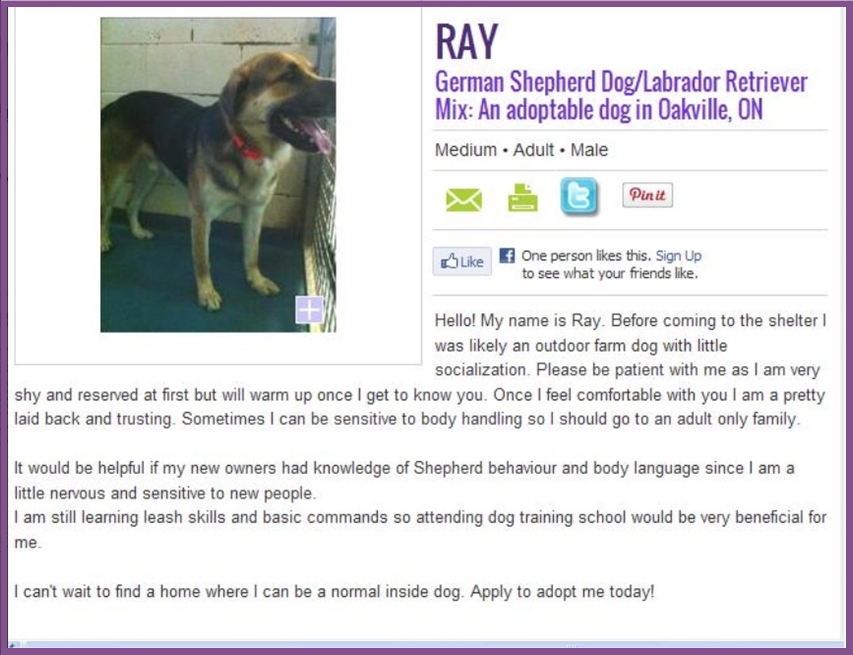


 Learning from Dogs