Category: Climate

The story of transition, part three

Final four short films about Transition.

PLEASE read the closing comment by Rob Hopkins!

A series of 10 delightful short films, courtesy of Transition Culture – For the introduction and the first three films, click here, for the next three click here.

Film Seven – Transition Town Totnes’s Transition Streets Origin: Transition Town Totnes

In December 2009, Transition Town Totnes, the UK’s first Transition initiative, was chosen as one of 20 community  groups in England and Wales to win the ‘Low Carbon Communities Challenge’. Its project, ‘Transition Streets’, was awarded £625,000. In the last 18 months, nearly 500 households have participated in Transition Streets, each, on average, cutting their carbon emissions by 1.5 tonnes.

About a third of those have gone on to install solar photovoltaic systems. However, the main benefits that people who have participated talk about are the social connections they have made and how they now feel so much more a part of their community. It has also acted as a platform for all kinds of other initiatives as neighbours start to get a taste for working together.

Film Eight – A Small Pennant Flag Origin: Transition Town Monteveglio (Bologna, Italy)

Transition Town Monteveglio (TTM) was the first Italian Transition initiative. In 2009 its local Comune (local Council) passed an amazing resolution that offers a stateof-the-art taste of what it looks like when a council really ‘gets’ peak oil and climate change, stating: “… a view of the future (the depletion of energy resources and the significance of a limit to economic development), methods (bottom-up community participation), objectives (to make our community more resilient, i.e. better prepared to face a low energy future) and the optimistic approach (although the times are hard, changes to come will include great opportunities to improve the whole community’s quality of life)”.

It has led to all kinds of initiatives and projects, including a local currency and renewable energy installations. Our object here is the Comune’s official pennant.

Film Nine – A Small Bag of Topsoil Origin: Transition Norwich’s food initiatives

It is one thing to start local food projects, but quite another to think strategically about how those projects sit in the larger context of the intentional relocalisation of the area. Transition Norwich, together with East Anglia Food Link, produced a study called ‘Can Norwich Feed Itself?’ which worked out that it could, albeit with a simpler diet, but that it would need certain new infrastructures put in place. This included a new mill to enable locally produced grains to be milled, two CSA farms (hence our object, a soil sample from their first CSA site), community gardens and research into varieties of beans and oats that will grow well in the area.

A successful application to the Local Food Fund enabled these to become a reality. It is a fascinating example of why we need to think strategically about the localisation of food. As Tully Wakeman, one of the co-ordinators, told me: “A trap a lot of NGOs fall into is over-thinking about vegetables (yet) only one tenth of what we consume, in calorific terms, comes from fruit and vegetables… where is the other 90% going to come from? Growing vegetables in gardens, allotments, community gardens and so on offers a degree of food security and can happen relatively rapidly.

However the other 90% requires the rebuilding of the infrastructure required for growing, processing, cleaning, storing, milling and distributing grains and cereals, and that takes longer and requires more planning”.

Film Ten – Beer, A Bottle of Sunshine Ale Origin: The Lewes Community Power Station

The Ouse Valley Energy Service Company (OVESCO) is one of the offshoots of Transition Lewes focused on the installation of renewables in and around the town as well as promoting energy conservation and local economic resilience. In 2011 it took on its most exciting and ambitious project to date installing a 98kW solar photovoltaic array on the roof of local brewery, Harveys. This will turn the building into one of the first community-owned solar power stations in the country.

The 544 photovoltaic (PV) panels will generate 93,000kWh of green electricity each year – enough to save more than 40 tonnes of CO2 annually.

A community share launch event took place in April 2011 attended by 300 people. Within five weeks the target of £307,000 had been reached. Money invested will be repaid in full at the end of the 25 year scheme, or earlier at the request of the investor and subject to conditions. While the investment is held a dividend will be paid after the first year which is expected to be around 4%.

Our object is a bottle of ‘Sunshine Ale’, a special commemorative beer brewed to celebrate the launch of the scheme. Very nice it is too.

A final few words from Rob Hopkins.

Whittling down to these 10 objects has been very difficult but I hope what you have gained is a sense of something infectious, reaching beyond the idea of small individual initiatives, and arguing that localisation is the best way for the places in which we live to return to health. Various learned writers and academics have tried to encapsulate what Transition is, but I still think the best description of its spirit comes from Tove Jansson in Comet in Moominland in 1946, who wrote: “It was a funny little path, winding here and there, dashing off  in different directions, and sometimes even tying a knot in itself from sheer joy. (You don’t get tired of a path like that, and I’m not sure that it doesn’t get you home quicker in the end).”

Rob Hopkins is the co-founder of Transition Town Totnes and Transition Network and blogs at www.transitionculture.org

The story of transition, part two.

More of the fun collection of short films about Transition.

A series of 10 delightful short films, courtesy of Transition Culture – For the introduction and the first three films, click here.

Film Four – An Egg Origin: Transition Town Forres’s Community Garden

Like many Transition initiatives, Transition Town Forres (TTF) saw the rebuilding of food resilience as a key part of its work. It sought to bring land into community management for new food production. TTF was invited to negotiate a lease with Moray Council for 0.59ha (1.45 acre) of horticultural land starting on the 1st April 2009.

With an 11 year lease, work began on the site. Rather than divide it into the traditional rectangles of allotments, it was divided into circular allotments, called ‘pods’, each one 250m2, and shared by 4-6 people. The garden now has 75 gardeners, 60 local scouts and 26 chickens (hence the egg). Participation is from a broad cross section of the community, and the dropout rate has been less than half that of other local allotments. The next step that is planned is a Farmers’ Market in the town.

Film Five – Mini Draughtbusters Origin: Transition Belsize’s Draughtbusters

Transition Belsize, one of over 40 Transition initiatives active within London, was inspired by ‘Draught Busting Saturdays’ created in South London by Sue Sheehan and a group from Hyde Farm Climate Action Network. They started working with Camden Council to deliver Draughtbusters in Belsize. The idea is a simple one. The area has many Victorian homes with leaky sash and casement windows.

Up to 15 people meet in someone’s house and learn to draught-proof by working on the host’s house. The host gets given £50 of materials, and the participants £20 worth each. It has proven very popular, and 15 local schools have also been draught-proofed by keen Draughtbusters. It has now spread to many other London Transition groups, just one example of how Transition groups can incubate ideas that can then be rapidly replicated by others. Our object here is a miniature version of the Draughtbusters team: Patrick (doing the door) and Sarah and Lauren (working on the window).

Film Six – A Clove of Garlic Origin: The Green Valley Grocer, Slaithwaite

When the local greengrocer went out of business, members of Marsden and Slaithwaite Transition Towns (MASTT) in Yorkshire wondered if perhaps the community might take over the running of the shop. They realised this would only work with the support of the community so they held a public meeting where people expressed enthusiasm for the idea.

Time was tight, so they set up an Industrial and Provident Society and designed a share launch which was unveiled three weeks later. The goal was to raise £15,000, and this was achieved within 10 days.

From initial idea to the shop opening? Two months.  The shop is now a busy thriving community enterprise, and MASTT is setting up a growing co-operative called ‘Edibles’ to supply the shop with local produce.

Early on in running the shop, they found that all the wholesale garlic available to them was imported from China, and so they set up the Green Valley Grocer Garlic Challenge, making garlic cloves available to customers at cost and offering to buy back whatever people produce, with the aim of making Slaithwaite self-sufficient in garlic within two years (well you have to start somewhere…).

The final four films will be shown shortly after Christmas.

The story of transition, part one

A fun collection of short films about Transition.

I shall avoid the temptation of writing about our need for transition, well for now that is, and just go straight to this recent article that appeared on the Transition Culture website.

As part of the promotion of ‘The Transition Companion‘, Emilio Mula made these 10 short films of different stories from the book.  The recent BBC series ‘A History of the World in 100 Objects’ beautifully told the story of the evolution of human history illustrated by 100 objects chosen from the British Museum’s collection. We used a similar approach to tell the story of the emerging and unfolding Transition movement, which in its short life has spread to 35 countries around the world from its humble beginnings in Kinsale, Ireland.  You can read more about these stories here, and here are the films…

So the first three of the films today and some more tomorrow.

Film One – A Really Quite Horrible Jumper  Origin: Transition Taunton Deane

Between July and September 2009, Transition Taunton Deane ran a series of workshops with their local council looking at peak oil, climate change and resilience. What was extraordinary was that every one of the Council’s 375 employees attended, from CEO to car park attendants.

This was written up as ‘Towards a resilient Taunton Deane’ and the whole process deeply impacted the Council. They set up a Green Champions team, every department now has an energy charter, it has cut its electricity use by 14%, set up a car club and is now installing PV and insulating its buildings. After the initial workshop, a planning officer and a car park attendant got together and planted a new community orchard on public land.

Chrissie Godfrey from TTD told me “our main role is to keep telling them how brilliant they are… it just goes to show how powerful a catalyst Transitioners, in the right place at the right time, can be”.

The jumper? In 2010, the Council held a ‘Turn the Heat Down’ day where the heating in their offices was turned down and staff were invited to wear the most revolting jumper they could find to work, and prizes were awarded for the most hideous.

Film Two – Bertie & Gertie Origin: Transition Town Tooting’s Trashcatchers’ Carnival

In July 2010, Tooting was the setting for the Trashcatchers’ Carnival, the first Transition project to get Arts Council funding. Together with Project Phakama and Emergency Exit Arts, Transition Town Tooting (TTT) created a street carnival celebrating the Earth using entirely recycled materials. Over 800 people took part, including local schools, mosques and temples, and over one million plastic bottles and shopping bags, half a million crisp packets, half a ton of renewable willow and half a ton of materials were collected over a six month period to create this extravaganza, which included several structures over 6m (20ft) high.

On the day, thousands turned out, the sun shone, local restaurants fed over 1,000 people for free at the end of the event, and the community was left with the feeling of ‘if we can do that we can do anything’.

Bertie and Gertie were made entirely from recycled plastic bags by members of Tooting Bec Lido as part of their float, and represent the real Bertie and Gertie, who are often to be found swimming in the Lido.

Film Three – A Gas Lamp Bulb Origin: Transition Malvern Hills’ ‘Gasketeers’

Malvern is home to 109 Victorian gas lamps, which provided C.S. Lewis with the inspiration for the lamp that first greets Lucy in The Lion, the Witch and the Wardrobe. They are listed, part of the identity of the place, but are also hugely inefficient. At the moment each lamp costs £130 to maintain per year and £450 to maintain.  They don’t even create that much light, and as local council budgets tighten, there is a risk that they will be turned off altogether.

Enter Transition Malvern Hills’ energy group, known locally as the ‘Gasketeers’. The group brought together experts in gas lighting from the local area and also from further afield. They have now started making the lamps over; their changes will mean that each lamp will now cost just £14 a year in gas and £40 a year in maintenance, reducing carbon emissions by 84%. They will also be 10 times brighter, and produce no light pollution at all. They are maintained by Lynn, the UK’s first qualified female gas lamp technician, who performs all her maintenance with a bicycle and trailer.

The Long Emergency, part two.

The concluding extract from James Kunstler’s powerful book.

Last Friday, I published the first part of the extract that so powerfully articulated the madness of present global policies (especially US policies) with regard to oil.  Let me continue.

The first part finished thus, “Yet, I was not soothed by these thoughts, nor by the free eats, and even the liquor failed to lift me up because I couldn’t shake the recognition that in the short term we are in pretty serious trouble, too.”

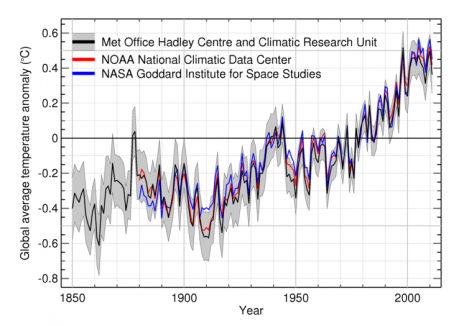
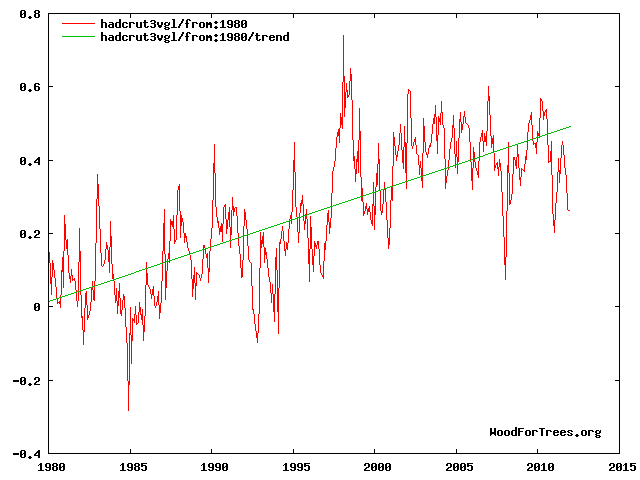
There is near unanimity among the scientific community that global warming is happening.  There is also a definite consensus emerging that the term “climate change” may be more accurate than “global warming” to describe what we are in for.  The mean temperature of the planet is going up.  The trend is unmistakable.  Average global land temperature was 46.90 degrees Fahrenheit [Ed. 8.278 °C.] when modern measurements began and had reached 49.20 degrees F [Ed. 9.556 °C.] in 2003.  The rate of change has also increased steadily.  The total increase of 2.30 degrees might seem trivial, but has tremendous implications.  And the rise in temperature happens to correlate exactly with the upward scale of fossil fuel use since the mid-nineteenth century.

It may not matter anymore whether global warming is or is not a by-product of human activity, or if it just represents the dynamic disequilibrium of what we call “nature.”  But it happens to coincide with our imminent descent down the slippery slope of oil and gas depletion, so that all the potential discontinuities of that epochal circumstance will be amplified, ramified, reinforced, and torqued by climate change.  If global warming is a result of human activity, fossil fuel-based industrialism in particular, then it seems to me the prospects are poor that the human race will be able to do anything about it, because the journey down the oil depletion arc will be much more disorderly than the journey up was.  The disruptions and hardships of decelerating industrialism will destabilize governments and societies to the degree that concerted international action – such as the Kyoto protocols or anything like it – will never be carried out.  In the chaotic world of diminishing and contested energy resources, there will simply be a mad scramble to use up whatever fossil fuels people can manage to lay their hands on.  The very idea idea that we possess any control over the process seems to me further evidence of the delusion gripping our late-industrial culture – the fatuous certainty that technology will save us from the diminishing returns of technology.

So for the purposes of this book, the relevant question concerning global warming and climate change is not whether human beings caused  it or whether we will come up with some snazzy means to arrest it, but simply what the effects are likely to be and what they signify about the way we will live later on this century.

This extract from the book was published in 2005, although there is an Afterword included that was published in 2009.  So to bring things more up to date, here’s a video of James Kunstler speaking about peak oil just about a year ago.

In this fourth video in the series “Peak Oil and a Changing Climate” from The Nation magazine and On The Earth Productions, James Howard Kunstler discusses how finance and energy are running neck and neck to fuel the end of advanced industrial civilization.

For more videos in the series, visit The Nation.

Plus for those that are interested in the data of global land-surface temperatures, here’s a two-minute video showing the temperature change over the last 200 years.

For more information about this study visit http://berkeleyearth.org. Berkeley Earth video representation of the land surface temperature anomaly, 1800 to the present. The map of the world shows the temperature anomaly by location over time. The chart at the bottom, shows the global land-surface temperature anomaly. The Berkeley Earth analysis shows 0.911 degrees Centigrade of land warming (+/- 0.042 C) since the 1950s.

Big money – update

After writing, last Friday, the Post that came out an hour ago, called The Power of Big Money, there was a further email from Duncan Meisel of 350.org.  It is reproduced in full.

RED ALERT: Obama caving on Keystone?!

Friends,

It all comes down to Barack Obama.

As I type this, Big Oil’s representatives in the House and Senate are pushing legislation that would rush approval of the Keystone XL tar sands pipeline. Up until now President Obama has stood strong, threatening to reject any bill that includes the pipeline. But in the last hour, some terrible news has begun to leak from DC: President Obama seems to be on the verge of caving on Keystone.

The next few hours will be absolutely crucial — the President needs to hear from you that cutting a back-room deal with Big Oil on Keystone XL is unacceptable. If he steps up makes a public threat to veto this bill, he can stop this pipeline in its tracks.

Can you make a call right away? Here’s the White House number: 202-456-1111

Feel free to say what you want on the call, but remember to drive this one message home: to keep his promises, President Obama needs to veto legislation that would rush approval of Keystone XL. This pipeline is a threat to our climate and jobs and needs to be stopped.

After you’ve called the White House, let us know how it went by clicking here.

(Don’t worry if you get a busy signal — it’s actually a good sign: it means we’ve flooded the White House switchboard and that the movement is sending an overwhelming message to the President. Just keep on trying until you get through.)

President Obama came into office promising to “end the tyranny of oil.” This is his chance to prove he was serious. If he’s not, he needs to know right now that there will be real consequences.

Big Oil cut a back-room deal with the dirtiest Members of Congress to attach this legislation to a must-pass tax cut bill. These kinds of deals exemplify the tyranny Big Oil exercises over our government, and underscores why the President needs to threaten a veto.

We have just a few hours to convince him to stand strong and veto any legislation to rush the Keystone pipeline. Can you make a call right now and tell him that we expect nothing less? Here’s the number again: 202-456-1111

Your calls right now are absolutely crucial, and you should also be getting ready to get back into the streets in the days and weeks to come. We’re dusting off our plans to go to Obama 2012 offices and raise a ruckus. Call the White House, but also get in touch with your friends to start plotting your next steps locally.

Thanks to you, this fight isn’t over yet — not by a long shot.

Let’s go,

Duncan Meisel for the team at 350.org

P.S. Many of your friends cheered you on when you buried this pipeline the first time — share this red alert with a few clicks onFacebookand Twitter to bring them back into the game.

And then a short while later, this further email from Duncan,

Hey friends,

Just wanted to pass along an update: today, we completely flooded the White House phone lines with thousands of calls opposing this deal on Keystone XL oil pipeline.

The good news: this means we overwhelmed the White House with our calls. The bad news: it also means that a lot of people didn’t get through, and that the comment line is now shut down for the weekend.

If you weren’t able to get through or make a call, you can leave a short message for the President on the White House website here.

Thanks again — we’ll be in touch soon.

Onwards,

Duncan Meisel for the 350.org Team

P.S. In your comment to the White House, make sure you include some form of this message:

To keep his promises, President Obama needs to veto legislation that would rush approval of Keystone XL. This pipeline is a threat to our climate, our communities, and the creation of a new clean energy economy. and jobs and needs to be stopped.

When I sat down at my PC around 2.30pm (MT) on Saturday, there was a further email this time from Bill McKibben, as follows:

Dear Friends,

As you might know, the Keystone tar sands pipeline is back in play. 

This morning, the Senate passed a bill that requires a 60-day, expedited approval process for the pipeline in return for a payroll tax cut, and the President has said he will sign it.

The news has been swirling around Washington the last few days, with one report after another of deals and deadlines. (It’s a little weird to think that six months ago, when we started the campaign to stop this pipeline, almost no one had even heard of this thing and now it’s the center of frantic bargaining — that’s a real tribute to your efforts).

Here’s what we do know: 

1) The dirty energy industry wants the pipeline fast-tracked, and is demanding that the President grant or deny a permit within two months. They’re going to do all they can to make that happen.

2) The administration knows that Americans don’t want that permit granted. They know because many of you encircled the White House in November,  and submitted more public comments than on any energy project in history, and because yesterday the climate movement flooded the White House switchboard with so many phone calls that the busy signal was the sound of the day. For all that work, thank you.

Here’s what we don’t know: what happens next. 

Our hope — and what you should ask the President for when you write him — is that when he signs the bill he will say the obvious thing:

“Two months is not long enough to review the pipeline. The Canadians themselves have just delayed review of their tar sands pipelines over safety concerns, and we’ve just come through a year that set a record for billion-dollar climate-related disasters; I’m not going to do a rush job just to please the oil industry lobbyists. So this pipeline is dead.”  

Since the State Department has already, in essence, said two months is not enough time, this should be pretty straightforward.

We should know how it’s going to play out within 48 hours or so. We’re of course ready to fight like heck.  

But for this weekend? Well, the switchboard is now closed, so to contact the White House you’ll need to send them a message here.  And click here to spread the word on Facebook, and click here to share the news on on Twitter. 

Once you’ve done that, I recommend eggnog, football, caroling, Hannukah-shopping — and checking the email every once in a while? We’re hanging fire on this, and we’ll let you know when we find out what’s going down and if rapid reaction of some kind is required.

So so many thanks for your continued good hearted work,

Bill McKibben for 350.org Team

P.S. We know one other thing too. On Thursday night the Republican debating society came out in favor the pipeline, which is easy for them to do since they’ve all now denied climate science. Newt Gingrich in particular blamed “San Francisco environmental extremists” with holding things up. I’m sure our California crew is happy for the shout-out, but it seemed a little unfair to Nebraska farmers, Texas ranchers, Florida College students, New York trade unionists, Wall Street occupiers, and even us Vermont granola eaters. We’re a big broad bunch and we’re going to stay that way!

Please do everything to circulate this information.  Thank you!

The power of big money!

Disappointing news about the Keystone XL pipeline project.

I have previously written about the madness of this proposed project, in fact have written six or seven times before.  You may like to dip back into this Post.  This one, too, shows starkly how our relationship with oil is changing the world we live in.

So it is with some sadness that I reproduce in full a recent circulation from Duncan Meisel from 350.org.

Dear friends,

I’m writing to share some disappointing news: yesterday, the U.S. House of Representatives voted in favor of rushing approval of the Keystone XL oil pipeline.

This doesn’t mean the pipeline is getting built — not by a long shot. The bill would still have to pass the Senate and be signed by the President, neither of which are likely to happen. It does show that we need to be vigilant after our temporary victory to stop Keystone XL — the corporate polluters pushing this climate disaster never sleep.

Since we blocked the front door, Big Oil is now trying to bring Keystone in through the back — their representatives in Congress are attaching the pipeline as an amendment to a crucial bill about taxes and the economy. If we want to make sure the pipeline never gets built, once again we need to get loud and bring this fight back into the public.

Here’s the truth: much of our Congress is bought and sold by corporations. The 234 members of the House who supported this bill took $42,374,100 from corporate polluters in the last decade. If we want Congress to start working for us, and for the planet, we need to call them out on this corruption whenever it happens.

Can you share this image (with a quote from Bill McKibben) on Facebook or Twitter to show just how much this corrupt attempt to revive the pipeline stinks?

We’ll never have the money and the lobbyists of Big Oil, so we’ve got to use our voices and our bodies to make our point.

Over the past six months, we’ve signed petitions, led actions in communities coast-to-coast, and organized large-scale civil disobedience against this pipeline. All that work added up. President Obama’s announcement about the pipeline delay was HUGE, and gave us the chance to shut Keystone XL down for good.

Ultimately, we’re in a long term fight to save the planet from the polluters who would buy their way to total catastrophe. It’s up to us to use this moment to show just how dangerous they have become, and begin making the case that corporate control over government must end. Let’s make sure all of our friends know how much their latest Keystone XL stunt stinks.

Many thanks for raising your voice,

Duncan Meisel, for the 350.org team

P.S. In case you were wondering, we’re not only spreading the word online — folks in certain states are calling their senators and we’re continuing to ratchet up our actions across the country. As I type this, activists in Ohio are staging a “human oil spill” to House Speaker Boehner’s front door. We’ll need all sorts of creative tactics on the road ahead — more on that in a future email!

Please do everything to spread this message.  Thank you.

Finally, go and put your arms around your dog, give him or her a very big hug, and pray that mankind might learn something about truth and integrity from the humble dog!

Learning from dogs!

The Long Emergency, part one

A reflection on the huge changes facing our global society.

I am reading James Howard Kunstler’s book The Long Emergency.  On the front cover there is a quote from a review in The Independent newspaper, “If you give a damn, you should read this book.”  On the back cover, the quote, “Stark and frightening.  Read it soon.” – Daily Camera.  The quotes are spot on!

Rather than give my own opinion at this stage (I should finish the book first!), let me quote from the opening of Chapter Five, Nature Bites Back.

I was a at a four-day conference called Pop Tech in the seaside village of Camden, Maine, at the peak of the fall foliage season in October 2003, having a pretty good time at the talks, and enjoyiong a series of extravagant dinners – one featuring a free oyster raw bar and gratis Grey Goose vodka – not to mention all the lobsters, steaks, and other products of our bountiful cheap-oil economy.  Then, on Saturday afternoon, a scientist from the University of Washington, Peter D. Ward, got up in the old-time opera house where the conference was held and did a presentation about the life and death of the planet Earth,  Using a series of vivid artist’s renderings delivered on PowerPoint, Ward showed us how, hundreds of millions of years hence, all land animals would become extinct, the green forests and grasslands would broil away, the oceans would evaporate, and eventually our beloved planet would be reduced to a pathetic ball of inert lifeless lint – prefatory to being subsumed in the expanded red giant heat cloud of our baking sun.  Few members of the audience had any appetite for the spread of cookies and munchables laid out for the break that followed.  Personally, I was so depressed that I felt like gargling with razor blades.

The human spirit is remarkably resilient, though.  A few hours later, the horror of it all was forgotten and the conference-goers reported to the next supper buffet with the appetites recharged, happy to scarf more lobster and beef medallions and guzzle more liquor, while chatting up new friends about their various hopes and dreams for the continuing story of civilized life here on good old planet Earth, which, it was assumed, had quite a ways to go before any of us needed to worry about its fate, if ever.

Wasn’t it John Maynard Keynes who famously remarked to a group of fellow economists dithering about the long-term this and the long-term that: “Gentlemen, in the long term we’re all dead.”  Our brains are really not equipped to process events on a geological scale – at least in reference to how we choose to live, or what we choose to do in the here-and-now.  Five hundred millions years is a long time, but how about the mad rush of events in just the past 2,000 years starring the human race?  Rather action-packed, wouldn’t you say?  Everything from the Roman Empire to the Twin Towers, with a cast of billions – emperors, slaves, saviors, popes, kings, queens, navies, rabbles, conquest , murder, famine, art, science, revolution, comedy, tragedy, genocide, and Michael Jackson.  Enough going on in a mere 2,000 years to divert anyone’s attention from the ultimate fate of the earth, you would think.  Just reflecting on the events of the twentieth century alone could take your breath away, so why get bent out of shape about the ultimate fate of the earth?  Yet, I was not soothed by these thoughts, nor by the free eats, and even the liquor failed to lift me up because I couldn’t shake the recognition that in the short term we are in pretty serious trouble, too.

OK, that’s enough for today – I’ll continue this important extract on Monday.  Let me close by inviting you to watch James Kunstler in interview.

Make a difference – now!

A plea to sign a global call not to delay action on global warming

How many of you in Europe watched the final episode of Sir Peter Attenborough’s Frozen Planet series, entitled On Thin Ice?

Did you watch the short video in last week’s post, The power of truth?  If not, it’s below.

Here’s a piece from a BBC news item from yesterday,

A hungry polar bear

It is an image that is sure to shock many people.

An adult polar bear is seen dragging the body of a cub that it has just killed across the Arctic sea ice.

Polar bears normally hunt seals but if these are not available, the big predators will seek out other sources of food – even their own kind.

The picture was taken by environmental photojournalist Jenny Ross in Olgastretet, a stretch of water in the Svalbard archipelago.

“This type of intraspecific predation has always occurred to some extent,” she told BBC News.

“However, there are increasing numbers of observations of it occurring, particularly on land where polar bears are trapped ashore, completely food-deprived for extended periods of time due to the loss of sea ice as a result of climate change.”

Re-read that last segment of that last sentence, “completely food-deprived for extended periods of time due to the loss of sea ice as a result of climate change.

So with all that in mind, please read on.

Friends,

What if someone told you we should abandon all hope for global climate action until 2020? Well, that’s exactly the proposal that the United States is pushing at the UN Climate Talks taking place this week in Durban, South Africa. The 2020 delay might well be the worst idea ever.

Waiting nine years for climate action isn’t just a delay, it’s a death sentence for communities on the front lines of the climate crisis — and it could slam the door on ever getting carbon pollution levels below the safe upper limit of 350 parts per million.

It’s not too late to stop this delay from going through. Over the next three days, our team of 350.org activists in Durban will be working with our partners at Avaaz and allies from around the world to isolate the United States — and build support for the African nations that are fighting for real climate action. But it will take a massive grassroots outcry to demonstrate that people everywhere are taking a stand to prevent the United States negotiators from signing away our future.

If we raise an international alarm before the talks end on Friday, we can convince the US to get out of way of progress and help unlock the global process that can lead to bold climate action all around the world.

Click here to add your voice to a global call to action we’re delivering in Durban: www.350.org/durban

The climate talks in South Africa end in just 48 hours, and it’s vital that we ramp up the pressure now. To make sure the US gets the message, our team on the ground here in Durban will deliver your messages directly to the US negotiating team at a high-impact event we’re helping to pull together on Friday. We can’t say much more about it now, but suffice to say our message will be unavoidable.

This year, the 350 network has shown that people power can truly move the planet in the right direction. We mobilized hundreds of thousands of people to push for climate action in nearly every country on earth. We beat back the Keystone XL pipeline when no one said it was possible. We took over the radio waves to spread a message of hope and action on the climate crisis. And through our actions, we helped keep the hope of saving our planet — and reaching 350 ppm — alive.

The UN Climate Talks here in Durban aren’t going to get us back to 350 by themselves, but they can keep the option open by making progress on a legally binding, international framework to help nations make serious cuts in carbon emissions. In 2012, we’re going to need to do all we can to challenge the fossil fuel companies that are the real obstacles to progress. Breaking their stranglehold on our governments is the only way to really unlock these negotiations.

But right now, the most important thing we can do is keep the possibility of a strong international climate deal alive by pushing back on the United States negotiating team. In recent months, President Obama has shown that he’ll stand up for the climate, but only if he’s got a movement to back him up. On the Keystone pipeline, he’s been doing the right thing by blocking Republican efforts to push it through — now we need him to do the right thing on the international stage.

There’s no guarantee that we’ll be successful, but we owe it to our allies across the planet — many of whom are already feeling the impacts of climate change — to resist the chorus of cynics and keep hope alive. As Nelson Mandela said, “It always seems impossible until it’s done.” The 350 network has pulled off the impossible before — now’s the time to step up the pressure again.

Please add your voice today: www.350.org/durban

Let’s do this,

Jamie Henn for the whole 350.org team

P.S. We have just 48 hours to build a huge groundswell of pressure. Please help make it go viral with a few clicks on Twitterand Facebook — tag your popular friends, and post it again and again.

William deBuys, The Parching of the West

Once again, a powerful essay from the TomDispatch blog.

Quick introduction.  Tom Engelhardt, of TomDispatch, has given me a blanket permission to reproduce his essays.  As always, I am indebted to his generosity.  This particular essay is extremely timely coming after my Post yesterday about extreme weather.

Tomgram: William deBuys, The Parching of the West

Posted by William deBuys at 6:02pm, December 4, 2011.

The good news? While 2010 tied for the warmest year on record, 2011 — according to the U.N.’s World Meteorological Organization (WMO) — is likely to come in 10th once November and December temperatures are tallied. In part, this is evidently due to an especially strong La Niña cooling event in the Pacific.  On the other hand, with 2011 in the top ten despite La Niña, 13 of the warmest years since such record-keeping began have occurred in the last 15 years.  Think of that as an uncomfortably hot cluster.

And other climate news is no better.  A recent study indicates that Arctic ice is now melting at rates unprecedented in the last 1,450 years (as far back, that is, as reasonably accurate reconstructions of such an environment can be modeled).  As the Arctic warms and temperatures rise in surrounding northern lands — someday, Finland may have to construct artificial ski trails and ice rinks for its future winter tourists — a report on yet another study is bringing more lousy news.  Appearing in the prestigious science journal Nature, it indicates that the melting permafrost of the tundra may soon begin releasing global-warming gases into the atmosphere in massive quantities.  We’re talking the equivalent of 300 billion metric tons of carbon over the next nine decades.

Recently, Fatih Birol, the chief economist for the International Energy Agency, suggested that, by century’s end, the planet’s temperature could rise by a staggering 6º Celsius (almost 11º Fahrenheit).  International climate-change negotiators had been trying to keep that rise to a “mere” 2º C.  “Everybody, even the schoolchildren, knows this is a catastrophe for all of us,” was the way Birol summed the situation up.  If only it were so, but here in the U.S., none of the above news was even considered front-page worthy.  Nor was the news that, in 2010, humans had pumped more carbon dioxide into the atmosphere than at any time since the industrial revolution began: 564 million more tons than in 2009 to be exact.  We’re living today with just less than a degree of those six degrees to come, and the results in extreme weather this year should have made us all stop and think.

If you want to focus in on damage here in the U.S., consider Rick Perry’s Texas, where, according to scientists, “daily temperatures averaged 86.7° in June through August — a staggering 5.4°F above normal.”  According to the WMO, that’s the highest such average “ever recorded for any American state.”  And still global politicians yammer on and do little; still, the U.S. shuffles its political feet, while Canada’s government has announced that it will make no new commitments and may even be preparing to withdraw from the Kyoto protocol, and countries with booming developing economies like China, India, and Brazil hedge their bets when it comes to action.

In the meantime, nature doesn’t care whether or not we do anything.  It’s on its own schedule.  And when it comes to the American Southwest, that schedule looks daunting indeed as William deBuys makes clear.  His new book, A Great Aridness: Climate Change and the Future of the American Southwest, is the definitive work on the subject of water and the West (and, as with all of his work, a pleasure to read). So get yourself a glass of water while you still can and settle in for a dose of the Age of Thirst. (To catch Timothy MacBain’s latest Tomcast audio interview in which deBuys discusses the water politics of the American West, click here or download it to your iPod here.) Tom

The Age of Thirst in the American West
Coming to a Theater Near You: The Greatest Water Crisis in the History of Civilization 

By William deBuys

Consider it a taste of the future: the fire, smoke, drought, dust, and heat that have made life unpleasant, if not dangerous, from Louisiana to Los Angeles. New records tell the tale: biggest wildfire ever recorded in Arizona (538,049 acres),biggest fire ever in New Mexico (156,600 acres), all-time worst fire year in Texas history (3,697,000 acres).

The fires were a function of drought.  As of summer’s end, 2011 was the driest year in 117 years of record keeping for New Mexico, Texas, and Louisiana, and the second driest for Oklahoma. Those fires also resulted from record heat.  It was the hottest summer ever recorded for New Mexico, Texas, Oklahoma, and Louisiana, as well as the hottest August ever for those states, plus Arizona and Colorado.

Virtually every city in the region experienced unprecedented temperatures, with Phoenix, as usual, leading the march toward unlivability. This past summer, the so-called Valley of the Sun set a new record of 33 days when the mercury reached a shoe-melting 110º F or higher. (The previous record of 32 days was set in 2007.)

And here’s the bad news in a nutshell: if you live in the Southwest or just about anywhere in the American West, you or your children and grandchildren could soon enough be facing the Age of Thirst, which may also prove to be the greatest water crisis in the history of civilization.  No kidding.

If that gets you down, here’s a little cheer-up note: the end is not yet nigh.

In fact, this year the weather elsewhere rode to the rescue, and the news for the Southwest was good where it really mattered.  Since January, the biggest reservoir in the United States, Lake Mead, backed up by the Hoover Dam and just 30 miles southwest of Las Vegas, has risen almost 40 feet. That lake is crucial when it comes to watering lawns or taking showers from Arizona to California.  And the near 40-foot surge of extra water offered a significant upward nudge to the Southwest’s water reserves.

The Colorado River, which the reservoir impounds, supplies all or part of the water on which nearly 30 million people depend, most of them living downstream of Lake Mead in Los Angeles, San Diego, Phoenix, Tucson, Tijuana, and scores of smaller communities in the United States and Mexico.

Back in 1999, the lake was full. Patricia Mulroy, who heads the water utility serving Las Vegas, rues the optimism of those bygone days.  “We had a fifty-year, reliable water supply,” she says. “By 2002, we had no water supply. We were out. We were done. I swore to myself we’d never do that again.”

In 2000, the lake began to fall — like a boulder off a cliff, bouncing a couple of times on the way down. Its water level dropped a staggering 130 feet, stopping less than seven feet above the stage that would have triggered reductions in downstream deliveries. Then — and here’s the good news, just in case you were wondering — last winter, it snowed prodigiously up north in Colorado, Utah, and Wyoming.

The spring and summer run-off from those snowpacks brought enormous relief. It renewed what we in the Southwest like to call the Hydro-Illogic cycle: when drought comes, everybody wrings their hands and promises to institute needed reform, if only it would rain a little. Then the drought breaks or eases and we all return to business as usual, until the cycle comes around to drought again.

So don’t be fooled.  One day, perhaps soon, Lake Mead will renew its downward plunge.  That’s a certainty, the experts tell us.  And here’s the thing: the next time, a sudden rescue by heavy snows in the northern Rockies might not come. If the snowpacks of the future are merely ordinary, let alone puny, then you’ll know that we really are entering a new age.

And climate change will be a major reason, but we’ll have done a good job of aiding and abetting it. The states of the so-called Lower Basin of the Colorado River — California, Arizona, and Nevada — have been living beyond their water means for years. Any departure from recent decades of hydrological abundance, even a return to long-term average flows in the Colorado River, would produce a painful reckoning for the Lower Basin states.  And even worse is surely on the way.

Just think of the coming Age of Thirst in the American Southwest and West as a three-act tragedy of Shakespearean dimensions.

The Age of Thirst: Act I

The curtain in this play would surely rise on the Colorado River Compact of 1922, which divided the river’s water equally between the Upper and Lower Basins, allocating to each annually 7.5 million acre-feet, also known by its acronym “maf.” (An acre-foot suffices to support three or four families for a year.) Unfortunately, the architects of the compact, drawing on data from an anomalously wet historical period, assumed the river’s average annual flow to be about 17 maf per year.  Based on reconstructions that now stretch back more than 1,000 years, the river’s long-term average is closer to 14.7 maf.  Factor in evaporation from reservoirs (1.5 maf per year) and our treaty obligation to Mexico (another 1.5 maf), and the math doesn’t favor a water-guzzling society.

Nonetheless, the states of the Lower Basin have been taking their allotment as if nothing were wrong and consequently overdrafting their account by up to 1.3 maf annually.  At this rate, even under unrealistically favorable scenarios, the Lower Basin will eventually drain Lake Mead and cutbacks will begin, possibly as soon as in the next few years.  And then things will get dicier because California, the water behemoth of the West, won’t have to absorb any of those cutbacks.

Here’s one of the screwiest quirks in western water law: to win Congressional approval for the building of a monumental aqueduct, the Central Arizona Project (CAP), which would bring Colorado River water to Phoenix and Tucson, Arizona agreed to subordinate its Colorado River water rights to California’s.  In that way, the $4 billion, 336-mile-long CAP was born, and for it Arizona paid a heavy price. The state obliged itself to absorb not just its own losses in a cutback situation, but California’s as well.

Worst case scenario: the CAP aqueduct, now a lifeline for millions, could become as dry as the desert it runs through, while California continues to bathe. Imagine Phoenix curling and cracking around the edges, while lawn sprinklers hiss in Malibu. The contrast will upset a lot of Arizonans.

Worse yet, the prospective schedule of cutbacks now in place for the coming bad times is too puny to save Lake Mead.

The Age of Thirst: Act II

While that Arizona-California relationship guarantees full employment for battalions of water lawyers, a far bigger problem looms: climate change. Models for the Southwest have been predicting a 4ºC (7.2ºF) increase in mean temperature by century’s end, and events seem to be outpacing the predictions.

We have already experienced close to 1º C of that increase, which accounts, at least in part, for last summer’s colossal fires and record-setting temperatures — and it’s now clear that we’re just getting started.

The simple rule of thumb for climate change is that wet places will get wetter and dry places drier. One reason the dry places will dry is that higher temperatures mean more evaporation. In other words, there will be ever less water in the rivers that keep the region’s cities (and much else) alive. Modeling already suggests that by mid-century surface stream-flow will decline by 10% to 30%.

Independent studies at the Scripps Oceanographic Institute in California and the University of Colorado evaluated the viability of Lake Mead and eventually arrived at similar conclusions: after about 2026, the risk of “failure” at Lake Mead, according to a member of the Colorado group, “just skyrockets.” Failure in this context would mean water levels lower than the dam’s lowest intake, no water heading downstream, and the lake becoming a “dead pool.”

If — perhaps “when” is the more appropriate word — that happens, California’s Colorado River Aqueduct, which supplies water to Los Angeles, San Diego, and the All-American Canal, which sustains the Imperial and Coachella Valleys, will go just as dry as the Central Arizona Project aqueduct. Meanwhile, if climate change is affecting the Colorado River’s watershed that harshly, it will undoubtedly also be hitting the Sierra Nevada mountain range.

The aptly named Lester Snow, a recent director of California’s Department of Water Resources, understood this. His future water planning assumed a 40% decline in runoff from the Sierras, which feeds the California Aqueduct. None of his contemplated scenarios were happy ones. The Colorado River Aqueduct and the California Aqueduct make the urban conglomerations of southern California possible. If both fail at once, the result will be, as promised, the greatest water crisis in the history of civilization.

Only Patricia Mulroy has an endgame strategy for the demise of Lake Mead. The Southern Nevada Water Authority is, even now, tunneling under the lake to install the equivalent of a bathtub drain at close to its lowest point. At a cost of more than $800 million, it will drain the dregs of Lake Mead for Las Vegas.

Admittedly, water quality will be a problem, as the dead pool will concentrate pollutants. The good news, according to the standard joke among those who chronicle Sin City’s improbable history, is that the hard-partying residents and over-stimulated tourists who sip from Lake Mead’s last waters will no longer need to purchase anti-depressants. They’ll get all the Zoloft and Xanax they need from their tap water.

And only now do we arrive at the third act of this expanding tragedy.

The Age of Thirst: Act III

Those who believe in American exceptionalism hold that the historical patterns shaping the fate of other empires and nations don’t apply to the United States. Be that as it may, we are certainly on track to test whether the U.S. is similarly inoculated against the patterns of environmental history.

Because tree rings record growing conditions year by year, the people who study them have been able to reconstruct climate over very long spans of time. One of their biggest discoveries is that droughts more severe and far longer than anything known in recent centuries have occurred repeatedly in the American Southwest. The droughts of the Dust Bowl in the 1930s, of the 1950s, and of the period from 1998 to 2004 are remembered in the region, yet none lasted a full decade.

By contrast, the drought that brought the civilization of the ancestral Puebloans, or Anasazi, centered at Chaco Canyon, to its knees in the twelfth century, by contrast,lasted more than 30 years. The one that finished off Mesa Verdean culture in the thirteenth century was similarly a “megadrought.”

Jonathan Overpeck, a climate scientist at the University of Arizona who played a major role in the Nobel-Prize-winning work of the Intergovernmental Panel on Climate Change, tells me that the prospect of 130° F days in Phoenix worries him far less than the prospect of decades of acute dryness. “If anything is scary, the scariest is that we could trip across a transition into a megadrought.” He adds, “You can probably bet your house that, unless we do something about these greenhouse gas emissions, the megadroughts of the future are going to be a lot hotter than the ones of the past.”

Other scientists believe that the Southwest is already making the transition to a“new climatology,” a new normal that will at least bring to mind the aridity of theDust Bowl years. Richard Seager of Columbia University, for instance, suggests that “the cycle of natural dry periods and wet periods will continue, but… around a mean that gets drier. So the depths — the dry parts of the naturally occurring droughts — will be drier than we’re used to, and the wet parts won’t be as wet.”

Drought affects people differently from other disasters. After something terrible happens — tornados, earthquakes, hurricanes — people regularly come together in memorable ways, rising above the things that divide them. In a drought, however, what is terrible is that nothing happens. By the time you know you’re in one, you’ve already had an extended opportunity to meditate on the shortcomings of your neighbors. You wait for what does not arrive. You thirst. You never experience the rush of compassion that helps you behave well. Drought brings out the worst in us.

After the Chacoan drought, corn-farming ancestral Puebloans still remained in the Four Corners area of the Southwest. They hung on, even if at lower population densities. After the Mesa Verdean drought, everybody left.

By the number of smashed crania and other broken bones in the ruins of the region’s beautiful stone villages, archaeologists judge that the aridifying world of the Mesa Verdeans was fatally afflicted by violence. Warfare and societal breakdown, evidently driven by the changing climate, helped end that culture.

So it matters what we do. Within the limits imposed by the environment, the history we make is contingent, not fated. But we are not exactly off to a good start in dealing with the challenges ahead. The problem of water consumption in the Southwest is remarkably similar to the problem of greenhouse gas pollution. First, people haggle to exhaustion over the need to take action; then, they haggle over inadequate and largely symbolic reductions. For a host of well-considered, eminently understandable, and ultimately erroneous reasons, inaction becomes the main achievement. For this drama, think Hamlet. Or if the lobbyists who argue for business as usual out west and in Congress spring to mind first, think Iago.

We know at least one big thing about how this particular tragedy will turn out: the so-called civilization of the Southwest will not survive the present century, not at its present scale anyway. The question yet to be answered is how much it will have to shrink, and at what cost. Stay tuned. It will be one of the greatest, if grimmest, shows on Earth.

William deBuys is the author of seven books, including the just published A Great Aridness: Climate Change and the Future of the American Southwest (a Pulitzer Prize finalist), and The Walk (an excerpt of which won a Pushcart Prize). He has long been involved in environmental affairs in the Southwest, including service as founding chairman of the Valles Caldera Trust, which administers the 87,000-acre Valles Caldera National Preserve in New Mexico. To listen to Timothy MacBain’s latest Tomcast audio interview in which deBuys discusses the water politics of the American West click here, or download it to your iPod here

Copyright 2011 William deBuys

What’s the weather like, honey?

A couple of articles about our weather prospects.

Let me start with a recent report from Environmental Research Web, part of IOP Publishing.

Nov 24, 2011

Extreme weather will strike as climate change takes hold, IPCC warns

From the Guardian

Heavier rainfall, fiercer storms and intensifying droughts are likely to strike the world in the coming decades as climate change takes effect, the world’s leading climate scientists said on Friday.

Rising sea levels will increase the vulnerability of coastal areas, and the increase in “extreme weather events” will wipe billions off national economies and destroy lives, according to the Intergovernmental Panel on Climate Change (IPCC), the body of the world’s leading climate scientists convened by the United Nations.

Later on the article includes this,

Simon Brown, climate extremes research manager at theHadley Centre, the climate research unit of the UK’s Met Office, said: “This focus of the IPCC on extremes is very welcome as less emphasis has traditionally been given to these phenomena which are very likely to be the means by which ordinary people first experience climate change. Human susceptibility to weather mainly arises through extreme weather events so it is appropriate that we focus on these which, should they change for the worse, would have wide-ranging and significant consequences. This review will be very helpful in progressing the science by bringing together a wide range of studies – not just on the physical weather aspects of climate extremes but also on how we might adapt and respond to their changes in the future.”

Now I turn to last week’s Economist newspaper.

Climate change

The sad road from Kyoto to Durban

The latest UN climate summit says much about why the world is failing to tackle global warming

Dec 3rd 2011 | from the print edition

IN HARD times governments are consumed by short-term problems. But this does not mean the archetypal long-term problem, climate change, has gone away. Science continues to support the case for curbing greenhouse-gas emissions so as to minimise the risks of catastrophe. Meanwhile it is clear how wretchedly the world is failing to do so. Even if countries honour their promises, the UN reckons that by 2020 emissions will exceed the trajectory for keeping warming under 2°C by up to 11 gigatonnes. That is equivalent to more than double the emissions of every car, bus and truck in 2005.

The concluding paragraph reads,

No one should imagine such a deal would turn the tide on climate change. That tide will rise, and countries will need to adapt to a lot of warming. But by acknowledging that everybody has a responsibility to act, it would represent progress.

‘Countries will need to adapt to a lot of warming.’  Tomorrow, I will publish a recent essay on TomDispatch.  As a taster the opening paragraph is,

The good news? While 2010 tied for the warmest year on record, 2011 — according to the U.N.’s World Meteorological Organization (WMO) — is likely to come in 10th once November and December temperatures are tallied. In part, this is evidently due to an especially strong La Niña cooling event in the Pacific.  On the other hand, with 2011 in the top ten despite La Niña, 13 of the warmest years since such record-keeping began have occurred in the last 15 years.  Think of that as an uncomfortably hot cluster.

We live in interesting times.