Category: Climate

Regrowth

Yet another example of how positive change is so powerful.

I first saw this mentioned in a recent update from The Permaculture Research Institute of Australia.  It concerns the wonderful work being done by the town of Todmorden in the UK.  Here’s a recent piece on Daily Mail Online,

Carrots in the car park. Radishes on the roundabout. The deliciously eccentric story of the town growing ALL its own veg

Admittedly, it sounds like the most foolhardy of criminal capers, and one of the cheekiest, too.

Outside the police station in the small Victorian mill town of Todmorden, West Yorkshire, there are three large raised flower beds.

If you’d visited a few months ago, you’d have found them overflowing with curly kale, carrot plants, lettuces, spring onions — all manner of vegetables and salad leaves.

Today the beds are bare. Why? Because people have been wandering up to the police station forecourt in broad daylight and digging up the vegetables. And what are the cops doing about this brazen theft from right under their noses? Nothing.

Now watch this:

Todmorden have a website where all is explained, not unnaturally (sorry) called Incredible Edible Todmorden Unlimited! From there one learns that what they do is as follows:

What we do

We grow and campaign for local food.

Follow the links on the left to see in detail what we’re up to. Or you can get involved yourself. Our growing around town is organised by our community growers’ group: find out about that here.

From our beginnings with herb gardens, we’ve taken to planting and growing veggies and trees round town we’ve planted several orchards and there are more to come, and we’re working with public bodies round town to use their land – like the fire station and the railway station – or to work with them on their own Incredible ideas – like social landlord Pennine Housing.

Every school in the town is now involved in growing with us and we promotefood-based learning for the community as a whole.

We’re reaching back into local memories and knowledge with our History project.

Our campaigns aim to make different futures happen, through local campaigns like Every Egg Matters, and by spreading the word locally, regionally and nationally.

We hope to make a difference with major projects. We now have Lottery funding for our food hub at Tod High School and are just waiting for the final planning permission. That bid included the work of a food-inspirer a position now held by Sally.

We have also branched out to greenfield sites, working on donated land in Walsden to create a major resource for growing and learning, and on donated land in Gorpley to develop ideas about hill-top farming. More about them here

Growing herbs at the Station – of course!

What an absolutely fabulous example to the rest of the world!

Extreme weather events

Nature is really starting to speak to mankind!

I started writing this post back on the 25th September.  Why so far back?  Because that day something came into my in-box that deserved the widest circulation.  It’s an event being held just under a month from today, November 14th.  But it seemed worthwhile to give this amount of notice.  However, the reason why I wanted to start it back in September was because in the last 24 hours of that day, the 25th, the UK offered very good evidence of the significant increase in severe weather.

From the UK’s Met Office blog on the 25th September, 2012, (I have included the inches equivalent of the mm figures)

Rainfall figures: over a month’s worth of rain in two days

Rainfall totals for the past few days – from 1:00 am Sunday morning to 8:00 am this morning [Tuesday] – show some areas have already had more than twice their usual September rainfall. Ravensworth, in North Yorkshire, has seen the highest total, with 107.8 mm [4.24 in] falling, over 200 % of its average September rainfall.

The rainfall has been widespread, with many areas across the United Kingdom receiving large totals. Killylane, in Antrim Northern Ireland saw 98.2 mm [3.87 in], and high totals were also recorded in the south-west, with 72.4 mm [2.85 in] in Filton and 65.2 mm [2.57 in] at Dunkeswell Aerodrome.

Dunkeswell Aerodrome in Devon was where I used to fly our group-owned Piper Super Cub, still in military markings.

Piper Super Cub at Dunkeswell Aerodrome
A carriage made for two!

Anyway, back to the plot!

Also on that day (September 25th) the website Think Progress released this item,

Markey/Waxman Report: Carbon Pollution Creating A ‘Cocktail Of Heat And Extreme Weather’

By Climate Guest Blogger and Stephen Lacey on Sep 25, 2012 at 3:31 pm

by Katie Valentine and Stephen Lacey

Two House Democrats have released a report that aims to connect the dots on climate change and extreme weather events.

The staff report, issued by Henry Waxman (D-Calif.) and Edward Markey (D-Mass.), outlines the past year’s record-setting temperatures, storms, droughts, water levels and wildfires, and is being circulated in an attempt to rebuild congressional momentum to address climate change.

“The evidence is overwhelming — climate change is occurring and it is occurring now,” said Rep. Waxman, a Ranking Member of the Energy and Commerce Committee, in a statement.

The report outlines the stunning array of record-breaking extreme weather events throughout 2012 within five categories:

Extreme temperatures

  • July was the hottest month ever recorded in the continental U.S.  Some areas were 8 degrees warmer than average, with the average temperature in the lower 48 states at 77.6 degrees Fahrenheit, 3.3 degrees above the 20th century average.
  • Spring 2012 saw the warmest March, third-warmest April and second-warmest May in history, and was approximately 5.2 degrees Fahrenheit above average overall.
  • Through late June 2011, daily record highs were outnumbering daily record lows by 9-to-1.

Drought

  • As of September, 64 percent of the continental U.S. is experiencing drought, with August and September 2012 comparable to the worst months of the 1930s Dust Bowl.
  • By the beginning of August, more than half the counties in the U.S. had been designated disaster zones because of drought.
  • As of August, 51 percent of corn and 38 percent of soybeans grown in the U.S. were rated as poor or very poor by the U.S. Department of Agriculture. Some states’ corn fared worse – Indiana had 70 percent of its corn rated as poor or very poor, and Missouri had 84 percent.

Wildfires

  • This fire season 8.6 million acres – roughly the size of Connecticut and New Jersey combined – have burned in the U.S., with fires still burning in parts of the West.
  • Wildfires in Colorado have killed six people, destroyed 600 homes and caused about $500 million in property damage.
  • There has been nearly a four-fold increase in large wildfires in the West in recent decades, with fires burning longer and more intensely and wildfire seasons lasting longer.

Storms

  • Tropical Storm Debby caused Florida to have its wettest June on record. The storm killed at least seven people and also damaged more than 7,500 homes and businesses.
  • In July, the “derecho” storm system killed at least 23 people and left more than 3.7 million people without power.
  • In August, Hurricane Isaac caused storm surges of up to 15 feet in some places and contributed to Louisiana and Mississippi experiencing their second-wettest August on record and to Florida experiencing its wettest summer on record.

Extreme water levels and water temperatures

  • In July, water in the Great Lakes reached temperatures of 60 and 65 degrees Fahrenheit – more than 10 degrees warmer than the same time last year.
  • In August, water temperatures of up to 97 degrees and low water levels caused tens of thousands of fish to die in Midwestern lakes and rivers.
  • Low water levels in the Mississippi watershed have caused some barge companies to reduce their loads by 25 percent and have caused harbor closures in Tennessee, Missouri, Arkansas and Mississippi.

According to the report, 2012 natural disasters (not including wildfires or drought) have caused $22 billion in insured losses and more than 220 deaths as of August. The full cost of 2012’s extreme weather events isn’t yet known, but it’s expected to rival 2011’s record-breaking $55 billion.

The document outlines what scientists following the link between extreme weather and climate change have been saying for years: more carbon pollution adds extra energy in the atmosphere, thus warming the planet and making extreme weather events more likely.

Read the full report here.

So what came into my in-box?  An announcement from The Climate Reality Project: 24 HOURS OF REALITY: The Dirty Weather Report.

NOVEMBER 14-15, 2012

A lot can change in a day. This November 14, we hope you can help us make big change happen.

Join The Climate Reality Project for 24 Hours of Reality: The Dirty Weather Report. This will be our second annual, online event showing how global climate change is connected to the extreme weather we experience in our daily lives. The entire 24-hour event will be broadcast live over the Internet.

We’ll move between our home studio in New York City and into each region of the world, bringing voices, news and multimedia content across all 24 time zones. We’ll feature videos from around the globe, man-on-the-street reports, music, and most importantly, stories from communities moving forward with solutions.

Most of all, we’ll generate new energy and urgency around the fact that we must — and we can — work together to address the climate crisis.

GET INVOLVED

Sign up today to be a part of the global community taking part in 24 Hours of RealityRSVP on Facebook. Share this event with your friends. Submit your own video about the impacts of climate change where you live. And keep checking this page: We’ll post further details as the event draws closer.

Millions of people around the world know that the weather, their climate is changing.  But if you can take some more powerful evidence of just how it’s all changing then go and read a recent report on the Grist website, entitled ‘Deadly connection: New report on extreme weather and climate change’

So one more video to close.

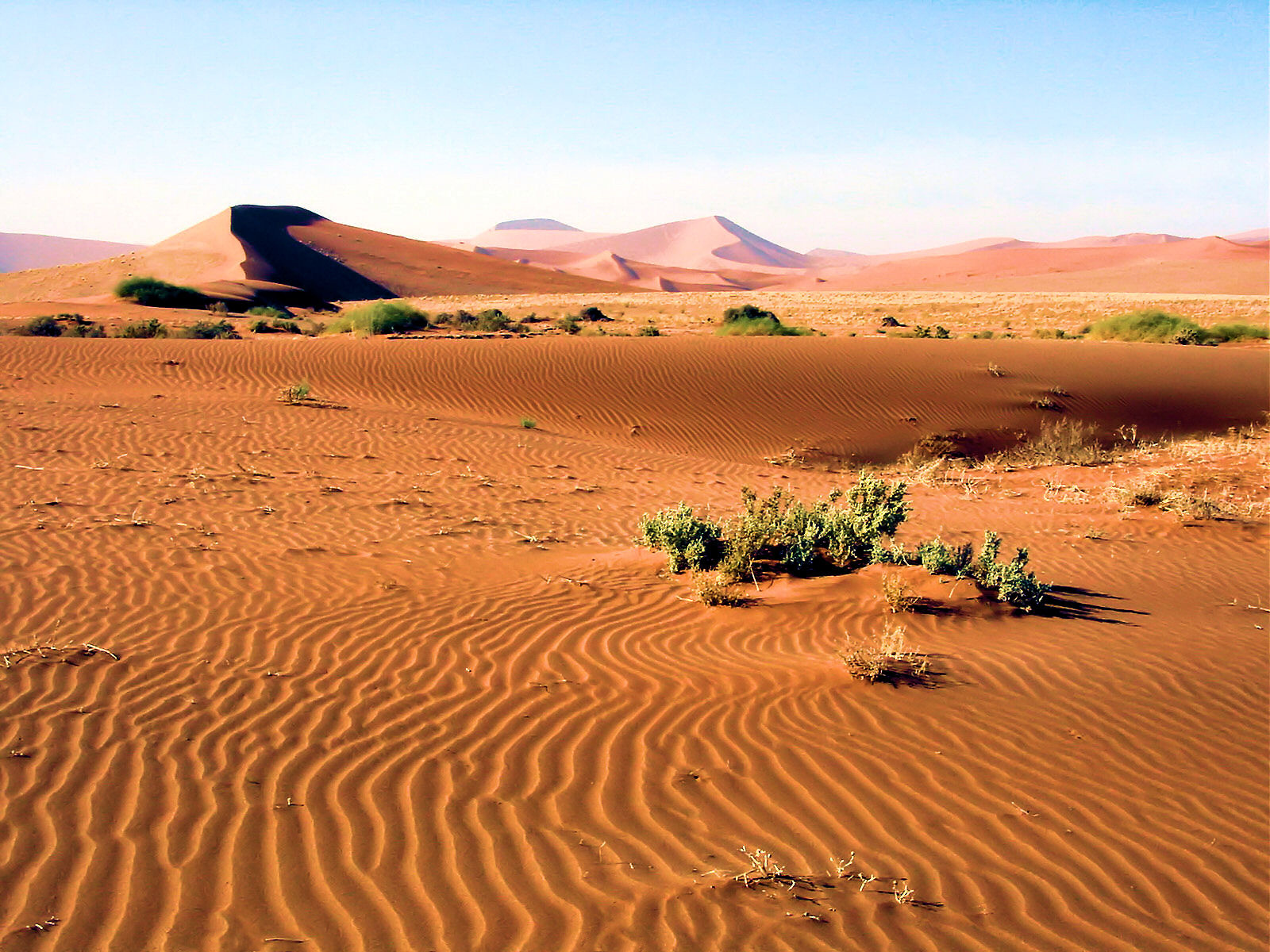
Sands of time

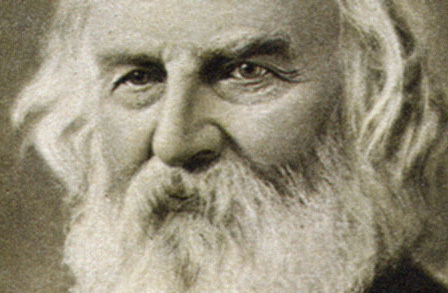
Lives of great men all remind us, we can make our lives sublime, and, departing, leave behind us, footprints on the sands of time.” Longfellow.

Longfellow, the only American writer honored in the Poets’ Corner of Westminster Abbey.

Longfellow has been dead for 130 years, as of last March, but of his many wonderful words that have stayed with us over the last century and more, these must be some of the more familiar.  (Or am I showing my appalling lack of literary knowledge?)

Following on from yesterday’s post about the scary mathematics of climate change,  this really is the ONE thing that we have to learn from dogs; from nature.  If we don’t live in harmony with our planet pretty damn soon, then this particular civilisation is not far from extinction.  Let me remind you of a key paragraph from yesterday,

It’s simple math: we can burn 565 more gigatons of carbon and stay below 2°C of warming — anything more than that risks catastrophe for life on earth. The only problem? Fossil fuel corporations now have 2,795 gigatons in their reserves, five times the safe amount. And they’re planning to burn it all — unless we rise up to stop them.

Ergo, we do not have endless time available to us!

Otherwise the footprints left on those sands of time will be nothing more than the next civilisation pondering from time to time why those Atlantacists that sunk beneath the waves were unable to do anything to save their world!

If you think I’m being a tad excitable, then see what Rob Hopkins wrote recently over at Transition Culture.

New Economics Foundation’s ’100 Months’ campaign today reaches its midway point.  It was launched in August 2008 based on the understanding that the time that remains to us to avoid the likelihood of runaway climate change is limited, and based on the science at the time, there was a closing window of opportunity to do something meaningful about it.

Then adding,

“The question here is “what should we do differently?”  The answer is “pretty much just about everything”.  Nationally and internationally, while the scale and pace of climate change are accelerating, meaningful responses are dwindling.  Part of our collective paralysis comes from the fact that we struggle to imagine a world with less energy, less consumerism, less annual GDP growth.  What will it look like, sound like, feel like?  Does it inevitably mean that you should start seeking out your cave on Dartmoor [Devon in South-West England, PH] as we speak, and developing a taste for slugs?  Of course not.

Shortly before the 100 Months campaign began, I was part of initiating an experiment to see what a self-organised response to climate change might look like, one based on rebuilding community, on the belief that what is needed is people, everywhere, making their communities happier, healthier, lower-carbon, and more resilient, in a huge variety of ways.

Rob Hopkins was also asked to write a piece for the UK’s Guardian Newspaper in recognition that we are half-way through that 100-month campaign.  Here’s how Rob concluded that piece,

Transition Bath set up an energy company which has raised £250,000 in shares from local people. Transition town Totnes’ Transition Streets programme has enabled almost 700 local householders to reduce their carbon emissions while rediscovering a sense of community on their streets. Bristol soon sees the launch of the Bristol Pound, the UK’s first citywide transition complementary currency. Transition Brixton’s Brixton Energy is installing community-owned renewables supported by local people. Check out transitionnetwork.org to get a sense of the amazing projects under way.

At its core, this is about the belief that our best way forward is for communities to build local resilience in order to be able to better face the shocks of the present and the uncertainties of the future, from economic crisis to climate change, seeing increased community resilience as economic development. It’s a process of plugging the leaks in our local economies, seeing every leak as a potential new business, new livelihood, new apprenticeship opportunity.

Of course we need government responses, and international responses, but all of those will struggle without a vibrant bottom-up movement of ordinary people showing what’s possible and how thrilled they are by those possibilities. So although the answer is “pretty much just about everything”, I would argue that seeing this as a once-in-a-lifetime opportunity for entrepreneurship, vision and action is where our successful navigation of the next 50 months lies.

Think about it!  What are you doing today?

An image of the future?

Changing the mathematics of the climate!

An important plea to support a major road tour by the 350.org team.

Bill McKibben

There are a number of key players in the movement to arrest the affects of man on the world’s future climate and one of those is Bill McKibben.  His organisation, 350.org, has been at the forefront of raising the public’s awareness as to the terrible consequences of not changing our ways pretty damn soon.

As Wikipedia puts it,

William Ernest “Bill” McKibben (born 1960) is an American environmentalist, author, and journalist who has written extensively on the impact of global warming. He is the Schumann Distinguished Scholar at Middlebury College. In 2010, the Boston Globe called him “probably the nation’s leading environmentalist”  and Time magazine described him as “the world’s best green journalist.”

Anyway, something came in to my ‘in-box’ the other day that I wanted to share with all Learning from Dogs readers.  This is what was said,

Friends,

The reaction to our announcement of our national “Do the Math” road tour has been utterly pheneomenal.

Case in point: the event in Boston sold out in 24 hours. We’re trying to find another, larger venue to seat everyone, but the main point is this: this tour is going to be huge, and you need to be part of it.

Get your tickets here (math.350.org), and please do spread the word to everyone you know.

See you on the road,

Bill for the 350.org team

P.S. If you haven’t gotten a chance to read our first announcement, I’ve included it below.

 oooOOOooo

Dear Friends,

We’re getting ready for our most ambitious venture yet.

From November 7th to December 3rd, I’ll be on the road, visiting 20 cities in 20 nights (with a few days for travel in between) to help bring together the movement we need to make sure this planet has a future that we can all appreciate.

We’re calling it the Do the Math tour, but it’s not (thank heaven) just going to be me standing in front of a microphone.The goal is to jump-start the kind of movement that I discussed in the article I wrote for Rolling Stone about the scary new math of climate change. We will bring together musicians, artists and voices from across the movement to work together on directly confronting the financial and political might of the fossil fuel industry.

If you are near one of our stops, I want to make sure you’re there with us. You’re exactly the people we need to be there — folks who understand the climate math already, have experience in the movement, and are willing to step up to do more.


Click to check out the tour and RSVP

These events will need to be big, and reach beyond our normal circle of friends. That’s why we need to make sure that everyone knows that something big is underway. Can you take a moment to share the Do the Math tour site with your social networks?

       
Click to share on Facebook                 Click to share on Twitter

Also, just a heads up — we’re going to be putting together a live web event so that everyone who doesn’t happen to be near a tour stop can still get together and get a campaign started in their community. Our team is still hammering out the details for the exact date and time, but please keep an eye out — we absolutely need you in this fight.

I do a lot of talks to big groups, but this is a new kind of undertaking for me, and for 350.org. We’re trying to quickly build up some serious momentum, which is why we’ve gone to great lengths to make this a very different kind of event.

Not only will we have music and guests like Naomi Klein, Jim Hansen, Desmond Tutu, in person and via video, this event is also the kickoff to some serious organizing in your community. This tour will launch our next big mission — a campaign to directly confront the economic power of the fossil fuel industry. Our message will be crystal clear: it’s not OK to sacrifice our future for the sake of one industry’s bottom line. Divestment is one important tool that we’ll discuss, but we’re ready for many other tactics as well.

Over the past few months our planet gave stark warning signs that humans have never seen before. The Arctic melted, breaking every record. The Great Plains sweltered. The West burned. This roadshow is the next big step — but the price of admission, besides the ticket, is a willingness to really go to work to change the world in the year ahead. That’s why we need you this November.

The stakes have never been this high, and I’ve never been more serious.

Please join us: math.350.org

–Bill McKibben for 350.org

So go across to that Tour site, where you will read this,

On November 7th, we’re hitting the road to jumpstart the next phase of the climate movement.

It’s simple math: we can burn 565 more gigatons of carbon and stay below 2°C of warming — anything more than that risks catastrophe for life on earth. The only problem? Fossil fuel corporations now have 2,795 gigatons in their reserves, five times the safe amount. And they’re planning to burn it all — unless we rise up to stop them.

This November, Bill McKibben and 350.org are hitting the road to build the movement that will change the terrifying math of the climate crisis.

and see the link to the Tour locations and dates.

TOUR DATES & TICKETS

***Click a city to sign up and buy tickets.***

Don’t see your town on the map? You can still get involved by signing up here.

ABOUT THE TOUR

This won’t be your typical lecture.

Each event will be a unique and interactive experience, unlike any talk you’ve been to before. It will pick up where Bill McKibben’s landmark Rolling Stone article left off — and everyone who comes will be asked to join a growing movement that is strong enough to stand up to the fossil fuel industry. Together we’ll mount an unprecedented campaign to cut off the industry’s financial and political support by divesting our schools, churches and government from fossil fuels.

This won’t be easy: we’re up against the most profitable, powerful, and dangerous industry in history. But we have our own currency: creativity, courage and if needed, our bodies.

Never let it be said that we, as in all of us, don’t have the power to change the world.  Oh, and feel free to circulate today’s post.

Togo, the heroic dog

A wonderful story that mustn’t be allowed to fade away.

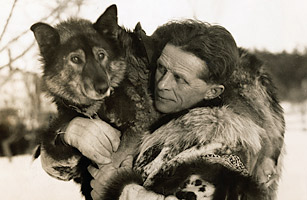
Togo

A week ago, I wrote a post called Sticks and Stones.  Towards the end of that post, I mentioned Togo,

In 1925, a ravaging case of diphtheria broke out in the isolated Alaskan village of Nome. No plane or ship could get the serum there, so the decision was made for multiple sled dog teams to relay the medicine across the treacherous frozen land. The dog that often gets credit for eventually saving the town is Balto, but he just happened to run the last, 55-mile leg in the race. The sled dog who did the lion’s share of the work was Togo. His journey, fraught with white-out storms, was the longest by 200 miles and included a traverse across perilous Norton Sound — where he saved his team and driver in a courageous swim through ice floes.

and added that I would write more about Togo.  Here it is.

The Wikipedia entry reveals:

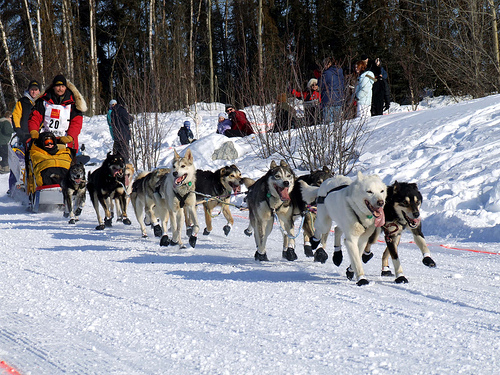
Togo (October 1913 – December 5, 1929) was the sled dog who led Leonhard Seppala and his dog sled team as they covered the longest distance in the 1925 relay of diphtheria antitoxin from Anchorage to Nome, Alaska, to combat an outbreak of the disease. The run is commemorated by the annual Iditarod dog sled race.

Annual Iditarod Trail Sled Dog Race

Togo was a Siberian Husky, his coat was black, brown, and gray, and he weighed about 48 pounds (22 kg). Seppala’s lead dog during the 1914 All-Alaska Sweepstakes, and was a precocious leader. At the time of the serum run Togo was twelve years old.

Within that entry, under the sub-heading of the Great Race of Mercy is this,

The first batch of 300,240 units of serum was delivered by train from Anchorage to Nenana, Alaska, where it was picked up by the first of twenty mushers and more than 100 dogs who relayed the serum a total of 674 miles (1,085 km) to Nome.

Togo and Seppala traveled 170 miles (274 km) from Nome in three days, and picked up the serum in Shaktoolik on January 31. The temperature was estimated at −30 °F (−34 °C), and the gale force winds causing a wind chill of −85 °F (−65 °C).

The return trip crossed the exposed open ice of the Norton Sound. The night and a ground blizzard prevented Seppala from being able to see the path but Togo navigated to the roadhouse at Isaac’s Point on the shore by 8 AM preventing certain death to his team. After traveling 84 miles (134 km) in one day, the team slept for six hours before continuing at 2 AM.

Before the night the temperature dropped to −40 °F (−40 °C), and the wind increased to 65 mi/h (105 km/h). The team ran across the ice, which was breaking up, while following the shoreline. They returned to shore to cross Little McKinley Mountain, climbing 5,000 feet (1,500 m). After descending to the next roadhouse in Golovin, Seppala passed the serum to Charlie Olsen, who in turn would pass it to Gunnar Kaasen and Balto.

A web search for ‘Togo’ including a mention on a website called Find A Grave that has this,

Birth: Oct., 1913

Death: Dec. 5, 1929, Poland Spring, Androscoggin County, Maine, USA

A sled dog for Leonhard Seppala. In 1925, When a diphtheria out brake happened in Nome Alaska. Seppala, Togo and a team of dogs ran to Nenana. He ran 10 times the distance of a average sled run. However another dog named Balto got nearly all of the fame. After the run, Seppala sold Togo to a friend in Poland Spring Maine were Togo was euthanized on December 5th 1929. He was stuffed and was put on display at Yale University. He was eventually moved to the Iditarod Trail Sled Dog Race Museum in Wasilla Alaska, where he is today.

Burial: Iditarod Trail Sled Dog Race Museum, Wasilla, Matanuska-Susitna Borough, Alaska, USA

Magnificent!

Sticks and stones

I make no apologies for today’s post being more emotional and sentimental.

The phrase ‘sticks and stones may break my bones but names will never hurt me‘ is well known throughout the English-speaking world and surprisingly goes back some way.  A quick web search found that in the The Christian Recorder of March 1862, there was this comment:

Remember the old adage, ‘Sticks and stones will break my bones, but words will never harm me’. True courage consists in doing what is right, despite the jeers and sneers of our companions.

So if in 1862 the saying was referred to as an ‘old adage’ then it clearly pre-dated 1862 by some degree.

A few days ago, Dusty M., here in Payson, AZ, sent me a short YouTube video called The Power of Words.  I’m as vulnerable as the next guy to needing being reminded about what’s important in this funny old world.  Then I started mulling over the tendency for all of us to be sucked into a well of doom and gloom.  Take my posts on Learning from Dogs over the last couple of days, as an example.

There is no question that the world in which we all live is going through some extremely challenging times but anger and negativity is not going to be the answer.  As that old reference spelt out so clearly, “True courage consists in doing what is right, despite the jeers and sneers of our companions.

So first watch the video,

then let me close by reminding us all that courage is yet something else we can learn from dogs.

Togo the husky

In 1925, a ravaging case of diphtheria broke out in the isolated Alaskan village of Nome. No plane or ship could get the serum there, so the decision was made for multiple sled dog teams to relay the medicine across the treacherous frozen land. The dog that often gets credit for eventually saving the town is Balto, but he just happened to run the last, 55-mile leg in the race. The sled dog who did the lion’s share of the work was Togo. His journey, fraught with white-out storms, was the longest by 200 miles and included a traverse across perilous Norton Sound — where he saved his team and driver in a courageous swim through ice floes.

More about Togo another day.

Hear no evil; or is that hear no climate change?

A new angle on the famous ‘hear no evil, see no evil, speak no evil’ saying!

What climate change??

That new angle being ‘hear no climate change, see no climate change, speak no climate change!

So what has prompted this outburst from me?  It started with me seeing a truly scary graph that was on Peter Sinclair’s Climate Crock blogsite on the 20th September.  That was the graph that was published yesterday on Learning from Dogs under the post title of It’s not rocket science!  If you didn’t see that graph yesterday, don’t read further on until you have looked at it.

Thus while today’s post could easily be interpreted as yet another blogpost from yet another writer about climate change, that is not the case.  What I am doing is taking a quick trip across a few recently published items that really do make it utterly clear what is happening to the Earth’s biosphere, all in support of a very simple question to two gentlemen who are currently in the news; stay with me for all to become clear!

First, back to the blogsite Climate Crocks.  Under the title of Climate Denial Crock of the Week was a recent post by Peter Sinclair about a video from Dr. Jennifer Francis of Rutger’s Institute of Marine and Coastal Sciences.  (Go to that link to watch the video.)

However, this is what caught my eye, (an interview between Dr. Francis and Peter Sinclair).

What she told me in a recent interview was that the sea ice record is not something that we just pay attention to in September – there will, in fact, be reverberations that will make fall and winter “very interesting” around the globe.

Then it was easy to come across this piece on The Weather Channel website,

An unusually strong storm formed off the coast of Alaska on August 5 and tracked into the center of the Arctic Ocean, where it slowly dissipated over the next several days. The center of the storm was located in the middle of the Arctic Ocean.

On Wednesday, the National Snow and Ice Data Center concluded Arctic sea ice is at its lowest late-August level since records began, and the area covered by ice has continued to shrink in September. Since 1979, the 1.54 million square miles of ice is the smallest coverage on record at the North Pole, the report states.

With so many questions surrounding these latest findings, perhaps one of the most immediate is whether this melting of sea ice will affect the upcoming winter across the United States and Northern Hemisphere. Is it possible that a lack of Arctic sea ice could change weather patterns across the globe?

Four meteorologists spoke about these possibilities, and while they didn’t say dramatic weather shifts are imminent in the short-term, they did give some thoughts on what could happen.

One of the meteorologists was Dr. Jeff Masters, Director of Meteorology, Weather Underground. He wrote,

In my December 2011 blog post, I discuss research by Dr. Jennifer Francis of Rutgers University, who found that Arctic sea ice loss may significantly affect the upper-level atmospheric circulation, slowing its winds and increasing its tendency to make contorted high-amplitude loops. High-amplitude loops in the upper level wind pattern (and associated jet stream) increases the probability of persistent weather patterns in the Northern Hemisphere, potentially leading to extreme weather due to longer-duration cold spells, snow events, heat waves, flooding events, and drought conditions.

Several studies published in 2012 have linked Arctic sea ice loss to an increase in probability of severe winter weather in Western Europe, Eastern North America and Eastern Asia.

Then if one goes to that December 2011 blog post, one reads this,

“The question is not whether sea ice loss is affecting the large-scale atmospheric circulation…it’s how can it not?” That was the take-home message from Dr. Jennifer Francis of Rutgers University, in her talk “Does Arctic Amplification Fuel Extreme Weather in Mid-Latitudes?“, presented at last week’s American Geophysical Union meeting in San Francisco. Dr. Francis presented new research in review for publication, which shows that Arctic sea ice loss may significantly affect the upper-level atmospheric circulation, slowing its winds and increasing its tendency to make contorted high-amplitude loops. High-amplitude loops in the upper level wind pattern (and associated jet stream) increases the probability of persistent weather patterns in the Northern Hemisphere, potentially leading to extreme weather due to longer-duration cold spells, snow events, heat waves, flooding events, and drought conditions.

Further on in that blog post, one reads,

Arctic sea ice loss can slow down jet stream winds

Dr. Francis looked at surface and upper level data from 1948 – 2010, and discovered that the extra heat in the Arctic in fall and winter over the past decade had caused the Arctic atmosphere between the surface and 500 mb (about 18,000 feet or 5,600 meters) to expand. As a result, the difference in temperature between the Arctic (60 – 80°N) and the mid-latitudes (30 – 50°N) fell significantly. It is this difference in temperature that drives the powerful jet stream winds that control much of our weather. The speed of fall and winter west-to-east upper-level winds at 500 mb circling the North Pole decreased by 20% over the past decade, compared to the period 1948 – 2000, in response to the extra warmth in the Arctic. This slow-down of the upper-level winds circling the pole has been linked to a Hot Arctic-Cold Continents pattern that brought cold, snowy winters to the Eastern U.S. and Western Europe during 2009 – 2010 and 2010 – 2011.

OK, nearly finished!  Stay with me for one last item.  Did you note in that blog post (the first section quoted) this, “Dr. Francis presented new research in review for publication …“?  Here’s the Abstract from that publication, from which one reads,

Evidence linking Arctic amplification to extreme weather in mid-latitudes

Key Points

  • Enhanced Arctic warming reduces poleward temperature gradient
  • Weaker gradient affects waves in upper-level flow in two observable ways
  • Both effects slow weather patterns, favoring extreme weather

Jennifer A. Francis, Institute of Marine and Coastal Sciences, Rutgers University, New Brunswick, New Jersey, USA

Stephen J. Vavrus, Center for Climatic Research, University of Wisconsin-Madison, Madison, Wisconsin, USA

So to the point of both yesterday’s Post and the information above.

Will someone tell me why Messrs Barack Obama and Willard Mitt Romney so fervently adopt the stance of ‘hear no climate change, see no climate change, speak no climate change!

It’s not as though it’s unimportant!!

It’s not rocket science!

A graph that more or less says it all.

I am indebted to Peter Sinclair for his permission to reproduce the graph below.  It was embedded in his post on Climate Crocks on the 20th September, a post he not unreasonably called The Planetary Emergency.

As Peter wrote,

As you can see from the graphic above, the actual observations of arctic sea ice melt are far outstripping the climate model predictions of just a few years ago, that the denial-sphere continues to call “alarmist”. Apparently, not alarming enough.

Read the rest of Peter’s post here.

The point of publishing this on Learning from Dogs is simply as an introduction to a post coming out tomorrow called Hear no evil; or is that hear no climate change?, the purpose of which is to ask a very simple question of the two gentlemen wishing to reside in the White House as President of the USA for another four years.  All revealed tomorrow!

Integrity, part two.

A lifting of the importance of integrity is the key to our survival.

Let me start by reflecting on the difference between ‘truth’ and ‘integrity’.

Here’s one of the definitions of Truthconformity with fact or reality; verity: the truth of a statement.

Here’s one of the definitions of Integrityadherence to moral and ethical principles; soundness of moral character; honesty.

So while in yesterday’s article, I frequently referred to the word ‘truth‘, determining the ‘fact or reality‘ of a wide range of issues associated with anthropogenic climate change is not always straightforward.  Many of us probably have a strong intuition of the ’cause and effect’ of man’s footprint on this planet but a strong intuition is not the same as truth.

Then let’s turn to the notion of integrity. This is a much bigger issue, to my mind, the appalling lack of integrity!  Illustrated by one simple example.  How many leading politicians from any number of countries have demonstrated soundness of moral character; honesty with regard to the changing climate, even offering something as simple as “I don’t know!

There’s a saying that pilots use, “If there’s any doubt, there’s no doubt!”  Come on, politicians and leaders, at the very least there is doubt!

OK, let me move on!

If integrity is partly defined as honesty, then while it’s easy to take a pot-shot at the world’s politicians maybe we need to look closer at home; ourselves.  Are we as honest with our own self as we now need to be?

Here’s an example that supports that question.

A few days ago there was a report on the website The Daily Impact about the crash of US fisheries.  Let me show you how that report opens,

Report: US Fisheries Crashing

We live in a country in which every household has two TV sets, most of them receiving hundreds of channels, and two cell phones, many of them “smart.” One of every two households has a computer connected to the Internet. This country is currently in the middle of a hotly contested presidential election. And yet among the things that have almost completely escaped public attention is this: last week the US government declared fisheries disasters on four coasts.

Reflect on that paragraph.  Surely it’s a reflection about the lack of integrity, of honesty, about our society?

The report ends thus,

The disaster declaration covering all these dire situations makes them eligible for Congressional aid, along with drought-stricken farmers in the Midwest and Southwest, flooded-out homeowners in New Orleans and along the Gulf, the fire-ravaged states of the far West, and the derecho-pounded Northeast. Congress will no doubt be delighted by the opportunity to help.

We eat nearly five billion pounds of seafood every year — about 16 pounds for each of us — and 85 per cent of it is imported (according to NOAA). Yet in the wake of this grim assessment of a large proportion of the domestic industry, and the questions it raises about the future sources of seafood, there is no discussion of “fisheries independence” or “peak fish” in politics or the media. Only in such outposts as this website and Mother Jones will the dire warning from the Commerce Department be reported as what it is — a dire warning.

Then there was a recent article on the Australian Permaculture news website about the US food and dairy industry.  Here’s how that opened,

Americans’ right to access fresh, healthy foods of their choice is under attack. Farmageddon tells the story of small, family farms that were providing safe, healthy foods to their communities and were forced to stop, sometimes through violent action, by agents of misguided government bureaucracies, and seeks to figure out why.

Filmmaker Kristin Canty’s quest to find healthy food for her four children turned into an educational journey to discover why access to these foods was being threatened. What she found were policies that favor agribusiness and factory farms over small family-operated farms selling fresh foods to their communities. Instead of focusing on the source of food safety problems — most often the industrial food chain — policymakers and regulators implement and enforce solutions that target and often drive out of business small farms that have proven themselves more than capable of producing safe, healthy food, but buckle under the crushing weight of government regulations and excessive enforcement actions.

I’m not going to insert that YouTube video into this post but you can link to both the full article and the film here.  For anyone interested in the fate of the family farm in the USA, the film is a ‘must see’!  Once again, the theme of integrity, of adherence to moral and ethical principles; honesty, comes to mind!

How I do want to close this rather personal reflection on present times (some may call it an indulgent reflection!) is by including a video from this seasons TED Talks.  It was brought to my attention by Christine over at her excellent blog 350 or bust.  The video is about resolving conflict,

William Ury, author of “Getting to Yes,” offers an elegant, simple (but not easy) way to create agreement in even the most difficult situations — from family conflict to, perhaps, the Middle East.

The reason why this seems like a very appropriate way to close this is because the way things are going at the moment, avoiding conflict could become rather important, rather soon!

It really is about integrity

A reflection on truth.

This is not the first time that I have wandered through this subject.  Indeed, Learning from Dogs would never have seen the light of day if, all those years ago, Jon Lavin hadn’t raised the fascinating idea that dogs are integrous animals.  As the quote says in the sidelink Purpose of Learning from Dogs;

There is nothing to fear except the persistent refusal to find out the truth, the persistent refusal to analyse the causes of happenings. Dorothy Thompson.

So what is it that has rocked my boat again?  A number of things, to be honest.  So much so, please forgive me for running these musings over to tomorrow!

Regular readers may have noticed that both Tuesday’s post Modelling the future and yesterday’s A study of man’s behaviours explored determining truth; frequently a fickle beast to track down!  Then last Monday, I read the latest post from Climate Denial Crock of the Week that was about Sea Ice Slowing to Minimum.  It was yet another reminder that embracing the truth of what is happening to our planet is vital, I mean VITAL, for anyone who has a reasonable expectation to be alive in 20 years time.

Here’s how Peter opened that post (published with Peter’s kind permission):

Not there yet, but in an interview with Dr. Jennifer Francis of Rutgers last week, the message was clear – the ice has retreated so much that at this point, we will already be experiencing the impacts of a low or no-ice arctic minimum, including “very interesting” weather in the northern hemisphere this fall and winter. Wow. I can’t wait.

Peter then included an update in that post, a reference to a report published in the Australian newspaper The Sydney Morning Herald.  I requested permission to republish the SMH article but that wasn’t granted, well to be factual it was offered at a fee of $420.75 – say no more.  Here is how that report from on board the Greenpeace ice-breaker Arctic Sunrise opened,

We are a few hundred miles from the north pole. The air temperature is -3C, the sea freezing. All around us in these foggy Arctic waters at the top of the world are floes – large and small chunks of sea ice that melt and freeze again with the seasons.

Arne Sorensen, our Danish ice pilot, is 18 metres up in the crow’s nest of the Arctic Sunrise vessel. Visibility is just 200 metres and he inches the 1,000-tonne Greenpeace ice-breaker forward at two knots through narrow passages of clear water.

A few paragraphs later come this:

More than 600,000 sq km more ice has melted in 2012 than ever recorded by satellites. Now the minimum extent has nearly been reached and the sea is starting to refreeze.

‘‘This is the new minimum extent of the ice cap,’’ [Sorensen] says – the frontline of climate change. ‘‘It is sad. I am not doubting this is related to emitting fossil fuels to a large extent. It’s sad to observe that we are capable of changing the planet to such a degree.’’

British, Italian and American scientists on the Arctic Sunrise say they are shocked at the speed and extent of the ice loss.

Over at the Guardian newspaper, their reporter John Vidal, also aboard the Arctic Sunrise, reports:

One of the world’s leading ice experts has predicted the final collapse of Arctic sea ice in summer months within four years.

In what he calls a “global disaster” now unfolding in northern latitudes as the sea area that freezes and melts each year shrinks to its lowest extent ever recorded, Prof Peter Wadhams of Cambridge University calls for “urgent”   consideration of new ideas to reduce global temperatures.

In an email to the Guardian he says: “Climate change is no longer something we can aim to do something about in a few decades’ time, and that we must not only urgently reduce CO2 emissions but must urgently examine other ways of slowing global warming, such as the various geoengineering ideas that have been put forward.”

Professor Peter Wadhams is head of the Cambridge University Polar Ocean Physics Group, from which one may learn,

Sea ice covers 7% of the surface of our planet. It is one of the most important and variable components of the planetary surface and is the key to understanding many basic questions about the energy balance of the Earth. The ice-covered seas represent the cold end of the enormous heat engine that enables the Earth to have temperatures suitable for human life over most of its surface.

Just go back and re-read, “.. the enormous heat engine that enables the Earth to have temperatures suitable for human life over most of its surface.”

So determining the truth of what is happening to our planet is not some elegant academic exercise, it is about determining the likelihood of human life surviving or not!

Doesn’t that put everything else we are doing into some form of perspective?  Let me rant on tomorrow!