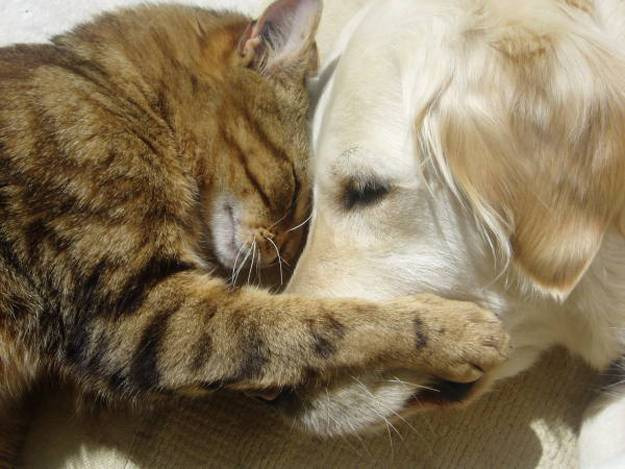
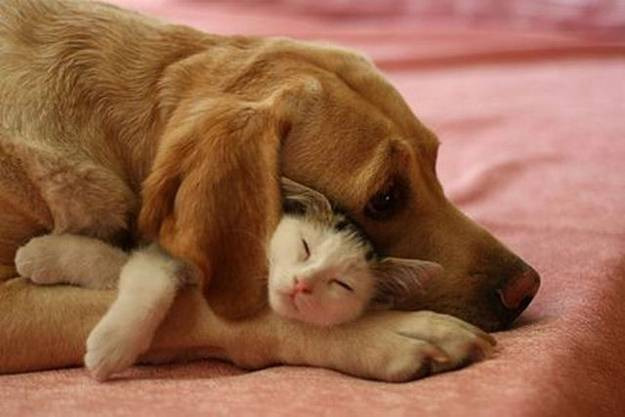
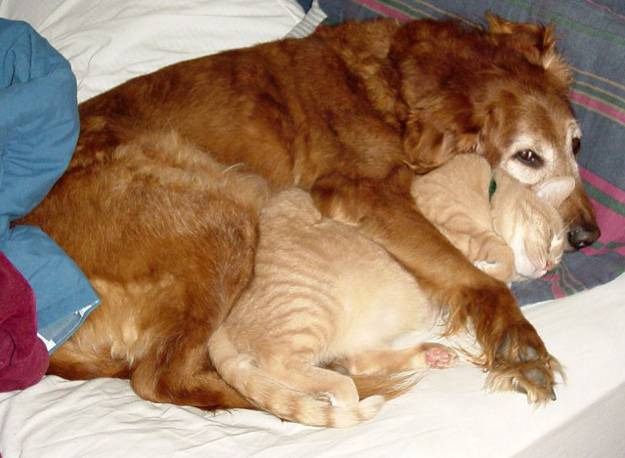
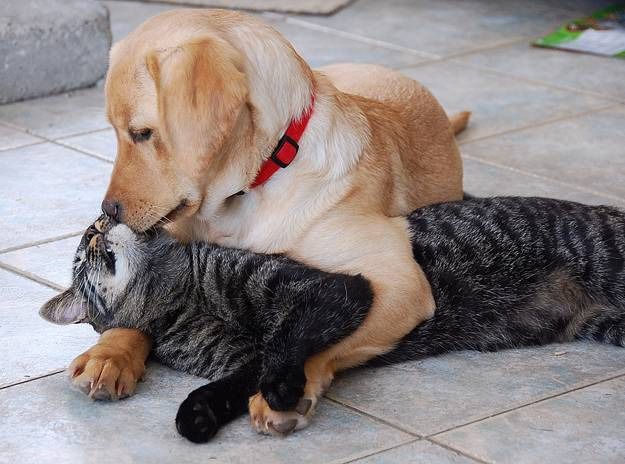
Thank you hugely for the response to last week’s first set of photographs sent to me from Australia by Amanda. So without further ado, here is the next set.
oooo
oooo
oooo
oooo
oooo
oooo
oooo
oooo
Come back in a week’s time for the final set of nine photographs on the theme of why we have pets.
Friend and follower, Amanda Smith from Australia, recently emailed me a set of twenty-five fabulous pictures. I propose to offer eight of them today, and eight more next Sunday and, possibly, the final nine in two weeks time; that is if the response from you, dear reader, suggests you would like that.
oooo
oooo
oooo
oooo
oooo
oooo
oooo
oooo
Thanks Amanda, and if anyone knows any of the names of the photographers who took these delightful photographs, do please say so in a comment. Would be nice to acknowledge them.
The second set next Sunday – you all have a peaceful and untroubled week.
Everyday, at the same time, this dog waits outside the cat’s house. When the cat comes out, they go for their daily walk together.
Their respective owners are neither neighbours nor friends. But somehow, in a manner unknown to us humans, these two creatures connected with each other and now enjoy their shared walk everyday.
I have a policy of not allowing Learning from Dogs to promote commercial interests. I need those who visit this place to trust the integrity of what they find here.
Then back on the 19th December last, in came the following email.
Dear LearningfromDogs (I think Paul!),
Greetings from Florence, Tuscany!
We are sending you a piece that we hope will be considered for publication on your blog: we begin by talking about making pet food at home (and then go on to list some of the risks – essentially the message here is don’t do it!), we then talk about buying products off the shelf, and explain about food labeling and what different types of labeling will mean in terms of the meat content. I’ve also included some pictures that we purchased from DepositPhotos to help support with its publication. You can verify the usage terms on Deposit photos, but I can tell you that for your website they will be considered appropriate use.
Our shop first opened it doors in 1962 and we’ve just started an English website where we (wait for it!) are making dog beds, and collars to order. We’ve got the most amazing fabrics from a town in Tuscany that has been producing fabrics from the 13th Century. The quality is (as I hope you will take a look) of the highest standard.
Please take a read through the article and if you would like to publish it we would be thrilled.
Best regards from Tuscany,
Glyn
The email offered me a potential conflict. Glyn was clearly promoting his company and yet the information struck me as valuable to pet owners. On balance, it seemed worthwhile to publish the article.
ooOOoo
We only want what’s best for our dogs.
There have been substantial changes in the market of pet foods over the last decade, and so this article sets out to demystify pet food labelling in layman’s terms. We also consider whether or not preparing the food your pet eats in your own home is really a viable option, if you want to have a healthy pet.
Preparing food at home
If you have decided to undertake the mission of preparing your pet’s food at home, it’s important that you take some time to look up what exactly is needed in your pet’s diet. You have to ensure that your pet gets all the nutrients it needs, and that you don’t provide it with too much of one food group or another as this could cause it serious health problems (Hypervitaminosis A, Hypervitaminosis D).
A short thought for the cat!
Cats require a varied diet, consisting mainly of meat. One of the most important amino acids for cats is Taurine which is only found in meat – a lack of this in a cat’s diet could cause cardiac dysfunction, blindness, etc. Other essential nutrients for our feline friend include: arginine (also important for dogs too), arachidonic acid, niacin, vitamin A, vitamin D, vitamin E. You should not forget to provide the right amount of calcium, phosphorus, and magnesium. Reading this you probably get the sense that taking on the task of being your pet’s personal cook is not as simple as it sounds. Our pets have very specific dietary needs, just like us, and you wouldn’t want to risk endangering them with the wrong food. The plate of scraps after a large meal is clearly not enough.
Purchasing food off the shelf
As the vast majority of consumers opt for buying their food from either the supermarket or their local pet store, it’s important to highlight that the range of dietary foods being produced today means that, if you don’t read the label carefully, you can really do harm to your pet feeding them food that is not matched to their actual dietary needs. We’ve seen dogs that look emaciated and thin simply because they have not been given the correct advice when feeding their dog (we then saw the same dog a few weeks later looking great!).
For example, ‘ash’ is often included in the ingredient list of pet foods. This refers to the inorganic component of the food, and it shouldn’t make up more than 6.5%-7% of dry foods and 1%-2% of wet foods. The lower the concentration of ash, the higher the quality of the food.
Labelling in pet food and what it means
Specifically regarding meat in packaged pet foods, there are a few things to keep an eye open for while studying the labels. The amount of meat included in pet food changes from brand to brand, but as a general rule the following serves as a guide:
– products that have the word ‘flavour’ or ‘aroma’ in their name contain under 4% of meat;
– when the product name declares ‘with meat’ it should contain over 4% of meat;
– when the name contains ‘rich in meat’ or ‘extra meat’ the percentage of meat is between 14% and 25%. Anything above 14% and 25% and the product takes on the name of the meat it’s made up of.
In dry foods, sometimes meat flour or fish flour are included. These sometimes contain offal and discarded meat so a better option is dehydrated meat.
Author Bi line
We hope that this article has provided you the reader with greater detail on some of the nuances involved in planning your pet’s diets. At ZEIPET in Florence, Tuscany, we have been serving customers in our little pet shop since 1962. We are most known for our luxury dog beds which are made to order and from some of the finest fabrics in Italy. So, after you pet has eaten and it’s time to stretch out, they are guaranteed to do so on a bed of doggie paradise.
Now what!
ooOOoo
Hope this has been helpful. If you have any questions, leave them as comments and I’ll ask Glyn to reply.
We have had a run of cold days here in Southern Oregon going down to the mid-twenties Fahrenheit at night (-4 deg C.)
So this first picture sent in by John H. seemed appropriate for today.
oooo
Then continuing with the series that started last Sunday.
oooo
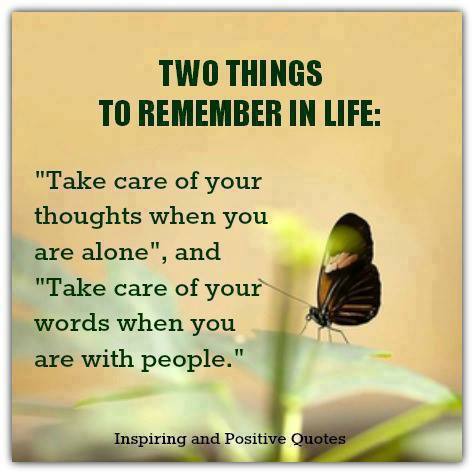
Wise words indeed.
oooo
oooo
oooo
Finally, to a short but inspiring video sent to me by Dan Gomez.
A man, a dog, a cat and a rat…
This is a video of a homeless man in Santa Barbara and his pets.
They work State Street every week for donations.
The animals are pretty well fed and are mellow.
They are a family.
The man who owns them rigged a harness up for his cat so she wouldn’t have to walk so much (like the dog and the man himself).
At some juncture the rat came along, and as no one wanted to eat anyone else, the rat started riding with the cat, frequently on the cat.
For a few chin scratches the dog will stand all day and, let you talk to him and admire him.
So the Mayor of Santa Barbara decided to film this clip and send it out as a holiday card.
Yesterday’s long rant was the outcome of me promising ‘a debate’ with Patrice Ayme. Succinctly, I had disagreed with a comment from Patrice where he had written: “Force is the truth of man. Everything else is delusion, even the vegetarian style.” and wanted to respond within the space of a post rather than the more restrictive comment.
For my disagreement with Patrice had been essentially about his statement, ‘Force is the truth of man‘. I don’t recall a war in the last 50 years that has been a force for good.
But then it was Alex’s comment, see below, that stopped me short. For I realised that I was confusing ‘force’ with ‘war’ and that was probably a big mistake on my behalf. Of course, I’m writing this without the benefit of knowing better what Patrice meant in his comment! Blogging, as powerful a media as it is, does not provide for immediate interaction!
Nevertheless, Alex’s comment yesterday was powerfully inspirational. Because so many of us (and I include me in that ‘us’) all too often behave as though we are a species utterly divorced from Nature.
So what to do? Because I am fundamentally at odds with the sentiment expressed by Patrice Ayme; “Force is the truth of man. Everything else is delusion, even the vegetarian style.“
The answer takes us to tomorrow’s post, A return to integrity.
And, yes, it does mention dogs! Rather a lot as it happens!
Dogs are the one species that man has lived with longer than any other species. So when we refer to the qualities of the dog it is simply because we are so familiar with them. In no way does that exclude the numerous other species that bond with man and share the same wonderful qualities.
Qualities so easily seen: Love, Honesty, Loyalty, Trust, Openness, Faithfulness, Forgiveness and Affection. Together they are Integrity.
Of course dogs will kill a rabbit, for example, as readily as a cat will kill a mouse. In this respect force isthe truth of Nature.
The only way for species man to survive on this planet is for every element of man’s existence on this planet to be rethought of in terms of the natural order. Read the comment left by Alex in yesterday’s post:
Hi Paul, what you highlight are examples of disconnection between humanity with nature and each other. I have on my own blog highlighted a concept of Ubuntu – “I am because we are” – which is only possible when the self realises they are part of an inter-connected network of life. Your example of islands of fragmented forest where disconnected wildlife are dying out is how it is with disconnected humanity, we are doomed to destruction because we are cut off from the life-giving connection to nature.
All the problems you highlight are symptoms of the disease of disconnection, until there is reconnection to nature none of these symptoms can be successfully addressed.
War is an integral part of nature, when people seek to dismiss this then they add to the disconnection from nature. I was stung in the face by a drunken wasp a few days ago, this is how it is with nature, it is beautiful but also brutal. Peace and balance are illusions, life is in a becoming because of unbalance and strife. I advocate harmony, like a downhill skier we do not seek to control our surroundings, but instead act in harmony by moving around the obstacles such as rock and tree.
Disconnection can be as large as destroying whole forests by ignorant energy policies to those idiots who kicked a puffball to pieces before I could harvest it, or the new owners of my former home who have taken a chainsaw to all the trees and bushes in the garden. People who are disconnected do not consider how their actions impact nature or people contrary to the philosophy of Ubuntu.
“I am because we are!” Each and every one of us is where we are today, for good or ill, because of what we are: part of Nature. It’s so incredibly obvious – we are a natural species – yet who reading this wouldn’t admit at times to behaving “as though we are a species utterly divorced from Nature.”
Millions of us have pets and animals that we love. Yet we still miss the key truth of our pets. That we are a part of Nature, subject to Natural order, just as much as our pets are. We have so much to learn from our animals.
Take this rather sad story but, nonetheless, a formidable story of the integrity of one species for another. Watch the video.
oooo
Take this rather happier story about the integrity of one species for another. Watch the video.
oooo
Thus when we see the extraordinary benefits that arise from love and trust, from loyalty and faithfulness, and much more, why oh why is so much of our society fundamentally broken?
As John Hurlburt wrote in a recent email, it is because, “we are spiritual bankrupt. We spend too much of our time thinking about ourselves and what we want and too little of our time thinking about other people and what we all need.” John went on to add that this spiritual bankruptcy had preceded our moral and economical bankruptcy. He pointed out that the solution to our moral and financial problems, as well as our salvation as individuals and as a species, is spiritual. “We simply need to love the Nature of God, the earth and each other regardless of what we may believe God to be.”
Now whether you are a religious soul, or a heathen, or somewhere in the middle, it matters not. For if we continue to defy Nature and the natural laws of this planet we are going to be dust before the end of this century. Again in John’s powerful words:
Denying climate change is a death wish.
Nature always wins in the long run.
Nature is balanced. Are we?
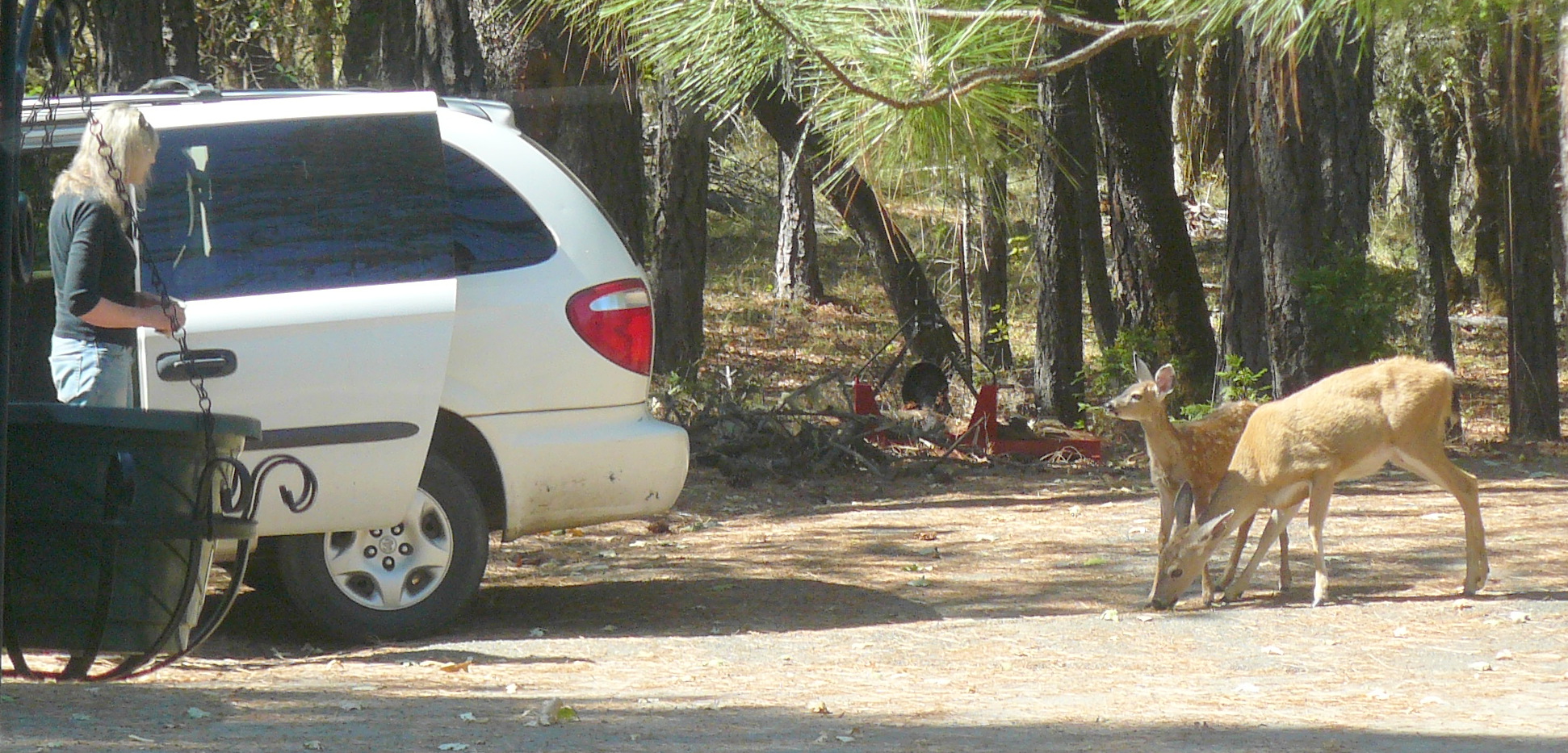
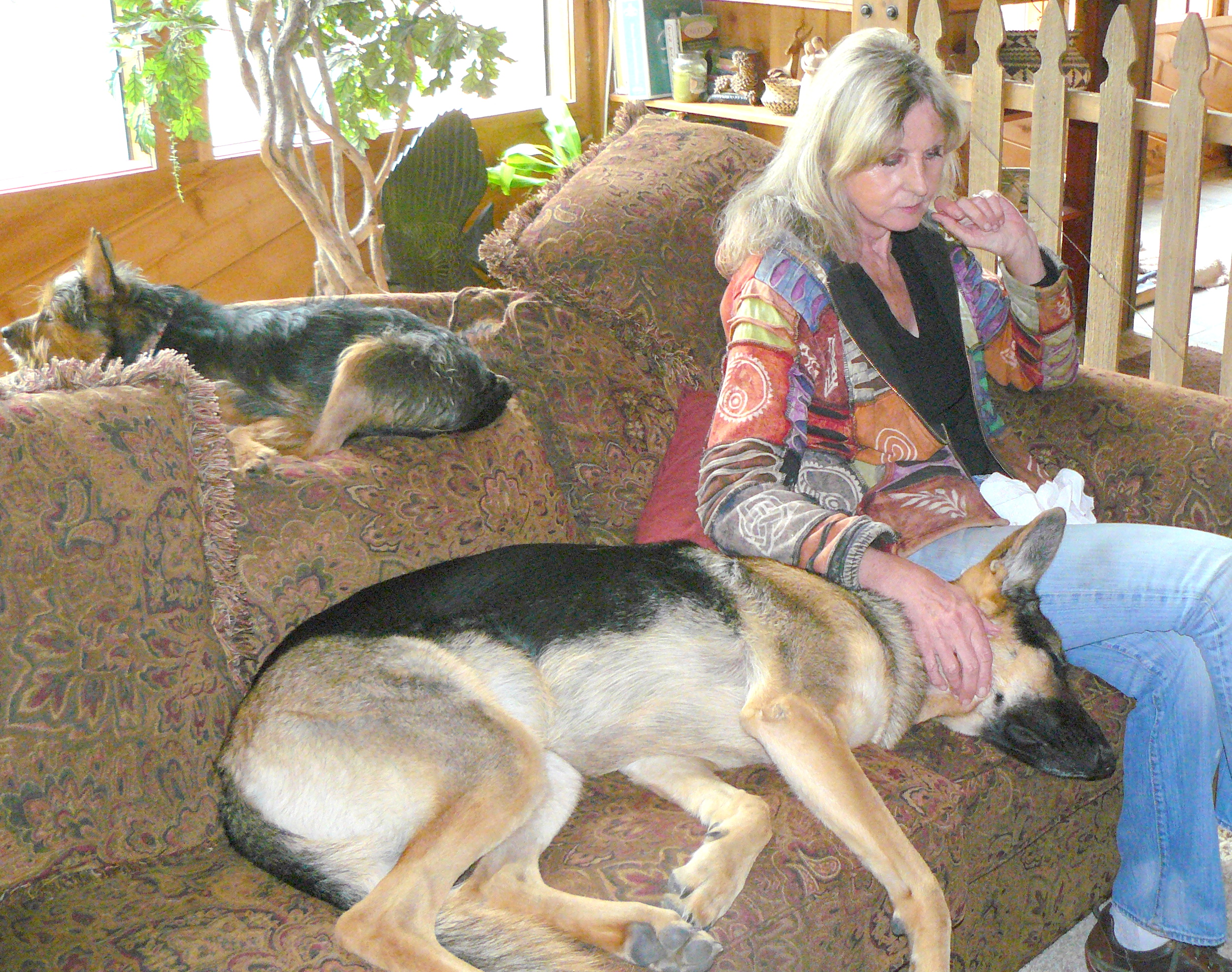
As if to endorse the great examples that Nature offers us in terms of the benefits of love and trust, take a look at these three recent photographs from here in Oregon.
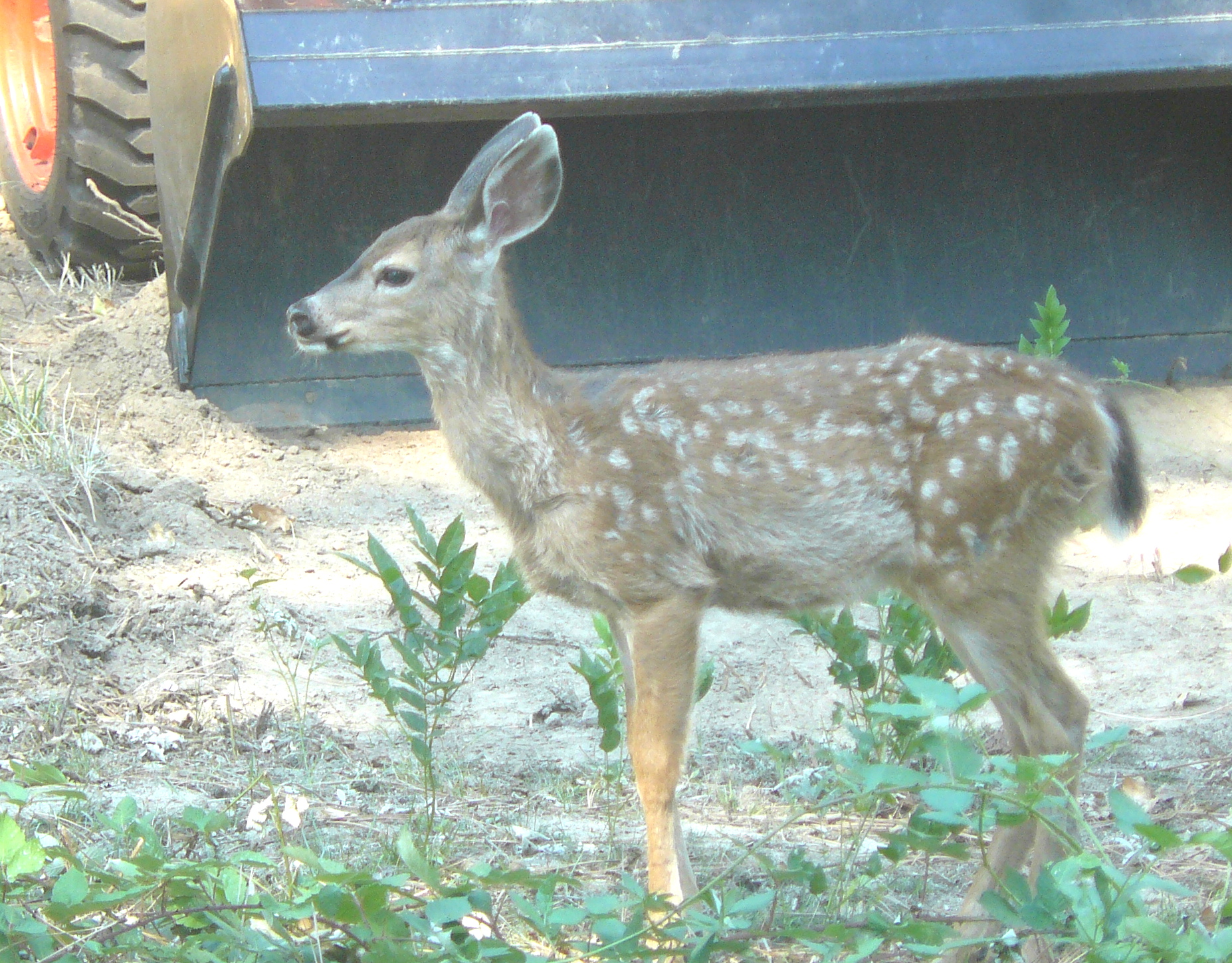
A young timid deer showing her trust of me as I sat quietly on the ground less than 30 feet away.
oooo
A mother and her fawn trusting Jean’s love for them, and getting a good feed!
oooo
Little Sweeny and Cleo converting trust to peace and happiness. (Not to mention Jean!)
Now these are not photographs to ‘ooh’ and ‘ah’ over, these are reminders that kindness, generosity, selflessness and trust are part of Nature. All the great virtues and values of man do not come from a vacuum, they come to us via Nature.
We have been blessed by an evolution that has allowed mankind to achieve remarkable things. Even to the point of leaving the confines of our planet and setting foot on the Moon and sending probes from out of our Solar System. There’s a sense, a distinctly tangible sense, that man has conquered all; that we have broken the link from being part of Nature; from being of Nature.
And now Mother Earth is reminding all of her species, every single one of them including species man, that everything is bound by her Natural Laws.
Does this mean that man has to revert to some form of pre-civilised stone-age era? Of course not! Progress can be as much within the Natural order than in competition with it, as it has been in recent times. In fact, Professor Pat Shipman explains our progress is benefited by being part of that Natural order. Here’s how Amazon describe her book, The Animal Connection.
The Animal Connection: A New Perspective on What Makes Us Human
A bold, illuminating new take on the love of animals that drove human evolution.
Why do humans all over the world take in and nurture other animals? This behavior might seem maladaptive—after all, every mouthful given to another species is one that you cannot eat—but in this heartening new study, acclaimed anthropologist Pat Shipman reveals that our propensity to domesticate and care for other animals is in fact among our species’ greatest strengths. For the last 2.6 million years, Shipman explains, humans who coexisted with animals enjoyed definite adaptive and cultural advantages. To illustrate this point, Shipman gives us a tour of the milestones in human civilization-from agriculture to art and even language—and describes how we reached each stage through our unique relationship with other animals. The Animal Connection reaffirms our love of animals as something both innate and distinctly human, revealing that the process of domestication not only changed animals but had a resounding impact on us as well.
It’s a powerful read and greatly recommended. Here’s an extract from the book [page 274, my emphasis]:
Clearly, part of the basis of our intimacy with tame or domesticated animals involves physical contact. People who work with animals touch them. It doesn’t matter if you are a horse breeder, a farmer raising pigs, a pet owner, a zoo keeper, or a veterinarian, we touch them, stroke them, hug them. Many of us kiss our animals and many allow them to sleep with us. We touch animals because this is a crucial aspect of the nonverbal communication that we have evolved over millennia. We touch animals because it raises our oxytocin levels – and the animal’s oxytocin levels. We touch animals because we and they enjoy it.
From the first stone tool to the origin of language and the most recent living tools, our involvement with animals has directed our course.
So to round this off. These last two posts came from my need to debate with Patrice the statement that “Force is the truth of man.” If Patrice’s meaning was that the truth of man is subject to the force of Nature, then I agree one-hundred percent.
For the time for man to recognise that the force of Nature is “the truth of man” is running out.
Each of us, whoever you are, for the sake of your children and for all of the children in the world, embrace today the qualities, the values of Nature.
“It came to me that every time I lose a dog, they take a piece of my heart with them…. And every new dog who comes into my life, gifts me with a piece of their heart. If I live long enough, all the components of my heart will be dog … and maybe I will become as generous and loving as they are.“










 Learning from Dogs