Category: Capitalism

Out Of The Wreckage: A Review

This is one powerful book!

(Please note that I am letting this post run until Sunday, 15th Oct.)
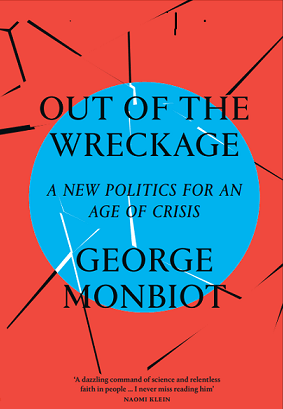
For many years I have both read George Monbiot’s writings, especially those published by The Guardian newspaper, and deeply respected his insight, intelligence and analysis of the world in which we now live.

So when I heard of his latest book, published by Verso Books both sides of the ‘pond’, it was ordered immediately. It was a book I badly wanted to read. I was not disappointed.

So what is Mr. Monbiot’s message?

To answer that question let me lean on a forthcoming talk being given by him in Edinburgh in eight days time. For he is speaking at a Scottish Green Party event on October 20th.
Here’s the thrust of what is to be covered at that meeting:

What does the good life—and the good society—look like in the twenty-first century?

A toxic ideology rules the world – of extreme competition and individualism. It misrepresents human nature, destroying hope and common purpose. Only a positive vision can replace it, a new story that re-engages people in politics and lights a path to a better world.

Join us for an evening of discussion with George Monbiot as he talks about his new book: ‘Out of the wreckage: a new politics in an age of crisis‘. New findings in psychology, neuroscience and evolutionary biology cast human nature in a radically different light: as the supreme altruists and cooperators. George argues that we can build on these findings to create a new politics: a ‘politics of belonging’.

So what does this mean for social and environmental justice campaigning in Edinburgh? How do we create a politics of belongings here in Scotland? There will be plenty of opportunity for George Monbiot and the audience to share their insights.

Doors open: 6pm

George Monbiot will speak from 7-7.30pm and there will then be a Q&A, plus a chance buy books, mingle and browse stalls.

This event is jointly hosted by Global Justice Now and the Scottish Green party.

To my mind, this book not only addresses, full on, the madness (my word) of these present times but also offers strong, positive recommendations as to how we, as in the societies of all the major nations, can turn it around and offer a decent future for future generations. That’s why I am so strongly recommending it.

Take this extract from the review of George Monbiot’s book published by the Guardian newspaper on the 14th September this year:

For George Monbiot, neoliberalism should best be understood as a “story”, one that was conveniently on offer at precisely the moment when the previous “story” – namely Keynesianism – fell to pieces in the mid-1970s. The power of stories is overwhelming, as they are “the means by which we navigate the world. They allow us to interpret its complex and contradictory signals”. The particular story of neoliberalism “defines us as competitors, guided above all other impulses by the urge to get ahead of our fellows”.

Or this extract from the review published by The New Statesman:

It should be said at once that we are desperately in need of new ideas for a society and a democracy where trust in all established institutions is at a record low and even a Tory prime minister admits the country doesn’t work for everyone. Monbiot’s ideas are clear, well-reasoned and sometimes compelling. Many will mock his attempt at a “story of hope and restoration”; even some of his Guardian colleagues call him “George Moonshine”. Human beings, his critics will say, are inherently selfish and self-maximising. Give them the opportunity to freeload off others’ efforts and they will take it.

Such objections are easily dismissed. Yes, there’s a self-interested streak in all of us but, as Monbiot observes, we also have instincts for co-operation and sensitivity to others’ needs. Think of the hundreds who volunteer to run food banks and of the thousands more who donate to them. Think of those Europeans who, at great risk to themselves, sheltered Jews from the Nazis during the Second World War. The altruistic instinct can be kindled in almost anybody. It is suppressed, however, in a society that rewards the selfish but penalises – and brands as “mugs” – those who are more mindful of our needs, and the planet’s. That society has led to loneliness, high levels of mental illness and increasingly discordant political discourse. Shouldn’t we at least try developing a society that does more to nurture the better angels of our nature?

Better still, settle down with a cup of tea, put your feet up for fifteen minutes and listen to this:

This book struck me as the most important book I have ever read in my lifetime. Why? Because it gets to the heart of what is happening today. But it offers even more than that. For instead of a shrug of the shoulders or eyes turned skywards from a friend when one mutters about the fact that we are living in ‘interesting times’, George Monbiot offers hope and guidance.

Take the very last two paragraphs from the final chapter of his book.

Coming Home to Ourselves

Through restoring community, renewing civic life and claiming our place in the world, we build a society in which our extraordinary nature – our altruism, empathy and deep connection – is released.

When we emerge from the age of loneliness and alienation, from an obsession with competition and extreme individualism, from the worship of image and celebrity and power and wealth, we will find a person waiting for us. It is a person better than we might have imagined, whose real character has been suppressed. It is one who lives inside us, who has been there all along.

“- our altruism, empathy and deep connection -”

I see these persons every day of my life. Via the pages of this blog.

Yes, I am referring to all of you who wander in and out of this place, who demonstrate your compassion, your love and your dedication to the dogs and all the other animals of this world.

Read this book!
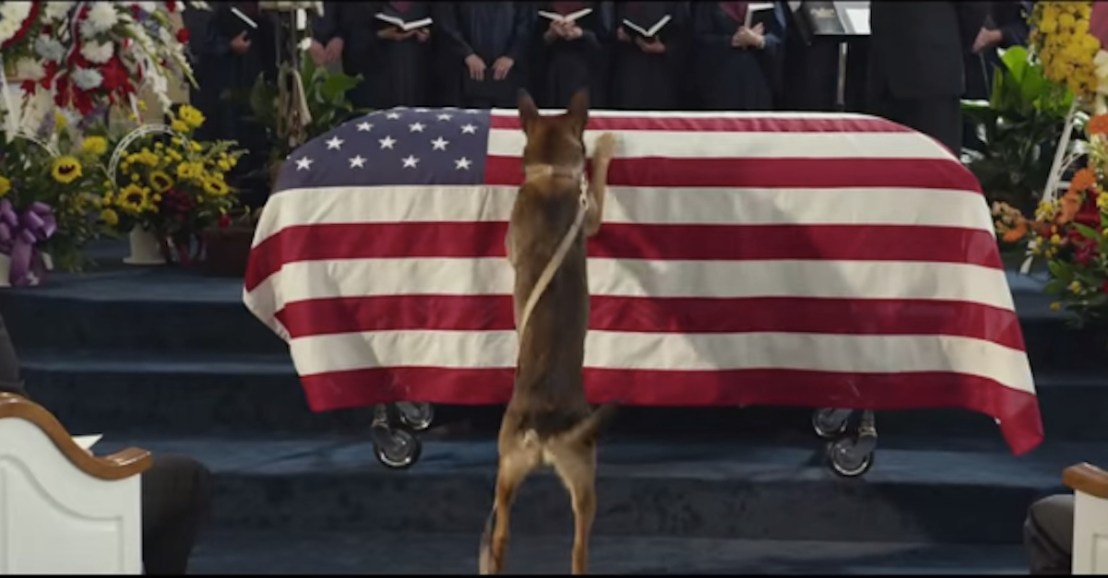
Hail the Hero!

A Marine Died In Battle, But What His Dog Did After The Funeral? I’m Speechless!

That subtitle is the main title of an article over on the site: Dogs Make Life Better For You.

The article was brought to my attention by Julie back in England who sent me the above link.

ooOOoo

A Marine Died In Battle, But What His Dog Did After The Funeral? I’m Speechless!

A dog is the only thing on earth who loves you more than he loves himself – so imagine a soldier dog’s mourning when his handler dies in the line of duty!

Max, a feature film by the producers of the doggie classic Marley and Me, intends to explore a soldier dog’s journey that doesn’t end with this heartbreaking image of a pup chasing down his fallen brother, but rather begins with it.

Max, a precision-trained military dog, loses his handler Kyle in Afghanistan. Max is too troubled to continue to fight, and the only human willing to take the dog in is the late Kyle’s little brother, Justin. Fortunately, Justin is able to relate to the troubled pup because he has problems of his own.

This isn’t the first time we’ve seen military dogs do great things after their time serving our country overseas – and I’m sure it won’t be the last.

Watch the trailer for the full-length feature below, and tell us in the comments: Would you watch the film Max?

Please SHARE this powerful story of a soldier dog’s heroic journey after war with all of your friends! Military dogs deserve to be treated like heroes both during and after wartime.

ooOOoo

OK, it’s a plea for people to watch the film and, frankly, why not!

WikiPedia have a good summary of the film:

Max, a Malinois used to help U.S. Marines in Afghanistan, is handled by Kyle Wincott (Robbie Amell) (Marine MWD). Kyle is questioned when weapons seized by his squad go missing. Realizing his friend Tyler Harne (Luke Kleintank) is among those involved with the shady dealings, he warns Tyler that he cannot cover for him. The two then go into the battlefield with their squad, with Max on point. While advancing on a suicide bomber, Max is injured by an explosion. In the ensuing gunfight, Kyle is shot and killed.

Kyle’s brother Justin (Josh Wiggins), who makes money selling illegally copied video games, their mother Pamela (Lauren Graham) and their father Ray (Thomas Haden Church) are informed of his death. After Kyle’s body is brought home for burial, the other Marines notice that Max is only calm when he is around Justin, apparently sensing that he is Kyle’s brother. The family adopts the dog, who would otherwise be euthanized for his disturbed behavior. Justin initially wants little to do with Max but eventually warms up to him. While meeting up with his friend Chuy (Dejon LaQuake), Justin meets Chuy’s cousin Carmen (Mia Xitlali), who offers to go to his house and show him some handling tricks for Max. Little by little, Max’s behavior improves around other people.

Tyler visits the Wincott’s one evening, provoking an aggressive response by Max. Later, after the Fourth of July, Ray asks Tyler what really happened. Tyler implies that Max turned on Kyle and caused him to discharge his weapon on himself, leading to his death. Justin decides to investigate the matter. Calling on one of Kyle’s old friends, Sergeant Reyes, for help, he is given a DVD of Kyle training Max that moves him to tears.

The full details of the plot can be read on that WikiPedia page.

There is also a movie trailer on YouTube; presented here for you.

Whatever one thinks about this specific film, or films like this in general, that doesn’t alter the fact that all of us who live with dogs understand the capacity of dogs to offer unconditional love to us.

Ghosts.

An emotional post that is potentially upsetting to readers. Especially English readers.

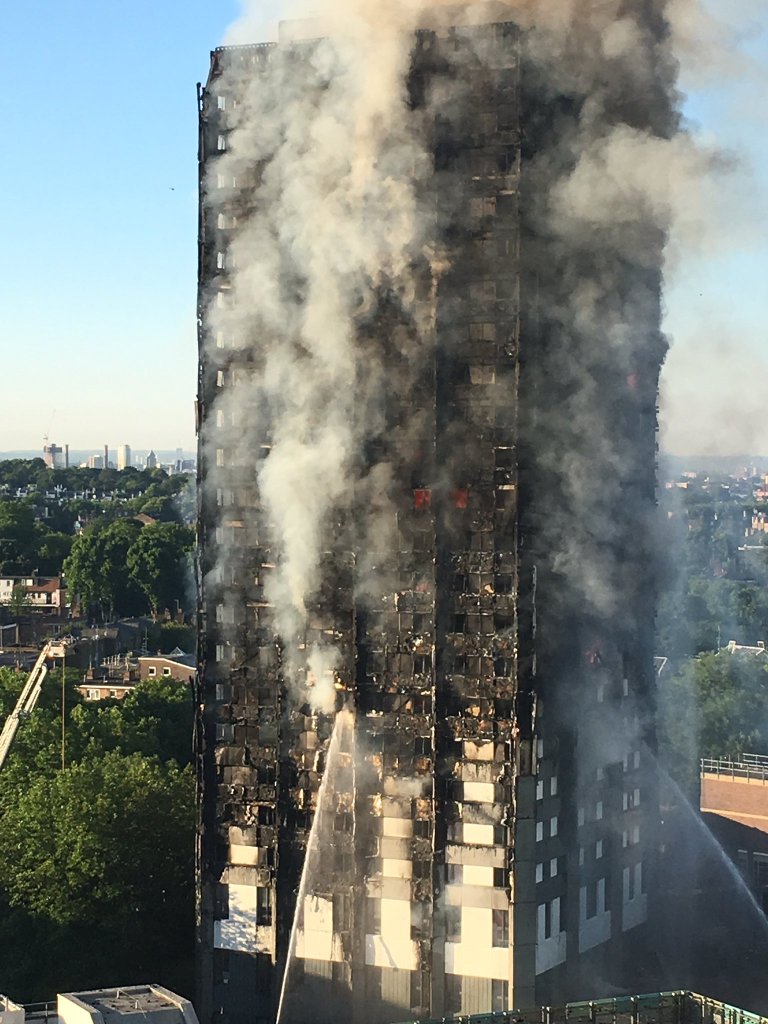
Yesterday, September 14th, saw the opening of the inquiry into the Grenfell Tower fire that happened on June 14th. As the BBC News reported:

The inquiry into the Grenfell Tower fire has opened, with its chairman promising it will provide answers to how the disaster could have happened in 21st century London.

Sir Martin Moore-Bick said he would not shrink away from making recommendations that could lead to prosecutions.

Yesterday morning, I woke at 5am PDT (1pm UK time) and picked up my tablet that has a BBC Radio 4 app installed. I lay there in the dark, Jeannie still fast asleep alongside me, and listened to the World at One: Forty-five minutes of news, analysis and comment, with Martha Kearney. Naturally the opening stages of the inquiry were one of the main items covered.

I was born in London. At the maternity ward at the hospital in Park Royal, West London. Some 5 miles from Grenfell Tower. I was brought up in Wembley, London again some 5 miles straight line distance from the tower.

For much of my early life as a young adult I was in and around that part of London. So while I was not personally familiar with Grenfell Tower itself, the news coverage of the disaster at the time relayed sights of a part of London that seemed like an old friend from the past.

A ghost of my life from over 50 years ago.

Yesterday on the World at One Martha Kearney interviewed Kareem Dennis better known as the rapper Lowkey:

Lowkey: A song for Grenfell, a call for justice

Hip Hop artist Lowkey lives opposite Grenfell tower. He has written a song called Ghosts of Grenfell, featuring people from the local community, which demands justice for those who died.

Lowkey told the World at One about his song and the night of the fire.

(Photo: Lowkey. Credit: BBC)

The interview included snippets of Lowkey’s song.

After I had finished listening to the World at One I did a web search to learn more about the poor animals that lost their lives in the inferno. It broke my heart reading the stories.

Then I started watching the full video of Lowkey’s song: Ghosts of Grenfell. Sixty seconds into the song I could hold my emotions no longer and burst into deep sobs.

Here is Lowkey’s song.

For those that want to stay with this, then here are the lyrics to Ghosts of Grenfell.

ooOOoo

Ghosts of Grenfell

Lowkey
Featuring Mai Khalil

Produced by Jo Caleb and Quincy Tones

[Intro: Lowkey]
The night our eyes changed
Rooms where, love was made and un-made in a flash of the night
Rooms where, memories drowned in fumes of poison
Rooms where, futures were planned and the imagination of children built castles in the sky
Rooms where, both the extraordinary and the mundane were lived
Become forever tortured graves of ash
Oh you political class, so serve out to corporate power

[Chorus: Mai Khalil & Lowkey]
Did they die, or us?
Did they die, for us?
Ghosts of Grenfell still calling for justice
Now hear ’em, now hear ’em scream
Did they die, or us?
Did they die, for us?
This corporate manslaughter will haunt you
Now hear ’em scream
[Verse 1: Lowkey]
Words can not express
Please allow me to begin though
1:30am heard the shouting from my window
People crying in the street
Watchin’ the burning of their kinfolk
Grenfell Tower, now historically a symbol
People reaching, from their windows
Screaming, for their lives
Pleading, with the cries
Tryna reason with the skies
Dale youth birthed champions
Comparison is clear though
That every single person in the building was a hero
So don’t judge our tired eyes in these trying times
‘Cause we be breathing in cyanide, the entire night
They say Yasin saw the fire and he ran inside
Who’d thought that would be the site where he and his family died
The street is like a graveyard, tombstones lurching over us
Those shouting out to their windows, now wish they never woke them up
Wouldn’t hope your worst enemy to go in this position
Now it’s flowers for the dead and printed posters for the missing, come home
[Chorus: Mai Khalil & Lowkey]
Did they die, or us?
Did they die, for us?
Ghosts of Grenfell still calling for justice
Now hear ’em, now hear ’em scream
Did they die, or us?
Did they die, for us?
This corporate manslaughter will haunt you
Now hear ’em scream

[Verse 2: Lowkey]
I see trauma in the faces of all those that witnessed this
Innocence in the faces of all those on the missing list
See hopes unfulfilled
Ambitions never achieved
No I’m not the only one that sees the dead in my dreams
Strive for the bravery of Yasin, artistic gift of Khadija
Every person, a unique blessing to never be repeated
Strive for the loyalty of siblings that stayed behind with their parents
Pray that every loved one lost can somehow make an appearance
We are, calling like the last conversations with their dearest
Until we face, what they face we will never know what fear is
We are, calling for survivors rehoused in the best place
Not to be left sleeping in the West Way for 10 days
We’re, calling for arrests made and debts paid
In true numbers known for the families that kept faith
We’re, calling for safety in homes of love
They are immortalised forever, the only ghosts are us
I wonder
[Chorus: Mai Khalil & Lowkey]
Did they die, or us?
Did they die, for us?
Ghosts of Grenfell still calling for justice
Now hear ’em, now hear ’em scream
Did they die, or us?
Did they die, for us?
This corporate manslaughter will haunt you
Now hear ’em scream

[Bridge: Mai Khalil (Arabic)]
Olooli win arooh
Nas a’am tehtere’a fe sa’at sahoor
Ahess ennee be alam tanee
Olooli win arooh
Nas a’am tehtere’a fe sa’at sahoor
Ahess ennee be alam tanee

[Speech: Lowkey & Various Voices]
To whom it may concern, at the Queen’s royal borough of Kensington in Chelsea. Where is Yasin El-Wahabi? Where is his brother Mehdi? Where is his sister Nur Huda? Where is their mother and where is their father? Where is Nura Jamal and her husband Hashim? Where is their children, Yahya, Firdaus and Yaqoob? Where is Nadia Loureda? Where is Steve Power? Where is Dennis Murphy? Where is Marco Gottardi? Where is Gloria Trevisian? Where is Amal and her daughter Amaya? Where is Mohammed Neda? Where is Ali Yawar Jafari? Where is Khadija Saye? Where is Mary Mendy? Where is Mariem Elgwahry? Where is her mother Suhar?

Tell us, where is Rania Ibrahim and her two daughters? Where is Jessica Urbano Remierez? Where is Deborah Lamprell? Where is Mohammed Alhajali? Where is Nadia? Where is her husband Bassem? Where are her daughters, Mirna, Fatima, Zaina and their grandmother? Where is Zainab Dean and her son Jeremiah? Where is Ligaya Moore? Where is Sheila Smith? Where is Mohammednour Tuccu? Where is Tony Disson? Where is Maria Burton? Where is Fathaya Alsanousi? Where is her son Abu Feras and her daughter Esra Ibrahim? Where is Lucas James? Where is Farah Hamdan? Where is Omar Belkadi? Where is their daughter Leena? Where is Hamid Kani? Where is Esham Rahman? Where is Raymond Bernard? Where is Isaac Paulos? Where is Marjorie Vital? Where’s her son Ernie? Where is Komru Miah? Where is his wife Razia? Where are their children Abdul Hanif, Abdul Hamid, Hosna? Where are Sakineh and Fatima Afraseiabi? Where is Berkti Haftom and her son Biruk?

Tells us, where is Stefan Anthony Mills? Where is Abdul Salam? Where is Khadija Khalloufi? Where is Karen Bernard? Where are these people? Where are these people? Where is Gary Maunders? Where is Rohima Ali? Where is her six year old daughter Maryam, her five year old daughter Hafizah and her three year old son Mohammed? God bless you all! Where are all these people?

[Outro]
Where are all these people?
The blood is on your hands
There will be ashes on your graves
Like a Phoenix we will rise
The blood is on your hands
There will be ashes on your graves
Like a Phoenix we will rise

ooOOoo


Love and caring.

“It is a time for kindness, love, community and human spirit to connect with nature.”

This sentence was written by Colette who blogs over at Stargazing Futures. Colette offered that thought in a response to a post last week in this place.

The reason I used it as the sub-heading for today’s share is that it is perfect.

Read this from Mother Nature News and you will understand.

ooOOoo

Watch an excavator gently rescue a deer

Russell McLendon   September 5, 2017

When two young black-tailed deer wandered onto a construction site in 2016, they probably didn’t realize how dangerously muddy the ground had become. They both got stuck in the mud, a predicament that could have easily been fatal — if an observant worker at the site hadn’t noticed them and swung into action.

“I wouldn’t have seen them if they hadn’t moved and caught my eye!” wrote Bill Davis, a native of Tacoma, Washington, who was checking on the property for his employer.

When he realized the two yearling deer were stuck, he “orchestrated a rescue operation with his cellphone,” his son-in-law told GrindTV, by contacting a skilled excavator operator who might be able to pluck the helpless deer out of the mud.

Using an uncannily light touch for such a powerful piece of machinery, the operator managed to rescue both deer from the mud. Davis posted one of the rescues in the video above; the actual scooping up of the deer starts at about the 2:30 point.

Of course, it might have been even better for these deer if the property was still forest, not a muddy construction site, and it’s worth noting that habitat loss is one of the main problems facing wildlife around the world. But that was a moot point by the time these deer got stuck, and since Davis couldn’t return their lost patch of habitat, he did the next best thing by making sure they survived this ordeal.

Plus, as Earth Touch News points out, these deer were thought to be yearlings at the time, so they may have already been old enough to rebound afterward.

Davis wasn’t taking any chances, though. “Didn’t sleep much last night [after the rescue],” he wrote on Facebook. “[A]ll I could think about was those little guys getting stuck again, and not finding mama! I’m out there looking to make sure the babies didn’t come back to the mud! No sign of them.”

ooOOoo

“It is a time for kindness, love, community and human spirit to connect with nature.”

Exactly!

So who is Sam?

You loved Sam Grant’s photos of Casper and Scotland. Learn more about her.

Last Sunday my Picture Parade was primarily a recent item that appeared on the BBC website.

Meet Scotland’s ‘most well-travelled dog’

By Ewan Murrie, BBC Scotland news website, 3rd June 2017

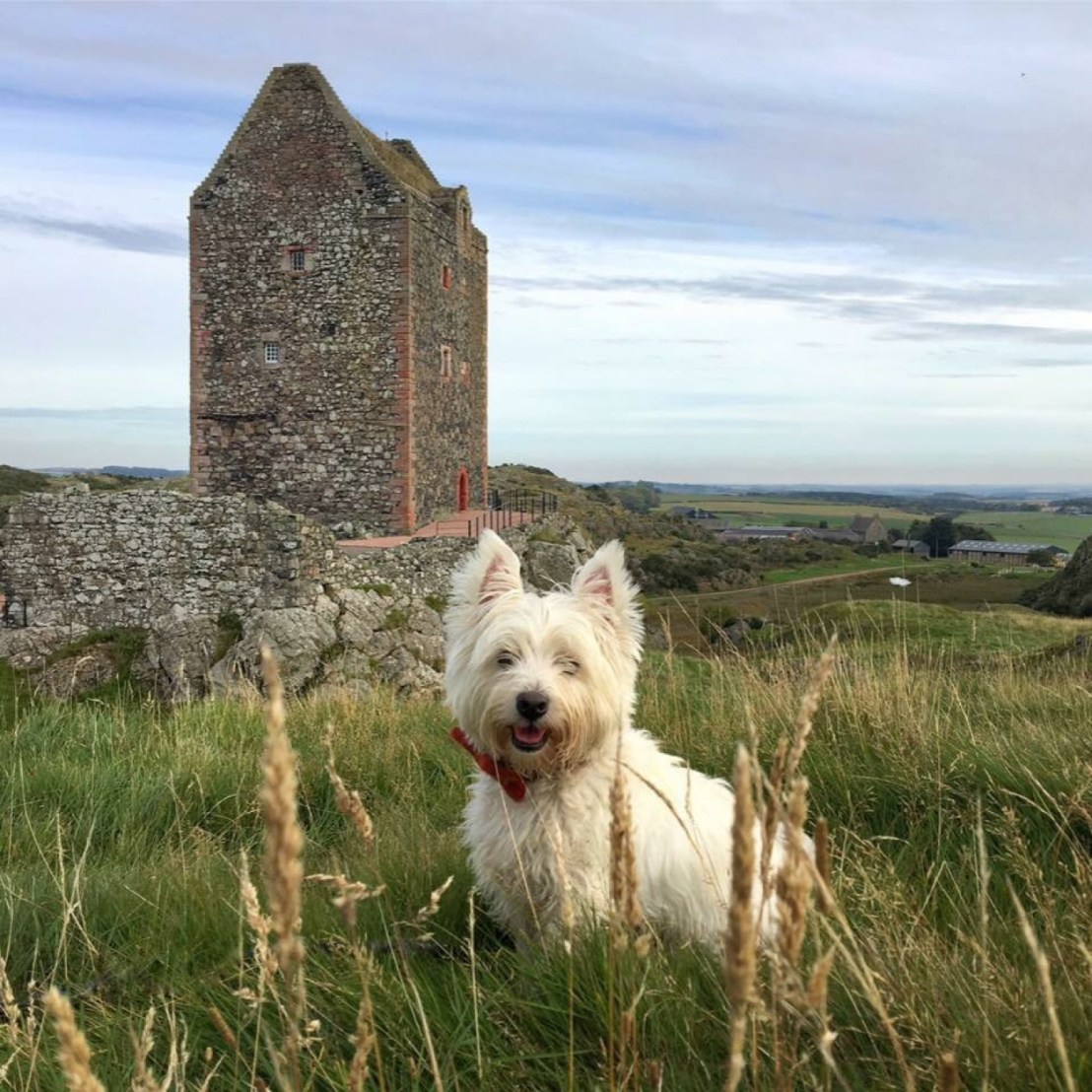
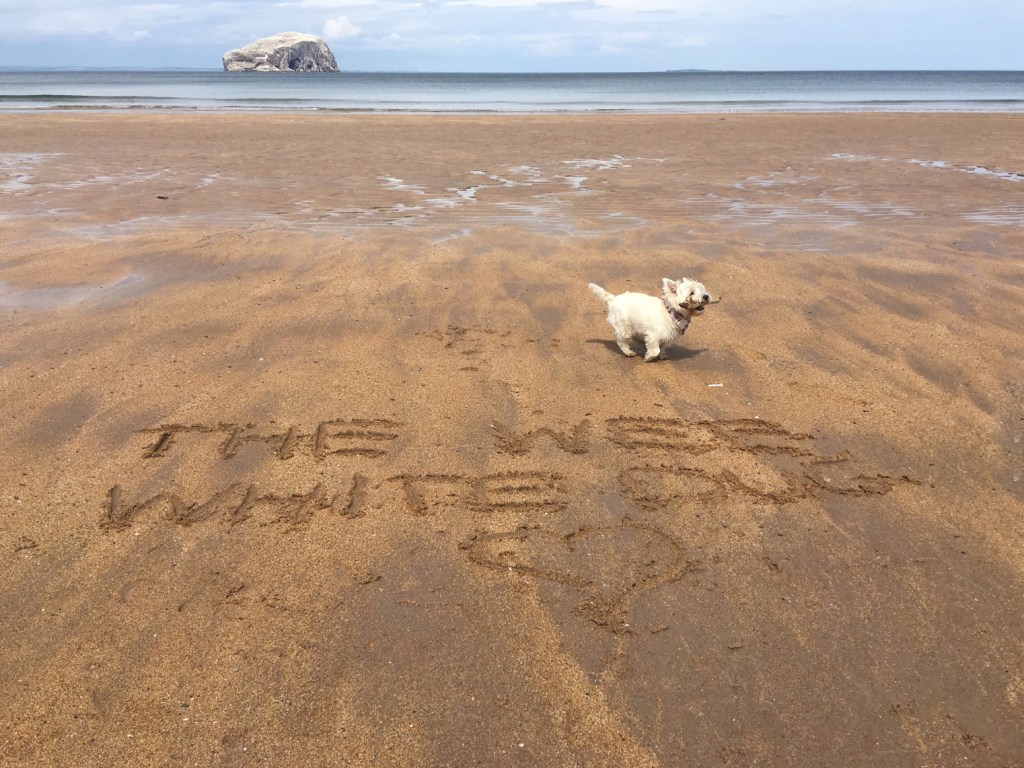
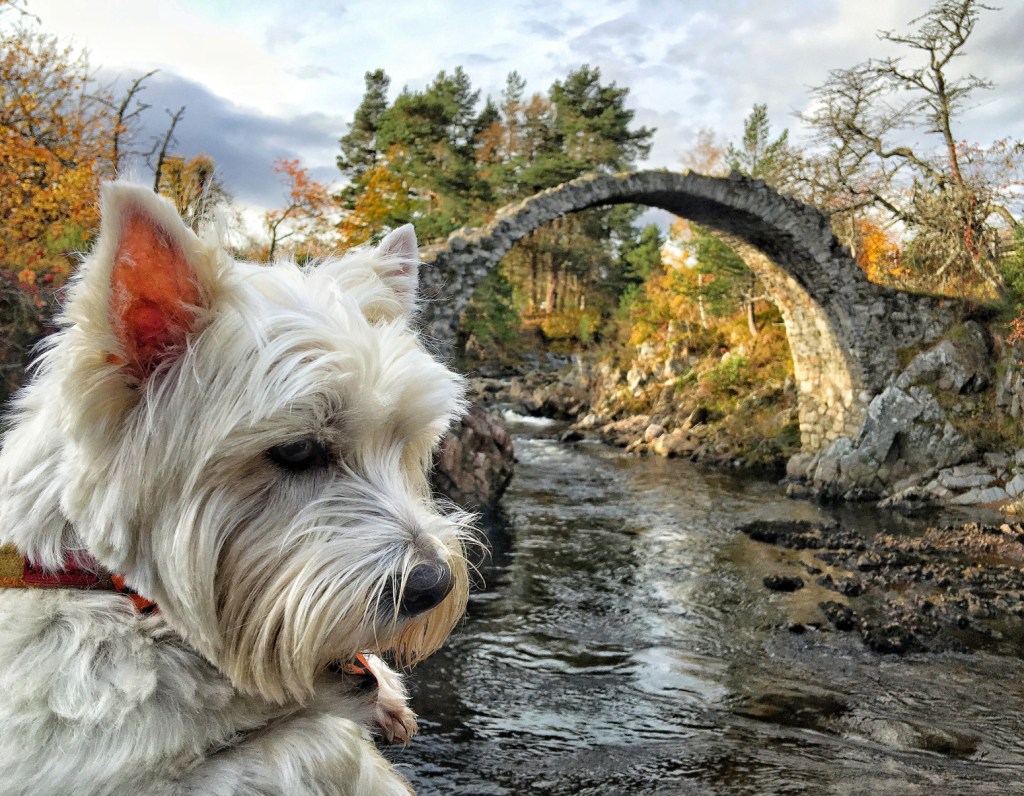
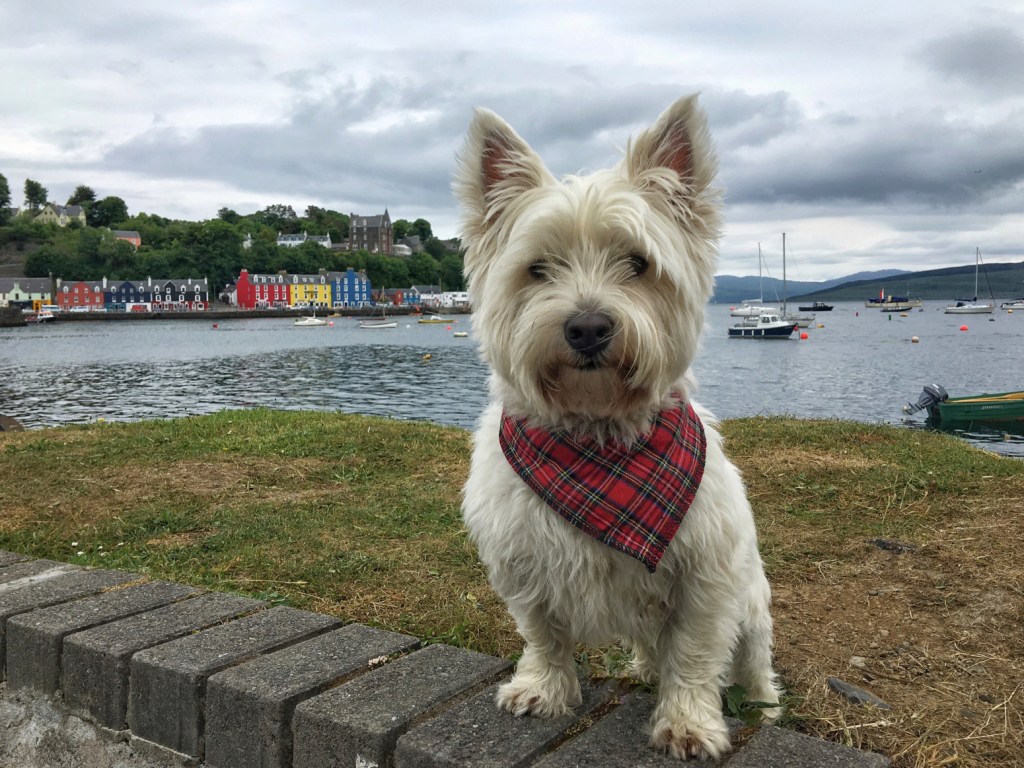
After photographs of her West Highland Terrier received more “likes” on social media than even the most stunning Glencoe landscapes she could capture, Sam Grant conceded that “the wee white dug” should star in her Scottish travel blog.

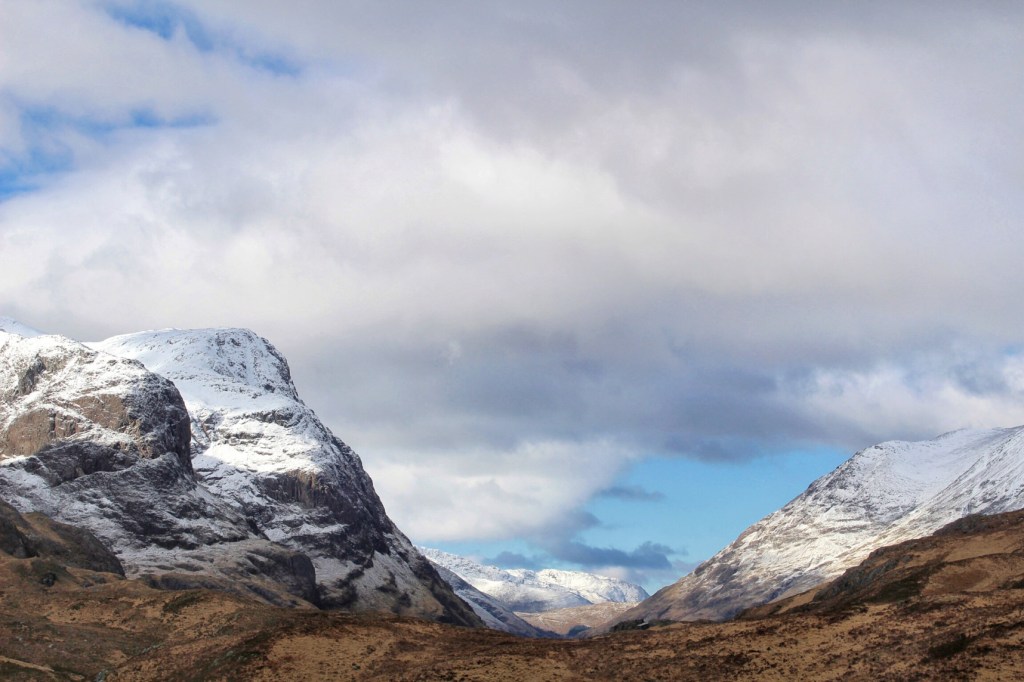
I went on to republish a wonderful set of photographs that had been taken by Sam. You all loved them and that led me to ask Sam if I could republish her About Me page on her blog. Sam very kindly said that would be fine.

ooOOoo

Scotland with the Wee White Dug

A Scottish travel blog showcasing the best of Scotland. Scotland with the Wee White Dug is a comprehensive and informative guide to Scotland, covering history, outdoor activities, events, visitor attractions, accommodation, eating out and more.

About Me

A little bit about me

Hello and welcome to my Scottish travel blog which I hope you’ll find informative and interesting, but most of all fun.

I’m Samantha but am generally known as Sam, Mrs G or Mum.  I’m married to Alex (Mr G) and we live in Edinburgh with a well travelled wee white dug called Casper.  We also share our home with the The Teen, Casper’s sloth like and gadget obsessed big sister.

All of my free time is spent road-tripping around Scotland.  I’ve travelled extensively throughout the country and never tire of its jawdropping and diverse beauty.

I have a vast knowledge of where to stay, eat and what to do in Scotland. Whether it be an afternoon out, a day trip or an extended tour. I also know all of the best places to go with your four legged friend.

I’m a Visit Scotland Ambassador and I helped launch their online Community in the spring of 2016.  The Community is a Scottish travel forum for sharing insider hints and tips about visiting Scotland.  Visit Scotland’s Ambassadors were selected for their expert knowledge of the country.

In January 2017 I took up the role of resident blogger for East Lothian Council on their Visit East Lothian website.  I write a fortnightly post for their blog, highlighting the delights of East Lothian.

I’m passionate about the history, language, literature, customs and myths of Scotland. I read History at the University of Edinburgh and during my time there I studied Scottish History, Literature and Politics which gave me an excellent understanding of how Scotland became the country that it is today.

I absolutely adore the great outdoors – it’s my happy place.  I love hiking, have been known to summit a Munro or two and am happiest when surrounded by lochs, moors and mountains.

My photography

I’ve been an avid hobby photographer since joining Instagram several years ago.  I’m part of a diverse group of Scottish Instagrammers with a passion for sharing Scotland with the World.

My feed @bean_nighe has appeared on Instagram’s prestigious Suggested User list.  You’ll find the Wee White Dug on Instagram too @theweewhitedug.  His feed is also dedicated to sharing our Scottish travels.

I’ve featured in articles recommending the best Scottish Instagram accounts to follow by The ScotsmanMatador Network and the award winning travel blog Stories my suitcase could tell.

My photos appear regularly on various social media channels including those of Canon UK, BBC, Skyscanners, Scottish Memories Magazine, Scotrail, Historic Scotland, Visit Scotland and The Guardian.

I share my Scottish travels on Facebook and Twitter too so if you’re on those sites stop by and say hello.

I’m passionate about promoting Scotland as a wonderful place to visit.  It’s a country with a rich history and heritage. A country full of stories just waiting to be told.

I appreciate you taking the time to stop by my blog to join me on my travels.  I hope ‘Scotland with the Wee White Dug’ inspires you to visit Scotland, helps you to plan for a forthcoming trip or makes you reminisce fondly about a past visit.

If you’re interested in working with me you can find out more here.

Sam

ooOOoo

Just glorious!

Foreboding times?

Something brooding in the air!

The smoke from the forest fires in Oregon and California has been thick in the air here in Merlin for days.

As can be seen in the photograph below. The photograph is as it was captured by the camera at 7:15 am yesterday morning. No changes by me made at all. The middle tree line is at the Eastern end of our property about a 1/4 mile away.

We are fed up with the smoke and the terrible air conditions.

But what drew me to grab the camera and take the photograph was that the image had some sort of, Oh, I don’t know, some sort of end of the world feeling about it.

It also seemed a most apt image to be an introduction to the latest essay from George Monbiot. It is republished here with Mr. Monbiot’s kind permission.

ooOOoo

Don’t Look Now

2nd September 2017

The media avoids the subject of climate breakdown – to do otherwise is to bring the entire infrastructure of thought crashing down

By George Monbiot, published in the Guardian 29 August 2017

It is not only Donald Trump’s government that censors the discussion of climate change; it is the entire body of polite opinion. This is why, though the links are clear and obvious, the majority of news reports on Hurricane Harvey have made no mention of the human contribution.

In 2016, the United States elected a president who believes that human-driven global warming is a hoax. It was the hottest year on record, in which the US was hammered by a series of climate-related disasters. Yet the total combined coverage for the entire year on the evening and Sunday news programmes on ABC, CBS, NBC and Fox News amounted to 50 minutes. Our greatest predicament, the issue that will define our lives, has been blotted from our minds.

This is not an accident. But nor (with the exception of Fox News) is it likely to be a matter of policy. It reflects a deeply ingrained and scarcely conscious self-censorship. Reporters and editors ignore the subject because they have an instinct for avoiding trouble. To talk about climate breakdown (which in my view is a better term than the curiously bland labels we attach to this crisis) is to question not only Donald Trump, not only current environmental policy, not only current economic policy, but the entire political and economic system.

It is to expose a programme that relies on robbing the future to fuel the present, that demands perpetual growth on a finite planet. It is to challenge the very basis of capitalism; to inform us that our lives are dominated by a system that cannot be sustained, a system that is destined, if it is not replaced, to destroy everything.

To claim that there is no link between climate breakdown and the severity of Hurricane Harvey is like claiming that there is no link between the warm summer we have experienced and the end of the last ice age. Every aspect of our weather is affected by the fact that global temperatures rose by around 4° between the ice age and the 19th Century. And every aspect of our weather is affected by the 1° of global warming caused by human activities. While no weather event can be blamed solely on human-driven warming, no weather event is unaffected by it.

We know that the severity and impact of hurricanes on coastal cities are exacerbated by at least two factors: higher sea levels, caused primarily by the thermal expansion of seawater, and greater storm intensity, caused by higher sea temperatures and the ability of warm air to hold more water than cold air.

Before it reached the Gulf of Mexico, Harvey had been demoted from a tropical storm to a tropical wave. But as it reached the Gulf, whose temperatures this month have been far above average, it was upgraded first to a tropical depression, then to a category 1 hurricane. It might have been expected to weaken as it approached the coast, as hurricanes churn the sea, bringing cooler waters to the surface. But the water it brought up from 100 metres and more was also unusually warm. By the time it reached land, Harvey had intensified to a category 4 hurricane.

We were warned about this. In June, for example, Robert Kopp, a professor of earth sciences, predicted that “In the absence of major efforts to reduce emissions and strengthen resilience, the Gulf Coast will take a massive hit. Its exposure to sea-level rise – made worse by potentially stronger hurricanes – poses a major risk to its communities.”

To raise this issue, I’ve been told on social media, is to politicise Hurricane Harvey. It is an insult to the victims and a distraction from their urgent need. The proper time to discuss it is when people have rebuilt their homes, and scientists have been able to conduct an analysis of just how great the contribution from climate breakdown might have been. In other words, talk about it only when it’s out of the news. When researchers determined, 9 years on, that human activity had made a significant contribution to Hurricane Katrina, the information scarcely registered.

I believe it is the silence that’s political. To report the storm as if it were a entirely natural phenomenon, like last week’s eclipse of the sun, is to take a position. By failing to make the obvious link and talk about climate breakdown, media organisations ensure that our greatest challenge goes unanswered. They help push the world towards catastrophe.

Hurricane Harvey offers a glimpse of a likely global future; a future whose average temperatures are as different from ours as ours are from those of the last ice age. It is a future in which emergency becomes the norm and no state has the capacity to respond. It is a future in which, as a paper in the journal Environmental Research Letters notes, disasters like Houston’s occur in some cities several times a year. It is a future that, for people in countries such as Bangladesh, has already arrived, almost unremarked by the rich world’s media. It is the act of not talking that makes this nightmare likely to materialise.

In Texas, the connection could scarcely be more apparent. The storm ripped through the oil fields, forcing rigs and refineries to shut down, including those owned by some of the 25 companies that have produced over half the greenhouse gas emissions humans have released since the start of the Industrial Revolution. Hurricane Harvey has devastated a place in which climate breakdown is generated, and in which the policies that prevent it from being addressed are formulated.

Like Donald Trump, who denies human-driven global warming, but who wants to build a wall around his golf resort in Ireland to protect it from the rising seas, these companies, some of which have spent millions sponsoring climate deniers, have progressively raised the height of their platforms in the Gulf of Mexico, in response to warnings about higher seas and stronger storms. They have grown from 40 feet above sea level in 1940, to 70ft in the 1990s, to 91ft today.

This is not, however, a story of mortal justice. In Houston, as everywhere else, it is generally the poorer communities, that are least responsible for the problem, who are hit first and hit worst. But the connection between cause and effect should appeal to even the slowest minds.

The problem is not confined to the United States. Across the world, the issue that hangs over every aspect of our lives is marginalised, except on the rare occasions on which world leaders gather to discuss it in sombre tones (then sombrely agree to do almost nothing), whereupon the instinct to follow the machinations of power overrides the instinct to avoid a troubling subject. When they do cover the issue, they tend to mangle it. In the UK, the BBC distinguished itself in customary fashion this month, by yet again inviting the climate change denier Lord Lawson onto the Today programme, in the mistaken belief that impartiality requires a balance between correct facts and false ones. They seldom make such a mess of other topics, because they take them more seriously.

When Trump’s enforcers instruct officials and scientists to purge any mention of climate change from their publications, we are scandalised. But when the media does it, without the need for a memo, we let it pass. This censorship is invisible even to the perpetrators, woven into the fabric of organisations that are constitutionally destined to leave the major questions of our times unasked. To acknowledge this issue is to challenge everything. To challenge everything is to become an outcast.

www.monbiot.com

ooOOoo

Dear people, I sat staring at the screen for 10 minutes and then went off when Jeannie called lunchtime. Returned to the screen a little after 2pm yesterday and still couldn’t come up with a closing thought that merited being shared with you all.

See you tomorrow!

Return to Predators!

The critical value of predators.

Not so long ago there was some discussion about how important it was for the natural way of things to include predators. I mentioned how this had been the topic of a post published some time ago in this place.

It was back in February, 2014 and I have republished it today.

oooo

The critical value of predators in our wild lands.

February 24th, 2014

The consequences of the reintroduction of wolves to Yellowstone National Park.

I have two people to offer my thanks to for today’s post: Suzann and Ginger. Both of them within hours of each other sent me an email recommending the following video. So, without further ado, here is that video. (Oh, would you believe this. The video was released on February 13th, 2014 and, at the time of me writing this post, has been viewed 1,453,345 times! Wow!)

Published on Feb 13, 2014

Visit http://sustainableman.org/ to explore the world of sustainability.

For more from George Monbiot, visit http://www.monbiot.com/ and for more on “rewilding” visit http://bit.ly/1hKGemK and/or check out George Monbiot’s book Feral: rewilding the land, the sea and human life: http://amzn.to/1dgdLi9

“When we try to pick out anything by itself, we find it hitched to everything else in the Universe.” – John Muir

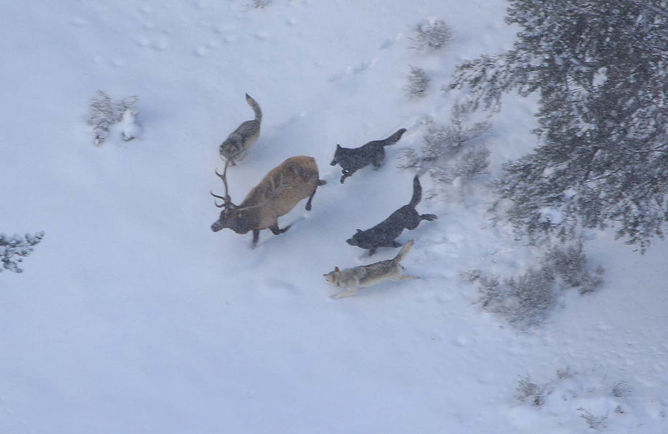
When wolves were reintroduced to Yellowstone National Park in the United States after being absent nearly 70 years, the most remarkable “trophic cascade” occurred. What is a trophic cascade and how exactly do wolves change rivers? George Monbiot explains in this movie remix.

Narration from TED: “For more wonder, rewild the world” by George Monbiot. Watch the full talk, here: http://bit.ly/N3m62h

B-Roll Credits:
“Greater Yellowstone Coalition – Wolves” (http://bit.ly/1lK4LaT)
“Wolf Mountain” (http://bit.ly/1hgi6JE)
“Primodial – Yellowstone” (https://vimeo.com/77097538)
“Timelapse: Yellowstone National Park” (http://bit.ly/1kF5axc)
“Yellowstone” (http://bit.ly/1bPI6DM)
“Howling Wolves – Heulende Wölfe” (http://bit.ly/1c2Oidv)
“Fooled by Nature: Beaver Dams” (http://bit.ly/NGgQSU)

Music Credits:
“Unfoldment, Revealment, Evolution, Exposition, Integration, Arson” by Chris Zabriskie (http://bit.ly/1c2uckW)

FAIR USE NOTICE: This video may contain copyrighted material. Such material is made available for educational purposes only. This constitutes a ‘fair use’ of any such copyrighted material as provided for in Title 17 U.S.C. section 106A-117 of the US Copyright Law.

For any concerns or questions, you may contact us athttp://sustainableman.org/contact/

If you want to read more on a general level, then my post on the 11th January, 2014, An echo in the hills! may be worthwhile. It included this from William Ripple, of Oregon State University:

ooOOoo

Top dogs keep ecosystems in order

Many of these large carnivore species are endangered and some are at risk of extinction, either in specific regions or entirely. Ironically, they are vanishing just as we are learning about their important ecological effects, which is what led us to write a new paper in the journal Science to document their role.

From a review of published reports, we singled out seven species that have been studied for their important ecological role and widespread effects, known as trophic cascades. These are the African lion, leopard, Eurasian lynx, cougar, gray wolf, sea otter and dingo.

Based on field research, my Oregon State University co-author Robert Beschta and I documented the impact of cougars and wolves on the regeneration of forest tree stands and riverside vegetation in Yellowstone and other national parks in western North America. Fewer predators, we found, lead to an increase in browsing animals such as deer and elk. More browsing disrupts vegetation, reduces birds and some mammals and changes other parts of the ecosystem. From the actions of the top predator, widespread impacts cascade down the food chain.

Similar effects were found in studies of Eurasian lynx, dingoes, lions and sea otters. For example in Europe, absence of lynx has been closely tied to the abundance of roe deer, red fox and hare. In Australia, the construction of a 3,400-mile dingo-proof fence has enabled scientists to study ecosystems with and without dingoes which are closely related to gray wolves. They found that dingoes control populations of herbivores and exotic red foxes. The suppression of these species by dingoes reduces predation pressure, benefiting plants and smaller native prey.

In some parts of Africa, the decrease of lions and leopards has coincided with a dramatic increase in olive baboons, which threaten crops and livestock. In the waters off southeast Alaska, a decline in sea otters through killer whale predation has led to a rise in sea urchins and loss of kelp beds.

Predators are integral, not expendable

We are now obtaining a deeper appreciation of the impact of large carnivores on ecosystems, a view that can be traced back to the work of landmark ecologist Aldo Leopold. The perception that predators are harmful and deplete fish and wildlife is outdated. Many scientists and wildlife managers now recognise the growing evidence of carnivores’ complex role in ecosystems, and their social and economic benefits. Leopold recognised these relationships, but his observations were ignored for decades after his death in 1948.

op carnivores, at work keeping things in check. Doug Smith
Top carnivores, at work keeping things in check. Doug Smith

Human tolerance of these species is the major issue. Most would agree these animals have an intrinsic right to exist, but additionally they provide economic and ecological services that people value. Among the services documented in other studies are carbon sequestration, restoration of riverside ecosystems, biodiversity and disease control. For example, wolves may limit large herbivore populations, thus decreasing browsing on young trees that sequester carbon when they escape browsing and grow taller. Where large carnivore populations have been restored – such as wolves in Yellowstone or Eurasian lynx in Finland – ecosystems appear to be bouncing back.

I am impressed with how resilient the Yellowstone ecosystem is, and while ecosystem restoration isn’t happening quickly everywhere in this park, it has started. In some cases where vegetation loss has led to soil erosion, for example, full restoration may not be possible in the near term. What is certain is that ecosystems and the elements of them are highly interconnected. The work at Yellowstone and other places shows how species affect each another through different pathways. It’s humbling as a scientist to witness this interconnectedness of nature.

My co-authors and I have called for an international initiative to conserve large carnivores in co-existence with people. This effort could be modelled after a couple of other successful efforts including the Large Carnivore Initiative for Europe, a non-profit scientific group affiliated with the International Union for the Conservation of Nature, and the Global Tiger Initiative which involves all 13 of the tiger-range countries. With more tolerance by humans, we might be able to avoid extinctions. The world would be a scary place without these predators.

William Ripple does not work for, consult to, own shares in or receive funding from any company or organisation that would benefit from this article, and has no relevant affiliations.

ooOOoo

The ConversationMan! We are a strange species at times!

Help Stop the use of dogs for medical testing!

Sometimes I wonder about the human race!

Sorry for the outburst above but in the last ten minutes I read this over on Lady Freethinker’s blog: Sign: Pass Bill to Ban Cruel VA Medical Testing on Dogs It made me very angry!

It has to be shared with all you good people.

ooOOoo

Sign: Pass Bill to Ban Cruel VA Medical Testing on Dogs

Never taking democracy for granted!

Cold-water shower time again!

All you good people who stick with this blog know that the majority of the posts are to do with dogs or cats in one form or another.

Yet, I am cognizant of the fact that no one can completely hide, metaphorically speaking, in the warm fur of our favourite dog or cat and let the rest of the world go tits up. From time to time I read an article or an essay that touches on something fundamentally important to a civil society and am compelled to share same with you.

That was the case on July 5th when I published a post called The Implications of Inequality.

OK – moving on!

Regulars know that I am a great admirer of the writings of essayist George Monbiot. He is a very regular contributor to The Guardian newspaper. Just a few days ago, Mr. Monbiot published an essay that really does need to be read as widely as possible. It is called Missing Link and is republished here with George Monbiot’s very kind permission.

ooOOoo

Missing Link

21st July 2017
How a secretive network built around a Nobel prizewinner set out to curtail our freedoms

By George Monbiot, published in the Guardian 19th July 2017

It’s the missing chapter: a key to understanding the politics of the past half century. To read Nancy MacLean’s new book Democracy in Chains: the deep history of the radical right’s stealth plan for America is to see what was previously invisible.

The history professor’s work on the subject began by accident. In 2013 she stumbled across a deserted clapboard house on the campus of George Mason University in Virginia. It was stuffed with the unsorted archives of a man who had died that year, whose name is probably unfamiliar to you: James McGill Buchanan. She writes that the first thing she picked up was a stack of confidential letters concerning millions of dollars transferred to the university by the billionaire Charles Koch.

Her discoveries in that house of horrors reveal how Buchanan, in collaboration with business tycoons and the institutes they founded, developed a hidden programme for suppressing democracy on behalf of the very rich. The programme is now reshaping politics, and not just in the US.

Buchanan was strongly influenced by both the neoliberalism of Friedrich Hayek and Ludwig von Mises and the property supremacism of John C Calhoun, who argued, in the first half of the 19th century, that freedom consists of the absolute right to use your property – including your slaves – however you may wish. Any institution that impinges on this right is an agent of oppression, exploiting men of property on behalf of the undeserving masses.

James Buchanan brought these influences together to create what he called “public choice theory”. He argued that a society could not be considered free unless every citizen has the right to veto its decisions. What he meant by this was that no one should be taxed against their will. But the rich were being exploited by people who use their votes to demand money that others have earned, through involuntary taxes to support public spending and welfare. Allowing workers to form trade unions and imposing graduated income taxes are forms of “differential or discriminatory legislation” against the owners of capital.

Any clash between what he called “freedom” (allowing the rich to do as they wished) and democracy should be resolved in favour of freedom. In his book The Limits of Liberty, he noted that “despotism may be the only organisational alternative to the political structure that we observe.” Despotism in defence of freedom.

His prescription was what he called a “constitutional revolution”: creating irrevocable restraints to limit democratic choice. Sponsored throughout his working life by wealthy foundations, billionaires and corporations, he develop both a theoretical account of what this constitutional revolution would look like and a strategy for implementing it.

He explained how attempts to desegregate schooling in the American South could be frustrated by setting up a network of state-sponsored private schools. It was he who first proposed the privatisation of universities and the imposition of full tuition fees on students: his original purpose was to crush student activism. He urged the privatisation of Social Security and of many other functions of the state. He sought to break the links between people and government and demolish trust in public institutions. He aimed, in short, to save capitalism from democracy.

In 1980, he was able to put the programme into action. He was invited to Chile, where he helped the Pinochet dictatorship to write a new constitution, which, partly through the clever devices Buchanan proposed, has proved impossible to reverse in its entirety. Amid the torture and killings, he advised the government to extend its programmes of privatisation, austerity, monetary restraint, deregulation and the destruction of trade unions: a package that helped trigger economic collapse in 1982.

None of this troubled the Swedish Academy, that, through his devotee at Stockholm University, Assar Lindbeck, in 1986 awarded James Buchanan the Nobel Memorial Prize for economics. It is one of several decisions that have turned this prize toxic.

But his power really began to be felt when Charles Koch, currently the seventh richest man in the US, decided that Buchanan held the key to the transformation he sought. Koch saw even such ideologues as Milton Friedman and Alan Greenspan as “sellouts”, as they sought to improve the efficiency of government rather than destroying it altogether. But Buchanan took it all the way.

MacLean says that Charles Koch poured millions into Buchanan’s work at George Mason University, whose law and economics departments look as much like corporate-funded thinktanks as they do academic faculties. He employed the economist to select the revolutionary “cadre” that would implement his programme (Murray Rothbard, at the Cato Institute that Koch founded, had urged the billionaire to study Lenin’s techniques and apply them to the libertarian cause). Between them, they began to develop a programme for changing the rules.

The papers Nancy Maclean discovered show that Buchanan saw stealth as crucial. He told his collaborators that “conspiratorial secrecy is at all times essential.” Instead of revealing their ultimate destination, they would proceed by incremental steps. For example, in seeking to destroy the Social Security system, they would claim to be saving it, arguing that it would fail without a series of radical “reforms”. (The same argument is used by those attacking the NHS over here). Gradually they would build a “counter-intelligentsia”, allied to a “vast network of political power” that would eventually become the new establishment.

Through the network of thinktanks that Koch and other billionaires have sponsored, through their transformation of the Republican Party, and the hundreds of millions they have poured into state congressional and judicial races, through the mass colonisation of Trump’s administration by members of this network and lethally effective campaigns against everything from public health to action on climate change, it would be fair to say that Buchanan’s vision is maturing in the USA.

But not just there. Reading this book felt like a demisting of the window through which I see British politics. The bonfire of regulations highlighted by the Grenfell Tower disaster, the destruction of state architecture through austerity, the budgeting rules, the dismantling of public services, tuition fees and the control of schools: all these measures follow Buchanan’s programme to the letter. I wonder how many people are aware that David Cameron’s free schools project originated with an attempt to hamper racial desegregation in the American South.

In one respect, Buchanan was right: there is an inherent conflict between what he called “economic freedom” and political liberty. Complete freedom for billionaires means poverty, insecurity, pollution and collapsing public services for everyone else. Because we will not vote for this, it can be delivered only through deception and authoritarian control. The choice we face is between unfettered capitalism and democracy. You cannot have both.

Buchanan’s programme amounts to a prescription for totalitarian capitalism. And his disciples have only begun to implement it. But at least, thanks to Maclean’s discoveries, we can now apprehend the agenda. One of the first rules of politics is know your enemy. We’re getting there.

http://www.monbiot.com

ooOOoo

I found it very difficult to write these closing thoughts; as is obvious as you read this sentence!

Looking up quotations online under the headings of fairness or equality brought up many that could have worked here. Yet they seemed too trite, too obvious, too remote from the reality of what Mr. Monbiot describes here today.

So let me leave you with this: US income inequality is the highest it’s been since 1928. (Source: Pew Research.) But worse than that, US wealth inequality is even greater than income inequality. (Source: Pew Research.) (I’m certain that this is not exclusive to the USA.)

That is wrong! Plain and Simple!

Potty training.

Advice from DoctorPup.

I’m always a little cautious about submissions of guest articles from those who are ‘in the business’. But sometimes drawing the line between a genuinely informative article from a pet-related business and overt promotion is a fine one. I chose to publish an article from Alex back in November last year. It was about behavioral issues with dogs and was well received.

Earlier this month, in came another guest article from DoctorPup and, again, I think this is a good share with you. But please do let me know if you think it is too much of a product ‘sell’. I protect the integrity of this blog without question.

ooOOoo

Michael Schoeff reveals how to effectively potty train a puppy

Written by Florentina Popa on behalf of the company
Michael Schoeff, the inventor of the innovative potty training system called Pup Pee Poo Palace, considers that classic house training a puppy is a difficult process that takes time, patience, commitment and consistency.

Traditional potty training

If you want to follow the traditional path, it is important to inform yourself carefully and to establish clear guidelines to get on the right track your pup in just a few weeks. Puppies learn very fast from two to four months, picking up easily on the concept of housebreaking. Five to 30 minutes after eating, puppies want to defecate, so it is important to respect a clear schedule. The most important aspects you should take into consideration is to stay consistent, positive and patient and the results will appear gradually.
The first step is to establish a routine by creating a schedule for eating and playing. Feeding your puppy according to a clear schedule depending on his age, ensures eliminations at consistent times. This is crucial because generally, a puppy has control of his bladder one hour for every month of age so they are prone to accidents if they are not taken outdoor regularly. During his first months of life, a puppy should be taken outside at least every two hours as well as immediately after he wakes up, during and after playing and after eating.

Pick a specific spot outside and always take him there. Also, use a specific word or phrase before he goes outside to remind what he has to do. Take him to walks or playtime after he eliminated. Your attitude is important during potty training, so avoid being nervous or impatient as well as using a loud tone because you’ll make your pup anxious.

Reward him every time he eliminates outdoor, praising or giving treats immediately after he has finished and before coming back inside. This will help teaching him what you are expecting from him.
It is recommended to pick up his water dish about two hours before bedtimes to avoid relieving himself during the night.
An essential rule and hard to apply is to always supervise your puppy when he is indoor to avoid accidents or soiling. Keep your puppy in a specific area and watch him for signs he needs to go out. If you notice him barking, scratching the door, squatting, sniffing or circling, take him outdoor.
If there are times when you cannot supervise him, restrict him to an area small enough that he won’t want to eliminate there. Make sure that the space is comfortable to stand, lie down and turn around. A good idea is to use a crate or a leash, but don’t forget to take him outdoors whenever he needs to eliminate. You can gradually give him more freedom in the house as he learns to eliminate outdoor.
Keep in mind that accidents can happen anytime and make sure you act properly. If you see him eliminating indoor, interrupt him by saying “outside!” or making a noise without scaring him and take him to his eliminating spot outdoors. Always use positive reinforcement, keep calm and be assertive. Don’t punish him for eliminating in the house to avoid a negative connection with his bodily function, just clean up the room and make sure to remove the smell.
If your program doesn’t allow to stay at home with your puppy, you need to find someone to take your pup for bathroom breaks several times a day. You can teach him to eliminate in specific place indoors, but be careful regarding this process as he will get used to it and will practice it as well when becoming adult.
Pup Pee Poo Palace was released in 2013 as an ideal solution for busy dog owners that don’t have enough time to spend with their puppies. The system is based on puppies’ natural behavior to get up on things, so it contains the separate elevated sleep and play area and the elimination area. Bedding area is made of a frame covered in bedding material and it is raised above the floor of the cage using frame extensions. The system helps reinforcing good patterns for puppies and encouraging them to repeat the actions.Puppy owners can let the palace door open when being with their puppies so they can return to the cage whenever they need to eliminate.
Using Pup Pee Poo Palace avoids the risks of infections especially if your puppy hasn’t completed all his vaccinations. You can perform your daily activities while your pup is enjoying his comfortable private space without worrying that he needs to potty.
Furthermore, you can still train your puppy to go outdoors whenever you can, especially after eating, drinking, playing or sleeping, but if you are busy or you’re not at home, count on Pup Pee Poo Palace and stay assured. Your puppy potty training will be easier and faster.
Michael Schoeff and his partner, Gary Rybka, have created not only a very useful tool for dog owners, but a tool that suits any dog breed, starting with breeds that weigh under 5 lbs at maturity and finishing with those that weigh under 70 lbs at maturity.
Author Bio

Florentina Popa is the founder of the digital marketing agency. She is a young entrepreneur with a strong passion for innovation, digital marketing technologies and a real focus on marketing strategies and evaluation process for her clients. She currently advises several companies in the Southeastern Europe and USA. She is content writer and social media manager for several small and medium companies located in the Southeastern Europe. She loves to create articles about business, leadership, digital marketing, lifestyle, animals (especially dogs). She has a great collection of materials published on various online marketing, business and lifestyle websites. When she’s not online, Florentina loves exploring the mountains and local coffee shops with her dogs, traveling and discovering new cultures watching movies and reading. ‘If you believe, you can achieve’ – that’s her motto!

ooOOoo

Good people, I do hope you found this interesting and not crossing the line of offering free promotion to a business. Neither me nor Learning from Dogs in publishing this guest post can offer any explicit or implicit endorsement of the company or this product. Any reader interesting in learning more must conduct their own research.