Hopefully, you were able to watch the Amory Lovins talk in yesterday’s post? If not, then do find time to watch how Professor Lovins sets out the powerful argument that the USA could soon, relatively speaking, be energy self-sufficient.
So on top of the Lovins presentation, I wanted to draw your attention to an item on Climate Crocks last October 5th.
One of the great stories untold in the American media is the ongoing revolution in one of the world’s most advanced economies – as Germany undertakes a bold and serious transition from powering a great engine of prosperity on fossil fuels, to plentiful and inexhaustible renewable energy.
Listening to Mitt Romney double and triple down on the bogus Fox/Fossil narrative about “clean coal” and failed renewables, it might be well to consider how one of our toughest manufacturing competitors is going all-in on the high stakes renewable energy revolution of the new century.
The article is a detailed analysis of how Germany is powering ahead, pardon the pun, in the provision of non carbon-based power, as this reference illustrates,
German use of coal to generate electricity has declined steadily from 1990 to 2011, according to readily available statistics on the German electricity system. The percentage of coal-fired electricity in German electricity generation has fallen from 56.7% in 1990 to 43.5% last year–a decrease of more than 10% despite a increase in total electricity generation during the same period of about 10%. At the same time the share of renewable energy in the electricity mix has increased from 3.6% to 19.9%, mostly due to the rapid development of wind energy and biomass.
Here is one for you- http://www.solarroadways.com/intro.shtml – the idea is totally leftfield, but it fulfils certain issues such as distribution, decentralisation of power and offers a recharge network for electric cars and it has received a big chunk of government funding. It is so out there that I wonder if it could possibly be the answer but you never know.
Very quickly one finds that Solar Roadways are involved in something VERY interesting, namely,
Years ago, when the phrase “Global Warming” began gaining popularity, we started batting around the idea of replacing asphalt and concrete surfaces with solar panels that could be driven upon. We thought of the “black box” on airplanes: We didn’t know what material that black box was made of, but it seemed to be able to protect sensitive electronics from the worst of airline crashes.
Suppose we made a section of road out of this material and housed solar cells to collect energy, which could pay for the cost of the panel, thereby creating a road that would pay for itself over time. What if we added LEDs to “paint” the road lines from beneath, lighting up the road for safer night time driving? What if we added a heating element in the surface (like the defrosting wire in the rear window of our cars) to prevent snow/ice accumulation in northern climates? The ideas and possibilities just continued to roll in and the Solar Roadway project was born.
Now watch this!
and then watch this, as nearly 1.5 million others have!
The Solar Roadways project is working to pave roads with solar panels that you can drive on. Co-founder Scott Brusaw has made some major steps forward since our first visit back in 2007, so we visited him again for an exclusive update on the project, including the first ever video recorded of the Solar Roadways prototype! For more information visit http://www.solarroadways.com . This Solar Roadway project is highlighted as one of many planet-friendly solutions in the feature film by YERT – Your Environmental Road Trip. To learn more about YERT, visit http://yert.com .
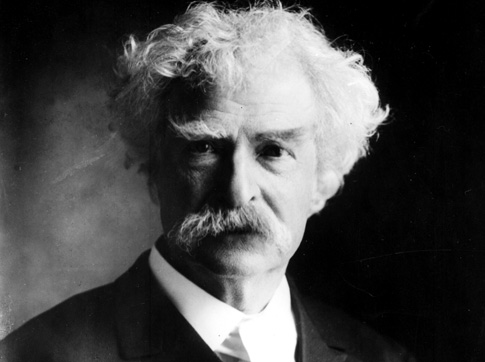
Mark Twain quotation after hearing that his obituary had been published in the New York Journal.
Mistaken publications of obituaries aren’t as rare as you might expect. A recent example is of Dave Swarbrick, the British folk/rock violinist, who was killed off mistakenly by the Daily Telegraph in April 1999 when they reported that his visit to hospital in Coventry had resulted in his death. He did at least get the opportunity to read a rather favourable account of his life, not something we all get to do, and to deliver the gag “It’s not the first time I have died in Coventry”.
So why have I opened with this quote from Mark Twain? Read on and I hope all will be clear.
Integrity is always about getting to the truth!
A little under a week ago I published a couple of posts that proposed that the United States of America is an empire in decline. The first was What goes up? and the second Might just come down! As a Brit I well know that aspect of British history!
However a recent conversation with a friend of many years back in England, who has also been a shrewd and wise entrepreneur for longer than I care to remember, argued that the evidence for the ‘end of the USA’ could be challenged.
He cited five reasons why he thought the USA would remain, more or less, in its dominant position. They were:
Spirit of innovation
Relaxed labour laws
The importance of Mexico
The uncertainty of China in terms of the next ’empire’
The likely energy self-sufficiency for the USA in the near-term.
So let me expand on each of those points.
Spirit of innovation
Let me quote from an article in TIME Magazine of the 5th June, 2011,
Innovation is as American as apple pie. It seems to accord with so many elements of our national character — ingenuity, freedom, flexibility, the willingness to question conventional wisdom and defy authority. But politicians are pinning their hopes on innovation for more urgent reasons. America’s future growth will have to come from new industries that create new products and processes. Older industries are under tremendous pressure. Technological change is making factories and offices far more efficient. The rise of low-wage manufacturing in China and low-wage services in India is moving jobs overseas. The only durable strength we have — the only one that can withstand these gale winds — is innovation.
Now there are plenty to argue both ways in terms of the future innovation potential for the USA, as a recent article in The Atlantic does, see American Innovation: It’s the Best of Times and the Worst of Times. But the spirit of innovation will be a powerful economic potential for the USA for many years to come.
Relaxed labour laws.
Definitely an area that I have little knowledge of except for the subjective notion that compared to many other nations, the laws in the USA are much less of a restraint on economic productivity than elsewhere.
The importance of Mexico.
Importance in the context of providing the USA with a source of cheaper manufacturing facilities. My English friend thought that this was a significant competitive advantage for the USA. Now, as it happens, we had a couple staying with us over the week-end of the 6th/7th October. The husband is a senior manager of Horst Engineering, an American firm based in Guaymas, Sonora County, Mexico. Here’s a picture from their website,
We are a contract manufacturer of precision machined components and assemblies for aerospace, medical, and other high technology industries. Our core processes include Swiss screw machining, turning, milling, thread rolling, centerless grinding, and assembly. Our extensive supply chain offers our customers a full service logistics solution for managing their precision product requirements. We are ISO9001:2008 and AS9100 registered and proud of our 66 year, three-generation legacy of quality and performance.
I was told that many American and British firms were using Mexico rather than China for a number of reasons. Not least because Chinese suppliers require full payment before shipment. Plus that taking into account that financial aspect together with shipping costs and other logistical issues, China wasn’t as ‘cheap’ over all. Here’s a recent announcement from Rolls Royce,
Rolls-Royce plans new Sonora hub
The burgeoning aerospace industry in Guaymas had its efforts validated recently when the venerable Rolls-Royce chose it as the site for its newest global purchasing office.
Surrounded by several of its aerospace manufacturing suppliers, London-based Rolls-Royce will move into a Guaymas industrial park owned by Tucson-based The Offshore Group to develop a supply hub for commercial jets and military aircraft around the globe.
“Rolls-Royce has very robust booking orders for the next 10 years,” said Joel Reuter, director of communications for Rolls-Royce in North America. “We need to double our production.”
Because a number of Rolls-Royce suppliers already operate in Guaymas, the city was a logical choice, Reuter said.
The uncertainty of China in terms of the next ’empire’
The point made in terms of China taking over ’empire’ status from the USA, as Simon Johnson argues over at Baseline Scenario, is countered by the fact that politically China is an unknown quantity. Until China endorses some form of democratic process, that unknowingness is not going to disappear.
The likely energy self-sufficiency for the USA in the near-term.
I can’t do better than to ask you to watch this video! Just 27-minutes long, it is a very interesting review of the energy future of the USA.
As the TED website suggests in terms of why you should listen to Amory Lovins,
Amory Lovins was worried (and writing) about energy long before global warming was making the front — or even back — page of newspapers. Since studying at Harvard and Oxford in the 1960s, he’s written dozens of books, and initiated ambitious projects — cofounding the influential, environment-focused Rocky Mountain Institute; prototyping the ultra-efficient Hypercar — to focus the world’s attention on alternative approaches to energy and transportation.
His critical thinking has driven people around the globe — from world leaders to the average Joe — to think differently about energy and its role in some of our biggest problems: climate change, oil dependency, national security, economic health, and depletion of natural resources.
So, don’t know about you, but I found those five points deeply convincing. How about you? Are the reports of the death of the USA greatly exaggerated? Do leave a comment.
I can’t recall who it was that mentioned this TED video which is a great shame as I really should pay credit to a wonderful examination of the business of being creative.
“Telling people how to be creative is easy – being creative is difficult.” John Marwood Cleese (born 27 October 1939) is an English actor, comedian, writer and film producer. He achieved success at the Edinburgh Festival Fringe and as a scriptwriter and performer on The Frost Report.
In the late 1960s he became a member of Monty Python, the comedy troupe responsible for the sketch show Monty Python’s Flying Circus and the four Monty Python films: And Now for Something Completely Different, The Holy Grail, Life of Brian and The Meaning of Life. In the mid 1970s, Cleese and his first wife, Connie Booth, co-wrote and starred in the British sitcom Fawlty Towers. Later, he co-starred with Kevin Kline, Jamie Lee Curtis and former Python colleague Michael Palin in A Fish Called Wanda and Fierce Creatures.
He also starred in Clockwise, and has appeared in many other films, including two James Bond films as Q, two Harry Potter films, and three Shrek films. With Yes Minister writer Antony Jay he co-founded Video Arts, a production company making entertaining training films. It was founded in 1972 by John Cleese, Sir Antony Jay, and a group of other television professionals. The videos feature well known British actors, and humorously explain business concepts. Productions include Meetings, Bloody Meetings and More Bloody Meetings, and have featured Cleese, Dawn French, Prunella Scales, Hugh Laurie, and Robert Hardy.
In December 1977, Cleese appeared as a guest star on The Muppet Show. Cleese was a fan of the show, and co-wrote much of the episode. He appears in a “Pigs in Space” segment as a pirate trying to hijack the spaceship Swinetrek, and also helps Gonzo restore his arms to “normal” size after Gonzo’s cannonball catching act goes wrong. During the show’s closing number, Cleese refuses to sing the famous show tune from Man of La Mancha, “The Impossible Dream”. Kermit the Frog apologises and the curtain re-opens with Cleese now costumed as a Viking trying some Wagnerian opera as part of a duet with Sweetums. Once again, Cleese protests to Kermit, and gives the frog one more chance. This time, he is costumed as a Mexican maraca soloist. He has finally had enough and protests that he is leaving the show, saying “You were supposed to be my host. How can you do this to me? Kermit — I am your guest!”. The cast joins in with their parody of “The Impossible Dream”, singing “This is your guest, to follow that star…”. During the crowd’s applause that follows the song, he pretends to strangle Kermit until he realises the crowd loves him and accepts the accolades. During the show’s finale, as Kermit thanks him, he shows up with a fictional album, his own new vocal record John Cleese: A Man & His Music, and encourages everyone to buy a copy. This would not be Cleese’s final appearance with the Muppets. In their 1981 film The Great Muppet Caper, Cleese does a cameo appearance as Neville, a local homeowner. As part of the appearance, Miss Piggy borrows his house as a way to impress Kermit the Frog. Cleese won the TV Times award for Funniest Man On TV — 1978-79.
Many people think you are either born with creativity or you aren’t. But John Cleese explains how to become creative and in the video, he talks about such thing as the unconscious mind.
Civilizations die from suicide, not by murder. Arnold J Toynbee
I’m not sure where to start but as a result of finishing a particular book, plus a recent essay on Tom Dispatch, then another recent essay from Simon Johnson of Baseline Scenario fame, there were so many thoughts bumping around this aged brain that I had no alternative than to offer them to you, dear reader. You should also be warned that this is going to be two posts, covering today and tomorrow.
So let’s start with the book: The United States of Fear by Tom Engelhardt. To be brutally honest, I purchased the book more as a gesture of support to Tom who has been very supportive of Learning from Dogs, in particular allowing me permission to reproduce any essays that were published on TomDispatch, as a number have so been. What an error of judgment! Tom’s book provided another one of those rare but inspirational occasions where you know the world will never look quite the same again!
The back cover page of the book sets out the theme, thus,
Published 2011
In 2008, when the US National Intelligence Council issued its latest report meant for the administration of newly elected President Barack Obama, it predicted that the planet’s “sole superpower” would suffer a modest decline and a soft landing fifteen years hence. In his new book The United States of Fear, Tom Engelhardt makes clear that Americans should don their crash helmets and buckle their seat belts, because the United States is on the path to a major decline at a startling speed. Engelhardt offers a savage anatomy of how successive administrations in Washington took the “Soviet path”—pouring American treasure into the military, war, and national security—and so helped drive their country off the nearest cliff.This is the startling tale of how fear was profitably shot into the national bloodstream, how the country—gripped by terror fantasies—was locked down, and how a brain-dead Washington elite fiddled (and profited) while America quietly burned.
Think of it as the story of how the Cold War really ended, with the triumphalist “sole superpower” of 1991 heading slowly for the same exit through which the Soviet Union left the stage twenty years earlier.
One of the fascinating aspects of the book is that it was put together from 32 essays previously published online by Tom; the complete list with titles and dates is on pps. 205 & 206. So giving you a real feel for the book is easy! I’m going to do that by linking to one of those essays available in the archives of TomDispatch here. That essay was called Washington’s Echo Chamber and appears in the book starting on page 170 under the sub-heading of Five Ways to Be Tone Deaf in Washington. Let me quote you a little,
So much of what Washington did imagine in these last years proved laughable, even before this moment swept it away. Just take any old phrase from the Bush years. How about “You’re either with us or against us”? What’s striking is how little it means today. Looking back on Washington’s desperately mistaken assumptions about how our globe works, this might seem like the perfect moment to show some humility in the face of what nobody could have predicted.
It would seem like a good moment for Washington — which, since September 12, 2001, has been remarkably clueless about real developments on this planet and repeatedly miscalculated the nature of global power — to step back and recalibrate.
As it happens, there’s no evidence it’s doing so. In fact, that may be beyond Washington’s present capabilities, no matter how many billions of dollars it pours into “intelligence.” And by “Washington,” I mean not just the Obama administration, or the Pentagon, or our military commanders, or the vast intelligence bureaucracy, but all those pundits and think-tankers who swarm the capital, and the media that reports on them all. It’s as if the cast of characters that makes up “Washington” now lives in some kind of echo chamber in which it can only hear itself talking.
As a result, Washington still seems remarkably determined to play out the string on an era that is all too swiftly passing into the history books. While many have noticed the Obama administration’s hapless struggle to catch up to events in the Middle East, even as it clings to a familiar coterie of grim autocrats and oil sheiks, let me illustrate this point in another area entirely — the largely forgotten war in Afghanistan. After all, hardly noticed, buried beneath 24/7 news from Egypt, Bahrain, Libya, and elsewhere in the Middle East, that war continues on its destructive, costly course with nary a blink.
That was published by Tom a little over 18 months ago! Seems as relevant today as then! Let me stay with perspectives from 2011.
Chomsky, visiting Vancouver, Canada in March 2004
On the 24th August 2011 Noam Chomsky wrote an essay entitled American Decline: Causes and Consequences. Chomsky, as Wikipedia relates, is Professor (Emeritus) in the Department of Linguistics & Philosophy at MIT, where he has worked for over 50 years. Here is how that essay opens,
In the 2011 summer issue of the journal of the American Academy of Political Science, we read that it is “a common theme” that the United States, which “only a few years ago was hailed to stride the world as a colossus with unparalleled power and unmatched appeal — is in decline, ominously facing the prospect of its final decay.” It is indeed a common theme, widely believed, and with some reason. But an appraisal of US foreign policy and influence abroad and the strength of its domestic economy and political institutions at home suggests that a number of qualifications are in order. To begin with, the decline has in fact been proceeding since the high point of US power shortly after World War II, and the remarkable rhetoric of the several years of triumphalism in the 1990s was mostly self-delusion. Furthermore, the commonly drawn corollary — that power will shift to China and India — is highly dubious. They are poor countries with severe internal problems. The world is surely becoming more diverse, but despite America’s decline, in the foreseeable future there is no competitor for global hegemonic power.
So, according to Chomsky, it’s not as ‘black and white’ as Engelhardt sets out. But do read the full essay.
Nevertheless, the idea that the USA is ‘fiddling while Rome burns’ is supported in an essay published by Mattea Kramer on TomDispatch on the last day of September. I’m going to end Part One by republishing the essay in full. (Note that this is being published here after the first ‘debate’ had taken place.)
oooOOOooo
Tough Talk for America
A Guide to the Presidential Debates You Won’t Hear
By Mattea Kramer
Five big things will decide what this country looks like next year and in the 20 years to follow, but here’s a guarantee for you: you’re not going to hear about them in the upcoming presidential debates. Yes, there will be questions and answers focused on deficits, taxes, Medicare, the Pentagon, and education, to which you already more or less know the responses each candidate will offer. What you won’t get from either Mitt Romney or Barack Obama is a little genuine tough talk about the actual state of reality in these United States of ours. And yet, on those five subjects, a little reality would go a long way, while too little reality (as in the debates to come) is a surefire recipe for American decline.
So here’s a brief guide to what you won’t hear this Wednesday or in the other presidential and vice-presidential debates later in the month. Think of these as five hard truths that will determine the future of this country.
1. Immediate deficit reduction will wipe out any hope of economic recovery: These days, it’s fashionable for any candidate to talk about how quickly he’ll reduce the federal budget deficit, which will total around $1.2 trillion in fiscal 2012. And you’re going to hear talk about the Simpson-Bowles deficit reduction plan and more like it on Wednesday. But the hard truth of the matter is that deep deficit reduction anytime soon will be a genuine disaster. Think of it this way: If you woke up tomorrow and learned that Washington had solved the deficit crisis and you’d lost your job, would you celebrate? Of course not. And yet, any move to immediately reduce the deficit does increase the likelihood that you will lose your job.
When the government cuts spending, it lays off workers and cancels orders for all sorts of goods and services that would generate income for companies in the private sector. Those companies, in turn, lay off workers, and the negative effects ripple through the economy. This isn’t atomic science. It’s pretty basic stuff, even if it’s evidently not suitable material for a presidential debate. The nonpartisan Congressional Research Service predicted in a September report, for example, that any significant spending cuts in the near-term would contribute to an economic contraction. In other words, slashing deficits right now will send us ever deeper into the Great Recession from which, at best, we’ve scarcely emerged.
Champions of immediate deficit reduction are likely to point out that unsustainable deficits aren’t good for the economy. And that’s true — in the long run. Washington must indeed plan for smaller deficits in the future. That will, however, be a lot easier to accomplish when the economy is healthier, since government spending declines when fewer people qualify for assistance, and tax revenues expand when the jobless go back to work. So it makes sense to fix the economy first. The necessity for near-term recovery spending paired with long-term deficit reduction gets drowned out when candidates pack punchy slogans into flashes of primetime TV.
2. Taxes are at their lowest point in more than half a century, preventing investment in and the maintenance of America’s most basic resources: Hard to believe? It’s nonetheless a fact. By now, it’s a tradition for candidates to compete on just how much further they’d lower taxes and whether they’ll lower them for everyone or just everyone but the richest of the rich. That’s a super debate to listen to, if you’re into fairy tales. It’s not as thrilling if you consider that Americans now enjoy the lightest tax burden in more than five decades, and it happens to come with a hefty price tag on an item labeled “the future.” There is no way the U.S. can maintain a world-class infrastructure — we’re talking levees, highways, bridges, you name it — and a public education system that used to be the envy of the world, plus many other key domestic priorities, on the taxes we’re now paying.
Anti-tax advocates insist that we should cut taxes even more to boost a flagging economy — an argument that hits the news cycle nearly every hour and that will shape the coming TV “debate.” As the New York Times recently noted, however, tax cuts might have been effective in giving the economy a lift decades ago when tax rates were above 70%. (And no, that’s not a typo, that’s what your parents and grandparents paid without much grumbling.) With effective tax rates around 14% for Mitt Romney and many others, further cuts won’t hasten job creation, just the hollowing out of public investment in everything from infrastructure to education. Right now, the negative effects of tax increases on the most well-off would be small — read: not a disaster for “job creators” — and those higher rates would bring in desperately-needed revenue. Tax increases for middle-class Americans should arrive when the economy is stronger.
Right now, the situation is clear: we’re simply not paying enough to fund the basic ingredients of prosperity from highways and higher education to medical research and food safety. Without those funds, this country’s future won’t be pretty.
3. Neither the status quo nor a voucher system will protect Medicare (or any other kind of health care) in the long run: When it comes to Medicare, Mitt Romney has proposed a premium-support program that would allow seniors the option of buying private insurance. President Obama wants to keep Medicare more or less as it is for retirees. Meanwhile, the ceaseless rise in health-care costs is eating up the wages of regular Americans and the federal budget. Health care now accounts for a staggering 24% of all federal spending, up from 7% less than 40 years ago. Governor Romney’s plan would shift more of those costs onto retirees, according to David Cutler, a health economist at Harvard, while President Obama says the federal government will continue to pick up the tab. Neither of them addresses the underlying problem.
Here’s reality: Medicare could be significantly protected by cutting out waste. Our health system is riddled with unnecessary tests and procedures, as well as poorly coordinated care for complex health problems. This country spent $2.6 trillion on health care in 2010, and some estimates suggest that a staggering 30% of that is wasted. Right now, our health system rewards quantity, not quality, but it doesn’t have to be that way. Instead of paying for each test and procedure, Medicare could pay for performance and give medical professionals a strong incentive to provide more efficient and coordinated care. President Obama’s health law actually pilot tests such an initiative. But that’s another taboo topic this election season, so he scarcely mentions it. Introducing such change into Medicare and the rest of our health system would save the federal government tens of billions of dollars annually. It would truly preserve Medicare for future generations, and it would improve the affordability of health coverage for everyone under 65 as well. Too bad it’s not even up for discussion.
4. The U.S. military is outrageously expensive and yet poorly tailored to the actual threats to U.S. national security: Candidates from both parties pledge to protect the Pentagon from cuts, or even, in the case of the Romney team, to increase the already staggering military budget. But in a country desperate for infrastructure, education, and other funding, funneling endless resources to the Pentagon actually weakens “national security.” Defense spending is already mind-numbingly large: if all U.S. military and security spending were its own country, it would have the 19th largest economy in the world, ahead of Saudi Arabia, Taiwan, and Switzerland. Whether you’re counting aircraft carriers, weapons systems, or total destructive power, it’s absurdly overmatched against the armed forces of the rest of the world, individually or in combination. A couple of years ago, then-Secretary of Defense Robert M. Gates gave a speech in which he detailed that overmatch. A highlight: “The U.S. operates 11 large carriers, all nuclear powered. In terms of size and striking power, no other country has even one comparable ship.” China recently acquired one carrier that won’t be fully functional for some time, if ever — while many elected officials in this country would gladly build a twelfth.
But you’ll hear none of this in the presidential debates. Perhaps the candidates will mention that obsolete, ineffective, and wildly expensive weapons systems could be cut, but that’s a no-brainer. The problem is: it wouldn’t put a real dent in national defense spending. Currently almost one-fifth of every dollar spent by the federal government goes to the military. On average, Americans, when polled, say that they would like to see military funding cut by 18%.
Instead, most elected officials vow to pour limitless resources into more weapons systems of questionable efficacy, and of which the U.S. already owns more than the rest of the world combined. Count on one thing: military spending will not go down as long as the U.S. is building up a massive force in the Persian Gulf, sending Marines to Darwin, Australia, and special ops units to Africa and the Middle East, running drones out of the Seychelles Islands, and “pivoting” to Asia. If the U.S. global mission doesn’t downsize, neither will the Pentagon budget — and that’s a hit on America’s future that no debate will take up this month.
5. The U.S. education system is what made this country prosperous in the twentieth century — but no longer: Perhaps no issue is more urgent than this, yet for all the talk of teacher’s unions and testing, real education programs, ideas that will matter, are nonexistent this election season. During the last century, the best education system in the world allowed this country to grow briskly and lift standards of living. Now, from kindergarten to college, public education is chronically underfunded. Scarcely 2% of the federal budget goes to education, and dwindling public investment means students pay higher tuitions and fall ever deeper into debt. Total student debt surpassed $1 trillion this year and it’s growing by the month, with the average debt burden for a college graduate over $24,000. That will leave many of those graduates on a treadmill of loan repayment for most or all of their adult lives.
Renewed public investment in education — from pre-kindergarten to university — would pay handsome dividends for generations. But you aren’t going to hear either candidate or their vice-presidential running mates proposing the equivalent of a GI Bill for the rest of us or even significant new investment in education. And yet that’s a recipe for and a guarantee of American decline.
Ironically, those in Washington arguing for urgent deficit reduction claim that we’ve got to do it “for the kids,” that we must stop saddling our grandchildren with mountains of federal debt. But if your child turns 18 and finds her government running a balanced budget in an America that’s hollowed out, an America where she has no chance of paying for a college education, will she celebrate? You don’t need an economist to answer that one.
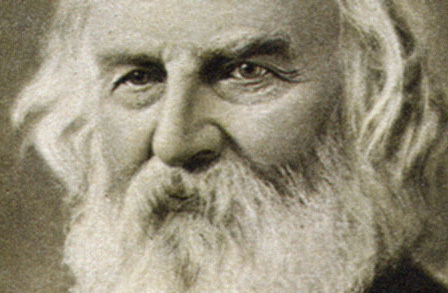
“Lives of great men all remind us, we can make our lives sublime, and, departing, leave behind us, footprints on the sands of time.” Longfellow.
Longfellow, the only American writer honored in the Poets’ Corner of Westminster Abbey.
Longfellow has been dead for 130 years, as of last March, but of his many wonderful words that have stayed with us over the last century and more, these must be some of the more familiar. (Or am I showing my appalling lack of literary knowledge?)
Following on from yesterday’s post about the scary mathematics of climate change, this really is the ONE thing that we have to learn from dogs; from nature. If we don’t live in harmony with our planet pretty damn soon, then this particular civilisation is not far from extinction. Let me remind you of a key paragraph from yesterday,
It’s simple math: we can burn 565 more gigatons of carbon and stay below 2°C of warming — anything more than that risks catastrophe for life on earth. The only problem? Fossil fuel corporations now have 2,795 gigatons in their reserves, five times the safe amount. And they’re planning to burn it all — unless we rise up to stop them.
Ergo, we do not have endless time available to us!
Otherwise the footprints left on those sands of time will be nothing more than the next civilisation pondering from time to time why those Atlantacists that sunk beneath the waves were unable to do anything to save their world!
If you think I’m being a tad excitable, then see what Rob Hopkins wrote recently over at Transition Culture.
New Economics Foundation’s ’100 Months’ campaign today reaches its midway point. It was launched in August 2008 based on the understanding that the time that remains to us to avoid the likelihood of runaway climate change is limited, and based on the science at the time, there was a closing window of opportunity to do something meaningful about it.
Then adding,
“The question here is “what should we do differently?” The answer is “pretty much just about everything”. Nationally and internationally, while the scale and pace of climate change are accelerating, meaningful responses are dwindling. Part of our collective paralysis comes from the fact that we struggle to imagine a world with less energy, less consumerism, less annual GDP growth. What will it look like, sound like, feel like? Does it inevitably mean that you should start seeking out your cave on Dartmoor [Devon in South-West England, PH] as we speak, and developing a taste for slugs? Of course not.
Shortly before the 100 Months campaign began, I was part of initiating an experiment to see what a self-organised response to climate change might look like, one based on rebuilding community, on the belief that what is needed is people, everywhere, making their communities happier, healthier, lower-carbon, and more resilient, in a huge variety of ways.
Rob Hopkins was also asked to write a piece for the UK’s Guardian Newspaper in recognition that we are half-way through that 100-month campaign. Here’s how Rob concluded that piece,
Transition Bath set up an energy company which has raised £250,000 in shares from local people. Transition town Totnes’ Transition Streets programme has enabled almost 700 local householders to reduce their carbon emissions while rediscovering a sense of community on their streets. Bristol soon sees the launch of the Bristol Pound, the UK’s first citywide transition complementary currency. Transition Brixton’s Brixton Energy is installing community-owned renewables supported by local people. Check out transitionnetwork.org to get a sense of the amazing projects under way.
At its core, this is about the belief that our best way forward is for communities to build local resilience in order to be able to better face the shocks of the present and the uncertainties of the future, from economic crisis to climate change, seeing increased community resilience as economic development. It’s a process of plugging the leaks in our local economies, seeing every leak as a potential new business, new livelihood, new apprenticeship opportunity.
Of course we need government responses, and international responses, but all of those will struggle without a vibrant bottom-up movement of ordinary people showing what’s possible and how thrilled they are by those possibilities. So although the answer is “pretty much just about everything”, I would argue that seeing this as a once-in-a-lifetime opportunity for entrepreneurship, vision and action is where our successful navigation of the next 50 months lies.
The Hubble Space Telescope (HST) has produced one of its most extraordinary views of the Universe to date.
Called the eXtreme Deep Field, the picture captures a mass of galaxies stretching back almost to the time when the first stars began to shine.
But this was no simple point and snap – some of the objects in this image are too distant and too faint for that.
Rather, this view required Hubble to stare at a tiny patch of sky for more than 500 hours to detect all the light.
“It’s a really spectacular image,” said Dr Michele Trenti, a science team member from the University of Cambridge, UK.
Then while the BBC News item had that stunning picture, over on the NASA website there was the following image together with more information.
Called the eXtreme Deep Field, or XDF, the photo was assembled by combining 10 years of NASA Hubble Space Telescope photographs taken of a patch of sky at the center of the original Hubble Ultra Deep Field. The XDF is a small fraction of the angular diameter of the full moon.
The Hubble Ultra Deep Field is an image of a small area of space in the constellation Fornax, created using Hubble Space Telescope data from 2003 and 2004. By collecting faint light over many hours of observation, it revealed thousands of galaxies, both nearby and very distant, making it the deepest image of the universe ever taken at that time.
The new full-color XDF image is even more sensitive, and contains about 5,500 galaxies even within its smaller field of view. The faintest galaxies are one ten-billionth the brightness of what the human eye can see.
Magnificent spiral galaxies similar in shape to our Milky Way and the neighboring Andromeda galaxy appear in this image, as do the large, fuzzy red galaxies where the formation of new stars has ceased. These red galaxies are the remnants of dramatic collisions between galaxies and are in their declining years. Peppered across the field are tiny, faint, more distant galaxies that were like the seedlings from which today’s magnificent galaxies grew. The history of galaxies — from soon after the first galaxies were born to the great galaxies of today, like our Milky Way — is laid out in this one remarkable image.
Hubble pointed at a tiny patch of southern sky in repeat visits (made over the past decade) for a total of 50 days, with a total exposure time of 2 million seconds. More than 2,000 images of the same field were taken with Hubble’s two premier cameras: the Advanced Camera for Surveys and the Wide Field Camera 3, which extends Hubble’s vision into near-infrared light.
“The XDF is the deepest image of the sky ever obtained and reveals the faintest and most distant galaxies ever seen. XDF allows us to explore further back in time than ever before”, said Garth Illingworth of the University of California at Santa Cruz, principal investigator of the Hubble Ultra Deep Field 2009 (HUDF09) program.
The universe is 13.7 billion years old, and the XDF reveals galaxies that span back 13.2 billion years in time. Most of the galaxies in the XDF are seen when they were young, small, and growing, often violently as they collided and merged together. The early universe was a time of dramatic birth for galaxies containing brilliant blue stars extraordinarily brighter than our sun. The light from those past events is just arriving at Earth now, and so the XDF is a “time tunnel into the distant past.” The youngest galaxy found in the XDF existed just 450 million years after the universe’s birth in the big bang.
Before Hubble was launched in 1990, astronomers could barely see normal galaxies to 7 billion light-years away, about halfway across the universe. Observations with telescopes on the ground were not able to establish how galaxies formed and evolved in the early universe.
Hubble gave astronomers their first view of the actual forms and shapes of galaxies when they were young. This provided compelling, direct visual evidence that the universe is truly changing as it ages. Like watching individual frames of a motion picture, the Hubble deep surveys reveal the emergence of structure in the infant universe and the subsequent dynamic stages of galaxy evolution.
The infrared vision of NASA’s planned James Webb Space Telescope will be aimed at the XDF. The Webb telescope will find even fainter galaxies that existed when the universe was just a few hundred million years old. Because of the expansion of the universe, light from the distant past is stretched into longer, infrared wavelengths. The Webb telescope’s infrared vision is ideally suited to push the XDF even deeper, into a time when the first stars and galaxies formed and filled the early “dark ages” of the universe with light.
The Hubble Space Telescope is a project of international cooperation between NASA and the European Space Agency. NASA’s Goddard Space Flight Center in Greenbelt, Md., manages the telescope. The Space Telescope Science Institute (STScI) in Baltimore, Md., conducts Hubble science operations. STScI is operated by the Association of Universities for Research in Astronomy, Inc., in Washington.
What a fabulous achievement. Just think that “The faintest galaxies are one ten-billionth the brightness of what the human eye can see.” and “The history of galaxies — from soon after the first galaxies were born to the great galaxies of today, like our Milky Way — is laid out in this one remarkable image.” Plus, “The youngest galaxy found in the XDF existed just 450 million years after the universe’s birth in the big bang.”
Do you know what crosses my mind looking at the picture? All those galaxies with, presumably, tens of thousands of planets and, surely, the near certainty that intelligent life must be teeming across those trillions of miles!
Let me close with this YouTube video brought to my attention thanks to Peter Sinclair of Climate Crocks.
We’ve all seen pictures of Earth from space, but have we really taken the time to appreciate what our planet looks like against the starscapes of the Milky Way galaxy? Here, we beckon viewers to see Earth in its cosmic context, which includes the stars, interstellar gases, the moon, the sun, and the solar winds. Be sure to watch in full HD, 1080p, and imagine you’re an astronaut aboard the International Space Station with a little time on your hands.
I make no apologies for today’s post being more emotional and sentimental.
The phrase ‘sticks and stones may break my bones but names will never hurt me‘ is well known throughout the English-speaking world and surprisingly goes back some way. A quick web search found that in the The Christian Recorder of March 1862, there was this comment:
Remember the old adage, ‘Sticks and stones will break my bones, but words will never harm me’. True courage consists in doing what is right, despite the jeers and sneers of our companions.
So if in 1862 the saying was referred to as an ‘old adage’ then it clearly pre-dated 1862 by some degree.
A few days ago, Dusty M., here in Payson, AZ, sent me a short YouTube video called The Power of Words. I’m as vulnerable as the next guy to needing being reminded about what’s important in this funny old world. Then I started mulling over the tendency for all of us to be sucked into a well of doom and gloom. Take my posts on Learning from Dogs over the last couple of days, as an example.
There is no question that the world in which we all live is going through some extremely challenging times but anger and negativity is not going to be the answer. As that old reference spelt out so clearly, “True courage consists in doing what is right, despite the jeers and sneers of our companions.”
So first watch the video,
then let me close by reminding us all that courage is yet something else we can learn from dogs.
Togo the husky
In 1925, a ravaging case of diphtheria broke out in the isolated Alaskan village of Nome. No plane or ship could get the serum there, so the decision was made for multiple sled dog teams to relay the medicine across the treacherous frozen land. The dog that often gets credit for eventually saving the town is Balto, but he just happened to run the last, 55-mile leg in the race. The sled dog who did the lion’s share of the work was Togo. His journey, fraught with white-out storms, was the longest by 200 miles and included a traverse across perilous Norton Sound — where he saved his team and driver in a courageous swim through ice floes.
A new angle on the famous ‘hear no evil, see no evil, speak no evil’ saying!
What climate change??
That new angle being ‘hear no climate change, see no climate change, speak no climate change!‘
So what has prompted this outburst from me? It started with me seeing a truly scary graph that was on Peter Sinclair’s Climate Crock blogsite on the 20th September. That was the graph that was published yesterday on Learning from Dogs under the post title of It’s not rocket science! If you didn’t see that graph yesterday, don’t read further on until you have looked at it.
Thus while today’s post could easily be interpreted as yet another blogpost from yet another writer about climate change, that is not the case. What I am doing is taking a quick trip across a few recently published items that really do make it utterly clear what is happening to the Earth’s biosphere, all in support of a very simple question to two gentlemen who are currently in the news; stay with me for all to become clear!
However, this is what caught my eye, (an interview between Dr. Francis and Peter Sinclair).
What she told me in a recent interview was that the sea ice record is not something that we just pay attention to in September – there will, in fact, be reverberations that will make fall and winter “very interesting” around the globe.
An unusually strong storm formed off the coast of Alaska on August 5 and tracked into the center of the Arctic Ocean, where it slowly dissipated over the next several days. The center of the storm was located in the middle of the Arctic Ocean.
On Wednesday, the National Snow and Ice Data Center concluded Arctic sea ice is at its lowest late-August level since records began, and the area covered by ice has continued to shrink in September. Since 1979, the 1.54 million square miles of ice is the smallest coverage on record at the North Pole, the report states.
With so many questions surrounding these latest findings, perhaps one of the most immediate is whether this melting of sea ice will affect the upcoming winter across the United States and Northern Hemisphere. Is it possible that a lack of Arctic sea ice could change weather patterns across the globe?
Four meteorologists spoke about these possibilities, and while they didn’t say dramatic weather shifts are imminent in the short-term, they did give some thoughts on what could happen.
One of the meteorologists was Dr. Jeff Masters, Director of Meteorology, Weather Underground. He wrote,
In my December 2011 blog post, I discuss research by Dr. Jennifer Francis of Rutgers University, who found that Arctic sea ice loss may significantly affect the upper-level atmospheric circulation, slowing its winds and increasing its tendency to make contorted high-amplitude loops. High-amplitude loops in the upper level wind pattern (and associated jet stream) increases the probability of persistent weather patterns in the Northern Hemisphere, potentially leading to extreme weather due to longer-duration cold spells, snow events, heat waves, flooding events, and drought conditions.
Several studies published in 2012 have linked Arctic sea ice loss to an increase in probability of severe winter weather in Western Europe, Eastern North America and Eastern Asia.
Then if one goes to that December 2011 blog post, one reads this,
“The question is not whether sea ice loss is affecting the large-scale atmospheric circulation…it’s how can it not?” That was the take-home message from Dr. Jennifer Francis of Rutgers University, in her talk “Does Arctic Amplification Fuel Extreme Weather in Mid-Latitudes?“, presented at last week’s American Geophysical Union meeting in San Francisco. Dr. Francis presented new research in review for publication, which shows that Arctic sea ice loss may significantly affect the upper-level atmospheric circulation, slowing its winds and increasing its tendency to make contorted high-amplitude loops. High-amplitude loops in the upper level wind pattern (and associated jet stream) increases the probability of persistent weather patterns in the Northern Hemisphere, potentially leading to extreme weather due to longer-duration cold spells, snow events, heat waves, flooding events, and drought conditions.
Arctic sea ice loss can slow down jet stream winds
Dr. Francis looked at surface and upper level data from 1948 – 2010, and discovered that the extra heat in the Arctic in fall and winter over the past decade had caused the Arctic atmosphere between the surface and 500 mb (about 18,000 feet or 5,600 meters) to expand. As a result, the difference in temperature between the Arctic (60 – 80°N) and the mid-latitudes (30 – 50°N) fell significantly. It is this difference in temperature that drives the powerful jet stream winds that control much of our weather. The speed of fall and winter west-to-east upper-level winds at 500 mb circling the North Pole decreased by 20% over the past decade, compared to the period 1948 – 2000, in response to the extra warmth in the Arctic. This slow-down of the upper-level winds circling the pole has been linked to a Hot Arctic-Cold Continents pattern that brought cold, snowy winters to the Eastern U.S. and Western Europe during 2009 – 2010 and 2010 – 2011.
OK, nearly finished! Stay with me for one last item. Did you note in that blog post (the first section quoted) this, “Dr. Francis presented new research in review for publication …“? Here’s the Abstract from that publication, from which one reads,
Evidence linking Arctic amplification to extreme weather in mid-latitudes
Key Points
Enhanced Arctic warming reduces poleward temperature gradient
Weaker gradient affects waves in upper-level flow in two observable ways
Both effects slow weather patterns, favoring extreme weather
Jennifer A. Francis, Institute of Marine and Coastal Sciences, Rutgers University, New Brunswick, New Jersey, USA
Stephen J. Vavrus, Center for Climatic Research, University of Wisconsin-Madison, Madison, Wisconsin, USA
So to the point of both yesterday’s Post and the information above.
Will someone tell me why Messrs Barack Obama and Willard Mitt Romney so fervently adopt the stance of ‘hear no climate change, see no climate change, speak no climate change!‘
I am indebted to Peter Sinclair for his permission to reproduce the graph below. It was embedded in his post on Climate Crocks on the 20th September, a post he not unreasonably called The Planetary Emergency.
As Peter wrote,
As you can see from the graphic above, the actual observations of arctic sea ice melt are far outstripping the climate model predictions of just a few years ago, that the denial-sphere continues to call “alarmist”. Apparently, not alarming enough.
The point of publishing this on Learning from Dogs is simply as an introduction to a post coming out tomorrow called Hear no evil; or is that hear no climate change?, the purpose of which is to ask a very simple question of the two gentlemen wishing to reside in the White House as President of the USA for another four years. All revealed tomorrow!
A lifting of the importance of integrity is the key to our survival.
Let me start by reflecting on the difference between ‘truth’ and ‘integrity’.
Here’s one of the definitions of Truth: conformity with fact or reality; verity: the truth of a statement.
Here’s one of the definitions of Integrity: adherence to moral and ethical principles; soundness of moral character; honesty.
So while in yesterday’s article, I frequently referred to the word ‘truth‘, determining the ‘fact or reality‘ of a wide range of issues associated with anthropogenic climate change is not always straightforward. Many of us probably have a strong intuition of the ’cause and effect’ of man’s footprint on this planet but a strong intuition is not the same as truth.
Then let’s turn to the notion of integrity. This is a much bigger issue, to my mind, the appalling lack of integrity! Illustrated by one simple example. How many leading politicians from any number of countries have demonstrated soundness of moral character; honesty with regard to the changing climate, even offering something as simple as “I don’t know!”
There’s a saying that pilots use, “If there’s any doubt, there’s no doubt!” Come on, politicians and leaders, at the very least there is doubt!
OK, let me move on!
If integrity is partly defined as honesty, then while it’s easy to take a pot-shot at the world’s politicians maybe we need to look closer at home; ourselves. Are we as honest with our own self as we now need to be?
Here’s an example that supports that question.
A few days ago there was a report on the website The Daily Impact about the crash of US fisheries. Let me show you how that report opens,
Report: US Fisheries Crashing
We live in a country in which every household has two TV sets, most of them receiving hundreds of channels, and two cell phones, many of them “smart.” One of every two households has a computer connected to the Internet. This country is currently in the middle of a hotly contested presidential election. And yet among the things that have almost completely escaped public attention is this: last week the US government declared fisheries disasters on four coasts.
Reflect on that paragraph. Surely it’s a reflection about the lack of integrity, of honesty, about our society?
The report ends thus,
The disaster declaration covering all these dire situations makes them eligible for Congressional aid, along with drought-stricken farmers in the Midwest and Southwest, flooded-out homeowners in New Orleans and along the Gulf, the fire-ravaged states of the far West, and the derecho-pounded Northeast. Congress will no doubt be delighted by the opportunity to help.
We eat nearly five billion pounds of seafood every year — about 16 pounds for each of us — and 85 per cent of it is imported (according to NOAA). Yet in the wake of this grim assessment of a large proportion of the domestic industry, and the questions it raises about the future sources of seafood, there is no discussion of “fisheries independence” or “peak fish” in politics or the media. Only in such outposts as this website and Mother Jones will the dire warning from the Commerce Department be reported as what it is — a dire warning.
Then there was a recent article on the Australian Permaculture news website about the US food and dairy industry. Here’s how that opened,
Americans’ right to access fresh, healthy foods of their choice is under attack. Farmageddon tells the story of small, family farms that were providing safe, healthy foods to their communities and were forced to stop, sometimes through violent action, by agents of misguided government bureaucracies, and seeks to figure out why.
Filmmaker Kristin Canty’s quest to find healthy food for her four children turned into an educational journey to discover why access to these foods was being threatened. What she found were policies that favor agribusiness and factory farms over small family-operated farms selling fresh foods to their communities. Instead of focusing on the source of food safety problems — most often the industrial food chain — policymakers and regulators implement and enforce solutions that target and often drive out of business small farms that have proven themselves more than capable of producing safe, healthy food, but buckle under the crushing weight of government regulations and excessive enforcement actions.
I’m not going to insert that YouTube video into this post but you can link to both the full article and the film here. For anyone interested in the fate of the family farm in the USA, the film is a ‘must see’! Once again, the theme of integrity, of adherence to moral and ethical principles; honesty, comes to mind!
How I do want to close this rather personal reflection on present times (some may call it an indulgent reflection!) is by including a video from this seasons TED Talks. It was brought to my attention by Christine over at her excellent blog 350 or bust. The video is about resolving conflict,
William Ury, author of “Getting to Yes,” offers an elegant, simple (but not easy) way to create agreement in even the most difficult situations — from family conflict to, perhaps, the Middle East.
The reason why this seems like a very appropriate way to close this is because the way things are going at the moment, avoiding conflict could become rather important, rather soon!








 Learning from Dogs