Today, Tuesday, we went across to The Red Barn to get some hay, a regular occurrence.
Tyler, the manager, was not there but his brother, Zach, was. But just as important were Jean & I seeing Tully again. He is such a sweet dog and so full of life. A Labrador cross. But we learnt that recently he had been hit by a car, suffered severe injuries, and had to be put down. Even Duke, another dog of the same breed, seemed sad.
Apparently Tully was hit by a car and the driver didn’t even stop!
So on to today’s post.
ooOOoo
Dog Pretends To Go Outside To Go Potty So She Can Get A Treat
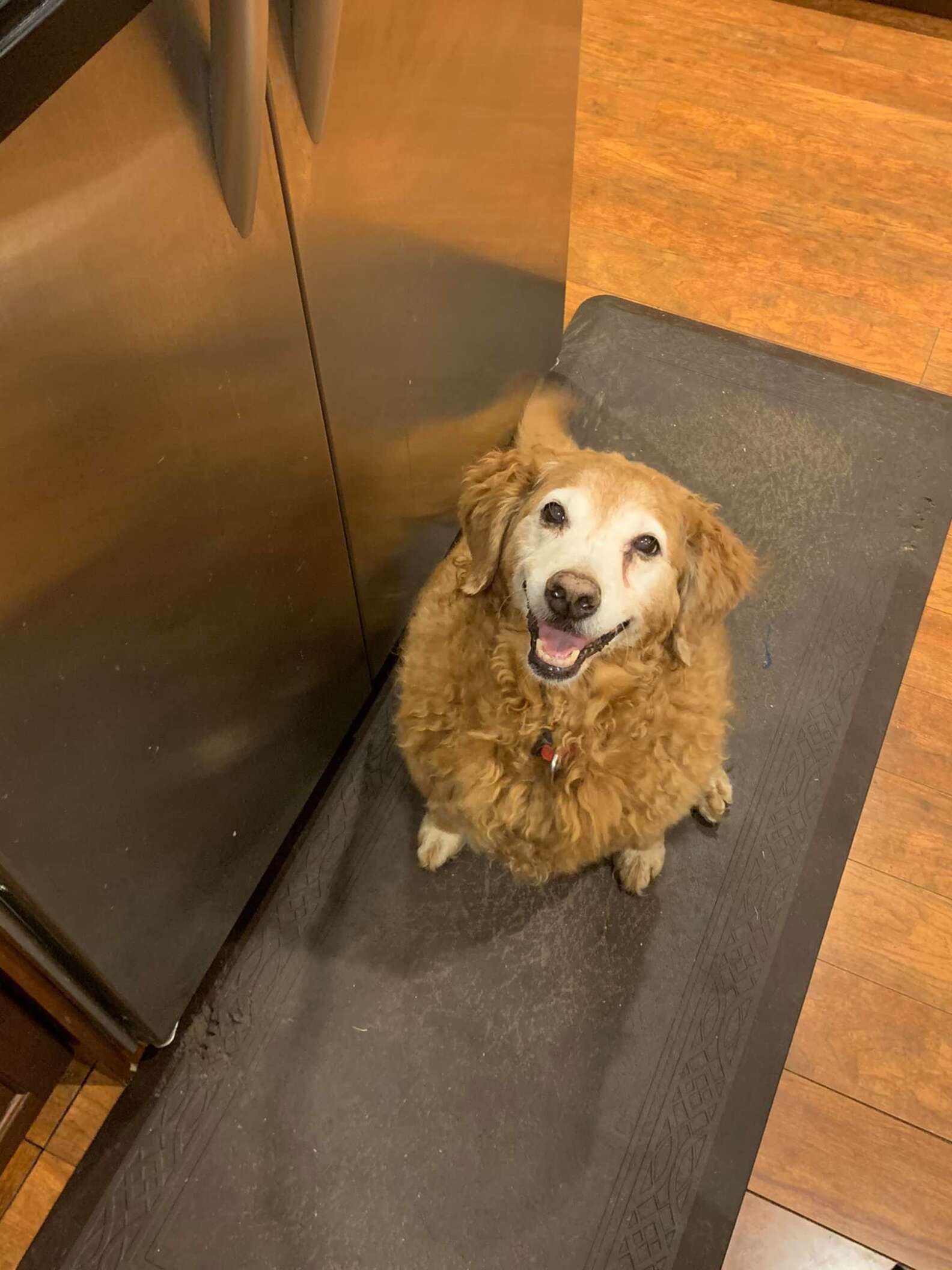
Even though Dakota is almost 12 years old, she still acts like a puppy most of the time. She loves meeting new people and taking naps, and is happy pretty much all the time. Her absolute favorite thing in the whole world, though, is food.
“She acts like she is innocent but … is an evil genius inside when it comes to food of any kind,” Cheryl Dorchinsky, Dakota’s mom, told The Dodo.
CHERYL FEINGOLD
When the family got a new dog door and wanted to teach Dakota how to use it, they of course turned to treats to help encourage her. She was scared of it at first, but once treats were involved, she quickly turned into a dog door pro and never looked back.
Once she knew how to use the dog door, though, she also quickly figured out how to use it to her advantage to trick her family into giving her extra treats.
CHERYL FEINGOLD
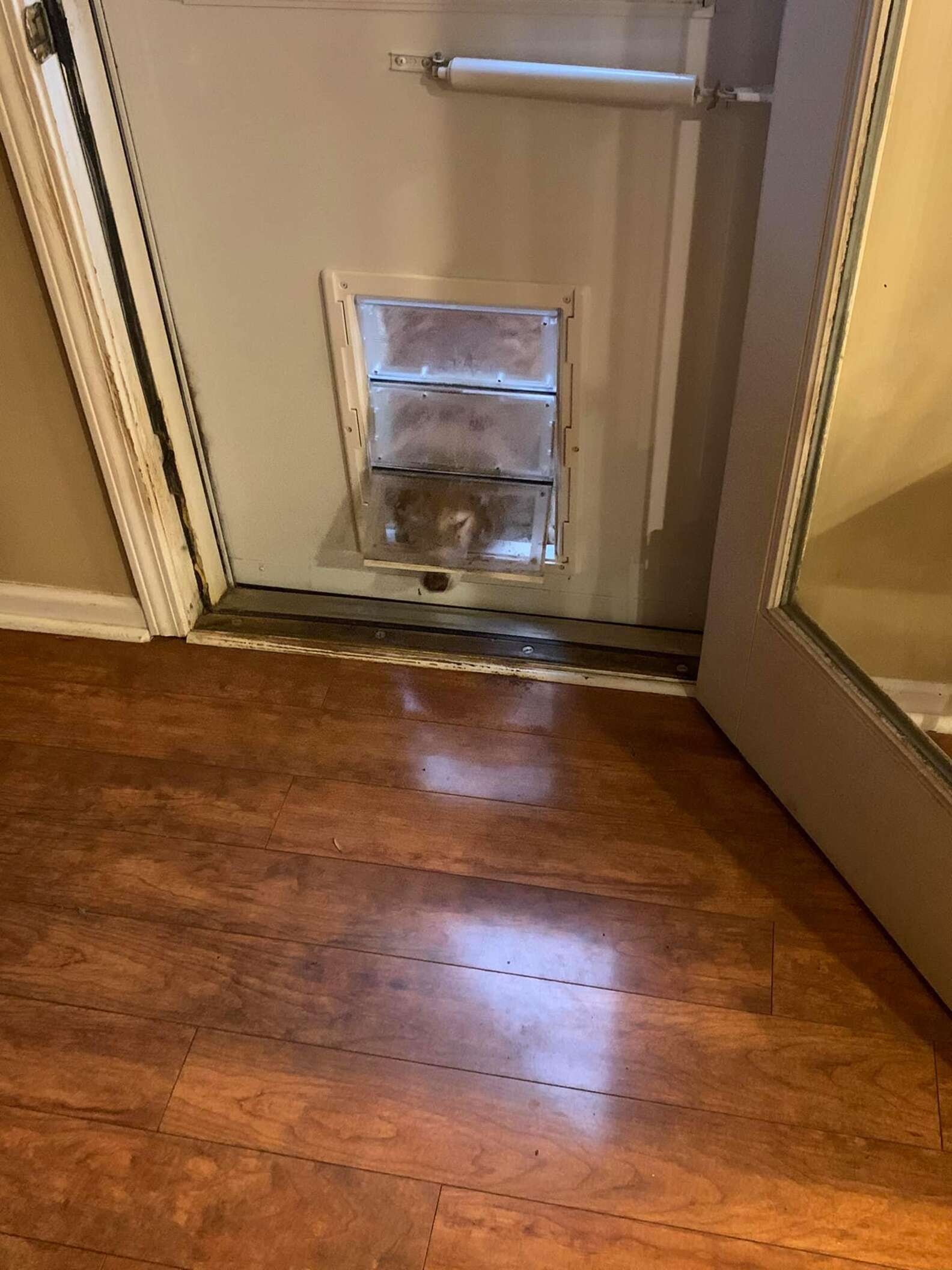
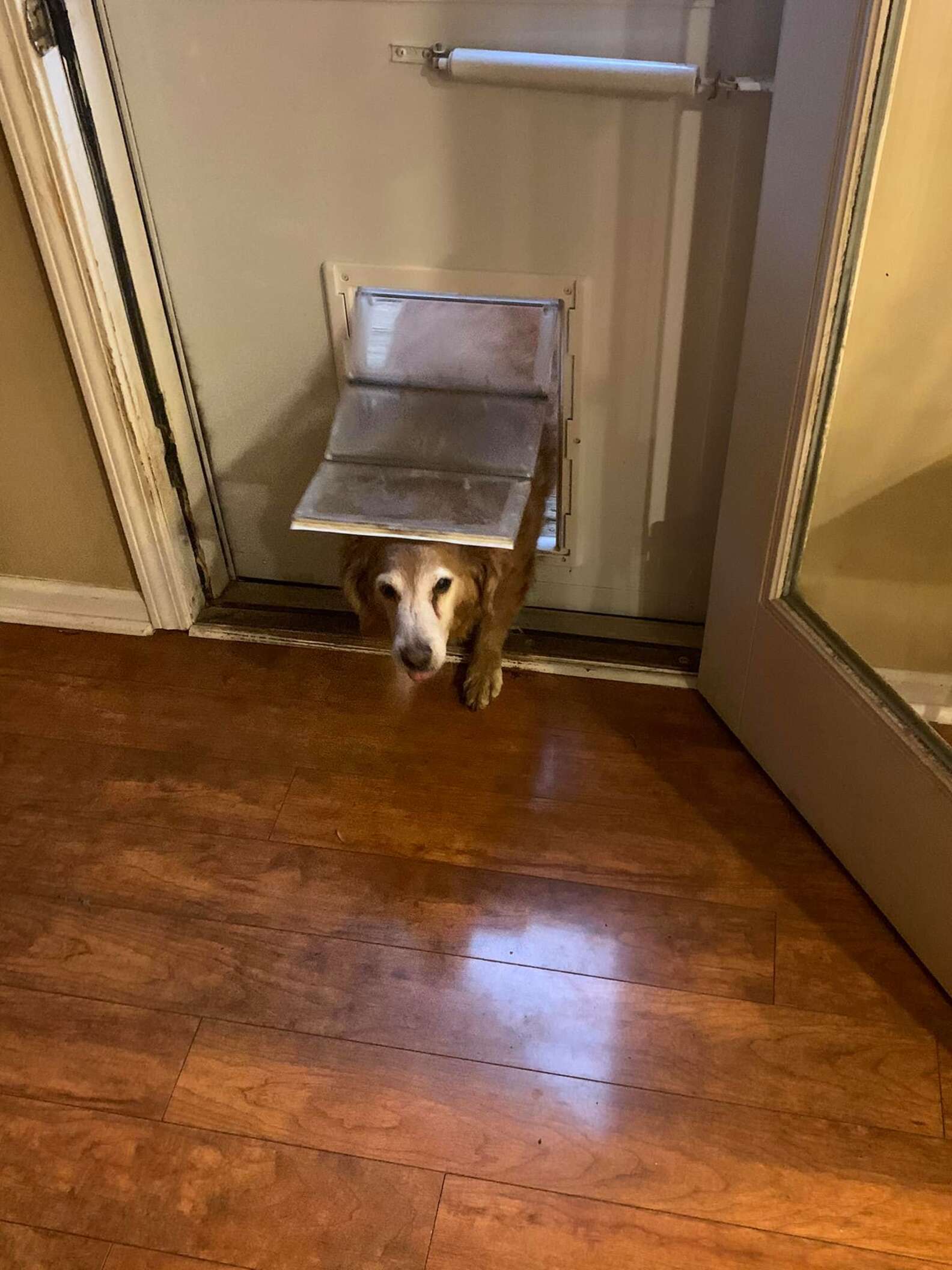
Whenever Dakota goes outside and goes to the bathroom, she gets a treat, so one day, she came up with a genius plan. She decided to start going outside through the dog door, sitting right outside it for a little while, then coming back in as if she’d gone to the bathroom and asking for a treat.
What Dakota failed to consider is that the dog door is clear — so her mom can see her sitting right outside it, very blatantly not going to the bathroom.
CHERYL FEINGOLD
“At first I believed her but then questioned how she came back in so fast,” Dorchinsky said. “I would watch and noticed that she was doing that. It’s almost like a child who thinks you can’t see them if they can’t see you. She always looks away. It’s funny!”
Even though Dorchinsky has totally caught on to the sneaky scheme, Dakota doesn’t care. She still does it every single day, because the potential treats are absolutely worth it.
CHERYL FEINGOLD
“She seems very proud of her scam,” Dorchinsky said. “There is no shame in Dakota’s game.”
Despite knowing that Dakota isn’t actually going to the bathroom most of the time, Dorchinsky still gives her treats anyway. It’s hard to say no to that face.
CHERYL FEINGOLD
“If I don’t react she will bark at me to let me know she went potty (fuzzy liar),” Dorchinsky said. “She is adorable and I totally give in. Maybe she deserves the treat for not going potty on the porch?”
My son, Alex, recently shared on Facebook a video posted by Rik Christiansen who is the son of my elder sister, Rhona, now dead unfortunately.
This is what Alex said:
Anybody who needs Drone survey’s, my cousin has a business in Devon
Please go across to Rik’s website, Ahead4Heights, and also watch his promotional video; luckily on YouTube so it may be shared.
This is a short promotional film that showcases Ahead4Heights abilities within the drone industry as well as our production and editing skills. All footage, music, sound design, editing and production was created in-house. We are a complete solution.
Who knows!
It is not the first time I have written about Rik! Here is a previous post.
This is the company that my daughter helps to run. She is Maija and together with Polly and Chloe they run Sound UK. This is what Maija said in her recent email:
ooOOoo
20 years of extraordinary music
We hope the New Year finds you and your family well.
2021 is special for Sound UK as we celebrate 20 years of bringing you extraordinary music. We’re marking this milestone throughout the year. This includes 20 Artists for 20 Years, which shines a spotlight on key artists in Sound UK’s life. First up is the incredible Elaine Mitchener later this month…
To kick off our 20th birthday celebrations, we hope you enjoy this 60 second film about our work. You can watch it on the link below.
Keep well,
Polly, Maija and Chloe
20 years of extraordinary music. sounduk.net
Music credit: Landing – Collectress
Film edit by: Lee Matthews, iconic image
ooOOoo
I find it a brilliant short video and I hope some of you out there will also watch it.
The FDA has announced that Midwestern Pet Food is recalling select lots of Sportmix dog and cat foods because they contain potentially deadly levels of aflatoxin.
FDA is aware of at least 28 deaths and 8 illnesses in dogs who ate the affected products.
So this is extremely important.
The full details now follow:
ooOOoo
Sportmix Dog and Cat Foods Recalled Due to Deadly Mold Toxin
December 30, 2020 — The FDA is alerting consumers that Midwestern Pet Foods, Inc. is recalling nine lots of Sportmix pet food products because they contain potentially fatal levels of aflatoxin.
FDA is aware of at least 28 deaths and 8 illnesses in dogs that ate the recalled products.
This is an ongoing investigation. Case counts and the scope of this pending recall may expand as new information becomes available.
What’s Recalled?
The dry pet food products to be recalled by Midwestern Pet Foods, Inc. on December 30, 2020 include:
Sportmix Energy Plus, 50 lb. bag
Exp 03/02/22/05/L2
Exp 03/02/22/05/L3
Exp 03/03/22/05/L2
Sportmix Energy Plus, 44 lb. bag
Exp 03/02/22/05/L3
Sportmix Premium High Energy, 50 lb. bag
Exp 03/03/22/05/L3
Sportmix Premium High Energy, 44 lb. bag
Exp 03/03/22/05/L3
Sportmix Original Cat, 31 lb. bag
Exp 03/03/22/05/L3
Sportmix Original Cat, 15 lb. bag
Exp 03/03/22/05/L2
Exp 03/03/22/05/L3
Lot code information may be found on the back of bag and will appear in a three-line code, with the top line in format “EXP 03/03/22/05/L#/B###/HH:MM”.
As new information becomes available, the product list above may continue to expand.
FDA and the Missouri Department of Agriculture are working with the firm to determine whether any additional products may have been made with the same ingredients containing potentially fatal levels of aflatoxin.
About Aflatoxin
Aflatoxin is a toxin produced by the mold Aspergillus flavus and at high levels it can cause illness and death in pets.
The toxin can be present even if there is no visible mold.
Pets are highly susceptible to aflatoxin poisoning because, unlike people, who eat a varied diet, pets generally eat the same food continuously over extended periods of time.
If a pet’s food contains aflatoxin, the toxin could accumulate in the pet’s system as they continue to eat the same food.
Pets with aflatoxin poisoning may experience symptoms such as sluggishness, loss of appetite, vomiting, jaundice (yellowish tint to the eyes, gums or skin due to liver damage), and/or diarrhea.
In some cases, this toxicity can cause long-term liver issues and/or death.
Some pets suffer liver damage without showing any symptoms.
Pet owners whose pets have been eating the recalled products should contact their veterinarians, especially if they are showing signs of illness.
There is no evidence to suggest that pet owners who handle products containing aflatoxin are at risk of aflatoxin poisoning.
However, pet owners should always wash their hands after handling pet food.
What to Do?
Affected products may still be on store shelves, online, or in pet owners’ homes.
Pet owners should stop feeding their pets the recalled products listed above and consult their veterinarian, especially if the pet is showing signs of illness.
The pet owner should remove the food and make sure no other animals have access to the recalled product.
Further information regarding this recall can be found in the related FDA Bulletin.
U.S. citizens can report complaints about FDA-regulated pet food products by calling the consumer complaint coordinator in your area.
I was prompted to write about this aspect of our modern lives by coming across a UK resource called BogusBuster. But these days we live in such a wired-up international world that BogusBuster has a much wider appeal that just the United Kingdom. This is what their home page says:
Not sure if an item you have found is fake? Think a site is dodgy? Submit a URL and we will use our fake-detecting software to establish if it is real or safe
Just off the top of my head I would say that at least 25% of the incoming calls we receive on our home telephone number are from scammers. I am also getting the odd call from a scammer on my mobile phone.
A lot of the calls are from women who purport to want to advise me about my investments. They appear to be out of the country. Tempted as I am to engage in the call in an attempt to find out more about them I resist and promptly put the telephone firmly down.
Anyway, a little more about BogusBuster from their About page.
BogusBuster is an independent resource that will guide you through everything scam related. Whether it’s tips to spot fake products on the internet or reporting a dangerous product being sold online, consider us your one-stop resource to being a smart shopper.
BogusBuster is co-funded by Innovate UK which launched a business competition in May 2020 to seek solutions to problems caused by the Covid-19 pandemic. As the virus spread, and communities ‘locked down,’ the spike in online shopping was significant. With this came a rise in those being scammed, so there’s never been a more important time to stay safe online. BogusBuster was created to keep consumers informed, ensuring they get exactly what they paid for.
BogusBuster is powered by SnapDragon, an award-winning brand protection company that’s been helping businesses across the world to fight fakes for over five years. SnapDragon founder’s experienced, first-hand, the damage caused by fake products when her own product was counterfeited. Fighting back, she founded SnapDragon to help protect and safeguard businesses, and consumers, from counterfeit crime. As the ‘Head Dragon’, she has built an expert and passionate team dedicated to identifying and removing fakes from sale, all over the world.
With scammers becoming more sophisticated, consumer safety is at the top of our agenda at BogusBuster; our regular updates, news, tips and advice will help to keep you safe and secure.
Hopefully others will find BogusBuster valuable.
Then there is a Common Scams and Frauds on the official USA Government website, from which I republish:
Coronavirus Scams, Rumors, and Price Gouging
During the coronavirus (COVID-19) outbreak, scammers may try to take advantage of you through misinformation and scare tactics. They might get in touch by phone, email, postal mail, text, or social media. Protect your money and your identity by not sharing personal information like your bank account number, Social Security number, or date of birth. Learn more about these scams and how to report them.
This came in yesterday afternoon, Pacific time, and it is shared with you all.
ooOOoo
Albright’s Raw Dog Food Recall
November 13, 2020 — Albright’s Raw Dog Food of Fort Wayne, Indiana, is voluntarily recalling 67 cases of Chicken Recipe for Dogs because it has the potential to be contaminated with Salmonella bacteria.
What’s Being Recalled?
The product is labeled Albright’s Raw Dog Food Chicken Recipe for Dogs and is packaged in 2-pound chubs/rolls (see image above).
Each chub/roll is printed with:
Lot number C000185
Best By 19 May 2021
Product was sold frozen, and was distributed from the company to distributors from 7/8/20 to 8/27/20.
One animal illness has been reported. No human illnesses have been reported to date.
Where Was It Sold?
Albright’s Raw Dog Food Chicken Recipe for Dogs was distributed in CA, FL, IL, IN, NH, NJ, NV, NY, PA, and TN.
The affected product was also distributed through retail stores, mail order, and direct delivery.
What Caused the Recall?
The problem bacteria was revealed after testing conducted by the FDA.
The problem was confined to this batch and the company has ceased the distribution of the batch as FDA and the company continue their investigation as to what caused the problem.
About Salmonella in Humans
Salmonella can affect animals eating the products and there is risk to humans from handling contaminated pet products, especially if they have not thoroughly washed their hands after having contact with the products or any surfaces exposed to these products.
Healthy people infected with Salmonella should monitor themselves for some or all of the following symptoms: nausea, vomiting, diarrhea or bloody diarrhea, abdominal cramping and fever.
Rarely, Salmonella can result in more serious ailments, including arterial infections, endocarditis, arthritis, muscle pain, eye irritation, and urinary tract symptoms.
Consumers exhibiting these signs after having contact with this product should contact their healthcare providers.
About Salmonella in Pets
Pets with Salmonella infections may be lethargic and have diarrhea or bloody diarrhea, fever, and vomiting.
Some pets will have only decreased appetite, fever and abdominal pain.
Infected but otherwise healthy pets can be carriers and infect other animals or humans.
If your pet has consumed the recalled product and has these symptoms, please contact your veterinarian.
What to Do?
Due to the frozen condition of the product, it is possible that retailers and end users may still have the product in their freezers.
Consumers who have purchased Albright’s Raw Dog Food Chicken Recipe for Dogs are urged to return it to the place of purchase for a full refund.
Consumers with questions may contact the company at 260-422-9440 Monday through Friday, 8 AM to 4 PM ET.
U.S. citizens can report complaints about FDA-regulated pet food products by calling the consumer complaint coordinator in your area.
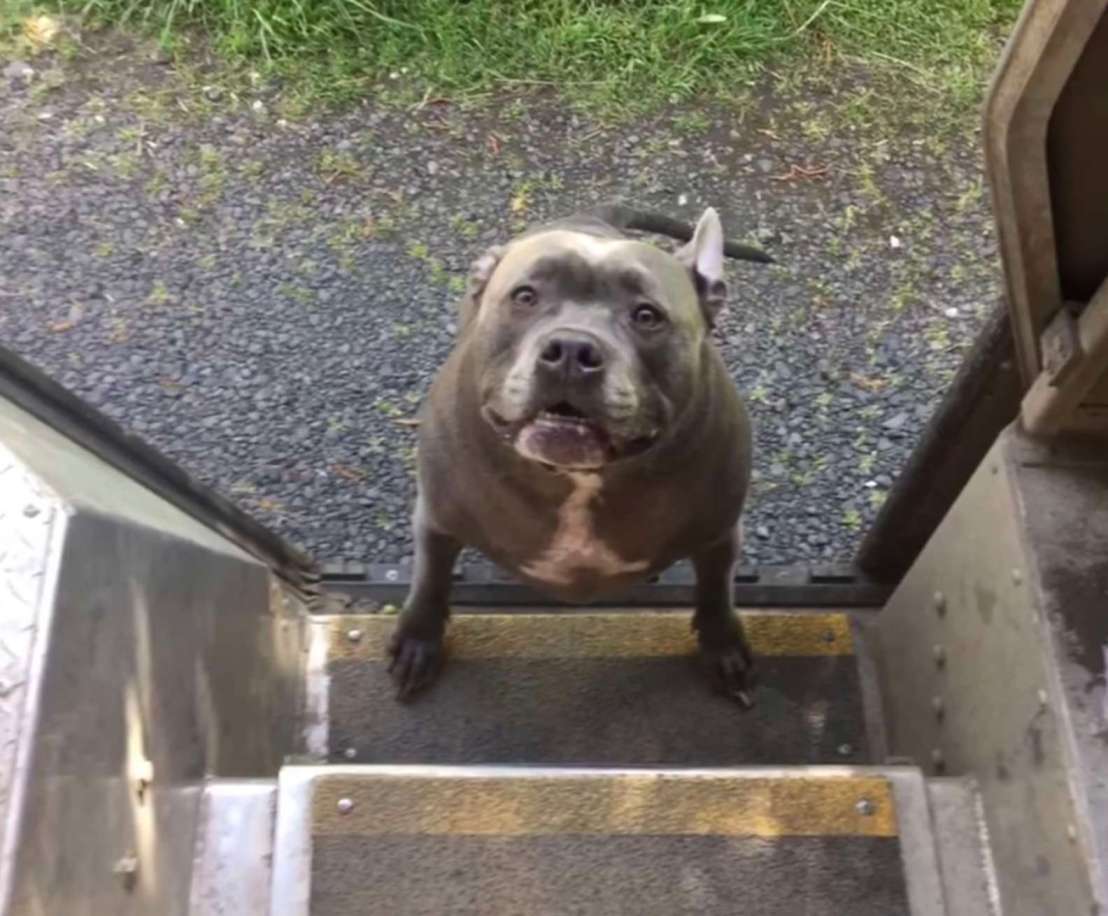
I am speaking of a UPS driver who has a love for dogs and, like my Jeannie, loves Pit Bulls. The breed have got such a bad reputation for being aggressive and always fighting but the truth is that men have used a few of them as fighting dogs and trained them to be the way they are.
There’s more about the breed on WebMD and I just quote a small piece from the article.
Doberman pinschers, rottweilers, and German shepherds topped lists of dogs some considered dangerous in the not-too-distant past.
These days, pit bulls often make headlines and it’s rarely good news. If it isn’t about an attack on a child or a shooting by police, it’s a tale of neglect or abuse. The heat of such reports has forged a frightening image of the pit bull as having a hair-trigger temper and a lock-jawed bite.
But pit bull advocates and some experts say the dogs get a bad rap. They say the dogs are not inherently aggressive, but in many cases suffer at the hands of irresponsible owners drawn to the dog’s macho image who encourage aggression for fighting and protection.
Indeed, the ASPCA web site gives the breed an endorsement that could fit a golden retriever. It says, “A well-socialized and well-trained pit bull is one of the most delightful, intelligent, and gentle dogs imaginable.”
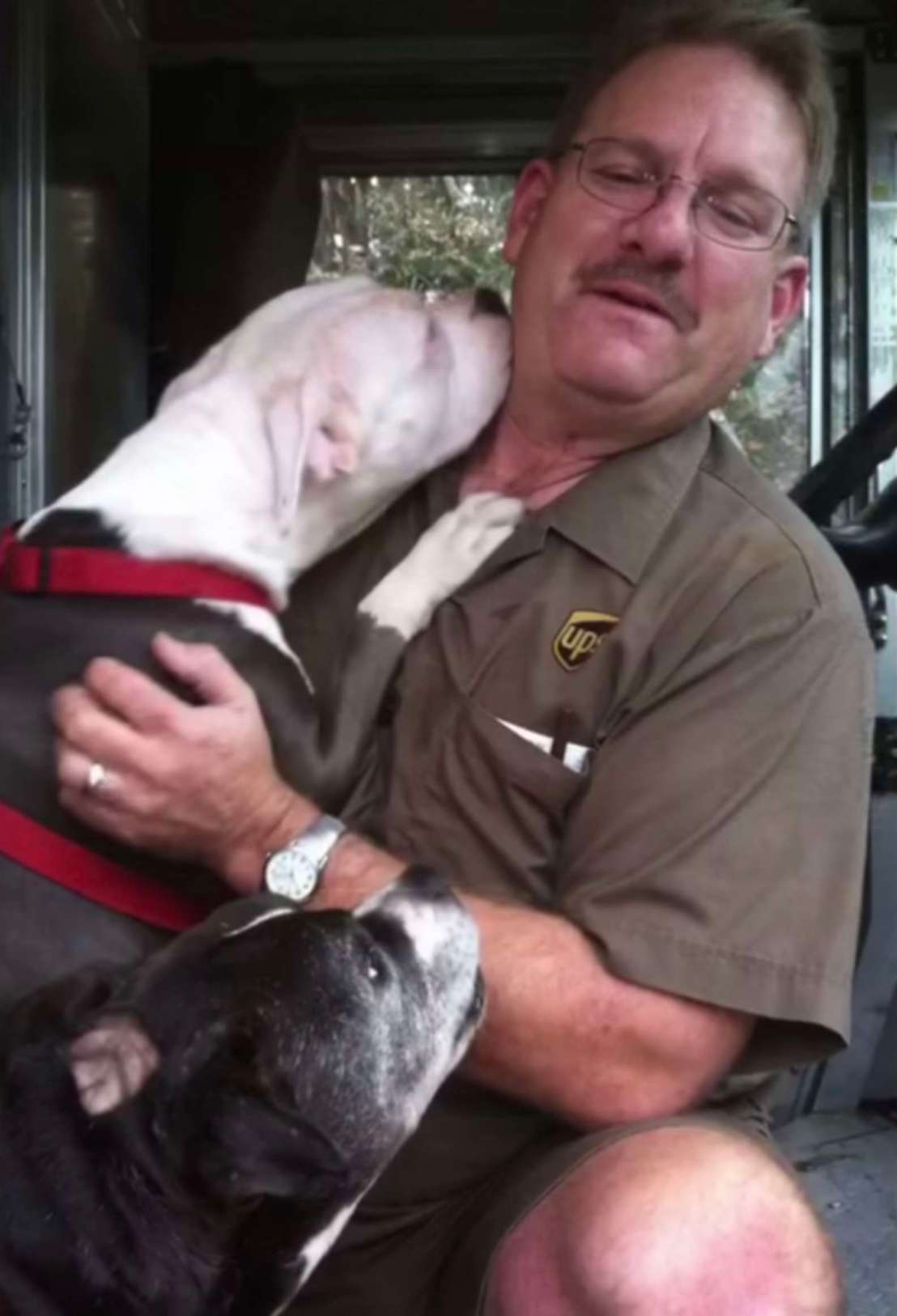
For as long as he can remember, Scott Hodges has loved pit bulls. He used to have a pittie of his own, Sheba, but after 15 years she passed away in 2004.
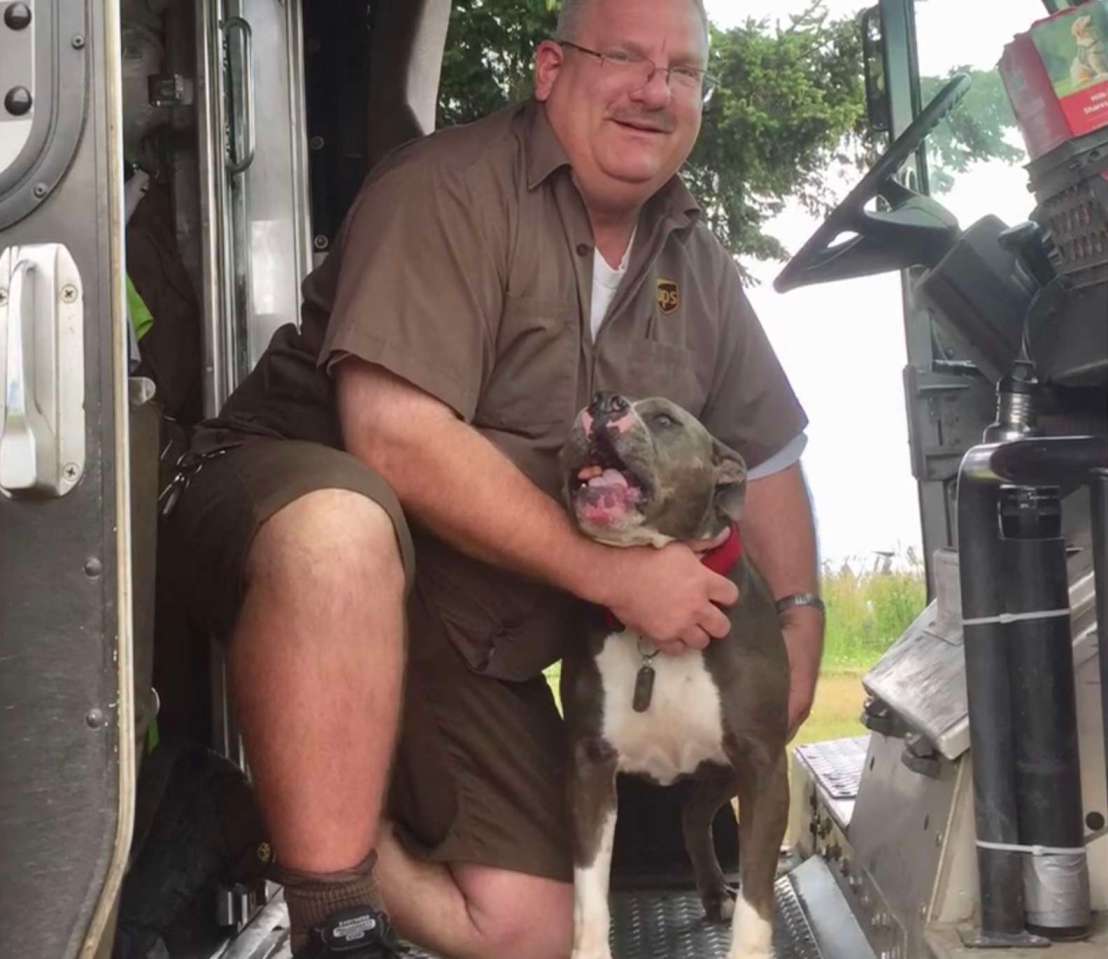
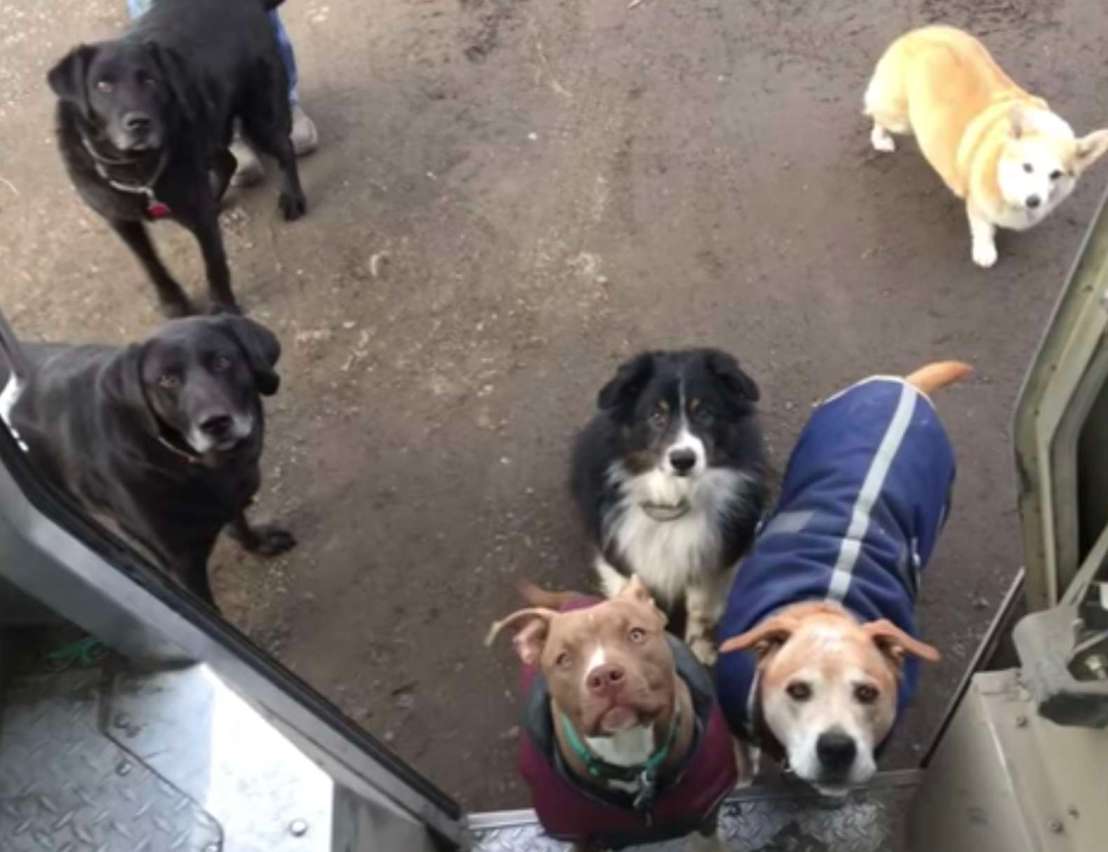
Luckily, Hodges has been a UPS driver for the past 32 years, and gets to see pit bulls every single day as he goes along his route. He sees lots of animals on the job, including a very friendly pig, but he’s always had a particular soft spot for the pit bulls. He’s gotten to know them all over the years — and they love him just as much as he loves them.
Scott Hodges
“I know most, but not all, of the pitties by name,” Hodges told The Dodo.
Every day, as Hodges does his UPS route, he stops to say hi to his pit bull friends (and all the other dogs, too). They know who he is by now and are always waiting for him, because they know Hodges can always be counted on to give them love and treats.
Scott Hodges
“All the pitties on my route are friendly and I give them biscuits every time I see them,” Hodges said.
In order to keep track of all the pitties he sees, he takes lots of pictures …
Scott Hodges
… and probably has at least one picture of every pit bull on his route by now.
Scott Hodges
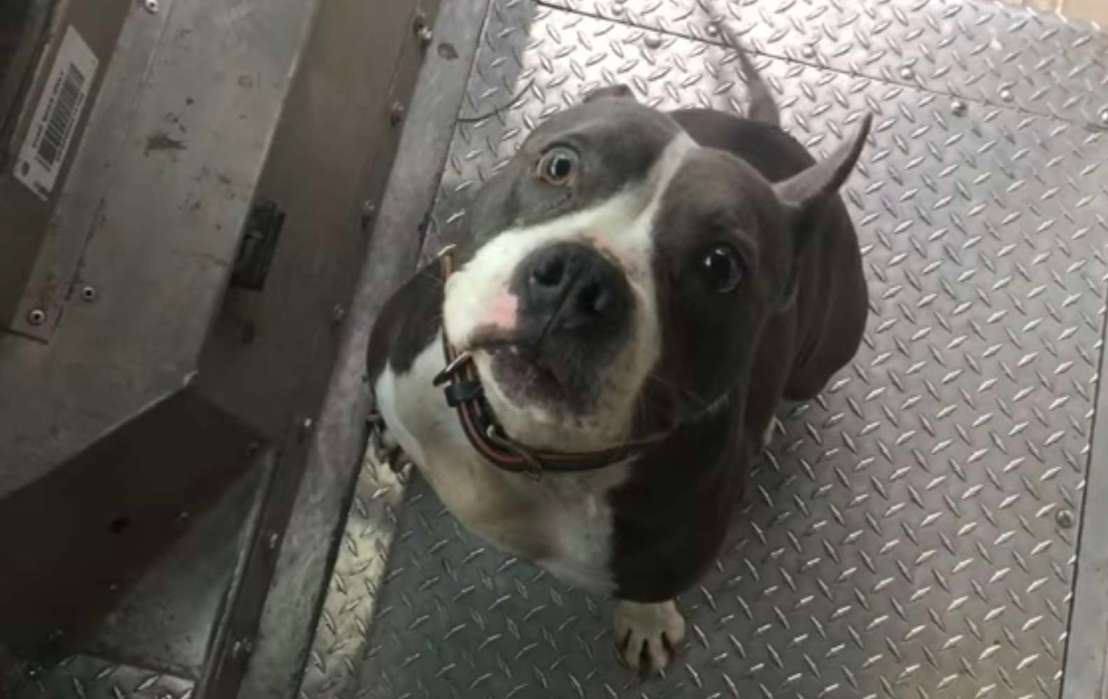
The pitties are of course always happy to see him …
Scott Hodges
… and some like to ham it up a little more than others.
Scott Hodges
Sometimes he takes pictures of the other dogs along his route too …
Scott Hodges
… but the pit bulls will always and forever be his favorites.
Scott Hodges
Hodges is lucky to get to work a job where he can see pit bulls every single day, and he never gets tired of stopping to say hi to all of his friends.
ooOOoo
Scott has been a UPS driver for 32 years!
My guess is that he was pretty quick at welcoming pit bulls and one can presume that he has been kind and generous to these dogs for most of the 32 years.
I think this is a delightful story and one that I am so pleased was carried by The Dodo.
Back when I started this blog, back in July, 2009, I had no idea that there were so many stories about dogs. I mean many stories each day! I called the blog Learning from Dogs simply because when I first met Jean in 2007 she had upwards of 16 dogs. When I went out to be with her in 2008, together with my Pharaoh from England, I very quickly saw there was a huge potential in writing about them.
Early Saturday morning, Marty Carriere was getting ready for a busy day at Happy Tails Pet Resort and Spa when he saw someone at the door. He wasn’t expecting anyone quite so early, so he waited — then a wet nose pushed through the gates.
“It was 6:30ish when I saw her nose poking through the gate there,” Carriere told The Dodo. “Normally, I wait for the owners to come in with the dogs and see what happens but she was just poking around out there.”
HAPPY TAILS PET RESORT AND SPA
When Carriere didn’t see any cars or people outside, he wandered over to the door to check things out and found Jem, a 5-year-old shepherd mix, waiting outside. Jem used to visit the day care three to four times a week before quarantine and was clearly eager to see her friends.
“I was pretty shocked when I opened the door and there was a dog there — and one of our regulars, too. So I was like, ‘Come on in, Jem. Let’s play,’” Carriere said. “I opened up the door and she ran right in — tail wagging and she was ready to go.”
HAPPY TAILS PET RESORT AND SPA
Carriere called Jem’s parents, who rushed over to pick her up. It seems the independent pup had broken out of her yard when guests from the night before didn’t close the gate properly.
Jem’s parents brought her home and gave her breakfast, then drove her right back to day care since that was clearly how she wanted to spend the rest of her day. “She was definitely pretty anxious to get here,” Carriere said.
HAPPY TAILS PET RESORT AND SPA
According to Carriere, Jem is a big goofball at day care and loves playing with all the other dogs.
“She comes in and does this little howling thing that not a lot of the other dogs do. She gets in and starts howling right away, she’s just so excited to be here,” he said. “I guess that morning she just couldn’t wait for Mom and Dad to get up, so she came here herself.”
HAPPY TAILS PET RESORT AND SPA
In the three years that Carriere has worked for Happy Tails, he’s never experienced or heard of something like this happening before. But then again, Jem is one of a kind.
ooOOoo
Jem is special. But so are many, many other dogs.
But that doesn’t stop us in the slightest enjoying this story.
Some may think that there are too many such dog food recalls but I would say thank goodness there is a system for reporting them.
ooOOoo
Real Pet Food Company Recalls Billy + Margot Dog Food
September 22, 2020 — Real Pet Food Company of Phoenix, Arizona, is voluntarily recalling Billy+Margot Wild Kangaroo and Superfoods Recipe because it may be contaminated with Salmonella bacteria.
What’s Being Recalled?
The following product has been recalled:
Billy + Margot Wild Kangaroo and Superfoods Recipe
Package: 4-pound bag
Lot code: V 07 Feb 2022
This recall does not affect any other Billy + Margot products or those sold outside of the USA.
What Caused the Recall?
The recall is a result of a routine sampling program by state officials which revealed that the finished products contained the bacteria.
The company has ceased the production and distribution of the product.
The FDA and the company will continue their investigation as to what caused the problem.
About Salmonella
Salmonella can affect animals eating the products… and there is risk to humans from handling contaminated pet products.
While no illnesses have been reported, healthy people infected with Salmonella should monitor themselves for some or all of the following symptoms: nausea, vomiting, diarrhea or bloody diarrhea, abdominal cramping and fever.
Rarely, Salmonella can result in more serious ailments, including arterial infections, endocarditis, arthritis, muscle pain, eye irritation, and urinary tract symptoms.
Owners exhibiting any signs after having contact with this product should contact their healthcare provider.
Pets with Salmonella infections may be lethargic and have diarrhea, fever, vomiting and or abdominal pain.
Infected but otherwise healthy pets can be carriers and infect other animals or humans.
If your pet has consumed the recalled product and has these symptoms, please contact your veterinarian.
What to Do?
Retailers who have received product from the affected lot code have been asked to remove this product from shelves immediately and dispose of the product with care.
If you have purchased Billy + Margot Wild Kangaroo and Superfoods Recipe in a 4 lb bag, with lot code V 07 Feb 2022 from any retail store nationally, please stop feeding the product to your dogs, dispose of this product immediately, wash your hands accordingly, and sanitize affected surfaces.
Consumers who have purchased the recalled products may call Real Pet Food between 8 am and 10 pm EST immediately for a refund or for additional information at : 1-800-467-5494.
Consumers with questions may contact the company at 800-467-5494 during the above times.
U.S. citizens can report complaints about FDA-regulated pet food products by calling the consumer complaint coordinator in your area.
Whichever way you look there are substantial challenges.
This post is largely a republication of a recent post from Patrice Ayme. Because when I read it I was profoundly affected. I thought that it needed to be shared with all you good people because if nothing is done then life as we know it is going to come to an end. Period! That includes our gorgeous dogs as well as us humans! So, please, please read it all the way through!
But before Patrice’s post is presented The Economist this last week came out with a special report entitled Business and climate change. I offer a small extract:
For most of the world, this year will be remembered mainly for covid-19. Starting in Asia, then spreading across Europe and America before taking hold in the emerging world, the pandemic has infected millions and killed hundreds of thousands. And it has devastated economies even more severely that did the global financial crisis which erupted in 2008.
But the impact of covid-19 has also given a sense of just how hard it will be to deal with climate change. As economic activity has stalled, energy-related CO2 emissions have fallen sharply. This year the drop will be between 4% and 7%. But to have a decent chance of keeping Earth’s mean temperature less than 2 deg C above pre-industrial levels, net emissions of CO2 and other greenhouse gases must fall to more or less zero by mid-century. And such a drop needs to be achieved not by halting the world economy in its tracks, but by rewiring it.
The next section in the special report was A grim outlook and it was, indeed, a very grim read.
Back To The Jurassic In A Hurry: 500 Part Per Million Of Greenhouse Gases
Greenhouse gases (GHG) used to be 280 parts per million. Now they are around 500 ppm (including CH4, Nitrogen oxides, chlorofluorocarbons, etc.). This is more GHG than in at least thirty million years, when the Earth was much warmer, and it is similar to CO2 densities during the Jurassic.
So we are presently transiting to a Jurassic climate. The transition to the Jurassic climate is happening at a rate many orders of magnitude faster than changes in the past. This implies that most forests of the Earth , desiccating and incapable to adapt fast enough, are going to burn… worldwide. This generalized combustion has a drastic potential consequence: generalized hypoxia.
So we should talk about climate catastrophe rather than climate change, and global heating rather than global warming: recent fires got helped by temperatures dozen of degrees higher than normal, in part from compression of the air due to record breaking winds. This is why parts of the Pacific Northwest which never burn are now burning. This will extend to Canada, Alaska, Siberia and already did in recent years. The catastrophic massive release of frozen methane hydrates could happen any time (it already does, but not as bad as it is going to get). It has up to one hundred times more warming power than CO2 (fires release it by billions of tons).
What is the way out? Well, hydrogen is the solution, in two ways, but has not been deployed as it could be. A decade ago, thermonuclear fusion, on the verge of becoming a solution, was starved for funding, and so was green hydrogen (the then energy secretary, Obama’s Steven Chu, prefered investing in batteries, it was more lucrative for his little greedy self).
Green hydrogen enables to store energy for renewables, avoiding blackouts which cut electricity to pumps to fight fires.
We, Spaceship Earth, went from 275 ppm of GreenHouse Gases (GHG) in 1750 CE to 500 ppm in 2020. That doesn’t mean we double the Greenhouse, because the main GHG gas is… water vapor (H2O). What we can guess the best at this point is the EXCESS radiative forcing since 1750 CE, and that’s already nearly 3 Watts per square meter… Equivalent to a million and a half nuclear reactors at full power…
Joan Katsareas from Philadelphia, PA wrote back: “Thank you @Patrice Ayme for sharing your knowledge of the causes and extent of the climate crisis. I will be seeking out more information on hydrogen as a solution.”
@Joan Katsareas Thank you for thanking me, that is much appreciated. Hydrogen is indeed the overall solution we need at this point. Actually Australia, in collaboration with Japan, is building a gigantic, 15 Gigawatts, project in north west Australia, AREH, the Asian Renewable Energy Hub, to convert renewables from sun and wind into hydrogen products which will then be shipped to Japan. The same needs to be done all over, it would collapse the price of “green hydrogen” (99% of the US hydrogen is from fossil fuels).
In the case of thermonuclear fusion, the international thermonuclear experimental reactor (ITER) being built in France was slowed down by ten years, from reduced funding, and uses obsolete magnets (superconducting, but not High Temperature Superconductors, which can now be engineered with more compact and powerful fields). A massive effort would bring a positive energy thermonuclear reactor within 10 years… But that effort has not been made… except in China, the usual suspect, where a project, the China Fusion Engineering Test Reactor (CFETR), aims at an energy gain of 12 and a total power equivalent to a fission nuclear reactor. Its detailed engineering has been launched for a while (it’s supposedly symbiotic with the European DEMO project, which will produced as much as a large power station and will be connected to the grid. That too has been delayed, to the 2050s, although it’s feasible now). The USA needs to launch a similar project, right away.
We face ecological constraints incomparably more severe than those of the Roman state. Rome did not solve its paltry problems, and let them fester: they had to do mostly with a dearth of metals, and the Franks solved them readily. This hindered the Roman economy. The situation we are facing, the threat of a runaway greenhouse is a terminal existential threat.
Look at Venus, we can look at our sparkling neighbor when the forests have finished burning, and the smoke dissipates (we were told it could be months). Once Venus probably had a vast ocean, and probably, life. But it died from a brutal greenhouse generated by Large Igneous Provinces (LIP). The same happened on Earth, on a smaller scale, more than once, in particular with the Permian Triassic mass extinction, which destroyed 95% of known species..
Now the rumor has it that indeed some life may have survived in the atmosphere. This is not a joke. Consider:Life on Venus? Astronomers See a Signal in Its Clouds. The detection of a gas in the planet’s atmosphere could turn scientists’ gaze to a planet long overlooked in the search for extraterrestrial life.
Life on Venus? Ah, science, all those possibilities… We never imagined we would ever think possible.
Patrice Ayme
***
P/S: I argued in the past, before anybody else, that the dinosaur-pterosaurs-plesiosaurs extinction, and extinction of anything bigger than 20 kilograms was due to volcanism (I was at UC Berkeley when the two Alvarez were, and they seemed too full of themselves with the iridium layer, and I like to contradict certainties…)
How would LIP volcanism set forests on fire? Well, by the same exact mechanism as now: through a massive CO2 driven greenhouse, what may have terminated the Venusians…
In this perspective climate cooling, for millions of years, visible in the graph above, would have disrupted those species which were not equipped to generate enough heat, and then the LIP accelerated into a vast holocaust…
The end with general burning and acidic oceans is hard to duplicate with a bolide, so the impactophiles have argued that the bolide magically impacted the most CO2 generating rock imaginable… Maybe. But an enormous LIP does all that CO2 production/destruction of the oceans, effortlessly… A friend of mine who is the biggest of the big in this academic domain, he decides who publishes, replied to me that the 66 million year old Dekkan LIP is too small… To which I replied that we don’t know what lays below the ocean…
ooOOoo
Now it is up to all of us to make whatever changes we can to lessen our use of CO2.
Returning to that Economist special report. Green machines is an analysis of what has to change, what already has changed, and the time left for these changes to take effect. But as the article states it is far, far below what is necessary:
Last year 20m households purchased heat pumps. To stop the planet from overheating, the IEA reckons that number has to triple by 2030.
In the 4th September issue of Science magazine, there is an article about The Carbon Vault.
Industrial waste can combat climate change by turning carbon dioxide into stone.
The article closes with these words:
To avert the worst damage from climate change, Lackner says, “we need to throw everything we can at it.” Including, perhaps, a lot of rocks.
Klaus Lackner is a physicist at the Arizona State University, Tempe.
So there is a great deal going on and the general awareness of what we are facing is growing. That is good! But the speed of change is not fast enough by a long shot.
Last word from Patrice:
However we know enough to realize forceful mitigation has to be engaged in immediately.