Category: Business

Banks are being paid to NOT LEND!

It’s a funny old world just now!

The President of the United States recently pressured the heads of the nations’ largest banks to increase lending to

Pres. Obama

small business and home-owners.  Obama claimed that the banks, as recipients of federal bailout funds, had an unusually heavy responsibility to take such measures in order to create more jobs and help nurse the economy back to health.  All of this was done very publicly and with much fanfare.  Worldwide press coverage was universally favorable.

Seems reasonable, doesn’t it?

But it is not.  You are being duped.  I can’t tell whether whoever writes this stuff for Obama knows the truth and skilfully skirts it, or just writes flowing prose with no connection to the truth that curries voter buy-in by blaming Wall Street and Corporate America for all that’s wrong in the world.

Read more of this Post

The Future of Video Stores

Economics in the real world!

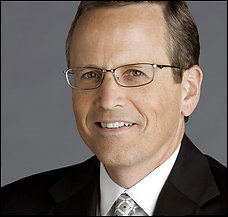
Tim Clodfelter of the local Winston-Salem Journal wrote a very interesting piece on the future of brick-and-mortar

Tim Clodfelter

video stores and video rental places such as NetFlix and Red Hat.

I happened to be quoted in the article as an economist (the comment about “reducing the average cost every time we watch a purchased video” was supposed to be a joke!), but actually met up with Tim in my role as mom and pseudo-agent!  Let me explain.

My 15-year-old daughter was standing in a very long line of young ladies waiting to audition for the Coen Brother’s remake of True Grit. Tim was there to get the story on the open casting.  I asked him over hoping he would talk to my daughter.  He and I got to talking instead; he found out that I was an economics teacher, and pulled out his notes on the Video Store story.  He ended up talking to me and several other parents in line, all of whom had a different approach to viewing movies.  The resulting article follows with permission to publish on Learning from Dogs.

By Sherry Jarrell

Read the Video Store story

Fractional Reserves of the U.S. Banking System Explained

What are Fractional Reserves?

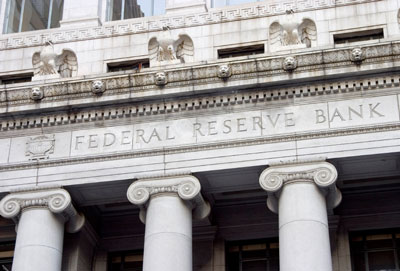
The US Federal Reserve, or Central Bank, is the banking system’s bank. It is the lender of last resort.

It is through the Central Bank that banks settle their accounts with each other. The central bank serves as a clearinghouse for checks written by depositors, and it holds the commercial banks’ reserves.

Bank reserves (vault cash, and deposits by banks at the Central Bank or the Fed) are monies held out of circulation by banks to satisfy the Fed’s reserve requirements and the currency demand by the public. Excess reserves are those held above the legal reserve requirements to handle uncertain demand.  Bank deposits not held in (required plus excess) reserves are used to make loans and earn interest.

When banks make loans, they do not actually lend out the equivalent in cash but instead create on their balance sheet a loan asset and an equal liability called a demand deposit.  Such lending by banks is limited only by reserve requirements (set by the Fed) and the cash they need to satisfy cash withdrawal demand by their customers.

As these loans are then re-deposited by the borrower, the multiplier process continues as fractional reserves are held back and the balance is “lent” out again.

By Sherry Jarrell

Parenting the Government

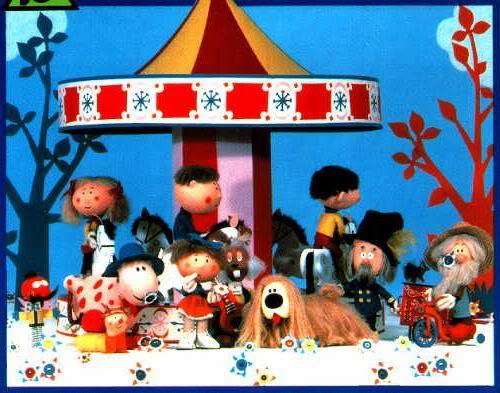
Governments version of the Magic Roundabout.

Okay. If you tried this ploy on your parents, you wouldn’t get away with it.  If your kids tried it on you, you wouldn’t fall for it either.  So why are the American people letting the Government get away with this ploy?  I don’t know. And I don’t get it.  Maybe there is just so much going on that it gets lost in the mix. Maybe it’s because of the deceptive and disingenuous way it’s being presented by Pelosi, Reid, and Obama.

Here’s the ruse:  “Give us more of your money today, and we will reduce tomorrow’s health care costs. We will increase efficiency.  And we will do all of this without increasing the budget deficit!”

Yeah, right.

What exactly is stopping them from reducing health care costs and improving the efficiency of health care delivery now? Why do they need more money today to accomplish these things tomorrow? What magical powers does the next dollar of tax collections have that the current ones don’t?

Exactly.  None.  So when Congress asks to increase taxes and the deficit in order to fix health care tomorrow, let’s respond to them as we would our clever but errant children: Ask to see some proof today first.

You know how that will turn out. And so does Congress.  That’s why they just keep promising the moon.  What I don’t get is why we continue to let them get away with it.

[Not just the US Government plays on the roundabout – I’m sure they learnt from the Brits! Ed.]

By Sherry Jarrell

The Poor Pay Czar

Pity the poor Czar.

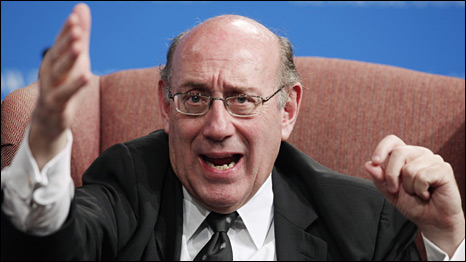
Kenneth Feinberg, pay czar

The US poor pay czar is lamenting his task: how to limit the pay of executives at companies receiving a bailout without undercutting the ability of the firm to secure talented management.  “It’s a delicate balance!  Very difficult indeed.”  Well, Mr. Czar, difficult for you, maybe, but a piece of cake for the labor market.  That’s exactly what the labor market does, day in and day out, quite naturally.

Compensation should not be the purview of an appointed administrator serving at the pleasure of the executive branch of the U.S. Government.

By Sherry Jarrell

[Market forces difficult to stamp on. Ed.]

BA flies to the Brink

British Airways

I earnestly hope that we are not about to witness the crashing disappearance of what only a few years ago was one of Britain’s relatively few major world class businesses. It is said that those whom the Gods seek to destroy they first make mad, and the intention of BA cabin staff to launch a strike over the busy Christmas period would seem to be a clear sign of insanity.

Read more about BA

The Insanity of Medicare 2.0

US still struggling to find a proper health care solution

We’ve all heard this definition of insanity: doing the same thing over and over again but expecting a different result.

Here, in a nutshell, is the insanity of the current U.S. health care debate:

  1. Medicare, the government’s single-payer wealth redistribution health care program, is quickly going bankrupt.  No one disputes this fact.
  2. When President Obama refers to “cutting costs of healthcare,” he is referring to cutting the Medicare budget. Period.  No increased efficiencies, no improved services, no reduced market-clearing prices. No, cutting costs refers to reducing the fraction of the U.S. government’s tax collections devoted to Medicare.
  3. The new Health Care Plan is fundamentally a new Medicare program. Let’s call is Medicare 2.0.
  4. Medicare 2.0 is being funded in large part by cutting the current Medicare budget item. We are supposed to ignore the fact that the funds cut from the current Medicare program will be spent on Medicare 2.0.
  5. The Medicare 2.0 plan shifts as much as 25% of its (under)estimated costs (e.g. payments to physicians) to other accounts.  The costs are still there; these obligations would still need to be paid by the government under the proposed legislation, but Congress is hoping the public won’t “count” the shifted costs if they slap another name on them, further fostering the illusion of “lowering costs of health care.”
  6. Medicare 2.0 will also go bankrupt but, as a larger, more far-reaching entitlement program, the impact on the U.S. budget will be larger and more far-reaching.

By Sherry Jarrell

The Boeing 787 Dreamliner: an impressive aircraft

What does the much delayed maiden flight of the Boeing 787 tell us about integrity?

But how difficult can it be for Boeing to make yet another new aircraft? The answer depends on how different the 787 aircraft is from anything the company has built in the past. Some initial indication that is significantly different can be taken from its being named Dreamliner.

Read more about the B787

The Mystery of the Disappearing Ethics

The Dubai debt crisis raises fundamental questions.


UK banks account for half the £60billion of global loans to the debt-laden emirate, new statistics show.

Well done British banks ….. loads of loans built on sand … I suppose the words “conservative” and “prudent” didn’t get printed in the Banking Terminology dictionary?

So Britain, that Global Giant of the banking world, has half the dodgy loans? British banks are therefore as daft as the rest of the world put together? (Can someone check my maths!)

Oh, and why exactly were the banks lending money to SORDID DICTATORSHIPS? Would we have lent billions to Hitler’s Germany in 1937? What on earth happened to ETHICS in the financial world? I suppose lending to POOR countries who need it rather than the nasty, venal, corrupt dictatorships of the Middle East was right off the radar?

There is an obsession with the “Human Rights” of immigrants and others in Britain, but a complete and utter turning of  blind eyes to the slavery going on in the Middle East, as if it doesn’t concern us because it’s in “another far-off country of which we know little”. (Neville Chamberlain’s shameful explanation of his inaction over Hitler’s annexation of the Sudetenland in Czechoslovakia in 1936.)

Sorry, but “No Man is an Island” …. we can’t sign the UN Declaration of Human Rights on the one hand and then blithely lend money (the PEOPLE’S money) to countries that are treating people so terribly.

I hope Dubai goes bankrupt and our cretinous banks with it so that we can start again with people’s banks that have a modicum of honour and decency and are prepared to invest in democracies, not insanely greedy property developments based on dictators’ idle fantasies.

It wasn’t much different with Sadaam Hussein, whatever you think of the invasion. This was a man who – just to take one example – gassed to death 5,000 innocent men, women and children in one single village alone. Yet countries in the “free world” were secretly queuing up to do deals with him. One British government MP even went there and shook his hand, the hand that consigned hundreds of thousands of people to a horrible death.

Ecology? Apart from anything else, Dubai’s carbon emissions are pro rata 250% higher than the US, so much power goes into air-conditioning and desalination. Once again, the left hand doesn’t know or care what the right hand is doing. A British minister tells us to stop eating meat to save the world while British banks simultaneously rush to finance a humongously-profligate and obscenely-elitist project in the desert.

I sometimes wonder if we really deserve to survive Global Warming. Will it be God’s way of cleansing the Earth of an aberrant experiment in free will?

By Chris Snuggs

Commercial Real Estate and the U.S. Financial System

This is not over yet, folks

The U.S. banking system remains vulnerable to sizeable potential losses as the housing market struggles to recover.

Estimates of these losses range from $500 billion to $1 trillion (£312 bn – £625 bn). The Federal Reserve Board is especially concerned about the impact of commercial real estate on many regional and small banks across the country.  Occupancy and rental rates continue to decline dramatically as 2009 draws to a close, and the worst seems yet to come.

Commercial real estate loans on banks’ balance sheets total almost $1.1 trillion dollars.  With near-term commercial real estate losses topping $100 billion, the Wall Street Journal estimates that as many as one-third of small and mid-size U.S. banks could experience financial distress.


Troubled banks restrict lending until they can raise more capital.  In this illiquid market, expect banks to fight for survival by raising lending rates, shortening maturities, and lowering loan amounts.  Credit will continue to shrink in the U.S., which spells big trouble for any economic recovery.

By Sherry Jarrell