Category: Art

Ancient rhythms.

The Winter Solstice.

I’m breaking the pattern of publishing a new post at midnight, Pacific Time, (08:00 UTC) because it seemed like fun to publish Monday’s post at the moment of the Winter Solstice; namely Sunday, December 21 at 23:03 UTC (15:03 PST).

There is no doubt in my mind that everyone is familiar with the Winter Solstice being the moment when the planet has perfect opposites, in terms of light and darkness, as the following image shows so clearly.

Day and night sides of Earth at the instant of the December 2014 solstice (2014 December 21 at 23:03 Universal Time). Note that the north polar region of Earth must endure 24 hours of night, while the south polar region gets to bask in 24 hours of daylight. Image credit: Earth and Moon Viewer

What may not be so well-known is that it occurs within about two-and-a-half hours of the new moon.

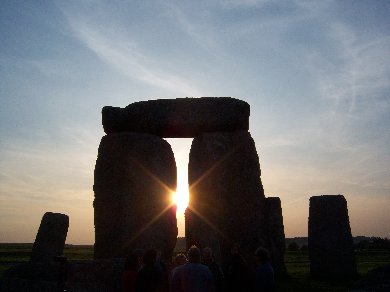
From times immemorial, early peoples on Earth knew much about the sun and the seasons, the length of daylight, and how the direction of the sunrise and sunset all shifted in a regular way throughout the year. As an Englishman, who in past times frequently drove the A303 road between London and Exeter, going past the ancient site of Stonehenge was always wonderful. Many are familiar with the sun rising during the Summer Solstice over the Heel Stone but far fewer realise that Stonehenge also marks the sun’s dawning the morning after the Winter Solstice.

winter-solstice-stonehenge
The shortest day is behind us.


The English Heritage website Discover Stonehenge is brim full of facts and information so won’t ‘copy and paste’ from one to the other! Suffice to say that what we see today was completed about 3500 years ago.

However, it seems as though the ancient site is still delivering new surprises.  I write this simply because just a few days ago, on the 19th December, 2014, the BBC reported:

Stonehenge dig finds 6,000-year-old encampment

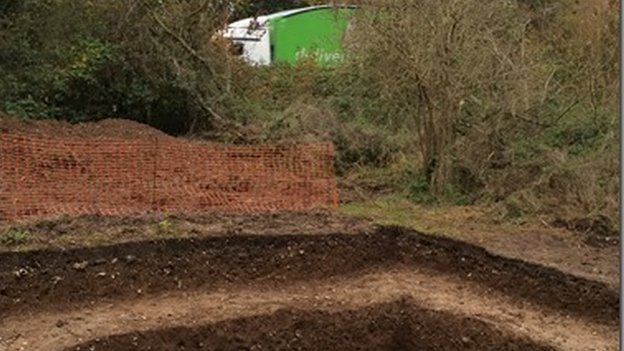
Archaeologists found the encampment during a dig at Blick Mead near Stonehenge

Archaeologists working on a site near Stonehenge say they have found an untouched 6,000-year-old encampment which “could rewrite British history”.

David Jacques, from the University of Buckingham, made the discovery at Blick Mead in October, and said the carbon dating results had just been confirmed.

But he also raised concerns about possible damage to the site over plans to build a road tunnel past Stonehenge.

The Department of Transport said it would “consult before any building”.

The Blick Mead site is about 1.5 miles (2.4km) from Stonehenge and archaeologists said “scientifically tested charcoal” dug up from the site had “revealed that it dated from around 4000 BC”.

The archaeologists found burnt flints, remains of animals and tools

David Jacques said the dig had also found “evidence of feasting” including burnt flints, tools and remains of giant cattle, known as aurochs, which were eaten by early hunter gatherers.

Mr Jacques said: “British pre-history may have to be rewritten. This is the latest dated Mesolithic encampment ever found in the UK.

“Blick Mead site connects the early hunter gatherer groups returning to Britain after the Ice Age to the Stonehenge area, all the way through to the Neolithic in the late 5th Millennium BC.

“But our only chance to find out about the earliest chapter of Britain’s history could be wrecked if the tunnel goes ahead.”

Archaeologists said the latest carbon date suggested it was continuously occupied between 7500-4000 BC

Andy Rhind-Tutt, a former mayor and current chairman of Amesbury Museum, which part-funded the dig, said the discovery could “provide what archaeologists have been searching for centuries – the answer to the story of the pre-history of Stonehenge.”

Earlier this month, the government announced funding for a 1.8-mile (2.9km) tunnel to remove congestion from the main road past Stonehenge.

A Department for Transport spokesman said: “As with any road scheme, we will consult with interested parties before any building begins on the A303.

“English Heritage and National Trust are supportive of our plans, and we will ensure sites of cultural or historical significance are safeguarded as we progress with the upgrade.”

The A303 past Stonehenge is a highly congested route.

So as the planet and the sun continue their dance to a rhythm, ancient beyond comprehension, let us reflect on the scale of the universe and our fortune to be alive this Winter Solstice, 2014.

The book! Part Five: Stillness

The last quality that I want to write about, as in the last quality that I see in our dogs that we humans should learn, is about stillness. There was a very deliberate reason to make it the last one. But, if you will forgive me, I’m not going to explain why until near the end.

Stillness! The dog is the master of being still. Being still, either from just laying quietly watching the world go by, so to speak, or being still from being fast asleep. The ease at which they can find a space on a settee, a carpeted corner of a room, the covers of a made-up bed, and stretch out and be still, simply beggars belief. Dogs offer us humans the most wonderful quality of stillness that we should all practice. Dogs reveal their wonderful relationship with stillness.

In the August of 2014, TED Talks published a talk by Pico Iyer. Despite the uncommon name, Pico Iyer was not a person I had heard of before. A quick search revealed that he was a British-born essayist and novelist of Indian origin. Apparently, Pico is the author of a number of books on crossing cultures and has been an essayist for Time Magazine since 1986. Pico Iyer’s TED Talk was called: The art of stillness.

It was utterly riveting. In a little over fifteen minutes, Pico’s talk touched on something that so many of us feel, probably even yearn for: the need for space and stillness in our minds. Stillness to offset the increasingly excessive movement and distractions of our modern world. Or to use Pico’s words:”Almost everybody I know has this sense of overdosing on information and getting dizzy living at post-human speeds.”

Now Pico has clearly been a great traveller and the list of countries and places he has visited was impressive. From Kyoto to Tibet, from Cuba to North Korea, from Bhutan to Easter Island; a man having grown up both being a part of, and yet apart from, the English, American and Indian cultures. Yet of all the places this man has been to he tops them all with what he discovers in stillness: “… that going nowhere was at least as exciting as going to Tibet or to Cuba.”

Here are Pico Iyer’s own words from that TED Talk. Firstly:

And by going nowhere, I mean nothing more intimidating than taking a few minutes out of every day or a few days out of every season, or even, as some people do, a few years out of a life in order to sit still long enough to find out what moves you most, to recall where your truest happiness lies and to remember that sometimes making a living and making a life point in opposite directions.

Then a few moments later, him saying:

And of course, this is what wise beings through the centuries from every tradition have been telling us. It’s an old idea. More than 2,000 years ago, the Stoics were reminding us it’s not our experience that makes our lives, it’s what we do with it.
….
And this has certainly been my experience as a traveler. Twenty-four years ago I took the most mind-bending trip across North Korea. But the trip lasted a few days. What I’ve done with it sitting still, going back to it in my head, trying to understand it, finding a place for it in my thinking, that’s lasted 24 years already and will probably last a lifetime. The trip, in other words, gave me some amazing sights, but it’s only sitting still that allows me to turn those into lasting insights. And I sometimes think that so much of our life takes place inside our heads, in memory or imagination or interpretation or speculation, that if I really want to change my life I might best begin by changing my mind.

Emails, ‘smartphones’, telephone handsets all around the house, television, junk mail on an almost daily basis, advertising in all its many forms, always lists of things to do; and on and on. It’s as if in this modern life, with the so many wonderful ways of doing stuff, connecting, being entertained, and more, that we have forgotten how to do the most basic and fundamental of things: Nothing! It’s as if so many of us have lost sight of the greatest luxury of all: immersing ourselves in that empty space of doing nothing.

Thus it wouldn’t be surprising to learn that more and more people are taking conscious and deliberate measures to open up a space inside their lives. Whether it is something as simple as listening to some music just before they go to sleep, because those that do notice that they sleep much better and wake up much refreshed, or taking technology ‘holidays’ during the week, or attending Yoga classes or enrolling on a course to learn Transcendental Meditation, there is a growing awareness that something in us is crying out for the sense of intimacy and depth that we get from people who take the time and trouble to sit still, to go nowhere.

Even science supports the benefits of slowing down the brain. In an article[1] posted on the Big Think blogsite, author Steven Kottler explains what are called ‘flow states’: “a person in flow obtains the ability to keenly hone their focus on the task at hand so that everything else disappears.”

Elaborating in the next paragraph, as follows:

“So our sense of self, our sense of self-consciousness, they vanish. Time dilates which means sometimes it slows down. You get that freeze frame effect familiar to any of you who have seen The Matrix or been in a car crash. Sometimes it speeds up and five hours will pass by in like five minutes. And throughout all aspects of performance, mental and physical, go through the roof.”

The part of our brain known as the prefrontal cortex houses our higher cognitive functions such as our sense of morality, our sense of will, and our sense of self. It is also that part of our brain that calculates time. When we experience flow states or what is technically known as ‘transient hypofrontality’, we lose track of time, lose our grip on assessing the past, present, and future. As Kotler explains it, “we’re plunged into what researchers call the deep now.”

Steven Kotler then goes on to say:

“So what causes transient hypofrontality? It was once assumed that flow states are an affliction reserved only for schizophrenics and drug addicts, but in the early 2000s a researcher named Aaron Dietrich realized that transient hypofrontality underpins every altered state — from dreaming to mindfulness to psychedelic trips and everything in between. Sometimes these altered states involve other parts of the brain shutting down. For example, when the dorsolateral prefrontal cortex disconnects, your sense of self-doubt and the brain’s inner critic get silenced. This results in boosted states of confidence and creativity.”

Don’t worry about the technical terms, just go back and re-read those last two sentences, “For example, when the dorsolateral prefrontal cortex disconnects, your sense of self-doubt and the brain’s inner critic get silenced. This results in boosted states of confidence and creativity.”

All from stillness!

Back to Pico Iyer’s talk and his concluding words:

So, in an age of acceleration, nothing can be more exhilarating than going slow. And in an age of distraction, nothing is so luxurious as paying attention. And in an age of constant movement, nothing is so urgent as sitting still. So you can go on your next vacation to Paris or Hawaii, or New Orleans; I bet you’ll have a wonderful time. But, if you want to come back home alive and full of fresh hope, in love with the world, I think you might want to try considering going nowhere. Thank you.

At the start of this chapter, I mentioned that I would leave it until the end to explain why I deliberately made this one on stillness the last one in the series of dog qualities we humans have to learn.

Here’s why. For the fundamental reason that it is only through the stillness of mind, the stillness of mind that we so beautifully experience when we hug our dog, or close our eyes and bury our face in our dog’s warm fur; it is that stillness of mind, that like any profound spiritual experience, that has the power to transform our mind from negative to positive, from disturbed to peaceful, from unhappy to happy.

The power of overcoming negative minds and cultivating constructive thoughts, of experiencing transforming meditations is right next to us in the souls of our dogs.

“Sanctuary is where you go to cherish your life. It’s where you practice being present. And it may not be that many steps from where you are, right now.” The Rev. Terry Hershey.

1,523 words. Copyright © 2014 Paul Handover

[1] http://bigthink.com/think-tank/steven-kotler-flow-states

A hug never goes amiss!

The many joys of a connected world. As I wrote that sub-heading above, it struck me that the virtual world of blogging partially mimics the real world of life, as in that in nature everything is connected.  To say that everything is connected in the world of blogging is rather far-fetched, but (and you knew there was a ‘but’ coming, didn’t you) there is no question that bloggers tend to gravitate towards other bloggers where there is some sense of resonance. All of which could have been said in far fewer than the eighty-one words above! Try like-minded tend to be drawn to each other! So whether it’s in ten words or eighty-one words, it’s a preamble to the wonderful words of another blogger. I’m referring to the blog Wibble that is authored by Pendantry. Mr. P (and I’m assuming it is a ‘he’) wrote a post for the recent Earth Hug Day on December 12th. I thought it would make a nice republication this last Friday before the Winter solstice in the Northern Hemisphere this coming Sunday.

ooOOoo

Who needs a hug? earth-hug-12dec2014-350x247

‘Earth hug day‘: 12 December 2014.

who has supported you all your life without asking for anything in return? fresh air, clear water, food, stability and unconditional love… the earth provides. the earth cares. the earth loves!

it’s about time we love her back again… every day – every moment… and with a huge collective earth hug right around the planet!

throw yourself on the ground and hug the earth! run to a tree and hug the earth! put your arms around each other and hug the earth!

hug the earth ♥ share the love

http://www.youtube.com/watch?v=P2vjdE0EgIQ You don’t have to understand what they’re saying — the meaning is clear.

ooOOoo

Our dear, wonderful Planet Earth.

The book! Part Five: Acceptance.

When I was pondering this part of the book, namely Part Five and the qualities we can learn from dogs, and before I started into the writing, when I was building the list of qualities of dogs that we humans need to learn, I was unsure if this chapter on acceptance, together with the previous one on openness, and the one coming up on adaptability, weren’t all too close to the same idea. But after having thought about it some more, I decided that these three qualities are sufficiently different to warrant them being three qualities that we should learn!

For openness is all about offering to others, whereas acceptance is, in a sense, the reverse current, allowing the outside world to flow in to one without too many mental and emotional ‘filters’ corrupting that inward flow and, finally, adaptability is all about change.

Let us start with what our dogs offer us when it comes to acceptance. Almost immediately comes the answer: dogs accept the humans around them and the human world, accept their life as a pet, and accept their world as a domesticated animal; accept it all as it is for what it is.

Just think for a moment of the vast range of life experiences that our dogs are embedded within. From the tiniest poodle who rarely is separated from its owner, to the sheepdog that ‘works’ the land and spends its nights outside in the barn, all the way to the German Shepherd guard dog that is hardly a pet. Dogs are authentic; in the full meaning of the term. They respond, react may be a better word, to their environment and to their natural instincts but totally within the human world in which each particular dog has been cast.

That is a level of acceptance that we humans can only dream about.

Nevertheless, even if that level of acceptance of the world outside us is most likely beyond reach for us humans, there is still an important lesson to be learnt.

Let me elaborate.

The quality of the relationships that we have with others revolves entirely around how we view those other people. And nowhere is that more important than how we view those close to us; our family and our spouses and partners.

If we use the wonderful way in which dogs accept the outside world and, most notably, the way they accept other dogs, as a model for that being the way we accept our partner, there is much research to underpin the fact that we will enjoy wonderful relationships.

If we quietly admit to ourselves that we do not accept our partners as fully as we should, then learning fully to accept them will transform our relationship miraculously.

For the acceptance of the person you share your life with is the biggest gift of respect you can give them. It underlines how much you love them and how much you respect them. It demonstrates that you know that the decisions your partner makes, from small ones to large ones, are based on what they believe is right. It doesn’t at all deny you offering support and guidance, of course not, but what it does guarantee is that you don’t stray into criticism of them, especially the genre of criticism that has its roots in your (false) belief that the other person is not thinking like you, not seeing something as you see it. For one very obvious reason: they aren’t you!

There is no question at all that acceptance is the greatest gift you can offer someone, especially someone emotionally close, because it is the greatest sign of respect. And respect is the cousin of trust and without trust there is no relationship. It applies equally to humans and dogs! Just because we accept our dog unconditionally, that our dog is completely authentic, because we know that it is a dog, and never expect them to be anything other than a dog, doesn’t in any way mean that the same approach, the same unconditional acceptance of a person in our lives, should not be our way of living with that other person.

691 words Copyright © 2014 Paul Handover

The book! Part Five: Openness

I searched around for some meaning, some idea of what openness was really about. It’s such a quick word to run off the tongue, seemingly so easy to grab at the meaning of the word, that it isn’t until one pauses and asks oneself do I really, truly know what the word openness means, what it really conveys, that the doubt creeps in.

The dictionary didn’t help that much. Openness noun 1. The condition of being laid open to something undesirable or injurious. 2. Ready acceptance of often new suggestions, ideas, influences, or opinions.

No, that still didn’t offer a clear meaning of the sense of openness that I see in dogs, especially our dogs.

Then my eye wandered up the dictionary page to the entry immediately above openness; to open-mindedness: noun Ready acceptance of often new suggestions, ideas, influences, or opinions : openness, receptiveness, receptivity, responsiveness.

Bingo! Responsiveness, receptiveness! Those terms did speak to me. That’s how I saw the openness in our dogs.

Dogs don’t appear to engage in introspection, they don’t seem to worry about who they are. Their emotions are clear to us! One might say that dogs wear their emotions on their paws. They engage with the human world about them regardless of our human moods and more-or-less impartial to our situations or our choices. We call them and expect them to come. Perhaps, ask them to go to a part of the house if we are going out, or to stay in a place until we tell them they can move. Dogs appear simply to be there for us, as if only on our terms. As much as each day is unique and different, dogs offer a constancy, a reliability, that feels unmatched by us humans.
We depend on our dogs, as do the vast majority of people who have dogs in their lives. They calm us down in times of trouble; give us a better perspective of life’s ‘big picture’. We can so openly share a sense of joy with our dogs. Dogs give us permission to be silly with them, to hug them, to rub their tummies, to roll around on the floor with them. It is possible, easily so, to learn something from a dog every single day simply from observing sufficiently close these beautiful animals. Dogs ask only in return for food, water and affection.

The openness of dogs has been celebrated in many ways, in song and verse, for centuries. It is still to be celebrated today, for today that wonderful quality of openness is still vibrant in our dogs. It seems so much more than just the product of some evolution of nature. Reflect on the incredible range of species, on all that selective breeding, on the many differences in the environments in which dogs live out their lives. So many dogs and yet every one of them coming to us, to meet us, to be with us, just as they are, with no apologies and no covert agendas. As the author Susan Kennedy[1] once said, “Dogs are miracles with paws.”

I have had a dog in my life, my beloved Pharaoh, since 2003. I have had a great number of dogs in my life since meeting Jean in 2007. As many as sixteen and regrettably now down to nine at the time of writing[2] these words. I can’t imagine my life without our dogs. They truly provide unconditional love and they do so without hesitation. It is a simple yet immensely beautiful relationship. That love that we receive from our dogs comes from their openness. A dog’s openness is a gift. A precious, remarkable gift.

Now how on earth can one translate that across to the quality that we humans have to learn; to learn from our dogs? Are there any practical benefits for us in trying to practice the openness we see in dogs? By using the word ‘trying’ I’m admitting some degree of doubt about answering that question in the affirmative. Not doubting that there are benefits, just unclear about how to describe them. Unclear how we humans could ever match the openness of dogs.

So what I am going to do is to try flipping the issue on its head. Just stay with me a little longer.

I have referred to Jon Lavin many previous times in this book. In his world, his world of counselling and therapy, Jon speaks like this. Namely, that in the world of solutions focussed therapy, the area that Jon practices in professionally, the way forward with the person who has come to see Jon is always to focus “on what is working“. Jon explains that while one would initially allow the problems to be voiced, this negativity would always be a tiny piece of the overall process, say less than 5% of the session. That even if a client’s whole world seemed to be failing, there would always be something that was alright, always a 1% that was working, and that would be the place to start.

No better endorsed by the website of the organisation Good Therapy[3]. I quote [my emphasis]:

Solution focused brief therapy (SFBT[4]) targets the desired outcome of therapy as a solution rather than focusing on the symptoms or issues that brought someone to therapy. This technique only gives attention to the present and the future desires of the client, rather than focusing on the past experiences. The therapist encourages the client to imagine their future as they want it to be and then the therapist and client collaborate on a series of steps to achieve that goal.

Returning to the example of openness that we see in our dogs, maybe rather than wringing our hands because we will never be as open as those wonderful dogs around us, perhaps we should flip the idea on its head. Ergo, not strive to be the same as our dogs, just to follow their lead.

In other words, just be more mindful of the need for openness, to practice openness as a conscious idea, and to develop the habits of openness. Holding our dogs up as a marvellous pillar, as a wonderful example, of the goal of greater openness that we all seek.

1,039 words Copyright © 2014 Paul Handover

[1] I am indebted to Susan Kennedy’s writings for inspiring many of the ideas in this chapter.
[2] November, 2014
[3] http://www.goodtherapy.org
[4] Solution focused therapy was developed by Steve De Shazer, Insoo Kim Berg, and their team at the Brief Family Therapy Family Center in Milwaukee, USA.

Nothing to do with dogs!

Unless you can imagine them howling to the storm!

Among my subscription feeds is one to EarthSky News. Thus it was courtesy of yesterday’s update that I saw the link to the following video. It was promoted as follows: “High plains storms. The opening is brilliant … the end is awesome. (You’ll like the rest too.) By Nicolaus Wegner.” Nicolaus Wegner’s own website was easily found here; on which the following photograph was seen. (This actual image was taken from a web search – the full size, breathtaking version, may be seen here.)

storm

So back to the video. (Just note that when I watched it, it seemed unable to spool past the 8-second mark. If this happens to you, just manually drag the progress bar along to 10 seconds, or just past that. It’s worth it!)

High plains storms are some of the most beautiful and wild in the world. I spent May – September 2014 photographing all types of severe weather in Wyoming, Montana, South Dakota, Nebraska, and Colorado. This time lapse project is a result of that effort. From rainbows to tornadoes, there is a little bit of everything in here.

Calm winds wherever you are in the world!

The book! Part Five: Forgiveness.

Dogs offer a multitude of examples of forgiveness that many of us probably don’t see. Well, do not see that quality of forgiveness of dogs in such a clear, specific way. Yet think of dogs that are treated cruelly, often over months or years, and then find a new, loving home. Think of dogs that have spent weeks and months in confinement at the local humane centre. Or more terrible to comprehend are those dogs that have simply been abandoned; just thrown away by a so-called human.

We take it totally for granted, when dogs find that new loving home, that they will adjust quickly and easily. For example, one of the dogs that we have here at home is Casey. He was found in the local dog rescue unit down in Payson, Arizona, when we were living in that part of America. Casey had been confined in the dog rescue unit for coming up to a year, and probably hadn’t found a new home because he was a Pit Bull mix, and looked it. Two weeks before he was due to be ‘put down’, classified as being unadoptable, Jean brought him home.

The speed at which he settled in to his new home including, not too much later, a house move from Payson to Southern Oregon, was just wonderful. Casey never for a moment displayed any cautiousness or nervousness towards Jean and me, or, even more importantly, didn’t reveal any anti-social inclinations towards visitors who came to the house. Casey has a wonderful temperament and is a happy, lively, affectionate dog. Clearly, Casey harbours no grudges from past experiences. His forgiveness of the way his life had been dominated by the actions of humans is flawless.

With Payson in mind, there’s another example of how a dog so quickly puts past experiences behind them and embraces their new life.

For in Payson we knew the author, Trish Iles, who has the blog Contemplating Happiness[1]. Here is a lovely story from Trish, in her own words:

What the dog knew!

I was pondering the eternal question: why does two weeks of relaxing vacation seem like so much more time than two weeks of working like my pants are on fire, here at my desk? My sweet husband and I talked about it a little bit, but came to no definitive answer. I chatted with friends about it. No insights. Google had no opinion, either.

Chloe came to us from a rescue organization. I think sometimes about what her experiences have been in her young life. She started out as an abandoned puppy on a reservation in New Mexico and was soon in the pound where she was on the euthanasia list. A kind woman rescued her and took care of her until she found us: just when Chloe was becoming at home with the rescue lady, she was uprooted again and sent home with two new people. What must she have been thinking?

Chloe didn’t close her heart to us, though. She watched for a few days. When she decided we weren’t going to make dinner out of her and that she was really staying with us, she threw her whole being into becoming one of the family. She let herself trust us.

I’m not sure I would have had the courage to trust a new set of people again. I’m doubly not sure that I give a rat’s patootie what those new people thought of or wanted from me. Chloe was willing not only to trust us, but to love us. She forgave us immediately for ripping her from the home she knew, and she adopted us right back.

Chloe was born knowing. She knows about joy. She knows about living a life in balance. She knows about forgiveness, trust, exuberance, a passion for learning and the power of a good nap. I think that when I grow up, I want to be just like her.

Chloe knows about forgiveness.

Moving on. Much too late to make me realise the inadequacies of my own parenting skills, I learnt an important lesson when training Pharaoh, a German Shepherd, who came into my life as a puppy back in 2003; the first dog I had ever had. What I learnt was that putting more emphasis into praise and reward for getting it right ‘trains’ the dog much more quickly than telling it off. The classic example being scolding a dog for running off when instead there should be lots of hugs and praise for the dog returning home. The scolding simply teaches the dog that returning home isn’t pleasant whereas praise reinforces the belief in the dog that home is the place to be. Summed up by a phrase that I read somewhere: “Catch them in the act of doing right!”

Like so many things in life, so very obvious once understood! There is no doubt in my mind that this approach, this philosophy, works with youngsters in just the same positive way.

Let’s focus now on the nature of forgiveness in people; in us humans.

There are, essentially, two options that we can choose to act out when we are hurt by someone. We can hang on to those feelings of anger and resentment, and possibly have thoughts of revenge, or respond with forgiveness. The first leads to wounds of anger, bitterness and resentment. The second leads to healing, to the rewards of peace, hope, gratitude and joy.

H’mm – deciding upon the best option could be tough decision! Apologies, I couldn’t avoid that flippancy!

The powerfully positive outcome from acting with forgiveness is that the act that caused the hurt loses, or is denied, any real emotional force upon one. You quickly put it behind you and focus on other, more positive parts of your life. That’s not to say that a significant act of hurt is forgotten, possibly not so for some time, it’s just that it lessens its grip on us, often significantly so. Indeed, quite often, forgiveness can give birth to feelings of understanding, empathy and compassion for the one who hurt us.

Moreover, forgiveness doesn’t mean that you are blind to, or deny, the other person’s responsibility for causing you to be hurt, nor does it minimise, let alone justify, the wrongness of the act. The person can be forgiven, without excusing the act. Forgiveness brings a kind of peace that helps you and I get on with our lives.

Actually, the benefits of forgiveness are even more tangible than the subjective meaning of peace.

There is real evidence to show that the letting go of grudges and bitterness, of offering forgiveness can lead to:

◦ Healthier relationships
◦ Greater spiritual and psychological well-being
◦ Less anxiety, stress and hostility
◦ Lower blood pressure
◦ Fewer symptoms of depression
◦ Stronger immune system
◦ Improved heart health
◦ Higher self-esteem

Beats a few bottles of pills in spades!

Now, as I read back over those last few sentences it struck me as having the slight tone of a Sunday sermon. That what needs to be added to those stirring ideas is how does one learn to forgive, learn to forgive in a practical manner.

Psychotherapists, and others from similar backgrounds, say that forgiveness is the result of change; or more accurately put, a commitment to a process of change.

To put some flesh on the bones of that last idea, that forgiveness is the commitment to a process of change, what now follows are five recommendations. Resist the temptation to read on without pause, indeed just say to yourself that after you have read each of the five recommendations coming up, you will reflect for sufficient time for your head to embrace the meaning of each recommendation, and still remaining paused, give your heart time to engage with your head. I hope that’s clear.

Bring up in your mind an episode where someone else caused you hurt. It can be a recent episode or one from long ago that still has the potential to hurt you. Dwell on it for a while.

So to the first recommendation: Consider the values of forgiveness to you, not at a theoretical level, but to you in terms of where you are at this point in your life, and by implication, how important those values of forgiveness are to you at this given time.

Stop! Look away from the page! Reflect on what that means. Think it with your head, feel it with your heart.

So to number two: Reflect on the situation, the real facts of what happened, how it came about, how you reacted, and to what degree the situation has affected your life, health and well-being; or has the potential to so do.

Stop! Look away from the page! Reflect on what that means. Think it with your head, feel it with your heart.

Here is the third recommendation: Actively choose to forgive the person who hurt you. Possibly by re-reading this chapter down to this point. Actively chose to forgive that person now!

Stop! Look away from the page! Reflect on what that means. Think it with your head, feel it with your heart.

Number four, the penultimate recommendation: Stop seeing yourself as a victim of the hurtful event. Understand that by continuing to feel victimised, you are unable to release the control and power that the offending person, and/or the situation, has over you.

Stop! Look away from the page! Reflect on what that means. Think it with your head, feel it with your heart.

The final recommendation; number five: As you let go of the pain, of the hurt, of your grudges, your life is now no longer defined by how you have been hurt. Better than that, the letting go opens your heart to finding compassion and understanding for the other person.

Think it with your head, feel it with your heart.

There is no question that forgiveness can be challenging at times, especially if the person who’s hurt you doesn’t admit wrong or doesn’t ever speak of his or her sorrow. But never allow yourself to become stuck. Reflect on the times when you have hurt others and when those others have forgiven you. Share your burden of finding forgiveness, such as writing in a journal, or through pray or guided meditation; even better open up to someone you’ve found to be wise and compassionate, such as a spiritual leader, a mental health provider, or an impartial loved one or friend. Nearly forgot: share your burden with your dog! They are such great listeners!

Never forget that finding forgiveness is a process and even small hurts may need to be forgiven over and over again.

In the vast majority of cases, forgiveness can lead to reconciliation. Especially so when the hurtful event involved someone whose relationship you really value; for example someone emotionally close to you. However, there is one case where reconciliation is impossible. That is the case where the person who hurt you has died. However, even if reconciliation isn’t possible, forgiveness always is.

A quick afterthought tells me that there is a second case where reconciliation is impossible: when the person who hurt you refuses to communicate with you. As they say, it takes two to tango, and you always have the choice to walk away, to move on, to reflect that someone who hurts you and then stands in the way of reconciliation may possibly be better off disconnected from you; temporarily or permanently.

Never forget to respect yourself, to keep an open heart and mind and do what seems best for you in the specific situation.

The final thought for this chapter on forgiveness is not to think that it is about the other person needing to change; that isn’t the point of forgiveness. Forgiveness is about us, how it can change our lives through bringing peace, happiness, and emotional and spiritual healing. It also helps, enormously so, in allowing us to recognise our own faults, our own mistakes, and the times when we have hurt others, so that we can offer our apologies in an open and honest manner.

Forgiveness is one of the many precious qualities that we can learn from dogs.

2,036 words Copyright © 2014 Paul Handover

[1] http://contemplatinghappiness.blogspot.com/p/my-books.html

The book! Part Five: Honesty.

In one very real sense, a chapter about the quality of honesty in dogs is bizarre. Surely, honesty, and dishonesty, are terms that exclusively describe human tendencies. When the term “dishonest” is used to describe a person, most often we are describing an effort by that person to deceive another. It is a description of someone who intentionally is trying to mislead or misinform us.

But in terms of honesty, or dishonesty, what I am about to say probably applies to all animals; I don’t know. Namely, that if there was one animal on Planet Earth that is incapable of guile or deceit, it has to be the dog. There is no doubt in my mind that dogs remain one of the most beautiful gifts nature has bestowed upon us humans.

Now that last bold statement is not to imply that dogs don’t try to manipulate us humans; far from it. Their attempts at manipulation would impress any three-year-old child! But there’s nothing dishonest about a dog trying to manipulate its owner into giving the dog whatever it wants; they are far too obvious in their motives and methods. As I read somewhere, dogs are: “Just scavengers looking for a way to get something with minimal effort.”

Thus I think we can take it as a given that dogs are honest; fundamentally so.

OK, dear reader, you have no way of knowing that after writing that last sentence, I sat staring at the screen for a good ten minutes. I didn’t know how to continue the theme. I couldn’t think of anything to add to what every “good person and true” knows, and has known since time immemorial: honesty is a fundamental aspect of being a good person; the enviable of all titles, as George Washington is reputed to have said.

What was exercising my brain was to come at the subject of honesty in a way that offered a compelling reason for being honest; over and above the natural assumption about honesty, that it is so blindingly obvious not to require being spelt out; in a manner of speaking. It struck me that honesty is very different to the majority of the other qualities that we need to learn from dogs.
Different in the sense that the other qualities are open to being embraced as something that may be learnt, with clear rewards from so doing, whereas honesty seems a fundamental, core way of relating to the world around one. Mind you, there was a tiny voice in my head that was nagging away at me that said that honesty may not be so ‘black and white’. For example, the question of ‘white lies’. But, at heart, I was still lost as to how to proceed.

So, I spent another thirty minutes exploring the web looking for clarity; looking for some inspiration. Yet those web searches just ended up confusing me more. About the least confusing item I came across, more or less at random, was a section from an article read[1] on the website The New Atlantis. The full article was entitled: The truth about human nature.

The section that I read, and is reproduced below, seemed to confirm in my mind that honesty; something that, by rights, should be so fundamentally understood, was anything but simple.

Since Nietzsche, the choice of which version of ourselves we identify with has been widely understood as a choice between lying and truth-telling — to ourselves as much as to others. The moral ideal has become authenticity — a particular kind of honesty. Of course, just about any philosophical ideal is grounded in some sort of honesty: the search for Truth requires truth. Yet Aristotle describes honesty as a virtue only of self-presentation — the balance between self-deprecation and boastfulness. And Plato never lists honesty as a virtue at all, and even distinguishes between “true lies” and useful or noble lies. From the modern to the post-modern era, honesty and authenticity shifted to become much of the telos[2] of life, where before they had been but means in our progress toward that end.

Here was me looking for clarity only to find anything but that!

So what to make of all this?

I am going to fall back on the ideas expressed in the chapter on community. Rather on the closing words of that chapter, “… the power of sharing, of living a local community life, may just possibly be the difference between failure and survival of us humans.’

There’s a sense of hope in me that we are heading for an era of new localism that will, in and of itself, reinforce a culture of honesty in one’s life. Why such hope? Because there are signs. Such as this one: the growing concern about factory farming, surfacing as increasingly more vibrant local food movements, demonstrating that people are really scrutinising where their food comes from. More than that! There are increasing concerns as to where our medicines are made and the possible side-effects, and a dawning awareness of how we are living on the backs of exploited third world workers (and poorly paid service workers here at home). Possibly all under a global umbrella of awareness that big government is no longer working as it should be; evidenced by falling voter turnout numbers at key elections in the USA and many other countries.

My hope is that this growing ‘honesty’ about the reality of our present world and where it appears to be heading is at the heart, in my opinion, of an expanding local consciousness permeating the hearts and minds of many people, leading them to want to become more “local.”

Should this come about, and I hope that it does in my lifetime, then an honesty of thought and deed will be, nay, has to be, a core attribute of life in a well-functioning local community.

982 words. Copyright © 2014 Paul Handover

[1] http://www.thenewatlantis.com/publications/the-truth-about-human-nature
[2] As in an end or purpose of life

Happiness is a state of BEING..

A wonderful post from Sue Dreamwalker.

A couple of weeks ago, back on the 26th November, Sue published a post over on her blog, Dreamwalker’s Sanctuary, that ‘spoke’ to me in ways beyond words.  For when we turn inside of ourselves, when we try to listen to our own deepest experiences, the word ‘soul’ might not be out of place here, we frequently struggle to translate those feelings, those inner voices, into words.  Words seem far too crude! It’s how a beautiful vision of nature can never be perfectly transferred into a photographic image.

So I won’t blather on! Just let your eyes feast on the following:

ooOOoo

Resurrecting a state of BEing.

I am the Sky

I am the Sea

I am in all you see

I am the Wind

Within your breath

I am with you even in Death

I am the space between your thoughts

And nothing of me should scare you naught

I am in everything you do

And all I do is Love You.

I AM

ME..

I wrote that poem sometime ago now.. and I often find myself still searching for that BEing within.. Below is what I posted about BEing in 2011…

What is this “Being” inside of me? inside of ALL of us.. What is it that drives us, makes us tick.. I often talk to that ‘Being’ don’t you? as I search inside and question and listen for the answers.

We call ourselves Human BE-ings.. but what does that mean? Many I think have forgotten that “Being” within themselves as we search externally to IammeBE that something else.. We get bombarded with being told who we should aspire to ‘Be’ like, who to follow, how to pray, etc etc.. we are told what we should wear, what to eat, what products to buy.. and our BE-ing has got lost, swamped by all the exterior material diversions of being told how to live our lives….

We get disillusioned and search outside of ourselves for the Guru or saviour to come and make our lives more meaningful as we endeavour to find that missing part that makes us whole.. .. We are never satisfied with our lot, some even change their own appearances as they strive to BE this image of a person that to them is not the one who looks back at them through the mirror.

Do we really Look into that Mirror and Do we really SEE?

SD2We are divided in schools, Higher education , Top/Bottom of the class,Class distinction, Grades- Culture and Creeds.. We judge each other,we condemn those who have differing views… We look down on those who appear of lesser means — We Label people and we put limits upon ourselves telling ourselves we are not worthy, for society has made us think in terms of possessions and wealth as status symbols..

We become jealous of those whose lives seemed enriched and full, but as we look closer are they enriched? Are they content with that ‘Being’ within? It seems not, for many too are still searching outside of themselves to find that which makes them Happy.. and all that money and wealth shows that Happiness still cannot be bought…

We think ourselves as separate beings, alone, and yet we are all of us part of the Human Race… We are ALL of us HUMAN BEINGS… Something I think many forget as we race to gather yet more and more material ‘Things’ around our selves thinking they will BE the Key to happiness…

Happiness is a state of BEING..

Happiness is not found in any-‘Thing’ other than Within Ourselves…

When we look at the I AM when we really Seek that Inner BEING when we truly Love ourselves the inner core-self.. when we come to LOVE ourselves and stop trying to BE something that we are seeking to BE… only then will we find our True BEING..

We are all connected within that Family of Light

We are ALL BEINGS OF LIGHT ENERGY within this Human Form.

ALL OF US ARE LIGHT BEINGS COME TO EXPERIENCE

..all of us seeking the same thing and all of us forgetting how to connect to that most basic thing..

ONE’s SELF

TO BE- One’s SELF!

We need look no further to make ourselves feel whole and complete, than to

Look WITHIN our BEING.

For instead of seeking to ‘BE’ this or that, Instead of trying to ‘BE’ Wealthy, Wise, … ,searching to ‘BE’ what ever else you think you need to make you Happy

ALL we have to BE is —LOVE

And to ‘BE’- Happy..

‘BE’ Wise,…

To ‘BE’ ALL of these things.

Remember that there is nothing you need do except

‘BE’ in the ‘Moment’ of ‘NOW!’..

and ‘BE’ the Best you know how to BE.. Right now!..

And start BEING who YOU choose to BE..

Love and Blessings

Dreamwalker

And one more thought to add to BE-responsible for your thoughts and Actions.. And BE -aware that your thoughts contribute to the creation of either positive or negative outcomes in the world..

So BE-prepared for the outcomes..

Blessings

Sue

ooOOoo

Do yourself a favour; a big favour – go and read it all through again!

Sue, many, many thanks for letting me republish this!