Consequently, writing a blog post for today wasn’t high on my list of things to do.
So this is to offer my thanks to everyone who sent me greetings; it was wonderful to hear from so many friends, old and new.
Thus my post today is to share three items that came from family back in England.
First, my mother, who is still teaching piano and oboe at the age of 95, sent me this:
Secondly, my son, Alex, and his long-term partner, Lisa, sent me this in an card chosen from the Friends of the Earth selection:
(All dog owners know, I’m sure, that dogs must never eat chocolate.)
Lastly, my grandson, Morten, who despite being just five-years-old, is already a dab hand with an iPhone and sent me the following picture of himself with Dad in the background:
Finally, my love and gratitude to Jeannie for making me feel special yesterday, as she has done every day since we first met.
Communicating with written words may be older than we can possibly imagine. Yet, despite the very modern world of digital communications, the power of communicating with written words is probably more widespread than ever before. Let’s just dip into the world of blogging, or more accurately put, let’s dip into the world of WordPress blogging. The quickest of web searches revealed that:
74.6 Million Sites Depend on WordPress
Yep, you read that right. 74,652,825 sites out there are depending on good ol’ WordPress. That’s one site per person in Turkey.
Around 50% of this figure (close to 37 million) is hosted on the free WordPress.com.
Or try this amazing fact:
6 New WordPress.com Posts Every Second
That’s right. Every second, close to 6 (the actual figure is 5.7) new posts are published on WordPress.com blogs. That averages out to 342 posts per minute. Just above 20,000 per day. And a grand total of 7.49 million annually.
If you are wondering what brought on this rash of discovery, it was me wanting to find a way of introducing a talk that was recently given by Junot Díaz. Wikipedia explains that:
Junot Díaz (born December 31, 1968) is a Dominican American writer, creative writing professor at Massachusetts Institute of Technology (MIT), and fiction editor at Boston Review. He also serves on the board of advisers for Freedom University, a volunteer organization in Georgia that provides post-secondary instruction to undocumented immigrants. Central to Díaz’s work is the immigrant experience. He received the Pulitzer Prize for Fiction for his novel The Brief Wondrous Life of Oscar Wao, in 2008. He is a 2012 MacArthur Fellow.
Junot Díaz
Recently, the Big Think blog had an article by Díaz that I wanted to share with you dear readers of Learning from Dogs. For it struck me as a wonderful reminder of the power of writing and, especially, the power of writing fiction.
For reasons that I don’t understand the video in that Big Think piece is longer than the version that is on YouTube. So, watch the YouTube version coming up now, and if you want more then click the link just below that YouTube insertion.
Literature, explains Pulitzer-winning writer Junot Díaz, is the closest that we’ve come to telepathy. It’s through literature that we educate our souls by transporting ourselves into some other character’s mind. It builds empathy. It allows for new perspectives. It triggers provocation in all the best ways. Novels aren’t as popular a medium today as something like Twitter, but that doesn’t mean they’re not still hugely important.
The summary posted above was taken from the Big Think site, and if you go there you can read more, and watch the full 4-minute version of the video.
Finally, this coming Sunday is the 1st November, and November is the month for National Novel Writing Month. Whether or not you wonder if you have a full novel inside you, even if you have the slightest curiousity, pop over to the NaNoWriMo website and get involved!
There was an item on the BBC News website that I saw over the weekend that prompted me to do a YouTube search for the film clip. This is what I read on the BBC website:
Until the 1970s, it was impossible to travel around Canada’s Yellowknife region in the winter if you weren’t travelling by dogsled.
Even though transportation options have increased, sled dogs are still prized and prominent in this Arctic region.
Matt Danzico of BBC Pop Up was invited to visit with some sled dogs during the team’s trip to Canada.
Film by Matt Danzico.
Unsurprisingly, that BBC video wasn’t available on YouTube. But I did find this:
Tonight (Friday): A 30 percent chance of rain after 11pm. Mostly cloudy, with a low around 53. West wind around 6 mph becoming calm after midnight.
Saturday: Rain before 11am, then showers likely after 11am. High near 71. Calm wind becoming west southwest around 5 mph. Chance of precipitation is 80%. New precipitation amounts between a tenth and quarter of an inch possible.
Saturday Night: A 20 percent chance of showers before 11pm. Partly cloudy, with a low around 50. West wind around 6 mph becoming calm in the evening.
As the crow flies, here in Merlin we are a tad over 10 miles to the North-West of the centre of Grants Pass. So we are holding our breath that we receive a decent wetting over this coming weekend.
All of which creates a wonderful lead-in to a recent item published over on Mother Nature News, that I am delighted to share with you.
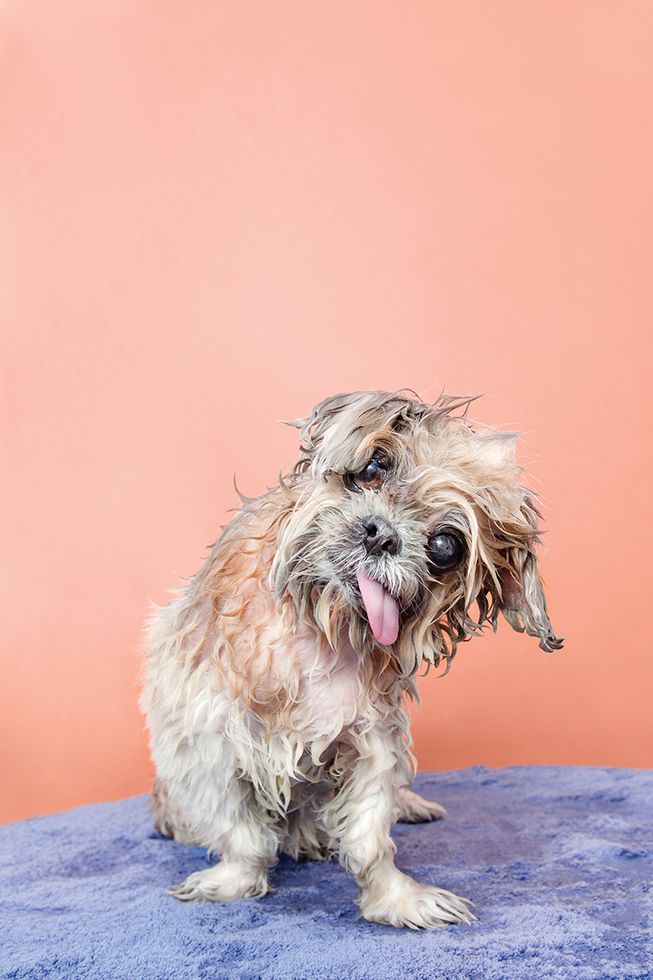
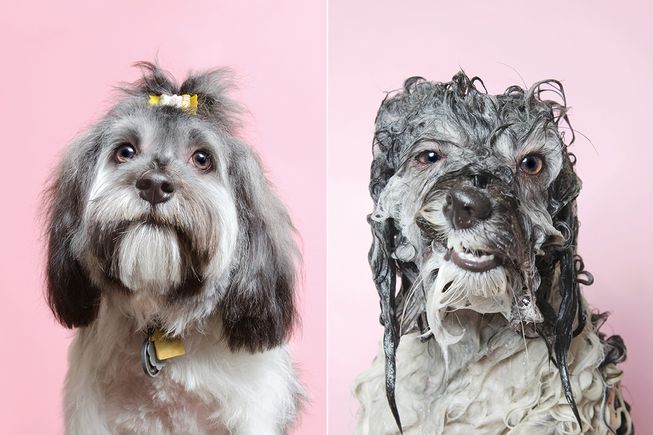
Bath time may not be a pup’s favorite activity, but if these comical “Wet Dog”‘ portraits are any indication, there may be a silver lining to this necessary evil.
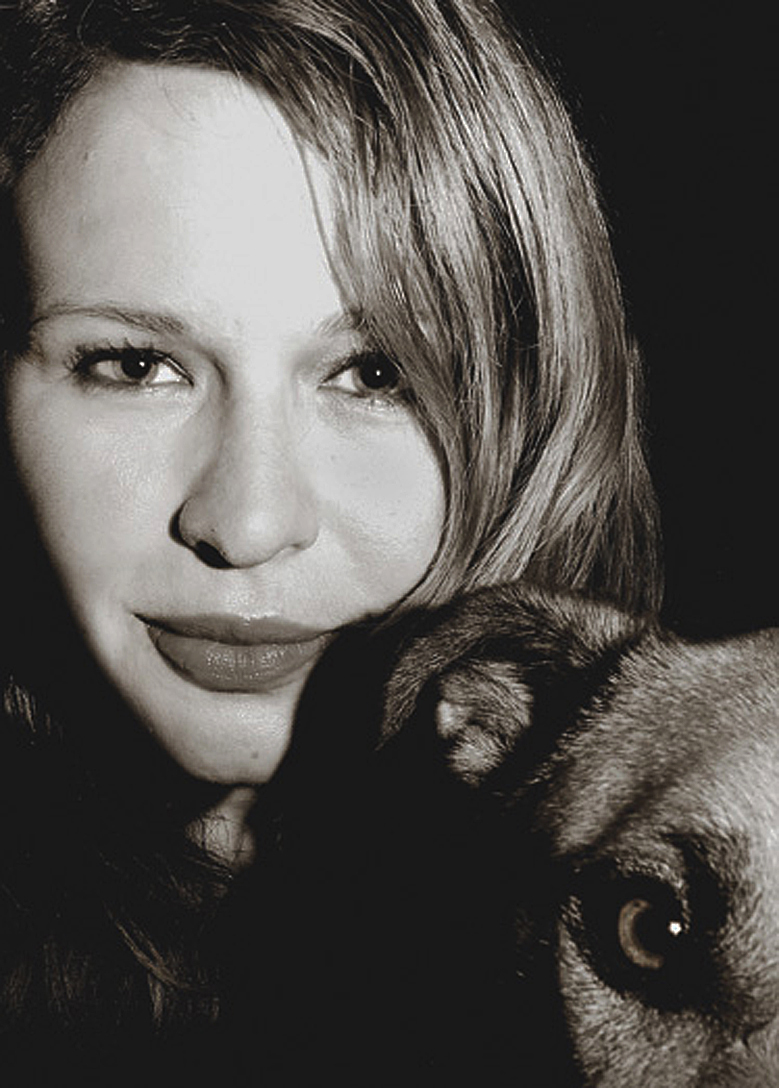
The dog lover behind this endearing series is Sophie Gamand, a New York-based photographer who regularly focuses her lens on canines to examine the relationship they have with humans.
“Wet Dog is a series of dogs captured at the groomer during their least favorite activity: Bath time,” Gamand writes on her website. “I chose this activity because it is a very unnatural one for the dogs, yet it is a direct consequence of their cohabitation with humans.”
Seeing our best friends in such a vulnerable state can be comical and heart-wrenching — especially because canine facial expressions possess an uncanny resemblance to our own.
Gamand began photographing soggy doggies a while back, but after some of the images went viral, she felt compelled to put together a complete “Wet Dog” photo book.
(Photo: Sophie Gamand)
The comical coffee table book, which is now available for purchase, is filled with 120 photos of these soaked doggies — each sporting his own unique post-bath expression.
Continue below for a look at just a few of the images featured in the book.
Benji (Photo: Sophie Gamand)Marnie (Photo: Sophie Gamand)Wanda (Photo: Sophie Gamand)
If you don’t care for yourself, then you can not care for others.
This beautiful Tao Wisdom was published over on Find Your Middle Ground, Val Boyko’s blogsite, and is republished here with Val’s very kind permission.
ooOOoo
Knowing the world is intelligent. Knowing yourself is enlightenment.
Bending the world to your will takes force. Willing yourself to bend is true strength.
Succeeding in the world yields riches. Being content with what is yields wealth.
Apply Tao to the physical world and you will have a long life. See past the physical world to the enduring presence of Tao and death will lose its meaning.
Lao Tzu*
This is one of my favorite passages from the Tao Te Ching.
May it enrich the whole of you and your day. ☯
*Braun Jr., John; Tzu, Lao; von Bargen, Julian; Warkentin, David (2012-12-02). Tao Te Ching (Kindle Locations 492-498). . Kindle Edition.
ooOOoo
May you, and all your friends and loved ones, including your beautiful animals, have a very contented weekend, extending forever more!
Continuing the message of that special bond between us humans and our dogs.
Yesterday’s post regarding the dog saved from the Texas floods came to mind when earlier today (Tuesday) I was reading the Fall issue of The Bark magazine.
Cover of the Fall 2015 issue.
Reading the magazine took me across to The Bark website and from there I ended up reading about dogs being mentioned in people’s obituaries. Here’s a snippet of that article:
Dogs in Obituaries
Included as cherished family members
Karen B. London, PhD | September 18, 2015
It’s been a long time since the majority of people with dogs considered them property, but the inclusion of them in the celebrations and events of life associated with family continues to grow. Birthday parties and gifts for dogs have become increasingly common in recent years, and the number of dogs included in family photos or in signatures on greeting cards is bigger than ever. It’s really old news to say that many people consider dogs to be family members, but interesting studies of the ways in which that’s true continue to be published.
Earlier this year, a study called Companion Animals in Obituaries: An Exploratory Study was published in the journal Anthrozoös. The study illuminated the importance of companion animals, including dogs, based on the frequency and manner in which they were mentioned in obituaries.
Another article in that same issue of The Bark was by photographer Traer Scott. Scott is the author of the book Shelter Dogs and has just launched a new book called Finding Home: shelter dogs & their stories. (Her blogsite is here.) As is detailed on her website:
Traer Scott is an award winning fine art and commercial photographer and author of six books including “Nocturne: Creatures of the Night” (Princeton Architectural Press, 2014) and her newest release “Finding Home; Shelter Dogs and Their Stories” (Princeton Architectural Press, Fall 2015). Her work has been exhibited in several countries and featured in National Geographic, Life, Vogue, People, O, on the NY Times Lens Blog, “Behold” and dozens of other national and international print and online publications. Her first solo museum show Natural History opens at the University of Maine Museum of Art in October 2015. Traer was the recipient of the Rhode Island State Council for the Arts 2010 Photography Fellowship Grant and the 2008 Helen Woodward Humane Award for animal welfare activism. She lives in Providence, Rhode Island with her husband, daughter and adopted dogs: a pit bull and a baby basset hound.
A quick mouse-click took me to Amazon and to Scott’s latest book. Where one reads:
Bold, retiring, serious, sparkling, quirky, or lovable—the dogs in Traer Scott’s remarkable photographs regard us with humor, dignity, and an abundance of feeling. Scott began photographing these dogs in 2005 as a volunteer at animal shelters. Her first book, Shelter Dogs, was a runaway success, and in this follow-up, Scott introduces a new collection of canine subjects, each with indomitable character and spirit: Morrissey, a pit bull, who suffered from anxiety related behaviors brought on by shelter life until adopted by a family with four children; Chloe, a young chocolate Lab mix, surrendered to a shelter by a family with allergies; Gabriel and Cody, retired racing greyhounds; and Bingley, a dog who lost his hearing during a drug bust but was brought home by a loving family that has risen to the challenge of living with a deaf dog. Through extended features we become better acquainted with the personalities and life stories of selected dogs and watch as they experience the sometimes rocky and always emotional transition to new homes. The portraits in Finding Home form an eloquent plea for the urgent need for more adoptive families, as well as a tribute to dogs everywhere.
Further down that Amazon page there was a review by The Bark magazine and what they wrote is the perfect way of heading to the close of today’s post. [My emphasis]
“Photographer Traer Scott follows up her groundbreaking book Shelter Dogs with a new work of equal grace and sensitivity. The portraits in Finding Home not only showcase a collection of canines with indomitable character and spirit, they are also an eloquent plea for more adoptive families, and a tribute to all dogs everywhere.” – The Bark
Please, howsoever you can, share the benefits of adopting a dog from your nearest animal care centre.
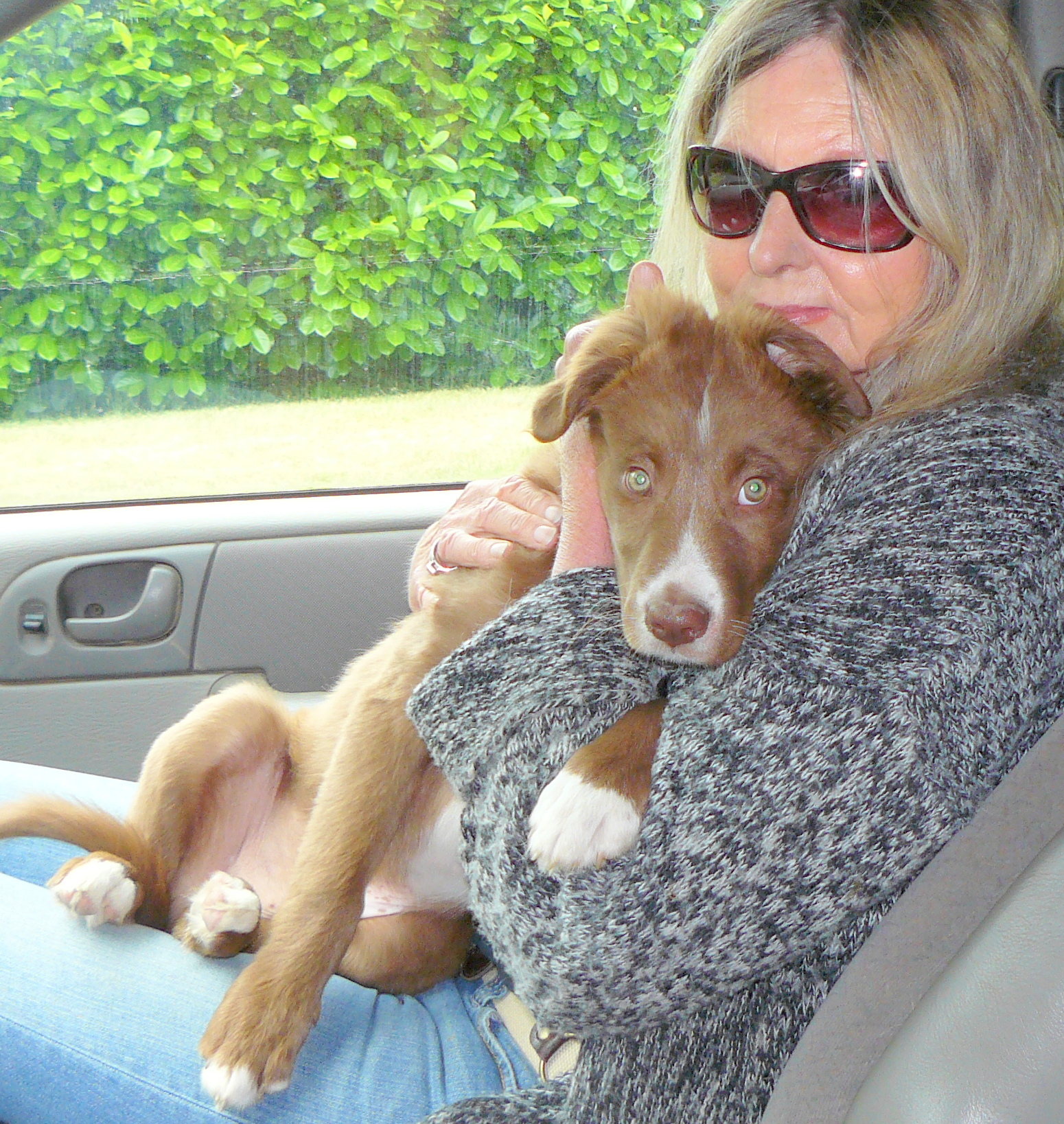
Proof positive of the love that flows between Jean and our Oliver.
Another fabulous lesson we can learn from our dogs.
Stillness. It is a very simple, single word yet, somehow, it sounds as though it belongs to a different age. As though stillness is a very long way from the modern society that millions and millions of us subscribe to.
The dog is the master of being still. Being still, either from just laying quietly watching the world go by, or being still from being fast asleep. The ease at which they can find a space on a settee, a carpeted corner of a room, the covers of a made-up bed, and stretch out and be still, simply beggars belief. Dogs offer us humans the most wonderful quality of stillness that we should all practice. Dogs reveal their wonderful relationship with stillness.
Now watch this entrancing talk from Pico Iyer.
Published on Nov 26, 2014
The place that travel writer Pico Iyer would most like to go? Nowhere. In a counterintuitive and lyrical meditation, Iyer takes a look at the incredible insight that comes with taking time for stillness. In our world of constant movement and distraction, he teases out strategies we all can use to take back a few minutes out of every day, or a few days out of every season. It’s the talk for anyone who feels overwhelmed by the demands for our world.
Why you should listen.
Acclaimed travel writer Pico Iyer began his career documenting a neglected aspect of travel — the sometimes surreal disconnect between local tradition and imported global pop culture. Since then, he has written ten books, exploring also the cultural consequences of isolation, whether writing about the exiled spiritual leaders of Tibet or the embargoed society of Cuba.
Iyer’s latest focus is on yet another overlooked aspect of travel: how can it help us regain our sense of stillness and focus in a world where our devices and digital networks increasing distract us? As he says: “Almost everybody I know has this sense of overdosing on information and getting dizzy living at post-human speeds. Nearly everybody I know does something to try to remove herself to clear her head and to have enough time and space to think. … All of us instinctively feel that something inside us is crying out for more spaciousness and stillness to offset the exhilarations of this movement and the fun and diversion of the modern world.”
What others say
“[Iyer] writes the kind of lyrical, flowing prose that could make Des Moines sound beguiling.” — Los Angeles Times