This could be the most important lesson we learn from our dear dogs.
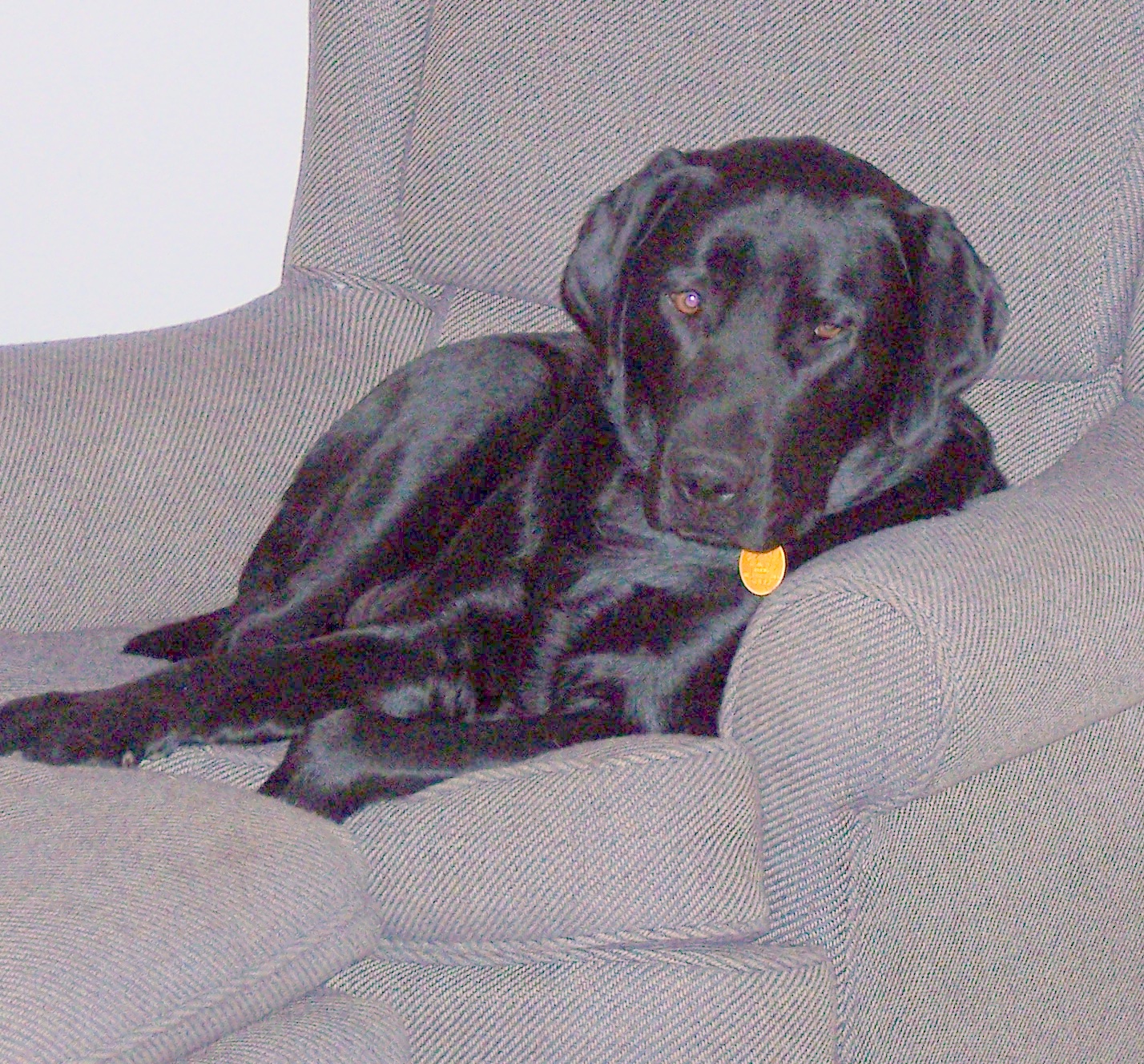
Reclining Clyde
Our immediate neighbours to the South of us, Larry and Janell, lost one of their dogs last Saturday. Here’s the email that was sent out by Larry:
Bad day at the ranch
We lost Clyde today. A neighbor who is a veterinarian came by this morning and did the deed. He had cancer in his shoulder, we had a tumor removed a couple of months ago but there must have been some left because his left front became totally unusable and then his left rear started to go too. We tried everything that the vets could come up with but it was starting to eat him up.
He was born in central South Dakota at a cattle ranch where I got him in April 2004, a six week old black bundle of wrinkles. He learned his manners from Barney, who we lost a little over 2 years ago from cancer as well. Barney and Clyde, what a GREAT pair!!
We still have Baxter the Aussie, who has pretty well recovered from getting hit by a car and severely injured the beginning of last month and Bob the cat.
I will miss Clyde terribly, just like I have ALL my labs! They are wonderful dogs. Just thinking that I’ll probably never have another big floppy eared pal like that makes me want to just cry my eyes out!!
One of the fondest memories of my life is/was going bird hunting, especially ducks, and having a well mannered lab as my partner!! I’ve shared time and my lunch with some good ones!! I so very much wish/hope that there really is a “RAINBOW BRIDGE”!!
Jean and I obviously knew Clyde and can confirm that he was the most gentle, kind-hearted dog one could find.
I wanted to treasure the memory of Clyde, on behalf of all the dear dogs in the world, and asked Larry and Janell if they would be comfortable with me publishing the email. They replied without hesitation that it was fine and then sent me some photographs of Clyde to include in this post.
———-
So the easy course for this post would be to leave it at this and move on. (And, please, if you are not up for a degree of introspection from yours truly, then do stop reading at this point!)
———-
But when I awoke this morning (Tuesday), a little after 5am, Jean still asleep next to me, three dogs likewise across the bed, and knowing I would be writing about Clyde later on in the day, I started to reflect on life and death and was there a lesson for us humans in the death of our beloved dogs. When Jean awoke an hour later, I asked her how many of her dogs had died over the years. She replied that there had been at least twenty dogs that had died and that she could remember each and every one of them.
That then opened up a much deeper reflection on death and whether our dogs really can offer us a lesson in this regard. For I’m not ashamed to admit that at times I feel scared about the future. I’m 70-years-old, seeing the signs of what the medics call ‘cognitive ageing’, have a few minor challenges in the areas of prostate, blood pressure, thyroid, and know how terribly unprepared I am for the second of life’s two certainties: death.
Jean’s view was that dogs have the ability to live so perfectly in the present that, except in very rare occasions, they don’t grieve for the loss of a loved one. Clearly, a significant difference between dogs and us humans.
Then it was clear that we humans only grieve for the death of someone we knew. That within the family that rarely extended back beyond our grand-parents. That seemed to offer some philosophical help. For if it comes down to the memories that others will have of us, after we have died, then it behoves us to live the best life we can, doing our best at every stage in our lives. Accepting that it is impossible not to make mistakes and end up with regrets, yet so long as we try to be true to ourselves then that’s all that matters.
It was then a very small onward step to love and the potential for the greatest learning from our dogs. For dogs so frequently show us the magic of unconditional love.
Back to Clyde.
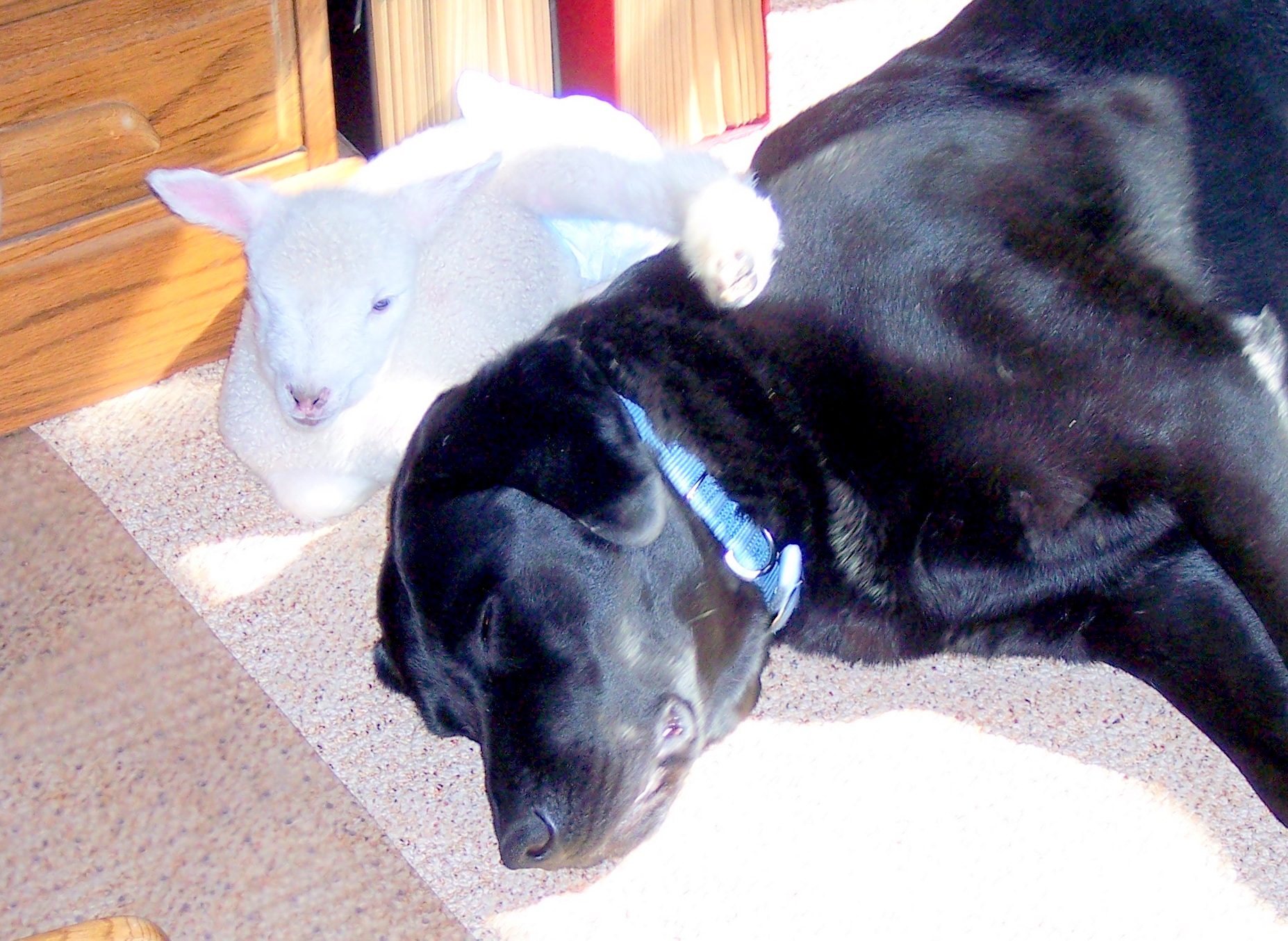
Here are two other photographs of dear Clyde, separated by the words in Larry’s covering email.
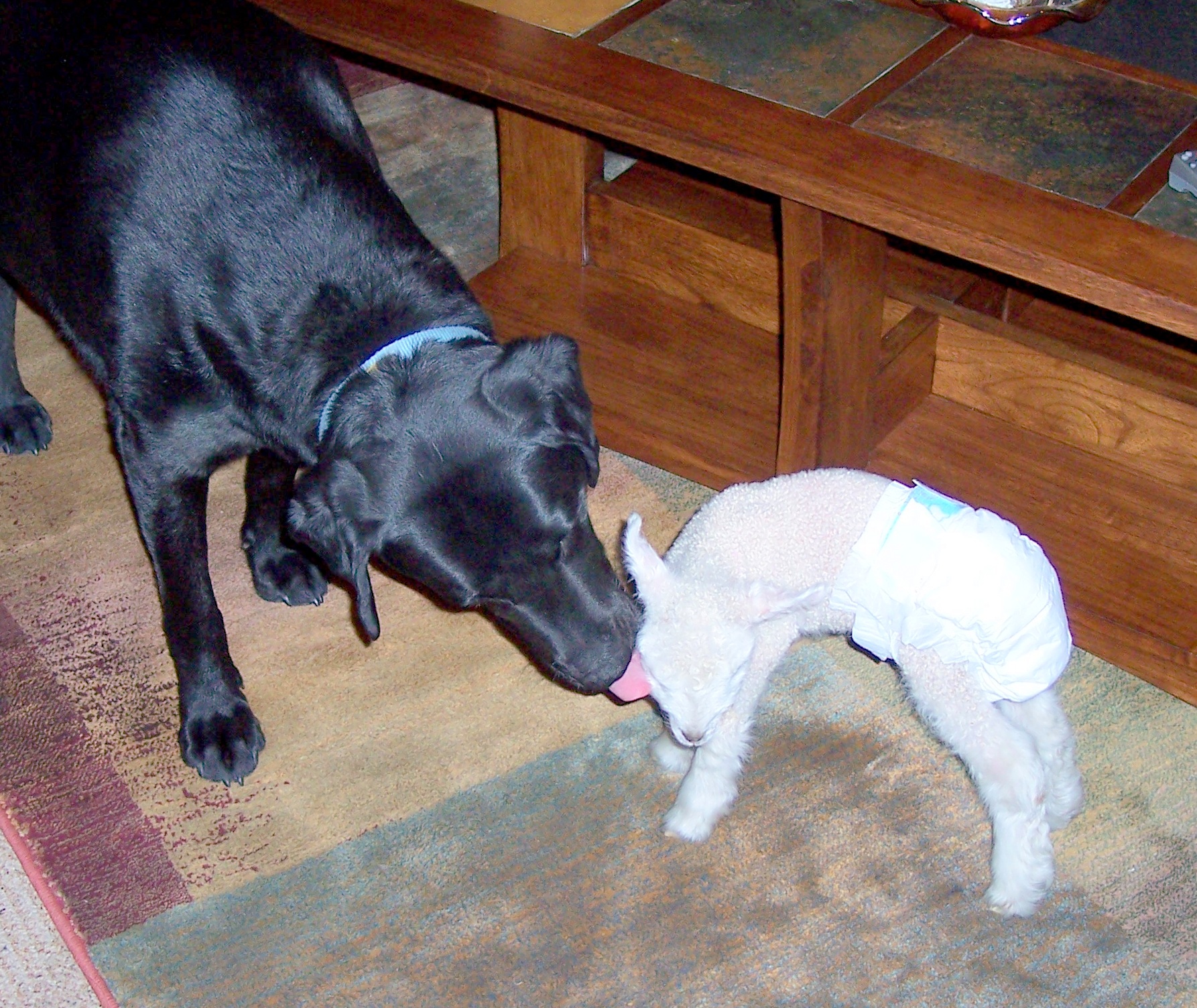
Clyde cleaning Pearl the lamb.
Paul, here are a few pictures of Clyde. Feel free to use what you like. We always said Clyde had a big heart, big stomach and no ambition as evidenced by these pictures! At one time we were nursing an orphan lamb in the house, Clyde adopted the lamb, Pearl, and looked after her, Larry.
Clyde and Pearl demonstrating a dear friendship.
I know that when our Lilly dies, she is 17, Jean will weep many tears.
I know that when our Pharaoh dies, he is soon to be 12, I will weep many tears.
But those pictures of Clyde remind all of us that it is in life that it is important to love. Important, almost beyond words, to be kind to others, to offer and receive love, and to treasure the present.
So, yes, we must shed a few tears of the heart yet thereafter we must treasure the memories.
“For if we cry at losing the sun, our tears will hide the light of the stars.”
Just a very beautiful true story. (And I am indebted to Suzann for sending it on to me.) One couldn’t ask for a better post to follow on from yesterday’s Picture Parade theme on parenting.
ooOOoo
The Greyhound
In 2003, police in Warwickshire, England, opened a garden shed and found a whimpering, cowering dog. The dog had been locked in the shed and abandoned. It was dirty and malnourished, and had quite clearly been abused.
In an act of kindness, the police took the dog, which was a female greyhound, to the Nuneaton Warwickshire Wildlife Sanctuary, which is run by a man named Geoff Gruecock, and known as a haven for animals abandoned, orphaned, or otherwise in need.
Geoff and the other sanctuary staff went to work with two aims: to restore the dog to full health, and to win her trust. It took several weeks, but eventually both goals were achieved. They named her Jasmine, and they started to think about finding her an adoptive home.
Jasmine
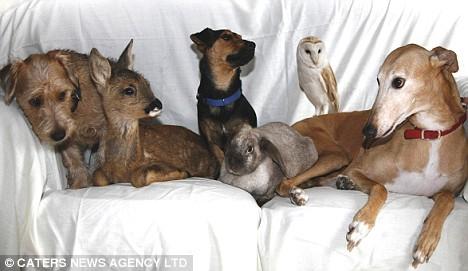
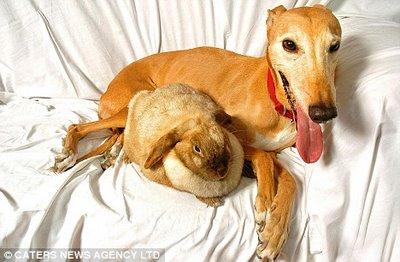
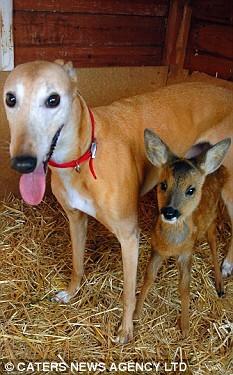
Jasmine, however, had other ideas. No one quite remembers how it came about, but Jasmine started welcoming all animal arrivals at the sanctuary. It would not matter if it were a puppy, a fox cub, a rabbit or, any other lost or hurting animal. Jasmine would just peer into the box or cage and, when and where possible, deliver a welcoming lick. Geoff relates one of the early incidents. “We had two puppies that had been abandoned by a nearby railway line. One was a Lakeland Terrier cross and another was a Jack Russell Doberman cross. They were tiny when they arrived at the centre, and Jasmine approached them and grabbed one by the scruff of the neck in her mouth and put him on the settee. Then she fetched the other one and sat down with them, cuddling them.” “But she is like that with all of our animals, even the rabbits. She takes all the stress out of them, and it helps them to not only feel close to her, but to settle into their new surroundings. She has done the same with the fox and badger cubs, she licks the rabbits and guinea pigs, and even lets the birds perch on the bridge of her nose.” Jasmine, the timid, abused, deserted waif, became the animal sanctuary’s resident surrogate mother, a role for which she might have been born. The list of orphaned and abandoned youngsters she has cared for comprises five fox cubs, four badger cubs, fifteen chicks, eight guinea pigs, two stray puppies and fifteen rabbits – and one roe deer fawn. Tiny Bramble, eleven weeks old, was found semi-conscious in a field. Upon arrival at the sanctuary, Jasmine cuddled up to her to keep her warm, and then went into the full foster-mum role. Jasmine the greyhound showers Bramble the roe deer with affection, and makes sure nothing is matted. “They are inseparable,” says Geoff. “Bramble walks between her legs, and they keep kissing each other. They walk together round the sanctuary. It’s a real treat to see them.” Jasmine will continue to care for Bramble until she is old enough to be returned to woodland life. When that happens, Jasmine will not be lonely. She will be too busy showering love and affection on the next orphan or victim of abuse. Pictured left to right are: “Toby”, a stray Lakeland dog; “Bramble”, orphaned roe deer; “Buster”, a stray Jack Russell; a dumped rabbit; “Sky”, an injured barn owl; and “Jasmine”. All told a mother’s heart doing best what a caring mother does.
ooOOoo
It was but a moment to find a video about Jasmine over on YouTube:
We are completely self funded. We receive no financial backing and so have to raise every single penny towards the upkeep of the sanctuary. It costs on average £360 per week to keep the sanctuary open, and a further £120 per week on food and bedding for the animals in our care. Please help us continue to rescue and rehabilitate Britain’s wildlife.
If you go to this link you can see what would be the best donation method for you. Plus, because the Sanctuary is not open for callers on Sundays I will call today (Monday) * and see if there are more details about the best way to offer support from those living outside the UK. Unconditional love is so perfectly demonstrated by our incredible dogs.
* I did call and speak with Catherine who recommended PayPal as the best means of donating to their cause, especially for those outside the UK.
36 golden retrievers rescued from streets of Turkey
Rescuers in Atlanta shower the lucky pups with love, medical attention and playtime.
By: Mary Jo DiLonardo
Tue, May 12, 2015 at 04:00 PM
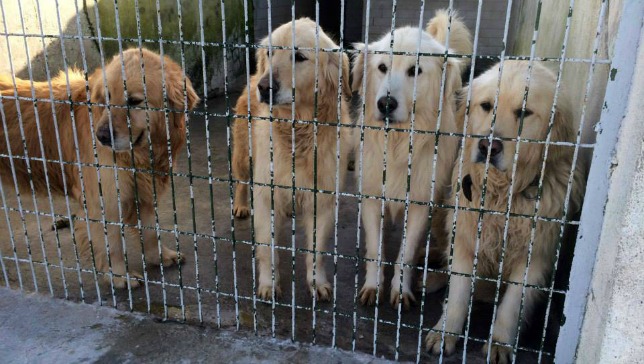
Golden retrievers are packed into an animal shelter in Turkey before being rescued and flown to Atlanta. (Photo: Adopt a Golden Atlanta/Facebook)
Three dozen abandoned golden retrievers made the long trek from the streets of Istanbul, Turkey, to an Atlanta suburb this week thanks to the efforts of an animal rescue group.
The dogs were discovered by an American living in Turkey, who said she saw them living on the streets and taking over shelters. The breed was once considered a status symbol, but as the dogs became more prolific, their popularity waned and the pets were quick to be discarded. On the harsh streets of Istanbul, the gentle dogs didn’t fare well against vicious feral dogs.
Adopt a Golden Atlanta arranged for 36 of the dogs to be flown to the U.S. where they’re now housed at the Pet Lodge Pet Resort in Alpharetta, an Atlanta suburb. They’ve been given medical attention, baths and lots of playtime. Although they don’t yet understand English commands, volunteers say they seem happy with all the attention — wagging tails all around.
[See footnote]
The goldens made a 12-hour flight and seven-hour layover to get to their new home. They range in age from 6 months to 10 years.
The pups should be available for adoption in a few weeks, and they already have names, says Adopt a Golden founder Lauren Genkinger, who spearheaded the rescue effort.
“They’re the freedom dogs and all of them have been given names, Freedom, Patriot, Liberty, Glory…” Genkinger told WXIA TV in the video above. “It wasn’t easy coming up with 36 patriotic names. The only thing missing from this story … is someone to call America in from the yard … to dinner.”
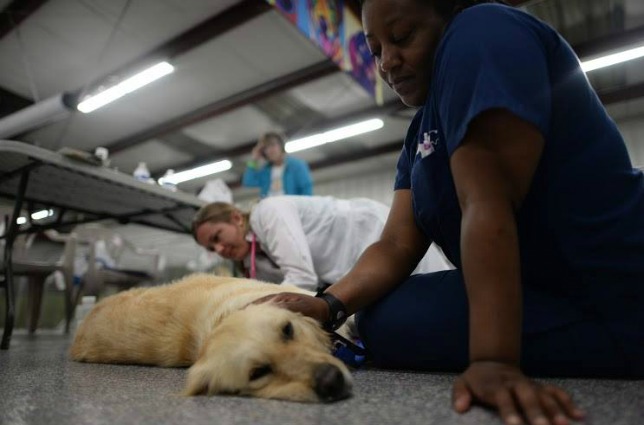
A golden retriever is examined in Atlanta after arriving from Turkey. (Photo: Adopt a Golden Atlanta)
ooOOoo
Footnote:
There is a two-minute video in the MNN version that I was unable to transport over to here. It may be watched here.
There was an item on the BBC News website yesterday morning that jumped out at me. The BBC headline is my sub-title for today. Here’s how the BBC opened that item:
Actor Johnny Depp has been told he has until Saturday to remove his dogs from Australia or they will be put down.
Depp and his wife Amber Heard are accused of not declaring Yorkshire Terriers Boo and Pistol to customs officials when they flew into Queensland by private jet last month.
Australia has strict animal quarantine laws to prevent importing infections.
Agriculture Minister Barnaby Joyce said he understood the dogs were being sent back to the US.
The dogs were discovered when a picture was posted of them at grooming parlour.
Later on that BBC report mentioned:
An online petition to save the “cute dogs” had received nearly 5,000 signatures by late on Thursday local time in Australia.
“Have a heart Barnaby! Don’t kill these cute puppies,” it appealed.
OK, Mr. Depp was a silly boy but his mistake must not be paid for with the lives of these wonderful dogs.
That petition is over on Change.org and here is the direct link. You will read these details.
There’s just 48 hours before Johnny Depp’s two puppies Boo & Pistol could be euthanised by Australian authorities. Please help save them!
Johnny Depp brought them to Australia with him to shoot the next Pirates of the Caribbean.
But today Agriculture Minister Barnaby Joyce has said that because he didn’t follow particular travel rules that he’ll seize and destroy them by the weekend if they’re not removed from Australia.
This seems so extreme and unnecessary. He shouldn’t kill these cute dogs simply because Depp didn’t follow particular rules.
Help me tell Barnaby Joyce not to kill or remove Johnny Depp’s dogs from Australia!
Have a heart Barnaby! Don’t kill these cute puppies.
While Jean and I no longer attend meetings of the Southern Oregon Beekeepers Association, the meetings are a little too far away for us, I still subscribe to their email updates. Thus that’s how I was informed of a most incredible set of photographs on the National Geographic website. Here’s how the article opens:
Researchers take advantage of photography technology developed by the U.S. Army to capture beautiful portraits of bees native to North America.
Text by Jane J. Lee
Photography by Sam Droege, USGS
Bees are the workhorses of the insect world. By transferring pollen from one plant to another, they ensure the next generation of the fruits, nuts, vegetables, and wildflowers we so enjoy.
There are 4,000 species of North American bees living north of Mexico, says Sam Droege, head of the bee inventory and monitoring program at the U.S. Geological Survey (USGS).
Only 40 of them are introduced species, including the European honeybee. (See “Pictures: Colored Honey Made by Candy-Eating French Bees.”)
Most of the natives are overlooked because “a lot of them are super tiny,” Droege says. “The bulk of the bees in the area are about half the size of a honeybee.”
The native species also go unnoticed because they don’t sting, he adds. They quietly go about their business gathering pollen from flowers in gardens, near sand dunes, or on the edges of parks.
The bee pictured above is a species of carpenter bee from the Dominican Republic known as Xylocopa mordax. It nests in wood or yucca stems, and is closely related to the U.S. species that chews through the wood in backyard decks.
Trust me when I say that to view these images, and more, in their breathtaking beauty you need to go here and revel in what you see and read. Plus, in the text above I didn’t include the many links that are in the Nat Geo site’s version – so go there!
The natural world is so deserving of man’s care and protection.
I ran out of writing time yesterday so looked for a quick and easy post to offer you.
Not that that undervalues what is presented; far from it!
George Monbiot’s essays are frequently on topics that concern him and rightly so. However, last Thursday George published an essay that offers real hope to those that want to see an end to the ceaseless news of lost species. It is called Otter Joy and is published with George Monbiot’s kind permission.
ooOOoo
Otter Joy
The return of Britain’s otters offers a glimpse of rewilding’s great rewards
By George Monbiot, published on the Guardian’s website, 7th May 2015
I spent last week travelling with my family across the Scottish Highlands, meeting land managers to discuss possibilities of rewilding. The speed of change there is astonishing, and opportunities for a mass restoration of living systems are emerging faster than I could have imagined even a year ago. I’ll be writing about this in a few weeks, when Rewilding Britain is launched.
But for now I want to talk not about the practicalities of rewilding but about its essence: the reason why this idea excites and inspires me so much that I’ve chosen to devote much of the rest of my life to it.
During our tour across the Highlands we stopped for a few days in the village of Shieldaig, at the head of a sea loch on the west coast. We took a cottage overlooking Shieldaig Island, partly because, for the past few years, white-tailed eagles have been nesting there. After becoming extinct in Britain in 1916, this magnificent bird, bigger than a golden eagle, was reintroduced to the island of Rum in 1975. It has been spreading slowly along the west coast. (It could have moved further across Scotland were it not for shooting and poisoning by grouse estates and others). This is one of the species I would love to see returning to much of the rest of Britain.
Unfortunately, the eagles have chosen another place to nest this year. But there were other returning species to see. I woke one morning when it was still dark, and lay in bed until I heard the song thrush in the sycamore behind the cottage start to sing. I slipped out as the light began to rise over the hills.
There’s a path that leads out of the village, winding north over the headlands and around the small bays of Loch Shieldaig. The willow warblers in the trees along the path had started to sing, and from behind the crest of a hill I heard the cry of an unfamiliar raptor – listening later to recordings, I felt it might have been a white-tailed eagle. There was not a tremor of wind and the air was clear. I could see the promontories and islands stepping away for many miles across a polished sea.
As I came over a low ridge, I noticed a disturbance in the water below me, a few metres from the shore. I dropped into the heather and watched. A moment later, two small heads broke from the sea, then the creatures arced over and disappeared again.
After another moment, the larger one – the dog otter – scrambled out of the water with something thrashing in its mouth. He dropped it onto the rocks, gripped it again, then chewed it up. Then the bitch emerged from the sea beside him, also carrying something, that she dispatched just as quickly. They plunged in again, and I watched the trails of bubbles they made as they rummaged round the roots of the kelp that filled the shallow bay.
When they emerged once more, each with a fish in its mouth, I was able to identify the quarry. They were catching rocklings: small, very slippery fish of the same olive-brown as the kelp. Over the next half hour, each of them caught about fifteen. I marvelled at their ability to grab such difficult prey. I loved the slick, swift movements with which they dived and dolphined and twisted underwater. It looked to me like an expression of pure joy.
Hiding among the rocks and heath, I could keep ahead of the otters without being seen, as they foraged round the coast. As the cliffs became lower, I found myself coming ever closer to them. Then, though I don’t know why, the otters emerged from the water without fish, shook themselves out, and climbed up the rocks, long low bodies undulating, towards me. The dog grunted and huffed while his mate made a high whickering noise. They kept raising their heads and staring in my direction. But as I was buried in the heather and they have weak eyesight, I doubt they could have seen me. Soon they were standing about 20 or 30 feet away, raising their bristly little faces to smell the air. I could hear them panting.
Then they turned and rippled back down the rocks, slipped into the water with scarcely a splash and started hunting round the coast once more. Soon they disappeared around a cliff I couldn’t negotiate.
I walked back elated, recharged with wonder and enchantment. A week later, the feeling still buoys me up.
While many species in this country are in rapid decline, the otter is among the few whose prospects are improving. This is partly because it’s no longer hunted, and partly because of a reduction in the organochlorine insecticides that accumulated up the food chain. But, especially in England, it still inhabits just a fraction of its former range.
Otters are an adaptable species that, given the chance, can quickly recolonise the habitats from which they have been excised. Their hesitant return sharpens the hopes of those of us who want a wilder Britain, who strive for the re-establishment of magnificent, enthralling wildlife that you don’t have to travel halfway around the world to see.
Already otters are beginning to appear in a few towns and cities. As they become accustomed to their protected status, they’re likely to become less shy and easier to watch, bringing nature’s wonders closer to the lives of people who have become disconnected from the living planet. If our advocacy of the widespread return to Britain of animals such as beavers, boar and lynx succeeds (and one day, perhaps, of wolves, bison, pelicans, bluefin tuna and whales of several species), the opportunities for re-enchantment will begin to blossom in places that are currently little more than wildlife deserts.
Everyone should be able to experience such marvels, and to step outside the ordered, regulated, predictable world of our own making, that sometimes seems to crush the breath out of us.
2011 has proved another record breaking year for breeding pairs of Scotland’s largest bird of prey. White-tailed eagles soared to new heights despite heavy storms throughout the 2011 breeding season.
Conservationists, and many sea eagle enthusiasts, had been concerned that the high winds felt across Scotland in May could have had a detrimental impact on breeding white-tailed eagles at the vulnerable part of the season when most nests contain small chicks. Indeed, some nests failed including that of BBC Springwatch star, nicknamed “Itchy”, who experts fear lost his chicks in the storm.
However, the bad weather failed to blow the species off course. Recent survey figures for the 2011 breeding season reveal that there were 57 territorial pairs in Scotland, an increase of 10 per cent on the previous year. A total of 43 young fledged successfully from these nests.
George’s essay also mentioned the Scottish sea otter.
This game of blogging would have no meaning at all if it were not for the networking and sharing of so many ideas, thoughts and feelings unlimited by geographical distances. The ‘Likes’ and responses to my Hope Has A Place story yesterday meant so much.
I was trawling through my folder looking for something that felt good to publish after yesterday and came across the following that was sent in by dear friend, Dan Gomez, about a month ago.
ooOOoo
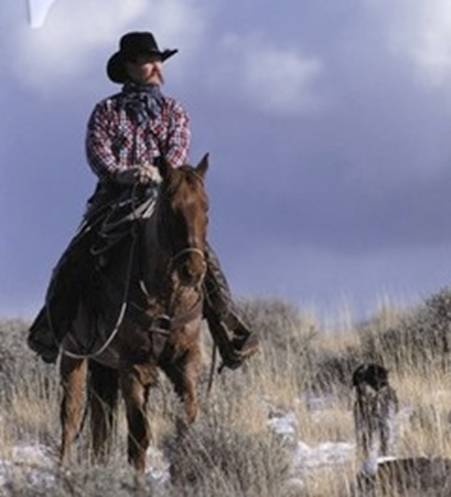
An old cowboy was riding his trusty horse followed by his faithful dog along an unfamiliar road. The man was enjoying the new scenery, when he suddenly remembered dying, and realized that the dog beside him had been dead for years, as had his horse. Confused, he wondered what was happening, and where the trail was leading them.
After a while, they came to a high, white stone wall that looked like fine marble. At the top of a long hill, it was broken by a tall arch topped by a golden letter “H” that glowed in the sunlight.
Standing before it, he saw a magnificent gate in the arch that looked like mother-of-pearl, and the street that led to the gate looked like gold.
He rode toward the gate and as he got closer he saw a man at a desk to one side. Parched and tired out by his journey, he called out, “Excuse me, where are we?“
“This is Heaven, sir,” the man answered.
“Wow! Would you happen to have some water?” the old cowboy asked.
“Of course, sir. Come right in, and I’ll have some ice water brought right up.”
As the gate began to open, the cowboy asked, “Can I bring my partners, too?”
“I’m sorry; sir, but we don’t accept pets.”
The cowboy thought for a moment, then turned back to the road and continued riding, his dog trotting by his side.
After another long ride, at the top of another hill, he came to a dirt road leading through a ranch gate that looked as if it had never been closed. As he approached the gate, he saw a man inside, leaning against a tree and reading a book.
“Excuse me,‘ he called to the man. “Do you have any water?”
“Sure, there’s a pump right over there. Help yourself.”
“How about my friends here?” the cowboy gestured to his dog and his horse.
“Of course! They look thirsty, too,” said the man.
The three of them went through the gate, and sure enough, there was an old-fashioned hand pump with buckets beside it. The cowboy filled a cup and the buckets with wonderfully cool water and took a long drink, as did his horse and dog.
When they were full, he walked back to the man who was still standing by the tree. “What do you call this place?” he asked.
“This is Heaven,” the man answered.
“That’s confusing, the man down the road said that was Heaven, too.”
“Oh, you mean the place with the glitzy, gold street and fake pearly gates? That’s hell.”
The cowboy retorted, “Doesn’t it make you angry when they use your name like that?”
“Not at all. Actually, we’re happy they screen out the folks who would leave their friends behind.”
ooOOoo
Dan’s email went on to include this:
Sometimes, we wonder why friends forward things to us without writing a word. Maybe this explains it? When you’re busy, but still want to keep in touch, you can forward emails. When you have nothing to say, but still want to keep in contact, you can forward jokes. When you have something to say, but don’t know exactly how to say it, you can forward stuff.
A ‘forward’ lets you know that you’re still remembered, still important, still cared about.
So the next time you get a ‘forward’, don’t think of it as just another joke. Realize that you’ve been thought of today and that your friend on the other end just wanted to send you a smile.
PS: You’re welcome at my watering hole anytime.
Let me underline Dan’s PS by saying that all of life’s humans and creatures are welcome here!
Before you read any further please listen to Enya’s mesmerisingly beautiful track whilst reading the lyrics.
One look at love and you may see
It weaves a web over mystery,
All ravelled threads can rend apart
For hope has a place in the lover’s heart.
Hope has a place in a lover’s heart.
Whispering world, a sigh of sighs,
The ebb and the flow of the ocean tides.
One breath, one word may end or may start
A hope in a place of the lover’s heart.
Hope has a place in a lover’s heart.
Look to love you may dream,
And if it should leave then give it wings.
But if such a love is meant to be;
Hope is home, and the heart is free
Under the heavens we journey far,
On roads of life we’re the wanderers,
So let love rise, so let love depart,
Let hope have a place in the lover’s heart.
Hope has a place in a lover’s heart.
Look to love and you may dream,
And if it should leave then give it wings.
But if such a love is meant to be;
Hope is home, and the heart is free.
I have this notion in my head that we humans are predisposed to give priority to bad news over good news. I guess it does make sense especially when one reflects on likely times a few centuries back; or more.
However, I am certain that I am not alone in disliking intensely the predominance of ‘alarmist’ news headlines in all forms of media. We neither have broadcast television here at home nor subscribe to a daily newspaper although I do admit to dropping in regularly to the BBC News website.
The other morning I awoke a little before 5am and not wanting to awaken Jeannie decided to listen to some music using my iPod and earphones. I had a couple of Enya albums on the iPod and soon was listening to her album The Memory of Trees. Then up came track seven, Hope Has A Place, sung by Enya, composed by Roma Ryan.
I had forgotten how incredibly beautiful was the track.
Then my mind moved to reflecting on the life I have here at home with Jean and the dogs. There were three dogs sleeping on the bed while the track was playing: Hazel, Sweeny and Pedy.
How the love I receive from the dogs and the love I receive from Jean give me such freedom. Such emotional freedom to be the person I truly want to be. So perfectly expressed in the closing line of the lyrics: Hope is home, and the heart is free.
At this juncture I paused in writing this post, it was a little after 2pm yesterday, grabbed my camera and went into the living room. The two photographs below reinforce my message.
oooo
Sweeny, Pedy and Jeannie – bountiful, unconditional love!