So if we are discussing feelings, as we are today, there is no better place to start than by me expressing my feelings of joy and love that I feel for, and still receive from, my gorgeous Jean. I know five years at our stage of life is far fewer than for many married couples but, nevertheless, they have been beautiful years and I wish for many more.
Diane Jackson, Bridesmaid, Jean and me, my mother and Dan Gomez, Best Man. November 20th, 2010
I had been pondering these last few days as to what I would write for today. For I wanted to celebrate our anniversary yet wanted a broader theme; so to speak.
There couldn’t have been a better answer to that ponder than a recent video that was presented by TED Talks. It was a talk by Carl Safina about what is going on inside the brains of animals: What are animals thinking and feeling? Or in the fuller words of that TED Talk page:
What’s going on inside the brains of animals? Can we know what, or if, they’re thinking and feeling? Carl Safina thinks we can. Using discoveries and anecdotes that span ecology, biology and behavioral science, he weaves together stories of whales, wolves, elephants and albatrosses to argue that just as we think, feel, use tools and express emotions, so too do the other creatures – and minds – that share the Earth with us.
Safina is very qualified to speak on the subject as his bio on that TED Talk page reveals. However, I couldn’t find a YouTube link for that TED Talk but could find two videos that are very good alternatives.
The first is a short video of Safina promoting his book Beyond Words: What Animals Think and Feel.
The second is a much longer video that is Safina’s presentation at the recent Ransom A. Myers Lecture. If you can spare the time, then do watch it. You will not be disappointed.
Published on Oct 9, 2015
8th Annual Ransom A. Myers Lecture in Science and Society. Thursday, October 1st 2015.
Title: Beyond Words: What animals think and feel
Presented by: Dr. Carl Safina, Marine Ecologist/Author, The Safina Centre
Finally, and please forgive my indulgences, I want to close today’s post with some photographs that for me have “feelings” stamped all over them!
Jeannie, Hazel and cat feeling trust for each other.
oooo
One of our local wild deer trusting Jeannie.
oooo
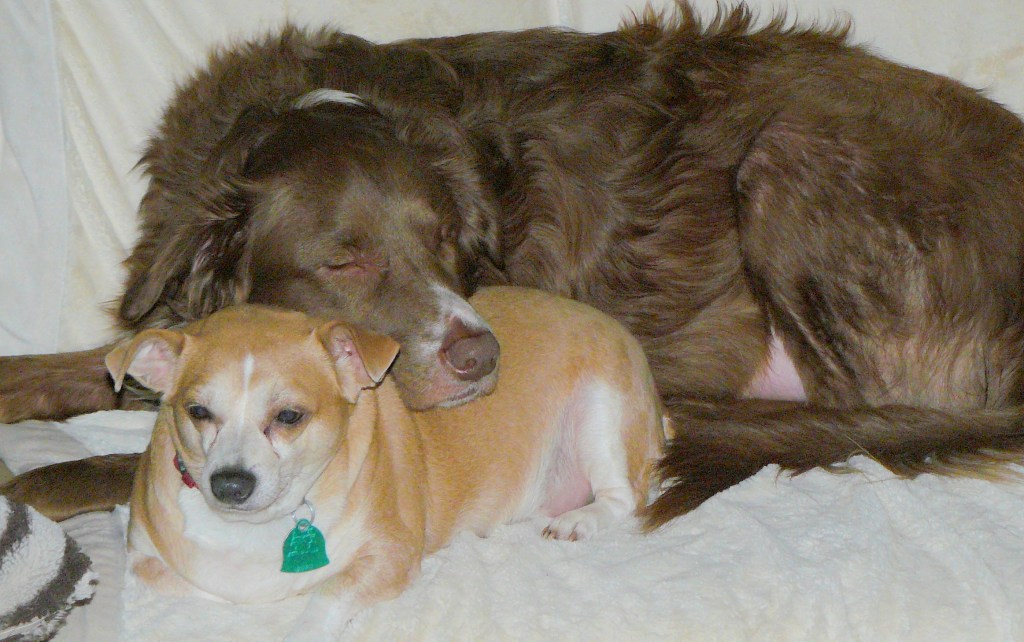
Oliver and Pedy adoring each other.
oooo
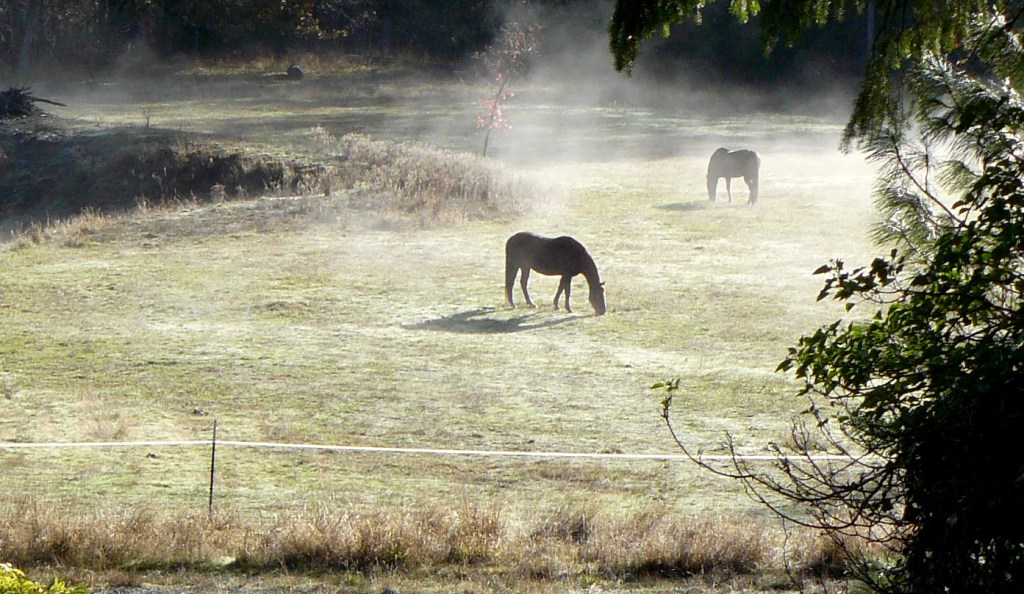
Last but not least! A photograph taken two days ago by yours truly reflecting my feelings of wonder at being alive in this world!
Another day that almost disappeared as a result of my impending book launch soaking up so much time.
The book should be available for sale by the end of the month, with the launch and book signing taking place locally in Grants Pass on Saturday, December 12th. Followers of this blog will be offered a special discount on the ebook versions once they are released shortly. So if that “rocks your boat” then sign up to follow this blog. Here’s a description of the book:
About the book
There’s a tiny amount of domesticated wolf in all of us. The relationship between canids and humans goes back nearly 40,000 years, when dogs split away from wolves. With our dogs, we have traveled the ancient track from hunter-gatherers to modern humans. However, this track now seems to offer an uncertain future for humankind and society.
Learning from Dogs shows how and why now, more than ever, we humans need to learn from our dogs. At times the book relates personal stories through autobiography, diary, and blog entries. Other times it reinforces a point with speculative and imaginative fictional narrative. Throughout the book, there is a foundation about the history of wolves, dogs, and humans, as the author injects factual research to assist us to more fully understand the importance of this unique relationship.
With just the right blend of humor, story-telling, perception, compassion, and insight, the author shares his unusual perspective and how he came to share what he’s learned through a lifetime of observation and interaction with dogs.
Readers who love dogs, or any animals, will connect with this book and become more fully aware of why our animal friends are valuable to learn from to help us heal the challenges of the 21st century. Occasionally launching into intellectual tangents that will provide intrigue and inspiration for the heart and soul, the book ultimately returns to the central thesis: “What we can (and should) learn from dogs.”
Pat Shipman, retired adjunct professor of anthropology at The Pennsylvania State University, and the author of The Animal Connection and The invaders; How Humans and Their Dogs Drove Neanderthals to Extinction, described the book as, “both wise and thoughtful. It also includes some of the best writing about the intimate and special relationship between dogs and humans I have ever read.”
The Foreword to the book is by well-known local vet, James R. Goodbrod, Master’s Degree, Doctor of Veterinary Medicine.
So with no further ado, here is an informative article that was recently published by Mother Nature News and is republished here with their kind permission.
ooOOoo
Is your dog a playground bully?
What starts out as rambunctious play can quickly turn into a toothy problem.
By: Jaymi Heimbuch, November 12, 2015.
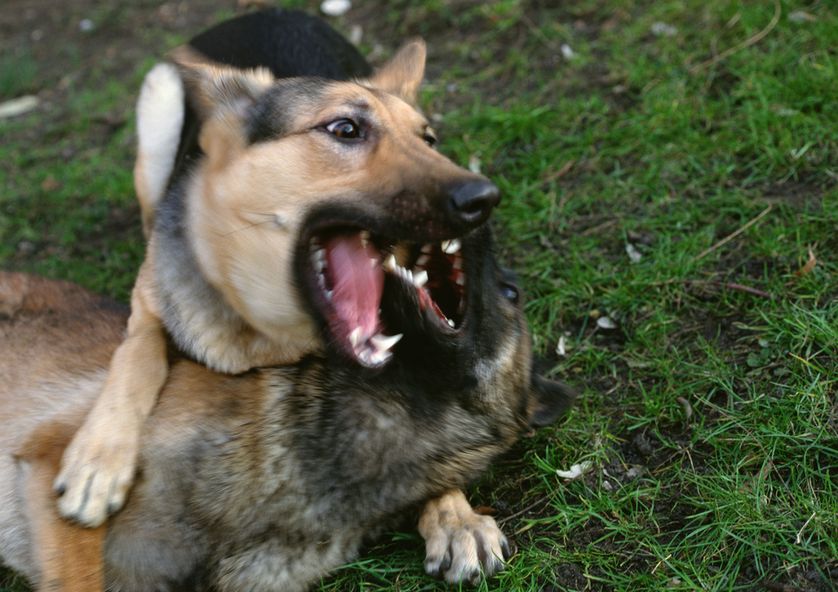
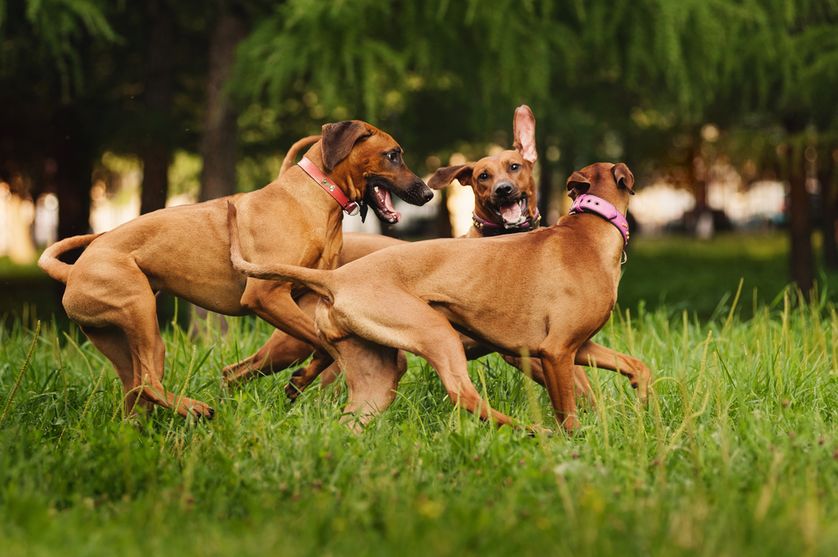
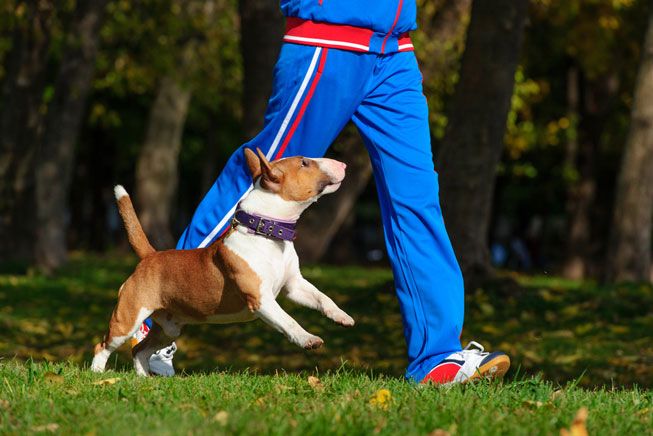
I’m the boss and you’ll do as I say! (Photo: Rita Kochmarjova/Shutterstock)
You’re at the park with your dog as he finds another four-legged buddy to play with. The two dogs seem to be having fun, but something feels amiss. Your dog is extra rambunctious and is really pushing the other dog around. Maybe the other dog is handling your dog’s overly rough-and-tumble attitude with patience. Or perhaps the other dog begins to hide behind or between his owner’s legs, looking for a break from your bossy dog.
Been in this situation? You just might have a bully on your hands.
Bullying behavior is a bigger problem than simply having a rude dog. In the immediate situation, it can lead to an attack or a fight, and in the long run it can cause the dog’s unappreciative play partner to become fear-aggressive, thinking all dogs are bullies. That’s why it’s important to stop bullying behavior the second you see it and train your dog to play appropriately.
Signs of bullying behavior include:
Being overly demanding about getting a toy, attention from people, or other resources
Continually standing over or pinning another dog to the ground
Ignoring signals from a play partner that the play is too rough or unwanted
An escalating intensity when the other dog pushes back or tries to leave
If you have a dog that behaves like a bully on the playground, there are steps you can take to fix the situation, which will benefit both your dog and all the other dogs he wants to play with.
Play can quickly escalate into bullying behavior. Here’s how to keep an eye out for it. (Photo: Photick/Shutterstock)
What causes bullying behavior?
“Over-stimulation often leads to bossy behavior,” says Erin Kramer, an expert dog trainer who specializes in rehabilitating fearful, anxious and aggressive dogs. “This means that as the energy level rises, such as during chasing games, tug of war, or even just enthusiastic wrestling, dogs often become too stimulated and start to ignore signals from other dogs that they are playing too rough or that their interaction is not welcome. Dogs also feed off of each others’ energy, so a group of playing dogs can escalate into over stimulation and bullying behavior faster than a dog would with just one play partner.”
Kramer adds that simply watching how another dog is responding to your dog can tell you if your dog is being a bully. “If the other dogs are attempting to move and stay away, overly submitting by rolling on their backs, or are showing signs of stress or avoidance, that is a good indication your dog may be getting too rough.”
If you aren’t certain if your dog is bullying or if that’s just the play style of the two dogs, Kramer suggests getting a hold of your dog and seeing what happens when you make him take a break from play. If the other dog runs to your dog for more, then the two are getting along fine. But if the other dog maintains space, then the other dog is likely not really enjoying your dog’s rough play behavior and your dog needs to tone it down.
What to do if your dog is the bully
The old advice of letting dogs “work it out themselves” is the source of many problematic behaviors that can take years of training to overcome. Bullies will simply get better at bullying, and the dogs being picked on will likely develop increasingly intense fears about your dog and other dogs. Humans need to step in immediately to break up play that isn’t fun for both dogs, and prevent a bad situation — and bad behavior — from getting worse.
Once you’ve identified that your dog is being unappreciatively assertive with other dogs, it’s important to interrupt the behavior in the moment, then begin training to end the behavior in the long run.
In the moment, call your dog away and have him sit or lie down until he calms down. This can take a long time for a dog easily aroused in a dog park. Your dog is not calm until he can look away from other dogs playing, focus on you and exhibit relaxed body language. If after several minutes, your dog can’t seem to take his eyes off the other dogs and just wants to dive back in, then it’s time to leave the play area as it’s likely your dog won’t be able to tone down his play style.
The next thing is to begin setting your dog up for successful play sessions in such a way that you can easily step in to interrupt bullying behavior the moment it happens.
“If your dog does not have the advanced obedience it takes to perform an off leash ‘come’ out of play — and let’s face it, that’s a really challenging time to respond — then you need to set up your dog to deal with their bullying issues,” advises Kramer. “Have the dog wear a long leash, select a small play area where it’s easy to get control, and practice your obedience training so you are prepared to handle your dog correctly.”
Watch for things that might set your dog into bully mode, including the energy level, the play partner’s personality, and other factors. (Photo: Ksenia Raykova/Shutterstock)
During play, look for the timing of your dog’s bullying behavior and see if there are patterns. Kramer notes to watch if it’s a certain type of play partner, such as a high-energy or confident dog, that brings out the bully in your dog, or perhaps it’s simply that your dog bullies more when he hasn’t had as much exercise or training practice.
“If you can find a pattern to what creates or worsens their bullying behavior, then you can take steps to reduce it from happening and set them up for success by choosing more appropriate play partners or getting them increased exercise before play,” says Kramer.
Taking steps to train your dog to end bullying behavior is important, and Atlanta Humane Society has a great article outlining one way to interrupt and retrain your dog to end bullying over the course of many weeks. In addition to solid training addressing bullying during play, it’s important to have other tools to help your dog take the lessons beyond the dog park.
One lesson that Kramer notes is essential for pushy dogs is concept “Nothing In Life Is Free.” Teach your dog that he only gets the rewards he wants most in life when he thinks about what his human wants. Your dog will then continually check in with you, so he can earn what he wants.
“Demanding dogs are often dogs who need to know, ‘what’s in it for me?'” says Kramer. “Start making an asset list of all the things your dog sees as valuable. Remember that there are things that should go on the list outside of just treats and toys such as going through the front door, playing with friends, greeting strangers, even tummy rubs and snuggle time. Instead of giving away all those valuable rewards, ask your dog to earn them by performing commands like sit, down, stay, come, or doing a trick. Your dog will still get access to all of the things he likes, but he’ll have to earn those things from humans and in doing so, he’ll learn that pushy behavior doesn’t get rewarded. Once they learn this skill, they will be less bully-ish in general, and much more willing to listen to people when you need to get their attention.”
You can also implement a “no reward marker” or NRM, which works in the same way as clicker training, but rather than the marker indicating that a reward is coming, the marker indicates a loss of something is coming. Pat Miller writes in Whole Dog Journal, “My preferred NRM, the one I teach and use if/when necessary, is the word ‘Oops!’ [which] simply means, ‘Make another behavior choice or there will be an immediate loss of good stuff.’ An NRM is to be delivered in a non-punitive tone of voice … Timing is just as important with your NRM as it is with your reward marker. You’ll use it the instant your dog’s bully behavior appears, and if the bullying continues for more than a second or two more, grasp his leash … and remove him from play. Don’t repeat the NRM. Give him at least 20 seconds to calm down, more if he needs it, then release him to go play again.”
Sharing is caring! (Photo: Bildagentur Zoonar GmbH/Shutterstock)
What to do if your dog is being bullied
You may have an issue with a bullying dog, but it isn’t your dog causing the strife. It’s just as important to step in to interrupt your dog getting picked on. Again, letting dogs “work it out themselves” leads to significant behavioral problems, including a bullied dog becoming excessively fearful or reactive to other dogs because of the bad experience of being bullied.
“This mindset is just much too risky!” says Kramer. “We the humans very often do not know the social skill level of the other dogs involved nor can we successfully know exactly how stressed or scared our own dog is in that situation. I would much rather a dog learn that his humans step in when he is showing signs of discomfort rather than him learning he is forced to defend himself, and that being fear-aggressive is a good strategy to keep himself safe.”
If you see that your dog is getting picked on or is uncomfortable in a play situation, calmly but confidently step in. You can leash your dog and leave, or step between your dog and the other dog to break up play. Staying calm but assertive is key, since your reaction sends a message to your dog. Screaming and yelling at the dogs to break it up tells your dog that this is a scary situation, where as firmly stepping in lets your dog knows that what happened was uncomfortable but nothing to be scared about.
“By demonstrating to your dog that you are responsible and actively engaged in keeping them safe, they will gain confidence in handling tricky social situations and will be less fearful and reactive when negative experiences arise,” says Kramer.
“As a trainer who does a lot of aggression rehabilitation work with dogs who have been bullied or attacked by other dogs, there is a particular joy I get in watching fearful dogs learn that they are no longer responsible for protecting themselves, and that I as their human handler will observe the body language messages they send me and will then take the steps needed to alleviate their discomfort. There is a bond that comes with such a system of partnership that makes a dog a more confident, social, and happy being. Allowing your dog to bully or be bullied means that you are undermining that system, and teaching your dog that they are on their own in learning how to make successful social decisions. With just a bit of observation, intervention and repetition you can help your dog learn the boundaries of positive social interaction and you will not only have a dog who is a better playmate, you will also have a stronger relationship altogether.”
ooOOoo
To my mind, this is a very helpful article and all the links offer a wealth of supporting information.
Pharaoh demonstrating his benevolent status with puppy Cleo. April 2012.
With seventeen pets here at home Jean and I should live forever!
Another Saturday and another gentle post about the power of our wonderful pets. (Oh, and who, as I did, missed the fact that yesterday was not only a Friday the Thirteenth but the third one this year!)
Anyway, back to the plot!
Last Monday, Mother Nature Network published an item about how good pets are for our health. It seemed the perfect item to share with all of you this Saturday.
ooOOoo
11 studies that prove pets are good for your health
Check out the ways your 4-legged friends enhance your physical and emotional health.
By: Sidney Stevens, November 9, 2015.
Pets strengthen our hearts, calm our nerves and a whole lot more. (Photo: Juanedc.com /flickr)
If you have pets you already know the joy and love they bring to your life. Now science is confirming just how good they really are for you — both mentally and physically.
How do they help? One theory is that pets boost our oxytocin levels. Also known as the “bonding hormone” or “cuddle chemical,” oxytocin enhances social skills, decreases blood pressure and heart rate, boosts immune function and raises tolerance for pain. It also lowers stress, anger and depression.
No surprise then that keeping regular company with a dog or cat (or another beloved beast) appears to offer all these same benefits and more. Read on to discover the many impressive ways a pet can make you healthier, happier and more resilient.
1. Pets alleviate allergies and boost immune function
One of your immune system’s jobs is to identify potentially harmful substances and unleash antibodies to ward off the threat. But sometimes it overreacts and misidentifies harmless stuff as dangerous, causing an allergic reaction. Think red eyes, itchy skin, runny nose and wheezing. You’d think that having pets might trigger allergies by kicking up sneeze-and-wheeze-inducing dander and fur. But it turns out that living with a dog or cat during the first year of life not only cuts your chances of having pet allergies in childhood and later on but also revs up your immune system and lowers your risk of eczema and asthma. In fact, just a brief pet encounter can invigorate your disease-defense system. In one study, petting a dog for only 18 minutes raised immunoglobulin A (IgA) levels in college students’ saliva, a sign of robust immune function.
2. Pets up your fitness quotient
This one applies more to dog owners. If you like walking with your favorite canine, chances are you’re fitter and trimmer than your non-dog-walking counterparts and come closer to meeting recommended physical activity levels. One study of more than 2,000 adults found that regular dog walkers got more exercise and were less likely to be obese than those who didn’t walk a dog. In another study, older dog walkers (ages 71-82) walked faster and longer than non-pooch-walkers, plus they were more mobile at home.
Dog owners who take their canine companions on walks tend to be trimmer and fitter than their fellow dog-less peers. (Photo: AMatveev/Shutterstock)
3. Pets dial down stress
When stress comes your way, your body goes into fight-or-flight mode, releasing hormones like cortisol to crank out more energy-boosting blood sugar and epinephrine to get your heart and blood pumping. All well and good for our ancestors who needed quick bursts of speed to dodge predatory saber-toothed tigers and stampeding mastodons. But when we live in a constant state of fight-or-flight from ongoing stress at work and the frenetic pace of modern life, these physical changes take their toll on our bodies, including raising our risk of heart disease and other dangerous conditions. Contact with pets seem to counteract this stress response by lowering stress hormones and heart rate. They also lower anxiety and fear levels (psychological responses to stress) and elevate feelings of calmness.
4. Pets boost heart health
Pets shower us with love so it’s not surprising they have a big impact on our love organ: the heart. Turns out time spent with a cherished critter is linked to better cardiovascular health, possibly due to the stress-busting effect mentioned above. Studies show that dog owners have a lower risk of heart disease, including lower blood pressure and cholesterol. Dogs also benefit patients who already have cardiovascular disease. They’re not only four time more likely to be alive after a year if they own a dog, but they’re also more likely to survive a heart attack. And don’t worry, cat owners — feline affection confers a similar effect. One 10-year study found that current and former cat owners were 40 percent less likely to suffer a heart attack and 30 percent less likely to die of other cardiovascular diseases.
5. Make you a social — and date — magnet
Four-legged companions (particularly the canine variety that pull us out of the house for daily walks) help us make more friends and appear more approachable, trustworthy and date-worthy. In one study, people in wheelchairs who had a dog received more smiles and had more conversations with passersby than those without a dog. In another study, college students who were asked to watch videos of two psychotherapists (depicted once with a dog and once without) said they felt more positively toward them when they had a dog and more likely to disclose personal information. And good news for guys: research shows that women are more willing to give out their number to men with a canine buddy.
A dog can make you appear friendlier and more approachable to others. (Photo: CandyBox Images/Shutterstock)
6. Provides a social salve for Alzheimer’s patients
Just as non-human pals strengthen our social skills and connection, cats and dogs also offer furry, friendly comfort and social bonding to people suffering from Alzheimer’s and other forms of brain-destroying dementia. Several canine caregiver programs now exist to assist at-home dementia patients with day-to-day tasks, such as fetching medication, reminding them to eat and guiding them home if they’ve wandered off course. Many assisted-living facilities also keep resident pets or offer therapy animal visits to support and stimulate patients. Studies show creature companions can reduce behavioral issues among dementia patients by boosting their moods and raising their nutritional intake.
7. Enhances social skills in kids with autism
One in nearly 70 American kids has autism (also known as autism spectrum disorder, or ASD), a developmental disability that makes it tough to communicate and interact socially. Not surprisingly, animals can also help these kids connect better to others. One study found that youngsters with ASD talked and laughed more, whined and cried less and were more social with peers when guinea pigs were present. A multitude of ASD animal-assisted therapy programs have sprung up in recent years, featuring everything from dogs and dolphins to alpacas, horses and even chickens.
Animal-assisted therapy helps kids with autism and other developmental disabilities learn social skills. (Photo: UCI UC Irvine/flickr)
8. Dampens depression and boosts mood
Pets keep loneliness and isolation at bay and make us smile. In other words, their creature camaraderie and ability to keep us engaged in daily life (via endearing demands for food, attention and walks) are good recipes for warding off the blues. Research is ongoing, but animal-assisted therapy is proving particularly potent in deterring depression and other mood disorders. Studies show that everyone from older men in a veterans hospital who were exposed to an aviary filled with songbirds to depressed college students who spent time with dogs reported feeling more positive.
9. Defeats PTSD
People haunted by trauma like combat, assault and natural disasters are particularly vulnerable to a mental health condition called post-traumatic stress disorder (PTSD). Sure enough, studies show that the unconditional love — and oxytocin boost — of a pet can help remedy the flashbacks, emotional numbness and angry outbursts linked to PTSD. Even better, there are now several programs that pair specially trained service dogs and cats with veterans suffering from PTSD.
10. Fights cancer
Animal-assisted therapy helps cancer patients heal emotionally and physically. Preliminary findings of an on-going clinical trial by the American Humane Association shows that therapy dogs not only erase loneliness, depression and stress in kids fighting cancer, but canines can also motivate them to eat and follow treatment recommendations better — in other words participate more actively in their own healing. Likewise, new research reveals a similar lift in emotional well-being for adults undergoing the physical rigors of cancer treatment. Even more astounding, dogs (with their stellar smelling skills) are now being trained to literally sniff out cancer.
11. Puts the kibosh on pain
Millions live with chronic pain, but animals can soothe some of it away. In one study, 34 percent of patients with the pain disorder fibromyalgia reported pain relief (and a better mood and less fatigue) after visiting for 10-15 minutes with a therapy dog compared to only 4 percent of patients who just sat in a waiting room. In another study, those who had undergone total joint replacement surgery needed 28 percent less pain medication after daily visits from a therapy dog than those who got no canine contact.
ooOOoo
When I was setting this post up and copying across all the many links I was aware that there was a mountain of information out there. You may want to take some time and explore those links. For example, the link to HABRI- Human-Animal Research Initiative looks incredibly interesting. Then there was the link to the work being undertaken by the American Humane Association, that link being to this video that I am presenting here to close off today’s post.
Wherever you are in the world look after yourself and care for all those lovely pets out there. Love them so dearly!
Staying with the theme of our lives being “rebooted” by our dogs.
Again, as so often occurs, a thought or reply left by someone to a previous post kicked off a new post for me.
So it was yesterday when Hariod commented: “This is the organisation that brought dogs into the care home my father lived in: http://www.petsastherapy.org/”
That website is full of great information and any readers living in the UK who have not come across them before are highly recommended to have a good browse. One item that caught my eye was the Precious Memories link.
The loss of a pet is always a devastating and traumatic experience but even more so for the owner of a PAT dog or cat who has brought much love and companionship to many people, as well as to their owners.
This page contains lasting memorials to some PAT dogs and PAT cats who have given much to society by regularly visiting in Hospitals, Hospices, Residential homes or Day Care Centres.
Baggy was a Finnish Lapphund and a wonderful and loving companion. She enjoyed taking part in many canine events including passing the KCGC Bronze, Silver & Gold awards, agility, showing and heel work to music, Baggy loved to go on a camping trip in the caravan or a trip down the river in our boat.
Baggy had two litters of puppies and two sons one from each litter are PAT dogs and her grand daughter is also a PAT dog. Baggy was my first PAT dog and she loved to go visiting in our local Residential home bringing joy and love to many people.
We love and miss Baggy so much our special sweet little friend.
Sheila Hall
The last aspect of the Pets As Therapy site that I want to refer to is their blog: Dog Dog Dog. Do drop in there and read some of the wonderful stories of those caring dogs.
That very nicely leads on to two videos that I quickly came across.
The first is described, thus:
Published on Dec 19, 2013
Follow Fraser, a black lab-golden mix, who has been a part of HCA Virginia’s unique Pet Therapy program since 2007. For several years, Fraser has spread comfort, compassionate care and joy to the faces of countless patients and staff at Chippenham and Johnston-Willis Hospitals from Tucker Pavilion and the Thomas Johns Cancer Hospital to many other areas. Catch a glimpse of how pet therapy is a source of alternative care for those in need.
While the second is about the therapy dog test.
Published on Dec 16, 2012
Achilles, my German Shepherd Dog, taking the Therapy Dog International test for certification.
Having this certification will allow Achilles and I to visit people in the hospital and other health care facilities.
Achilles is an AKC Obedience trained competitor and was able to pass the TDI test using that training and experience rather than special training for the test.
If you are interested in making your dog a TDI Therapy Dog go to their web site for information on how to accomplish that.
This is no conundrum: a direct contrast to yesterday.
The benefits of having a dog or two (or nine) are boundless and have been documented for thousands of years. Indeed, a quick web search revealed that Alexander Pope, the 18th-century English poet, is the attributed author of the quote, “Histories are more full of examples of the fidelity of dogs than of friends.”
Nevertheless, it was still a joy to come across the documentary film Dogs On The Inside.
Filmed in a Massachusetts prison, DOGS ON THE INSIDE follows the birth of a relationship between abandoned rescue dogs and prison inmates as they work together toward a second chance at a better life. Giving a voice to a forgotten dog and a forgotten man, the film is a life-affirming testament to the power of second chances.
The film was released in February 2014, and here is the trailer.
In general, it seems to have gathered good reviews with this one from Amazon being typical of what I have seen.
I had tears in my eyes during several segments of this film. Such a lovely connection between the rescue workers and the dogs. Then, the inmates and the dogs. And, finally, the photos of their forever homes and families. Bravo to all at Don’t Throw Us Away. People like you, who work to save and rehab these animals, are amazing.
You are also recommended to read the review that is on the Ecorazzi website. Here’s a flavour of that review:
Two parties neglected and forgotten become the powerful emotional center of an uplifting new documentary, Dogs on the Inside.
We’re taken to Massachusetts, where there exists a unique, mutually-beneficial rehabilitation program that finds rescue dogs paired with prison inmates.
This documentary, from directors Brean Cunningham and Douglas Seirup, follows a handful of inmates at a correctional facility involved in Don’t Throw Us Away, a program that partners them with neglected dogs. For the animal, benefits include exercise, attention, and care while shelters remain crowded. For the prisoners, they have a chance to form connections and work towards parole.
It’s fascinating throughout watching both sides – scared dogs and (emotionally) guarded inmates – warm to one another, seemingly leaving their past behind.
That’s at the heart of this illuminating, heartwarming film: second chances. Early on, it’s easy to see the parallels between these two groups – with the comparisons handled tactfully throughout a film that never strays from its simple, honest goal. Dogs never preaches or calls for political or social change; it more so asks the viewer to be willing to forgive and welcome in those which have been cast aside. When an inmate says, ‘they come from a bad life, they haven’t seen love in while,’ he isn’t necessarily talking just about the dog.
Let me close with this heart-stirring photograph that was included in the above review.
So much to learn from our precious, gorgeous dogs!
An antidote of happiness between the stories of despair.
Yesterday’s post about Indonesia was a dark reflection of humanity. So, I regret, will be Thursday’s post.
So it seemed really nice to offer you this video.
Published on Jun 1, 2015
Please SHARE Zuzi’s story and help us find a loving forever home.
Estimated age 4 yrs, vaccinated, microchipped.
For more info or adoption requests please contact us on: contact@howlofadog.org; visit our Facebook page: https://www.facebook.com/HowlOfADog or our website: http://www.howlofadog.org
Thank you!
——————– UPDATE: We have some very happy news: Zuzi was adopted and will be living from now on in Canada. Her adoptive family came to Romania and they returned to Canada with one extra passenger: Zuzi 🙂
Zuzi’s adoptive family knew the situation dogs from Romania have to deal with everyday and the suffering they have to endure, so they decided to adopt a dog and save a life.
——————–
If we can’t save the planet, at least we can carry on saving the animals!
What is happening in beautiful Indonesia is beyond imagination.
I am indebted to John Zande for introducing me to the word kakistocracy, that he explained means: “government by the worst persons; a form of government in which the worst persons are in power.”
For what is happening in Indonesia could well be an awful example of kakistocracy in action.
Like numerous others I knew that there were fires burning in Indonesia and that it was all somehow caught up in illegal logging, but knew little over and above that. And that is the crux of the title of a recent essay from George Monbiot: Nothing to See Here. It really is a “must read” essay and is republished below with Mr. Monbiot’s very kind permission. As with most of his essays, they are published in the Guardian newspaper. In this case, the Guardian version includes photographs that vividly underline the terrible situation out there. I agonised about copying them from the Guardian article, without explicit permission to so do, but have nevertheless done so on the basis of this story needing to make the maximum impact on readers. The photographs are inserted in Monbiot’s essay very closely to the format that is presented in the Guardian article.
ooOOoo
Nothing to See Here
30th October 2015
‘Children are being prepared for evacuation in warships already some have choked to death. Species are going up in smoke at an untold rate.’ Photograph: Ulet Ifansasti/Getty Images
In the greatest environmental disaster of the 21st Century (so far), Indonesia has been blotted out by smoke. And the media.
By George Monbiot, published in the Guardian 30th October 2015.
I’ve often wondered how the media would respond when eco-apocalypse struck. I pictured the news programmes producing brief, sensational reports, while failing to explain why it was happening or how it might be stopped. Then they would ask their financial correspondents how the disaster affected share prices, before turning to the sport. As you can probably tell, I don’t have an ocean of faith in the industry for which I work.
What I did not expect was that they would ignore it.
A great tract of the Earth is on fire. It looks as you might imagine hell to be. The air has turned ochre: visibility in some cities has been reduced to 30 metres. Children are being prepared for evacuation in warships; already some have choked to death. Species are going up in smoke at an untold rate. It is almost certainly the greatest environmental disaster of the 21st Century – so far.
[NB: The video that is embedded in the Guardian version is without sound. I have added one that is also a Greenpeace video, with sound, further on in the post.]
And the media? It’s talking about the dress the Duchess of Cambridge wore to the James Bond premiere, Donald Trump’s idiocy du jour and who got eliminated from the Halloween episode of Dancing with the Stars. The great debate of the week, dominating the news across much of the world? Sausages: are they really so bad for your health?
What I’m discussing is a barbeque on a different scale. Fire is raging across the 5000-kilometre length of Indonesia. It is surely, on any objective assessment, more important than anything else taking place today. And it shouldn’t require a columnist, writing in the middle of a newspaper, to say so. It should be on everyone’s front page.
It is hard to convey the scale of this inferno, but here’s a comparison that might help: it is currently producing more carbon dioxide than the US economy. In three weeks the fires have released more CO2 than the annual emissions of Germany.
‘The great debate of the week, dominating the news across much of the world? Sausages: are they really so bad for your health?’ Photograph: Abdul Qodir/AFP/Getty
But that doesn’t really capture it. This catastrophe cannot be measured only in parts per million. The fires are destroying treasures as precious and irreplaceable as the archaeological remains being levelled by Isis. Orang utans, clouded leopards, sun bears, gibbons, the Sumatran rhinoceros and Sumatran tiger, these are among the threatened species being driven from much of their range by the flames. But there are thousands, perhaps millions, more.
One of the burning islands is West Papua, a nation that has been illegally occupied by Indonesia since 1963. I spent six months there when I was 24, investigating some of the factors that have led to the current disaster. At the time, it was a wonderland, rich with endemic species in every swamp and valley. Who knows how many of those have vanished in the past few weeks? This week I have pored and wept over photos of places I loved, that have now been reduced to ash.
Nor do the greenhouse gas emissions capture the impact on the people of these lands. After the last great conflagration, in 1997, there was a missing cohort in Indonesia of 15,000 children under the age of three, attributed to air pollution. This, it seems, is worse. The surgical masks being distributed across the nation will do almost nothing to protect those living in a sunless smog. Members of parliament in Kalimantan (Indonesian Borneo) have had to wear face masks during debates. The chamber is so foggy that they must have difficulty recognising each other.
It’s not just the trees that are burning. It is the land itself. Much of the forest sits on great domes of peat. When the fires penetrate the earth, they smoulder for weeks, sometimes months, releasing clouds of methane, carbon monoxide, ozone and exotic gases like ammonium cyanide. The plumes extend for hundreds of miles, causing diplomatic conflicts with neighbouring countries.
Why is this happening? Indonesia’s forests have been fragmented for decades by timber and farming companies. Canals have been cut through the peat to drain and dry it. Plantation companies move in to destroy what remains of the forest to plant monocultures of pulpwood, timber and palm oil. The easiest way to clear the land is to torch it. Every year, this causes disasters. But in an extreme El Niño year like this one, we have a perfect formula for environmental catastrophe.
The current president, Joko Widodo, is – or wants to be – a democrat. But he presides over a nation in which fascism and corruption flourish. As Joshua Oppenheimer’s documentary The Act of Killing shows, leaders of the death squads that helped murder around a million people during Suharto’s terror in the 1960s, with the approval of the West, have since prospered through other forms of organised crime, including illegal deforestation.
They are supported by a paramilitary organisation with three million members, called Pancasila Youth. With its orange camo-print uniforms, scarlet berets, sentimental gatherings and schmaltzy music, it looks like a fascist militia as imagined by JG Ballard. There has been no truth, no reconciliation; the mass killers are still greeted as heroes and feted on television. In some places, especially West Papua, the political murders continue.
Those who commit crimes against humanity don’t hesitate to commit crimes against nature. Though Joko Widodo seems to want to stop the burning, his reach is limited. His government’s policies are contradictory: among them are new subsidies for palm oil production that make further burning almost inevitable. Some plantation companies, prompted by their customers, have promised to stop destroying the rainforest. Government officials have responded angrily, arguing that such restraint impedes the country’s development. That smoke blotting out the nation, which has already cost it some $30 billion? That, apparently, is development.
Our leverage is weak, but there are some things we can do. Some companies using palm oil have made visible efforts to reform their supply chains; but others seem to move slowly and opaquely. Starbucks, PepsiCo, Kraft Heinz and Unilever are examples. Don’t buy their products until they change.
On Monday, Widodo was in Washington, meeting Barack Obama. Obama, the official communiqué recorded, “welcomed President Widodo’s recent policy actions to combat and prevent forest fires”. The ecopalypse taking place as they conferred, that makes a mockery of these commitments, wasn’t mentioned.
Governments ignore issues when the media ignores them. And the media ignores them because … well there’s a question with a thousand answers, many of which involve power. But one reason is the complete failure of perspective in a deskilled industry dominated by corporate press releases, photo ops and fashion shoots, where everyone seems to be waiting for everyone else to take a lead. The media makes a collective non-decision to treat this catastrophe as a non-issue, and we all carry on as if it’s not happening.
At the climate summit in Paris in December, the media, trapped within the intergovernmental bubble of abstract diplomacy and manufactured drama, will cover the negotiations almost without reference to what is happening elsewhere. The talks will be removed to a realm with which we have no moral contact. And, when the circus moves on, the silence will resume. Is there any other industry that serves its customers so badly?
A quick web search will offer endless pictures of this great tragedy but I will leave you with three; two showing the extent of the smoke and one that is much more an intimate photograph of the suffering animals.
oooo
oooo
In this Thursday, March 1, 2012, Indonesian veterinarian Yenni Saraswati, top center, of Sumatran Orangutan Conservation Programme (SOCP) examines the condition of an injured Sumatran orangutan found by environmental activists at a palm oil plantation in Rimba Sawang village, Aceh province, Indonesia. Conservationists say fires in an Indonesian swamp forest may have killed a third of the rare Sumatran orangutans living there and all of them may be lost this year. Binsar Bakkara, Associated Press.
Monbiot wrote: “Those who commit crimes against humanity don’t hesitate to commit crimes against nature.”
One cannot avoid reflecting that this would not have happened if there hadn’t been, “government by the worst persons; a form of government in which the worst persons are in power.”
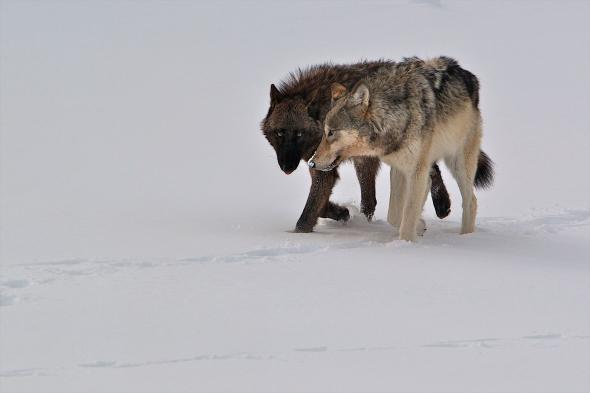
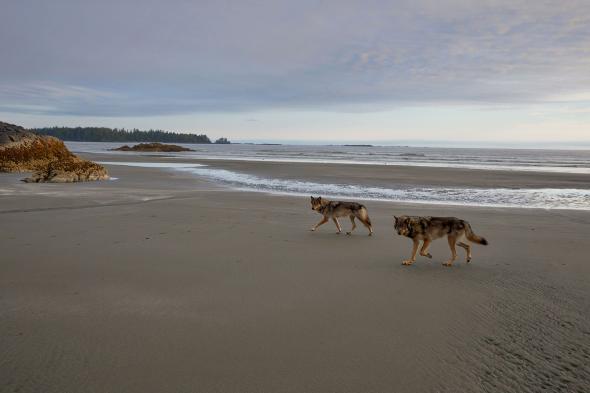
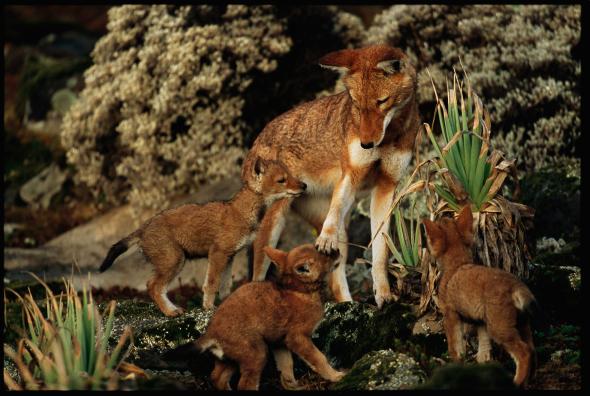
Intelligent and highly social, wolves fascinate us as the untamed predecessors to Man’s Best Friend. But the relationship between humans and wolves has not always been so reverential, especially in the United States.
Through the early 1900s, populations of Canis lupus, the gray wolf, shrank from estimated historical highs of 2 million to near-extinction in the lower 48 states, largely a result of expanded human settlement in the western U.S. and large-scale poisonings meant to protect livestock.
In 1973, the gray wolf was classified as endangered under the Endangered Species Act, and after decades of conservation efforts, wolves are doing well in the U.S. Current estimates peg the gray wolf population in the lower 48 at around 5,500—with at least 7,000 more in Alaska. In fact, a pack of wolves recently planted roots in Siskiyou County, California, the first wolfpack in modern Californian history.
“The gray wolf is in no danger of being endangered, biologically,” says Dave Mech, a senior research scientist with the U.S. Geological Survey.
But controversy still swirls around the gray wolf’s conservation status. In 2013, the U.S. Fish and Wildlife Service proposed removing the gray wolf from the federal list of endangered species, a move it says reflects the wolves’ rebound. But animal rights groups and environmental organizations have decried the very thought, unsuccessfully petitioning the Service to maintain national protections for the gray wolf. Meanwhile, ranchers in the northwestern United States have pushed for rollbacks to state-level wolf protections.
In fact, the U.S. Fish and Wildlife Service declined to comment about the gray wolf, due to ongoing litigation with conservationists over the Mexican gray wolf, a rare subspecies. And given the wolf’s status as both a possible scourge to ranchers and an ecological marvel to environmentalists, the debate is “always going to be contentious,” says Mech.
Yet the allure of the wolf will endure, as it always has in the public’s imagination. “I think there’s a certain aesthetic beauty to [wolves],” says Mech, that defines “their charismatic nature.”
In honor of National Wolf Awareness Week, which begins October 11, we take a closer look at the fascinating ways in which wolves around the world eke out a living.
oooo
oooo
oooo
oooo
oooo
oooo
There are another six photographs that I will offer you in next Sunday’s Picture Parade.
Once again, the power of unanticipated consequences.
I find it easy to lose sight of recent world events, for every new day seems to bring some new challenge to batter one’s emotions.
So a news item on the BBC website last Friday brought back into focus the debt challenges for Greece, or more pertinently, the Greek people, or even more precisely, Greek dogs.
Here’s what I read:
A million stray dogs ‘victims of Greek debt crisis’
3 October 2015 Last updated at 07:10 BST
Among the many problems brought on by the Greek debt crisis is a surging population of stray dogs.
Animal charities say there are now more than a million strays in Greece because people are simply abandoning pets they can no longer afford to keep.
There are fears it could lead to the spread of disease if the problem is not tackled soon, as Emilia Papadopoulos reports.
Emilia’s video report was uploaded to YouTube, thus allowing me to share the sad situation with you.
A quick search online found the following photograph.
Stray dogs in Athens.
That sad picture came from the ANSAmed website, that included a fuller report on the situation. That report ending:
According to the deputy mayor of Athens, Angelos Antonopoulos, who is also in charge of environmental issues, city officials in Athens picked up 457 dogs in the capital’s streets last year, providing medical treatment for 305 of them.
Antonopoulos, a vet by profession, admits that the number of cases of abandoned domestic animals – dogs in particular – has risen alarmingly because of the economic crisis, but says that a new trend is emerging for the same reason. Indeed, an increasing number of people who want to own a dog are choosing to adopt strays from the city’s doghouse rather than buying one from a pet shop or from dog-breeders. “People are becoming increasingly aware of the problem,” Antonopoulos says, providing a ray of hope for his four-legged patients. (ANSAmed).
Finally, I came across what appears to be a Greek charity, Stray.gr, and I’m going to contact them to see if readers of Learning from Dogs who wish to donate, can do so. Will report back.









 Learning from Dogs