Jim Ingraham of our local Caveman Camera Club sent out an email last week.
Wednesday, March 17th will be our next education meeting. It will be a light painting field trip with Dale George as the teacher/instructor.
We will meet at Reinhart Volunteer Park (also known as All Sports Park) at 7 pm. When you go into the park take your first left. Just go to the end of the very long parking lot and you are there.
As much as I don’t want to say this, I gotta…Observe social distancing and wear your facial covering. I want all members to attend. I cannot and would not attempt to enforce this, do what you’re going to do, but please be respectful of others.
Bring camera, tripod, remote shutter (not absolutely necessary), fully charged battery, warm clothes, maybe a headlamp to see your camera dials.
Daylight savings time will be in effect so it won’t be getting dark until 7:30 or so.
Let’s get out of the house and have some fun.
Jim Ingraham
Education Coordinator
Now I didn’t have a clue as to what a “light painting field trip” was but Jeannie agreed to come with me so we both turned up on the 17th at 7pm.
This was the area of the park where we all assembled.
oooo
oooo
oooo
oooo
oooo
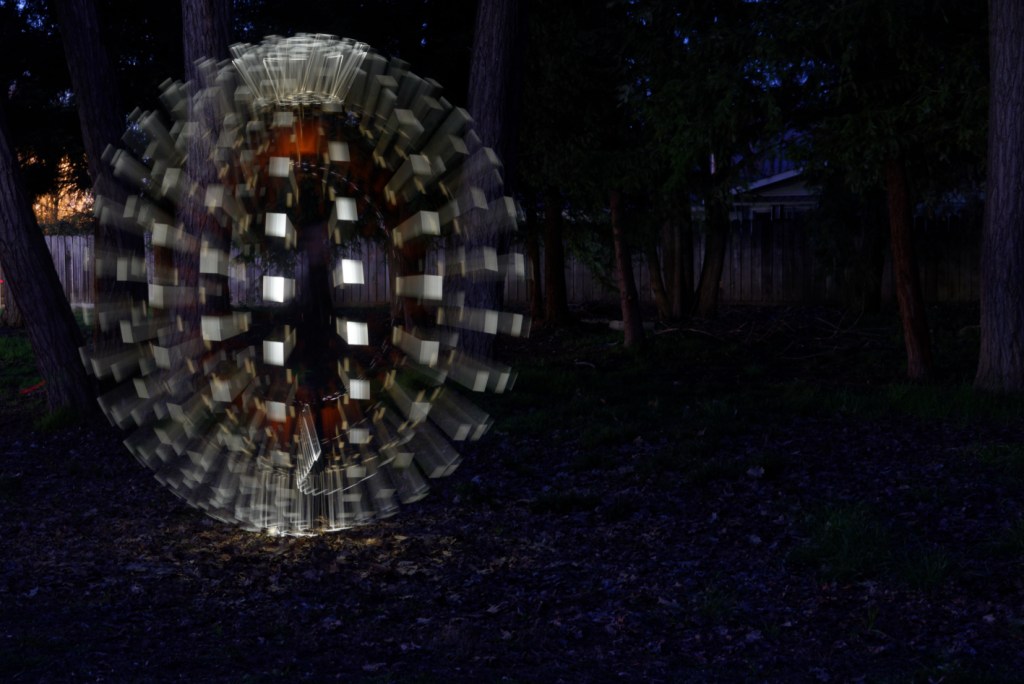
In the main a single individual stood in front of us waving a light board in a synchronised manner. It was a flashing board. But there were times when he was joined by a woman and they both swung their own light boards.
Apart from cropping the images a little these photographs are as they were shot!
Talk about incredible!
(The shots were taken with a Nikon D750 with a Nikon 24-120 mm lens attached.
The settings were approximately 30 seconds Bulb f7.1 ISO 320.)
The Dog and Cat Food update was announced two days ago.
In the covering email they said:
Dear Fellow Dog Lover,
You’re getting this email because you signed up on our website and asked to be notified. If you no longer wish to receive these emails, please click the “unsubscribe” link at the bottom of this message.
Bravo Packing of Carney’s Point, NJ, is expanding its recall to now include multiple dog and cat food products due to possible contamination with Salmonella and Listeria bacteria.
Please be sure to share this news with other dog and cat owners.
Mike Sagman, Editor
The Dog Food Advisor
Saving Good Dogs From Bad Dog Food
Now onto the Bravo Packing recall.
ooOOoo
Bravo Packing Expands Dog and Cat Food Recall
March 16, 2021 — Bravo Packing, Inc., of Carneys Point, New Jersey, is expandingits previously announced voluntary recall of two pet food products to now include all pet food and bones in all package sizes… because they may be contaminated with disease-causing bacteria.
During an FDA inspection, samples collected tested positive for Salmonella and Listeria monocytogenes and resulted in a recall due to the potential health risks to humans and pets.
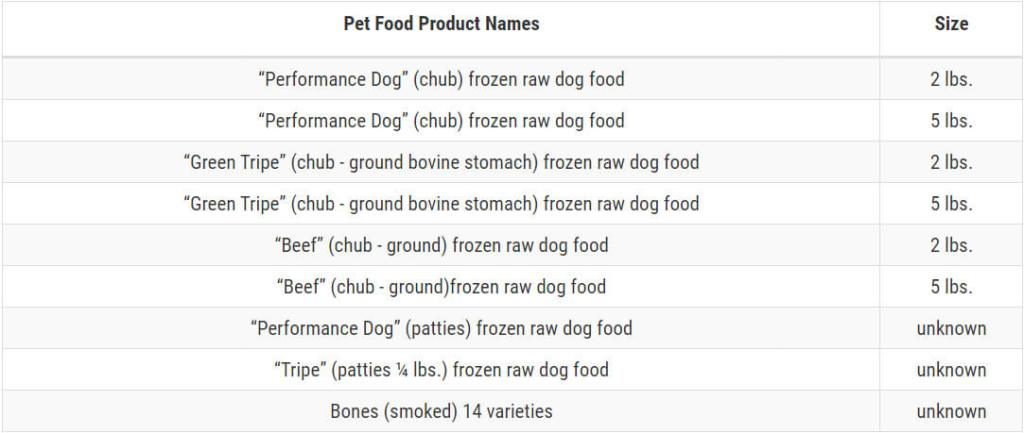
Bravo Packing, Inc. is expanding the recall due to potential cross contamination of the following dog and cat food products.
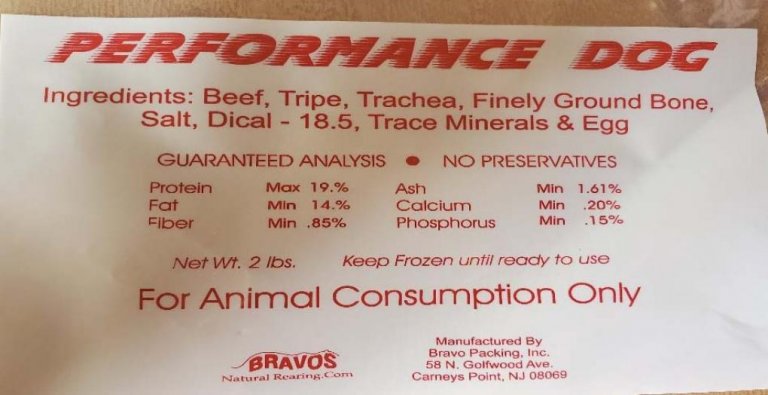
Label Images of Recalled Products
The following label images are included in the FDA bulletin. No other photographs were provided by the company.
About Salmonella
Salmonella can cause illness in pets eating the products, as well as people who handle contaminated pet food products, especially if they have not thoroughly washed their hands after having contact with the products, infected pets, or any surfaces exposed to these products.
People infected with Salmonella should monitor themselves for some or all of the following symptoms: nausea, vomiting, diarrhea or bloody diarrhea, abdominal cramping, and fever.
Rarely, Salmonella can result in more serious ailments, including arterial infections, endocarditis (an infection of the heart muscle), arthritis, muscle pain, eye irritation, and urinary tract symptoms.
People who have these symptoms after having contact with the products identified in this recall or with a pet that has eaten these products should contact their healthcare providers.
A pet with a Salmonella infection may be lethargic and have diarrhea or bloody diarrhea, fever, and vomiting.
Some pets will have decreased appetite, fever, and abdominal pain.
If your pet has consumed the recalled products and has these symptoms, please contact your veterinarian.
Pets exposed to contaminated food can be infected without showing symptoms.
Infected pets, including those without symptoms, can also shed Salmonella through their feces and saliva, spreading pathogens into the home environment and to humans and other animals nearby.
Listeria monocytogenes is an organism which can cause serious and sometimes fatal infections in young children, frail or elderly people, and others with weakened immune systems.
Although healthy individuals may suffer only short-term symptoms such as high fever, severe headache, stiffness, nausea, abdominal pain, and diarrhea, Listeria monocytogenes infection can cause miscarriages and stillbirths among pregnant women.
No human or animal illnesses related to the identified products have been reported to date.
Where Were the Products Sold?
Bravo Packing Inc. generally works with distributors that fill orders to retail storesand to consumers directly nationwide.
What to Do?
Consumers with any of the affected products should handle them with caution, discard products in a secure container, and wash hands and surfaces properly.
Consumers with questions should contact Bravo Packing, Inc. at 856-299-1044 (Monday through Friday, 9:00 am to 2:00 pm, ET).
U.S. citizens can report complaints about FDA-regulated pet food products by calling the consumer complaint coordinator in your area.
Nothing to do with dogs but everything to do with the future!
An item in The Conversation recently was not only interesting from a scientific point-of-view but also it had real lessons for the way that we humans are interfering with the planet.
As The Conversation introduced the article:
A mile below the surface of the Greenland ice sheet, an ancient Arctic ecosystem is preserved in the frozen soil. How scientists discovered its leaves, twigs and mosses is a story in itself. It starts with a secret military base built into the northern Greenland ice.
In 1963, inside a covert U.S. military base in northern Greenland, a team of scientists began drilling down through the Greenland ice sheet. Piece by piece, they extracted an ice core 4 inches across and nearly a mile long. At the very end, they pulled up something else – 12 feet of frozen soil.
The ice told a story of Earth’s climate history. The frozen soil was examined, set aside and then forgotten.
Half a century later, scientists rediscovered that soil in a Danish freezer. It is now revealing its secrets.
Using lab techniques unimaginable in the 1960s when the core was drilled, we and an international team of fellow scientists were able to show that Greenland’s massive ice sheet had melted to the ground there within the past million years. Radiocarbon dating shows that it would have happened more than 50,000 years ago. It most likely happened during times when the climate was warm and sea level was high, possibly 400,000 years ago.
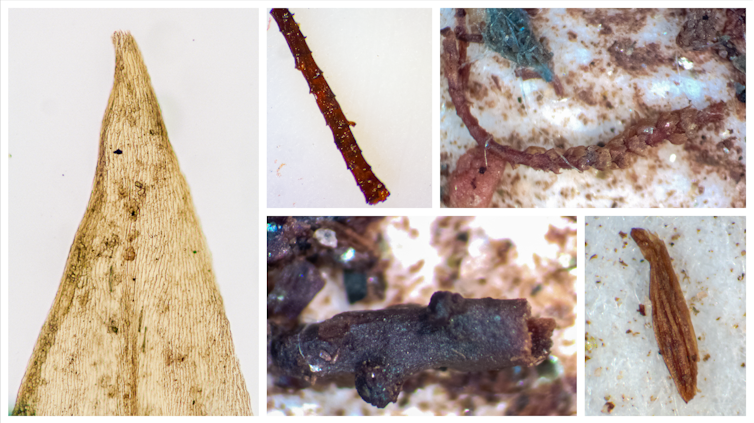
And there was more. As we explored the soil under a microscope, we were stunned to discover the remnants of a tundra ecosystem – twigs, leaves and moss. We were looking at northern Greenland as it existed the last time the region was ice-free. Our peer-reviewed study was published on March 15 in Proceedings of the National Academy of Sciences.
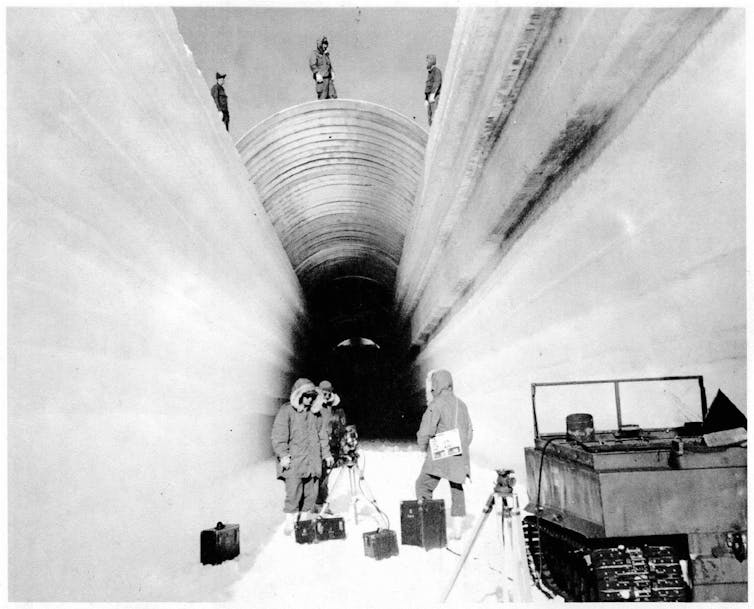
Engineers pull up a section of the 4,560-foot-long ice core at Camp Century in the 1960s. U.S. Army Corps of Engineers
Paul Bierman, a geomorphologist and geochemist, describes what he and his colleagues found in the soil.
With no ice sheet, sunlight would have warmed the soil enough for tundra vegetation to cover the landscape. The oceans around the globe would have been more than 10 feet higher, and maybe even 20 feet. The land on which Boston, London and Shanghai sit today would have been under the ocean waves.
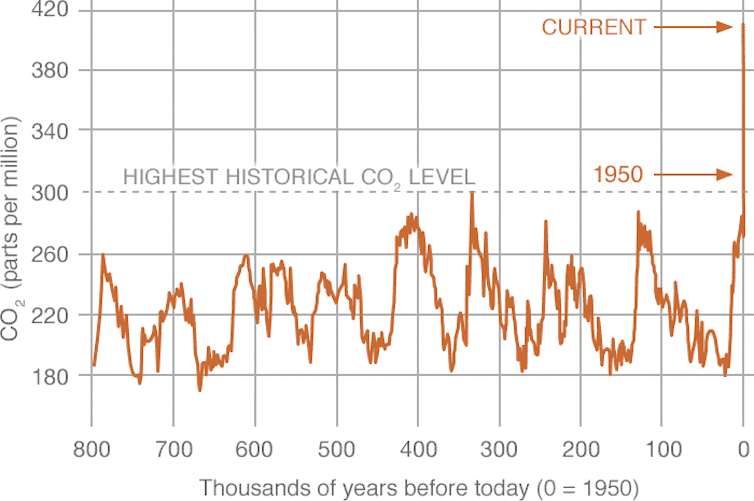
All of this happened before humans began warming the Earth’s climate. The atmosphere at that time contained far less carbon dioxide than it does today, and it wasn’t rising as quickly. The ice core and the soil below are something of a Rosetta Stone for understanding how durable the Greenland ice sheet has been during past warm periods – and how quickly it might melt again as the climate heats up.
Secret military bases and Danish freezers
The story of the ice core begins during the Cold War with a military mission dubbed Project Iceworm. Starting around 1959, the U.S. Army hauled hundreds of soldiers, heavy equipment and even a nuclear reactor across the ice sheet in northwest Greenland and dug a base of tunnels inside the ice. They called it Camp Century.
It was part of a secret plan to hide nuclear weapons from the Soviets. The public knew it as an Arctic research laboratory. Walter Cronkite even paid a visit and filed a report.
Workers build the snow tunnels at the Camp Century research base in 1960. U.S. Army Corps of Engineers
Camp Century didn’t last long. The snow and ice began slowly crushing the buildings inside the tunnels below, forcing the military to abandon it in 1966. During its short life, however, scientists were able to extract the ice core and begin analyzing Greenland’s climate history. As ice builds up year by year, it captures layers of volcanic ash and changes in precipitation over time, and it traps air bubbles that reveal the past composition of the atmosphere.
One of the original scientists, glaciologist Chester Langway, kept the core and soil samples frozen at the University at Buffalo for years, then he shipped them to a Danish archive in the 1990s, where the soil was soon forgotten.
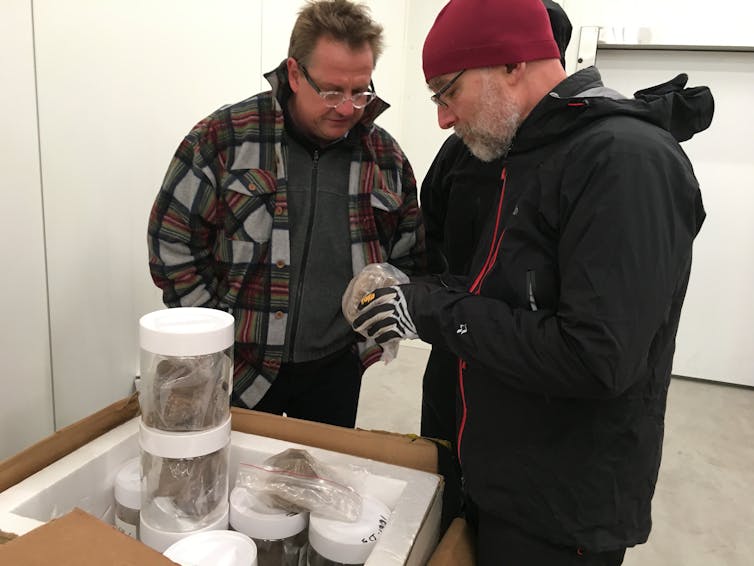
A few years ago, our Danish colleagues found the soil samples in a box of glass cookie jars with faded labels: “Camp Century Sub-Ice.”
Geomorphologist Paul Bierman (right) and geochemist Joerg Schaefer of Columbia University examine the jars holding Camp Century sediment for the first time. They were in a Danish freezer set at -17 F. Paul Bierman, CC BY-ND
A surprise under the microscope
On a hot July day in 2019, two samples of soil arrived at our lab at the University of Vermont frozen solid. We began the painstaking process of splitting the precious few ounces of frozen mud and sand for different analyses.
First, we photographed the layering in the soil before it was lost forever. Then we chiseled off small bits to examine under the microscope. We melted the rest and saved the ancient water.
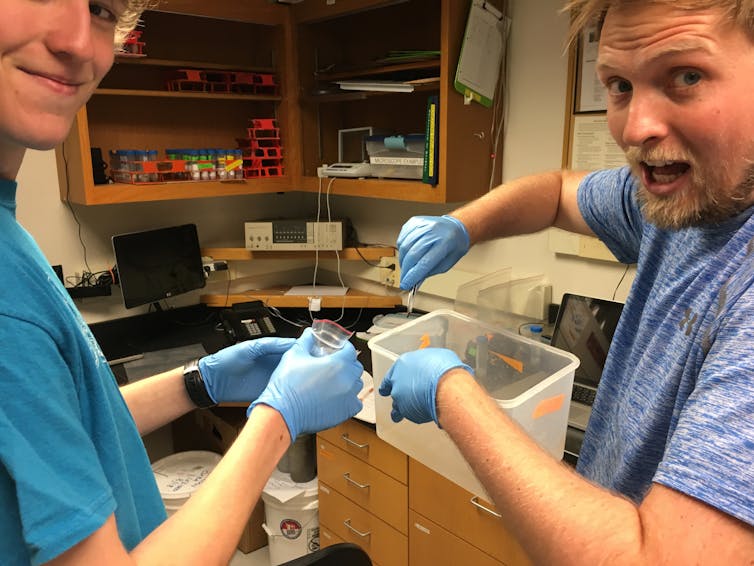
Then came the biggest surprise. While we were washing the soil, we spotted something floating in the rinse water. Paul grabbed a pipette and some filter paper, Drew grabbed tweezers and turned on the microscope. We were absolutely stunned as we looked down the eyepiece.
Staring back at us were leaves, twigs and mosses. This wasn’t just soil. This was an ancient ecosystem perfectly preserved in Greenland’s natural deep freeze.
Glacial geomorphologist Andrew Christ (right), with geology student Landon Williamson, holds up the first twig spotted as they washed a sediment sample from Camp Century. Paul Bierman, CC BY-ND
Dating million-year-old moss
How old were these plants?
Over the last million years, Earth’s climate was punctuated by relatively short warm periods, typically lasting about 10,000 years, called interglacials, when there was less ice at the poles and sea level was higher. The Greenland ice sheet survived through all of human history during the Holocene, the present interglacial period of the last 12,000 years, and most of the interglacials in the last million years.
But our research shows that at least one of these interglacial periods was warm enough for a long enough period of time to melt large portions of the Greenland ice sheet, allowing a tundra ecosystem to emerge in northwestern Greenland.
We used two techniques to determine the age of the soil and the plants. First, we used clean room chemistry and a particle accelerator to count atoms that form in rocks and sediment when exposed to natural radiation that bombards Earth. Then, a colleague used an ultra-sensitive method for measuring light emitted from grains of sand to determine the last time they were exposed to sunlight.
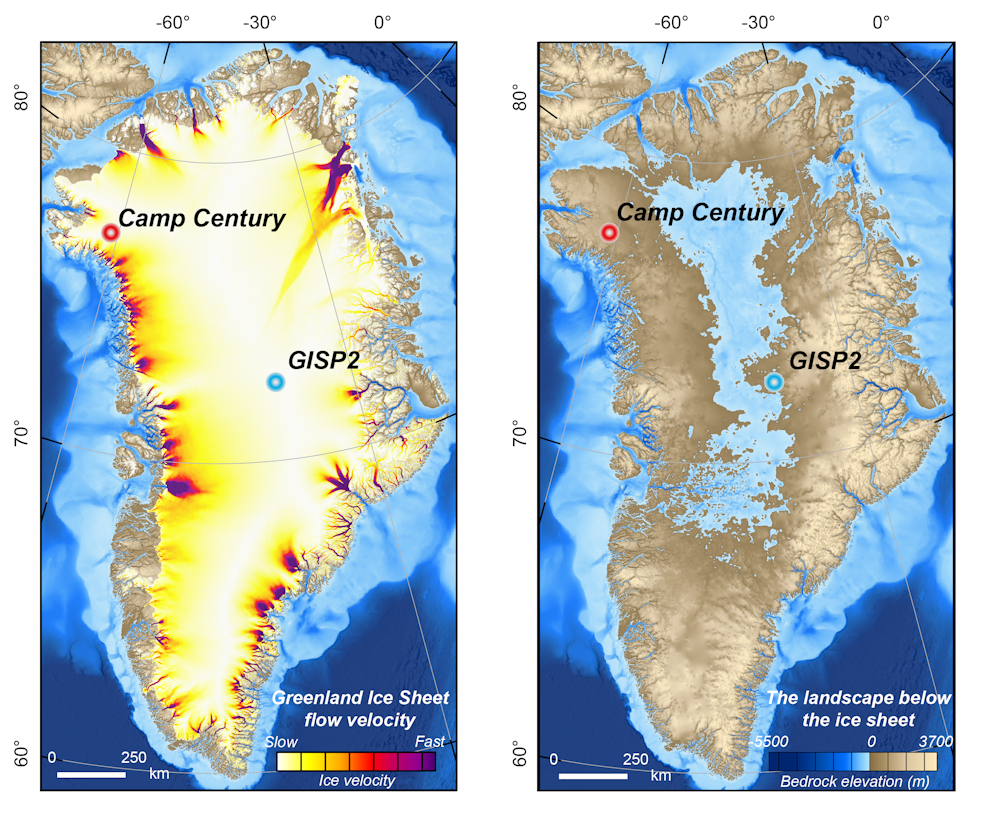
Maps of Greenland show the speed of the ice sheet as it flows (left) and the landscape hidden beneath it (right). BedMachine v3; Copernicus Climate Change Service (C3S), CC BY-ND
The concentration of carbon dioxide in the atmosphere today is well beyond past levels determined from ice cores. On March 14, 2021, the CO2 level was about 417 ppm. NASA Jet Propulsion Laboratory, CC BY-ND
Losing the Greenland ice sheet would be catastrophic to humanity today. The melted ice would raise sea level by more than 20 feet. That would redraw coastlines worldwide.
About 40% of the global population lives within 60 miles of a coast, and 600 million people live within 30 feet of sea level. If warming continues, ice melt from Greenland and Antarctica will pour more water into the oceans. Communities will be forced to relocate, climate refugees will become more common, and costly infrastructure will be abandoned. Already, sea level rise has amplified flooding from coastal storms, causing hundreds of billions of dollars of damage every year.
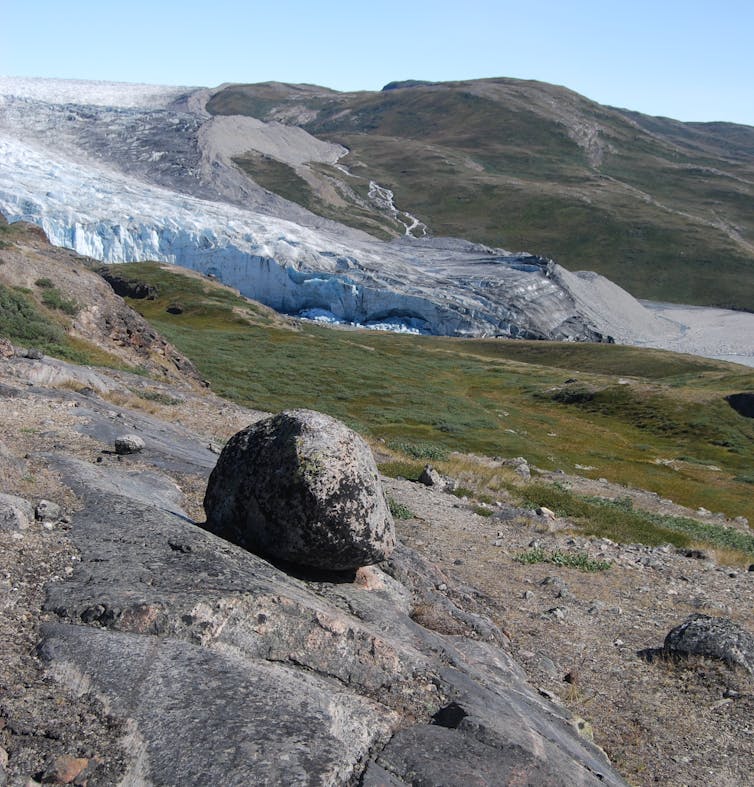
Tundra near the Greenland ice sheet today. Is this what Camp Century looked like before the ice came back sometime in the last million years? Paul Bierman, CC BY-ND
The story of Camp Century spans two critical moments in modern history. An Arctic military base built in response to the existential threat of nuclear war inadvertently led us to discover another threat from ice cores – the threat of sea level rise from human-caused climate change. Now, its legacy is helping scientists understand how the Earth responds to a changing climate.
The article is republished with the full permission of The Conversation.
I hope you read it because the way the climate is changing is affecting all of us now and sooner rather than later we have all got to amend our ways. Indeed, when I look at anyone who has potentially thirty or more years of life in them I ponder what their future is going to be like. And, of course, it won’t be a drastic change in thirty years it is already happening now albeit at times difficult to see.
But there is not one scintilla of doubt that we humans are the cause and we humans have to be the solution!
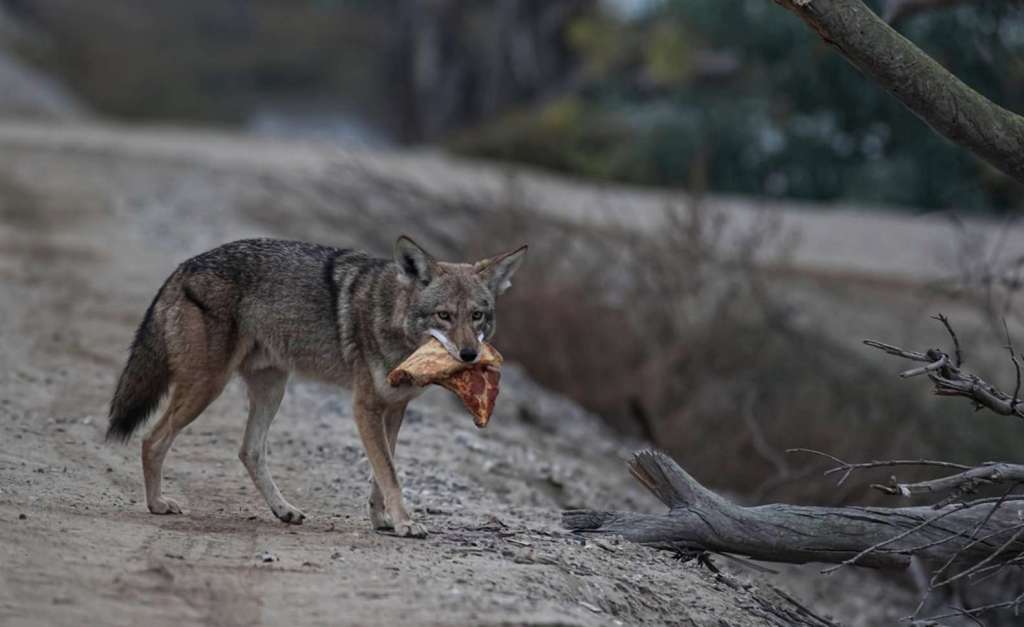
A man in California who took up wildlife photography a decade ago had never seen anything quite like what he saw this fall — and he was lucky he had his camera with him.
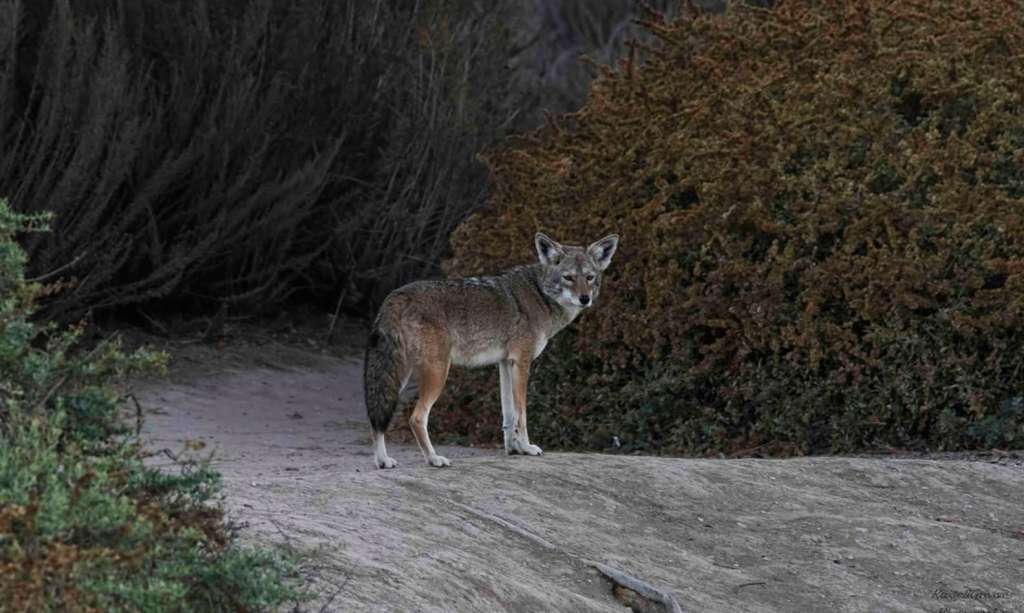
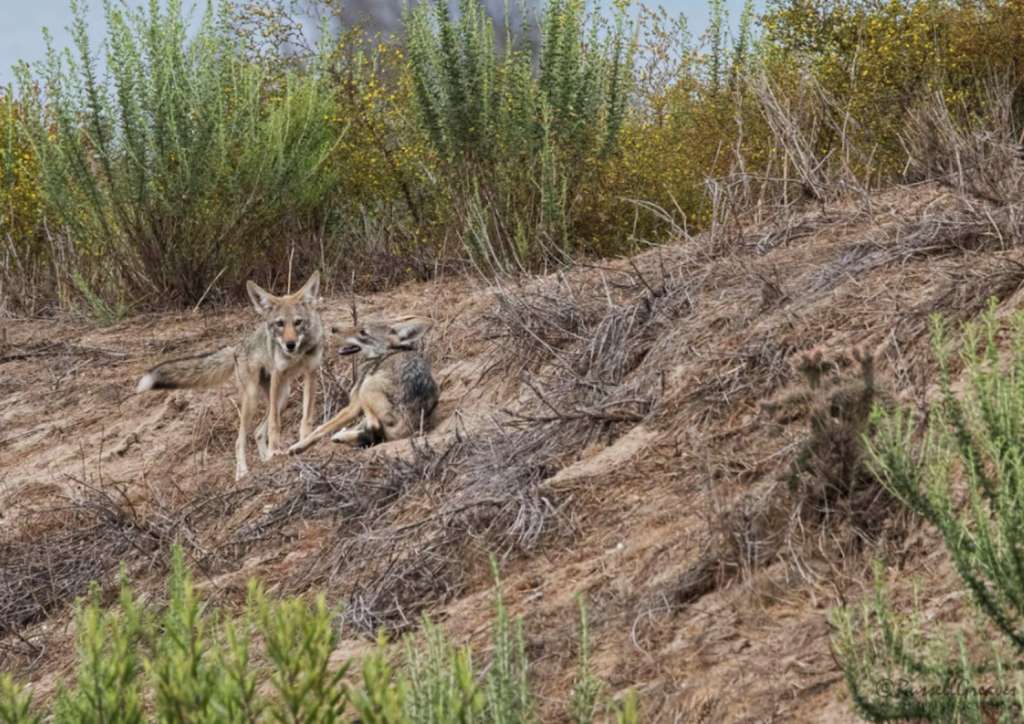
Every morning, Russell Greaves, of Huntington Beach, California, goes out to the Bolsa Chica Ecological Reserve behind his house to immerse himself in that slice of the natural world. He often sees coyotes, enough that he’s begun to recognize individuals in the area.
“A lot of people here just love the coyotes,” Greaves told The Dodo over the phone, during his morning walk on Tuesday.
Russell Greaves
One morning in October, he saw a familiar wild coyote. It was a mom who had given birth to a litter of pups six months before.
“She had had four pups,” Greaves said. “The pups would come out and play around, while dad went out to hunt. But they’re out on their own now.”
Russell Greaves
It was nice to see the mom again — but there was something different about her. And as she got closer, Greaves couldn’t help but laugh.
Russell Greaves
Somehow, the mother coyote had found a pizza — and she decided to go ahead and take it with her.
“It was nearly half a pizza,” Greaves said. It’s not certain where the coyote managed to find this enormous meal. Greaves said that there are some homeless people who camp out in the woods and perhaps she swiped it from them.
Since her pups had already gone out on their own, she probably wasn’t planning on sharing, Greaves speculated. “I thought, ‘This has got to be for herself.’”
Russell Greaves
More important than this meme-worthy sight is the balance the residents of the area have struck with the natural world — something sorely lacking in other communities across the country, where coyotes are often brutally hunted in killing contests.
Admittedly, not everyone loves the coyotes quite as much as Greaves does, but many people are fascinated by the wild family living nearby, and people take precautions to ensure a peaceful coexistence. “We tell people to not feed the coyotes. They’re not here to eat human food,” Greaves said. “We tell people who are walking their little dogs to be careful because the coyotes are around.”
Russell Greaves
“The coyotes come back to the same habitat because they like it here,” Greaves added.
And the coyotes are lucky to have people like Greaves, who love having them there.
Another international story of love and caring for our dogs.
This time about homeless or stray dogs and in Peru. Again it was written by Stephen Messenger and was shared on The Dodo website. Again it is about the fundamental goodness that is in a great many humans spanning continents.
ooOOoo
Nice Restaurant Owner Prepares A Free Meal For Every Stray Dog Who Visits
“They pay us with their happiness and wagging tails” ❤️
By Stephen Messenger
Published on the 26th February, 2021
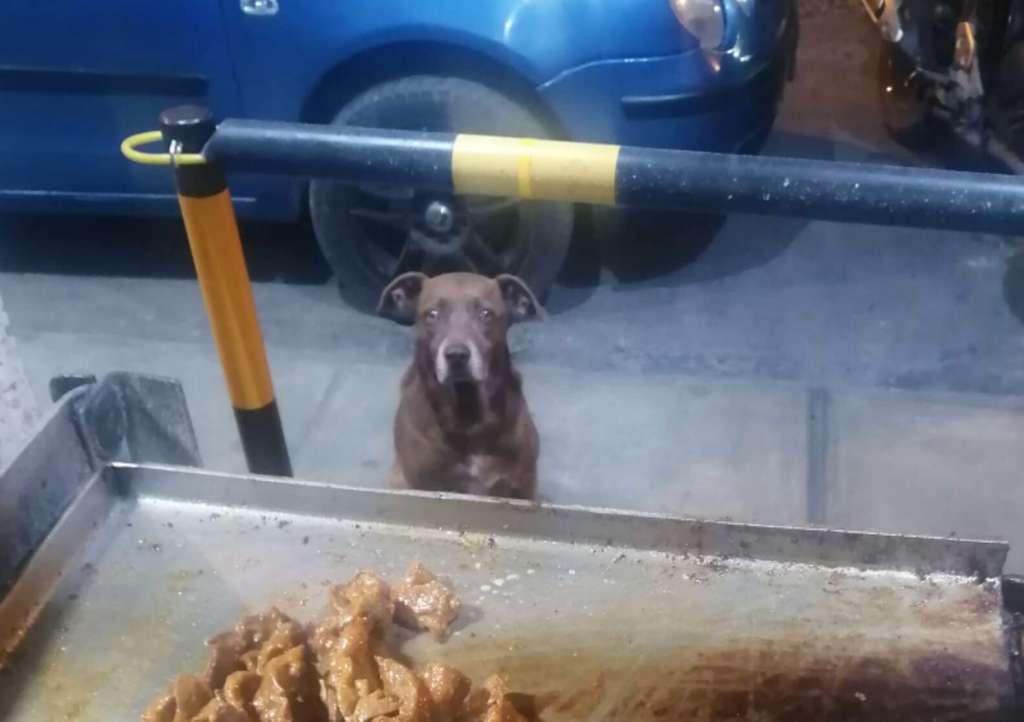
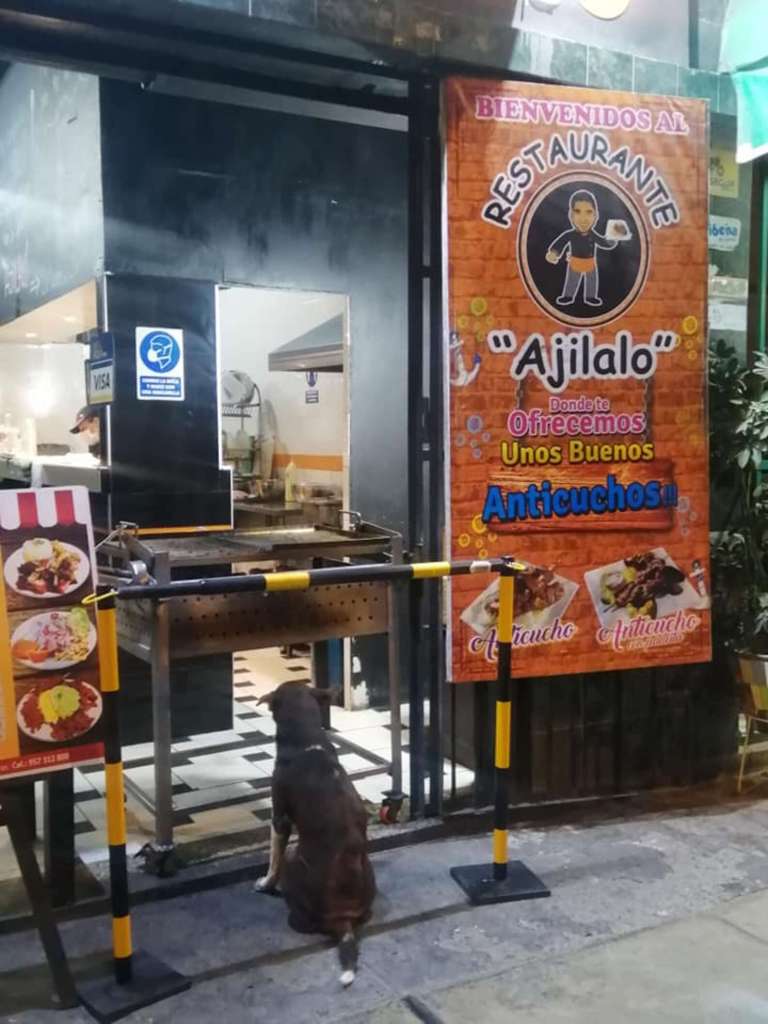
One evening five years ago, an unexpected customer dropped by Gerardo Ortiz’s restaurant, Ajilalo, in Peru. It was a stray dog, a look of hunger in her eyes.
Ortiz could have easily turned the dog away. But he didn’t.
Restaurante – Ajilalo
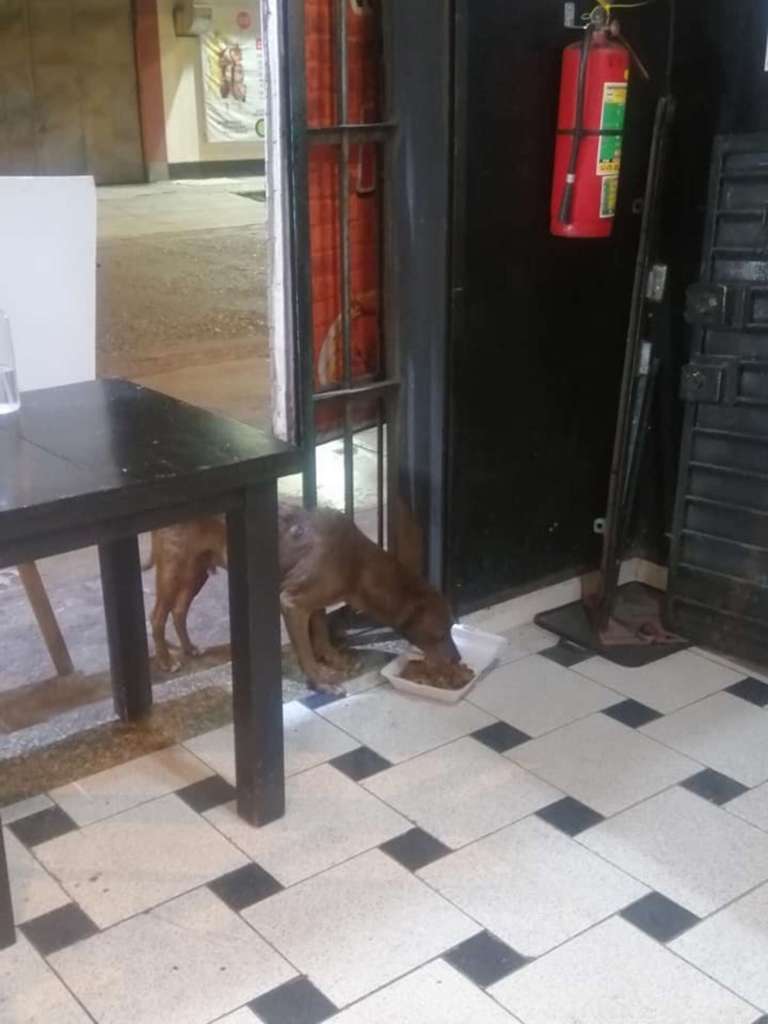
That evening, Ortiz offered the dog a free meal, made just for her.
And thus began an adorable tradition that continues to this day.
Restaurante – Ajilalo
Each evening, from then on, the hungry dog came and received a free meal from Ortiz’s restaurant.
But it didn’t take long for word of Ortiz’s kindness and generosity to spread among the community of local stray pups.
More dogs began to arrive with that first visitor— and Ortiz welcomed them all with a meal.
Restaurante – Ajilalo
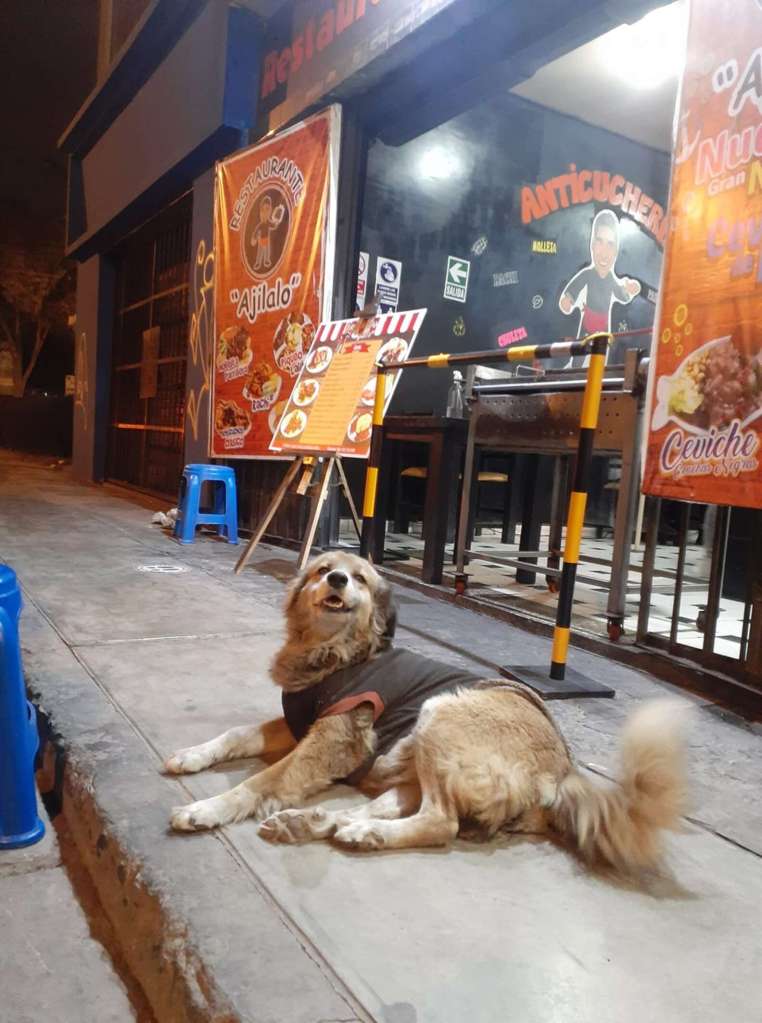
Nowadays, numerous stray dogs arrive to the doors of Ortiz’s restaurant each night. Many are regular “customers,” while others are first-timers — all hoping to fill their bellies thanks to Ortiz’s kindness.
Restaurante – Ajilalo
Often, as Ortiz is working, he’ll look up and see a new dog’s face at the front — waiting politely to see if the rumor that free food can found there is true.
It always is.
Restaurante – Ajilalo
“For me, they are the best customers,” Ortiz told The Dodo.
And his human customers hardly take that as a slight. Inspired by Ortiz, they often bring food for the visiting dogs as well.
Restaurante – Ajilalo
“Thankfully, our clients have reacted well to the dogs,” Ortiz said. “They are affectionate toward them.”
Restaurante – Ajilalo
Ultimately, Ortiz’s sweet routine of feeding all the stray dogs who visit does more than keep them from being hungry. It lets them know that their lives matter — a truth that Ortiz is happy to prove to them each and every day.
Restaurante – Ajilalo
“They do not pay us with money, but they pay us with their happiness and wagging tails,” Ortiz said. “They are very grateful, and we enjoy giving more than receiving. Since I was a child, I have loved animals. My mother always taught us to help others, both people and animals. She’s my inspiration.”
ooOOoo
This is such a wonderful share. Snr Ortiz confirms what we know absolutely. That people who care for animals care for so much more. As Gerardo says: “It lets them know that their lives matter.”
I am minded to remember when I first met Jean in December, 2007. Jean was living in San Carlos, Northern Mexico, and had been for many years. Her husband, Ben, had died in 2005.
Jean was rescuing street dogs off the streets of San Carlos and surrounding areas, caring for them, neutering or spaying them, and then finding homes for them mainly in Arizona, USA. Many, many dogs owed their lives to Jean’s love for those dogs. In 2010, after I had gone out to San Carlos with my Pharaoh to live with Jean and her dogs in 2008, we came North to Arizona to find a U.S. home and be married. We came through the Mexican-US border with 16 dogs, all of them with their paperwork in order. I will always recall the American border agent, after I had approached him with all the paperwork, leaning out of his booth and calling to the agent in the next booth: “Hey Jake, there’s a guy here with sixteen dogs!”
Jean and I were married in Payson, AZ on the 20th November, 2010.
Mr and Mrs Handover
Very sweet memories and the start of a loving era in our lives.
“She’d wrapped her dog up and brought him to me on her back” ❤️
The other day, Ogün Öztürk was called to a small village in Turkey to attend to a client’s cow. He hadn’t planned on staying long.
But what began as just a routine visit ended as one Ogün won’t soon forget.
Ogün Öztürk
After wrapping up the job he’d come for, Ogün was about to leave the village. Before he did, however, something in the distance caught his eye.
There, trudging toward him on a path thick with snow, was a little girl. And she was not alone.
On her back was a pup.
Ogün Öztürk
Evidently, word had gotten around that a vet was in town — and that presented an opportunity which the girl, 8-year-old Cemre Su Türköz, refused to pass up.
Cemre’s dog, named Pamuk, had fallen sick. Desperate to get him help, she decided to carry Pamuk more than a mile from her home to the spot she’d heard that Ogün would be.
“When I first saw them, I was very surprised and touched,” Ogün told The Dodo. “She’d wrapped her dog up and brought him to me on her back.”
Ogün Öztürk
Ogün, of course, couldn’t turn Cemre and Pamuk away. While the little girl looked on, concerned, Ogün performed a checkup.
Fortunately, the dog’s sickness wasn’t all too serious. Ogün found Pamuk just had some minor skin issues that were making him uncomfortable, but which could easily be treated.
“When Cemre heard that her dog would be fine, she was very happy,” Ogün said. “I applied external parasite medications to Pamuk. He is now enjoying himself again, healthy and happily.”
Ogün Öztürk
The little girl and her dog had gotten help. But they also got a friend.
Ogün has been back to the village to check in on Cemre and Pamuk, ensuring that they never need to brave the snow again to get whatever help he can provide. It’s the least he could do, considering the effort she’d put in to find him.
“It made me very happy that an 8-year-old girl behaved in this way with such a loving heart,” Ogün said.
Ogün Öztürk
Ogün didn’t charge Cemre for his services that day. Just seeing her love and devotion to Pamuk was the best payment he could ask for.
“The fact that a person at such a young age exhibits this behavior gives hope to humanity,” Ogün said. “With all that’s going on in the world, there’s still hope. Cemre showed us that the only truth in the world is love.”
ooOOoo
Let me pick up on that last paragraph for it is so full of things that we know in our hearts are correct.
The first thing is that this eight-year-old girl, Cemre, knows what is right. To be honest, most young people of either gender more often than not know the right thing to do. Then Ogün was reported as saying: “With all that’s going on in the world …”. But there has always been so much going on. It is just that modern communications makes the world’s news to come in at us; wherever we are!
But the most important observation is that the only truth in the world is love!
“Life is the flower for which love is the honey.” Victor Hugo.
or
“Love doesn’t make the world go round. Love is what makes the ride worthwhile.” Franklin P. Jones
The above two quotes are just a fraction of what may be seen if one Googles love quotes!
Gary, aka Nimbushopper, sent me an item that appeared on Newsmax.
It was all about the early settlers. I very much would like to share it with you.
ooOOoo
Study: Dogs Came to N. America With Earliest Humans
Wednesday, 24 February 2021.
A Siberian husky enjoys the snow during a training session in Huy, eastern Germany, on February 11, 2021. – Musher Kerstin Galisch is a multiple participant of national and international competitions and takes care of a pack of fifteen Siberian Husky sled dogs, that live in and around a former and rebuilt feedlot premises administration building. (Photo by Ronny Hartmann / AFP) (Photo by RONNY HARTMANN/AFP via Getty Images)
Scientists said Wednesday they had discovered the oldest remains of a domestic dog in the Americas dating back more than 10,000 years, suggesting the animals accompanied the first waves of human settlers.
Humans are thought to have migrated to North America from Siberia over what is today the Bering Strait at the end of the last Ice Age — between 30,000 and 11,000 years ago.
The history of dogs has been intertwined with man since ancient times, and studying canine DNA can provide a good timeline for human settlement.
A new study led by the University at Buffalo analysed the mitochondrial DNA of a bone fragment found in Southeast Alaska.
The team initially thought the fragment belonged to a bear.
But closer examination revealed it to be part of a femur of a dog that lived in the region around 10,150 years ago, and that shared a genetic lineage with American dogs that lived before the arrival of European breeds.
“Because dogs are a proxy for human occupation, our data help provide not only a timing but also a location for the entry of dogs and people into the Americas,” said Charlotte Lindqvist, an evolutionary biologist from the University at Buffalo and the University of South Dakota.
She said the findings, published in the journal Proceedings of the Royal Society B, supports the theory that humans arrived in North America from Siberia.
“Southeast Alaska might have served as an ice-free stopping point of sorts, and now — with our dog — we think that early human migration through the region might be much more important than some previously suspected,” said Lindqvist.
Older Migrations
A carbon isotope analysis of the bone fragment showed that the ancient Southeast Alaskan dog likely had a marine diet that consisted of fish and seal and whale scraps.
Lindqvist said dogs did not arrive in North America all at once. Some arrived later from East Asia with the Thule people, while Siberian huskies were imported to Alaska during the Gold Rush in the 19th century.
There is a long-standing contention about whether the first humans entered North America through a continental corridor that formed as the ice sheets receded, or along the North Pacific coast thousands of years earlier.
Previous age estimates of dog remains were younger than the fragment found by Lindqvist and the team, suggesting that dogs arrived in the continent during the later, continental migrations.
Lindqvist said her findings supported the theory that dogs in fact arrived in North America among the first waves of humans settlers.
“We also have evidence that the coastal edge of the ice sheet started melting at least around 17,000 years ago, whereas the inland corridor was not viable until around 13,000 years ago,” she told AFP.
“And genetic evidence that a coastal route for the first Americans over 16,000 years ago seems most likely. Our study supports that our coastal dog is a descendant of dogs that participated in this initial migration.”
ooOOoo
I have said it before and no doubt will say it again many times in the future: The bond that dogs have with us humans and, in return, the thanks and love that we have for our dogs goes back a very, very long time indeed.
This is just another article that confirms this.
Just want to repeat the amazing news that Charlotte Lindqvist reported:
But closer examination revealed it to be part of a femur of a dog that lived in the region around 10,150 years ago, and that shared a genetic lineage with American dogs that lived before the arrival of European breeds.
I do hope you read the full article as presented here.
Dogs offer so much unconditional love: For their human pals; for their doggie pals; and so much more.
I was minded to write in this manner after just coming from the main bedroom next door and finding Brandy resting on the bed. It was a ‘grab the camera’ moment and take a few shots. Moments later Brandy had come down from the bed and was back in the main living room.
So here’s a recent article on The Dodo for you to enjoy.
ooOOoo
Dog Shows Up At Front Door To Invite His Girlfriend On A Date
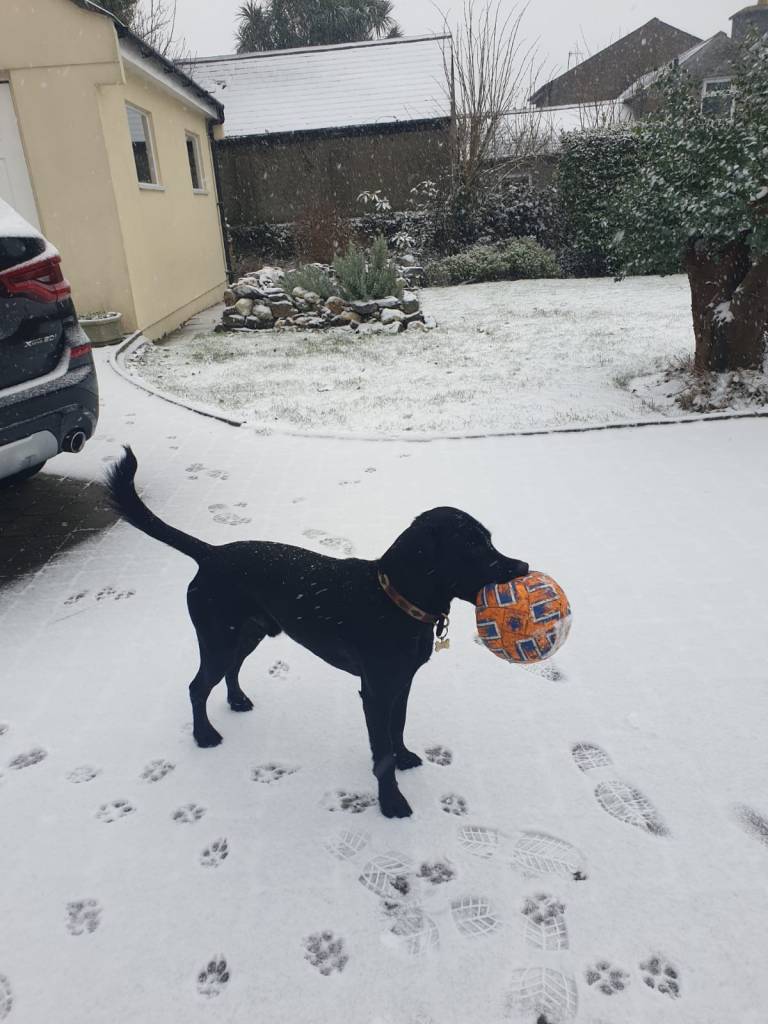
This is Holly, a cuddly black Lab who lives in New York with her parents.
She’s downright adorable — and we’re not the only ones who think so.
Holly, of course, gleefully accepted dear Harry’s offer — but she wasn’t the only one smitten by the gentlepup’s thoughtful gesture.
“My heart is so full!” Casi Cook, Holly’s owner, wrote online. “If you listen when my brother opens the door, I’m in complete shock and I didn’t believe it.”