I have only recently made the acquaintance of Sarah’s blog The Two Of Us but it already has been a delight. So much so that I reached out to Sarah and asked if she would like to be a guest author. I am delighted to report that Sarah was pleased to do so.
First, let me add a little more about her blog. The Two Of Us has a sub-title of A college student and a Border Collie stumbling through life.
Next, Sarah explained in an email to me that:
I’m Sarah and my dog is Brèagha. She’s a Border Collie and I’m a college student hoping to become an animal behaviorist of some sort. Brèagha and I have been together for 3 years, and they have been the best three years of my life so far.
So with no further ado, here is Sarah’s guest post.
ooOOoo
Every breath you take
By Sarah, November 6th, 2020
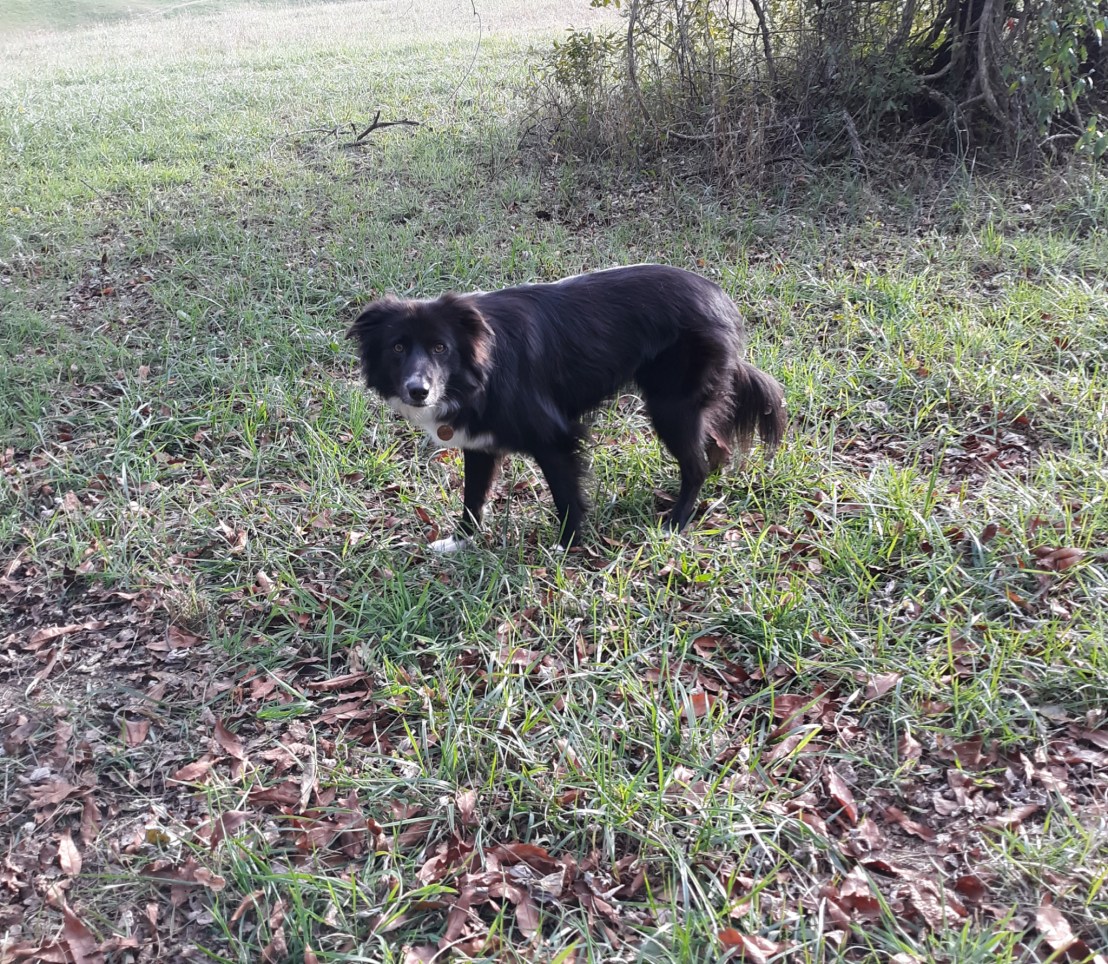
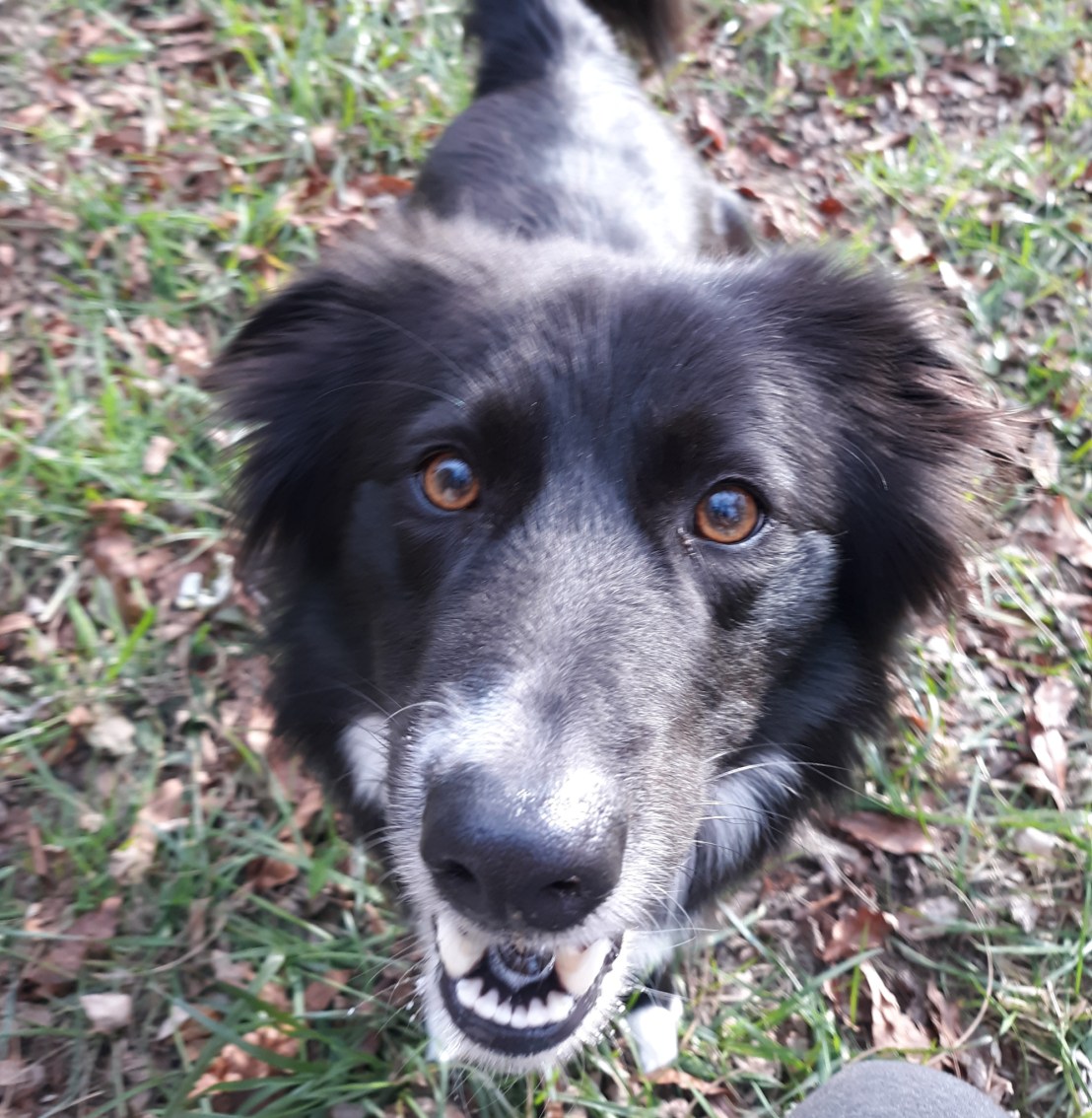
One of the things you get used to when you have a herdy type of dog (especially a Border Collie) is the staring. They stare. And they stare intensely. Your own personal stalker.
One of those things that might be rated “annoying” for some but definitely falls under “endearing” for me.
I love every last weird thing about her.
ooOOoo
Now that last picture reminds me of a recent post on Learning from Dogs, namely The dog world!where I republished the scientific work by Ellen Furlong, Associate Professor of Psychology, Illinois Wesleyan University.
In her report Ellen said, and I quote an extract from that post:
Because while 95% of the time this is a loving trait it is possible that the other 5% is an issue; your dog suffers from anxiety.
ooOOoo
Why Does My Dog Follow Me Everywhere?
The cutest little stalker 😅
By DANIELLE ESPOSITO
PUBLISHED ON 9/11/2020
Have you ever noticed that no matter what room you go into, your dog will eventually follow along and sprawl out — seemingly watching your every move?
While it might make your heart happily flutter when you find your dog constantly right behind you, you might also wonder why that is.
That’s why The Dodo reached out to Dr. Andrea Tu, medical director at Behavior Vets NYC, to find out a little bit more.
“Your dog may follow you everywhere simply because they like you and want to spend time with you!” Dr. Tu said.
That’s the simple answer in most cases: Dogs are pack animals and tend to feel more comfortable when their pack — aka YOU, gahh how cute — is around them.
But there can be times when the behavior might be more serious than your dog’s natural pack mentality.
“If your dog truly is like your shadow and acts like he or she is attached to you by a bungee cord, this may be indicative of an anxiety condition,” Dr. Tu said.
According to Dr. Tu, there are other anxiety signs that tend to be missed. “Other signs of anxiety that are often missed include excessive air licking, especially when there is no food around, and yawning, especially when the dog is not tired or not at times when your dog would be sleeping,” she explained.
So while there’s a good chance your pup following you around is just out of love, Dr. Tu recommends that if you are concerned, you should speak to your veterinarian — or a veterinary behaviorist — to rule out a behavior condition that may need treating.
ooOOoo
Our little Sweeny suffers from an anxiety issue and if he was the only dog we had then we would have a problem.
But because he mixes so well with all the other dogs it is more or less under control.
Gorgeous Sweeny!Pedy in front of Sweeny. Picture taken October, 2016.
Overnight, as in last night, we were in for some heavy rain and the next few days see the arrival of Winter. Ah well, it was good while it lasted and it lasted for some considerable time.
There are so many stories about dogs that I stick into a folder to keep them separate from my general inbox. They come in on a more-or-less daily basis. I love republishing them and until I can’t tell up from down will continue to do so.
Take this article for instance. Published by The Dodo it is a supreme example of why our dogs are so treasured.
ooOOoo
Dog Can’t Believe His Dad Finally Found Him After 200 Days Apart
“Blue was shocked for a split second, like, ‘Am I believing my eyes?’”
In early April, the Washington County Animal Shelter received a call: a stray dog named Blue had shown up at a stranger’s house, looking for a safe place to rest. An animal control officer rushed over to pick up the pit bull mix and bring him back to the shelter.
No one knew how long Blue had been on the streets, but the homeless pup seemed to love every human he came across.
WASHINGTON COUNTY ANIMAL SHELTER
“He was a happy-go-lucky dog,” Tammy Davis, the shelter’s executive director, told The Dodo. “He was a little shy at first, and he wasn’t very fond of all the other dogs being around him, but he was extremely affectionate to people and very loving to the staff.”
Due to the COVID-19 pandemic, the shelter had to close its doors to the public and make any visits by appointment only. With less foot traffic, Blue sat waiting in his kennel for months — which turned out to be a blessing in disguise.
WASHINGTON COUNTY ANIMAL SHELTER
To introduce Blue to some potential adopters, the shelter posted a video of Blue playing with his favorite toy on their Facebook page. Moments later, a comment on the video read, “That’s my dog.”
Blue had gone missing from his Tennessee home six months before. His dad tirelessly searched for him but eventually had to relocate to Texas for work. He thought that he’d never see his dog again until his friend sent him the video of Blue on Facebook.
All that was left to do was confirm whether the man claiming to be Blue’s owner was telling the truth: “Blue’s favorite toy in the shelter was a blue squeaky ball and in our video, he was playing with that ball,” Davis said. “Once we started the conversation with the owner he said, ‘Yes, I have pictures of my dog.’ He sent us pictures of Blue in his home with that same blue ball, which was his favorite toy at home. It was crazy.”
WASHINGTON COUNTY ANIMAL SHELTER
Blue’s dad drove 1,200 miles to get his boy, and the reunion was everything they could have hoped for.
WASHINGTON COUNTY ANIMAL SHELTER
“It was very obvious that the dog had a bond with that person,” Davis said. “Blue was shocked for a split second, like, ‘Am I believing my eyes?’ And then it was just immediate kisses and the man was crying, it was great.”
WASHINGTON COUNTY ANIMAL SHELTER
You can watch the heartwarming reunion here:
Now, Blue is back with his dad and the two are starting a new life together in Texas full of love, snuggles and squeaky balls.
“We wish that every animal could have a happy ending like that,” Davis said. “It makes all of our hard work worth it to be able to have moments like this.”
See what I mean. Blue’s Dad, from the photographs a gent in the later stages of life, brought to tears by the reunion. It’s an incredible story as well as a very beautiful account of bringing together Blue and his Dad across all those miles.
This recent post from EarthSky is a fascinating read!
By some amazing luck when we came to Merlin, Oregon some eight years ago we found these acres distant from any form of light pollution. Frankly, light pollution at night never crossed our mind at the time.
But almost every evening, when it is dark, I go outside to call in the dogs and look up at the night sky. At this time of the year the Big Dipper is high in the sky. Also the Milky Way can be seen as a faint ‘smudge’ of light. It is a glorious sight and one that I will never, ever tire of seeing.
Posted by Kelly Whitt in ASTRONOMY ESSENTIALS, October 29, 2020
Light at night may be a sign of life on Earth, but the darkness will proclaim our true intelligence. Check out this video on why we need darkness, from Paul Bogard. In his captivating talk Paul describes what we call “light pollution,” the overuse and misuse of artificial light at night. In cities and towns, in suburbs and villages all over the world, we are using more light than we need, and we are using it ways that waste money and energy, harm our physical health, harm the environment, and yes — rob us of the stars. What are the solutions for this problem? A native Minnesotan, Paul Bogard loves night’s natural darkness. So much so that he wrote two successful books about it. He is author of The End of Night: Searching for Natural Darkness in an Age of Artificial Light and editor of Let There Be Night: Testimony on Behalf of the Dark. He also likes to walk through the woods, surrounded by the trees and birds and hidden animals. For 15 years he had a dog who would come with him on these walks. Her name was Luna, like the moon. He misses her a lot. He loves coffee in the morning and red wine at night. Paul is now an assistant professor at James Madison University in Harrisonburg, Virginia, where he teaches creative writing and environmental literature.
The dark is good for our sleep, our biology, and the health of our ecosystems. It’s good for our creativity and our spirits, and, yes, it’s even good for our safety and security. That’s the message of Paul Bogard, who has written extensively on the importance of darkness. His book is titled “The End of Night.” His TEDx Talk – above – focuses on why we need darkness. I’ve spent time mulling over both the book and this video and recommend them highly. In this pandemic year – as many wondered whether lockdowns gave us darker skies – you might enjoy thinking about it, too.
Bogard researched night-shift workers, those who are exposed to light during the hours that most bodies crave darkness and sleep. Humans have a circadian trough from approximately midnight to 6 am. The absence of darkness and sleep during this trough contributes to night-shift work being labeled a probable carcinogen, with workers more likely to suffer from obesity, diabetes, cardiovascular issues, depression, substance abuse, and especially breast and prostate cancer. Light at night disrupts the body’s production of melatonin, which is thought to be needed to keep these types of cancers at bay.
But it’s not just night-shift workers who suffer from exposure to lights at night. Any quick look at a photo of the Earth at night shows the great glows of cities and suburbs spilling across the land and down highways into the edges of the countryside. Even when we keep the lights dark outside our own home, the light from our neighbors’ homes seeps around the cracks in our blinds and splashes across our back patio.
Earth at night, via NASA.
The light we see on maps of Earth at night isn’t just interrupting our sleep or blinding us on a late-night walk with our dog. It’s also wasting money. Bogard claims that billions of dollars are wasted each year throughout the world on light that illuminates nothing on the ground, but instead points straight up.
He points out that proper lighting directs illumination toward the ground, away from the sky and out of the eyes of those nearby. Bright lights near someone’s front door create an illusion of safety, but not true safety, according to Bogard. That’s because the glare shining into our eyes makes it difficult to impossible to see what is hiding in the deep shadows cast by the light.
Policing in some communities has been made much easier with the replacement of constant lighting by motion lights. For example, Bogard recounts how Loveland, Colorado, changed their schoolyard lighting to motion detectors, which made it simple for patrols to see if someone was present or not determined by whether or not the area was dark or light.
The issue with safety and lighting isn’t black or white, or darkness or light. It’s choosing proper lighting for each situation, which helps to make an area safer, saves money, preserves sleep, and protects the dark night sky.
When we protect the night sky, Bogard says, we’re also protecting not just ourselves and our biology but those of the ecosystem around us. In his book “The End of Night,” Bogard writes:
I remember Pierre Brunet arguing in Paris that the presence of an astronomer was the sign of a healthy ecosystem; that when the sky grows too bright for astronomy and the astronomers go away, you know you have a light-polluted sky, and whatever has polluted that sky will eventually pollute other resources, given time.
Countless animals are dependent on darkness, Bogard points out. More than 60% of invertebrates and 30% of vertebrates are nocturnal, having evolved to find food and mates in uninterrupted darkness.
Sea turtles are a well-known example of animal life that needs darkness to survive. Anyone who has been to the oceanfront has seen the lighting adapted to help the sea turtles find their way back to the sea. At my parents’ condo in Florida, the ocean-facing side of lamps have been blacked out so that the newly-hatched sea turtles, upon leaving their nests, are not lured onshore by false light but find their right paths into the water.
When you examine the night sky map of the United States and consider where most of the population lies, it’s not hard to believe, as Bogard tells us, that more than 80% of Americans can no longer see the Milky Way from their home. I live in the suburbs of a large city, for example, and my location on a map of light pollution is nearly bright white.
Recently, I spent some time about three hours west of Chicago in a quiet patch of countryside that is a rare blue shade of darkness on light pollution maps. When I stepped out onto the deck on a crystal-clear evening, I looked up at the stars and was immediately lost.
I’ve been observing and writing about the night sky for two decades, but my familiarity with the sky is linked to recognizing what I see nightly above me, which is usually a dim cousin to the depth and wonder of a truly dark sky. None of the conventional patterns were popping out at me like I was used to: the Big Dipper, the Summer Triangle, the V-shape of Taurus’s head. Instead, a brilliant orange Mars was bright enough to wash out the stars around it, yet the lush Milky Way held her own and a thousand normally unseen stars twinkled in a chorus.
For the first time ever, I witnessed the fuzzy oval glow of the Andromeda Galaxy with nothing more than my eyes. I saw star clusters dig out patches of sky and anchor their surroundings instead of having to hunt them down with binoculars. Cassiopeia and Perseus were nearly swallowed up by the sea of stars flowing from the Milky Way behind them.
We need darkness for moments like that. We need darkness to feed our spirit, protect our health and protect the health of our planet. Light at night may be a sign of life on Earth, but the darkness will proclaim our true intelligence.
Bottom line: A video on why we need darkness from Paul Bogard, author of the book “The End of Night.” The video explains why light pollution is detrimental and why darkness is good for our bodies, our world and our spirits.
So, please, take a moment to view the night sky. If you are somewhere where there is excessive light pollution then plan at some point to get away to the darkness. Also make sure you sleep in a dark room. It’s too easy to let a light or two get in the way of a properly darkened room.
Finally, amongst my many photographs I do not have is one of the night sky. And, frankly, if I did it wouldn’t be as fantastic as the one below. So let me close with a Pexels photograph of the Milky Way by Sam Kolder.
When one quietly reflects on the span of time that dogs and humans have been together, something in the order of 40,000 years, it’s no surprise that dogs have evolved to be our closest companion.
But the BBC proclaimed that:
The analysis reveals that dog domestication can be traced back 11,000 years, to the end of the last Ice Age.
So that rather confused me.
But read the full article from the BBC before I comment further.
ooOOoo
Dogs are humans’ oldest companions, DNA shows
By Paul Rincon
Science editor, BBC News website, 29th October, 2020
A study of dog DNA has shown that our “best friend” in the animal world may also be our oldest one.
The analysis reveals that dog domestication can be traced back 11,000 years, to the end of the last Ice Age.
This confirms that dogs were domesticated before any other known species.
Our canine companions were widespread across the northern hemisphere at this time, and had already split into five different types.
Despite the expansion of European dogs during the colonial era, traces of these ancient indigenous breeds survive today in the Americas, Asia, Africa and Oceania.
The research fills in some of the gaps in the natural history of our close animal companions.
Dr Pontus Skoglund, co-author of the study and group leader of the Ancient Genomics laboratory at London’s Crick Institute, told BBC News: “Dogs are really unique in being this quite strange thing if you think about it, when all people were still hunter gatherers, they domesticate what is really a wild carnivore – wolves are pretty frightening in many parts of the world.
“The question of why did people do that? How did that come about? That’s what we’re ultimately interested in.”
To some extent, dog genetic patterns mirror human ones, because people took their animal companions with them when they moved. But there were also important differences.
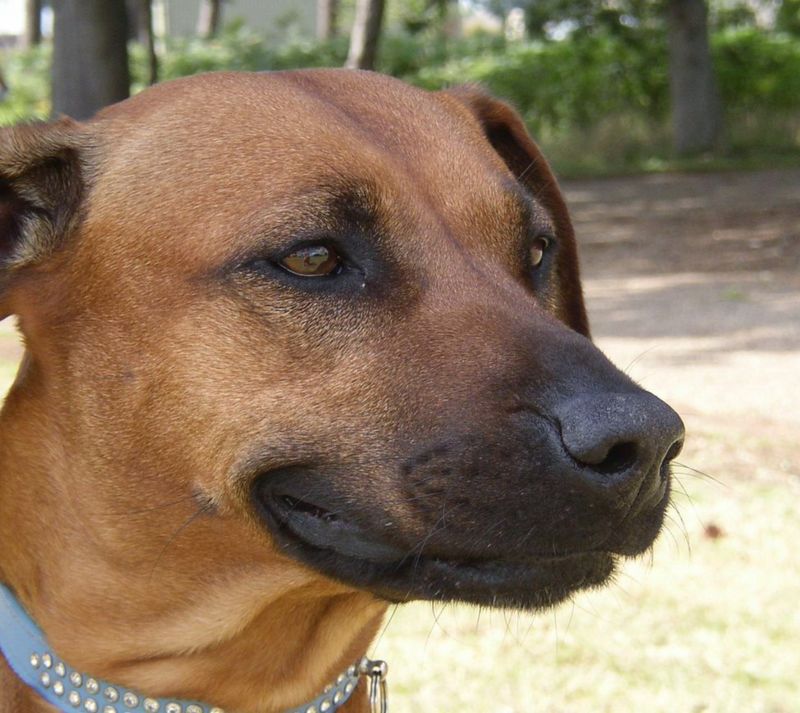
The Rhodesian Ridgeback retains ancestry from an ancient African dog lineage
For example, early European dogs were initially diverse, appearing to originate from two very distinct populations, one related to Near Eastern dogs and another to Siberian dogs.
But at some point, perhaps after the onset of the Bronze Age, a single dog lineage spread widely and replaced all other dog populations on the continent. This pattern has no counterpart in the genetic patterns of people from Europe.
Anders Bergström, lead author and post-doctoral researcher at the Crick, said: “If we look back more than four or five thousand years ago, we can see that Europe was a very diverse place when it came to dogs. Although the European dogs we see today come in such an extraordinary array of shapes and forms, genetically they derive from only a very narrow subset of the diversity that used to exist.”
An international team analysed the whole genomes (the full complement of DNA in the nuclei of biological cells) of 27 ancient dog remains associated with a variety of archaeological cultures. They compared these to each other and to modern dogs.
The results reveal that breeds like the Rhodesian Ridgeback in southern Africa and the Chihuahua and Xoloitzcuintli in Mexico retain genetic traces of ancient indigenous dogs from the region.
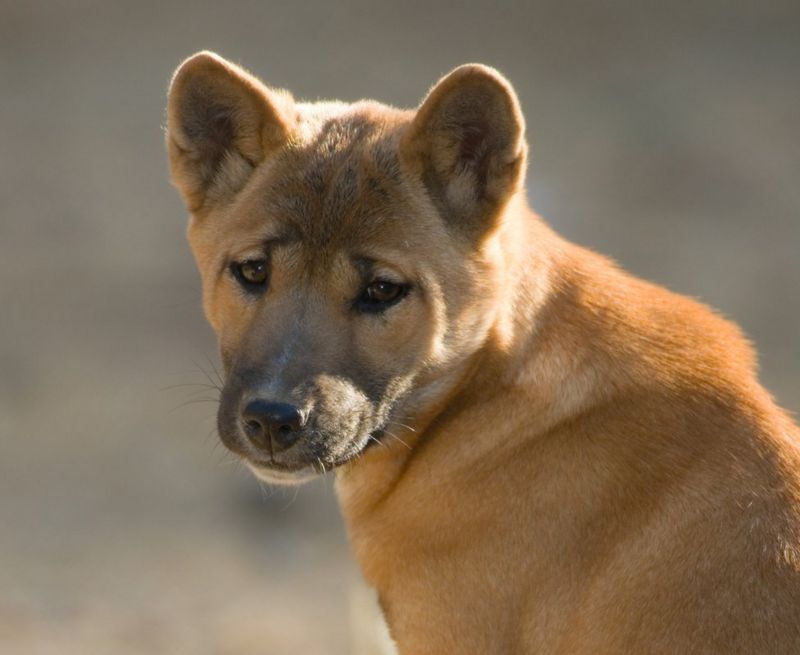
The New Guinea singing dog is one representative of a lineage found in dogs across Asia and Oceania
The ancestry of dogs in East Asia is complex. Chinese breeds seem to derive some of their ancestry from animals like the Australian dingo and New Guinea singing dog, with the rest coming from Europe and dogs from the Russian steppe.
The New Guinea singing dog is so named because of its melodious howl, characterised by a sharp increase in pitch at the start.
Greger Larson, a co-author from the University of Oxford, said: “Dogs are our oldest and closest animal partner. Using DNA from ancient dogs is showing us just how far back our shared history goes and will ultimately help us understand when and where this deep relationship began.”
Dogs are thought to have evolved from wolves that ventured into human camps, perhaps sniffing around for food. As they were tamed, they could then have served humans as hunting companions or guards.
The results suggest all dogs derive from a single extinct wolf population – or perhaps a few very closely related ones. If there were multiple domestication events around the world, these other lineages did not contribute much DNA to later dogs.
Dr Skoglund said it was unclear when or where the initial domestication occurred. “Dog history has been so dynamic that you can’t really count on it still being there to readily read in their DNA. We really don’t know – that’s the fascinating thing about it.”
Many animals, such as cats, probably became our pets when humans settled down to farm a little over 6,000 years ago. Cats were probably useful for controlling pests such as mice, that were attracted by the waste generated by dense settlements. This places their domestication in cradles of agriculture such as the Near East.
“For dogs, it could almost have been anywhere: cold Siberia, the warm Near East, South-East Asia. All of these are possibilities in my mind,” Pontus Skoglund explained.
I decided to review the Wikipedia page on the origin of dogs. At last the discrepancy became clear. The difference between divergence and domestication. (My emboldening.)
The genetic divergence between dogs and wolves occurred between 20,000–40,000 years ago, just before or during the Last Glacial Maximum[6][1] (20,000–27,000 years ago). This timespan represents the upper time-limit for the commencement of domestication because it is the time of divergence but not the time of domestication, which occurred later.[6][7] One of the most important transitions in human history was the domestication of animals, which began with the long-term association between wolves and hunter–gatherers more than 15,000 years ago.[4]
So that explains a great deal.
But it nevertheless remains the fact that they are our longest, dearest companion.
A fascinating account of the differences and similarities between dogs and ourselves.
I couldn’t believe it but three days ago The Conversation published a post about dogs that told me something that I didn’t know. That there was the similarity between dogs and humans when it came to the brain and love!
I can’t wait for you to read it!
ooOOoo
Your dog’s nose knows no bounds – and neither does its love for you.
Associate Professor of Psychology, Illinois Wesleyan University.
October 26th, 2020
I have discovered one positive amid the pandemic: I love working with two dogs at my feet.
As someone who studies dog cognition, I often wonder: What is Charlie learning when he stops to sniff the crisp fall air? What is Cleo thinking when she stares at me while I write? Are my dogs happy?
This uptick in dog time means I have been fielding questions from new and experienced dog owners alike about their companions’ mentalities. Many questions center on the same themes I ponder: What is my dog thinking? Am I doing everything I can to ensure my pup is content?
Fortunately, research on dog cognition can help unravel what is on their minds and provide insight into what they need for psychologically fulfilling and happy lives.
Smelling superstars
Dogs are both familiar and yet fascinatingly alien. To appreciate their “otherness” all you need to do is consider their sensory world.
My dogs and I have very different experiences when we walk a trail. I marvel at the beautiful autumn day, but my dogs have their heads to the ground, seemingly ignoring the wonders around them.
However, they are appreciating something I can’t perceive: the scent of the fox who scampered through last night, the lingering odor of the dogs who’ve walked this way and the footsteps of my neighbor, who last wore her hiking shoes in woods my dogs have never visited.
You’ve probably heard about dogs who sniff out cancer, weaponsor even coronavirus. These dogs are not special in their nose power: Your dog could do the same thing. In fact, the first dog to sniff out cancer sniffed a mole on his owner’s leg so frequently that she went to the dermatologist, where she was diagnosed with melanoma.
How can you even conceptualize this breathtaking difference in abilities? This disparity is like detecting one teaspoon of sugar in enough water to fill two Olympic-sized swimming pools.
Now that your mind has been blown about your dog’s incredible sense of smell, you can use this information to make your dog happier by taking it on the occasional “sniffy walk” – letting it lead the way and take as much time to smell as it would like. Such walks can make dogs happier by allowing them to gain lots of information about the world around them.
The love is mutual
While there are parts of a dog’s mind that are alien, there are also parts that feel very familiar. Chances are, your dog occupies a special place in your heart. Recent research suggests your dog feels the same way about you. Your dog adores you.
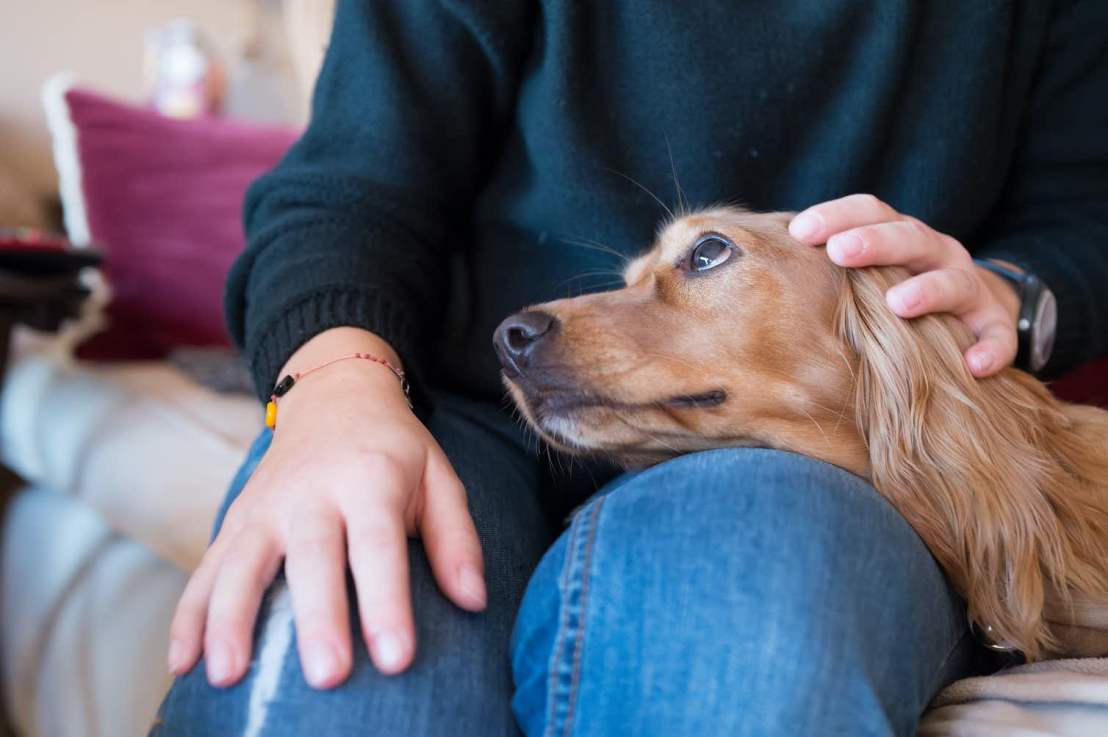
The average dog spends a lot of time gazing at its owner – creating a ‘love-loop.’ Murat Natan/EyeEm via Getty Images
Dogs attach to their owners in much the same way human infants attach to their parents. Like babies, dogs show distress when left with a stranger and rush to reunite upon their person’s return.
Understanding your dog’s mind can not only satiate your curiosity about your companion, but can also help you ensure your pup lives a good, happy life. The more you know about your furry friends the more you can do to meet their needs.
And now I am off to gaze into Cleo’s bright blue eyes, give Charlie a belly rub, and then let them take me on a “sniffy” walk.
ooOOoo
How many of you also learnt something about our dogs when it comes to love?
This was a fascinating report of the research that was carried out by Illinois Wesleyan University.
When one quietly reflects on the span of time that dogs and humans have been together, something in the order of 40,000 years, it’s no surprise that dogs have evolved to be our closest companion. Indeed, the initial connection between man and wolf had a profound impact on man. We went from eating crops and nuts to eating meat. It was the first human-animal relationship, and it is still extremely special.
Yes, the dog’s nose and heart know no bounds!
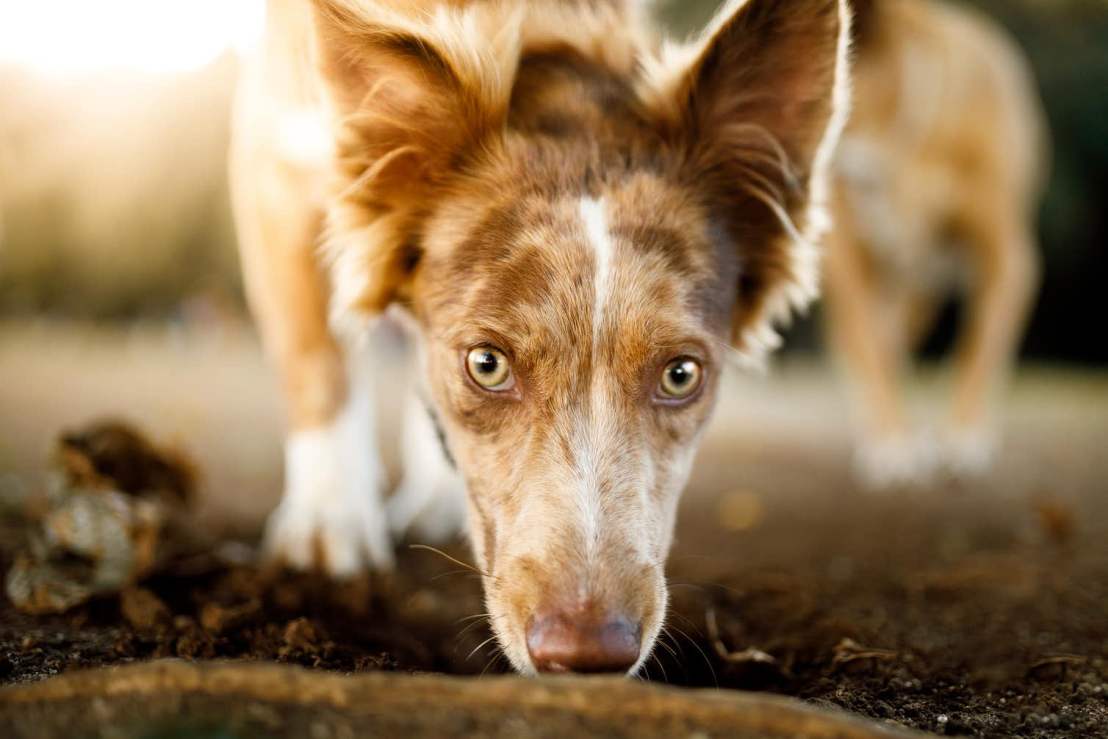
A dog’s nose dominates its face for good reason. Capuski/iStock via Getty Images Plus
The one thing that goes on forever and, incidentally, has been going on for a long, long time, is the human devotion to dogs. Whether it is one or two dogs being walked every day without fail or, in this case, a Mexican who opened his heart and his house to a tad more than a couple of dogs.
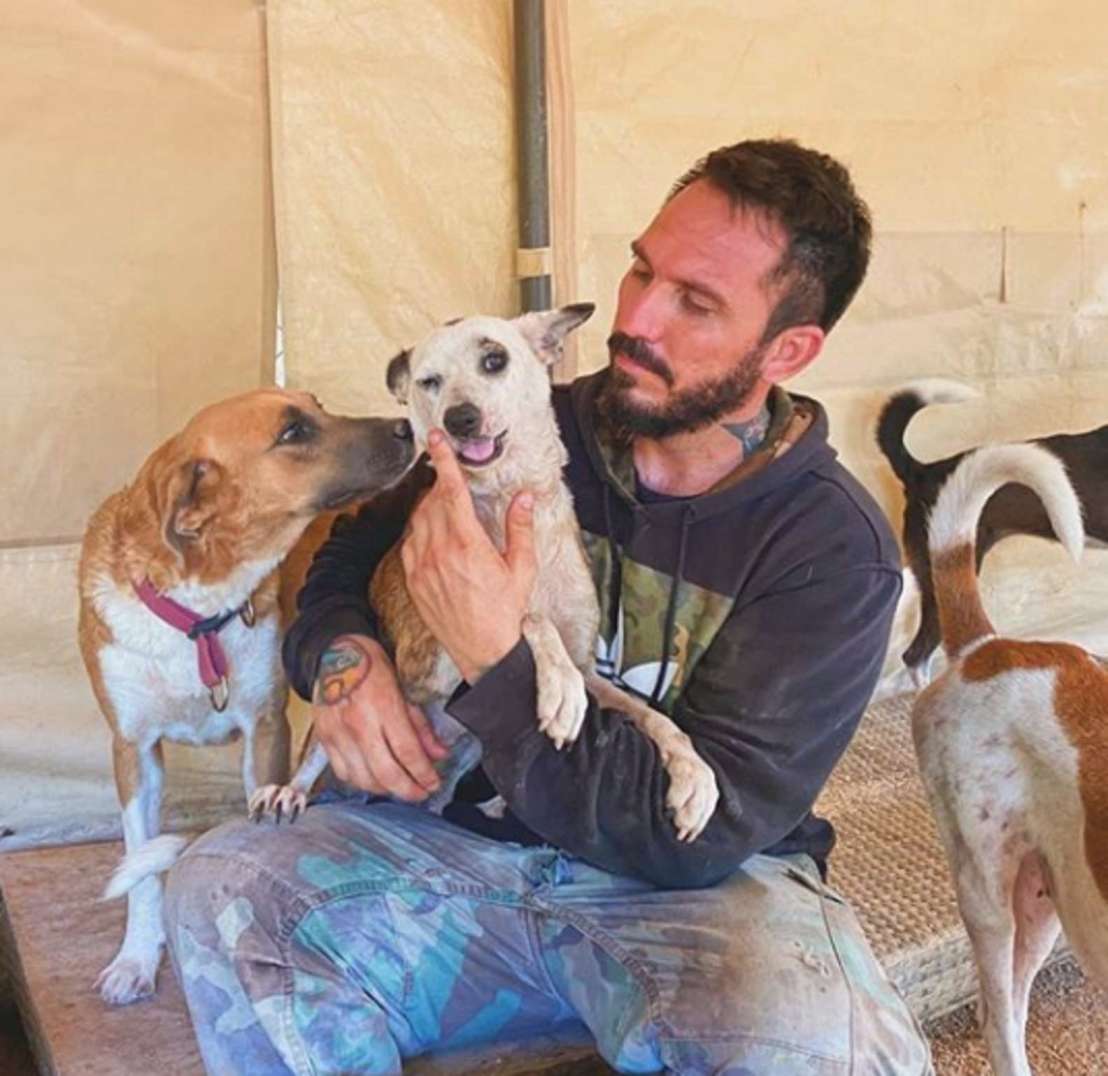
In early October, Hurricane Delta roared toward the shores of Cancun, Mexico, leaving Ricardo Pimentel with few options.
Pimentel runs Tierra de Animales, an animal sanctuary on the outskirts of Cancun, surrounded by jungle. For nine years, he has cared for over 500 animals — including stray cats, dogs, chickens, turkeys, horses, sheep, pigs, cows and donkeys.
INSTAGRAM/TIERRADEANIMALES
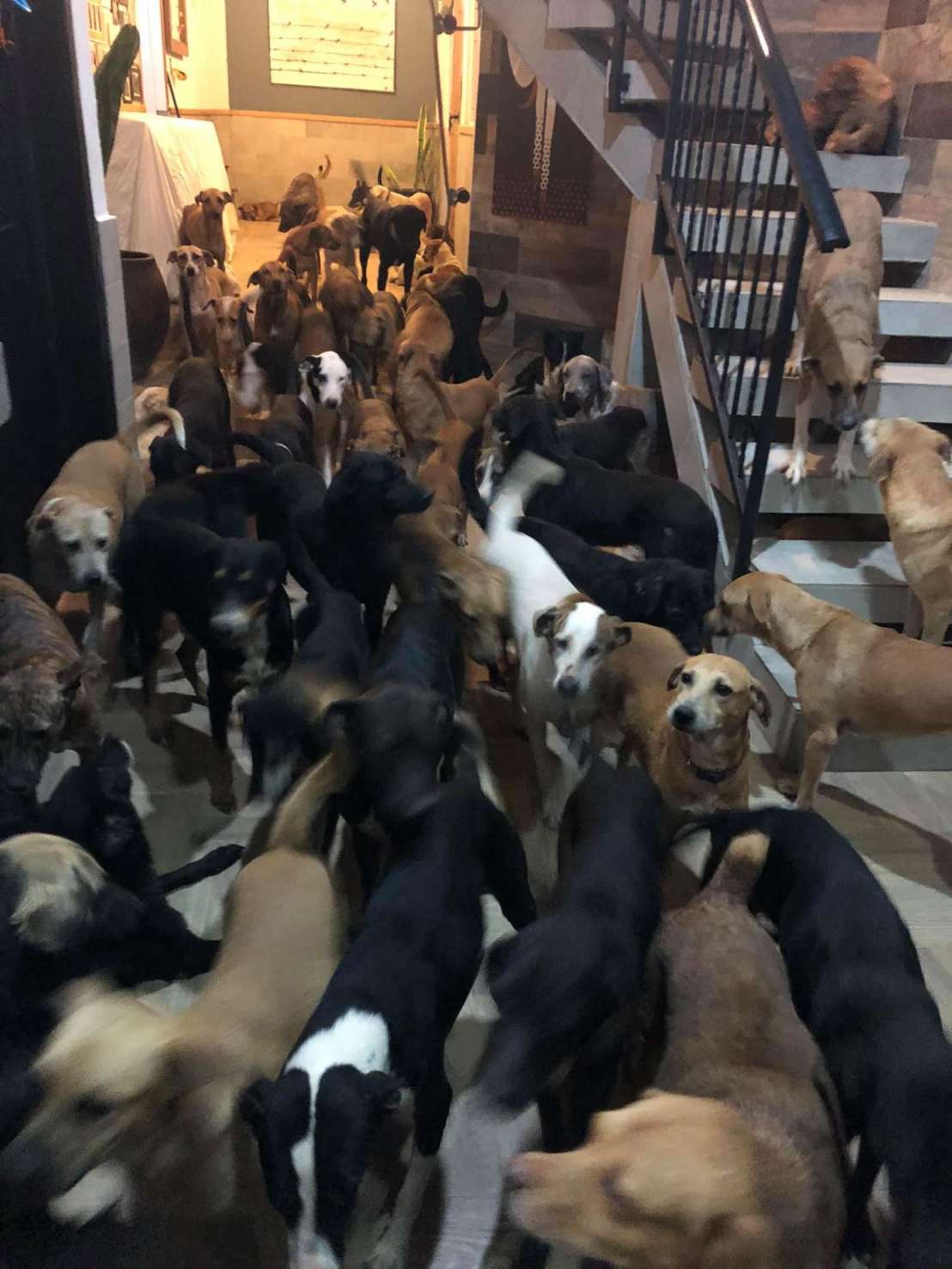
He knew the dog shelters weren’t strong enough to stand up to a Category 4 storm, so he did what any animal lover would do — he invited the pups into his home for a sleepover.
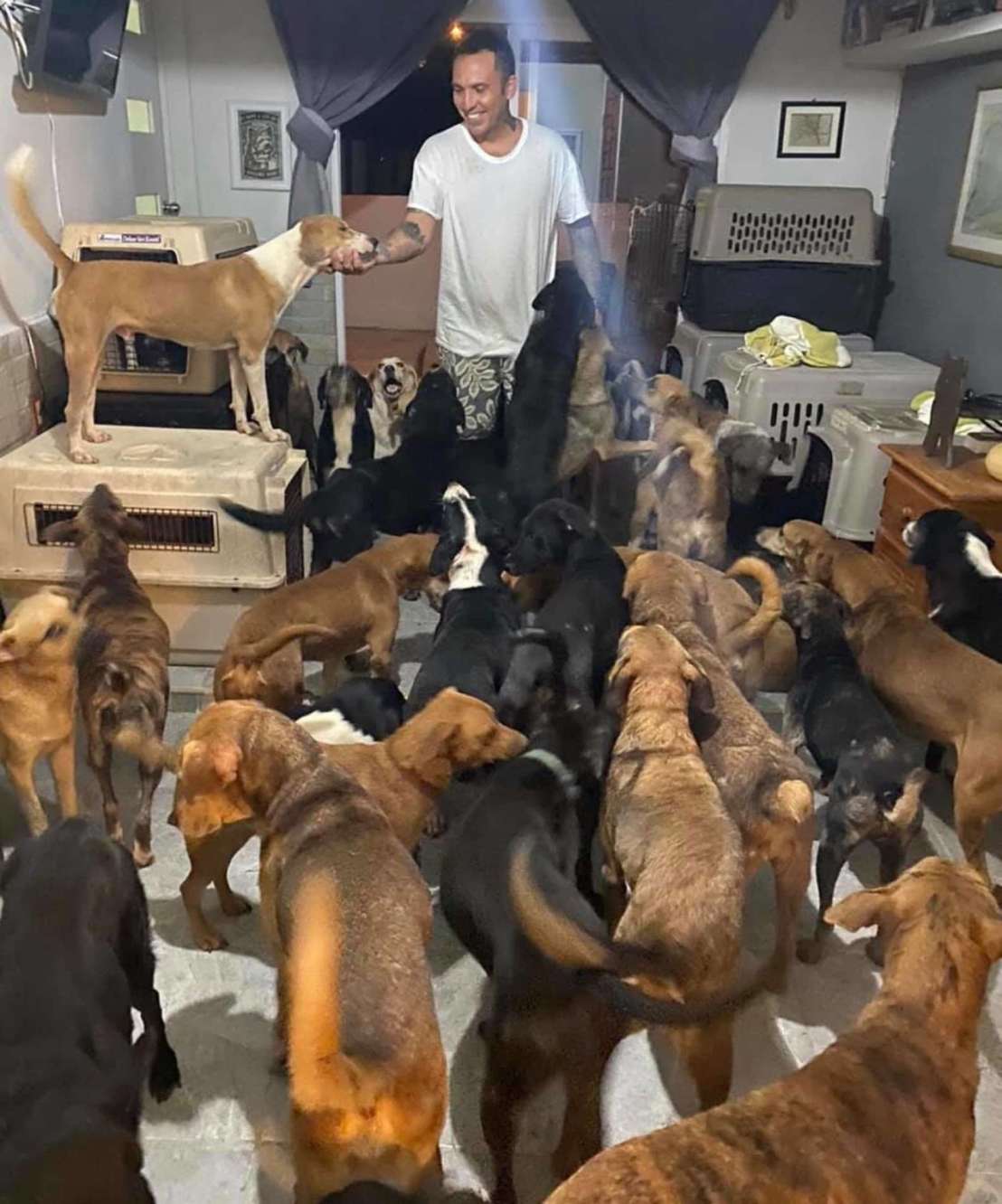
“We have two bedrooms, one kitchen and one bathroom available for volunteers who want to come and stay here to help us with all the things that we have to do,” Pimentel told The Dodo. “We decided to put almost all the dogs inside the house, simply because we don’t fully trust in the shelters that we currently have because they aren’t hurricane-proof.”
FACEBOOK/TIERRA DE ANIMALES
But bringing 300 dogs inside was no easy feat. For five hours, Pimentel and his volunteers rounded up the pups and helped them inside before the hurricane made landfall.
“We had to bring them in on leash two by two,” Pimentel said. “Some of them are afraid or don’t know how to walk on a leash, so we had to carry them to the house, but in the end, it was worth it because they are all safe.”
FACEBOOK/TIERRA DE ANIMALES
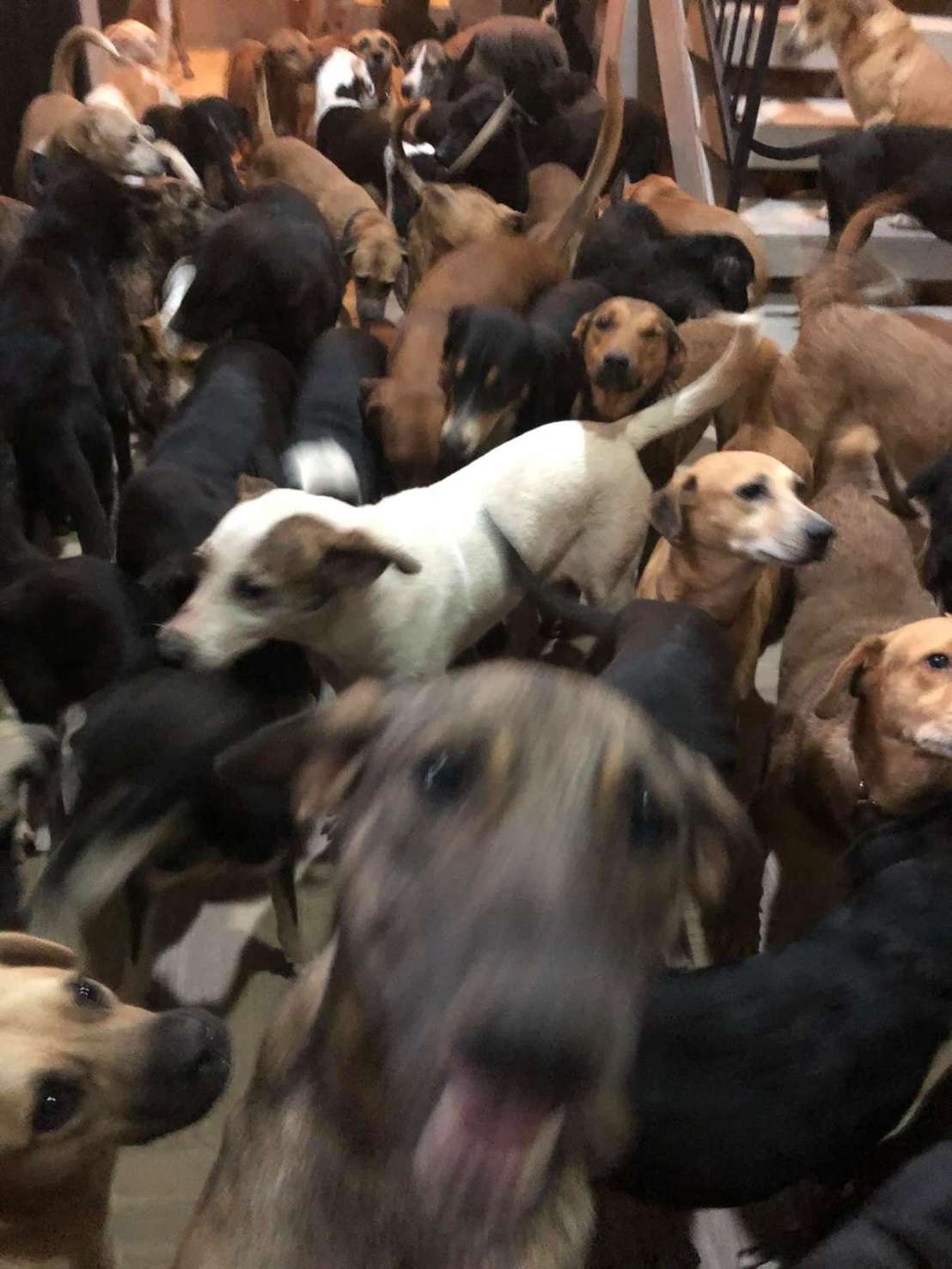
With so many animals in such a small house, Pimentel expected that they’d make a bit of a mess. But he was pleased when everyone seemed to get along.
“They were actually very well-behaved all night,” he said.
Luckily, by the time the hurricane reached the sanctuary, it was only a Category 2 storm — though the strong winds still damaged the property.
“The next morning when the hurricane finished, we had to do a lot of repairs and clean all [the animals’] areas from trees and branches,” Pimentel said. “So they stayed in the house the next day until 5 or 6 p.m.”
“Of course, there was a horrible smell in the house and they broke a few things, but there’s nothing to regret,” he added. “I would do it again one million more times if necessary.”
FACEBOOK/TIERRA DE ANIMALES
Pimentel is now working to build hurricane-proof shelters on his 10-acre property so all the animals can have adequate protection. And he hopes to take in even more animals so that no one has to spend another night on the streets.
To help Tierra De Animales build their hurricane-proof shelters, you can make a donation here.
ooOOoo
Here’s a YouTube video. Even if you don’t understand the vocabulary the pictures are inspiring!
I find this story both amazing and wonderful. For Ricardo to offer such protection from the weather and to do it in his home is staggering. Hats off to Ricardo and if a few of you can make a donation that would be perfect.














 Learning from Dogs