This has been doing the rounds and may be seen on numerous web sites and Blogs. It may be fiction but, nonetheless, it’s a good message.
Strangely, for a Blog called Learning from Dogs, there have been precious few dog stories. Maybe the integrity of a dog is so flippin’ obvious that we don’t need to wrap the species up in all sorts of romantic twaddle. This in no way, however, reduces the power of the message that dogs, along with many other species of warm-blooded animals (e.g. horses) are capable of reminding mankind of the importance of integrity.
Thanks to Dan for passing me the link to a fascinating graphic that was recently published in USA Today showing the
As seen by STS 128
time-line of the International Space Station. It has been orbiting above our heads for over a decade! Do click on the link because you will be surprised, unless you work for NASA, how large and complex the ISS now is.
It’s an interesting to consider what has happened since the launch of the first module, Zanya, on the 20th November, 1998. Bill Clinton was then President of the USA; Tony Blair had been British Prime Minister since May, 1997. How times change!
But steadily a group of Nations has worked together to keep this project going and now the end of this magnificent enterprise is within sight. As the NASA web site summarises:
The International Space Station is a partnership of the US, Russian, European, Japanese, and Canadian Space Agencies. The station has been continuously human occupied since Nov 2, 2000. Orbiting 16 times per day at 17,500 miles per hour 250 miles above the ground, it passes over 90% of the world’s surface. When complete in 2010, it will weigh over 800,000 pounds and have a crew of 6 conducting research and preparing the way for future exploration to the moon and beyond.
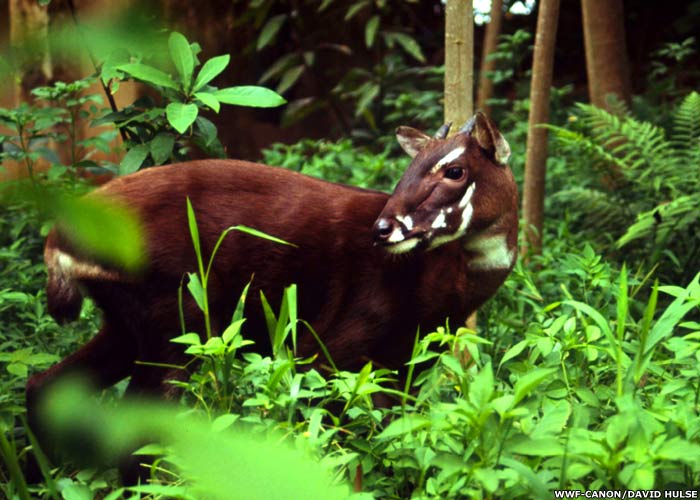
The Saola is one of the world’s rarest mammals, on the brink of extinction.
(Please share this Post as far and wide as you can – thank you.)
NOTE: Thanks to Yves Smith of Naked Capitalism for this amazing picture that came from the BBC. (By the way Yves’ Blog is an excellent subscription if only for the wonderful daily animal pictures.)
If you, like me, had never heard of this creature then be prepared to weep a few tears; this beautiful animal is very unlikely to survive as a species for much longer.
There’s a wonderful story in last week-end’s The Sunday Times, a British newspaper, written by Matthew Campbell concerning the loss of an important island that has been used previously to define the limits of Mexico’s maritime
Old map with Bermeja
border (read oil!). Here’s an extract:
The mystery has come to haunt Mexico as unrelentingly as one of its beloved soap operas: where is Bermeja, an island off the Yucatan coast that appears to have vanished without trace?
The disappearance of Bermeja is no laughing matter – it would allow Mexico to extend its maritime border some 55 miles further north, helping it to fight off what it sees as American encroachment on its claims to potentially vast oil reserves in the Mexican Gulf.
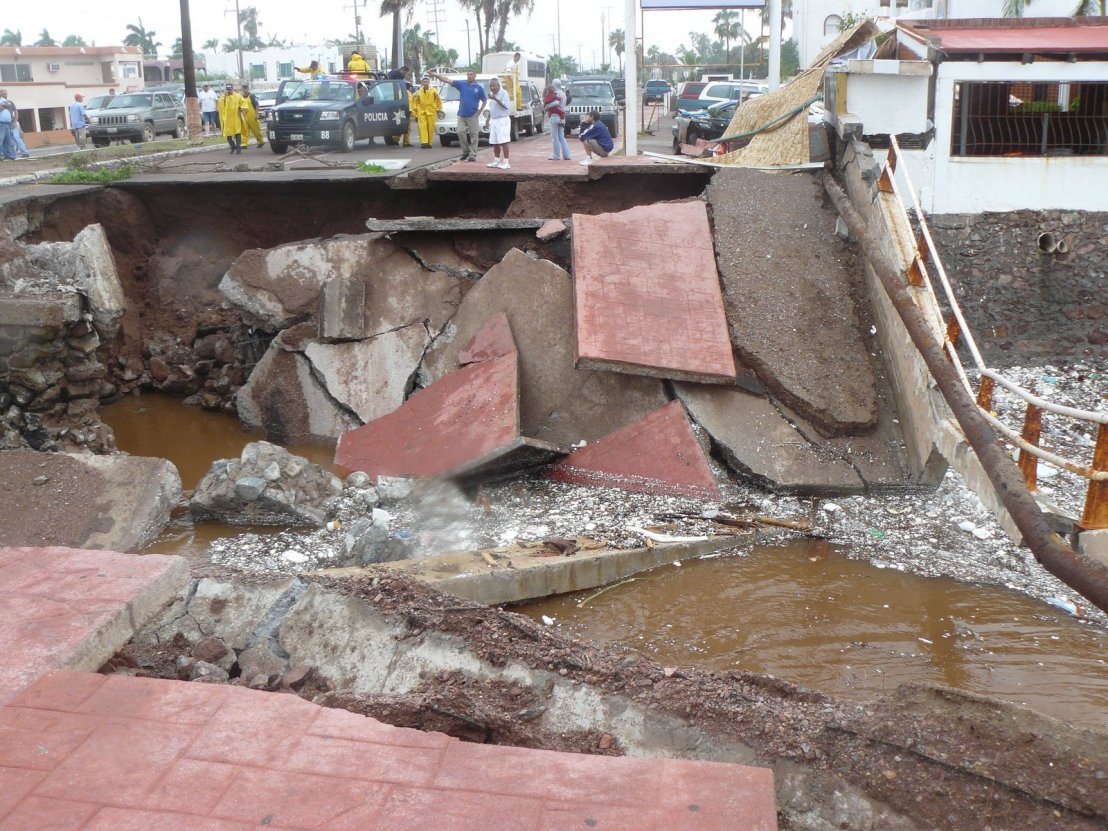
This is the first time in my life where a major natural disaster has happened around me, so to speak. Now some 2 days later, here are some reflections. The small stories have so much more power to affect one.
That knowing that hundreds of homes here in San Carlos and in nearby Guaymas have been flooded out doesn’t have such a powerful affect as seeing an individual’s possessions spread out in the sun.
People of all sorts and backgrounds love to spread rumours. There seems to be a human need to be the spreader of new information, even if it is far from correct. Just about anything that one wanted to know, or even more importantly needed to know, had to be very carefully sieved. Better to find out yourself because the chances are that whomsoever is saying this or that has got their facts wrong. Amazingly, some of the worst gossip was coming from people who weren’t even in the area!
That knowing that we had 28 inches of rain fall wasn’t as powerful as seeing our neighbour’s swimming pool fill up from
Empty - Full in 30 hours
empty!
The electricity workers were marvellous. They came in from far and wide and worked all the daylight hours available. It made me realise that, ultimately, we don’t accord sufficient money and status to the guys who keep the electricity flowing and too much status and money to those that have jobs that would cease instantly in a world without electricity, clean water and public sewerage systems.
The small acts of generosity were powerfully touching! Charlie and Tracy had a large leg of lamb that wasn’t going to keep without a functioning freezer. So they cooked it up and invited three other couples to share it. Thanks guys!
Within hours of the rain ceasing on the 3rd (Thursday) and people started venturing out and about, either to find provisions or just to stare open-mouthed at the effect of Nature, some poor sod had his car catch fire. You really had to feel sorry for him – this was not a great time!
And on a very personal note, Jean worked with me in mopping up rain water from 2am on Wednesday 2nd (the height of the storm) and still managed to serve a beautiful hot meal of tasty baked chicken legs in the evening. She is a special lady.
Just a quick note to say that ‘normal’ service will be resumed in the morning, local time here in Mexico.
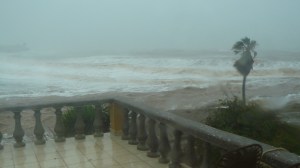
Day 1 of Jimena
Jimena struck San Carlos, where we are presently living, late afternoon on the 1st September. Electricity was restored a couple of hours ago. (I write these few words at 6.30 pm on Sunday, 6th.)
Where the capital city is called Edinburgh of the Seven Seas
My great buddy of 30 years, Dan, Californian born and bred, recently emailed me saying that he had spent a fascinating hour reading the website of Tristan da Cunha. Most British people will have some odd recollection about this very remote community living in the South Atlantic because the islands are part of the United Kingdom. TDCU 1ZZ is, in fact, the UK postcode for Tristan da Cunha.
The settlement on Tristan
This is not a place which has a habit of making main-stream news! Indeed, one could not imagine a more distant part of the planet. Well you won’t imagine a more distant place. Tristan da Cunha is the most remotely inhabited archipelago on Planet Earth. Indeed, only one island, Tristan, is inhabited and, according to the website there are just 264 British citizens there today.
Earlier it was mentioned that most British will have some vague recollection of Tristan. More likely, that will be those British who were born before, say, 1950.




 That knowing that hundreds of homes here in San Carlos and in nearby Guaymas have been flooded out doesn’t have such a powerful affect as seeing an individual’s possessions spread out in the sun.
 the daylight hours available. It made me realise that, ultimately, we don’t accord sufficient money and status to the guys who keep the electricity flowing and too much status and money to those that have jobs that would cease instantly in a world without electricity, clean water and public sewerage systems.
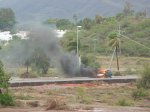 Within hours of the rain ceasing on the 3rd (Thursday) and people started venturing out and about, either to find provisions or just to stare open-mouthed at the effect of Nature, some poor sod had his car catch fire. You really had to feel sorry for him – this was not a great time!

 Learning from Dogs