Each summer, high in the night skies of the far northern and southern hemispheres a unique phenonmenon occurs – noctilucent clouds. Little is known about them, but now an amateur astronomer from north Wales is trying to predict when they are likely to appear.
Here, John Rowlands, one of four finalists in the BBC’s search for the Amateur Scientist of the Year So You Want To Be A Scientist? – and his mentor, Professor Nick Mitchell from the University of Bath – take a closer look at these mysterious silver and blue waves at the edge of space.
John has his own Facebook page here with plenty more information.
And a quick Google images search found this:
Noctilucent clouds
And there’s still more. This delightful video on YouTube, courtesy of NASA.
Described thus:
The Aeronomy of Ice in the Mesosphere (AIM) mission will provide the first detailed exploration of Earth’s unique and elusive noctilucent or night shining clouds that are found literally on the “edge of space.” Located near the top of the Earth’s mesosphere (the region just above the stratosphere), very little is known about how these polar mesospheric clouds form or why they vary. They are being seen at lower latitudes than ever before and have been growing brighter and more frequent, leading some scientists to suggest that this recent increase may be the direct result of human-induced climate change. The mission is led by Dr. James Russell of the Center for Atmospheric Sciences at Hampton University.
By Paul Handover
(with thanks to the UK Flyer List for bringing this to my attention.)
“Fear paralyzes; curiosity empowers. Be more interested than afraid.” — Patricia Alexander, American educational psychologist.
This dropped into my email in-box the other day so I grabbed it to set this Post off on the right theme.
There is much around that can generate fear, touched on in my Post a couple of days ago where I quoted Richard Branson.
Prof. Lovelock
For an example of fear, many will have listened to the recent interview of Professor James Lovelock on the BBC Today programme and wondered just where we are all heading. ( The interview may be listened to here. – it’s 7 minutes long but listen to it!)
Here’s a YouTube video of Lovelock being interviewed in 2009. (Also worthy of watching for the full 13 minutes and note the connection between Lovelock and Branson.)
So if you listened and watched these two interviews then one could argue that there is more than enough to be fearful of our future.
Now go back to the opening quotation: “Fear paralyzes; curiosity empowers. Be more interested than afraid.”
Being fearful is not the answer – even if no alternative appears to be a rational way of mentally processing something.
Here’s a piece from Wayne Dyer’s book, There’s a Spiritual Solution to every Problem.
We are subjected to many illusions in our daily life. The greatest one is the one that keeps us trapped in giving our energy to what always has been.
The past is behind us. Predicting the future accurately, even by eminent scientists such as James Lovelock, is very, very unreliable. Thus all we have is today. So do not be afraid, be curious.
The greatest realisation that the last year has produced for me is that, in the end, it is our attitude to everything around us (that really means our attitude to everything within us) that is the most important thing in the world.
Yes, that’s a grand statement – everything in the world comes down to attitude.
Why? Because our attitude drives our thoughts and behaviours. Our attitudes are the manifestation of our internal energy. Think about it! Your attitude to something fuels the energy that goes into that belief. And, as so many of the great teachers in life say, “We get more of what we think about most“!
Here’s Wayne Dyer in his book, There’s A Spiritual Solution To Every Problem:
Our institutions are built and organized around the idea of facilitating, regulating, and guiding human behavior. You cannot go to schools, businesses, governments, or even churches, mosques, or synagogues to negotiate the presence of energy. These institutions exist to deal with the material world and to keep human beings in line. They vibrate to the lower energies of the material world and often are the source of, rather than the solution to, your problems.
Eventually, enough people will reach a higher state of spiritual vibration and form a critical mass. Then you will see institutions emerge that are not designed to regulate, facilitate, or guide human behavior, but to access, implement, and teach a spiritual approach to life. In short, the purpose of our institutions will shift from controlling to promoting bliss.
We can go back much further and see the same message. Here’s an extract from Galatians 5:1:
Live by the Spirit, I say, and do not gratify the desires of the flesh. For what the flesh desires is opposed to the Spirit, and what the Spirit desires is opposed to the flesh; for these are opposed to each other, to prevent you from doing what you want. But if you are led by the Spirit, you are not subject to the law.
Now the works of the flesh are obvious: fornication, impurity, licentiousness, idolatry, sorcery, enmities, strife, jealousy, anger, quarrels, dissensions, factions, envy, drunkenness, carousing, and things like these. I am warning you, as I warned you before: those who do such things will not inherit the kingdom of God.
By contrast, the fruit of the Spirit is love, joy, peace, patience, kindness, generosity, faithfulness, gentleness, and self-control. There is no law against such things.
One can explore the writings of many other great thinkers and see the same message coming over time after time.
The peoples and creatures upon the face of Planet Earth are involved in one of the greatest experiments of all time. How will we survive the next couple of hundred years?
We all truly know that our ‘institutions’ are not the answer, indeed they are part of the problem. Conversely, we also know that mankind has the ability, literally, to move mountains. The last year has shown, on a personal level, that a fundamental change in attitudes can also move emotional mountains.
It’s been an honour to publish Learning from Dogs for the last year – and I am very moved that so many of you have chosen to call by. Thank you.
On July 15th, 2009 a post called Parenting lessons from Dogs started what has now become a bit of a ‘habit’. But more reflections tomorrow.
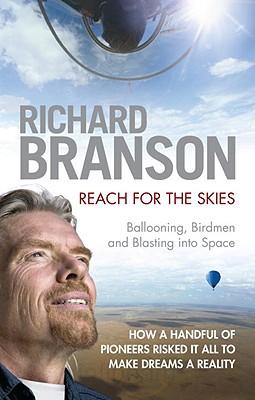
Reach for the Skies
Today I want to voice something that has been running around my mind for some time. It is whether we give in to the mounting doom and gloom at so many levels in our societies (and it can be a very compelling draw) or whether we see this as a painful but necessary period where slowly but surely the desires of ordinary people; for a fairer, more truthful, more integrous world are gaining power.
And I’m going to use Richard Branson to voice it for me!
(Now this is an unusually long Post so I’ve inserted the Read More divider to prevent the Post visually swamping your browser.)
Using a cat carrier from a local animal hospital, outdoorsman Zak Anderegg was able to save a dog left for dead in a remote cavern in the canyons along the Arizona-Utah border.
The BBC have been started a series on how things are made! The first episode was on the making of a nuclear submarine – perhaps not something that touches most of us!
Trent 900 on the A380
But the second episode was much more the ‘touch of the common man’ as it was about the building of a commercial jet engine, the Trent engine built by Rolls Royce of Derby, England.
Anyway, I’m not going to natter on other than to say that not all regulatory bodies are bad in this world. Indeed, the aviation industry has shown how splendid both engineering and the certification processes can be in giving us a incredibly safe form of transport.
There are plenty of YouTube videos on the Trent engine but here are two that I found of great interest. (Thanks to Simon H for the pointers.)
A quick Google search shows that this is a well-documented story that has been doing the rounds since 2009. But I hadn’t come across it before so was very grateful for a friend in England, Richard Howell, including me on a recent email circulation. I shall reproduce Richard’s email just as it was received.
OK… so… you’re the pilot of a plane…
It’s on auto-pilot and you’re catching up on People magazine and having a cup of coffee.
Suddenly the loudest sound you will ever hear goes off just behind your left ear.
You’re blinded by the flash and can’t hear.
All you can feel is something warm running down your leg.
You immediately consider retirement.
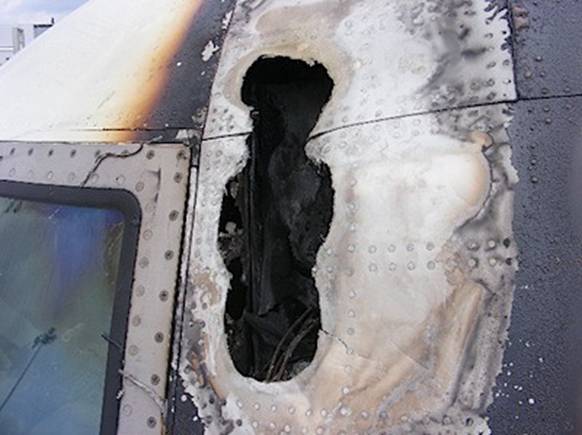
This is an Atlantic Southeast Airlines/Delta Connection aircraft… soon after it suffered a lightning strike.
Although I have only seen a trailer for this film, I watched the interviews and excerpts Paul has linked in this article and found them very moving.
In these days of uncertainty and fear it is heartening to see and read about a relationship founded on unconditional love.
It signifies to me that it is the quality of our relationships that makes the difference in life, not material possessions – and then how we go about finding more examples of these in our everyday lives.
Jon Lavin
This is all about Trust
The prompt for writing this particular Post was the other evening Jean and I watched the film The Soloist. I’ll come on to that later.
Before I do, I want to look at another aspect of learning from dogs; that is the question of trust. We have so much to learn from dogs with regard to trust.
Because dogs spend so much of their time living in the present, just being a dog in the ‘now’ moment as it were, they seem to be able to read another dog very quickly. Dogs don’t have ‘hidden agendas’.
You see we humans can be (and should be) as happy in the present as dogs are. But so often our fears, worries and concerns for the future hinder our ability to experience the present, to enjoy the NOW.
Look at the faces of others around you when you have a moment. (Or, indeed look at your own right now in the mirror.) Do you see a face serenely happy unencumbered with the past or the future? Rarely is my guess.
That’s why a dog can read another dog in micro-seconds and know everything about that other animal. There are no secrets – what you see is what you get.
Look at this picture.
Pharaoh and Poppy
This is Poppy (8 lbs/3.5 kg) picking up food droppings from Pharaoh (90 lbs/40 kg). In fact, within seconds of taking this picture, Poppy had pushed between Pharaoh’s front legs and put her face in the dish and started eating Pharaoh’s food, at which point Pharaoh went over the Poppy’s dish and started eating from there. (NB. Anyone that has dogs in their home will know how possessive they can be at feeding time.)
Immediately when Pharaoh met Poppy, when he and I ended up in Mexico in 2008, they instantly trusted each other. This is a beta level (second in status to the alpha, i.e. dominant) pure bred German Shepherd bonding with a Yorkie mix female dog that was found, hairless and starving, on a Mexican construction site – rescued by Jean after almost certainly being thrown out after she had made some Mexican a few pesos from selling her puppies.
Here’s another picture of these two:
Total trust!Jamie Foxx and Robert Downey Jr in The Soloist
Now to the film. It wasn’t a blockbuster and didn’t get rave reviews but if viewed from the simple perspective of trust and friendship it delivers a powerful message that is beautifully compelling.
There’s an official trailer on YouTube here but the better review is this extract from the 60 Minutes programme below.
You need to watch this film to see how trust is built up, and out of that trust comes a wonderful friendship. But you will get a taste of the sheer beauty of this true story by this 12 minute YouTube video. Try and put aside these few minutes so you can watch this without interruption.
And here’s a link to another extract from the 60 Minutes programme concentrating on Mr Ayers playing his heart out.
If you want to read the column in the LA Times that Steve Lopez wrote in December 2004 about Mr Ayer’s Christmas present, just click here.
Finally, the film closes with these words from the actor who portrays Mr Lopez. Please read them to yourself, aloud if you can.
Points West by Steve Lopez
A year ago I met a man who was down on his luck and thought that I might be able to help him. I don’t know that I have. Yes, my friend Mr. Ayers now sleeps inside. He has a key, he has a bed, but his mental state and his well-being are as precarious now as they were the day we met.
There are people who tell me that I helped him, mental health experts who say that the simple act of being someone’s friend can change the brain chemistry, improve his functioning in the world.
I can’t speak for Mr Ayers in that regard, maybe our friendship has helped him, but maybe not.
I can however speak for myself. I can tell you that by witnessing Mr Ayers’ courage, his finality, his faith in the power of his art, I’ve earned the dignity of being loyal to something you believe in, holding on to him. Above all else, I believe him, without question that it will carry you home.
And now recall that when you were reading those words, you were totally and completely living in the present. Keep that feeling of grace close to you forever.
By living in the present, you offer yourself as a friend to the world.
Congratulations to Martin Wolf of the Financial Times
An article was published in the FT on the 29th June that beautifully describes the ways in which we are all being so beautifully ‘screwed’ by the world of finance. (Note, you may need to register to see this article, but please do. Registration is free and the FT is full of great content.)
It starts like this:
This global game of ‘pass the parcel’ cannot end well
By Martin Wolf
Published: June 29 2010 23:31 | Last updated: June 29 2010 23:31
Paul here. Pass the parcel is a game for kids’ parties that involves passing a multi-wrapped ‘present’ around where the kid holding the parcel when the music stops gets to unwrap one sheet, then passes it on, etc., etc., until the kid holding the parcel with just one wrapper on it when the music stops gets the present.
Martin continues:
Our adult game of pass the parcel is far more sophisticated: there are several games going on at once; and there are many parcels, some containing prizes; others containing penalties.
So here are four such games. The first is played within the financial sector: the aim of each player is to ensure that bad loans end up somewhere else, while collecting a fee for each sheet unwrapped along the way. The second game is played between finance and the rest of the private sector, the aim being to sell the latter as much service as possible, while ensuring that the losses end up with the customers. The third game is played between the financial sector and the state: its aim is to ensure that, if all else fails, the state ends up with these losses. Then, when the state has bailed it out, finance can win by shorting the states it has bankrupted. The fourth game is played among states. The aim is to ensure that other countries end up with any excess supply. Surplus countries win by serially bankrupting the private and then public sectors of trading partners. It might be called: “beggaring your neighbours, while feeling moral about it”. It is the game Germany is playing so well in the eurozone.
It’s an article that really does need to be read in full. Martin concludes thus:
Yet it is quite clear that an isolated discussion of the need to reduce fiscal deficits will not work. These cannot be shrunk without resolving the overindebtedness of damaged private sectors, reducing external imbalances, or both.
The games we have been playing have been economically damaging. We will be on the road to recovery, when we start playing better ones.
Now I really don’t want Learning from Dogs to focus on ‘doom and gloom’. There’s more than enough of that to go round twice and thrice.
But when someone writes in such a great clarifying way – then it deserves the widest promulgation. The more we all know about the games being played, the better we can change the rules to benefit society. Well done, Martin.