Author: Paul Handover

The Changing Face of Society

A powerful and compelling essay from Tom Engelhardt

First, a preamble from me.

There have been a number of references to Tom Engelhardt’s writings on Learning from Dogs over the last 12 months; if you want to browse through them why not start with TomDispatch – The Great American Carbon Bomb.  Frequently, Tom writes an introductory piece to an essay from a guest author; Tom has generously given me written permission to republish any of his writings.

But his latest essay is 100% Tom and beautifully written.  My instinct is to agree with Tom’s conclusions entirely.  The reason you hear a slight hesitation in that last sentence is because I was not born an American, indeed only became a permanent USA resident this last April.  From the perspective of  a Londoner born in 1944, I suspect not too many years Tom’s senior, much of Tom’s essay really resonates with me.

OK, that’s enough from me.  Whoops, sorry, a few more words.  Tom’s essay is long, but so what!  Guess what I am saying is don’t be put off by the length, just make a mental note that if you haven’t got a quiet 15 minutes now, then wait until you have.  The essay will be compelling, I can guarantee it.  Especially if you are one of the many Learning from Dogs readers that is outside the USA – this provides very great insight into the Occupy Wall Street movement and the changes in society that are going to flow from that movement, flow around the globe.

Tomgram: Engelhardt, Wall Street by the Book Posted by Tom Engelhardt at 8:00pm, October 30, 2011.

OWS at Valley Forge
A (Self-)Graduation Speech for the Occupiers of Zuccotti Park 

By Tom Engelhardt

Once the Arab Spring broke loose, people began asking me why this country was still so quiet.  I would always point out that no one ever expects or predicts such events.  Nothing like this, I would say, happens until it happens, and only then do you try to make sense of it retrospectively.

Sounds smart enough, but here’s the truth of it: whatever I said, I wasn’t expecting you.  After this endless grim decade of war and debacle in America, I had no idea you were coming, not even after Madison.

You took me by surprise.  For all I know, you took yourself by surprise, the first of you who arrived at Zuccotti Park and, inspired by a bunch of Egyptian students, didn’t go home again.  And when the news of you penetrated my world, I didn’t pay much attention.  So I wasn’t among the best and brightest when it came to you.  But one thing’s for sure: you’ve had my attention these last weeks.  I already feel years younger thanks to you (even if my legs don’t).

Decades ago in the Neolithic age we now call “the Sixties,” I was, like you: outraged.  I was out in the streets (and in the library).  I was part of the anti-Vietnam War movement.  I turned in my draft card, joined a group called the Resistance, took part in the radical politics of the moment, researched the war, became a draft counselor, helped organize an anti-war Asian scholars group — I was at the time preparing to be a China scholar, before being swept away — began writing about (and against) the war, worked as an “underground” printer (there was nothing underground about us, but it sounded wonderful), and finally became an editor and journalist at an antiwar news service in San Francisco.

In that time of turmoil, I doubt I spent a moment pondering this irony: despite all those years in college and graduate school, the most crucial part of my education — learning about the nature of American power and how it was wielded — was largely self-taught in my off-hours.  And I wasn’t alone.  In those days, most of us found ourselves in a frenzy of teaching (each other), reading, writing — and acting.  That was how I first became an editor (without even knowing what an editor was): simply by having friends shove their essays at me and ask for help.

Those were heady years, as heady, I have no doubt, as this moment is for you.  But that doesn’t mean our moments were the same.  Not by a long shot.  Here’s one major difference: like so many of the young of that distant era, I was surfing the crest of a wave of American wealth and wellbeing.  We never thought about, but also never doubted, that if this moment ended, there would be perfectly normal jobs — good ones — awaiting us, should we want them.  It never crossed our minds that we couldn’t land on our feet in America, if we cared to.

In that sense, while we certainly talked about putting everything on the line, we didn’t; in truth, economically speaking, we couldn’t. Although you, the occupiers of Zuccotti Park and other encampments around the country, are a heterogeneous crew, many of you, I know, graduated from college in recent years.

Most of you were ushered off those leafy campuses (or their urban equivalents) with due pomp and ceremony, and plenty of what passes for inspiration.  I’m ready to bet, though, that in those ceremonies no one bothered to mention that you (and your parents) had essentially been conned, snookered out of tens of thousands of dollars on the implicit promise that such an “education” would usher you into a profession or at least a world of decent jobs.

As you know better than I, you got soaked by the educational equivalent of a subprime mortgage.  As a result, many of you were sent out of those gates and directly — as they say of houses that are worth less than what’s owed on their mortgages — underwater.

You essentially mortgaged your lives for an education and left college weighed down with so much debt — a veritable trillion-dollar bubble of it — that you may never straighten up, not if the 1% have their way.  Worse yet, you were sent into a world just then being stripped of its finery, where decent jobs were going the way of TVs with antennas and rotary telephones.

Lost Worlds and Utopia

Here’s a weakness of mine: graduation speeches.  I like their form, if not their everyday reality, and so from time to time give them unasked at TomDispatch.com, speeches for those of us already out in the world and seldom credited for never stopping learning.

In this case, though, don’t think of me as your graduation speaker.  Think of this as a self-graduation.  And this time, it’s positives all the way to the horizon.  After all, you haven’t incurred a cent of debt, because you and those around you in Zuccotti Park are giving the classes you took.  First, you began educating yourself in the realities of post-meltdown America, and then, miraculously enough, you went and educated many of the rest of us as well.

You really did change the conversation in this country in a heartbeat from, as Joshua Holland wroteat Alternet.org, “a relentless focus on the deficit to a discussion of the real issues facing Main Street: the lack of jobs… spiraling inequality, cash-strapped American families’ debt-loads, and the pernicious influence of money in politics that led us to this point” — and more amazingly yet, at no charge.

In other words, I’m not here, like the typical graduation speaker, to inspire you.  I’m here to tell you how you’ve inspired me.   In the four decades between the moment when I imagined I put everything on the line and the moment when you actually did, wealth and income inequalitiesexploded in ways unimaginable in the 1960s.  For ordinary Americans, the numbers that translated into daily troubles began heading downhill in the 1990s, the Clinton years, and only a fraudulent bubble in home values kept the good times rolling until 2008.

Then, of course, it burst big time.  But you know all this.  Who knows better than you the story of the financial and political flim-flam artists who brought this country to its knees, made out like bandits, and left the 99% in the dust?  Three years of stunned silence followed, as if Americans simply couldn’t believe it, couldn’t take it in — if, that is, you leave aside the Tea Party movement.

But give those aging, angry whites credit.  They were the first to cry out for a lost world (while denouncing some of the same bank bailouts and financial shenanigans you have).  That was before, in a political nano-second, the phrase “Tea Party” was essentially trademarked, occupied, and made the property of long-time Republican operatives, corporate cronies, and various billionaires.

That won’t happen to you.  Among your many strengths, the lack of a list of demands that so many of your elders have complained about, your inclusiveness, and your utopian streak — the urge to create a tiny, thoroughly democratic new society near the beating financial heart of the old one — will make you far harder to co-opt.  Add in the fact that, while any movement taking on inequity and unfairness is political, you are also, in the usual sense of the term, a strikingly apolitical movement.  Again, this is, to my mind, part of your strength.  It ensures that neither the Democratic Party nor left sects will find it easy to get a toehold in your environs.  Yes, in the long run, if you last and grow (as I suspect you will), a more traditional kind of politics may form around you, but it’s unlikely to abscond with you as those Republican operatives did with the Tea Party.

Actuarially, the Tea Party is a movement of the past in mourning for a lost world and the good life that went with it.  All you have to do is look at the sudden, post-2008 burst of poverty in the suburbs, that golden beacon of the post-World War II American dream, to know that something unprecedented is underway.

Once upon a time, no one imagined that an American world of home ownership and good jobs, of cheap gas and cheaper steaks, would ever end.  Nonetheless, it was kneecapped over the last few decades and it’s not coming back.  Not for you or your children, no matter what happens economically.

So don’t kid yourself: whether you know it or not, young as you are, you’re in mourning, too, or Occupy Wall Street wouldn’t exist. Unlike the Tea Party, however, you are young, which means that you’re also a movement of the unknown future, which is your strength.

Self-Education U.

Let me fess up here to my fondness for libraries (even though I find their silence unnerving).  As a child, I lived in the golden age of your lost world, but as something of an outsider.  The 1950s weren’t a golden age for my family, and they weren’t particularly happy years for me.  I was an only child, and my escape was into books.  Less than a block from where I lived was a local branch of the New York City public library and, in those days before adult problems had morphed into TV fare, I repaired there, like Harriet the Spy, to get the scoop on the mysterious world of grown-ups.  (The only question then was whether the librarian would let you out of the children’s section; mine did.)

I remembering hauling home piles of books, including John Toland’s But Not in Shame, Isaac Asimov’s space operas, and Désirée (a racy pop novel about a woman Napoleon loved), often with little idea what they were and no one to guide me.  On the shelves in my small room were yet more books, including most of the Harvard Five Foot Shelf, a collection of 51 classic volumes.  My set had been rescued from somebody’s flooded basement, their spines slightly warped and signs of mildew on some of them.  But I can still remember taking them off my shelf with a certain wonder: Dana’s Two Years Before the Mast (thrilling!), Darwin’s The Origins of the Species(impenetrable), Homer’s The Odyssey (Cyclops!), and so on.

Books — Johannes Gutenberg’s more than 500-year-old “technology” — were my companions, my siblings, and also my building blocks.  To while away the hours, I would pile them up to create the landscape — valleys and mountains — within which my toy soldiers fought their battles.  So libraries and self-education, that’s a program in my comfort zone.

Though my route seemed happenstantial at the time, it’s probably no accident that, 35 years ago, I ended up as a book editor on the periphery of mainstream publishing and stayed there.  After all, it was a paid excuse to retreat to my room with books (to-be) and, if not turn them into mountains and valleys, then at least transform them into a kind of eternal play and self-education.

All of which is why, on arriving for the first time at your encampment in Zuccotti Park and taking that tiny set of steps down from Broadway, I was moved to find myself in, of all things, an informal open-air library.  The People’s Library no less, even if books sorted by category in plastic bins on tables isn’t exactly the way I once imagined The Library.

Still, it couldn’t be more appropriate for Occupy Wall Street, with its long, open-air meetings, its invited speakers and experts, its visiting authors, its constant debates and arguments, that feeling when you’re there that you can talk to anyone.

Like the best of library systems, it’s a Self-Education U., or perhaps a modern version of theChautauqua adult education movement.  Your goal, it seems, is to educate yourselves and then the rest of us in the realities and inequities of twenty-first century American life.

Still, for the advanced guard of your electronic generation to commit itself so publicly to actual books, ones you can pick up, leaf through, hand to someone else — that took me by surprise.  Those books, all donations, are flowing in from publishers (including Metropolitan Books, where I work, and Haymarket Books, which publishes me), private bookstores, authors, and well, just about anyone.  As I stood talking with some of you, the librarians of Zuccotti Park, I watched people arriving, unzipping backpacks, and handing over books.

Of the thousands of volumes you now have, some, as in any library, are indeed taken out and returned, but some not. As Bill Scott, a librarian sitting in front of a makeshift “reference table” in muffler and jacket told me, “The books are donated to us and we donate them to others.”

A youthful-looking 42, Scott, an associate professor of English at the University of Pittsburgh, is spending his sabbatical semester camped out in the park.  His book, Troublemakers, is just about to be published and he’s bubbling with enthusiasm.  He’s ordered a couple of copies to donate himself.  “It’s my first book ever.  I’ve never even held it in my hands.  To shelve the first copy in the People’s Library, it’s like all the strands of my life coming together!”

Think of it: Yes, your peers in the park were texting and tweeting and streaming up a video storm.  They were social networking circles around the 1%, the mayor, the police, and whoever else got in their way.  Still, there you all were pushing a technology already relegated by many to the trash bin of cultural history.  You were betting your bottom dollar on the value to your movement of real books, the very things that kept me alive as a kid, that I’ve been editing, publishing, and even writingfor more than three decades.

“I Wanted Something Productive to Do”

That library — in fact, those libraries at Occupy Boston, Occupy Washington, Occupy San Francisco, and other encampments — may be the least commented upon part of your movement.  And yet, you set your library up not as an afterthought or a sideline, but almost as soon as you began imagining a society worth living in, a little world of your own.  You didn’t forget the books, which means you didn’t forget about education.  I mean, a real education.

This was both generous of you and, quite simply, inspiring.  Who would have expected that the old-fashioned, retro book would be at the heart of this country’s great protest movement of a tarnished new century?

When asked how the library began, librarian “Scales” (aka Sam Smith), an unemployed, 20-year-old blond dancer still in shorts on a chilly fall day, responded, “Nobody knows exactly who started it. It was like an immaculate conception.  It was just here.”  If the movement itself were a book, that might stand as its epigraph.  Even if Occupy Wall Street indeed did start somewhere (as did its library), the way it has exploded globally in a historical nanosecond, does give it exactly the feeling Scales described.

When asked why he himself was here, he simply said, “I wanted something productive to do.”

In an economy where “production” is gone with the wind, that makes the deepest sense to me.  Who doesn’t want to be productive in life?  Why should a generation that Wall Street and Washington seem perfectly happy to sideline not want to produce something of their own, as they now have?

I was no less touched, while listening in on a long meeting of the Library Working Group one Saturday afternoon amid the chaos of Zuccotti Park — crowd noise all around us, a band playing nearby — when the woman standing next to me interrupted your meeting.  She identified herself as an elected legislator from an upstate New York county who had driven down to see Occupy Wall Street for herself.  She just wanted you, the librarians, to know that she supported what you were doing and that, while her county was still funding its libraries, it was getting ever harder to do so, given strapped state and local budgets.

In other words, as education is priced out of the reach of so many Americans and in many communities library hours are cut back or local libraries shut down, you’ve opened for business.

Here are just a few things that you, the librarians of Zuccotti Park, said to me:

Bill Scott: “Part of the reason we’re down here is because we live in a society which promotes the idea that education should be bought and sold on the open market.  We want to establish it as a human right.  What the People’s Library proves is that books belong to the people, as does education.  People with student-loan debt find their freedom and options limited.  It severely limited my options.  I’m still crawling out from under a ton of debt.”

Zachary Loeb, who in what passes for real life is an actual librarian: “I’m working part time, so I wake up every morning and spend two hours sending out resumes, but the work isn’t out there.  My training’s in archiving, but nobody’s hiring.  I got a degree in library science, not philosophy, which I wanted to go into, to be on a job track.  Obviously, I’m not.  Lots of people are here because the work situation is abysmal.

“I’ve been an activist for a long time.  I read [the magazine] Adbusters and saw the call to occupy Wall Street.  I was down here on the first day.  I think we’ve changed the conversation in this country.  We’ve given people permission to stand up, to talk to each other, test their ideas out against each other, and consider decisions that shouldn’t simply be made by the powerful in Washington.”

Frances Mercanti-Anthony, out-of-work actress (“my last play closed in August”) and comic writer: “Knowledge is the greatest weapon we have.  What we’re doing is offering knowledge to people who have been disenfranchised.  Our online database of books [in the People’s Library] stands as a great symbol of the movement, of democracy, of knowledge, and sharing.”

Lighting Up the Landscape

Here’s what you’ve done: your anger and your thoughtfulness — what you don’t know and don’t mind not knowing, as well as what you do know — has lit up a previously dismal landscape.  And every move made by those who want to get rid of you has only spurred your growth.

I’m a pretty levelheaded guy, but call me a little starry-eyed right now and I don’t mind at all.  It’s something to feel this way for the first time in I don’t know how long, and whatever happens from now on, I can thank you for that — and for the sudden sense of possibility that goes with it.

Only six weeks into your movement, with so little known about where you’re going or what will happen, it’s undoubtedly early for graduation ceremonies.  Still, let’s face it, you’ve been growing up fast and, for all we know, these could have been the six weeks that changed the world.  Anyway, there’s no limit out here, where you can make your own traditions, on how often you can graduate yourself.

So I say, go for it.  Mark your progress thus far.  Self-graduate.  You don’t need me.   I’ll stay here and borrow a book from your library — and later, when I’m done, just as you suggest, I’ll donate it to someone else.

Shoulder your handmade signs.  Lift them high.  Chant your chants.  Let the drummers play as you march.  Head out toward Wall Street, toward the future, looking back over your shoulder, remembering exactly what your elders squandered, the world they left you, the debts they piled on you.  And the next time they start telling you what you should do with your movement, take it with a grain of salt.  The future, after all, is yours, not theirs.  It may be the only thing you have, exactly because it’s so beautifully unknown, so deeply unpredictable.  It’s your advantage over them because it’s one thing that Washington and Wall Street have no more way of controlling than you do.

In a world of increasing misery, you carry not just your debts, but ours too.  It’s a burden no one should shoulder, especially with winter bearing down, and that 1% of adults waiting for the cold to make tempers short, hoping you’ll begin to fall out, grow discouraged, and find life too miserable to bear, hoping that a New York winter will freeze you out of your own movement.

I take heart that last weekend, on a beautiful fall day, you, the librarians, were already discussing the need to buy “Alaska-style” sleeping bags and a generator which would give you heat; that you, like the mayor, are looking ahead and planning for winter.  This, after all, could be your Valley Forge.  As actress-librarian Mercanti-Anthony told me:  “We have the whole world behind us at this point.  We want to stand our ground for the long haul.  If we can make it through the winter, this occupation is here to stay.”

And she just might be right.  So head out now, and whatever you do, don’t go home.  It’s underwater anyway, and we need you.  We really do.  The world’s in a hell of a mess, but what a time for you to take it in your own hands and do your damnedest.

Tom Engelhardt, co-founder of the American Empire Project and the author of The American Way of War: How Bush’s Wars Became Obama’s as well as The End of Victory Culture, runs the Nation Institute’s TomDispatch.com. His latest book, The United States of Fear(Haymarket Books), will be published in November. To listen to Timothy MacBain’s latest Tomcast audio interview in which Engelhardt discusses the Occupy Wall Street movement and what hope means in our time click here, or download it to your iPod here.

Copyright 2011 Tom Engelhardt

Who am I?

An intriguing examination of how we build our sense of self.

Note: This article goes back to 2007, part of a programme that I was involved in back then.  However, re-reading the article shows it to be timeless, so trust you find it interesting.  There is a fascinating test, still online, details provided at the end of the article – but if you can’t wait, it’s here.

Finding the self.

What is Self?

Edited by Fiona Kerr from original text by Dorothy Miell

So what is self and how do we study its development? As we grow older we become aware of differences between ourselves and others, for example: what I look like; my gender; what makes me happy or sad. A sense of self is not achieved in a single step; we don’t emerge from our mother’s womb as fully formed adults. As our bodies grow and change we also learn more and more about ourselves. How we describe ourselves to others changes as we get older. This process is not necessarily constant – some aspects of self may stay the same for many years, others may change rapidly.

There may also be big differences to how you feel and how you want others to think you are. This may colour your choices in self-description.

A sense of self is also a cultural construction – in some societies individual uniqueness and self-expression is seen as vulgar and uncivilised. In Open2.net’s “Who Am I?” test we will be examining self in a Western sense, the gradual formation of becoming a self-aware individual. We’ll be grouping the results in age groups, so you can see how the self-descriptions change as people get older. Although self development is most significant in childhood, we’ve decided to keep the results going to see how things change into adulthood (if at all!).

I exist!

A child’s first step to self-understanding is the recognition that she or he exists. As an infant explores the world and interacts with caregivers, she becomes aware that she has power – she is an agent of change within her own environment. She is able to cause things to happen and control objects. This awareness is known as “self-as-subject”, “I” or the “existential self”:

There are thought to be four elements to the existential self:

  1. an awareness of one’s own agency (i.e. one’s power to act) in life events,
  2. an awareness of the uniqueness of one’s own experience, of one’s distinctiveness from other people,
  3. an awareness of the continuity of one’s identity,
  4. an awareness of one’s own awareness, the element of reflexiveness.

For example, if a child closes his or her eyes, the world goes dark. If a toy is touched, it moves. The interaction with the world is physical, external and, in developmental terms, it helps the child differentiate between self and other.

What Makes Me?

At around a child’s second birthday, many children recognise themselves in a mirror or in a photograph. In Western cultures, from the age of 18 months to 3 years of age, infants start to display self-awareness through the use of the word “me” or “mine”. This self-sense isn’t a passive, self-reflective discovery, but is often the result of effort, particularly in rivalry with others. It arises from striving in the face of obstacles.

These are the second steps in establishing a full sense of self, the acquisition and elaboration as “self-as-object” or “me”, now often referred to as the “categorical self”. This aspect of self concerns the qualities that define oneself as a person, e.g. gender, name and relationships with others. Once a child has gained a certain level of self-awareness (of the existential self) he or she begins to place herself (or is placed by others) into a set of categories. This aspect of self is the most influenced by social factors, since it is made up of social roles (such as being a student, a sister, a friend) and characteristics that come from a comparison with others (such as trustworthiness, shyness or sporting ability). Social context is an important feature in self-development.

Self-Esteem

Measuring self-esteem is difficult. We might feel good about ourselves in one aspect of our lives, but not so good in others. One way of measuring self-esteem in children is to ask questions about how they feel in the different aspects of their life, such as: scholastic competence; athletic competence; social acceptance; behavioural conduct; physical appearance.

How we feel about ourselves overall may bear little or no relationship to how we feel about ourselves in these different areas. It’s the importance we place on our areas of achievement or failure that leads to an overall level of self-esteem. A child who is anxious to succeed at sport would have a high level of self-esteem if she did well at sport, but low self-esteem if her performance in sport was poor, even if the child was good academically or socially. The match between our aspirations and performance is one important factor in determining self-esteem. Another factor which might influence a child’s overall feeling of self-esteem is the regard in which they are held by “significant others”, people whose opinion the child values, such as parents, teachers and peers.

Gender identity

Children by the age of about two are able to correctly label themselves as a boy or a girl. But it is not until later that they understand that gender is a stable concept, e.g. that boys cannot become mothers. Being able to identify themselves in terms of gender helps children develop a sense of categorical self and helps define appropriate behaviour for boys and girls. Children develop their gender roles in part through imitation of models, so parents’ reactions to the behaviour of children are an important influence on children’s developing sense of gender identity. Parents who try to raise their children in a non-sexist way have encountered difficulties, as other influences such as the media and society itself can counter their attempts.

If children are shown individual differences between people, that different people believe different things, they can see that contradictory beliefs and behaviours can co-exist, that the rules for their family may not be true of the family next door, but both are valid.

Describing self changes as we grow older

A child uses comparison with others to see how he or she fits into different categories. In order to evaluate if he or she is short, tall, clever or shy, a child either has to compare themselves physically with others, or consider their evaluation by others.

This contrast between self and others helps the child to develop an increasingly complex understanding about self. Children’s self-descriptions change as they become more able to evaluate themselves and develop a sense of self-worth and self-esteem. Children seem to think about themselves in different ways as they get older. Younger children seem to focus more on physical features, activities and behaviours, whereas older children mention more psychological characteristics. So, by the age of about 18, individuals are able to describe themselves in terms of the world of emotions, attitudes, secrets and wishes. Self-reflection is focused inwards, on their inner, private world.

OpenLearn, part of The Open University, have designed a test to illustrate how people of different ages define themselves. Once you take the test, you can then compare yourself to the database of other people who have taken the test to see how you compare with others in your age group, how you compare with people from other age groups and how people differ according to gender. Alternatively you can view the database without taking the test first. Try taking the test with a child and see how your results compare. So why not take the test to find out “Who Am I?”

That test link is here.

References
MIELL, D. (1995) ‘Developing a Sense of Self’
BARNES, P. (ed.) Personal, Social and Emotional Development of Children, Oxford, Blackwell Publishers

The above article was published by the BBC as part of their Child of our Time series, unfortunately no longer available online.

The results of the Who Am I test based on 53,345 entries as at October 30th, 2011, show overwhelmingly that both sexes at all ages describe their relationships and inner emotions as more important than their physical or character descriptions. For men from the age of 16-19 until 61+ their description of their relationships scores more important than their inner self but the margin is slight. For women over the same age span the situation is reversed; inner emotions score marginally higher than relationships.

What is very revealing is that for both sexes across the whole of their adult life, their physical and character identities are significantly less important than their social and emotional selves.

Have a Sunday Smile

Courtesy of Neil K. from South Devon.

Laurel & Hardy dance the Santana

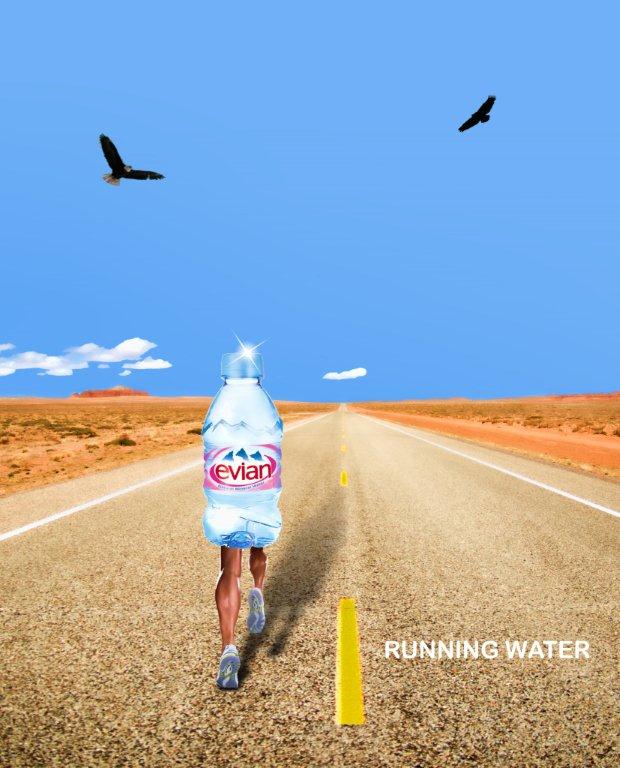
and, now, one for the road,

Running Water!

Big thanks to Neil for supplying a steady stream of smiles.

Surfin’ USA, bulldog style

Have a great week-end, wherever you are!

Surf Dog Tillman sets an example!

(Ron Davis is the owner of this 6 year old English Bulldog Tillman living in Oxnard California.)

A Home with a View!

A light distraction to the serious article yesterday!

My son mentioned the other day that a rather unusual property is for sale in North Devon, SW England.  What’s unusual about it?  Well the picture below answers that question!

Hartland Point Lighthouse

Not a bad view, is it!  The lighthouse, or rather ex-lighthouse, depending in which direction one is looking, has the start of the Bristol Channel off to the right, or the Atlantic Ocean directly ahead with the Island of Newfoundland being the next stop Westwards.

The island seen on the horizon in the picture is Lundy Island, a granite outcrop, three and a half miles long and half a mile wide.  As an aside, I can recall a fly-in to Lundy many years ago.  Went there in the Piper Super Cub and the landing and take-off were ‘interesting’.

Back to Hartland Point Lighthouse.  Thanks to WikiPedia, we learn that,

Hartland Point Lighthouse is a Grade II listed building at Hartland Point Devon, England.  The point marks the western limit (on the English side) of the Bristol Channel Atlantic Ocean continuing to the west.

Built in 1874 by Mr. Yerward of Wales under the direction of Sir James Douglass, the tower is 18 metres (59 ft) tall with the lamp being 37 metres (121 ft) above mean sea level. The light can be seen up to 25 miles (40 km) away from the coast. It is protected by a 30 metres (98 ft) long sea wall which was built in 1925 to prevent erosion of the rocks on which it stands.

It was blessed by Frederick Temple, Bishop of Exeter, who later became Archbishop of Canterbury, and the light was lit for the first time by Lady Stuckley of Hartland Abbey during the opening ceremony on July 1, 1874.

The tower was automated in 1984 and is now controlled from Trinity House Operations Centre at Harwich in Essex. Prior to automation the lighthouse was built with accommodation for four keepers and their families. The keepers’ dwellings have since been demolished to make room for a helipad to be constructed. This was necessary due to the precarious nature of the access road which is liable to frequent rock falls and landslips. Vehicular access is now very difficult and the gates tend to remain locked. The large concrete structures immediately to the south of the lighthouse were to provide the keepers with fresh water.

In the 2010 Aids to Navigation Review, by Trinity House, they proposed to discontinue the Hartland Point Lighthouse Station on grounds that the rocks that it sits on is eroding away.

So if you are looking for that really special room with a view, this could be it!  The agency selling the Lighthouse are Smithsgore and the details, including a guide price of £500,000, may be found here.

The Keystone XL pipeline

“Have the courage to say no. Have the courage to face the truth.  Do the right thing because it is right.  These are the magic keys to living your life with integrity.”

The above is attributed to W. Clement Stone, a businessman, philanthropist and author who died in 2002, aged 100.  It seemed an appropriate quotation with which to introduce a recent article by Bill McKibben, on the Grist blog, about the proposed Keystone XL pipeline.

Bill McKibben

Keystone pipeline’s last defense: Cold, hard cash

What do you do if you’ve lost an argument?

Say you really really want to build a big pipeline from the tar sands of Alberta so that you can sell your bitumen to the world

But 20 of the nation’s top scientists have written to the president to say it’s a terrible idea — and the planet’s leading climatologist says burning the tar sands would be “game over for the climate.” And nine recent winners of the Nobel Peace Prize have condemned the plan. And Robert Redford has just made a video explaining why the plan is an attack on the nation’s heartland. Then, if you’re a poor forlorn oil industry feeling unloved and under assault, what do you do?

There’s really only one answer: Flash your wad.

As we get to the final chapters of the Keystone pipeline saga (the president has said he’ll make his decision by year’s end), money’s the only argument these guys have left.

They managed to buy a favorable environmental review from the U.S. State Department, which helpfully outsourced the job to a company that was a “major client” of TransCanada, the pipeline builder.

And yesterday, they proposed a $100 million “performance bond” to the state of Nebraska, whose Republican governor and senator have come out against the pipeline. The money is apparently designed to pay for damage to the Ogallala Aquifer if the pipeline starts to leak.

Meanwhile, when 33 Democratic representatives sent a letter to the White House demanding a rejection of the plan, lobbyists for TransCanada rounded up their own list of lawmakers from the president’s party to issue a rejoinder. But they only found 22. And what do you know — they included nine of the top 10 Democratic recipients of oil money in the House. On average the signatories received over 4.25 times more oil money than the average House Democrat in the 112th Congress. That would be 325 percent more. That would be how the game is played.

The other side — that is, scientists, Nobelists, and the kind of average people who went to jail in record numbers this summer to block the plan — doesn’t have that kind of money. We’ve had to figure out other currencies to work in: spirit, passion, creativity. We’ve spent our bodies, putting them on the line. The odds are still against us, but the odds are changing; we’re on a roll as we head toward Nov. 6, when we’ll ring the White House with people, exactly one year before the election. (You can sign up here.)

But every once in a while we get to play the money game too! While TransCanada was out there setting the $100 million price on the Ogallala Aquifer, this news story rolled across my screen. It described a big Democratic giver, Barbarina Heyerdahl. She gave 120 grand to Obama and the Democratic National Committee over the last three years, not to mention knocking on doors for the 2008 campaign. But she said Keystone is a bridge too far, that “she won’t be writing any more checks to Obama if he approves the carbon conduit that’s become the focus of the climate-change movement. ‘It’s a baseline issue,’ she says.”

I have no doubt that, even with Heyerdahl and other donors accounted for, the oil industry has all the money they need to win this fight. The Koch brothers are the third and fourth richest men in America, and they filed papers in Canada declaring their “direct and substantial” interest in the project. If money’s the only thing that matters, they’ll carry the day.

But if money’s the only thing that matters, we’re done for anyway. So we’ll keep using science and art and courage. And we’ll hope that Barack Obama hasn’t sold his soul. We’re going to find out in the next few weeks.

Bill McKibben is founder of 350.org and Schumann Distinguished Professor at Middlebury College in Vermont. He also serves on Grist’s Board of Directors.

Bill’s website may be found here.  Also, please PLEASE watch the video made by Robert Redford.  Only 3 mins 25 seconds long, the ink to the video is here.

Finally, a YouTube video from Tars and Action.

All that’s necessary for the forces of evil to win in the world is for enough good men to do nothing.” Edmund Burke

Hearing clearly?

Perhaps intuition is all we have to hear clearly.

John O’Donohue, in yesterday’s post, touched on the essence of today’s theme, “The greatest philosophers admit that to a large degree all knowledge comes through the senses. The senses are our bridge to the world.

Dogs, of course, demonstrate powerfully how their senses provide a ‘bridge to the world’.

This odd collection of writings (ramblings?)  that comprise Learning from Dogs is based around the ‘i’ word – Integrity.  The banner on the home page proclaims Dogs are integrous animals. We have much to learn from them. Ergo, dogs offer a powerful metaphor for the pressing need for integrity among those that ‘manage’ our societies.

Thus my senses are more tuned, than otherwise, to the conversations in the world out there that support the premise that unless we, as in modern man, radically amend our attitudes and behaviours, then the species homo sapiens is going to hell in a hand-basket!

End of preamble!

Professor Bill Mitchell is one person who recently touched my senses.  As his Blog outlines he is an interesting fellow,

(Photo taken in August 2011 in Melbourne, Australia)

Bill Mitchell is the Research Professor in Economics and Director of the Centre of Full Employment and Equity (CofFEE), at the University of Newcastle, NSW Australia.

He is also a professional musician and plays guitar with the Melbourne Reggae-Dub band – Pressure Drop. The band was popular around the live music scene in Melbourne in the late 1970s and early 1980s. The band reformed in late 2010.

He also plays with a Newcastle swing blues band – The Blues Box. You can find music and other things on his Home Page.

Professor Mitchell’s Blog is not for the faint-hearted, it can be pretty technical at times.  Nevertheless, I have been a daily subscriber for a couple of months now.

On the 24th, Prof. Bill wrote a long article under the heading of ‘What if economists were personally liable for their advice‘.  I want to quote a little from that article.  Starting with,

Economists have a strange way of writing up briefing documents. There is an advanced capacity to dehumanise economic advice and ignore the most important economic and social problems (unemployment and poverty) in favour of promoting non-issues (like public debt ratios). It reminds me sometimes of how the Nazis who were brutal in the extreme in the execution of their ideology sat around getting portraits of themselves taken with their loving families etc. The training of economists creates an advanced state of separation from human issues and an absence of empathy.

In a sense, we all understand this, this use of language to separate us from our collective humanity.  A random Google search came up with this.  A statement by British Prime Minister, David Cameron, to Parliament on the 24th regarding Europe, as in,

Mr Speaker, let me turn to yesterday’s European Council.

This European Council was about three things.

Sorting out the problems of the Eurozone.

Promoting growth in the EU.

And ensuring that as the Eurozone develops new arrangements for governance, the interests of those outside the Eurozone are protected.

This latter point touches directly on the debate in this House later today, and I will say a word on this later in my statement.

Resolving the problems in the Eurozone is the urgent and over-riding priority facing not only the Eurozone members, but the EU as a whole – and indeed the rest of the world economy.

Britain is playing a positive role proposing the three vital steps needed to deal with this crisis – the establishment of a financial firewall big enough to contain any contagion; the credible recapitalisation of European banks; and a decisive solution to the problems in Greece.

Read the last paragraph.  Wonderful words that seem to make sense to the casual listener but picking up on Prof. Bill, an utter ‘separation from human issues and an absence of empathy‘.  There is no humanity in those words from the British Prime Minister.  We all know there are hundreds of other examples from mouthpieces all across our global society.  Back to Bill Mitchell’s article,

Linkiesta say:

Greece has failed. To say this is not another report of investment banks or research centers, but directly Troika officials who have just completed their review on Hellenic public finance. Linkiesta is in possession of the entire report of the troika, composed of officials from the International Monetary Fund (IMF), European Central Bank (ECB) and European Commission.

I have a rule of thumb that I use when considering documents such as these. The rule is to assess how strong the concern for unemployment is. How often is unemployment mentioned? The answer is zero. The document never mentions the word or concept.

So obsessed are the Troika and their bean counters about public debt stabilisation that they have completely lost sight of one of the worst problems an economy can encounter – the failure to generate work for all.

Read those last words again, “completely lost sight of one of the worst problems an economy can encounter – the failure to generate work for all“.  One last extract from the article,

There is absolutely no historical evidence which shows that when all nations are contracting or stagnant and private spending is flat (or contracting) that cutting public spending will create growth.

So why did these economists think that a nation would grow when all components of spending were strongly indicated to fall or were being actually cut? The answer lies in acknowledging that they operate in an ideologically blinkered world and are never taken to account for their policy mistakes. They are unaccountable and do not suffer income losses when the nations they dispense advice to and impose policies on behave contrary to the “expectation” which results in millions being unemployed.

In my view, my profession should be liable for the advice it gives and economists should be held personally liable for damages if their advice causes harm to other individuals. If the economists in the IMF and elsewhere were held personally responsible then the advice would quickly change because they would be “playing” with their own fortunes and not the fortunes of an amorphous group of Greeks that they have never met.

Very powerful words that strike at the heart of the matter, that of integrity. (If you want to read it in full, then the article is here.)

Let me move on a little.  The 24th also saw a powerful essay on Yves Smith’s Blog Naked Capitalism, from Philip Pilkington, a journalist and writer living in Dublin, Ireland.  Here’s a taste of what Mr. Pilkington wrote.

Every now and then a terrible thought enters my mind. It runs like this: what if the theatre of the Eurocrisis is really and truly a political power-game being cynically played by politicians from the core while the periphery burns?

Yes, of course, we can engage in polemic and say that such is the case. But in doing so we are trying to stoke emotion and generally allowing our rhetorical flourish to carry the argument. At least, that is what I thought. I had heard this rhetoric; I had engaged in it to some extent myself; but I had never really believed it. Only once or twice, in my nightmares, I had thought that, maybe, just maybe, it might have some truth.

Can you see the parallels between Prof. Mitchell and Philip Pilkington?  The latter wrote, “a political power-game being cynically played by politicians from the core while the periphery burns“, the former wrote, “If the economists in the IMF and elsewhere were held personally responsible then the advice would quickly change because they would be “playing” with their own fortunes and not the fortunes of an amorphous group of Greeks that they have never met.”

It’s clearly obvious to all those that have commented to both the Bill Mitchell and Philip Pilkington items.  That is, in my words, a complete lack of integrity, truth and a commitment to serve the people, from so many in places of influence and power.

We all sense this, hear it so clearly, a separation from human issues and an absence of empathy.

We have so much to learn, so much sense to learn, from dogs!

————–

Footnote.  Had just completed the above when I came across a piece by Patrick Cockburn in last Sunday’s Independent newspaper, that starts thus,

World View: A sense of injustice is growing. Elite politicians and notorious wrongdoers appear immune as ordinary Greeks reel from wage and job cuts

Up close, the most striking feature of the reforms being forced on Greece by its international creditors is their destructiveness and futility. The pay cuts, tax rises, cuts and job losses agreed to by parliament in Athens last week will serve only to send the economy into a steeper tailspin, even if it extracted a much-needed €8bn in bailout money from the EU leaders. “Nothing but a lost war could be worse than this situation,” one left-wing ex-minister tells me. “What is worse, no party or political group in Greece is offering real solutions to our crisis.

Say no more!

Transfiguration

A return to the beautiful writings of Irishman, John O’Donohue

Last week, I published a Post about John O’Donuhue‘s book Anam Cara, entitled Soul friend, the meaning of anam cara in Gaelic.  There were a number of lovely responses, both as comments to the Post, and as emails sent to me.  I thought I would share another essay with you.  First, some reflections about transfiguration or, perhaps a better word for today’s challenging times is ‘change’.

I have made no secret of my belief that we are in a period of great change, perhaps greater than mankind has faced before.  Possibly that is slightly hyperbolic, but looked at from the perspective of the extinction of homo sapiens then perhaps it is no exaggeration.  The vast majority of people, who stop and reflect, sense that on several fronts it is change or die!

A classic behavioural attribute of modern man is to see ‘change’ as something that others should do, rather than change coming from within.  From time to time, I have quoted this,

For today, I am in charge of my life.

Today, I choose my thoughts,

Today, I choose my attitudes,

Today, I choose my actions and behaviours,

With these, I create my life and my destiny.

Much, much easier to say, and write, than to undertake.  But it does underscore the obvious – change flows from our journey inwards.  Let’s turn to John O’Donohue’s inspirational words about this subject.

From the John O’Donohue website

Spirituality of transfiguration

Spirituality is the art of transfiguration. We should not force ourselves to change by hammering our lives into any predetermined shape. We do not need to operate according to the idea of a predetermined programme or plan for our lives. Rather, we need to practise a new art of attention to our inner rhythm of our days and lives. This attention brings a new awareness of our own human and divine presence. A dramatic example of this kind of transfiguration is the one all parents know. You watch your children carefully, but one day they surprise you; you still recognise them, but your knowledge of them is insufficient. You have to start listening to them all over again.

It is far more creative to work with the idea of mindfulness rather than with the idea of will. Too often people try to change their lives by using the will as a kind of hammer to beat their life into proper shape. The intellect identifies the goal of the programme, and the will accordingly forces the life into that shape. This way of approaching the sacredness of one’s own presence is externalistic and violent. It brings you falsely outside your own self and you can spend years lost in the wilderness of your own mechanical, spiritual programmes. You can perish in a famine of your own making.

If you work with a different rhythm, you will come easily and naturally home to your self. Your soul knows the geography of your destiny. Your soul alone has a map of your future, therefore you can trust this indirect, oblique side of your self. If you do, it will take you where you need to go, but more importantly it will teach you a kindness of rhythm in your journey. There are no general principles for this art of being. Yet the signature of this unique journey is inscribed deeply in each soul. If you attend to your self and seek to come into your own presence, you will find exactly the right rhythm for your life. The senses are generous pathways which can bring you home.

A renewal, indeed a complete transfiguration of your life, can come through attention to your senses. Your senses are the guides to take you deep into the inner world of your heart. The greatest philosophers admit that to a large degree all knowledge comes through the senses. The senses are our bridge to the world. Human skin is porous; the world flows through you. Your senses are large pores which let the world in. Through attunement to the wisdom of your senses, you will never become an exile in your own life, an outsider lost in an external spiritual place which your will and intellect have constructed.

John O’Donohue Anam Ćara

 (c) John O’Donohue. All rights reserved. Used by permission. http://www.johnodonohue.com

Please just read those words from John again.  Re-read the last paragraph.  Then go one paragraph up and read that again, “Your soul knows the geography of your destiny. Your soul alone has a map of your future, therefore you can trust this indirect, oblique side of your self.  If you do, it will take you where you need to go, but more importantly it will teach you a kindness of rhythm in your journey.

Each of us taking us to where we need to go, and one by one, each of us taking our world to where it needs to go.

I must down to the seas again

History repeating itself in terms of the commercial sailing ship.

Tea clipper 'Cutty Sark'

Most Brits have heard of the tea clipper Cutty Sark.  As the Cutty Sark website explains,

Cutty Sark has travelled across the world, sailing under both the Red Ensign and the Portuguese flag, visiting every major port in the world through the course of her working life. In admiration of her beauty and in recognition of her fame, she was preserved for the nation by Captain Wilfred Dowman in 1922.

Since then, the old clipper has been berthed in Falmouth and Greenhithe, finally arriving at her current resting place in Greenwich in 1954.

And elsewhere on that website,

Cutty Sark matters because:
  • She is the epitome of the great age of sail.
  • She is the only surviving extreme clipper, and the only tea clipper still in existence.
  • Most of her hull fabric survives from her original construction and she is the best example of a merchant composite construction vessel.
  • She has captured the imagination of millions of people, 15 million of whom have come on board to learn the stories she has to tell.
  • She was preserved in Greenwich partly as a memorial to the men of the merchant navy, particularly those who lost their lives in both world wars.
  • She is one of the great sights of London.

I mention the Cutty Sark because it seems a historic connection with something very relevant to today’s world that was the subject of a recent item on Rob Hopkin’s Transition Culture blogsite.  In it Rob presents his first podcast, the topic being the sailing ship Tres Hombres, that is being used for commercial sea transport.  The link to the Transition Culture story is here, and the podcast follows, (just click on the link to listen to the fascinating 14 minutes audio story about the ship Tres Hombres.)

Tres Hombres podcastfinal

Sailing ship Tres Hombres

The first Transition podcast! A visit to the Tres Hombres, tasting a revolution in shipping

Last week I did a course with the Media Trust on how to make podcasts (highly recommended).  So, here, with some fanfare, is the first ‘Transition podcast’, I hope you like it.  If so, do embed it in other places.  It means I spent the time I would spend writing editing pieces of audio.  Let me know what you think.  So, the podcast is about a fascinating morning I spent visiting the sailing ship Tres Hombres which visited Brixham earlier this week.  It explores the potential of sail-powered shipping as the price of oil rises and the economy tightens.  It’s an exciting story.

Finally, let me close with a very well-known poem about sailing the big ships.

“Sea-Fever”

I must down to the seas again, to the lonely sea and the sky,
And all I ask is a tall ship and a star to steer her by,
And the wheel’s kick and the wind’s song and the white sail’s shaking,
And a grey mist on the sea’s face, and a grey dawn breaking.

I must down to the seas again, for the call of the running tide
Is a wild call and a clear call that may not be denied;
And all I ask is a windy day with the white clouds flying,
And the flung spray and the blown spume, and the sea-gulls crying.

I must down to the seas again, to the vagrant gypsy life,
To the gull’s way and the whale’s way where the wind’s like a whetted knife;
And all I ask is a merry yarn from a laughing fellow-rover
And quiet sleep and a sweet dream when the long trick’s over.

By John Masefield (1878-1967).
(English Poet Laureate, 1930-1967.)

Poetry in Motion

Once again, big thanks to Cynthia S. for sending me the links

I can’t add anything to these videos, so just settle down and watch.

and this one,