Author: Paul Handover

Finding one’s true self.

A personal journey

In some ways, it is surprising that I haven’t written about my own counselling experiences before.  Perhaps it has never felt like the right moment.

But the guest post from Peter Bloch that I had the honour of publishing yesterday so strongly resonated with the ‘Fergus’ inside me that I was compelled to offer my own journey.  So if you are not into bouts of personal introspection, look away and come back tomorrow! 😉

The fickle finger of fate

I was born in Acton, North London, just 6 months before the end of World War II.  Nothing remarkable about that.  Just another one of the millions of soon-to-be post-war babies.  My father was an architect; my mother a teacher.  Indeed, at the age of 93 my mother is still teaching music!

In 1956 when my father was 55 years-old he developed lung cancer.  I and my sister were blissfully unaware of our father’s terminal condition until the evening of December 19th, 1956.  That evening Mum came into my bedroom and said that father was very ill and may not live for very much longer.  To be honest, it didn’t really register and off I went to sleep.  I was 12 and looking forward to Christmas in 5 days time.

My father died in the night hours of December 19th/20th.  I had slept through not even wakening when his body was removed from the house.  On the morning of the 20th he was just gone!

It was felt by the family doctor, who had been attending my father, that it would be too upsetting for me and my younger sister to attend the funeral.  That funeral was a cremation and therefore no grave.

The good and the not so good.

The only obvious effect of the trauma of my father’s death was that I bombed out at school.  I had passed my ’11+’ exams at my primary school and in September, 1956, become a pupil at Preston Manor County Grammar School near Preston Road, Wembley where we were living; Wembley Stadium could be seen from the back windows of the 2nd floor of our house.

I struggled with schooling, the victim of much bullying as I recall, sat 8 ‘O-level’ exams, passed 2, struggled to get another couple of ‘O-levels’ but it was clear that a University place was not going to be for me.

From then on, in stark contrast, I enjoyed a wonderfully varied life, working as a business salesman, freelance journalist and ending up starting my own company in Colchester in 1978 which became surprisingly successful.

But when it came to relationships, that wasn’t so successful.  If I tell you that Jeannie is my 4th wife, you will get the message!

A little more background.

When running my own business back in the 1980s I had a network of overseas distributors.  My US West Coast distributor was Cimarron, a company owned and run by Daniel Gomez out of Los Angeles.  Dan and I became good friends and still are some 35 years later.  I’ll come back to this highly relevant relationship with Dan.

I sold my business in 1986 and went overseas for 5 years, actually living on a boat based in Larnaca, Cyprus.  (The boat was a Tradewind 33 named ‘Songbird of Kent‘.)

In the early 1990s upon returning to England I chose to live in the South Hams area of South Devon, ending up in the small village of Harberton, pop. 300, near Totnes.  Once settled I took up business mentoring.  In previous years, I had gained Chartered Membership of the Institute of Marketing.  In addition, I became a youth mentor with the Prince’s Youth Business Trust, a really fabulous organisation that does so much good for young people.

One of my personal mentees was Jon Lavin, the founder of The People Workshop.  (Yes, and Jon is aware that his website is a tad out-of-date!)

Out of sight, but not out of mind.

In time I became married to wife number three.  Seemingly happy living in a tranquil part of rural Devon, keeping busy, not thinking too much about life.

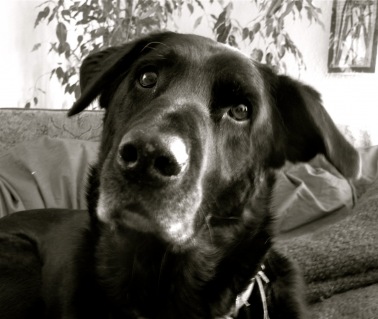
Pharaoh became an important part of my life in 2003.  At the time, I had no idea how important!

Pharaoh, relaxing in a Devon garden.

On the evening of December 20th, 2006, 50 years to the day that my father died, my wife announced that she had met another man. The implications of this casually delivered bombshell were obvious and catastrophically painful.

I will spare you the details but, trust me, the next few weeks were tough!

High on my priorities were letting close friends know what was happening.  Dan, in characteristic Daniel fashion, said over the phone, “Hey, Handover, you get your arse over to Southern California pronto! Like now!”  I replied that it was much too difficult to do that now but maybe later on in 2007.

Realising that I might need some psychological support, I spoke with Jon Lavin.  However, Jon made it clear that as we already had a working relationship with me as his mentor, he couldn’t now, in turn, be my psychotherapist.  I pleaded with Jon.  He said he would only work with me on the strict understanding that he would terminate the counselling relationship if our past workings interfered.  Of course, I agreed. [See footnote.]

Finding one’s true self after 50 years!

Jon, quite naturally, started into understanding my past experiences. Right back to that fateful day in 1956 when my father died.  And, guess what!

Unbeknownst to me, the lack of time to adjust to my father’s cancer, his sudden death, being unable to ‘say goodbye‘; all had been emotionally interpreted as acute and profound emotional rejection.  Buried deep within me with both strong positive and negative emotional consequences.  Negatively, making me very vulnerable to emotional rejection; positively, causing me to strive for outward success in so many ways.  Those sessions with Jon brought it all to the surface bringing with it deep and peaceful calm.

Yet, the true implications of finding myself were still to come.

In the Summer of 2007, I took up Dan’s offer to ‘get my arse to Southern California!‘  I had a fabulous time with Dan and his dear wife, Cynthia.  It also included a visit to Dan’s sister, Suzann, and her husband, Don, in their home in Los Osos, California.  Su fussed over me restoring my sense of self-worth as Dan and Cynthia had been doing.

One morning over breakfast Suzann said, “Hey Paul, what are you doing for Christmas?

I replied, “Oh, give me a break, Suzann, it’s the middle of June.  Long time before I have to think about dealing with Christmas!

Su then made the offer that was to change my life irrevocably.  “Don and I have a house down in San Carlos, Mexico where we shall be at Christmas.  Why don’t you come and have Christmas with us in Mexico?

And I did.  And it was in San Carlos, Mexico that I met Jean.  Suzann and Jean were great buddies. Jean had been living there since she and her late husband, Ben, had moved there many years ago.  Ben, an American, and Jean had been married for 26 years with Ben, sadly, having died in 2005.

Jean and I spent hundreds of hours chatting and getting to know each other, including the fact that she and I had both been born Londoners within 23 miles of each other.  Jean had been rescuing Mexican feral dogs for years and there were 14 dogs in her house in San Carlos.  So many of those dogs loved me from the start.  It seemed like the most beautiful Christmas I could have wished for.  In such stark contrast to just a year ago.

Mexican sunset! San Carlos, 2nd January, 2008.

In September, 2008 after selling the house in Devon, I moved out to San Carlos, Mexico.  Just me and Pharaoh who had been such a devoted friend, companion and confidant over the previous months.

In 2010, we moved to Payson in Arizona, some 80 miles NE of Phoenix. On November 20th, 2010 Jean and I were married.

The marriage of Jean and Paul wonderfully supported by Diane, maid of honour, and best man, Dan Gomez.

Releasing the Fergus in me and all of us.

What Peter Bloch wrote yesterday was so true.  A dog can only be a happy, fulfilled dog, if allowed to be the true dog that is in him or her.  Despite the fact that humans are primates and dogs are canids like wolves, coyotes, and foxes, it still holds as true for us humans as it did for Fergus.

We can only be happy, to put it in the words of Fergus, “happy, energised, purposeful and fulfilled in every way.” if we are given the freedom to be our self.

So if you find that you, like Fergus, suffer from digestive problems, possibly have skin disorders and sometimes behave a little strangely take note – you need to find your healer!

oooOOOooo

Footnote

Back in 2008 when Jon Lavin was working with me, I would take Pharaoh and he would lay on the floor behind my seat.  On one occasion Jon was talking about the findings of Dr. David Hawkins and his Scale of Consciousness; from falsehood to truthfulness. (See here and here for more details.)

Anyway that fateful day, Jon mentioned that Dr. Hawkins had measured dogs as being integrous animals.  That notion stayed with me and later I registered the domain name learningfromdogs (dot) com leading to – yes, you guessed it – this blog.  Funny old world.

What I have learned about health and happiness from my dog.

I’m clearly not the only one to believe we really can learn from dogs!

Last Friday, I published a post under the title of The healing power of dogs.  This is how that post opened:

How dogs offer us humans health and happiness.

Many months ago, I was contacted by a Peter Bloch offering to write a guest post on the subject of the healing power of dogs.  Peter had read a post that I had published in July last year which prompted the email dialogue between us.

Not going to say much more at this stage except that today I am republishing that post from last July.  On Monday, I will introduce Peter and his guest post.  Then on Tuesday, I will speak of my own experiences both as entrepreneurial mentor and as a ‘customer’ of a wonderful psychotherapist back in Devon during 2007.

So, as promised, here is that guest post from Peter.

oooOOOooo

Fergus, the Healing Dog.  A sketch by Mrs. Peter Bloch
Fergus, the Healing Dog. A sketch by Mrs. Peter Bloch

My dog Fergus is a philosopher, and the nature of health and happiness is his area of special expertise. When he learned about Paul’s blog he became very excited because he has always been convinced that dogs have so much to teach humans about life. As much as anything to have a little peace from his continual philosophical musings, I agreed to set out his theories here for the benefit of everyone who loves dogs.

Fergus would like it to be known that when he is free to pursue the activities to which his particular breed is most naturally attracted then, as a dog, he feels happy, energised, purposeful and fulfilled in every way. Fergus has also observed that when he is able to participate as a co-operating member of his ‘pack’, he feels safe and secure, is clear about how to proceed with his life, and at night he sleeps like a dog.

But Fergus says that when these conditions do not apply, he can be quite remarkably miserable. As a Greyhound, he loves to run very fast, and he is not at all interested in things like retrieving balls, or wallowing in water.

Fergus doing what he loves - running very fast!
Fergus doing what he loves – running very fast!

However once he was in the care of someone who Fergus thinks we should just call ‘Sarah’.  Sarah has a Labrador and thinks that all dogs really ought to be like her dog, resulting in Fergus being put under considerable pressure to enjoy activities that he could not understand.

That lead to Sarah telling Fergus’ owners that he was a difficult dog when in fact he was just a misunderstood dog. He was amazed how, in just one day, he went from sleeping ‘like a dog‘ to ‘living in the doghouse‘!

Indeed, within a week he was suffering from digestive problems and skin disorders, despite an identical diet, and was found to be engaging in several bizarre neurotic behaviours. Fortunately, when more congenial conditions were restored, Fergus returned to feeling safe and secure.

Fergus often expresses surprise that people often do not understand that the freedom to be himself, the true dog that he is, including living in unifying solidarity with his pack, is a fundamental requirement for his health; in all meanings of the word.

For instance, Fergus noticed that Sarah has a son called Henry, who really wanted to be a designer. But his mother thought that it would be better for him to be a lawyer. In fact, Sarah was so certain that in the end Henry became a lawyer. Fergus observes that Henry is always suffering from digestive problems and skin disorders and sometimes behaves a little strangely.  Doctors have not been able to find out what is wrong with him, despite all sorts of diets and medicines being tried.

But here’s the rub. When Henry goes out for a walk with Fergus, Fergus always runs as fast as he can and his resulting happiness always makes Henry feel so much better.

Henry is convinced that Fergus is a healer! Who could argue with that?

Fergus, the healing dog.

oooOOOooo

Trust me, when I’m feeling a little down the dogs all know.  All of them allow me to come and bury my face in their fur, or rest my face alongside their face.  Perhaps one of the most powerful gifts from our dogs is their wonderful, unconditional love for us funny humans.

I have no connection with Peter other than being delighted to have this guest post from him (or was it from Fergus??).  Peter offered this brief summary of his work, which I am pleased to include:

Peter Bloch has developed a form of existential and person-centred psychotherapy through touch. In this therapeutic model, health is defined as the ability to be true to oneself and open to genuine relationships with others – qualities that he finds in abundance in his dog.

Beyond our beautiful planet.

Lifting one’s eyes to the far heavens.

Yesterday, I reposted 12 stunning photographs of the world we live on that had been published on Mother Nature Network on the 19th.

Coincidentally, I also saw something on the 19th that was just as breathtaking as those pictures of Planet Earth.  Here’s the picture that took my breath away.

HERSCHEL’S VIEW OF THE HORSEHEAD NEBULA

That image comes from the ESA Space in Images website, from which one learns:

  • Copyright: ESA/Herschel/PACS, SPIRE/N. Schneider, Ph. André, V. Könyves (CEA Saclay, France) for the “Gould Belt survey” Key Programme
  • Description: Stunning new view from ESA’s Herschel space observatory of the iconic Horsehead Nebula in the context of its surroundings. The image is a composite of the wavelengths of 70 microns (blue), 160 microns (green) and 250 microns (red), and covers 4.5×1.5 degrees. The image is oriented with northeast towards the left of the image and southwest towards the right.The Horsehead Nebula resides in the constellation Orion, about 1300 light-years away, and is part of the vast Orion Molecular Cloud complex. The Horsehead appears to rise above the surrounding gas and dust in the far right-hand side of this scene, and points towards the bright Flame Nebula. Intense radiation streaming away from newborn stars heats up the surrounding dust and gas, making it shine brightly to Herschel’s infrared-sensitive eyes (shown in pink and white in this image).To the left, the panoramic view also covers two other prominent sites where massive stars are forming, NGC 2068 and NGC 2071.

    Extensive networks of cool gas and dust weave throughout the scene in the form of red and yellow filaments, some of which may host newly forming low-mass stars.

Don’t know about you but I found that description a little dry, so to speak.

The BBC had a much friendlier version:

By Jonathan Amos, Science correspondent, BBC News.

Europe’s Herschel space telescope has imaged one of the most popular subjects in the sky – the Horsehead Nebula – and its environs.

The distinctively shaped molecular gas cloud is sited some 1,300 light-years from Earth in the Constellation Orion.

It is in a region of space undergoing active star formation – something Herschel has been most keen to study.

The Hubble space observatory has also returned to the Horsehead scene, to celebrate 23 years in orbit.

Together, these two great facilities give scientists a much broader insight into what is taking place in this familiar patch of the heavens.

“You need images at all scales and at all wavelengths in astronomy in order to understand the big picture and the small detail,” said Prof Matt Griffin, the principal investigator on Herschel’s SPIRE instrument.

“In this new Herschel view, the Horsehead looks like a little feature – a pimple. In reality, of course, it is a very large entity in its own right, but in this great sweep of a picture from Herschel you can see that the nebula is set within an even larger, molecular-cloud complex where there is a huge amount of material and a great range of conditions,” the Cardiff University, UK, researcher told BBC News.

To provide a sense of scale, the Horsehead Nebula, also known in the catalogues as “Barnard 33”, is about five light-years “tall”.

Hubble's new view of the Horsehead Nebula, a large cloud of hydrogen laced with dust.
Hubble’s new view of the Horsehead Nebula, a large cloud of hydrogen laced with dust.

Hubble sees the Horsehead in near-infrared light. Herschel, on the other hand, goes to much longer wavelengths. This allows it to see the glow coming directly from cold gas and dust – the material that will eventually collapse under gravity to form the next generation of stars.

Scientists are particularly keen to understand the mechanisms that drive the production of the biggest stars – objects much more massive than our own Sun that form relatively fast, burn bright but brief lives, and interact strongly with their environment, influencing the next round of star formation.

Anyway, that’s more than enough to copy directly from that BBC article.  Read the rest by going here.  All I will add is Jonathan’s last sentence, “A scholarly paper describing Herschel’s investigation of the Orion Molecular Cloud Complex has been published in the journal Astrophysical Journal Letters.

Oh, and ponder on how far away from Earth is that Constellation Orion.  Remember it was stated as 1,300 light-years.

Well, one light-year is just under 10 million, million kilometres (or about 6 million, million miles).  Apparently defined by the  IAU, or to give its the full name, the International Astronomical Union, a light-year is the distance that light travels in a vacuum in one Julian year.

So brace yourself!  1,300 light-years is just under 13,000,000,000,000,000 kilometres or in old money, 7,800,000,000,000,000 miles.

Rather puts pottering to the shops in Grants Pass into perspective!

Our beautiful planet.

Remembering that Monday, 22nd April is Earth day, 2013. Like many others, I subscribe to Mother Nature Network. Recently published on MNN were twelve stunningly beautiful photographs.  There are reproduced below, hopefully without infringing any copyrights.  I just wanted to share them with readers of Learning from Dogs ahead of next Monday.

oooOOOooo

Earth Day photos: Celebrating the beauty of our planet

From the rolling hills of Tuscany to the surreal glacial formations of Patagonia, here are 12 stunning photos showcasing the diverse collection of landscapes found across the planet. By: Catie Leary Fri, Apr 19 2013 at 11:40 AM

Horseshoe Bend, Glen Canyon, Arizona, U.S.

 Photo: poorpoor/Flick

Snæfellsnes-og Hnappadalssýsla, Iceland

Photo: Greg Annandale/Flick

Hamilton Pool, Austin, Texas, U.S.

Photo: Stuck in Customs/Flickr

Glacier Grey, Torres del Paine National Park, Chile

Photo: Dietmar Temps/Flickr

Pansarine, Tuscany, Italy

Photo: hippydreams/Flickr

Muir Woods, California, U.S.

Photo: kern.justin/Flickr

Minnehaha Falls, Minnesota, U.S.

Photo: Mary JI/Flickr

Mount Blanc, France
Mount Blanc, France

Photo: OneEighteen/Flickr

Star Trails, Rio Negro, Argentina

Photo: lrargerich/Flickr

Sicily, Italy
Sicily, Italy

Photo: gnuckx/Flickr

Tereia Beach, Maupiti, Leeward Islands

Photo: SF Brit/Flickr

Namib Desert, Namibia

Photo: mariusz kluzniak/Flickr

oooOOOooo

So you all have a great week-end, wherever you are in the world, and do something, however small, for the one and only planet that nourishes all the life of the world. Planet Earth 1

The healing power of dogs.

How dogs offer us humans health and happiness.

Many months ago, I was contacted by a Peter Bloch offering to write a guest post on the subject of the healing power of dogs.  Peter had read a post that I had published in July last year which prompted the email dialogue between us.

Not going to say much more at this stage except that today I am republishing that post from last July.  On Monday, I will introduce Peter and his guest post.  Then on Tuesday, I will speak of my own experiences both as entrepreneurial mentor and as a ‘customer’ of a wonderful psychotherapist back in Devon during 2007.  Hope that works for you.

So here’s that Learning from Dogs post.

000OOOooo

The bond between dogs and humans

Such a beautiful and mutually-important relationship.

I didn’t plan to write more about this subject thinking that my last two posts, Woof at the Door and Prof. Pat Shipman, more than covered the theme; indeed much more.

But then a flurry of other articles conspired to pass my desk.

In no particular order there was an article on the Big Think website, Do Dogs Speak Human?  As the article opened,

What’s the Big Idea?

Perhaps the better question is, do humans speak dog? Either way, the debate over whether language is unique to humans, or a faculty also possessed by wild and domestic animals from dogs to apes to dolphins, is an interesting one. The answer depends on exactly how we define “language,” and who’s doing the talking, says David Bellos, the Booker prize-winning translator.

The article includes this three-minute video,

and concludes,

Broadly, a language is a mode of expression. “The argument that only human language is language and that animal communication systems, however sophisticated they are — and some of them are quite sophisticated — are not languages because they consist of discrete signals is a circular argument,” he argues. “It’s a self-fulfilling thing. And I think we should be a little bit more interested in the complexity and the variability of animal communication systems and less rigid about this distinction between what is a language and what is not a language.”

For now, we’re happy with this:

The June 30th edition of The Economist had an article entitled, Can dogs really show empathy towards humans? (You may have to register (free) to view this.)  That report ends, as follows,

As they report in Animal Cognition, “person-oriented behaviour” did sometimes take place when either the stranger or the owner hummed, but it was more than twice as likely to occur if someone was crying. This indicated that dogs were differentiating between odd behaviour and crying. And of the 15 dogs in the experiment that showed person-oriented responses when the stranger cried, all of them directed their attention towards the stranger rather than their owner.

These discoveries suggest that dogs do have the ability to express empathetic concern. But although the results are clear enough, Dr Custance argues that more work needs to be done to be sure that such behaviour is true empathy. It is possible, she points out, that the dogs were drawing on previous experiences in which they were rewarded for approaching distressed human companions. Dog-owners, however, are unlikely to need any more convincing.

It was then an easy follow-up to that Animal Cognition article which is available online here; here’s the abstract,

Empathy covers a range of phenomena from cognitive empathy involving metarepresentation to emotional contagion stemming from automatically triggered reflexes.

An experimental protocol first used with human infants was adapted to investigate empathy in domestic dogs. Dogs oriented toward their owner or a stranger more often when the person was pretending to cry than when they were talking or humming. Observers, unaware of experimental hypotheses and the condition under which dogs were responding, more often categorized dogs’ approaches as submissive as opposed to alert, playful or calm during the crying condition. When the stranger pretended to cry, rather than approaching their usual source of comfort, their owner, dogs sniffed, nuzzled and licked the stranger instead.

The dogs’ pattern of response was behaviorally consistent with an expression of empathic concern, but is most parsimoniously interpreted as emotional contagion coupled with a previous learning history in which they have been rewarded for approaching distressed human companions.

It doesn’t get closer than this.

The fate of Europe!

A less than reverent view of the Euro.

This was sent to me by Richard Maugham from England.  Richard and I go back the thick end of 40 years or more.  He and I met when I was a salesman for IBM UK (Office Products Division) and Richard was a salesman for Olivetti UK.  Thus we were selling competitive products!

But that didn’t stop us from becoming great friends and remaining so ever since.  Indeed, Richard and Julie are out to see us in Oregon in just over 3 weeks time.

One of the bonds between Richard and me is a love for silliness and quirky humour.  Hence Richard sending me the following that, in turn, had been sent to him.

For those that are not familiar with the Blackadder comedy series on the BBC, more background provided later on.  Anyway, this is what I received from Richard.

oooOOOooo

The Euro according to Blackadder

blackadd

Baldrick: “What I want to know, Sir, is before there was a Euro there were lots of different types of money that different people used. And now there’s only one type of money that the foreign people use. And what I want to know is, how did we get from one state of affairs to the other state of affairs?”

Blackadder: “Baldrick. Do you mean, how did the Euro start?”

Baldrick: “Yes Sir”.

Blackadder: “Well, you see Baldrick, back in the 1980s there were many different countries all running their own finances and using different types of money. On one side you had the major economies of France, Belgium, Holland and Germany, and on the other, the weaker nations of Spain, Greece, Ireland, Italy and Portugal. They got together and decided that it would be much easier for everyone if they could all use the same money, have one Central Bank, and belong to one large club where everyone would be happy. This meant that there could never be a situation whereby financial meltdown would lead to social unrest, wars and crises”.

Baldrick: “But, Sir, isn’t this a sort of a crisis?”

Blackadder: “That’s right Baldrick. You see, there was only one slight flaw with the plan”.

Baldrick: “What was that then, Sir?”

Blackadder: “It was bollocks”.

oooOOOooo

blackadder
More about the Blackadder series can be read here, from which I republish:

Blackadder is the name that encompassed four series of a BBC 1 period British sitcom, along with several one-off instalments. All television programme episodes starred Rowan Atkinson as anti-hero Edmund Blackadder and Tony Robinson as Blackadder’s dogsbody, Baldrick. Each series was set in a different historical period with the two protagonists accompanied by different characters, though several reappear in one series or another, for example Melchett and Lord Flashheart.

The first series titled The Black Adder was written by Richard Curtis and Rowan Atkinson, while subsequent episodes were written by Curtis and Ben Elton. The shows were produced by John Lloyd. In 2000 the fourth series, Blackadder Goes Forth, ranked at 16 in the “100 Greatest British Television Programmes”, a list created by the British Film Institute. Also in the 2004 TV poll to find “Britain’s Best Sitcom”, Blackadder was voted the second-best British sitcom of all time, topped by Only Fools and Horses. It was also ranked as the 20th-best TV show of all time by Empire magazine.

Although each series is set in a different era, all follow the “misfortunes” of Edmund Blackadder (played by Atkinson), who in each is a member of a British family dynasty present at many significant periods and places in British history. It is implied in each series that the Blackadder character is a descendant of the previous one, although it is never mentioned how any of the Blackadders manage to father children.

There are many videos on YouTube of Blackadder sketches and it was a hard choosing what to include in today’s post.

See what you make of this:

Captain Blackadder is court-martialled for killing a pigeon and George provides counsel for the defence.

The evolution of dogs

Not quite as obvious as it might seem.

Considering that this blog is called Learning from Dogs, there has been precious little published about the animal species known as Canis familiaris; the classification of the domestic dog.  Let me try to correct that.

So, this reference explains:

The subdivision of Canidae into “foxes” and “true dogs” may not be in accordance with the actual relations; also, the taxonomic classification of several canines is disputed. Recent DNA analysis shows that Canini (dogs) and Vulpini (foxes) are valid clades (see phylogeny below). Molecular data imply a North American origin of living Canidae and an African origin of wolf-like canines (CanisCuon, and Lycaon).

Currently, the domestic dog is listed as a subspecies of Canis lupusC. l. familiaris, and the dingo (also considered a domestic dog) as C. l. dingo, provisionally a separate subspecies from C. l. familiaris; the red wolfeastern Canadian wolf, and Indian wolf are recognized as subspecies. Many sources list the domestic dog as Canis familiaris, but others, including the Smithsonian Institution and the American Society of Mammalogists, more precisely list it as a subspecies of C. l. familiaris; the red wolf, eastern Canadian wolf, and Indian wolf may or may not be separate species; in the past, the dingo has been variously classified as Canis dingoCanis familiaris dingo and Canis lupus familiaris dingo.

However a recent paper published by Nature magazine throws some interesting light of the development on the domestic dog.  As the article preview explains:

The genomic signature of dog domestication reveals adaptation to a starch-rich diet

The domestication of dogs was an important episode in the development of human civilization. The precise timing and location of this event is debated and little is known about the genetic changes that accompanied the transformation of ancient wolves into domestic dogs. Here we conduct whole-genome resequencing of dogs and wolves to identify 3.8 million genetic variants used to identify 36 genomic regions that probably represent targets for selection during dog domestication.

Nineteen of these regions contain genes important in brain function, eight of which belong to nervous system development pathways and potentially underlie behavioural changes central to dog domestication. Ten genes with key roles in starch digestion and fat metabolism also show signals of selection. We identify candidate mutations in key genes and provide functional support for an increased starch digestion in dogs relative to wolves. Our results indicate that novel adaptations allowing the early ancestors of modern dogs to thrive on a diet rich in starch, relative to the carnivorous diet of wolves, constituted a crucial step in the early domestication of dogs.

The BBC News website picked up on this:

Dog evolved ‘on the waste dump’

Jonathan AmosBy Jonathan Amos Science correspondent, BBC News

Anyone who owns a dog knows that it will rummage around in the kitchen bin looking for food, given half a chance.

But this annoying behaviour may have a more profound undercurrent than we realise, according to scientists.

A new study of dog genetics reveals numerous genes involved in starch metabolism, compared with wolves.

It backs an idea that some dogs emerged from wolves that were able to scavenge and digest the food waste of early farmers, the team tells Nature journal.

No-one knows precisely when or how our ancestors became so intimately connected with dogs, but the archaeological evidence indicates it was many thousands of years ago.

One suggestion is that the modern mutt emerged from ancient hunter-gatherers’ use of wolves as hunting companions or guards.

But another opinion holds that domestication started with wolves that stole our food leftovers and eventually came to live permanently around humans as a result.

Anyone who owns or loves dogs will find this article fascinating.  Jonathan Amos goes on to say:

“This second hypothesis says that when we settled down, and in conjunction with the development of agriculture, we produced waste dumps around our settlements; and suddenly there was this new food resource, a new niche, for wolves to make use of, and the wolf that was best able to make use of it became the ancestor of the dog,” explained Erik Axelsson from Uppsala University.

“So, we think our findings fit well with this theory that the dog evolved on the waste dump,” he told BBC News.

Dr Axelsson and colleagues examined the DNA of more than 50 modern dogs from breeds as diverse as the cocker spaniel and the German shepherd. They then compared their generic genetic information with those of 12 wolves taken from across the world.

The Swedish-US team scanned the DNA sequences of the two types of canid for regions of major difference. These would be locations likely to contain genes important in the rise of the domesticated dog.

Axelsson’s group identified 36 such regions, carrying a little over a hundred genes. The analysis detected the presence of two major functional categories – genes involved in brain development and starch metabolism.

In the case of the latter, it seems dogs have many more genes that encode the enzymes needed to break down starch, something that would have been advantageous in an ancestor scavenging on the discarded wheat and other crop products of early farmers.

Do go across to that BBC item and read the rest of the article.

That article and the paper in Nature magazine resonate strongly with an article written on the Dr George Johnson on Science website.  In fact I referred to the George Johnson piece when I first published the Dogs and integrity side piece in July 2009. (My how time flies!)  As that George Johnson piece reveals:

This week I found myself wondering about Boswell’s origins. From what creature did the domestic dog arise? Darwin suggested that wolves, coyotes, and jackals — all of which can interbreed and produce fertile offspring– may all have played a role, producing a complex dog ancestry that would be impossible to unravel. In the 1950s, Nobel Prize-winning behaviorist Konrad Lorenz suggested some dog breeds derive from jackals, others from wolves.

Based on anatomy, most biologists have put their money on the wolf, but until recently there was little hard evidence, and, as you might expect if you know scientists, lots of opinions.

The issue was finally settled in 1997 by an international team of scientists led by Robert Wayne of the University of California, Los Angeles. To sort out the evolutionary origin of the family dog, Wayne and his colleagues used the techniques of molecular biology to compare the genes of dogs with those of wolves, coyotes and jackals.

Wayne’s team collected blood, tissue, or hair from 140 dogs of sixty-seven breeds, and 162 wolves from North America, Europe, Asia, and Arabia. From each sample they extracted DNA from the tiny organelles within cells called mitochondria.

While the chromosome DNA of an animal cell derives from both parents, the mitochondrial DNA comes entirely from the mother. Biologists love to study mitochondrial DNA because of this simple line of descent, female-to-female-to-female. As changes called mutations occur due to copying mistakes or DNA damage, the mitochondrial DNA of two diverging lines becomes more and more different. Ancestors can be clearly identified when you are studying mitochondrial DNA, because clusters of mutations are not shuffled into new combinations like the genes on chromosomes are. They remain together as a particular sequence, a signature of that line of descent.

Do read the full article here.

Finally, just watch this short trailer for a BBC Horizon screened in early 2010.  (Wet eyes warning!)

So the next time you look a dog in the eyes or hug their lovely furry body, think how far back the relationship goes and marvel at how much we have learnt from them.

Man and dog.  Each loving and protecting the other!
Man and dog. Each loving and protecting the other! (Ex-feral dog Hazel snuggling up on the author’s chest who, I can assure you, was genuinely fast asleep when Jean took the picture one evening last January.)

Future uncertainties!

Prediction is very difficult, especially if it’s about the future. Niels Bohr

I love this saying from Mr. Bohr and often repeat it, albeit at times with my own twist to it.  I was reminded of this uncertainty of the future from some comments to a recent post over at Lack of Environment.  The particular post was called Can technology save us? and was a reflection of Martin Lack, the blog’s author, watching a recent BBC Horizon special called Tomorrow’s World.  (There’s the YouTube of the broadcast at the end of this post.) Martin opened his post by saying:

I happened to stumble across a BBC TV Horizon special, entitled ‘Tomorrow’s World’ last Thursday.  It begins with a fascinating review of humankind’s history of – and propensity for – invention. It also explains some truly fascinating – and inspiring – developments in the spheres of space exploration, nanotechnology, biotechnology, and power generation.

In the introduction, the programme presenter and narrator Liz Bronnin explains how, after 100’s of thousands of years of technological stagnation, the fast-moving world of technological innovation is very definitely a modern invention.

Then a little later Martin goes on to say:

After about 32 minutes, Bronnin introduces the power of the Internet to promote innovation – crowd-sourcing research funding and the concept of open-source technology – the complete abrogation of intellectual copyright… It is a fundamental challenge to globalised Capitalism; but it may well be the solution to many of our problems…

However, to me, the final third of the programme is by far the most fascinating… It looks at the challenges of finding a replacement for fossil fuels. It provides a very clear message that this is a technological challenge driven by the reality of physics – not by ideology.

But, overall, Martin lets us know his perspective with his final paragraphs:

Re-engineering nature for our benefit will, without doubt, be very very useful. However, I still think the optimism of the comment at the very end of the programme “…I never worry about the future of the human race, because I think we are totally capable of solving problems…” is very unwise. This is because anthropogenic climate disruption is a problem that is getting harder to solve the longer we fail to address it effectively.

Bronnin concludes by saying that, “it is an exciting time to be alive…” However, I remain very nervous. This is because, as Professor Peter Styles of Keele University – a strong supporter of the hydraulic fracturing industry – recently acknowledged, it will be impossible for carbon capture and storage to remove enough CO2 from the atmosphere to prevent very significant changes to our climate. This is because of the collective hypnosis that deludes most people into seeing perpetual economic growth as the solution to all our problems.

In short, I am certain that technology alone cannot save us. In order to avoid the ecological catastrophe that all but the most ideologically-prejudiced and wilfully-blind can see developing all around us… we need to modify our behaviour: This primarily means that we need to acknowledge the injustice of a “use it up and wear it out” mentality and, as individuals, all learn to use an awful lot less energy.

Climate change “sceptics” have picked a fight with history and science – primarily with the concept of Entropy – and they will lose. The only question that remains is this: Are we going to let them put us all in (what xraymike79 recently called) ‘the dustbin of failed evolutionary experiments’.

Now Jean and I also watched the Horizon special and, to be perfectly frank, found it both uplifting and inspiring.  It seemed a great counter to the overwhelming volume of commentary these days along the lines of ‘The end of the world is nigh!‘ some of that coming from yours truly! That’s not to make light of the huge hurdles ahead.

But it was a couple of comments on Martin’s post from Patrice Ayme that got me thinking.  Here’s the exchange that went between Patrice and Martin following on from a comment from Thomas Foster.

Considering that it is technology which has enabled us to “conquer” nature and thus the degradation of the environment which is a consequence of that it seems most unlikely to this writer that the cause will also bring about a cure. Thomas Foster

—–

The genus Homo has been technological for 5 million years. Give or take two million. Homo is the cure for life. Patrice Ayme

—-

If we Homo Sapiens have been technological for 5 million years, we have spent most of that time being very unsuccessful; and have spent the rest being far too successful. Is there no scope for just living in harmony with our environment (as opposed to being at war with it)? Martin Lack

—-

Hominids have been masters of the environment for at least three million years. By a million years ago, only Homo was left (but for places like Flores). Dozens of megafauna species got annihilated. Homo’s technology has extended to the entire Earth for at least a million years. The Earth itself was turned into a tool. A tool we are not at war with, but that we use. Patrice Ayme

—-

A utilitarian attitude to Nature is one that does not recognise its inherent value (i.e. which it would have even if we did not exist). Seeing ourselves as superior to Nature rather than as part of it has resulted in our not living in harmony with it. This is, by definition, equivalent to being at war with Nature. QED. Refer: Nature is not your enemyMartin Lack

—-

Call it what you want, Martin. Man manipulates nature, and that nature one calls nature has not been “natural” for more than a million years. Except if one views man as part of nature! Patrice Ayme

Patrice is a very clear thinker even if, at times, pretty hard-hitting.  But this exchange confirmed in my mind that clearly looking out to the future must always be hard.  Most certainly in this period of mankind’s evolution predicting the future is especially difficult.  Hence my contribution to Martin’s post:

Jean and I watched the Horizon special a couple of evenings ago. To be honest, I’m not entirely sure what my overall thoughts are in response to your post, Martin. What does come to mind is that old saying, “Never underestimate the power of unintended consequences.

So it may be that we are at a particular point in time, or more likely an era, where seeing clearly into the future is challenging.

The one aspect of modern life that is a game-changer is what we are doing now. Sharing ideas and thoughts across a far-flung net. Not only as the Horizon programme illustrated but as ordinary people trying to make sense of the world.

These are incredibly uncertain times.  Undoubtedly not the first in man’s long history as an historian will explain (cue to Alex!).   But to all of us alive today, these are the most uncertain times we have ever experienced!

No wonder so many of us feel lost at times in today’s world.

Here’s that BBC Horizon, courtesy of YouTube.

I will close with this thought from one masterly ‘wordsmith’, William Wordsworth.

“Life is divided into three terms – that which was, which is, and which will be. Let us learn from the past to profit by the present, and from the present, to live better in the future.”

Shoulder to the wheel.

Today’s post is devoted entirely to a recent email received from Bill McKibben of 350.org

oooOOOooo

Dear friends,

Once a year or so, I write a piece that I really want people to read.

Last year it was an article called “The Terrifying New Math of Global Warming,” which helped fuel the divestment campaign that is now blanketing the country and even spreading overseas. Now I have a new long piece, also in Rolling Stone, called “The Fossil Fuel Resistance” that I was hoping you would read.

Here’s a quick summary from the article:

After decades of scant organized response to climate change, a truly powerful movement is quickly emerging, around the country and around the world. It has no great charismatic leader, and no central organization; it battles on a thousand fronts, many of them very local and small. But taken together, it’s now big enough to matter, and it’s growing fast.

So you could call it by many names. But for me it’s the Fossil Fuel Resistance.

I hope you’ll spread it around, because I think it will help people understand a few things about the climate movement.

First, it shows that we’re in a much bigger struggle than the fight against Keystone, crucial as that is. Across the country and around the world people are taking on the fossil fuel industry in remarkable ways that are starting to add up.

Second, it’s shows that we’re becoming a much broader movement tactically and organizationally than we’re used to thinking about.

The old-line environmental groups are playing their part, but powerful leadership is coming from all kinds of communities. There are a bunch of profiles that accompany the piece, and they focus on heroes from Indigenous nations, environmental justice organizations, and the clean tech industry, each of people doing amazing work.

What I hoped to do with this article is move past restating the problem, which I think most people understand, and show how we are working together towards solutions.

Those solutions take many forms, and I hope you’ll read about them and share the article around so that we can start to bring more people into this resistance movement.

It’s not all good news, of course. We’re still losing this fight, as the temperature rises. But I want everyone to know that it is going to be a real fight. This piece, I hope will help spread the word, and build our movement even bigger. Click here to read and share: 350.org/Resistance

We can’t outspend the fossil fuel barons, but we can out organize them, if we get to work.

Bill McKibben

P.S. Just a heads up that we’re planning a big push on sending comments to the State Dept. over the next few days. I wanted to make sure you knew that was coming, after these emails about new articles and films.

To the Sea of Cortez.

Journey to the Sea of Cortez.

John Steinbeck
John Steinbeck

I feel very guilty as I didn’t make a note of where I came across this film.  Whoever highlighted the film, thank you!  It’s truly beautiful.  So, please, settle yourself down and be enthralled.

In March 1940, the author John Steinbeck and his friend, marine biologist Ed Ricketts, sailed down the coast of California and Mexico to the Sea of Cortez. “The abundance of life here gives one an exuberance,” they wrote, “a feeling of fullness and richness.

Their stated purpose was to document the creatures that inhabit shallow waters and tide pools on the margins of the Sea of Cortez. But it became much more. In these mysterious, phosphorescent waters they sought an understanding of mankind’s relationship to the natural world and a wellspring of hope for a world headed toward war.

Looking beyond the events of the day, the two friends foresaw our rising impact on the oceans and the devastating impact that over fishing would have on this rich sea. And yet, in their journey, they encountered a periodic cooling of the eastern Pacific Ocean known as La Niña that can still set off an explosion of life.

Can the story of their journey inspire new efforts to preserve the Sea of Cortez? Down along the shores of western Mexico, the wind blows hot and dry. Beyond these barren landscapes, cold currents rush up from the deep and the ocean literally boils with life.

Following their journey down to the Sea of Cortez in March of 1940, John Steinbeck and Ed Ricketts searched for a way to describe what they saw. “Trying to remember this place,” they wrote, “is like trying to re-create a dream. It is fierce and hostile and sullen. The stone mountains pile up to the sky and there is little fresh water. But we know we must go back if we live, and we don’t know why.

The Sea of Cortez is one of the most diverse marine ecosystems on the planet. It’s shaped by the cool waters of the California Current flowing into the warm tropics and by a complex undersea terrain that rises up along a chain of islands and sea mounts. It was the shorelines, between the desert and the deep, that drew John Steinbeck, the author, and Ed Ricketts, a marine biologist and expert on coastal ecosystems.

Ricketts’ book, “Between Pacific Tides,” is a classic study of the inter-tidal zones of the California coastline and the myriad creatures that live in shallow pools, clinging to rocks to sift the rich nutrients carried in by the tides. Steinbeck and Ricketts sought to extend this work to the Sea of Cortez and to explore ideas at the core of their friendship. They shared a belief that man’s fate, like that of the animals they saw, is linked to the health of the natural world. [Ed. my emphasis]

Ricketts is said to have inspired some of Steinbeck’s most memorable characters, including Doc in Cannery Row, and the preacher Jim Casy in The Grapes of Wrath, published a year before their voyage. Set against the backdrop of drought and economic depression, the book describes the dustbowl conditions that gripped the American heartland in the 1930’s. “Now the wind grew strong and hard and it worked at the rain crust in the corn fields. Little by little the sky was darkened by the mixing dust, and carried away. The wind grew stronger. The rain crust broke and the dust lifted up out of the fields and drove gray plumes into the air like sluggish smoke.

In most years, southerly winds carry moisture into the midsection of the country from the Gulf of Mexico. In the 1930’s, according to a recent NASA study, those winds were diverted by a build up of warm water in the Western Atlantic and by a periodic cooling of the Eastern Pacific known as La Niña. This combination robbed the region of rain.

By the time Steinbeck and Ricketts began their journey, the historic backdrop had shifted to war. Fighting had engulfed Europe and was spreading to the western Pacific. While the United States was still officially neutral, American companies had begun supplying arms to the allied effort. In early 1940, John Steinbeck used money he earned from “The Grapes of Wrath” to hire a sardine boat called the Western Flyer. From Monterrey, California, he, his wife Carol, Ed Ricketts and a four-man crew headed south, charting a course along the Mexican coastline.

By all accounts, the journey was filled with adventure, camaraderie, and a sense of wonder at the diversity of living things they encountered. Over a six-week period, the two friends wrote journal entries, took notes on conversations, and catalogued specimens they collected on the way. They compiled these writings into a book: “Sea of Cortez, A Leisurely Journal of Travel and Research,” later changed to “The Log From the Sea of Cortez.”

The work amounts to a search for a way to understand nature, and humanity at large, in a world steadily coming apart at the seams.

Ed Ricketts
Ed Ricketts

The film was released last Feb 28, 2013. Directed by Thomas Lucas, the Producers were John Friday, Thomas Lucas and Adam Ravetch.

oooOOOooo

Will end with a couple of personal reflections.  First is that when I was invited out to Mexico for Christmas 2007 by Suzann and Don, I travelled to San Carlos, Mexico on the Eastern shores of the Sea of Cortez.  San Carlos is a little under 300 miles south of the Arizonan border with Mexico and was where Jean had been living for many years.  Meeting Jean changed my life forever!  Here’s a picture of the Sea of Cortez through the rear door of Jean’s house in San Carlos.

Not the longest walk in the world to the beach!

Second reflection is about dogs. Jean had spent many years rescuing Mexican feral dogs and finding homes for them; hundreds of them over her time in San Carlos.  We brought 13 of those dogs with us when we moved to Arizona and 9 came to Oregon.  Below is Hazel, one of the five remaining Mexican ‘rescue’ dogs that are still with us in Oregon.

Hazel doing what she does so well - sleeping.
Hazel doing what she does so well – sleeping.