We found Kalu lying in a hole at a construction site in Udaipur on October 7, 2015. His face looked like a bomb had exploded between his forehead. The horrific gaping hole was infested with maggots that were literally eating him alive. As soon as our rescuers Ganpat and Kalu Singh brought him back to Animal Aid we decided that euthanizing him would be the best decision. But as Kalu stood there on the examining table, something in his spirit stopped us in our tracks and we knew we had to give him a chance.
So we began treatment on the most heartbreaking wound we had ever before seen.
We put a powder into the wound that kills the maggots and gave him IV fluids while we waited for the powder to do it’s job.
A few hours later we put Kalu under sedation and began to remove the dead maggots, debride and clean the wound.
Over the course of the next 3 months, Kalu astounded us with him strength of will, his incredible healing and all the love he had to give.
Click here to sponsor Kalu’s life-long sanctuary at Animal Aid.
If you would like to make a donation then the charity’s home page is here.
Animal Aid is a vital rescue center, hospital and sanctuary for injured and ill street animals in Udaipur, Rajasthan, India. We rescue thousands of hurt and sick animals each year and provide sanctuary to those who need life-long care.
According to YouTube that video has already been watched over 6.6 million times.
When we let the dogs out last thing on Tuesday evening there was a local pack of coyotes not far from our fence line. Cleo started barking and some of the coyotes responded with their spine-chillingly beautiful howls. The sound really does transport one back thousands of years in a mystical sense.
I started doing some research as to whether we, as in us humans, had studied what the song of the coyote means. I came across The Natural History of the Urban Coyote website and therein was an article called Translating the Song Dog. It’s a fabulously interesting article and I do hope it’s OK to share with you.
ooOOoo
The scientific name for the coyote is Canis latrans, which translates to “barking dog,” a perfect name for this species which has been called the most vocal of North America’s mammals.
Less formally, the coyote is known as the song dog, and one listen to a group howl by a pack of coyotes makes it clear why. Rather than the simple but soul-haunting sound of a wolf’s howl, the coyote’s howl can be made up of high-pitched howls, barks, and yips that make it clear the coyote has a whole lot of lyrics in a single song. But what exactly do those lyrics say?
The coyote has a range of vocalizations depending on social context and message. In 1978, Philip N. Lehner published his research of coyote communication and what the various vocalizations mean, which has been included in Coyotes: Biology, Behavior, and Management.
“The vocal repertoire of the adult coyote contains eleven vocalizations, several of which are also given by pups. These vocalizations grade into one another such that their separation into eleven types is somewhat arbitrary based on their different sounds, behavior context, and physical characteristics.”
In other words, the coyote language is complex and depends on the social situation, the coyote’s body language in addition to the sounds, the intensity of the vocalization, and other factors. This makes sense considering that when one digs a little into hunting forums, some coyote hunters are convinced they know more than eleven calls for coyotes. Indeed, there are likely more vocalizations when one looks at subtleties.
If you have paid close attention the vocalizations of domestic dogs, especially those more talkative breeds, you’ll likely find it easy to decode coyote sounds. There is a lot of overlap in the sounds dogs, coyotes and other canid species make – from a startled huff to a whine of greeting, from an antagonistic growl to a bark of alarm. But coyotes take the language of canids to another level with their extensive list of sounds, especially the yips, howls, and of course their choral group howls.
Though Lehner notes that it’s a bit arbitrary to categorize coyote sounds, we can at least begin to understand them by breaking them down into the types of sounds they make along with their purpose. So he created the following 11 categories, which can also be considered sign-posts on a gradient of meaning and intensity.
Types of Coyote Vocalizations
1. Growl – This vocalization holds no mystery. A growl is used as a threat, specifically for something within close range.
2. Huff – This is the expulsion of air through the nose and mouth, and is also used as a high-intensity threat in close proximity. Huffs are used, for instance, when there’s bickering over carrion.
3. Woof – This vocalization is made as both a low-intensity threat and as an alarm. It’s a sound made when a coyote is startled and unsure of exactly what is happening, but knows it is not comfortable with whatever it is.
4. Bark – The bark is a long-distance threat or alert of low to medium intensity.
5. Bark-Howl – This is when the coyote gets serious about a threat. The bark-howl is used as a long-distance high-intensity threat or alarm. It starts with a bark and blends into a howl.
What is interesting about the bark and the bark-howl is that research suggests that the varying intensity and frequency of barks could contain different information. More recent research by Brian R. Mitchell has shown that coyotes likely identify individuals by their barks and bark-howls.
“By analyzing spectrograms of howls and barks,” writes Mitchell, “I was able to determine that both of these vocalizations do indeed contain individually specific information. Because of the tremendous advantage of being able to determine individual identities, I presume that coyotes use the information in barks to identify individuals they are familiar with.”
“Another interesting aspect of coyote barks and howls,” he continues, “is that howls stably convey information for distances of at least one kilometer. Barks, on the other hand, rapidly attenuated and did not appear suitable for transmitting information. Barks likely serve other purposes, such as attracting information and providing information that listeners could use to estimate distance to the barking animal.”
Barks and bark-howls, then, can serve in saying, “I’m here, and here’s how I’m feeling” and allow listening coyotes to recognize if those individuals are family or strangers. Mitchell underscores that a coyote recognizing an individual by their howl isn’t about the howling coyote shouting his own name again and again; rather it is akin to how we can recognize a family member or friend by the sound of their voice no matter what they’re saying, because of their unique pitch, timbre, cadence and even accent.
6. Whine – This sound is used to express submission and is usually given by a subordinate coyote to a more dominant coyote.
7. Yelp – The yelp takes the whine up a notch and represents high-intensity submission. However, it can also be a response to being startled. As is the case with several other of these vocalizations, this categorization shows that coyote communication is more of a gradient. Lehner writes, “A yi-e-e-e often precedes or follows the yelp portion and resembles a high-frequency bark [and] appears on a sonogram like a short howl chopped into segments.”
8. Woo-oo-wow – This is the “greeting song” of coyotes, and is used during high-intensity greeting displays. The vocalization modulates in frequency and amplitude as a coyote’s motivation shifts, Lehner notes, and so can fluctuate from a whine to a growl.
9. Lone Howl – The lone howl is just what you probably already know it to be: a howl by a single coyote, which is often started with a series of barks that reseracher R. M. Mengel called “herald barks.” As mentioned above, coyotes can distinguish individuals based on their unique howl, and the purpose of the howl is to announce one’s location to others in their social group. Often, the lone howl gets an answer, and the coyotes can find each other to meet up.
10. Group Howl – A group howl is sent up when two or more coyotes come together after being apart, or it could be given as a response to the howls of distant coyotes. It is, according to Lehner, essentially two or more coyotes giving their own lone howls either successively or simultaneously, as a way of giving out location information to any listeners.
11. Group Yip-Howl – This is what coyotes are really known for. The group yip-howl is sent up when coyotes reunite, or just before they separate to go off hunting individually. As more coyotes join in, the more intense the vocalizations become, increasing in frequency and amplitude. Lehner notes that the group yip-howl includes sounds that researcher H. McCarley called screams, gargles and laughs. In other words, the many variations of coyote vocalizations show up in this chorus.
According to Lehner, the group yip-howl probably strengthens social bonds, may help to synchronize mood, and may also reaffirm social status within the pack. He also notes that the group yip-howl “may be most important in announcing territorial occupancy and preventing visual contact between groups of coyotes.”
The chorus tells any nearby coyote packs about whose turf this is, and thus keeps other coyotes away. It also reveals (or hides) how many coyotes are in the area and may help regulate coyote density through reproductive rate. Research has shown that female coyotes will produce larger litters when there is little competition, and smaller litters when there is a high density of coyotes in the habitat. This is one of the secrets to the coyote’s success at spreading across the continent in the last century.
[Note: This is also why indiscriminate killing of coyotes to decrease their density doesn’t work as a management strategy. Coyotes repopulate an area quickly and easily when competition is eliminated, with the population rebounding or even expanding in a very short time. Perhaps a more effective, cost-cutting and non-lethal strategy for reducing the number of coyotes in an area would be playing recorded group yip-howls to make resident coyotes think there is more competition for resources. This is something several researchers have expressed interest in exploring, specifically in order to reduce conflicts with ranchers. If we can discover more about what specific messages are embedded in certain howls or barks, ranchers could play specific recordings to keep coyotes away from livestock as well as minimize the number of coyotes living in an area.]
Mitchell writes, “Group yip-howls are produced by a mated and territorial pair of ‘alpha’ coyotes, with the male howling while the female intersperses her yips, barks, and short howls. ‘Beta’ coyotes (the children of the alpha pair from previous years) and current year pups may join in if they are nearby, or respond with howls of their own. And once one group of coyotes starts howling, chances are that any other alpha pairs nearby will respond in kind, with chorus after chorus of group yip-howls rippling across the miles.”
In Talking to Coyotes with the Song Dog, a pamphlet about using a coyote caller, Major L. Boddicker, Ph.D. brings up a personal experience with such a chain reaction. After sending up what he calls a “Joy of Life Call” which is a group yip-howl, “It sounded like every coyote in the USA responded in the musical see-saw coyote chant which went on and on for 3-5 minutes. I later called a friend in Steamboat Springs, Colorado (150 miles away) to check for the time when the coyotes started to sing there. Given the time it took sound to travel and coyotes to react, I very likely started the chorus.” Whether or not the chorus traveled that far, it is indeed possible to start a chain of coyotes sending up group yip-howls.
Boddicker discusses Lehner’s list of vocalizations in his pamphlet, and brings in two more vocalizations that he or experienced coyote callers have heard. He notes that these my fall into the umbrella categories identified by Lehner, but are distinct enough to point out anyway. They are:
Whoop – This sound is used as part of more complex sounds such as the group howl or group yip-howls.
Yodel – This is when a howl tapers up and ends abruptly, rather than tapering down in a typical howl, which gives the howl a sound like the coyote is asking a question. Boddicker notes that this happens when coyotes howl for an unusual reason such as for a lost family member.
How Many Coyotes Are Howling?
“When people hear coyote howls, they often mistakenly assume that they’re hearing a large pack of animals, all raising their voices at once,” writes Mitchell. “But this is an auditory illusion called the ‘beau geste’ effect.”
Coyotes howl both to reunite and to keep trespassers at bay. It may be in their favor that if they howl, they sound like a bigger pack than they really are. They accomplish complicated and confusing howls by a smart strategy of using wavering howls and changing their pitch rapidly. This, combined with the howls bouncing off objects in the environment such as rocks, trees, or the far side of a valley may make it hard for a listener to know if they are hearing one coyote or several howling simultaneously.
When two or three coyotes howl together, they can sound like a pack of six or ten or more, which perhaps makes them seem much more formidable to any nearby competitors or predators.
Coyotes May Have Local Accents
We know that coyotes vary in size and build depending on their location, as the difference between western and eastern coyotes clearly demonstrates. Does their location also mean they have accents? We know that other species with complex communication such as whales have different accents, so it makes sense that coyotes may also have regional accents. And does that affect how they might interpret or respond to strangers?
Sara Waller, associate professor of philosophy at Montana State University in Bozeman, told the Bozman Gazette, “We know that dogs have ‘accents’ just as people do — we can reliably tell the difference between British dog barks and American dog barks. When we have enough recordings to really compare Eastern and Western coyotes, we may find that like dogs, and people, they have regionally based differences in the way they communicate with each other. This would show that coyote vocalizations are impacted by social and environmental factors just as human speech is.”
What Can Coyotes Teach Us About Language?
There is still so much to learn about what coyotes are saying through their complex and varied vocalizations. The more we learn about the way coyotes communicate as social predators, the more we can learn about not just their species, but our own as well.
Coyotes can sense things we humans can’t, and Waller questions, “How does that impact the way they think? They are social, communicative predators, and so are very like humans in many ways. If we could figure out what some of these vocalizations mean, it would give us insight into how our own language works, and how human minds differ from those of other social predators.”
Examples of Coyote Vocalizations
In the video below, two coyotes give barks and bark-howls as an alarm against the person recording the video:
The person who uploaded this video notes that the coyotes had been hanging around a lot and ventured a guess that is because her dog was in heat. However, the date on the video is in late May, which is about the time when coyote pups are emerging from the den and becoming active around the den site. So it is possible that these are the parents and/or helper coyote keeping a watch on the person taking a video and giving alarm, warning them away from a nearby den.
In the video below, coyotes send up a group yip-howl. Note that the howls do not begin with a bark, like the previous video. As Lehner notes, the group yip-howl starts usually with the dominant individual of the pack. That seems to happen here as the coyote in the video joins in after another coyote begins the howl:
The video below is a coyote group yip-howl, likely started with reunion of group members, and includes yips, whines and other vocalizations on the coyote-sounds spectrum as the members interact. There is so much great behavior and body language captured in this video, showing the group dynamics of submissive members with more dominant members of the pack:
And that beautiful photograph of the howling coyote at the start of today’s post? That came from this website that also included the following that I will use to close this post.
“when the end comes there will be coyotes and coach roaches left in the world and the coyote will eat the coach roach and that will be that!” Some say that “Cher” will still be on tour though.
Those of you who follow this place on a regular basis know that last Friday I published a post under the title of Friday Fondness. You will also know that later that same day I left this comment to that post:
Sue, and everyone else, we returned from seeing Dr. Lee, the neurologist, a little under two hours ago. Dr. Lee’s prognosis is that Jean is showing the very early signs of Parkinson’s disease, and Jean is comfortable with me mentioning this.
Everyone’s love and affection has meant more than you can imagine. I will write more about this next week once we have given the situation a few ‘coatings of thought’.
Jean sends her love to you all!
Thus, as heralded, I am going to write some more.
You would not be surprised to hear that the last few days have been an emotional roller-coaster, for both Jean and me. Including on Monday Jean hearing from our local doctor here in Grants Pass, OR, that a recent urine test has shown that Jean has levels of lead in her bones some three times greater than the recommended maximum. While our doctor is remaining open-minded it remains to be seen whether Jean is exhibiting symptoms of lead poisoning, whether the lead is a possible cause of the Parkinson’s disease (PD), see this paper, or whether it is a separate issue to be dealt with.
However, I want to offer some more from the consultation that Jean had with the neurologist Dr. Eric Lee last Friday. Shared with the full support of Jean who has read the whole of today’s post yesterday evening; as she does with every post published in this place.
But before so doing, please understand that while I was present throughout the complete examination of Jean, what you are about to read carries no more weight than that of any casual onlooker. If you are at all affected by any of the following make an appointment to see your own doctor!
Jean’s examination lasted for about an hour. It consisted of a great number of checks and tests on how her body responded to many different tests and stimulations. At the end of the examination Dr. Lee said that while he wasn’t 100% certain the balance of probability was that Jean was demonstrating the very early signs of PD. For example, showing such signs as walking and not swinging both arms in a normal, balanced manner. Or having a very slow blink rate. Then she was exhibiting some difficulty with rapid finger-to-thumb taps.
However, Dr. Lee did say that Jean was at the very early stages of PD and that we would have to wait another six months to see if the PD indicators were firming up. He also said that he had PD patients who had had the disease for twenty, even thirty years. Some of the general indicators that PD is progressing include a stooped gait, decreasing size of handwriting, and a quieter speaking tone. The NINDS website has more information on this. Here’s a little of what they explain about PD:
What is Parkinson’s Disease?
Parkinson’s disease (PD) belongs to a group of conditions called motor system disorders, which are the result of the loss of dopamine-producing brain cells. The four primary symptoms of PD are tremor, or trembling in hands, arms, legs, jaw, and face; rigidity, or stiffness of the limbs and trunk; bradykinesia, or slowness of movement; and postural instability, or impaired balance and coordination. As these symptoms become more pronounced, patients may have difficulty walking, talking, or completing other simple tasks. PD usually affects people over the age of 60. Early symptoms of PD are subtle and occur gradually. In some people the disease progresses more quickly than in others. As the disease progresses, the shaking, or tremor, which affects the majority of people with PD may begin to interfere with daily activities. Other symptoms may include depression and other emotional changes; difficulty in swallowing, chewing, and speaking; urinary problems or constipation; skin problems; and sleep disruptions. There are currently no blood or laboratory tests that have been proven to help in diagnosing sporadic PD. Therefore the diagnosis is based on medical history and a neurological examination. The disease can be difficult to diagnose accurately. Doctors may sometimes request brain scans or laboratory tests in order to rule out other diseases.
But here’s the good news regarding my darling wife – there are three things that Dr. Lee strongly recommends:
Hang on to a positive mental attitude for the body actively produces dopamine when in a positive mental state.
At least 30-minutes of good aerobic exercise three times a week,
And physiotherapy.
In addition, Dr. Lee said to always THINK BIG! Big in voice, big in attitude, big in stature.
Finally, let me share with you what was posted on the Visible Procrastinations blog back in 2009. Reposted with the author’s permission.
Some notes from My Change Journey: This workshop is designed to help you understand your emotional and psychological needs during times of change and strategies you can use to take control of your own change journey. It also focuses on creating opportunities and seeing possibilities in the new world of work.
change – an event that occurs when something passes from one state or phase to another;
transition – the act of passing from one state or place to the next
The Big Picture
You are not always seeing the bigger picture;
Experiencing Transitions
When change is implemented at any level in an organisation, people typically respond by moving through a series of phases. People will spend different times in each phase.
William Bridges (1995) Bridges’ three-phase transition framework: The first phase, the Ending phase, is about letting go of an old identity, an old reality or an old strategy. The Neutral Zone is akin to crossing the wilderness between the old way and the new. The final phase is making a new beginning and functioning effectively in a new way.
The Process of Transition
John Fisher’s model of personal change – The Transition Curve – is an excellent analysis of how individuals deal with personal change.
John Fisher’s transition curve – the stages of personal transition – and introduction to personal construct psychology. http://www.businessballs.com
“You should only worry about things that are within your sphere of influence.”
From The Seven Habits of Highly Effective People – you should only worry about things in your “sphere of influence.” If you have no control over certain aspects of your life, why bother worrying about them?
Mental Models: our way of seeing the world
Mental models are usually tacit, existing below the level of awareness – they should be tested, examined and evaluated.
Joel Barker pioneered the concept of paradigm shifts to explain profound change and the importance of vision to drive change within organizations. View The Power of Paradigms [SWF].
Take 1000
add 40 to it
Now add another 1000
Now add 30
Add another 1000
Now add 20
Now add another 1000
Now add 10
What is the total?
Did you get 5000 ? The correct answer is actually 4100 .
Ethical work and life learning (Free online education for ethical work, business, career and life learning; training materials for entrepreneurs, organizations, seflf-development, business management, sales, marketing, project management, communications, leadership, time management, team building and motivation) www.businessballs.com
Let me close today’s post with the opening and closing paragraphs from Chapter 25 of my book: A Way into Our Own Soul.
“Happiness resides not in possessions, and not in gold, happiness dwells in the soul.”
So wrote the philosopher Democritus who was born in 460 BCE (although some claim his year of birth was 490 BCE). He acquired fame with his knowledge of the natural phenomena that existed in those times and history writes that he preferred a contemplative life to an active life, spending much of his life in solitude. The fact that he lived to beyond 100 suggests his philosophy didn’t do him any harm.
………..
In humans, that part of the brain in which self-awareness is thought to arise is called the ventromedial prefrontal cortex. Apparently, that just happens to be located behind the eyes. Ergo, we learn[1] to associate the identity of others with our eyes. Then as we mature, our eyes take on more importance because we develop awareness and a better understanding of the social cues that other people convey with their eyes.
Therefore, is it any surprise that dogs, being the intuitive creatures that they are, soon learn to read us humans and the feelings and emotions that we transmit from our eyes? There’s a knowing in my mind, albeit an unscientific knowing, that dogs, too, give out emotions and feelings from their own eyes.
That loving a dog and being loved back by that dog truly does offer us a way into our own souls. No better put than in the exquisite words of Anatole France,
“Until one has loved an animal, a part of one’s soul remains unawakened.“

[1] Refer to Christina Starmans and Paul Bloom of the Mind and Development Lab at Yale University.
ooOOoo
Oh, and a postscript. Having a loving contact with another person or your dog also releases dopamine within the body – so go and hug your partner or your dog! Now! 🙂
Albeit, a slightly tongue-in-cheek fix from this ex-Brit.
I thought after yesterday’s pretty grim and turgid post that today’s offering should be connected but not in nearly such a dark manner.
The following came to me having done quite a few rounds so it’s not clear whom I should thank. But it’s an interesting proposition; nonetheless.
ooOOoo
A MESSAGE FROM THE QUEEN
To the citizens of the United States of America from Her Sovereign Majesty Queen Elizabeth II:
In light of your failure to nominate competent candidates for President of the USA and thus to govern yourselves, we hereby give notice of the revocation of your independence, effective immediately. (You should look up ‘revocation’ in the Oxford English Dictionary.)
Her Sovereign Majesty Queen Elizabeth II will resume monarchical duties over all states, commonwealths, and territories (except North Dakota, which she does not fancy).
Your new Prime Minister, David Cameron, will appoint a Governor for America without the need for further elections.
Congress and the Senate will be disbanded. A questionnaire may be circulated next year to determine whether any of you noticed.
To aid in the transition to a British Crown dependency, the following rules are introduced with immediate effect:
———————–
The letter ‘U’ will be reinstated in words such as ‘colour,’ ‘favour,’ ‘labour’ and ‘neighbour.’ Likewise, you will learn to spell ‘doughnut’ without skipping half the letters, and the suffix ‘-ize’ will be replaced by the suffix ‘-ise.’ Generally, you will be expected to raise your vocabulary to acceptable levels. (look up ‘vocabulary’).
————————
Using the same twenty-seven words interspersed with filler noises such as ”like’ and ‘you know’ is an unacceptable and inefficient form of communication. There is no such thing as U.S. English. We will let Microsoft know on your behalf. The Microsoft spell-checker will be adjusted to take into account the reinstated letter ‘u” and the elimination of ‘-ize.’
——————-
July 4th will no longer be celebrated as a holiday.
—————–
You will learn to resolve personal issues without using guns, lawyers, or therapists. The fact that you need so many lawyers and therapists shows that you’re not quite ready to be independent. Guns should only be used for shooting grouse. If you can’t sort things out without suing someone or speaking to a therapist, then you’re not ready to shoot grouse.
———————-
Therefore, you will no longer be allowed to own or carry anything more dangerous than a vegetable peeler. Although a permit will be required if you wish to carry a vegetable peeler in public.
———————-
All intersections will be replaced with roundabouts, and you will start driving on the left side with immediate effect. At the same time, you will go metric with immediate effect and without the benefit of conversion tables. Both roundabouts and metrication will help you understand the British sense of humour.
——————–
The former USA will adopt UK prices on petrol (which you have been calling gasoline) of roughly $10/US gallon. Get used to it.
——————-
You will learn to make real chips. Those things you call French fries are not real chips, and those things you insist on calling potato chips are properly called crisps. Real chips are thick cut, fried in animal fat, and dressed not with catsup but with vinegar.
——————-
The cold, tasteless stuff you insist on calling beer is not actually beer at all. Henceforth, only proper British Bitter will be referred to as beer, and European brews of known and accepted provenance will be referred to as Lager. South African beer is also acceptable, as they are pound for pound the greatest sporting nation on earth and it can only be due to the beer. They are also part of the British Commonwealth – see what it did for them. American brands will be referred to as Near-Frozen Gnat’s Urine, so that all can be sold without risk of further confusion.
———————
Hollywood will be required occasionally to cast English actors as good guys. Hollywood will also be required to cast English actors to play English characters. Watching Andie Macdowell attempt English dialect in Four Weddings and a Funeral was an experience akin to having one’s ears removed with a cheese grater.
———————
You will cease playing American football. There is only one kind of proper football; you call it soccer. Those of you brave enough will, in time, be allowed to play rugby (which has some similarities to American football, but does not involve stopping for a rest every twenty seconds or wearing full kevlar body armour like a bunch of nancies).
———————
Further, you will stop playing baseball. It is not reasonable to host an event called the World Series for a game which is not played outside of America. Since only 2.1% of you are aware there is a world beyond your borders, your error is understandable. You will learn cricket, and we will let you face the South Africans first to take the sting out of their deliveries.
——————–
13.. You must tell us who killed JFK. It’s been driving us mad.
—————–
An internal revenue agent (i.e. tax collector) from Her Majesty’s Government will be with you shortly to ensure the acquisition of all monies due (backdated to 1776).
—————
Daily Tea Time begins promptly at 4 p.m. with proper cups, with saucers, and never mugs, with high quality biscuits (cookies) and cakes; plus strawberries (with cream) when in season.
God Save the Queen!
ooOOoo
Can’t beat that for advice!
Preliminaries taking place in a very genteel (British) fashion!
Note: This is a long and pretty depressing post yet one that contains a critically vital message. Just wanted to flag that up.
This is not the first time I have used this expression as a header to a blogpost. The first time was back in August 2013 when I introduced the TomDispatch essay: Rebecca Solnit, The Age of Inhuman Scale.
I am using it again to introduce another TomDispatch essay. Like the Solnit essay a further reflection on the incredible madness of these present global times.
To Stay Below 2C, CO2 Emissions Have To Stop Now. We Are On The Red Trajectory: Total Disaster
Adding:
Tempo depended upon the CO2 concentration, pitch upon the Earth global temperature, distortion upon the energy balance on land in watts per square meter. The numbers used were past and anticipated. After 2015, the graphs became two: one was red, the bad case scenario, the other was blue, and represented the good scenario.
As I looked at the blue graphs, the optimistic graphs, I got displeased: the blue CO2 emissions, the blue temperature, and the blue power imbalance, had a very sharp angle, just in 2016. First a sharp angle is mathematically impossible: as it is now, the curves of CO2, and temperature are smooth curves going up (on the appropriate time scale). It would require infinite acceleration, infinite force. Even if one stopped magically any human generated greenhouse gases emissions next week, the CO2 concentration would still be above 400 ppm (it is 404 ppm now). And it would stay this way for centuries. So temperature would still rise.
The composer, who was on stage, had been advised by a senior climate scientist, a respectable gentleman with white hair, surrounded by a court, who got really shocked when I came boldly to him, and told him his blue graph was mathematically impossible.
I told him that one cannot fit a rising, smooth exponential with a sharp angle bending down and a line. Just fitting the curves in the most natural, smooth and optimistic way gives a minimum temperature rise of four degrees Celsius. (There is a standard mathematical way to do this, dating back to Newton.)
However, I find the malaise gripping us in these times to be infinitely more difficult to understand than what is or is not mathematically possible. I just can’t get my mind around the possibility that we are in an era where greed, inequality and the pursuit of power and money will take the whole of humanity over the edge.
But rather than acknowledging the climate risk posed by further expansion of LNG export infrastructure, the U.S. Congress and the Obama administration are moving in the opposite direction.
The natural gas export industry may grow even more rapidly if the first new bipartisan energy legislation drafted since 2007 passes. The Energy Policy Modernization Act of 2015, known as S. 2012, would expedite permitting for LNG export terminals.
The bill’s passage was considered imminent until it derailed with the introduction of an amendment that would provide emergency aid towards solving the lead-contaminated water crisis in Flint, Michigan. Now the passage of the bill hinges on whether the Senate will come to terms on aid to Flint.
Lobbying for the bill has been heavy. As DeSmog’s Steve Horn reported: “The list of lobbyists for S.2012 is a who’s who of major fossil fuel corporations and their trade associations: BP, ExxonMobil, America’s Natural Gas Alliance, American Petroleum Institute, Peabody Energy, Arch Coal, Southern Company, Duke Energy and many other prominent LNG export companies.”
I highlighted the name ExxonMobil in that extract because that company is the subject of Tom Engelhardt’s essay from Bill McKibben. Republished here with Tom’s kind permission.
ooOOoo
Tomgram: Bill McKibben, It’s Not Just What Exxon Did, It’s What It’s Doing
The time scale should stagger you. Just imagine for a moment that what we humans do on this planet will last at least 10,000 more years, and no, I’m not talking about those statues on Easter Island or the pyramids or the Great Wall of China or the Empire State Building. I’m not talking about any of our monumental architectural-cum-artistic achievements. Ten thousand years from now all the monuments to our history may be forgotten ruins or simply obliterated, while what we’re doing at this very moment that’s truly ruinous may outlast us all. I’m thinking, of course, about the burning of fossil fuels and the sending of carbon dioxide (and other greenhouse gases) into the atmosphere. It’s becoming clearer by the month that, if not brought under control relatively quickly, this process will alter the global environment in ways that will affect humanity and everything else living on this planet for what, from a human point of view, is eternity.
In essence, there’s no backsies when it comes to climate change. Once you’ve begun the full-scale destabilization and melting of the Greenland ice sheet and of the vast ice sheets in the Antarctic, for instance, the future inundation of coastal areas, including many of humanity’s major cities, is a foregone conclusion somewhere down the line. In fact, a recent study, published in the journal Nature Climate Change by 22 climate scientists, suggests that when it comes to the melting of ice sheets and the rise of seas and oceans, we’re not just talking about how life will be changed on Planet Earth in 2100 or even 2200. We’re potentially talking about what it will be like in 12,200, an expanse of time twice as long as human history to date. So many thousands of years are hard even to fathom, but as the study points out, “A considerable fraction of the carbon emitted to date and in the next 100 years will remain in the atmosphere for tens to hundreds of thousands of years.” The essence of the report, as Chris Mooney wrote in the Washington Post, is this: “In 10,000 years, if we totally let it rip, the planet could ultimately be an astonishing 7 degrees Celsius warmer on average and feature seas 52 meters (170 feet) higher than they are now.”
Even far more modest temperature changes like the two degree Celsius rise discussed at the recent Paris meeting, where 196 nations signed onto a climate change agreement, would transform the face of the planet for thousands of years and result in the drowning of a range of iconic global cities “including New York, London, Rio de Janeiro, Cairo, Calcutta, Jakarta, and Shanghai.”
This, in other words, is what the hunt for yet more fossil fuels and more profits by the planet’s giant energy companies actually means — not tomorrow, but on a scale we don’t usually consider. This is why those who continue to insist on pursuing such a treasure hunt (for a few companies and their shareholders), despite knowing its grim future results, will truly be in the running with some of the monsters of our past to become the ultimate criminals of history. In this light, consider what Bill McKibben, TomDispatch regular, founder of 350.org, and author most recently of Oil and Honey: The Education of an Unlikely Activist, has to say about one of those companies, ExxonMobil, and its pivotal role in our warming world. Tom Exxon’s Never-Ending Big Dig Flooding the Earth With Fossil Fuels
By Bill McKibben
Here’s the story so far. We have the chief legal representatives of the eighth and 16th largest economies on Earth (California and New York) probing the biggest fossil fuel company on Earth (ExxonMobil), while both Democratic presidential candidates are demanding that the federal Department of Justice join the investigation of what may prove to be one of the biggest corporate scandals in American history. And that’s just the beginning. As bad as Exxon has been in the past, what it’s doing now — entirely legally — is helping push the planet over the edge and into the biggest crisis in the entire span of the human story.
Back in the fall, you might have heard something about how Exxon had covered up what it knew early on about climate change. Maybe you even thought to yourself: that doesn’t surprise me. But it should have. Even as someone who has spent his life engaged in the bottomless pit of greed that is global warming, the news and its meaning came as a shock: we could have avoided, it turns out, the last quarter century of pointless climate debate.
The results of all that work were unequivocal. By 1982, in an internal “corporate primer,” Exxon’s leaders were told that, despite lingering unknowns, dealing with climate change “would require major reductions in fossil fuel combustion.” Unless that happened, the primer said, citing independent experts, “there are some potentially catastrophic events that must be considered… Once the effects are measurable, they might not be reversible.” But that document, “given wide circulation” within Exxon, was also stamped “Not to be distributed externally.”
So here’s what happened. Exxon used its knowledge of climate change to plan its own future. The company, for instance, leased large tracts of the Arctic for oil exploration, territory where, as a company scientist pointed out in 1990, “potential global warming can only help lower exploration and development costs.” Not only that but, “from the North Sea to the Canadian Arctic,” Exxon and its affiliates set about “raising the decks of offshore platforms, protecting pipelines from increasing coastal erosion, and designing helipads, pipelines, and roads in a warming and buckling Arctic.” In other words, the company started climate-proofing its facilities to head off a future its own scientists knew was inevitable.
But in public? There, Exxon didn’t own up to any of this. In fact, it did precisely the opposite. In the 1990s, it started to put money and muscle into obscuring the science around climate change. It funded think tanks that spread climate denial and even recruited lobbying talent from the tobacco industry. It also followed the tobacco playbook when it came to the defense of cigarettes by highlighting “uncertainty” about the science of global warming. And it spent lavishly to back political candidates who were ready to downplay global warming.
Its CEO, Lee Raymond, even traveled to China in 1997 and urged government leaders there to go full steam ahead in developing a fossil fuel economy. The globe was cooling, not warming, he insisted, while his engineers were raising drilling platforms to compensate for rising seas. “It is highly unlikely,” he said, “that the temperature in the middle of the next century will be significantly affected whether policies are enacted now or 20 years from now.” Which wasn’t just wrong, but completely and overwhelmingly wrong — as wrong as a man could be.
Sins of Omission
In fact, Exxon’s deceit — its ability to discourage regulations for 20 years — may turn out to be absolutely crucial in the planet’s geological history. It’s in those two decades that greenhouse gas emissions soared, as did global temperatures until, in the twenty-first century, “hottest year ever recorded” has become a tired cliché. And here’s the bottom line: had Exxon told the truth about what it knew back in 1990, we might not have wasted a quarter of a century in a phony debate about the science of climate change, nor would anyone have accused Exxon of being “alarmist.” We would simply have gotten to work.
But Exxon didn’t tell the truth. A Yale study published last fall in the Proceedings of the National Academy of Sciences showed that money from Exxon and the Koch Brothers played a key role in polarizing the climate debate in this country.
The company’s sins — of omission and commission — may even turn out to be criminal. Whether the company “lied to the public” is the question that New York Attorney General Eric Schneiderman decided to investigate last fall in a case that could make him the great lawman of our era if his investigation doesn’t languish. There are various consumer fraud statutes that Exxon might have violated and it might have failed to disclose relevant information to investors, which is the main kind of lying that’s illegal in this country of ours. Now, Schneiderman’s got backup from California Attorney General Kamala Harris, and maybe — if activists continue to apply pressure — from the Department of Justice as well, though its highly publicized unwillingness to go after the big banks does not inspire confidence.
Here’s the thing: all that was bad back then, but Exxon and many of its Big Energy peers are behaving at least as badly now when the pace of warming is accelerating. And it’s all legal — dangerous, stupid, and immoral, but legal.
On the face of things, Exxon has, in fact, changed a little in recent years.
For one thing, it’s stopped denying climate change, at least in a modest way. Rex Tillerson, Raymond’s successor as CEO, stopped telling world leaders that the planet was cooling. Speaking in 2012 at the Council on Foreign Relations, he said, “I’m not disputing that increasing CO2 emissions in the atmosphere is going to have an impact. It’ll have a warming impact.”
As a start, investigations by the Pulitzer-Prize winning Inside Climate News, the Los Angeles Times, and Columbia Journalism School revealed in extraordinary detail that Exxon’s top officials had known everything there was to know about climate change back in the 1980s. Even earlier, actually. Here’s what senior company scientist James Black told Exxon’s management committee in 1977: “In the first place, there is general scientific agreement that the most likely manner in which mankind is influencing the global climate is through carbon dioxide release from the burning of fossil fuels.” To determine if this was so, the company outfitted an oil tanker with carbon dioxide sensors to measure concentrations of the gas over the ocean, and then funded elaborate computer models to help predict what temperatures would do in the future.
Of course, he immediately went on to say that its impact was uncertain indeed, hard to estimate, and in any event entirely manageable. His language was striking. “We will adapt to this. Changes to weather patterns that move crop production areas around — we’ll adapt to that. It’s an engineering problem, and it has engineering solutions.”
Add to that gem of a comment this one: the real problem, he insisted, was that “we have a society that by and large is illiterate in these areas, science, math, and engineering, what we do is a mystery to them and they find it scary. And because of that, it creates easy opportunities for opponents of development, activist organizations, to manufacture fear.”
Right. This was in 2012, within months of floods across Asia that displaced tens of millions and during the hottest summer ever recorded in the United States, when much of our grain crop failed. Oh yeah, and just before Hurricane Sandy.
He’s continued the same kind of belligerent rhetoric throughout his tenure. At last year’s ExxonMobil shareholder meeting, for instance, he said that if the world had to deal with “inclement weather,” which “may or may not be induced by climate change,” we should employ unspecified “new technologies.” Mankind, he explained, “has this enormous capacity to deal with adversity.”
In other words, we’re no longer talking about outright denial, just a denial that much really needs to be done. And even when the company has proposed doing something, its proposals have been strikingly ethereal. Exxon’s PR team, for instance, has discussed supporting a price on carbon, which is only what economists left, right, and center have been recommending since the 1980s. But the minimal price they recommend — somewhere in the range of $40 to $60 a ton — wouldn’t do much to slow down their business. After all, they insist that all their reserves are still recoverable in the context of such a price increase, which would serve mainly to make life harder for the already terminal coal industry.
But say you think it’s a great idea to put a price on carbon — which, in fact, it is, since every signal helps sway investment decisions. In that case, Exxon’s done its best to make sure that what they pretend to support in theory will never happen in practice.
Consider, for instance, their political contributions. The website Dirty Energy Money, organized by Oil Change International, makes it easy to track who gave what to whom. If you look at all of Exxon’s political contributions from 1999 to the present, a huge majority of their political harem of politicians have signed the famous Taxpayer Protection Pledge from Grover Norquist’s Americans for Tax Reform that binds them to vote against any new taxes. Norquist himself wrote Congress in late January that “a carbon tax is a VAT or Value Added Tax on training wheels. Any carbon tax would inevitably be spread out over wider and wider parts of the economy until we had a European Value Added Tax.” As he told a reporter last year, “I don’t see the path to getting a lot of Republican votes” for a carbon tax, and since he’s been called “the most powerful man in American politics,” that seems like a good bet.
The only Democratic senator in Exxon’s top 60 list was former Louisiana solon Mary Landrieu, who made a great virtue in her last race of the fact that she was “the key vote” in blocking carbon pricing in Congress. Bill Cassidy, the man who defeated her, is also an Exxon favorite, and lost no time in co-sponsoring a bill opposing any carbon taxes. In other words, you could really call Exxon’s supposed concessions on climate change a Shell game. Except it’s Exxon.
The Never-Ending Big Dig
Even that’s not the deepest problem.
The deepest problem is Exxon’s business plan. The company spends huge amounts of money searching for new hydrocarbons. Given the recent plunge in oil prices, its capital spending and exploration budget was indeed cut by 12% in 2015 to $34 billion, and another 25% in 2016 to $23.2 billion. In 2015, that meant Exxon was spending $63 million a day “as it continues to bring new projects on line.” They are still spending a cool $1.57 billion a year looking for new sources of hydrocarbons — $4 million a day, every day.
As Exxon looks ahead, despite the current bargain basement price of oil, it still boasts of expansion plans in the Gulf of Mexico, eastern Canada, Indonesia, Australia, the Russian far east, Angola, and Nigeria. “The strength of our global organization allows us to explore across all geological and geographical environments, using industry-leading technology and capabilities.” And its willingness to get in bed with just about any regime out there makes it even easier. Somewhere in his trophy case, for instance, Rex Tillerson has an Order of Friendship medal from one Vladimir Putin. All it took was a joint energy venture estimated to be worth $500 billion.
But, you say, that’s what oil companies do, go find new oil, right? Unfortunately, that’s precisely what we can’t have them doing any more. About a decade ago, scientists first began figuring out a “carbon budget” for the planet — an estimate for how much more carbon we could burn before we completely overheated the Earth. There are potentially many thousands of gigatons of carbon that could be extracted from the planet if we keep exploring. The fossil fuel industry has already identified at least 5,000 gigatons of carbon that it has told regulators, shareholders, and banks it plans to extract. However, we can only burn about another 900 gigatons of carbon before we disastrously overheat the planet. On our current trajectory, we’d burn through that “budget” in about a couple of decades. The carbon we’ve burned has already raised the planet’s temperature a degree Celsius, and on our present course we’ll burn enough to take us past two degrees in less than 20 years.
At this point, in fact, no climate scientist thinks that even a two-degree rise in temperature is a safe target, since one degree is already melting the ice caps. (Indeed, new data released this month shows that, if we hit the two-degree mark, we’ll be living with drastically raised sea levels for, oh, twice as long as human civilization has existed to date.) That’s why in November world leaders in Paris agreed to try to limit the planet’s temperature rise to 1.5 degrees Celsius, or just under three degrees Fahrenheit. If you wanted to meet that target, however, you would need to be done burning fossil fuels by perhaps 2020, which is in technical terms just about now.
That’s why it’s wildly irresponsible for a company to be leading the world in oil exploration when, as scientists have carefully explained, we already have access to four or five times as much carbon in the Earth as we can safely burn. We have it, as it were, on the shelf. So why would we go looking for more? Scientists have even done us the useful service of identifying precisely the kinds of fossil fuels we should never dig up, and — what do you know — an awful lot of them are on Exxon’s future wish list, including the tar sands of Canada, a particularly carbon-filthy, environmentally destructive fuel to produce and burn.
Even Exxon’s one attempt to profit from stanching global warming has started to come apart. Several years ago, the company began a calculated pivot in the direction of natural gas, which produces less carbon than oil when burned. In 2009, Exxon acquired XTO Energy, a company that had mastered the art of extracting gas from shale via hydraulic fracturing. By now, Exxon has become America’s leading fracker and a pioneer in natural gas markets around the world. The trouble with fracked natural gas — other than what Tillerson once called “farmer Joe’s lit his faucet on fire” — is this: in recent years, it’s become clear that the process of fracking for gas releases large amounts of methane into the atmosphere, and methane is a far more potent greenhouse gas than carbon dioxide. As Cornell University scientist Robert Howarth has recently established, burning natural gas to produce electricity probably warms the planet faster than burning coal or crude oil.
Exxon’s insistence on finding and producing ever more fossil fuels certainly benefited its shareholders for a time, even if it cost the Earth dearly. Five of the 10 largest annual profits ever reported by any company belonged to Exxon in these years. Even the financial argument is now, however, weakening. Over the last five years, Exxon has lagged behind many of its competitors as well as the broader market, and a big reason, according to the Carbon Tracker Initiative (CTI), is its heavy investment in particularly expensive, hard-to-recover oil and gas.
In 2007, as CTI reported, Canadian tar sands and similar “heavy oil” deposits accounted for 7.5% of Exxon’s proven reserves. By 2013, that number had risen to 17%. A smart business strategy for the company, according to CTI, would involve shrinking its exploration budget, concentrating on the oil fields it has access to that can still be pumped profitably at low prices, and using the cash flow to buy back shares or otherwise reward investors.
That would, however, mean exchanging Exxon’s Texan-style big-is-good approach for something far more modest. And since we’re speaking about what was the biggest company on the planet for a significant part of the twentieth century, Exxon seems to be set on continuing down that bigger-is-better path. They’re betting that the price of oil will rise in the reasonably near future, that alternative energy won’t develop fast enough, and that the world won’t aggressively tackle climate change. And the company will keep trying to cover those bets by aggressively backing politicians capable of ensuring that nothing happens.
Can Exxon Be Pressured?
Next to that fierce stance on the planet’s future, the mild requests of activists for the last 25 years seem… well, next to pointless. At the 2015 ExxonMobil shareholder meeting, for instance, religious shareholder activists asked for the umpteenth time that the company at least make public its plans for managing climate risks. Even BP, Shell, and Statoil had agreed to that much. Instead, Exxon’s management campaigned against the resolution and it got only 9.6% of shareholder votes, a tally so low it can’t even be brought up again for another three years. By which time we’ll have burned through… oh, never mind.
What we need from Exxon is what they’ll never give: a pledge to keep most of their reserves underground, an end to new exploration, and a promise to stay away from the political system. Don’t hold your breath.
But if Exxon seems hopelessly set in its ways, revulsion is growing. The investigations by the New York and California attorneys general mean that the company will have to turn over lots of documents. If journalists could find out as much as they did about Exxon’s deceit in public archives, think what someone with subpoena power might accomplish. Many other jurisdictions could jump in, too.
At the Paris climate talks in December, a panel of law professors led a well-attended session on the different legal theories that courts around the world might apply to the company’s deceptive behavior. When that begins to happen, count on one thing: the spotlight won’t shine exclusively on Exxon. As with the tobacco companies in the decades when they were covering up the dangers of cigarettes, there’s a good chance that the Big Energy companies were in this together through their trade associations and other front groups. In fact, just before Christmas, Inside Climate Newspublished some revealing new documents about the role that Texaco, Shell, and other majors played in an American Petroleum Institute study of climate change back in the early 1980s. A trial would be a transformative event — a reckoning for the crime of the millennium.
But while we’re waiting for the various investigations to play out, there’s lots of organizing going at the state and local level when it comes to Exxon, climate change, and fossil fuels — everything from politely asking more states to join the legal process to politely shutting down gas stations for a few hours to pointing out to New York and California that they might not want to hold millions of dollars of stock in a company they’re investigating. It may even be starting to work.
Vermont Governor Peter Shumlin, for instance, singled Exxon out in his state of the state address last month. He called on the legislature to divest the state of its holdings in the company because of its deceptions. “This is a page right out of Big Tobacco,” he said, “which for decades denied the health risks of their product as they were killing people. Owning ExxonMobil stock is not a business Vermont should be in.”
The question is: Why on God’s-not-so-green-Earth-anymore would anyone want to be Exxon’s partner?
Let me close this tale of modern madness with the closing words from Patrice’s essay:
American plutocrats are always one step ahead of the propaganda game. After spending decades claiming the Earth was not warming, now they are pretending, thanks to this impossible blue graph, that we stop the deleterious effects on the biosphere on a dime, should the USA want it.
And the scientists are playing along… because they want the money. And the influence. And the plutocrats in the audience. And the American population confusedly feel that the USA is better off with cheap gas.
As I explained, the Moral Imperative is to think correctly, and the first imperative of scientists should be to teach what is impossible. It’s impossible to stop the nefarious effects on the biosphere on a dime. There is huge inertia in the world climate and geophysics. Right now, climate change is happening at a rate 100,000 times the rate of the preceding great extinctions (they probably had to do with huge, sustained volcanism, direct from the core).
In the best scenario of business as usual, most of energy from fossil fuels, we are on 4 degree Centigrade global warming scenario. And that means the poles will melt entirely. That will make the present Middle East disarray feel as if it had been a walk in a pleasant park.
Patrice Ayme’
Pure unadulterated madness! And I feel utterly powerless to stop it!
My dear, sweet wife is struggling with a personal issue that I am not going to share with you dear readers; for obvious reasons. The issue is not to do with our relationship, not at all, but part of the journey of getting a little older day by day.
Yesterday morning, sitting up in bed after breakfast, accompanied by many of our dogs fast asleep around us, Jean had a bit of a weepy session. Today Jean and I are off to see a medical consultant to ascertain the nature of the issue. Not going to say any more than that.
So back to yesterday morning, me reflecting on Jean’s tears, and me musing about what to write for today’s post. There in my email inbox was an item in the latest Big Think newsletter that was perfect. It was called The Science behind Maintaining a Happy Long-Term Relationship and it was by Dr. Helen Fisher, senior research fellow at the Kinsey Institute.
Here is how that article by Dr. Fisher opens:
Plenty of people are pessimistic about the state of relationships in society. Dr. Helen Fisher, senior research fellow at the Kinsey Institute, isn’t one of them. She sees trends like extended periods of cohabitation before marriage and a persistent fear of divorce not only as interrelated, but also signs of a healthy change in attitude toward love. While marriage was once the start of a long-term relationship, she says, today it’s the finale. And that’s a good way to cope with a brain whose primitive regions are driven intensely toward short-term relationships. Dr. Fisher also explains how to maintain novelty, the fuel of romantic love, and how to be aware of the brain regions that affect satisfaction in a relationship.
Now I don’t have permission to republish the full transcript but I see that the video, that was included in the Big Think article, is on YouTube.
I count myself incredibly lucky to have met Jean back in December, 2007 and that out of that meeting came a loving relationship that is more beautiful than words. Well more beautiful than my words so I will let E. E. Cummings say it how it should be said.
That sub-heading is a very old proverb supporting the idea “that even when the outcome of an event seems certain, things can still go wrong.”
That proverb came to me when I was reading a TomDispatch essay that was published last Tuesday. I couldn’t make up my mind about whether or not to continue with yesterday’s mood of “Living in interesting times” but in the end decided to so do. Because Peter Van Buren’s essay, published as a Tomgram, needs to be widely read so that as many as possible appreciate the need to reach out to those that should be supported.
I am very grateful to Tom Engelhardt for his continuing permission for me to republish his TomDispatch essays.
ooOOoo
Tomgram: Peter Van Buren, Minimum Wage, Minimum Chance
To say that we live on a 1% planet isn’t just a turn of phrase. In fact, it would undoubtedly be more accurate to speak of a .1% or a .01% planet. In recent years, wealth and income inequalities have grown in a notorious fashion in the United States — and, as it turns out, globally as well. In January, Oxfam released a report on the widening gap between global wealth and poverty. It found that, between 2010 and today, the wealth of the poorest half of the planet’s population fell by a trillion dollars, a drop of 41%, while that of the richest 62 people (53 men and 9 women) increased by half a trillion dollars. Put another way, those 62 billionaires were wealthier than the bottom 50% of the world’s people, while the richest 1% owned more than the other 99% combined. The direction in which we’re heading is obvious. Just consider that, in 2010, it took 388 of the super-rich to equal the holdings of the bottom 50%; now, that number is 326 people smaller.
Keep that trend line in mind as you read about TomDispatch regular Peter Van Buren’s latest adventures in the minimum-wage economy. Back in 2014, he described for this site how, having lost his State Department job for being a whistleblower on the Iraq War, he fell for a time into the low-wage world. As he wrote, “And soon enough, I did indeed find myself working in exactly that economy and, worse yet, trying to live on the money I made. But it wasn’t just the money. There’s this American thing in which jobs define us, and those definitions tell us what our individual futures and the future of our society is likely to be. And believe me, rock bottom is a miserable base for any future.” His experiences in a big-box retail store inspired him to write his novel, Ghosts of Tom Joad: A Story of the #99Percent. As last year ended, he returned to the minimum-wage world, now — thanks in particular to Bernie Sanders — part of the national conversation. And here’s what he found. Tom
Nickel and Dimed in 2016 You Can’t Earn a Living on the Minimum Wage
By Peter Van Buren
When presidential candidate Bernie Sanders talks about income inequality, and when other candidates speak about the minimum wage and food stamps, what are they really talking about?
Whether they know it or not, it’s something like this.
My Working Life Then
A few years ago, I wrote about my experience enmeshed in the minimum-wage economy, chronicling the collapse of good people who could not earn enough money, often working 60-plus hours a week at multiple jobs, to feed their families. I saw that, in this country, people trying to make ends meet in such a fashion still had to resort to food benefit programs and charity. I saw an employee fired for stealing lunches from the break room refrigerator to feed himself. I watched as a co-worker secretly brought her two kids into the store and left them to wander alone for hours because she couldn’t afford childcare. (As it happens, 29% of low-wage employees are single parents.)
At that point, having worked at the State Department for 24 years, I had been booted out for being a whistleblower. I wasn’t sure what would happen to me next and so took a series of minimum wage jobs. Finding myself plunged into the low-wage economy was a sobering, even frightening, experience that made me realize just how ignorant I had been about the lives of the people who rang me up at stores or served me food in restaurants. Though millions of adults work for minimum wage, until I did it myself I knew nothing about what that involved, which meant I knew next to nothing about twenty-first-century America.
I was lucky. I didn’t become one of those millions of people trapped as the “working poor.” I made it out. But with all the election talk about the economy, I decided it was time to go back and take another look at where I had been, and where too many others still are.
My Working Life Now
I found things were pretty much the same in 2016 as they were in 2012, which meant — because there was no real improvement — that things were actually worse.
This time around, I worked for a month and a half at a national retail chain in New York City. While mine was hardly a scientific experiment, I’d be willing to bet an hour of my minimum-wage salary ($9 before taxes) that what follows is pretty typical of the New Economy.
Just getting hired wasn’t easy for this 56-year-old guy. To become a sales clerk, peddling items that were generally well under $50 a pop, I needed two previous employment references and I had to pass a credit check. Unlike some low-wage jobs, a mandatory drug test wasn’t part of the process, but there was a criminal background check and I was told drug offenses would disqualify me. I was given an exam twice, by two different managers, designed to see how I’d respond to various customer situations. In other words, anyone without some education, good English, a decent work history, and a clean record wouldn’t even qualify for minimum-wage money at this chain.
And believe me, I earned that money. Any shift under six hours involved only a 15-minute break (which cost the company just $2.25). Trust me, at my age, after hours standing, I needed that break and I wasn’t even the oldest or least fit employee. After six hours, you did get a 45-minute break, but were only paid for 15 minutes of it.
The hardest part of the job remained dealing with… well, some of you. Customers felt entitled to raise their voices, use profanity, and commit Trumpian acts of rudeness toward my fellow employees and me. Most of our “valued guests” would never act that way in other public situations or with their own coworkers, no less friends. But inside that store, shoppers seemed to interpret “the customer is always right” to mean that they could do any damn thing they wished. It often felt as if we were penned animals who could be poked with a stick for sport, and without penalty. No matter what was said or done, store management tolerated no response from us other than a smile and a “Yes, sir” (or ma’am).
The store showed no more mercy in its treatment of workers than did the customers. My schedule, for instance, changed constantly. There was simply no way to plan things more than a week in advance. (Forget accepting a party invitation. I’m talking about childcare and medical appointments.) If you were on the closing shift, you stayed until the manager agreed that the store was clean enough for you to go home. You never quite knew when work was going to be over and no cell phone calls were allowed to alert babysitters of any delay.
And keep in mind that I was lucky. I was holding down only one job in one store. Most of my fellow workers were trying to juggle two or three jobs, each with constantly changing schedules, in order to stitch together something like a half-decent paycheck.
In New York City, that store was required to give us sick leave only after we’d worked there for a full year — and that was generous compared to practices in many other locales. Until then, you either went to work sick or stayed home unpaid. Unlike New York, most states do not require such a store to offer any sick leave, ever, to employees who work less than 40 hours a week. Think about that the next time your waitress coughs.
Minimum Wages and Minimum Hours
Much is said these days about raising the minimum wage (and it should be raised), and indeed, on January 1, 2016, 13 states did raise theirs. But what sounds like good news is unlikely to have much effect on the working poor.
In New York, for instance, the minimum went from $8.75 an hour to the $9.00 I was making. New York is relatively generous. The current federal minimum wage is $7.25 and 21 states require only that federal standard. Presumably to prove some grim point or other, Georgia and Wyoming officially mandate an even lower minimum wage and then unofficially require the payment of $7.25 to avoid Department of Labor penalties. Some Southern states set no basement figure, presumably for similar reasons.
Don’t forget: any minimum wage figure mentioned is before taxes. Brackets vary, but let’s knock an even 10% off that hourly wage just as a reasonable guess about what is taken out of a minimum-wage worker’s salary. And there are expenses to consider, too. My round-trip bus fare every day, for instance, was $5.50. That meant I worked most of my first hour for bus fare and taxes. Keep in mind that some workers have to pay for childcare as well, which means that it’s not impossible to imagine a scenario in which someone could actually come close to losing money by going to work for short shifts at minimum wage.
In addition to the fundamental problem of simply not paying people enough, there’s the additional problem of not giving them enough hours to work. The two unfortunately go together, which means that raising the minimum rate is only part of any solution to improving life in the low-wage world.
At the store where I worked for minimum wage a few years ago, for instance, hours were capped at 39 a week. The company did that as a way to avoid providing the benefits that would kick in once one became a “full time” employee. Things have changed since 2012 — and not for the better.
Four years later, the hours of most minimum-wage workers are capped at 29. That’s the threshold after which most companies with 50 or more employees are required to pay into the Affordable Care Act (Obamacare) fund on behalf of their workers. Of course, some minimum wage workers get fewer than 29 hours for reasons specific to the businesses they work for.
It’s Math Time
While a lot of numbers follow, remember that they all add up to a picture of how people around us are living every day.
In New York, under the old minimum wage system, $8.75 multiplied by 39 hours equaled $341.25 a week before taxes. Under the new minimum wage, $9.00 times 29 hours equals $261 a week. At a cap of 29 hours, the minimum wage would have to be raised to $11.77 just to get many workers back to the same level of take-home pay that I got in 2012, given the drop in hours due to the Affordable Care Act. Health insurance is important, but so is food.
In other words, a rise in the minimum wage is only half the battle; employees need enough hours of work to make a living.
About food: if a minimum wage worker in New York manages to work two jobs (to reach 40 hours a week) without missing any days due to illness, his or her yearly salary would be $18,720. In other words, it would fall well below the Federal Poverty Line of $21,775. That’s food stamp territory. To get above the poverty line with a 40-hour week, the minimum wage would need to go above $10. At 29 hours a week, it would need to make it to $15 an hour. Right now, the highest minimum wage at a state level is in the District of Columbia at $11.50. As of now, no state is slated to go higher than that before 2018. (Some cities do set their own higher minimum wages.)
So add it up: The idea of raising the minimum wage (“the fight for $15”) is great, but even with that $15 in such hours-restrictive circumstances, you can’t make a loaf of bread out of a small handful of crumbs. In short, no matter how you do the math, it’s nearly impossible to feed yourself, never mind a family, on the minimum wage. It’s like being trapped on an M.C. Escher staircase.
The federal minimum wage hit its high point in 1968 at $8.54 in today’s dollars and while this country has been a paradise in the ensuing decades for what we now call the “One Percent,” it’s been downhill for low-wage workers ever since. In fact, since it was last raised in 2009 at the federal level to $7.25 per hour, the minimum has lost about 8.1% of its purchasing power to inflation. In other words, minimum-wage workers actually make less now than they did in 1968, when most of them were probably kids earning pocket money and not adults feeding their own children.
In adjusted dollars, the minimum wage peaked when the Beatles were still together and the Vietnam War raged.
Who Pays?
Many of the arguments against raising the minimum wage focus on the possibility that doing so would put small businesses in the red. This is disingenuous indeed, since 20 mega-companies dominate the minimum-wage world. Walmart alone employs 1.4 million minimum-wage workers; Yum Brands (Taco Bell, Pizza Hut, KFC) is in second place; and McDonald’s takes third. Overall, 60% of minimum-wage workers are employed by businesses not officially considered “small” by government standards, and of course carve-outs for really small businesses are possible, as was done with Obamacare.
Keep in mind that not raising wages costs you money.
Those minimum wage workers who can’t make enough and need to go on food assistance? Well, Walmart isn’t paying for those food stamps (now called SNAP), you are. The annual bill that states and the federal government foot for working families making poverty-level wages is $153 billion. A single Walmart Supercenter costs taxpayers between $904,542 and $1.75 million per year in public assistance money, and Walmart employees account for 18% of all food stamps issued. In other words, those everyday low prices at the chain are, in part, subsidized by your tax money.
If the minimum wage goes up, will spending on food benefits programs go down? Almost certainly. But won’t stores raise prices to compensate for the extra money they will be shelling out for wages? Possibly. But don’t worry — raising the minimum wage to $15 an hour would mean a Big Mac would cost all of 17 cents more.
Time Theft
My retail job ended a little earlier than I had planned, because I committed time theft.
You probably don’t even know what time theft is. It may sound like something from a sci-fi novel, but minimum-wage employers take time theft seriously. The basic idea is simple enough: if they’re paying you, you’d better be working. While the concept is not invalid per se, the way it’s used by the mega-companies reveals much about how the lowest wage workers are seen by their employers in 2016.
The problem at my chain store was that its in-store cafe was a lot closer to my work area than the time clock where I had to punch out whenever I was going on a scheduled break. One day, when break time on my shift came around, I only had 15 minutes. So I decided to walk over to that cafe, order a cup of coffee, and then head for the place where I could punch out and sit down (on a different floor at the other end of the store).
We’re talking an extra minute or two, no more, but in such operations every minute is tabulated and accounted for. As it happened, a manager saw me and stepped in to tell the cafe clerk to cancel my order. Then, in front of whoever happened to be around, she accused me of committing time theft — that is, of ordering on the clock. We’re talking about the time it takes to say, “Grande, milk, no sugar, please.” But no matter, and getting chastised on company time was considered part of the job, so the five minutes we stood there counted as paid work.
At $9 an hour, my per-minute pay rate was 15 cents, which meant that I had time-stolen perhaps 30 cents. I was, that is, being nickel and dimed to death.
Economics Is About People
It seems wrong in a society as wealthy as ours that a person working full-time can’t get above the poverty line. It seems no less wrong that someone who is willing to work for the lowest wage legally payable must also give up so much of his or her self-respect and dignity as a kind of tariff. Holding a job should not be a test of how to manage life as one of the working poor.
I didn’t actually get fired for my time theft. Instead, I quit on the spot. Whatever the price is for my sense of self-worth, it isn’t 30 cents. Unlike most of this country’s working poor, I could afford to make such a decision. My life didn’t depend on it. When the manager told a handful of my coworkers watching the scene to get back to work, they did. They couldn’t afford not to.
By the way, when I copied across that image of Peter Van Buren’s book the Buy The Book link didn’t work. If you are interested in buying the book then Amazon have it listed here.
My closing thought is directed as much to me and Jean as it is to you, my dear reader. It is this. Don’t read this post and think it’s too big a social problem for you. Find some way of making a difference. If you have recommendations as to how we lucky ones can make a difference please share them today! Thank you!
 I started doing some research as to whether we, as in us humans, had studied what the song of the coyote means. I came across The Natural History of the Urban Coyote website and therein was an article called Translating the Song Dog. It’s a fabulously interesting article and I do hope it’s OK to share with you.


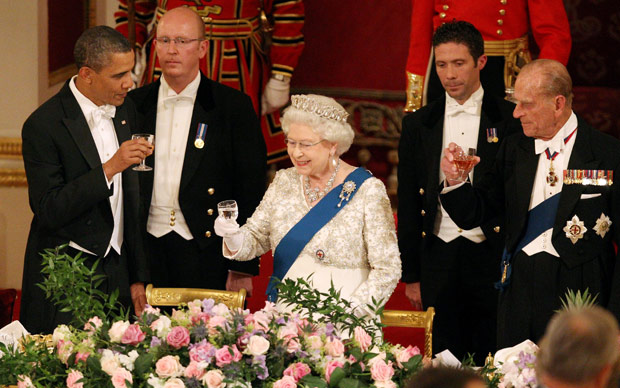


 oooo
oooo oooo
oooo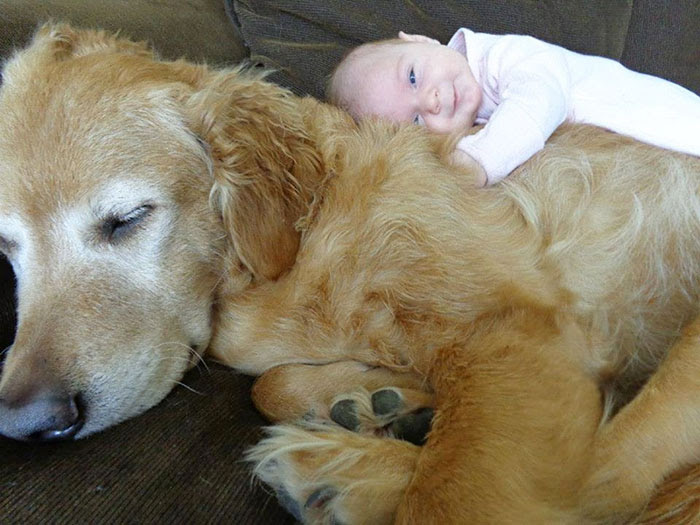 oooo
oooo oooo
oooo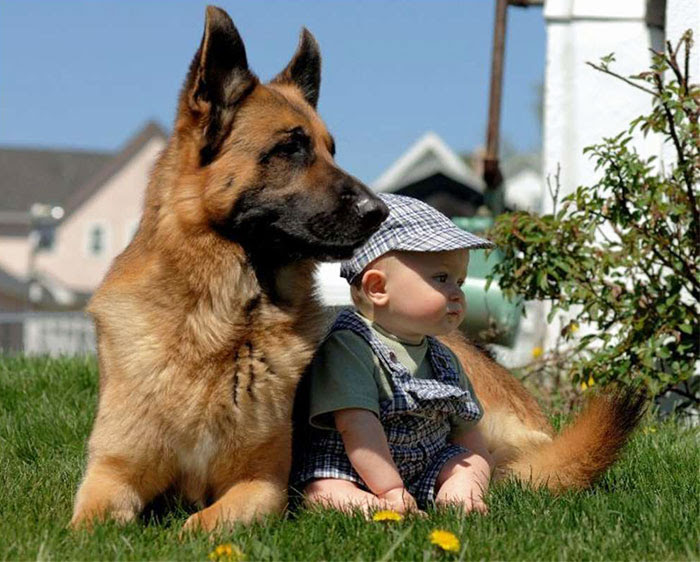 oooo
oooo In New York, for instance, the minimum went from $8.75 an hour to the $9.00 I was making. New York is relatively generous. The current federal minimum wage is $7.25 and 21 states require only that federal standard. Presumably to prove some grim point or other, Georgia and Wyoming officially mandate an even lower minimum wage and then unofficially require the payment of $7.25 to avoid Department of Labor penalties. Some Southern states set no basement figure, presumably for similar reasons.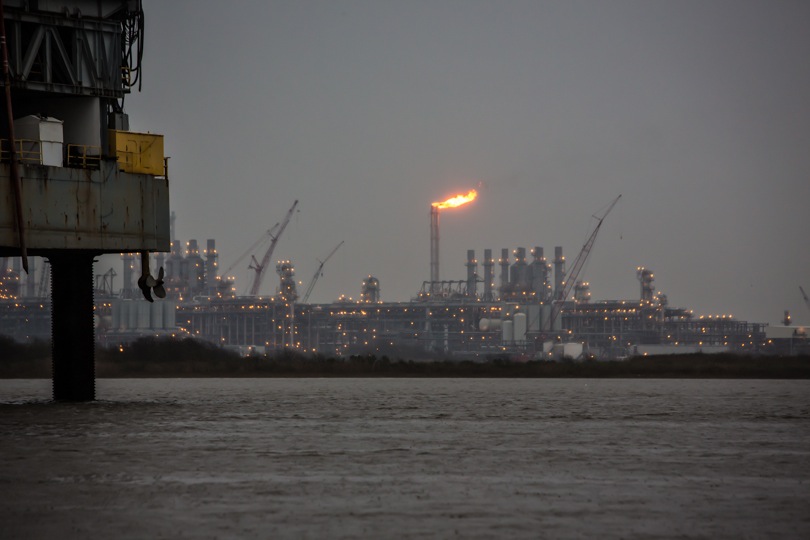
 Learning from Dogs
Sue, and everyone else, we returned from seeing Dr. Lee, the neurologist, a little under two hours ago. Dr. Lee’s prognosis is that Jean is showing the very early signs of Parkinson’s disease, and Jean is comfortable with me mentioning this.
Everyone’s love and affection has meant more than you can imagine. I will write more about this next week once we have given the situation a few ‘coatings of thought’.
Jean sends her love to you all!