Author: Paul Handover

Visiting the Vet – Jefferson’s heart!

Welcome to August!

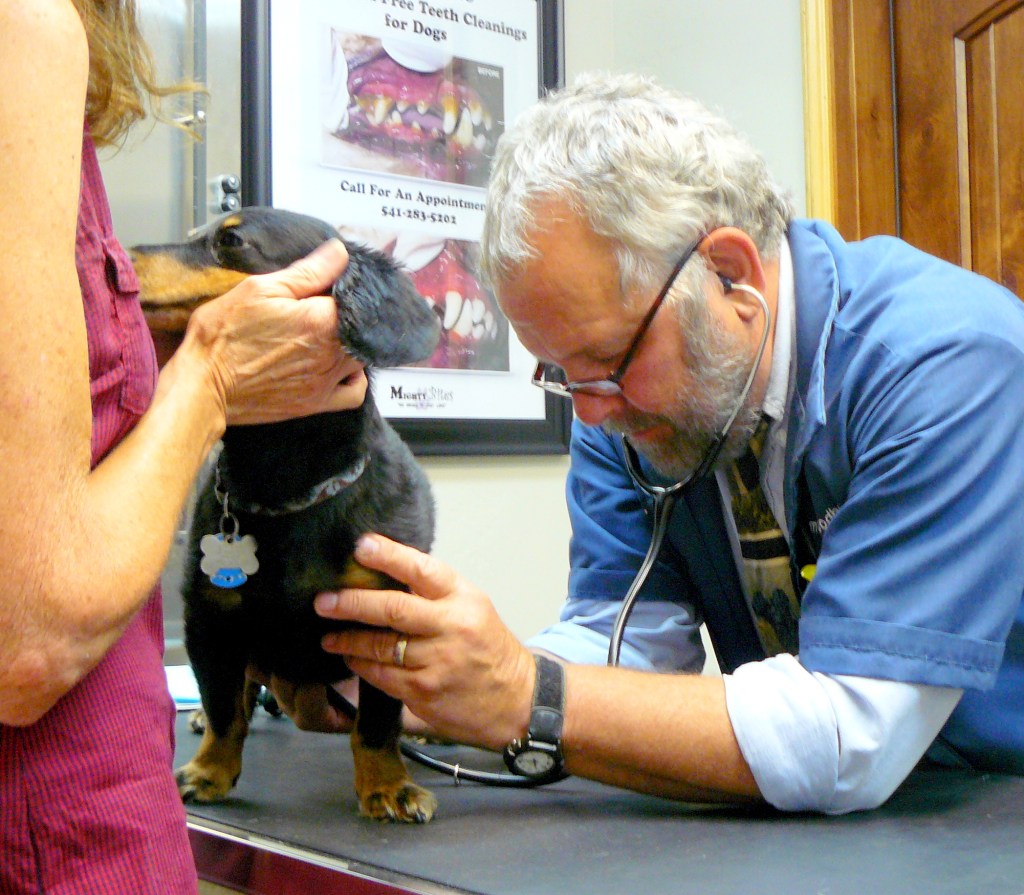
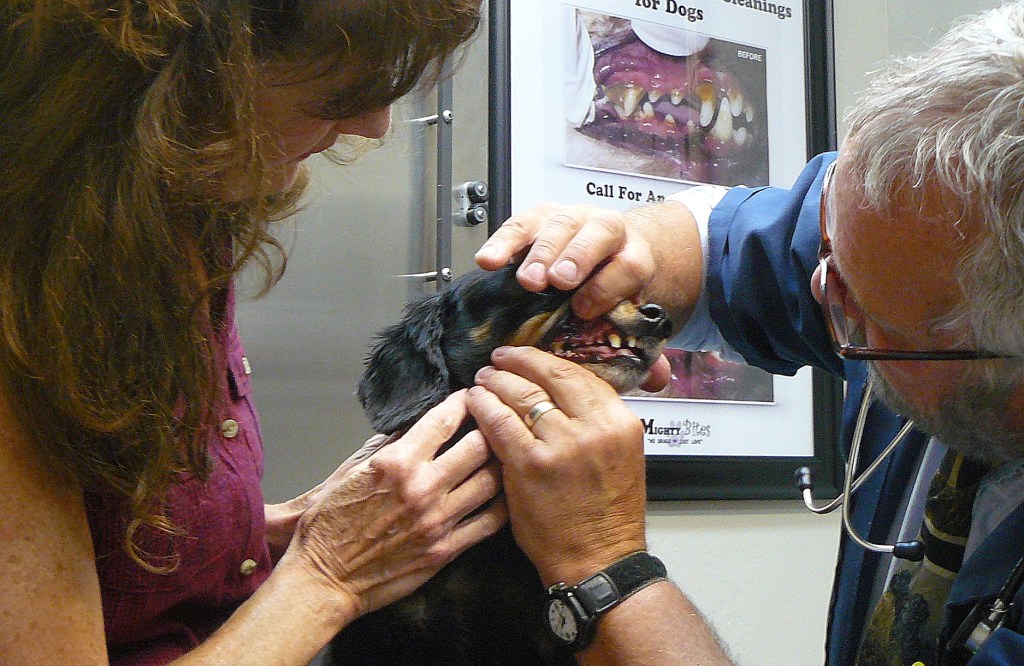
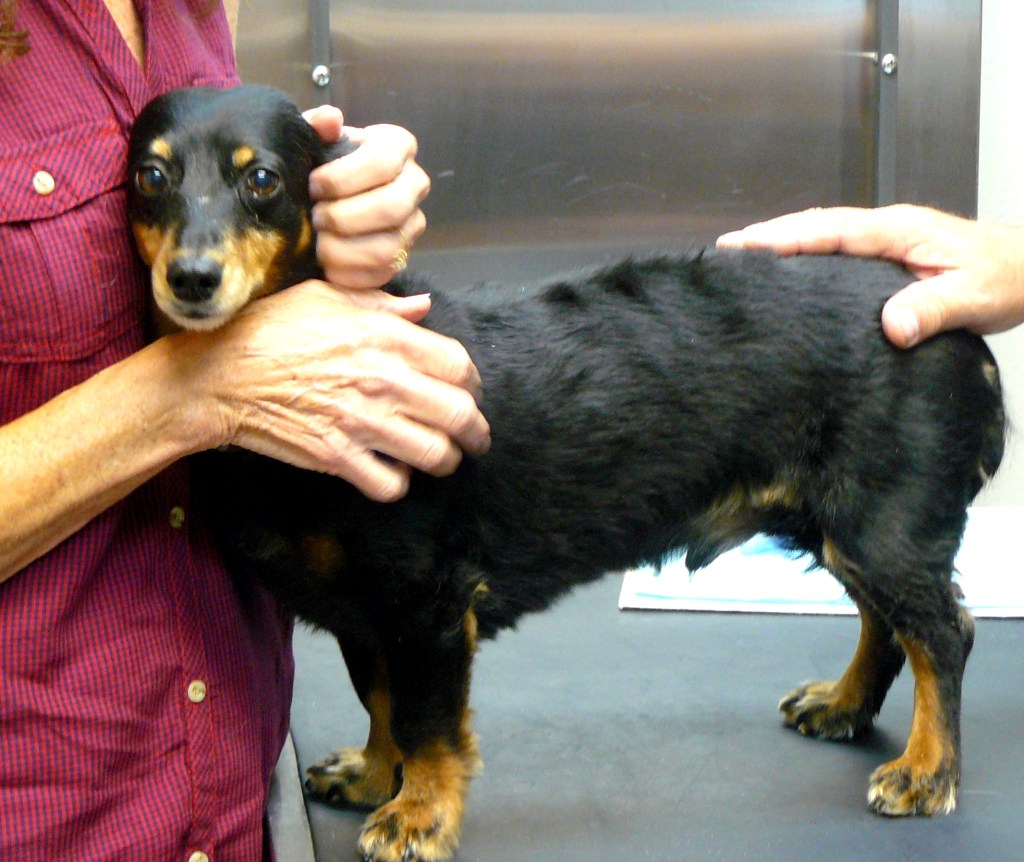
July 13th. 11:00 The second case that I sat in on was Linda bringing in Jefferson.

Jefferson is an eight-year-old long-haired male Dachshund. Linda had decided to bring her dog into Lincoln Road because recently Jefferson had started coughing but only when he was pulling on his leash.

Linda added that Jefferson seemed to be chewing on a number of pine cones just now.

Jim examined Jefferson. First examining the dog’s lymph node and then listening to either side of the dog’s chest.

While everything sounded fine on Jefferson’s right side, Jim detected a very small heart murmur when listening to Jefferson’s left side.

Jim also noted that the lymph node was prominent but not enlarged. Dogs can get lymphoma.

Nothing arose to give cause for concern but in view of the chewing of pine cones, Jim thought that giving Jefferson an injection of ‘Lepto’ would be no bad thing.

11:20 All done!

I subsequently did a web search on ‘Lepto’ and came across this on the Vetstreet website: (in part)

It’s scary to think that a fun stroll through the woods or swim in a favorite watering hole can lead to a terrible illness, but it can –– for you as well as your dog. Leptospirosis is caused by a bacteria spread through soil, water, and the urine of infected animals, and if not caught early it can be deadly. There is a vaccine available for the most common subtypes of the bacteria that infect dogs, but it’s not always a recommended part of the routine vaccination protocol. Ask your veterinarian if the leptospirosis vaccine is right for your dog.

Overview

Leptospirosis is a potentially serious disease caused by the bacterium Leptospira interrogans. It affects dogs but can also infect a wide variety of domestic and wild animals as well as humans.

The organism is usually spread through infected urine, but contaminated water or soil, reproductive secretions, and even consumption of infected tissues can also transmit the infection. Introduction of the organism through skin wounds can also occur. Common carriers of the organism include raccoons, opossums, rodents, skunks, and dogs.

To be continued:

(Please note: These observations are mine alone and because of the busy environment it must be assumed that my interpretation of what was taking place might not be totally accurate. Nothing in this blog post should be used by a reader to make any medical judgment about an animal. If you have any concern about an animal do make an appointment to see a properly qualified veterinarian doctor.)

Picture Parade Two Hundred and Six

Forgive the indulgence today.

In last week’s Picture Parade it was mentioned that at some point I would share some of the sights of home.

Well today, all the photographs were taken here at home (that being Merlin, Southern Oregon). The motivation behind these photographs was learning the operation of a new camera that I recently treated myself with. That is turning out to be quite a task; the user manual is 510 pages long!

But in no particular order, here are a few pictures.

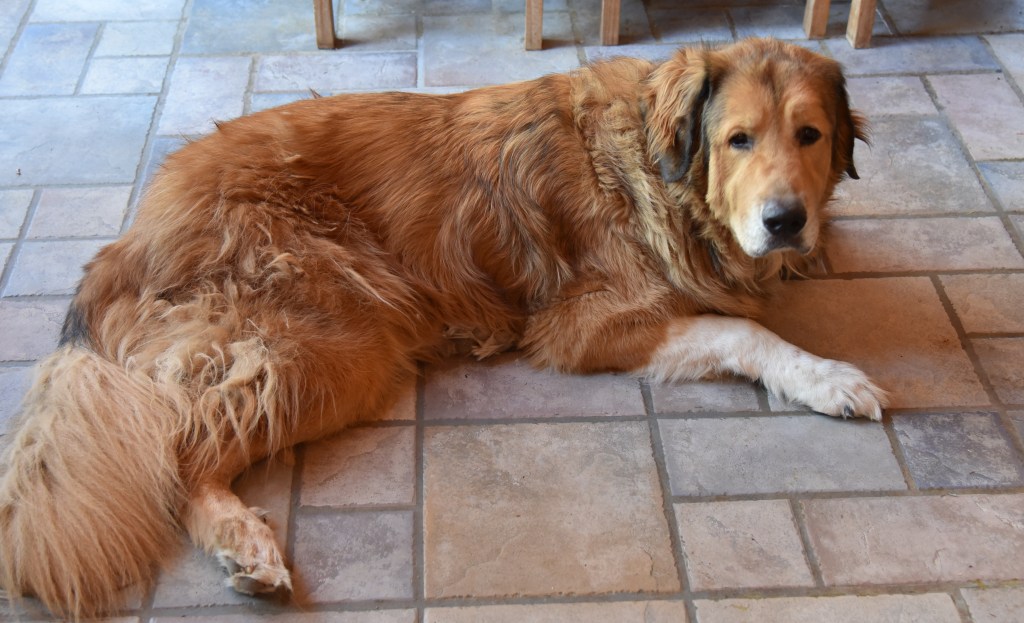
Brandy staying cool on the kitchen floor!

oooo

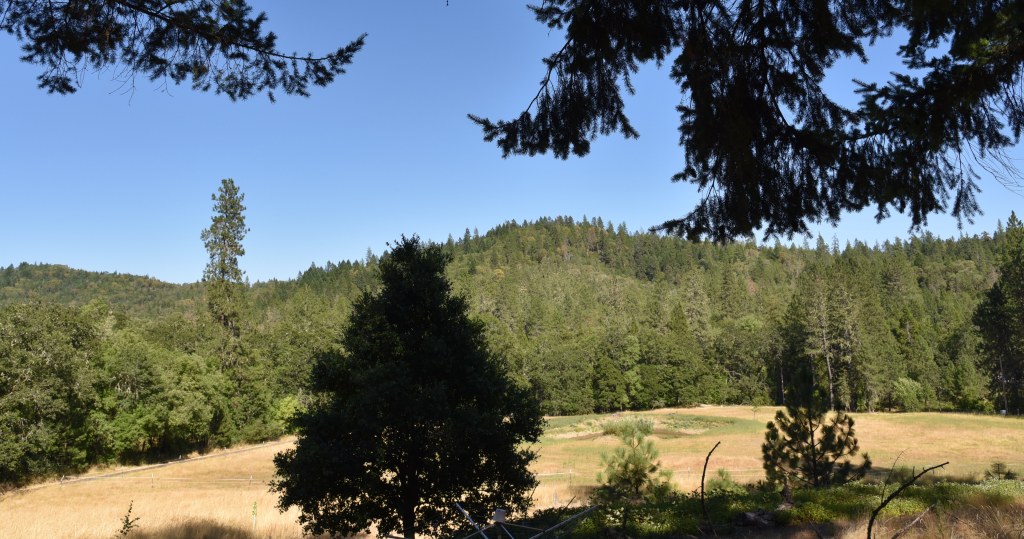
Looking out to the East from the deck adjoining the house.

oooo

Photo taken at 06:10 on the morning of the 25th July. That is Mount Sexton on the horizon and the view is towards the North-East, again taken from our deck. (I was playing with the exposure control on the camera.)

oooo

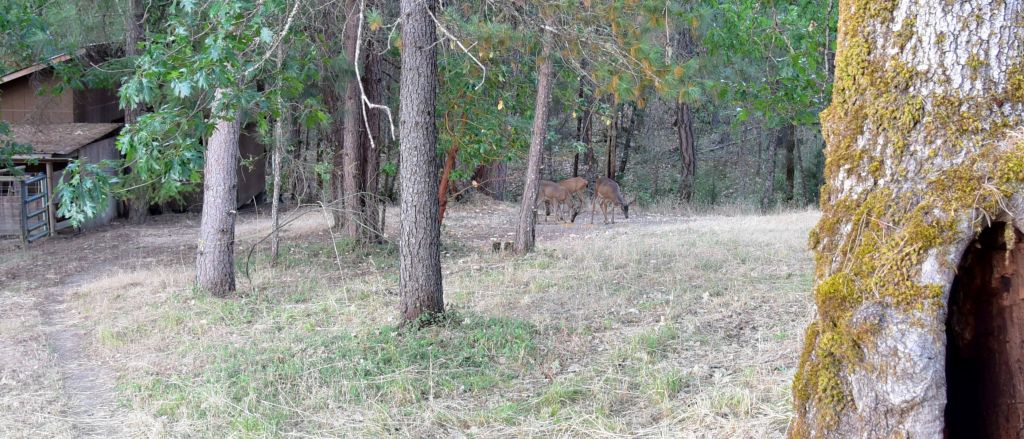
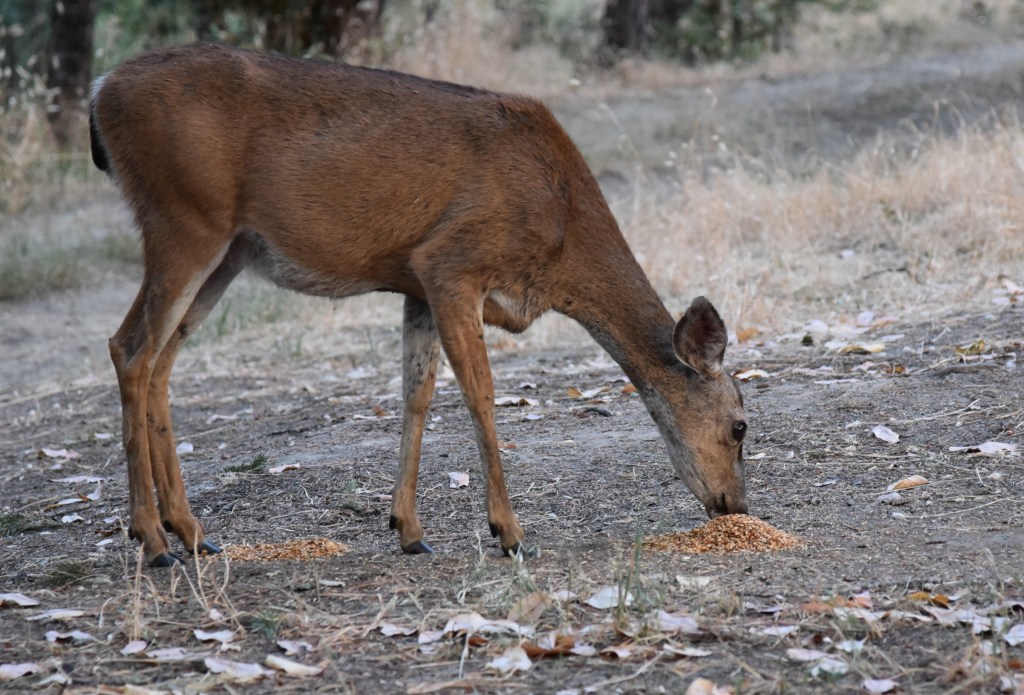
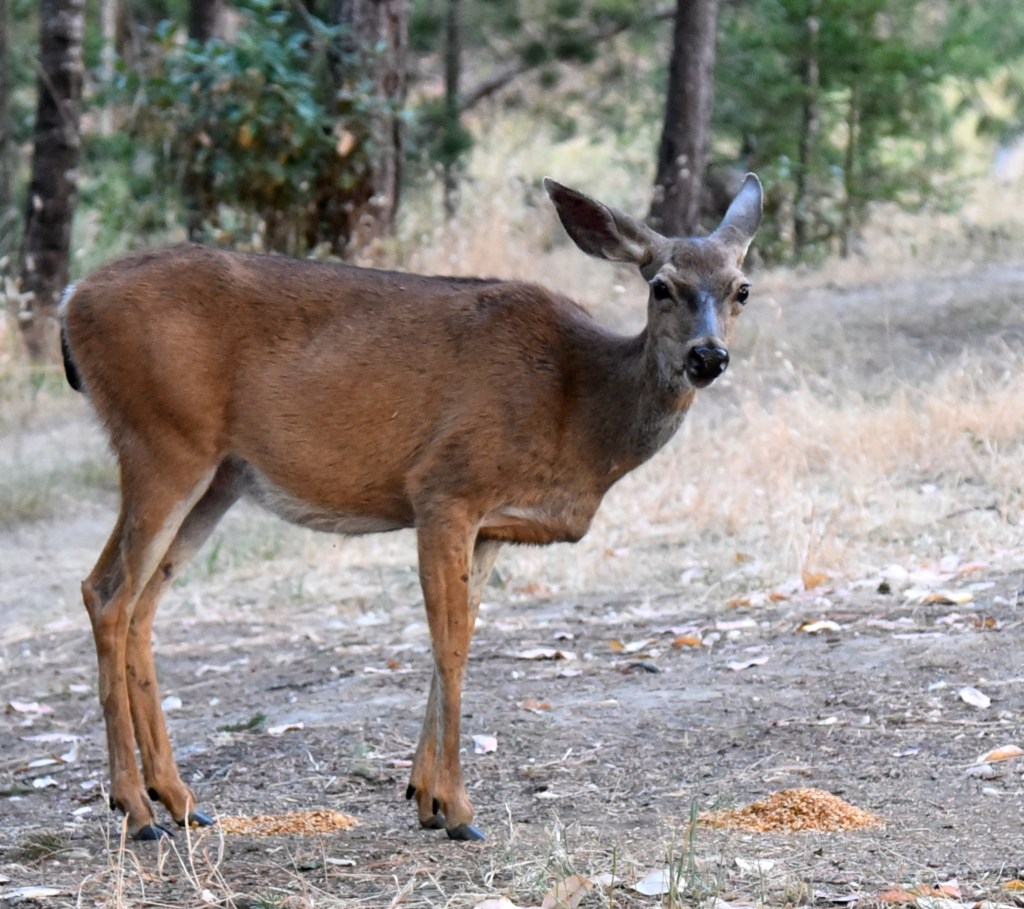
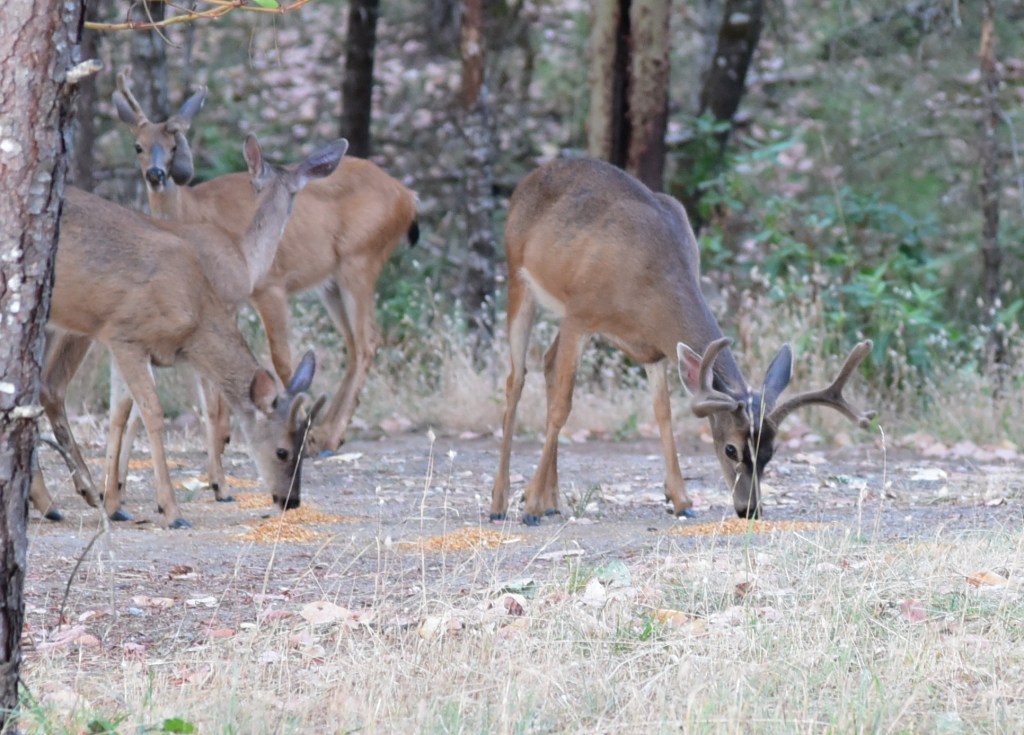
Looking from the end of the deck towards the South down to where our stables are. Photo taken at 06:20 on the 28th shortly after I had put out feed for the deer that come most mornings.

oooo

Taken at 06:10 on the 25th. This shows ‘Doris’ (the second) who has been sleeping under the trees overnight.

oooo

Zoomed in a little closer to Doris and she looked up at me exactly when I took the photograph!

oooo

Morning sky. Unusual to have cloudy skies at this time of the year. 06:20 on the 26th July.

oooo

Our beautiful, gorgeous stag. He has been a regular visitor for the last two years. Taken at 06:10 on the 25th.

oooo

Morning sky, with exposure adjustment, taken at 06:00 on the 25th July.

Can’t close without publicly thanking the wonderful photographic forum Ugly Hedgehog. With over 75,000 users it really is a superb place for all those interested in photography. The forum was invaluable in helping me decide what camera to purchase and, just as importantly, where to purchase it from.

Have a great week, everyone!

Help Stop the use of dogs for medical testing!

Sometimes I wonder about the human race!

Sorry for the outburst above but in the last ten minutes I read this over on Lady Freethinker’s blog: Sign: Pass Bill to Ban Cruel VA Medical Testing on Dogs It made me very angry!

It has to be shared with all you good people.

ooOOoo

Sign: Pass Bill to Ban Cruel VA Medical Testing on Dogs

We are of the stars!

I so relate to this item from EarthSky News!

Long-term readers of this place will possibly recall that between April, 1989 and June, 1994 I lived on a Tradewind 33 sailing yacht Songbird of Kent. I have written before about those days.

Songbird of Kent. My home for five years.

When sailing at night when the sky is clear it is impossible not to feel deeply connected to the stars above one’s head.

My logbook for Songbird of Kent reports that at noon on Wednesday, 1st June, 1994, I departed the yacht harbour at Horta in The Azores bound for Plymouth, South-West England. Plymouth was 1,257 nautical miles (2,329km/1,447 statute miles) from Horta.

Horta on Faial Island of the Azores

The logbook has an entry for the 6th June.

0400 Lat. 43 deg 25 minutes North, Long 22 deg 3 minutes West. Engine Off. Still no wind but must sleep after 19 hours of helming. 840 miles to run. Wind 2 knots from SW. Baro 1027 mb, Viz Good.

The visibility was wonderful and seeing the stars up in the night sky all around me, as in all 360 degrees about me, practically down to the horizon on this moonless night is an image still etched in my mind.

That’s why I want to republish this article that appeared on the blog EarthSky News yesterday.

ooOOoo

We are galaxy stuff

A new study – based on supercomputer simulations – reveals that each one of us may be made in part from matter that passes from one galaxy to another.

This image shows M81 (bottom right) and M82 (upper left), a pair of nearby galaxies where intergalactic transfer – transfer of materials between galaxies – might be happening. Image via Fred Herrmann.

Sagan famously said that we are made of star stuff. He meant the carbon, nitrogen and oxygen atoms in our bodies, as well as atoms of all other heavy elements, were created inside stars. Yet Sagan’s expression of this idea, which quickly became a cornerstone of popular culture, might not take the concept far enough. According to astrophysicists at Northwestern University, our origins are much less local than previously thought. In fact, according to their analysis – which they say is the first of its kind – we’re not just star stuff. We’re galaxy stuff.

This study is being published on July 26, 2017 (July 27 in the U.K.) by the peer-reviewed journal Monthly Notices of the Royal Astronomical Society.

The Northwestern researchers found that up to half of the matter in our Milky Way galaxy may come from distant galaxies. As a result, each one of us may be made in part from extragalactic matter. That is, atoms of carbon, nitrogen, oxygen and so on in our bodies may be created not just by stars in our own Milky Way galaxy, but by stars in far-flung galaxies.

They arrived at this conclusion using supercomputer simulations. The study required the equivalent of several million hours of continuous computing.

The simulations show that supernova explosions eject great quantities of gas from galaxies, which causes the atoms made inside stars to be transported from one galaxy to another via powerful galactic winds. According to their statement, intergalactic transfer is a newly identified phenomenon, which, they say, requires supercomputer simulations in order to be understood. According to these astrophysicists, this understanding is critical for knowing how galaxies evolve … and hence for knowing our own place in the universe.

Animation of gas flows around a Milky Way-like galaxy, as seen by the team’s computer simulations.

Daniel Anglés-Alcázar is a postdoctoral fellow in Northwestern’s Center for Interdisciplinary Exploration and Research in Astrophysics (CIERA). He led the study, and he said:

It is likely that much of the Milky Way’s matter was in other galaxies before it was kicked out by a powerful wind, traveled across intergalactic space and eventually found its new home in the Milky Way.

Given how much of the matter out of which we formed may have come from other galaxies, we could consider ourselves space travelers or extragalactic immigrants.

Space is vast. Galaxies are located at almost inconceivable distances from each other. So, Alcázar and his team said, even though galactic winds propagate at several hundred kilometers per CIERA second, the process of intergalactic transfer occurs over billions of years.

As always, this new research built on earlier studies. Northwestern’s Claude-André Faucher-Giguère and his research group, along with a unique collaboration called Feedback In Realistic Environments (FIRE), had developed numerical simulations that produced realistic 3-D models of galaxies. These simulations followed a galaxy’s formation from just after the Big Bang to the present day.

Anglés-Alcázar then developed state-of-the-art algorithms to mine this wealth of data. In this way, he and his team were able to quantify how galaxies acquire matter from the universe.

The scientists say the prediction of intergalactic transfer can now be tested. The Northwestern team plans to collaborate with observational astronomers who are working with the Hubble Space Telescope and ground-based observatories to test the simulation predictions.

Simulated examples of intergalactic winds, shown as green string, in action around galaxies, shown as clusters of yellow dots. The galaxy at the center is ejecting the winds, blowing them toward potential the other galaxies.

Bottom line: Supercomputer simulations suggest that each one of us may be made in part from extragalactic matter. Hence, we are galaxy stuff.

ooOOoo

16th June, 1994

1945 Lat. 50 deg 21 minutes North, Long. 4 deg 10 minutes West. ARRIVED MAYFLOWER MARINA. Wind Nil. Baro 1023 Mb. Viz Good.

LOG CLOSED!

Mayflower Marina is at Plymouth.

Saving dogs big time

This is really what matters!

Well it does in the worlds of Jean and me and many of you who frequent this place.

Whatever is going wrong in the world around us, all we need is examples of people putting animals in front of them.

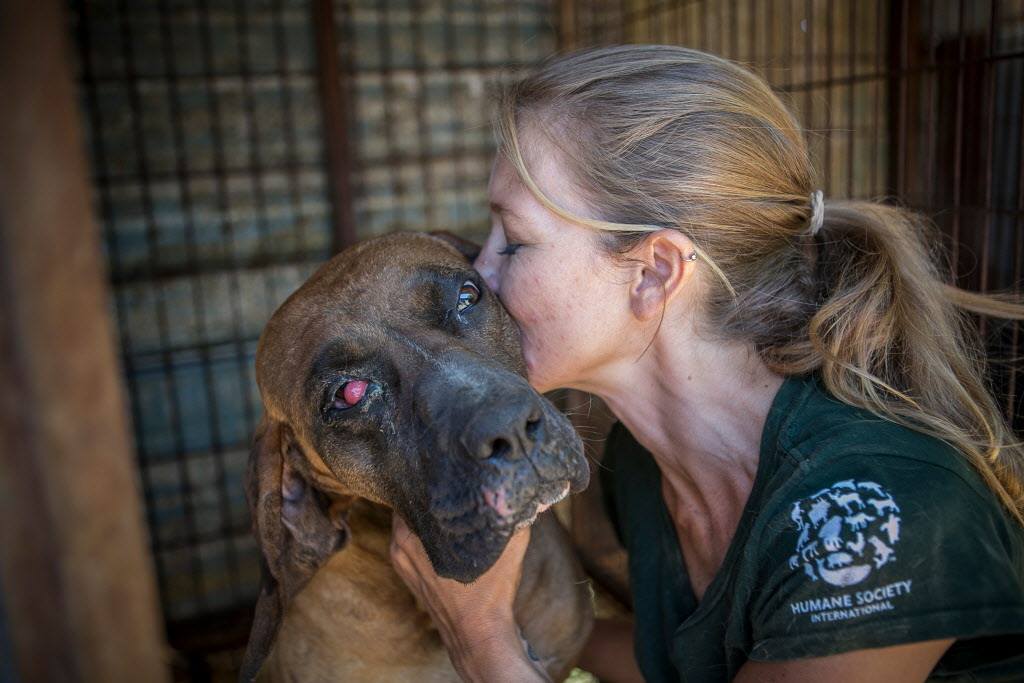
No better illustrated than by a recent news item released by Humane Society International. Albeit, I am using the story as it was presented on the Care2 site.

ooOOoo

Nearly 150 Dogs Saved From the Dog Meat Trade in South Korea

Get ready for some happy news: 149 dogs who were destined to be turned into food have been successfully rescued and will now be starting their new lives in peace.

These dogs, who were rescued by a team from Humane Society International (HSI), are among millions who are raised and killed for their meat in South Korea. According to HSI, more than one million dogs are killed and eaten during Bok Nal days – the three hottest days of the summer – mainly as a soup that’s mistakenly believed to improve stamina and virility.

Fortunately, their fate changed when the farmer who was raising them turned to HSI for help. The organization has been working in partnership with those in the industry who express interest in getting out to help them close their farms and transition into other lines of work.

This latest rescue marks the ninth dog meat farm that HSI has permanently closed since 2014, which has resulted in saving the lives of nearly 1,000 dogs who would have otherwise been brutally slaughtered.

The dogs from this farm will now be free from the cages and chains that confined them, and are headed to HSUS Emergency Placement Partner shelters in the U.S. located in Florida, Illinois, Indiana, New Jersey, New York, Pennsylvania and Wisconsin, where they’ll be prepared to be adopted into homes where they’ll become members of a family.

The first few have already arrived, and the rest will be on their way in the coming weeks. A group of 15 puppies who were too young to fly are being fostered with their moms until they’re ready to make the trip.

“With every dog meat farm we close, we are not only saving the lives of these poor, terrified dogs caught up in this cruel trade, but we are also presenting a successful blueprint for change that we hope the government will follow. Eating dog is a dying practice in Korea, especially among young people. However, the Bok Nal days of summer still lead many to eat dog meat soup in the mistaken belief that it will invigorate the blood in the sluggish heat. Our campaign shows them the disgusting conditions in which the dogs are forced in live in their own feces, and their pitiful suffering, and it is changing hearts and minds,” said Nara Kim, HSI’s South Korea dog meat campaigner.

While millions of dogs are still at risk, attitudes among the public are changing for the better, particularly among younger generations who are eschewing dog meat.

“Some people say that dog eating is Korean culture, but you won’t find many young people who feel it’s a cultural habit we want to hold on to. It’s intellectually lazy to use culture as an excuse for cruelty because all cultures evolve over time and we often shed practices of the past. We are hopeful that things will change, and that the new Korean president will advance a new culture of compassion to animals. I am so happy that for these dogs the dog meat trade is over, but we have to fight on for the millions who are still suffering,” added Kim.

HSI is continuing to urge the government to act to end the trade ahead of the 2018 Winter Olympics, which will be hosted in South Korea, and will be heavily campaigning this summer to raise more awareness about the issue locally.

For more info on how to help, and updates on the dogs, check out Humane Society International.

Photo credit: Friends of Oregon Zoo Elephants/IDA

ooOOoo

The Care 2 version also included a number of very moving photographs but this one, in particular, seemed a great one to share with you. The rest will form the next Picture Parade.

Well done HSI!


Never taking democracy for granted!

Cold-water shower time again!

All you good people who stick with this blog know that the majority of the posts are to do with dogs or cats in one form or another.

Yet, I am cognizant of the fact that no one can completely hide, metaphorically speaking, in the warm fur of our favourite dog or cat and let the rest of the world go tits up. From time to time I read an article or an essay that touches on something fundamentally important to a civil society and am compelled to share same with you.

That was the case on July 5th when I published a post called The Implications of Inequality.

OK – moving on!

Regulars know that I am a great admirer of the writings of essayist George Monbiot. He is a very regular contributor to The Guardian newspaper. Just a few days ago, Mr. Monbiot published an essay that really does need to be read as widely as possible. It is called Missing Link and is republished here with George Monbiot’s very kind permission.

ooOOoo

Missing Link

21st July 2017
How a secretive network built around a Nobel prizewinner set out to curtail our freedoms

By George Monbiot, published in the Guardian 19th July 2017

It’s the missing chapter: a key to understanding the politics of the past half century. To read Nancy MacLean’s new book Democracy in Chains: the deep history of the radical right’s stealth plan for America is to see what was previously invisible.

The history professor’s work on the subject began by accident. In 2013 she stumbled across a deserted clapboard house on the campus of George Mason University in Virginia. It was stuffed with the unsorted archives of a man who had died that year, whose name is probably unfamiliar to you: James McGill Buchanan. She writes that the first thing she picked up was a stack of confidential letters concerning millions of dollars transferred to the university by the billionaire Charles Koch.

Her discoveries in that house of horrors reveal how Buchanan, in collaboration with business tycoons and the institutes they founded, developed a hidden programme for suppressing democracy on behalf of the very rich. The programme is now reshaping politics, and not just in the US.

Buchanan was strongly influenced by both the neoliberalism of Friedrich Hayek and Ludwig von Mises and the property supremacism of John C Calhoun, who argued, in the first half of the 19th century, that freedom consists of the absolute right to use your property – including your slaves – however you may wish. Any institution that impinges on this right is an agent of oppression, exploiting men of property on behalf of the undeserving masses.

James Buchanan brought these influences together to create what he called “public choice theory”. He argued that a society could not be considered free unless every citizen has the right to veto its decisions. What he meant by this was that no one should be taxed against their will. But the rich were being exploited by people who use their votes to demand money that others have earned, through involuntary taxes to support public spending and welfare. Allowing workers to form trade unions and imposing graduated income taxes are forms of “differential or discriminatory legislation” against the owners of capital.

Any clash between what he called “freedom” (allowing the rich to do as they wished) and democracy should be resolved in favour of freedom. In his book The Limits of Liberty, he noted that “despotism may be the only organisational alternative to the political structure that we observe.” Despotism in defence of freedom.

His prescription was what he called a “constitutional revolution”: creating irrevocable restraints to limit democratic choice. Sponsored throughout his working life by wealthy foundations, billionaires and corporations, he develop both a theoretical account of what this constitutional revolution would look like and a strategy for implementing it.

He explained how attempts to desegregate schooling in the American South could be frustrated by setting up a network of state-sponsored private schools. It was he who first proposed the privatisation of universities and the imposition of full tuition fees on students: his original purpose was to crush student activism. He urged the privatisation of Social Security and of many other functions of the state. He sought to break the links between people and government and demolish trust in public institutions. He aimed, in short, to save capitalism from democracy.

In 1980, he was able to put the programme into action. He was invited to Chile, where he helped the Pinochet dictatorship to write a new constitution, which, partly through the clever devices Buchanan proposed, has proved impossible to reverse in its entirety. Amid the torture and killings, he advised the government to extend its programmes of privatisation, austerity, monetary restraint, deregulation and the destruction of trade unions: a package that helped trigger economic collapse in 1982.

None of this troubled the Swedish Academy, that, through his devotee at Stockholm University, Assar Lindbeck, in 1986 awarded James Buchanan the Nobel Memorial Prize for economics. It is one of several decisions that have turned this prize toxic.

But his power really began to be felt when Charles Koch, currently the seventh richest man in the US, decided that Buchanan held the key to the transformation he sought. Koch saw even such ideologues as Milton Friedman and Alan Greenspan as “sellouts”, as they sought to improve the efficiency of government rather than destroying it altogether. But Buchanan took it all the way.

MacLean says that Charles Koch poured millions into Buchanan’s work at George Mason University, whose law and economics departments look as much like corporate-funded thinktanks as they do academic faculties. He employed the economist to select the revolutionary “cadre” that would implement his programme (Murray Rothbard, at the Cato Institute that Koch founded, had urged the billionaire to study Lenin’s techniques and apply them to the libertarian cause). Between them, they began to develop a programme for changing the rules.

The papers Nancy Maclean discovered show that Buchanan saw stealth as crucial. He told his collaborators that “conspiratorial secrecy is at all times essential.” Instead of revealing their ultimate destination, they would proceed by incremental steps. For example, in seeking to destroy the Social Security system, they would claim to be saving it, arguing that it would fail without a series of radical “reforms”. (The same argument is used by those attacking the NHS over here). Gradually they would build a “counter-intelligentsia”, allied to a “vast network of political power” that would eventually become the new establishment.

Through the network of thinktanks that Koch and other billionaires have sponsored, through their transformation of the Republican Party, and the hundreds of millions they have poured into state congressional and judicial races, through the mass colonisation of Trump’s administration by members of this network and lethally effective campaigns against everything from public health to action on climate change, it would be fair to say that Buchanan’s vision is maturing in the USA.

But not just there. Reading this book felt like a demisting of the window through which I see British politics. The bonfire of regulations highlighted by the Grenfell Tower disaster, the destruction of state architecture through austerity, the budgeting rules, the dismantling of public services, tuition fees and the control of schools: all these measures follow Buchanan’s programme to the letter. I wonder how many people are aware that David Cameron’s free schools project originated with an attempt to hamper racial desegregation in the American South.

In one respect, Buchanan was right: there is an inherent conflict between what he called “economic freedom” and political liberty. Complete freedom for billionaires means poverty, insecurity, pollution and collapsing public services for everyone else. Because we will not vote for this, it can be delivered only through deception and authoritarian control. The choice we face is between unfettered capitalism and democracy. You cannot have both.

Buchanan’s programme amounts to a prescription for totalitarian capitalism. And his disciples have only begun to implement it. But at least, thanks to Maclean’s discoveries, we can now apprehend the agenda. One of the first rules of politics is know your enemy. We’re getting there.

http://www.monbiot.com

ooOOoo

I found it very difficult to write these closing thoughts; as is obvious as you read this sentence!

Looking up quotations online under the headings of fairness or equality brought up many that could have worked here. Yet they seemed too trite, too obvious, too remote from the reality of what Mr. Monbiot describes here today.

So let me leave you with this: US income inequality is the highest it’s been since 1928. (Source: Pew Research.) But worse than that, US wealth inequality is even greater than income inequality. (Source: Pew Research.) (I’m certain that this is not exclusive to the USA.)

That is wrong! Plain and Simple!
Visiting the Vet – Hyperthyroidism

Lady Jessica isn’t feeling too well.

09:50 July 13th, 2017.

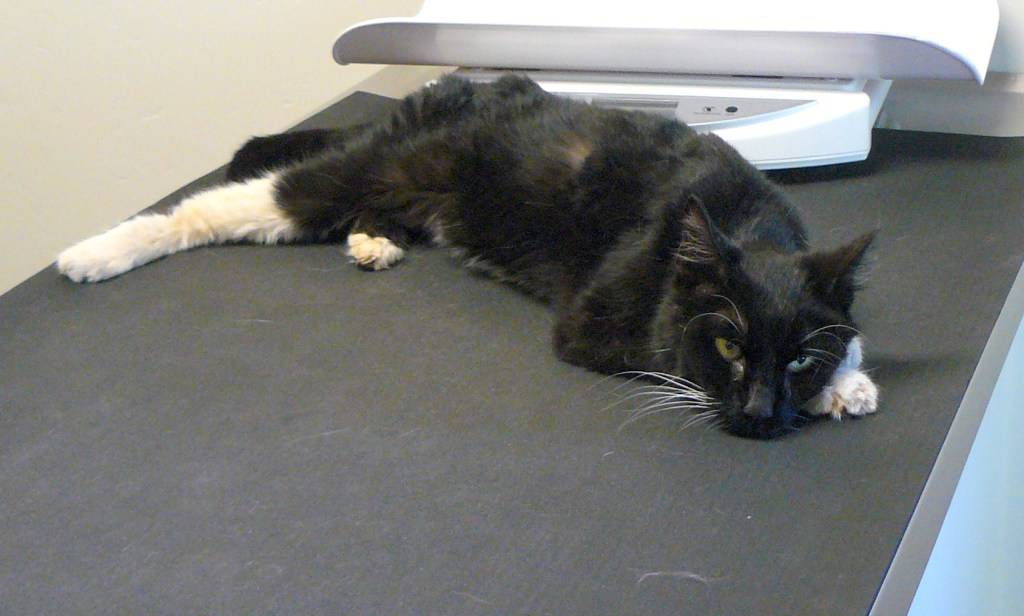
Jessica Louise is a 14-year-old cat that normally lives happily outside. But in recent times ‘Jessie’ has become very thin despite constantly eating and has now preferred to be inside the home even accounting for the fact of there being dogs in the house.

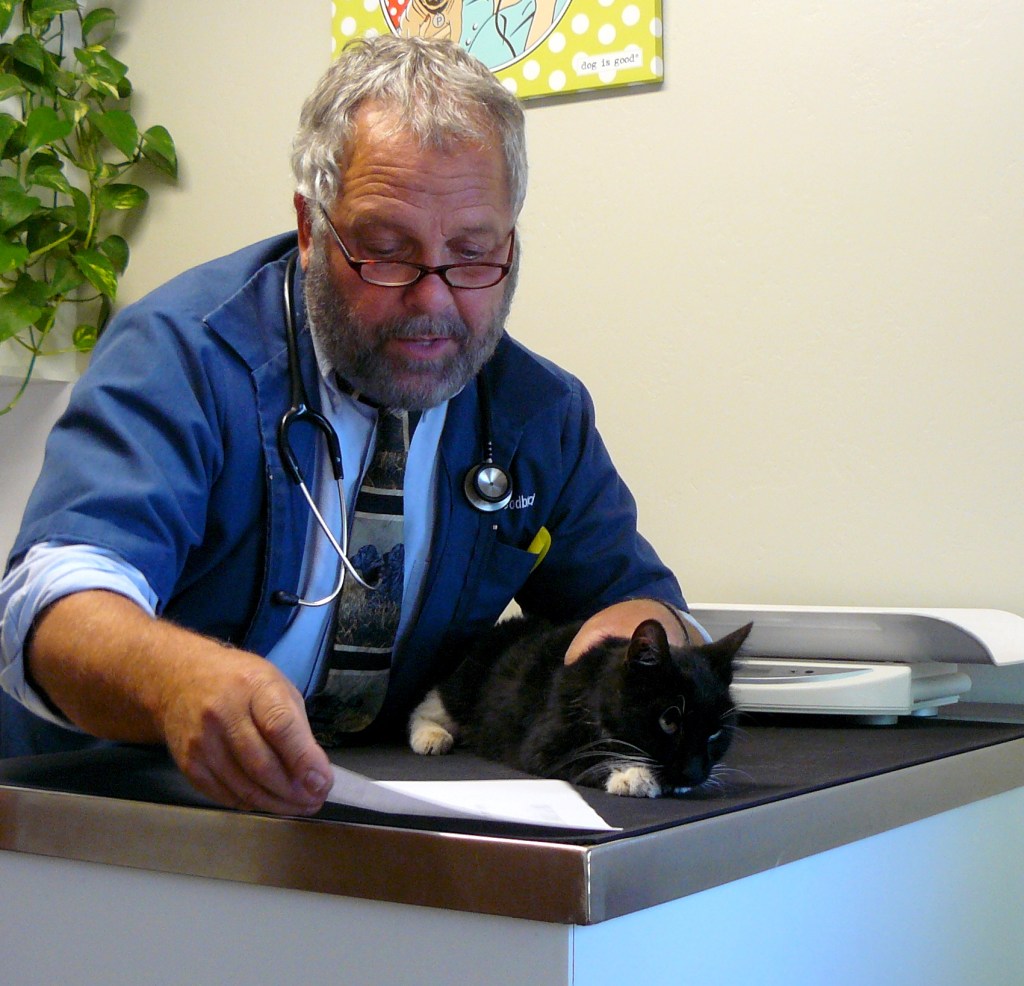
Jim’s pretty certain that he is looking at a cat with a hyperthyroid thyroid gland. No question that a blood test is needed and the blood sample is taken without delay.

The results are soon back and confirm that Jessie’s T4 readings of >8.00 mg/dL are very high, indeed beyond the upper limit of their testing equipment. Jim explains that the normal range for T4 is between 0.80 – 4.70 mg/dL.

The puzzled look on my face is seen by Jim and he takes a few minutes out to explain what a blood test accomplishes.

There are three parts to the blood test:

  1. The Complete Blood Count (CBC), that is the cellular part of the test.
  2. The chemistry of the blood, measuring the condition of the kidneys, liver, electrolytes, diabetic status as in blood glucose level, and more.
  3. The optional Part, a test for T4 Total Thyroxine level.

A very quick web search found this from which one reads:

Your dog or cat’s T4 (Total T4) is a useful screening test to detect an under-active thyroid gland (hypothyroidism) in dogs or an over-active one (hyperthyroidism) in cats. But total T4 levels are a considerably more accurate way to diagnose an overly active thyroid gland in your cat than an under-active thyroid gland in your dog.

Jim prescribes Methimazole. Once again, back at my desk a quick web search for Methimazole For Cats finds:

What is Methimazole?

Methimazole is used to treat hyperthyroidism in cats. It has largely replaced propylthiouracil in this treatment process since it has a lower incidence of adverse side effects. Methimazole requires a prescription from your veterinarian, and is sold per tablet.

(This is only one of many products found online!)

Jim weighs Jessie and finds that she is 4lbs 12 oz. Her weight should be in excess of 8 lbs.

The clinic protocol is that Jessie should not be seen until at least 45 days has elapsed. But Dr. Jim underlines that Jessie should be brought back in to the clinic before then if there is no weight gain soon or, especially, if Jessie continues to lose weight.

10:05 All done.

To be continued:

(Please note: These observations are mine alone and because of the busy environment it must be assumed that my interpretation of what was taking place might not be totally accurate. Nothing in this blog post should be used by a reader to make any medical judgment about an animal. If you have any concern about an animal do make an appointment to see a properly qualified veterinarian doctor.)

ooooo

Good people, may I ask for your assistance.

Best explained by sharing part of a recent email sent to Yvonne D. who has offered her help with my book project. In past times, Yvonne was a Veterinary Technician.

Dear Yvonne,

My Visiting the Vet theme on Learning from Dogs has awakened within me the interest and passion to write my second book. Or, to put it more accurately, to switch away from the present theme that I have been struggling to get stuck into for months.

I spoke with Russel Codd at the clinic and he is really keen to support me.

The overall idea that is forming in my mind is to write a book that alternates, chapter by chapter, between observing the medical and clinical goings-on at a number of vet clinics in town, including specialist processes, surgery, cardiac, etc., and chapters that look deeply into the many different relationships that individuals have with their pets; primarily with dogs and cats.

I want to get into the ‘mindset’ of people who have pets in their lives across the whole range of feelings of those said people. From those who love their pets practically without any limit, to the homeless people (almost 100% men) whom one sees with a dog or two in tow alongside the highway. But also exploring those who seem so hateful. E.g. our pet sitter knows a man who threw his elderly dog away in some local woods. What causes someone to be like this? I want to find out!!

The book will be called: Of Pets, and Of People.

With very kind wishes,

Paul

Copyright (c) 2017 Paul Handover

Any feedback at all would be fabulous! What would you like to see in such a book? What would you most definitely not want to read?

Picture Parade Two Hundred and Five

Just a few photos from our night away.

Last Tuesday, Jean and I took a little overnight trip away. We went to Brookings on the Oregon Pacific coast.

As Wikipedia explains:

Brookings is a city in Curry County, Oregon, United States. It was named after John E. Brookings, president of the Brookings Lumber and Box Company, which founded the city in 1908. As of the 2010 census the population was 6,336.

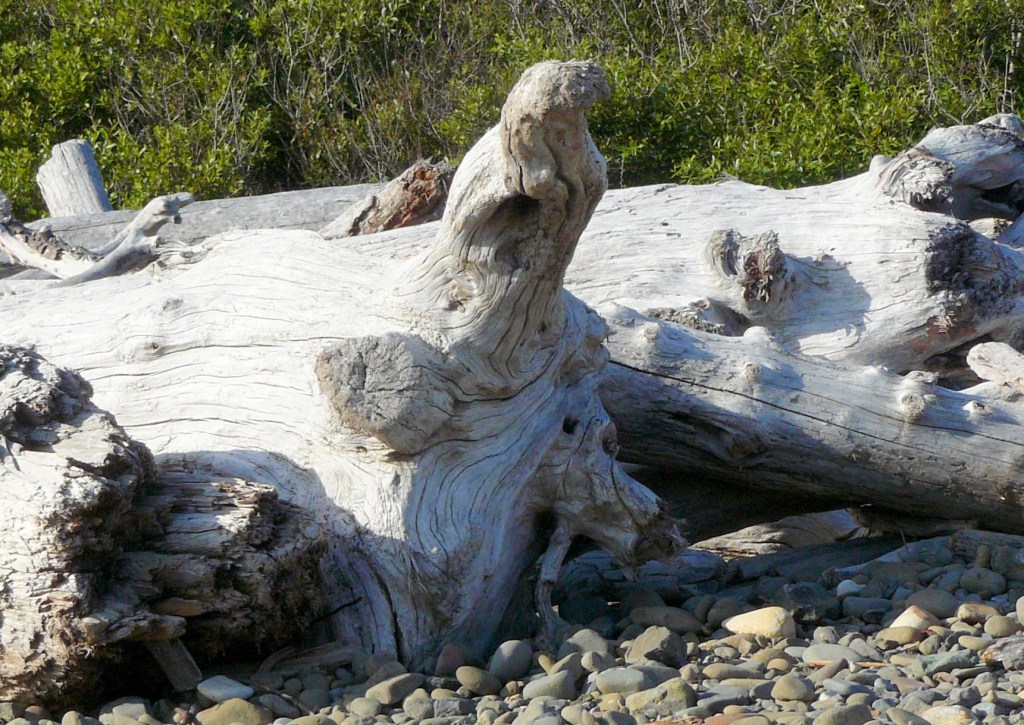
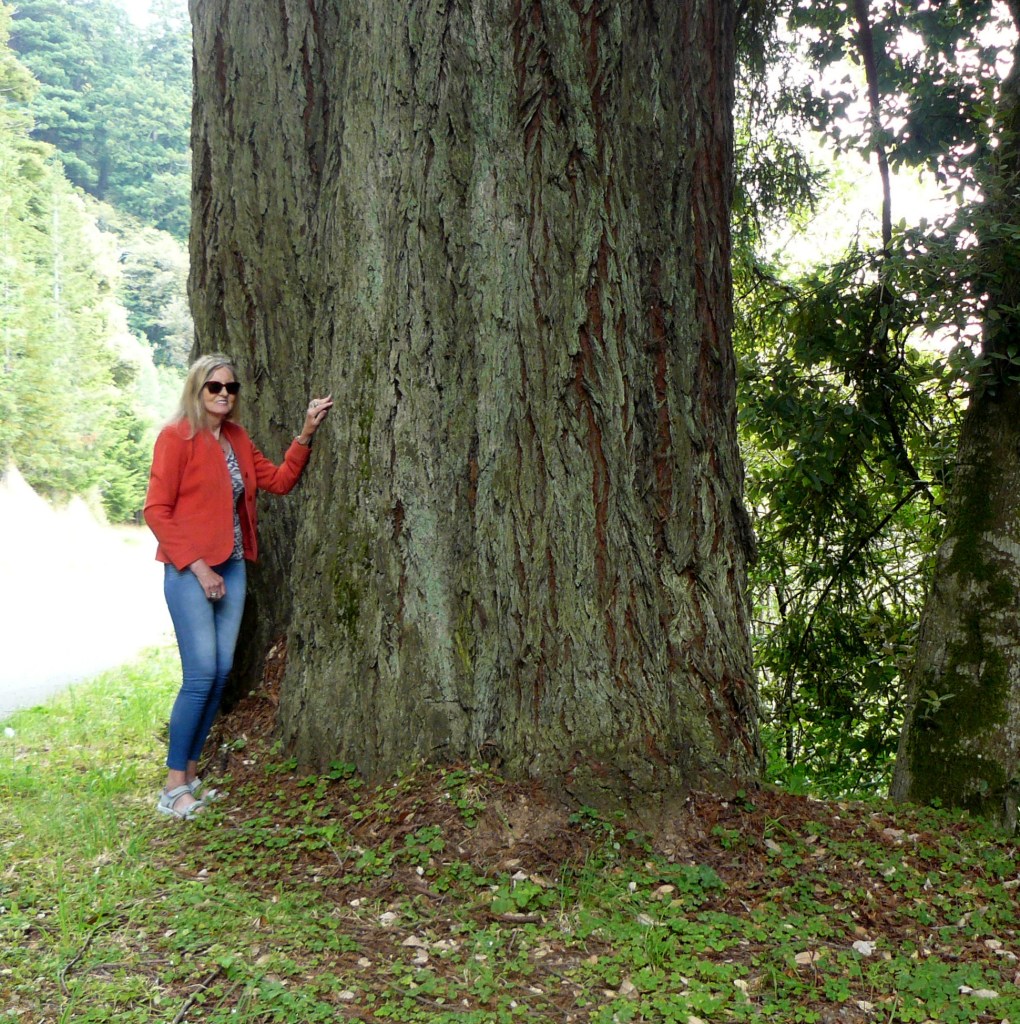
Anyway, a few pictures taken at Meyers Creek Beach that evening and a couple of shots of the Redwood trees seen on the way home on the Wednesday.

oooo

oooo

oooo

oooo

oooo

oooo

Fabulous!


Saturday smile time!

Cute beyond words!

Published on Jul 13, 2017

5-month-old Angus the Golden Retriever loves his local beach on Port Phillip Bay in Seaford, Melbourne. After seeing crabs run through the shallows he chases straight for them, frantically trying to catch what he spotted. Awesome!

Have a great weekend!

New ideas about our relationship with dogs.

What a delight to read this latest scientific news.

There’s so much ‘doom and gloom’ to be seen on the news services across the world that a genuine discovery that enlarges the mind is always a treat. Now make that a discovery about our dogs. Better still, let the BBC do it for you.

ooOOoo

How did dogs become our best friends? New evidence

19 July 2017

Dogs most probably evolved from wolves at a single location about 20,000 to 40,000 years ago, a study suggests.

Previously, it had been thought that dogs were tamed from two populations of wolves living thousands of miles apart.

Researchers studied DNA from three dogs found at archaeological sites in Germany and Ireland that were between 4,700 and 7,000 years old.

The ancient canines share ancestry with modern European dogs.

By looking at the rates of change to the DNA from the oldest specimen, scientists were able to place the timing of the domestication of dogs to between 20,000 and 40,000 years ago.

Krishna Veeramah of Stony Brook University in New York is a researcher on the study.

He said the process of dog domestication began when a population of wolves moved to the outskirts of hunter-gatherer camps to scavenge for leftovers.

”Those wolves that were tamer and less aggressive would have been more successful at this,” he explained.

“While the humans did not initially gain any kind of benefit from this process, over time they would have developed some kind of symbiotic relationship with these animals, eventually evolving into the dogs we see today.”

DNA was obtained from the skull of an ancient dog.

The story of how dogs came to be tamed from wolves is complex and hotly debated.

Scientists believe dogs started moving around the world, perhaps with their human companions, about 20,000 years ago.

By 7,000 years ago, they were pretty much everywhere, although they were not the kind of dogs that we would consider pets.

”They would likely have resembled dogs we today call village dogs, which are free-breeding that did not live in specific people’s houses and have a similar look to them across the world,” said Dr Veeramah.

The dogs were later bred for their skills as hunters, herders or gundogs, eventually creating hundreds of modern breeds.

The research, published in Nature Communications, suggests even the dog breeds and village dogs found in the Americas and Pacific Islands are almost completely derived from recent European dog stock.

This is probably due to prolific dog breeding in Victorian times.

The dog skull inside an ancient burial chamber.

”In this regard, it appears therefore that our 7,000-year, Neolithic-old dog from Europe is virtually an ancestor to most modern breed dogs found throughout the world,” said Dr Veeramah.

”This ancestral relationship may even stretch back to the oldest dog fossil we know of, which is approximately 14,000 years old from Germany.”

Previous evidence suggested that the first domestic dogs appeared on opposite sides of the Eurasian continent more than 12,000 years ago.

Later, the eastern dogs moved with migrating humans and bred with those from the west, according to this theory.

Dr Greger Larson of the University of Oxford said it was great to see more ancient dog genomes being published.

“There is a fascinating story here and we’re only just scraping the surface,” he said.

“The more we get the more we might have a shot at finally unravelling the story of how we became such good friends over such a long time.”

Follow Helen on Twitter.

ooOOoo

Once read, it was but a moment to do a web search for Dr Veeramah and bring up the news of his research on the Stony Brook Newsroom.

ooOOoo

Study Reveals Origin of Modern Dog Has a Single Geographic Origin

Reported in Nature Communications, the finding counters previous research that suggested two domestication events led to the modern dog

Stony Brook, NY; Stony Brook University: Department of Ecology and Evolution Assistant Professor Krishna Veeramah. His research will be published in Nature and his study reveals origin of modern dog has a single geographic origin.

STONY BROOK, N.Y., July 18, 2017 – By analyzing the DNA of two prehistoric dogs from Germany, an international research team led by Krishna R. Veeramah, PhD, Assistant Professor of Ecology & Evolution in the College of Arts & Sciences at Stony Brook University, has determined that their genomes were the probable ancestors of modern European dogs. The finding, to be published in Nature Communications, suggests a single domestication event of modern dogs from a population of gray wolves that occurred between 20,000 and 40,000 years ago.

Dogs were the first animal to be domesticated by humans. The oldest dog fossils that can be clearly distinguished from wolves are from the region of what is now Germany from around 15,000 years ago. However, the archeological record is ambiguous, with claims of ancient domesticated dog bones as far east as Siberia. Recent analysis of genetic data from modern dogs adds to mystery, with some scientists suggesting many areas of Europe, Central Asia, South Asia and the Middle East as possible origins of dog domestication.

(L to R) Shyamalika Gopalan, PhD Candidate, Dean Bobo, Bioinformatics Scientist, and Krishna Veermah, Assistant Professor of Ecology & Evolution. (F) Four-legged friend, Joci

In 2016, research by scientists using emerging paleogenomics techniques proved effective for sequencing the genome of a 5,000-year-old ancient dog from Ireland. The results of the study led the research team to suggest dogs were domesticated not once but twice. The team from Oxford University also hypothesized that an indigenous dog population domesticated in Europe was replaced by incoming migrants domesticated independently in East Asia sometime during the Neolithic era.

“Contrary to the results of this previous analysis, we found that our ancient dogs from the same time period were very similar to modern European dogs, including the majority of breed dogs people keep as pets,” explained Dr. Veeramah. “This suggests that there was no mass Neolithic replacement that occurred on the continent and that there was likely only a single domestication event for the dogs observed in the fossil record from the Stone Age and that we also see and live with today.”

In the paper, titled “Ancient European dog genomes reveal continuity since the Early Neolithic,” Veeramah and colleagues used the older 7,000 year old dog to narrow the timing of dog domestication to the 20,000 to 40,000 years ago range.

They also found evidence of the younger 5,000 year old dog to be a mixture of European dogs and something that resembles current central Asian/Indian dogs. This finding may reflect that people moving into Europe from the Asian Steppes at the beginning of the Bronze Age brought their own dogs with them.

“We also reanalyzed the ancient Irish dog genome alongside our German dog genomes and believe we found a number of technical errors in the previous analysis that likely led those scientists to incorrectly make the conclusion of a dual domestication event,” added Veeramah.

Overall, he emphasized, their new genomic analysis of ancient dogs will help scientists better understand the process of dog evolution, even if the exact geographic origin of domestication remains a mystery. He expects further sequencing of the ancient genomes from Eurasia will help to eventually solve the issue.

The study and findings are a collaboration between scientists at Stony Brook University; the University of Michigan, Johannes Gutenberg-University, Germany; University of Bamberg, Germany; Trinity College, Ireland; and the Department of Monumental Heritage in Germany.

The research was supported in part by the National Institutes of Health.

###

 About Stony Brook University
Stony Brook University is going beyond the expectations of what today’s public universities can accomplish. Since its founding in 1957, this young university has grown to become one of only four University Center campuses in the State University of New York (SUNY) system with more than 25,700 students, 2,500 faculty members, and 18 NCAA Division I athletic programs. Our faculty have earned numerous prestigious awards, including the Nobel Prize, Pulitzer Prize, Indianapolis Prize for animal conservation, Abel Prize and the inaugural Breakthrough Prize in Mathematics. The University offers students an elite education with an outstanding return on investment: U.S. News & World Report ranks Stony Brook among the top 40 public universities in the nation. Its membership in the Association of American Universities (AAU) places Stony Brook among the top 62 research institutions in North America. As part of the management team of Brookhaven National Laboratory, the University joins a prestigious group of universities that have a role in running federal R&D labs. Stony Brook University is a driving force in the region’s economy, generating nearly 60,000 jobs and an annual economic impact of $4.65 billion. Our state, country and world demand ambitious ideas, imaginative solutions and exceptional leadership to forge a better future for all. The students, alumni, researchers and faculty of Stony Brook University are prepared to meet this challenge.

ooOOoo

Even better than the University providing the link to the above, it also gave me the good Doctor’s email address. I shall reach out to him and see if there is more that I can share with you!