Author: Paul Handover

A Letter to Mr. Neptune

Continuing my series on examining my navel.

Dear Mr. Neptune,

Your oceans of the world are truly breath-taking. The power you can display in the odd wave or million through to the tranquility you so often also display defy rational explanations.

I have had the profound experience of sailing upon your waters, dear Mr. Neptune, over a number of years sailing back and forth between Cyprus and Turkey. Not a long distance but still sufficient to experience being solo on a yacht day and night.

Tradewind 33 – Songbird of Kent. My home for five years.

Then on my way sailing back to Plymouth, SW England, the magical, almost primeval, feeling of being alone on the Atlantic Ocean. Looking up at the night sky, feeling so insignificant, so infinitesimally minute with 500 miles of open ocean in all directions and those stars above my head.

No question, that practically everything about your oceans is beyond the understanding of us humans. Indeed, I had to look up online how much water there is on Earth to discover there is:

It’s roughly 326 million cubic miles (1.332 billion cubic kilometers), according to a recent study from the U.S. Geological Survey.

Because I simply didn’t have a clue.

And knowing there are approximately 326 million cubic miles of water doesn’t help because I am still left not having a clue as to what that means!

So, thank goodness, Mr. Neptune this is all a ‘walk in the park’ for you!

But I do have a question for you.

What do you make of this?

The image is cropped from the following:

The description of these figures is:

Figure. (upper) Change in global upper-level (0–2000 m) ocean heat content since 1958. Each bar shows the annual mean relative to a 1981–2010 baseline. (lower) Annual mean ocean heat content anomaly in 2017 relative to a 1981–2010 baseline.

And it was taken from research undertaken by Lijing Cheng and Jiang Zhu and found on the web here.

Ocean Heat Content

Owing to its large heat capacity, the ocean accumulates the warming derived from human activities; indeed, more than 90% of Earth’s residual heat related to global warming is absorbed by the ocean (IPCC, Cheng et al. 2017). As such, the global ocean heat content record robustly represents the signature of global warming and is impacted less by weather-related noise and climate variability such as El Niño and La Niña events (Cheng et al. 2018). On the other hand, ocean thermal expansion due to ocean temperature change contributes substantially (30%~50%) to the sea level change, which can considerably influence human populations in coastal and island regions and marine ecosystems. Therefore, monitoring the OHC changes and understanding its variation are crucial for climate change.

Is it possible, Mr. Neptune, that even you as the master of all our oceans is worried about the future?

I hope not but I do fear your answer.

Sincerely,

Paul

More benefits of four legs!

Look what dear Monty found!

I shall cut my waffling and just say that I saw this item on The Smithsonian ‘Smart News’ section last week and just knew it should be shared with you!

ooOOoo

Who’s a Good Archaeologist? Dog Digs Up Trove of Bronze Age Relics

While on a walk outside a small Czech village, Monty the dog and his owner found nearly two dozen 3,000-year-old artifacts

Monty, the dog that found the Bronze Age relics, unearthed 13 sickles, two spear points, three axes and several bracelets. (Hradec Králové Region)

Some archaeologists carry tools and painstakingly chip away at historic sites. Others might have fluffy bodies, keen senses of smell and an affinity for digging stuff up.

As Tom McEnchroe reports for Radio Praha, a very good dog named Monty recently unearthed a rare trove of Bronze Age artifacts near the Czech village of Kostelecké Horky. Monty was walking with his human, identified as “Mr. Frankota,” in a field when he began pawing frenetically at the ground. Soon, thanks to Monty’s hard work, metallic objects began to emerge in the soil.

The cache of relics includes 13 sickles, two spear points, three axes and several bracelets. The objects have been dated to the Urnfield period around 3,000 years ago. This late European Bronze Age culture is marked by the transition from inhumation burials to cremations; the remains of the dead were interred in urns, giving the era its name. According to Encyclopaedia Britannica, Urnfield culture first appeared in east-central Europe and northern Italy, but eventually spread “to Ukraine, Sicily, Scandinavia, and across France to the Iberian peninsula.”

It is rare to find a cluster of intact Urnfield objects, according to a press release. “The culture that lived here at the time normally just buried fragments, often melted as well,” Martina Beková, an archaeologist at the Museum and Gallery of Orlické who studied the artifacts after they were discovered by Monty, tells McEnchroe. So she suspects that the relics were tied to a ritual—“most likely a sacrifice of some sorts,” Beková says.

Additional evidence could help pin down the function of the objects, and according to Michelle Starr of Science Alert, local archaeologists have been searching the area in the hopes of finding more relics. They haven’t uncovered anything yet, but Sylvie Velčovská, a spokeswoman for the region, tells McEnchroe that there have been, considerable changes to the surrounding terrain over the centuries, so it is possible that the deeper layers are still hiding some secrets.

The newly uncovered objects will be on display at the Museum and Gallery of Orlické Mountains in the town of Rychnov until October 21, after which point they will undergo conservation and be moved to a permanent exhibition in the village of Kostelec.

Frankota, Monty’s owner, was awarded 7860 Czech Koruna (around $360) for his role in alerting archaeologists to the ancient treasures. One can only hope that Monty was given many treats and pets for his superb fieldwork

Read more: https://www.smithsonianmag.com/smart-news/dog-uncovers-trove-bronze-age-relics-czech-republic-180970324/#HE8cRkejVQOPDlzk.99
Give the gift of Smithsonian magazine for only $12! http://bit.ly/1cGUiGv
Follow us: @SmithsonianMag on Twitter

oooo

Brigit Katz is a freelance writer based in Toronto. Her work has appeared in a number of publications, including NYmag.com, Flavorwire and Tina Brown Media’s Women in the World.

Read more from this author |

ooOOoo

Where would we be without our dear dogs!!

Sweet Oliver surveying the new sights and smells down by the stables!

The Fall

And I am not speaking of the Autumn!

To be honest, dear friends, I really agonised over whether or not to republish an item that I saw on The Conversation blogsite last Friday. For it has nothing to do with dogs, nothing to do with learning from dogs, and everything to do with being the ‘wrong’ side of 65 years old.

But then one day last week I was out watching some tree cutting being undertaken by Jimmy Gonzales and his crew and heard the phoning ringing in the house.

I ran for the steps leading up to the deck and missed the bottom step.

I fell but luckily managed to grab the handrails seconds before I could have smacked my head into the steps. However, it did scare me especially when I reflected that it wasn’t even 9 months since my medical emergency following my fall from my bicycle.

It confirmed the sense in republishing the item. Republished within the terms of The Conversation site.

ooOOoo

Before the fall: How oldsters can avoid one of old age’s most dangerous events

September 21, 2018

By four authors:

 Co-Director of Texas A&M Center for Population Health and Aging, Texas A&M University

  Research Scientist, University of North Carolina at Chapel Hill

  Regents and Distinguished Professor, Associate Vice President for Strategic Partnerships and Initiatives, Texas A&M University

  Adjunct Assistant Professor, Public Health, University of North Carolina at Chapel Hill

Baby boomers, who once viewed themselves as the coolest generation in history, are now turning their thoughts away from such things as partying and touring alongside rock bands to how to they can stay healthy as they age. And, one of the most important parts of healthy aging is avoiding a fall, the number one cause of accidental death among people 65 and older.

The issue is growing more pressing each day. More adults than ever – 46 million – are 65 and older, and their numbers are increasing rapidly.

The Centers for Disease Control and Prevention estimates that one in four older adults will fall each year. Falls are the leading cause of injury and injury deaths among older adults. And, they are costly. Falls are responsible for an estimated US$31 billion in annual Medicare costs. This estimate does not account for non-direct medical or societal costs.

People who fall can lose their physical mobility for life, go into a hospital never to be discharged, require skilled nursing or other caregiver support, or become so fearful about falling again that they dramatically limit their daily activities.

The good news is that most falls are preventable, research has identified many modifiable risk factors for falls, and older adults can empower themselves to reduce their falls risks. This means there are opportunities to intervene in clinical and community settings to promote protective behaviors and improve safety.

A life-changing event

Falls can cause fractures, traumatic brain injuries and other conditions that require an emergency room visit or hospitalization. An older adult dies from a fall every 19 minutes, and every 11 seconds an older adult is treated in an emergency room for a fall-related injury. About one in four falls results in needed medical attention, and falls are responsible for about 95 percent of all hip fractures. In addition to the physical and mental trauma associated with the fall itself, falls often result in fear of falling, reduced quality of life, loss of independence and social isolation.

shutterstock. Astrid Gast/Shutterstock.com

There is no single cause for falling. Falls can result from issues related to biological aging, such as balance problems, loss of muscle strength, changes in vision, arthritis or diabetes. Taking a combination of several prescription drugs can also contribute to falls. Lifestyle behaviors such as physical inactivity, poor nutrition and poor sleep quality can also increase the risk for falling. Environmental hazards inside the home, such as poor lighting and throw rugs, and outside, such as bad weather, standing water and uneven sidewalks, can create situations where falls are more likely to occur.

It takes a careful village

Because falls can be caused by many things, the solutions must also include a diverse set of systems, organizations and professionals. Toward that end, 42 active or developing state fall prevention coalitions, which coordinate initiatives and serve as advocates for policy development and community action, are in place. Their activities foster collaboration across the aging services network, public health and health care system. They do such things as host health fairs and fall risk screening events, fall prevention programs, and awareness-raising events to inform decision-makers and legislators about ways to make communities safer for older adults.

Here are some of the key objectives that the coalitions are working on to reduce hazards from falling:

  • Enhance clinical-community collaboration for programming.

There are many fall prevention programs offered in communities to promote healthful behaviors and to reinforce positive mental perspectives about falls being preventable.

People concerned about falling should contact their local Area Agency on Aging to find out where these programs are offered and which can be most beneficial. Also, seniors should ask their doctors about fall-related risk factors and what they can do to reduce risk. Communicate your concerns about falls with your health care team and social network, tell them about what you learn during your fall prevention programs, and report back about how they are making a difference in your life.

  • Manage chronic conditions.

About 70 percent of older adults have one or more chronic conditions, many of which can increase the risk for falling. For example, people with diabetes may have vision problems and problems with sensation in their feet. Also, the medications used to treat these conditions can increase fall risk. And, taking five or more medications has been identified with increased frailty and higher risk for falling.

Being physically active can help seniors have better balance and reduce the risk of falls. wavebreakmedia/Shutterstock.com

While health care access and utilization are important for chronic disease diagnosis and management, 90 percent of health care happens outside the health care setting. Therefore, older adults need to manage their diseases better. To do this, however, they often need help. For starters, they should discuss the side effects of all medications with their doctors and also how best to adhere to prescribed treatment regimens, such as when to take medications, whether to take with food and whether there are possible interactions of one medication with another. Seniors also can consider enrolling in evidence-based disease self-management programs to improve their knowledge and confidence to manage their conditions as well as enhance lasting skills for goal setting and action planning, such as being physically active for 30 minutes a day for five days a week.

  • Alter the physical environment.

About 44 percent of falls occur inside the home. In-home risk factors for falls can include dim lighting, clutter on floors, throw rugs and ottomans, missing railings, uncovered wires and extension cords, children and pets underfoot and unsafe bathrooms. A unsafe bathroom is one with an inappropriate toilet height, high shower or bathtub walls and no grab rails.

To identify possible risks in the home, the CDC created a user-friendly safety checklist that can safeguard older adults by eliminating environmental hazards.

  • Maintain healthful behaviors.

Daily lifestyle behaviors such as physical activity, nutrition and sleep quality can influence fall risk, and these are never too late to change. Interventions can be successful for people of all ages. Among the most important is physical activity, namely safely performing lower-body exercises to increase strength, balance and flexibility. Additionally, seniors should work with their health care team to have medications reviewed and eyes checked regularly. Also, they should ask about their vitamin D levels and possible nutritional supplementation.

ooOOoo

Yes, when it comes to being more careful on our feet once again our dear dogs offer us a much better way: Have four of them!!

Just look at the ease of our dear Brandy scampering through the woods yesterday morning!

Our dear, sorely-missed Pharaoh demonstrating the advantages of four feet!

So my good people – you be careful out there!

Picture Parade Two Hundred and Fifty-Seven

Yet more of those wonderful photographs sent to me by Su.

oooo

oooo

oooo

oooo

oooo

oooo

oooo

Next Sunday will see the final set of these great pictures!

Saturday Smile

Changing the world – one wolf at a time.

I read this wonderful story yesterday morning and wanted to share it with you all. It is a story carried by The Madras Pioneer.

ooOOoo

Wolf pups born on Warm Springs Reservation

Holly M. Gill, Thursday, September 06, 2018

A male and a female wolf have been photographed with their two pups on the northern part of the reservation.

PHOTO COURTESY OF THE CONFEDERATED TRIBES OF WARM SPRINGS – Two wolf pups with the adult male of the pack are caught on a remote trail camera on the Warm Springs Reservation. The wolf pups are believed to be the first born on the reservation since the 1940s.

For at least the past four years, a large male wolf has been observed roaming parts of the Warm Springs Reservation. Now, the wolf, his mate and two pups have also been seen on trail cameras.

On Aug. 27, the Confederated Tribes of Warm Springs Branch of Natural Resources confirmed that the single male first observed in 2014, and his mate, first seen in 2016, have produced two pups.

“In early September 2014, biologists suspected that a large male wolf of unknown origin, more than likely from Northeast Oregon, had a mate on the Warm Springs Reservation and Mount Hood National Forest, when remote cameras captured several images of two or more wolves in the area,” said wildlife biologist Austin Smith Jr., of the tribes’ Natural Resources Branch.

PHOTO COURTESY OF THE CONFEDERATED TRIBES OF WARM SPRINGS – A female gray wolf from the Warm Springs/White River pack seems to be caught on a remote trail camera teaching her pup, on the right, how to howl. In August, the Confederated Tribes of Warm Springs’ Branch of Natural Resources caught the photos of the two adult wolves and two pups, which are estimated to be 3 to 4 months old.

“Initially, last year, we had been getting multiple reports from technicians and contractors working in the area, that there was a group of wolves in the area,” said Smith. “We were trying to verify that, but we couldn’t confirm that there was a pup.”

In August, Smith thought there might be new pups, so he and a high school intern walked to the “rendezvous site,” where the wolves had been seen last year. “We managed to track them to an area and we saw a pup, about the size of a dog. We saw it take off, and ended up setting up a camera.”

After they saw the pup, Smith notified the U.S. Fish and Wildlife Service, which keeps track of wolf activity. At the end of 2017, Oregon had at least 124 gray wolves, including two known as the White River pair.

“They are in the southern portion of Wasco County, the northern part of the reservation, and the White River wildlife management area,” said Smith. “ODFW named the pack off of what area they’re covered in. We call them the Warm Springs pack.”

With assistance from USFW Biologist John Stephenson, the tribes set up remote trail cameras, which have been yielding numerous images of the wolves, including the pups.

“I was pretty surprised,” said Smith, noting that the pups are the first verified instance of wolves reproducing on the reservation since the mid-1940s. “It was the first time we had officially seen wolf pups.”

Gray wolves, which had historically been common in Oregon, were eradicated in the late 1940s. In 1974, wolves were listed as endangered by the federal Endangered Species Act. The state enacted its own Endangered Species Act in 1987, requiring the Oregon Department of Fish and Wildlife to conserve wolves.

According to ODFW, the wolves in Oregon are part of the Northern Rocky Mountain wolf population, which was reintroduced in Idaho and Yellowstone National Park in the mid-1990s. The first wolf made its way to Oregon in the late 1990s.

Over the past decade, the documented population of wolves in Oregon has increased from about three in 2008, to 14 at the end of 2009, to 124 at the end of 2017. Most packs are located in Northeast Oregon.

Wolves have been wandering through Oregon for years, but the new group seems to have established itself on the reservation, said Smith. “Once they’re a breeding pair, they officially become a pack.”

Smith said that the wolves are an important resource on the reservation. “They’re a culturally significant and sensitive species,” he said. “They usually pick an area where they have enough food source. The numbers of deer and elk have increased on the reservation.”

The wolf pups are probably 3 to 4 months old, and weigh 75 to 100 pounds, he estimated.

“Typically, when they’re in the denning period, it runs from spring until early summer,” said Smith. “During that time, the female will stay in the den, while the male and siblings are out hunting. They will bring back food for the female.”

“Typically, they’re out of the den after a couple months, and pretty mobile by then,” he said. “These pups were probably born in June.”

The tribes’ Branch of Natural Resources will continue to monitor the pack and its movements to ensure an accurate population count.

ooOOoo

I must repeat what was quoted as being said by Austin Smith Jr. because it so perfectly explains what we see in our dogs. (My emphasis.)

Smith said that the wolves are an important resource on the reservation. “They’re a culturally significant and sensitive species,” he said.

Well done Oregon and in particular well done the good folk of the Warm Springs Reservation.

Here are a couple of photographs I found online to share with you.

oooo

Mount Jefferson, Oregon.

Thinking of culturally significant and sensitive  animals, I must go and hug a dog or six!

Changing the world.

The problem is not plastic. It is consumerism.

I closed yesterday’s Letter to the Moon with the last sentence from a recent essay from George Monbiot: “Defending the planet means changing the world.

Shortly, I will be republishing, with Mr. Monbiot’s generous permission, the whole of that essay.

But first I am going to reproduce in full what arrived via email from George in the early hours of yesterday morning.

If you are within reach of London please go, or if not do leave a comment on the wall.

Hi Paul,

I’m contacting you because you’re one of the people who emailed me as part of the overwhelming response to my columns In Memoriam, and Incompetence By Design, where I mentioned that ‘some of us are now mobilising to turn the great enthusiasm for wildlife and natural beauty in this country into political action, and to fight the dismantling of the laws that protect our precious wild places’.

Many of you asked what I meant by ‘Watch this space’. The mobilisation starts next Saturday, in London, with The People’s Walk for Wildlife. It’s not a demonstration, nor a rally – it’s a gentle, family-friendly day. The only kind of strength we need is strength in numbers – to show that many thousands of us care deeply about the vanishing of wild mammals, butterflies, mayflies, songbirds and fish, and that we want the Government to commit properly to protecting those that remain.

On Saturday 22nd September, we’ll gather at Reformers Tree, Hyde Park at 10.00am; entertainment will start at 12 noon. At 1pm we’ll walk from Hyde Park Corner, via Piccadilly, St James, Pall Mall, and Cockspur St, to Whitehall. Please come along if you can. Download the birdsong app to play as we go. Bring friends, dress up as your favourite plant or animal or just come as yourself!

I’m looking forward to walking for the missing millions – I hope you can join me!

George
P.S. If you can’t make it, you can still contribute by adding your message of support to the Walk’s Wonder Wall – every post is valuable proof that you care.

Now on to that post.

ooOOoo

Plastic Soup

The problem is not plastic. It is consumerism.

By George Monbiot, published in the Guardian 5th September 2018

Do you believe in miracles? If so, please form an orderly queue. Plenty of people imagine we can carry on as we are, as long as we substitute one material for another. Last month, a request to Starbucks and Costa to replace their plastic coffee cups with cups made from corn starch was retweeted 60,000 times, before it was deleted.

Those who supported this call failed to ask themselves where the corn starch would come from, how much land is needed to grow it or how much food production it will displace. They overlooked the damage this cultivation would inflict: growing corn (maize) is notorious for causing soil erosion, and often requires heavy doses of pesticides and fertilisers.

The problem is not just plastic. The problem is mass disposability. Or, to put it another way, the problem is pursuing, on the one planet known to harbour life, a four-planet lifestyle. Regardless of what we consume, the sheer volume of consumption is overwhelming the Earth’s living systems.

Don’t get me wrong. Our greed for plastic is a major environmental blight, and the campaigns to limit its use are well-motivated and sometimes effective. But we cannot address our environmental crisis by swapping one over-used resource for another. When I challenged that call, some people asked me, “so what should we use instead?”. The right question is “how should we live?”. But systemic thinking is an endangered species.

Part of the problem is the source of the plastic campaigns: David Attenborough’s Blue Planet II series. The first six episodes had strong, coherent narratives. But the seventh episode, which sought to explain the threats facing the wonderful creatures the series revealed, darted from one issue to another. We were told we could “do something” about the destruction of ocean life. We were not told what. There was no explanation of why the problems are happening, what forces are responsible and how they can be engaged.

Amid the general incoherence, one contributor stated “It comes down, I think, to us each taking responsibility for the personal choices in our everyday lives. That’s all any of us can be expected to do.” This perfectly represents the mistaken belief that a better form of consumerism will save the planet. The problems we face are structural: a political system captured by commercial interests and an economic system that seeks endless growth. Of course we should try to minimise our own impacts, but we cannot confront these forces merely by “taking responsibility” for what we consume.

Unfortunately, these are issues that the BBC in general, and David Attenborough in particular, avoid. I admire Attenborough in many ways, but I am no fan of his environmentalism. For many years, it was almost undetectable. When he did at last speak out, he consistently avoided challenging power, either speaking in vague terms or focusing on problems for which powerful interests are not responsible. I believe this tendency may explain Blue Planet’s skirting of the obvious issues.

The most obvious is the fishing industry, that turns the astonishing lifeforms the rest of the series depicted into seafood. Throughout the oceans, this industry, driven by our appetites and protected by governments, is causing cascading ecological collapse. Yet the only fishery the programme featured was among the 1% that are in recovery. It was charming to see how Norwegian herring boats seek to avoid killing orcas, but we were given no idea of how unusual it is.

Even marine plastics is in large part a fishing issue. It turns out that 46% of the Great Pacific Garbage Patch, that has come to symbolise our throwaway society, is composed of discarded nets, and much of the rest consists of other kinds of fishing gear. Abandoned fishing materials tend to be far more dangerous to marine life than other forms of waste. As for the bags and bottles contributing to the disaster, the great majority arise in poorer nations, without good disposal systems. But because this point was not made, we look to the wrong places for solutions.

From this misdirection arise a thousand perversities. One prominent environmentalist posted a picture of the king prawns she had just bought, celebrating the fact that she had persuaded the supermarket to put them in her own container, rather than a plastic bag, and linking this to the protection of the seas. But buying prawns causes many times more damage to marine life than any plastic in which they are wrapped. Prawn fishing has the highest rates of bycatch of any fishery: scooping up vast numbers of turtles and other threatened species. Prawn farming is just as bad, eliminating great tracts of mangrove forests, crucial nurseries for thousands of species.

We are kept remarkably ignorant of such issues. As consumers, we are confused, bamboozled and almost powerless. This is why corporate power has gone to such lengths to persuade us to see ourselves this way. The BBC’s approach to environmental issues is highly partisan, siding with a system that has sought to transfer responsibility for structural forces to individual shoppers. It is only as citizens, taking political action, that we can promote meaningful change.

The answer to the question “how should we live?” is “simply”. But living simply is highly complicated. In Aldous Huxley’s Brave New World, the government massacred the Simple Lifers. This is generally unnecessary: today they can be safely marginalised, insulted and dismissed. The ideology of consumption is so prevalent that it has become invisible: it is the plastic soup in which we swim.

One-planet living means not only seeking to reduce our own consumption, but also mobilising against the system that promotes the great tide of junk. This means fighting corporate power, changing political outcomes and challenging the growth-based, world-consuming system we call capitalism.

As the famous Hothouse Earth paper published last month, that warned of the danger of flipping the planet into a new, irreversible climatic state, concluded, “incremental linear changes … are not enough to stabilize the Earth system. Widespread, rapid, and fundamental transformations will likely be required to reduce the risk of crossing the threshold”. Disposable coffee cups made from new materials are not just a non-solution. They are a perpetuation of the problem. Defending the planet means changing the world.

http://www.monbiot.com

ooOOoo

Share this! Please!

A Letter to the Moon

We live on such a fragile planet!

The idea of writing a letter to the moon is not a new one and it came to me when listening to an item yesterday morning, Pacific Time, broadcast by the BBC on Radio 4. The item was the news that Elon Musk has announced that:

Elon Musk’s company SpaceX has unveiled the first private passenger it plans to fly around the Moon.

Japanese billionaire and online fashion tycoon Yusaku Maezawa, 42, announced: “I choose to go to the Moon.”

The mission is planned for 2023, and would be the first lunar journey by humans since 1972.

So here is that letter!

ooOOoo

Dear Mr Moon,

I cannot believe how quickly the years roll by!

Who would have thought that yesterday, the 18th of September, 2018, was the anniversary of the day in September, 1977 when:

On September 18, 1977, as it headed toward the outer solar system, Voyager 1 looked back and acquired a stunning image of our Earth and moon.

You will surely remember that first image taken of the Planet Earth and your good self in the same frame.

Here is the 1st-ever photo of the Earth and moon in a single frame. Voyager 1 took the photo on September 18, 1977, when it was 7.25 million miles (11.66 million km) from Earth. Image Number: PIA00013 via NASA/JPL.

Now here we are some 41 years later and, my, how things have changed.

But something, dear Mr. Moon, has never changed for you. That is the sight of our most beautiful planet. Plus, I would go so far as to venture that what makes our planet such a beautiful sight, one that has captivated us humans when we have gone into space and looked back at home, is the magic of our atmosphere.

It is so thin!

Picture taken by a NASA satellite orbiting the earth some 200 miles above the planet’s surface.

So, so thin …. and so, so fragile.

It is akin to the thinness of the skin of an onion.

In fact, Mr. Moon, that layer that we earthlings call the troposphere, the layer closest to Earth’s surface varies from just 4 miles to 12 miles (7 to 20 km) thick. It contains half of our planet’s atmosphere!

Everything that sustains the life of air-breathing creatures, human and otherwise, depends on the health of this narrow layer of atmosphere above our heads. Now the thickness of that layer varies depending on the season and the temperature of the air. But let’s use an average thickness of 8 miles (say, 13 km) because I want to explore in my letter to you some comparisons.

In your infinite gaze down upon your mother planet you will have seen the arrival  of H. sapiens, out of ancestral H. erectus, that took place roughly 315,000 years ago.

You will also have seen from your lofty vantage point the growth of both CO2 levels in the planet’s atmosphere and the average land-ocean temperature. Forgive me quoting something at you, but:

OBSERVABLE CHANGES IN THE EARTH

SINCE THE INDUSTRIAL REVOLUTION

While politicians have been busy debating the merits of climate science, the physical symptoms of climate change have become increasingly apparent: since the industrial revolution, sea level has grown by 0.9 inches, the atmospheric concentration of carbon dioxide has risen to unprecedented levels, average global temperatures have increased by about 1.0 degree Celsius and, to top it off, the global population has jumped by nearly 600 percent; 15 of the 16 hottest years on record occurred in the 21st century, and 2016 is likely to be the warmest year ever recorded.

Now the Industrial Revolution was all but over back in 1840 and the last 178 years have seen an explosion in the way we use energy, in all its forms. Plus we have to accept that back then the global population was around 1 billion persons. It is now over 7 billion.

Between 1900 and 2000, the increase in world population was three times greater than during the entire previous history of humanity—an increase from 1.5 to 6.1 billion in just 100 years.

So on to my comparisons.

The radius of our beautiful planet is about 3,959 miles (6,371 km). The average thickness of the troposphere is 8 miles (13 km).

Thus the ratio of thickness of our liveable atmosphere to the radius of the planet is 8 divided by 3,959. That is a figure of 0.002! Our atmosphere is 1/1000th of the size of the radius of our planet.

Hang on that figure for a moment.

In the last 178 years humanity has transformed our consumption of energy and especially carbon-based fuels. H. sapiens has been around for 315,000 years.

Thus the ratio of these present ‘modern’ times (the last 178 years) to the arrival of us back then (315,000 years ago) is 178 divided by 315,000. That is a (rounded) figure of 0.0006. Our modern times are just 1/10,000th of the time that so-called modern man has been on this planet.

So, dear Mr. Moon, you must despair that in so short a number of years, proportionally ten times smaller than the ratio of the troposphere to the radius of our planet, we funny creatures have done so much damage to what we all depend on to stay alive – clean air!

Or maybe, my dear companion of the night sky, because you are celebrating your 4.1 billionth year of existence, what we humans are doing is all a bit of a yawn.

Sincerely,

This old Brit living in Oregon.

ooOOoo

My dear friends (and I’m now speaking to you dear reader, not the moon!) when you reflect on the fragility of our atmosphere, well the layer we depend on for life, you realise without doubt that each and every one of us must make this pledge.

“I promise to do everything possible to reduce my own personal CO2 output and to ensure that both to my near friends and my political representatives I make it clear that we must turn back – and turn back now!”

Or, as George Monbiot writes in closing a recent essay (that I am republishing tomorrow): “Defending the planet means changing the world.”

Examining one’s navel!

Venturing into strange lands. A collection of items has been crossing my ‘in-box’ in recent weeks and while many of the topics are, on the face it, not connected, for reasons I am not entirely sure about they seem to fall under the same umbrella; as in being of the same coherent theme. Let me list some of these topics: the age of the universe; climate change; CO2 levels; the certainty of death; the history of the last half-million years; what our dogs teach us; and more! Naturally, Jeannie and I have been kicking around these topics, aided and abetted by Dan Gomez, my Californian friend of some 40 years (and my ‘Best Man’ when Jean and I were married in 2010 and, more or less directly, the catalyst of me and Jean meeting in 2007!) But I get the sense that many of you wonderful people that follow this place also scratch your head not infrequently and ponder on these ‘interesting’ times. I don’t have any answers. But I do want to share how, over the last few weeks, I have been seeking some meaning, some peace, to the big issues that have the potential to make these times pretty uncomfortable if not a tad scary. I shall not be extending this introspection each day but probably ( and I’m guessing) a couple of times a week I shall be dipping into the barrel! Starting off with climate change, maybe tomorrow or Wednesday. But what of today! Today I am publishing another Dog Food Recall alert that came out late last week!

ooOOoo

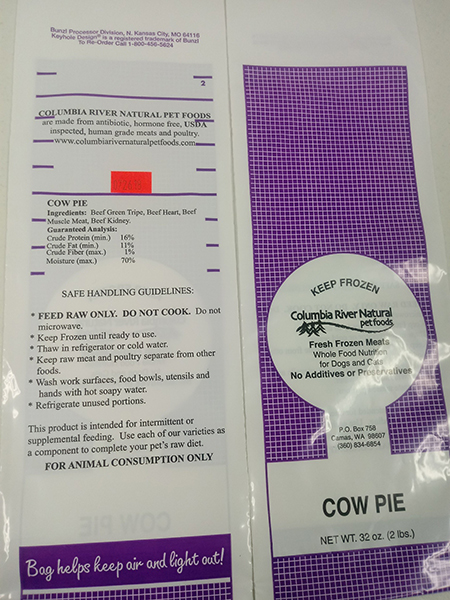
Performance Dog Pet Food Recall

September 12, 2018 — Bravo Packing, Inc. of Carneys Point, New Jersey, is recalling all Performance Dog products, a frozen raw pet food, because they have the potential to be contaminated with Salmonella.

What’s Recalled?

The following products are affected by the recall:
  • Performance Dog Package Size: 2-pound plastic sleeve Mfg Date Code: 071418
  • Performance Dog Package Size: 5-pound plastic sleeve Mfg Date Code: 071418
Performance Dog comes frozen in 2-pound and 5-pound plastic sleeves. The recalled product has manufacture date code 071418. The manufacture date codes are printed on the boxes that contain the plastic sleeves, but not on the individual plastic sleeves. Therefore, if the cardboard box has been discarded, there are no unique identification numbers on the individual sleeves that allow customers to determine that they possess the recalled products. If you purchased this product since July 14, 2018 and cannot determine whether it is affected by the recall, the FDA recommends that you exercise caution and throw the product away.

About Salmonella

Salmonella can cause illness in animals eating the products, as well as people who handle contaminated pet products, especially if they have not thoroughly washed their hands after having contact with the products, infected animals or any surfaces exposed to these products. Healthy people infected with Salmonella should monitor themselves for some or all of the following symptoms: nausea, vomiting, diarrhea or bloody diarrhea, abdominal cramping and fever. Rarely, Salmonella can result in more serious ailments, including arterial infections, endocarditis (an infection of the heart muscle), arthritis, muscle pain, eye irritation and urinary tract symptoms. People who have these symptoms after having contact with this product or an animal that has eaten this product should contact their healthcare providers. Pets with Salmonella infections may be lethargic and have diarrhea or bloody diarrhea, fever, and vomiting. Some pets will have decreased appetite, fever and abdominal pain. Pets exposed to contaminated food can be infected without showing symptoms. If your pet has consumed the recalled product and has these symptoms, please contact your veterinarian. Infected animals can also shed Salmonella through their feces and saliva, spreading pathogens into the home environment and to humans and other animals in the household. No human or animal illnesses have been reported to date.

What Caused the Recall?

Bravo Packing, Inc. is voluntarily recalling this product after a sample of Performance Dog, collected during an FDA inspection, tested positive for Salmonella. Performance Dog generally works with the distributor Tefco, located in Brooklyn , New York, that fills orders to brick-and-mortar retail stores or to consumers directly.

What to Do?

Consumers with questions should contact Bravo Packing, Inc. at 856-299-1044 (Monday thru Friday, 6 AM to 2 PM, Saturday 4 AM to 9 AM ET) or through the company’s website at http://www.bravopacking.com. U.S. citizens can report complaints about FDA-regulated pet food products by calling the consumer complaint coordinator in your area. Or go to http://www.fda.gov/petfoodcomplaints. Canadians can report any health or safety incidents related to the use of this product by filling out the Consumer Product Incident Report Form.

Get Dog Food Recall Alerts by Email

Get free dog food recall alerts sent to you by email. Subscribe to The Dog Food Advisor’s emergency recall notification system.

ooOOoo

So there we are! Wonder if I get the prize for the most weird of topics brought together in the same post!

Picture Parade Two Hundred and Fifty-Six

More of those wonderful photographs sent to me by Su.

(Now moving beyond the world of dogs! But you will still love them!)

oooo

oooo

oooo

oooo

oooo

oooo

oooo

Come back in a week’s time for another set of these wonderful photos.

Thank you, Su!!

Helping those shelters

Helping us all help others.

In yesterday’s post there were a number of links to charities that are working so hard to help the dogs and cats in the face of Hurricane Florence.

Hurricane Florence will bring tropical storm conditions to North Carolina and South Carolina on Thursday and hurricane conditions on Friday. This satellite image was captured around 1:45 p.m. ET Wednesday.
NOAA/STAR

Here are the details if any of you wish to support them.

Grenville Humane Society

Their website is here: https://www.greenvillehumane.com

Pender County Animal Shelter

Their Facebook page is here:  https://www.facebook.com/pages/category/Animal-Shelter/Pender-County-Animal-Shelter-Pender-Pets-1431469803817297/

Atlanta Humane Society

Their website is here: https://atlantahumane.org

Best Friends Animal Society

Their Facebook page is here:  https://www.facebook.com/bestfriendsanimalsociety/

Please, dear people, if you know of others that should be on this list then please add it as a comment. I will update the post with those details and leave this post up for both today, Friday, and tomorrow.

Finally here is the website address for The Humane Society of the United States. I know that they are also active in the area.

http://www.humanesociety.org