Author: Paul Handover

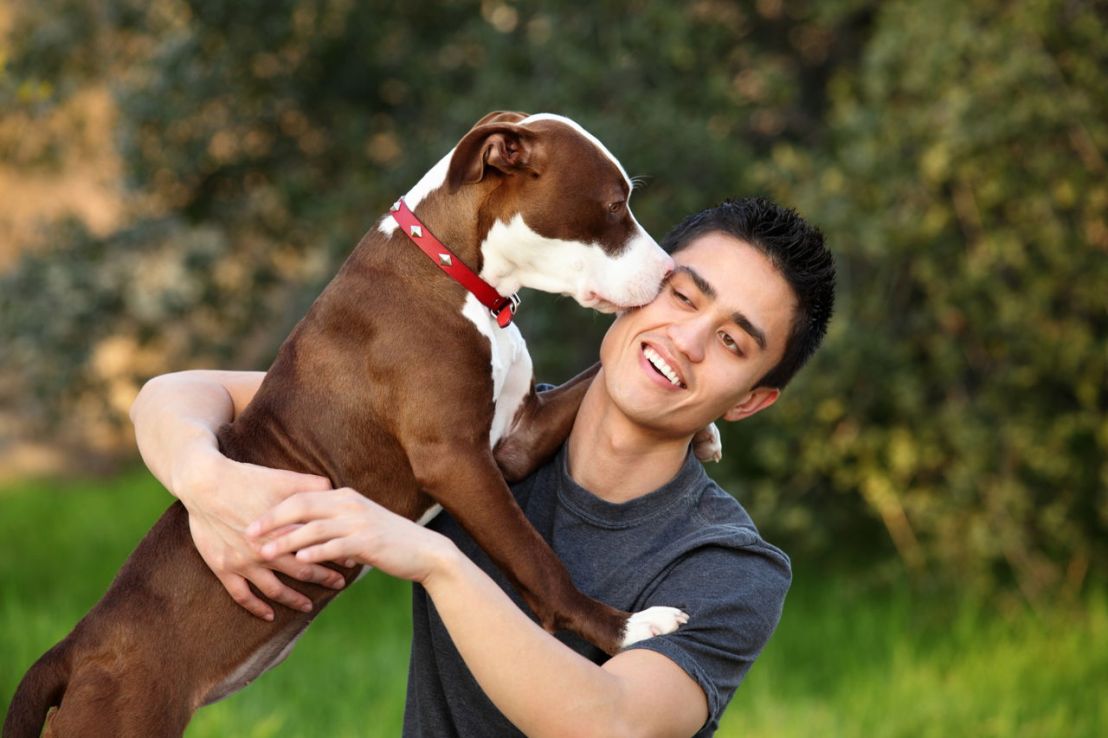
A dog licking you?

A guest post from David Huner.

Here is a guest post. It’s about the reasons that dogs lick us.
Enjoy!

ooOOoo

What Does It Mean When Dog Licks You?

Eight Possible Answers to This Question

By David Huner

You may think that when your dog is licking you, he’s basically giving you a kiss. But, not all zoologists would agree.

Sure, it’s proven that licking releases endorphins in dogs in basically the same manner kissing releases endorphins in humans. However, getting high on the happiness hormone is not the only reason why dogs do it. Sometimes, dog licks can have many other meanings.

Your dog can’t talk to you, but you can be sure that he’d like to. This is why he has to use other methods to communicate with you. And one of those methods is through licking. The big question is what kind of message he’s trying to send?

Well, there are many potential answers to this question, but whether they’re right depends on the circumstances. In order to be able to figure out what your dog is saying, you better take a look at 8 most common scenarios.

Here are 8 Potential Reasons Why Your Dog is Licking You

1. He’s Just Saying Hello
In most cases, dog licks mean nothing other than saying hello. As he can’t express himself with words, to say hello, he’s got two options before him. The first one is to bark, which can be loud and scary. The second is to give you a gentle lick on the hand.

2. He’s Saying He’s Hungry
Another very plausible scenario is that your dog is politely asking for more food. Actually, whenever you notice that he’s behaving strange, the chances are that his behavior has something to do with food.
After all, food is one of the most important things in the world of dogs.

3. You Taste Delicious
Humans have 6 million olfactory receptors in the nose, which are responsible for picking up smells. Dogs, on the other hand, have 300 million such receptors, which makes their sense of smell 50 times better.

So, even if you’ve washed your hands thoroughly after lunch, your dog is probably going to know what you had just by sniffing your fingers. And if you ate some really awesome food for lunch, he might decide to give it a taste by licking your hand. The one that was in touch with the food, glorious food.

But, even if you were nowhere near any food, it doesn’t mean that your hand doesn’t make him hungry.
No, he doesn’t want to eat your arm off, he wants to lick it as there might be some sweat on it. Sweat is salty, so licking your hand is like eating chips for him.

4. He’s Saying Everything’s Alright
It’s been more than 15,000 years since dogs were domesticated. And for most of that time, the role of the dogs in human society was to provide protection. Essentially, all dogs are guard dogs, even those tiny ones like Chihuahuas.

No matter the breed, you can be sure your dog would give his life to protect you. Hopefully, he won’t ever get in a need to prove his courage, but this doesn’t mean he can fight his nature. He’s always on a watch and in order to tell you he’s got everything under control, he will give you a lick.

5. He’s Saying Not Everything is Alright
Sometimes, the reason why dogs lick their owners is that they feel sad or hurt. In most cases, the reason is emotional – they might feel bored, alone, or miss hanging out with other dogs.
However, sometimes the reason is that they’re feeling physical pain. Because licking releases endorphins that make them feel euphoric, by doing it they can forget about the pain.

6. He’s Being Your Personal Physician
There are certain enzymes in dog saliva that kill off bacteria, while also promoting a faster wound healing. This is why you can often see dogs vigorously licking their wounds or hot spots they might have on their skin.
For the same reason, he might decide to give you a lick or two. Even if there are no visible blisters or wounds on your skin, your dog could still decide that it’s best that his favorite human remains germ-free.

7. He’s Grooming You
Sure, your dog doesn’t have OCD when it comes to cleanliness, but this doesn’t mean dogs are dirty. On the contrary, dogs take really good care of their hygiene. Licking their fur is one of the ways of ensuring it stays clean and beautiful.
Another reason why they lick their fur is that it makes them feel calm and happy. If your dog notices that you’re feeling distressed, he might decide to try to calm down your nerves by grooming you a bit. And he’s gonna do it by licking your hand.

8. He Just Has No Other Business
Sometimes dogs decide to start licking their owners because they got nothing else to do. If he’s feeling bored, he could try to engage you by giving your hand a lick. A single lick could prove to be the first step in an hours’ long play between him and you.

Is Licking Good For You?
It surely is good for your dog, but what about you? Is dog saliva healthy or dangerous for human health?
Well, the answer is a bit complicated. Although it’s true that dog saliva kills off some germs, it’s a fact that some germs live freely in that environment. And if they get into your body, they can cause all sorts of problems.

Playing it safe seems like the best advice you can get. Preventing dog saliva from getting into your mouth is crucial. Germs can’t get in your system through thick layers of skin, but they can get in your body through your mouth.

This is why you should never let the dog lick your face. You also need to wash your hands every time you finish playing with your dog, so that you wouldn’t get germs on your food. And you need to wash your hands thoroughly, by which we mean to rub them vigorously and use anti-bacterial soap.

Author Bio:

David Huner is the founder of the pettrainingtip, where he and his team provides all necessary information related to pet care, supplies, health and even more. His team also always doing research on new pet related article topics to cover information from all bases including training tips.

ooOOoo

Victoria Stillwell has a piece on dog-licking. It only adds to the article that David wrote by including the fact that a mother dog licks her newborn puppies.

Why is the dog licking?  Right from birth that is how the mother communicates with her new puppies, how she stimulates them to start breathing and how she cleans them when they are born, so it’s very important to the survival of puppies.  In the wild and in domestic dogs, you’ll find they will lick around the mother’s mouth as newborns and puppies still retain that instinct.  It’s also sort of a submissive gesture — the more subordinate members of a pack will lick the more dominant members and that’s important in maintaining pack harmony.

Dogs also lick because they like the taste of an owner’s salty skin and out of habit.  Mostly, with domestic dogs, it’s a sign of affection.

Licking releases pleasurable endorphins which gives dogs a feeling of comfort and pleasure — like the feeling people get when they are biting their nails — it relieves stress.  If your dog’s licking is purely a sign of affection, one way to decrease this is to ignore the licking. Licking never gets attention.  If  your dog licks you, then you immediately stand up and walk into another room. You want to teach your dog that licking means the person will leave the room.  When you pet your dog, if he starts to lick, the petting stops and you walk away. With repetition the licking will stop.

If a dog is chronically licking himself, it can be because he is bored, anxious, has skin problems such as allergies, or could be feeling pain either in their paws or elsewhere in their bodies. You should make sure your dog is getting enough stimulation and rule out any infections or allergies by visiting your vet.

Let me know if you found this guest article interesting.

Picture Parade Two Hundred and Seventy-Eight

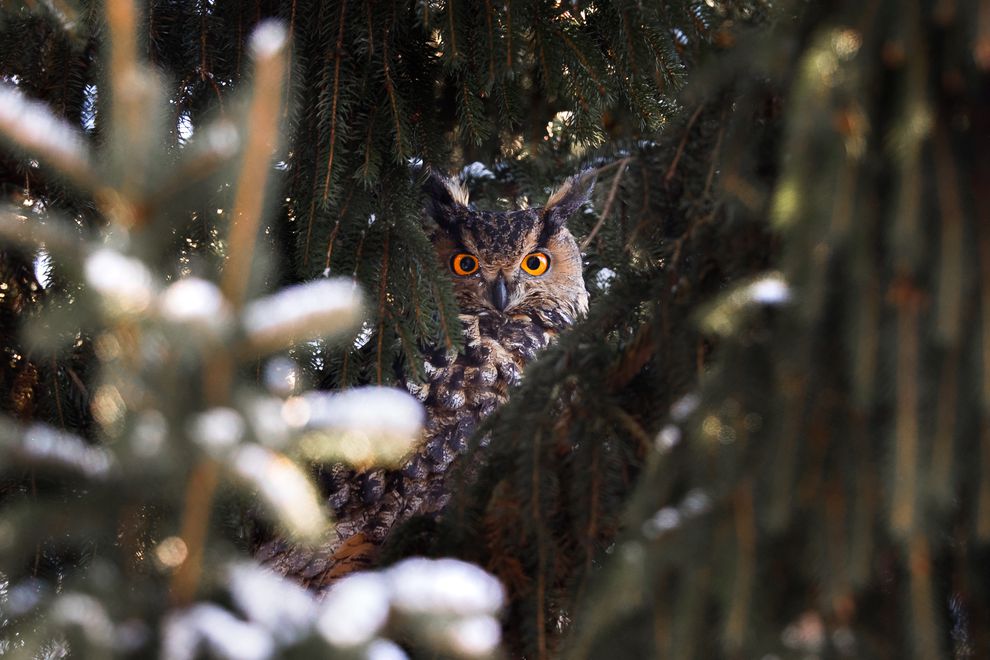
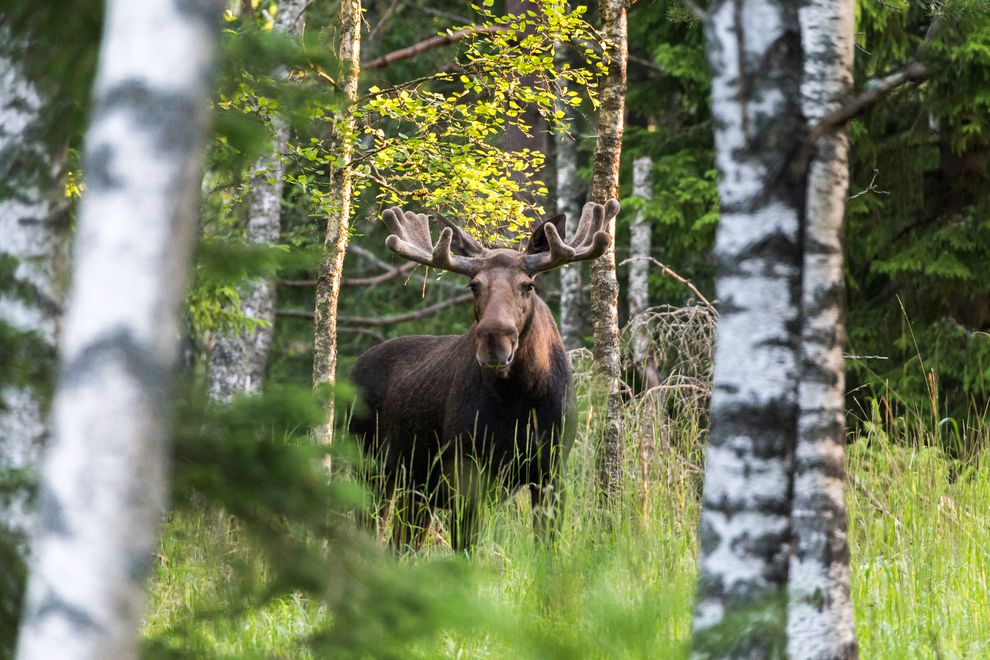
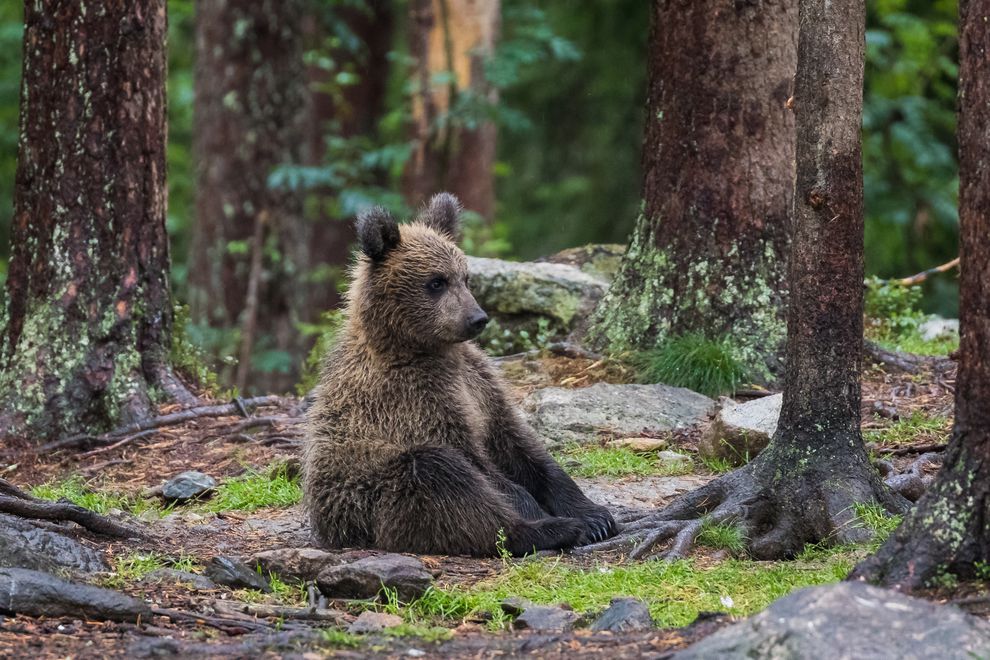
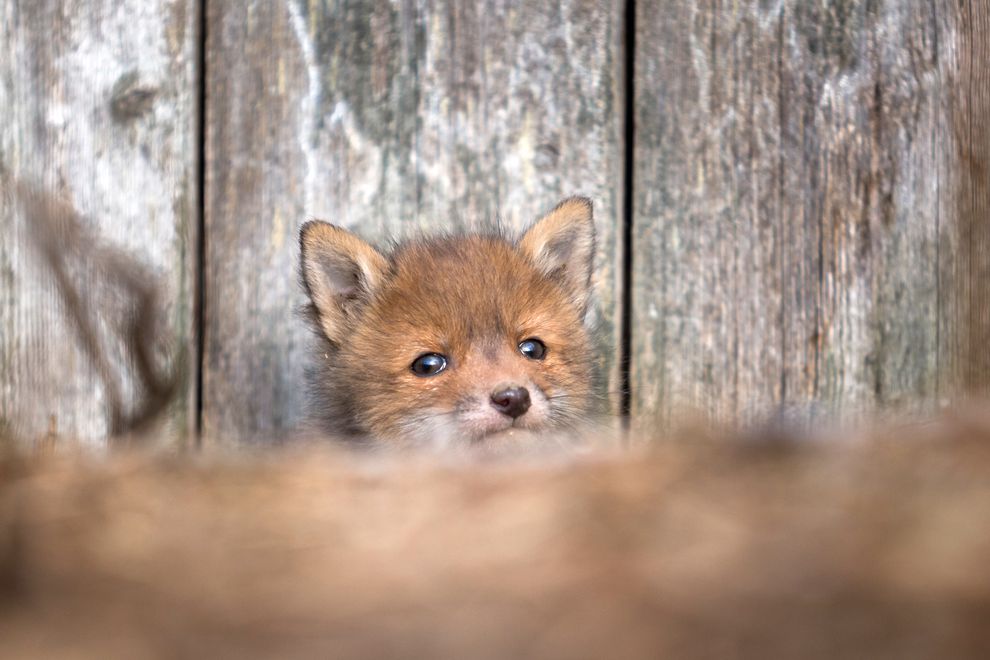
The second set of photographs of Ossi Saarinen

(Photo: Ossi Saarinen)

oooo

(Photo: Ossi Saarinen)

oooo

(Photo: Ossi Saarinen)

oooo

(Photo: Ossi Saarinen)

oooo

(Photo: Ossi Saarinen)

oooo

(Photo: Ossi Saarinen)

oooo

(Photo: Ossi Saarinen)

oooo

(Photo: Ossi Saarinen)

oooo

(Photo: Ossi Saarinen)

oooo

(Photo: Ossi Saarinen)

They are fabulous, truly fabulous. They were all taken from here.

Maybe, just maybe, I can find some more!

This is really great news!

Reproduced in full from the BBC.

There are so many times when a loving dog just has to do what it has to do.

ooOOoo

Camp Fire: Dog missing from Paradise wildfire found after 101 days

21 February 2019

Kingston is believed to have survived by hunting skunks

A dog called Kingston has been reunited with his owners 101 days after he went missing during the deadliest wildfire in California’s history.

The Ballejos family last saw Kingston, an Akita, during the devastating Camp Fire in November.

Kingston, who is 12 years old, had jumped out of their truck as they fled their home in Paradise.

A local animal rescue volunteer caught Kingston on Sunday, and the family believe he survived by hunting skunks.

About 18,000 homes were destroyed and 86 people killed after the Camp Fire broke out and spread rapidly on 8 November north-east of San Francisco.

“When I found out, [it] just about brought me to tears,” Gabriel Ballejos told Associated Press (AP) after being reunited with his dog. “I’m so proud of him. I can’t believe it. He’s a true survivor.”

The family posted flyers and contacted shelters in the hope Kingston would be found. He was eventually recognised by someone who saw a post online.

Over the weekend, animal rescue volunteers spotted a large dog on surveillance cameras before setting up a trap to secure Kingston.

“When I went to check [the trap] on Sunday, there he was,” local dog-trapper Ben Lepe told AP. “It was awesome to see him and know he would be fed and warm.”

Kingston, who the family say was known to hunt skunks before the fire, smelled so strongly of the pungent odour that volunteers spent several hours washing him before reuniting him with the Ballejos family.

“He still smelled even though they used stuff that neutralises the skunk smell,” Suzanne Maxwell, a local resident and volunteer for Friends of Camp Fire Cats, told the BBC.

She described a “heart-warming” reunion between Kingston and his family.

ooOOoo

I bet that heart-warming doesn’t do it justice!

“It is real, so we must act.”

Another dramatic essay from George Monbiot.

I read this a few moments ago (10am PST Monday, 18th.) and, without question, knew that I had to republish it. It is done with George Monbiot’s kind permission.

ooOOoo

Re: generation

Why older people must stand in solidarity with the youth climate strikes.

By George Monbiot, published in the Guardian 15th February 2019

The Youth Strike 4 Climate gives me more hope than I have felt in 30 years of campaigning. Before this week, I believed it was all over. I thought, given the indifference and hostility of those who govern us, and the passivity of most of my generation, that climate breakdown and ecological collapse were inevitable. Now, for the first time in years, I think we can turn them around.

My generation and the generations that went before have failed you. We failed to grasp the basic premise of intergenerational justice: that you cannot apply discount rates to human life. In other words, the life of someone who has not been born will be of no less value than the life of someone who already exists. We have lived as if your lives had no importance, as if any resource we encountered was ours and ours alone to use as we wished, regardless of the impact on future generations. In doing so, we created a cannibal economy: we ate your future to satisfy our greed.

It is true that the people of my generation are not equally to blame. Broadly speaking, ours is a society of altruists governed by psychopaths. We have allowed a tiny number of phenomenally rich people, and the destructive politicians they fund, to trash our life support systems. While some carry more blame than others, our failure to challenge the oligarchs who are sacking the Earth and to overthrow their illegitimate power, is a collective failure. Together, we have bequeathed you a world that – without drastic and decisive action – may soon become uninhabitable.

Every day at home, we tell you that if you make a mess you should clear it up. We tell you that you should take responsibility for your own lives. But we have failed to apply these principles to ourselves. We walk away from the mess we have made, in the hope that you might clear it up.

Some of us did try. We sought to inspire our own generations to do what you are doing. But on the whole we were met with frowns and shrugs. For years, many people of my age denied there was a problem. They denied that climate breakdown was happening. They denied that extinction was happening. They denied that the world’s living systems were collapsing.

They denied all this because accepting it meant questioning everything they believed to be good. If the science was right, their car could not be right. If the science was right, their foreign holiday could not be right. Economic growth, rising consumption, the entire system they had been brought up to believe was right had to be wrong. It was easier to pretend that the science was wrong and their lives were right than to accept that the science was right and their lives were wrong.

A few years ago, something shifted. Instead of denying the science, I heard the same people say “OK, it’s real. But now it’s too late to do anything about it.” Between their denial and their despair, there was not one moment at which they said “It is real, so we must act.” Their despair was another form of denial; another way of persuading themselves that they could carry on as before. If there was no point in acting, they had no need to challenge their deepest beliefs. Because of the denial, the selfishness, the short-termism of my generation, this is now the last chance we have.

The disasters I feared my grandchildren would see in their old age are happening already: insect populations collapsing, mass extinction, wildfires, droughts, heat waves, floods. This is the world we have bequeathed to you. Yours is among the first of the unborn generations we failed to consider as our consumption rocketed.

But those of us who have long been engaged in this struggle will not abandon you. You have issued a challenge to which we must rise, and we will stand in solidarity with you. Though we are old and you are young, we will be led by you. We owe you that, at least.

By combining your determination and our experience, we can build a movement big enough to overthrow the life-denying system that has brought us to the brink of disaster – and beyond. Together, we must demand a different way, a life-giving system that defends the natural world on which we all depend. A system that honours you, our children, and values equally the lives of those who are not born. Together, we will build a movement that must – and will – become irresistible.

http://www.monbiot.com

ooOOoo

I can do no better than to repeat the closing sentence of George Monbiot’s essay.

Together, we will build a movement that must – and will – become irresistible.

Picture Parade Two Hundred and Seventy-Seven

The photographs of Ossi Saarinen

(Split across two Sundays.)

The red fox is one of Saarinen’s favorite subjects. (Photo: Ossi Saarinen)

oooo

(Photo: Ossi Saarinen)

oooo

(Photo: Ossi Saarinen)

oooo

(Photo: Ossi Saarinen)

oooo

(Photo: Ossi Saarinen)

oooo

(Photo: Ossi Saarinen)

oooo

(Photo: Ossi Saarinen)

oooo

(Photo: Ossi Saarinen)

oooo

(Photo: Ossi Saarinen)

More of these incredible photographs in a week’s time.

Save the African Pangolin

It’s World Pangolin day tomorrow.

I confess to not having heard of this endangered species before.

But my son, Alex, sent me an email earlier in the week hoping I would post something on the blog.

ooOOoo

Dear Alex

Creating widespread awareness of the four African pangolin species is an important part of our mission, because if people don’t know what a pangolin is, why would they care enough to help save it?

It’s World Pangolin Day this Saturday and here are two easy ways you can get involved right now:

Share this newsletter

Forward this email to all your friends to encourage them to sign up and receive our updates too.
Tag10ForPangolins

Share our latest Facebook campaign tagging at least 10 friends in your post, and help us reach our target of telling 100,000 people about pangolins by Saturday. We’ve just passed the 51,000 mark and with your help we can reach our goal!

With thanks,

Catherine and Team Pangolin

ooOOoo

Every little helps!

And guess what I found:

PANGOLIN – The Most Poached Animal in The World

Pangolins are the most heavily poached animal in the world, despite the fact that most people don’t even know that they exist.

The Pangolin is a small mammal, covered in large overlapping scales. It’s mainly a nocturnal animal with a diet consisting of insects such as ants and termites.

They may look like weird-scaly anteaters, but they are actually not part of the anteater family at all. The 2 most unique features of this animal are, that it is covered in plate armor scales from head to toe, and even though it has four legs, it walks predominantly on it’s hind legs, and uses it’s front legs for griping & digging.

So why are these creatures being so heavily poached? Well It’s all to do with their scales. The Pangolin’s scales & meat are used in traditional medicine, fashion and even eaten in high-end cuisine.

Thanks for watching

And then on Wednesday the BBC News had an extensive item about Pangolins. It’s a long article with a video. Please read it.

Wow! This is some story!

Incredible!

There are so many stories and articles about dogs that it’s easy to overlook some of them.

Take this recent story from BBC News, back on February 11th.

ooOOoo

‘Brain tumour’ dog in Beauly had 7cm needle in neck

Toby the Yorkshire terrier had seizure symptoms before owners knew he had a needle lodged in his neck.

A dog that showed signs of a brain tumour was found to have a 7cm (3in) needle lodged in its neck.

Toby, a 13-year-old Yorkshire terrier, was taken to a vet in Nairn in the Highlands after he suffered neck pain, struggled to walk and showed seizure symptoms.

X-rays later showed the needle had pierced his spinal cord.

But surgeons in Edinburgh were able to extract it and Toby went on to make a full recovery.

X-rays revealed the 7cm metal sewing needle piercing Toby’s spinal cord

Owner Alexander Jamieson, from Beauly, near Inverness, said: “We feel that without the help of the experts in Edinburgh, Toby would not be here today.

“The care and attention he got was out of this world and we are delighted to see him back to his old self.”

Toby was referred to the specialist surgical clinic at the University of Edinburgh’s Hospital for Small Animals at the Royal (Dick) School for Veterinary Studies where vets performed a CT scan to assess any major damage to his spinal cord in August 2018.

They found that the sewing needle – which still had thread attached – was dangerously close to his brain.

Toby has now recovered to the point where he is able to walk and run normally.

Vets are delighted with Toby’s recovery

It is not known how the needle ended up in Toby’s neck but vets suspect that he could have eaten it or laid his head on it.

Samantha Woods, senior lecturer, and Jessica McCarthy, senior clinical training scholar in small animal surgery, said they were delighted with Toby’s progress.

Ms Woods added: “We are really pleased to see Toby back to full health, thanks to the combined efforts of his vets and our specialist teams here in Edinburgh.”

ooOOoo

That was fantastic! All kudos to the whole team that swung into action.

How Do You Know I’m Real?

More than that how do you know if anything is real?

I was sitting in the living-room yesterday and watching Cleo dream. She was on the floor in front of the lit fire and happily involved in her dream.

Young Cleo, May 12th, 2012.

She was such a beautiful dog. It was natural of me to wonder of what she was dreaming. I could see her feet twitching and her eyelids flicking as though she was dreaming of chasing. But any more than that was pure speculation.

Then I mused about how the world looked for Cleo, and for the rest of our dogs come to that.

Then I went back to a philosophical article that I read quite recently.

What does it all mean? Are we real? What is reality?

ooOOoo

3 philosophers set up a booth on a street corner – here’s what people asked

By 

Research Fellow Center for Philosophy and History of Science, Boston University

February 6th, 2019

Greek philosopher Socrates. Nice_Media_PRO/Shutterstock.com

The life choices that had led me to be sitting in a booth underneath a banner that read “Ask a Philosopher” – at the entrance to the New York City subway at 57th and 8th – were perhaps random but inevitable.

I’d been a “public philosopher” for 15 years, so I readily agreed to join my colleague Ian Olasov when he asked for volunteers to join him at the “Ask a Philosopher” booth. This was part of the latest public outreach effort by the American Philosophical Association, which was having its annual January meeting up the street.

I’d taught before – even given speeches – but this seemed weird. Would anyone stop? Would they give us a hard time?

I sat between Ian and a splendid woman who taught philosophy in the city, thinking that even if we spent the whole time talking to one another, it would be an hour well spent.

Then someone stopped.

At first glance, it was hard to tell if she was a penniless nomad or an emeritus professor, but then she took off her hat and psychedelic scarf and came over to the desk and announced, “I’ve got a question. I’m in my late 60s. I’ve just had life threatening surgery, but I got through it.”

She showed us the jagged scar on her neck. “I don’t know what to do with the rest of my life,” she said. “I’ve got a master’s degree. I’m happily retired and divorced. But I don’t want to waste any more time. Can you help?”

Wow. One by one, we all asked her to elaborate on her situation and offered tidbits of advice, centering on the idea that only she could decide what gave her life meaning. I suggested that she might reach out to others who were also searching, then she settled in for a longer discussion with Ian.

And then it happened: A crowd gathered.

At first I thought they were there to eavesdrop, but as it turned out they had their own existential concerns. A group of teenagers engaged the philosopher on my right. One young woman, who turned out to be a sophomore in college, stepped away from the group with a serious concern. “Why can’t I be happier in my life? I’m only 20. I should be as happy as I’m ever going to be right now, but I’m not. Is this it?”

It was my turn. “Research has shown that what makes us happy is achieving small goals one after the other,” I said. “If you win the lottery, within six months you’ll probably be back to your baseline of happiness. Same if you got into an accident. You can’t just achieve happiness and stay there, you have to pursue it.”

“So I’m stuck?” she said.

“No…” I explained. “Your role in this is huge. You’ve got to choose the things that make you happy one by one. That’s been shown from Aristotle all the way down to cutting-edge psychological research. Happiness is a journey, not a destination.”

She brightened a bit, while her friends were still puzzling over whether color was a primary or secondary property. They thanked us and moved on.

Suddenly, the older woman who had stopped by initially seemed satisfied with what Ian had told her, and said that she had to be on her way as well.

Again it was quiet. Some who passed by were pointing and smiling. A few took pictures. It must have looked odd to see three philosophers sitting in a row with “Ask a Philosopher” over our heads, amidst the bagel carts and jewelry stalls.

During the quiet I reflected for a moment on what had just happened. A group of strangers had descended upon us not to make fun, but because they were carrying around some real philosophical baggage that had long gone unanswered. If you’re in a spiritual crisis, you go to your minister or rabbi. If you have psychological concerns, you might seek out a therapist. But what to do if you don’t quite know where you fit into this world and you’re tired of carrying that burden alone?

And then I spotted her … an interlocutor who would be my toughest questioner of the day. She was about 6 years old and clutched her mother’s hand as she craned her neck to stare at us. Her mother stopped, but the girl hesitated. “It’s OK,” I offered. “Do you have a philosophical question?” The girl smiled at her mother, then let go of her hand to walk over to the booth. She looked me dead in the eye and said: “How do I know I’m real?”

Suddenly I was back in graduate school. Should I talk about the French philosopher Rene Descartes, who famously used the assertion of skepticism itself as proof of our existence, with the phrase “I think, therefore I am?” Or, mention English philosopher G.E. Moore and his famous “here is one hand, here is the other,” as proof of the existence of the external world?

Or, make a reference to the movie “The Matrix,” which I assumed, given her age, she wouldn’t have seen? But then the answer came to me. I remembered that the most important part of philosophy was feeding our sense of wonder. “Close your eyes,” I said. She did. “Well, did you disappear?” She smiled and shook her head, then opened her eyes. “Congratulations, you’re real.”

She grinned broadly and walked over to her mother, who looked back at us and smiled. My colleagues patted me on the shoulder and I realized that my time was up. Back to the conference to face some easier questions on topics like “Academic Philosophy and its Responsibilities in a Post-Truth World.”

ooOOoo

Fascinating!