A little different for today!
Our neighbour Dordie L. sent these across earlier in the month. Enjoy!

oooo

oooo

oooo

oooo

oooo

Thank you, Dordie!
Dogs are animals of integrity. We have much to learn from them.
Year: 2023
A little different for today!
Our neighbour Dordie L. sent these across earlier in the month. Enjoy!
oooo
oooo
oooo
oooo
oooo
Thank you, Dordie!
This particular post is from ‘Who Will Let the Dogs Out‘.
The range of expertise in looking after our dear dogs is incredible. I have long followed Who Will Let the Dogs Out but today wanted to republish a very recent article, hopefully with permission.
ooOOoo

Tiny Municipal Shelter Outside Nashville Has Only One Employee
By Cara Sue Achterberg. 14th February, 2023
In Robertson County, Tennessee, just outside Nashville, there are actually three municipal shelters. In addition to the Robertson shelter written about in the previous post, we also stopped at a tiny shelter ten minutes away— Greenbrier Animal Control.
This small shelter has ten kennels and was currently housing 12 dogs. Shelbie is the only ACO and employee for the small shelter. She works seven days a week 365 days a year. The only days she’s had off since she began work there three years ago were this past winter when she had Covid.


Shelbie does everything at the tiny, age-worn shelter – the cleaning and the caring, and running the animal control calls, and pretty much anything that needs done. Several of the outdoor kennels do not have covered roofs. The roofs are at the shelter, but Shelbie is only one person (and a tiny one at that), so she can’t get them put on by herself. She could use a hand with the roofs, and with lots of things, but the only ones she and the dogs have are her own.


The city animal control budget covers food, supplies, and a few other things, like Shelbie’s uniforms, but it doesn’t cover vaccines, deworming, or spay/neuter. Shelbie knows that anything she adopts out locally is likely to send puppies back her way. She depends on CASA Transport to help get animals out, so the shelter doesn’t become overcrowded.
Shelbie took the job because she loves animals and because she’s always been an advocate for not killing shelter animals. One of the dogs, Denali, has been at the shelter almost as long as she has. “He’s special and he needs a special kind of home,” she told me.
She loves her job, but would really love for the city to hire someone to help on the weekends so that she could have more time for herself (and her FIVE children ages 4-10).
We set up a few peanut butter boards and left Shelbie with lots of food, treats, bones, and collars, but joked with her that we wished we had a person in the truck we could leave with her. Every time we make these trips we meet remarkable people like Shelbie. I’m sure she isn’t getting rich on this job and I’d guess she sees some pretty awful situations. It is not just back breaking work, it’s heartbreaking.

There are so many people, just like Shelbie, who are quietly saving lives through their own dedication and sacrifice. They inspire me to keep pushing for change, for any way to make the situation better.
I don’t understand why Robertson County, which serves 72,000 residents, has not only the county shelter, but two city shelters (we were not able to visit Springfield animal control). Greenbriar is in the county and it took us about ten minutes to get from one to the other. To me, clearly an outsider (but one who has visited over 100 shelters in 12 states), it makes more sense to combine the three shelters in the new building that Robertson County is building.
Surely, by combining budgets and staff, they could have one excellent facility with plenty of help, and likely save money in the bargain. Plus, then Shelbie wouldn’t be working seven days a week and handling animals all by herself (not that she isn’t more than capable of doing so as she’s done it for three years now). That’s just my observation, unlikely to be embraced.
Until we start looking for common sense solutions like regional public shelters, the lives of too many animals will depend on the decency and the willingness of people like Shelbie to sacrifice so much to do the work very few will.

If you’d like to help Shelbyville Animal shelter, consider shopping their Amazon wishlist.
Until each one has a home,
Cara
If you want to learn more, be sure to subscribe to this blog. And help us spread the word by sharing this post with others. Visit our website to learn more.
You can also help raise awareness by following/commenting/sharing us on Facebook, Instagram, YouTube, and Tik Tok!
Learn more about what is happening in our southern shelters and rescues in the book, One Hundred Dogs & Counting: One Woman, Ten Thousand Miles, and a Journey Into the Heart of Shelters and Rescues (Pegasus Books, 2020). It’s the story of a challenging foster dog who inspired me to travel south to find out where all the dogs were coming from. It tells the story of how Who Will Let the Dogs Out began. Find it anywhere books are sold. A portion of the proceeds of every book sold go to help unwanted animals in the south.

Watch our Emmy-nominated, award-winning short documentary about rescue in western Tennessee here.
For more information on any of our projects, to talk about rescue in your neck of the woods, please email whowillletthedogsout@gmail.com or carasueachterberg@gmail.com.
ooOOoo
There are many more photographs on the website that I chose not to republish because I couldn’t do it as neatly as Cara did it.
So many tuneful memories.
I grew up with the songs of Burt Bacharach in my heart, my mind and my ears. He was born on May 12, 1928 and lived until quite recently; namely the 8th February, 2023. This may be Valentine’s Day for 2023 but I think the obituary of Bacharach comes first.
The Conversation had a brilliant item on him, published on February 10th and I am going to republish that piece now.
ooOOoo
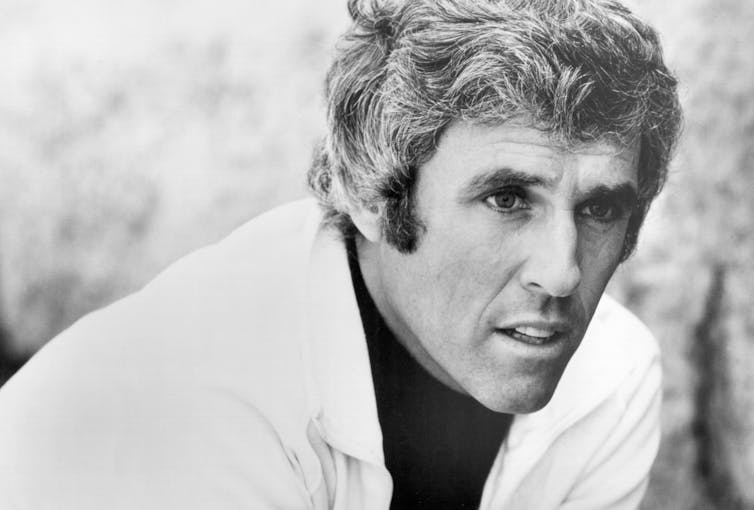 A pop pioneer whose songs were performed by the great and good for decades.
Easy on the ear, perhaps. But the label of “easy listening” often attached to the songs of Burt Bacharach belies the mastery of his talent in crafting perfect moments in music.
Yes, Bacharach’s back catalog is filled with memorable, catchy melodies – whether they were written with longtime partner and lyricist Hal David, former wife Carole Bayer Sager or in collaboration with more contemporary artists such as Elvis Costello, Adele and Dr. Dre.
But there is a harmonic and rhythmic complexity to his music that elevates it above the sweet, often saccharine arrangements that can typify easy listening. It is full of influences from jazz chord structures and progressions, as well as rhythms.
It is why Bacharach, who died on Feb. 8, 2023, at the age of 94, appealed to generations of listeners, as well as the diverse pool of singers who chose to work with him.
Bacharach began his long songwriting career in the 1950s, but it was the following decade that saw him come to prominence with a series of hit songs.
But with the 1960s as a backdrop – a time of immense innovation in popular music – Bacharach may not have been taken as seriously as many of his contemporaries. It was a time when rock ‘n’ roll and the British Invasion were at the forefront, with rhythm and blues, protest music and folk rock finding their way on the musical landscape.
While Bacharach’s musical counterparts were writing and performing music that responded to and reflected the political, social and cultural upheavals that defined the era, Bacharach and David’s songs focused on different themes: Theirs was music that dealt with relationships and matters of the heart.
They also stood apart from other notable songwriting partners of the age – Lennon and McCartney, Jagger and Richards, for example – in that the songs were written for others to perform. In that way, they were a throwback to an earlier age of popular music, when the likes of Rodgers and Hart provided hit after hit for a roster of singers.
Indeed, they were a late product of Tin Pan Alley – the music industry centered around midtown Manhattan. Bacharach met David in 1957 in the storied Brill Building in New York City – a place where a young songwriter could perhaps catch a break.
Not long after they began working together, Bacharach came across a young backup singer at a recording session who seemed to have promise. The first single he produced with her, “Don’t Make Me Over,” was the first of 38 songs he and David produced with Dionne Warwick.
Her warm tones and fluid phrasing made Warwick’s voice the perfect accompaniment to Bacharach’s music.
But she was one of many collaborators. Some, like Warwick, were plucked from relative obscurity. Others, like Perry Como, were already established singers.
The list of artists who found success with Bacharach songs in that era is astonishing: Aretha Franklin, The Carpenters, Dusty Springfield, Tom Jones and The 5th Dimension, to name just a few.
Through collaborators, Bacharach’s music was able to reach a fairly diverse audience. The songs were so well written that they could easily be reworked into different genres, and break the confines of “easy listening” – a genre often maligned as unhip. In the hands of Isaac Hayes, the sweet refrains of “Walk on By” becomes a psychedelic funk classic. Years later, The White Stripes transformed “I Just Don’t Know What To Do With Myself” into a stripped-down, guitar-heavy slice of rock.
The music of David and Bacharach also worked on a different level – as the background to movie soundtracks. The 1966 Michael Caine film “Alfie” is perhaps equally known today for the title track, with versions by Cher, Warwick and British singer Cilla Black all becoming hits on the back of the film.
In 1969, Bacharach and David’s “Raindrops Keep Falling on My Head,” sung by B.J. Thomas in the western “Butch Cassidy and the Sundance Kid,” won the Academy Award for best original song. Bacharach also won the Oscar for best original score.
Adding to success on the charts and on screen, Bacharach also won acclaim for his work on Broadway. The 1968 show “Promises, Promises” was groundbreaking in its use of amplification in the orchestra, which included a rock band. The show contained a number of songs that topped the charts, most notably Warwick’s version of the show-stopping “I’ll Never Fall in Love Again.”

In an NPR “Fresh Air” interview in 2010 – when the musical was being revived on Broadway – Bacharach discusses the number of rhythmic meter changes in the title song, “Promises, Promises,” and the difficulties these rhythmic changes presented for singers and musicians in the show.
The interview is also notable in that it reunited him with David – the two had a much publicized split in 1973 after working on a failed movie. The breakdown of their successful musical partnership saw Bacharach lose interest in writing music for a spell, and affected his relationship with Warwick.
This was eventually resolved with her recording of one of Bacharach’s most memorable songs, 1985’s “That’s What Friends are For,” written with his then-wife, Carole Bayer Sager. Though the song had been first recorded by Rod Stewart for the film “Night Shift,” the Warwick & Friends’ version – the friends being none other than Elton John, Gladys Knight and Stevie Wonder – is the one that became a hit and helped revive Bacharach’s career.
Though best known for the songs he wrote in the 1960s through the 1980s, Bacharach continued to write music into his old age, collaborating with Elvis Costello, Adele and Dr. Dre.
You may have noticed the sheer number – and range – of artists Bacharach worked with. It speaks to the quality and endurance of his output. Yes, he will be remembered by some as the writer of exemplary “easy listening” songs. But Burt Bacharach’s legacy will prove that he was so much more.
Gena R. Greher, Professor of Music, UMass Lowell
This article is republished from The Conversation under a Creative Commons license. Read the original article.
ooOOoo
There are so many of his melodies on YouTube and you are free to do your own searching. But I just wanted to share one with you. It is Burt Bacharach with Barbra Streisand with Close To You and Be Aware.
Perfect!
 Learning from Dogs