More beautiful dogs!
Once again, taken from Pexels.

oooo

oooo

oooo

oooo

oooo

oooo

Aren’t they gorgeous!
I don’t know how long I will be able to republish these photographs but until I reach that point I will keep them coming!
Dogs are animals of integrity. We have much to learn from them.
Year: 2020
More beautiful dogs!
Once again, taken from Pexels.
oooo
oooo
oooo
oooo
oooo
oooo
Aren’t they gorgeous!
I don’t know how long I will be able to republish these photographs but until I reach that point I will keep them coming!
Another guest post from John Brooks.
It really is delightful when someone comes along and reliably offers to submit a guest post or two, or three, or more. That person is John Brooks and he has submitted many posts; the last one being Ageing Gracefully Applies To Our Dogs As Well. It may be found here.
But before going on I would just like to say thank you to the very helpful comments about Pedi and his diabetes.
So without any further ado here is John’s latest:
ooOOoo
By John Brooks, December 3rd, 2020
Pigs are extremely intelligent animals, and this intelligence makes them great, loving and attentive pets. Most people opt for American miniature pigs as pets. This breed is a descendant of potbelly pigs and other small feral pig breeds. Breeders have specifically created miniature pigs to be smaller and lighter than full-sized pigs, so they can trot around the house like a dog or cat would. Most American miniature pigs will weigh between 50-75 pounds and stand 12-15-inches tall.

Ultimately however, it does not matter whether you have a full-sized or miniature pig, their ability to interact with other animals remains the same. Bringing a pig into a situation with other pets or bringing home a new pet when you already have a pet pig can be a stressful time. Pigs are prey animals. They typically react to new situations with fear.
But, you can cut down on your pet pig stress by choosing the right companion animal for them. Pigs can get along with other pets, you just need to make the introduction and relationship as safe and healthy as possible. Here we explain how to do just that.
Pigs and Dogs
Pigs and dogs living together in harmony is a big concern for most pet owners. There are plenty of photos online of pigs and dogs as best friends. But, do not count on your pig and dog getting along. Pigs are prey animals and dogs are predators. It is very easy for instinct to take over for both animals, especially if you are not there to supervise the interaction.

In addition to their instinctual behaviors, pigs and dogs have different social cues. Both are playful and intelligent animals, but their body language will be completely different. Your pig may annoy your dog and vice versa because they are unable to understand that the other animal needs a break.
These complications do not mean a pig and dog can get along. You just have to take precautions. If you do have a dog and pig together in the same household, it is essential that you supervise all of their interactions. Ultimately, if you are going to let your piggy roam free, your dog will need to be in a crate while you do so, or in another room or outside.
Pigs and Other Pets
As far as other pets are concerned, pigs will do well with almost any other prey animal. If you are searching for a friend for your piggy, here are the most common pig and pet relationships, and tips for making these relationships work:
Cats
In general, pigs and cats do well together. Despite cats being predators, the website All About Cats state that pigs have similar personality traits to cats. Additionally, cats are much less likely to hurt a pig than a dog. Even miniature pigs weigh from 50-100 pounds. It will be very hard for a common housecat to injure this size animal.

As with all animals, you will need to ensure the personalities of your cat and pig work well together. A lazy cat and playful pig will not be a good combination. However, a cat and pig with complementary personalities will likely get along just fine.
Farm Animals
Personality will come into play when introducing pigs to other farm animals. Animals that tend to buck or head-butt can hurt a pig. Similarly, pigs can bite if they feel threatened. Always test out a farm animal with a pig under supervision before putting them in a pasture together.
Farm animals that work well with pigs include sheep, goats, cows, donkeys, horses, and llamas. Obviously, you will need a lot of property to house any of these animals. Pigs work well in the same pasture as other farm animals, but it is better to give them their own living quarters in a barn or lean-to.
Conclusion
Pigs can be an amazing pet. They are trainable and affectionate. You can even teach them to walk on a harness. But, you will need to take some care in finding them a friend. Pigs can become close to many different species of animals. Some just work better than others.
Keep the personality of your pig in mind when looking for a companion. You will also want to keep early interactions short. Finally, supervision is key when it comes to successful relationships between your pig, dog, and other pets.
ooOOoo
Another brilliant essay.
Thank you to John and I write on my own behalf and, I am certain, on behalf of many, many other people.
Thank you, John.
A visit to the vet on Tuesday confirmed it.
In recent weeks Pedi, one of our two smaller dogs, ergo Sweeny and Pedi, was peeing without control and drinking lots of water to go with it.
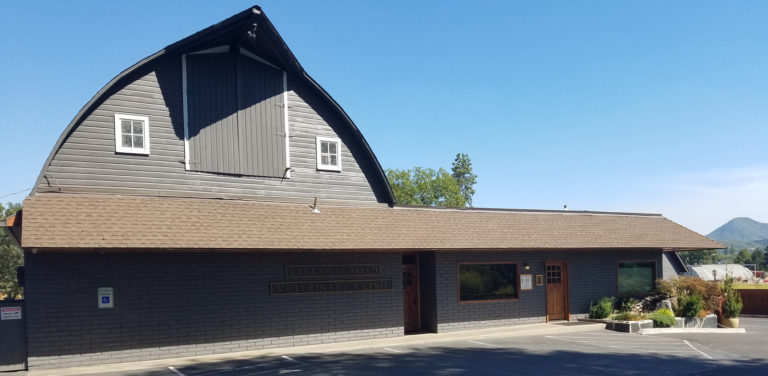
We rang Jim last week, who used to be our neighbour but they then moved to Roseburg, who is a veterinary doctor and he thought it likely when he heard the symptoms that it was diabetes. We had an appointment with Lincoln Road Veterinary Clinic on Tuesday.
At Lincoln Road Veterinary Clinic, we believe pets are a part of the family. Our teamwork philosophy strives to provide the best choices for your pet by keeping you informed of treatment options and recommendations. Our team of skilled professionals apply advanced diagnostic and treatment techniques to provide the best medical and surgical care available for your pet.
Our office is conveniently located on the west edge of Grants Pass in a warm and inviting country setting. We have a dog park so your furry friends can exercise and play!
We were seen by Dr. Karen who also thought that was the case. She took a blood sample and then rang us at home about 2 hours later to confirm.
That gave us enough time to go back into town and to the Walmart pharmacy to purchase the insulin and the needles.
We were under clear instructions from Dr. Karen to inject Pedi with insulin 30 minutes after food and to give him food every 12 hours. We chose to feed Pedi at 04:30 and 16:30 local time every day and then give him his injection at 05:00 and 17:00.
We have an appointment next Wednesday morning, the 9th, to confirm that Pedi is on the ‘right track’. Having insulin injections will be Pedi’s routine for the rest of his life.
The American Kennel Club have quite a long piece on diabetes in dogs, from which I quote:
Treatment of Diabetes in Dogs
- Diet. Your veterinarian will recommend the best type of diet for your diabetic dog. Usually this will include some good-quality protein, as well as fiber and complex carbohydrates that will help to slow absorption of glucose. Your vet may also recommend a diet with relatively low fat content.
- Exercise. To help avoid sudden spikes or drops in glucose levels, it is especially important that diabetic dogs maintain a moderate but consistent exercise routine.
- Injections. Most diabetic dogs will require daily shots of insulin under the skin, something that the owner will have to learn to do. Although it’s understandable to be apprehensive about doing this, it’s not as hard as it might sound. It can become a quick and easy daily routine that isn’t traumatic at all for either dog or owner.
This is a photograph that I took of Pedi yesterday.
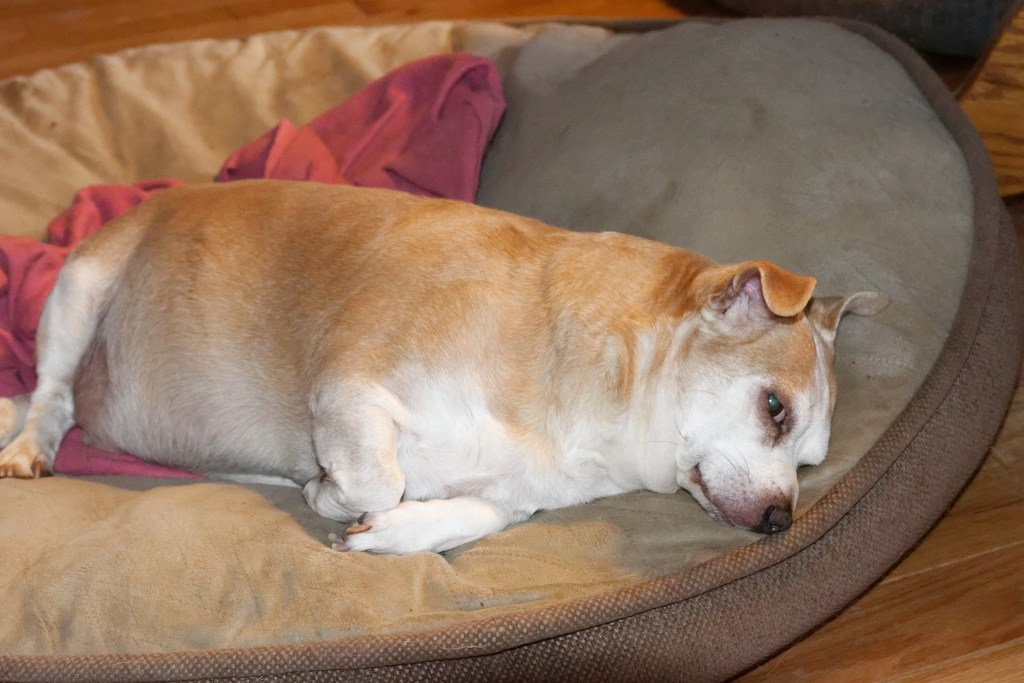
He really is not aware of the disease.
It’s up to Jean and me to administer the insulin and keep him happy!
Is the fence!
I saw this article yesterday on The Conversation and thought it was very significant and, as a result, worthy of sharing with you.
But first a picture of the Australian dingo.
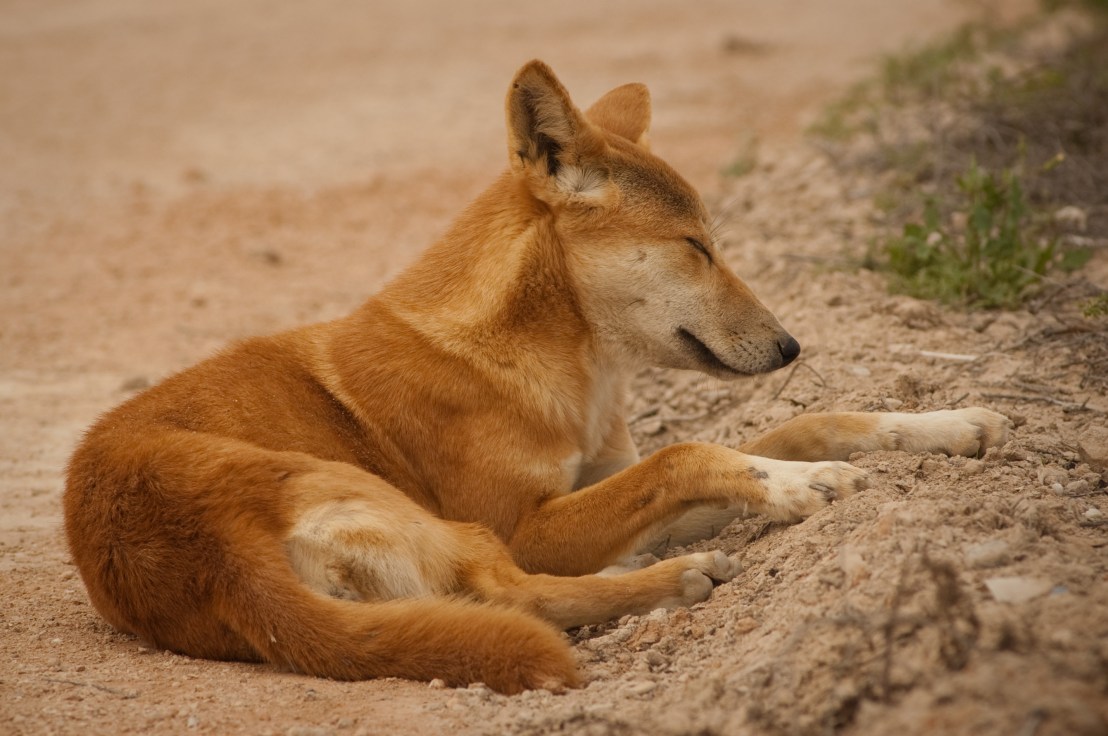
Taken from an article on WikiPedia.
Here is that article from The Conversation.
ooOOoo
November 30, 2020
By , Postdoctoral Researcher, University of California Santa Barbara,
and
, Ph.D. Candidate in Environmental Science, Policy and Management, University of California, Berkeley,
and
, PhD Candidate in Environmental Science, Policy and Management, University of California, Berkeley.
What is the most common form of human infrastructure in the world? It may well be the fence. Recent estimates suggest that the total length of all fencing around the globe is 10 times greater than the total length of roads. If our planet’s fences were stretched end to end, they would likely bridge the distance from Earth to the Sun multiple times.
On every continent, from cities to rural areas and from ancient to modern times, humans have built fences. But we know almost nothing about their ecological effects. Border fences are often in the news, but other fences are so ubiquitous that they disappear into the landscape, becoming scenery rather than subject.
In a recently published study, our team sought to change this situation by offering a set of findings, frameworks and questions that can form the basis of a new discipline: fence ecology. By compiling studies from ecosystems around the world, our research shows that fences produce a complex range of ecological effects.
Some of them influence small-scale processes like the building of spider webs. Others have much broader effects, such as hastening the collapse of Kenya’s Mara ecosystem. Our findings reveal a world that has been utterly reorganized by a rapidly growing latticework of fences.
Connecting the dots
If fences seem like an odd thing for ecologists to study, consider that until recently no one thought much about how roads affected the places around them. Then, in a burst of research in the 1990s, scientists showed that roads – which also have been part of human civilization for millennia – had narrow footprints but produced enormous environmental effects.
For example, roads can destroy or fragment habitats that wild species rely on to survive. They also can promote air and water pollution and vehicle collisions with wildlife. This work generated a new scientific discipline, road ecology, that offers unique insights into the startling extent of humanity’s reach.
Our research team became interested in fences by watching animals. In California, Kenya, China and Mongolia, we had all observed animals behaving oddly around fences – gazelles taking long detours around them, for example, or predators following “highways” along fence lines.
We reviewed a large body of academic literature looking for explanations. There were many studies of individual species, but each of them told us only a little on its own. Research had not yet connected the dots between many disparate findings. By linking all these studies together, we uncovered important new discoveries about our fenced world.

Remaking ecosystems
Perhaps the most striking pattern we found was that fences rarely are unambiguously good or bad for an ecosystem. Instead, they have myriad ecological effects that produce winners and losers, helping to dictate the rules of the ecosystems where they occur.
Even “good” fences that are designed to protect threatened species or restore sensitive habitats can still fragment and isolate ecosystems. For example, fences constructed in Botswana to prevent disease transmission between wildlife and livestock have stopped migrating wildebeests in their tracks, producing haunting images of injured and dead animals strewn along fencelines.
Enclosing an area to protect one species may injure or kill others, or create entry pathways for invasive species.
One finding that we believe is critical is that for every winner, fences typically produce multiple losers. As a result, they can create ecological “no man’s lands” where only species and ecosystems with a narrow range of traits can survive and thrive.
Altering regions and continents
Examples from around the world demonstrate fences’ powerful and often unintended consequences. The U.S.-Mexico border wall – most of which fits our definition of a fence – has genetically isolated populations of large mammals such as bighorn sheep, leading to population declines and genetic isolation. It has even had surprising effects on birds, like ferruginous pygmy owls, that fly low to the ground.
Australia’s dingo fences, built to protect livestock from the nation’s iconic canines, are among the world’s longest man-made structures, stretching thousands of kilometers each. These fences have started ecological chain reactions called trophic cascades that have affected an entire continent’s ecology.
The absence of dingoes, a top predator, from one side of the fence means that populations of prey species like kangaroos can explode, causing categorical shifts in plant composition and even depleting the soil of nutrients. On either side of the fence there now are two distinct “ecological universes.”
Our review shows that fences affect ecosystems at every scale, leading to cascades of change that may, in the worst cases, culminate in what some conservation biologists have described as total “ecological meltdown.” But this peril often is overlooked.

To demonstrate this point, we looked more closely at the western U.S., which is known for huge open spaces but also is the homeland of barbed wire fencing. Our analysis shows that vast areas viewed by researchers as relatively untrodden by the human footprint are silently entangled in dense networks of fences.
Do less harm
Fences clearly are here to stay. As fence ecology develops into a discipline, its practitioners should consider the complex roles fences play in human social, economic and political systems. Even now, however, there is enough evidence to identify actions that could reduce their harmful impacts.
There are many ways to change fence design and construction without affecting their functionality. For example, in Wyoming and Montana, federal land managers have experimented with wildlife-friendly designs that allow species like pronghorn antelope to pass through fences with fewer obstacles and injuries. This kind of modification shows great promise for wildlife and may produce broader ecological benefits.
Another option is aligning fences along natural ecological boundaries, like watercourses or topographical features. This approach can help minimize their effects on ecosystems at low cost. And land agencies or nonprofit organizations could offer incentives for land owners to remove fences that are derelict and no longer serve a purpose.
Nonetheless, once a fence is built its effects are long lasting. Even after removal, “ghost fences” can live on, with species continuing to behave as if a fence were still present for generations.
Knowing this, we believe that policymakers and landowners should be more cautious about installing fences in the first place. Instead of considering only a fence’s short-term purpose and the landscape nearby, we would like to see people view a new fence as yet another permanent link in a chain encircling the planet many times over.
ooOOoo
This is something that I hadn’t hitherto thought about. I suspect that I am not alone.
There are many aspects of the fence that warrant more careful thought. I will close by repeating what was said just a few paragraphs above:
There are many ways to change fence design and construction without affecting their functionality. For example, in Wyoming and Montana, federal land managers have experimented with wildlife-friendly designs that allow species like pronghorn antelope to pass through fences with fewer obstacles and injuries. This kind of modification shows great promise for wildlife and may produce broader ecological benefits.
Another option is aligning fences along natural ecological boundaries, like watercourses or topographical features. This approach can help minimize their effects on ecosystems at low cost. And land agencies or nonprofit organizations could offer incentives for land owners to remove fences that are derelict and no longer serve a purpose.
We are never too old to learn!
It is Jean’s birthday today.

This photograph was taken on the 8th January, 2008. Jean and I had met for the first time late in 2007.
It was close by in San Carlos, Mexico. Jean then lived in San Carlos!
 Learning from Dogs