The second set of wonderful dog pictures from neighbours, Jim and Janet, on the theme of parenthood!

oooo
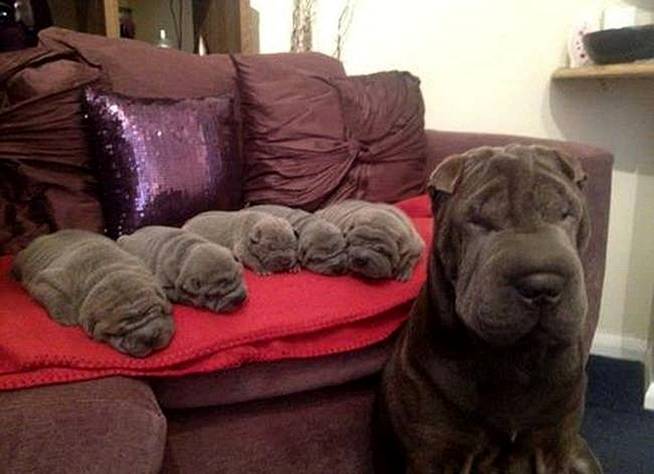
oooo

oooo
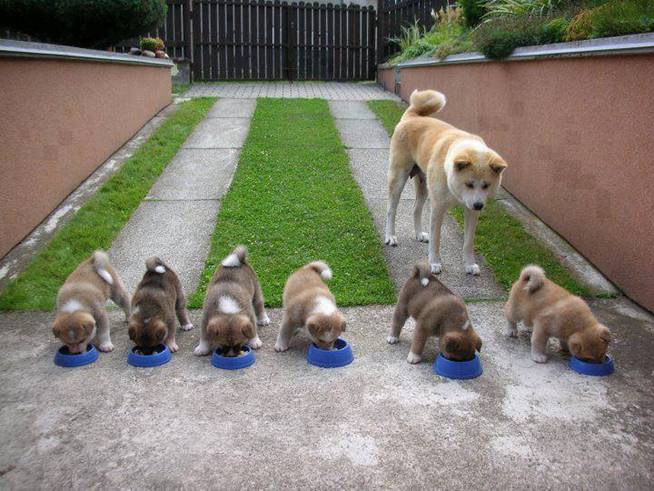
oooo
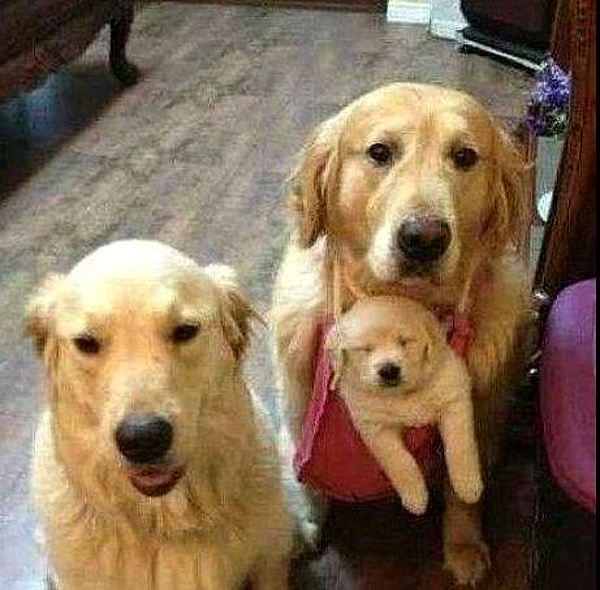
oooo

oooo

oooo
The third, and final, set in a week’s time.
You all take care of yourself, and of your pets!
Dogs are animals of integrity. We have much to learn from them.
Year: 2014
The second set of wonderful dog pictures from neighbours, Jim and Janet, on the theme of parenthood!
oooo
oooo
oooo
oooo
oooo
oooo
oooo
The third, and final, set in a week’s time.
You all take care of yourself, and of your pets!
Because it’s wonderful – just pure joy.
The official advertisement for the Fiat 500X (already viewed over 4.9 million times!)
Thanks Dan for sending it on to me.
The night is always darkest before the dawn.
That very well-know saying rings in my ears the word: hope. Hope! What a short, little word that carries on its back, so to speak, so much promise, so many reasons for staying with it, whatever ‘it’ might mean at any particular moment.
For countless times for countless numbers of people, the importance of hope has been incalculable! But first let’s dip into the dictionary as a way of clearly understanding the word.
Hope: as a noun, in part: “the feeling that what is wanted can be had or that events will turn out for the best”; as a verb, in part: “to look forward to with desire and reasonable confidence”.
Yes, there are other definitions of the word ‘hope’; both as a noun and an adjective. But I selected the two above because they resonated with me and past experiences. Or more accurately, a past experience. My prelude to another story from my past that seemed an appropriate way of opening this chapter; this chapter on hope.
In 1986 I had the opportunity to take a few years off. Off from the working life, that is. I had started my own company in 1978 after eight years of being a salesman for the Office Products Division of IBM UK. In 1986, the successful sale of my company meant that for a while I could go and play. By chance, I went on a vacation to Larnaca on the Island of Cyprus; Larnaca being on the Greek side of what was a divided island(and still is!) between Greece and Turkey.
Larnaca struck me as a lovely place on a lovely island in the Eastern part of the Mediterranean Sea. Again, quite by chance, one day during my vacation, when strolling around Larnaca Marina, I noticed a yacht with a For Sale notice on the yacht’s pulpit. The yacht, named Songbird of Kent, was a Tradewind 33, a type that I had heard about previously from reading yachting magazines. I vaguely recalled that the type had been designed in the UK by John Rock, himself an experienced deep-water yachtsman, for the purpose of serious ocean sailing and that many Tradewinds had completed vast ocean crossings.
I was still looking at the yacht, lost in some dream about sailing the seas, when a call from a man who had just come up from the cabin caught my attention. He had spotted me looking at the yacht.
“Hi, my name is Ken and I’m the owner of Songbird. Did you want to come onboard and have a look around?” I couldn’t resist!
It transpired that Ken, and Betty his wife, an English couple, had been living on Songbird for some years, cruising the Mediterranean each Summer, and now wanted to return to England.
It was obvious that Songbird had been cared for in every possible way and that the yacht was offered for sale in a manner that meant she could become my permanent new home with little or no effort on my behalf.
Three hours later Ken and Betty and yours truly had agreed terms for the sale of Songbird of Kent. One of those spur of the moment things that we do in our lives that, so often, make being alive such a reward.
I should explain that as a younger man (I was 42 when I agreed to buy Songbird) I had devoured the books written by such round-the-world solo sailors as Francis Chichester and Joshua Slocum and others and harboured this silly, naive dream of one day doing a solo transatlantic crossing. Later on in life, when living in Wivenhoe in Essex, I bought my first yacht but never achieved anything more than local coastal sailing and a couple of overnight sailings to Holland; all with others I should hasten to add – never solo! However, I knew for sure that if there was one yacht that was perfect for open ocean sailing it was the Tradewind.
Thus it wasn’t long before my home in Great Horkesley, near Colchester, had been sold and I was adjusting to a new life as a ‘live aboard yachtie’ out in Cyprus.
I loved living in Larnaca for a whole bundle of reasons that I won’t go into here. Except one! That was that in my years of living and working near Colchester, which was where my business was based, I had been introduced to gliding and eventually had ended up becoming a gliding instructor. So imagine my delight at finding that there was an active gliding club on a British ex-military airfield thirty minutes away from Larnaca. It was not long before I was fully back to gliding.
One day, I was doing gliding experience flights for some visitors. Early in the afternoon, up came a quietly spoken Englishman who wanted to get an idea of what it was like to fly in a glider. Les, for that was his name, settled himself in, I checked his straps were secure, pointed out the canopy release and jumped into the seat behind him, and within moments we were airborne.
Later on, when back on the ground and sitting to one side of the old runway, Les and I started chatting about our backgrounds and what had brought each of us to Larnaca. I learned that Les was not only Les Powles, the famous solo sailor, but that he was living on board his yacht, Solitaire, right here in Larnaca Marina.
Over the following days, often with a beer or two in our hands, I heard Les’ tales about him having been in his 50s when he built Solitaire, with little prior knowledge of boatbuilding. That he had just eight hours of sailing experience when he decided to sail solo around the world. That remarkably, he had made it across the Atlantic, albeit discovering that his navigation skills didn’t quite match up to his boatbuilding abilities. This translating to his first landfall being the coast of Brazil, a 100 miles south of (and a different hemisphere) the Barbados he had been aiming for!
I listened for hours, in utter rapture of what Les had achieved. This quiet, unpretentious man that had achieved so much. Including how after solo circumnavigation number one, Les ended up completing three solo circumnavigations, all of them full of incidents. Particularly, the last one, with Les being given up for dead when he hadn’t been heard from for over four months. When eventually he sailed up the Lymington River in Hampshire, in a skeletal state, his arrival caused a media frenzy. Lymington Marina subsequently gave him a free berth for life. Les’ boat had been damaged in a storm, he had lost all communications and had virtually run out of food by the time he made it back to England.Oh, and Les was 70 at the time!
It’s OK readers, I haven’t forgotten I was promising you an anecdote on the subject of hope! Stay with me a little longer; it’s coming!
At one point, Les asked me about my own sailing ambitions. I remarked that I had this tired old idea of a solo sailing across the Atlantic.
“Have you done any solo sailing?”, Les asked.
I replied, “At the start of most Summers, I sail alone from Larnaca across to the Turkish coast to meet up with family and friends who want to cruise along with me.”
Continuing, “Generally I head for Alanya or a little further along the Turkish coast; to Antalya. It takes me two or three days to get there non-stop, most often with me going west-about Cyprus, and then straight up to Turkey. But I am embarrassed to admit that I hate both that trip, and the return solo trip at the end of the Summer. Detest would be a better word than hate.”
Pausing before adding a moment later, “If I can’t stomach solo sailing for three days then there’s no chance, no chance at all, that I could sail solo across the Atlantic ocean.”
It was then that Les said something both profound and deeply inspiring.
“Paul, guess what! The first three days of being alone are just as terrible for me, too. Indeed, I have never met a solo sailor who doesn’t say the same. Those early days of adjusting to your new world, your new world of being alone out on the ocean, are the worst. But never lose hope that from some point around the third or fourth day, you will have worked through that transition and found an unbelievable state of mind; a freedom of mind that has no equal.”
Years later, with Les’ words still ringing in my ears, I set out from Gibraltar for the Westward crossing of the Atlantic and lived the truth of Les’ prediction.
Sorry if that turned into a longer trip down memory lane than you were anticipating. However, I knew of no better way of telling you about how I learned the real meaning of hope, courtesy of dear Les.
Now a purely anecdotal tale on gaining the meaning of hope would be no way to end this chapter. We need to seek a professional view as well.
Scott Barry Kaufman is the Scientific Director of The Imagination Institute in the Positive Psychology Center at the University of Pennsylvania. (See footnote)
Back in December of 2011 he was the author of an essay published in the journal Psychology Today. The essay was called: The Will and Ways of Hope, with the subheading: Hope involves the will to get there, and different ways to get there.
It opened:
Talent, skill, ability — whatever you want to call it — will not get you there. Sure, it helps. But a wealth of psychological research over the past few decades shows loud and clear that it’s the psychological vehicles that really get you there. You can have the best engine in the world, but if you can’t be bothered to drive it, you won’t get anywhere.
Psychologists have proposed lots of different vehicles over the years. Grit, Conscientiousness, self-efficacy, optimism, passion, inspiration, etc. They are all important. One vehicle, however, is particularly undervalued and underappreciated in psychology and society. That’s hope.
Professor Kaufman went on to say that, “Put simply: hope involves the will to get there, and different ways to get there.” It struck me that those words seemed to resonate strongly with the multi-stage process of change that was covered in the previous chapter: The process of change.
The good Professor then adding:
Why is hope important? Well, life is difficult. There are many obstacles. Having goals is not enough. One has to keep getting closer to those goals, amidst all the inevitable twists and turns of life. Hope allows people to approach problems with a mindset and strategy-set suitable to success, thereby increasing the chances they will actually accomplish their goals.
Thus what Professor Kaufman seemed to be saying, well to my ears anyway, was that hope was not some wishy-washy emotion, some vaguely defined way of giving oneself a good talking to but “a dynamic cognitive motivational system” to use his words. That people who have clear goals in their lives, especially goals that demand learning, that in themselves are related positively to success, whatever success means specifically to an individual, that those goals are critically dependent on hope.
More from Kaufman:
Under this conceptualization of hope, emotions follow cognitions, not the other way round. Hope-related cognitions are important. Hope leads to learning goals, which are conducive to growth and improvement. People with learning goals are actively engaged in their learning, constantly planning strategies to meet their goals, and monitoring their progress to stay on track.
While reading Professor Kaufman’s essay, I found myself quietly wondering about where hope fitted in with other psychological attitudes, such as optimism and self-confidence. I didn’t have to wonder for much longer because, towards the end of the Professor’s essay, he specifically addresses my wonderings:
Hope can be distinguished from other psychological vehicles, such as self-efficacy and optimism. Self-efficacy refers to your belief that you can master a domain. Optimism refers to a general expectation that it’ll all just ‘be alright’. Hope, self-efficacy, and optimism are all incredibly important expectancies and contribute to the attainment of goals. Even though they all involve expectations about the future, they are subtly, and importantly, different from each other. People with self-efficacy expect that they will master a domain. Optimism involves a positive expectancy for future outcomes without regard for one’s personal control over the outcome. In contrast to both self-efficacy and optimism, people with hope have both the will and the pathways and strategies necessary to achieve their goals.
For the first time in many decades of reflection and introspection into aspects of success, motivation and achievement, I saw the sense of seeing hope in a two-dimensional manner: the will and the ways! Fascinating!
Reinforced so clearly in Professor Kaufman’s closing words:
We like to think that current ability is the best predictor of future success. We’ve built up the importance of existing ability because the testing and gating mechanisms are so well established to suit this belief. Important psychological studies show that ability is important, but it’s the vehicles that actually get people where they want to go. Oftentimes, the vehicles even help you build up that ability you never thought you had. And hope — with its will and ways — is one of the most important vehicles of them all.
Is there a connection between learning the “first three days are the worst’ from dear Les Powles and the academic eminence of Professor Scott Barry Kaufman?
I think so. For one could interpret Les’ advice about working through that initial three days at sea as containing both the Will – I am determined to keep going through those transitional days – and the Way – one can only achieve the peace of mind of being alone at sea by sailing onwards for three or four days.
I cannot close this better than by quoting Aristotle, “Hope is a waking dream.”
2,361 words Copyright © 2014 Paul Handover
—–
Footnote: Scott Barry Kaufman is Scientific Director of The Imagination Institute in the Positive Psychology Center at the University of Pennsylvania. Kaufman investigates the development and measurement of imagination, and the many paths to greatness. He has six books, including Ungifted: Intelligence Redefined and The Philosophy of Creativity(with Elliot Samuel Paul). Kaufman is also co-founder of The Creativity Post. Kaufman completed his doctorate in cognitive psychology from Yale University in 2009 and received his masters degree in experimental psychology from Cambridge University in 2005, where he was a Gates Cambridge Scholar.
This was a post from Jon Lavin back in 2011.
I thought it would be nice to republish it today.
oooo
Removing the fear of the unknown

I’ve been working with most of my clients recently through painful transformations brought about by the economic downturn.
An interesting metaphor really because since the first wave of uncertainty triggered panic, first noticed in the UK banking system, I have been picking up on that uncertainty that feels like it’s stalking the globe and has been for some time. Recent stock market crashes have simply exacerbated this and that, coupled with the riots taking place in major cities in the UK, make for pretty disturbing reading.
Interestingly, I, too, have been aware of an underlying fear that was difficult either to name or source.
It has been rather like a deep river in that whilst the surface feels slow-moving, currents are moving things powerfully below.
So this ‘fear’ has caused a few household changes.
1) We now are the proud owners of 12 chickens. Our youngest son and I have dug up the back lawn and planted vegetables and built a poly tunnel.
2) We have also installed a wood burning cooker. Right back down to the base of Maslow’s triangle really!
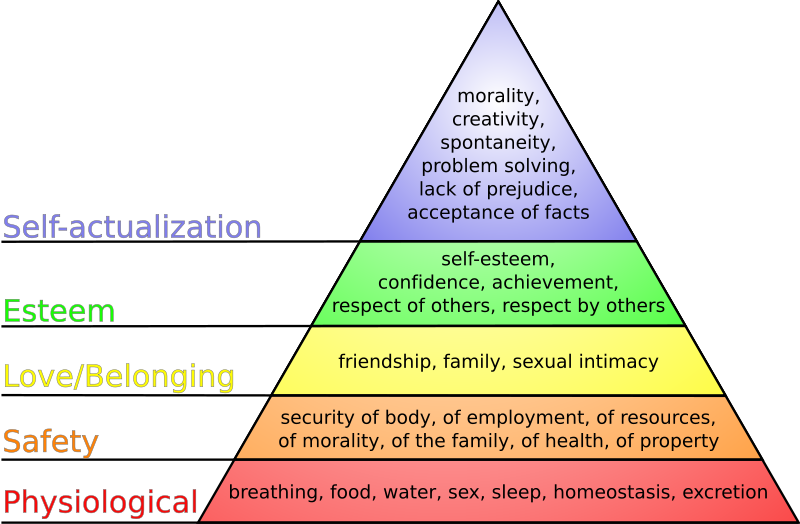
These feelings have brought about such change everywhere and I wonder seriously whether we will ever return to what was; indeed would we want to?
I might not have mentioned it in previous blogs but as well as an engineering background, in latter years, I have focused on how success in business is linked directly to aspects of relationships and how we are in our relationships with others, so things like integrity, self-awareness and the ability to see the point of view of others, and modify our approach appropriately.
To inform this, some 7 years ago, I embarked on an MA in Core Process Psychotherapy, primarily to work on myself so that I could be the best I could be in my relationships, in and out of work.
The point I’m trying to make is that the same panic I notice in many of the companies I work in, and in me, is based on fear of the unknown and on a lack of trust in all its forms. I’ve deliberately underlined that last phrase because it is so incredibly important.
The truth is that we get more of what we focus on.
So we can choose to focus on the constant news of more difficulties, hardship and redundancies, or we can focus on what is working.
In the workplace this positive focus has been pulling people together across functions and sites and pooling resources and ideas.
When we realise we’re not doing this alone it’s amazing how much lighter a load can feel and how much more inspired we all feel.
I also notice how humour begins to flow and what a powerful antidote for doom and gloom that is.
Transformation is never easy but the rewards far exceed the effort put in ten fold.
So what is it going to be? Are we all going to bow down to the god of Doom & Gloom, fear and anxiety, heaping more and more gifts around it, or are we going to start noticing and focusing on the other neglected god – that of relationship, joy, trust, abundance and lightness?
Whatever the future holds for us all a belief in our inherent ability to adapt and change and focus on the greater good rather than fear, anxiety, greed and selfishness is the only sustainable way forward.
By Jon Lavin
“They didn’t bring us here to change the past!”
That opening quote to this chapter comes from the blockbuster film Interstellar that was drawing in the crowds when I was up to my neck in the first draft of the book. Jean and I had taken an afternoon off, together with neighbours, Dordie and Bill, to go and watch it. It was the middle of November, 2014.
I’ll resist the temptation to include a review of the film in this place; this is meant to be a book about what we can learn from dogs! But there were two spoken lines that really jumped off the screen at me; one of them being the opening quote to this chapter.
Why did that opening quote strike me so forcibly?
Simply because when it comes to making deep, fundamental changes in who we are, how we see ourselves and, flowing from that, how we behave, or better put, how we wish to change how we behave, we have to change the past.
Sorry, I was being ‘tricky’; we can’t change the past in any real sense! But what we can change is our understanding of our past and how it made us the person we are; at this present moment in our life. That self-understanding is paramount before we set out along any journey of personal change. That was my motivation in recounting, in the opening chapter of Part Four, my discovery of my fear of rejection that for so many years had remained out of sight; albeit not quietly so within me.
Before continuing, I am minded to issue a ‘health’ warning. My writings and my conclusions are purely and solely my personal view of my life and the world as I see and experience it. Don’t empower me with talents and skills that I don’t have! Phew!
Moving on.
Anyone who has attempted a change in their behaviour, from a New Year’s Resolution, to a metaphorically large slap on the wrist for being dumb about some aspect of their life, will appreciate the difficulty of achieving a lasting change in behaviour. Changing our behaviour is rarely simple, straightforward or even, surprisingly, logical. Very often it requires a major commitment of time, effort and, perhaps most importantly of all, an emotional commitment.
The other vital thing to appreciate is that what works for one person, in all likelihood, will not work for another. Even trickier than that; what worked for you one time, may not work another time! That, just for the avoidance of doubt, is not me downgrading the need for change, when your intuition is saying to you that a change or two wouldn’t do any harm at all! Not at all!
So don’t worry about it not ‘speaking’ to you clearly in the first instance, in the sense of you not being clear as to how it is that you need to change, just embrace the fact that it is a process of trial-and-error, and keep reminding yourself why it is that you wish to change an aspect or two of your behaviour.
This important aspect of being relaxed about achieving change for yourself is more easily understood, as in understood rationally, when one takes an overview of the models (note the use of the plural) of change as used by therapists, physicians, and teachers. The researchers, that therapists and others base their knowledge and understanding upon, have multiple theories to explain how change occurs.
One of these theories, a popular one known as the Stages of Change model, demonstrates that change is rarely easy and often requires a gradual progression of small steps toward a larger goal.
In other words, only through understanding the elements of change, the stages of change, and the ways to work through each stage, can help one achieve a lasting behavioural change.
I’m not going to go much further because I’m conscious of potentially over-stepping boundaries. This is a book about learning from dogs, not an amateur self-help manual on change!
But I do want round off with the following; the product of my research and from speaking to a couple of professionals in the field of change.
Apparently, about 20 years ago, two researchers into alcoholism, Carlo C. DiClemente and J. O. Prochaska, proposed a multi-stage model of change. Their aim was to help professional ’change consultants’ understand their clients who had problems of addiction and how to motivate those clients to change. It was a model that was not based on theories but on the observations by DiClemente and Prochaska into how people tackled problem behaviours such as smoking, overeating and excessive drinking.
The multiple stages of the model were called: precontemplation; contemplation; determination; action; maintenance and termination. Six stages in all.
I’m only going to dip into that first stage: Precontemplation.
Precontemplation
Individuals in the precontemplation stage of change are not even thinking about changing their drinking behavior. They may not see it as a problem, or they think that others who point out the problem are exaggerating.
There are many reasons to be in precontemplation, and Dr. DiClemente has referred to them as “the Four Rs” —reluctance, rebellion, resignation and rationalization:
Right that’s enough from me. But for anyone that would like to read the full article by M. Gold (2006) Stages of Change, there’s a footnote [APA Reference Gold, M. (2006). Stages of Change. Psych Central.] that includes a link to a website that can offer you more detailed information about this multi-stage approach to change; indeed has the full article from Mark Gold, MD.
It’s never too late to change.
Oh, nearly forgot! I noted that the film Interstellar offered “two spoken lines that really jumped off the screen at me”, using one, “They didn’t bring us here to change the past!”, as the opening line of this chapter. The second spoken line couldn’t be more appropriate to close a chapter entitled: The process of change.
“We all want to protect the world, but we don’t want to change.”
999 words. Copyright © 2014 Paul Handover
Share a smile with me!
Another long day of writing left me with little time to do anything other than go through my blog folder and pick out something delightful for today. I didn’t have far to go, for dear friend, Bob Derham, recently sent me the following:
An Arab Sheik was admitted to Hospital for heart surgery, but prior to the surgery, the doctors needed to have some of his blood type stored in case the need arose.
As the gentleman had a rare type of blood, one that couldn’t be found locally, so, the call went out. Finally a Scotsman was located who had the same rare blood type. The Scot willingly donated his blood for the Arab.
After the surgery, the Arab sent the Scotsman, as appreciation for giving his blood, a new BMW, a diamond necklace for his wife and $100,000 US dollars.
A couple of days later, the Arab had to go through a corrective surgery procedure. Once again, his doctor telephoned the Scotsman, who was more than happy to donate more of his blood.
After the second surgery, the Arab sent the Scotsman a thank-you card and a box of Quality Street chocolates. The Scotsman was a little disappointed that the Arab did not reciprocate his kind gesture of more donated blood as he had the first time around.
He decided to telephone the Sheik and asked him: “I thought you would be generous again, that you would give me another BMW, diamonds and money, but you only gave me a thank-you card and a box of Quality Street chocolates.”
There was a pause and then the Arab replied: “Aye laddie, but I now have Scottish blood in ma veins“.
oooo
Don’t blame me! I just published it! 😉
Setting the scene
Well done for getting through Part Three: Mankind in the 21st century, and a number of the challenges of our present times! I don’t mean that to come over in a flippant manner but it must have been tough reading; it certainly was tough writing for this scribe! Then again, from way back yonder from my days of selling during the 70s and 80s, comes that old saw about not being able to embrace a new idea if one doesn’t really understand the issues, as in the strengths and weaknesses, of the existing situation.
Change is a fascinating subject and one that even the briefest trawl through the internet reveals a wealth of material. But the theme of change here in Part Four is about change at an individual level and not anything to do with organisations; let alone countries. And as such, in terms of how we understand the need for change as individuals, it seemed pertinent to offer this personal anecdote as a way of setting the scene.
You will recall that in Part One – Man and Dog, there was a chapter headed Unsettled times. In that chapter I wrote about learning that my previous wife informed me that she was having an affair with another man, this revelation taking place on December 20th, 2006, fifty years to the day of my father’s death on December 20th, 1956.
I also mentioned that earlier on in 2006 I had started mentoring a Jon Lavin as he was going through a major transition in his counselling practice. Jon was living a few miles from where I was living in South Devon and was, and still is, a psychotherapist, or to put it more accurately, a UKCP accredited therapist and NLP Practitioner.
Thus in a state of some emotional turmoil, I rang Jon early on in 2007 and asked if I might be his client! Jon was initially reluctant to agree to that, simply because he and I had started developing a relationship in another context, within a completely different perspective, as in me coaching him in the ways of developing his own business. As Jon made clear, he was worried that our existing relationship might get in the way of a very different relationship; one where I was trying to understand the catastrophe that had just taken place in my private life.
I was pretty insistent on wanting, needing, to see Jon; as you might imagine. Thankfully, Jon did agree after giving it some thought but on the strict understanding that if he was concerned about how the counselling relationship was progressing that I had to agree, agree before we started our sessions, that he had the right to terminate the relationship. Of course, I agreed. Without a moment’s hesitation.
Thus Jon and I started my personal counselling relationship soon after.
Naturally, Jon wanted to learn more about my emotional background and gently, when it felt right, asked me to explain the circumstances of my father’s death back in 1956. That was easy for me for the memories of that time had never dimmed.
That I had turned twelve back in November, 1956 and had started that previous September at my new secondary school; Preston Manor Grammar School. At the time of my birthday in November, 1956, I was only vaguely conscious of my father having been ill for a while. Not ill for months and months but bedridden for a few weeks. My father was fifty-five years old and had always been a gentle, caring father to me and my younger sister, Elizabeth.
Then just a few weeks further on, on the evening of the 19th December, when I was tucked up in bed, next door to my parent’s bedroom, my mother came into my bedroom to say goodnight to me; a perfectly ordinary and routine event. But on this particular evening, there was an unmistakeable sadness about her and rather than promptly coming up to me and kissing me goodnight, she sat down on the edge of my bed, just where my knees were under the sheet and bedspread.
I could still recall so clearly Mum giving a deep sigh, a sigh that seemed to confirm what I feared and, somehow, knew in my heart: that his illness might be serious. Mum turning and reaching out with her right hand so that she could hold my right arm that lay on top of the bedspread. “Paul, you do know that your father is not very well, not very well at all. I’m sorry to tell you that he may not live for very much longer.” Words that have never left me.
Mum then leaning forward, kissing me goodnight, and leaving my bedroom, turning the light out as she closed the door. Me falling asleep within moments of the closing of that bedroom door.
My father died that same night: my mother calling the doctor who attended, confirmed the death, issued the death certificate and arranged for my father’s body to be removed from our home.
It all taking place before daybreak. It all taking place as I slept on.
In the morning, my father was no longer part of my life.
As one could easily imagine, the following days were surreal, yet all of my life I have had no recollection of any emotions at all.
Going back to the death of my father, it was thought that my father’s funeral, a cremation, would be too upsetting for me and my sister so we didn’t attend the funeral.
The only other recollection from those times was being teased and bullied at my new school, the one that I had started a few months previously, because I was prone to bouts of crying. I also recall that one day in the playground, surrounded by a group of jeering and taunting boys, I had snapped and gone for the ring leader in a wild frenzied physical attack. Both he and I receive the cane from the headmaster but at least the teasing was brought to an end.
So all of this was spoken of to Jon in those early days of 2007!
Jon gently explored my feelings, wondering what were my emotional echoes from over fifty years ago. I’m not sure I voiced anything particularly revealing.
Then, in a change of tack, he asked me how my own son might have felt if he, my son, had endured the same tragedy at the same age and experienced the death of me, his father, in a similar fashion, and, in addition, not been able to go to the funeral.
It was a straightforward question but one that had me disappearing into my own inner thoughts for some time, Jon sitting quietly in his armchair just next to me, me only half aware that time seemed to have come to a halt. As if for the first time in my life since that dreadful day in 1956 I had the courage to listen to my deep inner voice, to sense my most inner feelings.
I stuttered, “My son would be angry, angry that one of the key events in the life of any person, the death of a parent, no more than that, the death of a son’s father, no that’s still not right; the death of his father, had been denied him.”
Jon looked at me, in a way that seemed to connect with me very strongly. Then he quietly asked, “What other feelings might you expect your son possibly to have?”
Again, another long silence, and then I said, feeling strongly that something very important was about to happen: “He would feel left out. Overlooked. Denied the experience of something irreplaceably important. He would feel emotional rejection; in spades!”
As those last words, quietly and clearly, left my lips, the most incredible sensation overtook me, both without and within me, encompassing me totally, the awareness that for the first time in my life, with me now sixty-three-years old, something that had been emotionally and psychologically hidden from me for fifty-one years, was now out in the open.
The clear knowledge that the circumstances surrounding my father’s death and my subsequent decline in my school performance had left me with a long-term psychological ‘dysfunction’; a certainty that I had been emotionally rejected way back in the Winter of 1956-57. A certainty, for sure, yet an understanding of myself that, hitherto, had been out of sight of my conscious mind, hidden deep inside of me, until this moment, this precious moment, in time.
Jon remained still and quiet as I continued to turn over in my mind this inner discovery. The realisation that, incredibly, for fifty years, my emotional response to my father’s death had remained totally out of my consciousness yet, nonetheless, had influenced me in very real and tangible ways; ways both negatively and positively that came to me almost immediately.
That the negative influence was that I was drawn to any woman who offered me love and affection and, therefore, I was emotionally unable to understand, to judge as it were, whether she had the potential to be a match as a life-long partner, however good a person she might be. I was doing anything to avoid emotional rejection!
The positive influence was that I tried very hard to please others (still do) so as to avoid their rejection, and had successful careers in selling for IBM UK, later starting and building a successful business in the early days of personal computing and, then, when my company was sold in 1986 becoming a freelance journalist and business coach.
So it took a chance association with Jon in those early weeks of 2007 to make me understand a fundamental lesson, one that had its roots fifty years previously, back in those early weeks of 1957. The lesson that we may only fully embrace change when we fully know just who we are. In other words, if there’s the tiniest voice inside you telling you that there may be some hidden nooks and crannies within you, psychologically and emotionally speaking, then some time spent with the appropriate ‘mentor’ will be the best investment you ever made.
There was a second reward from that self-awareness that arose in 2007. Namely, that in the December of that year, while the guest of dear Californian friends, enjoying a Christmas vacation in their holiday home in San Carlos, Mexico, I met Jean. Jean had been married to an American, Ben, for many years, latterly the two of them living permanently in San Carlos. Ben had died in 2005. Jean was born an Englishwoman, born in Dagenham in Essex. I had been born in Acton, North London. As the crow flies, the distance from Dagenham to Acton is twenty-three miles.
Jean and I met on December 15th, 2007. I was now emotionally unencumbered and able to give my full love to her and receive her full love for me. Jean and I were married in Payson, Arizona on November 20th, 2010. Now we live in a rural part of Oregon with our dogs and horses. It is a life together that is everything that any man could ever dream of.
The power of change!
1877 words Copyright © 2014 Paul Handover
oooo
It is only right for me to mention that the above is entirely my own work and while it is my best recollection of a series of true events, the chapter has not been previously seen or endorsed by Jon.
Not, perhaps, in quite the way you might be anticipating!
A couple of weeks ago, I forwarded an item to my son, an airline Captain for some years now, that I read on the Big Think website. It was an item called The Accidental Beauty of Flight Paths.
The Accidental Beauty of Flight Paths
by FRANK JACOBS NOVEMBER 5, 2014There is more between heaven and earth than bird migrations and weather fronts. These maps capture the poetic beauty of something utterly mundane and usually invisible: the flight patterns of the planes that bring us from airport A to airport B.
We live in the age of mass air travel. At any given moment, there are about 10,000 commercial planes airborne, carrying an estimated half a million passengers across the skies. We also live in the era of Big Data. Which means that the movements of those thousands of planes can be followed in real time on websites such as Plane Finder and Flightradar24.
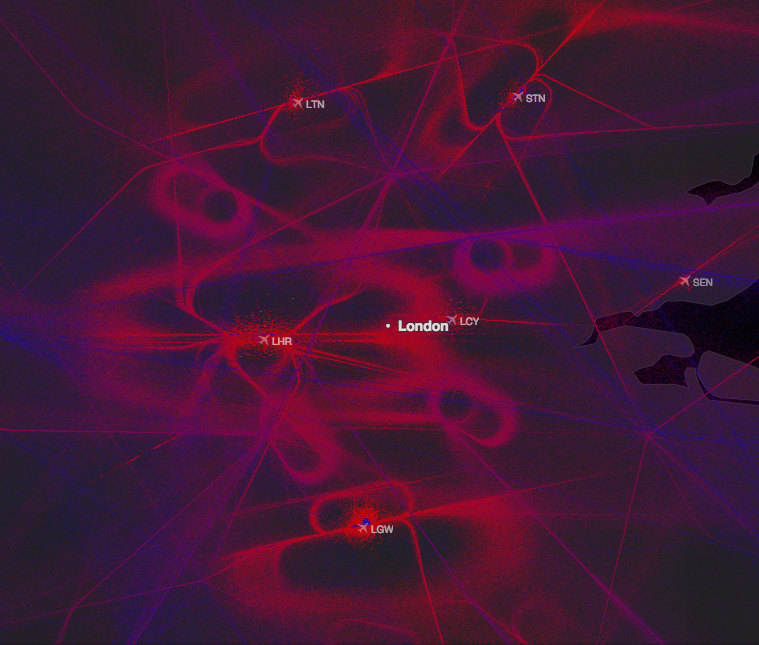
You can read the full article here.
Alex, my son, then replied with a link to this item on the UK NATS website: Take a guided tour around UK airspace.
The skies above the UK have been brought to life like never before in a video showing a day of air traffic in less than three minutes.
Created from actual radar data showing over 7,000 flights, the video graphically illustrates the daily task facing air traffic controllers and the airspace features that help make it all work.
It finishes with an overview of the structure of UK airspace, highlighting the major air routes and showing how this ‘invisible infrastructure’ helps underpin the entire operation.
Matt Mills, NATS Head of Digital Communications, said: “We’ve made data visualisations in the past, but we wanted to now take people on a deeper journey into what makes UK airspace work and some of its important features.
Airspace might be the invisible infrastructure, but it is every bit as important as the airports and runways on the ground.”
Created by air traffic management company, NATS, the video takes viewers on a unique tour of some of the key features of UK airspace – from the four holding stacks over London and the military training zones above Wales, to the helicopters delivering people and vital supplies to the North Sea oil and gas rigs.
It is a fascinating video.
Note:
I read this out aloud to Jeannie last night, as I do with every post that is published, and found this chapter really didn’t flow. I’m making the mistake of including too many words of direct quotations, many of which are not easy to follow.
So just wanted to let you know that if this strikes you the same way, you are not alone! 😉
It is, of course, just the first draft, but nonetheless …. wanted you to read this first.
oooo
Just three words: greed; inequality; poverty.
Just three words that metaphorically come to me like a closed, round, wooden lid hiding a very deep, dark well. That lifting this particular lid, the metaphorical one, exposes an almost endless drop into the vastness of where our society appears to have fallen.
That this dark well, to stay with the metaphor, is lined with example after example of greed, inequality and poverty is a given.
One might conclude that examining any of those examples is pointless, not in terms of the reality of our world, but in terms of influencing the views of a reader. If you are a reader who is uncertain about the current levels of greed, inequality and poverty then it’s unlikely that a few examples, or a few hundred examples, are going to change minds. (One might argue that you wouldn’t be reading this book in the first place!)
Thus when I was digging around, looking for insight into how and why we, as in society, are in such times, I was looking for core evidence. Very quickly, it struck me that the chapter title really should simply have been: Inequality. Because inequality, by implication, is the result of greed and results in poverty.
In November, 2014, at the time I was drafting this book, a new report was issued by the Center of Economic Policy Research (CEPR) on the latest (American) Survey of Consumer Finances. It painted a picture very familiar to many: the rich becoming richer while those with less wealth are falling further and further behind.
David Rosnick of the CEPR, and one of the report co-authors, made this important observation:
The decline in the position of typical households is even worse than the Consumer Finances survey indicates. In 1989, many workers had pensions. Far fewer do now. The value of pensions isn’t included in these surveys due to the difficulty of determining what they are worth on a current basis. But they clearly are significant assets that relatively few working age people have now.
Sharmini Peries, of The Real News Network, in an interview with David Rosnick, asked:
PERIES: David, just quickly explain to us what is the Consumer Finance Survey. I know it’s an important survey for economists, but why is it important to ordinary people? Why is it important to us?
ROSNICK: So, every three years, the Federal Reserve interviews a number of households to get an idea of what their finances are like, do they have a lot of wealth, how much are their house’s worth, how much they owe on their mortgages, how much they have in the bank account, how much stocks do wealthy people own. This gives us an idea of their situations, whether they’re going to be prepared for retirement. And we can see things like the effect of the housing and stock bubbles on people’s wealth, whether they’ve been preparing for eventual downfalls, how they’ve reacted to various economic circumstances, how they’re looking to the long term. So it’s a very useful survey in terms of finding out how households are prepared and what the distribution of wealth is like.
PERIES: So your report is an analysis of the report. And what are your key findings?
ROSNICK: So, largely over the last 24 years there’s been a considerable increase in wealth on average, but it’s been very maldistributed. Households in the bottom half of the distribution have actually seen their wealth fall, but the people at the very top have actually done very well. And so that means that a lot of people who are nearing retirement at this point in time are actually not well prepared at all for retirement and are going to be very dependent on Social Security in order to make it through their retirement years.
PERIES: So, David, address the gap. You said there’s a great gap between those that are very wealthy and those that are not. Has this gap widened over this period?
ROSNICK: It absolutely has. As, say, the top 5 percent in wealth, the average wealth for people in the top 5 percent is about 66 percent higher in 2013, the last survey that was completed, compared to 1989. By comparison, for the bottom 20 percent, their wealth has actually fallen 420 percent. They basically had very little to start with, and now they have less than little.
PERIES: So the poorer is getting poorer and the richer is getting extremely richer.
ROSNICK: Very much so.
To my way of thinking, if in the period 1989 through to 2013 “the average wealth for (American) people in the top 5 percent is about 66 percent higher” and “for the bottom 20 percent, their wealth has actually fallen 420 percent” it’s very difficult not to see the hands of greed at work and a consequential devastating increase in inequality.
In other words, the previous few paragraphs seemed to present, and present clearly, the widening gap between the ‘haves’ and the ‘have-nots’, comparatively speaking, and that it was now time for society to understand the trends, to reflect on where this is taking us, if left unchallenged, and to push back as hard as we can both politically and socially.
I wrote that shortly before another item appeared in my email ‘in-box’ in the middle of November (2014), a further report about inequality that, frankly, emotionally speaking, just smacked me in the face. It seemed a critical addition to the picture I was endeavouring to present.
Namely, on the 13th October, 2014, the US edition of The Guardian newspaper published a story entitled: US wealth inequality – top 0.1% worth as much as the bottom 90%. The sub-heading enlarged the headline: Not since the Great Depression has wealth inequality in the US been so acute, new in-depth study finds.
The study referred to was a paper released by the National Bureau of Economic Research, Cambridge, MA, based on research conducted by Emmanuel Saez and Gabriel Zucman. The paper’s bland title belied the reality of the research findings: Wealth Inequality in the United States since 1913.
As the Guardian reported:
Wealth inequality in the US is at near record levels according to a new study by academics. Over the past three decades, the share of household wealth owned by the top 0.1% has increased from 7% to 22%. For the bottom 90% of families, a combination of rising debt, the collapse of the value of their assets during the financial crisis, and stagnant real wages have led to the erosion of wealth. The share of wealth owned by the top 0.1% is almost the same as the bottom 90%.
The picture actually improved in the aftermath of the 1930s Great Depression, with wealth inequality falling through to the late 1970s. It then started to rise again, with the share of total household wealth owned by the top 0.1% rising to 22% in 2012 from 7% in the late 1970s. The top 0.1% includes 160,000 families with total net assets of more than $20m (£13m) in 2012.
In contrast, the share of total US wealth owned by the bottom 90% of families fell from a peak of 36% in the mid-1980s, to 23% in 2012 – just one percentage point above the top 0.1%.
The report was not exclusively about the USA. As the closing paragraphs in The Guardian’s article illustrated:
Among the nine G20 countries with sufficient data, the richest 1% of people (by income) have increased their income share significantly since 1980, according to Oxfam. In Australia, for example, the top 1% earned 4.8% of the country’s income in 1980. That had risen to more than 9% by 2010.
Oxfam says that in the time that Australia has held the G20 presidency (between 2013 and 2014) the total wealth in the G20 increased by $17tn but the richest 1% of people in the G20 captured $6.2tn of this wealth – 36% of the total increase.
I find it incredibly difficult to have any rational response to those figures. I am just aware that there is a flurry of mixed emotions inside me and, perhaps, that’s how I should leave it. Nonetheless, there’s one thing that I can’t keep to myself and that this isn’t the first time that such inequality has arisen, the period leading up the the Great Depression of the 1930s comes immediately to mind, and I doubt very much that it will be the last.
Unless!
Unless the growing catalogue of unsustainable aspects of this 21st century, a few of which have been the focus of this Part Three, brings about, perhaps in many different ways, a force for change that is unstoppable.
But before that is explored in Part Four, there is the one final element of the greed, inequality and poverty theme of this chapter that must be aired; the issue of poverty.
Contrary to my anticipation, the figures for poverty trends can be read in many ways and don’t give a clear-cut uniform picture. Nevertheless, it does’t take a genius to work out that the future, especially for young people, could be alarming.
Today, the poor people are the young. Today, the young are heading into a future that has many frightening aspects.
Take the present population numbers, the mind-boggling scale of the use of energy in these times, not to mention the levels of debt across so many countries (on the 14th November, 2014, the Federal Debt of the USA was about $18,006,100,032,000), possible unsustainable global climate change trends, and is it any wonder that those born in the period 1928 to 1945 (I was born in 1944), the generation that has been called the Silent Generation, must be wondering what the future holds for their children and grandchildren and what they or anyone can do today and tomorrow, to prevent these future generations sinking into oblivion.
I came across a quotation from Simon Caulkin, the award winning management writer: “It’s all the product of human conduct!”
Yes, Simon is right. Only human conduct will find that sustainable, balanced relationship with each other and, critically, with the planet upon which all our futures depend. Yet, something nags at me; a half-conscious doubt that starts with the word ‘but!’ Not that it doesn’t all come down to human conduct; not a moment’s hesitation on that one. But there’s still that half-conscious doubt. A doubt that starts to take shape on the back of that wonderful quotation from Einstein: “Insanity: doing the same thing over and over again and expecting different results.”
Then from that half-conscious place in one’s head comes another word. The word: Faith. Faith in us, as in faith in humanity. Faith that not only can we change our relationship with ourselves, with our communities and, above all, with our planet, but that we will. Faith that we, as in mankind, will embrace the many beautiful qualities of the animal that is so special to so many millions of us: our dogs. Not just embrace but pin our future on the premise that adopting the qualities of love, trust, honesty, openness and more, qualities that we see daily in our closest animal companions, is our potential salvation.
Thus comes the end of this set of depressing aspects of our 21st century. Time to move on in this story of learning from dogs and envelope ‘Of change in thoughts and deeds’; the title of the next section of this book. For we truly need a change to a better future.
1923 words Copyright © 2014 Paul Handover
As Dan said in the email to me that included the YouTube link ….
“If I ever get another dog, this is the one I want.”
It’s been watched over eleven million times, and no wonder!
 Learning from Dogs