Yet more fabulous pictures from Bob D.

oooo

oooo

oooo

oooo

oooo

oooo

oooo

oooo

oooo
If you missed the first set or just fancy looking at the pictures again, then click here.
Dogs are animals of integrity. We have much to learn from them.
Year: 2014
Yet more fabulous pictures from Bob D.
oooo
oooo
oooo
oooo
oooo
oooo
oooo
oooo
oooo
If you missed the first set or just fancy looking at the pictures again, then click here.
Nothing to add!
(Except to thank Bob Derham for sending this on to me.)
Stop the world, I want to get off.

You can tell, undoubtedly, from the title and sub-title to today’s post that I am feeling somewhat forlorn about the way that we humans work things out! As the old saying goes, “Question: Why has Planet Earth never been visited by an alien species? Answer: Because they have seen no signs of intelligent life!“
This feeling is a result of reading a recent essay from George Monbiot, Drowning in Money. It is republished here within his terms of sharing.
Now before you read it, if you are not living in the UK it would be easy to reject the messages as being only relevant to the United Kingdom. But when you do read it, you will agree that this level of government policy stupidity is not the sole reserve of the UK. The ‘virus’ is alive and well elsewhere!
ooOOoo

January 13, 2014
The hidden and remarkable story of why devastating floods keep happening.
By George Monbiot, published in the Guardian 14th January 2014.
We all know what’s gone wrong, or we think we do: not enough spending on flood defences. It’s true that the government’s cuts have exposed thousands of homes to greater risk, and that the cuts will become more dangerous as climate change kicks in (1). But too little public spending is a small part of problem. It is dwarfed by another factor, which has been overlooked in discussions in the media and statements by the government: too much public spending.
Vast amounts of public money – running into the billions – are spent every year on policies that make devastating floods inevitable. This is the story that has not been told by the papers or the broadcasters, a story of such destructive perversity that the Guardian has given me twice the usual space today in which to explain it.
Flood defence, or so we are told almost everywhere, is about how much concrete you can pour. It’s about not building houses in stupid places on the floodplain, and about using clever new engineering techniques to defend those already there (2). None of that is untrue, but it’s a small part of the story. To listen to the dismal debates of the past fortnight you could be forgiven for believing that rivers arise in the plains; that there is no such thing as upstream; that mountains, hills, catchments and watersheds are irrelevant to the question of whether or not homes and infrastructure get drowned.
The story begins with a group of visionary farmers at Pontbren, in the headwaters of Britain’s longest river, the Severn. In the 1990s they realised that the usual hill farming strategy – loading the land with more and bigger sheep, grubbing up the trees and hedges, digging more drains – wasn’t working. It made no economic sense, the animals had nowhere to shelter, the farmers were breaking their backs to wreck their own land.
So they devised something beautiful. They began planting shelter belts of trees along the contours. They stopped draining the wettest ground and built ponds to catch the water instead. They cut and chipped some of the wood they grew to make bedding for their animals, which meant that they no longer spent a fortune buying straw. Then they used the composted bedding, in a perfect closed loop, to cultivate more trees (3).
One day a government consultant was walking over their fields during a rainstorm. He noticed something that fascinated him: the water flashing off the land suddenly disappeared when it reached the belts of trees the farmers had planted. This prompted a major research programme, which produced the following astonishing results: water sinks into the soil under the trees at 67 times the rate at which it sinks into the soil under the grass (4). The roots of the trees provide channels down which the water flows, deep into the ground. The soil there becomes a sponge, a reservoir which sucks up water then releases it slowly. In the pastures, by contrast, the small sharp hooves of the sheep puddle the ground, making it almost impermeable: a hard pan off which the rain gushes.
One of the research papers estimates that, even though only 5% of the Pontbren land has been reforested, if all the farmers in the catchment did the same thing, flooding peaks downstream would be reduced by some 29% (5). Full reforestation would reduce the peaks by around 50% (6). For the residents of Shrewsbury, Gloucester and the other towns ravaged by endless Severn floods, that means, more or less, problem solved.
Did I say the results were astonishing? Well, not to anyone who has studied hydrology elsewhere. For decades the British government has been funding scientists working in the tropics, and using their findings to advise other countries to protect the forests or to replant trees in the hills, to prevent communities downstream from being swept away. But we forgot to bring the lesson home.
So will the rest of the Severn catchment, and those of the other unruly waterways of Britain, follow the Pontbren model? The authorities say they would love to do it (7). In theory. Natural Resources Wales told me that these techniques “are hard wired in to the actions we want land managers to undertake.” (8) What it forgot to say is that all tree planting grants in Wales have now been stopped. The offices responsible for administering them are in the process of closing down (9). If other farmers want to copy the Pontbren model, not only must they pay for the trees themselves; but they must sacrifice the money they would otherwise have been paid for farming that land.
For – and here we start to approach the nub of the problem – there is an unbreakable rule laid down by the Common Agricultural Policy. If you want to receive your single farm payment – by the far biggest component of farm subsidies – that land has to be free from what it calls “unwanted vegetation” (10). Land covered by trees is not eligible. The subsidy rules have enforced the mass clearance of vegetation from the hills.
Just as the tree planting grants have stopped, the land clearing grants have risen. In his speech to the Oxford Farming Conference, made during the height of the floods, the environment secretary Owen Paterson boasted that hill farmers “on the least-productive land” will now receive “the same direct payment rate on their upland farmland as their lowland counterparts.” (11) In other words, even in places where farming makes no sense because the land is so poor, farmers will now be paid more money to keep animals there. But to receive this money, they must first remove the trees and scrub that absorb the water falling on the hills.
And that’s just the start of it. One result of the latest round of subsidy negotiations – concluded in June last year – is that governments can now raise the special mountain payments, whose purpose is to encourage farming at the top of the watersheds, from €250 per hectare to €450 (12). This money should be renamed the flooding subsidy: it pays for the wreckage of homes, the evacuation of entire settlements, the drowning of people who don’t get away in time, all over Europe. Pig-headed idiocy doesn’t begin to describe it.
The problem is not confined to livestock in the mountains. In the foothills and lowlands, the misuse of heavy machinery, overstocking with animals and other forms of bad management can – by compacting the soil – increase the rates of instant run-off from 2% of all the rain that falls on the land to 60%(13).
Sometimes, ploughing a hillside in the wrong way at the wrong time of the year can cause a flood – of both mud and water – even without exceptional rainfall. This practice has blighted homes around the South Downs (that arguably should never have been ploughed at all). One house was flooded 31 times in the winter of 2000-2001 by muddy floods caused by ploughing (14). Another, in Suffolk, above which the fields had been churned up by pigs, was hit 50 times (15). But a paper on floods of this kind found that “there are no (or only very few) control measures taken yet in the UK.” (16)
Under the worst environment secretary this country has ever suffered, there seems little chance that much of this will change. In November, in response to calls to reforest the hills, Owen Paterson told parliament “I am absolutely clear that we have a real role to play in helping hill farmers to keep the hills looking as they do.” (17) (Bare, in other words). When asked by a parliamentary committee to discuss how the resilience of river catchments could be improved, the only thing he could think of was building more reservoirs (18).
But while he is cavalier and ignorant when it comes to managing land to reduce the likelihood of flooding, he goes out of his way to sow chaos when it comes to managing rivers.
Many years ago, river managers believed that the best way to prevent floods was to straighten, canalise and dredge rivers along much of their length, to enhance their capacity for carrying water. They soon discovered that this was not just wrong but counterproductive. A river can, at any moment, carry very little of the water that falls on its catchment: the great majority must be stored in the soils and on the floodplains.
By building ever higher banks around the rivers, by reducing their length through taking out the bends and by scooping out the snags and obstructions along the way, engineers unintentionally did two things. They increased the rate of flow, meaning that flood waters poured down the rivers and into the nearest towns much faster. And, by separating the rivers from the rural land through which they passed, they greatly decreased the area of functional floodplains (19, 20, 21).
The result, as authorities all over the world now recognise, was catastrophic. In many countries, chastened engineers are now putting snags back into the rivers, reconnecting them to uninhabited land that they can safely flood and allowing them to braid and twist and form oxbow lakes. These features catch the sediment and the tree trunks and rocks which otherwise pile up on urban bridges, and take much of the energy and speed out of the river. Rivers, as I was told by the people who had just rewilded one in the Lake District – greatly reducing the likelihood that it would cause floods downstream – “need something to chew on” (22, 23).
There are one or two other such projects in the UK: Paterson’s department is funding four rewilding schemes, to which it has allocated a grand total of, er, £1 million (24). Otherwise, the secretary of state is doing everything he can to prevent these lessons from being applied. Last year he was reported to have told a conference that “the purpose of waterways is to get rid of water” (25). In another speech he lambasted the previous government for a “blind adherence to Rousseauism” in refusing to dredge (26). Not only will there be more public dredging, he insists: but there will also be private dredging: landowners can now do it themselves (27).
After he announced this policy, the Environment Agency, which is his department’s statutory adviser, warned that dredging could “speed up flow and potentially increase the risk of flooding downstream.” (28) Elsewhere, his officials have pointed out that “protecting large areas of agricultural land in the floodplain tends to increase flood risk for downstream communities.” (29) The Pitt Review, commissioned by the previous government after the horrible 2007 floods, concluded that “dredging can make the river banks prone to erosion, and hence stimulate a further build-up of silt, exacerbating rather than improving problems with water capacity.” (30) Paterson has been told repeatedly that it makes more sense to pay farmers to store water in their fields, rather than shoving it off their land and into the towns.
But he has ignored all this advice and started seven pilot projects in which farmers will be permitted to drag all that messy wildlife habitat out of their rivers, to hurry the water down to the nearest urban pinch point (31). Perhaps we shouldn’t be surprised to discover that Paterson has demanded massive cuts at the Environment Agency, including many of the staff responsible for preventing floods (32).
Since 2007, there has been a review, a parliamentary enquiry, two bills, new flood management programmes (33), but next to nothing has changed. Floods, because of the way we manage our land and rivers, remain inevitable. We pay a fortune in farm subsidies and river-mangling projects to have our towns flooded and homes and lives wrecked. We pay again in the form of the flood defences necessitated by these crazy policies, and through the extra insurance payments – perhaps we should call them the Paterson tax – levied on all homes. But we also pay through the loss of everything else that watersheds give us: beauty, tranquility, wildlife and, oh yes, the small matter of water in the taps.
In the Compleat Angler, published in 1653, Izaac Walton wrote this. “I think the best Trout-anglers be in Derbyshire; for the waters there are clear to an extremity.” (34) No longer. Last summer I spent a weekend walking along the River Dove and its tributaries, where Walton used to fish. All along the river, including the stretch on which the fishing hut built for him by Charles Cotton still stands, the water was a murky blueish brown. The beds of clean gravel he celebrated were smothered in silt: on some bends the accretions of mud were several feet deep.
You had only to raise your eyes to see the problem: the badly-ploughed hills of the mid-catchment and above them the drained and burnt moors of the Peak District National Park, comprehensively trashed by grouse shooting estates. A recent report by Animal Aid found that grouse estates in England, though they serve only the super-rich, receive some £37m of public money every year in the form of subsidies (35). Much of this money is used to cut and burn them, which is likely to be a major cause of flooding (36). Though there had been plenty of rain throughout the winter and early spring, the river was already low and sluggish.
A combination of several disastrous forms of upland management has been helping Walton’s beloved river to flood, with the result that both government and local people have had to invest heavily in the Lower Dove flood defence scheme (37). But this wreckage has also caused it to dry up when the rain doesn’t fall.
That’s the flipside of a philosophy which believes that land exists only to support landowners, and waterways exist only “to get rid of water”. Instead of a steady flow sustained around the year by trees in the hills, by sensitive farming methods, by rivers which are allowed to find their own course and their own level, to filter and hold back their waters through bends and braiding and obstructions, we get a cycle of flood and drought. We get filthy water and empty aquifers and huge insurance premiums and ruined carpets. And all of it at public expense.
References:
1. https://www.foe.co.uk/blog/camerons-claims-flood-defences-dont-stack
2. http://www.architecture.com/SustainabilityHub/Designstrategies/Water/1-3-2-5-SUDS.aspx
3. Coed Cadw and Coed Cymru, no date given.The Pontbren Project
A farmer-led approach to sustainable land management in the uplands. http://www.coedcymru.org.uk/images/user/5472%20Pontbren%20CS%20v12.pdf
4. M. R. Marshall et al, 2013. The impact of rural land management changes on soil hydraulic properties and runoff processes: results from experimental plots in upland UK. Hydrological Processes, DOI: 10.1002/hyp.9826. http://onlinelibrary.wiley.com/doi/10.1002/hyp.9826/abstract
5. Howard Wheater et al, 2008. Impacts of upland land management on flood risk: multi-scale modelling methodology and results from the Pontbren experiment. FRMRC Research Report UR 16. http://nora.nerc.ac.uk/5890/1/ur16_impacts_upland_land_management_wp2_2_v1_0.pdf
6. As above.
7. See for example Natural England, Environment Agency, Defra, Welsh Government et al, 2012. Greater working with natural processes in flood and coastal erosion risk management. http://a0768b4a8a31e106d8b0-50dc802554eb38a24458b98ff72d550b.r19.cf3.rackcdn.com/geho0811buci-e-e.pdf
8. NRW, 9th January 2014, by email.
9. I talked to one of the employees over the weekend: everyone is being made redundant as all funding has ceased.
10. Official Journal of the European Union, 31st January 2009. Council Regulation (EC) No 73/2009 of 19 January 2009, establishing common rules for direct support schemes for farmers under the common agricultural policy and establishing certain support schemes for farmers, amending Regulations (EC) No 1290/2005, (EC) No 247/2006, (EC) No 378/2007 and repealing Regulation (EC) No 1782/2003. Annex III. http://eur-lex.europa.eu/LexUriServ/LexUriServ.do?uri=OJ:L:2009:030:0016:0016:EN:PDF
This rule remains unchanged in the current round.
11. https://www.gov.uk/government/speeches/opportunity-in-agriculture
12. European Commission, 26th June 2013. CAP Reform – an explanation of the main elements. http://europa.eu/rapid/press-release_MEMO-13-621_en.htm
13. Natural England, Environment Agency, Defra, Welsh Government et al, 2012. Greater working with natural processes in flood and coastal erosion risk management. http://a0768b4a8a31e106d8b0-50dc802554eb38a24458b98ff72d550b.r19.cf3.rackcdn.com/geho0811buci-e-e.pdf
14. John Boardman and Karel Vandaele , 2010. Soil erosion, muddy floods and the need for institutional memory. Area (2010) 42.4, 502–513 doi: 10.1111/j.1475-4762.2010.00948.x http://onlinelibrary.wiley.com/doi/10.1111/j.1475-4762.2010.00948.x/pdf
15. R. Evans, 2010. Runoff and soil erosion in arable Britain: changes in perception and policy since 1945. Environmental Science and Policy 13, pp 1 4 1 – 1 4 9. doi:10.1016/j.envsci.2010.01.001
16. John Boardman and Karel Vandaele , 2010. Soil erosion, muddy floods and the need for institutional memory. Area (2010) 42.4, 502–513 doi: 10.1111/j.1475-4762.2010.00948.x http://onlinelibrary.wiley.com/doi/10.1111/j.1475-4762.2010.00948.x/pdf
17. http://www.theyworkforyou.com/debates/?id=2013-10-10b.289.1&m=40459
18. Owen Paterson, 2013. In evidence to the Environment, Food and Rural Affairs Committee. Managing Flood Risk, Volume I. http://www.publications.parliament.uk/pa/cm201314/cmselect/cmenvfru/330/330.pdf
19. I am grateful to Dr Richard Hey and to Charles Rangely-Wilson for the discussions we had about these issues.
20. Natural England, Environment Agency, Defra, Welsh Government et al, 2012. Greater working with natural processes in flood and coastal erosion risk management. http://a0768b4a8a31e106d8b0-50dc802554eb38a24458b98ff72d550b.r19.cf3.rackcdn.com/geho0811buci-e-e.pdf
21. Sir Michael Pitt, 2008. Learning lessons from the 2007 floods. The Pitt Review.
Click to access pitt_review_full%20pdf.pdf
22. See http://www.wildennerdale.co.uk/
23. I hope before long to write up the extraordinary story I was told by a representative of United Utilities about the sharply differing responses of the rewilded River Liza in Ennerdale and the still-canalised St John’s Beck in Thirlmere
to the famous 2009 downpour.
24. Natural England, Environment Agency, Defra, Welsh Government et al, 2012. Greater working with natural processes in flood and coastal erosion risk management. http://a0768b4a8a31e106d8b0-50dc802554eb38a24458b98ff72d550b.r19.cf3.rackcdn.com/geho0811buci-e-e.pdf
25. http://anewnatureblog.wordpress.com/2014/01/07/have-we-reached-peak-paterson/comment-page-1/
27. http://charlesrangeleywilson.com/2013/04/26/a-storm-cloud-for-rivers/
28. Judy England and Lydia Burgess-Gamble, August 2013. Evidence: impacts of dredging. https://dl.dropboxusercontent.com/u/72349203/Evidence%20-%20impacts%20of%20dredging%20-%20August%2013%20%282%29.pdf
29. Environment Agency, 2009. River Severn Catchment Flood Management Plan.
Summary Report.
Click to access gemi0909bqym-b-e.pdf
30. Sir Michael Pitt, 2008. Learning lessons from the 2007 floods. The Pitt Review.
Click to access pitt_review_full%20pdf.pdf
31. https://www.gov.uk/government/news/river-maintenance-pilots-begin
32. http://www.theguardian.com/environment/2014/jan/07/england-floods-budget-cuts
33. Defra and the Environment Agency, 2011. Understanding the risks, empowering communities, building resilience: the national flood and coastal erosion risk management strategy for England. http://www.official-documents.gov.uk/document/other/9780108510366/9780108510366.pdf
34. Chapter XVII.
35. Animal Aid, 2013. Calling the Shots: the power and privilege of the grouse-shooting elite. http://www.animalaid.org.uk/images/pdf/booklets/callingtheshots.pdf
36. See also the Upper Calder Valley Ban the Burn campaign. http://www.energyroyd.org.uk/archives/tag/ban-the-burn
ooOOoo
Just to underline that message of it not being only the UK with crazy policies, the photograph below is of a forest ridge within sight of the house here in Oregon.
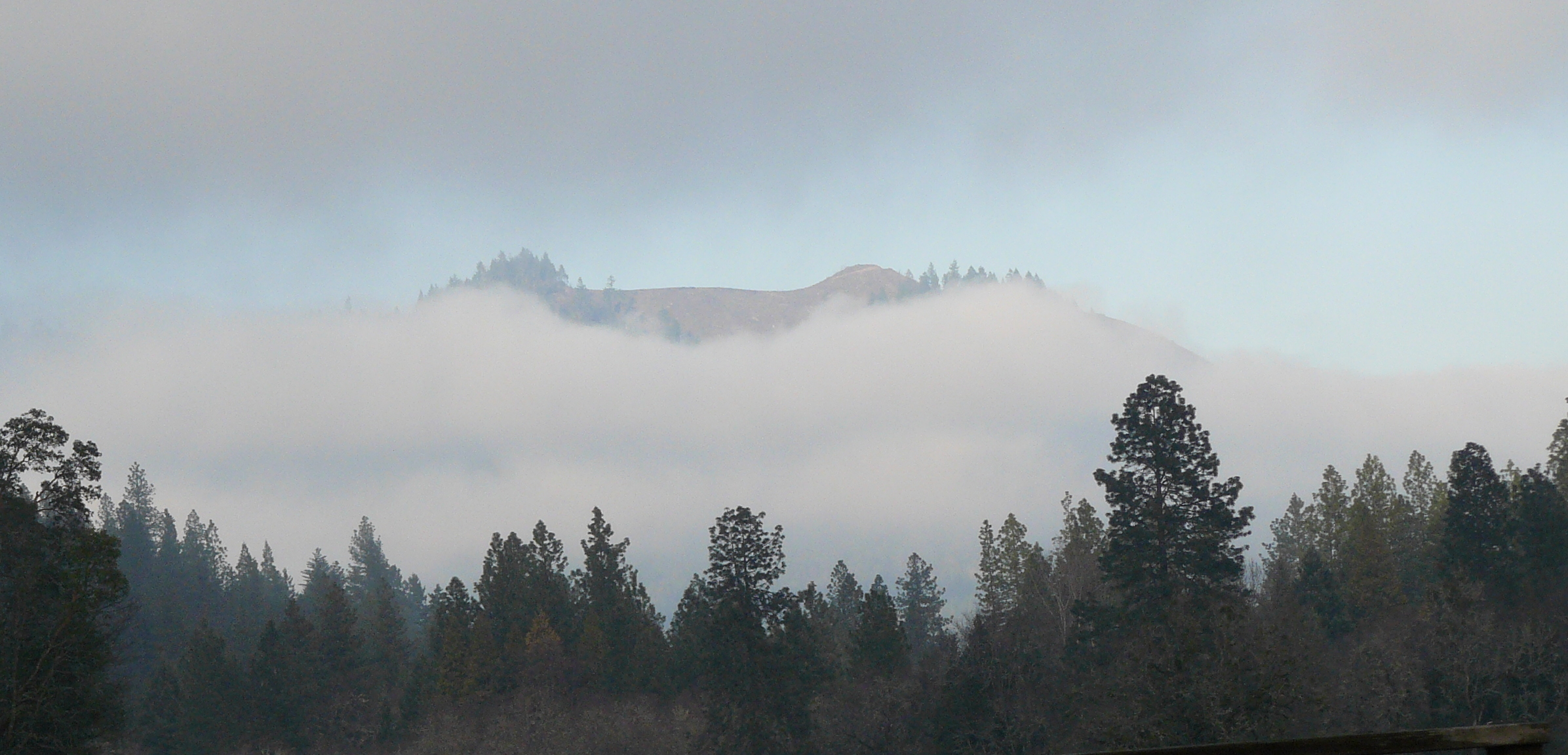
Rather underlines the message contained in last Saturday’s post about rewilding: Restore large carnivores to save struggling ecosystems
An opportunity to learn about dog food.
I have a policy of not allowing Learning from Dogs to promote commercial interests. I need those who visit this place to trust the integrity of what they find here.
Then back on the 19th December last, in came the following email.
Dear LearningfromDogs (I think Paul!),
Greetings from Florence, Tuscany!
We are sending you a piece that we hope will be considered for publication on your blog: we begin by talking about making pet food at home (and then go on to list some of the risks – essentially the message here is don’t do it!), we then talk about buying products off the shelf, and explain about food labeling and what different types of labeling will mean in terms of the meat content. I’ve also included some pictures that we purchased from DepositPhotos to help support with its publication. You can verify the usage terms on Deposit photos, but I can tell you that for your website they will be considered appropriate use.
Our shop first opened it doors in 1962 and we’ve just started an English website where we (wait for it!) are making dog beds, and collars to order. We’ve got the most amazing fabrics from a town in Tuscany that has been producing fabrics from the 13th Century. The quality is (as I hope you will take a look) of the highest standard.
Please take a read through the article and if you would like to publish it we would be thrilled.
Best regards from Tuscany,
Glyn
The email offered me a potential conflict. Glyn was clearly promoting his company and yet the information struck me as valuable to pet owners. On balance, it seemed worthwhile to publish the article.
ooOOoo

There have been substantial changes in the market of pet foods over the last decade, and so this article sets out to demystify pet food labelling in layman’s terms. We also consider whether or not preparing the food your pet eats in your own home is really a viable option, if you want to have a healthy pet.
Preparing food at home
If you have decided to undertake the mission of preparing your pet’s food at home, it’s important that you take some time to look up what exactly is needed in your pet’s diet. You have to ensure that your pet gets all the nutrients it needs, and that you don’t provide it with too much of one food group or another as this could cause it serious health problems (Hypervitaminosis A, Hypervitaminosis D).
Cats require a varied diet, consisting mainly of meat. One of the most important amino acids for cats is Taurine which is only found in meat – a lack of this in a cat’s diet could cause cardiac dysfunction, blindness, etc. Other essential nutrients for our feline friend include: arginine (also important for dogs too), arachidonic acid, niacin, vitamin A, vitamin D, vitamin E. You should not forget to provide the right amount of calcium, phosphorus, and magnesium. Reading this you probably get the sense that taking on the task of being your pet’s personal cook is not as simple as it sounds. Our pets have very specific dietary needs, just like us, and you wouldn’t want to risk endangering them with the wrong food. The plate of scraps after a large meal is clearly not enough.
Purchasing food off the shelf
As the vast majority of consumers opt for buying their food from either the supermarket or their local pet store, it’s important to highlight that the range of dietary foods being produced today means that, if you don’t read the label carefully, you can really do harm to your pet feeding them food that is not matched to their actual dietary needs. We’ve seen dogs that look emaciated and thin simply because they have not been given the correct advice when feeding their dog (we then saw the same dog a few weeks later looking great!).
For example, ‘ash’ is often included in the ingredient list of pet foods. This refers to the inorganic component of the food, and it shouldn’t make up more than 6.5%-7% of dry foods and 1%-2% of wet foods. The lower the concentration of ash, the higher the quality of the food.
Labelling in pet food and what it means
Specifically regarding meat in packaged pet foods, there are a few things to keep an eye open for while studying the labels. The amount of meat included in pet food changes from brand to brand, but as a general rule the following serves as a guide:
– products that have the word ‘flavour’ or ‘aroma’ in their name contain under 4% of meat;
– when the product name declares ‘with meat’ it should contain over 4% of meat;
– when the name contains ‘rich in meat’ or ‘extra meat’ the percentage of meat is between 14% and 25%. Anything above 14% and 25% and the product takes on the name of the meat it’s made up of.
In dry foods, sometimes meat flour or fish flour are included. These sometimes contain offal and discarded meat so a better option is dehydrated meat.
Author Bi line
We hope that this article has provided you the reader with greater detail on some of the nuances involved in planning your pet’s diets. At ZEIPET in Florence, Tuscany, we have been serving customers in our little pet shop since 1962. We are most known for our luxury dog beds which are made to order and from some of the finest fabrics in Italy. So, after you pet has eaten and it’s time to stretch out, they are guaranteed to do so on a bed of doggie paradise.
ooOOoo
Hope this has been helpful. If you have any questions, leave them as comments and I’ll ask Glyn to reply.
A window on Learning from Dogs for 2013.
On the last day of the year WordPress emails out a report to their blogging community, all seventy-four million of them, on how things went for the year.
So here’s the report for Learning from Dogs for 2013.
ooOOoo
The WordPress.com stats helper monkeys prepared a 2013 annual report for this blog.

The Louvre Museum has 8.5 million visitors per year. This blog was viewed about 130,000 times in 2013. If it were an exhibit at the Louvre Museum, it would take about 6 days for that many people to see it.
In 2013, there were 379 new posts, growing the total archive of this blog to 1,924 posts. There were 874 pictures uploaded, taking up a total of 394 MB. That’s about 2 pictures per day.
The busiest day of the year was March 16th with 3,980 views. The most popular post that day was Trust me, I’m an engineer!.
Cats and Dogs 23 COMMENTS October 2010
Trust me, I’m an engineer! 18 COMMENTS March 2013
Faithful dog Hachikō 27 COMMENTS August 2010
Off to Oregon No COMMENTS July 2012
Wonderful news for Wolves 1 COMMENT August 2010
Some of your most popular posts were written before 2013. Your writing has staying power! Consider writing about those topics again.
Some visitors came searching, mostly for cats, dogs, oregon, stonehenge, and cat.
The top referring sites in 2013 were:
A total of 195 countries!
Most visitors came from The United States (61,890). The United Kingdom (15,157) & Canada (8,092) were not far behind. Not forgetting the four visitors from Laos!
Your most commented on post in 2013 was Picture parade fifteen.
These were your 5 most active commenters:
1 
2 
3 
4 
5 
ooOOoo
Two simple words from me – THANK YOU!
Suddenly, it all makes sense!
“Washing one’s hands of the conflict between the powerful and the powerless means to side with the powerful, not to be neutral.” –Paulo Freire
Dear neighbours, Dordie and Bill, lent us a documentary video to watch on Sunday night. It was called “HEIST: Who Stole the American Dream?”
As the film’s website explains:
HEIST: Who Stole the American Dream? is stunning audiences across the globe as it traces the worldwide economic collapse to a 1971 secret memo entitled Attack on American Free Enterprise System. Written over 40 years ago by the future Supreme Court Justice Lewis Powell, at the behest of the US Chamber of Commerce, the 6-page memo, a free-market utopian treatise, called for a money fueled big business makeover of government through corporate control of the media, academia, the pulpit, arts and sciences and destruction of organized labor and consumer protection groups.
But Powell’s real “end game” was business control of law and politics. HEIST’s step by step detail exposes the systemic implementation of Powell’s memo by BOTH U.S. political parties culminating in the deregulation of industry, outsourcing of jobs and regressive taxation. All of which led us to the global financial crisis of 2008 and the continued dismantling of the American middle class. Today, politics is the playground of the rich and powerful, with no thought given to the hopes and dreams of ordinary Americans. No other film goes as deeply as HEIST in explaining the greatest wealth transfer of our time. Moving beyond the white noise of today’s polarizing media, HEIST provides viewers with a clear, concise and fact- based explanation of how we got into this mess, and what we need to do to restore our representative democracy.
It’s an incredibly interesting film, but more of that later. For me, what was stunningly enlightening was at last understanding the powerful forces at work since Lewis Powell published ‘the memo’ back on August 23, 1971. Because for me over in Britain, the era of the ’70s’ and ’80s’ were incredibly fulfilling. First, as a salesman for IBM UK – Office Products Division, from 1970 through to 1978, and then forming and managing my own company through to 1986 when I succumbed to an attractive purchase offer. Then, when my company was sold, taking a few years off cruising a sailboat in the Mediterranean; based out of Larnaca, Cyprus.
Thus I was immune to the global money and power plays, albeit enjoying rising house prices! Only Lady Luck protected me from the collapse of 2008 in that I had sold my Devon home in early 2007 and was renting. Then Lady Luck arranging for me to meet Jean in Mexico, Christmas 2007 (we were born 23 miles apart in London) and subsequently moving out to Mexico with Pharaoh in September, 2008, to be with Jean and all her dogs. Lady Luck’s magic continued in that we came to Merlin, Oregon because we were able to take advantage of a bank-owned property; moving there in October, 2012.
Of course, the scale of the downturn was obvious and there were many instances of people that I knew losing jobs or homes, or both, and generally having a very rough time.
So back to the film. Here’s the official trailer.
Uploaded on Feb 17, 2012
Please watch the newly updated trailer for “Heist: Who Stole the American Dream?,” the new, explosive documentary from Frances Causey and Donald Goldmacher exposing the roots of the American economic crisis and the destruction of the American dream. Visit www.Heist-TheMovie.com for more information on how to see the feature film and how to Take Action in restoring democracy and economic justice in the United States.
But here’s another thing that now makes sense: The legitimate anger of so many people, especially those who have some insight into what had been taking place. No, amend that! What is still taking place!
Just one example of that legitimate anger, that of Patrice Ayme. Just go across and read his blog post of two days ago: American Circus.
My strong recommendation is that you take an evening off and watch the film. Here’s another preview:
Frances Causey, Co-producer & co-director-Heist & Donald Goldmacher, Co-producer & co-director-Heist join Thom Hartmann. Corporate America is the biggest Welfare reciepient in the country – but that wasn’t always the case. The makers of Heist will tell you how organized money has been able to pull off the biggest “Heist” of the American Dream!
The film also concludes by offering many ways in which individuals can take back control of their lives, reinvigorate local communities, actively show that people-power is unstoppable. As it always has been and always will be.
This post started with a quote and I’m going to close with another.
“The day the power of love overrules the love of power, the world will know peace.” -Mahatma Gandhi
The start of phase two of ‘The Book’!
Back on the 1st November, I started out on the journey to write, before the end of November, a novel of a minimum of 50,000 words. It was part of the NaNoWriMo annual encouragement for new writers. To my amazement, I completed a first draft.
However, now comes the hard work! For as Stephen King explains in his book, On Writing,
When you write a story, you’re telling yourself the story, when you rewrite, your main job is taking out all the things that are not the story. (p. 57)
Or as I read somewhere else: Your first write is for you, your rewrite is for your readers.
Either way it doesn’t get around the fact that for the next several weeks I need to be spending hours rewriting the first draft.
Which is my way of saying that until that rewrite is complete I won’t be able to spend so much time writing posts for Learning from Dogs. In other words, there will be more republication of other articles and essays that catch my interest, repeat posts back from the earlier days of the blog and the publication of essays that you, dear reader, have sent me (hint!!).
TED Talks is an amazing resource that thousands use. Not infrequently, a TED Talk finds its way to these pages; as indeed one on dieting will be offered tomorrow.
For today, however, enjoy this wonderful, and powerful, TED Talk by Benjamin H. Bratton.
 Learning from Dogs