After the run of eye-wateringly beautiful pictures of dogs and small children, the third and final set being a week ago, I was gently panicking as to how to follow that up. Then dear friend, Bob Derham, came to the rescue, the first seven of which are offered today.
A few days ago, dear friend Suzann, sent me an item about a wonderful new light aircraft. (It was Su and Don who invited me to Mexico in December, 2007 that resulted in me and Jeannie meeting!)
Before I explain what Su sent me, allow me a few moments of nostalgia.
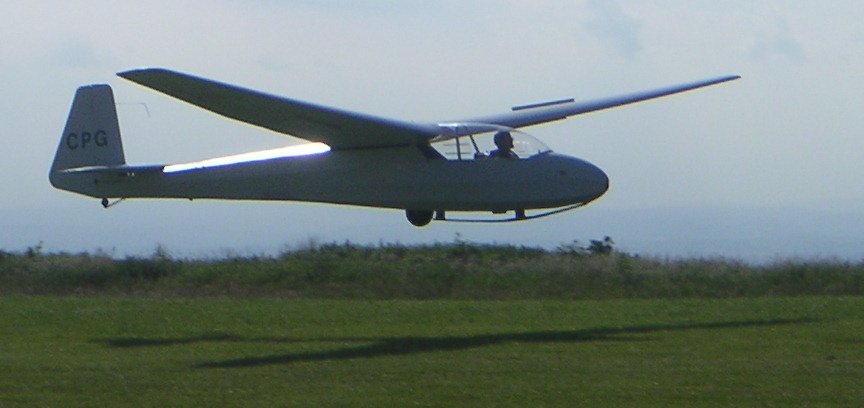
‘K7’ glider.
I have a gliding (sailplaning in US speak) log book that has the following entry at the top of page 1:
Flights 1 & 2. June 7th 1981. K7 dual seat glider. Rattlesden Gliding Club, Suffolk. Winch launch. Total flight time 12 minutes.
Those flights started a love affair with flying.
I have a powered-flight log book that has the following entry at the top of page 1.
March 3rd, 1984. Cessna 150. Reg: G-BGAF. Capt: Martin Lowe. Ipswich Airport – local flight 1325 – 1355. Exercises 4,5.
I continued glider flying, becoming an instructor along the way, until my last flight, flight number 1,424, on the 19th December, 1992; again from Rattlesden.
I continued power flying until the 4th August, 2008, a short time before I left the UK to be with Jean in Mexico. My last flight was in a Piper Super Cub, registration R-151, a flight of 1 hr 40 mins from Kemble returning to Watchford Farm, where the Cub was based.
My son, Alex, shared my love of flying as a young man and is now a Senior Captain with a British airline.
G-EWFN, a Socata TB20.
Anyway, all of which is a rather long preamble to this.
What a fabulous aircraft! The relevant website is, unsurprisingly, the Air-Cam site.
(Come back on Monday for some more recollections about flying the Piper Super Cub!)
Never a day where there isn’t something new to learn; and an opportunity to make a difference.
What prompted the heading and sub-heading of today’s post?
Well, I’ll tell you (you knew I was going to, didn’t you!)
I have mentioned Melinda Roth before on Learning from Dogs, most recently on February, 20th in a post called Oregon wolves, and book writing.
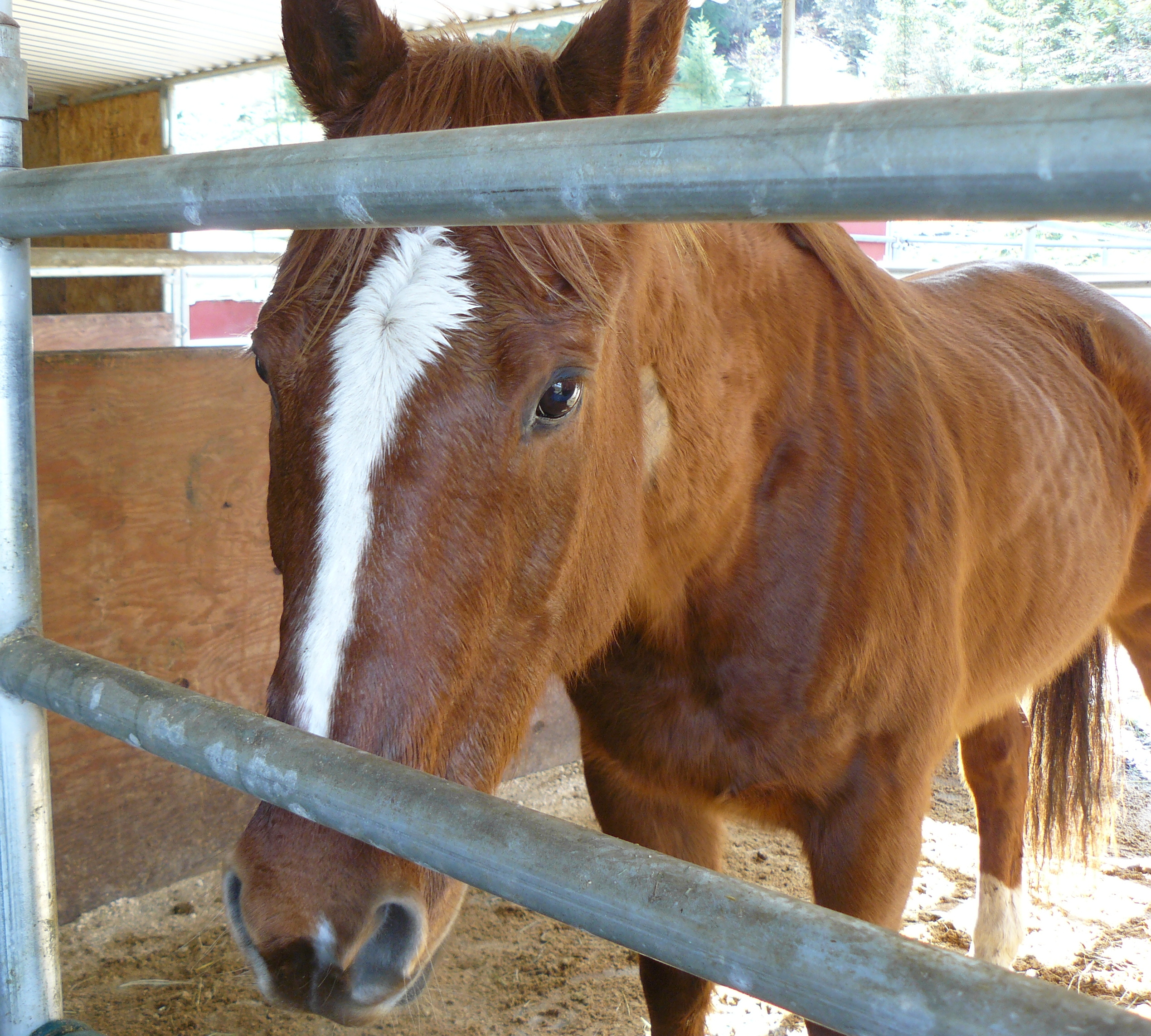
I have also previously mentioned Strawberry Mountain Mustangs back on the 18th February, in a post called The lone Ranger. That was where we spoke of visiting Darla and Troy who own Strawberry Mountain Mustangs, near Roseburg in Oregon and coming to the decision, the very happy decision, to adopt Ranger; whom we hope to welcome to our home in Merlin in about 10 days time.
Ranger
Anyway, Darla was made aware of Melinda’s blog, Anyone Seen My (BLEEP)ing Horse? and left the following comment to one of Melinda’s posts, that comment from Darla being reproduced in full. Please read and absorb Darla’s comments because of the power of her words in relation to saving horses. Plus, later on there’s a plea from me for a competent web-programmer who could help Darla. But, please read on:
Hello Melinda!
What a wonderful blog… there are no words, but sometimes I guess when a mutual passion is shared, you don’t necessarily need them, do you? Thank you for sharing this.
It’s been a great honor to meet Paul & Jean, and we are working toward getting Ranger delivered to them in the coming weeks. While he is not a “mustang” in the common sense of the word, he is a rescue, once abandoned in the Ochoco National Forest, brought here for rehabilitation and care. He’s a sweet, kind gentle soul whose eyes will sometimes give you the hint of the abuse he suffered some time during his past. Now, more often than not, he lets his guard down and will melt into you for the treats and scratches that used to be so foreign to him.
By adopting Ranger, Paul & Jean open up a space for a more critical rescue to come in. Maybe a wild one, they seem to find their way here – often after being abused or mishandled by their first adopter – as you have seen. Those animals are not the clean slate that comes from the desert and they have often learned what it takes to survive against the humans who don’t understand them. Other times, we will get a wild one who’s heart will always be wild, who was never meant to survive in captivity, and we work hard to find a suitable sanctuary for those animals to live out there days. And… we also get those amazing beings who seem to forgive us all for our actions, and seem to meld into what we expect of them – and except for that glimmer in the eye – they seem to forget the wide open spaces. My boy Buddy was that way. (Read about him on our sadly outdated website… http://www.strawberrymountainmustangs.com)
If it’s not a wild one, it will surely then be a starving creature at death’s door, sent to us by one of the law enforcement agencies we work with. Regardless of breed, we’ll take them in. Make them well, learn “who” they are, and try to find them their human. Sometimes it takes months, sometimes years. We’re in no rush.
I look forward to some day meeting you. I sent Paul some links to information about the Sheldon wild herds, a group that is very near and dear to me. Maybe he can share them with you? Sadly, Fish & Wildlife plans to have them completely eliminated this year I believe.
Take care,
Darla
Melinda replied:
What an honor to have you comment here. And what beautiful words. I wish I could do what you do… I will visiting your site and hope to speak with you soon.
That reply from Melinda prompting this further comment from Darla (my emphasis, by the way).
I get the feeling you DO, do what I do. It takes a village. You may not be “hands on” – but you know horses. You spread the word. You encourage rescue. All of that IS what rescue IS. Don’t discount a bit of it just because you aren’t hanging out your shingle as a rescue organization. I appreciate the thought, but we’re all in this together.
Hope you found Buddy’s story – The Reason – and enjoyed it. The rest of the website is out of date since our web designer became ill. I’m not tech savvy, and prefer to be in the barn anyway…so there it sits.
That short sentence from Darla inspired me to write today’s post – hence the post title.
Born in the Nevada desert with a pedigree written in the sands, he was as pure as the air he breathed.
From the inside out, he was pure gold; soft and gentle, yet tough enough to survive the brutality that would have faced him in the wild. He belonged to Mother Nature & no one else, but he CHOSE me.
His amber eyes shone and melted the toughest of souls. If the eyes didn’t do the trick, a persistant lick would. He won over the heart of even the toughest cowboy.
Towering at 16.2 hands, some would call him a giant. I called him my friend.
He won no races, no ribbons, no trophies. Instead he won hearts. He never competed in a halter class. Instead he spent his time visiting elderly at assisted living centers. That was where he chose to stand at attention, perfectly still, for those in the wheelchairs to judge him.
He wasn’t a reining champion. He did no fancy rollbacks, sliding stops or quick turn arounds. Instead he chose to move carefully, cautiously and slowly so that he didn’t dislodge the rider from his back. Whether they were 2, or 62, Buddy took care of them. I think he earned more high points this way than any national champion ever could have.
Saddles and bridles didn’t fit. Maybe they were never meant to? After all, he had much more important things to do with his short life. Instead we went bareback and with a halter and lead. We didn’t need anything more. We had each other.
Buddy was a wild horse from the Sheldon National Wildlife Refuge in Nevada. His heritage was cavalry, old stock run by ranchers for our military. It was in his blood to serve, to protect. He did just that.
The lives he saved are countless. Mine was just the first. He showed me what true passion is, that there was more to life than a paycheck and that even a small town girl could make a difference.
Buddy went on to save hundreds of equine lives as well, many of them the wild horses on Sheldon. Lawmakers and the media have learned about the inadequacies of a poorly run adoption program there and the danger our wild horses are in. He also brought us the quiet survivors of abuse and neglect cases. The malnourished, the broken, the beaten and the forgotten. He stood back and watched them all come in, for us to care for and mend, and he waited patiently for his turn to shine.
Webster’s dictionary defines legend as: a person or thing that inspires. I struggled with the term I wanted to use when writing this. Was Buddy an icon? An idol? A legend? After reading the definition, it became clear. He was my dream, my hope, my love, my reason and my inspiration. He is, and will forever be, my legend.
Darla Clark September 8th, 2007
Buddy: The legacy
Buddy’s legacy lives on at Strawberry Mountain Mustangs, the rescue founded because of him and so many like him. Wild horses who roam on Fish & Wildlife, Forest Service, National Park or reservation lands have no federal protection under the Wild Horse and Burro act of 1971. Please help us save a part of American History. These are OUR living legends. Now we must honor them, and Buddy, by protecting them.
In Buddy’s memory, we are erecting a much needed hay storage barn. We’ve lost several ton of hay to mold already this year. The hay barn will protect the hay and keep our rescue horses safe from any illness caused by hay affected by inclimate weather. Will you help continue Buddy’s work? Please, give whatever you can to help carry on Buddy’s legacy. Buddy made a difference; you can, too.
ooOOoo
So here’s another great way you can really help.
Did you pick up what Darla wrote in her subsequent reply to Melinda? Here it is again:
The rest of the website is out of date since our web designer became ill. I’m not tech savvy, and prefer to be in the barn anyway…so there it sits.
The Strawberry Mountain website is not a complex one. Darla deserves support in so many ways. OK, are you a web programmer or do you know one? If not, could you share this post as widely as you can. Because there must be someone out there who could offer Darla some pro-bono help so that her website is updated. The many horses under Darla’s care deserve the best ‘voice’ in the universe.
A number of essays and items from a variety of sources have passed my screen in recent times that ….. well, you complete the sentence! Let me illustrate; in no particular order.
I have long been a follower of the writings of George Monbiot. Those who haven’t come across Mr. Monbiot before can avail themselves of his background and dip into his articles, many of which underscore my proposition that we really are a peculiar race. For example, just three days ago George Monbiot published an article under the title of The Benefits Claimants the Government Loves. It highlights one mad aspect of UK Policy.
Corrupt, irrational, destructive, counter-productive: this scarcely begins to describe our farming policy.
By George Monbiot, published in the Guardian 4th March 2014
Just as mad cow disease exposed us to horrors – feeding cattle on the carcasses of infected cattle – previously hidden in plain sight, so the recent floods have lifted the lid on the equally irrational treatment of the land. Just as BSE exposed dangerous levels of collusion between government and industry, so the floods have begun to expose similar cases of complicity and corruption. But we’ve heard so far just a fraction of the story.
You really do need to read the article in full to get your arms around the terrible state of affairs of the UK benefits scandal. But try this:
As a result of these multiple failures by the government, even Farmers’ Weekly warns that “British soils are reaching crisis point” (16). Last week a farmer sent me photos of his neighbours’ fields, where “the soil is so eroded it is like a rockery. I have the adjoining field … my soil is now at least 20 cm deeper than his.” In the catchment of the River Tamar in Devon, one study suggests, soil is being lost at the rate of five tonnes per hectare per year (17).
I could go on. I could describe the complete absence of enforceable regulations on the phosphates farmers spread on their fields, which cause eutrophication (blooms of algae which end up suffocating much of the freshwater ecosystem) when they run into the rivers. I could discuss the poorly-regulated use of metaldehyde, a pesticide that is impossible to remove from drinking water (18). I could expand on the way in which governments all over Europe have – while imposing a temporary ban for flowering crops – permitted the use of neonicotinoid insecticides for all other purposes, without any idea of what their impact might be on animals in the soil and the rivers into which they wash. The research so far suggests it is devastating, but they were licensed before any such investigation was conducted (19).
There is just one set of rules which are effective and widely deployed: those which enforce the destruction of the natural world. Buried in the cross-compliance regulations is a measure called GAEC 12 (20). This insists that, to receive their money, farmers must prevent “unwanted vegetation” from growing on their land. (The rest of us call it wildlife habitat). Even if their land is producing nothing, they must cut, graze or spray it with herbicides to get their money. Unlike soil erosion, compaction and pollution, breaches of this rule are easy to detect and enforce: if the inspectors see trees returning to the land, the subsidy can be cut off altogether.
Perhaps a clue to the extreme unfairness of who is in receipt of UK benefits can be explained by the fact expressed by George Monbiot above, “The biggest 174 landowners in England take £120m between them.”
With that in mind, let’s move on. Move on to a recent essay from Patrice Ayme: WAR MAKES HISTORY! To say it makes disturbing reading is, trust me, an understatement. But in the context of the UK’s rich landowners, as George Monbiot explained above, try this closing extract from Patrice’s essay:
We are a deeply equalitarian species. Out of equality rises our superior cultural performance. Plutocracy, the rule of the Dark Side, denies giving, love, and the equality which make us possible. Thus plutocracy is a denial of our species. Only an anger great enough to destroy it, will save us, and the biosphere. And there is hope: greed is neither as natural, nor as strong as anger.
It’s time to get angry against dictator Putin. Angry now is better than very sorry tomorrow.
War makes history. Of this we must think, if we want to make history better.
Patrice Aymé
Frankly, my own knowledge of these ‘dark forces’, of the influence of money and power, is practically zero. But the more that one looks at the madness of so many aspects of mankind’s existence, the more one thinks the truth, as Patrice writes it, is the real truth. Indeed, here’s how Patrice opens his essay:
WAR MAKES HISTORY
HERE WE GO AGAIN
The earlier unjustifiable, unprovoked fascism, greedy plutocracy, imperial overstretch, murderous paranoia and other aspects of the Dark Side get smashed, the better.
Such is the most basic lesson of the 1930s.
For the millions of us that live relatively comfortable lives, it’s easy to read this stuff, nod sagely, and wonder if the heating needs to be left on this coming night. But, pardon the pun, wake-up calls as to the approaching nightmares (sorry!) are not hard to find.
Try this from an interview with Elizabeth Kolbert, as recently published on Grist:
In “The Sixth Extinction,” Elizabeth Kolbert reports from the frontlines of a dying world
The New Yorker writer and acclaimed author Elizabeth Kolbert has a penchant for depressing topics. Her 2006 book, Field Notes from a Catastrophe, helped push climate change into the mainstream (with bonus points for not mincing words in the title).
Now that climate change is safely keeping most of us up at night, Kolbert turned her pen to another big bummer: the sixth extinction. We’re currently losing species at a rate of 1,000 to 10,000 times higher than unassisted nature wiping out the occasional newt. While humans weren’t responsible for the last five mass extinctions, our fingerprints are all over this one. Yep: We collectively have the force of an asteroid when it comes to erasing species (high five, guys!) and for the most part, our response has been classic Urkel.
That interview concludes:
Q. You also write about some efforts to save species. Could you share some of those?
A. I happened to go to the San Diego Zoo, where they have a very impressive conservation program. I was there to see something called the “frozen zoo.” It’s just a bunch of vats of liquid nitrogen with cell lines from, in many cases, highly endangered animals and, in one case, an animal that doesn’t exist anymore, a Hawaiian bird. The idea is pretty much what it sounds like: You have these cell lines, you’re going to keep them alive forever, and eventually people are going to figure out how to resurrect some of these species. Or maybe if you don’t want to go quite that sci-fi, we’ll take the cell lines, we’ll do a DNA analysis, we’ll try to figure out why this population is having trouble.
They took me to see this bird named Kinohi, one of the last Hawaiian crows. He’s “reluctant to part with his genetic material,” let’s put it that way. He had been taken from this breeding facility on Maui to San Diego, and he is ministered to by a PhD physiologist who is trying to, let’s say, pleasure this bird, so that he will give up some sperm, so she can artificially inseminate a bird back in Maui. When I visited he had not yet, you know, come through. She was literally preparing to try again — I don’t know if it has ever worked, I should call her.
That was really, to me, emblematic of this crazy situation we find ourselves in. We’re incredibly smart, we’ve figured out how to freeze cell lines and quite possibly bring back extinct animals — we’re willing to pleasure crows. And yet, the Hawaiian Islands are called the extinction capital of the planet — it’s an absolutely devastated ecosystem. Many, many birds are extinct already; those that aren’t are just clinging to existence. Those forces are not changing and, in fact, things are getting worse. There used to be no mosquitoes in Hawaii; there are now mosquitoes. They carry avian malaria, and as the climate warms, avian malaria is moving up the slopes so that even these refugees species that are high on the mountains are increasingly not there. A lot of birds are in terrible trouble there.
All of these things are happening at once and, once again, they’re all true. People are devoting a lot of time and energy and love to trying to preserve these species, and meanwhile the world is increasingly screwed up. So that is how I end the book: They can both be true; it’s not one or the other.
Did you notice the reference to yet another example of mankind’s madness? “That was really, to me, emblematic of this crazy situation we find ourselves in. We’re incredibly smart, we’ve figured out how to freeze cell lines and quite possibly bring back extinct animals — we’re willing to pleasure crows. And yet, the Hawaiian Islands are called the extinction capital of the planet — it’s an absolutely devastated ecosystem.“
I believe inherently that the great majority of individuals are good people. Take Kevin Richardson for instance. Not for him money and power. Just a passion to save lions. Oh, and hugging them! Just watch, and be moved.
Don’t know how to close this? Maybe using a quotation from Ernest Hemingway:
The world breaks everyone, and afterward many are strong at the broken places.
So in these broken times, let all the good people come out strong – stronger than those who are corrupt, irrational, destructive and counter-productive!
It is the ultimate time for hope and faith in the power of goodness!
Last week Jean wrote about Casey. Slight difference this week in the sense that both Jean and I equally know the story of how Hazel came into our lives. So you are stuck with me today for the story of Hazel.
ooOOoo
Hazel
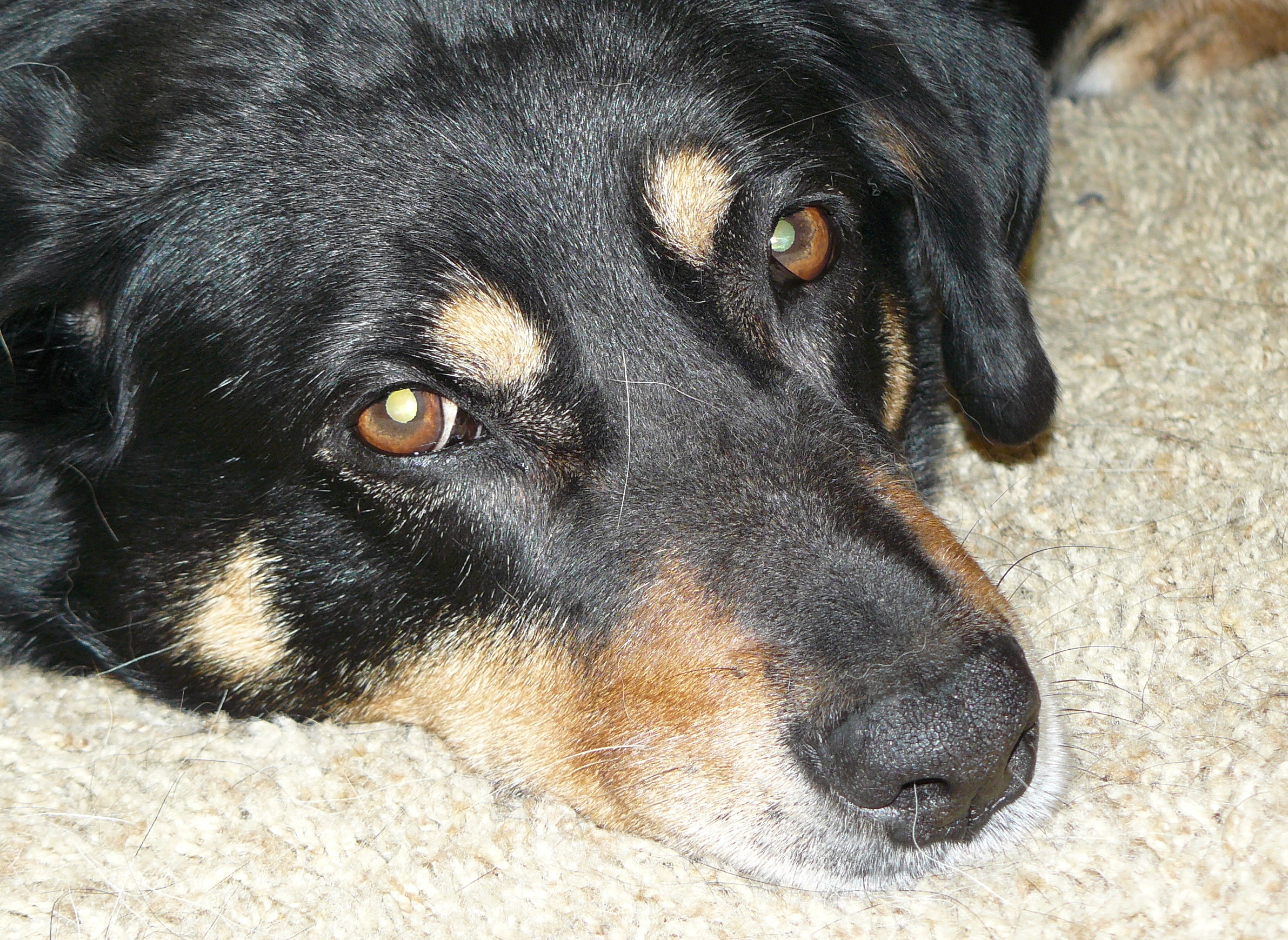
Picture of Hazel taken in the last twenty-four hours.
I first met Jean in Mexico; namely, in San Carlos, Sonora, Mexico to be precise. Just a few days before Christmas, 2007. At that time, Jean had 16 dogs, all of them rescues off the streets in and around San Carlos. Jean was well-known for rescuing Mexican feral dogs.
In September, 2008 I travelled out to Mexico, via London-Los Angeles, with my Pharaoh. Jean and I have been together ever since. In February, 2010, because we wanted to be married and to be married in the USA, we moved from San Carlos to Payson, in Arizona; some 80 miles North-East of Phoenix.
One morning, just a few days before we were due permanently to leave San Carlos and move our animals and belongings the 513 miles (827 km) to Payson, AZ, Jean went outside the front of the San Carlos house to find a very lost and disorientated black dog alone on the dusty street. The dog was a female who in the last few weeks had given birth to puppies that had been weaned. Obvious to Jean because the dog’s teats were still somewhat extended.
The dog had been abandoned outside in the street. A not uncommon happening because many of the local Mexicans knew of Jean’s rescues over many years and when they wanted to abandon a dog it was done outside Jean’s house. The poor people of San Carlos sometimes resorted to selling the puppies for a few Pesos and casting the mother dog adrift.
Of course the dog was taken in and we named her Hazel. Right from Day One Hazel was the most delightful, loving dog and quickly attached herself to me.
The truest of love between a man and a dog!
Of all the dogs that we have here at home, and, trust me, many are extremely loving, my relationship with Hazel is precious beyond description. She is in Pharaoh’s ‘group’ (Pharaoh, Hazel, Cleo, Sweeny and Dhalia) so sleeps in our bedroom at night. Most nights Hazel is tucked up against me.
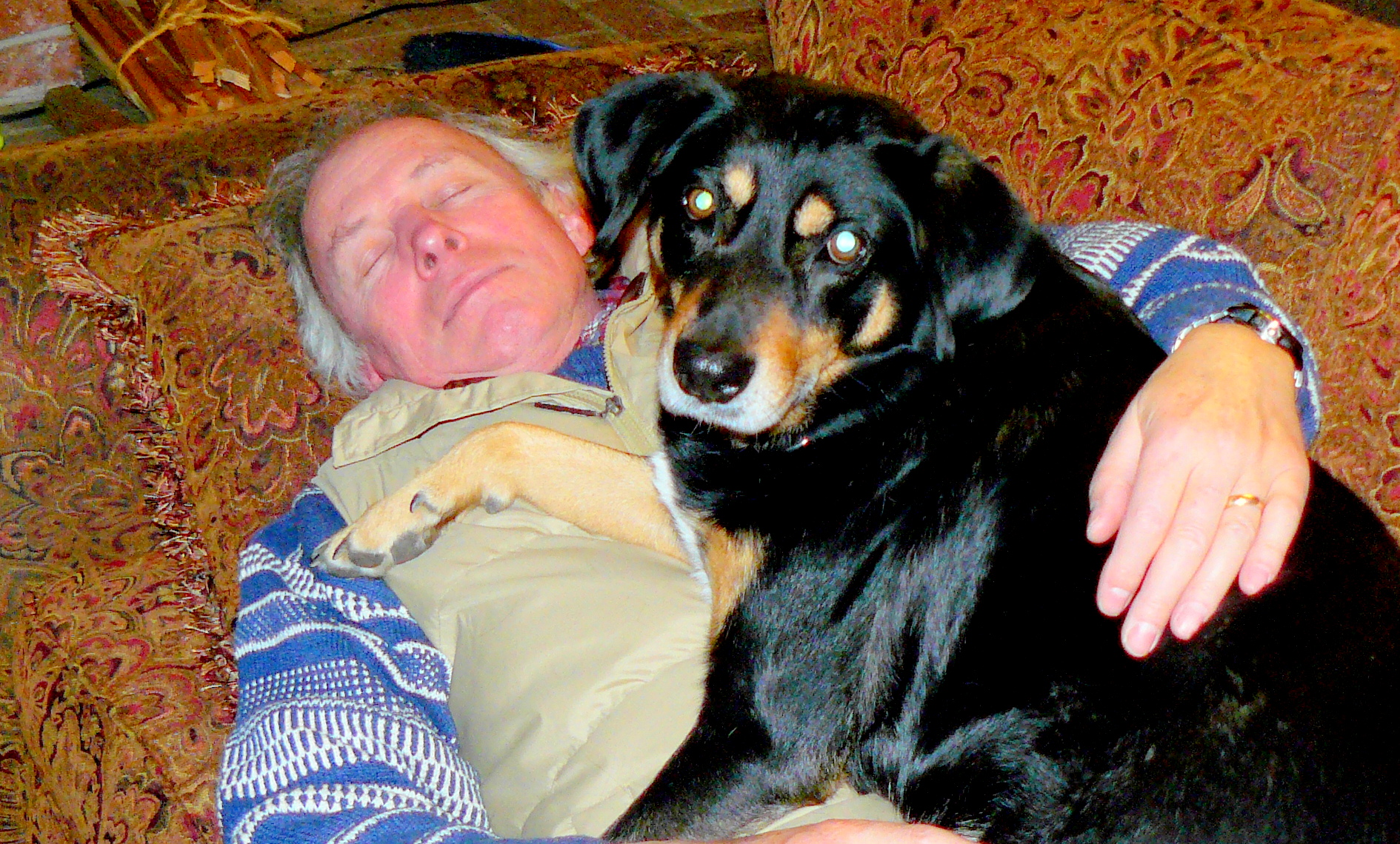
Plus frequently during the day Hazel will take an interest in what I am doing, as the next photograph illustrates.
Hazel taking an interest in my potterings.
Very little more that can be said without the risk of repeating myself.
If ever one wanted an example of the unconditional love that a dog can offer a human, then Hazel is that example.
A reflection on WordPress that powers so many blogs.
All too often in life, it’s very easy to take things for granted. Such as the software that powers Learning from Dogs and so many other blogs right across the world, namely WordPress. What prompted this? Reading the February WordPress report.
ooOOoo
WordPress.com by the Numbers: The February Hot List
Ben Huberman, Editor at WordPress.com
February was another eventful month at WordPress.com. Here’s the lowdown on what we’ve all been up to.
It might be the shortest month of the year, but that certainly didn’t stop WordPress.com users from making February another month to remember. Frigid weather, suspenseful curling matches, The Lego Movie: nothing could keep you away from your sites. Enjoy this winter tale of blogging success.
The blog’s the thing
We were joined this month by no fewer than 1,670,000 new sites and blogs — that’s almost three times the population of Wyoming. Welcome, welcome, welcome.
Old bloggers or new, you set to work with zeal: you wrote nearly 40,000,000 posts this month (if each stood for an hour, it would be enough time to walk to the sun — and back). You made sure not to miss a beat by tapping away on your devices: 2,230,000 posts were published on iPhones and iPads, about a million on your Android devices, and nearly 200,000 came from the BlackBerry crowd.
A contribution to The Daily Post’s recent photo challenge, Threes, by rodocarda.
In case you were curious — we know you were! — you collectively wrote 9.4 billion words. That would roughly be the word count in Shakespeare’s collected plays — if the Bard had the stamina to write them 10,000 times.
As always, you weren’t exactly shy engaging with your fellow bloggers. You liked their posts 7,300,000 times, and left more than 48,000,000 comments.
Is that a widget that I see before me?
Your sidebars got some serious love this month, with 1,360,000 widgets added. The most popular ones? Text Widgets with 145,000, followed by 94,000 Image Widgets.
You also made your posts come alive, embedding 11,600,000 YouTube videos, 3,000,000 image galleries, and 265,000 SoundCloud tracks.
Now Is the Winter of Our Disco Tent
Yes, for those of us who live in the Northern Hemisphere, February was cold (please don’t gloat, Floridians). Which might explain the 24,659 posts tagged with winter and the 942 with polar vortex. The daydreamers among us wrote 4,861 posts about the sun, and 416 about Barbados (rumor has it the piña coladas are better in the latter).
Of course, winter is always coming for Game of Thrones fans, who, as loyal as direwolves, wrote 1,553 posts about a show that isn’t starting until April.
A contribution to The Daily Post’s recent photo challenge, Treasure, by theweeklyminute.
February was dominated by talk of Sochi (10,587 posts) and the Olympics (16,283). For some unfathomable reason, more bloggers published about hockey (a stunning 77,218 posts) than about curling (1,117). Then again, more posts were written about Lego (1,972) than about curling, probably because it’s harder to blog while vigorously brushing ice.
We can’t omit what’s possibly the most anticipated stat of all: in February, dogs (10,060 posts) still beat cats (5,729).
What else kept us warm last month? Laughter — 24,720 posts were added to the humor topic. Unsurprisingly, the month that gave us Valentine’s (6,988 posts) let itself be swept off its feet by love, with 103,147 posts. Please note that this is an odd number — isn’t it ironic? (Alanis Morissette: 40 posts.)
What feats we did last month
February was a hectic month behind the scenes, too, with Automatticians — including four new ones — working hard to make WordPress.com the best it can be (if that sounds like fun, join us!).
Finally, if you’re looking to update the look of your site, there’s no better time to try out some of our new themes. In the past month we introduced ten themes (four of them free!) to our Theme Showcase. Take a look at Axon,Mayer, Tuned Balloon, Yumblog, Lens, Hexa, Singl, MH Magazine, Circa, and Quadra — you won’t regret it.
Spring Equinox is right around the corner — we can’t wait to see what you accomplish this month!
ooOOoo
Now if all that isn’t amazing then take a look at the number of people who, like me, are ‘followers’ of WordPress.
You are following this blog
You are following this blog, along with 14,195,761 other amazing people
Those that know this blog know that posts of just eleven words coming from yours truly are as rare as hen’s teeth. So stay with me!
The number of LfD followers has just passed 900. To say that I am amazed, grateful and humbled still feels like an inadequate response. Thank you: to everyone of you.
One of those new followers left a recent comment that said, ” I love this blog, dedicated to dogs ..” It struck me that as the number of new followers has increased significantly in recent times that it wouldn’t do any harm to return to the principles behind Learning from Dogs.
For it’s not a blog about dogs per se but about the qualities that we, as in mankind, have to learn from dogs.
The starting point is truth; as in what is truth? Such a straightforward question of just three words requires many more words, indeed a book, to answer. A little over two years ago, I published a post called The evolution of the domestic dog, that included the following:
Way back in 2007 I was working with a good friend of mine, Jon, who lives in SW England. Anyway, Jon spoke of the philosophies of Dr. David Hawkins. David Hawkins has written a number of books including Truth vs Falsehood: How to Tell the Difference which I read a few years ago and found very convincing.
Dr David Hawkins of Veritas Publishing, Sedona, Arizona.
Here’s how Amazon describes the book,
The exploration into the truth of man’s activities is unique, intriguing, and provocative. From a new perspective, one quickly grasps the levels of truth expressed by the media, the arts, writers, painters, architecture, movies, TV, politics, and war, as well as academia and the greatest thinkers and philosophies through the ages and up to present-day science and advanced theories of the nature of the universe. Most importantly, the ego and its structure are revealed to facilitate the understanding of religious and spiritual truths expressed by the mystics and enlightened sages over the centuries. It becomes apparent why the human mind, unaided, has been intrinsically incapable of discerning truth from falsehood. A simple test is described that, in seconds, can solve riddles that have been irresolvable by mankind for centuries. This book delivers far more than it promises.
Reveals a breakthrough in documenting a new era of human knowledge. Only in the last decade has a science of Truth emerged that, for the first time in human history, enables the discernment of truth from falsehood. Presented are discoveries of an enormous amount of crucial and significant information of great importance to mankind, along with calibrations of historical events, cultures, spiritual leaders, media, and more.
A science of consciousness developed which revealed that degrees of truth reflect concordant calibratable levels of consciousness on a scale of 1 to 1,000. When this verifiable test of truth was applied to multiple aspects of society (movies, art, politics, music, sociology, religion, scientific theories, spirituality, philosophy, everyday Americana, and all the countries of the world), the results were startling.
Trust me, I am (slowly) getting to the point!
Dr. Hawkins created a ‘map’ of those calibrated levels of consciousness, see details of that map here. Also, it wasn’t too difficult to find a plain B&W version on the Web, reproduced below.
Map of Consciousness, copyright Dr. David Hawkins
As you can see when you study the map, the boundary between ‘truth’ and ‘falsehood’ is the calibrated level of 200, the blue line in the above described as ‘The beginning of integrity’.
Anyway, back to Jon. When I used to visit him, I always had Pharaoh with me and he would settle down behind my chair and let the human talk just flow over him, happy at some dog level to be included.
One day Jon was talking about the different levels of consciousness and looked over at Pharaoh asleep on the floor and said, “Do you that dogs are integrous!” I responded that I didn’t know that, please tell me more.
Jon continued, “Yes, dogs have been calibrated as having a level of consciousness in the zone of 205 to 210.”
So dogs, horses, cats and many other warm-blooded species of animals are fundamentally integrous creatures. Creatures that display the qualities of unconditional love, trust, courage, integrity and forgiveness. Just see where those emotions appear on David Hawkin’s ‘map’ above. However of all those animals, dogs have been man’s longest companion by far, perhaps all the way back to neolithic times.
So what gets written about Learning from Dogs is what we, as in society, have to learn from dogs. Because the time for mankind to place integrity, as in integrity of thought, word and deed, at the highest pinnacle of our domain is fast running out.
Going to close with a photograph taken yesterday afternoon here at home in Oregon, showing a pair of geese that are giving every indication of using our ‘island’ in our so-called pond as their base for having their goslings!
The integrity of Nature!
Some content on this page was disabled on August 23, 2017 as a result of a DMCA takedown notice from Susan Hawkins. You can learn more about the DMCA here:









 Learning from Dogs