“At that moment I must have lost my presence of mind.”
November’s cause!
A couple of years ago, in a fit of ‘all mouth and no trousers‘ I signed up to NaNoWriMo. For the uninitiated that stands for National November Writing Month.
Why do I write ‘all mouth and no trousers‘? Because in both the previous two Novembers I didn’t even think about writing a single word, let alone actually write a word. OK, a year ago we were in the middle of settling down into our home here in Merlin. But still ….
So this November, I have committed to have a go. Or as the NaNoWriMo blog post explains:
NaNoWriMo 2013: Want to Write a Novel?
It’s just a few days until November, and you know what that means: National Novel Writing Month, better known ’round these parts as NaNoWriMo, is near.
Have you always wanted to write a novel?
We know some of you have been waiting all year for this month! For those of you who are new to this project, here’s the gist:
Who: You — whether you’re a seasoned novelist, novice writer, wannabe author, or a blogger up for a challenge.
What: A project in which you work toward a goal of writing a 50,000-word novel.
Where: On your laptop. At your desk. In your favorite café. Wherever inspiration strikes.
When: Kicking off this Friday, November 1, and ending at 11:59 pm on November 30.
Why: You’re creative and passionate about words. You’ve got a story to tell. You want to participate in a fun, rewarding project and push others to stretch their imaginations, too.
How: Sign up at NaNoWriMo.org, where you can plan your novel, track your progress, and join a community that offers support, encouragement, and advice — online and off.
So that means that for the month of November I shall have my head down for quite a fews hours each day in the self-imposed challenge of seeing if I can actually write a 50,000 word novel in one month! To put that into perspective, it’s the equivalent of 1,670 words every single day, seven days a week, for the thirty days of the month!
Ergo, the time for writing posts for Learning from Dogs is going to be very severely restricted!
In fact, it’s worse than that! I’m going to be sharing my scribblings with you.
As the NaNoWriMo site goes on to suggest:
While the NaNoWriMo website is where you’ll capture the magic, we hope you’ll use your blog to post updates, test your material, and share tips:
Connect with other participants on WordPress.com. Be sure to follow NaNoWriMo in your Reader to read what others all over the world are writing and saying throughout the month.
Test material on your readers. While diving into a novel is a solitary journey, know that you’ve got a support network in your readership — they know your voice, so consider trying out material on your blog. Not sure if a scene is working? Post an excerpt.
Reflect on your writing process. If you don’t want to share your novel-in-progress or get too specific with your readers, that’s fine. But consider taking time in between your sessions to reflect on your process: roadblocks you’ve hit, questions about your craft, and advice for other participants.
“Share the lessons you learn about your writing — and yourself — through your NaNo journey,” says Kristi. Then, tag these posts with NaNoWriMo so others can find them. There’s already chatter in the Reader, so dive in: you’ll find resourceful and inspirational posts by bloggers like Kristen Lamb, Rachel Peterson, Cristian Mihai, and E.E. Blake.
My idea is to post completed chapters here on Learning from Dogs every couple of days or so. Aiming for the foreword In the beginning to be posted here next Monday, the 4th. Then Chapter One, Chapter Two, and, just possibly, Chapter Three by the end of next week. Tomorrow, November 1st, I will share my synopsis for my novel!
NaMoWriMo stress the importance of writing; writing; writing and not losing the impetus of getting those words out by dilly-dallying in constant editing; something that I am rather prone to do over what is now more than 1,850 posts since July, 2009!
Thus the writings posted on Learning from Dogs will have many obvious errors. So what would be truly fantastic is to have your feedback, both good and bad, also highlighting crap writing and obvious mistakes, plus any ideas as to how the story might evolve. Because at this moment in time, I don’t have much of an idea. Mind you, I bet I’m not alone. The NaNoWriMo website shows there are 186,437 Novelists up for it this November!
During the intervening days, in other words non-sharing days, I’ll try and find something quick or humorous to post or, perhaps, repost something that has previously been published in this place.
So if all this doesn’t ‘rock your boat’, I’ll see you on December 1st! Assuming there is some level of creative sanity left in me!
“Before we change the world, we need to change the way we think.”
That quote comes from the sub-heading of an article in the magazine The New Statesman, Britain’s current affairs magazine. In fact, written by Russell Brand from the week that he is guest editor for the magazine. Hence it following on from yesterday.
Guest editor for a week.
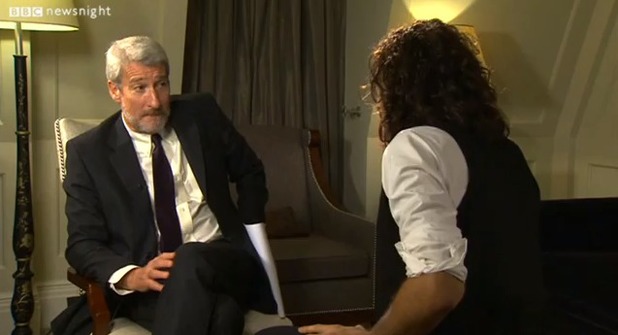
To remind readers, my post yesterday A powerful brand of truth centred around the interview on BBC Newsnight of Russell Brand by Jeremy Paxman.
Thus for today I wanted to offer some further thoughts from Russell Brand together with the film made by Dr Nafeez Ahmed. You will possibly recall that Dr. Ahmed was the author of the Guardian article that I quoted from yesterday.
Russell Brand’s New Statesman article spoke powerfully and eloquently of the issues that he covered in his BBC Newsnight interview. With The New Statesman’s permission let me offer a few extracts:
First from where Brand is speaking about “young people, poor people, not-rich people”.
They see no difference between Cameron, Clegg, Boris, either of the Milibands or anyone else. To them these names are as obsolete as Lord Palmerston or Denis Healey. The London riots in 2011, which were condemned as nihilistic and materialistic by Boris and Cameron (when they eventually returned from their holidays), were by that very definition political. These young people have been accidentally marketed to their whole lives without the economic means to participate in the carnival. After some draconian sentences were issued, measures that the white-collar criminals who capsized our economy with their greed a few years earlier avoided, and not one hoodie was hugged, the compliance resumed. Apathy reigned.
There’s little point bemoaning this apathy. Apathy is a rational reaction to a system that no longer represents, hears or addresses the vast majority of people. A system that is apathetic, in fact, to the needs of the people it was designed to serve.
Russell Brand is also no slouch when it comes to offering solutions, as in:
These problems that threaten to bring on global destruction are the result of legitimate human instincts gone awry, exploited by a dead ideology derived from dead desert myths. Fear and desire are the twin engines of human survival but with most of our basic needs met these instincts are being engaged to imprison us in an obsolete fragment of our consciousness. Our materialistic consumer culture relentlessly stimulates our desire. Our media ceaselessly engages our fear, our government triangulates and administrates, ensuring there are no obstacles to the agendas of these slow-thighed beasts, slouching towards Bethlehem.
For me the solution has to be primarily spiritual and secondarily political. This, too, is difficult terrain when the natural tribal leaders of the left are atheists, when Marxism is inveterately Godless. When the lumbering monotheistic faiths have given us millennia of grief for a handful of prayers and some sparkly rituals.
By spiritual I mean the acknowledgement that our connection to one another and the planet must be prioritised. Buckminster Fuller outlines what ought be our collective objectives succinctly: “to make the world work for 100 per cent of humanity in the shortest possible time through spontaneous co-operation without ecological offence or the disadvantage of anyone”. This maxim is the very essence of “easier said than done” as it implies the dismantling of our entire socio-economic machinery. By teatime.
Towards the end of the article, or manifesto as Brand calls it, he speaks about the change that is required:
We are still led by blithering chimps, in razor-sharp suits, with razor-sharp lines, pimped and crimped by spin doctors and speech-writers. Well-groomed ape-men, superficially altered by post-Clintonian trends.
We are mammals on a planet, who now face a struggle for survival if our species is to avoid expiry. We can’t be led by people who have never struggled, who are a dusty oak-brown echo of a system dreamed up by Whigs and old Dutch racists.
We now must live in reality, inner and outer. Consciousness itself must change. My optimism comes entirely from the knowledge that this total social shift is actually the shared responsibility of six billion individuals who ultimately have the same interests. Self-preservation and the survival of the planet. This is a better idea than the sustenance of an elite. The Indian teacher Yogananda said: “It doesn’t matter if a cave has been in darkness for 10,000 years or half an hour, once you light a match it is illuminated.”
Then shortly thereafter:
The only systems we can afford to employ are those that rationally serve the planet first, then all humanity. Not out of some woolly, bullshit tree-hugging piffle but because we live on it, currently without alternatives. This is why I believe we need a unifying and in – clusive spiritual ideology: atheism and materialism atomise us and anchor us to one frequency of consciousness and inhibit necessary co-operation.
With the article/manifesto concluding:
But we are far from apathetic, we are far from impotent. I take great courage from the groaning effort required to keep us down, the institutions that have to be fastidiously kept in place to maintain this duplicitous order. Propaganda, police, media, lies. Now is the time to continue the great legacy of the left, in harmony with its implicit spiritual principles. Time may only be a human concept and therefore ultimately unreal, but what is irrefutably real is that this is the time for us to wake up.
The revolution of consciousness is a decision, decisions take a moment. In my mind the revolution has already begun.
It’s a powerful and very personal response to the issues facing all of humanity now and I can’t recommend too strongly reading the article in full.
So on to another powerful and personal analysis of the issues facing humanity. This time in a film made by Dr Nafeez Ahmed. The film is called The Crisis of Civilization and shows, oh so clearly, the interconnectedness of the many issues we are facing these days. It’s nearly an hour-and-a-half long but eminently watchable.
Author and international security analyst Dr Nafeez Mosaddeq Ahmed on The Crisis of Civilization. Dr Ahmed is author of A User’s Guide to the Crisis of Civilization: And How to Save It, and co-producer of The Crisis of Civilization.
It often seems that different crises are competing to devastate civilization. The Crisis of Civilization argues that financial meltdown, environmental degradation, dwindling oil reserves, terrorism and food shortages need to be considered as part of the same ailing system.
Most accounts of our contemporary global crises focus on one area, or another, to the exclusion of others. The Crisis of Civilization suggests that the unwillingness of experts to look outside their own fields explains why there is so much disagreement and misunderstanding about the nature of the global threats we face. The Crisis of Civilization attempts to investigate all of these problem areas, not as isolated events, but as trends and processes that belong to a single global system. We are therefore not dealing with a ‘clash of civilizations’ as Samuel Huntington argued. Nor have we witnessed ‘the end of history’ that Francis Fukuyama prematurely declared. Rather, we are dealing with the end of the industrial age, a fundamental crisis of civilization itself.
oooOOOooo
OK, that’s the end of the serious stuff for this week. Things are going to be very different here on Learning from Dogs for the month of November.
Yesterday’s post here on Learning from Dogs looked at the utter insanity, the greed, the short-sightedness of extracting oil in greater and more varied ways; as if the future for all of life on this planet just didn’t matter. I guess the truth is that for those who stand to benefit from this wealth, the future of the planet just doesn’t matter.
Revealing the obvious!
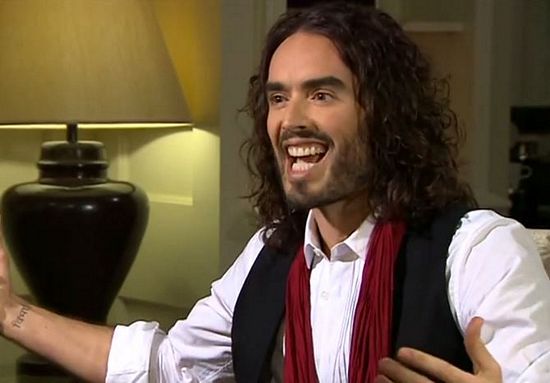
The recent interview on BBC Newsnight by Jeremy Paxman of British comedian Russell Brand has gone viral. At the time of writing this post, YouTube report 7,661,280 viewings! It’s not surprising because what Russell Brand is saying is obvious to millions of people all around the world. What Brand is expressing is as clear as a lone, lighted beacon at midnight on the darkest Winter night one could imagine.
During his Wednesday night interview with Jeremy Paxman on BBC Newsnight, comedian and actor Russell Brand said what no politician or pundit would ever dare say: that without dramatic, fundamental change, the prevailing political and economic system is broken, and hell-bent on planetary-level destruction:
With Dr Ahmed, the author of that Guardian article, concluding:
And in doing so, we might begin to realise that it is precisely the lack of a single, top-down manifesto that is our greatest strength – because, unlike the old, dying, fossil fuel dependent paradigm of endless growth for its own sake for the corporate few, the new, emerging post-carbon paradigm will be co-created by people themselves from the ground up.
That is why Brand’s answer for the way forward is so compelling:
“We shouldn’t destroy the planet. We shouldn’t create massive economic disparity. We shouldn’t ignore the needs of the people.”
If we want our children to inherit a habitable planet, rather than bashing Brand for not having a more coherent solution, we need to start being part of it.
You know what! The incredible response to that Paxman-Brand interview shows the millions of us who are already “part of it.” Yes, it really does feel that the time is now. That time that so very many of us, in a myriad of different ways, are fighting for our beautiful planet from the ground up.
Finally, if you want to read that interview between Paxman and Brand in detail, then over on Corrente there is a full transcript of the exchange between them.
Long may this run!
Passion for speaking the truth about our present times!
It’s really terribly easy – we just have to leave the oil in the ground!
The current issue of The Economist has an article on page 43, under The Americas section, headed Cheap at the price.
It’s a review of the biggest oil auction this year.
A single bid for a vast field shows the weakness of Brazil’s state-led approach to developing its oil reserves
SIX years after discovering giant offshore“pré-sal” oil deposits, so called because they lie beneath a thick layer of salt under the ocean bed, Brazil has finally auctioned the rights to develop some of its deeply buried wealth. On October 21st the Libra field, off Rio de Janeiro’s coast (see map), was sold to a consortium led by Petrobras, Brazil’s state-controlled oil firm, and including France’s Total, Anglo-Dutch Shell and China’s state-owned CNOOC and CNPC. Libra’s estimated 8 billion-12 billion barrels of recoverable oil make it the biggest oil prospect in the world to be auctioned this year. Once it reaches peak production, sometime in the next decade, it should increase Brazil’s output from 2.1m to about 3.5m barrels per day.
The article was critical of the way Brazil managed the auction resulting in just one consortium bidding, against the expectation there would be strong competition for the oil from possibly 40 companies despite the huge costs in extracting it from over 6,000 metres (nearly 20,000 feet) below sea-level. The article didn’t even hint at the madness of even thinking it should be extracted but I guess that’s The Economist for you.
So with that in mind, let me turn to a recent essay from TomDispatch by world-renown climate-change activist Bill McKibben. As regular readers will be aware Tom Engelhardt of the TomDispatch blog has given blanket permission for TD essays to be republished here on Learning from Dogs.
oooOOOooo
Tomgram: Bill McKibben, Can Obama Ever Stand Up to the Oil Industry?
Recently, “good” news about energy has been gushing out of North America, where a cheering crowd of pundits, energy experts, and government officials has been plugging the U.S. as the “Saudi Arabia” of the twenty-first century. You know, all that fracking and those luscious deposits of oil shale and gas shale just waiting to be pounded into shape to fill global gas tanks for an energy-rich future. And then, of course, just to the north there are those fabulous Canadian tar sands deposits whose extraction is reportedly turning parts of Alberta into an environmental desert. And that isn’t all.
From the melting Arctic, where the Russians and others are staking out energy claims, to the southernmost tip of South America, the dream of new energy wealth is being pursued with a fervor and avidity that is hard to take in. In distant Patagonia, an Argentinean government not previously known for its friendliness to foreign investment has just buddied up with Chevron to drill “around the clock in pursuit of a vast shale oil reservoir that might be the world’s next great oil field.” Huzzah and olé!
And can you even blame the Argentinean president for her choice? After all, who wants to be the country left out of the global rush for new energy wealth? Who wants to consider the common good of the planet, when your country’s finances may be at stake? (As with the Keystone XL pipeline protest movement here, so in Argentina, there actually are environmentalists and others who are thinking of the common good, but they’re up against the state, the police, and Chevron — no small thing.) All of this would, of course, be a wondrous story — a planet filled with energy reserves beyond anyone’s wildest dreams — were it not for the fact that such fossil fuel wealth, such good news, is also the nightmarish bad news of our lives, of perhaps the lifetime of humanity.
There is an obvious disconnect between what is widely known about climate change and the recent rush to extract “tough energy” from difficult environments; between the fires — and potential “mega-fire” — burning wildly across parts of overheated Australia and its newly elected government run by a conservative prime minister, essentially a climate denier, intent on getting rid of that country’s carbon tax. There is a disconnect between hailing the U.S. as the new Saudi Arabia and the recent report of the prestigious Intergovernmental Panel on Climate Change warning that fossil fuel reserves must be kept in the ground — or else. There is a disconnect between what our president says about climate change and the basic energy policies of his administration. There is a disconnect between what the burning of fossil fuels will do to our environment and the urge of just about every country on this planet to exploit whatever energy reserves are potentially available to it, no matter how “dirty,” no matter how environmentally destructive to extract.
Somewhere in that disconnect, the remarkable Bill McKibben, whose new book, Oil and Honey: The Education of an Unlikely Activist, is at the top of my personal reading list, has burrowed in and helped to create a global climate change movement. In this country, it’s significantly focused on the Keystone XL pipeline slated, if built, to bring tar sands oil from Canada to the Gulf Coast. For the last several years at TomDispatch, McKibben has kept us abreast of the most recent developments in that movement. Here is his latest report from the tar sands front. Tom
X-Ray of a Flagging Presidency Will Obama Block the Keystone Pipeline or Just Keep Bending?
By Bill McKibben
As the battle over the Keystone XL pipeline has worn on — and it’s now well over two years old — it’s illuminated the Obama presidency like no other issue. It offers the president not just a choice of policies, but a choice of friends, worldviews, styles. It’s become an X-ray for a flagging presidency. The stakes are sky-high, and not just for Obama. I’m writing these words from Pittsburgh, amid 7,000 enthusiastic and committed young people gathering to fight global warming, and my guess is that his choice will do much to determine how they see politics in this country.
Let us stipulate at the start that whether or not to build the pipeline is a decision with profound physical consequences. If he approves its construction, far more of the dirtiest oil on Earth will flow out of the tar sands of Alberta, Canada, and reach the U.S. Gulf Coast. Not just right away or for a brief period, but far into the future, since the Keystone XL guarantees a steady flow of profits to oil barons who have their hearts set on tripling production in the far north.
The history of oil spills and accidents offers a virtual guarantee that some of that oil will surely make its way into the fields and aquifers of the Great Plains as those tar sands flow south. The greater and more daunting assurance is this, however: everything that reaches the refineries on the Gulf Coast will, sooner or later, spill into the atmosphere in the form of carbon, driving climate change to new heights.
In June, President Obama said that the building of the full pipeline — on which he alone has the ultimate thumbs up or thumbs down — would be approved only if “it doesn’t significantly exacerbate the problem of carbon pollution.” By that standard, it’s as close to a no-brainer as you can get.
These days, however, as no one will be surprised to hear, brainless things happen in Washington more often than not, and there’s the usual parade of the usual suspects demanding that Keystone get built. In mid-October, a coalition that included Exxon, Chevron, ConocoPhillips, and Royal Dutch Shell, not to mention the U.S. Chamber of Commerce, the National Association of Manufacturers, and the Business Roundtable, sent Obama a letter demanding that he approve Keystone in order to “maintain investor confidence,” a phrase almost guaranteed to accompany bad ideas. A report last week showed that the Koch brothers stood to earn as much as $100 billion in profits if the pipeline gets built (which would come in handy in helping fund their endless assault on unions, poor people, and democracy).
But don’t think it’s just Republican bigwigs and oil execs rushing to lend the pipeline a hand. Transcanada, the pipeline’s prospective builder, is at work as well, and Obama’s former communications director Anita Dunn is now on the Transcanada dime, producing TV ads in support of the pipeline. It’s a classic example of the kind of influence peddling that knows no partisan bounds. As the activists at Credo put it: “It’s a betrayal of the commitments that so many of us worked so hard for, and that Dunn herself played a huge role in shaping as top strategist on the 2008 campaign and communications director in the White House.”
Credo’s Elijah Zarlin, who worked with Dunn back in 2008, wrote that attack on her. He was the guy who wrote all those emails that got so many of us coughing up money and volunteering time during Obama’s first run for the presidency, and he perfectly exemplifies those of us on the other side of this divide — the ones who actually believed Dunn in 2008, the ones who thought Obama was going to try to be a different kind of president.
On energy there’s been precious little sign of that. Yes, the Environmental Protection Agency has put in place some new power plant regulations, and cars are getting better mileage. But the president has also boasted again and again about his “all of the above” energy policy for “increasing domestic oil production and reducing our dependence on foreign oil.” It has, in fact, worked so well that the United States will overtake Russia this year as the biggest combined oil and natural gas producer on the planet and is expected to pass Saudi Arabia as the number one oil producer by 2017.
His administration has okayed oil drilling in the dangerous waters of the Arctic and has emerged as the biggest backer of fracking. Even though he boasts about marginal U.S. cuts in carbon emissions, his green light to fracking means that he’s probably given more of a boost to releases of methane— another dangerous greenhouse gas — than any man in history. And it’s not just the environment. At this point, given what we know about everything from drone warfare to NSA surveillance, the dream of a progressive Obama has, like so many dreams, faded away.
The president has a handy excuse, of course: a truly terrible Congress. And too often — with the noble exception of those who have been fighting for gay rights and immigration reform — he’s had little challenge from progressives. But in the case of Keystone, neither of those caveats apply: he gets to make the decision all by himself with no need to ask John Boehner for a thing, and people across the country have made a sustained din about it. Americans have sent record numbers of emails to senators and a record number of comments to the State Department officials who oversee a “review” of the pipeline’s environmental feasibility; more have gone to jail over this issue than any in decades. Yet month after month, there’s no presidential decision.
There are days, in fact, when it’s hard to muster much fire for the fight (though whenever I find my enthusiasm flagging, I think of the indigenous communities that have to live amid the Mordor that is now northern Alberta). The president, after all, has already allowed the construction of the southern half of the Keystone pipeline, letting Transcanada take land across Texas and Oklahoma for its project, and setting up the beleaguered communities of Port Arthur, Texas, for yet more fumes from refineries.
Stopping the northern half of that pipeline from being built certainly won’t halt global warming by itself. It will, however, slow the expansion of the extraction of tar sands, though the Koch brothers et al. are busy trying to find other pipeline routes and rail lines that would get the dirtiest of dirty energy out of Canada and into the U.S. via destinations from Michigan to Maine. These pipelines and rail corridors will need to be fought as well — indeed the fights are underway, though sometimes obscured by the focus on Keystone. And there are equally crucial battles over coal and gas from the Appalachians to the Pacific coast. You can argue that the president’s people have successfully diverted attention from their other environmental sins by keeping this argument alive long past the moment at which it should have been settled and a decision should have been made.
At this point, in fact, only the thought of those 900,000 extra barrels a day of especially nasty oil coming out of the ground and, via that pipeline, into refineries still makes the fight worthwhile. Oh, and the possibility that, in deciding to block Keystone, the president would finally signal a shift in policy that matters, finally acknowledge that we have to keep most of the carbon that’s still in the ground in that ground if we want our children and grandchildren to live on a planet worth inhabiting.
If the president were to become the first world leader to block a big energy project on the grounds of its effects on climate, it might help dramatically reset the international negotiations that he allowed to go aground at Copenhagen in 2009 — the biggest foreign policy failure of his first term.
But that cascade of “ifs” depends on Obama showing that he can actually stand up to the oil industry. To an increasingly disillusioned environmental movement, Keystone looks like a last chance.
President Obama turned 52-years-old on August 4th this year. Michelle, his wife, will be 50-years-old next January, 17th. Their children, Malia and Sasha, are aged 15 and 12 respectively.
Thus this family of four are all sufficiently young to be alive when the consequences of burning all this oil will be very painfully obvious, when all the power and money in the world will come to naught.
So it strikes me that young Malia and Sasha should be shown where Planet Earth’s master circuit-breaker is located. Would be such a shame to leave the lights on when there’s no-one at home.
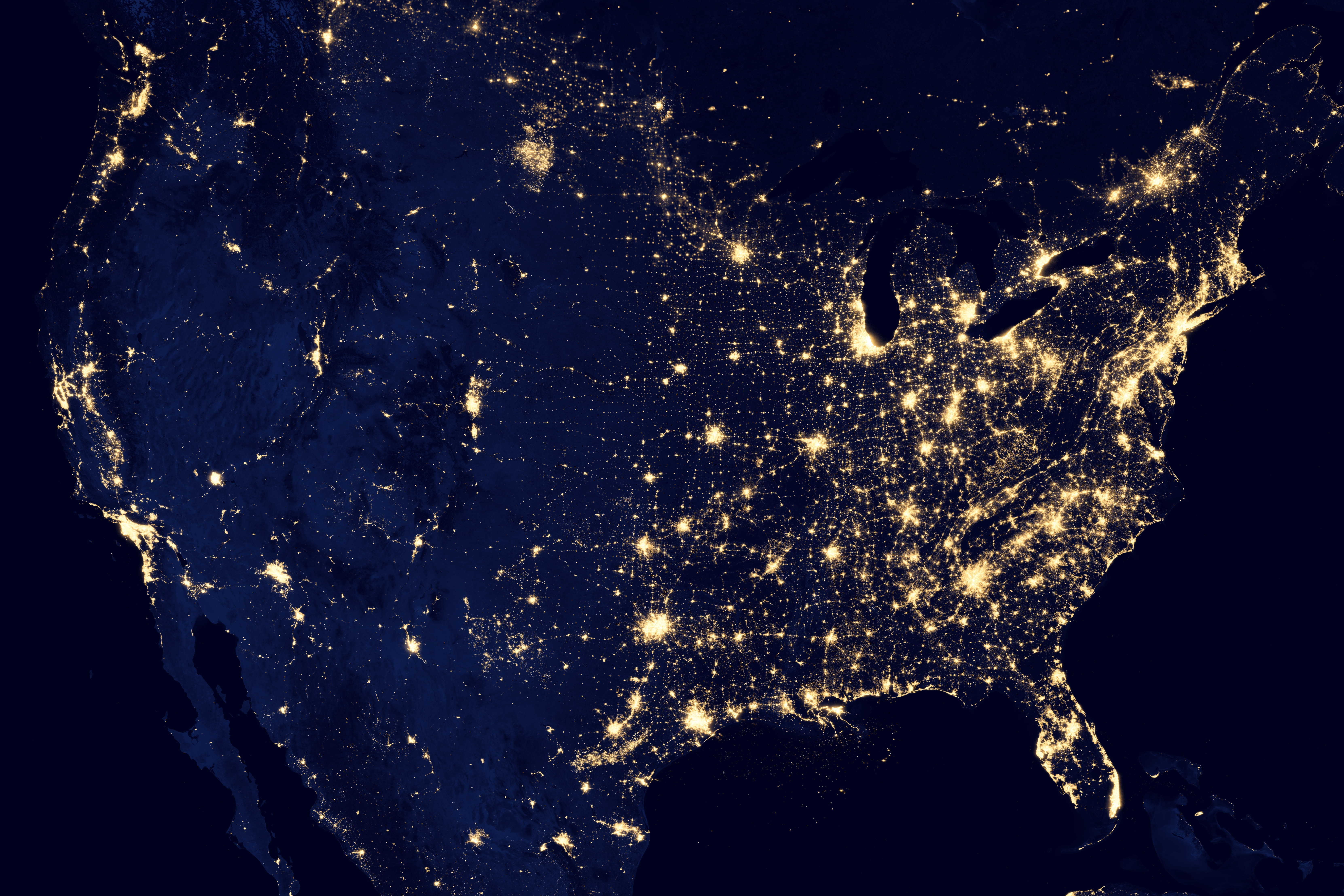
North America burning bright – an image from NASA.









 Learning from Dogs