Home photos of Spring sights.

OOOO

OOOO

OOOO

OOOO

OOOO

OOOO

Dogs are animals of integrity. We have much to learn from them.
Year: 2026
Home photos of Spring sights.
OOOO
OOOO
OOOO
OOOO
OOOO
OOOO
I am so impressed by Bela’s poems!
Here it is:
ooOOoo
Ungovernable
We need not allow age to define us
unless we hunger to be named
by something outside ourselves.
Mother Nature is as old as time,
yet remains a woman of mystery—
unmapped,
unmastered,
not to be taken lightly.
While many elders
have been pressed into a mold,
muffled by expectation,
cinched into compliance—
she rises.
She takes back her ancient names:
crone, hag, witch—
titles once meant to diminish,
now worn like iron and bone.
She will not shrink.
She will not bow.
Lately, she has been speaking.
Heavy tropical rains—
record-breaking—
islands flooding,
the ground unable to drink
what the sky insists on unleashing.
And today—
thunder.
Lightning.
Rare here.
Almost unheard of.
Rain fell in sheets,
fire-hosing off corrugated roofs
into earth already swollen,
already saturated.
And then—
CRACK.
FLASH.
BOOM.
The sky split.
The dog and I
jettisoned from our bodies—
he barking, pacing,
drawn to the door
but unwilling to cross the threshold.
This was not weather.
This was visitation.
The center—
ripped out of the moment,
out of the body,
out of the small illusion of control.
This is what elder women become
when the blinders fall away:
not gentle,
not contained,
not agreeable.
We become weather.
We become voice.
We become the force
that cannot be managed
by the structures that once confined us.
Ungovernable.
Unapologetic.
Unsilenced.
We rise—
not in defiance alone,
but in remembrance.
And we will not be silenced again.

ooOOoo
To my mind that is the power and beauty of nature – it is ungovernable.
Eight Australian pups found!
I saw this article a couple of weeks ago and wanted to share it with you. It was published by The Dodo.
ooOOoo
Rescuers Open ‘Family Dollar’ Bin And Find 8 Australian Shepherd Babies Inside
Published on March 12, 2026.
This past January, a man was walking through Onancock, Virginia, when he noticed a suspicious object outside Historic Onancock School, a local community center.
The man approached the object — a large black bin labeled “Family Dollar” — and carefully lifted the lid to see what was inside. There, wriggling against each other in the tight space, were eight 10-week-old puppies.
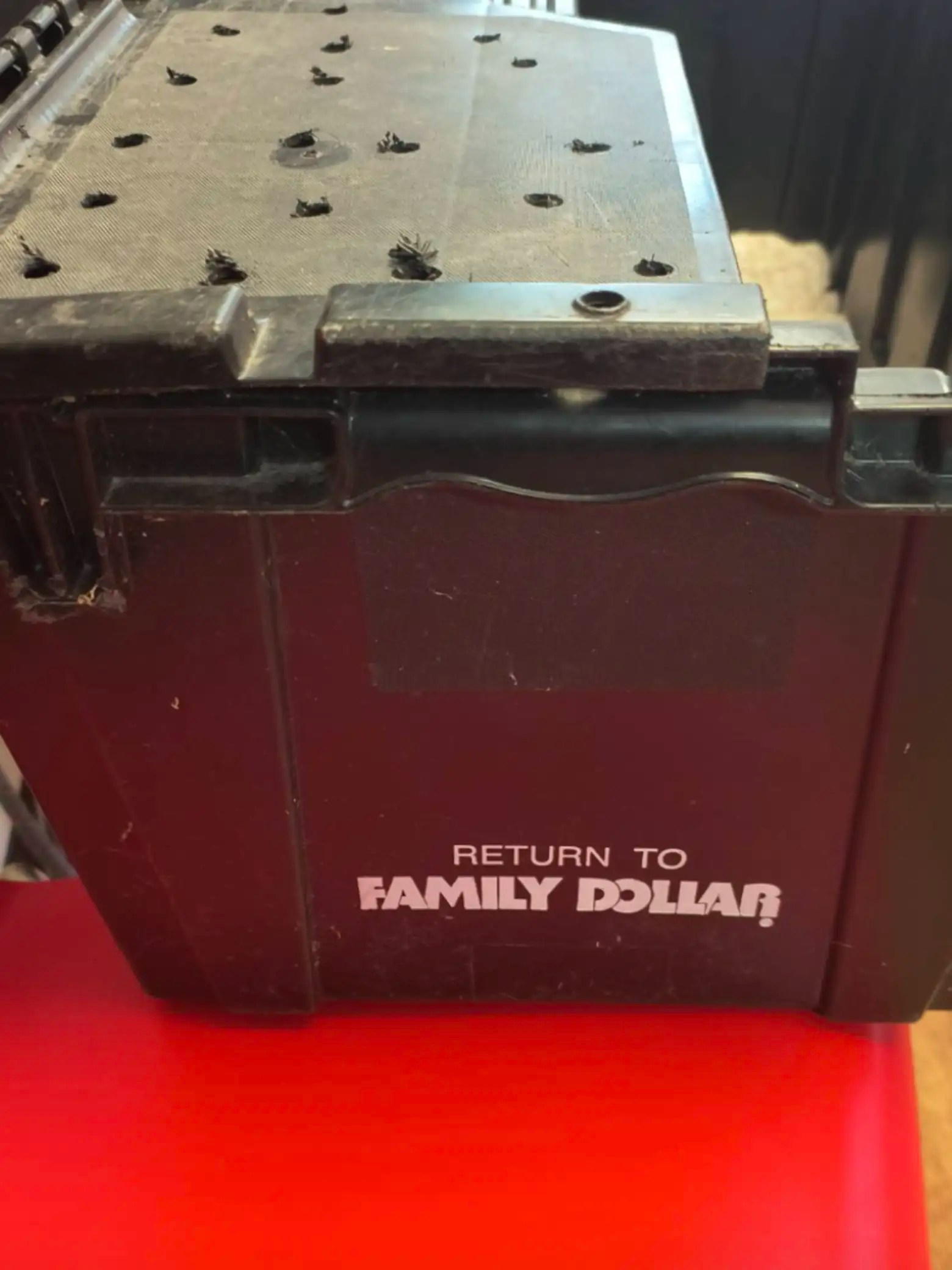
The puppies were weak, defenseless and clearly needed help. The man drilled air holes in the lid of the box and eventually contacted Eastern Shore Regional Animal Control Facility for help.

Tragically, one puppy passed away before rescuers could assist. The others quickly relaxed into the capable hands of animal control staff.
According to Eastern Shore Regional Animal Control Facility shelter manager Jeri Winn, it’s common to find puppies dumped along the Eastern Shore, but significantly less common in Onancock, a bustling seaside town.
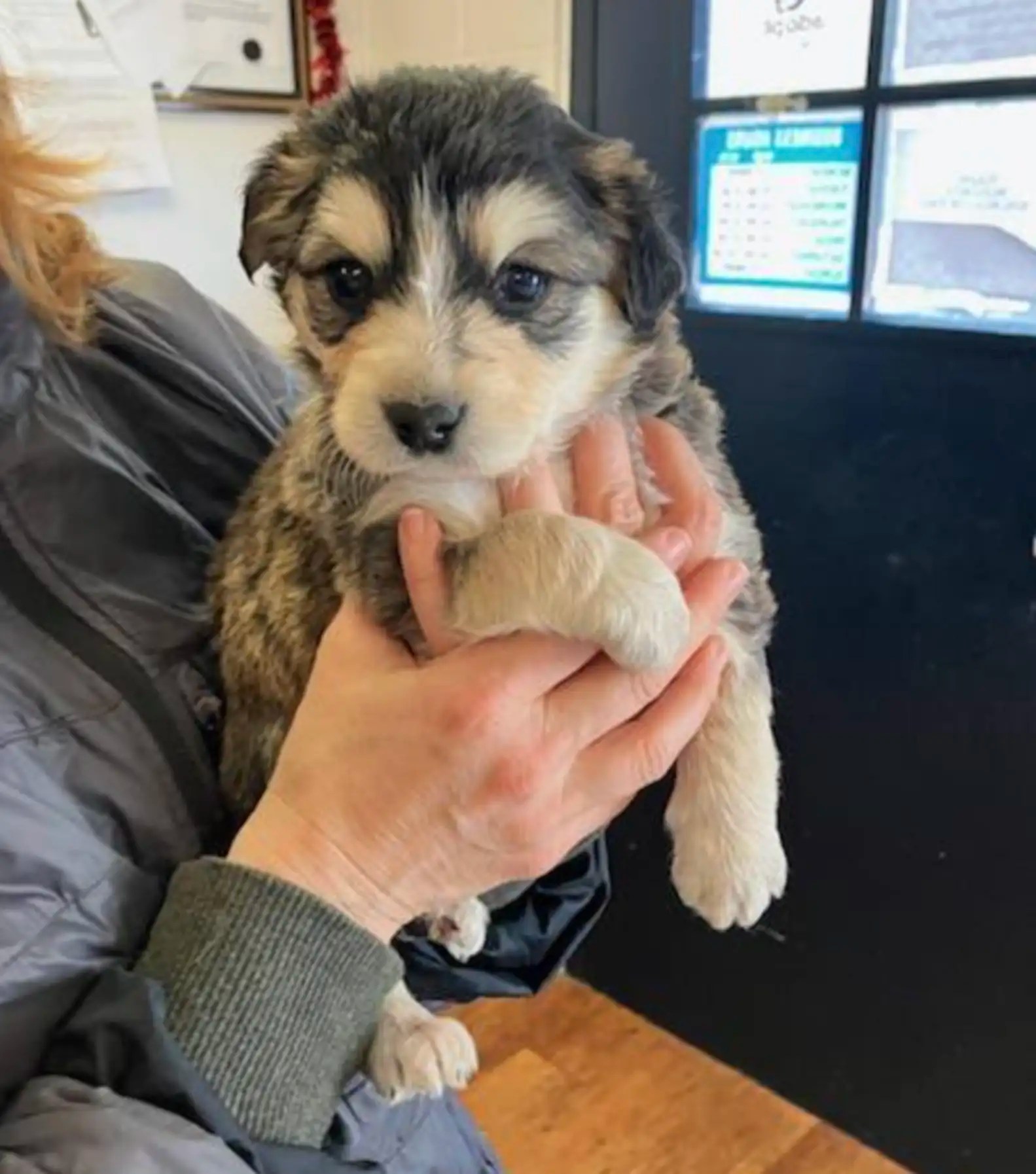
Though she’d seen plenty of cases like this, Winn still felt a familiar sadness as she admitted the puppies into care. Despite everything, she was grateful that the pups were finally in a safe place.
“All we can be thankful for [is that] whoever left them realized they were in a good location to be seen,” Winn told The Dodo.
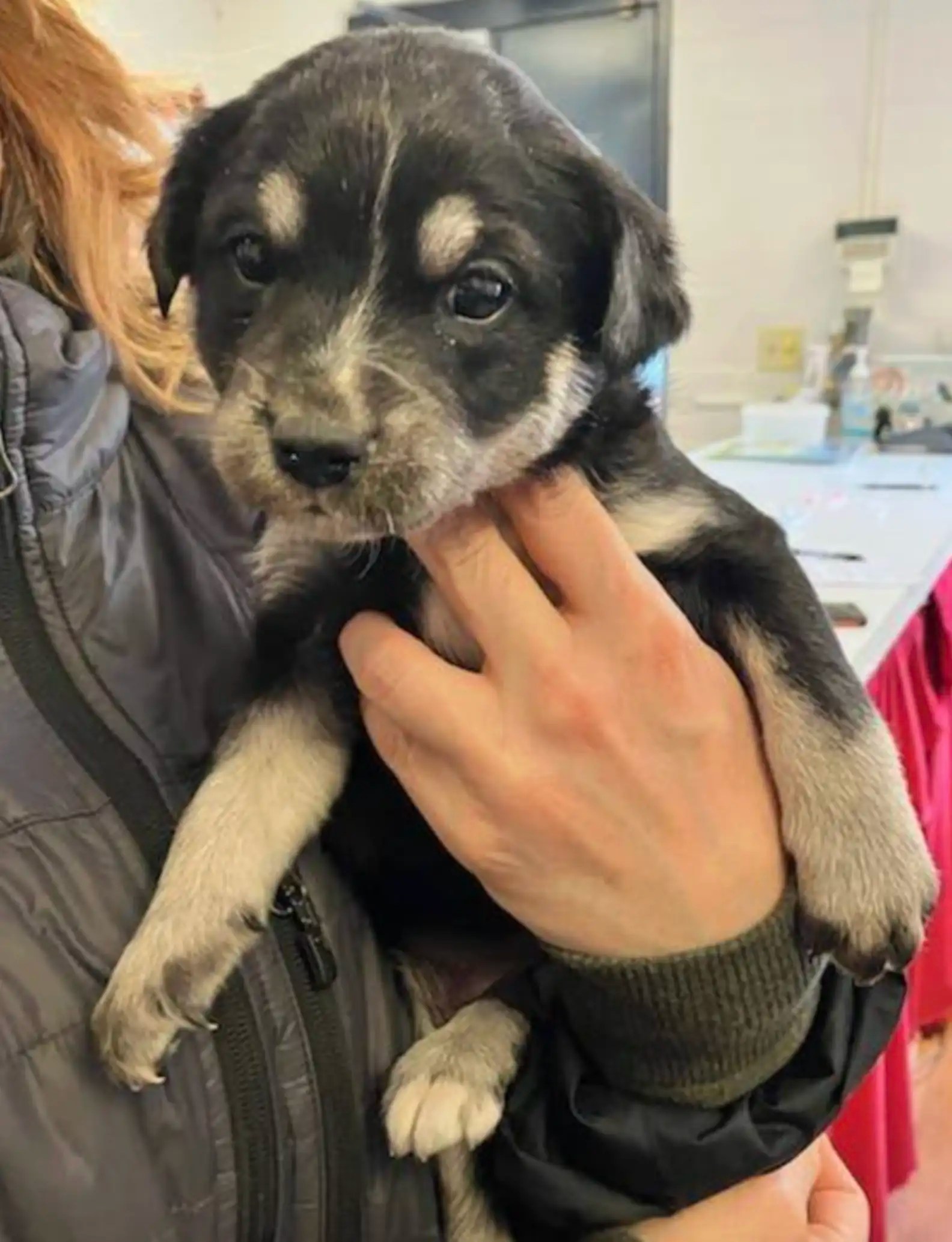
Team members transferred the puppies to Critters 4 U Rescue, an animal shelter and foster organization. Rescuers determined the puppies were Australian shepherd mixes, and they named them after the seven dwarfs — Doc, Grumpy, Happy, Sleepy, Bashful, Sneezy and Dopey.
One pup has already been adopted, and the others are still safe at Critters 4 U Rescue, waiting to meet their forever families.
Eastern Shore Regional Animal Control Facility is grateful for Critters 4 U Rescue, along with all the other rescues who offered to help these needy pups find the homes they deserve.
“We are so grateful for every rescue that reached out,” Eastern Shore Regional Animal Control Facility wrote in a Facebook post. “In moments like this, our small shelter is reminded just how much we rely on the compassion and partnership of rescue organizations who step up without hesitation.”
You can keep up with Eastern Shore Regional Animal Control Facility by following them on Facebook. To help other animals like these puppies, you can donate to Critters 4 U Rescue.
ooOOoo
What a beautiful account. Congratulations to all involved!
A pet‑friendly homeless shelter pilot reduced the rate of homelessness among the people it helped in California.
This was an article published on the 16th March by The Conversation. It shows how the homeless shelters benefit from being pet-friendly. It’s sort of obvious but then again not common-sense.
ooOOOO
Benjamin F. Henwood, University of Southern California
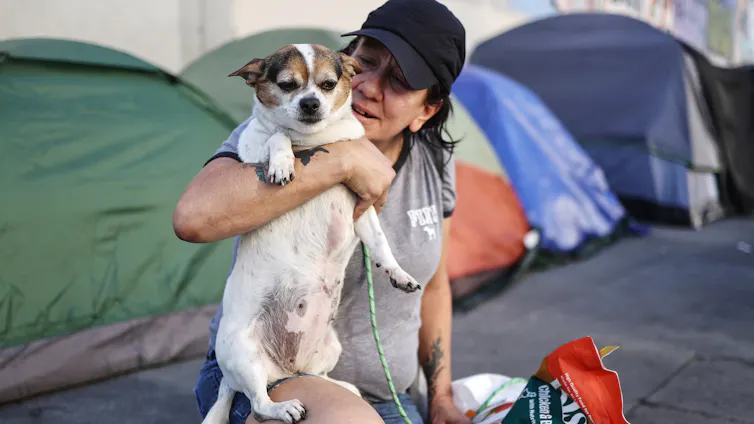
When homeless shelters allow people to stay with their dogs and other pets, more unhoused people become more willing to stay in a shelter.
That’s what my team at the University of Southern California’s Homelessness Policy Research Institute learned when we evaluated California’s Pet Assistance and Support Program.
California’s Department of Housing and Community Development established this pilot program in 2019. Its goals were straightforward: to make homeless shelters more accommodating to people with pets – mostly dogs – so that people living on the streets don’t have to choose between staying in shelters or abandoning their pets.
The program disbursed US$15.75 million between 2020 and 2024 to 37 organizations across the state. The funding allowed shelters to build kennels or other pet-friendly spaces, provide pet food and supplies, and offer basic veterinary care. It also covered the costs of staffing and maintaining insurance required to operate pet-friendly shelters.
We did this evaluation in collaboration with My Dog Is My Home, a nonprofit that supports pet-inclusive housing and services for the homeless, and the American Society for the Prevention of Cruelty to Animals.
By all accounts, the program was a success.
We found that the program helped 4,407 people experiencing homelessness keep their pets while getting support. Many were able to enter shelters, and their animals received needed veterinary care. A total of 886 people ultimately moved into permanent housing with their pets – a higher success rate than the statewide average for homeless people in California.
Theoretically, this funding should have reduced the number of pet owners living on the streets. Yet since 2019, the year the program began, the number of homeless people in Los Angeles with dogs and other pets has increased.

I’ve seen this change firsthand.
Since 2017, I’ve led the USC research team that produces the annual homeless count estimates for Los Angeles. The U.S. Department of Housing and Urban Development requires this exercise for any city seeking federal funding for homelessness services.
One of the questions my team asks when interviewing thousands of homeless people each year is whether they have any pets.
Before the pandemic, we generally found that roughly 1 in 8 people did. We also found that nearly half of homeless pet owners had been turned away from a homeless shelter because it couldn’t accommodate their animal.
Despite programs like California’s Pet Assistance and Support program, my research team has found that the share of people living on the streets of Los Angeles who say they have a pet increased to roughly 1 in 5 by 2025.
The percentage of homeless people in Los Angeles with pets rose from 12% in 2017 to 20% in 2024 and 2025, according to an annual census.
Bar chart showing that the percentage of homeless people in Los Angeles with pets has grown since 2017.
5101520%201720182019202020212022202320242025
We still don’t know why the share of homeless people with pets has gotten so much larger.
It could be that rising housing costs, which is the main driver of homelessness, is pushing more pet owners into homelessness. Or, perhaps more homeless are adopting pets to deal with their social isolation and loneliness, two common conditions for people with nowhere to go.

Either way, proposed cuts by the federal government to affordable housing and homeless services will only make matters worse.
The number of homeless people in Los Angeles has fallen by more than 4% since 2023 to just over 72,000 people in 2025. But based on my research findings, I would expect the number of people living on the city’s streets – with and without pets – to rise over time unless more affordable housing becomes available.
And growth in the homeless population may be hard to avoid without more efforts like California’s Pet Assistance and Support Program – on a larger scale than the pilot we studied.
Benjamin F. Henwood, Professor of Social Policy and Health, University of Southern California
This article is republished from The Conversation under a Creative Commons license. Read the original article.
ooOOoo
I hope when this is published the bar chart presented towards the end of the article appears.
If not, and if you are interested in that chart, you will have to clink on this link to view it.
Professor Henwood is wise to present this article.
 Learning from Dogs