Year: 2019

Picture Parade Two Hundred and Ninety-Four

About as far away from dogs as one can get!

ooOOoo

Best photos of the Mercury-Mars conjunction

Posted by in ASTRONOMY ESSENTIALS | TODAY’S IMAGE June 23, 2019

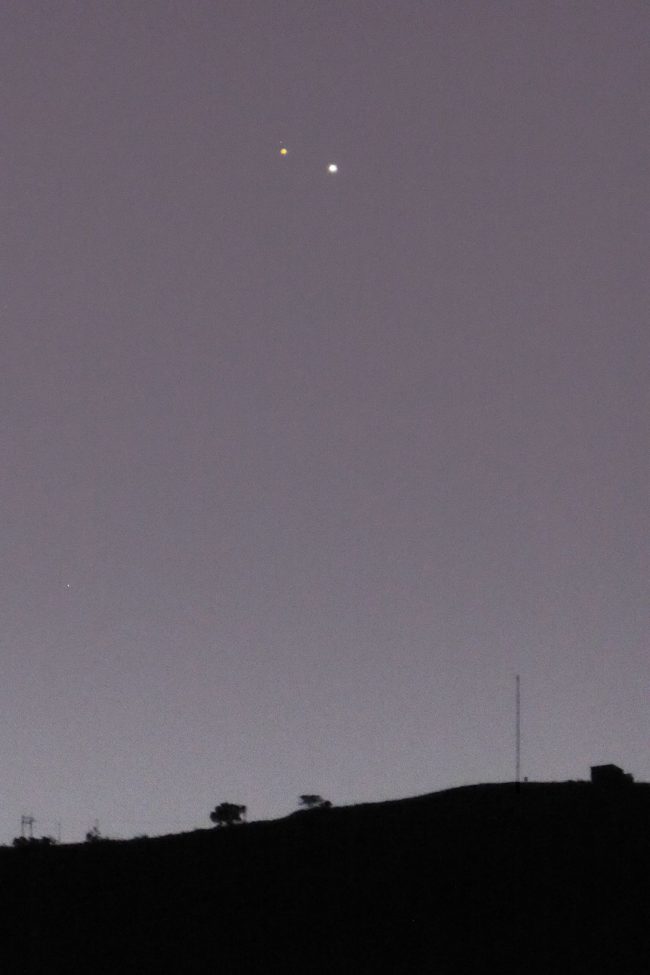
It was the closest conjunction of 2 planets in 2019, between Mercury and Mars. It happened low in the evening twilight – and was best seen from Earth’s Southern Hemisphere. Check out these photos from EarthSky Community members.

Dr Ski in Valencia, Philippines, caught Mars and Mercury on the day following their conjunction, June 19, 2019. The nearby stars Castor and Pollux in the constellation Gemini are a great comparison. Those 2 stars are noticeable for being bright and close together. Mercury and Mars were much closer! Thanks, Dr Ski!
Wow! You can really see the color difference between red Mars (on the left) and Mercury in this photo from the day of the conjunction – June 18, 2019 – by Peter Lowenstein in Mutare, Zimbabwe. Thanks, Peter!
Here’s a June 17 photo from Jose Lagos in Vaals, Netherlands. He wrote, “This was the last image I could get before June 18, when it was too cloudy near the horizon, but you can see that the conjunction is nearly perfected. It was beautiful to behold even this much of it. Thank you for your time and your great work at Earth Sky.” Thank you for your photo and kind words, Jose!
Gilbert Vancell caught the planets on June 18, too, and wrote: “Mercury (top) and Mars setting behind Comino Tower. Shot from Armier, Malta.”
Helio C. Vital captured in Rio de Janeiro, Brazil, on June 18, 2019. He wrote, “Despite the fact that many clouds were floating over my western horizon this evening, I could get some photos of Mercury and Mars only 14 arcminutes apart over Rio de Janeiro at dusk (from 17:45 to 18:30 UTC-3h, June 18, 2019).Forming a beautiful close pair through binoculars, Mercury was an easy naked-eye target while Mars (4.4 times dimmer) required the use of averted vision to be briefly spotted. Hope my images can help give you an idea of what the interesting event looked like.”

Bottom line: Photos from the night of and around the June 18, 2019, conjunction of Mercury and Mars, closest conjunction of two planets this year.

ooOOoo

I hope a few of you enjoyed today’s Picture Parade.

Here’s to July!

The power of a photograph

No words to say how I feel!

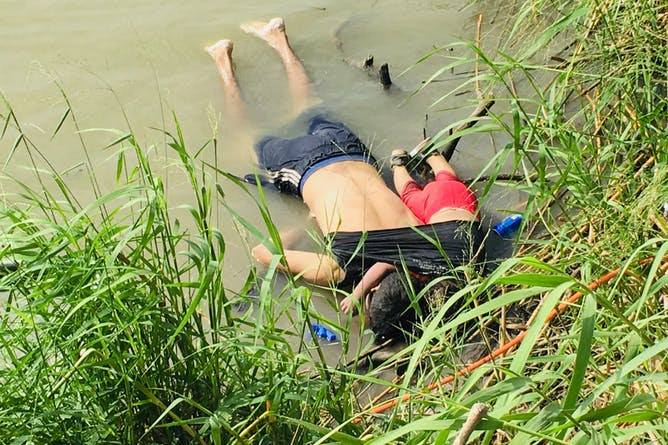
The bodies of Salvadoran migrant Oscar Alberto Martínez Ramírez and his daughter lie on the bank of the Rio Grande in Matamoros, Mexico. AP Photo/Julia Le Duc

This is a terrible photograph. It has been widely shown but that doesn’t make it any less terrible.

Patrice Ayme recently wrote about the tragedy but for today I am republishing the article in The Conversation.

ooOOoo

How much power can one image actually have?

By

Associate Professor, School of Journalism and Communication, University of Oregon

Professor of Psychology, University of Oregon

When the Associated Press published Julia Le Duc’s photograph of a drowned Salvadoran man, Óscar Alberto Martínez Ramírez, and his 23-month old daughter Valeria, it sparked outrage on social media. According to Le Duc, Ramírez had attempted to cross the Rio Grande after realizing he couldn’t present himself to U.S. authorities to request asylum.

But beyond raising awareness via Twitter and Facebook feeds, does an image like this one have the power to sway public opinion or spur politicians to take action?

As journalism and psychology scholars interested in the effects of imagery, we study the ability of jarring photos and videos to move people from complacency to action. While graphic imagery can have an immediate impact, the window of action – and caring – is smaller than you’d think.

A political catalyst?

Photographs and videos – through their perceived authenticity – can have an effect on people.

Research suggests that the graphic photo of slain Emmett Till in his open casket served as a “political catalyst” in mobilizing Americans to action in the civil rights movement. Similarly, news images have been credited as playing an important role in ending the Vietnam War.

But not all scholars agree. A recent article argued that it was a “myth” that the iconic “napalm girl” photo swayed public opinion and hastened the end of the Vietnam War.

Did the ‘napalm girl’ significantly shift public opinion on the Vietnam War? manhhai/flickr, CC BY

We must also look to psychology to understand the impacts of emotional news content. Research demonstrates that audiences need an emotional connection – and not merely a “just-the-facts” reporting approach – as “prerequisite for political action” when it comes to appreciating the importance of distant mass suffering. And imagery can trigger this emotional connection by overcoming the psychic numbing that occurs when casualties mount, images blur and lost lives become merely dry statistics.

Images from Syria

In April 2017, gut-wrenching images seem to have awakened the world to the human atrocities happening in Syria. Following a chemical bomb attack in the town of Khan Sheikhoun, graphic photos and videos documented the horrific effects of the banned nerve agent sarin. Millions bore witness to excruciating human suffering: gasping, choking, writhing and dying. More than 500 people were injured, with at least 86 deaths, including 28 children.

The vivid, closeup images of sarin attack victims were resonant enough to break through the complacency of people and politicians accustomed to bad news emerging from the war-torn nation. In President Trump’s response – which included a retaliatory missile strike – he seemed to recognize the value of the Syrian lives depicted in the horrific photos and videos.

Syrian doctors treat a child following a suspected chemical attack in the town of Khan Sheikhoun, northern Idlib province, Syria. Edlib Media Center, via AP, File

“When you kill innocent children,” he said during a news conference, “that crosses many, many lines, beyond a red line – many, many lines.”

The limits of an image

Nonetheless, even though the attacks may have briefly heightened U.S. concerns over the wars in Syria, the photographic documentation of the suffering in Syria wasn’t new.

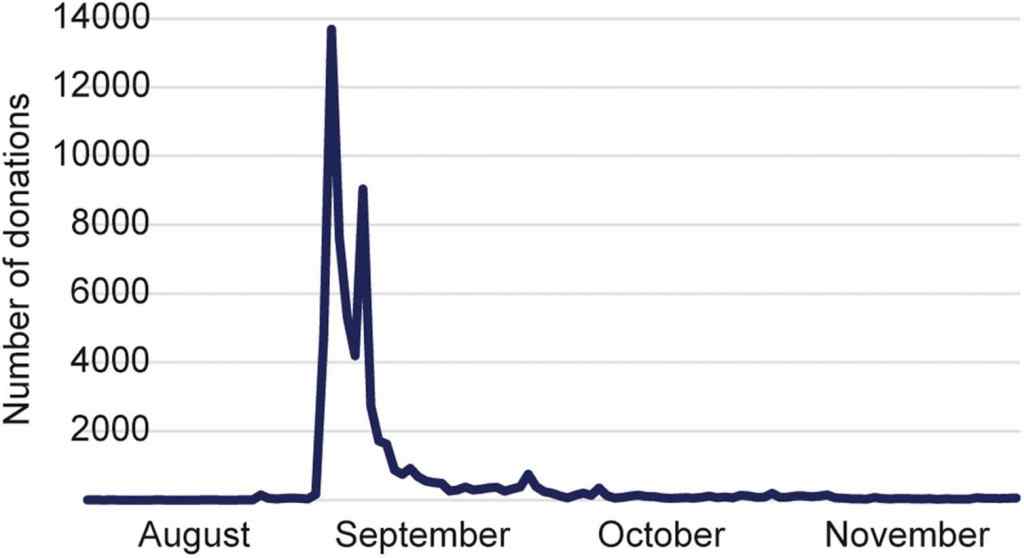
The 2015 photos of a tiny Syrian boy’s lifeless body resting face down in the sand similarly stirred the world’s collective consciousness. Within hours of its release, the photo had reached 20 million people through Twitter, with many more millions seeing it on the front pages of newspapers the next day. Afterwards, government restrictions on accepting refugees were loosened while private donations to organizations like the Red Cross spiked dramatically.

A year later haunting images of a young boy in the back of an ambulance, caked in dirt and blood, galvanized the world.

But the emotional and compassionate responses to both photographs were short-lived. The bombing of civilians in Syria continued. Refugees continued risking their lives to escape the war zone.

After a photograph of a dead Syrian boy went viral in 2015, the number of daily donations to a Swedish Red Cross campaign designated specifically for aiding Syrian refugees spiked dramatically – but only for a brief window. Proceedings of the National Academy of Sciences of the United States of America, CC BY-SA

Since the publication of Le Duc’s photo of the dead migrants, supportive politicians may feel emboldened to sound the alarm on the plight of Central American migrants. Donations to immigrant aid organizations might briefly spike.

But it seems that a photograph, no matter how emotionally devastating, can only do so much.

Yes, it can create a window of time when we’re motivated to act, and we’ll usually do so if we have effective options to pursue. This could mean a charitable donation at the individual level or, collectively, a surge of political will. However, psychology research from the “arithmetic of compassion” suggests that sympathy for distant human suffering declines when we’re presented with rising body counts. Sometimes we’re discouraged by the scope of the problem and this stops us from doing things that actually make a difference – even if partial solutions can save lives. Other times, if the options for helping others seem too narrow or ineffective, we’ll turn away and stop caring.

Images can alert us to the horrors of violence, mass migration and poverty. But as we have seen time and again, photographs and news footage of human suffering generally precipitate a short-term emotional reaction, rather than a sustained humanitarian response.

ooOOoo

As one reads the article it is much more than a comment on a single image despite how terrible that photograph may be.

The two scientists set out to show that the period that we are alarmed or terrified or just plain sad at the state of nations is rather short.

Maybe it’s the self-protective nature of our species that does this.

But it still doesn’t diminish the horror of that top photograph.

How a dog saved a family

This is a story of a very real emergency.

I have taken it from BoredPanda, not a site that I frequent, but this is such a marvellous account of how dogs make, every day, a real difference to the lives of people.

It’s been taken from a Twitter account so my apologies for the ‘staccato’ effect.

ooOOoo

Man Shares A Heartwarming Story About How His Dog Saved His House From Burning Down

Dogs… if only there was a word that would show how much we adore these adorable creatures that we get to call our most loyal friends and also beloved family members. Here at Bored Panda, dogs (amongst other animals) have a very special place, despite the fact that they can do the worst things, we still adore them. Also, today’s story teaches us that just because your puppy did something wrong, don’t be too quick to punish them since they might compensate it by doing something truly heroic.

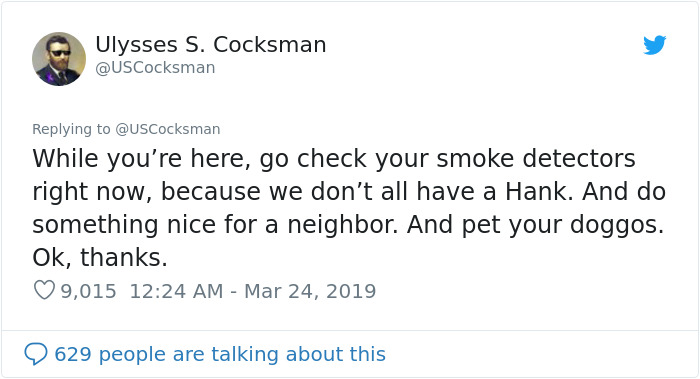
Recently, one Twitter user shared a heartwarming story about his dog Hank saving his entire family from fire

Hank even got some presents dedicated to his heroic act

People online were not only touched by this story, but they also think Hank deserves to chew all of the shoes in the world.

ooOOoo

What would we do without our dear dogs!

Being a lover of dogs shows no constraints!

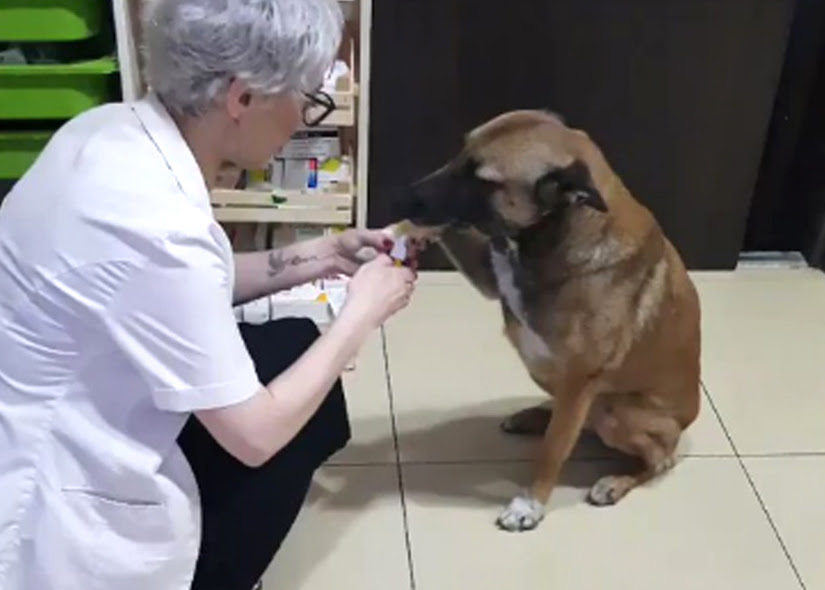
Try a pharmacist from Turkey!

I love this recent story from the Daily Dodo.

It concerns a Turkish pharmacist who is also a dog lover.

Look, here’s the story:

ooOOoo

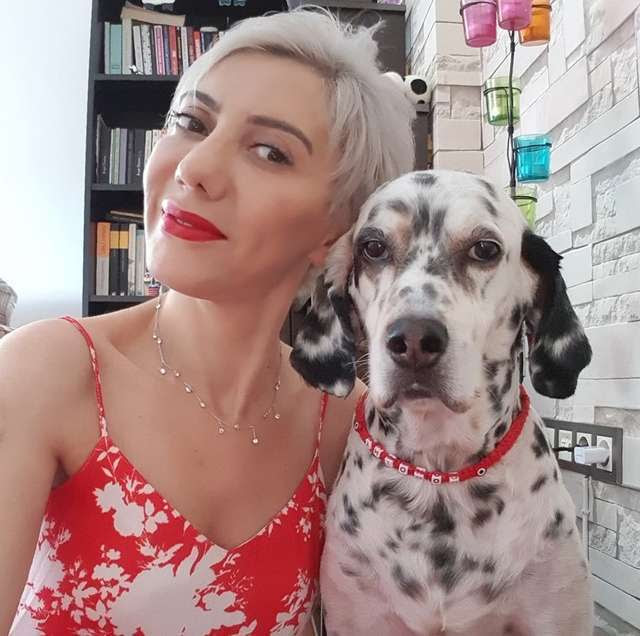
Pharmacist Sees Stray Dog At The Door And Realizes She’s Asking For Help”

“She was saying, ‘I trust you.'”

Back to those eyes!

A recent item on Healthy Pets offers some more information.

Yesterday Belinda, who is local to us in Merlin, Oregon, sent me a link to a further article about dogs’ eyes.

In an email to me, Belinda wrote:

I read your blog on a dog’s eyes and now I know why they have such expressive eyes.  I read this and didn’t know if you have any interest in a follow-up to that blog.

Well of course we do! 🙂

The only comment I would make is whether or not Dr. Becker is up-to-date with the latest science.

But here is the article.

ooOOoo

What does it mean when your dog gives you the ‘side-eye’?

by Dr. Karen Shaw Becker

June 25, 2019

Story at-a-glance

  • The term side-eye denotes a greater amount of “white” in a dog’s eyes, which is more pronounced when the dog averts his head slightly, but keeps his eyes fixed on something or someone at the same time
  • Some dogs, particularly brachycephalic dogs (dogs with short muzzles), appear to show the whites of their eyes most of the time, which doesn’t necessarily mean they’re feeling anything in particular
  • The side-eye may be a way for dogs to say “Back off,” and may precede some sort of aggression, especially if they’ve been guarding something like a toy — or food — and suddenly feel threatened
  • In studies of other types of canines, dingoes were found to initiate eye contact with a familiar human more often than wolves, but the duration was found to be shorter than the eye contact between humans and dogs
  • Dogs’ demeanor might appear to be excitement when they bark, whine, pant or pace, so it’s important to know your dog but also assess the situation that might be causing it

It’s been called the “whale eye,” that sidelong glance your dog gives you that communicates very strongly that something’s up. Also called the “side-eye,” it’s when the color white appears in a half-moon shape on either the right or left side of their eyes.

You may have seen dogs and their cute side-eye looks on social media. They can be quite comical, especially when the accompanying expressions match the captions. Nevertheless, it’s wise to know what your dog’s body language is trying to tell you, because as much as dogs might want to speak in human terms, they’re not able to.

So what does the whale eye mean? Trainers are said to use the term to describe a greater amount of “white” in a dog’s eyes as a means to communicate. It’s more pronounced when the dog averts his head slightly, but keeps his eyes fixed on something or someone at the same time.

Some dogs, particularly brachycephalic dogs (dogs with short muzzles), appear to show the whites of their eyes most of the time, which doesn’t necessarily mean they’re feeling anything in particular. Other examples of a dog’s body language, especially if you know what to look for, signify very specific things. Depending on the situation, you might be able to discern what it means fairly quickly.

Side-eye may be a way for dogs to say “Back off,” and usually precedes some sort of aggression, especially if they’ve been guarding something like a toy — or food — and suddenly feel threatened.1 According to Bark Post:

“This is pretty common behavior for dogs to exhibit. Obviously, that doesn’t mean we want them to keep doing it, but it’s important to realize this doesn’t mean you have a defective pup. He’s still the adorable, hilarious, wonderful … little guy or girl you love.

When coming across this sort of behavior, you should definitely give your pup the space they’re asking for. Back up and analyze the situation. Did you get too close to the bone they’ve been hiding for 72 hours?”2

Signs your dog is trying to tell you something

If your dog is giving the side-eye to another person the dog may not be familiar with, experts advise dog owners to be aware of the behavior and try to diffuse it. “Much of what’s required in mitigating this behavior is just removing the cause from the situation.”3

If your dog’s side-eye response is accompanied by a rigid stance or visible tension, it happens more than once and it’s evident it’s not just a sidelong glance, it could be stress-related, and it wouldn’t hurt to contact a positive dog trainer or behaviorist. In many ways, like people, there are a number of ways dogs communicate stress, tension and anxiety.

Sometimes their demeanor might appear to be excitement, such as behavior like barking, whining, panting or pacing. Dogs that feel uncomfortable or nervous might communicate it by hiding, relieving themselves in the house, cowering or shaking. At times, however, the signs may be much more subtle, such as if you notice them blinking, yawning, licking, swallowing or shedding more than usual.

If your pup shows the side-eye or other signs of stress, petting him gently with long, smooth strokes from their chest, shoulder and base of their tail will help relax him.4,5 It helps relieve tension and could even serve as a sort of “maintenance” to help keep them calm in out-of-the-ordinary situations.

How eye contact in other canine species denotes communication

While wolves (Canis lupus) and coyotes (Canis latrans) may not seem to have much in common with domestic dogs (Canis familiaris), experts place them in the same species. That great Danes and Chihuahuas are related to each other, not to mention these feral varieties, seems hard to believe, but domestic dogs came from wolves, and scientists say some wolf varieties may be coyote hybrids.

Dingoes, placed for years in the same canine designation as dogs, wolves and coyotes, have been deemed their own distinct species. They’re now formally called Canis dingo,6 even though they bear a remarkable resemblance to other canines. Over the last few centuries, their scientific names, such as Canis lupus dingo and Canis familiaris dingo, wrongly related them to the others.

Interestingly, a study7 on the origins of dog and human eye contact included all of the above species. It determined that dingoes establish eye contact less often than dogs do, but more often than wolves. In addition, dingoes were found to initiate eye contact with a familiar human more often than wolves, but the duration was found to be shorter than the eye contact between humans and dogs.

While words are the preferred mode of communication between humans, your dog may pay more attention to your posture, gestures and eye contact, possibly because they often use body language to communicate more than any other tool. They’re also in tune with your tone, and pick up from you more of your mindset than you might imagine.

Dogs’ body language changes around humans

Not only do dogs communicate with their humans with body language, they also do so with other dogs, especially when there’s more than one dog or several in a household. But the journal Nature cited a study8 showing that a dog literally “produces” more facial expressions when they’re looking straight at their significant humans. In fact, it:

“Support(s) for the idea that dogs do indeed produce facial expressions to communicate with people — although perhaps just to engage us, rather than to manipulate us. The dogs in the study produced more than twice as many facial expressions (‘puppy dog eyes’ was one of the most common) when a researcher was facing them than when she was turned away …

(It) adds to a growing body of work that shows how sensitive dogs are to human attention. It also provides the first evidence in a non-primate species that facial expressions can be used actively to communicate.”9

Psychology Today affirms that eyes are the “window to the soul.”10 If you’re a dog lover, you know you can share thoughts and feelings just by looking into your beloved pet’s eyes. It’s one of the signs that the bond between you is strong, and communicates mutual respect, as well. One more thing those eyes reveal is that the love your dog has for you is unconditional. Just watch out for those side-eyes.

ooOOoo

The numbered references do not appear to relate to any further details as a footnote to the article. Maybe one has to be a subscriber to gain access to them?

Anyway, the article was of interest and follows on very nicely to the article published on June 22nd: Those Eyes.

32,000 years ago!

A wolf became buried.

This is a wonderful story and one that I shall go straight into. Reason I have software problems that I’m trying to fix today!

This article was first published by The Smithsonian magazine.

ooOOoo

A Perfectly Preserved 32,000-Year-Old Wolf Head Was Found in Siberian Permafrost

Given the head’s state of preservation, researchers are hopeful that they can extract viable DNA and use it to sequence the wolf’s genome.

Screen Shot 2019-06-14 at 11.38.50 AM.png
The specimen is the first (partial) carcass of an adult Pleistocene steppe wolf—an extinct lineage distinct from modern wolves—ever found (Courtesy of Dr. Tori Herridge)
smithsonian.com

Last summer, a mammoth tusk hunter exploring the shores of the Tirekhtyak River in Siberia’s Yakutia region unearthed the fully intact head of a prehistoric wolf. Preserved by the region’s permafrost, or permanently frozen ground, for some 32,000 years, the specimen is the first partial carcass of an adult Pleistocene steppe wolf—an extinct lineage distinct from modern wolves—ever found.

The discovery, first reported by the Siberian Times, is poised to help researchers better understand how steppe wolves compared with their contemporary counterparts, as well as why the species eventually died out.

As Marisa Iati writes for the Washington Post, the wolf in question was fully grown, likely aged 2 to 4 years old, at the time of its death. Although photographs of the severed head, still boasting clumps of fur, fangs and a well-preserved snout, place its size at 15.7 inches long—the modern gray wolf’s head, in comparison, measures 9.1 to 11 inchesLove Dalén, an evolutionary geneticist at the Swedish Museum of Natural History who was filming a documentary in Siberia when the tusk hunter arrived on the scene with the head in tow, says that media reports touting the find as a “giant wolf” are inaccurate.

“It is not that much bigger than a modern wolf if you discount the frozen clump of permafrost stuck to where the neck would [normally] have been,” Dalén explains to Smithsonian.com.

According to CNN, a Russian team led by Albert Protopopov of the Republic of Sakha’s Academy of Sciences is currently building a digital model of the animal’s brain and the interior of its skull.

David Stanton, a researcher at the Swedish Museum of Natural History who is leading genetic analysis of the remains, tells Smithsonian.com that given the head’s state of preservation, he and his colleagues are hopeful that they can extract viable DNA and use it to sequence the wolf’s genome. This work, expected to last at least another year, will eventually be published in a peer-reviewed scientific journal.

A Russian team is currently building a digital model of the animal’s brain and the interior of its skull
A Russian team is currently building a digital model of the animal’s brain and the interior of its skull (Albert Protopopov)

For now, it remains unclear exactly how the wolf’s head became separated from the rest of its body. Speaking with Smithsonian.com, Tori Herridge, an evolutionary biologist at London’s Natural History Museum who was part of the team filming in Siberia at the time of the discovery, says that a colleague, Dan Fisher of the University of Michigan, thinks scans of the animal’s head may reveal evidence of it being deliberately severed by humans—perhaps “contemporaneously with the wolf dying.” If so, Herridge notes, the find would offer “a unique example of human interaction with carnivores.” Still, she concludes in a post on Twitter, “I am reserving judgment until more investigation [is] done.”

Dalén echoes Herridge’s hesitancy, saying that he has “seen no evidence convincing” him that humans cut off the head. After all, it’s not uncommon to find partial sets of remains in the Siberian permafrost. If an animal was only partially buried and subsequently frozen, for example, the rest of its body could have decomposed or been eaten by scavengers. Alternatively, it’s possible that shifts within the permafrost over thousands of years led the carcass to break into multiple pieces.

According to Stanton, steppe wolves were “probably slightly larger and more robust than modern wolves.” The animals had a strong, wide jaw equipped for hunting large herbivores such as woolly mammoths and rhinos, and as Stanton tells USA Today’s N’dea Yancey-Bragg, went extinct between 20,000 to 30,000 years ago, or roughly the time when modern wolves first arrived on the scene. If the researchers successfully extract DNA from the wolf’s head, they will attempt to use it to determine whether the ancient wolves mated with modern ones, how inbred the older species was, and if the lineage had—or lacked—any genetic adaptations that contributed to its demise.

To date, the Siberian permafrost has yielded an array of well-preserved prehistoric creatures: among others, a 42,000-year-old foal, a cave lion cub, an “exquisite ice bird complete with feathers,” as Herridge notes, and “even a delicate Ice Age moth.” According to Dalén, these finds can largely be attributed to a surge in mammoth tusk hunting and increased melting of permafrost linked with global warming.

Speaking with Smithsonian.com, Stanton concludes, “The warming climate … means that more and more of these specimens are likely to be found in the future.”

At the same time, he points out, “It is also likely that many of [them] will thaw out and decompose (and therefore be lost) before anyone can find … and study them.”

ooOOoo

It’s an ill wind that blows no-one any good. That saying comes to mind when I read about the warming climate and more specimens being found.

Fascinating!