I will publish the text that goes with these beautiful images tomorrow.

oooo

oooo

oooo

oooo

oooo

oooo

oooo

Nothing to do with dogs but I sense there won’t be any complaint!
Dogs are animals of integrity. We have much to learn from them.
Year: 2018
I will publish the text that goes with these beautiful images tomorrow.
oooo
oooo
oooo
oooo
oooo
oooo
oooo
Nothing to do with dogs but I sense there won’t be any complaint!
Yesterday was all about a dead deer.
In fact it started on Thursday with a local owner not taking care of a couple of dogs. I’m not sure about whether or not the dogs are being cared for but there have been a number of cases suggesting that they were thin and also that they were running wild.
Then yesterday it took a turn for the worse shortly after 7am. I was on my way back to the house having fed the horses and then heard an animal calling out. I paused trying to identify this animal. It was located very close to our border on the Northern side.
Then the noise stopped and I thought nothing more of it. Later on I realised that it was animal in serious pain. Too late now to attempt to save it.
A little later I went across to the area where the calling had been coming from. There, just alongside our fence but on the other side of it, lay a young deer. It was dead but still warm.
Then about 10:30 yesterday when after I had called animal control I decided to revisit the location and take a couple of pictures.

oooo

It was tragic! The loss of a wild animal. In fairness, one that the dogs themselves are not responsible for. Dogs will be dogs.
Meantime, I pondered on what might have evolved differently had I intervened when I first heard the animal in pain.
It was not a good feeling.
Slowly getting back to normal!
And posts like this help.
ooOOoo
This we know: Top carnivores profoundly influence local ecosystems.
By STARRE VARTAN October 26, 2018.

The American people’s relationship with top predators — especially wolves — is complex and ever-evolving. About three decades ago, it was mostly just animal-rights groups and their supporters who fought for the wolves’ right to exist; they were often considered a nuisance. But now there’s plenty of scientific evidence proving what’s good for wolves is good for their prey, the plants those prey eat, and indeed, positively affects the entire ecosystem. That’s ultimately good for humans too — unless you’re competing with the wolves, like a rancher who grazes animals or a hunter who wants to shoot the same deer or moose that wolves need to eat. But at this point, even some ranchers and hunters have come over to the pro-predator side.
Much of that change in the perception of predators is down to studies that have proven how precisely cougars, wolves, bears, tigers, lions, bald eagles, alligators and other apex predators affect the land around them. None have been studied longer than the wolves and moose in Isle Royale National Park, a Guam-sized island in Lake Superior. For almost 60 years, the populations of these two groups have been tracked — as well as their effects on the plants and other animal communities on the island. (You can read the reports here, including the recent 59th annual report.)
As the video above explains, there used to be as many as 50 wolves on Isle Royale; however, that number has dwindled, mostly due to inbreeding that caused a debilitating spinal condition to proliferate among the too-closely-related wolves. Just 10 years ago, there were still around 30 wolves but by 2015, there were only three wolves left. Now, there are just two, a closely related male-female pair that probably won’t breed. (The female of the pair has aggressively fought back when the male attempted to breed with her.)
Already, the moose population on the island has boomed, “undoubtably because of lack of predation,” John Vucetich, a wildlife ecologist from Michigan Technological University told Science magazine, adding that the two remaining wolves are now “… swimming in moose.” Despite the wolves’ regular predation on moose, there’s been a 20 percent increase in moose in just one year, which scientists estimate is about five to 10 times higher than on mainland areas. Beaver populations have also risen sharply. There’s just not enough wolves to keep either population in check.
So what’s so bad about so many moose? Well, as most ungulates do, moose spend their days browsing on vegetation, so the more moose, the more food they need — and the plants on the island can only take so much nibbling. An aquatic plant, which was found in abundance just six years ago, is now only found in places where moose are not. Long-term, this means the island will soon run out of food to keep the ever-larger moose population alive, and many will starve once food becomes scarce. Previously, the wolves have kept moose populations low enough so they didn’t overeat the vegetation, keeping the system in balance.
A plan to rebalance the ecosystem
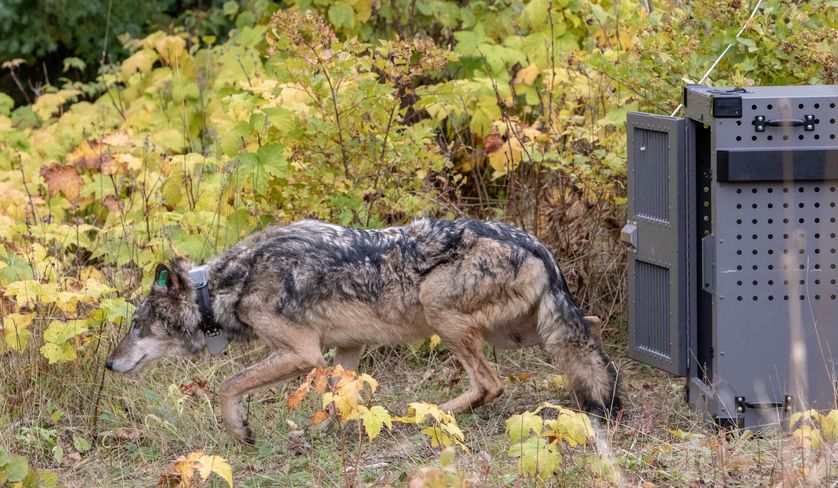
This is why some people think the best solution is to bring a fresh influx of wolves to Isle Royale National Park. The plan is to release 25-30 wolves over the next three to five years. So far, park officials have trapped four wolves on the mainland beginning in late September and released them on the island. Three of the wolves are female — with the hope they will successfully breed.
This new blood would potentially rebalance the predator-prey relationship and the idea is that the rest of the ecosystem would follow. Introducing so many wolves over several years is hardly natural either, others argue, saying that humans should just be hands off and let nature take its course. The original 50 wolves had found their way to the island on their own, having moved in from Canada; perhaps they could do so again if given the chance.
Editor’s note: This article has been updated since it was originally published in April 2017.
ooOOoo
This is the real news!
This came in while we were away.
G & C Dog and Cat Food Recall Expands to Include Multiple Brands
October 24, 2018 — G & C Raw of Versailles, Ohio, is recalling all products lots manufactured from February 27, 2018 through July 20, 2018, because they have the potential to be contaminated with Listeria monocytogenes.
Affected products are sold under the brand names G & C Raw Dog Food and G & C Raw Cat Food and sold through direct distribution to customers.
Product Image
No product images have been provided by either the company or the Food and Drug Administration.
About Listeria
Listeria monocytogenes, an organism which can cause serious and sometimes fatal infections in animals eating the products.
Furthermore, there is risk to humans from handling contaminated pet products, especially if they have not thoroughly washed their hands after having contact with the products or any surfaces exposed to these products.
Healthy people infected with Listeria monocytogenes should monitor themselves for some or all of the following symptoms: nausea, vomiting, aches, fever, and diarrhea.
Listeria monocytogenes infections can cause serious and sometimes fatal infections in young children, frail or elderly people, and others with weakened immune systems.
Although healthy individuals may suffer only short-term symptoms such as high fever, severe headache, stiffness, nausea, abdominal pain and diarrhea, Listeria infection can cause miscarriages and stillbirths among pregnant women.
Consumers exhibiting these signs after having contact with this product should contact their healthcare providers.
Pets with Listeria monocytogenes infections are rare, and pets may display symptoms such as mild to severe diarrhea, anorexia, fever, nervous, muscular and respiratory signs, abortion, depression, shock, and death.
In addition to the possibility of becoming sick, such infected animals can shed Listeria monocytogenes through their feces onto their coats and into the home environment and thus serve as sources of infection to humans and other animals in the household.
If your pet has consumed the recalled product and has these symptoms, please contact your veterinarian.
Where Was Product Distributed?
Recalled products were distributed by direct delivery and may have been sent to the following states:
- Georgia
- Illinois
- Indiana
- Kentucky
- Michigan
- North Carolina
- Ohio
- Pennsylvania
- Tennessee
What’s Being Recalled?
The manufacture dates are included at the end of the lot number.
For example, the pet food product manufactured on February 27, 2018 has a lot code of that ends with 022718.
The company is now recalling all products with lot numbers that end in 022718 through 072018.
The recalled dog food products include:
- Beef Veggie Mix Dog Food
- Ground Beef Dog Food
- Sliced Beef Heart Dog Food
- Ground Beef Heart Dog Food
- Kim’s Special Beef Organ Dog Food
- Ground Chicken Dog Food
- Chicken Veggie Mix Dog Food
- Chicken Mix Patties Dog Food
- Duck Veggie Mix Dog Food
- Ground Duck Dog Food
- Ground Rabbit Dog Food
- Rabbit Veggie Mix Dog Food
- Ground Lamb Dog Food
- Lamb Veggie Mix Dog Food
- Ground Beef Pancreas Dog Food
- Beef Liver Chunks Dog Food
- Beef Sweet Breads Dog Food
- Ground Pork Dog Food
- Pork Veggie Mix Dog Food
- Shelby’s Pork Organ Mix Dog Food
- Ground Pollock Dog Food
- Turkey Veggie Mix Dog Food
- Ground Turkey Dog Food
- Tripe Dog Food
The recalled cat food products include:
- Pat’s Cat Beef
- Pat’s Cat Chicken
- Pat’s Cat Turkey
- Pat’s Cat Duck
- Pat’s Cat Rabbit
No confirmed illnesses have been reported to date.
What Caused the Recall?
The recall was initiated as the result of a routine sampling program by the Ohio Department of Agriculture which revealed that some finished products contained the bacteria.
What to Do?
Consumers who have purchased the products are urged to return them to G & C Raw, 225 N. West Street, Versailles, OH, for a full refund.
Consumers with questions may contact G & C Raw at 937-827-0010 from 9 to 5 pm Easter Time or by email at mgcrawdogfood@yahoo.com.
U.S. citizens can report complaints about FDA-regulated pet food products by calling the consumer complaint coordinator in your area.
Or go to http://www.fda.gov/petfoodcomplaints.
Canadians can report any health or safety incidents related to the use of this product by filling out the Consumer Product Incident Report Form.
You keep all your dogs safe out there!
 Learning from Dogs