Year: 2018

How our dogs come to us in times of angst.

Science confirms what every dog lover truly knows.

This was seen on The Conversation website and is republished within the terms of that site.

You will love it!

ooOOoo

Lending a helping paw: Dogs will aid their crying human
File 20180723 189335 ay9ify.jpg?ixlib=rb 1.1
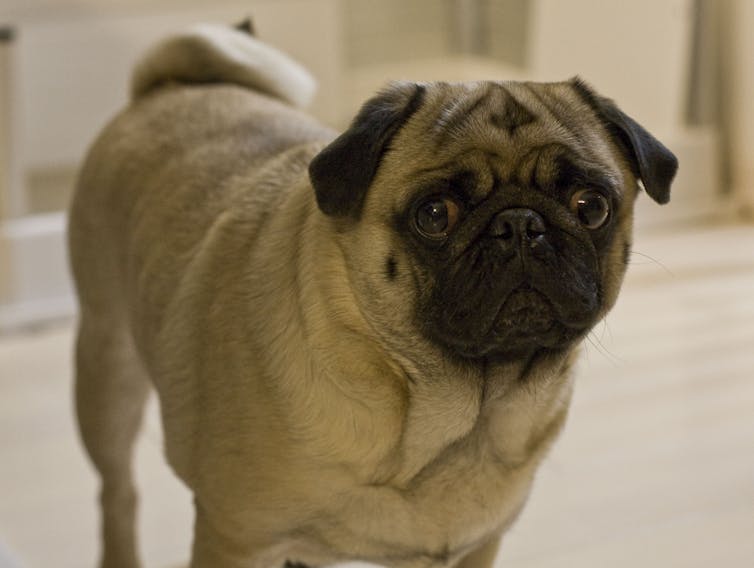
I’ll try to be there for you 100 percent. Chris Gladis, CC BY-ND

Authors: Julia Meyers-Manor, Ripon College and Emily Sanford, Johns Hopkins University

From Lassie to Balto, pop culture loves stories of a dog coming to a person’s rescue. Anecdotally, people experience their dogs coming to their aid every day, like when one of us found herself “trapped” by her children under a pile of pillows only to be “rescued” by her noble collie, Athos.

But is there any scientific evidence behind these sorts of tales?

Researchers know that dogs respond to human crying and will approach people – whether their owner or a total stranger – who show signs of distress. We decided to investigate whether dogs would go a step further than just approaching people: Would they take action to help a person in need?

Dog/human partners come into the lab

We recruited 34 pet dogs and therapy dogs – that is, those who visit people in hospitals and nursing homes – to take part in our study. Dogs included a variety of breeds and ages, from an elderly golden retriever therapy dog to an adolescent spaniel mix.

When they got to the lab, each owner filled out a survey about the dog’s training and behaviors while we attached a heart rate monitor to the dog’s chest to measure its stress responses.

In the experimental setup, dogs could see and hear their owners.

Next, we instructed the owner on how to behave during the experiment. Each owner sat in a chair behind a clear door that was magnetized shut – there as a barrier separating the dog from its owner – that the dog could easily push open. We assigned half the people to cry loudly and say “Help” in a distressed voice every 15 seconds. The other half of our volunteers we assigned to hum “Twinkle, Twinkle, Little Star” and say “Help” in a calm voice every 15 seconds. We ran the test until the dog opened the door or, if it didn’t, until five minutes elapsed.

Past research seemed to indicate that dogs would not help their human companions in distress, but it’s possible that the tasks to demonstrate “help” were too difficult for a dog to understand. So we adapted this straightforward task from previous research in rats. It seemed like dogs would be capable of nudging open a door to access their owners.

Lassie, Timmy’s crying in the other room

We expected to find that dogs would open the door more often if their owner was crying than if they were humming. Surprisingly, that isn’t what we found: About half the dogs opened the door, regardless of which condition they were in, which tells us that dogs in both conditions wanted to be near their owners.
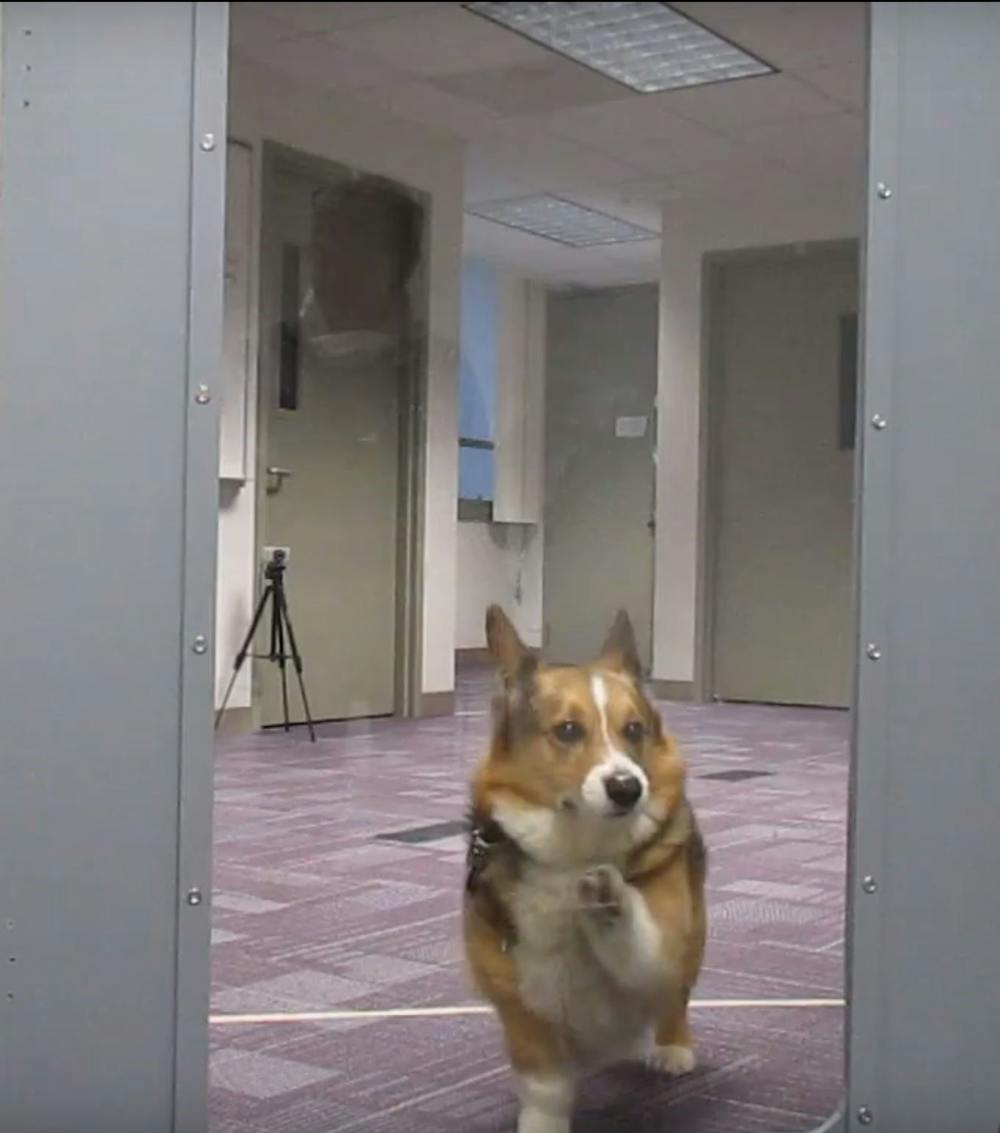
I’m on my way! Emily Sanford and Julia Meyers-Manor, CC BY-ND

When we looked at how quickly the dogs who opened the door did so, we found a stark difference: In the crying condition, dogs took an average of 23 seconds to open the door, while in the control condition, they took more than a minute and a half. The humans’ crying seemed to affect the dogs’ behaviors, taking just a quarter as long to push open the door and get to their human if they seemed distressed. We did not find any differences between therapy dogs and other pet dogs.

Other interesting results came when we looked into how the dogs were behaving in each condition. In the crying condition, we found the dogs that opened the door showed fewer signs of stress – and were reported by their owners to be less anxious – than dogs that did not open it. We also found that dogs that opened the door more quickly were less stressed than dogs that took longer to open it.

In contrast, dogs in the humming condition showed a slight tendency to open more quickly if they were reported to be more anxious. This may mean that dogs who opened in the humming condition were seeking their owners for their own comfort.

Helping requires more than just empathy

Because both humans and animals tend to be more empathetic toward individuals with whom they are more familiar or close, we thought that the strength of a dog’s bond with its owner might explain some of the differences we saw in dogs’ empathetic responses.

As soon as the test was over, we let the dog and owner reunite and cuddle for a few minutes to make sure everyone was calm before the next part of the experiment. Next, we turned to a test called the Impossible Task to learn a bit more about each dog’s emotional bond with its person.
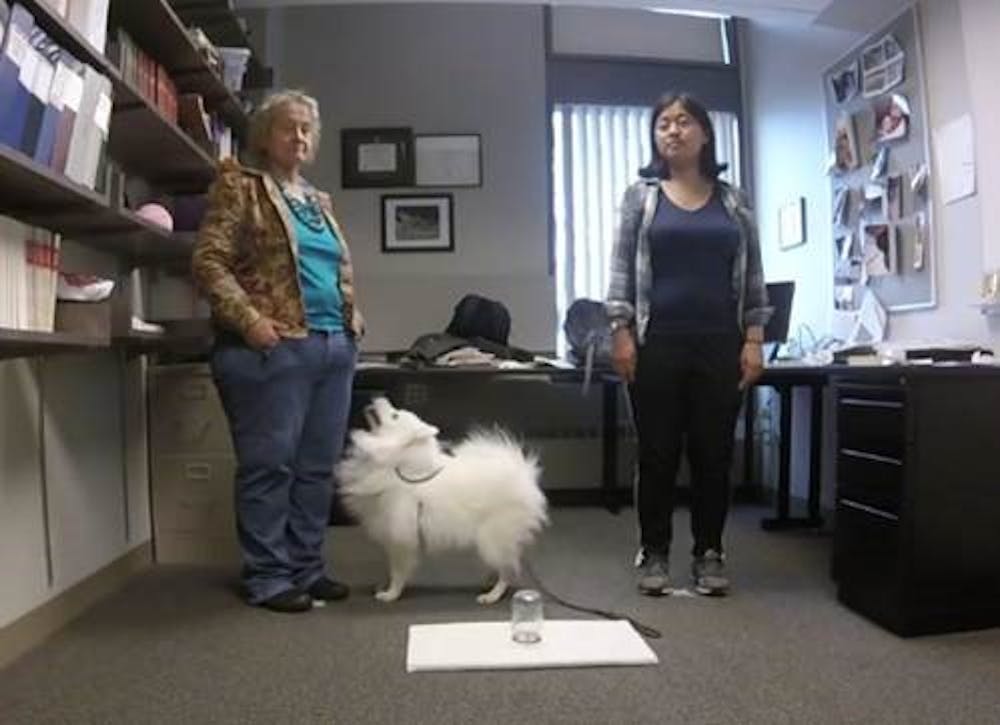
Hey, a little help down here for your furry friend? Julia Meyers-Manor and Emily Sanford, CC BY-ND

In this task, the dog learns to tip over a jar to get to a treat; then we lock the jar onto a board with a treat inside and record whether the dog gazes at its owner or a stranger. There have been some mixed results with this test, but the idea is that a dog who spends more time looking at their owner during this task may have a stronger bond with their owner than a dog that doesn’t spend much time looking at their owner.

We found that dogs who opened the door in the crying condition did gaze at their owner more during the Impossible Task than non-openers. On the other hand, it was the dogs who didn’t open the door in the humming condition that gazed at their owners more than those who opened it. This suggests that openers in the crying condition and non-openers in the humming condition had the strongest relationships with their owners.

Taken together, we interpreted these results as evidence that dogs were behaving empathetically in response to their crying owners. To behave empathetically toward another individual, you must not only be aware of the distress of another person, but also suppress your own stress enough to help out. If you are overwhelmingly stressed, you might either be incapacitated or try to leave the situation entirely. This pattern has been seen in children, where the most empathetic kids are the ones who are skilled at regulating their own emotional states enough to give help.

It appears to be the case with these dogs as well. Dogs with weaker emotional bonds to their owners, and those that perceived their owners’ distress but were unable to suppress their own stress response, may have been too overwhelmed by the situation to provide any help.

While everyone hopes their dog would help them if they ever were in trouble, we found that many of the dogs did not. People involved in our experiment, particularly those with dogs that didn’t open the door, told us many stories of their dogs coming to their aid in the past. Our study suggests that in some cases if your dog doesn’t help you, it’s not a sign he doesn’t love you; Fido might just love you too much.

Julia Meyers-Manor, Assistant Professor of Psychology, Ripon College and Emily Sanford, PhD Student in Psychology and Brain Sciences, Johns Hopkins University

(This article was originally published on The Conversation. Read the original article.)

ooOOoo

Well done, Julia Meyers-Manor and Emily Sanford. Great work!
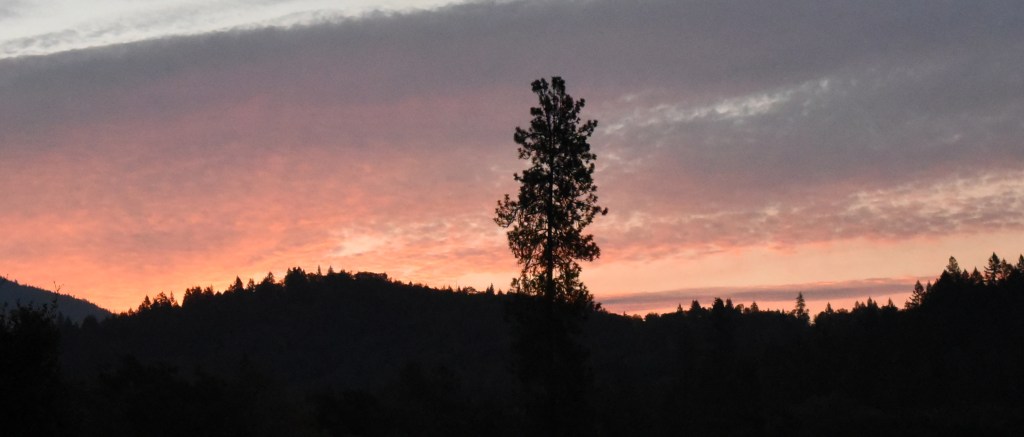
 

A new dawn

Literally.

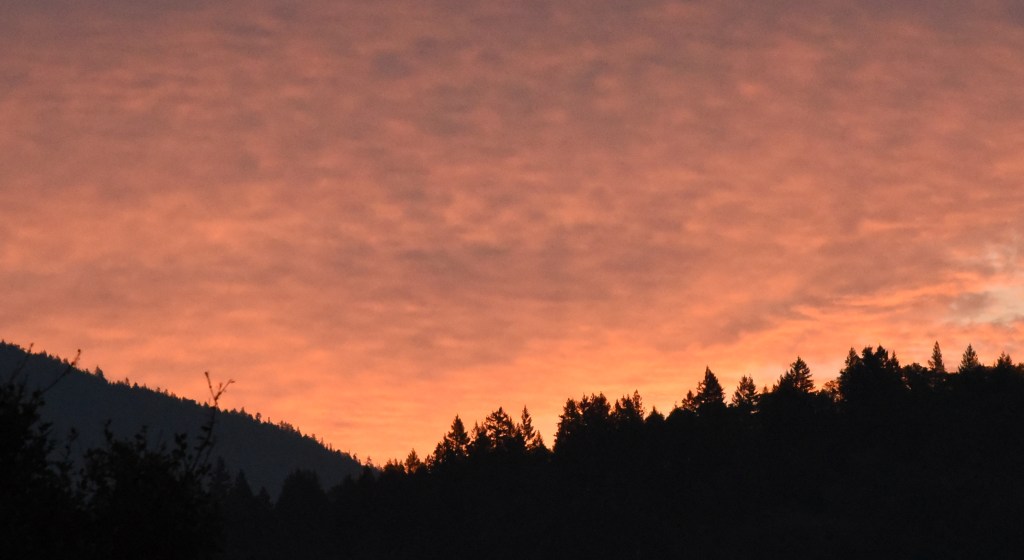
Three photos taken early last Tuesday morning from our rear deck at home; the deck faces East and Mount Sexton is to the left in the last photo.

NB: While the images recorded by the camera have been cropped no other changes, such as amending the highlights or brightness, have been made.

Taken at 05:55 PDT on the 31st July, 2018

oooo

Taken at 05:56 PDT on the 31st July, 2018

oooo

Taken at 05:56 PDT on the 31st July, 2018. That is the summit of nearby Mount Sexton on the LHS.

A step in my own self-awareness.

But the most important step I have ever taken.

In yesterday’s post I wrote:

It was the fickle finger of fate that led me to the arms, metaphorically speaking, of a core process psychotherapist back in Devon in the first half of 2007. That counselling relationship that revealed a deeply hidden aspect of my consciousness: a fear of rejection that I had had since December, 1956. That finger of fate that took me to Mexico for Christmas 2007 and me meeting Jean and all her dogs. That finger of fate that pointed me to the happiest years of my life and a love between Jeannie and me that I could previously never ever have imagined.

Here’s the full account. (But this is quite a long post and has the potential to cause some pain. Of course, I don’t intend that. But it’s best to mention that now.)

First we need to go back to that evening of December 19th, 1956. I had turned 12 on November, 8th and had just completed my first term at a nearby Grammar School. Then the family, as in Mum, Dad, me and my younger sister Elizabeth, were living comfortably in a detached house in Toley Avenue, a road off the main street that comprises Preston Road.
Preston Road is one of the outer suburbs of London to the North-West, sandwiched between Wembley, closer in to London, and Harrow, a little further out.

Anyway, on that evening of the 19th my mother came into my bedroom, located at the front of the house and next to Mum and Dad’s bedroom, at the usual time to say ‘Good night’ to me.

But while it was the usual time for Mum to be saying goodnight to me, clearly something was different this particular evening.

Mum sat down on the edge of my bed, just where my knees were, looked at me, and said, with pain in her voice: “Paul, you do know your father isn’t very well. He may not live for much longer.”

To be honest, all these many years later, I have no recollection as to whether or not I was aware that my father wasn’t very well.

Mum then leaned over to me, gave me my goodnight kiss, got up, and went out of my bedroom switching off the room light as she closed the door. As she always did and no different to any other evening.

Likewise, as with any other evening, I went off to sleep within a few minutes.

However, when I awoke the following morning, the morning of December 20th,  it was clear that something terrible had happened during the night. Let me explain that my father had had two daughters with his first wife, prior to meeting Mum, and I loved them both and saw them as elder sisters. The eldest was Rhona and she was a registered nurse (SRN). (My other ‘sister’ was Corinne.) Of course, Rhona was helping Mum care for Dad.

I got up and went downstairs. There was Rhona in the kitchen. Rhona came up to me and held me very tightly and then quietly told me that our father had died during the night. Rhona went on to add that Mum had thought it best not to wake me and Elizabeth and somehow arranged not only for the doctor to come in to certify Dad’s death but also for our father’s body to be removed from the home. Elizabeth and I had slept through it all!

I don’t recall having any emotional reaction to Rhona’s news; not even crying. It was if it was all just too unreal to take in.

A few days later, Mum, very clearly in her own mind doing her best to protect me and Elizabeth from pain, subsequently thought it wise that we didn’t go to our father’s funeral and cremation.

Now I have not the slightest doubt that many, if not all, of you will have cringed on reading the above.

Once back at school for the first term of 1957, I soon became aware of being the target of a degree of bullying, presumably because I was showing my grief through my behaviour and attitude, that my academic performance rapidly fell apart leading on to me leaving school before I went on to the Sixth Form.

The other thing that I was aware of in 1957, and for every December 20th thereafter, that this day was always a tough one. A day when I remembered with a degree of sadness and emotional pain that fateful night and morning in 1956.

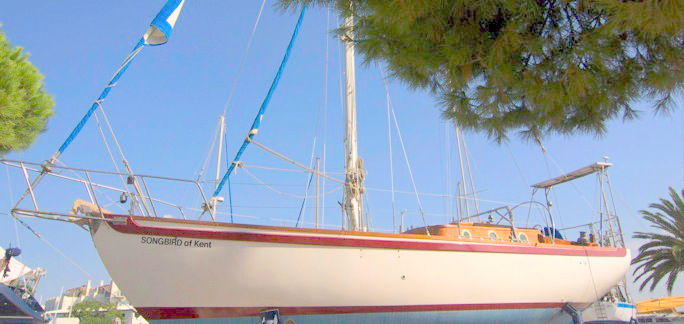
Nevertheless, my adult life really was (is!) a wonderful journey for me. It included a period working as a freelance journalist out in Australia in the late 1960s, becoming an Office Products salesman for IBM UK after returning from Australia to England and then in 1978 starting my own company, Dataview Ltd., in the early days of the personal computer revolution. Then after eight whirlwind years with Dataview growing in leaps and bounds each year, being approached in 1986 by a group of investors who wished to buy me out: I said “Yes”. That resulted in me going to live on a yacht, Songbird of Kent, a Tradewind 33, out in Cyprus (Larnaca Marina).

Tradewind 33 – Songbird of Kent. My home for five years.

While in Cyprus I got to know really well the wonderful, inspiring Les Powells, a three-times solo circumnavigator on his yacht Solitaire, and that thanks directly to Les offering me some very good advice, me experiencing the beauty, and the fear, of solo sailing out in The Atlantic and returning to Plymouth, in Devon, England, via Horta in The Azores, on the 16th June, 1994.

But! But! But!

But there was another part of my adult life that wasn’t such a wonderful journey. My relationships with the opposite sex! Culminating in my third wife, Julie, announcing on the day of the 50th anniversary of my father’s death, as in December 20th, 2006, that she was leaving me. (The reality of what she did to me was not pretty but I will spare you the details.)

Let me explain a little more.

After I had returned to England, sailing into Plymouth, in 1994, I subsequently sold Songbird of Kent and purchased a small house in the little village of Harberton, just a few miles out of Totnes, in South Devon. An easy decision to stay in South Devon because both Rhona and Corinne had their family homes close to Totnes.

Upper Barn, My home in Harberton.

I quickly became involved in the local business community undertaking a variety of coaching roles under the umbrella of Sales and Marketing; I was then a Chartered Member of the Institute of Marketing. In turn, Julie and I met each other and we became married.

In the Autumn of 2006, a Core Process Psychotherapist came to me seeking some business advice.  ‘J’ had had many years of coaching individuals one-to-one but had the idea, the good idea to my mind, of coaching the directors of companies in the whole process of listening to their employees and offering advice and guidance whenever there was the potential of conflict. If the employees worked more effectively together then ‘J’ believed the company as a whole would be more effective in reaching their goals.

‘J’ had no idea how companies worked, for want of a better term, and my role was teach ‘J’ the  fundamentals of operating the sort of company that was common to South Devon.

That’s what I was doing up to that fateful day of December 20th, 2006.

Because upon hearing the news that my then wife was leaving me, I simply blew apart emotionally. In the most terrible manner that I had never experienced before.

Very early on in January, 2007 I felt that I was descending into some bottomless pit of despair. In desperation I rang ‘J’ and explained what had happened on the 20th. ‘J’ listened and then said, quite properly, that he couldn’t see me as his client because we already had a working relationship. I pleaded and pleaded with ‘J’ to allow me to be his psychotherapy client. Finally, ‘J’ agreed but on the very strict condition that if he thought the counselling relationship wasn’t working then we would terminate it. He asked, and received, my understanding and agreement to that condition.

It wasn’t long thereafter before ‘J’ was asking me a little of my early experiences and I recounted that night of December 19th-20th and how I had not been able to say ‘Goodbye’ to my father.

‘J’ was quiet for a few minutes and then said:

“Paul, you have a son don’t you?”

I silently nodded.

“How do you think Alex would react if your death was handled for him in the same manner as your mother handled it for you?”

I gasped, conscious of how much I loved Alex, and Maija my daughter, and could hardly get the words out of my mouth: “He, he, … he would think he had been emotionally rejected ….”, continuing, “Oh my goodness! Oh! Oh! Oh! Oh, my sainted aunt! That’s it! I interpreted what happened back then when father died as rejection. That I wasn’t important to my father. So that’s what I have been experiencing all my adult life – a fear of rejection! But until now that fear has been completely submerged in my subconscious! Wow!”

That is the reason why, not to sound too immodest, I have been successful in all matters to do with my working life: I did everything to be accepted by my customers, my managers, my associates, and so on.

But it was also the reason why I had been so unsuccessful in my many, many relationships with women. Why I was unfaithful to my first wife. Why I could never say “No” to an emotional relationship with a woman, whether or not that woman had the potential to be a good long-term companion. Because I behaved in ways that minimised the chances of that woman rejecting me. That was why my last wife, Julie, before I met Jean, so gravely affected me when she chose, quite deliberately, to tell me she was leaving me on the 50th anniversary of my father’s death.

So that’s how ‘J’ held my hand, metaphorically speaking, and walked me into the light of how the past had affected me.

Dear, dear reader of Learning from Dogs, I do hope this makes sense and possibly in some small way this post holds out a hand to you.

I will close with this. Heard on a film that Jean and I recently watched.

Unless you understand yourself, can you be truthful to yourself?

The journey inwards is the most important and rewarding journey we can take!

Getting to know oneself

The journey inwards is the most challenging and yet the most rewarding of all!

This post is essentially a reposting of an item that I published nearly three years ago. It came to me as a result of some delightful exchanges following my post last Thursday: How well our dogs read us!

Tomorrow I will go into more details of that fateful event in my past:  December 20th, 1956.

ooOOoo

Further musings on dogs, women and men.

Published on Learning from Dogs, August 6th, 2015

A few weeks ago, I read a book entitled The Republican Brain written by Chris Mooney and to quote WikiPedia:

The Republican Brain: The Science of Why They Deny Science — and Reality is a book by the journalist Chris Mooney that is about the psychological basis for many Republicans’ rejection of mainstream scientific theories, as well as theories of economics and history.

On page 83, Chris Mooney writes (my emphasis):

Here also arises a chief liberal weakness, in Lakoff’s view (*), and one that is probably amplified by academic training. Call it the Condorcet handicap, or the Enlightenment syndrome. Either way, it will sound very familiar: Constantly trying to use factual and reasoned arguments to make the world better and being amazed to find even though these arguments are sound, well-researched, and supported, they are disregarded, or even actively attacked by conservatives.

When glimpsed from a bird’s eye view, all the morality research that we’re surveying is broadly consistent. It once again reinforces the idea that there are deep differences between liberals and conservatives – differences that are operating, in many cases, beneath the level of conscious awareness, and that ultimately must be rooted in the brain.

(*) George Lakoff, Berkeley Cognitive Linguist and author of the book Moral Politics.

What Chris Mooney is proposing is that the difference between liberals and conservatives could be genetically rooted, at least in part.

That underlines in my mind how each of us, before even considering our gender differences, is truly a complex mix of ‘nature and nurture’ with countless numbers of permutations resulting.

That there are deep differences, apart from the obvious ones, between man and woman goes without saying. In earlier times, these differences were essential in us humans achieving so much and leading to, in the words of Yuval Noah Harari from yesterday’s post., ” … few would disagree that humans dominate planet Earth; we’ve spread to every continent, and our actions determine the fate of other animals (and possibly Earth itself).”

Speaking of earlier times, let me turn to dogs, for it is pertinent to my post, and I would like to quote an extract from what Doctor of Veterinarian Medicine, Jim Goodbrod, writes in the foreword of my forthcoming book:

But what exactly is this human-dog bond and why do we feel such an affinity for this species above all others? My feeling is that it may be associated with our deep but subconscious longing for that age of simple innocence and innate human goodness that we supposedly possessed before we became truly “human”: that child-like innocence or what Rousseau referred to as the “noble savage”, before being corrupted by civilization, before we were booted out of the Garden of Eden. We humans, for better or worse, somewhere along that evolutionary road acquired consciousness or so-called human nature and with it we lost that innocence. What we gained were those marvelous qualities that make us uniquely human: a sense of self-awareness, an innate moral and ethical code, the ability to contemplate our own existence and mortality, and our place in the universe. We gained the ability to think abstract thoughts and the intellectual power to unravel many of the mysteries of the universe. Because of that acquired consciousness and humans’ creative and imaginative mind we have produced the likes of Shakespeare, Mozart, and Einstein. We have peered deep into outer space, deciphered the genetic code, eradicated deadly diseases, probed the bizarre inner world of the atom, and accomplished thousands of other intellectual feats that hitherto would not have been possible without the evolution of our incredible brain and the consciousness with which it is equipped.

No other living species on this planet before or since has developed this massive intellectual power. But this consciousness was attained at what cost? Despite all the amazing accomplishments of the human race, we are the only species that repeatedly commits genocide and wages war against ourselves over political ideology, geographic boundaries, or religious superstition. We are capable of justifying the suffering and death of fellow human beings over rights to a shiny gold metal or a black oily liquid that powers our cars. We are the only species that has the capability to destroy our own planet, our only home in this vast universe, by either nuclear warfare, or more insidiously by environmental contamination on a global scale. Was it worth it? No matter what your or my opinion may be, Pandora’s Box has been opened and we cannot put the lid back on.

What can we do now to reverse this trend and help improve the quality of life for humanity and ensure the well-being of our planet? I think, if we recognize the problem and look very critically at ourselves as a unique species with awesome powers to do both good and bad, and put our collective minds to the task, it may be possible to retrieve some of the qualities of that innocence lost, without losing all that we have gained.

Dogs represent to me that innocence lost. Their emotions are pure. They live in the present. They do not suffer existential angst over who or what they are. They do not covet material wealth. They offer us unconditional love and devotion. Although they certainly have not reached the great heights of intellectual achievement of us humans (I know for a fact that this is true after having lived with a Labrador retriever for several years), at the same time they have not sunk to the depths of depravity to which we are susceptible. It could be argued that I am being overly anthropomorphic, or that dogs are simply mentally incapable of these thoughts. But nevertheless, metaphorically or otherwise, I believe that dogs demonstrate a simple and uncorrupted approach to life from which we all could benefit. I think the crux of Paul’s thesis is that, within the confines and limitations of our human consciousness, we can (and should) metaphorically view the integrity of the dog as a template for human behavior.

“Dogs demonstrate a simple and uncorrupted approach to life …”

I closed yesterday’s post with these words, “It is my contention that humankind’s evolution, our ability to “cooperate flexibly in large numbers”, is rooted in the gender differences between man and woman.”

The premise behind that proposition is that until, say one hundred years ago, give or take, that co-operation between large numbers of humans was critically important in so many areas: health; science; medicine; physics; exploration; outer space and more. (And whether one likes it or not: wars.)  My proposition is that it is predominantly men who have been the ‘shakers and movers’ in these areas. Of course not exclusively, far from it, just saying that so many advances in society are more likely to have been led by men.

But (and you sensed a ‘but’ coming up, perhaps) these present times call for a different type of man. A man who is less the rational thinker, wanting to set the pace, and more a man capable of expressing his fears, exploring his feelings, defining his fear of failure, and more. I don’t know about you but when I read Raúl Ilargi Meijer words from yesterday, “And if and when we resort to only rational terms to define ourselves, as well as our world and the societies we create in that world, we can only fail.”, it was the male of our species that was in my mind. As in, “And if and when we [males] resort to only rational terms to define ourselves …”.

Staying with Raúl Meijer’s words from yesterday (my emphasis), “And those should never be defined by economists or lawyers or politicians, but by the people themselves. A social contract needs to be set up by everyone involved, and with everyone’s consent.”

Dogs demonstrate a simple and uncorrupted approach to life but that doesn’t extend to them making social contracts. Women do understand social contracts, they are predominantly caring, social humans. Less so for men. But for that social contract to be successfully set up by everyone it must, of course, include men. And that requires men, speaking generally you realise, to find safe ways to get in touch with their feelings, to tap into their emotional intelligence, using positive psychology to listen to their feelings and know the truth of what they and their loved ones need to guarantee a better future. What they need in terms of emotional and behavioural change. And, if I may say, sensing when they might need the support of subject experts to embed and sustain those behavioural changes.

It was the fickle finger of fate that led me to the arms, metaphorically speaking, of a core process psychotherapist back in Devon in the first half of 2007. That counselling relationship that revealed a deeply hidden aspect of my consciousness: a fear of rejection that I had had since December, 1956. That finger of fate that took me to Mexico for Christmas 2007 and me meeting Jean and all her dogs. That finger of fate that pointed me to the happiest years of my life and a love between Jeannie and me that I could hitherto never ever have imagined.

However, as much as I love and trust Jean, wholeheartedly, it comes back to dogs.

For when I curl up and wrap myself around a dog and sense that pure unconditional love coming back to me, I have access to my inner feelings, my inner joys and fears, in a way unmatched by anything else.

Where learning from dogs is a gateway to learning from me.

Pharaoh – more than just a dog!

ooOOoo

I will never be able to look at those eyes of Pharaoh, looking into my eyes, without feeling terrible pangs of loss. For he was the most amazing, the most wise, the most deep-thinking dog that I have ever known. Correction: that Jean and I have ever known!