Our English guests, Mark and Debbie, who stayed with us after traveling to Warm Springs, South-East of Portland, Oregon, to view the eclipse took the following three photographs.
See the crescents in the dappled shade of a near by bush. 10 minutes before totality.
oooo
Totality – August 21st, 2017.
oooo
Our English guests.
oooo
Then you will love the next one. Sent in by Neil Kelly from Devon, England.
Madison wears sunglasses to view the eclipse along the Cumberland River, Nashville, USA
oooo
And another beauty courtesy of Neil K.
Last but not least ….
oooo
Back to the stars!
The rising moon a little after 5am on the 19th August.
oooo
And there hanging above that rising moon was Venus!
oooo
Finally, back to Tanja Brandt whose most beautiful photographs will be gracing these Picture Parades in the future.
We are chilling out for a couple of days giving our attention to Mark and Debbie who are staying with us. They came over to view the eclipse and I shall feature a few of Mark’s photographs for this coming Sunday’s Picture Parade.
Marc who blogs at Healthy Pawz recently decided to follow this place. I went across to Healthy Pawz to leave my thanks for the follow, as I always try to do, and read a most wonderful post. Wanted to republish it here today.
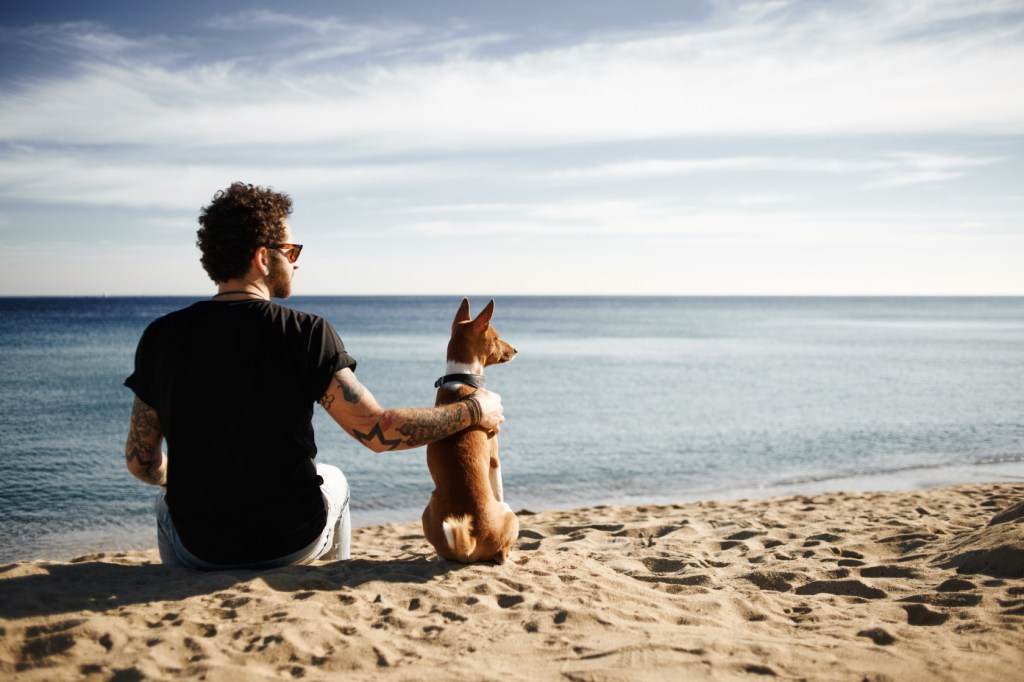
Pets have an amazing ability to change our lives for the better. They find that special place in our heart and latch on with incredible amounts of unconditional love. When we regularly give our pets undivided attention, we build a bond and connection that will last a lifetime.
Every moment we spend with our pets is an opportunity to observe them and learn more about their personality, nuances or needs. Notice the simple and basic things about your pet like when they are relaxed, comfortable, happy, anxious, etc., just as you would a child. Those moments of observation will teach you so much about the little being that wants nothing more than to provide you with unconditional love and attention.
Another great benefit to having a pet is that they can sometimes see in us what we cannot see in ourselves. We know about service pets that support people in different ways for sight, comfort, seizures, autism, etc. But, our own pets are also in tune to our needs and emotions. However, we are sometimes so rushed with life that we fail to recognize the great gift our pets are offering us (me included). We have a rescue kitten with one eye and in my opinion, she’s amazing. This little cat noticed inflections in my voice that indicated stress of some sort. For me it was business as usual, but for her it was climb on my chest and rub her little face against mine. After a few hundred times of this (exaggerated of course) I finally realized that she was trying to calm me down. And I learned to better recognize when I needed to take a step back with a deep breath throughout the day.
We live in a very fast paced, get it done kind of society. That kind of daily grind can strip away some of our compassion and empathy because we are so overwhelmed with other aspects of life that we may not notice when we are stuck in that vortex spinning around aimlessly. Whether we realize it or not our pets are a great conduit to restoring that which we need to sustain us in our human relationships. Compassion and empathy are easily understood, but not always easily lived out. Our pets are a daily reminder of this because they provide both compassion and empathy daily. Because of this, we have an opportunity to reciprocate compassion and empathy back to them and to those around us.
Whether you have a dog, cat, hamster, etc., pets can enhance our lives in so many ways. Carve out some daily time to spend with your furry loved one, observe them on their terms and take some time to reflect about how they are benefiting your life. Watch over time as your emotional intelligence evolves through this process.
ooOOoo
There is so much wise advice in that post!
Hard to highlight any particular sentence but this one spoke to me early on: “When we regularly give our pets undivided attention, we build a bond and connection that will last a lifetime.”
….. but I only managed to get my office back to some form of functionality late yesterday afternoon.
So some peeks into the last few days..
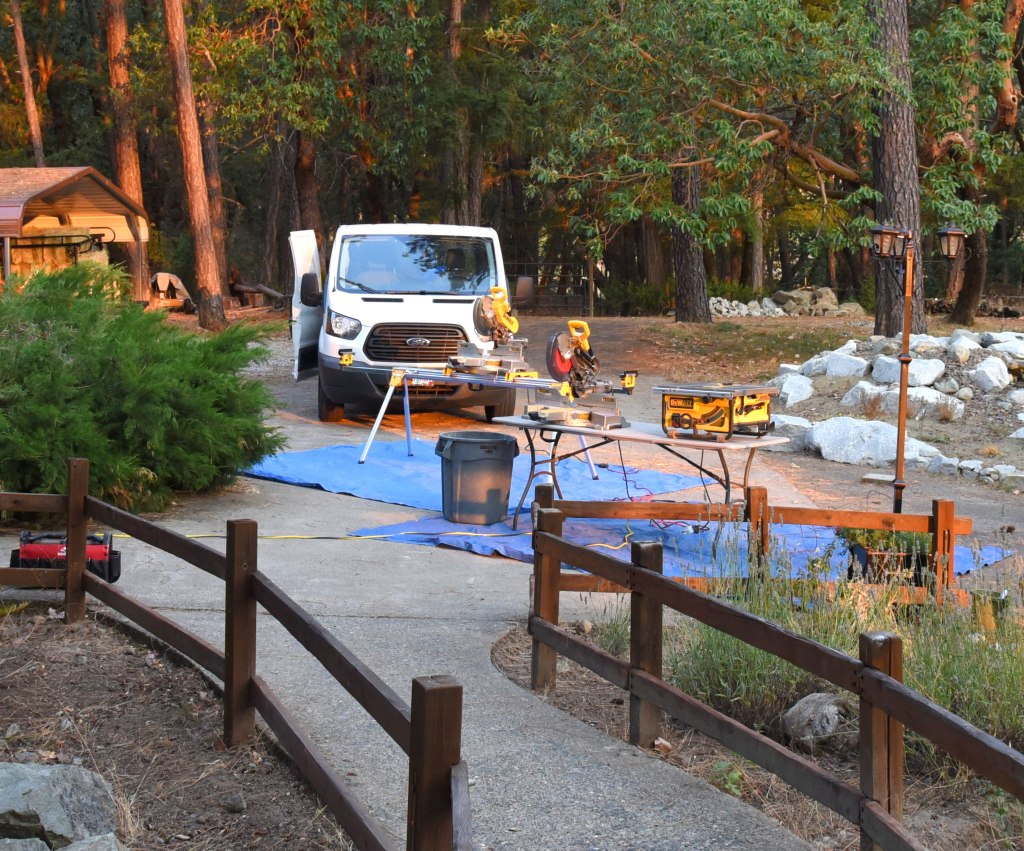
The installers arrived bright and early on Saturday morning.
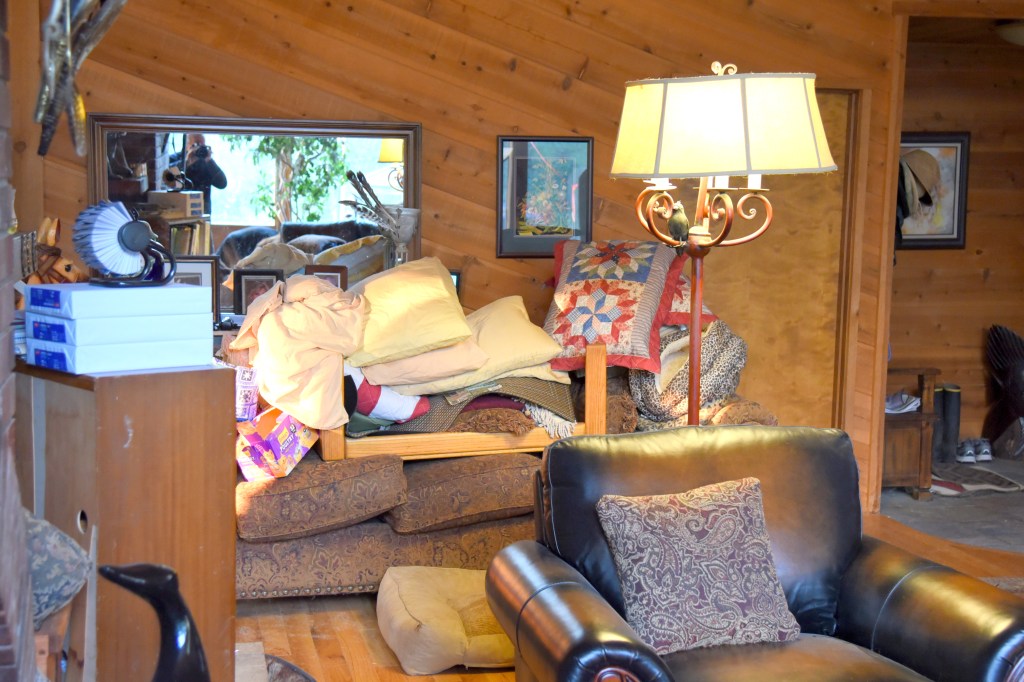
But I guess one advantage of us starting to get used to the house being upside down, it having been like this since the 11th, was that the dogs were pretty relaxed about the whole affair.
Not quite sure that Jeannie and me were so cool about the chaos that had surrounded us for so many days now.
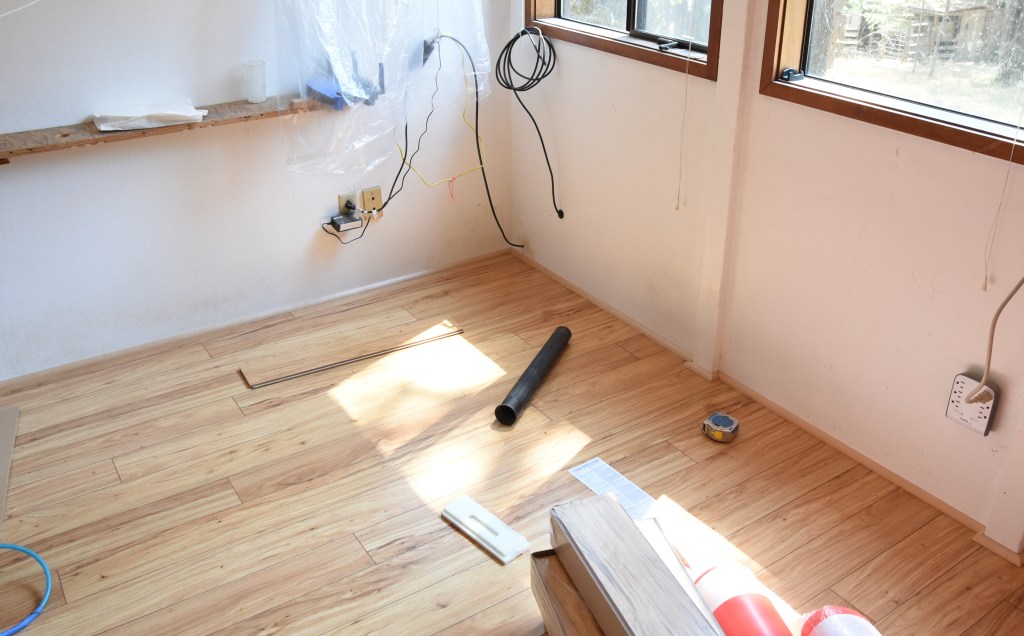
Then the picture below was the state of my office Sunday afternoon.
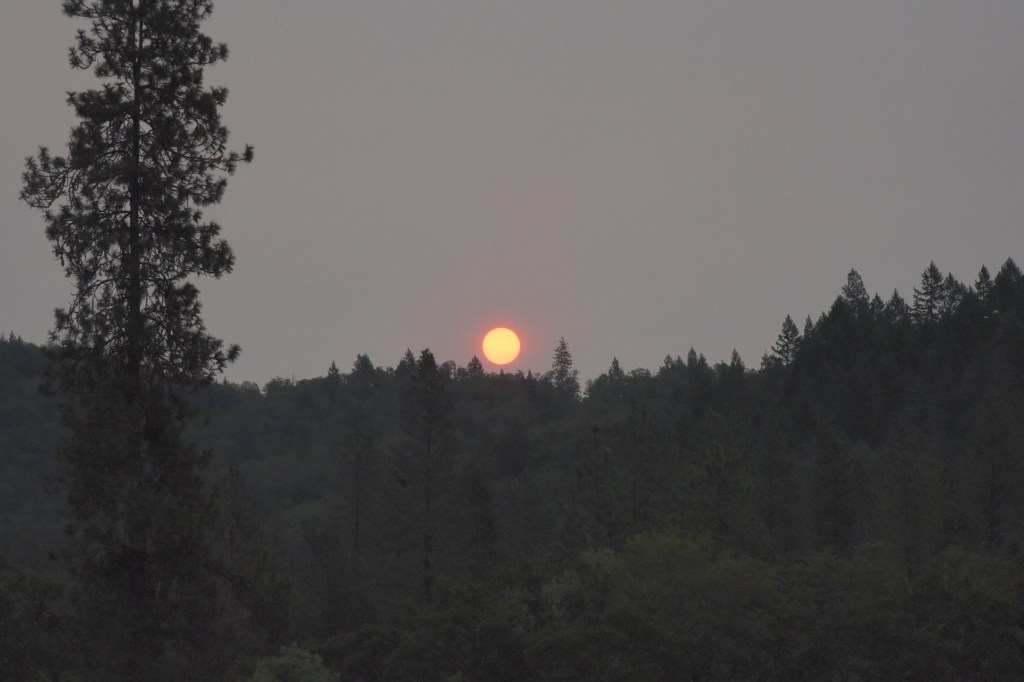
But the one great bonus was that the smoke in the air from nearby forest fires meant that yesterday’s sunrise was a very beautiful sight.
Hopefully, good people, back to more normal times tomorrow. (And the new floor does look great!)
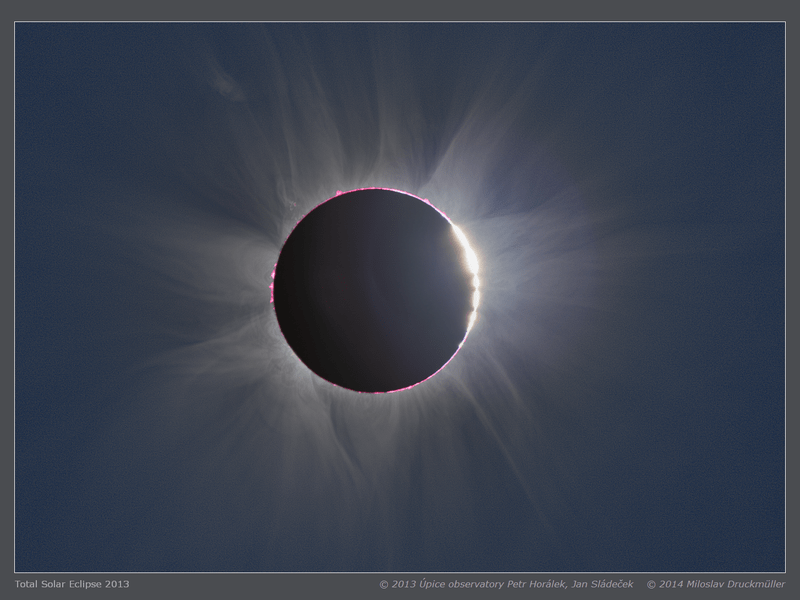
How would you describe an eclipse to a blind person? The moon moves in front of the sun, yes. But what does that look like? Someone trained in illustrative description of images might say, “The moon appears as a featureless black disk that nearly blocks out the sun. The sun’s light is still visible as a thin band around the moon’s black disk. To the upper right, at the moon’s leading edge, a small area of sunlight still shines brilliantly.”
That’s just an example of how such an event could be described. Bryan Gould, director of accessible learning and assessment technologies at the National Center for Accessible Media, a non-profit working to make media experiences accessible to people with disabilities, is hoping to offer oral descriptions of the eclipse in an app. Paired with other features, like a tactile diagram and audio from the changing natural environment as the eclipse darkens the sky, the app is designed to make the event more accessible to blind or visually impaired people who want to experience it.
Gould is working with Henry Winter, a solar astrophysicist at the Harvard-Smithsonian Center for Astrophysics, to develop the app, called Eclipse Soundscapes. As the August 21 solar eclipse darkens a path across the United States, Eclipse Soundscapes will release descriptions, timed—based on the user’s location—to match the progress of the eclipse.
Winter conceived Eclipse Soundscapes after a conversation with a friend who’s been blind since birth. She asked him to explain what an eclipse means.
Such an event might provide an interesting representation of the eclipse, thought Winter, so he partnered with the National Park Service’s Natural Sounds program, which preserves and catalogs sounds from the parks. Helpers stationed at national parks along the route will record audio during the eclipse, to hear the change in the “bioacoustical chorus” of the animals.
This can’t happen in real time, of course, so the National Center for Accessible Media is providing illustrative descriptions, based on a previous eclipse. The sounds of crickets, frogs and birds becoming active on the day of the eclipse will be added to the app later.
Last, with the help of an audio engineer named Miles Gordon, Winter is trying something completely new. Gordon developed a “rumble map” of the eclipse: The app places images of different stages of an eclipse on your smartphone’s screen, and as you trace your finger across the eclipse’s image, the vibration increases or decreases based on the brightness of the image.
“It does give you the impression that you’re actually feeling the sun, as you move your finger around,” says Winter.
“I realized I didn’t have the vocabulary to answer that question for her,” says Winter. “Every way I thought about it was visual in nature, and I didn’t know how to explain it to somebody … light, dark, bright, dim, flash. All these different words have no meaning to somebody that’s never seen.”
But the project goes well beyond audio descriptions. It includes two further elements: audio of the changing soundscape caused by the eclipse, and a tactile exploration of the eclipse’s image (which means that people who are blind or visually impaired can “feel” the eclipse using vibrations on their smartphones).
Many creatures become active as the sun sets, and many of them use darkness as an indicator of time of day. During an eclipse, crickets will chirp and frogs will chorus, thinking night has fallen. These habits were noted as far back as 1932, in a Proceedings of the American Academy of Arts and Sciences article titled “Observations on the Behavior of Animals During the Total Solar Eclipse of August 31, 1932.”
Scientists around the world will be using the eclipse as an opportunity to study solar astronomy in a way they usually can’t, measuring the ultraviolet light emitted from the sun’s corona, which Earth-based observers can’t normally see, as it is overpowered by the normal sunlight. It’s also rare for an eclipse to cover this much land — it traverses from Oregon to South Carolina — and Winter points out that it is a particularly good opportunity for education and outreach.
Though education is important, for Wanda Diaz Merced, a visiting scientist at the Harvard-Smithsonian Center for Astrophysics who is completely blind, there’s a lot more to the eclipse than that. Merced, who has consulted on the Eclipse Soundscapes project, studies human-computer interaction and astrophysics, and to do her research, she needs assistance translating data into a format she can interact with. She’s been building tools to help with that translation, and sees elements of Winter’s project that could contribute.
“It’s still not a prototype that I may use, for example, to study elements of the photosphere. It is not on that stage,” says Merced. “But hopefully one day we will be able to not only hear, but to touch.”
The eclipse will occur on August 21, starting around 10 a.m. in Oregon and finishing by 3 p.m .in South Carolina. The Eclipse Soundscapes app is available for iOS now, and the team is working on an Android app as well.
ooOOoo
I can’t imagine there’s anyone still pondering on whether or not to view the eclipse.
But that still doesn’t stop me offering you this recently presented TED Talk.
On August 21, 2017, the moon’s shadow will race from Oregon to South Carolina in what some consider to be the most awe-inspiring spectacle in all of nature: a total solar eclipse. Umbraphile David Baron chases these rare events across the globe, and in this ode to the bliss of seeing the solar corona, he explains why you owe it to yourself to witness one, too.
This talk was presented to a local audience at TEDxMileHigh, an independent event. TED editors featured it among our selections on the home page.
About the speaker: David Baron David Baron writes about science in books, magazines, newspapers and for public radio. He formerly served as science correspondent for NPR and science editor for PRI’s The World.
Enjoy it, good people. And protect your eyes!!!
Or better still allow NASA Television to show the eclipse to you.
NASA Television will air a four-hour show – Eclipse Across America – which will include live video of the event, along with coverage of activities in parks, libraries, stadiums, festivals and museums across the nation, and on social media. NASA’s show begins at 15:00 UTC (11 a.m. EDT; translate to your time zone), or later (we’ve seen this time waffle around a bit). Check the website for changes or further details.





 Learning from Dogs