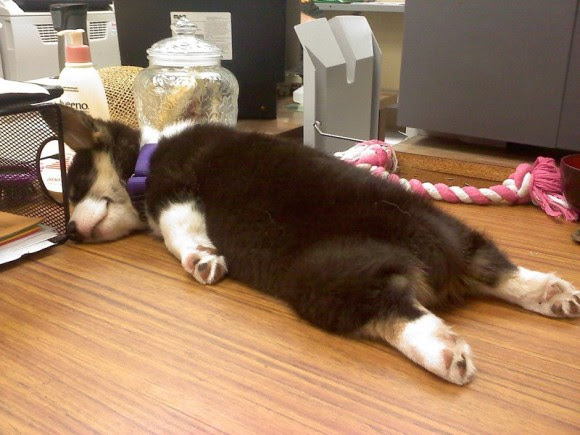
I have to thank our immediate neighbours, Larry and Janell, for sending on nearly thirty of these fantastic pictures under the general theme of Dog Tired! (Did you see yesterday’s picture?)
Dog Tired, selection one.
oooo
oooo
oooo
oooo
oooo
oooo
oooo
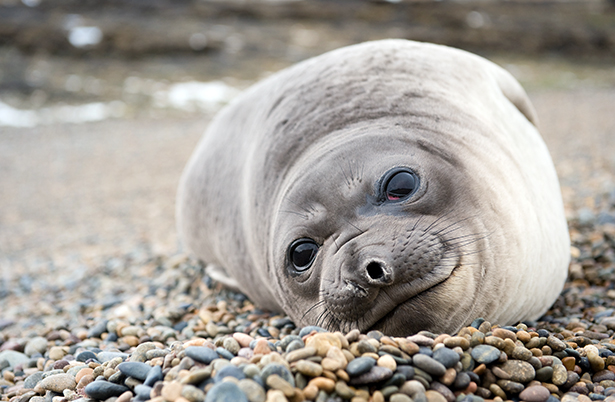
These pictures are making me yawn already and it’s only two in the afternoon!
I came into the house yesterday around 4:30pm after having dug eight three-foot diameter holes out in the meadow and then planted into those holes eight tree saplings.
Frankly I was far too tired to consider a post for today. Then I opened my email inbox and saw that our immediate neighbours, Larry and Janell, had sent me a string of pictures under the heading of Dog Tired.
It made a perfect post!
More tomorrow that I know you are simply going to love.
Our delivery of trees arrived yesterday from the Arbor Day Foundation and that means that much of today will be spent in getting those trees planted.
Plus the recent wet spell has stopped me taking that first cut of the grass from around the house. So there’s another task for this relatively decent weekend coming up. And the vegetable garden needs some attention. And so on!
All of which is my way of saying that I won’t be paying my normal level of attention to Learning from Dogs for the next few days.
Rather aptly comes this item that was recently published over on The Conversation and is republished here within their kind terms.
ooOOoo
Hug a tree – the evidence shows it really will make you feel better
March 18, 2014.
Author
Shelby Gull Lair, Lecturer, School of Environmental Sciences, Charles Sturt University.
We know that trees have many benefits. In forests they provide habitat, wood, biodiversity and ecosystem services. In cities, they can mitigate the urban heat island effect by cooling the air and reducing greenhouse gases.
But, perhaps surprisingly, there is increasing evidence that trees are also good for our mental health.
Are we all tree-huggers?
The idea that humans are intimately connected to the earth has persisted throughout human history and across cultures. In the western world, this connection was most recently described by eminent biogeographer E.O. Wilson in his 1984 book Biophilia. Wilson notes that humans naturally like to be around other living things.
This hypothesis was the basis of “connection to nature”. Psychologists have now developed multiple scales used by researchers to determine how connected a person is, and how we might be able to increase our connection to our benefit.
Connection to nature research is still developing, but early results seem to indicate that how connected to nature you are is related to your environmental behaviours, such as participation in recycling programs and an increase in overall well-being and happiness.
Because it is still a new line of research, the relative connection to nature of folks who live in urban areas and cities versus those of us living in rural places has yet to be established. But many researchers and environmental educators have come to suspect that we are becoming disconnected from nature.
Nature-deficit disorder
This disconnect from nature was set out in 2005 by American writer Richard Louv in his book The Last Child in the Woods. Louv coined the term “nature-deficit disorder” which means that modern humans have become disconnected from nature through our daily activities and this disconnect has had negative consequences in terms of mental and physical health. Proof of this hypothesis so far lies in studies that show how people with “modern” ailments, such as ADHD, anxiety or depression feel better with exposure to nature.
Based in North America, the Children & Nature Network has pages and pages of summarised research from academics around the world that seems to indicate a strong likelihood this disconnect is a real phenomenon. The sheer number of studies and their results showing the miracle cure of nature can be overwhelming at times.
There are studies represented such as:
Living in urban areas with more tree canopy cover had increased the likeliness of a better birth outcome.
Inner city girls with a greater view of green from their high-rise public housing buildings had more self-discipline than their peers who look at other buildings.
Children with ADHD receive the greatest relief of symptoms through participation in green outdoor activities versus other activities without nature.
Do yourself a favour, skim the pages of research summarised in short abstract form on the Children & Nature Network website. You may start to wonder why we’re not hearing more about getting our children and ourselves back outside.
This research also clearly highlights the important role that urban trees play in cities: their enormous social and psychological benefits may be even greater than ecological benefits.
Stressed at work? Your office might benefit from some folliage. srv007/Flickr, CC BY-NC
Reconnecting with the natural world
So what are our next steps? As I see it, there are two things that must be done.
First, as researchers we really need to directly test the idea of a disconnect particularly between urban/built up areas and more rural areas with plentiful trees. We need to know if people living in areas with fewer trees and natural environments are more disconnected from nature than those living in places where there are abundant trees and wildlife. Deeper still, we could also ask what interventions seem to connect folks to nature in a meaningful way?
Second and most importantly, if we are disconnected from nature, what can we do about it? Fortunately the above studies and resources show us many different activities and ideas we can use to increase our nature exposure.
Just a few ideas to try:
Bring a plant into your office.
Ask council to plant a street tree outside your office window or better yet all around town.
When walking, choose the path through the park instead of around it.
Take your children to the park, to the natural sections as well as the play equipment.
Practise the art of gardening or even veggie gardening.
Plant a tree.
Spend some time sitting under a tree. And if you’re so inclined, maybe even give it a cuddle.
ooOOoo
Setting a fine example!
You all have a lovely weekend hugging as many trees as you can!
Oh, and let me give you that full silly verse that started out in the sub-title.
But at the top [of science] there is paralysis: leading scientific organizations do little except chase money and reinforce the ruling nexus of politics and finance — even since the financial crisis of 2008, which discredited the free-market philosophy that underpins that nexus. I argued years ago (see Nature479, 447; 2011) that scientific leaders had failed to respond in any meaningful way to that collapse, and I’m still waiting.
The political structure of the West is in deep trouble, and should it fall apart, there will be plenty of blame to go around. Most will go to political and financial elites, or to rowdy mobs. But some will belong to people in the middle who have taken public funds, defended elites and then stood back and watched as democracy got ridden over a cliff.
I think that fair comment and recommend the rest.
If one now goes across to that post from Colin here’s what one would read in the opening paragraphs:
The elephant in the room we can’t ignore
If Donald Trump were to trigger a crisis in Western democracy, scientists would need to look at their part in its downfall, says Colin Macilwain.
16 March 2016
The annual meeting of the American Association for the Advancement of Science (AAAS) in Washington DC last month was one of the best I’ve witnessed in more than 20 years of regular attendance. The policy sessions were packed and genuinely stimulating. I met tons of smart, influential people I hadn’t seen for ages, and we all enjoyed a good chinwag about how better to engage with the public — the meeting’s theme for 2016.
The only trouble was what was going on outside the hotel — in the United States and the world at large.
Colin then makes the point that is neatly articulated in the extract that was published by Professor Murphy and is republished above.
I don’t have any answers other than wanting to share this with you, dear reader. For decent, ordinary folk must be aware of the multiple threats to our Western democracy that are taking place.
Just as I want to share with you an example of what a good honest person and his adorable Labrador get up to. An example from my old country (and Richard Murphy’s home country).
When one false step left Martin Kay literally drowning in ice-cold mud in the English countryside, he quickly found out who his two best friends are. Turns out one of them is a dog.
Holly Blue is a typical Labrador who has never met a tree trunk or a blade of grass that doesn’t smell good. So when Martin took out her leash one recent afternoon, his dog was over-the-moon with expectation of the crisp afternoon air and a landscape of wintery fields. Neither of them had any inkling that this simple walk would soon turn catastrophic.
This day, the two set out along a different route through England’s historic Thornham Parva village. Though it was a very cold day, the skies were clear and there was no reason for concern, or so it seemed.
“I hadn’t walked that route for about two years,” Martin said. “When I came across the mud, I tested the ground at the side and it felt firm, but as I walked into the middle the ground began to sink. I called for help but nobody heard me.”
Minutes turned into hours and Martin simply couldn’t extricate himself from the mud. Holly Blue circled anxiously, but there was nothing the dog could do except to stand guard beside her friend. She never left his side.
“I eventually drifted off,” Martin said. “I wasn’t optimistic about being found, but I wasn’t panicking – it was too cold for that!”
Fortunately, Martin’s good friend was scheduled to pick him up that day and when Martin didn’t return home, his friend grew concerned enough to call the police. Martin was reported missing to the police at 7:30 in the evening. Other friends and neighbors had already begun searching for Martin themselves, but they were all focused on his usual route, not realizing that he’d gone in a different direction.
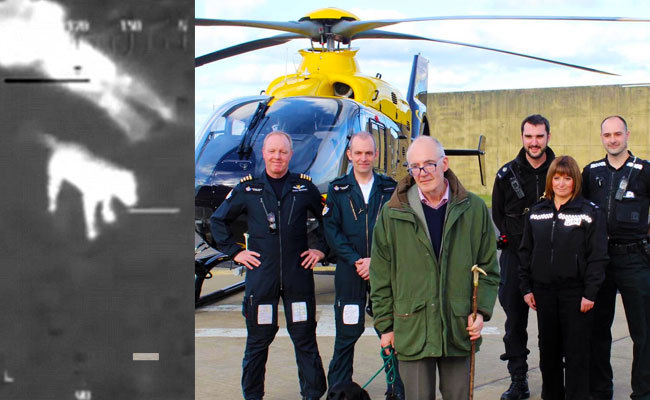
Police used a thermal imaging camera during helicopter sweeps from above. After some time they came across a heat signature that appeared to be the warm body of dog curled up at the edge of the bog. According to police, indeed Holly Blue was found first, and sighting her led them to Martin. Watch a portion of the rescue below.
Police Constables Luke Allard and Clare Wayman were the first on the ground.
“The field was in the middle of nowhere and we were relying on the light from the helicopter and torch light,” Allard said. “When I got to Mr Kay I took hold of his hand and he wouldn’t let go – I told him he would have to let go or I wouldn’t be able to help him.”
Unfortunately Allard and Wayman began getting stuck themselves while trying to extricate Martin, so they covered him with their own jackets to keep him warm while waiting for reinforcements.
Martin was in and out of consciousness as he was taken to West Suffolk Hospital. When he awoke, he was told how Holly Blue had helped save his life.
“It was the first and the last time she had been called into action,” Martin said in an interview with Global News. “She’s a very loyal dog.”
ooOOoo
Now compare the behaviourial values of Martin Kay, Holly Blue and everyone else who ensured this had a happy ending with those being demonstrated in the first part of this post!
It’s no sinecure to say, once again, how urgent it is for humankind to learn from our fabulous dogs!
I have so much admiration for the rescuers, like Jean was in Mexico. They have the biggest hearts, and see the absolute worst of things.
Then a few moments later, a further reply from John:
And to rescue the abused ones. To find them, then live in that lag time before they are freed. I wouldn’t be able to sleep. I don’t have the disposition for it. I’d be physically ill.
Thus the minimum that I can do is to promote the incredible work done by the Rogue Valley Humane Society; just one among many.
For example, by republishing what they present on their About page.
ooOOoo
About The Rogue Valley Humane Society
Our Vision
The Rogue Valley Humane Society envisions a community where every healthy adoptable companion animal has a lifetime, loving home and all homeless animals receive the care and compassion they deserve until they are adopted by their forever family.
Our Story
Fifty years ago homeless animals in the Rogue Valley faced a death sentence if no one adopted them within a few days. In 1965 a small group of animal lovers decided to try to change that, and they started a rescue to give homeless, abused, and abandoned pets in Josephine County a safe haven without a time limit. The Rogue Valley Humane Society grew out of this grassroots effort. RVHS was incorporated in 1965 as a non-profit public benefit corporation dedicated to providing love, food, shelter, and medical attention to these animals until they can find new lifetime homes.
Thirty-five years later the current facility opened with the capacity to house 14 dogs and 80 cats plus litters of puppies and kittens. Our main building houses all of the cats plus the office, laundry and medical room. The separate kennel building has indoor/outdoor runs. The Robert E. and Jennifer Murphy Canine Care Building was built in 2013 to house newborn puppies and any dog needing a quiet place to heal.
Throughout the years we’ve had one singular goal: to improve the lives of animals. We are proud to show RVHS to visitors so they can see first-hand the standard of care we give to every homeless companion animal, from an elderly, blind dog to a day old kitten.
The Rogue Valley Humane Society is a 501(c)(3) non-profit corporation. We provide shelter, food, medical care and personal attention for hundreds of homeless dogs and cats every year. We are here for the young and cuddly, the old, sick and neglected, and everything in between.
We receive no county, state or federal funds and rely solely on individual and foundation grants to carry out our mission.
Our Mission
The Rogue Valley Humane Society provides compassionate care for stray, unwanted, displaced, and abandoned animals and works toward ending pet overpopulation so that there will be no more homeless pets. We are committed to placing every healthy, adoptable animal in a loving lifetime home, teaching responsible pet guardianship, and maintaining community spay-neuter programs.
Our Core Values
We believe that every animal’s life has value and is worthy of respect and protection.
We believe that euthanizing healthy, adoptable animals is not acceptable.
We believe that animals contribute to the health, happiness and quality of human life.
We believe that we must manage our resources to assure the long-term future of our organization.
We believe in providing quality medical and shelter care by following evidence-based animal welfare practices.
We believe that through humane education we can help foster compassion, protection and guardianship for companion animals.
We believe that we should treat everyone with dignity and respect. Community members, staff, and volunteers are partners in improving the welfare of animals and helping us fulfill our Mission.
We believe that we can end pet overpopulation by adhering to our commitment to spay/neuter all of our animals before adoption and by providing community-assistance spay-neuter programs.
We believe that we best serve our community by placing healthy companion animals in responsible, loving homes.
ooOOoo
By promoting their Facebook page (look them up).
By enjoying some of the pictures on their website of dogs looking for homes:
My name is Rudy. I WAS extremely shy and nervous in the beginning. After a little love and patience, as you can see in the video I have come out of my shell. I love to hang out with both my human and furry friends and to be kept busy. I cherish my daily walks and because I’m a thinking I have a great fondness for brain toys.
Border Collie
Spayed/Neutered
Up-to-date with routine shots
Spayed/Neutered
And …
Labrador Retriever, American Staffordshire Terrier
My name is Margo. I am sweet girl looking for a new lease on life. I promise to give you lots of love and attention, if you promise me the same thing. I’m sure we can come to an agreement and live happily ever after! Sounds good to me!
Yesterday morning Jean and I travelled the short distance into Grants Pass to visit Margaret and the rest of the team at Rogue Valley Humane Society, RVHS. As their website proclaims: Helping Our Community, Four Paws at a Time.
Here’s why we went to meet the team.
If you drop across to my page where I offer my book for sale you will read that:
Please do find your way to supporting our pets in need. For 50% of the net proceeds from the sale of my book are being donated to our local Rogue Valley Humane Society. Every cent makes a positive difference!
Well many of you, dear people, have made a positive difference, as the following pictures illustrate.
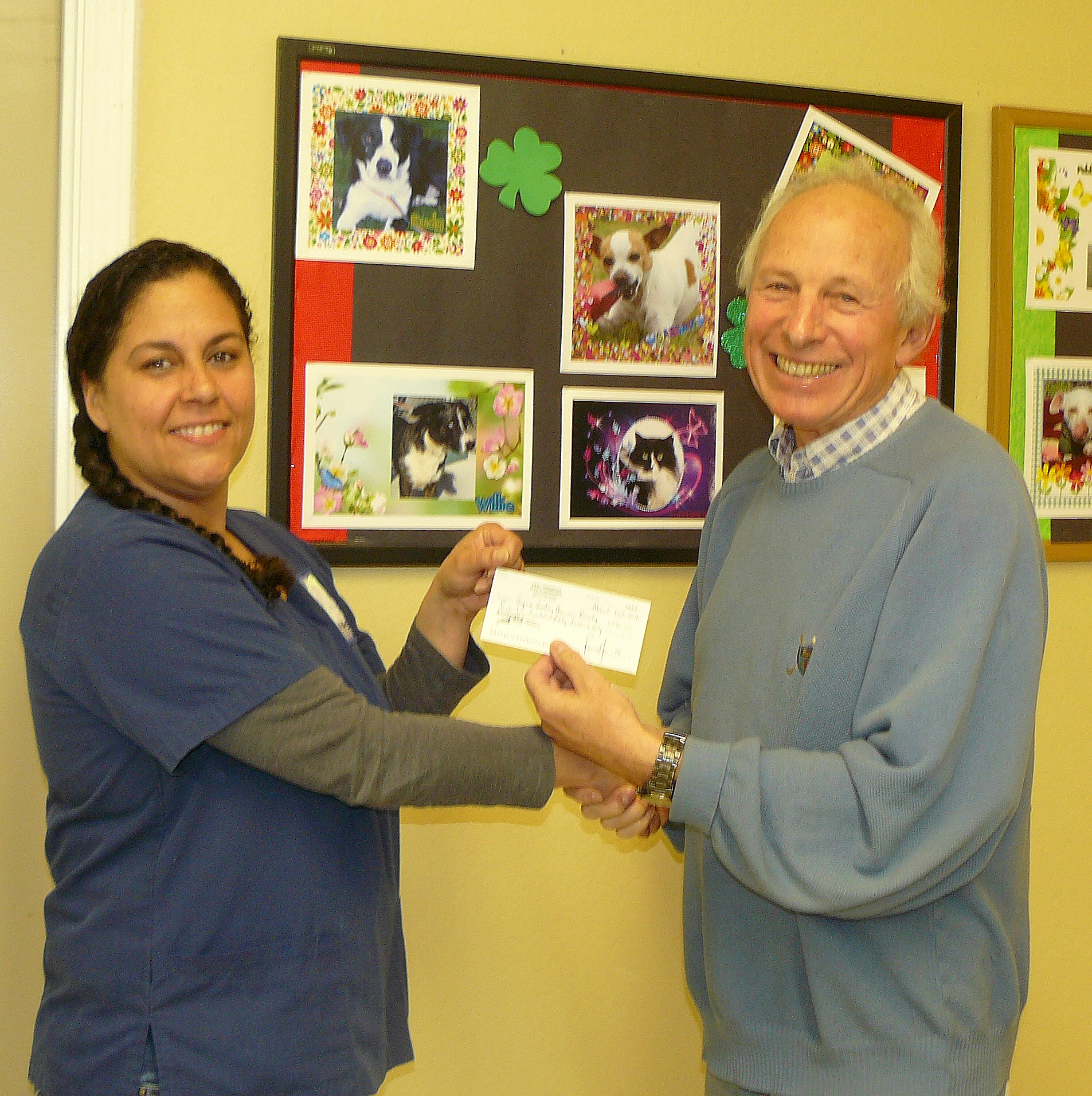
Yours truly passing a cheque to the value of $750 to Margaret Varner, Director of Facility Operations at RVHS.
oooo
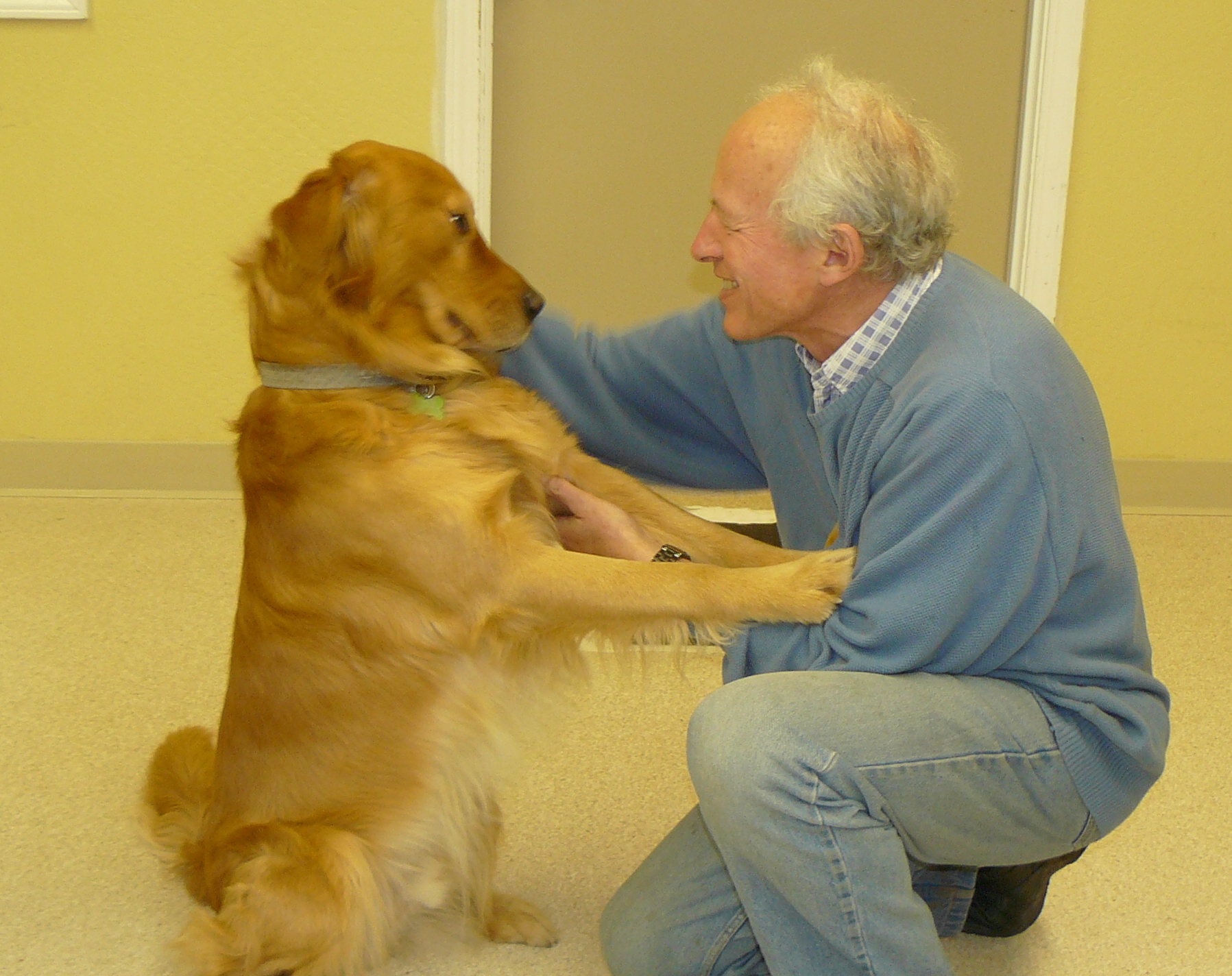
Explaining to Authentic the dog in the office of RVHS what has just been donated.Being thanked in the only way that dogs can properly thank someone!
oooo
Gorgeous shot of Jeannie and Authentic.
So a tremendous vote of thanks to everyone that has purchased my book for this is what your generosity delivers!
Going to write a little more about the Humane Society tomorrow.
Happy Birthday to grandson Morten who is five today!
Indirectly there is a connection between my sub-title, above, and today’s post about squeezing cute creatures. For Morten will already have enjoyed many hugs and, hopefully, will grow up feeling very comfortable at giving and receiving hugs.
Thankfully, Jean is a great hugger and has opened my eyes to the power of giving in to a hug. Not suprising when one thinks of Jean’s years of hugging dogs way before she and I met back in 2007.
Dear old Pharaoh, as he has aged, (he will be 13 this coming June) clearly enjoys more hugs than when he was a more active, fitter German Shepherd and always on the go.
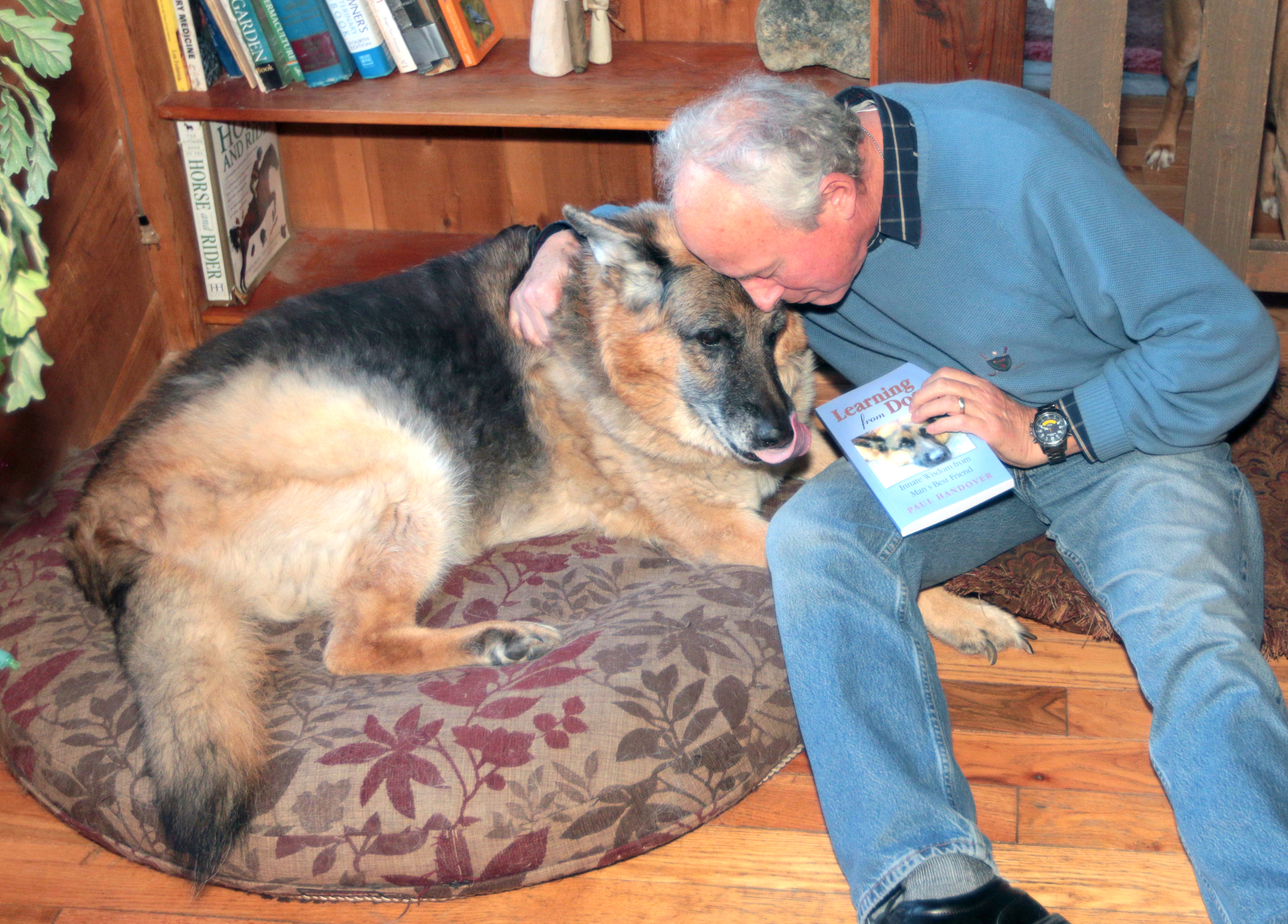
When The Daily Courier, our local newspaper, came to the house last December Timothy Bullard, the paper’s photographer, took the following photograph of Pharaoh and me having a ‘love in’.
TIMOTHY BULLARD/Daily Courier – Paul Handover with Pharaoh, a 12year-old German Shepard that he uses on the cover of his new book about man’s best friend.
So this recent article from the Care2 website seems an appropriate follow-on to my introductory remarks.
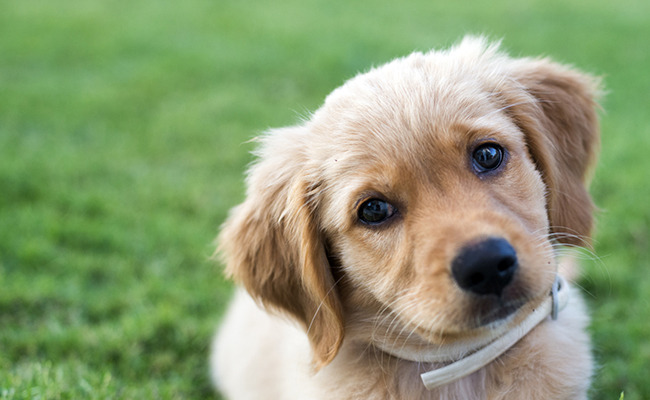
If any of the collected photographs you see here cause you to emit high-pitched noises or ache to cradle the pictured animal tight in your arms, you might be experiencing a bout of “cute aggression.”
The phrase refers to a phenomenon during which we catch sight of a living thing deemed “cute,” usually a baby or an animal or — double-whammy — a baby animal, and feel an overwhelming desire to play with the subject’s features; a compulsion to tickle its feet; the need to tease its rumples or bulges of fat; the want to bury our faces into its belly.
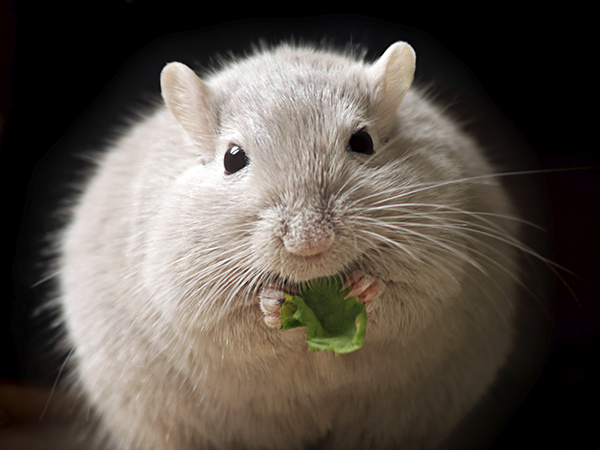
fluffy mouse ball
Granted, not all voiceless lifeforms enjoy being tugged at or played with in an intrusive manner, which is why this behavior is referred to, in part, as “aggressive.” While we might mean absolutely no harm to the creature we long to hold and hug, our near-hyperactive responses to its presence often seem beyond our control, what some have called the “squee” effect.
Yale researchers studied this “dimorphous expression” — the need to manhandle living creatures for which we feel only positive emotions — in 2014. Part of the experimental regimen involved asking some participants to pop bubble wrap while viewing images of “cute baby animals;” others did the same while looking at images of adult species. The results: Those who viewed the infants popped more bubbles by far.
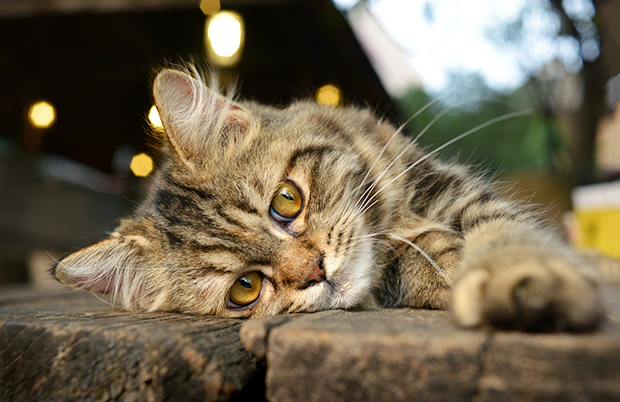
baby maine coon cat feeling
One of the researchers, psychologist Oriana Aragón, said that participants would have likely squeezed whatever they had in their hands or arms while viewing images of the “cute” animals, be it a purse or a pillow. Had something alive, however, actually been in those arms, the strength with which the participants freed their fuzzy feelings might have been worrisome to the researchers.
But Aragón says that strong human emotions are often balanced by “an expression of what one would think is an opposing feeling.” This is similar to what happens when we cry while angry or laugh while nervous. Our actual expressions “scramble and temper” whatever feeling got us into such a tizzy in the first place, helping to restore our emotional equilibrium, “tamping down or venting” feelings that cause us to become too excited.
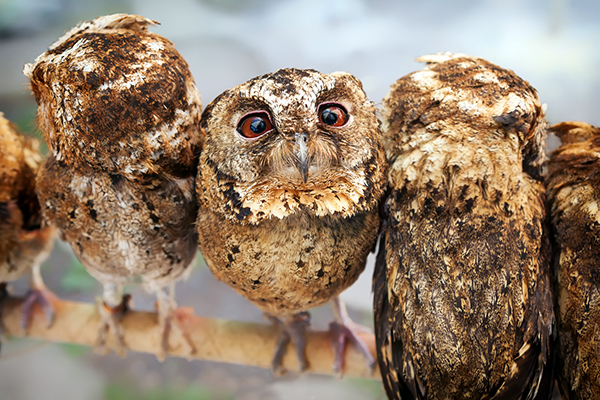
Funny portrait of curious baby owl
While wanting to squish what could be one’s own offspring might seem an evolutionary misfire, a 2012 study in the journal PLOS ONE indicates that cuteness creates a powerful “approach motivation,” the very thing that drives us to scoop up puppies and kittens in adoption kennels and squeeze them close to our chests and nuzzle them against our faces. It seems the need to be touchy-feely toward cuteness provokes precisely the kind of nurturing that keeps helpless creatures alive.
As for animals, those worthy of this treatment, appealing to us as “cute,” mimic physical characteristics of human babies — “a large head; rounded, soft, and elastic features; big eyes relative to the face; protruding cheeks and forehead; and fuzziness.” The same, in fact, seems to be true for Great Apes, as has been documented with Koko the gorilla and an Internet celebrity orangutan shown interacting with tiger cubs, though the scene remains controversial.
And so it seems the power of cuteness is made all the more apparent when humans (or elevated primates) respond to a rabbit or a duckling the way they might respond to their own kin. Our desire to squeeze is so powerful, in fact, that it “spills over” into interactions with other species. Thus, we have Web sites like Cute Overload that exist only for the compelling pull to exercise that need to feed our “cute aggression,” be the temptation a pleasure or a pain.
ooOOoo
Demonstrating that cuteness can come in all sizes, let me close today’s post with this photograph.
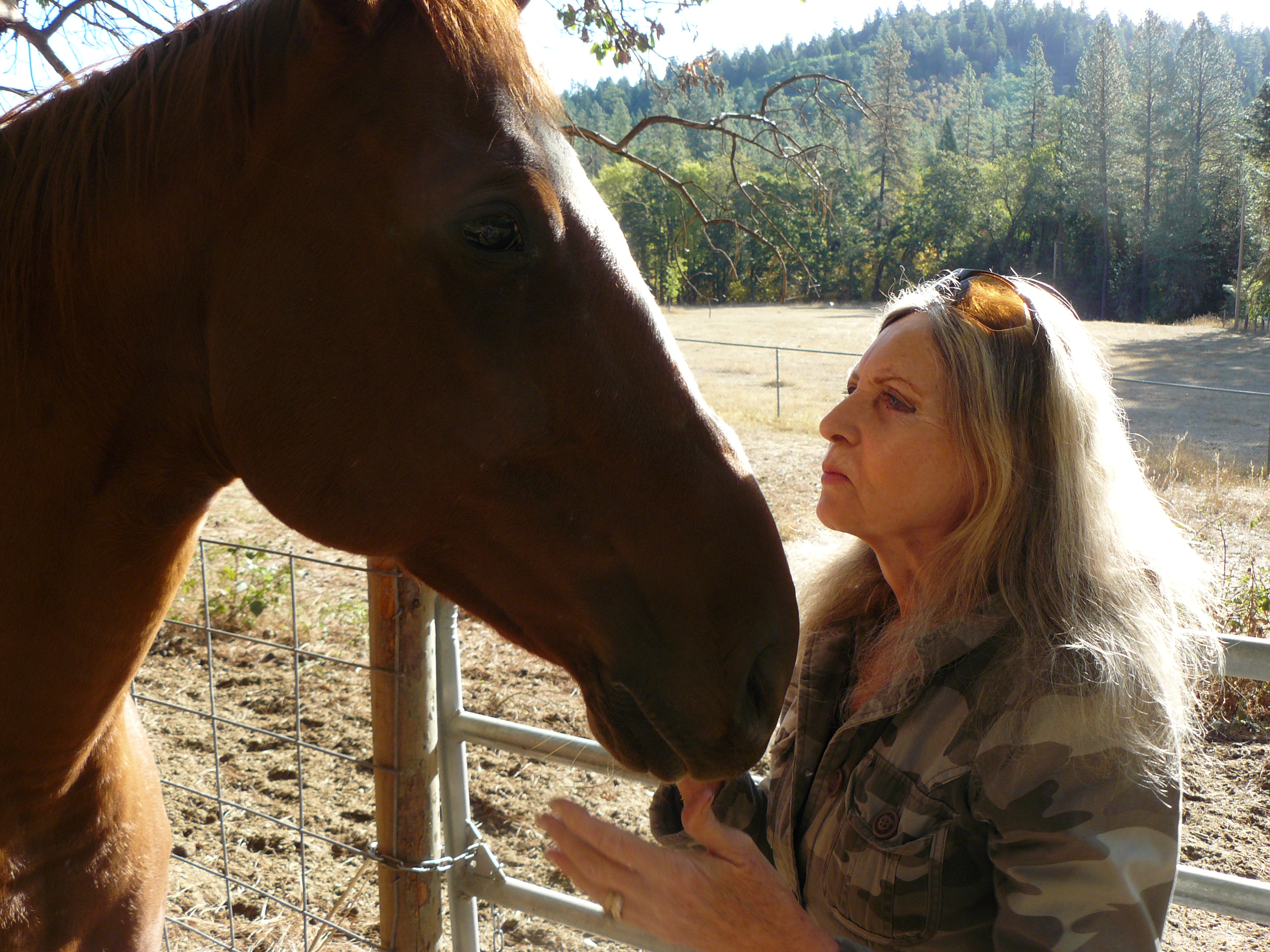
Ben and Jeannie having a quiet one-to-one moment.
Don’t go too long without giving or receiving a hug!
 oooo
oooo oooo
oooo oooo
oooo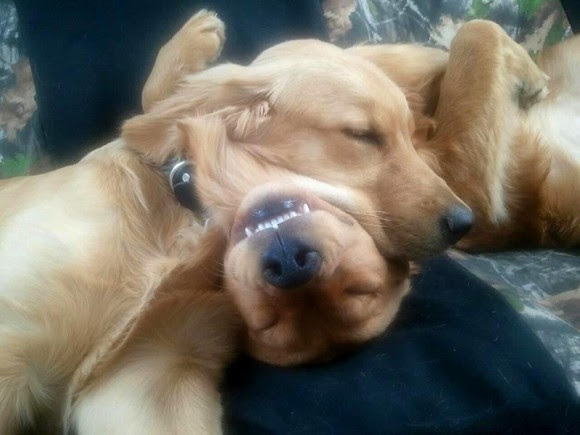 oooo
oooo oooo
oooo oooo
oooo oooo
oooo





 Learning from Dogs