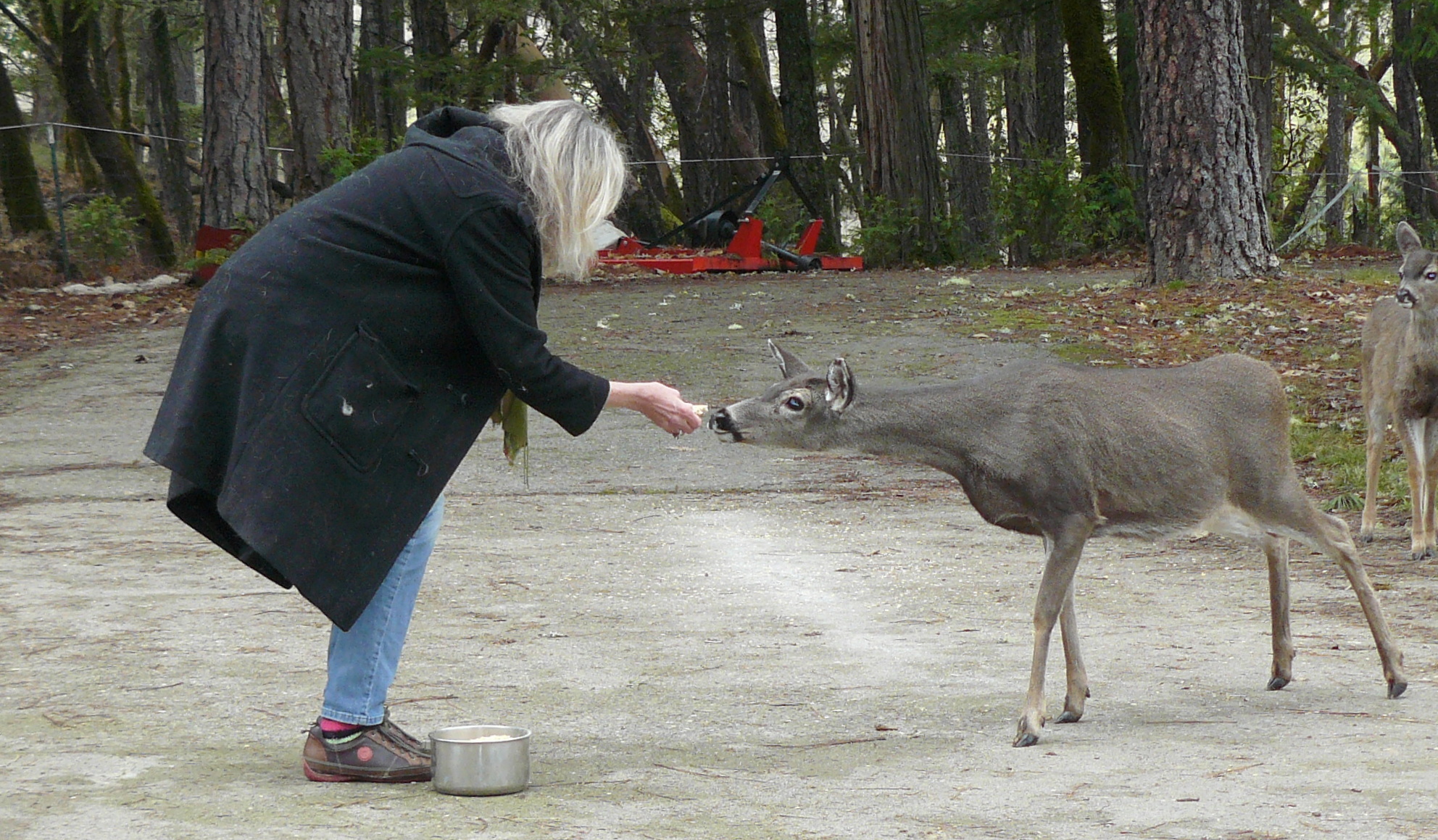
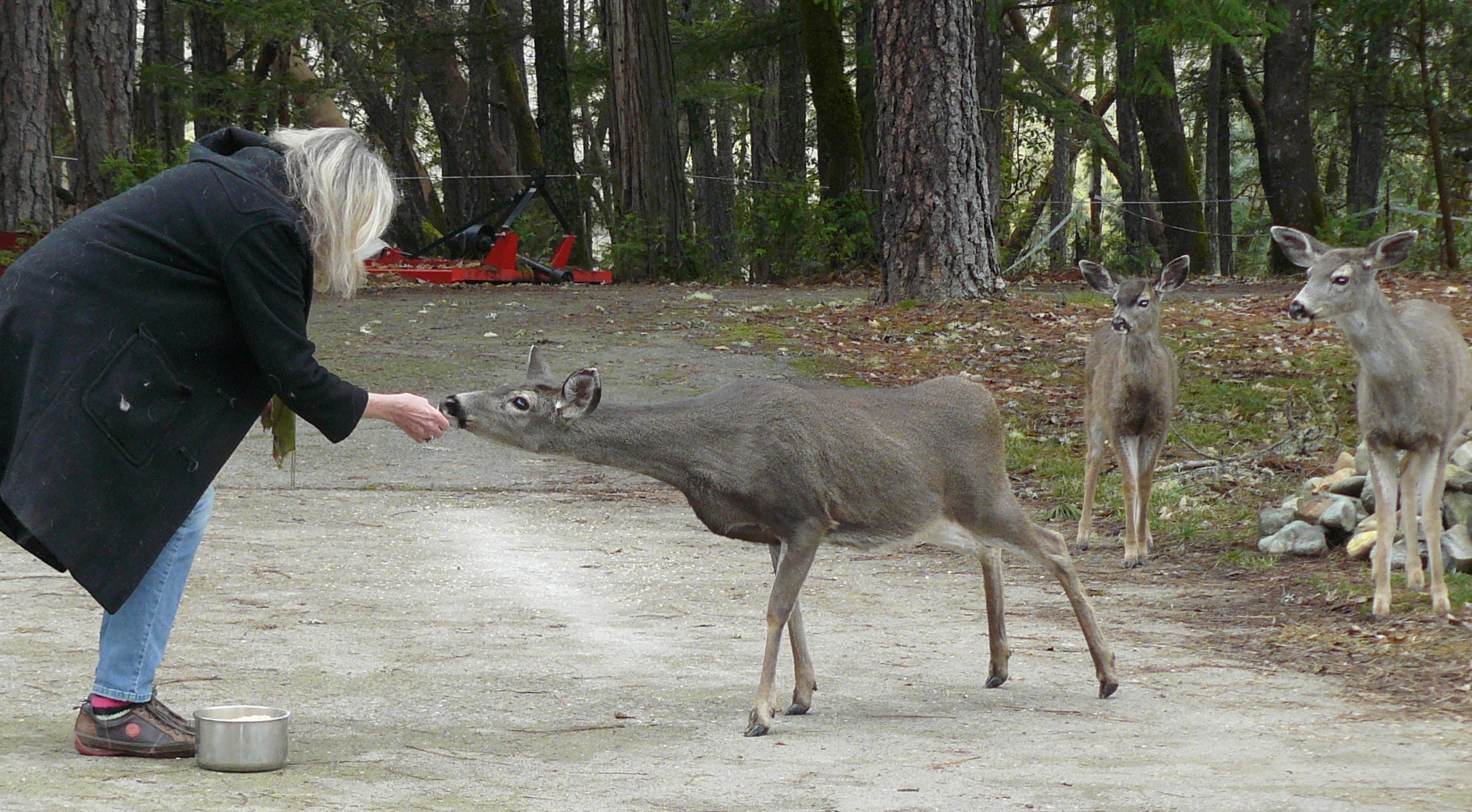
Year: 2014

Picture parade twenty-eight.

The third set from Bob D.

Derham9

oooo

Derham8

oooo

Derham7

oooo

Derham6

oooo

Derham5

oooo

Derham4

oooo

Derham3

oooo

Derham2

oooo

Derham1

oooo

Thanks Bob.

Now a bonus of one other picture that crossed my screen, so to speak, that I wanted to share with you.  (Think it was from Naked Capitalism.)

cool-girl-elephant-photo-black-white

oooo

You all have a good week.

Says it all!

Seen on Facebook.

Dogs and beds

This lovely cartoon is very close to the truth of the sleeping arrangements that Jean and I ‘enjoy’!  For, at night, we share our bedroom with five beautiful dogs, four of which when so inclined enjoy our bed.

20:20 self-awareness.

How something so fundamental as humans talking with each other can so often be mysterious.

When I composed this sub-heading, I wasn’t sure of what word to use to end the sentence.  Some of the words that sped through my mind were: complex, distorted, difficult, obtuse and …. well, you get the message.

The single biggest problem in communication is the illusion that it has taken place.” George Bernard Shaw is reputed to have once said!

Today’s essay on the challenges of speaking clearly to another, perhaps better described as communicating in a clear and unambiguous fashion, came out of a recent conversation with Jon Lavin, a good friend from my Devon days.  (Jon offers services for business owners and entrepreneurs under his business banner of The People Workshop.)

Jon was explaining that the number one hurdle for businesses that are managing change, and for so many businesses managing change is practically a constant, is having clear communications within the team.

Seems clear enough to me! 😉

Yet, what we hear and what we say are both modified, frequently unconsciously, by past events, experiences and trauma.  That being the case, then it is key, critically so, that we achieve the best possible self-awareness.  Because it is only through an understanding of our past that we come to learn of our sensitivities and our associated ‘tender spots’ and their potential for ‘pulling our strings’.  Here’s a personal story.

In 1956, when I was 12, I experienced a trauma that was interpreted by my consciousness as emotional rejection.  By the age of 14 that sensitivity to rejection had descended into my subconscious.  For fifty years, that sensitivity remained hidden yet continued to influence my life in many unseen ways, not all of them negatively by a long measure. In 2007 a period of counselling revealed that hidden emotional rejection; brought it to the surface.  It changed beyond imagination how I felt, how I behaved, how I was.  Nonetheless, that sensitivity to rejection is still there, albeit now visible.  Thus when I hear or experience something that tickles that sensitivity I still react.  But because I can now see and feel myself reacting, I can sidestep the emotional strings.

The following is a short, twenty-minute, documentary film about fear.  Do watch it.  The message that we are so profoundly a product of our past is beautifully presented.

From Environmentalism to Ecologism, Part Three.

The concluding Part Three of Martin Lack’s guest essay.

Part One is here: Part Two is here.

ooOOoo

Can ecologism be regarded as an ideology in its own right? (Part 3)

Therefore, having now surveyed all the relevant “territory”, we shall now consider the third and final part of the answer to the question as proposed in the Introduction.

Ecologism – Neither left nor right, but out in front?

According to Philip Shabecoff, it was members of the European Green parties that were the first to assert that they are “neither left nor right but out in front” (2000: 109).

For this to be true, ecologism would have to represent a new paradigm that rejects (or at least challenges) beliefs central to conventional politics (of any orientation). This, it is here argued, is indeed the case: In a discussion of the libertarian ideas of John Locke and Adam Smith, William Ophuls observed that they “…have not gone unchallenged, but with very few exceptions, liberals, conservatives, socialists, communists, and other modern ideologies have taken abundance for granted and assumed the necessity of further growth” (Ophuls 1977: 145).

What is the problem with modernity?

As suggested by Anthony Giddens, modernity encompasses “…modes of social life or organisation which emerged in Europe from about the seventeenth century onwards and which subsequently became more or less worldwide in their influence” (Giddens 1991: 1).

The problem is that the accumulation of personal wealth has become the sole objective of many people in modern society; and perpetual growth is posited as a means whereby even the poorest might achieve it.

Karl Marx (as cited by Jon Elster) coined the term “money fetishism” to describe the belief that money (and/or precious metals) have intrinsic (use) value rather than just instrumental (exchange) value, which Marx felt was as misguided as the religious practice of endowing inanimate objects with supernatural powers (Elster 1986: 56-7).

However, whereas Karl Marx saw capitalism as the problem, the ideology that he gave his name to is just as guilty of Daly’s “growthmania”. For example, whereas Jack Goody accepts that capitalism has been “…connected with the growth of rationality and of secularisation; more recently with urbanisation and industrialisation”, he also notes that for Marxist regimes “…modern meant industrialisation without capitalism” (Goody 2004: 6).

The terms “use value” and “exchange value” were first put forward by Aristotle (384-322 BC) who, according to Daly, also recognised the danger of focusing on the latter (i.e. whereby the accumulation of wealth becomes an end in itself) and, alluding to Marx’s criticism, Daly suggested that the paperless economy (where no useable commodities actually change hands) is the logical end-point for money fetishism (Daly 1992: 186).

Finally, on the subject of the consequences of “the problem”, although the centrally-planned economies of the former USSR and China would appear to have had their day, the flaws of the capitalist system they seem so keen to embrace have also revealed themselves in recent time. For example, when John Gray came to write the introduction to the second edition of his book “False Dawn: The Delusions of Modern Capitalism”, he included the following comment:

In the first edition of this book, published in March 1998, I wrote: ‘Today’s regime of global laissez-faire will be briefer than even the belle époque of 1870 to 1914, which ended in the trenches of the first world war’… Not much more than a decade ago this seemed outlandish, but there have since been many signs that global capitalism was heading for a fall (Gray 2009: xii).

Does ecologism provide the answers?

The starting point for ecologism is the concept of carrying capacity (the maximum population of a species) that an ecosystem can support in perpetuity (Dryzek 2005: 27). In this instance, the species is Homo sapiens and the ecosystem is the planet Earth. Therefore, in 1968, Hardin suggested that these limits exist and must be faced. In 1993, frustrated by the absence of discussion on population growth in international politics, he pointed out that:

Two centuries of intermittent wrestling with population problems have produced useful insights about the reality and nature of limits… Four centuries of sedation by the delusion of limitlessness have left humanity floundering in a wilderness of rhetoric… From this it must be inferred that someday political conservatism will once again be defined as contented living within limits. The limitless world view will have to be abandoned (Hardin 1993: 5-6).

In 1968, his solution had been “...mutual coercion, mutually agreed upon by the majority of the people affected” (Hardin 1968: 1247). However, in an apparent reference to the work of an array of scholars including Malthus, Hardin, Meadows, Ehrlich and others, Daly lamented that:

Anyone who asserts the existence of limits is soon presented with a whole litany of things that someone once said could never be done but subsequently were done… Continuing to study economies only in terms of the [exchange value of money] is like studying organisms only in terms of the circulatory system, without ever mentioning the digestive tract. (Daly 1992: 185-186).

Much more recently, Daly has reminded us that, “Ecological limits are rapidly converting ‘economic growth’ into ‘uneconomic growth’-that is throughput growth that increases costs by more than it increases benefits, thus making us poorer not richer” (Daly 2007: 39).

So, it would seem that the challenge of living “within our planet’s means” remains significant; one that few politicians are willing to discuss (because there are no votes to be gained in doing so). It is this fact that the environment cannot speak for itself (i.e. it is disenfranchised) that led Goodin to the conclusion that “nature has interests… as deserving of protection as anyone else’s, which must be ‘encapsulated’ as part of a discursive participatory democracy” (Goodin 1996: 835).

Similarly, whereas Goodin used the term “encapsulated interests” (to describe how one party’s interests are incorporated in those of another), Dobson suggested that non-human animals and future generations of humans (and maybe even other species) are “new environmental constituencies” requiring human representatives to look after their interests (Dobson 1996: 125).

All that needs to be decided is who we shall admit into the “community of justice” (i.e. how radical you want to be).

Citing Low and Gleeson (1998) and Baxter (1999), Derek Bell therefore distinguishes environmental and ecological justice as follows: Environmental justice concerns the distribution of environmental benefits and burdens among human beings. Whereas ecological justice is concerned with justice between human beings and the rest of the natural world (Bell 2006: 208). Furthermore, Bell also spells out the importance of this distinction (just in case any reader has not appreciated it yet) as follows:

Advocates of environmental justice merely insist that the instrumental value of the environment to humans should be recognised in a theory of social justice or justice among humans. Ecological justice makes the much more radical claim that justice extends beyond relations among humans so that we can talk about ‘justice to nature’ (Bell 2006: 208).

Conclusions

The question that has been addressed herein is whether or not ecologism can or should be regarded as a political ideology in its own right given that both socialists and conservatives can lay claim to some aspects of ecological politics.

In order to provide a defensible answer to this question, it was necessary to define what is meant by ecological politics (i.e. the pursuit of policies that are concerned with the environment; but which are not merely or predominantly anthropocentric) and ecologism (i.e. the pursuit of environmental policies that are biocentric or ecocentric). This therefore highlighted the fact that the two are not the same thing; and that ecological politics also includes anthropocentric environmentalism.

However, it has been demonstrated that, rather than being a simple dividing line within the field of ecological politics, anthropocentrism and ecocentrism represent opposite ends of a spectrum along which it is possible to adopt a variety of philosophical positions. Furthermore, although it has also been demonstrated that it is very difficult to be entirely one thing or the other, when faced with difficult policy decisions, almost everyone (both socialists and conservatives included), tends to favour self-preservation. Therefore, the default position of all humans tends to be towards the anthropocentric end of the spectrum.

Nevertheless, to avoid the tautological response to the question (“ecologism must be regarded as a distinctive political ideology in its own right because it is!”), it was deemed necessary to demonstrate how and why both socialists and conservatives can lay claim to ecological politics (although the majority of both socialists and conservatives do not do so) and, therefore, how and why the ecologism that both find so challenging must be regarded as a political ideology in its own right.

In so doing, it has been shown that some socialists find common cause with those that seek equal rights for the environment; whereas some conservatives may do so in pursuit of maintaining the status quo. However, both generally assume the necessity of further growth (Ophuls); what Daly called ‘growthmania’. Furthermore, capitalism is fixated upon the inherent value of things we may consume; whereas Marxism (an extreme form of socialism) is fixated upon the inherent value of things we may produce. However, ecologism insists that nature has inherent – if not intrinsic – value in and of itself; independent of our finding a use for it.

Ecologically-minded scientists and economists have pointed out that the Earth is finite and its capacity to accommodate humans is finite; whereas the evidence of at least the last 40 years is that many prefer to refuse to accept this reality and, as Schumacher pointed out, are spending environmental capital as if it were income. Therefore, because ecologism demands justice that is ecological (ecocentric) – not just environmental (anthropocentric), it represents a fundamental challenge to conventional politics and, as such, must be regarded as a distinctive political ideology in its own right.

References

Baxter, B. (1999), Ecologism: An Introduction. Edinburgh: Edinburgh University Press.

Bell, D. (2006), ‘Political Liberalism and Ecological Justice’ [online], Analyse & Kritik 28, pp.206-22. [Paper originally presented at ECPR General Conference, Marburg, 18–21 September 2003]. Available at <http://analyse-und-kritik.net/2006-2/AK_Bell_2006.pdf> [accessed 18 April 2011].

Daly, H. (1992), Steady State Economics (2nd edition). London: Earthscan.

Daly, H. (2007), Ecological Economics and Sustainable Development, Selected Essays of Herman Daly. Cheltenham: Edward Elgar.

Dobson, A. (1996), ‘Representative democracy and the environment’, in Lafferty, W. and Meadowcroft, J (eds), Democracy and the Environment: Problems and Prospects. Cheltenham: Edward Elgar, pp.124-39.

Dryzek, J. (2005), The Politics of the Environment (2nd edition). Oxford: Oxford University Press.

Ehrlich, P & Ehrlich, A. (1996), Betrayal of Science and Reason. New York: Island Press.

Elster, J. (1986), An Introduction to Karl Marx. Cambridge: Cambridge University Press.

Giddens, A. (1991), The Consequences of Modernity. Cambridge: Polity Press.

Goodin, R. (1996), ‘Enfranchising the earth, and its alternatives’, Political Studies, 44, pp.835-49.

Goody, J. (2004), Capitalism and Modernity: The Great Debate. Cambridge: Polity Press.

Gray, J. (2009), False Dawn: The Delusions of Modern Capitalism, 2nd edition. London: Granta.

Hardin, G. (1993), Living Within Limits: Ecology, Economics, and Population Taboos. Oxford: Oxford University Press.

Low, N. and Gleeson, B. (1998), Justice, Society and Nature: An Exploration of Political Ecology. London: Routledge.

Malthus, T. (1798), An Essay on the Principle of Population. London: J Johnson.

Ophuls, W. (1977), Ecology and the Politics of Scarcity. San Francisco: Freeman & Co..

Shabecoff, P., (2000), Earth Rising: American Environmentalism in the 21st Century, Washington DC: Island Press.

ooOOoo

I know a good number of readers have followed Martin’s essay since Tuesday and I would like to thank Martin, on my own account and on behalf of all LfD readers, for giving me the opportunity to republish the essay.

From Environmentalism to Ecologism, Part Two

Part Two of the three-part guest essay by Martin Lack.

The background to this major essay was covered yesterday, in the introduction to Part One.

ooOOoo

Can ecologism be regarded as an ideology in its own right? (Part 2)

A question of values

According to Carter (2007: 14-15), there is no consistent use of terminology regarding the value ascribed to different entities, so it would seem sensible to use that which he outlines:

  • Instrumental value: The value which something has for someone as a means to an end (also known as utility value).

  • Inherent value: The value which something has because it is considered desirable (e.g. precious metals such as silver, gold and platinum).

  • Intrinsic value: The value which something has because of what it is – typically essential for the existence of life (e.g. sunlight, clean air, and clean water).

As Carter points out (2007: 15), as well as being inconsistently applied to individual entities by those doing the valuing, these terms are not mutually exclusive (i.e. “being valuable in one way does not preclude being valuable in another way”). However, what is clear is that the value judgements that any individual makes will determine their attitude towards consumption and/or pollution of the Earth’s natural resources.

In setting out his “Green Theory of Value”, Robert Goodin boldly acknowledged that, ideally, it should “tell us both what is to be valued and why” (Goodin 1992:19). However, before explaining his own theory of value, Goodin identifies the two main alternatives as capitalist (consumer-based) value; and Marxist (producer-based) value (Goodin 1992: 23-4). Goodin’s green theory of value is thus distinct from both of these because the value-imparting properties are neither those of the consumer nor producer; they are (or at least should be) “natural resource based”; although he specifically does not claim that his theory “is correct utterly to the exclusion of all others” (Goodin 1992: 25-6).

Applying Carter’s typology of value (above) to Goodin’s argument, capitalists would appear to be focussed upon the inherent value of things they consume; and Marxists upon the instrumental value of the things they produce. In contrast to both of these, Goodin seeks to justify the assertion that nature itself should always be considered, independent of the presence or activity of humans, to have inherent – if not intrinsic – value. However, he seems to shy away from the logical conclusion of his argument; that all nature has intrinsic value that does not require the presence of valuers (Goodin 1992: 42-45). This is presumably part of an appeal to reason, which such an extreme view would probably not have.

A question of perspective

If anthropocentrism is a way of thinking “…that regards humans as the source of all value and is predominantly concerned with human interests”, then, in simplistic terms, ecocentrism is one “…that regards humans as subject to… ethical, political and social prescriptions… equally concerned with both humans and non-humans” (Carter 2007: 14). However, as with most things in life, it is not as simple as these definitions imply. For example, from an anthropocentric perspective, it is possible to be concerned about the welfare of individual domesticated animals; and yet not be concerned about the survival of entire endangered species.

Equally, one of the biggest debates in ecological politics may revolve around how one defines “moral persons” (Rawls, 1972: 504-5); or legitimate “recipients of justice” (Garner 2003: 11), although many would probably agree with what Jeremy Bentham (1748-1832) said: “The question is not, can they reason? Not, can they talk? But, can they suffer?” (cited in Dobson 2006: 220-1). However, the contentious and unresolved nature of this debate has led to the appearance of terms such as “shallow” and “deep”; which may be applied to anthropocentrism and ecocentrism alike (with “deep” denoting a more extreme position in either case). Therefore:

Rather than define different perspectives according to which side of the ecocentric/anthropocentric divide they lie, they can be located along a continuum, which moves from ecocentrism through various gradations of anthropocentrism to ‘strong anthropocentrism’ (Carter 2007: 36).

Once it is recognised that there is a range of possible positions that may be adopted (rather than a choice that has to be made), it is possible – as Eckersley has done – to characterise at least five different positions, which are as follows:

  1. Resource conservation – the wise use of natural resources for human benefit: Eckersley suggests that the conservation movement was founded upon the Judeao-Christian notion of humans having “dominion” over the Earth; rather than any duty of “stewardship”, as exemplified by Gifford Pinchot (the first chief of the US Forest Service) (Eckersley 1992: 35).

  2. Human welfare ecology – an appeal to enlightened self-interest: Eckersley cites Barry Commoner’s “four laws of ecologyas (1) everything is connected to everything else; (2) everything must go somewhere; (3) nature knows best; and (4) there’s no such thing as a free lunch (Eckersley 1992: 37-8).

  3. Preservationism – seeking the aesthetic preservation of wilderness areas: Whereas Gifford Pinchot wanted to preserve nature for development (i.e. maximise the utility of natural resources for human benefit), John Muir (of the Sierra Club) wanted to preserve nature from development (i.e. minimise the human impact on the natural environment) (Eckersley 1992: 39).

  4. Animal liberationism – the prevention of cruelty to certain animals: A comparatively modern, radical, development; which can trace its heritage back to “humane” societies formed in the eighteenth and nineteenth centuries, such as the RSPCA (Eckersley 1992: 42).

  5. Ecocentrism – seeking the preservation of nature for its own sake (Eckersley, 1992: 46).

With regard to the latter, given that Eckersley recognised the fact that these positions lie upon a “wide spectrum of differing orientations towards nature”, whose end-points are anthropocentrism and ecocentrism (1992: 33), this could be better defined as deep ecocentrism. However, even using these five labels, it is not hard to see why it is difficult to categorise people: For example, the human welfare ecologists could be regarded as quite ecocentric (if they recognise the validity and/or importance of each and every one of Barry Commoner’s “four laws of ecology”); whereas animal liberationists could be regarded as quite anthropocentric (if they are only concerned about domesticated pets and/or individual animals).

The ecocentric end of the spectrum has also been described as that of “deep ecology” (Devall and Sessions 1985: 70), and “biospherical egalitarianism” (Naess 1989: 170). However, whilst preferring the term “biocentric egalitarianism” for the latter, Carter points out that – as indeed was conceded by Naess (1989: 28) – food is an essential requirement for life and, therefore, an entirely egalitarian position is untenable:

Certainly, any principle along the lines of biocentric egalitarianism would be impossible to implement. Taking it to the extreme, how could a human justify killing any animal or fish, or consuming a vegetable, bean or berry? All involve some restraint on another entity’s capacity to live and flourish (Carter 2007: 36).

So, it would seem that an entirely ecocentric position is hard to maintain, but can the same be said for an entirely anthropocentric position? This, as we shall now see, has been the subject of much debate.

A question of justice

When someone says, “I want justice!” it is normally because they feel they have been wronged in some way; and want what they feel they deserve (i.e. fairness). Hence, Paul Sterba opens his chapter in “Political Theory and the Ecological Challenge” on this subject by saying, “Justice requires giving what is deserved” (Sterba 2006: 148). However, within the sphere of environmental politics, when faced with difficult choices, human beings tend to ‘circle the wagons’ and protect their own kind.

In the introduction to his book “Theory of Ecological Justice”, Brian Baxter uses the example of Sir David Attenborough’s response to the prospect of humans causing species extinctions (i.e. “Surely, it is sad indeed that our descendants should inherit a natural world that is more impoverished than the one we inherited?”) to suggest that all humans are almost incapable of being anything other than anthropocentric (Baxter 2005: 1). However, Attenborough was probably deliberately making the question rhetorical; just as Baxter was probably being provocative in order to retain the interest of readers. Nevertheless, in a wide-ranging consideration of the subject, Baxter discusses the work of numerous authors, to advocate the case for “moral consideration” to be given to sentient non-humans (Baxter 2005: 45).

This would appear to be in accordance with Bentham’s conclusion that it is the ability to suffer that should confer the right to fair treatment. Indeed, one such author Baxter considered, David DeGrazia, proposed the principle of “equal consideration” for all sentient non-humans but pointed out that this could not guarantee justice; merely a fair hearing. He also pointed out that granting equal consideration would not automatically confer upon them the right to moral consideration, but it would be revolutionary; because much animal experimentation (he uses the term “exploitation”) would then seem to be unjustifiable (DeGrazia 1996: 37-38).

Dobson has written a great deal on the subject of justice. In a characteristically thought-provoking contribution to a recent collection of essays on the subject (regarding the difficulties of combining social justice and environmental sustainability; in effect asking “What is to be sustained and for whose benefit?”), he discusses who should be the legitimate “recipients of justice”; and what should be the consequential scope of the “community of justice” thus determined (Dobson 2003: 87-94).

Baxter sees the three main principled objections to the notion of ecological justice as being that justice need only be distributed to (1) those able to voluntarily co-operate to produce and/or preserve environmental benefits; (2) those with property rights; and (3) those capable of reciprocity (Baxter 2005: 77). Baxter deals with the first and last of these reasonably easily, as follows: (1) bacteria are beneficial and slaves were not volunteers (2005: 78-9); and (3) mentally-incapacitated people do not cease to be human because they cannot interact with their surroundings or respond to stimuli (2005: 77-8). However, objection (2) seems a little more intractable (2005: 86). Finally, Baxter concludes that if these objections can indeed be rejected, ecological justice represents a fundamental challenge to the laissez-faire attitude of liberalism (2005: 94).

However, for now, the final word on the question of justice will be given to Dobson, who almost seemed to be responding to Baxter, by saying: “Just who is throwing down the gauntlet here? Is political ecology a challenge for citizenship, or is citizenship a challenge for political ecology?” (Dobson 2006: 216). Whilst acknowledging the historical existence of at least two types of citizenship; namely liberal and civic republican (stressing right-claiming and responsibility-taking respectively), Dobson highlights at least two fundamental challenges to any notion of citizenship (i.e. feminism and cosmopolitanism) (2006: 217-8). However, much more space is given to the ways in which the notion of citizenship is a challenge to ecological politics. Again, this is indicative of the fact that ecologism should be regarded as a distinctive political ideology in its own right.

References

Baxter, B. (2005), A Theory of Ecological Justice. London: Routledge.

DeGrazia, D. (1996), Taking Animals Seriously: Mental Life and Moral Status. Cambridge: Cambridge University Press.

Devall, B. and Sessions, G. (1985), Living as if Nature Mattered. Layton UT: Peregrine and Smith.

Dobson, A. (2003), ‘Social justice and environmental sustainability: ne’er the twain shall meet?’, in Agyeman, J., Bullard, R., and Evans, B. (eds.), Just Sustainabilities: Development in an Unequal World. London: Earthscan, pp.83-95.

Dobson, A. (2006), ‘Citizenship’, in Dobson, A. and Eckersley, R., Political Theory and the Ecological Challenge. Cambridge: Cambridge University Press, pp.216-231.

Garner, R. (2003) ‘Animals, politics and justice: Rawlsian liberalism and the plight of non-humans’, Environmental Politics, 12 (2), pp.3-22.

Goodin, R. (1992), Green Political Theory. Cambridge: Polity Press.

Naess, A. (1989), Ecology, Community and Lifestyle. Cambridge: Cambridge University Press

Rawls, J. (1972), A Theory of Justice. Oxford: Oxford University Press.

Sterba, P. (2006), ‘Justice’, in Dobson, A. and Eckersley, R., Political Theory and the Ecological Challenge. Cambridge: Cambridge University Press, pp.148-64.

ooOOoo

The final part, Part Three, will be published tomorrow.

From Environmentalism to Ecologism, Part One.

A guest essay for today and the next two days.

A few days ago, I remarked that for the time being posts on Learning from Dogs were frequently going to be based on the material of others.  It was the only way that I could keep this blog going yet at the same time edit (code for re-write!) a 60,000-word novel that was completed, as a first pass, last November.

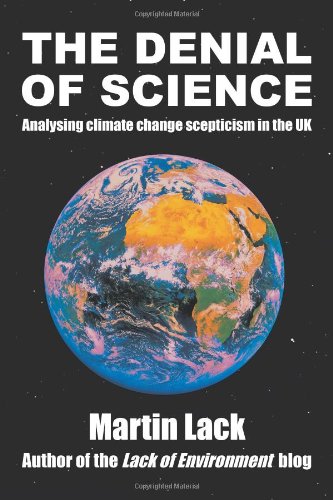
Martin Lack is one major step ahead of yours truly.  Not because he, too, writes a blog but because, unlike yours truly, he is a published author!  His book is called The Denial of Sciencehe blogs under the name of Lack of Environment.

DenialofScience

Thus I was extremely grateful when a short while ago, Martin offered a major essay of his as a guest post for Learning from Dogs.  Better than that, Martin happily accepted my recommendation to send me his essay in three parts.

It may not be the easiest read out in the ‘blogosphere’ but, trust me, Martin’s essay is profoundly important.

ooOOoo

Can ecologism be regarded as an ideology in its own right? (Part 1)

Introduction

Although it might well be assumed that one does not have to define what is meant by ‘socialists’ or – in UK terms at least – ‘conservatives’, it is certainly necessary to define ‘ecologism’: For the purposes of answering the above question, therefore, the latter should be understood as including thinking, behaviour, and the pursuit of policies that are concerned with the environment; but which are not merely or predominantly anthropocentric (i.e. those concerned with human needs and interests).

In a way, the question is nonsensical because use of the term ‘ecologism’, as coined by Andrew Dobson, appears to pre-suppose that ecological politics is indeed a “new political ideology” (2000: 163). If so, to respond to the above question by saying, in effect, ‘just because both socialists and conservatives (can) lay claim to ecological politics does not change the fact that ecologism is a distinctive political ideology in its own right’, would clearly be tautological. Therefore, to provide a defensible answer “Yes” to the above question – as is the intent herein – it is necessary to explain how and why:

  1. both socialists and conservatives can lay claim to ecological politics;
  2. the majority of both socialists and conservatives do not do so; and
  3. the ‘ecologism’ that both find so challenging must therefore be considered as a distinctive political ideology in its own right.

The Socialist claim

One does not have to be an eco-socialist in order to believe or appreciate that there is a great deal of common ground shared by socialist and environmental politics. Socialism is a broad left-of-centre church that, it could be argued, includes everything from social democrats to communists. However, if socialism can be summed-up in the tripartite “Liberté, égalité, fraternité” motto of France (with its origins in the French Revolution of 1789-99), whose English translation would be “Freedom, equality, and brotherhood”, then it is not hard to see why socialists would find common cause with those whose goal is, in effect, to seek equal rights for the environment.

The “four pillars” of ecological politics are – as cited by Neil Carter – those devised by the German Green Party in 1983: ecological responsibility, grassroots democracy, social justice, and non-violence (Carter 2007: 48). Clearly, grassroots democracy and social justice are part of the socialist agenda. Therefore, despite the global dominance of free-market economics, Mary Mellor has asserted that far from being a challenge to socialism, “ecology greatly enhances the case for a redefined and refocused socialism” (Mellor 2006: 35).

The Conservative claim

Although by no means a monolithic entity, environmental politics is usually seen as being a predominantly left-of-centre entity (e.g. Carter 2007: 78); and it is often seen as being easier to define what it opposes than to define what it seeks. If so, ecological politics is essentially a reaction against anthropocentric thinking and the selfish pursuit of individual gain without regard for others or the environment. However, some philosophers such as Roger Scruton have therefore tried to distinguish between such selfish, libertarian, goals and those of traditional conservatives who, as their name suggests, seek the preservation of the status quo for the benefit of both the current generation and those that will follow (Scruton 2006: 7-8). Indeed, as early as 1993, in the wake of the Rio Earth Summit, Scruton was advocating the need for a radical re-think of right-wing politics:

Conservatives need to explore, with greens and others, as yet unthought-of dilemmas of life in societies which are no longer buoyed up by the prospect of incessant economic growth or by modernist pseudo-religions of endless world improvement” (Scruton 1993: 173).

However, in 1993, the idea that there might be limits to growth was hardly new; being based on Garrett Hardin’s Tragedy of the Commons article (1968); the Massachusetts Institute of Technology (MIT) Limits to Growth report for the Club of Rome (Meadows et al., 1972); E. F. Schumacher’s highly influential book Small is Beautiful (1973). For example:

The illusion of [mankind’s] unlimited powers, nourished by astonishing scientific and technological achievements, has produced the concurrent illusion of having solved the problem of production… based on the failure to distinguish between income and capital where this distinction matters most… A businessman would not consider a firm to have solved its problems of production and to have achieved viability if he saw that it was rapidly consuming its capital… (Schumacher 1974: 11).

Therefore, although the dilemmas were not “as yet unthought-of”, Scruton had, nevertheless, identified the source of the challenge that does indeed, it is here argued, begin to transform ecological politics into the distinctive political ideology that is ecologism.

Limits to Growth – a political and economic challenge

Although much disputed (by those that point to the fact that commodity prices have generally fallen over time, or that dire predictions have not yet come true), the Limits to Growth argument is based on the reality of the physical constraints of the planet on which we live.

For example: “Infinite growth is impossible in a closed system. With continued growth in production, the economic subsystem must eventually overwhelm the capacity of the global ecosystem to sustain it” (Daly & Farley 2004: 64). However, this is merely a comparatively recent re-statement of (former World Bank economist) Herman E Daly’s longstanding belief in the need for steady-state growth.

Furthermore, Daly and Farley cite Rudolf Clausius has having “coined the term ‘entropy’ for the Second Law [of Thermodynamics], derived from the Greek word for transformation, in recognition of the fact that entropy was a one-way street of irreversible change; a continual increase in the disorder of the universe” (Daly & Farley 2004: 65).

This is a fundamental tenet of modern physics; one that Daly has been repeating (like a “voice in the wilderness” proclaiming a message that nobody wants to hear) for a long time: It was over 35 years ago that he began an article entitled ‘The Economics of the Steady State’ with a quote from the famous scientist Sir Arthur Eddington, who once said, “But if your theory is found to be against the Second Law of Thermodynamics, I can give you no hope; there is nothing for it but to collapse in deepest humiliation” (as cited in Daly 1974: 15).

With this in mind, perhaps, the Union of Concerned Scientists (UCS) issued the “World Scientists’ Warning to Humanity” on 18 November 1992, from which the following excerpt is taken:

The earth is finite. Its ability to absorb wastes and destructive effluent is finite. Its ability to provide food and energy is finite. Its ability to provide for growing numbers of people is finite. And we are fast approaching many of the earth’s limits. Current economic practices which damage the environment, in both developed and underdeveloped nations, cannot be continued without the risk that vital global systems will be damaged beyond repair (UCS 1992).

Today, we are now well beyond these limits. According to the Global Footprint Network (GFN), humanity is now using the resources of at least 1.5 Earth’s (GFN, 2010). The most recent update to the Limits to Growth report was produced in 2005 and, in a section entitled “why technology and markets alone can’t avoid overshoot”, the authors suggested that:

…the more successfully society puts off its limits through economic and technical adaptations, the more likely it is in the future to run into several of them at the same time… the [model] does not run out of land or food or resources or pollution absorption capacity, it runs out of the “ability to cope” [i.e. too much industrial output has to be diverted to solving problems]… Given enough time, we believe humanity possesses nearly limitless problem solving abilities. [However] exponential growth… shortens the time for effective action. It loads stress on a system faster and faster, until coping mechanisms that have been adequate with slower rates of change finally begin to fail (Meadows et al 2005: 223).

Arguably, it could be said that the evidence for this is already becoming clear in the form of widespread social unrest around the globe, as a result of the increasing cost of – or difficulty in gaining access to – food, water, and energy.

For Robyn Eckersley, the reality of limits to growth and the magnitude of the ecological challenge is something from which we need to be emancipated; and it is also the raison d’être for environmentalism:

The environmental crisis and popular environmental concern have prompted a transformation of Western politics… Whatever the outcome of this realignment… the intractable nature of the environmental problems will ensure that environmental politics… is here to stay (Eckersley 1992: 7).

The latest UN projections for global population (published on 3 May 2011) suggests that stabilisation at about 10 billion by 2100AD is still most likely; but use probabilistic methods to account for the uncertainty in future fertility trends. Therefore, depending on changes in fertility rates in differing countries, the press release also indicates that global population could also peak at 8 billion in 2050 and then fall to 6 billion in 2100, or reach 10 billion by 2050 and continue to rise to 15 billion by 2100 (UN 2011: 1).

The key question the UN press release does not address is, “How many humans is too many?” Furthermore, although it depends on average rates of resource consumption, it is quite probable that there are already too many. However, this raises philosophical and/or ethical issues that form the other main aspect of ecological politics, which ensures that ecologism is a distinct political ideology in its own right.

From Environmentalism to Ecologism – the philosophical and ethical challenge

What’s in a name?

In the introduction above, ‘ecological politics’ was, in effect, defined as being environmentally-friendly and ecocentric (i.e. ecologism). For the avoidance of any doubt, therefore, it should be noted that this implies that it is possible to be concerned for the environment but be anthropocentric (i.e. environmentalism). It is precisely because the two things are not the same that Dobson has asserted that “…environmentalism and liberalism are compatible, but ecologism and liberalism are not” (2000: 165). The reason for this is examined below. (Ed. As in tomorrow!)

References

Carter, N. (2007), The Politics of the Environment (2nd edition). Cambridge: Cambridge University Press.

Daly, H. & Farley, J. (2004), Ecological Economics: Principles and Applications. Washington DC: Island Press.

Daly, H. (1974), ‘The Economics of the Steady State’, The American Economic Review, 64(2), pp.15-21.

Dobson, A. (2000), Green Political Thought, (3rd edition). London, Routledge.

Eckersley, R. (1992), Environmentalism and Political Theory. London: UCL Press.

GFN (2010), Living Planet Report 2010: Biodiversity, Biocapacity, and Development. [Online] GFN. Available at http://www.footprintnetwork.org/en/index.php/GFN/page/2010_living_planet_report/> [accessed 18 April 201].

Hardin, G. (1968), ‘The tragedy of the commons’, Science, 168, pp.1243-8.

Meadows D, et al (1972), The Limits to Growth. New York: Universe Books.

Meadows D, et al (2005), Limits to Growth: the 30-Year Update, London: Earthscan.

Mellor, M. (2006), ‘Socialism’, in Dobson, A. and Eckersley, R., Political Theory and the Ecological Challenge. Cambridge: Cambridge University Press, pp.35-50.

Schumacher, E.F. (1974), Small is Beautiful: A study of Economics as if Small People Mattered, London: Abacus.

Scruton, R. (1993), Beyond the New Right. London: Routledge.

Scruton, R. (2006), ‘Conservatism’, in Dobson, A. and Eckersley, R., Political Theory and the Ecological Challenge. Cambridge: Cambridge University Press, pp.7-19.

UCS, (1992), World Scientists’ Warning to Humanity. [Online] UCS. Available at <http://www.ucsusa.org/about/1992-world-scientists.html> [accessed 14/04/2011].

UN (2011), World Population Prospects: The 2010 Revision – Press Release. [Online] UN. Available at <http://esa.un.org/wpp/index.htm> [accessed 11/05/2011].

Picture parade twenty-seven.

Yes, I know it isn’t a Sunday!

But it is a National Holiday for the USA, Martin Luther King Jr. Day, and these images taken two days ago seemed an appropriate ‘holiday’ post.

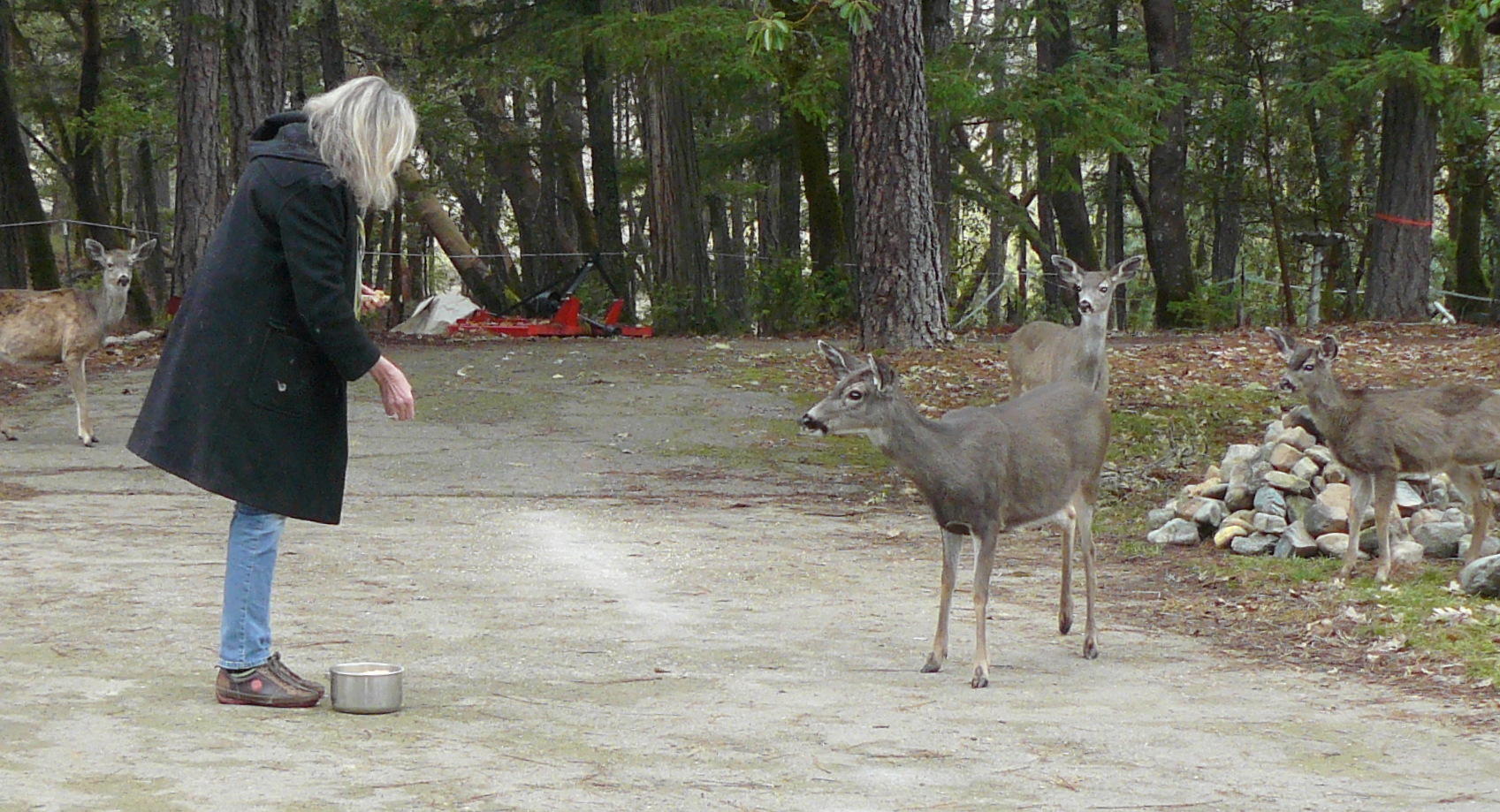
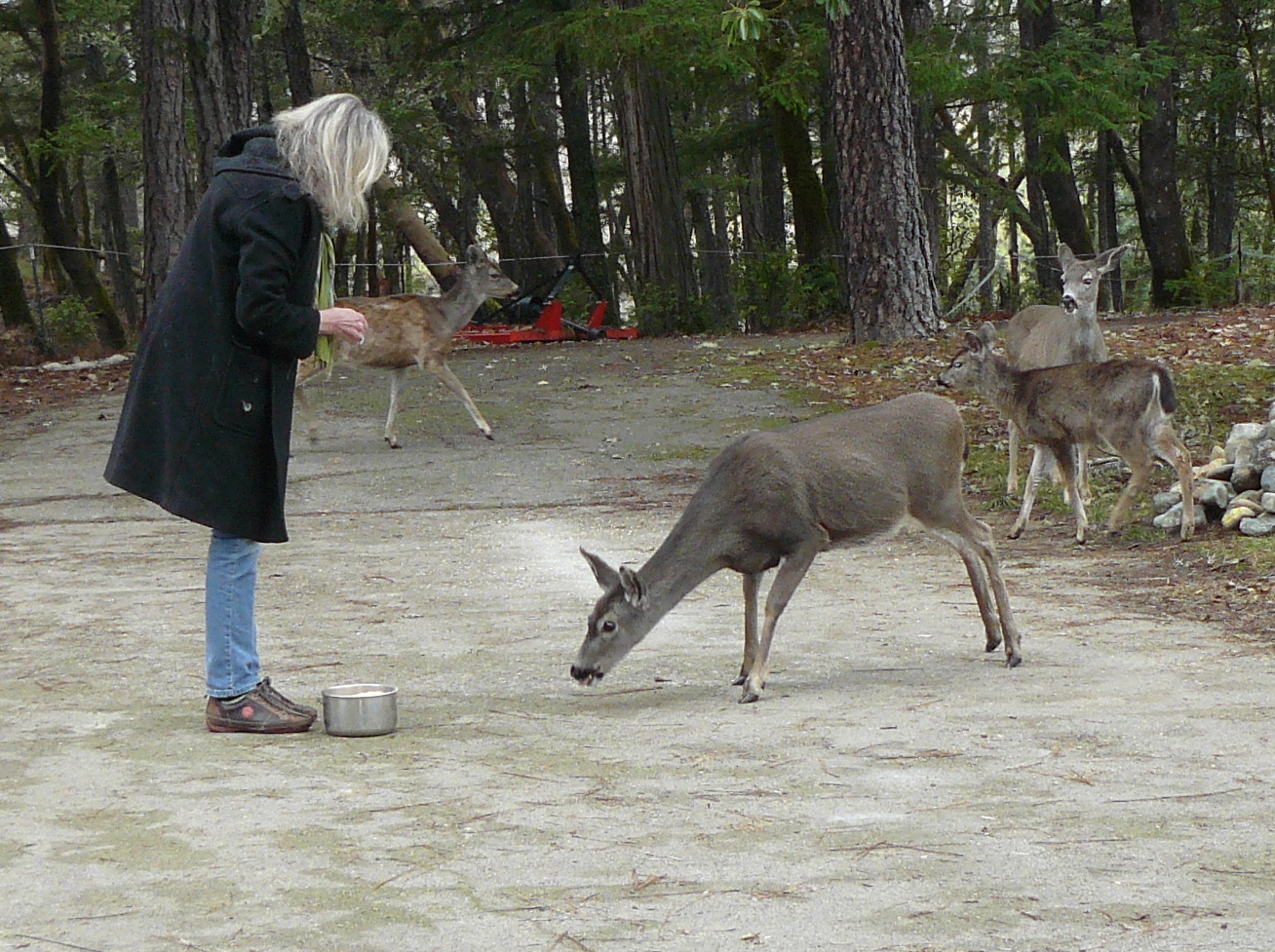
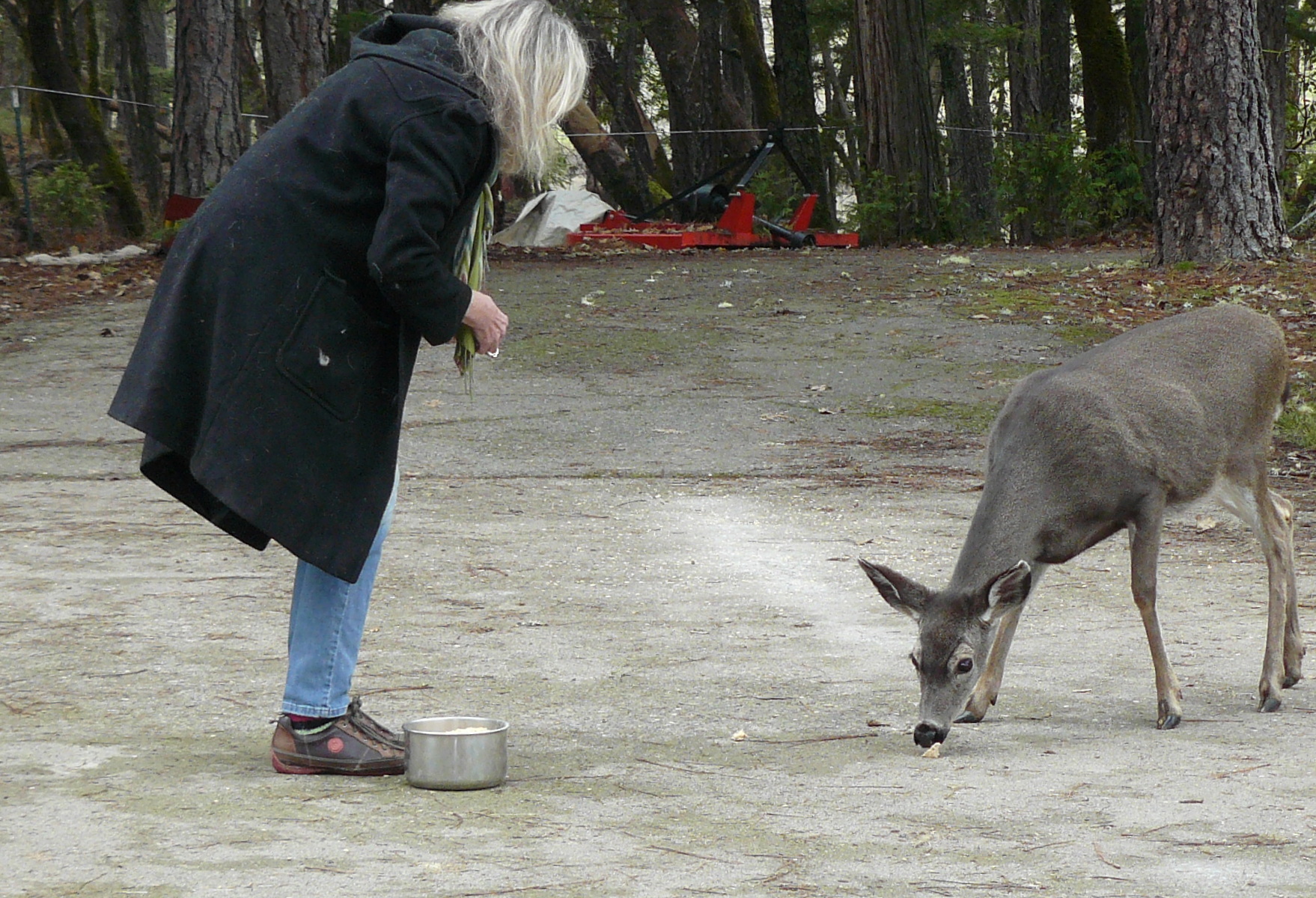
Follows of Learning from Dogs will remember that back on the 15th December I devoted a Sunday post, Picture parade twenty-one, to pictures of deer cautiously coming to feed when Jean was in their presence.

Now, some five weeks later, one of those deer has overcome fear to the point of taking a piece of bread from Jean’s hand.  Here is the sequence of photographs taken last Saturday afternoon.  N.B. We do not feed the deer bread as a routine; it’s not good for them.

P1140238

oooo

P1140239

oooo

P1140240

oooo

P1140241

oooo

P1140242

oooo

Greetings, one and all, this day.