Year: 2012

The truth about (pet) food!

We are what we eat! A sobering assessment of the food industry this Friday, the 13th!

This saying, which has been around for some time, reminds us that the foods we eat break down into elements that our bodies absorb. What we eat literally becomes part of us, and not just us humans but our dogs and cats as well.  That’s why I haven’t differentiated between us humans and our pets in this Post.

Let’s start off with our pets.

On the 28th December, just a couple of weeks ago, I wrote an article about the possible harm to dogs from Jerky treats coming in to the USA from China.  Kenneth Bryant of TriPom Chews added a comment that included a link to a news story about 353 dogs possibly being made sick.  Since then he and I have been in email correspondence including Ken passing the web address of Susan Thixton’s website Truth about Pet Food.  If you have a pet, go to this website!

I’m sure Susan wouldn’t mind me giving you a flavour (pardon the pun!) of what she has on this important website.  Try this.

Is there Chicken in Chicken Pet Foods?

One of the newest trends of pet food marketing is a tag line something like ‘Chicken is the first ingredient’.  Sounds good doesn’t it?  Chicken, first or second on the ingredient list surely means this pet food contains lots of quality meat doesn’t it?  No wonder this ‘chicken’ pet food is a little more expensive – it contains more meat.  Right?  Maybe not.

Just because petsumers think meat when the ingredient ‘chicken’ is listed on a label, doesn’t mean the pet food actually contains chicken meat.  Pet food can have a very different definition of ‘chicken’.  Thanks to very broad Association of American Feed Control Officials (AAFCO) ingredient definitions, the ingredient ‘chicken’ listed on a pet food label could be nothing more than skin, bone, cartilage, and maybe a few tiny fragments of meat.

Here is the AAFCO definition of poultry (quoting the 2011 AAFCO Official Publication): “Poultry is the clean combination of flesh and skin with or without accompanying bone, derived from the parts or whole carcasses of poultry or a combination thereof, exclusive of feathers, heads, feet and entrails.  It shall be suitable for use in animal food.  If it bears a name descriptive of its kind, it must correspond thereto.”

Problems with this pet food ingredient definition…
#1  This ingredient (which includes all types of poultry including chicken) can be “a combination thereof” of any part of poultry.  This means that a pet food, proudly claiming Chicken as the #1 ingredient, can include ONLY chicken bones and/or skin (left over from the human food industry).

#2  “It shall be suitable for use in animal food” means that animals rejected for use in human food for reasons including (but not limited to) disease and drug residues are approved for use in pet food.  This we can thank the FDA for.  Federal Food Safety Laws should make it illegal for pet food to include whole or parts of diseased or rejected animals, but FDA Compliance Policies tell pet food it is acceptable to use diseased and drugged animals in pet food [My emboldening, PH.] (“it shall be suitable for use in animal food”).

Chicken Meal/Poultry Meal is very similarly defined – except ‘meal’ implies moisture removed.  However the very same end result can apply – the meal can consist of little more than skin and bones — no meat.

Other pet food meat ingredient definitions are a bit more descriptive, however all meat pet food ingredient definitions include the “it shall be suitable for use in animal food” disclaimer.  Thus any pet food meat ingredient – thanks to FDA Compliance Policies and AAFCO ingredient definitions – can be the same quality as human meats or can be sourced from diseased, rejected animals.  But, regulations do NOT provide petsumers with a means to determine which is which.

Read the rest of this article on Susan’s website.  Even better subscribe to her newsletters.

I could go on and on but will close this section by saying ‘thanks’ to Ken of TriPom for providing this awareness of what we all may be feeding our beloved cats and dogs.

So, humans next!

Just a few days ago there was an article on The Atlantic magazine website about The Very Real Danger of Genetically Modified Foods.  It’s a detailed article that, nonetheless, needs to be read by the widest possible audience.  Here are some extracts,

Chinese researchers have found small pieces of ribonucleic acid (RNA) in the blood and organs of humans who eat rice. The Nanjing University-based team showed that this genetic material will bind to proteins in human liver cells and influence the uptake of cholesterol from the blood.

The type of RNA in question is called microRNA, due to its small size. MicroRNAs have been studied extensively since their discovery ten years ago, and have been linked to human diseases including cancer, Alzheimer’s, and diabetes. The Chinese research provides the first example of ingested plant microRNA surviving digestion and influencing human cell function.

Should the research survive scientific scrutiny, it could prove a game changer in many fields. It would mean that we’re eating not just vitamins, protein, and fuel, but information as well.

Later on the article says,

Monsanto’s claim that human toxicology tests are unwarranted is based on the doctrine of “substantial equivalence.” This term is used around the world as the basis of regulations designed to facilitate the rapid commercialization of genetically engineered foods, by sparing them from extensive safety testing.

According to substantial equivalence, comparisons between GM and non-GM crops need only investigate the end products of DNA translation: the pizza, as it were. “There is no need to test the safety of DNA introduced into GM crops. DNA (and resulting RNA) is present in almost all foods,” Monsanto’s website reads. “DNA is non-toxic and the presence of DNA, in and of itself, presents no hazard.”

The Chinese RNA study threatens to blast a major hole in that claim. It means that DNA can code for microRNA, which can, in fact, be hazardous.

And the closing two paragraphs,

The OECD’s 34 member nations could be described as largely rich, white, developed, and sympathetic to big business. The group’s current mission is to spread economic development to the rest of the world. And while that mission has yet to be accomplished, OECD has helped Monsanto spread substantial equivalence to the rest of the world, selling a lot of GM seed along the way.

The news that we’re ingesting information as well as physical material should force the biotech industry to confront the possibility that new DNA can have dangerous implications far beyond the products it codes for. Can we count on the biotech industry to accept the notion that more testing is necessary? Not if such action is perceived as a threat to the bottom line.

Please read the whole article as my extracts do not give justice to the importance of these findings.

Finally, let me turn to a recent item on the BBC website about the decline of brain function from as soon as age 45!  (I’m 67!)  The item starts,

The brain’s ability to function can start to deteriorate as early as 45, suggests a study in the British Medical Journal.

University College London researchers found a 3.6% decline in mental reasoning in women and men aged 45-49.

What caught my eye were these concluding paragraphs,

Dr Simon Ridley, head of research at Alzheimer’s Research UK, said he wanted to see similar studies carried out in a wider population sample.

He added: “Previous research suggests that our health in mid-life affects our risk of dementia as we age, and these findings give us all an extra reason to stick to our New Year’s resolutions.

“Although we don’t yet have a sure-fire way to prevent dementia, we do know that simple lifestyle changes – such as eating a healthy diet, not smoking, and keeping blood pressure and cholesterol in check – can all reduce the risk of dementia.”

Professor Lindsey Davies, president of the Faculty of Public Health, said that people should not wait until their bodies and minds broke down before taking action.

“We need only look at the problems that childhood obesity rates will cause if they are not addressed to see how important it is that we take ‘cradle to grave’ approach to public health.”

Let me repeat this sentence, “we do know that simple lifestyle changes – such as eating a healthy diet, not smoking, and keeping blood pressure and cholesterol in check – can all reduce the risk of dementia.”

Understanding what food is healthy for us and our animals ought to be straightforward.  But it’s not, when one understands the terrible lack of integrity in the industries that make our food!

What We Still Don’t Know? Part 2

Why Are We Here?

On Tuesday, I introduced the first of three films hosted by Lord Martin Rees.  That was called Are We Alone.  I do hope many of you were able to watch that.  Film two is also from the website Top Documentary Films and the link is here.  But, again, the film is available in 5 parts from YouTube and follows below.

In total, just around an hour to watch and well worth while.  You will find, believer in God or not, that there are some deeply spiritual aspects to Martin Rees’ wonderful presentation.

Everything you thought you knew about the universe is wrong. It’s made of atoms, right?

Wrong. Atoms only account for a measly 15% of everything that exists!

The mass of the universe consists of something so mysterious and elusive that it has been dubbed ‘dark matter’.

The final film of the trilogy will be presented on Learning from Dogs next Tuesday, the 17th January.

The Goldilocks Planet.

Neither too close nor too far from the Sun.

Towards the end of the lecture that Lord Martin Rees gave at  University of Melbourne’s Medical School in 2010, he spoke of the way that Planet Earth has warmed up these last 100 years, warmed up uniquely.  Why the word ‘uniquely’?  Because, for the first time in the ancient life of our planet, that warming is the result of the activity of a life species living on that planet; mankind.  It’s difficult to comprehend how special, how fragile and, therefore, how vulnerable is mankind’s ability to survive on Planet Earth.  That’s why a recent item on Martin Lack’s excellent blogsite Lack of Environment is published on Learning from Dogs with Martin’s kind permission.  But first let me quote a little from WikiPedia about the ‘goldilocks principle’,

In astronomy and astrobiology, the habitable zone is the region around a star where a planet with sufficient atmospheric pressure can maintain liquid water on its surface.[1]1 Since liquid water is essential for all known forms of life, planets in this zone are considered the most promising sites to host extraterrestrial life. The terms “ecosphere” and “Liquid Water Belt” were introduced by Hubertus Strughold and Harlow Shapley respectively in 1953.[2] Contemporary alternatives include “HZ”, “life zone”, and “Goldilocks Zone.”[3]

“Habitable zone” is sometimes used more generally to denote various regions that are considered favorable to life in some way. One prominent example is the Galactic habitable zone’ (the distance from the galactic centre). Such concepts areinferred from the empirical study of conditions favorable for life on Earth. If different kinds of habitable zones are considered, their intersection is the region considered most likely to contain life.

The location of planets and natural satellites (moons) within its parent’s star’s habitable zone (and a near circular orbit) is but one of many criteria for planetary habitability and it is theoretically possible for habitable planets to exist outside the habitable zone. The term “Goldilocks planet” is used for any planet that is located within the CHZ[4][5] although when used in the context of planetary habitability the term implies terrestrial planets with conditions roughly comparable to those of the Earth(i.e. an Earth analog). The name originates from the story of Goldilocks and the Three Bears, in which a little girl chooses from sets of three items, ignoring the ones that are too extreme (large or small, hot or cold, etc.), and settling on the one in the middle, which is “just right”. Likewise, a planet following this Goldilocks Principle is one that is neither too close nor too far from a star to rule out liquid water on its surface. While only about a dozen planets have been confirmed in the habitable zone, the Kepler spacecraft has identified a further 54 candidates and current estimates indicate that there are “at least 500 million” such planets in the Milky Way.[6]

So now to Martin Lack’s post.

Goodbye Goldilocks Planet?

Is it time to say goodbye to the Goldilocks Planet?

I hope not, because the next-nearest one yet discovered is 600 light years away! However, if we are indeed now passing a tipping point (i.e. as the widespread rapid thawing of Siberian permafrost suggests) both mitigation and adaptation will be almost impossible. Therefore, if we cannot reverse the damage already done (i.e. how can we make permafrost re-freeze or reverse the retreat of mountain glaciers?), we may have to accept that temperatures will eventually rise to a level at which the Antarctic first became glaciated 35 million years ago; and that sea levels will now rise continuously for several centuries – making any permanent settlement anywhere near the coast impossible (seeJames Hansen in Storms of my Grandchildren).

If your response to all this is to accuse me of being alarmist, all I can say is that I am afraid denial is definitely not a good evolutionary survival mechanism. Furthermore, as American high school science teacher – and now climate change activist – Greg Craven has said,“Unfortunately, the experiment is already running; and we are all in the test-tube!” I believe we must therefore hope that humanity will not repeat the folly of the former inhabitants of Easter Island; who chopped down all their trees for firewood and allowed all the decent soil to be washed away so they could not grow anything.

I think it is fair to say that 2011 was a difficult year for humanity and the planet; and 2012 could be worse. We now seem to be facing both a financial and an environmental crisis: Even at the tender age of 46, I can appreciate that the prospect of 6 years of austerity measures (here in the UK) is completely without precedent; worse even than the great depression of the 1920s. In the UK, public sector workers have been demanding a better pension! What about a better economic system, or even a better planet? If necessary, please forgive my impertinence but, how can people demand justice for themselves whilst ignoring all the injustices we are inflicting on those least able to adapt; and/or bequeathing to our descendants?

This is almost as pessimistic as my recent answer on ClimateSight to the question “Why are people who want to reduce – and possibly eliminate pollution – and create a safer world, considered obstructionist naysayers?“, which is… “If everyone lived as we do in ‘the West’, the planet’s ecological carrying capacity would only be about 3 billion [Paul and Anne Ehrlich (1996)]. Therefore we cannot solve poverty without allowing a lot of people to die or by wealthy people agreeing to moderate their over-consumption of the Earth’s resources. Sorry to be so blunt but, this is the simple answer to the question.” …Despite what detractors say this is not misanthropic eco-Socialism, it is reality. There is not enough decent farmland and/or resources of every kind for 7 billion people or more to live like we currently do in ‘the West’. If we are not going to deny the legitimate aspirations of poorer peoples to attain a better standard of living, we will have to moderate our over-consumption and/or pollution of the Earth’s resources. We cannot have it both ways.

Conclusion
If we continue to burn all the Earth’s fossil fuels – just because they are there and because we can – we will most certainly have to say good bye to our Goldilocks Planet. However, now that we know that what we are doing is causing the problem, would it not be a good idea to stop doing it? You know: When in a hole, stop digging, etc… As the Good Book says, “As a dog returns to its vomit, so a fool repeats his folly” (Proverbs 26:11).

Suggested New Year’s Resolution:
If we want things to change, I believe we must acknowledge that Clive Hamilton is right: climate change is a failure of modern politics – representative democracy is not working! Therefore, we must all take a much more active role in the process of government – this is called participatory democracy – and we must start by demanding that our politicians dismantle (or at least stop being misled by) the fossil fuel lobby who do not want their business as usual programme interrupted.

Having said all that, I would still like to sincerely wish you all the best for 2012 (although I hope the Mayan Calendar is wrong).

What We Still Don’t Know?

Are we truly alone?

On the 5th January, I presented a piece, called Life and the Cosmos, that was based on a deeply interesting lecture given by Britain’s Lord Martin Rees at the University of Melbourne’s Medical School in 2010.  I wrote that I was going to pick up on some of the points made by Lord Rees in that lecture and I do so starting today.

On the website Top Documentary Films there is a collection of three films, originally shown on Channel 4 television in the UK, under the broad banner of What We Still Don’t Know?  They make deeply fascinating viewing.  Luckily they appear to be available on YouTube as well, thus can be included directly in this Post.  However, if you have any problems with the YouTube versions then click here.

So here is the first programme, Are We Alone?

Are we alone? Sir Martin explores the possibility that life exists on planets beyond our own. He unveils an unsettling scientific debate that has startling consequences for us Earthlings. Do you believe in aliens? Why are we here? Everything you thought you knew about the universe is wrong. It’s made of atoms, right? Wrong. Atoms only account for a measly 15% of everything that exists. The mass of the universe consists of something so mysterious and elusive that it has been dubbed ‘dark matter’. Are we real? There is a fundamental chasm in our understanding of ourselves, the universe, and everything. To solve this, Sir Martin takes us on a mind-boggling journey through multiple universes to post-biological life. On the way we learn of the disturbing possibility that we could be the product of someone else’s experiment.

The second programme Why Are We Here? will be presented on Learning from Dogs on Thursday.

Sammy – Rest in Peace

The very sad end to a loving dog.

Way back before I came into Jean’s life, or perhaps I should expand on that by saying way before Pharaoh and I came into the life of Jean, her 12 dogs and 6 cats, Jean had come across a feral litter of pups.

This was in 1998 when Jean was living with her husband, Ben, in San Carlos, Sonora State, Mexico.  Jean had already been rescuing feral dogs for a number of years.  This litter of four puppies had been born underneath a trailer parked on a dirt road near Ben and Jean’s house.  They were all cute, healthy little pups and Jean quickly found homes for three of them.  However, the fourth had ended up being taken in by Jean and Ben and named Sammy.

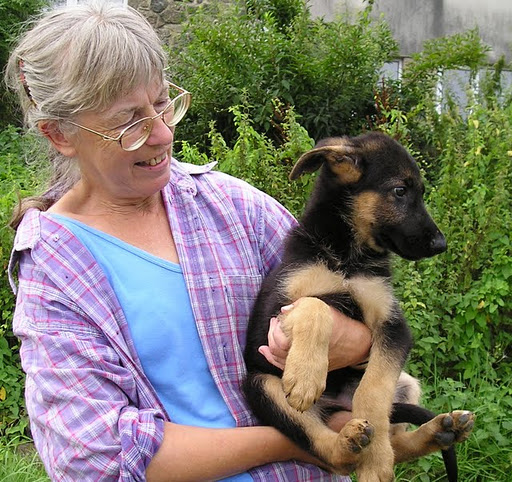
The picture below shows Jean holding Sammy when she was around 3 months old.

Jean and Sammy

Thus, as it does for all of us, time passed to the point where last Friday, Sammy’s back legs had become so arthritic that she was unable to walk without a great deal of pain and, at the grand old age of 13 1/2, it was time for her to go to that big dog prairie in the sky.

Sammy, January 6th 2012 - now forever out of pain.

For Jean especially, this was a tough loss as Ben had loved Sammy so much.  Sammy was the most sweet and gentle of dogs.  I know that all of you who have had experience of putting a dog or cat to sleep will share the angst that Jean endured last Friday.

Thank you Sammy for being such a loving animal throughout your entire life.

German Shepherd dogs

Just a musing about this fabulous breed.

We had to put one of our dogs to sleep on Friday, not a GSD, but one of Jean’s rescued dogs from way back.  At this moment in time (11am US Mountain Time, Saturday) I’m writing a piece about this wonderful dog that will appear tomorrow.

Thus not in the mood to post my usual light-hearted item for a Sunday.  So I resorted to looking up an appropriate dog video on YouTube.

Came across this,

Of course, that reminded me of how precious our Pharaoh is and it only took a few moments to find a couple of earlier pics of him.

Here’s Pharaoh the day I collected him from GSD breeders Jutone‘s in Dartmoor, SW England.  That’s Sandra Tucker, the owner of Jutone, with Pharaoh; the date being 12th August 2003 when Pharaoh was then just over 8 weeks old.

Sandra Tucker holding young Pharaoh

The next photograph was taken on the 11th March, 2008 at London’s Heathrow Airport.  The occasion being the time that Jean came across to England from her home in Mexico.  Jean came to see if the romance that had blossomed between us at Christmas in 2007  in San Carlos, Mexico was alive and well.  Luckily, it was!

Jean meeting Pharaoh for the very first time!

Thus it came to pass that in September, 2008, Pharaoh and I travelled out from Devon, England to Mexico where we lived until February, 2010, when Jean and I, Pharaoh and 12 other dogs and 6 cats relocated to Payson, Arizona.

Just a beautiful photograph

Pray for our planet this year!

This was emailed to me a couple of weeks ago.  Have no background information as to where the photograph was taken and, indeed, what type of bird it is!  But, nonetheless, just a beautiful reminder of the wonderfully, precious planet that we all, and I mean all, live on.

Nature in all her glory.

A thank you!

Recent significant rise in subscribers.

Just a short note to say how very grateful I am for the number of readers who have signed up as subscribers over the last couple of weeks.

Many of you are already bloggers and very soon I’m going to find a way of linking Learning from Dogs to your blog.  The obvious way would be to use the Blog Roll feature but methinks the list would be too long.  I shall put my thinking cap on this aged head and see what would be an effective way of linking back to all those subscribers who also Blog.  Feel free to add a comment if you have ideas.

Thank you.

Keystone XL pipeline

Spread the word as far and wide as possible!

Yesterday I received an email from 350.org as part of their mailing to all 350.org supporters.  I have previously written a number of times, for example see here and here, about this proposed project and why it is so important to have it rejected.

Yesterday I published a lecture given in Melbourne by Britain’s eminent Astronomer Royal, Lord Martin Rees.  Lord Rees concluded his lecture with the call for us to take better care of our own planet. He, like many others, recognises the unique place in history that we occupy. For the first time a single species is capable of exerting profound changes on the Earth’s natural and physical environments.

Over and over again, scientists are reporting the rise in climate temperature of Planet Earth and the implications thereof if we do not wakeup soon to changing our ways.  The Keystone pipeline is a huge potential mistake!

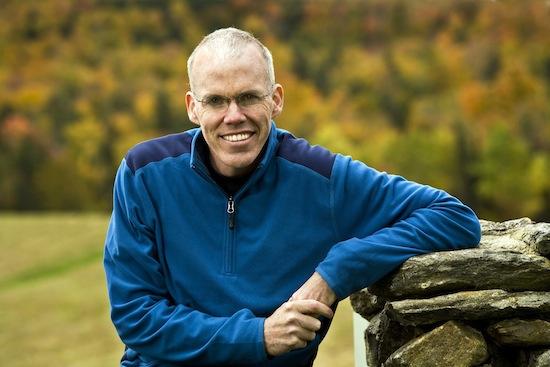
Bill McKibben of 350.org

Anyway, to the letter issued by 350.org – note the link to send a message to President Obama works – please use it!

Direct threats from Big Oil over Keystone XL

01/05/12, 11:43am

Here’s the email that Bill McKibben just sent to US 350.org supporters who have been working on Keystone XL:

Just in case you thought there was anything subtle about the Keystone battle, you need to hear what the president of the American Petroleum Institute — the oil industry’s #1 front group — said yesterday: if the President doesn’t approve the project there will “huge political consequences.”

That’s as direct a threat as you’re ever going to hear in DC, and it shows just how mad you made the oil industry last year by exposing Keystone for the climate-killing danger it is.  And the oil industry can obviously make good on their threats — they’ve got all the money on earth, and thanks to Citizens United they can use it without restriction in our elections. They’re not used to ever losing.So far the Obama administration is standing firm in the face of Big Oil’s bullying — the White House made it completely clear last month that if the oil industry and its harem in Congress forced a speeded-up review, it would lead to an outright rejection of the permit for the pipeline. We expect they’ll keep their word.

Here’s what I think we need to do.

1- Let the president know you’ve got his back when he rejects the pipeline. Tell him that addressing climate change is the key to our future, and that you’re glad he’s not bending.

2- Take the offensive against the oil industry. If they’re going to try and ram Keystone down our throats we’re going to try and take away something they hold dear, the handouts that Congress gives them each and every year. They’re the richest industry on earth, they’re doing great damage to the planet — and they expect us to pay for it with our tax dollars.

Can you send a quick note to President Obama covering those two key points? 

Click here to send a message to the President: www.350.org/stand-strong

Here’s the note I’m sending:

President Obama: Thank you for opposing the rushed Keystone XL pipeline permit. Responding to climate change is critical to preserving our collective future, and I hope this is a first step towards the dramatic changes we need to avoid catastrophe. PS: Please take handouts for the fossil fuel industry out of next year’s budget. There are people in America who need that money more.

There’s lots more to be done, of course. In the slightly longer run, we’ve got to take on the greatest subsidy of all: the special privilege that Congress gives the fossil fuel industry to use the atmosphere as an open sewer into which to dump its carbon for free.But today — right now, in the face of this kind of straight-up bullying — it’s time to punch back. We’re nonviolent, but we’re not wimps.

Bill

Life and the cosmos

A powerful lecture by the eminent Lord Martin Rees

Martin Rees at Jodrell Bank, 2007

I came across this interview a few days ago in connection with some book research that I was undertaking.  Please don’t be put off by the 56 minute length because Martin Rees is one of the most pre-eminent cosmologists around today, as well as being the UK’s Astronomer Royal since 1995.

Make a promise to yourself to settle down sometime soon and watch the lecture, given at the University of Melbourne’s Medical School in 2010.  And a warning! I going to pick up on some of the important points made by Martin Rees in a couple of posts next week.

Here’s how the lecture was reported by the Australian science website, SixOne Science,

Lord Rees in Melbourne

In a packed Sunderland Lecture Theatre in the University of Melbourne’s Medical School, Lord Martin Rees gave the inaugural Derek Denton Lecture in Science and the Arts. Lord Rees, an eminent and accomplished astrophysicist and cosmologist, is coming to the end of his five year tenure as the president of The Royal Society. The event even managed to attract or Prime Minister, Kevin Rudd, who entered without a noticeable entourage and with no fanfare, and the Governor of Victoria, Professor David de Kretser, a scientist himself.

The lecture was entitled “Life and the Cosmos”, a grand and sweeping title if ever there was one. It seemed like an impossible amount of material to cover in the allotted hour. However, Rees delivered an entertaining, humorous account of life from the big bang, through the formation of stars and galaxies, to the origins of life and perhaps the biggest crowd pleaser, the search for extra-terrestrial life. Most in the lecture theatre would not have learnt anything new, but this lecture was aimed at a general audience and the material was interesting enough to keep everyone interested for the hour despite being squashed into an ageing undergraduate lecture theatre complete with squeaky desks and a slightly musty smell. Perhaps Mr. Rudd was sufficiently uncomfortable to increase university funding, we can hope.

Whist this was predominately an overview of the subject material, Rees expressed some opinions about space exploration. He seemed torn between his human curiosity and the cost of human exploration. Given the advances in robotic exploration vehicles, Rees has difficulty in justifying the cost of sending humans on planetary exploration missions. Perhaps the best case for robotic exploration was made by the amazing photos he showed from the surfaces of Mars (photos) and Titan (photos), a moon of Saturn. Interestingly, Rees believes that if human exploration does proceed in the future it will be led by the Chinese or groups of private individuals. He also raised the issue of exploitation of other planets, something not often mentioned in the debate over human space travel. We need to decide if other bodies in our solar system are open for exploitation or if they should be preserved as wilderness, in a similar way to Antarctica. Given the pressures faced by places like Antarctica and the Amazon this will be an important debate should human exploration resume.

Rees concluded his lecture with the almost obligatory call for us to take better care or our own planet. He, like many others, recognises the unique place in history that we occupy. For the first time a single species is capable of exerting profound changes on the Earth’s natural and physical environments (although it might be argued that the first photosynthesizing cyanobacteria had a similarly singular influence by increasing the proportion of oxygen in the atmosphere). It is interesting to note that he does not see colonisation of other planets as a solution as the Earth is still the only known planet capable of sustaining us. Although he did discuss the likelihood of discovering Earth-like planets (pretty good given advances in technology). However, Rees did not paint an overly pessimistic picture and he generally came across as optimistic and enthusiastic about the future.

The organisers of the Derek Denton Lecture series should be commended for attracting such a high profile speaker for the first of the series. Hopefully the series will be successful, and if so may need to be moved to a bigger venue. If you want to see the lecture it will soon be available here. The next lecture of this series hasn’t been announced yet, it will be on the Arts, but you can check here for future public events at The University of Melbourne.