Year: 2012

Just very grateful.

Yet another aspect of what we learn from dogs.

This is Hazel.
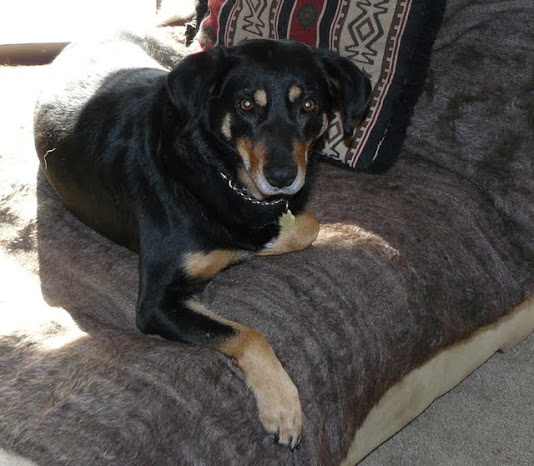
Hazel

As I write these words, Hazel is laying down on the carpet just next to me.  She was dumped on the street outside Jean’s Mexican house back in early 2010.  Hazel was still in milk and probably had had her puppies taken from her and sold for a few pesos.  Who knows!

But her gratitude for being rescued by Jean is boundless.  Most nights she sleeps on our bed, curled up tightly behind my back.  Her love for her world here in Oregon is beautiful and pure.  As they say, dogs do not lie about love.

So what’s this leading up to?

Simply setting the scene for a wonderful TED video by Louie Schwartzberg, first seen by me on Christine’s blog 350 or bust.

Watch and be grateful for all the beautiful things in the world.

louieschwartzberg

Louie Schwartzberg is an award-winning cinematographer, director, and producer whose notable career spans more than three decades providing breathtaking imagery for feature films, television shows, documentaries and commercials.

This piece includes his short film on Gratitude and Happiness. Brother David Steindl-Rast’s spoken words, Gary Malkin’s musical compositions and Louie’s cinematography make this a stunningly beautiful piece, reminding us of the precious gift of life, and the beauty all around us.

As a visual artist, Louie has created some of the most iconic and memorable film moments of our time. He is an innovator in the world of time-lapse, nature, aerial and “slice-of-life” photography – the only cinematographer in the world who has literally been shooting 24 hours a day, 7 days a week continuously for more than 30 years.

Louie was recognized as one of the top 70 Cinematographers for the On Film Kodak Salute Series. He is a member of the Directors Guild of America and the Academy of Motion Pictures Arts and Sciences.

Louie is credited by many with pioneering the contemporary stock footage industry by founding Energy Film Library, a global company with a network of 12 foreign offices, which was acquired by Getty Images in 1997. Motion picture clients of his cinematic artistry include Sex in the City, The Bourne Ultimatum, Die Hard 4, Syriana, Crash, Men in Black and classics such as American Beauty, Koyaanisqatsi and E.T. among others.

Louie went on to found BlackLight Films, a creative production company specializing in producing original theatrical feature, large format films, HD and TV programming.

In 2004, BlackLight Films completed production of the theatrical feature film, America’s Heart &Soul, distributed theatrically by Walt Disney Pictures. In 2006, BlackLight Films completed a series of HD shorts, Louie Films, for the launch of Buena Vista Home Entertainment’s Blu-Ray DVD releases. In 2007, the company produced a 1-hour special, Chasing the Light, which aired nationally on PBS.

Past projects include the 35mm film Seasons of the Vine for Disney’s California Adventure Theme Park and a 26-half hour series, America!, for The Hallmark Channel.

Louie has won two Clio Awards for Best Environmental Broadcast Spot, an Emmy nomination for Best Cinematography for the Discovery Channel Special, Oceans of Air, and the Heartland Film Festival’s Truly Moving Picture Award for Walt Disney Pictures’ feature film release America’s Heart & Soul.

Louie completed production on a feature length nature documentary, Wings of Life, to be theatrically released worldwide, under Walt Disney Pictures’ new production banner, Disneynature. The film was released in France (March 2011) under the title Pollen and won the Roscar Award for Best Cinematography at the 2011 Wild Talk Africa Film Festival.

Louie spoke at the TED 2011 conference in Long Beach, CA and has been a regular presenter at the annual Bioneers Conference in San Francisco. Currently, Louie is in production with National Geographic to produce Hidden Worlds, a 3D Imax film.
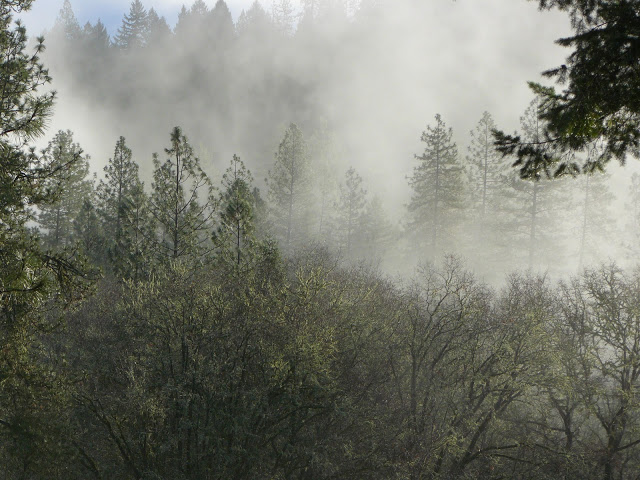
To underline the gratitude that I have to be here surrounded by such beautiful countryside, let me close with this picture recently taken from our bedroom window.

Deer

We are what we eat.

A thought-provoking presentation on the role of food in our society.

The last time I used this title for a post was back on July 20th.  However, the topic then was very different to today’s theme.  Then I wrote about how the genetic modification of our food represents as big a danger to the long-term survival  of man as does the damage to our biosphere.

So this comes as a very pleasant contrast.  I am indebted to Yves Smith’s blog Naked Capitalism for drawing this presentation to my attention. As was written in that NK post,

This is a super presentation by Ray Patel for Michael Pollan’s class at Berkeley, Edible Education 103. The presentation and the question period together come to about an hour.  Ray Patel follows after Michael Pollan handles administrative stuff and then does an introduction.

There are plenty of charts, but I really enjoy the anecdote on Northern Malawi at minute 43:54 — too long for me to transcribe, so I’ll quote Patel’s closing line:

What makes it really sail is not just the democracy, but the joy which comes through people cooking together as equals and eating together as equals.

Bon apetit!

Published on Dec 7, 2012
Raj Patel is an award-winning writer, activist, and academic. He has degrees from the University of Oxford, the London School of Economics, and Cornell University, has worked for the World Bank and WTO, and protested against them around the world.

He’s currently a visiting scholar at UC Berkeley’s Center for African Studies, an Honorary Research Fellow at the School of Development Studies at the University of KwaZulu-Natal, and a fellow at The Institute for Food and Development Policy, also known as Food First. He is currently an IATP Food and Community Fellow.

He has testified about the causes of the global food crisis to the U.S. House Financial Services Committee and is an Advisor to the United Nations Special Rapporteur on the Right to Food. In addition to numerous scholarly publications, he regularly writes for The Guardian, and has contributed to the LA Times, NYTimes.com, The San Francisco Chronicle, The Mail on Sunday, and The Observer. His first book was Stuffed and Starved: The Hidden Battle for the World Food System and his latest, The Value of Nothing, is a New York Times best-seller.

raj_patel

Raj Patel’s website is a great reference so do spend a little time wandering through the material.  For example, this item jumped off the page for me.

What I Did This Summer

By Raj on 08/11/2012

The good folk at Canada’s Globe & Mail asked me to write a piece called “What I Did This Summer.” Never having written one before, I thought I’d channel my inner 12 year old.

Cuzco, Peru: This summer I started to write a book and film a documentary with my hero. His name is Steve James. He filmed ‘Hoop Dreams’ which was about basketball and hope and disappointment and race and inequality and America. Our film is called “Generation Food”. It is about how we will eat in the future.

So I went to Japan. People used to live long lives in Okinawa because of the traditional diet. Lots of people lived until 100. Now grandparents are burying their children. They don’t eat as they used to. When the Americans came with their military base, they brought fast food for the GIs. Everybody eats it now. I visited farmers who plant crops on US bases. They did it so often that the Americans gave up and just let them do it. I ate goat sashimi because it would have been rude not to.

Won’t reproduce it in full as I haven’t sought permission.  So do go here to read it.  But I just can’t resist offering you Raj Patel’s closing words.

I have learned that: People are kind. Everyone has contradictions. Raw goat tastes funny, but it’s not as bad as Cuban food. The world is more beautiful than I imagined. There is more hope for the future of food than I dared to believe, against impossible odds. And it comes from unlikely places.

And after the summer, I was never the same again.

What a lovely sentiment to end on.

Forty ways of using the can.

Ah, maybe that’s why it’s called WD40!

Grateful to Neil Kelly back in Devon, SW England, for sending me this list of 40 things you can do with WD40.

wd40

1. Protects silver from tarnishing

2. Removes road tar and grime from cars

3. Cleans and lubricates guitar strings

4. Gives floors that ‘just-waxed’ sheen without making them Slippery

5. Keeps flies off cows

6. Restores and cleans chalkboards

7. Removes lipstick stains

8. Loosens stubborn zippers

9. Untangles jewellery chains

10. Removes stains from stainless steel sinks

11. Removes dirt and grime from the barbecue grill

12. Keeps ceramic/terra-cotta garden pots from oxidizing

13. Removes tomato stains from clothing

14. Keeps glass (and plastic)shower doors free of water spots

15. Camouflages scratches in ceramic and marble floors

16. Keeps scissors working smoothly

17. Lubricates noisy door hinges on vehicles and doors in homes

18. It removes black scuff marks from the kitchen floor! Use WD-40 for
Those nasty tar and scuff marks on flooring. It doesn’t seem to harm the
Finish and you won’t have to scrub nearly as hard to get them off. Just
Remember to open some windows if you have a lot of marks

19. Bug guts will eat away the finish on your car if not removed quickly!
Use WD-40!

20. Gives a children’s playground slide a shine for a super fast slide

21.Lubricates gear shift and mower deck lever for ease of handling on
Riding mowers

22. Rids kids rocking chairs and swings of squeaky noises

23. Lubricates tracks in sticking home windows and makes them easier to open

24. Spraying an umbrella stem makes it easier to open and close

25. Restores and cleans padded leather dashboards in vehicles, as well as
Vinyl bumpers

26. Restores and cleans roof racks on vehicles

27. Lubricates and stops squeaks in electric fans

28. Lubricates wheel sprockets on tricycles, wagons, and bicycles for easy
Handling

29. Lubricates fan belts on washers and dryers and keeps them running
Smoothly

30. Keeps rust from forming on saws and saw blades, and other tools

31. Removes splattered grease on stove

32. Keeps bathroom mirror from fogging

33. Lubricates prosthetic limbs

34. Keeps pigeons off the balcony (they hate the smell)

35. WD-40 attracts fish. Spray a little on live bait or lures and you
Will be catching the big one in no time. Also, it’s a lot cheaper than
The chemical attractants that are made for just that purpose. Keep in
Mind though, using some chemical laced baits or lures for fishing are not
Allowed in some states

36. Removes all traces of duct tape

37. Folks even spray it on their arms, hands, and knees to relieve
Arthritis pain

38. Florida ‘s favorite use is: ‘cleans and removes love bugs from grills
And bumpers

39. The favorite use in the state of New York , WD-40 protects the Statue
of Liberty from the elements

40. Use it for fire ant bites. It takes the sting away immediately and
stops the itch

There you are.  You always wanted to know that, didn’t you!

The wisdom of Jefferson

Interesting insights into the American Founding Father.

Big thanks to Bob Derham who sent me this yesterday.  I’m sure many Americans know this as they know their own mother.  But for this recent resident of the USA I found it fascinating.

Jeffeson

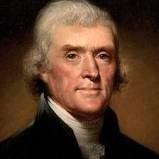
Thomas Jefferson

Thomas Jefferson was an American Founding Father, the principal author of the Declaration of Independence and the third President of the United States.
Born: April 13, 1743, Albemarle County
Died: July 4, 1826, Charlottesville
Presidential term: March 4, 1801 – March 4, 1809
Party: Democratic-Republican Party
Education: College of William and Mary (1760–1762), University of Toronto Mississauga

Thomas Jefferson was a remarkable man who started learning very early in life and never stopped.

At 5, began studying under his cousin’s tutor.
At 9, studied Latin, Greek and French.
At 14, studied classical literature and additional languages.
At 16, entered the College of William and Mary.
At 19, studied Law for 5 years starting under George Wythe.
At 23, started his own law practice.
At 25, was elected to the Virginia House of Burgesses.
At 31, wrote the widely circulated Summary View of the Rights of British America and retired from his law practice.
At 32, was a Delegate to the Second Continental Congress.
At 33, wrote the Declaration of Independence .
At 33, took three years to revise Virginia ‘s legal code and wrote a Public Education bill and a statute for Religious Freedom.
At 36, was elected the second Governor of Virginia, succeeding Patrick Henry.
At 40, served in Congress for two years.
At 41, was the American minister to France , and negotiated commercial treaties with European nations along with Ben Franklin and John Adams.
At 46, served as the first Secretary of State under George Washington.
At 53, served as Vice President and was elected president of the American Philosophical Society.
At 55, drafted the Kentucky Resolutions, and became the active head of Republican Party.
At 57, was elected the third president of the United States.
At 60, obtained the Louisiana Purchase , doubling the nation’s size.
At 61, was elected to a second term as President.
At 65, retired to Monticello .
At 80, helped President Monroe shape the Monroe Doctrine.
At 81, almost single-handedly created the University of Virginia , and served as its first president.
At 83, died on the 50th anniversary of the Signing of the Declaration of Independence.

Thomas Jefferson knew because he himself studied the previous failed attempts at government. He understood actual history, the nature of God, his laws and the nature of man. That happens to be way more than what most understand today. Jefferson really knew his stuff.

John F. Kennedy held a dinner in the white House for a group of the brightest minds in the nation at that time. He made this statement:
“This is perhaps the assembly of the most intelligence ever to gather at one time in the White House with the exception of when Thomas Jefferson dined alone.”

Quotations by Thomas Jefferson

“When we get piled upon one another in large cities, as in Europe, we shall become as corrupt as Europe.”

“The democracy will cease to exist when you take away from those who are willing to work and give to those who would not.”

“It is incumbent on every generation to pay its own debts as it goes. A principle which if acted on would save one-half the wars of the world.”

“I predict future happiness for Americans if they can prevent the government from wasting the labors of the people under the pretense of taking care of them.”

“My reading of history convinces me that most bad government results from too much government.”

“No free man shall ever be debarred the use of arms.”

“The strongest reason for the people to retain the right to keep and bear arms is, as a last resort, to protect themselves against tyranny in government.”

“The tree of liberty must be refreshed from time to time with the blood of patriots and tyrants.”

“To compel a man to subsidize with his taxes the propagation of ideas which he disbelieves and abhors is sinful and tyrannical.”

And finally Thomas Jefferson said in 1802: “I believe that banking institutions are more dangerous to our liberties than standing armies. If the American people ever allow private banks to control the issue of their currency, first by inflation, then by deflation, the banks and corporations that will grow up around the banks will deprive the people of all property – until their children wake-up homeless on the continent their fathers conquered.”

A voice from the past to lead us in the future.

It almost makes sense, doesn’t it?

Starting the week-end a little early.

Regular followers of Learning from Dogs know that I try and offer something more gentle and light-hearted for the week-end.  But yesterday afternoon amid all the hustle and bustle of things, the telephone cable was cut to add to our sensation of being cut off from the outside world.  (If you are new to this theme then drop in here for further explanation.)  Somehow finding the time to offer you a post of substance for today became too challenging.

We recently watched a comedian by the name of Reggie Watts appearing on BBC television and laughed our sides off.  But Mr. Watts is not your average comedian.  Wikipedia describes him thus:

reggie-watts-8

Reggie Watts (born March 23, 1972 in StuttgartGermany[1]) is a Brooklyn-based comedian and musician. His shows are mostly improvised and consist of stream of consciousness stand-up in various shifting personae, mixed with loop pedal-based a cappella compositions. He performs regularly on television, radio, and in live theater. His comic skills come into play in improvisational performance, as well as performance of written music. Watts currently appears as the sidekick on the IFC talkshow Comedy Bang Bang, which began airing on June 8, 2012.

So enjoy the following, and have a lovely week-end!  You will see how it all makes sense!

The saga of Bummer Ck, part Two!

Our bridge repairs continue.

Last Friday, I posted part One about how the floods had swept away our bridge supports and how the remaining steel deck had been removed.

Unfortunately, when the deck was lifted clear of the concrete supports, further damage to those supports became visible.  Thus repairs had to be made, as the photo below illustrates.

Brpt21

Once the concrete had cured for a couple of days, then it was time to install a steel frame.  This frame will take the weight of the steel platform when it’s time to re-install that.

Brpt22

Below there’s a picture of Wade welding the cross joists to the main longitudinal girders.

Brpt23

Plus another shot that demonstrates the ease with which these guys work on girders!

P1120087

So no access to our front entrance road just now but by Friday the steel platform should be back in place.  Then before the required earth works are started on Monday we will have a week-end of being able to drive in and out of our property.

Utter madness!

The very strange ways of man!

I am incredibly grateful to be living in the USA as a legal resident.  The circumstances that lead to Jeannie and me living here in Merlin, Southern Oregon are the stuff of dreams.  Which is why writings on Learning from Dogs that could be seen as critical of a US administration leave me rather uncomfortable.

However, a recent news item on the BBC website struck me as so utterly incongruous that I couldn’t resist today’s post.  As is said, “I can resist anything except temptation!”  Here’s that item.

US Congress bans word ‘lunatic’ in federal legislation

6 December 2012

"Lunatic" is derived from the Latin word for moon, and the belief that it could affect mental health
“Lunatic” is derived from the Latin word for moon, and the belief that it could affect mental health

The sharply divided US Congress has been able to agree on one thing at least – that the word “lunatic” should be banned.

The House of Representatives voted 398-1 on Wednesday to strike the term from all federal legislation, after the Senate did the same in May.

The measure is designed to remove language that has become outdated or demeaning from the US code.

The bill will now go to President Barack Obama for his signature.

Senator Kent Conrad, one of the sponsors of the measure, said: “Federal law should reflect the 21st Century understanding of mental illness and disease, and that the continued use of this pejorative term has no place in the US code.”

The only “no” vote came from Texas congressman Louie Gohmert, who said it was madness for lawmakers to waste time on such a measure when more high-profile issues loomed, such as the federal debt.

“Not only should we not eliminate the word ‘lunatic’ from federal law when the most pressing issue of the day is saving our country from bankruptcy,” said Rep Gohmert in a statement.

“We should use the word to describe the people who want to continue with business as usual in Washington.”

Now don’t get me wrong.  In and of itself that measure is fabulous removing, as it does, any official labeling of those with mental health problems.

However, surely the following demonstrates that madness is still alive and well.

LAW PROHIBITS UNFAIR EU TAXATION OF U.S. AVIATION

November 27, 2012

Washington, DC – The President today signed into law a measure to stop the United States’ participation in a costly European Union (EU) scheme to impose an emissions tax on American and other nations’ aircraft operators and air carriers. Transportation and Infrastructure Committee Chairman John L. Mica (R-FL) and Aviation Subcommittee Chairman Tom Petri (R-WI) were among the primary sponsors of the bipartisan companion bill in the House of Representatives.

In 2011, Mica first led a Congressional delegation to the European Union to convey opposition to the EU’s plan. Mica also led a subsequent delegation to Montreal to meet with International Civil Aviation Organization (ICAO) leaders, representatives of the EU, and other officials regarding U.S. opposition to the ETS. The original “European Union Emissions Trading Scheme Prohibition Act of 2011,” authored by Mica, Petri, and other House leaders, overwhelmingly passed the House on October 24, 2011.

John Mica was quoted as saying “The law signed today is a clear signal that the United States will not accept the EU’s go-it-alone attempt to impose emissions taxes on other nations for activities far outside the EU’s own borders. This European emissions trading scheme is an unlawful infringement upon U.S. sovereignty, and the sovereignty of numerous other nations.

Now I don’t know the rights and wrongs of this but one thing is clear to me.  If trying to reduce carbon emissions represents ‘unlawful infringement upon U.S. sovereignty‘ then don’t even ponder on the infringement that not trying to reduce emissions would risk!

Which neatly leads to the Yale forum on Climate Change & The Media that recently reported,

Forget About That 2-Degree Future

SAN FRANCISCO, CA, Dec. 5, 2012 — Renowned British climate scientist Sir Robert Watson pulled few punches today during a talk about the warmer world humans will face in coming decades.

Watson, who was IPCC chair from 1997 to 2002, all but dismissed the possibility of keeping the rise in average global temperatures to 2 degrees Celsius above pre-industrial levels — a temperature rise that corresponds to an atmospheric concentration of CO2 of 450 parts per million. It now stands at about 390 ppm.

“Fundamentally, we are not on a path toward a 2 degree world,” Watson told a packed hall at Moscone Center for a talk entitled: “A World Where the Atmospheric Concentration of Carbon Dioxide Exceeds 450 ppm.”

If the international community wanted a world in which the rise in average global temperatures this century peaked at 2 degrees C above pre-Industrial levels, CO2 emissions in the developed world should have peaked in 2010, Watson said. Globally, they would need to peak by 2014.

Instead, CO2 emissions in 2010 were up 5.9 percent relative to 2009 — and that was in the midst of an economic downturn for most industrialized countries. Total carbon emissions as well as carbon intensity (often described as the amount of CO2 emitted per unit of a nation’s GDP) have gone up.

“It’s totally clear we’re changing the composition of the atmosphere …” [but] “politicians have not listened to the scientific message,” Watson said. [my emphasis]

Average global temperatures could rise 2 to 7 degrees C by the end of the century, driving a litany of environmental changes, Watson said. Already, the climate of the 2020s and 2030s is locked in, or as Watson put it, “pre-ordained.” “Therefore, we must adapt,” he said.

You can read the full report here.

As Isaac Newton is recorded as saying: “I can calculate the motion of heavenly bodies, but not the madness of people.

The dirt beneath our feet.

A film about dirt that opens eyes!

dirt-splsh

I have mentioned the website of the Permaculture Research Institute of Australia before.  It’s a fabulous resource for many aspects of moving towards a more sustainable lifestyle, and not just for Australians.

A few days ago, their regular posting included a link to this:

Dirt: The Movie

DIRT! The Movie — directed and produced by Bill Benenson and Gene Rosow — takes you inside the wonders of the soil. It tells the story of Earth’s most valuable and underappreciated source of fertility — from its miraculous beginning to its crippling degradation. The opening scenes of the film dive into the wonderment of the soil. Made from the same elements as the stars, plants and animals, and us, “dirt is very much alive.” Though, in modern industrial pursuits and clamor for both profit and natural resources, our human connection to and respect for soil has been disrupted. “Drought, climate change, even war are all directly related to the way we are treating dirt.”

DIRT! the Movie — narrated by Jaime Lee Curtis — brings to life the environmental, economic, social and political impact that the soil has. It shares the stories of experts from all over the world who study and are able to harness the beauty and power of a respectful and mutually beneficial relationship with soil.

DIRT! the Movie is simply a movie about dirt. The real change lies in our notion of what dirt is. The movie teaches us: “When humans arrived 2 million years ago, everything changed for dirt. And from that moment on, the fate of dirt and humans has been intimately linked.” But more than the film and the lessons that it teaches, DIRT the Movie is a call to action.

Here’s the trailer to the film.

And here’s the movie’s website.

The link to the film on the PRI Australia’s website is here: Dirt: The Movie.

So plan on sitting down somewhere and enjoying a full-length film about dirt.  It will hold you spellbound.

To nurture a garden is to feed not just on the body, but the soul.  Alfred Austin

The power of the bleedin’ obvious!

Musings for a Monday morning!

Let me start with this:

A self-affirmation

For today, I am in charge of my life.

Today, I choose my thoughts.

Today, I choose my attitudes.

Today, I choose my actions and behaviours.

With these, I create my life and my destiny

I hasten to add that I am not the author of these wonderful words; just been aware of them for many years.

OK, to the muse!

I subscribe to Christine’s excellent blog 350 or bust.  Last Friday, Christine published a post that she called: Despite Pleas In Doha, Our Governments Have Failed Us & Our Children.

In that post, Christine included this video,

The lead negotiator for the Philippines at the Climate Conference in Doha, Naderev Saño, could not keep back the tears as he made a passionate appeal for real action on climate change.

“I appeal to all, please, no more delays, no more excuses. Please, let Doha be remembered as the place where we found the political will to turn things around…

The outcome of our work is not about what our political masters want. It is about what is demanded of us by 7 billion people…

I ask of all of us here, if not us, then who? If not now, then when? If not here, then where?”

Christine also included a short video of 19-year-old Syrian-American student Munira Sibai addressing the delegates.

“So let me now speak beyond the negotiators in this room to the people who I represent. Your governments are failing you. They are afraid that offering visionary pathways to low-carbon economies will make them look foolish, that taking responsibility will make them look weak, that standing up to the money and power of polluters will cost them political support. Unchecked, this cowardice will cost lives. Here in the halls of the United Nations, the voices of global citizens are limited, regulated and relegated to these short, symbolic statements. Outside these walls, these walls, there is a global movement, growing up from the grassroots, calling for climate justice. Join us.”

So young Munira Sibai offered the answer to Naderev Saño’s plea, “I ask of all of us here, if not us, then who? If not now, then when? If not here, then where?”  That answer being so beautifully encompassed in the opening self-affirmation.  Stay with me a little longer.

Many of you readers know that a little over 5 weeks ago Jean and I and our 11 dogs and 5 cats moved from Payson in Arizona up to Merlin, Southern Oregon.  The reason I refer to Payson is that not long before we left, a group concerned about the environment and climate change decided to form Transition Town Payson.

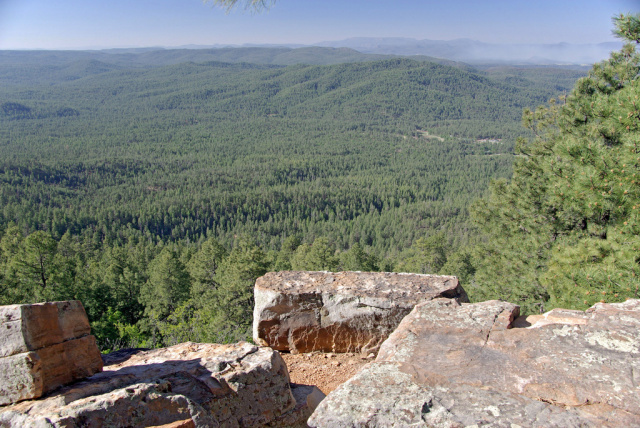
If you go to the ‘About‘ page of their website, you will see this beautiful photograph.

TTPvista

It’s a view from the Mogollon Rim Trail that would inspire anyone to want to care for our planet.  The trail passes close to Payson and is a very popular walking area.

Back to TTP.  If you go to their website and start browsing the articles and seeing what information is already there, you get a clear idea of what a group of people can do.  That key word ‘DO‘!

Last Thursday, I offered a reflection on Learning from Dogs about what feels like a new world order.  The penultimate paragraph offered this:

I sense that we, as in the peoples on this planet, are well into a period of such change that even by the end of 2013, a little over 50 weeks away, the precipice for humanity will be within sight.  I hold out zero hope that any time soon our leaders and politicians will stop ‘playing games’ and focus on doing what’s right.  The time for truth, for integrity, for sound debate is NOW!

However, all the truth, integrity and debate in the world comes to nothing without ACTION.

It really is the bleedin’ obvious!

Another pause!

More beautiful pictures from Cynthia G.

A couple of weeks ago, I published a selection of photographs from a number of pictures that had been sent to me by Cynthia.  I named the post Small pause today and it received 25 ‘Likes’ and favourable comments including one from Pedantry that simply said, “More of the same, please! :)

So to Pedantry and all you other dear readers, here comes more of the same!

cg1

cg2

cg3

cg4

cg5

cg6

cg7

cg8

cg9

cg10

oooOOOooo

Forgive me now for this little indulgence; a couple of pictures from closer to home – literally!

HugoRd

An early morning picture of the woods overlooking our Oregon property.

Jeannie

My lovely Jeannie helping tidy up the bank of the creek.