Yesterday, the Post was a humourous interlude on the week and, hopefully, it raised a smile on many faces. But it was, nonetheless a dig at young people so if felt appropriate to present one of the finest examples of endeavour and professionalism of young persons, courtesy of a recent major production by the BBC.
A couple of weeks ago, on Sunday, June 3rd, came the final of a contest to find a singing ‘superstar’. It was called The Voice UK and as the website explains, “Four of the biggest names in music are looking for incredible singing talent to compete for the title of The Voice UK. They will be chosen purely on the quality of their voice.” Many of the contestants were young persons.
Yesterday’s article reminds me of something fundamental!
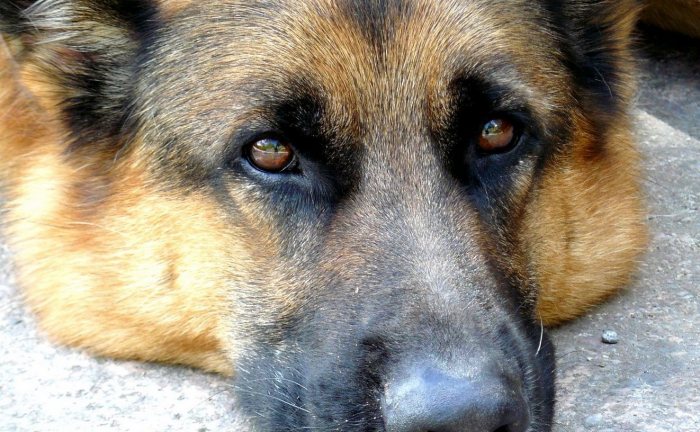
In Patricia’s guest post of yesterday, she wrote about Chloe, her dog,
Chloe was born knowing. She knows about joy. She knows about living a life in balance. She knows about forgiveness, trust, exuberance, a passion for learning and the power of a good nap.
I was speaking with Jon Lavin a few days ago about the effect of anxiety on memory. Jon confirmed that as we get older even low levels of anxiety can play games with our mental focus. He described what many of us know – of walking into a room, for instance, and suddenly realising that you didn’t have a clue as to why you had come into the room! In a very real sense anxiety is the body’s manifestation of fear.
Jon went on to say that practicing ‘letting go’ for a couple of 10-minute sessions a day is wonderfully therapeutic for the mind. In fact, when Jon was a guest author for Learning from Dogs he touched on the subject of fear in a post almost two years ago to the day; Dealing with the fear of the known. Indeed, I’m going to reproduce that article in full – here it is,
Jon Lavin
Can we ever conquer fear?
In a recent article I discussed the fear of the unknown, linked to the down-turn, redundancies, etc.
Per Kurowski, a great supporter of this Blog, posed the following question. “Great advice… but how do we remove the fear of what is known?” A simple, and slightly flippant answer would be, “Develop a different relationship with it.”
What I’m saying is that when we are facing the known, and I’m assuming that it’s something unpleasant, our choices are limited. It’s going to happen, so the only thing we can do is change the way we view it.
This brings us back full circle to developing a different relationship with it. Let’s take the word, ‘fear’.
“All fear is an illusion, walk right through“. I heard Dr David Hawkins say on a CD. Granted, a great trick if you can do it!
Here’s another description of fear: Fear = False Evidence Appearing Real
Fear is generally future-based. We tend to use the past as a learning reference to inform us of what to be afraid of in the future. So human beings live their lives trying to predict and prepare for the future, limited by their past experiences.
Unfortunately, the only way to work with fear of the known is to live in the present!
Our whole society is geared up to look into the future. We are forever worrying about or planning something for the future.
To begin focussing on the present, try this.
Simply, to start off, become aware of the breath and sensations in the body. This will slowly start to remind us to be present, or embodied, in our own body. Problems, fear and spiral thinking, often at 3 or 4 in the morning, are generated in the mind. Thoughts occur randomly, although we call them, “Our thoughts“, and refer to, “Our mind“.
By dropping out of the thought processes into the awareness of our breath and our body, the noise stops, even if only for a moment. Here’s the rub: So very few people in the world will have even the slightest inkling what these words mean!
If more of us got used to coming out of the mind before making an important decision, and simply sat with the question for a while, the answer would probably present itself.
This will probably raise more questions than it answers but that’s not a bad thing.
Difficult to add anything to that very sound advice save to try it out yourself, and if you own a dog or have one as a friend, just look much more closely at how he or she behaves and remember why this blog is called what it is! Or as Trish wrote,
Chloe was born knowing. She knows about joy. She knows about living a life in balance. She knows about forgiveness, trust, exuberance, a passion for learning and the power of a good nap.
Regular readers will know that one of my joys of this blog writing game is the wonderful connections that are made across this funny old virtual world. Trish Iles is one of those wonderful connections.
In fact, Trish is based at our local insurance firm, Crabdree Insurance, right here in Payson but until we ‘chit-chatted’ about writing a guest post for Learning from Dogs I had no idea there is much more to this lady.
To underline that, anyone who has their own blog called Contemplating Happiness will inevitably generate some curiosity. That curiosity increases as one learns more about Trish and discovers that she is a published author.
Anyway, that’s enough from me, here is Trish Iles writing What the dog knew!
oooOOOooo
The wisdom of Chloe
I was pondering the eternal question: why does two weeks of relaxing vacation seem like so much more time than two weeks of working like my pants are on fire, here at my desk? My sweet husband and I talked about it a little bit, but came to no definitive answer. I chatted with friends about it. No insights. Google had no opinion, either.
Chloe came to us from a rescue organization. I think sometimes about what her experiences have been in her young life. She started out as an abandoned puppy on a reservation in New Mexico and was soon in the pound where she was on the euthanasia list. A kind woman rescued her and took care of her until she found us: just when Chloe was becoming at home with the rescue lady, she was uprooted again and sent home with two new people. What must she have been thinking?
Chloe didn’t close her heart to us, though. She watched for a few days. When she decided we weren’t going to make dinner out of her and that she was really staying with us, she threw her whole being into becoming one of the family. She let herself trust us.
I’m not sure I would have had the courage to trust a new set of people again. I’m doubly not sure that I give a rat’s patootie what those new people thought of or wanted from me. Chloe was willing not only to trust us, but to love us. She forgave us immediately for ripping her from the home she knew, and she adopted us right back.
Chloe was born knowing. She knows about joy. She knows about living a life in balance. She knows about forgiveness, trust, exuberance, a passion for learning and the power of a good nap. I think that when I grow up, I want to be just like her.
oooOOOooo
Don’t know about you dear reader but I just loved that story from Patricia. Deep messages about what we can learn from our wonderful canine friends.
Indeed, I’m going to stay with the theme with tomorrow’s Post.
Don’t know about you but I find that it is all too easy to get wound up by so much that is going on in this crazy world. That’s not to marginalise the threats to society that are all around us and there are some powerful writers out there who work so hard to inform the world as to the truth of those threats. (As an aside, one of my favourite authors is this context is Patrice Ayme, just see this recent Post of his as an example of his depth of analysis.)
But my dear friend of over 40 years, Dan Gomez, recently sent me a link to a video of the 10 most extreme airports in the world. That stirred some memories from my own flying days.
First settle back and enjoy 7 minutes of reasons why you don’t want to think about flying! 😉
The YouTube video has this information, which I republish below,
Pictures and videos of the top 10 most extreme airports in the world!
San Diego: Busy airspace lots of buildings on approach
Madeira: Difficult approach and did have a short runway
Eagle Vail: High altitude, short runway & mountainous approach & departure
Courchevel: Short runway, bumpy runway, high altitude
Kai Tak: Difficult approch, fly through tall buildings, short runway
Gibraltar: Short runway, building on approach, winds from the Gibraltar rock
St Maarten: Short runway, has to fly over the beach with alot of people on there, steep takeoff because of mountains
St Barts: Short runway, has to dive.
St Barts: To land, the low approach on that hill thingy
Toncontin: Difficult approach, short runway
Lukla, short runway, only was cemented a few years ago, no go around, if land too low you land into a cliff
First song: La Perla by Kobojsarna
Second song: Feel It – Explicit Album Version by Three 6 Mafia vs Tiesto with Sean Kingston and Flo Rida
Now to a personal recollection.
I was a private pilot for many years, first learning to fly at the Suffolk Aero Club at Ipswich Airport in Suffolk, England. My first lesson was on the 3rd March, 1984!
Some twenty years later, on the 13th August 2004 to be exact, I was checked out to land at Courchevel Airport in an aircraft type known as a TB20, a French-built aircraft. Here’s the page from my log book with the necessary authorisation stamp affixed.
Cleared to land at Courchevel, LFLJ!
The following year, 19th July, 2005, I added my wonderful Piper Super Cub to that authorisation. (See here for a part picture of the aircraft.)
So thanks to YouTube as someone has uploaded a film of a light aircraft operating into Courchevel. It really is rather thrilling!
Finally, back to Dan. Here’s his recollections included in the email that he sent with that first film.
Just found this. I’ve landed at two of these. Eagle Vail was a piece of cake compared to Toncontin as Marty and Bruce know. BAE146 and small Boeing jets. I flew in and out of Toncontin 5 times in the 90’s and had no idea it was as scary as it was. That is to say, I knew it was scary because my palms sweated and heartbeat was about 140 but when I look at it now I go “what was I thinking?”
Take offs were like Orange County, Full brake power straight up. The big difference was you were shuttling along the runway and then down the runway and finally, up the runway to get the wheels up.
One time, on a connecting flight from Medellin, we taxied in, were boarded by military police with drug dogs who sniffed their way through the aisle. Bags were searched while everyone waited in intense heat. It took about 2 hours, three time longer than necessary. Then the interior was fumigated with everyone aboard. All the big machine guns too. Nobody said a word!
There’s one thing about flying a light aircraft, especially into ‘interesting’ airfields, you don’t have a moment to worry about the state of the world!
Is it me or are we all totally mad? Only if we don’t take action!
I’ve quoted this expression before so forgive me for using it again. That’s the old Devon expression, “All the world’s a little queer, ‘cept thee and me, and I ha’ me doubts about thee!” It really does seem as if most of us are ‘a little queer!’
Yesterday, I expressed the tip of much frustration, nay incredulity, in a rant about why society showed such complacency towards the impending crisis of our civilisation. As I wrote,
Why isn’t there such a huge outpouring of anger at the complacency of the world’s leaders? How far does the collapse of the conditions, both social and physical, as in biosphere, have to go before we get real, urgent change?
Well today’s Post is taking a selection of recent items that have been published to show why I feel as I do. I make no apologies for this being a longish Post but that doesn’t make it anything other than incredibly important; personal opinion, of course!
Let’s start with our love affair with carbon-based fuels, in this case natural gas (that’s methane you know). Over on Lack of Environment Martin Lack recently published a piece on Fracking. Here’s an extract,
Burning fossil fuels just because they are there is insane
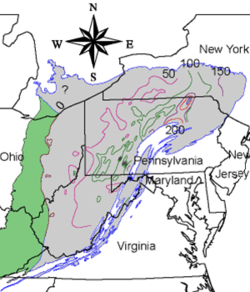
For a long time, I have told anyone that would listen that we should leave unconventional hydrocarbons in the ground because of the extremely high probability that James Hansen is right; if we burn them all the runaway greenhouse effect is a “dead certainty” (i.e. on page 236 of Storms of My Grandchildren). However, thanks to the persistence of my many friends in the blogosphere, I have now also woken up to the reality that unconventional fossil fuel extraction – and hydraulic fracturing (known as fracking) in particular – is having significant immediate adverse environmental impacts. Pendantry has described this as humanity “fouling its own nest”; but I think my own description of it as “defecating in our own pig pen” conveys a more appropriate image.
Martin also included a 17-minute feature from Link TV on the use, and dangers, of extracting natural gas from the Marcellus Shale in the US North-East. It’s a sobering reminder of how we are playing with fire with the planet, both literally and metaphorically. This is the video:
My next reference is an article published in the latest issue of Nature. Only a summary is available freely online, but here it is anyway,
Approaching a state shift in Earth’s biosphere
Localized ecological systems are known to shift abruptly and irreversibly from one state to another when they are forced across critical thresholds. Here we review evidence that the global ecosystem as a whole can react in the same way and is approaching a planetary-scale critical transition as a result of human influence. The plausibility of a planetary-scale ‘tipping point’ highlights the need to improve biological forecasting by detecting early warning signs of critical transitions on global as well as local scales, and by detecting feedbacks that promote such transitions. It is also necessary to address root causes of how humans are forcing biological changes.
The overall theme of this issue of Nature is shown in their leading story, again taking the liberty of republishing an extract. First how the article opens,
Return to Rio: Second chance for the planet
Twenty years ago, when the world’s leaders pledged to protect Earth’s climate and biodiversity at the Rio Earth Summit, they knew it would not be easy. But few could have guessed how much worse the situation would get. In 1992, the atmosphere held fewer than 360 parts per million (p.p.m.) of carbon dioxide; the concentration is now nearing 400 p.p.m. and surging upwards. At the same time, species are disappearing at an accelerating rate.
On the eve of the second Rio Earth Summit, Nature explores the causes and consequence of those changes, as well as the efforts that are being made to avert the worst outcomes. Our assessment shows how little progress nations have made towards honouring the commitments they made in 1992.
Then how that article closes,
Anthony Barnosky and his colleagues argue that the global ecosystem could eventually pass a tipping point and shift into a new state, the likes of which are hard for science to predict. But there are ways to avoid that fate, say Paul Ehrlich and his colleagues (page 68), who suggest techniques to make societies more sustainable and to head off many of the world’s chronic environmental problems.
Earth and its inhabitants have a second chance in Rio. They may not get many more.
There’s more and more of this but, yes, I know, one can only take so much. So let me head for the close with a message of what you and I, and all of us, can do.
The United Nations Environment Programme recently released a video showing how inadequate have been our leaders. Watch it first and then I’ll offer a solution.
The fifth edition of the Global Environmental Outlook (GEO-5), launched on the eve of the Rio+20 Summit, assessed 90 of the most-important environmental goals and objectives and found that significant progress had only been made in four.
As concerned global citizens, we urge you to honour your previous commitments to end taxpayer handouts to the fossil fuel industry. To save our planet we need a game-changer now — we call on you to first lead by example, and then make ending all polluter payments the top global priority for the Rio Earth Summit.
But before I get my blood up, let me reflect on a small passage of time. I first started writing this Blog on July 15th, 2009, coming up to three years ago. The idea came from a previous conversation with Jon Lavin of The People Workshop when we were chatting about Dr. David Hawkins’ Map of Consciousness and Jon pointed out that dogs had a ‘score’ of about 210, i.e. were positively above the boundary between truth and falsehood. As I wrote here,
value and cherish the ‘present’ in a way that humans dream of achieving
are, by eons of time, a more successful species than man.
That’s why the blog is called Learning from Dogs!
Stay with me just a little longer.
The picture of Pharaoh on the Home page, this one:
Dogs know better, much better! Time again for man to learn from dogs!
is a picture of a ‘beta’ dog. The beta dog is the second-in-command, so to speak, in a wild dog pack. A dog pack, about 40 to 50 dogs in the wild, has three dogs of special rank, although rank is not really the correct word, role is a better one. The leader of the pack is the alpha dog; always a female dog. The next role dog is the beta; always a male. The third role dog is the ‘clown’ dog and can be either sex.
In reverse order, the clown dog is there to keep the pack happy (in dog terms), the beta dog’s role is to break up fights within the pack and to ‘teach’ the puppies their social skills (which is why a beta dog is always a dominant male) and the alpha’s primary role is to ensure that the pack’s territory is not compromised by other animals and that there is plenty of food for the pack.
Ergo, the single most important decision of the alpha dog is to move the pack to a new territory when she judges that the present one is unsustainable!
OK, to my ‘rant’!
Why isn’t mankind learning from dogs and realising that our present ‘territory’, Planet Earth, is not capable of sustaining mankind for very much longer.
I don’t believe that man is intrinsically stupid! Many know the famous quotation from Einstein, “Insanity: doing the same thing over and over again and expecting different results.” So if most of us ‘nod’ our heads when we read that quote, why are most of us seemingly content to keep doing the same thing? Why isn’t there such a huge outpouring of anger at the complacency of the world’s leaders? How far does the collapse of the conditions, both social and physical, as in biosphere, have to go before we get real, urgent change?
Last Thursday, in a post I called Denialists standing up for insanity, I quoted Tom Engelhardt in his introduction to an article by Bill McKibben thus,
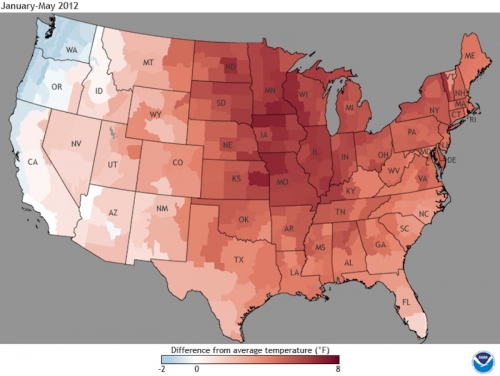
It’s true that no single event can be pinned on climate change with absolute certainty. But anyone who doesn’t think we’re in a fierce new world of weather extremes — and as TomDispatch regular Bill McKibben has suggested, on an increasingly less hospitable planet that he calls Eaarth – is likely to learn the realities firsthand soon enough. Not so long ago, if you really wanted to notice the effects of climate change around you, you had to be an Inuit, an Aleut, or some other native of the far north where rising temperatures and melting ice were visibly changing the landscape and wrecking ways of life — or maybe an inhabitant of Kiribati. Now, it seems, we are all Inuit or Pacific islanders. And the latest polling numbers indicate that Americans are finally beginning to notice in their own lives, and in numbers that may matter.
Well it’s good that Americans are starting to get the picture but it’s all too gentile – we all have to get much more excited about making our leaders understand that we want action to curb CO2 emissions, and we want action NOW!
Year-to-Date divisional temperature rankings from NOAA.
More about that tomorrow!
OK, only a short rant! Which is immediately followed by an apology! Because you will have to wait 24 hours before reading my next Post about fracking, about how some ‘leaders’ expect the CO2 emissions in the earth’s atmosphere to stabilise at 650 ppm and how very close we are to losing control!



 Learning from Dogs