Year: 2011

Believe nothing but …

Just a snippet for this Sunday.
Nipper - the listening dog.

Believe nothing just because a so-called wise person said it. Believe nothing just because a belief is generally held. Believe nothing just because it is said in ancient books. Believe nothing just because it is said to be of divine origin. Believe nothing just because someone else believes it. Believe only what you yourself test and judge to be true. From the sayings of the Buddha.

You all have a great week ahead.

More on Bill McKibben’s book, eaarth.

Some very telling points.

I first mentioned this book on the 13th May when I was about a third of the way in.  Because I thought there might be material useful to the course that has been running here in Payson, I did skip around the book looking for ‘attention-grabbing’ points.  It wasn’t difficult to find numerous extracts.

Try this on page 214 from the Chapter Afterword.

As it turns out, however, the BP spill was not the most dangerous thing that happened in the months after this book was first published.  In fact, in the spring and summer of 2101, the list of startling events in the natural world included:

  • Nineteen nations setting new all-time high temperature records, which in itself is a record.  Some of those records were for entire regions – [then some of the details]
  • Scientists reported that the earth had just come through the warmest six months, the warmest year, and the warmest decade for which we have records; it appears 2010 will be the warmest calendar year on record.
  • The most protracted and extreme heat wave in a thousand years of Russian history (it had never before topped 100 degrees in Moscow) led to a siege of peat fires that shrouded the capital in ghostly, deadly smoke.  [Then goes on to mention the effect of this heat on global grain prices.]
  • Since warm air holds more water vapour that cold air, scientists were not surprised to see steady increases in flooding.  Still, the spring and summer of 2010 were off the charts.  We saw “thousand-year storms” across the globe [goes into details]
  • Meanwhile, in the far north, the Petermann Glacier on Greenland calved an iceberg four times the size of Manhattan.
  • And the most ominous news of all might have come from the pages of the eminent scientific journal Nature, which published an enormous study of the productivity of the earth’s seas. [More details follow – not good news!]
That last point can be read in more detail from Nature‘s website.  It’s here.
The book closes thus (referring to how the BP oil spill was, ultimately, an accident),
But the greatest danger we face, climate change, is no accident.  It’s what happens when everything goes the way it’s supposed to go.  It’s not a function of bad technology, it’s a function of a bad business model: of the fact that Exxon Mobil and BP and Peabody Coal are allowed to use the atmosphere, free of charge, as an open sewer for the inevitable waste from their products.  They’ll fight to the end to defend that business model, for it produces greater profits that any industry has ever known.  We won’t match them dollar for dollar: To fight back, we need a different currency, our bodies and our spirit and our creativity.  That’s what a movement looks like; let’s hope we can rally one in time to make a difference.
Powerful stuff from a powerful book.
Fired up?  Then go and join:  350.org

Until Tuesday, a book review

But a review with a difference.

The background.  My fellow author, Jon Lavin, received an email on the 6th May, as follows,

Dear Jon,

Hello, I am writing from Headline publishers to ask whether you might like to review the book Until Tuesday by Luis Carlos Montalvan on your blog Learning From Dogs. I understand that the title of your blog is a metaphor, but in this case it is particularly apt, as the book details a very special relationship between a man and his dog. The book is written by a retired U.S. Army captain, Captain Luis Carlos Montalvan, and it describes the way in which the Captain’s participation in the army and in Iraq in particular, left him suffering from an extreme case of Post Traumatic Stress Disorder, so much so that even performing small daily tasks were almost impossible for him. That is, until service dog Tuesday was brought into his life. Tuesday truly taught the Captain how to function again, and furthermore, how to enjoy life again. I believe that the blog’s posts such as ‘Dogs and integrity’ and, indeed, the blog’s opening statement, indicate that this book might be of interest to you.

Well Jon, at that time, still wasn’t clear of the last hurdles of his MA, so I offered to do the review and contacted Headline and, as a consequence, Montalvan’s book arrived here in Payson yesterday.  Frankly, although flattered by the nice words written about Learning from Dogs and the invite to review the book, I didn’t have a clue as how to approach the job in hand.  To be honest, I still don’t!

So I am not going to study how other book reviews are put together, I’m just going to give you my feelings and reactions as they happen.

It was a busy day so I did no more than open the envelope, read the front and back covers of the book, plus the single page ‘flyer’ from Headline Publishing included in the envelope.

This is the front cover of the book (slightly different layout to the American version, by the way) which for any dog lover (we have 12 dogs here in Payson) is obviously eye-catching.

Then idly, I opened the book completely at random, it was page 243, and read from the start of the first paragraph on that page.  Here’s what I read,

A few days later, Tuesday quietly crossed our apartment as I read a book and, after a nudge against my arm, put his head on my lap.  As always, I immediately checked my mental state, trying to assess what was wrong.  I knew a change in my biorhythms had brought Tuesday over, because he was always monitoring me, but I couldn’t figure out what it was.  Breathing? Okay. Pulse? Normal. Was I glazed or distracted? Was I lost in Iraq?  Was a dark period descending?  I didn’t think so, but I knew something must be wrong, and I was starting to worry … until I looked into Tuesday’s eyes.  They were staring at me softly from under those big eyebrows, and there was nothing in them but love.

When I put my hand on his head, he stepped on to the couch and raised his face to my own.  We stared at each other for a few seconds and then, slowly, Tuesday licked me.  Yes, on the lips … and the chin … and the nose … slobbering all over my face with that big slow-moving tongue.  That’s the moment when Tuesday, after all his caution, stopped being just my service dog, and my emotional support, and my conversation piece.  That’s when he became my friend.

I closed the book.  There were wet corners to my eyes, my voice was unsteady as I said to Jeannie, “Well I better get on with some stuff.” and left the room.

I was transported back to the start of 2007 when I had my own share of crap to deal with and having my friend Pharaoh, my German Shepherd (that’s him on the home page of Learning from Dogs) with me was my salvation, and the key to him and me finding this beautiful woman, my wife Jean, a dog lover extraordinaire, and a life that I couldn’t even have dreamt about.  Funny old world!

So, yes, I will enjoy reading Until Tuesday over the coming days and, dear reader, will report back from time to time.  The British publishers, Headline, have a synopsis on their website.  It reads thus,

UNTIL TUESDAY is the story of how Tuesday, a service dog, helps to heal a shattered soldier.

Luis Carlos Montalván is a 17-year veteran and retired captain of the US Army. Even after suffering stab wounds, a traumatic brain injury and three broken vertebrae, Captain Luis chose to remain at his post on the Iraq-Syria border. In his mind, he had come this far, now wasn’t the time to abandon his comrades.

However, when Luis returned home, the pressures and injuries proved too much to bear. Physical disabilities,agoraphobia and crippling PTSD drove him to the brink of suicide. And that’s when he met Tuesday.

UNTIL TUESDAY entwines Luis’ story of courage and bravery with that of his trusted dog, Tuesday, and shows how a brave soldier who fought tirelessly for his country, found a way back from the devastation of being injured in action, with the help of his canine friend.

Racing in the Rain

A dog story for a man.

Thanks to Steve D. from the congregation here in Payson for mentioning this book.  Certainly one for my next Amazon order.

There’s a trailer on YouTube concerning the book, which is summarised as follows,

A heart-wrenching but deeply funny and ultimately uplifting story of family, love, loyalty, and hope, The Art of Racing in the Rain is a beautifully crafted and captivating look at the wonders and absurdities of human life . . . as only a dog could tell it.

So who is Garth Stein?  Well, of course, he has his own website, from which may be read,

Garth Stein is the author of the New York Times best selling literary novel, The Art of Racing in the Rain (Harper, 2008). Now published in 23 languages, The Art of Racing in the Rainwas the #1 BookSense selection for June, 2008, the Starbucks spring/summer 2008 book selection, and has been on the IndieBound™ bestseller list since its publication. Stein’s previous novel, How Evan Broke His Head and Other Secrets (Soho Press, 2005) won a Pacific Northwest Booksellers Association Award, and was a BookSense Pick in both hardcover and paperback. Raven Stole the Moon (Harper, 2010) was Stein’s first novel. He has also written a full-length play, Brother Jones, and produced a number of award-winning documentaries.

With an M.F.A. in film from Columbia University (1990), Garth worked as a documentary film maker for several years, and directed, produced, or co-produced several award winning films.

Born in Los Angeles and raised in Seattle, Garth’s ancestry is diverse: his mother, a native of Alaska, is of Tlingit Indian and Irish descent; his father, a Brooklyn native, is the child of Jewish emigrants from Austria. After spending his childhood in Seattle and then living in New York City for 18 years, Garth returned to Seattle, where he currently lives with his wife, three sons, and their dog, Comet.

There is also an adaptation for young persons,

Have you ever wondered what your dog is thinking?

Meet one funny dog—-Enzo, the lovable mutt who tells this story. Enzo knows he is different from other dogs. Every dog loves to chase cars, but Enzo longs to race them. He learns by watching TV and by listening to his best friend, Denny, an up-and-coming race-car driver, and his daughter, Zoe, his constant companion. Enzo finds that life just like being on the racetrack. For he sees that life, like racing, isn’t simply about going fast. And, by learning the tricks of racing against all odds, he takes on his family’s challenges and emerges a hero. Enzo holds in his heart the dream that Denny will go on to be a racing champion with his daughter right by his side. For theirs is an extraordinary friendship—one that reminds us all to celebrate the triumph of the human (and canine) spirit.

“The race is long. It is better to drive within oneself and finish the race behind the other than it is to drive too hard and crash.”

That’s the wisdom of Enzo, a dog with a lot to say about cars and life. When THE ART OF RACING IN THE RAIN — Garth Stein’s novel about Enzo and his owners — was published in 2008, readers immediately fell in love with Enzo, and the book has been a New York Times bestseller ever since. That’s because, once people finish reading the novel, they want to tell everybody about it.

Here’s a video of about 3 minutes where Garth Stein explains how he came to write the book.

Plus if you want a longer version, then the following is an  interview of Garth with Stacey Cochran on “The Artist’s Craft” on Raleigh Television Network Channel 10.

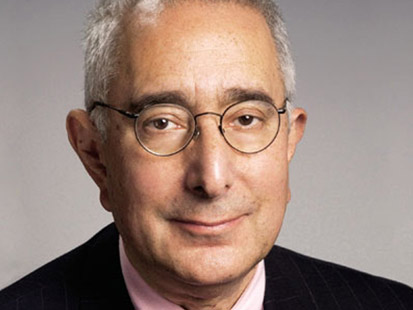
Get a dog, the Ben Stein way.

Just lovely!

Ben Stein

I have to admit to not having come across the name or the personage of Ben Stein before.

But that has been an omission on my part.  This is Ben’s website.

This is Ben’s view on dogs!

Greece, or grease?

The agony of watching a country (and a planet) slip.

Readers will be aware that I very rarely stroll through the tangled pastures of international politics and finance.  The only reason that I do so today is on the back of a very impressive letter published in the German newspaper  Handelsblatt.  That was brought to my attention by my subscription to Mike Shedlock’s (Mish) Blog Mish’s Global Economic Trend Analysis.  You will see that I muse at two levels about where we are today.

Earlier, I had read in last Saturday’s, The Economist a leader on Greece’s debt crisis, entitled Trichet the intransigent.   That started thus,

The European Central Bank’s refusal to consider a restructuring of Greek debt could wreck the euro zone
May 12th 2011 | from the print edition

IF THE stakes were not so high, Europeans’ incompetence in the euro-zone debt crisis would be comic.

and concluded thus,

It is time for the Germans and the IMF to call the ECB’s bluff. Together they should demand, and instigate, a restructuring of Greek debt. Germany should push other European governments to cough up money to support Greek banks and, if necessary, to make whole the ECB. The fund, which knows how to restructure debt, must ensure the process is run in a competent manner. The ECB will then be faced with a choice: go along with an orderly restructuring, or trigger a much greater mess by in effect forcing Greece out of the euro zone. Surely Mr Trichet does not want that to be his legacy.

So with that as background, the letter to Georgios Papandreou, Prime Minister of Greece written by Gabor Steingart is powerful and hard hitting.  Here it is in full.

Mr. Prime Minister,

Dear Mr. Papandreou,

With the greatest respect, the Western world is monitoring your efforts to master your country’s debt crisis. No other democratic country has ever managed anything like that in peacetime. You are shrinking the state apparatus; you are fighting corruption; you are teaching your fellow countrymen how to become honest tax-payers.

You are a modern hero. You are attempting the impossible. As the son of a persecuted and ostracized politician who was chased by the military junta you grew up close to danger. When the officers were looking for your father who was hiding in the attic, they threatened you by putting an unlocked pistol to your forehead and challenged you to betray your father. You denied your father’s presence until he, worried about his son’s life, left his hiding place.Later you fled with him to America where you spent your adolescence. You are alarger-than-life-character.

Preceding governments almost ruined your country. Debts amounting to 340 billion Euros are burdening the Greek state,equaling 155 times the profit of the 60 largest companies of your country and 1.5 times the amount of debts the Maastricht Treaty allows. A year ago, this newspaper, Germany’s biggest Business Daily, appealed to the public to buy Greek government bonds in order to give to the country what Greece needs just as urgently as money: confidence. We also wanted to assist in breaking through the negative spiral of growing doubt and increasing interest rates. Everyone who granted you guarantees and loans wanted it, the European Union, the International Monetary Fund, the heads of state and government.

But since then, the spiral has picked up in speed instead of slowing down. In May 2010 the interest rate at which your country was given money on a ten year basis was at eight per cent. Today, it is at 16 per cent. And in all probability, it will be going up further. The bitter truth to which you and all parties who wanted to help Greece have to admit is that the help doesn’t help. Your country is getting deeper and deeper into the mess. Debts are growing, the gross national product will decrease by at least three per cent in 2011. But it would have to grow by three per cent instead if you were to lower your debt to the allowedlimit until 2040. This is becoming more and more unrealistic. You can’t starve and build up your muscles at the same time.

The truth that Greece has to cut back and save has turned into an untruth. The right thing has turned into the wrong thing. You already cut pensions, lowered the salaries of civil servants by 30 per cent and raised the prices of gas by almost 50 per cent. You can’t restore the health of your country by saving. And the European Union can’t restore your country’s health by again and again injecting new loans.

Soon, the day will come when the tortured body will surrender. The Greek construction industry already shrank by 70 per cent. Sales of car dealers sank by half. A daily export volume of 50 million Euros Greece is achieving  far too little.  Soon the day will come which investors fear in their nightmares. Then the word “insolvency” will be on everyone’s lips.

But it is also the day when a new truth will be born: Don’t save but invest, they will tell you – so that the Greek economy will grow again. Do not service debt with debt, you then will be recommended, but spread out the debt service, cut it and maybe even completely suspend it for a while. It will be a day of impositions, especially for those who lendmoney to you and your people. Financial markets will grind to a halt in horror – and then they will turn to embrace the future. Because Argentina in 2001, Mexico at the beginning of the eighties and Germany after World War II taught us that there is a life after death – at least, in the case of highly indebted states.

Mr. Papandreou, so far, you attempted the impossible. Now you should do the possible. Just as you deceived the officers as a boy and denied to know where your father was hiding you now must repudiate the pride of the Greeks – in order to save your country. Come to meet the new uncomfortable truth before it knocks at your door. It’s already on its way.

Respectfully yours,

Gabor Steingart

The author is an award winning Journalist, the former White House Correspondent of “Der Spiegel” and now Handelsblatt’s  Editor-in-Chief.  His book “The war for wealth. The true story of globalization or while the flat world is broken” was  published in the US, GB, China and several other countries by McGraw Hill, New York, in 2008.

You may contact him at

steingart@handelsblatt.com


Powerful, as I said.

In a sense, in a very real sense, this illustration of the end game of our love affair with debt is symptomatic of the end game in terms of mankind’s love affair with, well with mankind.  The following was written by an inmate of Oklahoma Prison in 1998.

At the root of my humanity lies a potentially insatiable self-centredness.  Given its way, it can become unquenchable. Nothing, not even the richest of imagination, will put out its fire.

This ‘what’s in it for me’ mindset is at the root of all my problems and is where my fears live.  From those fears come anger, greed, intolerance, and a host of other shortcomings.

It is no accident that all religions point to the forgetting of self, because all religions know salvation lies in self-forgetting.

As we head relentlessly towards a level of 400 parts per million (PPM) of carbon dioxide in the atmosphere, 50 PPM above the highest safe limit determined by climate scientists, the time for mankind to move on from the debt-laden, over-leveraged, disconnected life from Planet Earth, is now.

That’s now!

The Anthropocene period

Is this a new geological age?

Before moving to the thrust of this article, let me say that of the few things that I miss now living in Arizona, British draft beer and BBC Radio 4 are top of the list.  Radio 4 have long broadcast a splendid 30-minute summary of science matters under the banner of Material World.  It was the broadcast on May 12th that had a very powerful except that I will present here.  The programme is available to listen online.  This is how the BBC wrote up the summary,

Researchers from all over the world and various disciplines gathered together in London for a conference called “The Anthropocene: A New Epoch of Geological Time?” The term “Anthropocene” was coined by Professor Paul Crutzen of the Max Planck Institute in 2002 to suggest human activity has had such an irreversible affect on our planet, that we have entered into a new geological period, influenced by humans. The conference aimed to discuss the various research projects studying the Anthropocene, as well as to discuss whether or not it should be formalised as a geological “Epoch”. What actually is the Anthropocene, why are so many disciplines researching it and what difference will it make if it is formalized? Quentin finds out from Leicester University geologist Dr. Jan Zalasiewicz, and ecologist Professor Erle Ellis from the University of Maryland, Baltimore County.

Elsewhere on the BBC website, a fuller summary of the conference was written up by Howard Falcon-Lang, Royal Holloway, University of London.  I have taken the liberty of publishing that summary, minus the photographs, below, simply because it’s so important a read.

Anthropocene: Have humans created a new geological age?

By Howard Falcon-Lang Royal Holloway, University of London, 10th May 2011

Human civilisation developed in a cosy cradle.

Over the last 11,700 years – an epoch that geologists call the Holocene – climate has remained remarkably stable. This allowed humans to plan ahead, inventing agriculture, cities, communication networks and new forms of energy.

Some geologists now believe that human activity has so irrevocably altered our planet that we have entered a new geological age.

This proposed new epoch – dubbed the Anthropocene – was discussed at a major conference held at the Geological Society in London on Wednesday. Yet some experts say that defining this “human age” is much more than about understanding our place in history. Instead, our whole future may depend on it.

The term, the Anthropocene, was coined over a decade ago by Nobel Laureate chemist, Paul Crutzen. Professor Crutzen recalls: “I was at a conference where someone said something about the Holocene. I suddenly thought this was wrong. The world has changed too much. No, we are in the Anthropocene. I just made up the word on the spur of the moment. Everyone was shocked. But it seems to have stuck.”

But is Professor Crutzen correct? Has the Earth really flipped into a new geological epoch – and if so, why is this important?

Back to the beginning

Dr Jan Zalasiewicz of the University of Leicester is one of the leading proponents of the Anthropocene theory. He told BBC News: “Simply put, our planet no longer functions in the way that it once did. Atmosphere, climate, oceans, ecosystems… they’re all now operating outside Holocene norms. This strongly suggests we’ve crossed an epoch boundary.” Dr Zalasiewicz added: “There are three ideas about when the Anthropocene began. Some people think it kicked off thousands of years ago with the rise of agriculture, but really those first farmers didn’t change the planet much. Others put the boundary around 1800. That was the year that human population hit one billion and carbon dioxide started to significantly rise due to the burning of fossil fuels in the Industrial Revolution,” he explained. Dr Zalasiewicz continued, “However, the really big changes didn’t get going until the end of the Second World War – and that’s another candidate for the boundary.”

To formally define a new epoch, geologists must show how it can be recognised in the layers of mud that will eventually form rocks. As it turns out, there is enormous practical advantage in fixing 1945 as the beginning of the Anthropocene.

“1945 was the dawn of the nuclear age,” explained Dr Zalasiewicz. “Sediments deposited worldwide that year contain a tell-tale radioactive signature from the first atom bomb tests in the States”. So, thousands of years from now, geologists (if any still exist) will be able to place their finger on that very layer of mud.

Extraordinary times?

Nonetheless, the choice of 1945 for start of the Anthropocene is much more than just convenient. It coincides with an event that Professor Will Steffen of the Australian National University describes as the “Great Acceleration”. Professor Steffen told the BBC: “A few years ago, I plotted graphs to track the growth of human society from 1800 to the present day. What I saw was quite unexpected – a remarkable speeding up after the Second World War”.

In that time, the human population has more than doubled to an astounding 6.9 billion. However, much more significantly, Professor Steffen believes, the global economy has increased ten-fold over the same period.

“Population growth is not the big issue here. The real problem is that we’re becoming wealthier and consuming exponentially more resources,” he explained.

This insatiable consumption has placed enormous stresses on our planet. Writing in the prestigious journal Nature, Professor Steffen and colleagues recently identified nine “life support systems” essential for human life on Earth. They warned that two of these – climate and the nitrogen cycle – are in danger of failing, while a third – biodiversity – is already in meltdown.

“One of the most worrying features of the Great Acceleration is biodiversity loss,” Professor Steffen said. “Species extinction is currently running 100 to 1000 times faster than background levels, and will increase further this century. When humans look back… the Anthropocene will probably represent one of the six biggest extinctions in our planet’s history.” This would put it on a par with the event that wiped out the dinosaurs.

But perhaps more alarming is the possibility that the pronounced global warming seen at the start of the proposed Anthropocene epoch could be irreversible. “Will climate change prove to be a short-term spike that quickly returns to normal, or are we seeing a long term move to a new stable state?” asked Professor Steffen. “That’s the million dollar question.”

If the Anthropocene does develop into a long-lived period of much warmer climate, then there may be one very small consolation: the fossil record of modern human society is likely to be preserved in amazing detail.

Dr Mike Ellis of the British Geological Survey told BBC News: “As a result of rising sea level, scientists of the future will be able to explore the relics of whole cities buried in mud”.

Preserved buildings

In New Orleans, large areas of the city are already below sea level. The disastrous combination of rising sea level and subsidence of the Mississippi Delta on which it is built suggest that it will succumb at some point in the future. Although the Intergovernmental Panel on Climate Change (IPCC) predicts less than a metre of sea level rise over the next 90 years, more than five metres of sea level rise is possible over the coming centuries as the Greenland and West Antarctic ice caps melt.

Sea level rise of this magnitude will mean that the lower storeys of buildings will be preserved intact. Such “urban strata will be a unique, widespread and easily recognisable feature of the sedimentary deposits of the human age”, Dr Ellis commented.

Geologists of the future may also hunt for other, more unusual, “markers” of the Anthropocene epoch, such as the traces of plastic packaging in sediments.

But geologists like Dr Mark Williams from the University of Leicester hold much more serious concerns: “One of the main reasons we developed the Anthropocene concept was to quantify present-day change and compare it with the geological record,” he explained. “Only when we do so, can we critically assess the pace and degree of change that we’re currently experiencing.”

Dr Williams added that while the Anthropocene has yet to run its course, “all the signs are that the human age will be a stand-out event in the 4.5 billion year history of the Earth”.

We certainly do live in interesting times!