The American magazine Popular Mechanics had an interesting piece on some of the more bizarre airports around the world. As the article says,
Engineers tasked with building an airport are faced with countless challenges: The ideal location needs ample space, endless flat ground, favorable winds and great visibility. But spots in the real world are rarely ideal, and engineers are forced to work with what they have, making sure that the end product is the safest possible structure for pilots. A survey of airports around the world turns up a mixed bag, ranging from dangerous and rugged landing strips to mega-size facilities that operate like small cities.
Apart from the general interest in these airports, there is also a personal resonance as three of them are in my aviation log-book: Barra; Gibralter; Courchevel. Indeed my experiences of flying into Barra were the subject of a Post on this Blog a few months ago.
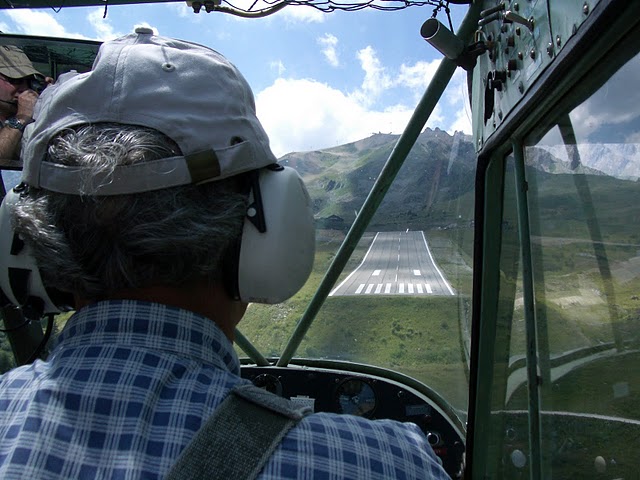
Courchevel in the French Alps is, for all pilots, one of the most amazing, butt-clenching arrivals one could ever imagine.
Courchevel’s airport also has a certain degree of infamy in the aviation industry as home to one of the shortest runways in the world, with a length of 525 metres and a gradient of 18.5% in order to help slow landing aircraft. The airport has a dangerous approach through deep valleys which can only be performed by specially certified pilots. On landing there is no go-around procedure, as most of the worlds airports have – there is merely a very steep hill which has seen a few accidents since the airport first opened.
Quite so!
Here’s an interesting video from YouTube
and a few personal memories:
Start of the approach into Courchevel'short final' CourchevelAuthor & aircraft on the apron - Courchevel
Who do the Earth’s raw materials really “belong” to?
So once again the Falkland Islands have hit the headlines, and as usual for the wrong reasons. The British have given the green light for oil exploration around the islands and Argentina has resisted by imposing restrictions on shipping movements, if not (yet) an all-out blockade.
Who knows where this one will end? It could either fizzle out or erupt into another full-scale confrontation, since big issues are involved, and none bigger than nationalism, for Argentina claims the islands as “its own”.
The history of the Falkland Islands is long and complex, but the idea that Argentina has any fundamental right to these islands is surreally silly. Argentina is owned and ruled by descendants of the Spanish, who took over the land that now forms Argentina (a state in its own right only since the early 19th c) as part of the European colonisation of the world. By all means let us return the Falklands to their original owners, except that the first people to settle there were French for a start. And if you are going to adopt the principle of returning land to its original owners, then we can look forward to most of the population of Argentina returning to Spain and returning the land to the Indians, can we?
The other argument often advanced is that “the islands are near Argentina”. Well, I don’t know when these people last looked at a map but 300 miles isn’t exactly “near”. But in any case, if we are to adopt nearness as a criteria for the reapportioning of land then I look forward to England once again reclaiming France, a mere 21 miles away. And what on earth is Corsica doing as part of France? But of course France must have the Channel Islands, as they are very near – and so on. “Continental shelf”? “We own the land under the sea?” Go down this route and we’ll need a whole new generation of map-makers.
When all the idiotic, overblown, childish and nationalistic guff (which sadly led to many hundreds of dead in the 1972 war) is stripped away from this debate, we are left with two fundamentals:
the right of self-determination
the way the Earth’s resources are used
As for the first, there have been British people living on the islands since at least 1833. They have – as I believe all people have – the right to determine their own fate. This is called self-determination. Unfortunately, it is a noble principle to which the world all too often pays only lip-service. The nation state has become an entrenched, solidified system, mostly because it confers great power on the leaders of each state, who – especially when democracy has not taken root – use the statehood to advance their own power and megalomania. Statism has for centuries run roughshod over people’s fundamental rights. Iraq was a “state”, but one where the Kurds (denied their own state by British cynicism) suffered cruelly under the jackboot of a fascist psychopath. That the British eventually helped to remove this monster (suffering enormous criticism from in particular the country that inspired the world with its own Revolution in 1789) is only a tiny compensation for the original injustice done to the Kurds. They are by no means alone; minorities all over the world suffer in different degrees from arrogant statism: Tibetans; Basques,; American Indians and Australian aborigines among many others. Yes, injustices were done centuries ago, but you cannot wind back history, or where would it end? How would Europe cope with all those Yanks for a start if they gave the USA back to Sitting Bull’s descendants? Apparently, we all came originally from Africa. Should we all return there and leave our countries empty?
Well, on the Falklands are Brits, and Britain did them the honour of allowing them freely to choose whether they want to be annexed to Argentina. This would in fact give them innumerable advantages, plus of course potentially-disastrous disadvantages. As trust is in short supply, these people prefer not to take the risk and so remain British. That is their right. In refusing to discuss “sovereignty”, Britian is doing no more than strike a blow for self-determination. To give Britain its due, it has pursued the same policy – albeit modestly – towards the (in the eyes of some of them) oppressed Welch, Scots and Irish.
So much for fundamental 1. The Argentinian case is pathetic.
What about the RESOURCES question?
Well, resources are another area where the state jackboot falls with great weight. We all breathe the same air, share the same sun, the same water; but where the stuff under the ground is concerned, it’s every state for itself. Yet casting aside state arrogance, isn’t it ridiculous that state A can derive vast wealth from “its” oil, gold or whatever, while state B alongside it is mired in poverty and misery? So much for “share-and-share” alike. Even belonging to the same race is no help; while some Arabs built extraordinary palaces and Audi Quattros made of solid silver, poor Somalis, Yemenis, and even Egyptians are mired in abject poverty. (Check out this Arab Palace in Dubai, and Mugabe’s presidential palace in Zimbabwe, which is by no means untypical of poverty-stricken Africa)
One day, in a joined-up world which recognizes that we are all brothers, we will share resources “fairly”. Britain could show the way by offering to share any oil resources with – not only Argentina – but all of Latin America (though we could leave out Venezuela …) What a blow for brotherhood that would be!
A piece of Internet fiction still carries an important message
One of the features of the Internet is that stories can circulate widely across the globe. This poem is one such example. The ‘story’ behind the poem would appear to be fiction but so what! It serves as a good reminder of something that affects us all (except those tragically cut off before they grow old!).
But before getting the poem, the reason that it was decided to publish the Post is that old age, whatever that really means, is a much bigger issue for societies than many care to acknowledge. Because, I guess, the ‘many’ tend not to be old, or let us say, the right side of 60.
And look how even the terminology is so biased towards youth. Why should it be the ‘right’ side of 60? What is ‘wrong’ with being older than 60, or 70 or whatever age?
Of course, in so many ways nature’s purpose is for us to breed the next generation to continue our gene pool and once we have achieved that then our ‘natural’ use is limited. But that is to ignore the value of wisdom, the huge advantage the next generation has in being able to tap into the experience and knowledge of the ‘ancients’.
Here’s an interesting piece from Aging and the Elderly by Hampton Roy MD and Charles Russell PhD
Wisdom has been attributed to older people in nearly all world societies from ancient times, but modern research on the psychology of aging has paid little attention to this quality of the late years
………………..
A number of researchers, however, have assessed the psychology of aging quite differently. Instead of measuring decline, their aim has been to measure the unique and special characteristics of mind possessed by older people.
………………….
These researchers might typically define wisdom as Kenyon did when he described it as “the ability to exercise good judgement about important but uncertain matters of life” -where “uncertain matters” refers to problems that may not have come up before, or to which there are competing or conflicting solutions, and so forth. These researchers describe the old as having “self-creating” powers because they seem to be more independent in their decisions, and less subject to external influences like the fads and trends that sweep over the young.
They propose also that the old are better able to live with contradictions in life and that they quickly see the essentials of situations because of their greater experience. Wisdom, they observe, includes the intent to do good, which in turn depends on holding favorable attitudes toward other people.
Then again, popular culture defines the ancient American Indian warrior as many things but old and decrepit doesn’t figure in that list!
Sioux warrior
So here’s that poem – may you live to a great age!
What does it mean when the Fed raises the interest rate? It helps to first understand how the Fed raises the rate, which may surprise some people. The Fed does not “set” the interest rate as it might, for example, by declaration or edict or by fixing prices. No, it targets a higher interest rate by contracting the money supply until that money supply intersects the market demand for money at a higher market-clearing rate of interest.
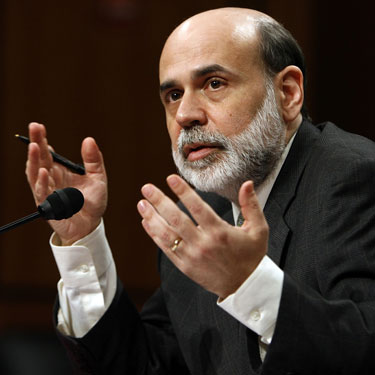
Ben Bernanke, recently reconfirmed Fed Chairman
How does the Fed reduce the money supply? Typically by conducting open market operations, which is the purchase or sale of government securities by the Fed. To raise the money supply, it purchases new government securities, paying for them by creating — out of thin air — reserves for the commercial banking system. To reduce the money supply, it sells securities which shrinks the amount of deposits in circulation in the economy. In other words, it reduces the liquidity or amount of credit in the system. This is equivalent to reducing aggregate demand for the goods and services in the economy. (Yes, you heard right — a reduction in the money supply decreases the aggregate demand for goods and services by businesses and consumers.)
Raising interest rates is a contractionary policy decision. It is designed to “slow down” the economy, reducing output and employment, and raising the equilibrium prices of goods and services in the economy. Why would the Fed choose to contract an already anemic economy? To head off inflation, which has it own set of insidious costs and distortions that significantly hurt the economy.
The Fed has always had to tread a very fine line between increasing the money supply enough in the short run to pump up demand and minimize the depth and length of a recession, but not increasing the money supply so much that the increase in demand outstrips the ability of the economy to produce, which creates inflation in the longer run. Excessive money growth is what causes inflation. And over the last two years, the U.S. has witnessed a record-shattering increase in the money supply as policymakers struggled to deal with an unprecedented financial crisis.
I have been saying for months that this behemoth money supply would inevitably lead to significant inflation unless steps were taken to shrink it. I believe the Fed has now begun to take those steps.
Maybe not the strangest thing to collect, but close!
I doubt if very many people have heard of an American by the name of Eric Sakowski and, to be honest, neither had I until I opened a copy of The Arizona Republic newspaper on a recent visit to Payson, Az. There on the front page was an article about Eric and his passion for bridges! Yes, bridges. As the article starts:
Eric Sakowski’s fixation with bridges began as it has for many.
As a kid, he bought the “Guinness Book of World Records” every year and read it cover to cover. He began to ponder: What is the world’s second-highest bridge? Or the 100th.
In 2004, Sakowski took his interest to the next level. He embarked on a five-year quest that would take him halfway around the world three times and cost him thousands of dollars. He became an amateur sleuth, digging out what he says are the real heights of mammoth bridges and snapping pictures.
Sakowski’s endeavor culminated last month in a tidy room of his parents’ home in Sun City West, where at age 44, he completed his project by launching a Web site, highestbridges.com, that catalogs the 500-highest bridges in the world. His findings challenge some long-held claims.
In fact, the website is really quite interesting and some of the photos are stunning. Here’s one of the Hegigio Gorge Pipeline Bridge in Papua New Guinea.
Hegigio Gorge Pipeline Bridge
It’s 1,289 feet high (393 m) and until 2009 was the world’s highest bridge.
Sakowski has also found some interesting errors in the statistics concerning some bridges.
Using a laser range-finder, he has measured about 100 bridges in the U.S. and about a dozen in China. He found some interesting discrepancies. For example, he determined that the highest bridge in the United States, the Royal Gorge Bridge in Colorado, is 98 feet lower than officially reported. In western China, he said, he first identified the latest bridge to become the world’s highest. He is trying to get “Guinness World Records” to publish the claim next year.
Eric is a professional film-maker but I sense that the day may not be too far off when someone is going to make a film about Eric the Bridge Man!
I admit it. I miss Michael Jackson. His music defined my youth … my twenties… my middle age.
I forget that’s he gone. And when I’m reminded, I’m saddened. I know I didn’t really know him as a person. I know that all I ever saw was the public persona he put forward. But he seemed like such a gentle soul to me. An enormously talented artist who never got the chance to grow up, to have real friends, to escape the expectations of those around him.
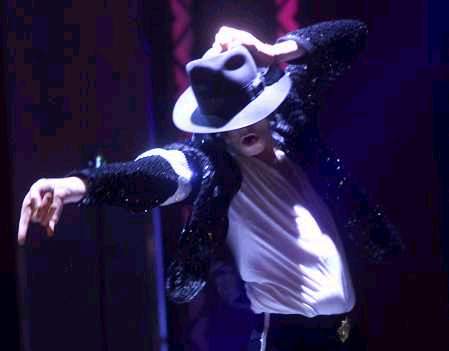
Michael Jackson on stage
In the months before his death, I heard the rumors that everyone else did: that he was tired, old, slow, and drugged out. But I just watched “This Is It,” the documentary made of the rehearsals for his last series of concerts, and Michael Jackson, at 50 years old, was still incredible. So so talented and so creative. He directed every note, every dance step, every nuance. And his singing and dancing — his presence on the stage — is beyond words. The man may have been eccentric, private, troubled and misunderstood, but the world has never seen a talent like him, and likely never will again.
I really miss Michael Jackson. Maybe it’s that his music takes me back to a time when I was younger and more free-spirited, but I don’t really care. I just know that, to me, the world was a better place with him in it.
It is quite normal now to have diagnosis in hospital, by machine, the same as we have come to accept for cars and aircraft, but how about English Language Proficiency testing?
In aviation, the international language is English, and in 1997 the International Civil Aviation Organization recognised the need to establish a level of English Proficiency as it had been established that there had been numerous accidents and incidents as a result of a poor level of understanding between Pilots and Air Traffic controllers.
As of March 2008, a system of testing was introduced covering Comprehension, Pronunciation, Fluency, Structure, Vocabulary, and Interaction, with a rating of 1-6 where Level 4 is considered Operational. If of Level 5 you gain an extended period of 6 years between testing; and at Level 6 you are considered an expert, and the validity period is indefinite.
The method of testing is by an on-line computer voice activated exercise. You have a headset, and computer screen, and a keyboard, and a series of activities lasting around 30 minutes, and at the end you are marked by the machine and given your result.
The program is of American origin, my invigilator was from the Philippines, and the person in charge of the testing was German. Continue reading “Assessment by machine”→
Mr Sepp Blatter demonstrating how a foot may be placed in a mouth!
John Terry
Sepp Blatter, or Blabber as he is more affectionately known, is never at a loss for words, and generally good entertainment value. However, this week he surpassed himself with a pontification of pretty unsurpassing silliness about the moral values of South-Western Europe.
For those who do not follow the minutiae of British football, John Terry, Captain of the English football team, was unfortunate enough to have his name dragged through the media in connection with his adultery, or as some alleged, serial adultery. Now the question of whether it is anyone else’s business what the Captain of England does in his “private” life is an interesting one, but I am today more concerned with Blabber’s response, and two things struck me about it in particular.
Fifa president Sepp Blatter has claimed that in some countries, John Terry would have been applauded rather than sacked as national team captain for having an alleged affair.
First of all, I am puzzled as to why Blabber feels he can elect himself as spokesperson for the whole of “latin” Europe? He is a football functionary, not a moralist. I must say that had I been latin I would have found his remarks offensive. As an Italian lady was quoted as saying: “If my husband slept with my sister I would not find it in the least amusing or applaudworthy.”
Secondly, let us suppose – for the sake of argument – he was right to say that
Sepp Blatter, FIFA
latins would have applauded Terry’s behaviour. This would mean that the vast majority of European Catholics were totally and utterly hypocritical. After all, “Christians”, nominal or otherwise, still go in vast numbers to churches for weddings, baptisms and funerals, don’t they? Here in Bavaria, whenever you pass someone in the street you say “Gruss Gott.” Is Blabber really saying that all these people just take the easy bits of Christianity and laugh at the tricky stuff, like adultery, rich people and eyes of needles, treating their neighbour as thy brother and so on?
And that IS in effect what he said. Insults don’t come a lot grosser, do they? In fact, this was a DOUBLE WHAMMY. First he insulted all of Catholic Europe and simultaneously he insulted all the Anglo-Saxons by describing the furore over Terry’s philanderings as “Anglo-Saxon in nature”. And of course, the term “Anglo-Saxon” is one of fairly strong abuse, especially among the French elite. This by the way has always amused me, since most of the Germans started off as Saxons, and the Germans are very PC, whereas the British certainly are not PC, even if half of us originally CAME from Saxony!
As for adultery, well, let’s be clear, it isn’t “good”, is it? OK, “There but for the grace of God go I.” , “Let no man cast the first stone”, “Forgive and Forget” and so on, but for society it isn’t really desirable that people should treat their marriage vows as casually as Blabber seems to think half of Europe does, is it?
In Britain for a start (but we are not alone) there is the lowest level of marriages for over 100 years and very high levels of divorce, This isn’t “good” for society, is it? And of course, I’m thinking especially of the children involved.
And when you marry, you make vows. Do these now mean nothing to people like Blabber, who thinks that Catholic latin Europe would laugh at Terry’s adultery?
Well, people in positions of power and responsibility should reflect more before they speak, because many lesser mortals may make the mistake of giving their remarks a credibility they do not deserve.
And of course, the Captain of England is a role model, and – possibly unfairly – not only on the field.
As a child I was given quite a reasonable amount of freedom, and so a bicycle was my mode of transport, I was quite fit, was good at running, and in both cases did well in competition. In fact my memory of man’s first landing on the moon in 1969, was as a result of a 100 mile cycle ride that day when I got sunburnt down one side!
Then came the middle years … Motorbikes, cars, some running now and then, but only modest use of the bike, perhaps more recently of late, so that I can go out with the children, and a regular daily walk with the dogs. Continue reading “Reversing the trend”→
In a recent article, Moody’s announced that it may have to reduce the AAA rating of U.S bonds because of excess spending and historic debt levels of the U.S. government under President Obama.
Moody’s Investors Service Inc. said the U.S. government’s AAA bond rating will come under pressure in the future unless additional measures are taken to reduce budget deficits projected for the next decade.
The U.S. retains its top rating for now because of a “high degree of economic and institutional strength,” the New York- based rating company said in a statement today. The ratios of government debt to the U.S. gross domestic product and revenue have increased “sharply” during the credit crisis and recession. Moody’s expects the ratios to remain higher compared with other AAA-rated countries after the crisis.
What this means in practical terms is that the cost of borrowing by the U.S. government will rise, which will increase spending via more borrowing or higher taxes or more money creation to pay for the higher interest costs. Sound like a vicious cycle to you?
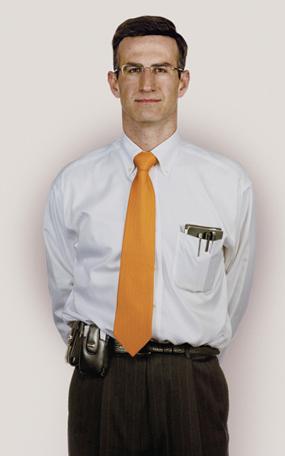
Has anyone noticed the absolute irony of the world capital market having a seat at the table that assesses the viability of Obama’s policies? Obama, who has spent the last year denigrating free markets and capitalism, and has laid the blame for the credit crisis squarely at the feet of those greedy capitalists, now has to deal with a rating agency, which plays a pivotal role in the functioning of those very capital markets, evaluating the creditworthiness of his policies and those of his budget director, Peter Orszag, pictured here.
Peter Orszag, Obama's Budget Director
How wonderfully ironic!
The U.S. would not be the first. Ireland was recently downgraded, and Japan lost its AAA rating from Moodys in November of 1998; both faced higher borrowing costs as a result.








 Learning from Dogs