Year: 2010

The Fed’s Exit Strategy

The Federal Reserve finally addresses how it plans to unwind trillions in toxic assets

Finally, we hear from the Federal Reserve about how they plan to unwind the billions of dollars of toxic assets they purchased over the last 18 months or so without creating further distortions in the U.S. and world financial markets (Fed lays out exit detail). This after the Fed barely acknowledged one of the most dramatic runups in the money supply in U.S. history.

Brian Sack, EVP Markets Group, Federal Reserve
The announcement came in a speech by Brian P. Sack, the executive Vice President of the Markets Group at the Fed.  I am impressed by this guy. He seems to know what he’s talking about and seems to understand how markets and fed policy interact.

In earlier posts I wondered aloud how the Fed might accomplish this tricky task. It is a very delicate balance between reducing the money supply too quickly, which would spike short term rates, and too slowly, which would increase long-term rates due to worries about inflation (which occurs when money growth is higher than the economy’s real growth, even if money growth is falling).

The Fed, the article explains, apparently intends to let $200 billion of the estimated $1.25 trillion in new money supply simply “mature” by the end of 2011 without replacing it. This represents largely toxic assets. The Fed might let another $140 billion of Treasuries it purchased during normal open market operations mature at the end of 2011, but they aren’t committing to that.  So that’s about $340/$1,250 or about 35% of the historic increase in money supply that may be vaporized over the next 21 months. What about the rest?  It would be nice to know but….

The Fed is doing the right thing by explaining its policy intentions — ANY of its policy intentions — to the markets.  Markets want, need, and deserve information from our officials, something that has been sorely lacking of late. With information, lenders and borrowers can plan, they can optimize. Without information, guessing, withdrawing from the market, and fear rule the day. Not a good environment for economic recovery.

by Sherry Jarrell

Let there be markets

Here’s a novel idea – make markets be markets!

I apologise for the rather trite sub-heading but it was a bit of attention grabbing to promote the results of a recent conference called Let Markets Be Markets.  It was published by the Roosevelt Institute and had one very impressive line of speakers.

One of the speakers was Simon Johnson of Baseline Scenario fame, a Blog that Learning from Dogs has followed since our inception.

Here’s 8 minutes of Simon pulling no punches.

If you want to read and watch other presentations, then Mike Konczal’s Blog Rortybomb is the place to go.

As this Blog has repeated from time to time, this present crisis is a long way from being over.

By Paul Handover

Less is more!

Less complexity is more simplicity and fun!

There seems to be an upsurge of interest in the philosophy of “less is more”. A couple of recent articles about product design, in general and in a specific case, address relevant aspects of this phenomenon.

What do we know?

On one level, we tend to question: how can “less” be “more”? We know it makes no sense! This is true: it really does not make any sense, if all that we focus on is measurable, countable, sequenced information – the kind of information understood by the “left side” of our brains.

On a different level, we know that “less” really is “more”. Less complexity is more simplicity and fun; less distraction is more concentration; and so on. This makes sense when we are thinking about the whole picture – the kind of information which is handled by the “right side” of our brains.

At the moment and on this topic, there is a specific product which is exercising the minds of people who follow these things. Continue reading “Less is more!”

Celebrity Eclipse

Can this form of holidaying still remain popular?

The Celebrity Eclipse has recently left her construction dockyard at Papenburg, Germany bound for her home base.  This enormous  new ship attracted some news simply because the exercise of getting her from the dockyard to the open sea required some ‘shoe-horning’!  This YouTube video shows why (amateur filming but a great soundtrack!):

The Celebrity Solstice leaving the dockyard at Papenburg
The Celebrity Solstice leaving the dockyard (backwards!) at Papenburg

All would wish any ship that sets out to sea safe travel.  But one wonders whether this huge ship, that must require such huge sums of money just to stay afloat, and that must have been conceived and ordered when times were much rosier, will ever be a commercial success?

By Paul Handover

Should you invest in U.S. bonds? Part 2

Sources and types of risk in U.S. and other bonds.

This is part 2 of a multipart [Part One is here, Ed.] series on the factors that drive U.S. and foreign bond prices and yields.

Recall that a bond’s price is the present value of its coupons (if any) and face value (or principal or par value).  Let’s keep things simple for now and assume a zero-coupon or “discount” bond.

One thing of interest to note first: As we move forward in time from the issue date toward the maturity date, and the number of periods between now and the maturity date falls, the price of a discount bond rises toward the face value of the bond, even with no changes in the interest rate.  At maturity, the price of the bond equals the face value. Only unexpected changes in the effective return on a bond can change the natural upward progression of its price toward face value between the issue and maturity dates.

This example makes clear that the (annual) yield on a bond, simply put, is driven by the difference between the price paid for the bond and the cash flows it generates, that is, the difference between “dollars out” today and “dollars in” later.

The “dollars out” are known because we pay a given price for the bond today.  The “dollars in,” consisting of coupons (if any) and the face value of the bond, are also “known” in that they are specified in a contract at the time the bond is issued.  The realized value of these dollar returns is, however, subject to many different sources of uncertainty or risk. A short list includes:

Interest rate risk: how sensitive the price of the bond is to changes in interest rates over the life of the bond.  Interest rate risk is higher for bonds with a longer maturity (more time for the unexpected to happen), a lower coupon (more of the value of the bond is tied up in the principal), and a lower initial yield (a 1 percentage point change in interest rates represents a higher relative change in low yields).  Floating-rate notes and bonds have much lower, though not zero, interest rate risk.

Reinvestment rate risk.  Bondholders may reinvest their coupons at the then-prevailing rate of interest. As those market rates of interest change, the return on reinvested coupons becomes more uncertain. The higher the coupons, the more frequently they are paid, and the longer the maturity of the bond, the higher reinvestment rate risk.

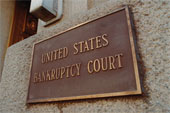
Bankruptcy Court: Destination for issuers in default

Credit or default risk:  the risk that the issuer will default on the payments of the bond, which reduces the amount and value of “dollars in” relative to price paid, lowering the earned yield on the bond.   Credit risk is frequently measured as the credit spread over like Treasuries, which are assumed to have zero credit risk.  Credit risk includes downgrade risk, where a credit rating agency lowers the rating on an issuer as their ability to repay the debt is brought into question.

Call risk:  the risk that a callable bond will be called by the issuer. Since a bond is typically called only when it’s in the best interest of the issuer, the call feature is systematically harmful to the bondholder.  Prepayment risk reverses these risks:  prepayment is good for the bondholder, and bad for the issuer.

Exchange rate risk (that the value of the repaid currency will be lower), inflation risk (that the value of the repaid dollar will be lower), and event risk (natural disasters, corporate restructurings, regulatory changes, sovereign or political changes) round out the list of broad types of risks that drive bond yields.

Next time: why the types and level of risks are so difficult to measure and predict.

by Sherry Jarrell

Lessons of a Government Intern

When lending is motivated by politics, losses are not far behind.

Years ago, in the summer of 1980, I worked as an intern in the Federal Home Loan Bank Board at the Department of Agriculture.  I was a senior in college majoring in business and had been accepted to the University of Chicago doctoral program.  I didn’t want to take the internship because I wanted to take more courses over the summer to help prepare me for the rigors of grad school, but my college advisor had openly worried that I was far too serious for a young person.  He strongly encouraged me to accept the internship and take a break from academics before I immersed myself in graduate school, and buried myself once again in all things economics!

The U.S. Department of Agriculture was a major lender

I agreed, but only after I had arranged to take 6 credits of independent study in D.C.  I chose to examine the Negative Income Tax program, one of the largest social experiments in U.S. history. More on that at another time. Today, I want to talk about what I learned from being an employee of the U.S. federal government.

The first thing I learned was that the “problem” with government work is not the people; well, not all the people.  There was one man who spent his entire day going back and forth to feed quarters to the parking meter rather than pay for public transportation or do his work.  He represented the worst in government employees.  Most all of the others I met were hard-working and honest people, trying to do a good job and make a difference.

President George H. W. Bush

No, I learned that the real problem was the way the “work” was done in government. I worked for the Federal Home Loan Bank Board (FHLBB) that summer, which was one of the largest lenders in the world.  The FHLBB was responsible for small business, rural, agricultural, and economic development lending. My job was to review loan applications from community groups, fairs, farmers’ markets, and various municipal organizations to make sure that they were complete.

We did not analyze the applicants for creditworthiness.  Instead, if the application was correct and complete, and satisfied the application process, it was approved.  The FHLBB, which was publicly trashed by the first President Bush as being largely responsible for the savings and loan crisis, was abolished and replaced by the Office of Thrift Supervision (OTS) under the Department of the Treasury in 1989.

The OTS eventually expanded its oversight to companies that were not banks, including Washington Mutual, American International Group (AIG),  and IndyMac,  all implicated in the current U.S. financial crisis.

AIG

Little did I know back in 1980 that I was witnessing, from the inside, a government lending process that would lead to the most significant financial crisis since the Great Depression. Looking back, the outcome was perfectly predictable: when politics replaces profits as the motivation of the lender, it should be no surprise that losses result.

By Sherry Jarrell

EMF? No thanks ….

The politics of monetary funds

The EU Magic Pill

Will Europe snub the IMF and set up its own “Monetary Fund”. Is this yet another “magic pill” that is supposed to solve the sort of problems seen with Greece recently?

The proposed EMF would function as a European equivalent to the IMF; a lender of last resort to financially troubled eurozone governments to ensure the stability of the euro and global markets. Under the direction of the other members of the eurozone, the EMF would dictate fiscal policy to the offending government in return for a bailout.

Its main benefit would be to free the eurozone of the ‘outside’ involvement of the IMF and thus maintain confidence in the ability of Europe to set its own house in order.

(Quoted from here)

I like this bit: “dictate fiscal policy”. The Greeks seem unwilling to accept their own government’s dictates on fiscal policy, so why they would accept anyone else’s is a puzzle.

“maintain confidence in the ability of Europe to set its own house in order” is also very good spin. Just look the language! maintain; confidence;order – all such positive buzzwords.

In fact, what will DEEP DOWN, LONG TERM maintain confidence is doing the right things that you can afford, not lending ever vaster sums and putting a slick gloss on the conditions. “Conditions”? There’s a laugh! There were “conditions” put on Greece’s entry to the EU in the first place. Unfortunately, only lip-service was ever paid to them. Why should anyone believe it will be different in the future?

The last thing we need is yet another vast, Euro-Quango. The IMF is there if required, even if it is a bit tainted through being “international” and a bit too American for some people’s taste. What advantage (apart from vainglory) is there in Europe having its OWN Fund? And LENDING ever more money isn’t the answer; doing the right things IS. For this, you don’t need an EMF.

And what happens when (or is it if?) we get a sustained “boom”? The EMF is still there, doing nothing, waiting for the next BUST. All its highly-paid officials will still be paid for years on end to do nothing – another vast bureaucracy sucking our taxes up like some great cosmic, vacuum cleaner.

Still, if it does come to pass, think of all the extra taxpayer-funded jobs and power that will accrue to Brussels!   Thanks a bundle Greece. Thanks to your humungous over-spending, corruption and general lack of the right stuff we are ALL likely to be lumbered with yet another expensive European cash-gobbling monster institution round our necks.

By Chris Snuggs

The manageability of innovation

Innovation is manageable

“Innovation” means different things to different people but, generally, it involves the application of novel ideas, products or processes for some purpose. But even if we can agree on “what” it is, do we understand “how” innovation happens?

Managing 'bright' ideas

There is a significant change taking place in the way that the process of innovation is understood. We can put this in the context of developments in the manageability of other areas of business activity in recent times. Read more of this Post

Scuba Diving

The greatest danger in scuba diving? You may be surprised!

I learned to scuba dive about 20 years ago.  I was certified by NAUI (the National Association of Underwater Instructors) in Chicago, Illinois, and did my check-out dive in a quarry in Wisconsin.  It was dreary and raining.  The water was cold and the scenery sorely lacking:  we dove down to the top of an abandoned school bus!   I did just fine as long as I had air; strap a tank on me and I can dive for hours.

But take away the air, and make me go underwater, and I want to surface immediately.  It was a huge accomplishment for me to complete my surface dive (where you go fairly deep with no air, just a snorkel, then surface and clear out your snorkel to continue breathing on the surface) although I bit through at least one snorkel before I was through! I blamed it on the cold but the truth is that I was very tense.

Scuba Diving can be fun!

I did a fair amount of diving before I had children and hung up my fins.  I dove the Blue Hole, going down 120 feet and getting “narced” (nitrogen narcosis, where you feel “drunk” underwater). I did open water diving with hammerhead sharks off CoCos Island.

My buddy and I were swept away in a current in the middle of the ocean, but so was the dive master and the rest of the dive team, so the boat followed us and we were just fine.   I dove with sea turtles, manta rays, eels, and sea horses.  I’ve done night diving, which was surprisingly noisy as the fish nipped the coral as they fed.  I loved scuba diving.  It was a magical, liberating, beautiful experience. But I never forgot how dangerous it was and that it could kill you if you weren’t careful and aware.

I tend to be fairly risk averse so I did a lot of nerdy research as I prepared for my first real diving trip.  I wanted to know all I could about how to avoid a scuba diving accident.   I learned something that I thought others might find very interesting:  that diving as a threesome is the single most dangerous thing you can do when scuba diving!    More dangerous than cave diving, ice diving, open water diving, or diving alone!  (If my memory serves me right, this result is based on Canadian data on scuba diving accidents, injuries, and deaths. )

It seems hard to believe at first but I think I’ve got it figured out. For one, it happens fairly often.  I’ve seen it on many diving trips: someone comes alone or their buddy can’t dive, so they join up with a buddy team.  Dive instructors suggest that people join up in threes rather than dive alone.  Or the dive instructor joins a pair.

Two, I think people feel safer in a bigger group.  Three, I think that when you are diving alone, or cave or ice diving, you are very aware of the risks and take extra precautions to avoid the dangers.  But diving in threes doesn’t “seem” risky, so everyone relaxes.  And people tend not to clearly lay out ahead of time who is watching whom at the bottom of the ocean where seconds can make the difference between life and death. And that is likely where the danger lives:  with a buddy system, there is no question about who is responsible for whom.  I am watching out for my buddy, and he is watching out for me.  Period. But when diving in threes, the pairing gets muddled.  Are you watching out for two people?  Are they watching out for you, or for each other?  And inevitably someone gets overlooked.  And accidents happen.

So, if you ever take up scuba diving, have a blast! But don’t ever dive in threes!

by Sherry Jarrell