Our doughty mole has unearthed more secret transcriptions from the Ministry ….
The Ministry
Hello Perkins! Let’s get to it!
Get to what, Sir?
Perkins – there’s a mini-crisis …..
There usually is, Sir …..
We have a stark, difficult choice ahead of us.
Oh, Dear, Sir – not again.
Yes, Perkins. I know that choice is not something we prefer to face, but there it is.
But why has it come to this, Sir?
Cuts, Perkins – The IMF are about to be called in so the PM – I mean the Chancellor – has been forced to make some cuts.
Oh Dear, Sir. But how does this affect us?
Well, you know those consultants that were called in?
You mean those on £100,000 a day plus bonus, Sir?
Yes, that’s them! By Jove don’t you admire this dynamic synergy between public and private, Perkins!!
Well ….
Anyway, after weeks of in-depth research they’ve narrowed it down for us to a clear choice, which certainly saves us some head-banging, I must say.
And this choice is ……?
Well, we either buy more flak jackets for the men on front-line duty in Iraq or we pay the MOD mandarins a bonus.
A very far-sighted view of European collaboration from 12 years ago!
Once again, Learning from Dogs welcomes a guest post from Per Kurowski.
Per Kurowski
——————-
I was intrigued by a recent Post on Learning from Dogs entitled Poor Old Europe. It included two commentaries from elsewhere about the state of Europe and how the feeling of trying to force, politically, very disparate countries together was still ever so dominant. It reminded me of an article that I wrote for my own Blog nearly 12 years ago just before the Euro came into effect. Reading it today is interesting, to say the least.
In just a few weeks, on the 1st of January 1999, eleven European countries will forsake the right to issue their own currency and accept the circulation within their boundaries of a common currency, the Euro. Monetary policy related to the Euro will be set by a European Central Bank. One fact that struck me as curious is that in all the abundant legislation that regulates this process, there is no mention whatsoever of how to manage the withdrawal or future regret of any of the union’s members.
The absence of alternatives in this case evidently represents a burning of the bridges, but this may be necessary to achieve credibility. There is no turning back and there is no doubt that this is a truly historical moment. As participants in a globalized world in which Europe has an important role, we must naturally wish all members luck, no matter what worries we might secretly harbor.
Until 1971, all money used throughout the history of humanity was backed in one way or another by something physical to which a real value was attributed. Sometimes the backing was direct, pearls for example, while in other cases it was indirect such as the right to exchange bills for a certain quantity of gold.
This physical backing in itself did not necessarily mean it consisted of something of fixed value. The value of a pearl, for example, is in itself subjective. The promise to exchange bills for gold did not guarantee anything either, since this promise could easily be voided by fraud. Whatever the backing was, however, it did at least offer the holder of the money the illusion that it was supported by something concrete.
In 1971, the United States formally abandoned the gold standard and the direct backing, however imaginary, disappeared. Since the Dollar is a legal currency, it could always be used to repay Dollar denominated debt. Today, however, in spite of the fact that the Dollars may have lost some of their purchasing power, a holder of excess Dollars can only hope that the Government of the United States will exchange his old bills for new ones of the same tenor.
This apparently precarious situation must be the raison d’etre of the motto printed clearly on the bills which states “In God We Trust”.
Since 1971, the real value of the Dollar as an element of exchange, has lost some of its value due to inflation. Today, we would need many more Dollars to buy the same houses, cars, movie tickets and gold than we would have needed in 1971. In spite of the above, with few exceptions such as the end of the ‘70s during which inflation increased dramatically, few would dare qualify the United States’ elimination of the gold standard as a failure.
The world’s economies have managed to increase international commerce drastically and with it, sustain a healthy growth rate. Many analysts would explain this phenomenon by saying that the discipline exacted by the gold standard represented a brake on international commerce. The growth rate registered in commerce after 1971 was the result of the release of this brake. Other more critical analysts sustain the thesis that, due to the fact that we have abandoned the discipline required by the gold standard, the world has accumulated gigantic accounts payable, which we may be coming due very soon.
I personally swing back and forth between amazement of the fact that the world has accepted such a fragile system and satisfaction that it actually has done so.
The Euro has one characteristic that differentiates it from the Dollar. This characteristic makes me feel less optimistic as to its chances of success. The Dollar is backed by a solidly unified political entity, i.e. the United States of America. The Euro, on the other hand, seems to be aimed at creating unity and cohesion. It is not the result of these.
The possibility that the European countries will subordinate their political desires to the whims of a common Central Bank that may be theirs but really isn’t, is not a certainty. Exchange rates, while not perfect, are escape valves. By eliminating this valve, European countries must make their economic adjustments in real terms. This makes these adjustments much more explosive. High unemployment will not be confronted with a devaluation of the currency which reduces the real value of salaries in an indirect manner, but rather with a direct and open reduction of salaries or with an increase of emigration to areas offering better possibilities.
What worries me most is the timing. The world is facing the possibility of a global recession. This will require very flexible economic and monetary policies. The fact that the search for initial credibility for the Euro is based on trying to assure markets around the world that the new currency will be guided by a philosophy closer to that of Bonn than that of Rome, probably goes against the best interests of the world.
Published in Daily Journal, Caracas, November 19, 1998
Ben Bernanke, Chairman of the U.S. Federal Reserve, announced that the Fed was likely to begin to sell some of the $1 trillion in mortgages, the so-called “toxic assets,” that it purchased over the last fifteen months to help stave off a total credit market meltdown. Those purchases essentially doubled the U.S. money supply, igniting fears of potential inflation should the underlying real economy recover before the money supply could be drawn back down. See earlier post.
Well, the process of tightening the money supply may be just around the corner. And increases in interest rates and the cost of everything purchased on credit – homes, cars, durable goods, and business capital expenditures – are not far behind. Increases in interest rates dampen economic activity, an unfortunate development given the current lethargic state of the U.S. economy. But it has to be done sometime – we cannot sustain such a huge increase in the money supply without paying an even higher price in terms of inflation and a weak dollar.
It will be interesting to see who buys the toxic assets and how much they will pay. Regardless, the sale will reduce the money supply which, if done in a slow, orderly manner, is a good thing for the economy. Getting the Fed out of the business of buying and selling private market securities will be an even better thing for the U.S. economy. Now more than ever we need a monetary authority that is focused on the best policies for our economy, not those that help Fannie Mae, the White House, or the Treasury Secretary save face.
Thinking about the concept of “less is more”, takes me back to a small and initially unpromising project that a maverick boss of mine persuaded me to get involved in many years ago. It provides an interesting example of counter-intuitive optimisation.
The scene…
There was a manufacturing plant which produced credit cards. The plastic cards were manufactured in sheets; this involved a lamination process which started with a “layup” of three plastic sheets and ended up with them laminated together as one sheet.
The lamination was done in a press which was heated and then cooled; this caused the plastic sheets to melt slightly and to become welded together as one. To produce cards with flat and clean surfaces, each layup also had shiny metal plates on either side to produce a smooth finish.
“Daily Mail”! What on earth are you doing with that?
Well, I thought I’d check it out, Sir.
Check it out?
Yes Sir. People have been attacking it.
Attacking it?
You keep repeating me, Sir …
I’m just stunned Perkins! Why on earth would anyone sane want to “check it out”?
Well, I’ve always been suspicious of situations where the establishment and so-called cognoscenti collectively attack something, Sir.
Why on earth is that, Perkins?
Well, they could have an ulterior motive, Sir.
Ulterior motive?”
You’re doing it again, Sir.
Look Perkins, the Mail is a ghastly, sensationalist rag.
When did you last read it, Sir?
Goodness me, Perkins. I have better things to do with my time.
How can you be sure then that you’re not just baying the mindless mantra of your peers?
Look Perkins. I don’t read the Mail because it appeals to the mob and has no analysis.
But “the mob” are the mass of the people, Sir.
Exactly, Perkins. Now you’re on the right track.
So you don’t believe in democracy, Sir?
Don’t ask silly questions, Perkins. Of course I do, just as long as the people don’t get their hands on government. But seriously, the Mail has little analysis; just a crude statement of facts.
But why are you so attached to “analysis”, Sir? Surely it’s the facts that are most important?
Well if you don’t have analysis then how do you know what’s really going on? You need analysis to explain the headlines.
But surely any analysis depends on the spin of the author? Why can’t people be given the facts and allowed to make up their own minds?
“Make up their own minds?” Be serious, Perkins. The mob hasn’t got a mind to make up; that’s why it’s called “the mob”.
I think you’ll find it was the mob that fought and died in two World Wars to protect freedom and democracy in Britain, Sir.
Aha! That proves my point! You don’t need to understand much to pop your head over the top and get it shot off, do you! The mob is ideally suited to it.
But “analysis” is overrated, Sir. People should be encouraged to think for themselves.
“Think for themselves!” Now Perkins, those who went to public school can be expected to think for themselves, but as for the rest …
I’m sorry, Sir; there is in fact too much analysis. I was put off at school at an early age. No sooner had we opened a Shakespeare play than we had FR Leavis shoved down our throats telling us what to think about it rather than being allowed to interpret and analyze it ourselves.
I’m sorry your education seems to have gone so seriously wrong, Perkins. Did you in fact go to a public school?
Only a poor man’s one, Sir …. but analysis in the press just seems to me a clever way of trying to tell people what they should think. I believe Goebbels was very good at analysis, and of course Tony Blair …
Now Perkins, analysis is all that differentiates us from unthinking morons who cannot understand the law.
You mean British MPs and their expense accounts, Sir?
No … errm …. perhaps I should rephrase that … but really Perkins, this “Defend the Mail” crusade is really a bit OTT, isn’t it?
Perhaps, Sir, but it’s because it is so heavily attacked by verbal diarrhoearists who support totalitarianism. My principle is that your enemy’s enemy is your friend, so to speak. If someone who supports dictatorship attacks it at every chance then it can’t be all bad, sort of thing.
I’m sorry, Perkins. I don’t think I will ever be able to follow the tortured meanderings of your mind.
I think that’s because deep down I identify with “the mob”, Sir, or as I prefer to call them; “the people” ……..
Hmm …… if I were you Perkins I wouldn’t go trumpeting that too loudly round Whitehall. It could put an end to a promising career.
It is a sad and lonely vigil that we who long for good news sometimes keep. But now and again, like London buses, it does arrive in welcome batches, and so it has proved this week.
Oh look! Here's five of them!
US Health Care
First of all, our faith in Obama has been somewhat resurrected from what had become – in my case at least – a depressingly-comatose condition. For he has managed to squeeze his
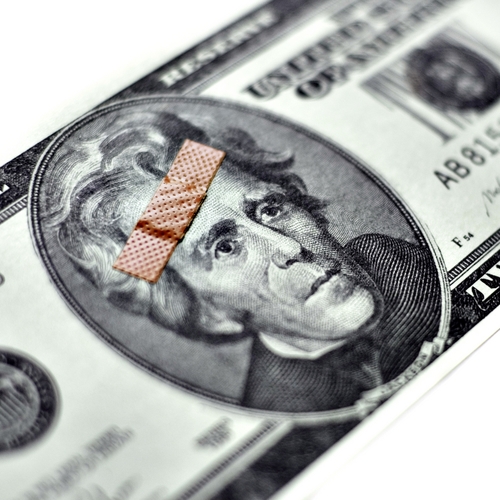
Band-aid or long-term fix?
health bill through Congress, which is more than the glamorous Clinton duo managed the last time it was tried.
Now I am sure Learning from Dogs has many American friends – at least, I hope so. And they are surely better-qualified to give an objective view of exactly what has been achieved. To listen to the Republicans, you’d think the end of the world had arrived, yet it is surely surreal that “the greatest country in the world” should NOT have universal health care, isn’t it?
As far as I understand, another 32 million Americans will now have health cover, even if that still – apparently – leaves some outside the fold. Well, let’s not quibble; it’s a major step forward. How even the reddest-necked Republicans could accept poor Cuba having better overall health care for their poorest citizens than the mighty USA was always a mystery to me. So, let’s chalk it up and celebrate.
Palestine
Secondly, the Obama-Clinton team is AT LAST standing up to Israel. Now this is a major topic, and beyond the scope of one post, but if you empathize – as I feel one should – then from a Palestinian’s point of view, the Israelis are occupying their territory by force. And they are not alone in this belief; the international community has long considered the Israeli presence in the West Bank and Jerusalem to be illegal. Yes, Israeli supporters may find ways of rationalizing their presence there, but the facts speak for themselves.
“Whom the Gods seek to destroy, they first make mad.” Well, Netanyahu may not quite be mad, but he was certainly very silly – in my opinion – to so impudently announce more building in Jerusalem just as efforts to restart serious negotiations were under way. How he could imagine this would not be a major slap in the face to the US is a mystery. Perhaps he was just seeing how much he could get away with? Well, he seems to have found out, and for once – after nearly a year of pussy-footing about with Israel – the USA is moving closer to the international community’s position.
The world – let alone the Palestinians – needs a permanent solution to the problem, and that will not be achieved by Netanyahu prattling on about Jerusalem “belonging to Israel”. It is obvious to any outsider that the city has to be shared. As with Berlin, what will no doubt be a divided city for some time will eventually – through the force of position and logic – become a united one. WITHOUT goodwill (and there has been precious little in recent years from victorious Israel) this running sore will only come back to bite the Israelis time and time again. Friends of Israel – as I count myself in fact – should make this point more strongly.
However, the only friend that really counts is the USA, and we need them to keep up the pressure. Can and will Obama tough this one out in the face of the very powerful Israeli lobby? I believe Obama has said that he would prefer to be a one-term President if it meant he could get some real reforms through, and this is a welcome change from the “I’ll do anything to stay in office” syndrome that we seem to be seeing in Britain right now. Let’s hope he can live up to this promise. It is after all now nearly a decade since 9/11, after which there was so much talk about “finding a solution” that has – so far – come to little.
Google & China
Where next?
Finally, we hear from Asia that China is cross with Google for removing filters from its search engines. Now we have got used to cosying up to China, to the point where the west imports a VAST quantity of cheap goods that have helped China’s economy to make a real leap forward, and of course pay for a vast increase in their military spending.
Yet the truth remains the truth, no matter how you dress it up. It remains a Communist dictatorship.
That Google even tolerated acquiescence in the fascist suppression of free speech in the first place was a disgrace, but they seem now to be moving to a more defensible position. What was sad about their original move into China was that they are big and powerful enough to have made a stand before. All over that vast country, individuals are trying to stand up to a fascist state, so how must they have felt when a vast, rich and powerful organisation from the west (Statue of Liberty and all that) got into bed with their oppressors?
Well, perhaps those little people will feel a bit better now. Predictably, the Chinese are now making threats against other “partners” of Google, saying that they “must obey its laws”. Well, we’ll see how this plays, but united we stand, divided we fall, and is it moral to respect immoral laws?
Yes, it will irritate the Chinese Communist Party leaders (I won’t be losing any sleep there …) and No, it won’t make a vast practical difference in the short-term; the Chinese have their OWN search engines, but it is a symbol, and symbols count. Sooner or later, the Chinese will join the modern world; but every now and then the free world needs to give it a prod in the right direction.
By Chris Snuggs
[Explanation of title to our non-UK readers. Londoners are so used to waiting in the cold for a bus to arrive and then having three arrive at once, that the phrase has become a little bit of English folklaw! Ed.]
Behavioral Economist concludes that most people cheat.
In a very interesting video on the website TED, Dan Ariely, Professor of Behavioral Economics at Duke University, explains his research into why people think it is okay to cheat and steal.
Here is Ariely’s presentation from YouTube:
From his research, he concludes the following:
A lot of people will cheat.
When people cheat, however, they cheat by a little, not a lot.
The probability of being caught is not a prime motivation for avoiding cheating.
If reminded of morality, people cheat less.
If distanced from the benefits from cheating, like using “chips” instead of actual money in transactions, people cheat more.
If your in-group accepts cheating, you cheat more.
Dan Ariely
I quibble with the interpretation of some of his findings, which may justify a separate post on how people perceive what they do and do not know, but there are always issues of this sort with a given research project. Where I draw the line is when he expands his conclusions to include all of Wall Street and the stock market, which is totally beyond the scope and nature of his research.
On what basis does he draw this conclusion? As explained in this short video (as I have not read his book, though I’ve read excerpts and am familiar with the study upon which the book is based), Ariely claims that because stocks and derivatives are not in the form of money, they “distance people from the benefits of cheating,” which leads individuals who engage in the stock market to cheat more. He alludes to Enron as proof.
This is almost too silly to spend a lot of time on trying to discredit, but I fear that a lot of people who hear his talks or read his book may be lulled into accepting what he says about the stock market as true. But it is not! Enron is the exception, not the rule.
Companies who issue stocks are raising money to provide a good or service that is valued by society; they are rewarded by profits. Investors who buy and sell stocks, trade derivatives, and invest in portfolios are trying to make their money go further. They are trying to earn a return on their savings. Cheaters do not survive in the stock market, unlike the “consequences-free” classroom in Areily’s experiment.
On the other hand, these factors are in glaring abundance in the government: politicians never “see” the taxes they spend as the hard-earned income of the citizens. And the “benefits” of cheating, including power and privilege, are amorphous and vague, and couched in the so-called morality of “doing the greater good.” I’m surprised Ariely does not condemn the federal government using the same logic as his does the stock market.
His last take-away from this research project? That we find it “hard to believe that our own intuition is wrong.”
I think Dr. Ariely ought to apply that caveat to the conclusions he draws about his own research. Very interesting, very compelling, but his interpretation of the results as they apply to the stock market falls victim to the very same biases that he claims to find in others.
Why has it seemed like pushing water uphill for so long?
I’m in my mid-60s, having been born six months before the end of WWII. From the earliest days that I can remember, my parents loved to holiday in France and Spain. In those days if one was to motor into Europe then it was a case of the car being craned aboard the ferry from England to France. How things change!
Modern cross-channel ferry
Much later on in life, I did business extensively in many European countries and, for a while, taught sales and marketing at the international school, ISUGA, in Quimper, NW France. (Indeed, fellow Blog author Chris Snuggs was my Director of Studies at ISUGA – that’s how we came to meet.) I like to think that I have a reasonable understanding of the variety of cultures that is Europe.
So while acknowledging the convenience of a common currency (sort of) and ease of border transits, the one thing that has remained in my mind is that each country in Europe is very, very different to the other. These core differences have always struck me as so strong and deep-rooted that any form of real union was a ridiculous concept. The present deep problems with Greece seem to be the tip of this fundamental issue. Thus a couple of recently published articles, on Baseline Scenario and The Financial Times seem worthy of being aired on Learning from Dogs.
I am your dog and have something I would love to whisper in your ear.
I know that you humans lead very busy lives. Some have to work, some have children to raise, some have to do this alone. It always seems like you are running here and there, often too fast, never noticing the truly grand things in life.
Look down at me now. Stop looking at your computer and look at me. See the way my dark, brown eyes look at yours.
You smile at me. I see love in your eyes.
What do you see in mine? Do you see a spirit? A soul inside who loves you as no other could in the world? A spirit that would forgive all trespasses of prior wrong doing for just a single moment of your time? That is all I ask. To slow down, if even for a few minutes, to be with me.
So many times you are saddened by others of my kind passing on. Sometimes we die young and, oh, so quickly, so suddenly that it wrenches your heart out of your throat.
Sometimes, we age slowly before your eyes that you may not even seem to know until the very end, when we look at you with grizzled muzzles and cataract-clouded eyes. Still the love is always there even when we must take that last, long sleep dreaming of running free in a distant, open land.
I may not be here tomorrow. I may not be here next week. Someday you will shed the water from your eyes, that humans have when grief fills their souls, and you will mourn the loss of just ‘one more day’ with me.
Because I love you so, this future sorrow even now touches my spirit and grieves me. I read you in so many ways that you cannot even start to contemplate.
We have now together. So come and sit next to me here on the floor and look deep into my eyes. What do you see? Do you see how if you look deeply at me we can talk, you and I, heart to heart. Come not to me as my owner but as a living soul. Stroke my fur and let us look deep into the other’s eyes and talk with our hearts.
I may tell you something about the fun of working the scents in the woods where you and I go. Or I may tell you something profound about myself or how we dogs see life in general.
I know you decided to have me in your life because you wanted a soul to share things with. I know how much you have cared for me and always stood up for me even when others have been against me. I know how hard you have worked to help me be the teacher that I was born to be. That gift from you has been very precious to me. I know too that you have been through troubled times and I have been there to guard you, to protect you and to be there always for you. I am very different to you but here I am. I am a dog but just as alive as you.
I feel emotion. I feel physical senses. I can revel in the differences of our spirits and souls. I do not think of you as a dog on two feet; I know what you are. You are human, in all your quirkiness, and I love you still.
So, come and sit with me. Enter my world and let time slow down if only for a few minutes. Look deep into my eyes and whisper in my ears. Speak with your heart and I will know your true self. We may not have tomorrow but we do have now.
(Based on an article sent to me, unfortunately from an unknown author, and modified to reflect the special relationship that I have with my 6 year old German Shepherd, Pharaoh.)
Tim Berners-Lee was, or is, the father of the Internet, that remarkable network that has done to connect millions together. Indeed, my personal view is that the Internet may be the only real tool that people have to protect and defend democracy.
I’m sure thousands know the background ofSir Timothy John “Tim” Berners-Lee, to give him his full name, an Englishman living in the USA.
There was an introduction to the the way that Sir Tim wants to see the web move in yesterday’s Post.
But Tim recently (February 2010) gave a talk in Long Beach, California, entitled The year open data went worldwide. This takes the concept much further.









 Learning from Dogs