There was something really special about the last full moon. We watched as the moon rose on the very early nights of February, 2026 and I wished I had taken some photos. But no problem as YouTube had captured the images of the moon taken by others.
The Snow Moon in 2026 was the full moon that lit up the night sky on February 1, 2026, reaching its peak illumination around 5:09 p.m. EST (around 22:09 UTC) that evening. Because the moon appears full for a couple of nights around that moment, it was visible as a bright, full lunar disk on the nights of February 1 and 2. It’s traditionally called the “Snow Moon” because February is usually one of the snowiest months in the Northern Hemisphere. Here are some gorgeous images from our talented community of photographers. Enjoy them!
I make no apologies for providing little of my own words and just going straight to this video and the accompanying text.
ooOOoo
What if the deepest human drive isn’t happiness, survival, or even love, but the need to matter?
Philosopher and MacArthur Fellow Rebecca Newberger Goldstein joins Michael Shermer to discuss The Mattering Instinct, her argument that the desire to feel significant lies at the core of human behavior. That drive helps explain our greatest achievements, from creativity and moral courage to scientific and artistic excellence. It also helps explain some of our darkest outcomes, including extremism, violence, and ideological fanaticism.
Goldstein examines why people will give up comfort, status, and sometimes even their own lives to feel that they matter. She questions why meaning cannot be captured by happiness metrics or self-help formulas, and why the same psychological force can produce saints, scientists, athletes, cult leaders, and terrorists. The conversation moves through free will, entropy, morality without God, fame, narcissism, and the crucial difference between ways of mattering that create order and those that leave damage behind.
Rebecca Newberger Goldstein is an award-winning philosopher, writer, and public intellectual. She holds a Ph.D. in philosophy of science from Princeton University and has taught at Yale, Columbia, NYU, Dartmouth, and Harvard. A fellow of the American Academy of Arts and Sciences, her work has been supported by the MacArthur “Genius” grant and fellowships from the Guggenheim, Whiting Institute, Radcliffe Institute, and the National Science Foundation. She is the author of ten books of acclaimed fiction and non-fiction. Her latest book is The Mattering Instinct: How Our Deepest Longing Drives Us and Divides Us.
Last Sunday the BBC (Radio 4) broadcast a programme entitled Are You Ready. The programme was presented by Lucy Easthope: “Lucy Easthope is on a mission to find out how we can become better prepared as individuals and as a society.”
It was thirty-minutes long and contained very useful information. I wanted to share further information found online.
Be prepared for a blackout with this emergency kit! Don’t get caught in the dark – watch this video to see what essentials you need to have on hand. In this video I want to help you be prepared for when the power goes OUT. Your emergency kit can be a lifeline when the lights go out. With these preps, you can help keep you and your loved one’s safe. Don’t wait until it’s too late – start preparing now for peace of mind in 2024 and beyond. Watch till the end and I’ll share with you 3 ADDITIONAL items that are non-nucket items but can be a HUGE blessing in a power outage.
As a former Red Cross emergency volunteer in London, I have experienced that events such as blackouts, gas leaks and floods aren’t as uncommon as we would like to think. I have a camping bag as a “go bag” containing: * toilet roll * soap * toothbrush and toothpaste * a change of clothes, walking shoes and a raincoat * a blanket * a first-aid kit with added blister plasters and water filtration tablets * 2 large bottles of water * four days’ worth of non-perishable snacks (cereal bars, crackers, flapjack type things) * a battery and solar-powered radio * a battery and solar-powered torch * a map and compass * a small address book containing my loved ones’ home addresses.
There you are.
I thought we had a ‘go bag’ prepared but it must have been me thinking of it and nothing more.
Time to turn ideas into actions! Plus we have two dogs plus two caged birds that would not be left behind.
P.S. I have found the two large boxes we had purchased a while ago plus a list of the items to be taken in the event of an emergency. However these were in the garage and had been forgotten. So now they are in the home and will be prepared for use in that emergency.
About Bark & Bond: At Bark & Bond, we believe that there is nothing more powerful — and simple — than the way a dog changes our routine. Whether it’s with a look full of expectation, an unexpected lick or just by being there, silent, sharing the same space.
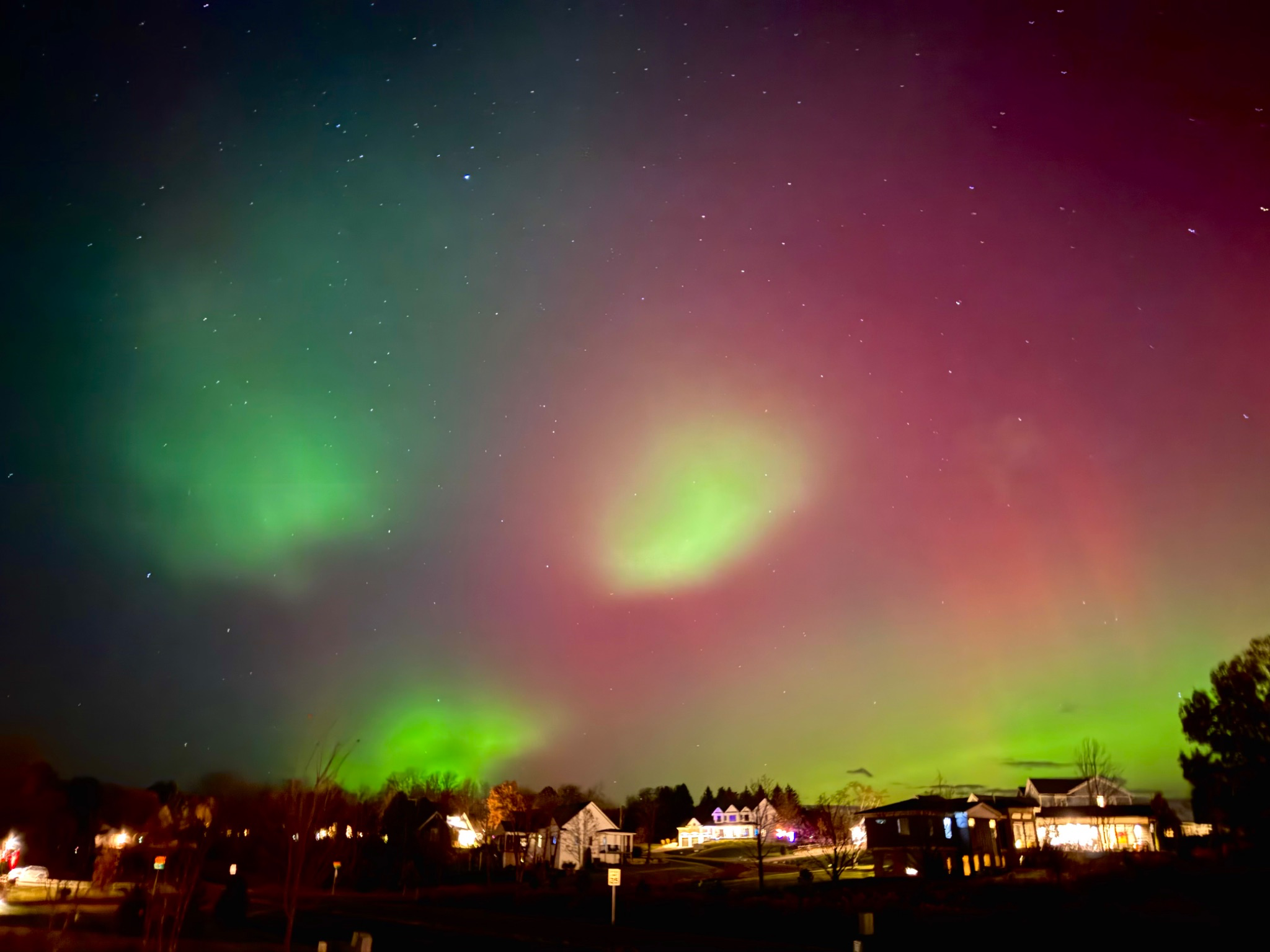
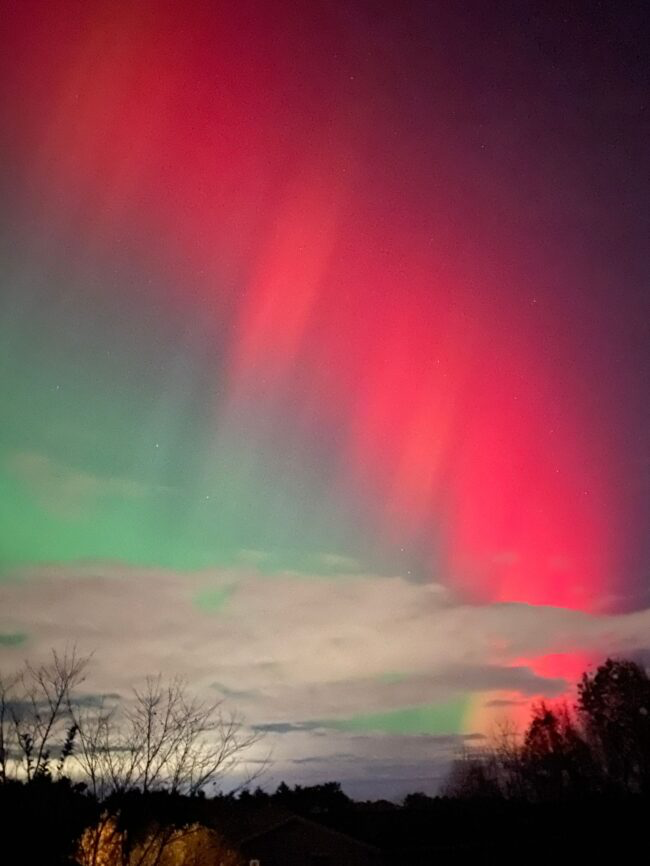
EarthSky’s Kelly Kizer Whitt captured the northern lights from near Madison, Wisconsin, on November 11, 2025. Kelly wrote: “An amazing night of aurora. In front of the red curtains we had bright green active blobs. One of the better displays I’ve seen.” Thank you, Kelly!
oooo
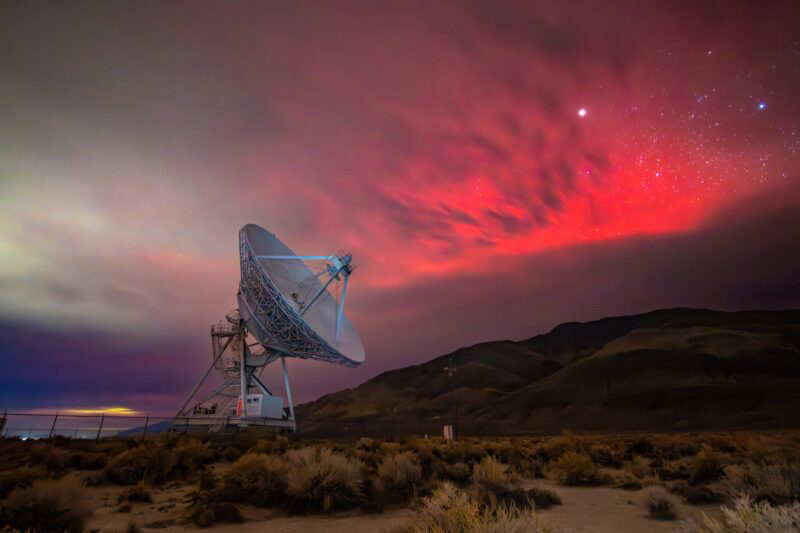
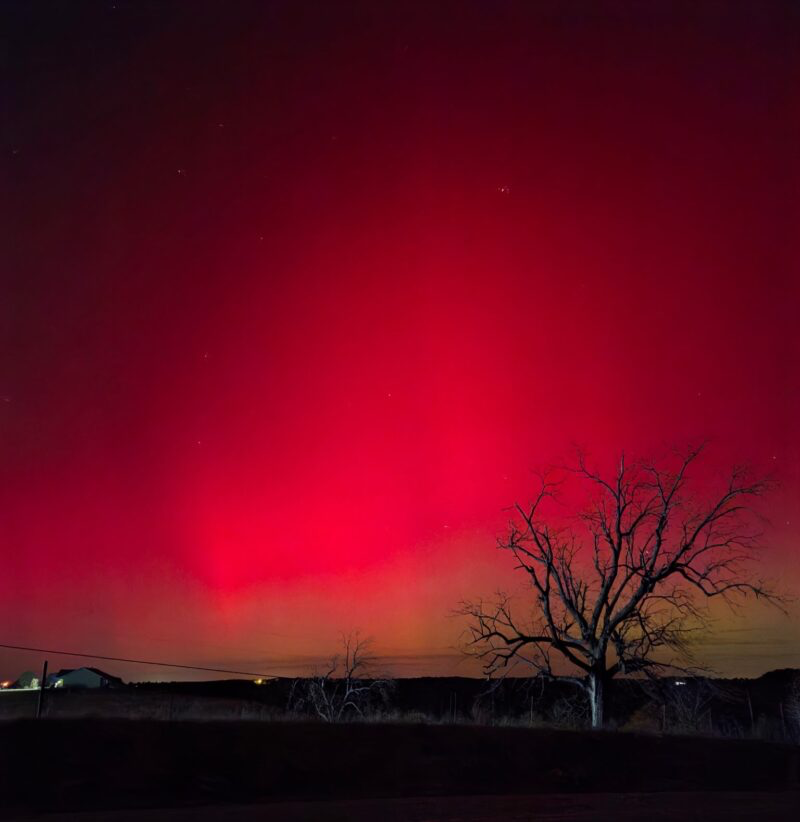
Ross Stone in Big Pine, California, captured this stunning view on November 11, 2025, and wrote: “The NRAO radio telescope in Owens Valley and the beautiful red aurora in the November sky. This was awesome, and the sky was so bright.” Thank you, Ross!
oooo
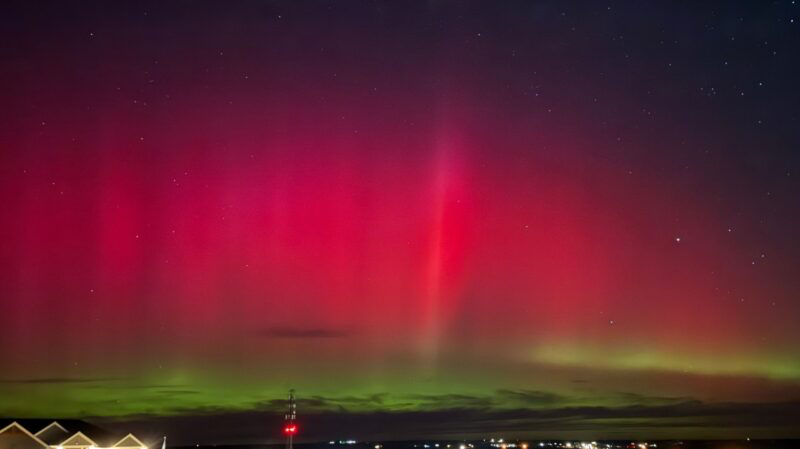
EarthSky’s Marcy Curran in Cheyenne, Wyoming, captured a beautiful display of auroras on November 11, 2025. Marcy wrote: “Aurora put on quite a show from Wyoming tonight. Lots of reds and green easily visible to the eye. We live in a semi-rural spot.” Thank you, Marcy!
oooo
Darrell Reese could see the aurora on November 11, 2025, from Ohio! Thank you for sharing your photo, Darrell.
oooo
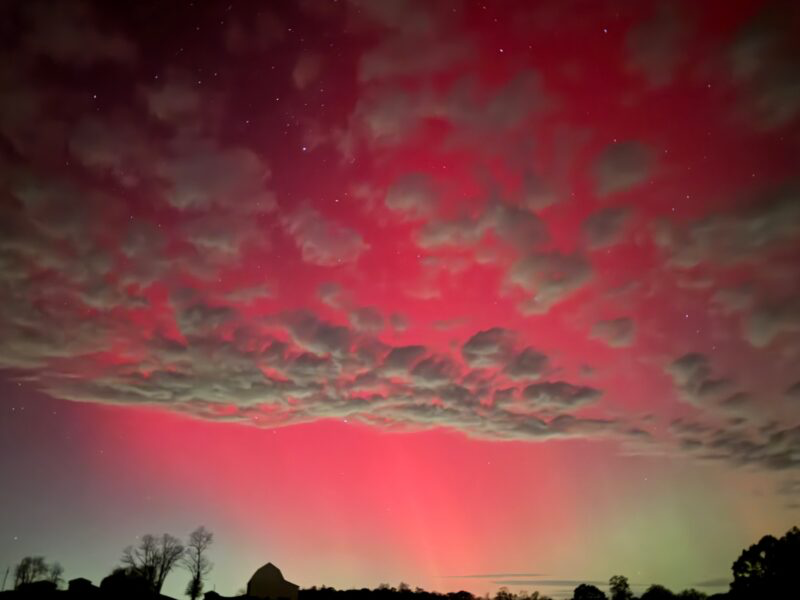
Ruth Goodwin-Hager in Eureka Springs, Arkansas, shared this image from November 11, 2025, and wrote: “I banged on my neighbors’ doors and recruited others to come outside and see the fabulous lights. It’s been 30 years since I’ve seen northern lights from my backyard like this. Amazing!” Thank you, Ruth!
oooo
Patricia Evans in Seabrook, New Hampshire, captured the aurora on November 11, 2025. Patricia wrote: “Aurora borealis honors Veterans Day. I was afraid that the cloud cover would prevent viewing the aurora borealis but the reds and greens were amazingly intense! What a goosebump moment!” Thank you, Patricia!
This is a one-hour video (as in a YouTube video) from an accredited US healthcare educator.
That is all for today. Just to add that sleep is so important.
‘When we turn the clocks ahead this spring, we’ll lose an hour of sleep—but for many Americans, poor sleep is a nightly problem. Lack of sleep takes a toll on physical and mental health, increasing risk for chronic conditions like high blood pressure and obesity. Our expert panelists will unpack the latest research on rest, including how social and environmental factors can impact our sleep. They’ll explore the connections between race, sleep, and health disparities. And they’ll share advice on how to improve sleep quality for better overall health.’
Here is his description from that YouTube website.
I am a wildlife photographer based in the south west of England, spreading the joy of wildlife photography to everyone because the more of us that get interested in wildlife, there is hope for the future. Expect Vlog style and some tips videos. OM systems OM-1 mkII and mkI
A wonderful documentary of the formation of Planet Earth.
From the website The Earth through time, I quote: The Earth was formed about 4.6 billion years ago. 4.6 billion is 4,600,000.000 years ago. It was formed by collisions of particles in a large cloud of material. Slowly gravity gathered together all these particles of dust and gas and formed larger clumps. These clumps continued to collide and gradually grew bigger and bigger eventually forming the Earth. The earth at this time was very different to how we know it today.
I left a comment on the site: What a wonderful story.. So many comments in support of this fantastic film, and rightly so.
We all live in the Quantenary period. From Wikipedia I quote a small piece:
It follows the Neogene Period and spans from 2.6 million years ago to the present.
I don’t know about you but 2.6 million years ago (Ma) seems like a very long time. But then the prior period was the Neogene that went from 2.6 Ma to 23 Ma.
But if one wants to think ‘old’ then try the Ordovician period:
The Ordovician spans 41.6 million years from the end of the Cambrian Period 486.85 Ma (million years ago) to the start of the Silurian Period 443.1 Ma.
****
Just to put us humans into context, human evolution is very much shorter. I have it from six million years onwards. But here are two videos, courtesy of YouTube. The first one is a short one:
Scientists use fossils to reconstruct the evolutionary history of hominins—the group that includes modern humans, our immediate ancestors, and other extinct relatives. Today, our closest living relatives are chimpanzees, but extinct hominins are even closer. Where and when did they live? What can we learn about their lives? Why did they go extinct? Scientists look to fossils for clues.
The second video is a 54-minute one from PBS.
They have both been watched thousands of times.
Now on to today’s post.
ooOOoo
Giant ground sloths’ fossilized teeth reveal their unique roles in the prehistoric ecosystem
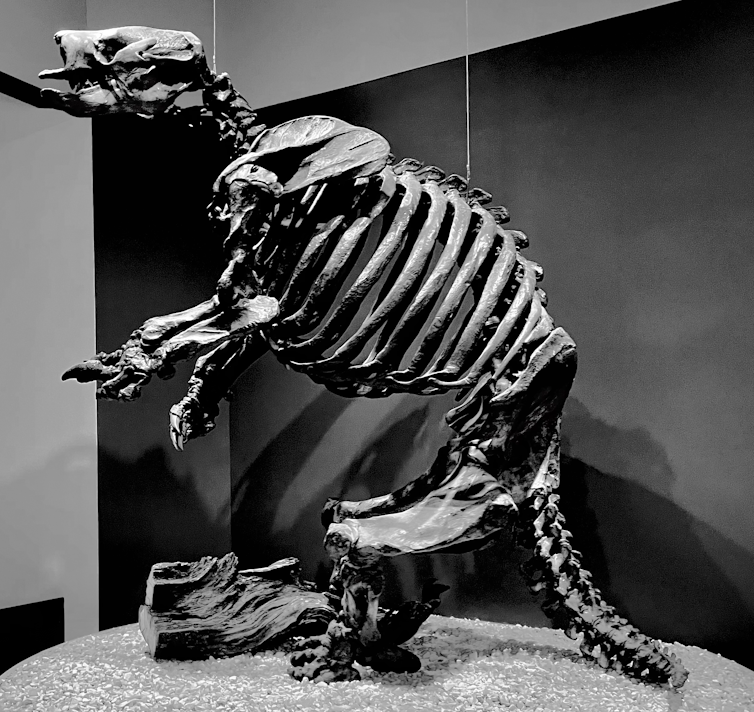
Harlan’s ground sloth fossil skeleton excavated and displayed at the La Brea Tar Pits in Los Angeles. Larisa DeSantis
A two-toed sloth at the Nashville Zoo. Larisa R. G. DeSantis
Imagine a sloth. You probably picture a medium-size, tree-dwelling creature hanging from a branch. Today’s sloths – commonly featured on children’s backpacks, stationery and lunch boxes – are slow-moving creatures, living inconspicuously in Central American and South American rainforests.
But their gigantic Pleistocene ancestors that inhabited the Americas as far back as 35 million years ago were nothing like the sleepy tree huggers we know today. Giant ground sloths – some weighing thousands of pounds and standing taller than a single-story building – played vital and diverse roles in shaping ecosystems across the Americas, roles that vanished with their loss at the end of the Pleistocene.
In our new study, published in the journal Biology Letters, we aimed to reconstruct the diets of two species of giant ground sloths that lived side by side in what’s now Southern California. We analyzed remains recovered from the La Brea Tar Pits of what are colloquially termed the Shasta ground sloth (Nothrotheriops shastensis) and Harlan’s ground sloth (Paramylodon harlani). Our work sheds light on the lives of these fascinating creatures and the consequences their extinction in Southern California 13,700 years ago has had on ecosystems.
Dentin dental challenges
Studying the diets of extinct animals often feels like putting together a jigsaw puzzle with only a portion of the puzzle pieces. Stable isotope analyses have revolutionized how paleoecologists reconstruct the diets of many ancient organisms. By measuring the relative ratios of light and heavy carbon isotopes in tooth enamel, we can figure out what kinds of foods an animal ate – for instance, grasses versus trees or shrubs.
Drilling teeth provides a sample for stable isotope analyses. Aditya Kurre
But the teeth of giant ground sloths lack enamel, the highly inorganic and hard outer layer on most animal teeth – including our own. Instead, sloth teeth are made primarily of dentin, a more porous and organic-rich tissue that readily changes its chemical composition with fossilization.
Stable isotope analyses are less dependable in sloths because dentin’s chemical composition can be altered postmortem, skewing the isotopic signatures.
Another technique researchers use to glean information about an animal’s diet relies on analyzing the microscopic wear patterns on its teeth. Dental microwear texture analysis can infer whether an animal mostly ate tough foods such as leaves and grass or hard foods such as seeds and fruit pits. This technique is also tricky when it comes to sloths’ fossilized teeth because signs of wear may be preserved differently in the softer dentin than in harder enamel.
Prior to studying fossil sloths, we vetted dental microwear methods in modern xenarthrans, a group of animals that includes sloths, armadillos and anteaters. This study demonstrated that dentin microwear can reveal dietary differences between leaf-eating sloths and insect-consuming armadillos, giving us confidence that these tools could reveal dietary information from ground sloth fossils.
Distinct dietary niches revealed
Previous research suggested that giant ground sloths were either grass-eating grazers or leaf-eating browsers, based on the size and shape of their teeth. However, more direct measures of diet – such as stable isotopes or dental microwear – were often lacking.
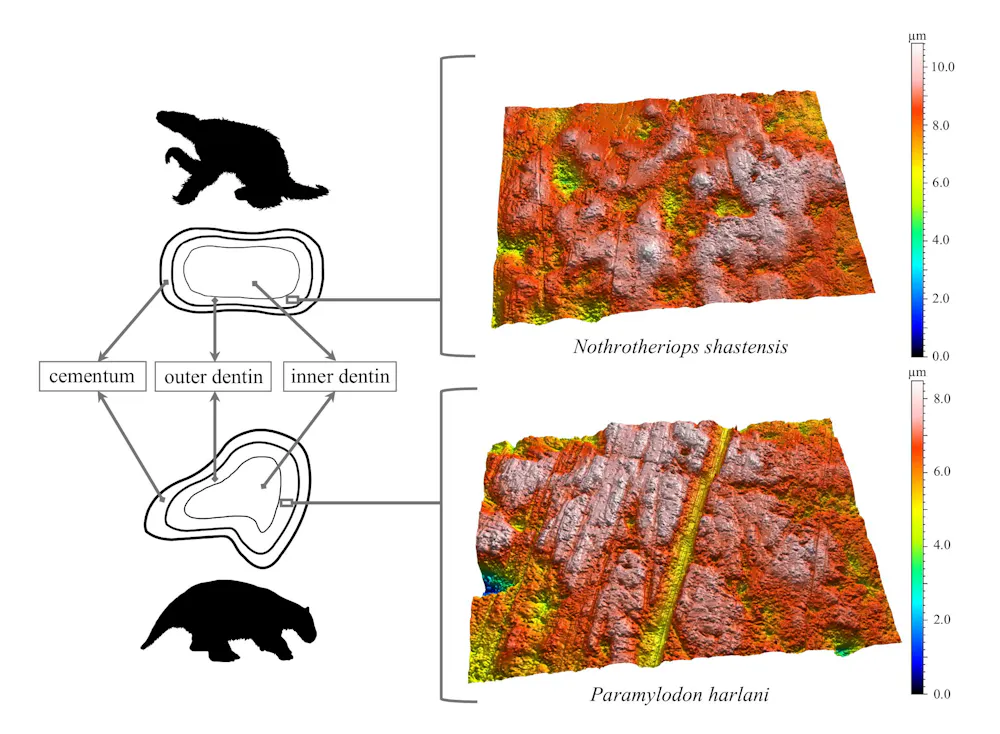
Our new analyses revealed contrasting dental wear signatures between the two co-occurring ground sloth species. The Harlan’s ground sloth, the larger of the two, had microwear patterns dominated by deep pitlike textures. This kind of wear is indicative of chewing hard, mechanically challenging foods such as tubers, seeds, fungi and fruit pits. Our new evidence aligns with skeletal adaptations that suggest powerful digging abilities, consistent with foraging foods both above and below ground.
The fossil teeth of the Harlan’s ground sloth typically showed deeper pitlike textures, bottom, while the Shasta ground sloth teeth had shallower wear patterns, top. DeSantis and Kurre, Biology Letters 2025
In contrast, the Shasta ground sloth exhibited dental microwear textures more akin to those in leaf-eating and woody plant-eating herbivores. This pattern corroborates previous studies of its fossilized dung, demonstrating a diet rich in desert plants such as yucca, agave and saltbush.
Next we compared the sloths’ microwear textures to those of ungulates such as camels, horses and bison that lived in the same region of Southern California. We confirmed that neither sloth species’ dietary behavior overlapped fully with other herbivores. Giant ground sloths didn’t perform the same ecological functions as the other herbivores that shared their landscape. Instead, both ground sloths partitioned their niches and played complementary ecological roles.
Extinctions brought ecological loss
The Harlan’s ground sloth was a megafaunal ecosystem engineer. It excavated soil and foraged underground, thereby affecting soil structure and nutrient cycling, even dispersing seed and fungal spores over wide areas. Anecdotal evidence suggests that some anachronistic fruits – such as the weird, bumpy-textured and softball-size Osage orange – were dispersed by ancient megafauna such as giant ground sloths. When the Pleistocene megafauna went extinct, the loss contributed to the regional restriction of these plants, since no one was around to spread their seeds.
The broader consequence is clear: Megafaunal extinctions erased critical ecosystem engineers, triggering cascading ecological changes that continue to affect habitat resilience today. Our results resonate with growing evidence that preserving today’s living large herbivores and understanding the diversity of their ecological niches is crucial for conserving functional ecosystems.
Studying the teeth of lost giant ground sloths has illuminated not only their diets but also the enduring ecological legacies of their extinction. Today’s sloths, though charming, only hint at the profound environmental influence of their prehistoric relatives – giants that shaped landscapes in ways we are only beginning to appreciate.


 Learning from Dogs