Today is our first anniversary of living in Oregon.
In many ways, it’s difficult to comprehend that we have now lived in our house a few miles from Merlin, OR, for a full year.
There are so many different, wonderful emotions associated with our move from Arizona to Oregon, of moving into a property quite unlike anything that Jean and I have ever lived in before, of seeing our dogs so happy with their surroundings, of being immersed in Nature, and so much more.
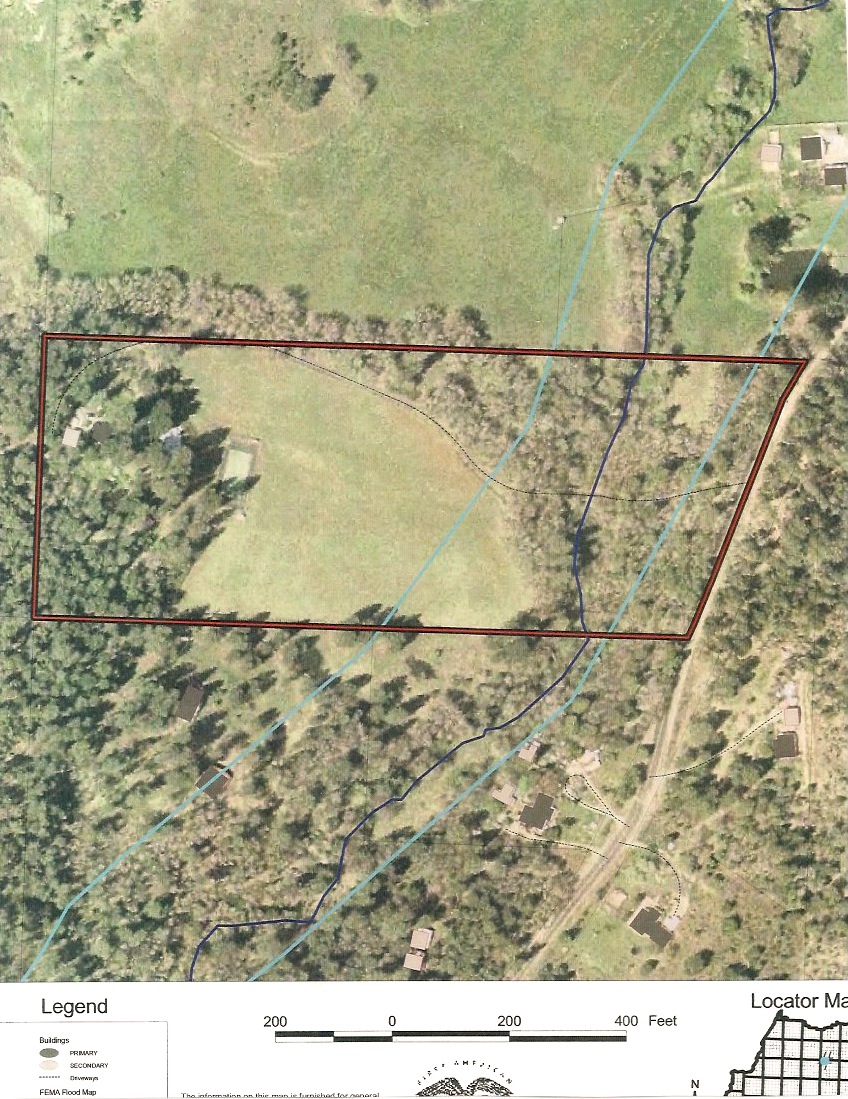
But rather than waffle on about everything in general and nothing in particular, I just want to write about the several acres of grassland that slope down from our house towards Bummer Creek, flowing North-South through the Eastern part of the property.
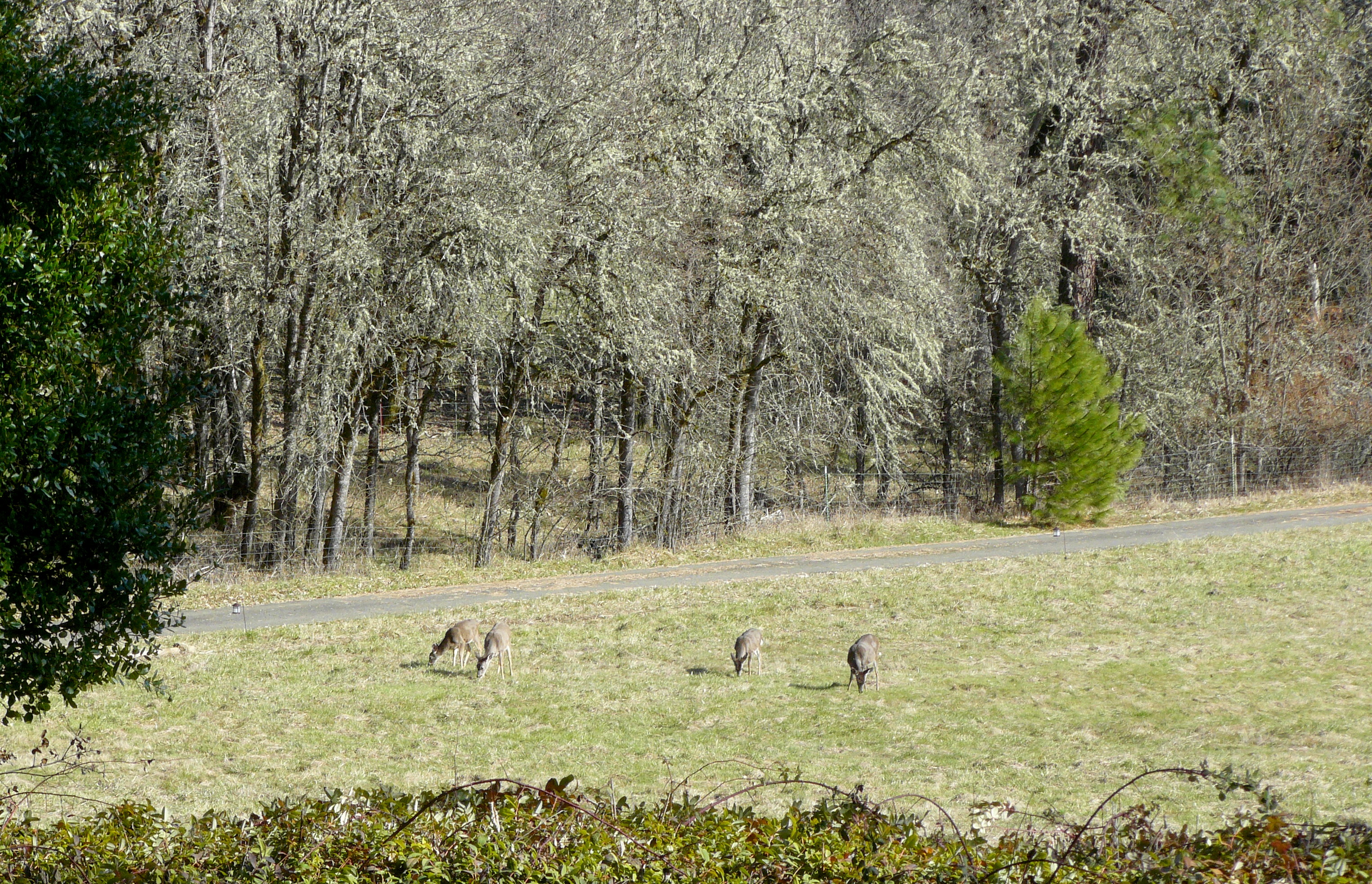
Having mown the grassland a number of times in the Spring musing that there must be better ways to spend your time, a few weeks ago we came across an article about not mowing lawns. It was on the Mother Nature Network website and here’s how the article started.
Get off your grass and create an edible lawn
What would happen if you stopped watering, fertilizing, pesticiding and mowing your lawn?
By
Tue, Apr 20 2010 at 1:46 PM
Americans currently spend more than $30 billion, millions of gallons of gasoline, and countless hours to maintain the dream of the well-kept 31 million acres of lawns. An estimated 67 million pounds of herbicides, fungicides and insecticides are applied around homes and gardens yearly. Commercial areas such as parks, schools, playing fields, cemeteries, industrial, commercial and government landscapes, apply another 165 million pounds.Lawn grasses are not native to the North American continent. A century ago, people would actually pull the grass out of their lawns to make room for the more useful weeds that were often incorporated into the family salad or herbal tea. It was the British aristocracy in the 1860s and ’70s, to show off their affluence, that encouraged the trend of weed-free lawns, indicating one had no need of the more common, yet useful plants. Homeowners were encouraged to cultivate lawns that would serve as examples to passers-by. These types of lawns also lent themselves to the popular lawn sports, croquet and lawn tennis. From the 1880s through 1920s in America, front lawns ceased to produce fodder for animals, and garden space was less cultivated, promoting canned food as the “wholesome choice.” Cars replaced the family horse and chemical fertilizers replaced manure.
It has been estimated that about 30 percent of our nation’s water supply goes to water lawns. In Dallas, Texas, watering lawns in the summer uses as much as 60 percent of the city water’s supply.

Next, a newsletter from The Xerces Society mentioned bee feed wildflower seed mixes from a company called Sunmark Seeds in Portland, OR. A call to them quickly produced the answer about what we could sow to help our local bees.
Hi Paul:
Upon further searching I did find 2 mixes that might fit what you are looking for. They are attached. The Bee Feed Mixture would be $36 per lb. The Honey Bee Flower Mixture would be $38 per lb. The price is a little higher but you would need a lot less. It is suggested 6-12 lbs per acre. You can still add the clover at $5 per lb and you should add 1 oz per lb of wildflower seed. There is still the option of the Knee High Low Profile mix which would be a little less at $30 per lb but the seeding rate is higher at 8-16 lbs per acre.
I have attached a spec sheet on all three mixes. Please let me know if you have any further questions.
Patti Shearer
Sunmark Companies

Decision made. Three pounds of Bee Feed Mix to sow on a half-acre area as a test before we do all five acres next Spring.
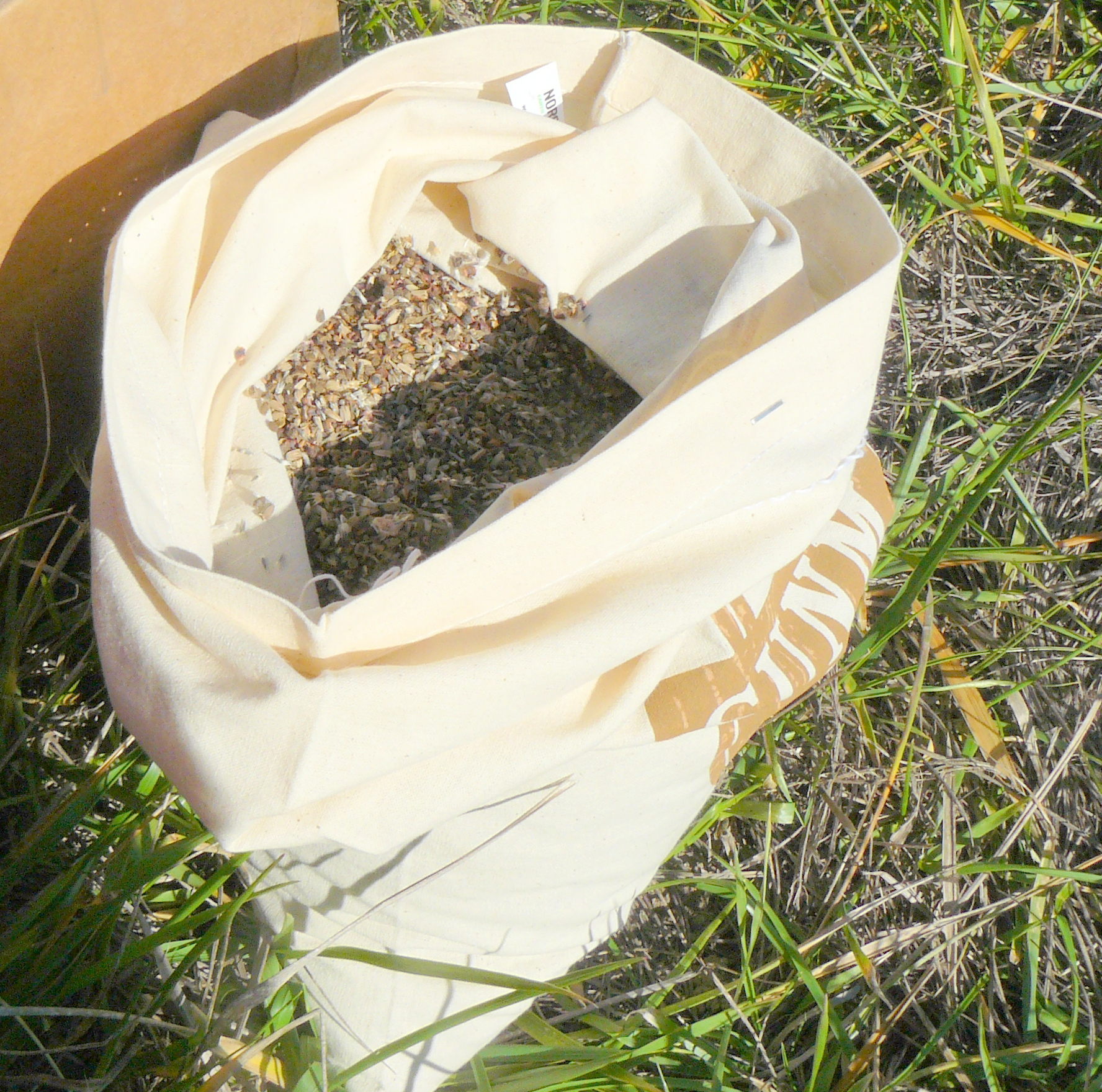
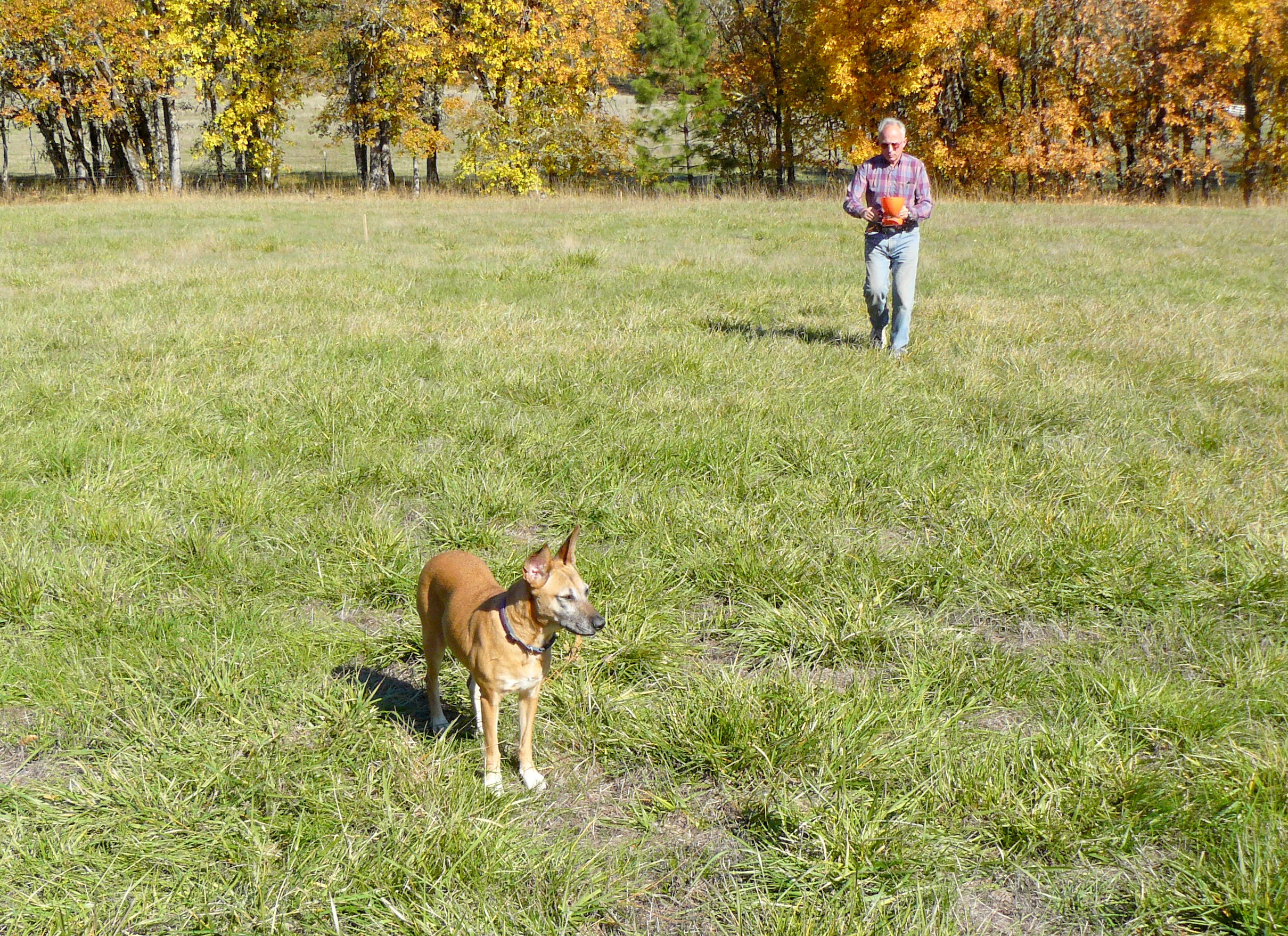
Thus not so much later a box arrived with our Bee Feed Mix and the next afternoon saw Jean and me marking out the test area and scattering the seed.
oooo
oooo
It’s been an amazing year with plenty of challenges as we learnt to be rural people; yet another thing the dogs were able to teach us! However, the joy of living in such beautiful surroundings will last for ever. And more or less picking up on the theme for the week, the sharing, caring community of neighbours around us doubles that joy.
Jean and I consider ourselves two very lucky people. And no more mowing grassland! 🙂
 Learning from Dogs